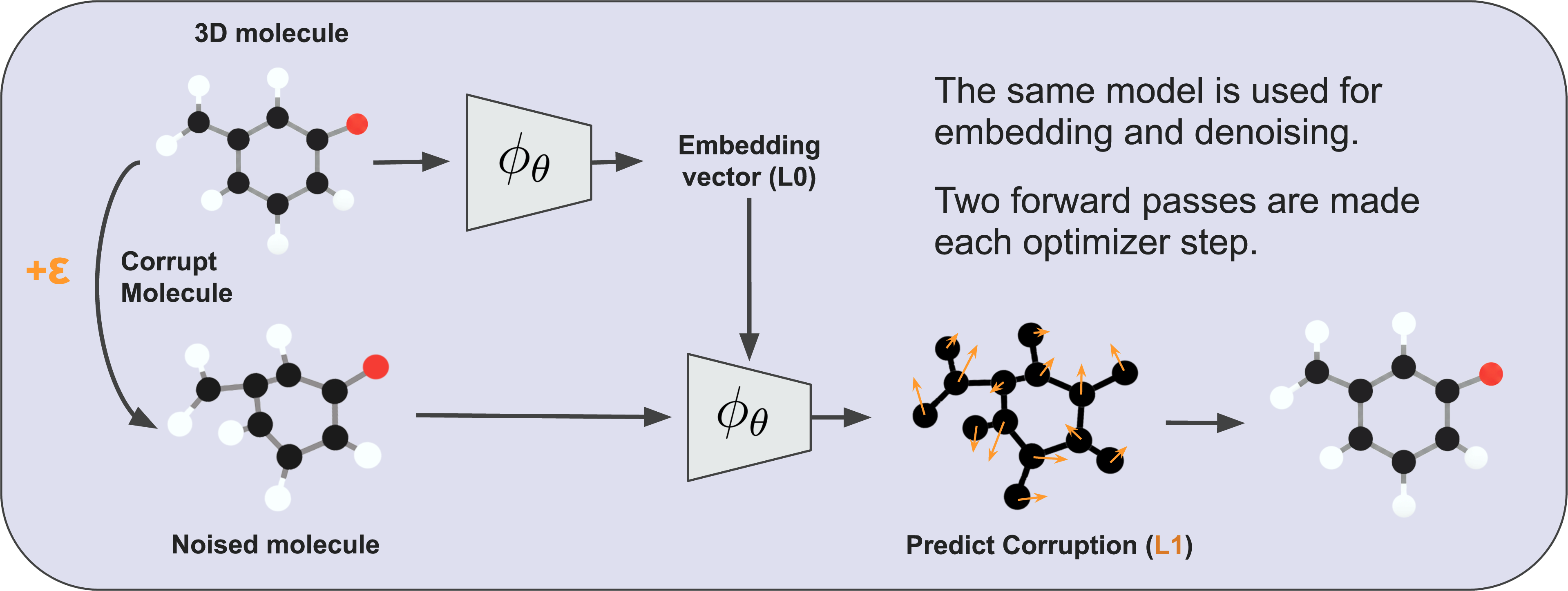
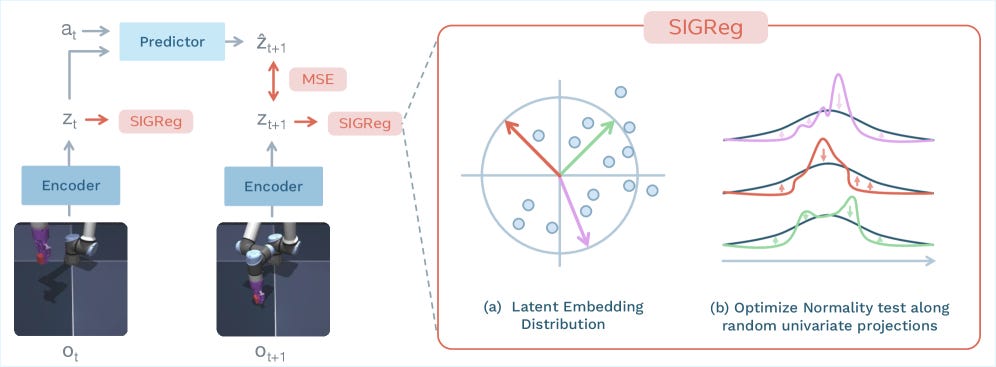
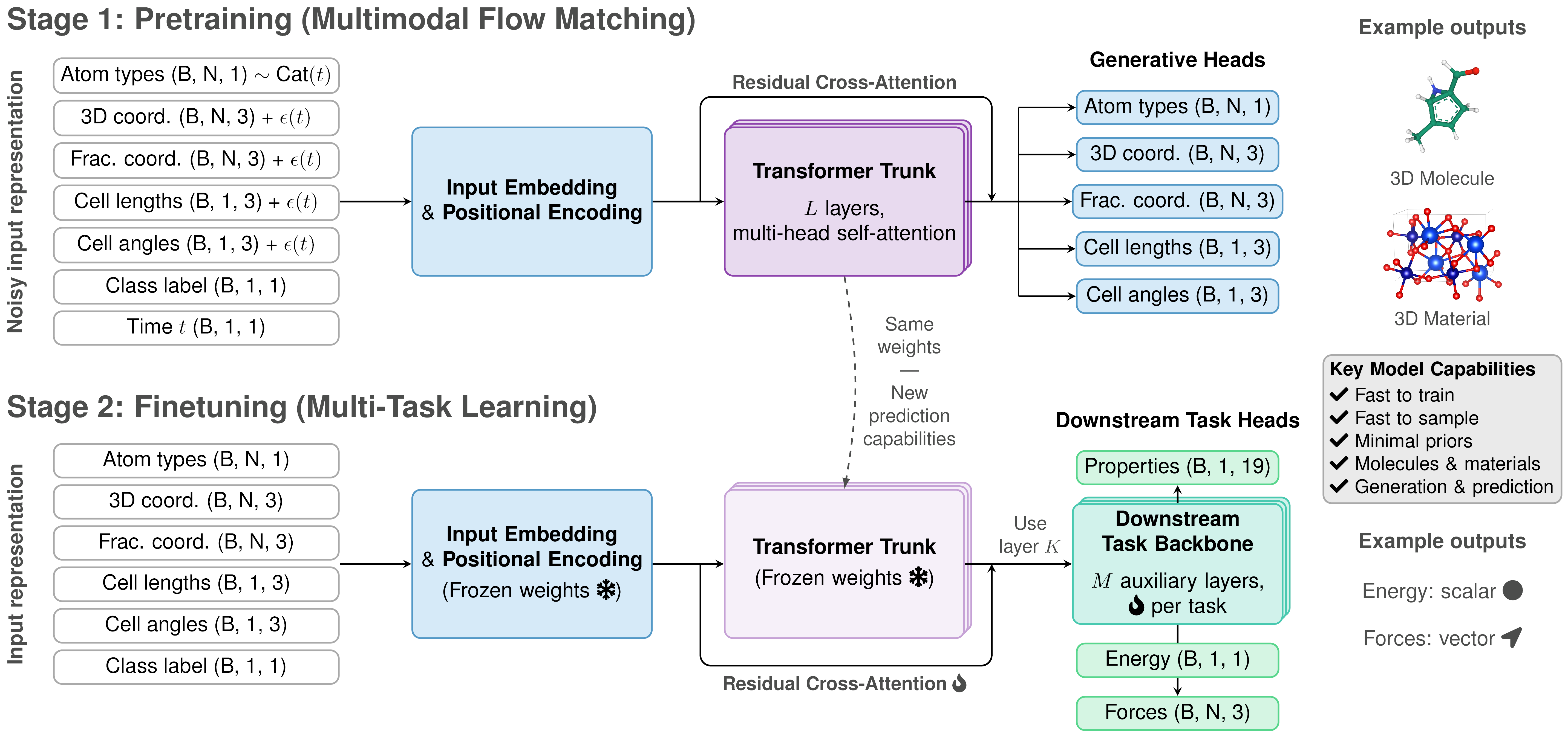
<?xml version="1.0" encoding="utf-8"?><feed xmlns="http://www.w3.org/2005/Atom" xml:lang="en"><generator uri="https://jekyllrb.com/" version="4.4.1">Jekyll</generator><link href="https://amorehead.github.io/feed.xml" rel="self" type="application/atom+xml"/><link href="https://amorehead.github.io/" rel="alternate" type="text/html" hreflang="en"/><updated>2026-04-14T17:15:30+00:00</updated><id>https://amorehead.github.io/feed.xml</id><title type="html">blank</title><subtitle>Hopper Postdoctoral Fellow at Berkeley Lab. </subtitle><entry><title type="html">On the path to scientific pretraining</title><link href="https://amorehead.github.io/blog/2026/on-the-path-to-scientific-pretraining/" rel="alternate" type="text/html" title="On the path to scientific pretraining"/><published>2026-04-06T00:49:34+00:00</published><updated>2026-04-06T00:49:34+00:00</updated><id>https://amorehead.github.io/blog/2026/on-the-path-to-scientific-pretraining</id><content type="html" xml:base="https://amorehead.github.io/blog/2026/on-the-path-to-scientific-pretraining/"><![CDATA[<h3>Better pretraining for atoms</h3> <p>Self-supervised learning is the default method of choice for pretraining image, text, and audio foundation models, and the same conventions hold for scientific data. The question in scientific machine learning is, do default approaches to self-supervised learning work best, or might they benefit from a bit of extra insight to learn what we want them to? <a href="https://arxiv.org/abs/2603.17196v1">Self-Conditioned Denoising</a>, a new pretraining method for atomic data, makes a strong case for the latter.</p> <div class="captioned-image-container"><figure><a class="image-link image2 is-viewable-img" target="_blank" href="https://substackcdn.com/image/fetch/$s_!0-uM!,f_auto,q_auto:good,fl_progressive:steep/https%3A%2F%2Fsubstack-post-media.s3.amazonaws.com%2Fpublic%2Fimages%2Fcf140de0-1397-4f2d-bbb3-1d7e0ecd9d46_3838x1447.png" data-component-name="Image2ToDOM"><div class="image2-inset"><picture><source type="image/webp" srcset="https://substackcdn.com/image/fetch/$s_!0-uM!,w_424,c_limit,f_webp,q_auto:good,fl_progressive:steep/https%3A%2F%2Fsubstack-post-media.s3.amazonaws.com%2Fpublic%2Fimages%2Fcf140de0-1397-4f2d-bbb3-1d7e0ecd9d46_3838x1447.png 424w, https://substackcdn.com/image/fetch/$s_!0-uM!,w_848,c_limit,f_webp,q_auto:good,fl_progressive:steep/https%3A%2F%2Fsubstack-post-media.s3.amazonaws.com%2Fpublic%2Fimages%2Fcf140de0-1397-4f2d-bbb3-1d7e0ecd9d46_3838x1447.png 848w, https://substackcdn.com/image/fetch/$s_!0-uM!,w_1272,c_limit,f_webp,q_auto:good,fl_progressive:steep/https%3A%2F%2Fsubstack-post-media.s3.amazonaws.com%2Fpublic%2Fimages%2Fcf140de0-1397-4f2d-bbb3-1d7e0ecd9d46_3838x1447.png 1272w, https://substackcdn.com/image/fetch/$s_!0-uM!,w_1456,c_limit,f_webp,q_auto:good,fl_progressive:steep/https%3A%2F%2Fsubstack-post-media.s3.amazonaws.com%2Fpublic%2Fimages%2Fcf140de0-1397-4f2d-bbb3-1d7e0ecd9d46_3838x1447.png 1456w" sizes="100vw"/><img src="https://substackcdn.com/image/fetch/$s_!0-uM!,w_1456,c_limit,f_auto,q_auto:good,fl_progressive:steep/https%3A%2F%2Fsubstack-post-media.s3.amazonaws.com%2Fpublic%2Fimages%2Fcf140de0-1397-4f2d-bbb3-1d7e0ecd9d46_3838x1447.png" width="1456" height="549" data-attrs="{&quot;src&quot;:&quot;https://substack-post-media.s3.amazonaws.com/public/images/cf140de0-1397-4f2d-bbb3-1d7e0ecd9d46_3838x1447.png&quot;,&quot;srcNoWatermark&quot;:null,&quot;fullscreen&quot;:null,&quot;imageSize&quot;:null,&quot;height&quot;:549,&quot;width&quot;:1456,&quot;resizeWidth&quot;:null,&quot;bytes&quot;:442264,&quot;alt&quot;:null,&quot;title&quot;:null,&quot;type&quot;:&quot;image/png&quot;,&quot;href&quot;:null,&quot;belowTheFold&quot;:false,&quot;topImage&quot;:true,&quot;internalRedirect&quot;:&quot;https://amorehead.substack.com/i/193302718?img=https%3A%2F%2Fsubstack-post-media.s3.amazonaws.com%2Fpublic%2Fimages%2Fcf140de0-1397-4f2d-bbb3-1d7e0ecd9d46_3838x1447.png&quot;,&quot;isProcessing&quot;:false,&quot;align&quot;:null,&quot;offset&quot;:false}" class="sizing-normal" alt="" srcset="https://substackcdn.com/image/fetch/$s_!0-uM!,w_424,c_limit,f_auto,q_auto:good,fl_progressive:steep/https%3A%2F%2Fsubstack-post-media.s3.amazonaws.com%2Fpublic%2Fimages%2Fcf140de0-1397-4f2d-bbb3-1d7e0ecd9d46_3838x1447.png 424w, https://substackcdn.com/image/fetch/$s_!0-uM!,w_848,c_limit,f_auto,q_auto:good,fl_progressive:steep/https%3A%2F%2Fsubstack-post-media.s3.amazonaws.com%2Fpublic%2Fimages%2Fcf140de0-1397-4f2d-bbb3-1d7e0ecd9d46_3838x1447.png 848w, https://substackcdn.com/image/fetch/$s_!0-uM!,w_1272,c_limit,f_auto,q_auto:good,fl_progressive:steep/https%3A%2F%2Fsubstack-post-media.s3.amazonaws.com%2Fpublic%2Fimages%2Fcf140de0-1397-4f2d-bbb3-1d7e0ecd9d46_3838x1447.png 1272w, https://substackcdn.com/image/fetch/$s_!0-uM!,w_1456,c_limit,f_auto,q_auto:good,fl_progressive:steep/https%3A%2F%2Fsubstack-post-media.s3.amazonaws.com%2Fpublic%2Fimages%2Fcf140de0-1397-4f2d-bbb3-1d7e0ecd9d46_3838x1447.png 1456w" sizes="100vw" fetchpriority="high"/></picture><div class="image-link-expand"><div class="pencraft pc-display-flex pc-gap-8 pc-reset"><button tabindex="0" type="button" class="pencraft pc-reset pencraft icon-container restack-image"><svg role="img" width="20" height="20" viewBox="0 0 20 20" fill="none" stroke-width="1.5" stroke="var(--color-fg-primary)" stroke-linecap="round" stroke-linejoin="round" xmlns="http://www.w3.org/2000/svg"><g><title></title><path d="M2.53001 7.81595C3.49179 4.73911 6.43281 2.5 9.91173 2.5C13.1684 2.5 15.9537 4.46214 17.0852 7.23684L17.6179 8.67647M17.6179 8.67647L18.5002 4.26471M17.6179 8.67647L13.6473 6.91176M17.4995 12.1841C16.5378 15.2609 13.5967 17.5 10.1178 17.5C6.86118 17.5 4.07589 15.5379 2.94432 12.7632L2.41165 11.3235M2.41165 11.3235L1.5293 15.7353M2.41165 11.3235L6.38224 13.0882"></path></g></svg></button><button tabindex="0" type="button" class="pencraft pc-reset pencraft icon-container view-image"><svg xmlns="http://www.w3.org/2000/svg" width="20" height="20" viewBox="0 0 24 24" fill="none" stroke="currentColor" stroke-width="2" stroke-linecap="round" stroke-linejoin="round" class="lucide lucide-maximize2 lucide-maximize-2"><polyline points="15 3 21 3 21 9"></polyline><polyline points="9 21 3 21 3 15"></polyline><line x1="21" x2="14" y1="3" y2="10"></line><line x1="3" x2="10" y1="21" y2="14"></line></svg></button></div></div></div></a><figcaption class="image-caption">Learning good atomic embeddings requires understanding local &amp; global semantics</figcaption></figure></div> <p></p> <p>As it turns out, deep learning models of 3D atomistic systems benefit considerably from a latent prediction pretraining objective commonly used with joint-embedding predictive architectures (JEPAs), where the model is structurally encouraged to learn embeddings of clean atomic data that, when condensed into global molecular representations, serve as useful context for denoising noisy atomic data. This pretraining setup pushes deep learning models to pick up on local and global semantics of geometric atomic data, where local corruptions of atomic coordinates may change the global features of a molecule (and vice versa). If you are curious to learn more about this approach, its source code is openly <a href="https://github.com/TyJPerez/SelfConditionedDenoisingAtoms">available</a>.</p> <div class="subscription-widget-wrap-editor" data-attrs="{&quot;url&quot;:&quot;https://amorehead.substack.com/subscribe?&quot;,&quot;text&quot;:&quot;Subscribe&quot;,&quot;language&quot;:&quot;en&quot;}" data-component-name="SubscribeWidgetToDOM"><div class="subscription-widget show-subscribe"><div class="preamble"><p class="cta-caption">Thanks for reading AI4Science! Subscribe for free to receive new posts and support my work.</p></div><form class="subscription-widget-subscribe"><input type="email" class="email-input" name="email" placeholder="Type your email&#8230;" tabindex="-1"/><input type="submit" class="button primary" value="Subscribe"/><div class="fake-input-wrapper"><div class="fake-input"></div><div class="fake-button"></div></div></form></div></div> <h3>A potential world modeling approach for science</h3> <p>Yann Lecun and other AI researchers have long been voicing the need for self-supervised/world modeling techniques that intrinsically learn physically-meaningful embeddings of real-world (e.g., video) data. With <a href="https://arxiv.org/abs/2603.19312">LeWorldModel</a>, such thinkers are taking a step towards realizing more robust training methods for physical world models. One kind of question this work naturally raises is, would this work well for scientific (e.g., heterogeneous) data? And how sensitive would this approach be to noisy artifacts present in real-world physical/chemical/biological datasets?</p> <div class="captioned-image-container"><figure><a class="image-link image2 is-viewable-img" target="_blank" href="https://substackcdn.com/image/fetch/$s_!YTLz!,f_auto,q_auto:good,fl_progressive:steep/https%3A%2F%2Fsubstack-post-media.s3.amazonaws.com%2Fpublic%2Fimages%2F071b7919-ac42-4e18-a17f-035827ba2735_996x367.png" data-component-name="Image2ToDOM"><div class="image2-inset"><picture><source type="image/webp" srcset="https://substackcdn.com/image/fetch/$s_!YTLz!,w_424,c_limit,f_webp,q_auto:good,fl_progressive:steep/https%3A%2F%2Fsubstack-post-media.s3.amazonaws.com%2Fpublic%2Fimages%2F071b7919-ac42-4e18-a17f-035827ba2735_996x367.png 424w, https://substackcdn.com/image/fetch/$s_!YTLz!,w_848,c_limit,f_webp,q_auto:good,fl_progressive:steep/https%3A%2F%2Fsubstack-post-media.s3.amazonaws.com%2Fpublic%2Fimages%2F071b7919-ac42-4e18-a17f-035827ba2735_996x367.png 848w, https://substackcdn.com/image/fetch/$s_!YTLz!,w_1272,c_limit,f_webp,q_auto:good,fl_progressive:steep/https%3A%2F%2Fsubstack-post-media.s3.amazonaws.com%2Fpublic%2Fimages%2F071b7919-ac42-4e18-a17f-035827ba2735_996x367.png 1272w, https://substackcdn.com/image/fetch/$s_!YTLz!,w_1456,c_limit,f_webp,q_auto:good,fl_progressive:steep/https%3A%2F%2Fsubstack-post-media.s3.amazonaws.com%2Fpublic%2Fimages%2F071b7919-ac42-4e18-a17f-035827ba2735_996x367.png 1456w" sizes="100vw"/><img src="https://substackcdn.com/image/fetch/$s_!YTLz!,w_1456,c_limit,f_auto,q_auto:good,fl_progressive:steep/https%3A%2F%2Fsubstack-post-media.s3.amazonaws.com%2Fpublic%2Fimages%2F071b7919-ac42-4e18-a17f-035827ba2735_996x367.png" width="996" height="367" data-attrs="{&quot;src&quot;:&quot;https://substack-post-media.s3.amazonaws.com/public/images/071b7919-ac42-4e18-a17f-035827ba2735_996x367.png&quot;,&quot;srcNoWatermark&quot;:null,&quot;fullscreen&quot;:null,&quot;imageSize&quot;:null,&quot;height&quot;:367,&quot;width&quot;:996,&quot;resizeWidth&quot;:null,&quot;bytes&quot;:229393,&quot;alt&quot;:null,&quot;title&quot;:null,&quot;type&quot;:&quot;image/png&quot;,&quot;href&quot;:null,&quot;belowTheFold&quot;:false,&quot;topImage&quot;:false,&quot;internalRedirect&quot;:&quot;https://amorehead.substack.com/i/193302718?img=https%3A%2F%2Fsubstack-post-media.s3.amazonaws.com%2Fpublic%2Fimages%2F071b7919-ac42-4e18-a17f-035827ba2735_996x367.png&quot;,&quot;isProcessing&quot;:false,&quot;align&quot;:null,&quot;offset&quot;:false}" class="sizing-normal" alt="" srcset="https://substackcdn.com/image/fetch/$s_!YTLz!,w_424,c_limit,f_auto,q_auto:good,fl_progressive:steep/https%3A%2F%2Fsubstack-post-media.s3.amazonaws.com%2Fpublic%2Fimages%2F071b7919-ac42-4e18-a17f-035827ba2735_996x367.png 424w, https://substackcdn.com/image/fetch/$s_!YTLz!,w_848,c_limit,f_auto,q_auto:good,fl_progressive:steep/https%3A%2F%2Fsubstack-post-media.s3.amazonaws.com%2Fpublic%2Fimages%2F071b7919-ac42-4e18-a17f-035827ba2735_996x367.png 848w, https://substackcdn.com/image/fetch/$s_!YTLz!,w_1272,c_limit,f_auto,q_auto:good,fl_progressive:steep/https%3A%2F%2Fsubstack-post-media.s3.amazonaws.com%2Fpublic%2Fimages%2F071b7919-ac42-4e18-a17f-035827ba2735_996x367.png 1272w, https://substackcdn.com/image/fetch/$s_!YTLz!,w_1456,c_limit,f_auto,q_auto:good,fl_progressive:steep/https%3A%2F%2Fsubstack-post-media.s3.amazonaws.com%2Fpublic%2Fimages%2F071b7919-ac42-4e18-a17f-035827ba2735_996x367.png 1456w" sizes="100vw"/></picture><div class="image-link-expand"><div class="pencraft pc-display-flex pc-gap-8 pc-reset"><button tabindex="0" type="button" class="pencraft pc-reset pencraft icon-container restack-image"><svg role="img" width="20" height="20" viewBox="0 0 20 20" fill="none" stroke-width="1.5" stroke="var(--color-fg-primary)" stroke-linecap="round" stroke-linejoin="round" xmlns="http://www.w3.org/2000/svg"><g><title></title><path d="M2.53001 7.81595C3.49179 4.73911 6.43281 2.5 9.91173 2.5C13.1684 2.5 15.9537 4.46214 17.0852 7.23684L17.6179 8.67647M17.6179 8.67647L18.5002 4.26471M17.6179 8.67647L13.6473 6.91176M17.4995 12.1841C16.5378 15.2609 13.5967 17.5 10.1178 17.5C6.86118 17.5 4.07589 15.5379 2.94432 12.7632L2.41165 11.3235M2.41165 11.3235L1.5293 15.7353M2.41165 11.3235L6.38224 13.0882"></path></g></svg></button><button tabindex="0" type="button" class="pencraft pc-reset pencraft icon-container view-image"><svg xmlns="http://www.w3.org/2000/svg" width="20" height="20" viewBox="0 0 24 24" fill="none" stroke="currentColor" stroke-width="2" stroke-linecap="round" stroke-linejoin="round" class="lucide lucide-maximize2 lucide-maximize-2"><polyline points="15 3 21 3 21 9"></polyline><polyline points="9 21 3 21 3 15"></polyline><line x1="21" x2="14" y1="3" y2="10"></line><line x1="3" x2="10" y1="21" y2="14"></line></svg></button></div></div></div></a><figcaption class="image-caption">Predicting future states while pushing embeddings toward a Gaussian distribution yields stabler training of JEPA-style models</figcaption></figure></div> <p></p> <p>For now, this method has been evaluated using well-known (robotics-focused) planning benchmarks. It remains to be seen whether or how this training technique will surface in scientific disciplines. Fortunately, for those curious to learn more and perhaps explore such possibilities, its source code is freely <a href="https://github.com/lucas-maes/le-wm">available</a>.</p> <h3>Reflections</h3> <p>Will world models one day bridge traditional boundaries between scientific disciplines? Or is more value to be found in specializing such models for specific domains of data? What are your thoughts?</p> <div class="subscription-widget-wrap-editor" data-attrs="{&quot;url&quot;:&quot;https://amorehead.substack.com/subscribe?&quot;,&quot;text&quot;:&quot;Subscribe&quot;,&quot;language&quot;:&quot;en&quot;}" data-component-name="SubscribeWidgetToDOM"><div class="subscription-widget show-subscribe"><div class="preamble"><p class="cta-caption">Thanks for reading AI4Science! Subscribe for free to receive new posts and support my work.</p></div><form class="subscription-widget-subscribe"><input type="email" class="email-input" name="email" placeholder="Type your email&#8230;" tabindex="-1"/><input type="submit" class="button primary" value="Subscribe"/><div class="fake-input-wrapper"><div class="fake-input"></div><div class="fake-button"></div></div></form></div></div>]]></content><author><name></name></author><summary type="html"><![CDATA[(Highly subjective) AI4Science highlights of March 2026]]></summary></entry><entry><title type="html">How to improve 0.001% daily</title><link href="https://amorehead.github.io/blog/2026/how-to-improve-0-001-percent-daily/" rel="alternate" type="text/html" title="How to improve 0.001% daily"/><published>2026-04-05T00:00:00+00:00</published><updated>2026-04-05T00:00:00+00:00</updated><id>https://amorehead.github.io/blog/2026/how-to-improve-0-001-percent-daily</id><content type="html" xml:base="https://amorehead.github.io/blog/2026/how-to-improve-0-001-percent-daily/"><![CDATA[<div class="l-page"> <figure> <picture> <source class="responsive-img-srcset" srcset="/assets/img/blog_post_images/04_2026/how-to-improve-0-001-percent-daily-480.webp 480w,/assets/img/blog_post_images/04_2026/how-to-improve-0-001-percent-daily-800.webp 800w,/assets/img/blog_post_images/04_2026/how-to-improve-0-001-percent-daily-1400.webp 1400w," type="image/webp" sizes="95vw"/> <img src="/assets/img/blog_post_images/04_2026/how-to-improve-0-001-percent-daily.png" class="img-fluid rounded z-depth-1" width="100%" height="auto" data-zoomable="" loading="lazy" onerror="this.onerror=null; $('.responsive-img-srcset').remove();"/> </picture> </figure> </div> <h2 id="books-read-in-march-2026">Books Read in March 2026</h2> <ol> <li>Behave</li> <li>Wisdom Takes Work</li> <li>Source Code</li> <li>Careless People</li> </ol> <h2 id="understanding-human-behavior-holistically">Understanding (human) behavior holistically</h2> <div class="l-body"> <figure> <picture> <source class="responsive-img-srcset" srcset="/assets/img/blog_post_images/04_2026/behave-480.webp 480w,/assets/img/blog_post_images/04_2026/behave-800.webp 800w,/assets/img/blog_post_images/04_2026/behave-1400.webp 1400w," type="image/webp" sizes="95vw"/> <img src="/assets/img/blog_post_images/04_2026/behave.jpg" class="img-fluid rounded z-depth-1" width="100%" height="auto" data-zoomable="" loading="lazy" onerror="this.onerror=null; $('.responsive-img-srcset').remove();"/> </picture> </figure> </div> <p>Sapolsky achieved something special with his book “Behave: The Biology of Humans at Our Best and Worst”. In it, he seamlessly navigates several scientific disciplines (e.g., cellular biology, genetics, neuroscience, physiology, psychology, and sociology) to weave a comprehensive picture of how humans make decisions based on our past, present, and our assessment of the future. There are few books I’ve read that (somehow) touch on as niche (yet important) aspects of structural biology and human psychology as this one. I cannot recommend it more highly.</p> <h2 id="cultivating-practices-for-enriching-life">Cultivating practices for enriching life</h2> <div class="l-body"> <figure> <picture> <source class="responsive-img-srcset" srcset="/assets/img/blog_post_images/04_2026/wisdom-takes-work-480.webp 480w,/assets/img/blog_post_images/04_2026/wisdom-takes-work-800.webp 800w,/assets/img/blog_post_images/04_2026/wisdom-takes-work-1400.webp 1400w," type="image/webp" sizes="95vw"/> <img src="/assets/img/blog_post_images/04_2026/wisdom-takes-work.jpg" class="img-fluid rounded z-depth-1" width="100%" height="auto" data-zoomable="" loading="lazy" onerror="this.onerror=null; $('.responsive-img-srcset').remove();"/> </picture> </figure> </div> <p>Are some people born wiser than others? Or can we cultivate wisdom considerably? Ryan Holiday argues for the latter, where along this journey he envisions humans benefiting more now than ever from intentional exploration of various wisdom traditions and what they have to offer. Stoicism plays a central role in this work, giving readers continual reminders of how it important it is to seek wisdom daily.</p> <h2 id="the-microsoft-story">The Microsoft Story</h2> <div class="l-body"> <figure> <picture> <source class="responsive-img-srcset" srcset="/assets/img/blog_post_images/04_2026/source-code-480.webp 480w,/assets/img/blog_post_images/04_2026/source-code-800.webp 800w,/assets/img/blog_post_images/04_2026/source-code-1400.webp 1400w," type="image/webp" sizes="95vw"/> <img src="/assets/img/blog_post_images/04_2026/source-code.jpg" class="img-fluid rounded z-depth-1" width="100%" height="auto" data-zoomable="" loading="lazy" onerror="this.onerror=null; $('.responsive-img-srcset').remove();"/> </picture> </figure> </div> <p>Bill Gates opens up about his childhood experiences and the stories behind building Microsoft in his new memoir “Source Code”. I particularly appreciated his post-Microsoft reflections on how emotional acuity and maturity didn’t come naturally to him early on in his career, and specifically that he <em>had to work on it</em> over the coming decades. Like Holiday writes about, wisdom takes work, and Bill Gates seems to agree.</p> <h2 id="what-not-to-do-with-power">What (not) to do with power</h2> <div class="l-body"> <figure> <picture> <source class="responsive-img-srcset" srcset="/assets/img/blog_post_images/04_2026/careless-people-480.webp 480w,/assets/img/blog_post_images/04_2026/careless-people-800.webp 800w,/assets/img/blog_post_images/04_2026/careless-people-1400.webp 1400w," type="image/webp" sizes="95vw"/> <img src="/assets/img/blog_post_images/04_2026/careless-people.jpg" class="img-fluid rounded z-depth-1" width="100%" height="auto" data-zoomable="" loading="lazy" onerror="this.onerror=null; $('.responsive-img-srcset').remove();"/> </picture> </figure> </div> <p>Time to take the wrong turn down the moral highway. What would happen if you built something so powerful and influential that nearly everyone wanted to use it, but that silently manipulated them into becoming ideologues for the highest-paying cause? Well, then you would be a real-life social tech CEO, according to Sarah Wynn-Williams. Of course, one particular CEO was singularly described in Sarah’s well-timed book “Careless People”, but I’m sure the pattern applies to others. If you are curious what it is like to watch a CEO-in-the-making lead a fledgling enterprise down a dark path, this book is for you.</p> <p><strong>Alex</strong></p>]]></content><author><name></name></author><category term="Annotated-Readings"/><category term="Behavior"/><category term="Wisdom"/><category term="Development"/><category term="Biography"/><category term="Technology"/><category term="Influence"/><summary type="html"><![CDATA[An annotated reading of the books I finished in March 2026.]]></summary></entry><entry><title type="html">Folding and generating atoms, one bit at a time</title><link href="https://amorehead.github.io/blog/2026/folding-and-generating-atoms-one-bit-at-a-time/" rel="alternate" type="text/html" title="Folding and generating atoms, one bit at a time"/><published>2026-03-06T17:33:53+00:00</published><updated>2026-03-06T17:33:53+00:00</updated><id>https://amorehead.github.io/blog/2026/folding-and-generating-atoms-one-bit-at-a-time</id><content type="html" xml:base="https://amorehead.github.io/blog/2026/folding-and-generating-atoms-one-bit-at-a-time/"><![CDATA[<h3>Introducing IsoDDE, ready or not</h3> <p>Protein folding (and biomolecular co-folding more generally) is a fundamental task in structural biology, underpinning some of the most complex biological functions necessary for the development and maintenance of living systems. In the last few years, we have seen significant methodological strides in developing AI models for this scientific domain, introducing (now ubiquitous) computational algorithms such as <a href="https://www.nature.com/articles/s41586-021-03819-2">AlphaFold</a> by <a href="https://deepmind.google/">Google DeepMind</a>. <a href="https://www.nature.com/articles/s41586-024-07487-w">AlphaFold 3</a>, in particular, pushed the field forward with its hallmark ability to model arbitrary combinations of 3D biomolecular interactions.</p> <div class="captioned-image-container"><figure><a class="image-link image2 is-viewable-img" target="_blank" href="https://substackcdn.com/image/fetch/$s_!TBFs!,f_auto,q_auto:good,fl_progressive:steep/https%3A%2F%2Fsubstack-post-media.s3.amazonaws.com%2Fpublic%2Fimages%2F4e62ad9d-d876-4f2a-bc5e-614c8d0c741e_1920x1080.jpeg" data-component-name="Image2ToDOM"><div class="image2-inset"><picture><source type="image/webp" srcset="https://substackcdn.com/image/fetch/$s_!TBFs!,w_424,c_limit,f_webp,q_auto:good,fl_progressive:steep/https%3A%2F%2Fsubstack-post-media.s3.amazonaws.com%2Fpublic%2Fimages%2F4e62ad9d-d876-4f2a-bc5e-614c8d0c741e_1920x1080.jpeg 424w, https://substackcdn.com/image/fetch/$s_!TBFs!,w_848,c_limit,f_webp,q_auto:good,fl_progressive:steep/https%3A%2F%2Fsubstack-post-media.s3.amazonaws.com%2Fpublic%2Fimages%2F4e62ad9d-d876-4f2a-bc5e-614c8d0c741e_1920x1080.jpeg 848w, https://substackcdn.com/image/fetch/$s_!TBFs!,w_1272,c_limit,f_webp,q_auto:good,fl_progressive:steep/https%3A%2F%2Fsubstack-post-media.s3.amazonaws.com%2Fpublic%2Fimages%2F4e62ad9d-d876-4f2a-bc5e-614c8d0c741e_1920x1080.jpeg 1272w, https://substackcdn.com/image/fetch/$s_!TBFs!,w_1456,c_limit,f_webp,q_auto:good,fl_progressive:steep/https%3A%2F%2Fsubstack-post-media.s3.amazonaws.com%2Fpublic%2Fimages%2F4e62ad9d-d876-4f2a-bc5e-614c8d0c741e_1920x1080.jpeg 1456w" sizes="100vw"/><img src="https://substackcdn.com/image/fetch/$s_!TBFs!,w_1456,c_limit,f_auto,q_auto:good,fl_progressive:steep/https%3A%2F%2Fsubstack-post-media.s3.amazonaws.com%2Fpublic%2Fimages%2F4e62ad9d-d876-4f2a-bc5e-614c8d0c741e_1920x1080.jpeg" width="1456" height="819" data-attrs="{&quot;src&quot;:&quot;https://substack-post-media.s3.amazonaws.com/public/images/4e62ad9d-d876-4f2a-bc5e-614c8d0c741e_1920x1080.jpeg&quot;,&quot;srcNoWatermark&quot;:null,&quot;fullscreen&quot;:null,&quot;imageSize&quot;:null,&quot;height&quot;:819,&quot;width&quot;:1456,&quot;resizeWidth&quot;:null,&quot;bytes&quot;:null,&quot;alt&quot;:null,&quot;title&quot;:null,&quot;type&quot;:null,&quot;href&quot;:null,&quot;belowTheFold&quot;:false,&quot;topImage&quot;:true,&quot;internalRedirect&quot;:null,&quot;isProcessing&quot;:false,&quot;align&quot;:null,&quot;offset&quot;:false}" class="sizing-normal" alt="" srcset="https://substackcdn.com/image/fetch/$s_!TBFs!,w_424,c_limit,f_auto,q_auto:good,fl_progressive:steep/https%3A%2F%2Fsubstack-post-media.s3.amazonaws.com%2Fpublic%2Fimages%2F4e62ad9d-d876-4f2a-bc5e-614c8d0c741e_1920x1080.jpeg 424w, https://substackcdn.com/image/fetch/$s_!TBFs!,w_848,c_limit,f_auto,q_auto:good,fl_progressive:steep/https%3A%2F%2Fsubstack-post-media.s3.amazonaws.com%2Fpublic%2Fimages%2F4e62ad9d-d876-4f2a-bc5e-614c8d0c741e_1920x1080.jpeg 848w, https://substackcdn.com/image/fetch/$s_!TBFs!,w_1272,c_limit,f_auto,q_auto:good,fl_progressive:steep/https%3A%2F%2Fsubstack-post-media.s3.amazonaws.com%2Fpublic%2Fimages%2F4e62ad9d-d876-4f2a-bc5e-614c8d0c741e_1920x1080.jpeg 1272w, https://substackcdn.com/image/fetch/$s_!TBFs!,w_1456,c_limit,f_auto,q_auto:good,fl_progressive:steep/https%3A%2F%2Fsubstack-post-media.s3.amazonaws.com%2Fpublic%2Fimages%2F4e62ad9d-d876-4f2a-bc5e-614c8d0c741e_1920x1080.jpeg 1456w" sizes="100vw" fetchpriority="high"/></picture><div class="image-link-expand"><div class="pencraft pc-display-flex pc-gap-8 pc-reset"><button tabindex="0" type="button" class="pencraft pc-reset pencraft icon-container restack-image"><svg role="img" width="20" height="20" viewBox="0 0 20 20" fill="none" stroke-width="1.5" stroke="var(--color-fg-primary)" stroke-linecap="round" stroke-linejoin="round" xmlns="http://www.w3.org/2000/svg"><g><title></title><path d="M2.53001 7.81595C3.49179 4.73911 6.43281 2.5 9.91173 2.5C13.1684 2.5 15.9537 4.46214 17.0852 7.23684L17.6179 8.67647M17.6179 8.67647L18.5002 4.26471M17.6179 8.67647L13.6473 6.91176M17.4995 12.1841C16.5378 15.2609 13.5967 17.5 10.1178 17.5C6.86118 17.5 4.07589 15.5379 2.94432 12.7632L2.41165 11.3235M2.41165 11.3235L1.5293 15.7353M2.41165 11.3235L6.38224 13.0882"></path></g></svg></button><button tabindex="0" type="button" class="pencraft pc-reset pencraft icon-container view-image"><svg xmlns="http://www.w3.org/2000/svg" width="20" height="20" viewBox="0 0 24 24" fill="none" stroke="currentColor" stroke-width="2" stroke-linecap="round" stroke-linejoin="round" class="lucide lucide-maximize2 lucide-maximize-2"><polyline points="15 3 21 3 21 9"></polyline><polyline points="9 21 3 21 3 15"></polyline><line x1="21" x2="14" y1="3" y2="10"></line><line x1="3" x2="10" y1="21" y2="14"></line></svg></button></div></div></div></a><figcaption class="image-caption">Isomorphic Labs announces IsoDDE, the spiritual successor to AlphaFold 3</figcaption></figure></div> <p>Now, DeepMind (technically <a href="https://www.isomorphiclabs.com/">Isomorphic Labs</a>) has announced an enhanced version of AlphaFold 3 (AF3) that they call the Isomorphic Labs Drug Design Engine (<a href="https://www.isomorphiclabs.com/articles/the-isomorphic-labs-drug-design-engine-unlocks-a-new-frontier">IsoDDE</a>), which purportedly surpasses the accuracy of AF3 in predicting increasingly novel types of biomolecular interactions not found in the algorithm&#8217;s training dataset. While impressive, without the availability of an API for model inference, it is currently impossible for third-party researchers to verify these claims. As such, the announcement of IsoDDE signals a step change in the AI4Science research community, namely that going forward, industry research labs may become increasingly emboldened to delay or deny open-source/API software releases for newly announced AI models, partially disrupting (in my view) a healthy research ecosystem built upon third-party validation of reported results. To give the team at Isomorphic Labs (Iso) appropriate credit, it goes without saying that the computational results they (purportedly) achieved with IsoDDE are compelling and warrant further study, which is why third-party validation of their new models should (in time) only strengthen their messaging.</p> <div class="subscription-widget-wrap-editor" data-attrs="{&quot;url&quot;:&quot;https://amorehead.substack.com/subscribe?&quot;,&quot;text&quot;:&quot;Subscribe&quot;,&quot;language&quot;:&quot;en&quot;}" data-component-name="SubscribeWidgetToDOM"><div class="subscription-widget show-subscribe"><div class="preamble"><p class="cta-caption">Thanks for reading AI4Science! Subscribe for free to receive new posts and support my work.</p></div><form class="subscription-widget-subscribe"><input type="email" class="email-input" name="email" placeholder="Type your email&#8230;" tabindex="-1"/><input type="submit" class="button primary" value="Subscribe"/><div class="fake-input-wrapper"><div class="fake-input"></div><div class="fake-button"></div></div></form></div></div> <p>One final point to consider is that Iso has (currently) only reported results for predicting protein-ligand (and protein-protein) binding structures and affinities. Why might that be? Is IsoDDE specialized for these types of interactions, suggesting they found including RNA/DNA data in its training procedure was a hindrance to achieving the most compelling performance? Or is Iso still hyperparameter-tuning the model to balance its performance across all types of biomolecular interactions? If the former is true, this brings into question one of the central theses of AF3, that the current generation of generative AI models (namely diffusion models) mutually benefit from modeling all types of biomolecular interactions simultaneously (via a mechanism like transfer learning). If the latter is true, perhaps IsoDDE is no longer a standard diffusion model (in the spirit of AF3)? For now, the best we can do is speculate. And more importantly, the ultimate litmus test of IsoDDE will be wet-lab validation, which Iso has not yet discussed for this new model.</p> <h3>An AI foundation model for 3D chemistry</h3> <p>Over the last year or so, there&#8217;s been a <a href="https://openreview.net/forum?id=89QPmZjIhv">strong push</a> to unify different data domains of chemistry with unified (multimodal) AI architectures, mostly on the generative modeling side of things. However, one step that&#8217;s important to take is to measure how well generative AI models can learn representations applicable to a variety of related <em>prediction</em> tasks, along the path to developing what fields such as computer vision and natural language processing would call a Chemical &#8220;<a href="https://blogs.nvidia.com/blog/what-are-foundation-models/">Foundation Model</a>&#8221; (and to do so in an open-source and reproducible manner). In this spirit, the recently released <a href="https://arxiv.org/abs/2602.22251">Zatom-1</a> model is the first <em>fully open-source</em> foundation model for 3D molecular and material science, bridging generative and predictive tasks for 3D chemistry (disclosure: <em>conflict of interest</em>).</p> <div class="captioned-image-container"><figure><a class="image-link image2 is-viewable-img" target="_blank" href="https://substackcdn.com/image/fetch/$s_!tczI!,f_auto,q_auto:good,fl_progressive:steep/https%3A%2F%2Fsubstack-post-media.s3.amazonaws.com%2Fpublic%2Fimages%2F76e7bb77-42f4-4ee2-a57f-d6b207406fea_5728x2672.png" data-component-name="Image2ToDOM"><div class="image2-inset"><picture><source type="image/webp" srcset="https://substackcdn.com/image/fetch/$s_!tczI!,w_424,c_limit,f_webp,q_auto:good,fl_progressive:steep/https%3A%2F%2Fsubstack-post-media.s3.amazonaws.com%2Fpublic%2Fimages%2F76e7bb77-42f4-4ee2-a57f-d6b207406fea_5728x2672.png 424w, https://substackcdn.com/image/fetch/$s_!tczI!,w_848,c_limit,f_webp,q_auto:good,fl_progressive:steep/https%3A%2F%2Fsubstack-post-media.s3.amazonaws.com%2Fpublic%2Fimages%2F76e7bb77-42f4-4ee2-a57f-d6b207406fea_5728x2672.png 848w, https://substackcdn.com/image/fetch/$s_!tczI!,w_1272,c_limit,f_webp,q_auto:good,fl_progressive:steep/https%3A%2F%2Fsubstack-post-media.s3.amazonaws.com%2Fpublic%2Fimages%2F76e7bb77-42f4-4ee2-a57f-d6b207406fea_5728x2672.png 1272w, https://substackcdn.com/image/fetch/$s_!tczI!,w_1456,c_limit,f_webp,q_auto:good,fl_progressive:steep/https%3A%2F%2Fsubstack-post-media.s3.amazonaws.com%2Fpublic%2Fimages%2F76e7bb77-42f4-4ee2-a57f-d6b207406fea_5728x2672.png 1456w" sizes="100vw"/><img src="https://substackcdn.com/image/fetch/$s_!tczI!,w_1456,c_limit,f_auto,q_auto:good,fl_progressive:steep/https%3A%2F%2Fsubstack-post-media.s3.amazonaws.com%2Fpublic%2Fimages%2F76e7bb77-42f4-4ee2-a57f-d6b207406fea_5728x2672.png" width="1456" height="679" data-attrs="{&quot;src&quot;:&quot;https://substack-post-media.s3.amazonaws.com/public/images/76e7bb77-42f4-4ee2-a57f-d6b207406fea_5728x2672.png&quot;,&quot;srcNoWatermark&quot;:null,&quot;fullscreen&quot;:null,&quot;imageSize&quot;:null,&quot;height&quot;:679,&quot;width&quot;:1456,&quot;resizeWidth&quot;:null,&quot;bytes&quot;:887519,&quot;alt&quot;:null,&quot;title&quot;:null,&quot;type&quot;:&quot;image/png&quot;,&quot;href&quot;:null,&quot;belowTheFold&quot;:false,&quot;topImage&quot;:false,&quot;internalRedirect&quot;:&quot;https://amorehead.substack.com/i/189618801?img=https%3A%2F%2Fsubstack-post-media.s3.amazonaws.com%2Fpublic%2Fimages%2F76e7bb77-42f4-4ee2-a57f-d6b207406fea_5728x2672.png&quot;,&quot;isProcessing&quot;:false,&quot;align&quot;:null,&quot;offset&quot;:false}" class="sizing-normal" alt="" srcset="https://substackcdn.com/image/fetch/$s_!tczI!,w_424,c_limit,f_auto,q_auto:good,fl_progressive:steep/https%3A%2F%2Fsubstack-post-media.s3.amazonaws.com%2Fpublic%2Fimages%2F76e7bb77-42f4-4ee2-a57f-d6b207406fea_5728x2672.png 424w, https://substackcdn.com/image/fetch/$s_!tczI!,w_848,c_limit,f_auto,q_auto:good,fl_progressive:steep/https%3A%2F%2Fsubstack-post-media.s3.amazonaws.com%2Fpublic%2Fimages%2F76e7bb77-42f4-4ee2-a57f-d6b207406fea_5728x2672.png 848w, https://substackcdn.com/image/fetch/$s_!tczI!,w_1272,c_limit,f_auto,q_auto:good,fl_progressive:steep/https%3A%2F%2Fsubstack-post-media.s3.amazonaws.com%2Fpublic%2Fimages%2F76e7bb77-42f4-4ee2-a57f-d6b207406fea_5728x2672.png 1272w, https://substackcdn.com/image/fetch/$s_!tczI!,w_1456,c_limit,f_auto,q_auto:good,fl_progressive:steep/https%3A%2F%2Fsubstack-post-media.s3.amazonaws.com%2Fpublic%2Fimages%2F76e7bb77-42f4-4ee2-a57f-d6b207406fea_5728x2672.png 1456w" sizes="100vw"/></picture><div class="image-link-expand"><div class="pencraft pc-display-flex pc-gap-8 pc-reset"><button tabindex="0" type="button" class="pencraft pc-reset pencraft icon-container restack-image"><svg role="img" width="20" height="20" viewBox="0 0 20 20" fill="none" stroke-width="1.5" stroke="var(--color-fg-primary)" stroke-linecap="round" stroke-linejoin="round" xmlns="http://www.w3.org/2000/svg"><g><title></title><path d="M2.53001 7.81595C3.49179 4.73911 6.43281 2.5 9.91173 2.5C13.1684 2.5 15.9537 4.46214 17.0852 7.23684L17.6179 8.67647M17.6179 8.67647L18.5002 4.26471M17.6179 8.67647L13.6473 6.91176M17.4995 12.1841C16.5378 15.2609 13.5967 17.5 10.1178 17.5C6.86118 17.5 4.07589 15.5379 2.94432 12.7632L2.41165 11.3235M2.41165 11.3235L1.5293 15.7353M2.41165 11.3235L6.38224 13.0882"></path></g></svg></button><button tabindex="0" type="button" class="pencraft pc-reset pencraft icon-container view-image"><svg xmlns="http://www.w3.org/2000/svg" width="20" height="20" viewBox="0 0 24 24" fill="none" stroke="currentColor" stroke-width="2" stroke-linecap="round" stroke-linejoin="round" class="lucide lucide-maximize2 lucide-maximize-2"><polyline points="15 3 21 3 21 9"></polyline><polyline points="9 21 3 21 3 15"></polyline><line x1="21" x2="14" y1="3" y2="10"></line><line x1="3" x2="10" y1="21" y2="14"></line></svg></button></div></div></div></a><figcaption class="image-caption">Zatom-1 shares 3D chemical representations between generative &amp; predictive tasks</figcaption></figure></div> <p>What remains to be seen is whether this all-atom approach to foundation modeling of 3D chemical systems can generalize to larger (biological) systems, such as protein or RNA biomolecules, and can handle significant distribution shifts compared to its training data. Given the number of successful examples of all-atom generative models, such as AF3, this path to AI-based atomistic modeling may be appealing from a theoretical and practical lens.</p> <h3>Reflections</h3> <p>What are your thoughts? Do you think bidirectional networks, like diffusion models (e.g., AF3), will stand the test of time, or will domain-specific autoregressive models (like scientific large language models) surpass them in terms of scale and flexibility at inference time? Varied opinions are welcome.</p> <div class="subscription-widget-wrap-editor" data-attrs="{&quot;url&quot;:&quot;https://amorehead.substack.com/subscribe?&quot;,&quot;text&quot;:&quot;Subscribe&quot;,&quot;language&quot;:&quot;en&quot;}" data-component-name="SubscribeWidgetToDOM"><div class="subscription-widget show-subscribe"><div class="preamble"><p class="cta-caption">Thanks for reading AI4Science! Subscribe for free to receive new posts and support my work.</p></div><form class="subscription-widget-subscribe"><input type="email" class="email-input" name="email" placeholder="Type your email&#8230;" tabindex="-1"/><input type="submit" class="button primary" value="Subscribe"/><div class="fake-input-wrapper"><div class="fake-input"></div><div class="fake-button"></div></div></form></div></div>]]></content><author><name></name></author><summary type="html"><![CDATA[(Highly subjective) AI4Science highlights of February 2026]]></summary></entry><entry><title type="html">Light in the dark, stillness in the waves</title><link href="https://amorehead.github.io/blog/2026/light-in-the-dark-stillness-in-the-waves/" rel="alternate" type="text/html" title="Light in the dark, stillness in the waves"/><published>2026-03-01T00:00:00+00:00</published><updated>2026-03-01T00:00:00+00:00</updated><id>https://amorehead.github.io/blog/2026/light-in-the-dark-stillness-in-the-waves</id><content type="html" xml:base="https://amorehead.github.io/blog/2026/light-in-the-dark-stillness-in-the-waves/"><![CDATA[<div class="l-page"> <figure> <picture> <source class="responsive-img-srcset" srcset="/assets/img/blog_post_images/03_2026/light-in-the-dark-stillness-in-the-waves-480.webp 480w,/assets/img/blog_post_images/03_2026/light-in-the-dark-stillness-in-the-waves-800.webp 800w,/assets/img/blog_post_images/03_2026/light-in-the-dark-stillness-in-the-waves-1400.webp 1400w," type="image/webp" sizes="95vw"/> <img src="/assets/img/blog_post_images/03_2026/light-in-the-dark-stillness-in-the-waves.png" class="img-fluid rounded z-depth-1" width="100%" height="auto" data-zoomable="" loading="lazy" onerror="this.onerror=null; $('.responsive-img-srcset').remove();"/> </picture> </figure> </div> <h2 id="books-read-in-february-2026">Books Read in February 2026</h2> <ol> <li>The New Empire of AI</li> <li>Strong Ground</li> <li>The Power of Now</li> <li>Slaughterhouse-Five</li> </ol> <h2 id="charting-new-territory">Charting new territory</h2> <p><a href="https://www.amazon.com/New-Empire-AI-Future-Inequality/dp/1509553096">The New Empire of AI</a> analyzes the past, present, and future of AI’s impact on societies of first, second, and third world orders. The author, Rachel Adams, posits that emerging issues of AI deployment, including its associated energy consumption, governance, and distribution of data centers and training infrastructure, will be most pronounced for third world nations. In short, first world countries may have the benefit of first-mover’s advantage in the race towards generalized AI for the neat term, while long term outcomes are still up to the influence of the global AI community (towards a more or less equitable AI-driven future).</p> <div class="l-body"> <figure> <picture> <source class="responsive-img-srcset" srcset="/assets/img/blog_post_images/03_2026/the-new-empire-of-ai-480.webp 480w,/assets/img/blog_post_images/03_2026/the-new-empire-of-ai-800.webp 800w,/assets/img/blog_post_images/03_2026/the-new-empire-of-ai-1400.webp 1400w," type="image/webp" sizes="95vw"/> <img src="/assets/img/blog_post_images/03_2026/the-new-empire-of-ai.jpg" class="img-fluid rounded z-depth-1" width="100%" height="auto" data-zoomable="" loading="lazy" onerror="this.onerror=null; $('.responsive-img-srcset').remove();"/> </picture> </figure> </div> <h2 id="deep-roots-require-vision-of-what-and-how-to-grow">Deep roots require vision of what and how to grow</h2> <p>Brene Brown’s latest book, <a href="https://brenebrown.com/book/strong-ground/">Strong Ground</a>, shares with readers several new lessons Brene and her team have learned from coaching leadership teams in some of the world’s largest companies. One is that we need to be more adaptive to change than before, being willing to challenge our prior assumptions about what the future will (or should) look like. We need to be more aware of the biases that can creep up in our daily decision making, including confirmation bias, desirability bias, and cognitive priming (thanks Kahneman and Tversky!). Moreover, it’s important that we become aware of our increasing need for digital intentionality around time blocking and context switching. These are just a few of the lessons presented in this book, if you are interested.</p> <div class="l-body"> <figure> <picture> <source class="responsive-img-srcset" srcset="/assets/img/blog_post_images/03_2026/strong-ground-480.webp 480w,/assets/img/blog_post_images/03_2026/strong-ground-800.webp 800w,/assets/img/blog_post_images/03_2026/strong-ground-1400.webp 1400w," type="image/webp" sizes="95vw"/> <img src="/assets/img/blog_post_images/03_2026/strong-ground.jpg" class="img-fluid rounded z-depth-1" width="100%" height="auto" data-zoomable="" loading="lazy" onerror="this.onerror=null; $('.responsive-img-srcset').remove();"/> </picture> </figure> </div> <h2 id="mindfulness-isnt-just-for-spare-time">Mindfulness isn’t just for spare time</h2> <p>A while back, someone recommended I read Eckhart Tolle’s renowned work, <a href="https://en.wikipedia.org/wiki/The_Power_of_Now">The Power of Now</a>. At the time, I was curious about the ideas this person hinted at, but it took me a while to circulate the book into my reading list. Now, after reading it, I can say its central thesis ties in nicely with what mystics such as <a href="https://en.wikipedia.org/wiki/Richard_Rohr">Richard Rohr</a> have been writing about for decades. Namely, mindfulness begets absolute presence, and vice versa. Without being fully in the present, suffering begins to take hold of oneself (or one’s parts, to use IFS nomenclature). The mystic branches of most religions affirm this notion, yet Tolle’s messaging for this idea seems to have found the strongest footing in the West. With modern neuroscience studying the impact of mindfulness practices on the level of gamma waves present in one’s brain, it’s becoming more widely accepted that how one approaches the present moment can shape both their mind and body (as if the two could be Cartesianally compartmentalized).</p> <div class="l-body"> <figure> <picture> <source class="responsive-img-srcset" srcset="/assets/img/blog_post_images/03_2026/the-power-of-now-480.webp 480w,/assets/img/blog_post_images/03_2026/the-power-of-now-800.webp 800w,/assets/img/blog_post_images/03_2026/the-power-of-now-1400.webp 1400w," type="image/webp" sizes="95vw"/> <img src="/assets/img/blog_post_images/03_2026/the-power-of-now.jpg" class="img-fluid rounded z-depth-1" width="100%" height="auto" data-zoomable="" loading="lazy" onerror="this.onerror=null; $('.responsive-img-srcset').remove();"/> </picture> </figure> </div> <h2 id="grim-tales-of-past-woes">Grim tales of past woes</h2> <p>There’s something charmingly disconcerting about the Vonnegut style of writing, from Kurt’s <a href="https://en.wikipedia.org/wiki/Slaughterhouse-Five">Slaughterhouse-Five</a> to Mark’s <a href="https://amorehead.github.io/books/the_eden_express/">The Eden Express</a>. Both Vonneguts write with a unswayed tenor of bleakness mixed with dark humor, to make their favorite topics (war, insanity, study of humanity) more palatable. Slaughterhouse-Five is particularly adept at balancing humor and candor in its portrayal of enlisting children in war efforts, with all the absurdity this entails (e.g., lack of fully-developed prefrontal cortices).</p> <div class="l-body"> <figure> <picture> <source class="responsive-img-srcset" srcset="/assets/img/blog_post_images/03_2026/slaughterhouse-five-480.webp 480w,/assets/img/blog_post_images/03_2026/slaughterhouse-five-800.webp 800w,/assets/img/blog_post_images/03_2026/slaughterhouse-five-1400.webp 1400w," type="image/webp" sizes="95vw"/> <img src="/assets/img/blog_post_images/03_2026/slaughterhouse-five.jpg" class="img-fluid rounded z-depth-1" width="100%" height="auto" data-zoomable="" loading="lazy" onerror="this.onerror=null; $('.responsive-img-srcset').remove();"/> </picture> </figure> </div> <p><strong>Alex</strong></p>]]></content><author><name></name></author><category term="Annotated-Readings"/><category term="AI"/><category term="Economics"/><category term="Neuroscience"/><category term="Mindfulness"/><category term="War"/><summary type="html"><![CDATA[An annotated reading of the books I finished in February 2026.]]></summary></entry><entry><title type="html">AI4Science: The why and the how</title><link href="https://amorehead.github.io/blog/2026/ai4science-the-why-and-the-how/" rel="alternate" type="text/html" title="AI4Science: The why and the how"/><published>2026-02-02T02:57:25+00:00</published><updated>2026-02-02T02:57:25+00:00</updated><id>https://amorehead.github.io/blog/2026/ai4science-the-why-and-the-how</id><content type="html" xml:base="https://amorehead.github.io/blog/2026/ai4science-the-why-and-the-how/"><![CDATA[<p></p> <p class="button-wrapper" data-attrs="{&quot;url&quot;:&quot;https://amorehead.substack.com/subscribe?&quot;,&quot;text&quot;:&quot;Subscribe now&quot;,&quot;action&quot;:null,&quot;class&quot;:null}" data-component-name="ButtonCreateButton"><a class="button primary" href="https://amorehead.substack.com/subscribe?"><span>Subscribe now</span></a></p> <h2>Welcome to AI4Science, a hub for new (and old) ideas</h2> <p>Here, we will explore the broader impacts that AI has had and will continue to have on science in the 21st century.</p> <h3>1. Why this, why now?</h3> <p>The need for high-impact scientific discoveries has never been more pressing, given modern drug discovery/health improvement barriers, time-sensitive hurdles in energy innovation, and the ever-expanding complexities of the universe&#8217;s fundamental matter and mechanisms. And AI is likely the most promising mathematical toolkit we (currently) have to identify and address these global challenges.</p> <h3>2. What kind of community will this be?</h3> <p>Those who are interested in learning more about AI and/or science are welcome. Beginner&#8217;s mind is a virtue here. No one has all the answers. We are all fresh students in this regard.</p> <h3>3. Topics of interest (always evolving)</h3> <p>This Substack will feature regular (e.g., monthly) posts covering a variety of topics in AI and science, including scientific foundation models, learning paradigms, scaling, and emerging ideas.</p> <div class="captioned-image-container"><figure><a class="image-link image2 is-viewable-img" target="_blank" href="https://images.unsplash.com/photo-1717501218385-55bc3a95be94?crop=entropy&amp;cs=tinysrgb&amp;fit=max&amp;fm=jpg&amp;ixid=M3wzMDAzMzh8MHwxfHNlYXJjaHw3fHxhaSUyMGZvciUyMHNjaWVuY2V8ZW58MHx8fHwxNzcwMDAwMjgzfDA&amp;ixlib=rb-4.1.0&amp;q=80&amp;w=1080" data-component-name="Image2ToDOM"><div class="image2-inset"><picture><source type="image/webp" srcset="https://images.unsplash.com/photo-1717501218385-55bc3a95be94?crop=entropy&amp;cs=tinysrgb&amp;fit=max&amp;fm=jpg&amp;ixid=M3wzMDAzMzh8MHwxfHNlYXJjaHw3fHxhaSUyMGZvciUyMHNjaWVuY2V8ZW58MHx8fHwxNzcwMDAwMjgzfDA&amp;ixlib=rb-4.1.0&amp;q=80&amp;w=1080 424w, https://images.unsplash.com/photo-1717501218385-55bc3a95be94?crop=entropy&amp;cs=tinysrgb&amp;fit=max&amp;fm=jpg&amp;ixid=M3wzMDAzMzh8MHwxfHNlYXJjaHw3fHxhaSUyMGZvciUyMHNjaWVuY2V8ZW58MHx8fHwxNzcwMDAwMjgzfDA&amp;ixlib=rb-4.1.0&amp;q=80&amp;w=1080 848w, https://images.unsplash.com/photo-1717501218385-55bc3a95be94?crop=entropy&amp;cs=tinysrgb&amp;fit=max&amp;fm=jpg&amp;ixid=M3wzMDAzMzh8MHwxfHNlYXJjaHw3fHxhaSUyMGZvciUyMHNjaWVuY2V8ZW58MHx8fHwxNzcwMDAwMjgzfDA&amp;ixlib=rb-4.1.0&amp;q=80&amp;w=1080 1272w, https://images.unsplash.com/photo-1717501218385-55bc3a95be94?crop=entropy&amp;cs=tinysrgb&amp;fit=max&amp;fm=jpg&amp;ixid=M3wzMDAzMzh8MHwxfHNlYXJjaHw3fHxhaSUyMGZvciUyMHNjaWVuY2V8ZW58MHx8fHwxNzcwMDAwMjgzfDA&amp;ixlib=rb-4.1.0&amp;q=80&amp;w=1080 1456w" sizes="100vw"/><img src="https://images.unsplash.com/photo-1717501218385-55bc3a95be94?crop=entropy&amp;cs=tinysrgb&amp;fit=max&amp;fm=jpg&amp;ixid=M3wzMDAzMzh8MHwxfHNlYXJjaHw3fHxhaSUyMGZvciUyMHNjaWVuY2V8ZW58MHx8fHwxNzcwMDAwMjgzfDA&amp;ixlib=rb-4.1.0&amp;q=80&amp;w=1080" width="4000" height="2250" data-attrs="{&quot;src&quot;:&quot;https://images.unsplash.com/photo-1717501218385-55bc3a95be94?crop=entropy&amp;cs=tinysrgb&amp;fit=max&amp;fm=jpg&amp;ixid=M3wzMDAzMzh8MHwxfHNlYXJjaHw3fHxhaSUyMGZvciUyMHNjaWVuY2V8ZW58MHx8fHwxNzcwMDAwMjgzfDA&amp;ixlib=rb-4.1.0&amp;q=80&amp;w=1080&quot;,&quot;srcNoWatermark&quot;:null,&quot;fullscreen&quot;:null,&quot;imageSize&quot;:null,&quot;height&quot;:2250,&quot;width&quot;:4000,&quot;resizeWidth&quot;:null,&quot;bytes&quot;:null,&quot;alt&quot;:&quot;a crystal vase with pink flowers in it&quot;,&quot;title&quot;:null,&quot;type&quot;:&quot;image/jpg&quot;,&quot;href&quot;:null,&quot;belowTheFold&quot;:true,&quot;topImage&quot;:false,&quot;internalRedirect&quot;:null,&quot;isProcessing&quot;:false,&quot;align&quot;:null,&quot;offset&quot;:false}" class="sizing-normal" alt="a crystal vase with pink flowers in it" title="a crystal vase with pink flowers in it" srcset="https://images.unsplash.com/photo-1717501218385-55bc3a95be94?crop=entropy&amp;cs=tinysrgb&amp;fit=max&amp;fm=jpg&amp;ixid=M3wzMDAzMzh8MHwxfHNlYXJjaHw3fHxhaSUyMGZvciUyMHNjaWVuY2V8ZW58MHx8fHwxNzcwMDAwMjgzfDA&amp;ixlib=rb-4.1.0&amp;q=80&amp;w=1080 424w, https://images.unsplash.com/photo-1717501218385-55bc3a95be94?crop=entropy&amp;cs=tinysrgb&amp;fit=max&amp;fm=jpg&amp;ixid=M3wzMDAzMzh8MHwxfHNlYXJjaHw3fHxhaSUyMGZvciUyMHNjaWVuY2V8ZW58MHx8fHwxNzcwMDAwMjgzfDA&amp;ixlib=rb-4.1.0&amp;q=80&amp;w=1080 848w, https://images.unsplash.com/photo-1717501218385-55bc3a95be94?crop=entropy&amp;cs=tinysrgb&amp;fit=max&amp;fm=jpg&amp;ixid=M3wzMDAzMzh8MHwxfHNlYXJjaHw3fHxhaSUyMGZvciUyMHNjaWVuY2V8ZW58MHx8fHwxNzcwMDAwMjgzfDA&amp;ixlib=rb-4.1.0&amp;q=80&amp;w=1080 1272w, https://images.unsplash.com/photo-1717501218385-55bc3a95be94?crop=entropy&amp;cs=tinysrgb&amp;fit=max&amp;fm=jpg&amp;ixid=M3wzMDAzMzh8MHwxfHNlYXJjaHw3fHxhaSUyMGZvciUyMHNjaWVuY2V8ZW58MHx8fHwxNzcwMDAwMjgzfDA&amp;ixlib=rb-4.1.0&amp;q=80&amp;w=1080 1456w" sizes="100vw" loading="lazy"/></picture><div class="image-link-expand"><div class="pencraft pc-display-flex pc-gap-8 pc-reset"><button tabindex="0" type="button" class="pencraft pc-reset pencraft icon-container restack-image"><svg role="img" width="20" height="20" viewBox="0 0 20 20" fill="none" stroke-width="1.5" stroke="var(--color-fg-primary)" stroke-linecap="round" stroke-linejoin="round" xmlns="http://www.w3.org/2000/svg"><g><title></title><path d="M2.53001 7.81595C3.49179 4.73911 6.43281 2.5 9.91173 2.5C13.1684 2.5 15.9537 4.46214 17.0852 7.23684L17.6179 8.67647M17.6179 8.67647L18.5002 4.26471M17.6179 8.67647L13.6473 6.91176M17.4995 12.1841C16.5378 15.2609 13.5967 17.5 10.1178 17.5C6.86118 17.5 4.07589 15.5379 2.94432 12.7632L2.41165 11.3235M2.41165 11.3235L1.5293 15.7353M2.41165 11.3235L6.38224 13.0882"></path></g></svg></button><button tabindex="0" type="button" class="pencraft pc-reset pencraft icon-container view-image"><svg xmlns="http://www.w3.org/2000/svg" width="20" height="20" viewBox="0 0 24 24" fill="none" stroke="currentColor" stroke-width="2" stroke-linecap="round" stroke-linejoin="round" class="lucide lucide-maximize2 lucide-maximize-2"><polyline points="15 3 21 3 21 9"></polyline><polyline points="9 21 3 21 3 15"></polyline><line x1="21" x2="14" y1="3" y2="10"></line><line x1="3" x2="10" y1="21" y2="14"></line></svg></button></div></div></div></a><figcaption class="image-caption">Photo by <a href="https://unsplash.com/@googledeepmind">Google DeepMind</a> on <a href="https://unsplash.com">Unsplash</a></figcaption></figure></div> <h3>4. Stay updated</h3> <p>Click the subscribe button below to find out when a new post lands. In the meantime, stay curious!</p> <div><hr/></div> <div class="subscription-widget-wrap-editor" data-attrs="{&quot;url&quot;:&quot;https://amorehead.substack.com/subscribe?&quot;,&quot;text&quot;:&quot;Subscribe&quot;,&quot;language&quot;:&quot;en&quot;}" data-component-name="SubscribeWidgetToDOM"><div class="subscription-widget show-subscribe"><div class="preamble"><p class="cta-caption">Thanks for reading AI4Science! Subscribe for free to receive new posts and support my work.</p></div><form class="subscription-widget-subscribe"><input type="email" class="email-input" name="email" placeholder="Type your email&#8230;" tabindex="-1"/><input type="submit" class="button primary" value="Subscribe"/><div class="fake-input-wrapper"><div class="fake-input"></div><div class="fake-button"></div></div></form></div></div> <p></p>]]></content><author><name></name></author><summary type="html"><![CDATA[Launching a series of thought pieces on the role of AI in scientific discovery]]></summary></entry><entry><title type="html">Coming soon</title><link href="https://amorehead.github.io/blog/2026/coming-soon/" rel="alternate" type="text/html" title="Coming soon"/><published>2026-02-02T01:51:08+00:00</published><updated>2026-02-02T01:51:08+00:00</updated><id>https://amorehead.github.io/blog/2026/coming-soon</id><content type="html" xml:base="https://amorehead.github.io/blog/2026/coming-soon/"><![CDATA[<p>This is AI4Science.</p> <p class="button-wrapper" data-attrs="{&quot;url&quot;:&quot;https://amorehead.substack.com/subscribe?&quot;,&quot;text&quot;:&quot;Subscribe now&quot;,&quot;action&quot;:null,&quot;class&quot;:null}" data-component-name="ButtonCreateButton"><a class="button primary" href="https://amorehead.substack.com/subscribe?"><span>Subscribe now</span></a></p>]]></content><author><name></name></author><summary type="html"><![CDATA[This is AI4Science.]]></summary></entry><entry><title type="html">Conversing with self and others</title><link href="https://amorehead.github.io/blog/2026/conversing-with-self-and-others/" rel="alternate" type="text/html" title="Conversing with self and others"/><published>2026-02-01T00:00:00+00:00</published><updated>2026-02-01T00:00:00+00:00</updated><id>https://amorehead.github.io/blog/2026/conversing-with-self-and-others</id><content type="html" xml:base="https://amorehead.github.io/blog/2026/conversing-with-self-and-others/"><![CDATA[<div class="l-page"> <figure> <picture> <source class="responsive-img-srcset" srcset="/assets/img/blog_post_images/02_2026/conversing-with-self-and-others-480.webp 480w,/assets/img/blog_post_images/02_2026/conversing-with-self-and-others-800.webp 800w,/assets/img/blog_post_images/02_2026/conversing-with-self-and-others-1400.webp 1400w," type="image/webp" sizes="95vw"/> <img src="/assets/img/blog_post_images/02_2026/conversing-with-self-and-others.png" class="img-fluid rounded z-depth-1" width="100%" height="auto" data-zoomable="" loading="lazy" onerror="this.onerror=null; $('.responsive-img-srcset').remove();"/> </picture> </figure> </div> <h2 id="books-read-in-january-2026">Books Read in January 2026</h2> <ol> <li>The Age of Surveillance Capitalism</li> <li>Mindset</li> <li>Ender’s Game</li> <li>Moonwalking with Einstein</li> <li>Awareness</li> <li>Supercommunicators</li> </ol> <h2 id="a-new-breed">A new breed</h2> <p><a href="https://en.wikipedia.org/wiki/The_Age_of_Surveillance_Capitalism">The Age of Surveillance Capitalism</a> paints a harrowing picture of the latest iteration of global economics. To better understand the relationship between data privacy, machine learning, and geopolitics in the modern era, this book is an essential read.</p> <div class="l-body"> <figure> <picture> <source class="responsive-img-srcset" srcset="/assets/img/blog_post_images/02_2026/the-age-of-surveillance-capitalism-480.webp 480w,/assets/img/blog_post_images/02_2026/the-age-of-surveillance-capitalism-800.webp 800w,/assets/img/blog_post_images/02_2026/the-age-of-surveillance-capitalism-1400.webp 1400w," type="image/webp" sizes="95vw"/> <img src="/assets/img/blog_post_images/02_2026/the-age-of-surveillance-capitalism.jpg" class="img-fluid rounded z-depth-1" width="100%" height="auto" data-zoomable="" loading="lazy" onerror="this.onerror=null; $('.responsive-img-srcset').remove();"/> </picture> </figure> </div> <h2 id="framing-development">Framing development</h2> <p>Carol Dweck’s book <a href="https://www.amazon.com/Mindset-Psychology-Carol-S-Dweck/dp/0345472322">Mindset</a> sets the stage for understanding the difference between a fixed mindset and a growth mindset and how the latter can dramatically change the trajectory of one’s life. There are few books built on as many research studies as this one, yet Dweck nonetheless succeeds at distilling their primary findings into relatable, real-life stories of how adopted mindsets have impacted individuals’ lives.</p> <div class="l-body"> <figure> <picture> <source class="responsive-img-srcset" srcset="/assets/img/blog_post_images/02_2026/mindset-480.webp 480w,/assets/img/blog_post_images/02_2026/mindset-800.webp 800w,/assets/img/blog_post_images/02_2026/mindset-1400.webp 1400w," type="image/webp" sizes="95vw"/> <img src="/assets/img/blog_post_images/02_2026/mindset.jpg" class="img-fluid rounded z-depth-1" width="100%" height="auto" data-zoomable="" loading="lazy" onerror="this.onerror=null; $('.responsive-img-srcset').remove();"/> </picture> </figure> </div> <h2 id="psychological-and-thrilling">Psychological and thrilling</h2> <p><a href="https://en.wikipedia.org/wiki/Ender%27s_Game">Ender’s Game</a> has been on my list of science fiction books to read for quite a while, and after reading it, I can say it offers a lot of psychological content to unpack. It finds its stride when it focuses on the relationship of Ender (the protagonist) to his siblings as well as his own thoughts (which start to sound like his siblings over time). If you are interested in this kind of character analysis, this work won’t disappoint.</p> <div class="l-body"> <figure> <picture> <source class="responsive-img-srcset" srcset="/assets/img/blog_post_images/02_2026/enders-game-480.webp 480w,/assets/img/blog_post_images/02_2026/enders-game-800.webp 800w,/assets/img/blog_post_images/02_2026/enders-game-1400.webp 1400w," type="image/webp" sizes="95vw"/> <img src="/assets/img/blog_post_images/02_2026/enders-game.jpg" class="img-fluid rounded z-depth-1" width="100%" height="auto" data-zoomable="" loading="lazy" onerror="this.onerror=null; $('.responsive-img-srcset').remove();"/> </picture> </figure> </div> <h2 id="memory-buffs">Memory buffs</h2> <p>Can you memorize a pack of cards in under 10 minutes? 30 minutes? 2 hours? Or perhaps 2 days? If not, you might be an ordinary human being. <a href="https://en.wikipedia.org/wiki/Moonwalking_with_Einstein">Moonwalking with Einstein</a> documents the stories of a group of (ordinary?) humans who honed their <em>normal</em> memory capacities into world-class capabilities. One of their key techniques? <a href="https://en.wikipedia.org/wiki/Mnemonic">Mnemonics</a> and <a href="https://en.wikipedia.org/wiki/Method_of_loci">memory palaces</a>, which we can all leverage to learn new information. For example, want to learn a new language? <a href="https://www.wanikani.com/">Mnemonics</a> can save the day here.</p> <div class="l-body"> <figure> <picture> <source class="responsive-img-srcset" srcset="/assets/img/blog_post_images/02_2026/moonwalking-with-einstein-480.webp 480w,/assets/img/blog_post_images/02_2026/moonwalking-with-einstein-800.webp 800w,/assets/img/blog_post_images/02_2026/moonwalking-with-einstein-1400.webp 1400w," type="image/webp" sizes="95vw"/> <img src="/assets/img/blog_post_images/02_2026/moonwalking-with-einstein.jpg" class="img-fluid rounded z-depth-1" width="100%" height="auto" data-zoomable="" loading="lazy" onerror="this.onerror=null; $('.responsive-img-srcset').remove();"/> </picture> </figure> </div> <h2 id="moonwalking-through-traditions">Moonwalking through traditions</h2> <p>Anthony De Mello’s <a href="https://www.amazon.com/Awareness-Opportunities-Reality-Anthony-Mello/dp/0385249373">Awareness</a> presents a series of lectures De Mello gave on the intersection of Buddhist, Hindu, and Christian mysticism. There are few works that manage to interpolate between these traditions with as much thoughtfulness as De Mello has.</p> <div class="l-body"> <figure> <picture> <source class="responsive-img-srcset" srcset="/assets/img/blog_post_images/02_2026/awareness-480.webp 480w,/assets/img/blog_post_images/02_2026/awareness-800.webp 800w,/assets/img/blog_post_images/02_2026/awareness-1400.webp 1400w," type="image/webp" sizes="95vw"/> <img src="/assets/img/blog_post_images/02_2026/awareness.jpg" class="img-fluid rounded z-depth-1" width="100%" height="auto" data-zoomable="" loading="lazy" onerror="this.onerror=null; $('.responsive-img-srcset').remove();"/> </picture> </figure> </div> <h2 id="supercommunication">Supercommunication</h2> <p>Listening well and empathetically is a key skill necessary for human societies to flourish. However, most of us struggle to practice exceptional communication skills when life becomes stressful, disregulated, or unpredictable. <a href="https://charlesduhigg.com/supercommunicators/">Supercommunicators</a> shares insight into how humans hear and want to be heard. One key idea from this book is that, no matter what, connection is essential to communication: if you can’t connect with those around you, you likely won’t be able to communicate well with them either.</p> <div class="l-body"> <figure> <picture> <source class="responsive-img-srcset" srcset="/assets/img/blog_post_images/02_2026/supercommunicators-480.webp 480w,/assets/img/blog_post_images/02_2026/supercommunicators-800.webp 800w,/assets/img/blog_post_images/02_2026/supercommunicators-1400.webp 1400w," type="image/webp" sizes="95vw"/> <img src="/assets/img/blog_post_images/02_2026/supercommunicators.jpg" class="img-fluid rounded z-depth-1" width="100%" height="auto" data-zoomable="" loading="lazy" onerror="this.onerror=null; $('.responsive-img-srcset').remove();"/> </picture> </figure> </div> <p><strong>Alex</strong></p>]]></content><author><name></name></author><category term="Annotated-Readings"/><category term="Communication"/><category term="Self-Awareness"/><category term="Memory"/><category term="Sci-Fi"/><category term="Capitalism"/><summary type="html"><![CDATA[An annotated reading of the books I finished in January 2026.]]></summary></entry><entry><title type="html">Living values</title><link href="https://amorehead.github.io/blog/2026/living-values/" rel="alternate" type="text/html" title="Living values"/><published>2026-01-04T00:00:00+00:00</published><updated>2026-01-04T00:00:00+00:00</updated><id>https://amorehead.github.io/blog/2026/living-values</id><content type="html" xml:base="https://amorehead.github.io/blog/2026/living-values/"><![CDATA[<div class="l-page"> <figure> <picture> <source class="responsive-img-srcset" srcset="/assets/img/blog_post_images/01_2026/living-values-480.webp 480w,/assets/img/blog_post_images/01_2026/living-values-800.webp 800w,/assets/img/blog_post_images/01_2026/living-values-1400.webp 1400w," type="image/webp" sizes="95vw"/> <img src="/assets/img/blog_post_images/01_2026/living-values.png" class="img-fluid rounded z-depth-1" width="100%" height="auto" data-zoomable="" loading="lazy" onerror="this.onerror=null; $('.responsive-img-srcset').remove();"/> </picture> </figure> </div> <p>Weather or not, here’s December’s reading list:</p> <h2 id="books-read-in-december-2025">Books Read in December 2025</h2> <ol> <li>The Greatest Sentence Ever Written</li> <li>What We Value</li> <li>Moral Ambition</li> </ol> <h2 id="revisiting-old-writings">Revisiting old writings</h2> <p>The founding documents of the United States of America continue to shape how Americans think about how democracies should be run. However, like many Americans, I have forgotten the nuances of how these documents were written and the intentions behind them according to each author. Fortunately, Walter Isaacson realized this growing knowledge gap between theory and practice in the American democratic system and wrote a short account on America’s founding documents, highlighting how each author thought about (and maybe even practiced) the values presented in these documents. To paraphrase Yuval Noah Harari, history is an evolving topic rooted in the past, present, and future, and Isaacson’s latest book entry serves a specific purpose in reminding us of this fact.</p> <div class="l-body"> <figure> <picture> <source class="responsive-img-srcset" srcset="/assets/img/blog_post_images/01_2026/the-greatest-sentence-ever-written-480.webp 480w,/assets/img/blog_post_images/01_2026/the-greatest-sentence-ever-written-800.webp 800w,/assets/img/blog_post_images/01_2026/the-greatest-sentence-ever-written-1400.webp 1400w," type="image/webp" sizes="95vw"/> <img src="/assets/img/blog_post_images/01_2026/the-greatest-sentence-ever-written.jpg" class="img-fluid rounded z-depth-1" width="100%" height="auto" data-zoomable="" loading="lazy" onerror="this.onerror=null; $('.responsive-img-srcset').remove();"/> </picture> </figure> </div> <h2 id="the-neuroscience-of-beliefs-and-values">The neuroscience of beliefs and values</h2> <p>How does our (neuro)biology inform what we believe and how we act in accordance with those beliefs? And how can we change our beliefs/values if we are not satisfied with the set we are currently working with? Emily Falk explores these questions by synthesizing several research studies, some of which her research lab has led, on the intersection of neuroscience and human behavior and values. If you are curious about which brain regions and mechanisms are (likely) responsible for different short and long-term value calculations we all make (e.g., in everyday as well as extreme planning scenarios), this book will scratch some of that itch. Who knows? Maybe even some of your values might change as a result!</p> <div class="l-body"> <figure> <picture> <source class="responsive-img-srcset" srcset="/assets/img/blog_post_images/01_2026/what-we-value-480.webp 480w,/assets/img/blog_post_images/01_2026/what-we-value-800.webp 800w,/assets/img/blog_post_images/01_2026/what-we-value-1400.webp 1400w," type="image/webp" sizes="95vw"/> <img src="/assets/img/blog_post_images/01_2026/what-we-value.jpg" class="img-fluid rounded z-depth-1" width="100%" height="auto" data-zoomable="" loading="lazy" onerror="this.onerror=null; $('.responsive-img-srcset').remove();"/> </picture> </figure> </div> <h2 id="shaping-a-career-around-values">Shaping a career around values</h2> <p>Rutger Bregman makes a striking point in his book <a href="https://www.moralambition.org/">Moral Ambition</a>: In the year 2025, we as humanity can do better to set more ambitious goals that, if achieved, would benefit us <em>all</em>. <strong>Think</strong>: revitalization of medicine, engineering, science, discovery, entrepreneurship, and policy making. It is so easy to focus on optimizing an <em>individual’s</em> quality of life (e.g., more income = greater stress buffer, more prestige = greater career mobility and flexibility) and to miss the “humankind forest for the individual trees”. In the West, this is largely the air we breathe: individual optimization over collective collaboration. There are pros and cons of both societal philosophies, but the argument Bregman makes in this book is that more of us could be shaping our careers around common societal goals and values that are not zero-sum propositions. Whether you agree with each of Bregman’s assertions or not, hopefully you will find that this work can challenge your beliefs about what’s possible when more people choose to pursue <strong>individual + moral ambition</strong> over simply individual ambition.</p> <div class="l-body"> <figure> <picture> <source class="responsive-img-srcset" srcset="/assets/img/blog_post_images/01_2026/moral-ambition-480.webp 480w,/assets/img/blog_post_images/01_2026/moral-ambition-800.webp 800w,/assets/img/blog_post_images/01_2026/moral-ambition-1400.webp 1400w," type="image/webp" sizes="95vw"/> <img src="/assets/img/blog_post_images/01_2026/moral-ambition.jpg" class="img-fluid rounded z-depth-1" width="100%" height="auto" data-zoomable="" loading="lazy" onerror="this.onerror=null; $('.responsive-img-srcset').remove();"/> </picture> </figure> </div> <p><strong>Alex</strong></p>]]></content><author><name></name></author><category term="Annotated-Readings"/><category term="History"/><category term="Neuroscience"/><category term="Beliefs"/><category term="Values"/><category term="Career"/><summary type="html"><![CDATA[An annotated reading of the books I finished in December 2025.]]></summary></entry><entry><title type="html">On metacognition</title><link href="https://amorehead.github.io/blog/2025/on-metacognition/" rel="alternate" type="text/html" title="On metacognition"/><published>2025-12-07T00:00:00+00:00</published><updated>2025-12-07T00:00:00+00:00</updated><id>https://amorehead.github.io/blog/2025/on-metacognition</id><content type="html" xml:base="https://amorehead.github.io/blog/2025/on-metacognition/"><![CDATA[<div class="l-page"> <figure> <picture> <source class="responsive-img-srcset" srcset="/assets/img/blog_post_images/12_2025/on-metacognition-480.webp 480w,/assets/img/blog_post_images/12_2025/on-metacognition-800.webp 800w,/assets/img/blog_post_images/12_2025/on-metacognition-1400.webp 1400w," type="image/webp" sizes="95vw"/> <img src="/assets/img/blog_post_images/12_2025/on-metacognition.png" class="img-fluid rounded z-depth-1" width="100%" height="auto" data-zoomable="" loading="lazy" onerror="this.onerror=null; $('.responsive-img-srcset').remove();"/> </picture> </figure> </div> <p>Let’s dive right into November’s reading list.</p> <h2 id="books-read-in-november-2025">Books Read in November 2025</h2> <ol> <li>Walden</li> <li>Brave New World</li> <li>The Eden Express</li> <li>Ego Is the Enemy</li> </ol> <h2 id="in-the-woods">In the woods</h2> <p>Back in the mid-1800s, <a href="https://en.wikipedia.org/wiki/Henry_David_Thoreau">Thoreau</a> accurately predicted an ingredient of the good life largely missing in the 21st century: intentional stillness and solitude. <a href="https://en.wikipedia.org/wiki/Walden">Walden</a> documents his time in the Massachusetts woods at Walden Pond, including day-to-day reflections and observations of the scenery nearby. One thing in this book particularly stood out to me: Thoreau was exceptionally well versed in both interoception (internal awareness) and exteroception (external awareness), and he took great joy in identifying the creatures around his abode. In my experience, these two skills can be improved through deliberate practice, but in the age of countless digital attractions, it’s likely harder to become comfortable with them than in times past.</p> <div class="l-body"> <figure> <picture> <source class="responsive-img-srcset" srcset="/assets/img/blog_post_images/12_2025/walden-480.webp 480w,/assets/img/blog_post_images/12_2025/walden-800.webp 800w,/assets/img/blog_post_images/12_2025/walden-1400.webp 1400w," type="image/webp" sizes="95vw"/> <img src="/assets/img/blog_post_images/12_2025/walden.jpg" class="img-fluid rounded z-depth-1" width="100%" height="auto" data-zoomable="" loading="lazy" onerror="this.onerror=null; $('.responsive-img-srcset').remove();"/> </picture> </figure> </div> <h2 id="who-was-right">Who was right?</h2> <p>In the mid-20th century, George Orwell and Aldous Huxley had an exchange of letters in which they debated whose dystopian novel would most accurately predict the society of the future. After reading both Orwell’s <a href="https://en.wikipedia.org/wiki/Nineteen_Eighty-Four">1984</a> and Huxley’s <a href="https://en.wikipedia.org/wiki/Brave_New_World">Brave New World</a>, I’m now convinced elements of both stories are partially accurate, as both authoritarianism and despondency are both on the <a href="https://en.wikipedia.org/wiki/Authoritarianism#cite_note-WhatEveryoneNeedstoKnow-180">rise</a> globally. In this sense, Huxley’s vision of a future where people are entertained into cultural oblivion is much like a precursor to Neil Postman’s <a href="https://en.wikipedia.org/wiki/Amusing_Ourselves_to_Death">Amusing Ourselves to Death</a>. If you enjoy reading dystopians, Brave New World is one you shouldn’t miss.</p> <div class="l-body"> <figure> <picture> <source class="responsive-img-srcset" srcset="/assets/img/blog_post_images/12_2025/brave-new-world-480.webp 480w,/assets/img/blog_post_images/12_2025/brave-new-world-800.webp 800w,/assets/img/blog_post_images/12_2025/brave-new-world-1400.webp 1400w," type="image/webp" sizes="95vw"/> <img src="/assets/img/blog_post_images/12_2025/brave-new-world.jpg" class="img-fluid rounded z-depth-1" width="100%" height="auto" data-zoomable="" loading="lazy" onerror="this.onerror=null; $('.responsive-img-srcset').remove();"/> </picture> </figure> </div> <h2 id="a-stroll-through-insanity">A stroll through insanity</h2> <p><a href="https://en.wikipedia.org/wiki/The_Eden_Express">The Eden Express</a> characterizes a gradual descent into insanity, courtesy of Mark Vonnegut, the son of the famous novelist Kurt Vonnegut. In this memoir, Mark offers readers a personal account of his experience with schizophrenia and the events leading up to it. What’s more, he does so while connecting with his readers through his use of vivid imagery and a surreal style of humor. Even if you are just a tiny bit curious what his experience was like, this book will not disappoint.</p> <div class="l-body"> <figure> <picture> <source class="responsive-img-srcset" srcset="/assets/img/blog_post_images/12_2025/the-eden-express-480.webp 480w,/assets/img/blog_post_images/12_2025/the-eden-express-800.webp 800w,/assets/img/blog_post_images/12_2025/the-eden-express-1400.webp 1400w," type="image/webp" sizes="95vw"/> <img src="/assets/img/blog_post_images/12_2025/the-eden-express.jpg" class="img-fluid rounded z-depth-1" width="100%" height="auto" data-zoomable="" loading="lazy" onerror="this.onerror=null; $('.responsive-img-srcset').remove();"/> </picture> </figure> </div> <h2 id="strong-ground">Strong ground</h2> <p>I don’t think it’s a stretch to say that Nassim Taleb’s notion of antifragility can also be extended to one’s sense of self, especially given what Internal Family Systems (IFS) therapy has begun to teach us about the myths and harms of the predominant <a href="https://www.proquest.com/docview/2646686593">mono-mindset</a>. In this light, <a href="https://ryanholiday.net/">Ryan Holiday’s</a> book <a href="https://egoistheenemy.com/">Ego is the Enemy</a> takes on a new light: learning to communicate with your manager (or protector) parts rather than shaming or shutting them down can be an effective tool for navigating difficulty or high-expectation periods of life. This may not have been the takeaway Holiday had in mind for his readers, but it’s certainly one I took from this title.</p> <div class="l-body"> <figure> <picture> <source class="responsive-img-srcset" srcset="/assets/img/blog_post_images/12_2025/ego-is-the-enemy-480.webp 480w,/assets/img/blog_post_images/12_2025/ego-is-the-enemy-800.webp 800w,/assets/img/blog_post_images/12_2025/ego-is-the-enemy-1400.webp 1400w," type="image/webp" sizes="95vw"/> <img src="/assets/img/blog_post_images/12_2025/ego-is-the-enemy.jpg" class="img-fluid rounded z-depth-1" width="100%" height="auto" data-zoomable="" loading="lazy" onerror="this.onerror=null; $('.responsive-img-srcset').remove();"/> </picture> </figure> </div> <p><strong>Alex</strong></p>]]></content><author><name></name></author><category term="Annotated-Readings"/><category term="Memoirs"/><category term="Fiction"/><category term="Dystopia"/><summary type="html"><![CDATA[An annotated reading of the books I finished in November 2025.]]></summary></entry><entry><title type="html">The intersection of tools, introspection, and discovery</title><link href="https://amorehead.github.io/blog/2025/the-intersection-of-tools-introspection-and-discovery/" rel="alternate" type="text/html" title="The intersection of tools, introspection, and discovery"/><published>2025-11-02T00:00:00+00:00</published><updated>2025-11-02T00:00:00+00:00</updated><id>https://amorehead.github.io/blog/2025/the-intersection-of-tools-introspection-and-discovery</id><content type="html" xml:base="https://amorehead.github.io/blog/2025/the-intersection-of-tools-introspection-and-discovery/"><![CDATA[<div class="l-page"> <figure> <picture> <source class="responsive-img-srcset" srcset="/assets/img/blog_post_images/11_2025/the-intersection-of-tools-introspection-and-discovery-480.webp 480w,/assets/img/blog_post_images/11_2025/the-intersection-of-tools-introspection-and-discovery-800.webp 800w,/assets/img/blog_post_images/11_2025/the-intersection-of-tools-introspection-and-discovery-1400.webp 1400w," type="image/webp" sizes="95vw"/> <img src="/assets/img/blog_post_images/11_2025/the-intersection-of-tools-introspection-and-discovery.png" class="img-fluid rounded z-depth-1" width="100%" height="auto" data-zoomable="" loading="lazy" onerror="this.onerror=null; $('.responsive-img-srcset').remove();"/> </picture> </figure> </div> <p>Fall plans are in motion, leaves are rustling, and (honestly) I’ve got no idea how to thread the needle of coherence in this month’s reading list. But who said the books you read have to be homogeneous in topic or philosophy? I certainly don’t subscribe to that ideology, as you can probably already tell.</p> <h2 id="books-read-in-october-2025">Books Read in October 2025</h2> <ol> <li>Leonardo da Vinci</li> <li>Play It Away</li> <li>I’m Glad My Mom Died</li> <li>Tools of Titans</li> </ol> <h2 id="polymathic-peops-pronounced-peeps">Polymathic peops (pronounced “peeps”)</h2> <p>I’ve read many other titles by Walter Isaacson before, yet <a href="https://en.wikipedia.org/wiki/Leonardo_da_Vinci_(Isaacson_book)">this one</a> stands out as the most detailed (even sometimes <em>literal</em>) dissection of the interests of one of history’s greatest polymaths. If you can say one thing with certainty about Leonardo (of Vinci), it’s that he knew what he was curious about and was relentless in his pursuit of knowledge and the necessary skills to satisfy those curiosities. I think this latter point is important to emphasize, because it is a pattern we can all emulate to some degree in our lives: identifying tasks we are good at and for which we would enjoy honing our skills further. Perhaps not coincidentally, this idea ties right into Cal Newport’s discussion of “knowledge work” in <em>So Good They Can’t Ignore You</em> and <em>Slow Productivity</em>. But I think it’s also worth noting that Leonardo, as a true artist <em>and</em> scientist, sometimes was interested in a topic for the sake of discovery and nothing else. To me, that’s a trait that’s also something worth importing into our everyday lives, with a true Leonardo-style litmus test: “Can you describe the tongue of a woodpecker”?</p> <div class="l-body"> <figure> <picture> <source class="responsive-img-srcset" srcset="/assets/img/blog_post_images/11_2025/leonardo-da-vinci-480.webp 480w,/assets/img/blog_post_images/11_2025/leonardo-da-vinci-800.webp 800w,/assets/img/blog_post_images/11_2025/leonardo-da-vinci-1400.webp 1400w," type="image/webp" sizes="95vw"/> <img src="/assets/img/blog_post_images/11_2025/leonardo-da-vinci.jpg" class="img-fluid rounded z-depth-1" width="100%" height="auto" data-zoomable="" loading="lazy" onerror="this.onerror=null; $('.responsive-img-srcset').remove();"/> </picture> </figure> </div> <h2 id="working-for-works-sake">Working for work’s sake</h2> <p>Charlie Hoehn and Tim Ferriss have written extensively on the topic of burnout and working for work’s sake (WFWS), which is often a precondition to burnout. Charlie’s book <a href="https://www.amazon.com/Play-Away-Workaholics-Cure-Anxiety/dp/0615918174">Play It Away</a> offers readers poignant warning signs to watch for in the face of looming social, somatic, or psychological turmoil that often arises from WFWS. Environments shape habits, which in turn can make us more or less likely to care for our long-term needs such as strong social connections with others and a sense of purpose in one’s life. In this book, Charlie shares several personal accounts of having to rebuild his personal and professional life with intentionality after “auto-piloting” through life following unsustainable work habits.</p> <div class="l-body"> <figure> <picture> <source class="responsive-img-srcset" srcset="/assets/img/blog_post_images/11_2025/play-it-away-480.webp 480w,/assets/img/blog_post_images/11_2025/play-it-away-800.webp 800w,/assets/img/blog_post_images/11_2025/play-it-away-1400.webp 1400w," type="image/webp" sizes="95vw"/> <img src="/assets/img/blog_post_images/11_2025/play-it-away.jpg" class="img-fluid rounded z-depth-1" width="100%" height="auto" data-zoomable="" loading="lazy" onerror="this.onerror=null; $('.responsive-img-srcset').remove();"/> </picture> </figure> </div> <h2 id="sobering-stories-of-childhood-abuse">Sobering stories of childhood abuse</h2> <p>Jennette McCurdy’s memoir <a href="https://en.wikipedia.org/wiki/I%27m_Glad_My_Mom_Died">I’m Glad My Mom Died</a> is a difficult read, though not necessarily in a negative sense. Simply, the topics it explores are deeply personal yet widely applicable, making it a rare example of a memoir that zooms in on a particular season in one’s life yet repeatedly raises existential (and often hilarious) questions we can all wrestle with lifelong. You can be sure of one thing after finishing this book: the mechanics of childhood matter. In the moment, we can all normalize the contexts we find ourselves in early on, yet it often takes time and new experiences for introspection to take place to help us decide which life practices to carry forward and which to revise or leave behind.</p> <div class="l-body"> <figure> <picture> <source class="responsive-img-srcset" srcset="/assets/img/blog_post_images/11_2025/im-glad-my-mom-died-480.webp 480w,/assets/img/blog_post_images/11_2025/im-glad-my-mom-died-800.webp 800w,/assets/img/blog_post_images/11_2025/im-glad-my-mom-died-1400.webp 1400w," type="image/webp" sizes="95vw"/> <img src="/assets/img/blog_post_images/11_2025/im-glad-my-mom-died.jpg" class="img-fluid rounded z-depth-1" width="100%" height="auto" data-zoomable="" loading="lazy" onerror="this.onerror=null; $('.responsive-img-srcset').remove();"/> </picture> </figure> </div> <h2 id="many-lives-many-lessons">Many lives, many lessons</h2> <p>As a callback to <em>Play It Away</em>, Tim Ferriss’ book <a href="https://www.amazon.com/Tools-Titans-Billionaires-World-Class-Performers/dp/1328683788">Tools of Titans</a> serves as both a support and a counterweight to Charlie Hoehn’s writings, in that it provides several case studies of sustainable as well as borderline disfunctional personal and professional routines that have helped others yield unordinary results in business, art, science, and beyond. There are many conflicting “lessons of life” that emerge from this book, but to me this reflects the nonlinearity of life rather than any particular shortcoming of this book. I’d rather a book simply present many of the personal stories of what has worked in the past to create impact, which is what this one does well. However, one reocurring theme that does emerge from the book is the importance of mindfulness. Without it, it’s hard to imagine many of the interviewees would have been able to execute the vision of what they wanted to create.</p> <div class="l-body"> <figure> <picture> <source class="responsive-img-srcset" srcset="/assets/img/blog_post_images/11_2025/tools-of-titans-480.webp 480w,/assets/img/blog_post_images/11_2025/tools-of-titans-800.webp 800w,/assets/img/blog_post_images/11_2025/tools-of-titans-1400.webp 1400w," type="image/webp" sizes="95vw"/> <img src="/assets/img/blog_post_images/11_2025/tools-of-titans.jpg" class="img-fluid rounded z-depth-1" width="100%" height="auto" data-zoomable="" loading="lazy" onerror="this.onerror=null; $('.responsive-img-srcset').remove();"/> </picture> </figure> </div> <p>Later.</p> <p><strong>Alex</strong></p>]]></content><author><name></name></author><category term="Annotated-Readings"/><category term="Biography"/><category term="Work"/><category term="Tools"/><category term="Stories"/><category term="Memoirs"/><summary type="html"><![CDATA[An annotated reading of the books I finished in October 2025.]]></summary></entry></feed>