Most advertisers fall into one of two traps. Some avoid search term reviews entirely, too nervous about accidentally cutting something valuable. Others go the opposite direction, pruning anything that doesn’t look like a perfect match. Both habits quietly drain budget and performance over time.
The good news? Getting this right isn’t about being aggressive or cautious – it’s about being systematic.
Why Search Term Reviews Feel Risky
Search terms sit at the intersection of intent and uncertainty — and that combination makes every decision feel loaded. You’re not just looking at data; you’re trying to predict human behaviour from a handful of words.
The anxiety usually surfaces as a loop of “what ifs.” What if that odd-looking term was actually close to converting? What if it just needs a bit more time to find its feet? What if removing it causes a dip you can’t explain to your client or your boss?
These aren’t irrational fears — they’re a natural response to working with incomplete information. The problem is that they tend to push advertisers toward one of two extremes: either avoiding the review altogether, or scrubbing the account so hard that you cut off terms that were quietly doing useful work.
The Mistake: Treating Search Terms Like a Cleanup Task
It’s tempting to approach a search term report like a cluttered inbox — scroll through, remove anything that looks out of place, and feel good about having tidied things up. The problem is that search terms aren’t really a housekeeping task. They’re a source of signal, and signal needs to be read before it gets removed.
When advertisers get into cleanup mode, they tend to move fast. A term looks irrelevant, so it gets excluded. Another looks weird, so that goes too. But “looks irrelevant” and “is irrelevant” aren’t the same thing — and the gap between them is where budget decisions quietly go wrong. Cutting too aggressively can shrink your volume unnecessarily, interrupt the algorithm’s learning, and eliminate terms that might have converted further down the funnel.
The search term report isn’t meant to look perfect. It’s meant to help you make better decisions — and that requires slowing down long enough to understand what you’re actually looking at.

What to Look for First
A calmer way to approach the report is to shift your focus from individual words to intent. A single strange-looking term rarely tells you much on its own — what you’re really hunting for are patterns that repeat across multiple searches.
When you’re scanning through, prioritise these three signals:
- Clear mismatches. Terms that have nothing to do with what you offer — wrong industry, wrong audience, wrong context. These are the easy wins.
- Spend without contribution. Searches that have quietly accumulated budget over time without driving any meaningful results. Not one click — consistent, repeated spend with nothing to show for it.
- Misaligned themes. Clusters of searches that make sense in isolation but don’t fit what your campaign is actually trying to achieve.
One outlier term on a bad day isn’t a problem worth acting on. A theme that keeps showing up across different searches? That’s worth your attention.
When It’s Better to Leave a Term Alone
Knowing when not to act is just as valuable a skill as knowing when to exclude. Premature exclusions are quieter than over-spending, but they can be just as damaging — and they’re a lot harder to spot after the fact.
It’s usually worth holding off when:
- The term is new. Fresh terms need time and volume before they tell you anything useful. Excluding based on a handful of impressions isn’t analysis — it’s impatience.
- The data is too thin to read. Low volume means high variance. A term with three clicks and no conversions isn’t underperforming; it just hasn’t had a fair chance yet.
- Performance is inconsistent, but not clearly declining. Fluctuation is normal, especially in smaller accounts. If there’s no clear negative trend — just some weeks better than others — that’s not a signal to act on.
Not every term that hasn’t converted is a problem waiting to be solved. Some are simply part of how the algorithm explores and learns. Cutting them too soon doesn’t just remove a term — it removes the information that term was in the process of generating.

How Often Should You Review Search Terms?
Search term reviews don’t need to be a daily ritual — and treating them like one can actually work against you. Checking too frequently means you’re constantly making decisions on thin data, which tends to produce reactive exclusions rather than considered ones.
For most accounts, a steadier rhythm tends to produce better outcomes:
- Spaced reviews beat frequent ones. Giving terms time to accumulate meaningful data before you evaluate them leads to better decisions. How long depends on your account’s volume, but the principle holds across the board — more data, clearer signal.
- Context beats snapshots. Reviewing a term over a reasonable time window tells you something. Reviewing it after a short blip tells you almost nothing. The wider your view, the less likely you are to act on noise.
- Confident, selective exclusions outperform aggressive pruning. A smaller number of well-reasoned exclusions will do more for your account than a long list of reactive ones. Quality of decision matters more than quantity.
The accounts that handle search terms well aren’t necessarily the ones reviewing most often. They’re the ones reviewing with enough data to actually know what they’re looking at.
How Tools Help Bring Perspective
As accounts scale, search term reports don’t just get longer — they get harder to read. What starts as a manageable list can quickly become hundreds of rows of data, and at that point, the human eye starts to miss things. Patterns blur. Outliers hide. And the temptation to either rush through or avoid the review altogether gets stronger.
That’s where tools like Adzooma start to earn their place:
- Surfacing themes instead of isolated terms. Rather than forcing you to spot patterns manually, good tooling groups and highlights recurring themes — so you’re responding to meaningful signals, not getting lost in individual rows.
- Making problem spend easier to see. Terms that have quietly accumulated budget without delivering results can be easy to overlook in a long report. Tools bring them to the surface so they don’t stay hidden.
- Supporting trend-based decisions over instinct. Instead of reacting to how a term looks on a given day, you get a clearer view of how it’s actually been performing over time — which leads to more confident, better-reasoned exclusions.
The goal was never to exclude more. It’s to exclude with enough clarity that every decision you make is one you can stand behind.
How are you managing your Google Ads budgets? Read our article to find out if you’re making this common mistake.
Final Thought
Search term reviews get a lot easier once you stop approaching them like a to-do list that needs clearing. The data in that report isn’t mess to be tidied — it’s information about how real people are finding you, and it deserves a bit more curiosity than a quick scroll and a batch of exclusions.
When the mindset shifts from cleanup to analysis, something changes in how the decisions feel too. You’re no longer trying to make the report look right. You’re trying to understand what it’s telling you — and then acting on that, deliberately and without panic.
That’s when search term management stops feeling like a risk and starts feeling like an advantage. And sometimes, the most effective thing you can do after a thorough review is close the report and leave everything exactly as it is.
Want to simplify and optimise your Google Ads campaigns? Adzooma makes helpful recommendations and helps you to manage all of your campaigns and ad tools in one platform. Sign up free today!
]]>By the time a change is obvious in a dashboard or weekly report, it has often already affected results.
Automated Alerts in Adzooma are designed to provide structured, proactive oversight across your connected Google, Microsoft and Meta accounts. Rather than relying on manual checks or retrospective reporting, Alerts monitor key performance signals continuously and notify you when something materially changes.
The result is earlier visibility, faster intervention, and greater control over account stability.
Turning Data Into Timely Signals
Ad platforms already give you reporting. What they don’t give you is structured oversight.
Automated Alerts monitor performance at account, campaign and ad group level, tracking the metrics that directly impact delivery and profitability – including spend, impressions, clicks, CTR, CPC, CPA, ROAS, conversions and conversion rate, alongside account health indicators such as disapproved ads and keywords.
When a trigger condition is met, Adzooma sends a notification via email or Slack.
That might be a sudden drop in impressions compared to last week.
- A spike in CPA across a rolling period.
- A campaign spending 90% of its daily budget before the evening.
- Or an ad group delivering zero impressions despite being active.
Instead of relying on manual daily checks, you’re prompted when performance actually changes.

Simple to Activate, Flexible to Configure
Alerts now sit within their own section in the left-hand navigation. From there, users can either enable pre-built templates or create a custom alert in just a few steps.
You choose the level you want to monitor – account, campaign or ad group – select the metric and trigger condition, define how frequently it should run, and choose whether notifications are sent via email or Slack.
The below walkthrough video demonstrates the full setup flow, and detailed step-by-step instructions are available in the knowledge base for users who want deeper guidance.
The process is intentionally lightweight so Alerts can be activated quickly and adjusted easily as account needs evolve.
Templates for Instant Protection, Custom Rules for Control
For advertisers who want immediate coverage, template alerts provide structured monitoring around the most common performance risks.
Pre-built templates include:
Fundamental account safeguards
- No Spend Yesterday
- No Impressions Yesterday
- No Clicks Yesterday
- No Conversions Yesterday
These catch critical failures such as billing issues, paused campaigns, disapproved ads or broken tracking.
Negative performance shifts
- Significant Daily Decrease in Impressions
- Significant Daily Decrease in Clicks
- Significant Daily Decrease in Conversions
- Significant Drop in CTR
- Significant Decrease in Cost (Last 7 Days)
These highlight sudden delivery issues, reduced engagement or under-delivery against budget.
Positive performance spikes
- Significant Daily Increase in Impressions
- Significant Daily Increase in Clicks
- Significant Daily Increase in Conversions
- Significant Increase in Cost (Last 7 Days)
Because strong performance should be analysed and scaled — not ignored.
Efficiency and cost control
- Significant Increase in CPC
- Significant Decrease in CPC
- Significant Increase in CPA
- Significant Decrease in CPA
These protect profitability by flagging efficiency shifts early.
Granular campaign and ad group protection
- Campaign Budget Exhaustion
- High-Spending Campaign with No Conversions
- Significant Drop in Campaign or Ad Group CTR
- Campaign or Ad Group Impression Share Below Threshold
- Significant CPA Increase at Campaign or Ad Group Level
These pinpoint structural inefficiencies inside larger accounts.
For advertisers who require more control, custom alerts allow users to define their own thresholds, combine conditions using logical rules, and align monitoring with internal KPIs or client SLAs.
Alerts can run once, daily, weekly or at recurring intervals, with higher tiers supporting monitoring as frequently as every 15 minutes.
This balance ensures Alerts function as both a safety net and a strategic performance framework.
Access That Scales With Your Ambition
Automated Alerts are available across Free, Silver and Gold plans, with increasing depth of oversight at each tier. Alerts are not enabled by default — users actively choose which alerts to switch on, ensuring monitoring reflects real priorities.
Free Plan
Free provides essential protection — covering core risks such as spend interruptions, major traffic changes and significant cost fluctuations. It is designed as a safety layer to prevent critical issues from going unnoticed.
Free users can activate up to three alerts across their entire Adzooma account, whether applied to one profile or distributed across multiple connected accounts. Access is limited to pre-built Free templates, which cannot be edited, and custom alerts are not available at this tier.
This level ensures that fundamental account health signals are monitored without adding complexity.
Silver Plan
Silver moves beyond basic protection into structured trend detection and configurable oversight. It allows teams to define what meaningful change looks like based on their own KPIs rather than relying solely on fixed templates.
Silver users can activate up to ten alerts across their Adzooma account. They gain access to both Free and Silver templates, can edit template conditions, and can create fully custom alerts. Monitoring frequency can be set as often as hourly, alongside daily or weekly checks.
This tier supports more deliberate performance management across campaigns and ad groups.
Gold Plan
Gold delivers precision control and near real-time visibility for higher-investment or more complex accounts. It is designed for teams that require continuous monitoring across spend, efficiency and delivery at scale.
Gold includes unlimited alerts, full access to all templates, editable rules and unrestricted custom alert creation. Monitoring frequency can be set from as little as every 15 minutes, enabling rapid detection of performance shifts.
For agencies managing multiple clients or brands operating at significant spend levels, Gold provides a structured layer of ongoing oversight without constant manual review.

A Stronger Layer of Performance Protection
Advertising platforms are evolving rapidly. Automation is increasing. Competition shifts daily. Performance volatility is higher than ever.
Automated Alerts add structure to that environment.
- They reduce the risk of silent performance decline.
- They surface efficiency shifts before they impact profitability.
- They highlight opportunities worth scaling.
- They encourage consistent optimisation without increasing manual workload.
Most importantly, they ensure that when something meaningful changes in your account, you know about it – in time to act.
Automated Alerts are now live in Adzooma, bringing proactive performance monitoring directly into your workflow. Log in to the platform to try them out!
]]>The PPC industry is powered by talented, strategic and innovative women. In fact, women make up around 60% of the UK advertising workforce, and hold approximately 46% of leadership roles across the industry. That progress is worth celebrating. But while representation is growing, challenges such as the gender pay gap and unequal senior representation remind us that there’s still work to be done to reach true equity.
So this International Women’s Day, we’re handing the mic to some of the brilliant women leading the way in PPC. They share what the day means to them, the achievements they’re most proud of in their careers, and their advice for the next generation of women stepping into the world of paid media.
Because progress happens when we continue pushing the industry forward, together.
Ameet Khabra
What does International Women’s Day mean to you?
For me, it’s a moment to pause and feel genuine gratitude for the women who came before me. Professionally, they showed me that a career in PPC was possible. Personally, they showed me that ambition wasn’t off-limits.
What are you most proud of in your PPC career?
All of it, but if I had to choose, it’s building my agency. There was plenty of trial and error along the way, but I couldn’t imagine a better team or client roster than what we have right now. 80% of our leads are women, and 90% of the team are people of colour. It wasn’t intentional, but seeing the diversity I always craved in past workplaces reflected in my own agency feels like a full-circle moment.
What advice would you give to women entering the PPC industry?
First, understand the mechanics. The fundamentals can feel dry, but nail them down and you’ll already be a step ahead. Second, use AI as a tool, not a replacement for your thinking. LLMs are pattern matchers; what you bring is a fresh perspective that no model can replicate. And third, speak up early. You don’t need 10+ years of experience to contribute something valuable. Share your thoughts. Your insights matter sooner than you think!
Sophie Logan
What does International Women’s Day mean to you?
As women we often are so focused on getting things done and being productive, that we don’t always stop to think about what we have achieved and acknowledge how far we’ve come. So to me, International Womens Day is all about celebrating womens achievements from the year gone and allowing ourselves to appreciate what we’ve accomplished.
What are you most proud of in your PPC career?
I’m most proud of how I’ve become a trusted friend and confidant to so many women.
From colleagues and mentees to former coworkers and even online friends I’ve yet to meet in person, I’ve built some truly beautiful friendships with women across the world. It means more than I can say that they come to me with their problems, their concerns and their wins, and watch them flourish in life.
What advice would you give to women entering the PPC industry?
Embrace everything.
The wins, the losses, the failures, the highs, the tough lessons… You can’t fastrack lived experience and I don’t feel like you should want to either. Knowing a platform inside out or being able to rattle off acronyms is great, but nothing compares to the excitement of learning something new, trying something for the first time or finally feeling confident in something you once found challenging.
Those first times are few and far between for me now, but I really appreciate when they happen.
Charley Brennand
What does International Women’s Day mean to you?
International Women’s Day falls on my birthday – 8th March – and that’s never felt like a coincidence.
Fairness has always driven me. I care about representation. I care about who gets access to opportunity. I care about who’s in the room when the decisions are made. Yes, we’ve made progress. But over the last few years, there were more FTSE 350 CEOs named Andrew or John than there were female CEOs in total. That’s not ancient history, that’s our lifetime.
For me, IWD is about owning all the parts of you society (and often corporate world men) have told you to tone down.
Don’t be too emotional.
Don’t be too bossy.
Don’t care too much.
Don’t get too invested.
And isn’t it funny – when you look at the data, companies with more women in leadership generally deliver higher returns, stronger governance and better long-term performance.
So this isn’t about optics. It’s not about quotas for the sake of it. It’s commercial common sense.
IWD isn’t just a nice social post for me. It’s a reminder that progress matters. That policy matters. That community matters. And that women sharing, backing and supporting each other – especially on IWD – is tonic for the soul.
What are you most proud of in your PPC career?
I’m proud that I exceeded almost everyone’s expectations of me – including, at times, my own.
I’ve worked in environments that could have easily crushed my soul. High pressure. High ego. High stakes. And I stayed. I learned. I grew. I kept my integrity. I’m proud that I had the resilience and the confidence to stand up for what I believed in professionally and ethically, even when that wasn’t the easiest option. I’m proud that I’ve made a name for myself not by stepping on heads, but by pulling others up. Recommending people. Championing them. Caring about them. Building community instead of competition. I’ve never let anyone else’s opinion of what I “should” be ( as a junior or a senior) define me. And maybe most of all, I’m proud that nine years in, I’m still not bored. I’m not stuck on a fixed path. I follow what lights me up. That feels like success to me.
What advice would you give to women entering the PPC industry?
1st – learn the money. Not just clicks and conversions. Learn profit. Margin. Contribution. Lead Conversion. MQL vs SQL. How businesses actually make and lose cash. When you understand the numbers properly, you stop being “the ads girl” and start being someone the room has to listen to.
2nd – don’t shrink yourself to make other people comfortable. You’ll get subtle signals to be less direct. Less ambitious. Less intense. Ignore them. You are allowed to care deeply about your work. You are allowed to have standards. And you’re absolutely allowed to take up space.
3rd – find your people. This industry can feel noisy and competitive, but the real growth happens in smaller circles. The WhatsApp chats. The coffee catch-ups. The mentors that guide you. The women who will tell you the truth and back you in the same breath.
And finally – back yourself before you feel ready. Confidence doesn’t arrive fully formed. It’s built in moments where you speak up anyway. You don’t have to become harder, louder, or more aggressive to succeed. You just have to stop asking for permission for every god damn thing.

Maddie Lightening
What does International Women’s Day mean to you?
International Women’s Day, to me, is both a celebration and a checkpoint.
It’s a celebration of the women who’ve shaped my world: the ones who lead, build, nurture, challenge, and quietly carry more than anyone sees. It’s about recognising strength in all its forms: bold leadership, resilience under pressure, emotional intelligence, creativity, and the everyday courage it takes to keep showing up.
But it’s also a checkpoint. A moment to ask: Where are we making real progress? Where are we still falling short? It’s not just about applause, it’s about accountability. About making sure opportunity, respect, safety, and voice aren’t privileges, but norms.
International Women’s Day reminds me that empowerment isn’t abstract. It’s practical. It shows up in who gets heard in meetings, who gets funded, who gets credit, who feels safe, and who feels seen.
At its core, it’s about momentum: honoring how far we’ve come, while refusing to be complacent about how far we still have to go.
What are you most proud of in your PPC career?
Being invited to speak at conferences and events always brings me great pride — not just because of the platform itself, but because of what it represents.
It’s validation. It signals that the work I’ve put in, the results I’ve driven, and the perspective I’ve developed in PPC are valuable to others. It also gives me the opportunity to contribute to the wider industry — to share lessons learned (including the mistakes), challenge thinking, and make things more actionable for someone else in the room.
On a personal level, it represents growth. Public speaking forces you to sharpen your thinking, defend your ideas, and continuously raise your own standards.
Ultimately, I’m proud that my career hasn’t just been about managing budgets and driving performance — it’s also been about influencing conversations and helping shape how we approach paid media as an industry.
What advice would you give to women entering the PPC industry?
First: back yourself early. Don’t wait until you feel “100% ready” to speak up, test an idea, or take ownership of an account. Confidence often follows action, not the other way around.
Second: master the fundamentals. Platforms will change. Automation will evolve. AI will keep reshaping how we work. But if you understand why something works, not just how to click the buttons, you’ll future-proof your career.
Third: don’t shrink yourself to fit the room. There’s real power in calm authority, clarity, and consistency. Some of the strongest operators in PPC aren’t the noisiest — they’re the most thoughtful.
Build your network intentionally. Find mentors. Say yes to opportunities that stretch you. Visibility matters — whether that’s sharing insights on LinkedIn, contributing internally, or eventually speaking at events.
And finally: this industry rewards results. Stay curious, keep improving, and credibility follows.
Simran Harichand
What does International Women’s Day mean to you?
To me, International Women’s Day is a reminder that women across the world continue to achieve heights even within societies that actively diminish opportunities for them. It is a reminder that together we can pave the way so it is easier for women after us to enter male-dominated fields, fight workplace stigmas and take their rightful space.
What are you most proud of in your PPC career?
I am most proud of the stages I’ve taken to speak about PPC. If 10 year old me saw my talks at Hero Conf last year, Nottingham Digital Summit, Figaro etc, she would be really proud. It makes me happy that I have been privileged enough to get on stage and share my PPC knowledge with other brilliant minds in the industry.
What advice would you give to women entering the PPC industry?
My advice to women in the PPC industry would be to find your voice and own it. You have worked hard to enter this industry so don’t let anyone make you feel like you don’t belong.
Navah Hopkins
What does International Women’s Day mean to you?
It’s a useful reminder to be in each other’s corner and celebrate the wins of others.
What are you the most proud of in your career?
I’m motivated by helping people and it brings me a lot of joy that there are many objective data points that I’ve been helpful in empowering people to seek growth, lean into their star power, and achieve success.
What advice would you give to women entering the paid media industry?
Play board games. Board games will teach your mind to think in creative and analytical ways as well as have interests that allow for friendships with more technical folks. You might be a junior and your gaming buddy is a VP, but when you’re playing that game, you’re two humans having fun and improving your reasoning skills.
If you’re a woman in PPC and you’d like to share your thoughts or knowledge with us for a future article, get in touch at [email protected].
]]>Meta campaigns rarely deteriorate dramatically overnight. In most accounts, performance weakens gradually before it becomes obvious. Cost per acquisition begins to climb incrementally. Click-through rates soften. Conversion volume fluctuates. Nothing looks catastrophic, yet overall efficiency quietly erodes.
This is the stage where many advertisers make their most expensive decisions.
Pausing ads often feels decisive. It signals control. It suggests active optimisation. However, in Meta’s machine-learning environment, premature interruption can destabilise delivery, reset optimisation signals, and increase volatility rather than solve the underlying issue.
Understanding when performance is genuinely declining — and when it is simply normal fluctuation — is one of the most valuable optimisation skills a performance team can develop.
What a Meta Performance Plateau Actually Looks Like
A plateau is not a bad day. Nor is it a three-day dip following a budget change.
In most cases, a plateau develops through:
- A gradual increase in CPA over 7–14 days
- A slow decline in click-through rate or engagement rate
- Reduced conversion rate despite stable traffic quality
- Higher frequency paired with lower engagement
- Increasing CPMs without proportional performance gains
The important distinction is trend versus moment. Meta’s delivery system naturally fluctuates due to auction competition, audience saturation, creative exposure cycles, and broader market factors. Reacting to short-term volatility can interrupt otherwise healthy campaigns.
A plateau becomes meaningful when multiple metrics shift direction together and remain there long enough to suggest structural change rather than auction noise.
Why Advertisers Pause Too Early
In practice, ads are rarely paused because they have fully exhausted their potential. They are paused because performance uncertainty creates discomfort.
Common triggers include:
- A sudden rise in CPA without context
- Pressure to “do something” during short-term dips
- Concern over perceived budget waste
- Creative fatigue that feels obvious but isn’t yet statistically validated
Without predefined decision rules, optimisation becomes reactive. And reactive optimisation often creates more instability than the original issue.
In Meta’s ecosystem, consistency supports learning. Repeatedly pausing, editing, and relaunching ads forces the algorithm to re-evaluate delivery patterns, audience responsiveness, and bid efficiency. Over time, accounts with high intervention frequency tend to experience greater volatility and less predictable scaling.

The Hidden Cost of Frequent Pausing
Every pause disrupts momentum.
When an ad is stopped:
- Delivery patterns reset
- Budget allocation rebalances
- Learning signals are interrupted
- Auction position shifts
If the ad was in or near the learning phase, that interruption can delay stabilisation further. Even outside learning, stop–start behaviour can reduce the system’s ability to refine delivery efficiently.
This does not mean ads should never be paused. It means that pausing should follow evidence, not discomfort.
When Pausing Is Strategically Justified
There are circumstances where pausing is the correct response. The key is duration and consistency.
Pausing typically makes sense when:
- CPA has increased materially (e.g. 20–30%+) over a 7–14 day period with no improvement
- Conversion rate has declined while click quality remains stable
- Frequency continues to rise while engagement drops
- Creative fatigue is measurable, not assumed
- A replacement creative is ready to test
In these cases, continued spend is unlikely to self-correct. Structural change is required.
However, if only one metric has shifted — for example, CPM has increased due to seasonal competition — the appropriate response may involve bid strategy adjustment or audience expansion rather than pausing creative.

When It Is Better to Leave an Ad Running
There are equally important moments when restraint protects performance.
It is often better to leave ads active when:
- Performance dipped immediately following a budget adjustment
- An ad is still within or just beyond the learning phase
- Results fluctuate but recover within short cycles
- Conversion volume is low, making short-term data unreliable
In low-volume accounts especially, small sample sizes can exaggerate apparent decline. A campaign generating 2–3 conversions per day will naturally show volatility that does not reflect long-term inefficiency.
In these cases, the most effective action is structured monitoring rather than interruption.
Diagnosing the Cause Before Acting
Instead of defaulting to pausing, high-performing teams diagnose first.
When performance softens, ask:
- Has audience saturation increased?
Rising frequency paired with declining CTR often signals creative fatigue rather than audience exhaustion. - Has competition intensified?
Seasonal or industry-wide events can inflate CPMs temporarily. - Has conversion behaviour shifted?
External factors such as pricing, website changes, or broader economic conditions can impact results independent of ad quality. - Has campaign structure changed recently?
Budget adjustments, bid strategy shifts, or audience exclusions can temporarily disrupt delivery.
By isolating the likely driver, optimisation becomes targeted rather than reactive.

Are you obsessing over the wrong Meta Ads metrics? Read our article to find out which ones you should and shouldn’t be tracking.
A More Sustainable Optimisation Rhythm
Strong Meta accounts are not characterised by constant changes. They are defined by structured review cycles.
High-performing teams typically:
- Review trend data weekly, not daily
- Compare ads within the same campaign context
- Evaluate performance across a meaningful date range
- Introduce new creative before retiring existing winners
- Limit simultaneous changes
This rhythm reduces noise and allows patterns to emerge clearly.
Tools such as Adzooma support this process by surfacing sustained underperformance rather than short-term fluctuation, helping teams anchor decisions in trend data rather than instinct.
Responding Early — Without Overreacting
The most effective optimisation sits between neglect and overcontrol.
If early plateau signals appear, consider:
- Refreshing creative while keeping the ad set stable
- Testing new hooks or formats before pausing top performers
- Adjusting audience size or exclusions
- Rebalancing budget across stronger ad sets
These actions preserve learning while introducing variation. They address drift without destabilising delivery.
The Real Skill: Timing, Not Activity
Meta rewards consistency and clarity. Excessive intervention increases uncertainty in delivery and measurement.
Pausing ads is not inherently good or bad. It is a tool.
The real advantage comes from knowing whether performance decline is structural, cyclical, or statistical noise — and responding proportionately.
Campaigns rarely fail because advertisers waited one extra day. They often struggle because optimisation decisions were made without sufficient evidence.
Understanding the difference between a plateau and a fluctuation is what separates stable growth from reactive management.
And in Meta advertising, stability is often the most underestimated performance lever of all.
Want to simplify and optimise your Meta Ads campaigns? Adzooma makes helpful recommendations and helps you to manage all of your campaigns and ad tools in one platform. Sign up free today!
]]>If you’re running multiple campaigns in Google Ads, it’s easy to fall into the habit of managing them all the same way. Similar budgets. Similar check-in schedules. Similar levels of attention across the board. On the surface, that feels organized — even fair.
However, here’s where things get interesting: treating every campaign equally is often exactly what causes performance to stall. Not because you’re doing anything wrong, but because not all campaigns play the same role or deserve the same level of investment.
The good news? Breaking through a plateau doesn’t require a full account overhaul, a complex restructure, or some advanced tactic you haven’t learned yet. Sometimes, it’s just about shifting how you prioritize what’s already there.
Why equal treatment holds performance back
Not every campaign in your account is built to do the same job.
In most cases, there’s a core group that quietly does the heavy lifting — driving the bulk of your conversions or revenue, capturing high-intent or branded traffic, and delivering consistent results week after week.
Then there’s the supporting cast. Campaigns focused on testing and discovery. Upper-funnel efforts targeting new audiences. Initiatives that are still gathering data and finding their footing.
When both groups are managed with the same budgets, expectations, and level of attention, resources get diluted. The high performers don’t get the room they need to scale, and the exploratory campaigns aren’t given clear guardrails. Over time, that balance — while seemingly fair — can hold the entire account back.
Step 1: Identify your core campaigns
You don’t need complex reporting to do this.
Ask yourself:
- Which campaigns consistently deliver conversions or revenue?
- Which have been stable for several weeks, not just a few days?
- Which campaigns would hurt most if they were paused tomorrow?
These are your core campaigns.
They should be the last to lose budget and the first to be reviewed when performance changes.
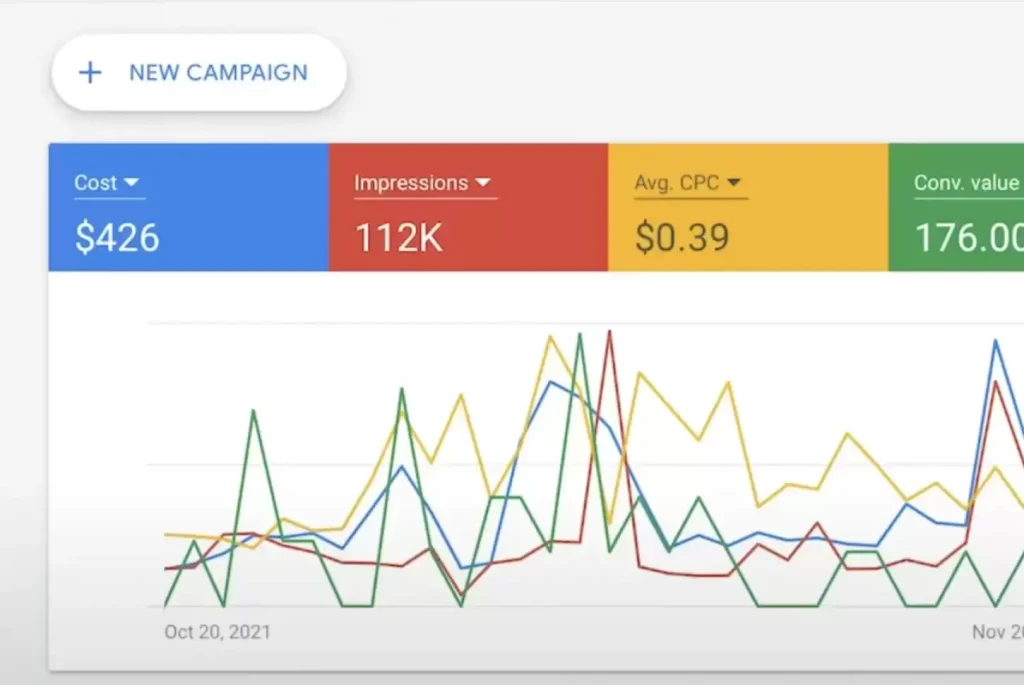
Step 2: Spot campaigns quietly wasting budget
This is where many advertisers hesitate – but it’s also where quick wins live.
Look for campaigns that:
- Spend regularly without producing results.
- Haven’t converted in a long time.
- Don’t support a clear goal (brand, testing, awareness).
You don’t need to switch these off immediately. Often, the safest optimisation is simply reducing spend and watching how performance responds.
Step 3: Make small, intentional budget changes
When it comes to budgets, dramatic moves tend to create more noise than progress. Sharp increases or sudden cuts can reset learning, distort performance data, and make it harder to see what’s actually working. Smaller, deliberate adjustments, on the other hand, give you clarity.
A smarter approach looks like this:
- Gradually increase budgets on campaigns that are already converting and showing stable performance.
- Trim spend on under-performers instead of switching them off immediately — give yourself room to observe trends.
- Avoid stacking multiple major changes at once, which makes it nearly impossible to isolate impact.
This way, you protect the learning phase while still steadily pushing performance in the right direction.

Step 4: Leave the “boring but stable” campaigns alone
One of the most common optimization mistakes is constantly tinkering with campaigns that are already doing exactly what they’re supposed to do. They may not be exciting. They may not show dramatic spikes. But they quietly deliver.
If a campaign is:
- Predictable
- Profitable
- Stable over time
It likely needs protection more than it needs improvement.
Not every campaign requires action. In fact, one of the most underrated skills in account management is knowing when to leave something alone. Stability is an asset — and sometimes the smartest move is simply to preserve it.

Struggling to get results with AI Max in Google Ads? Read Chris Nightingale’s guest post on how to unlock the power of AI Max and skyrocket your ROI!
How tools help without making things complicated
As your account grows, it gets harder to spot exactly where your attention will have the biggest impact.
Tools like Adzooma make this easier by:
- Identifying underperforming campaigns before they drag results down.
- Highlighting budget constraints on your strongest performers.
- Keeping optimization focused and manageable instead of overwhelming.
The aim isn’t to do more — it’s to do smarter, prioritizing the campaigns that truly move the needle.
Final Thought
Optimization isn’t about doing more work – it’s about doing the right work. Too often, advertisers assume that constant changes and tweaks are the path to better results. In reality, the biggest gains usually come from understanding the role each campaign plays and treating them differently based on their performance and purpose.
By focusing your attention where it matters most, protecting your stable performers, and making small, deliberate adjustments, you’ll see progress faster and with far less risk than you might expect. Smart prioritization beats busywork every time.
Want to simplify and optimise your Google Ads campaigns? Adzooma makes helpful recommendations and helps you to manage all of your campaigns and ad tools in one platform. Sign up free today!
]]>Looking at Microsoft Advertising accounts – especially for SMBs and newer advertisers – the same patterns keep showing up. Campaigns are running, money’s being spent, but performance stays flat.
And as we move through 2026 with increasingly sophisticated automation, AI bidding, and cross-format delivery, these structural mistakes are becoming more expensive by the day.
Below are the five most common Microsoft Advertising mistakes that waste small budgets, why they happen, and how to fix them without adding unnecessary complexity. If you’d prefer to hear these broken down in more detail, you can also watch our on-demand webinar where Alex McDougal, Partner Support Manager at ClickTech, walks through these same patterns drawn directly from the Microsoft Advertising accounts he reviews on a daily basis.
1. Using the Wrong Bid Strategy at the Wrong Time
One of the most common issues? Conversion-based bidding being switched on too early.
The problem
Many accounts are running Max Conversions, Target CPA, or Target ROAS without meeting the minimum data thresholds these strategies actually need to function. In many cases, campaigns are trying to optimize with fewer than 15 conversions in 30 days, incomplete or incorrect conversion tracking, or no micro-conversions to support the learning phase. The result is that campaigns become data-starved before they’ve had any real chance to optimize.
Why it stalls performance
Automated bidding relies on pattern recognition. Without enough signals, the system gets overly cautious, delivery slows down, and learning hits a wall.
The fix
Start with Max Clicks or click-based smart bidding to build volume. Only move to Max Conversions or Value strategies once you’ve cleared the data thresholds. And set targets that reflect your budget reality and expected volume—not your ideal end-state performance.
Obsessing over efficiency too early often ends up blocking the long-term performance you’re actually chasing.
2. Budgets That Are Too Small for the Structure
Small budgets can absolutely work—but only when the structure and expectations are aligned.
The problem
We’re seeing daily budgets under £10 per campaign, Shopping campaigns with all products lumped together under a £50 total budget, and multiple campaigns all competing for tiny scraps of data. The result? No single campaign ever gathers enough volume to actually learn anything.
Why it stalls performance
Microsoft Advertising’s automation runs on data density. When budgets get fragmented across too many campaigns, learning either slows to a crawl or stops entirely.
The fix
Consolidate campaigns wherever you can. Use shared budgets and portfolio strategies to pool your data. Group keywords less granularly so the system has clearer signals to work with.
For Shopping specifically, prioritize products based on performance, profit margin, and conversion likelihood—not just what’s in stock or what you feel like promoting.
Your structure should amplify your budget, not dilute it.

3. Not Using Audience Data Effectively
Audience data isn’t a nice-to-have anymore. It’s foundational.
The problem
Many accounts aren’t using in-market or remarketing audiences at all. They’re missing out on critical reporting and optimization signals, treating audiences like optional add-ons rather than core learning inputs. This limits the platform’s ability to understand who’s converting and why.
Why it stalls performance
Without strong audience signals, bidding and targeting lean too heavily on broad assumptions. Optimization becomes slower and far less precise.
The fix
Start with the basics: in-market audiences, website engagement, and dynamic remarketing. Build out customer personas using combined and custom audiences. And take advantage of Microsoft-specific options like LinkedIn profile targeting and impression-based remarketing.
Audience data doesn’t just sharpen your targeting—it accelerates the platform’s learning.
4. Importing Campaigns and Never Revisiting Them
Google imports can save time, but they’re not a long-term strategy.
The problem
Many Microsoft Advertising accounts are direct imports from Google that get left largely untouched after initial setup. They’re running broad match with minimal negatives, ignoring audience network placement performance, and operating on autopilot. The result is an account that looks active but never actually improves.
Why it stalls performance
Microsoft Advertising behaves differently—in demographics, placements, and optimization logic. Imported structures rarely align with what works best on the platform.
The fix
Create new campaigns where possible instead of relying solely on imports. Apply negatives properly and segment your ad groups with intention. Review Audience Network placements and use exclusions where needed. Adjust your targeting based on Microsoft’s demographic skew, and use scripts or automation tools to handle routine optimizations.
“Set and forget” is one of the fastest ways to burn through budget without results.

5. Not Feeding Performance Max Enough Inputs
Performance Max can’t optimize what it doesn’t understand.
The problem
Accounts are often running Performance Max with no first-party audience signals, missing search themes, weak or non-compliant creatives, and incorrect image sizes or heavy text overlays. This starves the algorithm of the quality inputs it needs to function.
Why it stalls performance
Performance Max relies on breadth of signals. Without strong audience, creative, and intent inputs, delivery becomes unfocused and inefficient.
The fix
Add website visitors and previous converters as audience signals. Use search themes to guide intent and give the system direction. Follow creative best practice: use correct image ratios, keep text overlays minimal, and maintain a strong product or service focus.
With modern AI tools available, there’s no reason to skimp on creative inputs.

Struggling to get started with Performance Max on Microsoft Advertising? Download our checklist to unlock the power of PMax and skyrocket your ROI!
Final Takeaways for Small Budgets in 2026
Before increasing spend, ask yourself: Does our bid strategy match our data maturity? Is our structure realistic for the budget we actually have? Are we feeding the platform enough quality signals? Have we adapted campaigns to Microsoft, or just imported them and moved on?
Key principles to remember:
- Match your bid strategy to your conversion volume.
- Build structure around budget reality, not wishful thinking.
- Use audience data aggressively.
- Optimize Microsoft accounts intentionally, not as an afterthought.
- …And feed automation properly – garbage in, garbage out still applies.
Small budgets don’t need complexity. They need clarity, consolidation, and patience.
Want to take your small budget further? Adzooma makes helpful recommendations and helps you to manage all of your campaigns and ad tools in one platform. Sign up free today!
]]>Ever stared at a Meta Ads dashboard, wondering which number actually deserves your attention?
You’re far from alone.
Meta doesn’t give you data. It gives you a firehose. CPMs climbing. CTR dipping. Frequency creeping up like a threat you can’t quite name. CPC holding steady while cost per conversion does… something. And your client wants answers by morning.
Here’s the thing: most campaigns don’t fail because you missed a metric. They fail because you optimized for the wrong one. You chased a 2% CTR improvement while your actual problem was bleeding out three columns to the right. Or you panicked over a CPM spike that literally didn’t matter.
The agencies winning on Meta right now? They’re not watching more numbers. They’re watching the right ones – and they know the difference.
The Common Mistake: Treating Every Metric as a Signal
It’s very easy to assume that if a number changes, something must be wrong. A CPM goes up. CTR dips for a day. Results slow slightly. The instinct is to tweak, pause, or restructure.
And now you’ve got a bigger problem than the CPM spike—you’ve got no idea what’s actually driving performance, because you’ve changed three variables while the algorithm was still learning.
Meta fluctuates. Daily. Hourly, sometimes. Auction dynamics shift. Audience saturation ebbs and flows. A competitor dumps budget on a Friday. None of that means your campaign is broken.
But when every tremor feels like an earthquake, you stop optimizing. You start firefighting. And firefighting doesn’t scale, doesn’t learn, and certainly doesn’t impress clients when you can’t explain why you changed everything twice in four days.

The Metrics That Actually Matter
There’s no magic dashboard number that tells you everything. But some metrics are weight-bearing walls. Others are just wallpaper.
Here’s what actually moves the needle when you’re deciding whether to scale, hold, or kill a campaign:
Results. Not impressions. Not clicks. The thing your client is paying for. If your goal is leads, track leads. If it’s purchases, track purchases. Sounds obvious, but you’d be surprised how many audits we’ve seen where someone’s optimizing CTR on a campaign built for conversions.
Cost per result – over time, not over Tuesday. A bad day doesn’t mean the campaign’s toast. A bad week might. Check your CPAs across 7–14 days minimum. If the trend line’s creeping up while volume stays flat, that’s your signal. One spike after the weekend? That’s noise.
Spend pacing and delivery. If Meta’s not spending your budget, it’s telling you something. Either your targeting’s too narrow, your creative’s fagged out, or your bid strategy’s handcuffing the algorithm. Underdelivery isn’t a metric most people check first, but it’s often the reason everything else looks wrong.
These three don’t work solo. They’re a system. Conversions holding steady + CPA stable + spend flowing normally = your campaign’s fine, even if your CTR dipped or frequency ticked up to 2.4.
But if conversions are flat, CPA’s rising, and spend’s dropping off? Now you’ve got a pattern worth acting on.
The Metrics That Make You Panic for No Reason
Some numbers aren’t lying to you. They’re just irrelevant.
Or worse—they look urgent when they’re actually fine, and you blow up a working campaign trying to fix them.
CPM spikes. Yes, your cost per thousand impressions jumped 22% overnight. Want to know why? Could be anything. A competitor launched. It’s Q4. It’s Monday. Apple changed something. Meta’s auction shifted because someone in Ohio increased their bid. You have almost zero control over CPM in isolation, and tanking a campaign because it went up is like cancelling your commute because gas prices rose.
What matters: whether that CPM spike is killing your CPA. If your cost per result is still healthy, the CPM is irrelevant. If CPA’s climbing with it, now you’ve got something to investigate—but the CPM itself isn’t the problem.
CTR over 48 hours. Oh, your click-through rate dropped from 2.1% to 1.8% since yesterday? Cool. That’s not a trend. That’s a Tuesday. CTR bounces based on time of day, creative fatigue that hasn’t set in yet, and which segment of your audience Meta happened to hit first. If you’re checking CTR daily and making changes based on it, you’re not optimizing—you’re guessing.
Single-day anything. One bad day is weather. Two bad days is still probably weather. Three starts to look like climate. If your client’s breathing down your neck about yesterday’s performance, show them the 7-day or 14-day view and explain that Meta’s algorithm doesn’t optimize for Wednesdays—it optimizes for windows. You should too.
These metrics aren’t useless. They’re context. They become dangerous the second you treat them like alarms.

How to Stop Knee-Jerking Your Way Through Meta
The difference between a decent PPC manager and a great one isn’t access to better data. It’s knowing when not to touch anything.
Here’s how to build that discipline:
Stop checking performance like it’s a heartbeat monitor. Open the account once, maybe twice a day. Look at 7-day windows minimum—14 if you’re running awareness or consideration campaigns. If you’re refreshing hourly and reacting to every swing, you’re not managing the account. The account is managing you. Trends emerge over days. Blips disappear over hours. Learn to tell the difference.
Change one thing. Then wait. This sounds basic, but most account chaos comes from stacking edits. You tweak the audience, update two ad creatives, and shift the bid strategy all on the same afternoon—then wonder why performance tanked. Now you don’t know which change broke it, so you change three more things trying to fix it. Stop. One variable at a time. Give it 3–5 days. Let the algorithm digest it. Then decide.
Resist the itch during learning phases. Meta tells you when a campaign or ad set is learning. That’s not a suggestion to leave it alone—it’s a warning. If you edit during learning, the clock resets. If you keep editing, it never finishes learning, and you’re stuck in permanent underperformance wondering why the platform hates you. It doesn’t hate you. You won’t let it do its job.
The goal here isn’t to go zen and ignore problems. It’s to separate signal from static. Data doesn’t mean anything until it has enough room to form a pattern. Give it that room.
Why the Best PPC Managers Watch Fewer Numbers
Here’s the paradox: the more metrics you track, the worse your decisions get.
Sounds wrong, doesn’t it? You’ve got all this data. Surely more visibility means better control. Except it doesn’t. It means more noise. More false alarms. More 3am Slack messages from your brain asking if that CTR dip means the campaign’s dying.
When you’re trying to optimize everything, you optimize nothing. Your attention fractures. You tweak one thing because CPM moved, another because frequency crept up, a third because CTR looked soft on mobile. A week later, performance is worse and you can’t pinpoint why – because you changed six variables chasing four different goals.
Now flip it. What if you only watched three metrics? Results, CPA, and spend pacing. That’s it.
Suddenly you’re not second-guessing every move. You’re not refreshing the dashboard compulsively. You know what good looks like, and you know what bad looks like, because you’ve given yourself a clean, repeatable framework. When something breaks, you spot it fast because there’s no clutter hiding the signal.
This is where a tool like Adzooma actually earns its keep. Not because it gives you more data, but because it surfaces the stuff that matters and mutes the rest. It highlights trends, not Tuesday’s weird blip. It shows you whether your CPA’s drifting over two weeks, not whether it hiccupped yesterday. It helps you make decisions like someone who knows what they’re doing, not someone drowning in dashboards at 11pm.
Confidence in PPC doesn’t come from watching everything. It comes from knowing exactly what to watch, and trusting yourself to ignore the rest.

Discover the features that are transforming performance for paid ad campaigns this year – read it here and get an edge on the competition!
The Real Skill Is Knowing What to Ignore
Meta campaigns don’t get better because you’re more vigilant. They get better because you’re more selective.
The account managers who consistently hit targets, scale profitably, and sleep through the night aren’t working harder than you. They’re not staring at more dashboards or setting more alerts. They’ve just learned something most people take years to figure out: most of what moves in your account doesn’t matter.
If your conversions are steady and your CPA’s where it should be, that CTR wobble isn’t a crisis. That CPM bump isn’t a red flag. That one slow Thursday isn’t the beginning of the end. It’s Meta being Meta—auction dynamics shifting, the algorithm adjusting, the platform doing exactly what it’s designed to do.
Filter the noise. Know the difference between a metric that’s informing you and one that’s just distracting you.
Because here’s what happens when you get that right: you stop second-guessing every move. You make fewer changes and better ones. Your campaigns stabilize. Your clients trust you. And you get your evenings back.
Calm optimisation builds confidence. And that confidence comes from knowing exactly what deserves your attention, and having the discipline to ignore everything else.
Want to get your paid campaigns off to the best start in 2026? Adzooma makes helpful recommendations and helps you to manage all of your campaigns and ad tools in one platform. Sign up free today!
]]>By the start of February, most advertisers are already in it.
Campaigns are live. Budgets are moving. Early results are starting to take shape. And naturally, questions start creeping in:
Is this working?
Did we structure this right?
Should we be changing something already?
The first few weeks of the year are a strange moment in paid advertising. There’s just enough data to feel meaningful – but often not enough to tell the full story.
This article looks at what’s actually worth checking in your paid ads after the first few weeks of 2026 – and what’s better left alone for now.
Why Early-Year Performance Can Be Misleading
It’s natural to pay close attention to January data – the first numbers of the year feel especially important. But early performance can be misleading. Campaigns are still finding their rhythm: learning phases are ongoing, budgets are settling into new patterns, automation is testing audiences, and user behavior is adjusting after the holidays.
Across paid platforms, automated campaigns need time and consistency to stabilize. Making snap judgments too early can actually slow improvement rather than speed it up.
What Is Worth Checking Right Now
Instead of focusing on headline performance alone, late January is a good moment to sense-check a few fundamentals.
1. Are campaigns actually getting enough data to learn?
One of the most common issues we see early in the year is campaigns that are technically live – but starved of volume.
Check:
- Are impressions spread thinly across lots of campaigns?
- Are some campaigns consistently limited by budget?
- Are conversions arriving too slowly for automated bidding to adapt?
If data is fragmented, performance often stalls – not because demand isn’t there, but because learning is constrained.
2. Are budgets capping opportunity too early?
Early budget limits can quietly flatten performance.
Signs to look for:
- campaigns stopping delivery early in the day
- strong early CTRs but limited volume
- automated bid strategies stuck in learning
This doesn’t always mean “spend more” – but it does mean checking whether budgets align with the ambition of the campaign.
3. Are you reacting too quickly to normal volatility?
Some fluctuation in January is normal.
Automation-driven platforms often:
- test new audience segments
- adjust delivery across formats
- recalibrate bids based on fresh signals
Frequent changes to bids, budgets, or structure can reset learning phases and create volatility that looks like underperformance.
A useful rule of thumb: If nothing is clearly broken, resist the urge to fix everything at once.
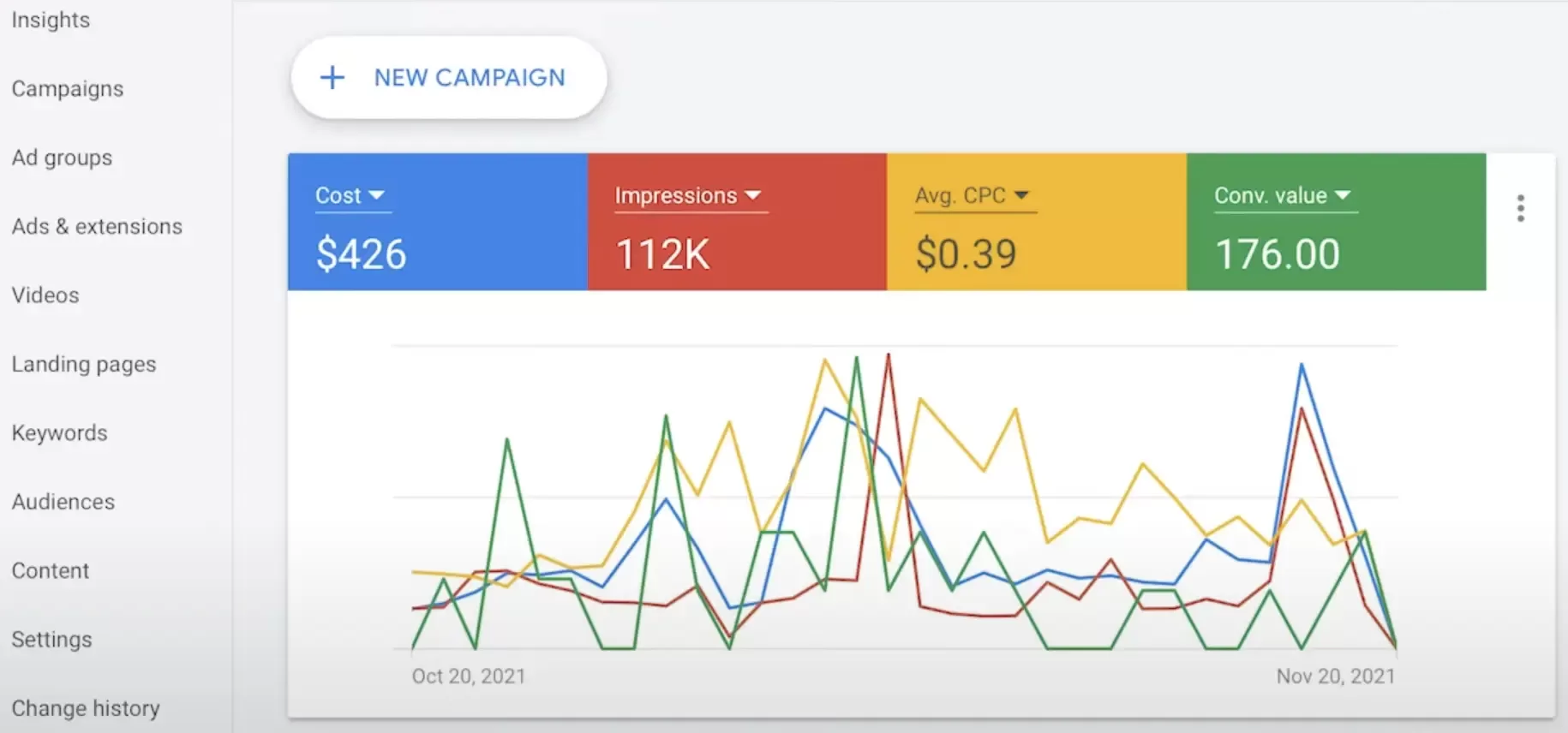
Where New Opportunities Often Appear After Campaigns Go Live
Once campaigns are running, opportunities often appear around the edges rather than in core search activity. Impression-based audiences—where you target people who saw your ad, not just clicked—can unlock smarter remarketing, sequential messaging, and audience expansion, especially for lower-traffic sites.
Ads are also appearing in more diverse environments. AI-driven and discovery-style placements mean your campaigns can reach people alongside conversational search or in mixed-intent moments. These placements behave differently, so it takes time to understand their true performance.
Using Secondary Platforms as a Learning Layer
One of the smartest late-January moves isn’t changing everything in your core campaigns – it’s using additional platforms to learn without disruption.
Platforms like Microsoft Advertising are often used this way because they allow advertisers to:
- test new formats
- explore new audience signals
- trial automation changes
- gather insights without destabilising primary revenue drivers
The value here isn’t immediate scale – it’s learning that informs better decisions elsewhere.
Discover the features that are transforming performance for paid ad campaigns this year – read it here and get an edge on the competition!
What Not to Overreact To Yet
Just as important as what to check is what to avoid over-optimising too early.
In late January, be cautious about:
- pausing campaigns purely on early CPA fluctuations
- restructuring accounts without clear evidence
- abandoning automation before it has stabilised
- judging success on a single metric
Early data is directional – not definitive.
Instead of asking, “Is this working yet?” a more useful question is: “Is this set up to improve over time?” Campaigns that perform best throughout the year share a few traits: they have enough data to learn, stable structures, room to explore, and measured, intentional optimization.
Key Takeaways
To sum up, if you’re reviewing paid ads after the first few weeks of the year, you should:
- expect early volatility
- prioritise learning over perfection
- check data flow before performance
- avoid constant structural changes
- use secondary platforms to test safely
Late January isn’t a final verdict – it’s a checkpoint, a chance to ensure your campaigns are positioned to grow and improve throughout the year.
Common Paid Campaign Questions
Should I change my campaigns after the first few weeks?
Only if something is clearly broken. Most optimisation should be incremental, not reactive.
Is it normal for performance to fluctuate in January?
Yes. Learning phases, seasonality shifts, and automation recalibration all contribute.
How long should automated campaigns be left to learn?
In most cases, 2–4 weeks of stability is needed before drawing conclusions.
Why use platforms like Microsoft Advertising at this stage?
They’re often well suited for testing and learning alongside core activity, without introducing unnecessary risk.
Want to get your paid campaigns off to the best start in 2026? Adzooma makes helpful recommendations and helps you to manage all of your campaigns and ad tools in one platform. Sign up free today!
]]>At some point, almost every marketer hits this moment:
Your campaigns are live.
Nothing is technically broken.
Spend is going out.
But performance… just isn’t moving.
No major drops. No obvious errors. Just a frustrating plateau.
As paid advertising heads into 2026, this scenario is becoming more common – not because platforms are failing, but because the way campaigns learn and optimise has fundamentally changed.
Come with us as we dig into why paid ad campaigns stall even when nothing looks wrong, and how marketers can catch it early by noticing patterns across paid media, with platforms like Microsoft Advertising often showing the signs first.
Campaign Stalling Is a Learning Problem, Not a Platform Problem
One of the biggest misconceptions in paid advertising is that stalled performance means something is “wrong”.
In reality, most stalled campaigns are doing exactly what the platform allows them to do – they just don’t have enough data, consistency, or freedom to improve.
Why this matters more in 2026
Modern ad platforms rely heavily on:
- machine learning
- automated bidding
- predictive targeting
- cross-format delivery
These systems don’t optimise instantly.
They learn over time – and that learning can be easily constrained.

The Most Common Reasons Paid Ad Campaigns Stall
Across Google, Meta, and Microsoft, the same structural issues appear again and again.
1. Campaigns Are Too Granular for Their Budget
Over-segmentation is one of the most common causes of stalled performance.
When budgets are split across:
- too many campaigns
- too many ad groups
- too many audiences
…no single part of the account collects enough data to optimise effectively.
Industry data consistently shows that highly granular structures with limited budgets struggle to reach the conversion volume needed for AI-driven optimisation to work properly.
Signs to watch for:
- Low impressions across multiple campaigns
- Slow or inconsistent conversion signals
- Learning phases that never fully stabilise.
2. Imported Campaign Structures Don’t Translate Well
Many advertisers copy campaign structures from one platform to another, expecting similar results.
In practice, this often causes problems.
Campaigns imported into Microsoft Advertising frequently underperform when:
- structures are copied exactly from Google or Meta
- historic performance data doesn’t exist yet
- platform-specific features aren’t adopted
The result is an account that looks organised – but never gains momentum.
3. Budgets Cap Learning Too Early
Another common issue is campaigns that simply don’t run long enough, or spend enough, to learn.
When budgets are too restrictive:
- ads stop serving before meaningful patterns emerge
- bid strategies can’t stabilise
- performance plateaus quickly
This is especially visible in automated and multi-format campaign types, where learning depends on consistent delivery over time.

4. Too Many Changes Reset the Learning Phase
Trying to “fix” performance too often can make things worse.
Frequent changes to:
- bids
- budgets
- targeting
- creative
…can repeatedly reset learning phases, preventing optimisation from ever settling.Platform guidance across paid media generally recommends allowing at least 2–4 weeks of stability for automated campaigns before judging performance – unless results are clearly broken.
Why Microsoft Advertising Often Exposes These Issues First
Microsoft Advertising isn’t uniquely problematic – but it does act as a useful diagnostic environment.
Why problems surface more quickly
- Less historical data by default
- Automation relies heavily on fresh signals
- Over-granularity fails faster
- Budget constraints are more obvious
This makes Microsoft Advertising a helpful lens for understanding what actually helps campaigns learn, even though the same principles apply across platforms.

Discover how to get reach even without a click in our article “Why Impression Based Remarketing Will Redefine Paid Ads” – read it here!
How to Prevent Paid Ad Campaigns From Stalling in 2026
The solution isn’t more complexity – it’s stronger foundations.
Practical ways to support learning
- Consolidate campaigns to improve data density
- Use shared budgets where appropriate
- Avoid overly rigid or legacy structures
- Give automation time before judging results
- Make changes gradually, not all at once
In 2026, effectiveness increasingly beats granularity.
Stalling vs Scaling: The Key Difference
Campaigns that scale tend to share a few traits:
- sufficient budget to explore
- simple, adaptable structures
- consistent signals
- creative variety
- patience during learning phases
Campaigns that stall usually lack one or more of these.
As ever, beware diminishing returns! Even the best-performing campaigns have a limit as to how much budget they can efficiently spend. If you start to see CPAs creeping up in previously efficient campaigns or channels, broaden your audience or the scope of your activity to maintain a healthy budget : reach ratio.

Key Takeaways for Marketers
If your paid ad campaigns feel stuck:
- it’s rarely the platform’s fault
- structure and budgets matter more than ever
- automation needs space to learn
- over-control often limits performance
- Microsoft Advertising can highlight structural issues early
Paid advertising hasn’t become harder – it’s become less forgiving of weak foundations.
Common Questions Marketers Ask About Stalled Campaigns
Why do paid ad campaigns stall even when metrics look fine?
Because learning is constrained. Without enough data, budget, or consistency, platforms can’t optimise effectively.
Is automation causing campaigns to stall?
No – but automation exposes weak structures faster than manual optimisation ever did.
How long should I wait before changing a campaign?
For automated campaigns, allow 2–4 weeks unless performance is clearly broken.
Is this problem specific to Microsoft Advertising?
No. It happens across platforms, but Microsoft often reveals these issues sooner due to less historical data.
Final thought
If campaigns stall in 2026, it’s usually a signal – not a failure.
The accounts that perform best aren’t constantly “fixed”. They’re built to learn, adapt, and improve over time.
Want to get your paid campaigns off to the best start in 2026? Adzooma makes helpful recommendations and helps you to manage all of your campaigns and ad tools in one platform. Sign up free today!
]]>When you log into Adzooma, our goal has always been for you to immediately understand how your accounts are performing and know exactly what to do next.
That principle has guided the latest round of dashboard updates. We’ve simplified the experience, removed unnecessary clutter, and introduced clearer prioritisation so you can focus on the actions that genuinely impact performance.
Below, we’ll walk through what’s new in the Adzooma dashboard and how these changes make it easier to assess performance, spot issues early, and take action with confidence.
Why We Updated the Adzooma Dashboard
As Adzooma has grown, so has the amount of data and insight available across paid advertising, SEO, and web performance.
But more data doesn’t always mean more clarity.
From user feedback, one theme came through consistently: you want to see the most important information first – without scrolling, searching, or second-guessing where to focus.
With that in mind, we redesigned key areas of the dashboard to:
- Surface critical insights immediately
- Bring high-impact actions to the forefront
- Reduce unnecessary noise
- Support both new and experienced users more clearly.
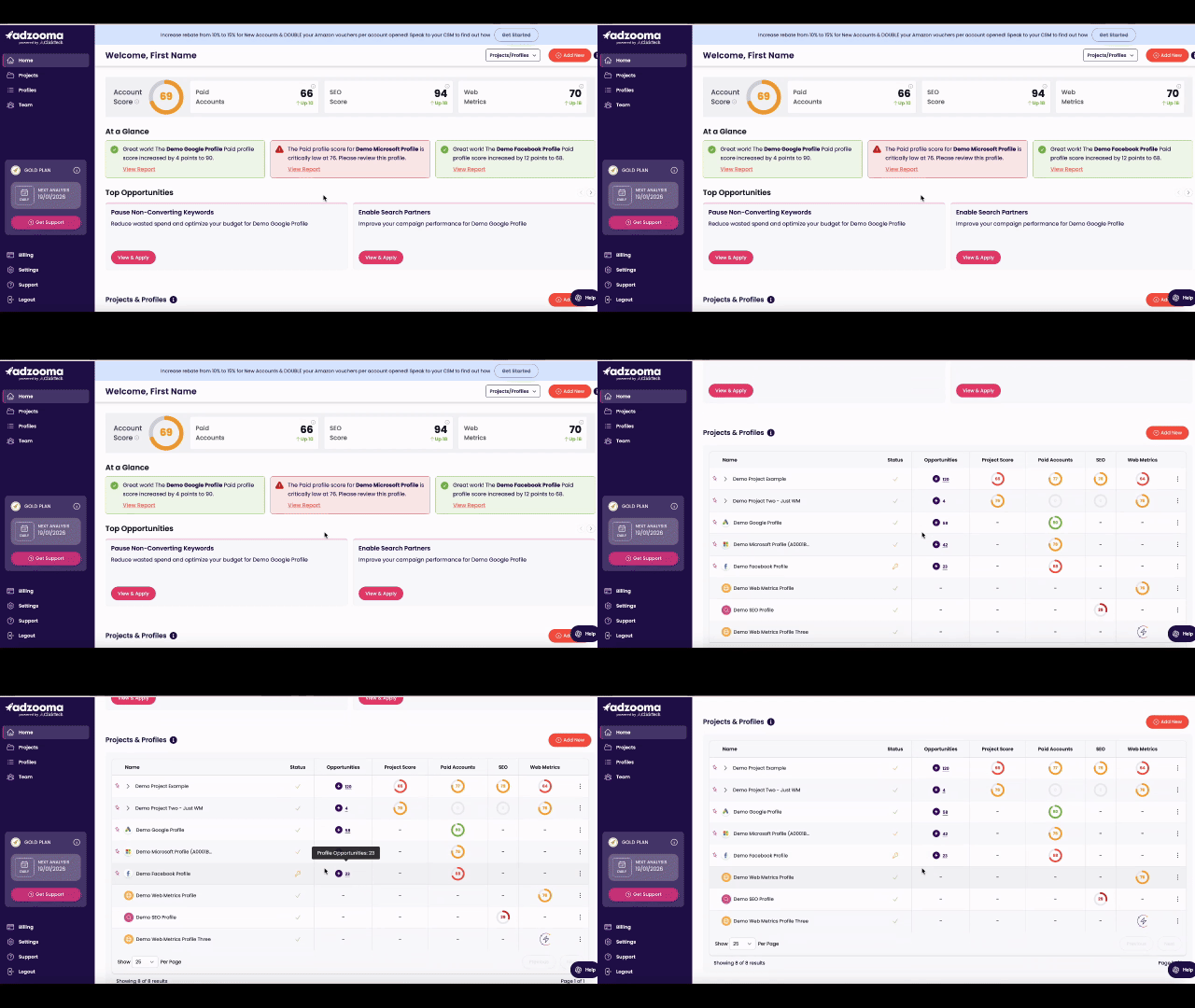
A Cleaner First View When You Log In
One Consolidated Account Score
The top of the dashboard now features a single, consolidated Account Score bar.
Instead of multiple large, text-heavy scorecards, you’ll see:
- A clear overview of overall account health
- Key scores displayed consistently
- Additional context available via tooltips when you need it
This makes it easier to assess performance quickly, and dive deeper only when it’s useful.

“At a Glance” Insights That Guide Your Focus
Spot Issues and Wins Instantly
We’ve introduced a new At a glance section that highlights the most important movements across your profiles.
It’s designed to answer one simple question: “Where should my attention go right now?”
You’ll see up to three key insights, such as:
- A critically low profile score that needs attention
- The largest recent score drop
- The most significant improvement
Each insight is clickable, taking you directly to the relevant profile – helping you move from insight to action without unnecessary steps.

Top Opportunities, Prioritised by Impact
Know Exactly What to Do Next
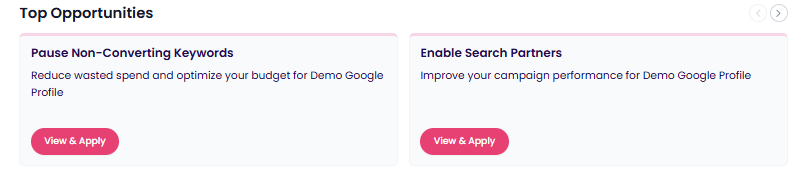
The updated Top Opportunities module highlights up to three high-impact, actionable opportunities across your connected paid advertising accounts.
Opportunities are prioritised based on:
- Where you’re spending the most
- Where changes are likely to deliver the biggest performance gains
Only opportunities you can actively apply are shown, removing low-value or purely informational suggestions.
Each opportunity includes:
- A clear description of the improvement
- The expected benefit
- A direct View & Apply CTA
This means less time reviewing reports and more time acting on changes that can genuinely move performance.
Better Guidance for New Adzooma Users
Clear Next Steps Without Dashboard Clutter
For new users, knowing where to start can feel overwhelming.
We’ve improved onboarding by:
- Removing static “what to do next” sections
- Introducing dynamic, in-app guidance and checklists
- Delivering updates contextually, rather than as permanent dashboard blocks
This ensures new users get support when they need it, without adding noise for experienced users.
Clear Messaging While Your Data Is Being Analysed
No Guesswork During Setup
If you’ve recently connected new paid profiles, the dashboard now clearly explains what’s happening behind the scenes.
You’ll see messaging that confirms:
- Performance reports and opportunities are being generated
- Everything is working as expected
- When results are likely to appear
This added clarity removes uncertainty and reassures you that insights are on the way.

What These Updates Mean for You
Together, these improvements are designed to help you:
- Understand account health more quickly
- Focus on the actions with the biggest impact
- Spend less time navigating and more time optimising
- Feel confident about what to do next
Whether you’re managing one account or many, the updated Adzooma dashboard is built to support clearer, more confident decision-making.
 Log in to Adzooma to explore the updated dashboard, now live!
Frequently Asked Questions
What has changed in the Adzooma dashboard?
The dashboard now includes a simplified Account Score overview, an At a glance insights section, prioritised Top Opportunities, improved onboarding guidance, and clearer messaging during data analysis.
Does this affect existing Adzooma users?
Yes. All users will see the updated dashboard experience when they log in.
Are opportunities still account-specific?
Yes. Opportunities are still generated at account level, but the dashboard now highlights the most impactful ones across all connected paid profiles.
Is this update available on free plans?
Dashboard improvements apply across Adzooma plans, though access to certain features may vary by plan.