We are proud to announce that Axceta is joining forces with Garage&co as a partner to support and amplify hardtech (hardware technology) innovation in Quebec.
This partnership is built on shared values: a strong entrepreneurial spirit, a commitment to nurturing local talent, and a hands-on approach to technological innovation. Together, we aim to strengthen Quebec’s tech entrepreneurship ecosystem by focusing on tangible, real-world projects, innovation rooted in the field, not confined to the lab.
“At Axceta, we firmly believe the best way to build hardware is to co-create with entrepreneurs, close to the realities on the ground. The lines between AI and the physical world are blurring, opening up opportunities for a new generation of innovators. Partnering with Garage&co allows us to combine our strengths to support connected device creators, energize the Quebec ecosystem, and accelerate the scaling of physical innovations.”
Sherif Zaroubi, CEO of Axceta“Axceta’s arrival as a partner is fantastic news for our community. Their expertise in embedded systems and IoT brings new depth to Garage&co’s ecosystem. Together, we’ll enable hardware entrepreneurs to test faster, better understand real-world constraints, and build more resilient businesses.”
Laurence Audette Lagueux, Executive Director, Garage&co
Through this collaboration, Axceta will contribute its expertise in embedded systems, IoT, and artificial intelligence, along with its vast industrial network, to accelerate the development of ambitious tech solutions in Quebec.
About Axceta
Axceta is a Canadian company specializing in IoT solution engineering and technological support for innovative organizations. Our mission: to help clients transform their operations through connected devices, data visualization, and artificial intelligence.
Media Contact:
Hélène Gey
+1 514 244 3095
[email protected]
About Garage&co
www.garageincubation.com

What is Real-Time Data Acquisition in IoT?
Real-time data acquisition is the process of collecting, processing, and analyzing data as it is generated, providing immediate insights into the physical world. In an IoT context, this involves a network of connected devices (sensors, actuators, and smart objects) that continuously monitor an environment or system and transmit data instantly to a centralized platform.
For example:
- Smart factories know in advance when a piece of critical equipment will fail.
- Greenhouses that automatically detect a sudden temperature drop.
- Cameras detecting minute defects in the quality of aerospatial parts.
- Automated scale systems detecting every ounce of material processed.
- LiDAR sensors give real-time insights into stockpiles of aggregate.
- Out-of-network, remote, mining pumps warning their operators when they are being activated.
These are but a few of the examples of real-world cases in which mission-critical information can be gathered to save costs and optimize operations in a plethora of domains.

Key Components of an IoT Data Acquisition System
The architecture of a robust IoT-based data acquisition system typically includes:
| Component | Function | Example |
|---|---|---|
| Sensors/Devices | Collect raw data from the environment. | Temperature, pressure, and humidity sensors |
| Connectivity | Transmit data using protocols (e.g., MQTT, HTTP). | Wi-Fi, Cellular (5G/LTE), LoRaWAN |
| Edge Computing | Process and filter data locally before transmission. | Gateway device with embedded processing unit |
| Cloud Platform | Store, analyze, and manage the vast amounts of incoming data. | AWS IoT, Google Cloud IoT Core, Azure IoT Hub |
| User Interface/Application | Visualize data and provide actionable insights to end-users. | Custom dashboard or mobile application |
The Business Imperative for Real-Time Data
Moving from batch processing to real-time data acquisition offers significant competitive advantages across numerous industries:
- Proactive Maintenance and Anomaly Detection: Real-time monitoring allows businesses to detect anomalies and equipment failures immediately, enabling predictive maintenance that significantly reduces downtime and operational costs.
- Optimized Decision-Making: Instant access to operational metrics empowers managers to make faster, more informed decisions, leading to optimized resource allocation and increased efficiency.
- Enhanced Customer Experience: In logistics and retail, real-time tracking provides accurate updates on product location and availability, leading to greater customer satisfaction.
- Compliance and Safety: Continuous monitoring ensures systems are operating within safe and regulatory parameters, automatically triggering alerts if thresholds are breached.
A Typical Step-by-Step Implementation by Axceta
Here at Axceta we know that a successful real-time IoT data acquisition system requires careful planning and execution. Our approach is based on four main phases that we will execute upon quickly, the main goal being that by completing these four steps, we will be able to deliver actual valuable and actionable data that your organisation will be able to use to save costs and optimize your operations as fast as possible.
Step 1: Planning and Design
Every business and its processes are distinct; even within the same industry, no two organizations operate identically. This implementation phase is crucial, as we will become de facto subject matter experts in your specific operations. This deep understanding allows us to fully master and address the unique challenges facing your organization.
- Define Objectives: Our initial step will be to establish a deep and precise understanding of the data required for collection and the specific business challenges it will address within your organization.
- Select Hardware: Selection of sensors and gateway devices will be tailored to your specific data needs and operating environment. For instance, industrial settings will necessitate the use of industrial-grade equipment to withstand harsh conditions.
- Architecture Mapping: Next, the data flow will be designed, encompassing connectivity protocols and the chosen data storage platform.
Step 2: Deployment and Configuration
After collaborating with your organization to pinpoint the essential real-world data points, we will proceed with the on-site deployment of the requisite equipment—including sensors, cameras, and connection gateways—to facilitate real-time data access.
- Device Installation: Once we have selected the hardware necessary to capture your real-world physical data we will strategically place and install all sensors and gateways so that we can capture said data at the targeted site.
- Network Setup: We now need to configure the network to ensure secure, reliable and low-latency communication between devices and where the data must be stored.
- Platform Integration: Our team will then configure or build the platform (e.g., data ingestion pipelines, storage databases) to receive the incoming streams of data according to your needs and domain.
Step 3: Data Processing and Analysis
With the necessary equipment now actively collecting data on-site, the next critical step is ensuring your organization can effectively utilize and interact with this gathered information.
- Develop Processing Logic: At this point we have the data but we need to implement logic for data cleaning, filtering, and aggregation, often performed at the edge (on the on premise equipment) or immediately upon remote (cloud or data center) ingestion.
- Implement Real-Time Analytics: The next step is to make the real time data useful by leveraging streaming analytics tools to process data in motion and generate instant alerts or insights.
For example, a system could detect a temperature spike and trigger an alert instantly. - Build Visualization Dashboards: We then create user-friendly dashboards to display real-time metrics, allowing key stakeholders to monitor performance, sometimes our clients already have a solution in place for this such as an ERP, in which case we will integrate the insights we generate for you there.
Step 4: Maintenance and Scaling
Finally, essential monitoring and robust security measures must be implemented to maintain the solution’s strength and security, focusing primarily on ensuring continuous operational availability of the tools and data.
- Monitoring: The required infrastructure will be deployed for continuous system performance monitoring, which includes regular checks on sensor battery life, connectivity status, and overall data quality.
- Security Audit: We will conduct a review and the necessary updates of security protocols to protect sensitive data streams.
- Scaling: We will ensure that the system is able to handle increasing volumes of devices and data as the business or operations grows.

Real world use case we delivered using this methodology
Here is a real world example and breakdown of these steps on a specific project Axceta helped on, specifically in the case of LithologIQ mobile core sample laboratory. This is a deep dive explaining what happened with this specific project step by step.
| Steps | What was done? |
|---|---|
| Step 1: Planning and Design | Define objectives: We partnered with LithologIQ to gain a deep understanding of their goals, business objectives, and challenges. Their vision was to revolutionize the mineral core sampling analysis process using portable hyperspectral cameras, dramatically cutting down the time required from weeks to mere hours. Select hardware: LithologIQ had already identified the specific sensors required for their project. Axceta planned the initial integration of the critical sensors with Edge compute modules and the PLC controlling the various actuators of the system. This equipment was selected to seamlessly coordinate with LithologIQ’s chosen hardware, enabling control over both the data capture process and the conveyor belt system used to move core samples beneath the cameras. Architecture Mapping: Our approach involved creating a comprehensive plan for hardware management, data delivery, and processing using specialized software. This strategy was designed to achieve near-immediate results from the scanned minerals.We understood that this plan would require adaptation as new information emerged throughout the project’s lifecycle. |
| Step 2: Deployment and Configuration | Device Installation:
Our primary role in this project was to leverage our existing teams, development environment and methodology to accelerate the conception of a functional, field ready laboratory. The mechanical and automation aspects of the project were done by a specialized partner so we focused on delivering an initial version of the software and collaborating with LithologIQ’S growing software team. Network Setup: The challenge in this unique scenario was managing the connection to a mobile laboratory operating in extremely remote areas. Since conventional network access was unavailable for real-time data transfer, an unconventional solution was necessary to acquire the data on-site and then transmit it externally once connectivity was established. Platform Integration: We focused on delivering, as quickly as possible, a minimally viable platform capable of ingesting and storing equipment-generated data. This system enabled the configuration of data capture sequences tailored to user preferences and specific domain challenges. It served as a strong basis for LithologIQ to evolve their further development from. |
| Step 3: Data Processing and Analysis | Develop Processing Logic:
The data acquisition method was established, but the collected information required storage and accessible usage. Specifically, the system needed to record the timestamp of data capture and the ID of the core sample box being processed. Furthermore, it was essential to store and associate critical metadata, such as light calibration data, with the collected information. Implement Real-Time Analytics: For this use case, the hyperspectral data was generated line by line. Therefore, a method was required to assemble these individual files into a format that was both easy for humans to interpret and compatible with specialized software. This software, running on a secondary computer in the mobile lab, was necessary for further processing to identify essential minerals and chemicals within the core samples.
A secondary product was developed to aid geologists in interpreting the data. This specialized tool analyzes the output from the main equipment, assisting in the identification and navigation of the massive datasets generated from thousands of core samples. For this project, we designed the tool’s user interface and specialized navigation features to allow for simultaneous visual consultation of vast amounts of hyperspectral bandwidth data. |
| Step 4: Maintenance and Scaling | Monitoring:
The core focus of this R&D project was the development of a new product, with a primary concern for data integrity. To ensure that no mission-critical data was lost during the acquisition process, we implemented solutions that immediately alert the user if any malfunction occurs. This allows the user to review their last operation and prevent data loss. Furthermore, a detailed log system was put in place to enable thorough auditing of all equipment operations. Security Audit: The system for this product operated as a closed loop. While security was a consideration, extensive work in this area was not required beyond ensuring the integrity of our codebase and development tools.
Scaling: Axceta ensured the client’s future expansion by delivering high-quality documentation and code bases, enabling them to construct a second mobile laboratory unit independently. Furthermore, we empowered their in-house development team with training and expertise, allowing them to assume ownership of product maintenance and future improvements. |
The future of data is real-time, and the journey starts with a conversation.
Real-time data is rapidly becoming a cornerstone of modern operations. As industries shift toward smarter, more responsive systems, the ability to collect and act on information in the moment is no longer optional, it’s strategic.
If you’re exploring how to bring real-time IoT data into your operations, we invite you to connect, exchange ideas, and learn from what’s working in the field.
Axceta leverages its expertise in embedded development to deliver specialized solutions across industries such as agriculture, mining, and energy, focusing on reliable IoT device management, advanced communication protocols, and energy-efficient technologies.
If you’re interested in learning more about IoT or if you’re seeking a partner to help implement security solutions, you can reach out to us at https://axceta.com/contact/
To stay in touch and read more about our projects, subscribe to our newsletter at the bottom.
]]>Based on an interview between Hélène Gey, Axceta’s CMO and Guillaume Girard
The energy industry is at a critical turning point. With increasing demands for efficiency, sustainability, and resilience, the convergence of Artificial Intelligence (AI) and the Internet of Things (IoT) is reshaping how energy is produced, stored, and consumed. From vehicle-to-grid integration to smart grids and AI-driven forecasting, energy utilities are finding new ways to optimize operations and enhance customer experience.
In this article of Axceta’s Connected Futures series, we explore the impact of AI and IoT on the energy sector, highlighting the most transformative trends and challenges ahead.
The Next Big Shift: Vehicle-to-Grid and the Future of Energy Storage
One of the most disruptive innovations emerging in the energy sector is Vehicle-to-Grid (V2G) technology. As electric vehicles (EVs) become more widespread, their batteries represent a massive, untapped energy storage resource. V2G allows EVs to not only draw power from the grid but also return excess energy when needed, helping stabilize demand fluctuations and reduce outages.
However, the widespread adoption of V2G requires overcoming key challenges:
- Infrastructure Readiness: Cars, chargers, and homes must be designed to support bidirectional energy flow.
- Standardization: Energy utilities must work with auto manufacturers to ensure compatibility across vehicles and charging systems.
- Consumer Incentives: Utilities must find ways to make V2G economically viable for homeowners, potentially through rebates, dynamic pricing, or subscription models.
Companies like Hilo have already demonstrated the potential of connected homes in optimizing energy usage. The next step is integrating EVs into this ecosystem to create a more resilient and flexible power grid.
Smart Grids & Real-Time Optimization: Predictive and Preventive Energy Management
AI and IoT are enabling real-time monitoring, predictive maintenance, and automated load balancing within energy distribution systems. By analyzing data from smart meters, connected appliances, and renewable sources, utilities can predict energy demand and prevent outages before they occur.
Key applications of AI in smart grids include:
- Automated Demand Response: Adjusting power consumption based on grid conditions.
- Predictive Maintenance: Identifying equipment failures before they happen to reduce downtime.
- Consumer Engagement: Sending real-time alerts to users about energy costs and efficiency tips.
Despite the potential, adoption remains slow beyond early adopters. The main challenge is finding the right balance between customer incentives and grid optimization. Utilities must demonstrate the value of smart grid investments, whether through lower costs, improved reliability, or seamless user experience.
To encourage adoption, some pilot programs are exploring playful incentives, for example, letting users say: “I want to treat myself to a Venti Frappuccino today, do what it takes to pay for it yourself.” The connected home then automatically optimizes heating, cooling, and appliance usage to save just enough on the energy bill to cover the cost of the coffee.
Empowering users to participate in a shared energy economy, similar to how Uber leverages individual vehicles, is becoming a real possibility. When the energy provider needs to reduce demand, it can financially incentivize users to join in, activating their Vehicle-to-Home (V2H) systems or connected devices to contribute at the right moment. AI would determine who’s best positioned to help, and at what price point. A typical use case? During a power outage in one neighborhood, AI could coordinate responses to help bring the grid back online without overloading local transformers.
Renewable Energy Integration: AI-Driven Forecasting for Maximum Efficiency
With the rise of solar, wind, and other renewables, energy providers are turning to AI to enhance forecasting accuracy and grid integration. Predictive analytics can anticipate weather patterns, solar output, and wind availability, helping utilities optimize energy distribution.
Potential benefits include:
- Improved Storage Management: AI can determine when to store excess energy or redirect it to high-demand areas.
- Real-Time Grid Adjustments: Automated responses based on energy forecasts can balance supply and demand.
- Consumer Participation: Homeowners with solar panels or battery storage can benefit from real-time insights on when to use or sell excess power.
However, the challenge remains: How can utilities meaningfully share these insights with customers? Providing easy-to-understand energy analytics can empower users to make informed decisions and actively contribute to grid stability.
Enhancing Energy Efficiency: AI & IoT for Homes and Industries
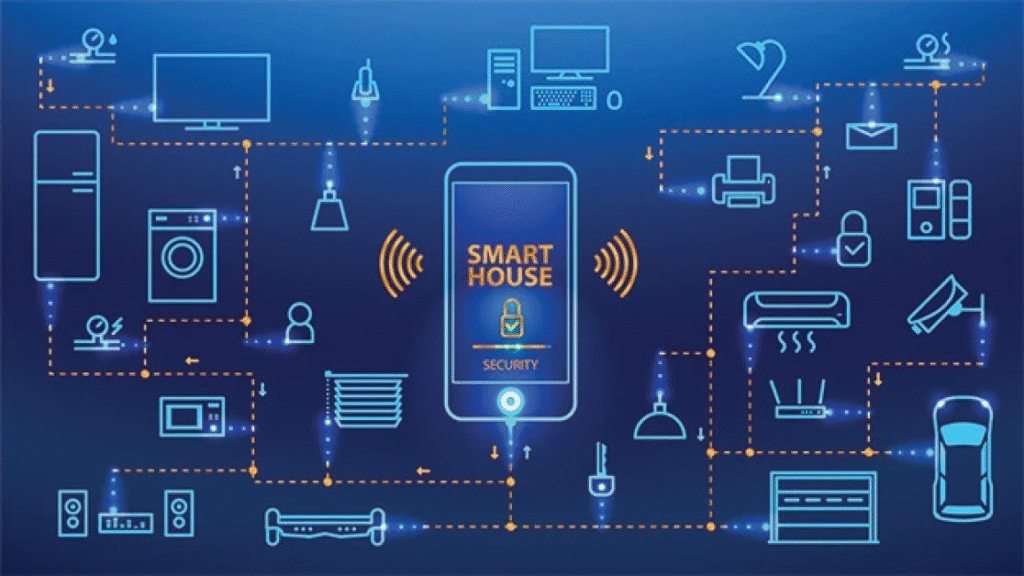
AI and IoT play a crucial role in reducing energy consumption, both for residential and industrial users. Connected devices can automate energy savings by adjusting consumption based on real-time conditions.
For industrial customers, AI-driven energy management can:
- Optimize operations by integrating energy demand forecasts with production schedules.
- Automate energy-saving measures during peak hours.
- Enable data-sharing between industrial users and utilities for better efficiency planning.
For residential users, a future scenario could involve AI acting as a personal energy assistant:
- Instead of manually adjusting settings, users could talk to their house, asking it to optimize energy savings.
- AI could suggest trade-offs, such as reducing home heating for a day in exchange for a specific purchase.
This consumer-focused approach to energy efficiency offers utilities an opportunity to enhance customer satisfaction and drive the adoption of smart energy solutions.
Grid Security & Cyber Resilience: Protecting the Future Energy Landscape
With the growing interconnectivity of energy systems, cybersecurity risks are increasing. AI-driven energy management introduces new vulnerabilities, making grid security a top priority.
Key security measures include:
- Resilient IoT devices: Preventing unauthorized control of home energy systems.
- Frequent Software Updates: Ensuring all smart grid components remain secure against cyber threats.
- AI-powered Threat Detection: Leveraging machine learning to predict and prevent cyberattacks in real-time.
- Quantum-Resistant Security: Preparing for future cyber threats posed by quantum computing advances.
As energy systems become smarter, utilities must proactively safeguard critical infrastructure while enabling innovation.
Industry Adoption: Where to Start?
For companies looking to integrate AI and IoT into their energy operations, the journey starts with three key steps:
- Define the Value: Identify the specific problem AI and IoT will solve before investing in technology.
- Leverage Existing Data: Many utilities already collect vast amounts of data, and AI can unlock new insights and efficiencies.
- Partner with Experts: Collaboration accelerates AI adoption and ensures robust implementation, whether through established cloud providers or specialized energy tech firms.
The future of energy lies in smart, interconnected, and AI-driven solutions. As these technologies evolve, their impact will extend beyond efficiency and cost savings to creating a more sustainable and resilient energy ecosystem.
Axceta leverages its expertise in embedded development to deliver specialized solutions across industries such as agriculture, mining, and energy, focusing on reliable IoT device management, advanced communication protocols, and energy-efficient technologies.
If you’re interested in learning more about IoT or if you’re seeking a partner to help implement security solutions, you can reach out to us at https://axceta.com/contact/
To stay in touch and read more about our projects, subscribe to our newsletter at the bottom.
]]>In today’s mining landscape, operational excellence is as much about data as it is about raw materials. As mines become more autonomous and data-driven, the need to bridge the communication gap between underground equipment and surface-level IT infrastructures becomes increasingly critical. That’s precisely the challenge NeurominesTM Connex set out to solve, and where Axceta stepped in as a key technology partner.
The Genesis of Neuromines Connex: Addressing a Common Pain Point
Neuromines Connex was born from a recurring issue observed by Arkys, a leading IT solutions provider in Quebec. While acting as IT consultants for a mining group, Arkys noticed that mining equipment manufacturers, especially smaller and mid-sized players, struggled to deploy their connected devices within mines due to stringent cybersecurity policies and limited access to underground networks.
The mining environment adds another layer of complexity: setting up a proprietary communications network underground is not only prohibitively expensive but also practically unfeasible. Equipment manufacturers often found themselves stuck between the security demands of mining IT departments and their lack of in-house IoT expertise. That’s when Arkys turned to Axceta.
Axceta’s Role: Operationalizing IoT with Edge AI
Axceta brought deep expertise in embedded systems, IoT, and edge AI to the table. From the outset, Axceta was more than just a service provider; it was a collaborative partner. Together, Arkys and Axceta developed a secure, scalable, and standardized platform that enables seamless integration of mining equipment into existing mine networks.
At the core of the approach was one guiding principle: move intelligence as close as possible to the equipment itself. This reduces the reliance on constrained underground telecom infrastructure, enhances data security, and ensures high-quality, actionable insights can be generated where they matter most: at the edge.
A Unified Gateway for All Stakeholders
One of Neuromines Connex’s major innovations is its ability to serve both equipment manufacturers and mining IT teams with a shared, centralized interface. Instead of reinventing the wheel for each deployment, Neuromines Connex provides a standard, validated cybersecurity infrastructure that is accepted by the mine once and then leveraged by multiple equipment vendors.
For mining companies, this means tighter control over what data exits their infrastructure. They can centrally manage access permissions, monitor telemetry in real time, and ensure compliance with internal policies. For equipment manufacturers, Neuromines Connex eliminates the steep learning curve of navigating mine-specific IT protocols, allowing them to focus on what they do best: delivering high-performance machinery.

Solving for Security, Scalability, and Interoperability
From a technology standpoint, Axceta played a pivotal role in designing a modular and flexible architecture. Neuromines Connex is designed to handle a wide range of communication protocols and can adapt to the various network technologies used in mines, including 5G, leaky feeder systems, and long-range Wi-Fi. This adaptability ensures that equipment can be deployed in virtually any mine configuration without compromising performance or security.
Scalability was another essential design goal. Whether a mine operates five or five hundred pieces of equipment, Neuromines Connex supports centralized device management, remote debugging, and secure over-the-air (OTA) updates, all while maintaining SOC 2-compliant cybersecurity standards.
Standardizing the Data Language
Another standout feature is the Neuromines Connex Common Data Model (CDM). In mining environments where multiple vendors operate concurrently, standardizing the format of telemetry data is a game-changer. By harmonizing data streams before they leave the mine, Neuromines Connex enables cross-equipment analytics, performance benchmarking, and easier integration into existing ERP systems.
This level of interoperability isn’t just a convenience; it’s a prerequisite for digital transformation in mining and something Axceta specializes in making a reality.
A Collaborative Culture, A Shared Vision
While the technical achievements of Neuromines Connex are impressive, what truly sets this project apart is the strength of the partnership behind it. As Eric Beauchesne of Arkys put it, “We had different working methodologies at first, but we made it a point to learn from one another. Axceta’s team was deeply knowledgeable and committed to doing things the right way.”
This spirit of collaboration allowed both teams to build a solution that wasn’t just functional; it was future-ready.
What’s Next: AI and the Future of Neuromines Connex
With the foundational architecture now deployed in pilot mines and with several equipment vendors, the Neuromines Connex platform is already showing its potential. The next step? Bringing AI into the mix.
By leveraging the high-quality, structured data collected through Neuromines Connex, Axceta and Arkys aim to develop advanced AI models that can provide predictive maintenance alerts, optimize equipment usage, and even interpret unstructured operational data. With a secure, scalable data pipeline in place, the possibilities are vast.
Conclusion: From Underground to Insight
The Neuromines Connex project exemplifies how deep domain expertise, paired with cutting-edge technology, can transform an industry. For mining equipment manufacturers and R&D teams, it offers a blueprint for how to integrate seamlessly into modern mine infrastructures, while future-proofing your technology stack.
At Axceta, we believe that operationalizing IoT and Edge AI isn’t just about connecting devices; it’s about unlocking real-time insights that drive smarter, safer, and more efficient operations. Neuromines Connex is just the beginning.
At Axceta, we’re proud to power innovations that bring clarity to what lies beneath. Want to know how IoT can transform your industry? Axceta leverages its expertise in embedded development to deliver specialized solutions across sectors such as agriculture, mining, and energy, focusing on reliable IoT device management, advanced communication protocols, and energy-efficient technologies. If you’re interested in learning more about IoT, or if you’re seeking a partner to help implement Edge AI solutions, you can reach out to us at https://axceta.com/contact/ To stay in touch and read more about our projects, subscribe to our newsletter at the bottom.
]]>Based on an interview between Nadine Veillette, CEO of Abitibi Geophysics and Hélène Gey, Axceta’s CMO.
For decades, mineral exploration relied on patience, precision, and plenty of wires. However, as the demand for critical minerals grows and deposits become increasingly challenging to find, exploration methods must evolve. That’s why Abitibi Geophysics, a leader in geophysics with over 40 years of expertise, set out to build a next-generation solution that delivers deeper insights faster.
Why DAS Vision Pro? A New Era for Mineral Exploration
The DAS Vision Pro project was born out of a pressing need in the mineral exploration industry: how to locate increasingly more profound and more complex mineral deposits faster and with better precision.
For over 40 years, induced polarization (IP), a method that sends electrical currents into the ground to detect sulphide minerals like pyrite, has been a core tool in exploration. The process measures how minerals “hold” and release electric charge, a property known as chargeability.
In gold exploration, this method is beneficial because gold is often found in disseminated systems, thin, widely spread veins that other methods can easily miss.
Twenty years ago, IP surveys could only probe depths of about 75 meters. Today, thanks to advancements in instrumentation and 3D modelling, that reach extends to 300–400 meters, uncovering what was previously invisible.
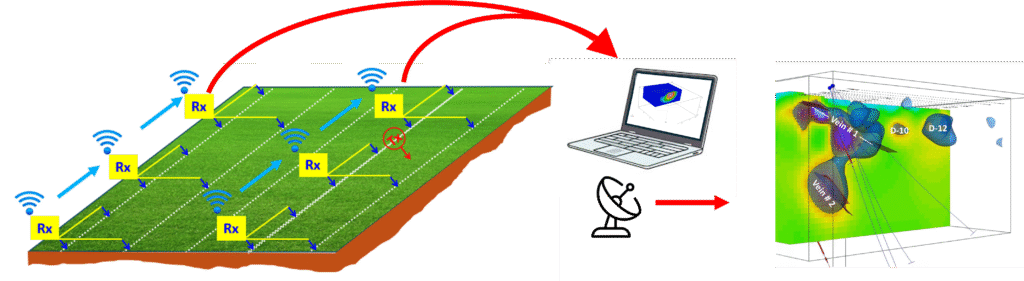
DAS Vision Pro takes this even further with its distributed array system. Unlike traditional line-based IP setups, DAS Vision Pro uses independent, wireless receivers that don’t require perfect alignment or cables. This flexibility means operators can easily adapt to field conditions, navigating around lakes, hills, or rough terrain, without compromising data quality.
Just as importantly, the distributed system enables 3D sensitivity in both X and Y axes, allowing better detection of mineralization patterns regardless of their orientation underground.

From Delay to Instant Insights
In traditional surveys, data collected in the field would be transferred to a field computer, then to a geophysicist, and would only be analyzed days or weeks later. Final 3D models, critical to guiding exploration, arrived too late to adapt plans on-site.
With DAS Vision Pro, Abitibi Geophysics reimagined the workflow: a network of distributed, wireless receivers automatically sends field data to a central console, enabling near-instant geological modelling.
- Survey data is now sent automatically to a central console.
- Operators can visualize 3D models within minutes of current injections.
- Connected receivers enter low-power mode between uses, massively extending battery life.
The result? Field teams can now spot anomalies within minutes and decide in real-time whether to extend surveys or shift their focus, saving both time and cost.
The Role of Axceta
To take this technological leap, Abitibi Geophysics partnered with Axceta for its strong expertise in IoT systems and real-time data transmission, skills that were highly complementary to the geophysicists’ domain knowledge. This collaboration made it possible to build a system that was both robust and agile.
Axceta was responsible for designing the mesh network that allows each receiver to communicate autonomously, without relying on wired infrastructure. The system enables seamless data transfer from one sensor to another, all the way back to the central console, even in challenging field conditions.
The collaboration also involved Catalys, which worked on the mechanical design of the receivers. Together, the teams tackled the dual challenge of developing a compact, field-resistant device while ensuring fast and reliable data acquisition.
Despite tight deadlines and technical challenges, the team successfully brought the project from concept to a functional system in just 16 months, a strong example of what agile, cross-disciplinary collaboration can achieve in complex fields like geophysics. Field deployment is planned in the coming months.
Efficiency Gains and Future Potential
The impact is measurable:
- Battery life improved by up to 4x due to smart power modes.
- Survey speed increased, resulting in reduced operational costs.
- No rigid grids needed, offering flexibility in the field.
- Preliminary models in minutes vs. weeks.
For Abitibi Geophysics, the DAS Vision Pro is just the beginning. The same mesh-enabled architecture will soon support additional geophysical methods and new mineral targets.
“Working with Axceta helped us innovate faster and smarter,” says Nadine Veillette, CEO of Abitibi Geophysics. “We’re already exploring how to expand this platform further.”
At Axceta, we’re proud to power innovations that bring clarity to what lies beneath. Want to know how IoT can transform your industry? Axceta leverages its expertise in embedded development to deliver specialized solutions across sectors such as agriculture, mining, and energy, focusing on reliable IoT device management, advanced communication protocols, and energy-efficient technologies. If you’re interested in learning more about IoT, or if you’re seeking a partner to help implement Edge AI solutions, you can reach out to us at https://axceta.com/contact/ To stay in touch and read more about our projects, subscribe to our newsletter at the bottom.
]]>Based on an interview between Hélène Gey, Axceta’s CMO and Alain Beauséjour, The MISA Group General Manager
The mining industry is transforming profoundly, driven by the convergence of Artificial Intelligence (AI) and the Internet of Things (IoT). As mines become increasingly digitized, connected technologies optimize operations, improve safety, and drive sustainability.
In this second article of the Connected Futures series, we explore how AI and IoT reshape mining, from predictive maintenance and real-time monitoring to autonomous systems and environmental impact management.
The Next Big Shift: From Digital Transition to Autonomous Mining
Mining’s digital transformation is well underway. Mine 4.0 emerged in 2017, focusing on automation and connectivity. By 2019, the industry shifted toward the autonomous mine, a vision built on real-time data, AI-driven analytics, and connected equipment.
A key breakthrough came when Agnico Eagle successfully implemented LTE-based data transport for underground mining. This milestone demonstrated that robust digital networks could support real-time IoT applications, unlocking new efficiencies and safety measures.
With underground mines now equipped to transmit data, mining companies can connect everything—from human operators to mobile and fixed equipment—enabling real-time analytics, predictive maintenance, and automation. However, this digital shift also presents challenges, particularly in data management and cybersecurity. As connectivity grows, companies must implement best data collection, storage, security, and quality control practices to fully leverage AI-driven insights.
Predictive Maintenance: Reducing Downtime with AI & IoT
Traditional mine operations followed a fixed cycle: work teams would receive their tasks in the morning, head underground, complete their work, and report back. This process, while effective, was slow and reactive.
With AI and IoT, equipment monitoring has become immediate. Sensors collect real-time operational data, allowing companies to:
- Detect mechanical issues before failure occurs.
- Optimize maintenance schedules to minimize downtime.
- Reduce overall costs by preventing unexpected breakdowns.
For example, predictive analytics can forecast equipment malfunctions, enabling proactive repairs. This shift from reactive to preventive maintenance improves operational efficiency and extends the lifespan of mining assets.
Enhancing Worker Safety: AI-Driven Risk Management
Mining presents significant safety challenges, particularly in underground environments. AI and IoT play a critical role in hazard detection and risk mitigation.
In surface mining, autonomous haul trucks and proximity detection systems have enhanced safety. In Australia, for instance, self-driving trucks operate with near-zero accidents due to advanced AI-driven collision avoidance.
In underground mining, challenges remain. Constrained environments require robust connectivity and AI-enhanced detection systems to ensure safety. Leading initiatives include:
- Proximity Detection for Teleoperated Vehicles: Companies are testing AI-powered proximity sensors to prevent collisions.
- Automated Emergency Response: AI can analyze sensor data to detect structural instability, gas leaks, or hazardous conditions, triggering real-time alerts.
The industry remains cautious, ensuring that no digital technology is implemented at the expense of worker safety. AI adoption in underground mining is progressing through controlled testing and gradual deployment.
The Road to Fully Autonomous Mines
Since 2019, experts have predicted that autonomous mines will emerge between 2030 and 2035. However, the timeline remains uncertain, as mining presents unique challenges:
- Every mine is different: Unlike industries with standardized environments, mines vary in geology, depth, and logistical constraints.
- Capital investment decisions depend on mine lifespan: A mine with only 2 years of remaining reserves may not justify full-scale automation.
- Technology maturity is still evolving: AI, robotics, and teleoperation systems must undergo extensive testing before wide adoption.
Despite these challenges, the path to autonomous mining is clear. Companies are gradually assembling the puzzle pieces, and each new AI or IoT application adds to the industry’s understanding of what a fully autonomous operation will look like.
AI & IoT in Sustainable Mining: Managing Environmental Impact
Sustainability is becoming a significant focus for mining companies, and AI-driven data analytics is revolutionizing environmental monitoring.
Air and Water Quality Management:
- IoT sensors track air pollution and water quality in real time.
- AI analyzes historical data to predict environmental risks and optimize mitigation strategies.
Digital Twins for Mine Planning:
- Virtual models of mines allow companies to simulate environmental impact before beginning extraction.
- This enables better restoration planning and regulatory compliance.
Energy Optimization:
- AI helps balance power consumption, reducing peak energy loads and improving efficiency.
- Mines are adopting renewable energy sources, such as wind and solar, where feasible.
- Battery storage solutions help manage energy supply fluctuations.
By leveraging digital technologies, mining companies can meet environmental regulations, enhance operational efficiency, and improve their social license to operate.
Supply Chain Transparency: Blockchain & IoT in Mineral Traceability
The demand for ethically sourced materials is rising, particularly for critical minerals like lithium, nickel, and copper used in EV batteries. AI and IoT are enabling greater supply chain transparency:
- Blockchain-based tracking systems ensure that minerals are sourced responsibly.
- AI verifies compliance with environmental and labor regulations.
- Companies like Propulsion Québec are piloting traceability solutions to guarantee that Quebec’s mining industry remains competitive.
Combining IoT for real-time tracking and blockchain for data integrity ensures a transparent and responsible supply chain.
The Future of AI and IoT in Mining
In 2025, the mining industry will already witness significant breakthroughs in AI and IoT adoption:
- Real-time mineral analysis and data collection will become the standard, enabling predictive geological modelling.
- Automation will expand beyond haul trucks, with AI-driven drills and exploration tools gaining traction.
- Digital twins will revolutionize mine design and planning, improving operational efficiency and reducing risk.
Mining is well into the new digital era, and AI and IoT are at the forefront of this transformation. While challenges remain, the industry is moving steadily toward autonomy, efficiency, and sustainability.
Stay tuned for the next article in Axceta’s Connected Futures series, where we’ll explore AI and IoT’s role in another industry shaping the future of technology.
Axceta leverages its expertise in embedded development to deliver specialized solutions across industries such as agriculture, mining, and energy, focusing on reliable IoT device management, advanced communication protocols, and energy-efficient technologies.
If you’re interested in learning more about IoT, or if you’re seeking a partner to help implement security solutions, you can reach out to us at https://axceta.com/contact/
To stay in touch and read more about our projects, subscribe to our newsletter at the bottom.
]]>Technology is on the cusp of a significant transformation, driven by the convergence of Artificial Intelligence (AI) and the Internet of Things (IoT). While AI continues to evolve rapidly, IoT has reached a level of maturity that allows for seamless integration of intelligent systems. These two technologies are unlocking new opportunities across industries, from manufacturing and healthcare to agriculture and energy.
This article kicks off Axceta’s Connected Futures series, exploring the trends, challenges, and opportunities shaping the AI-IoT landscape in 2025. We begin with an overview of why these technologies are transformative, their interconnection, and the pivotal shifts expected in the coming year.
The Next Big Shift: AI and IoT Convergence
The hype surrounding generative AI has dominated headlines, but experts emphasize that this is only a fraction of what AI can accomplish. AI’s true power lies in its ability to process vast amounts of data, optimize processes, and enhance efficiency in ways far beyond content creation. As AI advances, we see a renewed focus on predictive analytics, safety applications, and automation—all critical for industries leveraging IoT.
IoT, on the other hand, is no longer just about connecting devices. It has evolved into a robust ecosystem enabling real-time sensing, decision-making, and automated responses. When AI and IoT are combined—often referred to as AIoT or edge AI—devices become more autonomous, capable of running sophisticated models directly on the edge rather than relying solely on cloud computing. This shift is expected to accelerate in 2025, bringing AI-driven decision-making closer to the point of data generation.
The Rise of Edge AI: Smarter, Faster, and More Efficient
Edge AI represents one of the most significant breakthroughs in AI-IoT integration. Traditional AI models require vast computing power, typically housed in cloud data centers. However, running AI on constrained edge devices—such as industrial sensors, autonomous vehicles, and wearable health devices—requires optimized models that can function with limited resources.
Significant advancements are making this possible:
- Model Optimization: AI models are being refined to run efficiently on smaller devices without sacrificing accuracy.
- IoT Maturity: Secure connectivity and over-the-air (OTA) updates now enable remote monitoring and model updates at the edge.
- Cloud-to-Edge Expansion: Technologies like Kubernetes and Docker extend cloud capabilities to edge devices, enabling better deployment and management of AI workloads.
By running AI at the edge, businesses can achieve lower latency, enhanced security, and more efficient operations, whether in autonomous vehicles, smart factories, or connected healthcare systems.
5G and IoT: A Game Changer
The rapid expansion of 5G is another driving force behind IoT’s evolution. With ultra-low latency and enhanced connectivity, 5G enables IoT devices to communicate faster and more reliably than ever. This has significant implications for:
- Real-time monitoring and analytics in industries like healthcare and manufacturing.
- Autonomous systems, where vehicles, drones, and robots require instant data exchange.
- Scalability, as 5G allows for many more connected devices without overloading networks.
For businesses, 5G means more data, faster insights, and more excellent reliability, which are key factors in unlocking the full potential of AIoT.
Adoption and Challenges: Overcoming the Barriers
Despite its promise, AI and IoT adoption is not without hurdles. Key challenges include:
- Technical Complexity: Developing AI-driven IoT applications requires expertise in embedded systems, AI model training, and specialized programming languages like C++.
- Security Concerns: As AI models are deployed on edge devices, protecting intellectual property and ensuring data security becomes critical.
- Regulatory Compliance: As AI usage expands, industries must navigate evolving regulations on data privacy, safety, and AI ethics.
While these challenges can slow down implementation, they also create opportunities for innovation in security, compliance, and AI tooling.
Autonomous Systems: AI and IoT in Action
One of the most compelling applications of AIoT is autonomous systems, which are already transforming industries like mining, agriculture, and energy.
- Mining: AI-driven autonomous machines are reducing human exposure to hazardous conditions, improving efficiency while enhancing worker safety.
- Agriculture: With labour shortages, AI-powered tractors and drones optimize farming processes, increasing yields with less human intervention.
- Energy: Smart grids leverage AI to manage electricity distribution efficiently, reducing costs and minimizing environmental impact.
The rise of these systems signals a future where AI and IoT work together to automate complex processes, improving both safety and efficiency.
Where to Start: Industry Recommendations
For companies looking to integrate AI and IoT, it’s essential to take a strategic approach:
- Define the Problem First: Rather than adopting AI for the sake of innovation, businesses should start by identifying specific challenges AIoT can solve.
- Leverage Existing Data: Many organizations already collect valuable data,and evaluating AI solutions on this data can reveal immediate benefits before investing in new infrastructure.
- Find the Right Partners: AIoT implementation requires expertise in both hardware and software. Collaborating with technology partners can accelerate adoption and reduce risks.
Looking Ahead: The Future of AIoT
As AI and IoT continue to evolve, 2025 is poised to be a pivotal year. The increasing maturity of IoT, breakthroughs in edge AI, and the rollout of 5G will drive greater adoption across industries. However, businesses must stay ahead of regulatory changes, security risks, and implementation challenges to harness the full potential of these technologies.
In the coming articles of the Connected Futures series, we will explore specific industry use cases, best practices, and the emerging opportunities AIoT presents. The future is connected, and it’s arriving faster than ever.
Axceta leverages its expertise in embedded development to deliver specialized solutions across industries such as agriculture, mining, and energy, focusing on reliable IoT device management, advanced communication protocols, and energy-efficient technologies.
If you’re interested in learning more about IoT, or if you’re seeking a partner to help implement security solutions, you can reach out to us at https://axceta.com/contact/
To stay in touch and read more about our projects, subscribe to our newsletter at the bottom.
]]>The consortium will be structured around Bayer’s HortiView platform, a digital crop management solution designed for international horticultural production markets. In its beta version, HortiView offers a range of management tools developed by third-party solution providers including but not limited to pre-harvest functionalities to help producers optimize seasonal planning, fertigation, irrigation, and disease control. The vision is to simplify primary data collection and enable growers to benefit from a curated marketplace of modular, connected agronomic services that support data-driven decisions that help them maximize crop production and optimize resource use.
“The Canadian horticulture industry is highly advanced, diverse and innovation-oriented, which makes it an ideal environment to deploy novel digital solutions to support farmers,” said Chris Pienaar, Global Fruit & Vegetable Digital New Value Lead, Bayer. “We are pleased to be working with Zone Agtech and Axceta to further develop HortiView platform and accelerate the agtech space in Canada – all while improving efficiency and productivity for growers. They are excellent partners to take this solution to the next level.”
A Collaborative Effort for a Smarter Future in Agriculture
Zone Agtech, an innovation ecosystem bringing together 250 members and partners, will leverage its expertise to assess financial feasibility and mobilize key co-investors and partners for the consortium. “This initiative will solidify Quebec’s position as a hub for agricultural innovation, attracting top-tier investors, industry leaders, and cutting-edge startups,” added Marilou Cyr.
Axceta, a leader in IoT and digital farming solutions, will serve as a technology partner, contributing its expertise in embedded software, cloud infrastructure, and data-driven agricultural solutions. “This partnership aligns perfectly with Axceta’s mission to provide tools to assist our farmers to cope with a shortage of qualified labour while stimulating the local innovation ecosystem,” said Sherif Zaroubi, CEO of Axceta. “We look forward to working with Bayer and Zone Agtech to deliver impactful innovations.”
Goals and Vision of the Consortium
The MOU outlines key objectives for the partnership, including:
● Supporting the adoption of digital and IoT-based agricultural technologies for optimized resource management.
● Establishing a well-funded consortium that attracts investment and fosters collaboration between industry leaders, startups, and academic institutions.
● Enhancing environmental sustainability and economic resilience in horticultural production through data-driven decision-making.
The consortium will bring together a diverse network of stakeholders, including private investors, universities, agricultural producer associations, major retail partners, and financial institutions, ensuring a robust foundation for innovation.

About Zone Agtech
Zone Agtech is Quebec’s premier AgriTech innovation ecosystem, fostering collaboration between researchers, startups, and industry leaders to drive agricultural advancements and plant-based bioproducts.
www.zoneagtech.ca
Marilou Cyr
General Manager
About Axceta
Axceta specializes in IoT development and digital farming solutions, helping agriculture businesses integrate connected technologies to enhance operational efficiency and sustainability.
www.axceta.com
Sherif Zaroubi
CEO
Media Contact:
Hélène Gey
+1 514 244 3095

Axceta and CAUR: A Collaboration to Transform Deep Mining Exploration
With the depletion of surface and shallow deposits, the mining industry faces a significant challenge: discovering critical deposits hidden beneath thick layers of sediment while minimizing environmental impact and costs. The answer lies in innovative technologies like ambient noise tomography (ANT), combining efficiency, sustainability, and flexibility.
In this context, Axceta, in partnership with CAUR Technologies, played a key role in developing an innovative IoT-enabled instrument designed to detect critical minerals at greater depths. This project, essential for supporting the global energy transition, is a prime example of technological collaboration and the successful implementation of multidisciplinary expertise.

Sustainable Exploration with Ambient Noise Tomography
Ambient Noise Tomography (ANT) is a geophysical method that uses naturally occurring seismic waves in the environment, eliminating the need for controlled seismic sources like explosives. This makes it not only more cost-effective but also much more environmentally friendly.
Compared to traditional methods such as seismic reflection or electrical surveys, which often require expensive field campaigns and line cutting, ANT stands out for its ability to map large areas with minimal equipment, shorter timeframes, and significantly lower costs. In just two weeks, a precise 3D map of underground structures can be created, whereas traditional methods usually take several months to achieve similar results.
Axceta: Driving IoT Innovation
Axceta leveraged its expertise in embedded electronics, firmware development, and IoT connectivity in this project. The company’s contribution focused on several critical areas:
- Development of the IoT Instrument: A compact, portable, and robust device capable of accurately recording seismic data.
- Large-Scale Data Management: With a fleet of potentially thousands of devices per survey, each collecting multiple GB of data per survey, Axceta designed a reliable bulk data transfer system. This system allows for the simultaneous transmission of data from multiple devices, with the potential for real-time transfer in future iterations.
- Cloud Integration: The collected data is directly transferred to a cloud-based platform for processing, enabling the generation of 3D images that geologists and mining companies can use to identify subsurface structures and potential mineral deposits.
Operational Optimization: Axceta ensured a smooth user experience by incorporating NFC-based user interfaces and selecting durable, long-lasting batteries, ensuring reliability in the field.
A Critical Collaboration
For CAUR Technologies, the success of this project relied on close collaboration with Axceta. According to the CAUR team, Axceta’s indispensable expertise in managing fleets of connected instruments and applying best development practices was pivotal. Starting from a simple idea, the team transformed the concept into a fully functional prototype, showcasing Axceta’s ability to adapt to the complex requirements of field operations.
Flexibility and collaborative teamwork were crucial success factors. By working with additional partners such as GDD for hardware and Innovation M2 for mechanical design, CAUR and Axceta successfully developed a product that meets both technical and economic demands while also supporting the growing need for sustainable mining solutions.
Strategic Advantages for the Mining Industry
The instrument developed by CAUR, GDD, and Axceta offers significant advantages for mining companies:
- Increased Efficiency: Rapid collection and processing of seismic data significantly reduce the time required for mapping exploration areas.
- Reduced Costs: Requiring minimal equipment and personnel, this solution offers an excellent cost-to-benefit ratio.
- Environmental Sustainability: This approach offers a cleaner, more sustainable exploration method by eliminating destructive techniques such as line cutting.
- Flexibility: Adaptable to various types of deposits, this method is ideal for exploring critical minerals like copper, cobalt, and nickel, which are essential for the energy transition.
A Promising Future for Mining Exploration
As CAUR prepares to deploy thousands of instruments to conduct hundreds of surveys annually, its goal is clear: to become a major player in sustainable mineral exploration. With support from Axceta, this vision is rapidly becoming a reality.
The CAUR solution goes beyond being a single instrument — it is part of a broader ecosystem that includes a data processing platform and data interpretation expertise. Clients benefit from an end-to-end service ranging from data collection to in-depth analysis, providing precise, cost-effective mineral deposit identification.
Conclusion
The partnership between Axceta and CAUR perfectly illustrates how IoT technology and collaborative innovation can transform the future of mineral exploration. This solution addresses the critical needs of an industry seeking solutions for the energy transition through an approach that combines sustainability, efficiency, and flexibility.
This method represents a major breakthrough for mining companies, enabling them to tackle today’s challenges while preparing for a more sustainable future.
Axceta leverages its expertise in embedded development to deliver specialized solutions across industries such as agriculture, mining, and energy, focusing on reliable IoT device management, advanced communication protocols, and energy-efficient technologies.
If you’re interested in learning more about IoT, or if you’re seeking a partner to help implement security solutions, you can reach out to us at https://axceta.com/contact/
To stay in touch and read more about our projects, subscribe to our newsletter at the bottom.
]]>Embedded development involves creating software designed to operate within embedded systems and specialized computing devices integrated into larger systems for dedicated functions. This type of development requires programming tailored for hardware constraints, such as limited memory and processing power, ensuring efficient and reliable performance for tasks in environments like industrial machinery, consumer electronics, or automotive controls.
The embedded development market touches diverse industries that rely on specialized computing within their devices, such as automotive, aerospace, consumer electronics, healthcare, and industrial automation. These sectors depend on embedded systems to drive crucial functions in vehicles, medical devices, smart appliances, and machinery, where reliability, efficiency, and real-time performance are essential.
Embedded development may be required to provide very niche functionalities, low power consumption, custom hardware requirements or creative form factors. It ranges from full-fledged ruggedized systems down to minimal, low-power microcontrollers.
At Axceta, our team has cultivated specialized expertise that our clients have relied on for years.
Expertise
Here are some examples of what our team diligently works on every day:
Embedded Linux Development
- BSPs and distribution development: Yocto, Buildroot, Android
- Resources optimization
- Real-time features enabling
- Multi-hardware support
- Over-the-air updates frameworks
- Kernel drivers development
- Application development
- Board bring-up and hardware validation
- Hardware and software recommendations
- Real-time data processing
- Cloud connectivity software development with large providers: AWS, Azure
Embedded RTOS Development
- Zephyr RTOS, FreeRTOS, ESP-IDF, X-Cube
- Secure OTA updates
- Fleet management support from the firmware level to the cloud
- Secure boot enablement
- Connectivity drivers: WiFi, BLE, LoRa, LTE-M
- Battery power optimization
- Generic applications development in C or C++
- Real-time data processing
- AWS or Azure connectivity integration
Embedded Development Projects
Agriculture
IoT devices play an increasingly important role in agriculture, holding significant responsibilities like monitoring the well-being of multiple animals. A malfunction in these devices can potentially lead to severe consequences, including harm or even death of livestock. Recognizing this critical need, various companies, ranging from large AgTech firms to small startups, have been striving to develop reliable IoT products for the agricultural sector.
Axcera has developed expertise in two key technical areas crucial in this effort: fleet management and over-the-air (OTA) update mechanisms. Managing a large fleet of IoT devices—sometimes over 100,000 units—is a complex task. These devices are essential for controlling farm operations, making their reliability paramount. To address these challenges, robust tools and processes are developed to ensure reliable software updates. This includes software update verification, dual banking, rollback mechanisms, signing, and secure boot processes. These measures help ensure that updates are deployed effectively, maintaining the integrity and functionality of the IoT systems.
For companies seeking expertise in hardware platform setup or device driver development, Axceta offers extensive experience in firmware development for both Linux and bare-metal embedded systems within the agriculture sector. Our team has successfully developed a farm controller utilizing the Yocto framework and advanced Linux development techniques.
Mining
When we consider mining, the challenges of RF communications inevitably come to mind. While the struggle is pronounced in underground mines, even open-pit operations present difficulties, as IoT devices often need to transmit signals over great distances. Axceta has developed solutions for long-distance communication and operations in harsh environments like underground mines. The team is well-versed in the latest communication protocols and adept at managing them to ensure reliable data exchange in any setting.
Energy
Axceta proudly collaborates with Hilo, a company pioneering an advanced solution to manage the energy consumption of hundreds of thousands of homes. We contributed to developing their primary product and the embedded gateway through technologies like RTOS, ZigBee, low-resource optimization, and OTA updates. Clients now contact us directly for firmware development in energy management solutions and to enhance battery efficiency in embedded systems. We specialize in designing devices that can operate on battery power for up to three years.
Conclusion
Axceta leverages its expertise in embedded development to deliver specialized solutions across industries such as agriculture, mining, and energy, focusing on reliable IoT device management, advanced communication protocols, and energy-efficient technologies.
If you’re interested in learning more about IoT, or if you’re seeking a partner to help implement security solutions, you can reach out to us at https://axceta.com/contact/
We specialize in end-to-end integration of IoT solutions in the agtech, mining, and energy industries. With deep expertise in IoT and a strong understanding of customer needs, we help design and implement IoT solutions, from sensors to data.
To stay in touch and read more about our projects, subscribe to our newsletter at the bottom.
]]>