The post Celebrating BAVC Media at Big Sky 2026 appeared first on BAVC Media.
]]>Read on to learn more about the films and find details on showtimes and tickets.

Wood Street *World Premiere*
Directed by Caron Creighton (2024 BAVC MediaMaker Fellowship project)
ANIKOOBIJIGAN [ancestor / great-grandparent / great-grandchild]
Directed by Zack Khalil, Adam Khalil (2021 BAVC MediaMaker Fellowship project)

Flood
Directed by Katy Scoggin (2019 BAVC MediaMaker Fellowship project)

Seeds
Directed by Brittany Shyne (2019 BAVC MediaMaker Fellowship project)

Traces of Home
Directed by Colette Ghunim (2020 BAVC MediaMaker Fellowship project)
如你所願 (Correct Me If I’m Wrong)
Directed by Hao Zhou (2025 BAVC MediaMaker Fellow)

Paving the Way
Produced by Ivan MacDonald (2024 BAVC MediaMaker Fellow)

True North
Directed by Michèle Stephenson (BAVC Producers Institute 2011)

Stray Embers *World Premiere*
Editor, composer & co-producer, Daniel Freeman (VERSED instructor)

Big Sky Pitch: Orquídea
Directed by Emily Cohen Ibañez (2017 BAVC MediaMaker Fellow)
DOCSHOP: Indigenous Impact Alliance: A New Collective Strategic Model
Paige Bethmann, REMAINING NATIVE (2023 BAVC MediaMaker Fellow)
The post Celebrating BAVC Media at Big Sky 2026 appeared first on BAVC Media.
]]>The post Leadership changes for BAVC Media in 2026 appeared first on BAVC Media.
]]>Executive Director, Paula Smith Arrigoni: “We are so fortunate at BAVC Media to be led by a dynamic team of new and experienced staff directors. They are piloting and scaling new models and partnerships, and expanding our membership program to include more community connections. This team is all about supporting media makers to thrive as artists, workers, and engaged citizens!”
Among the changes are: Daniel Díaz, formerly Director of Marketing & Audience Engagement, moves into the role of Deputy Director, overseeing Artist Development and Community Media teams, while continuing to lead the organization’s marketing, communications, and audience development; Dawn D Valadez will become Director of Artist & Workforce Development, with Leena Joshi now leading youth programs as the Director of Youth & Emerging Media Makers. Brittney Réaume, who has managed the BAVC MediaMaker Fellowship for seven years in her role in the Artist Development team, steps up to the newly created position of Director of Artist Programs & Services. Jess Epstein will now lead the Development team as Director of Strategic Partnerships & Development, having previously held the position of Associate Director. We’re also thrilled to welcome Diana Chan as our new Director of Finance & Operations.
Our entire staff looks forward to celebrating the past and striving towards a more inclusive future alongside our community as we celebrate our 50th Anniversary. To learn more about what we have in store, support our work, and be part of the future of BAVC Media, contact [email protected].
Hear directly from the team on their new positions below:
Daniel Díaz, Deputy Director
BAVC Media has been a constant in my life since landing in San Francisco over six years ago, and an integral part of my growth as a cultural producer and filmmaker. I’ve seen the impact of the work that we do firsthand and believe in it unreservedly. Doing this work is a real privilege, especially among a team of equally committed colleagues. After three years leading the organization’s marketing and audience strategy, I’m honoured to take on the position of Deputy Director and expand my scope to include Artist Development and Community Media, as well as supporting BAVC Preservation, three departments that live at the soul of our 50-year history as an activist- and maker-founded organization. We all do this work because we believe in it and love nothing more than backing our people and ecosystem of artists. As we witness daily violence and terror against our communities nationwide, I’m confident these decisive changes to our leadership put us in a position where can do what we do best and provide a space for the voices that need it most.
Dawn D Valadez, Director of Artist & Workforce Development
With over two decades in nonprofit, media, and artist development, I am excited to direct the expanded and growing BAVC Media Workforce Development and Training programs alongside our artist development programs. With a passion for empowering young adults and individuals of all ages, I leverage my experience as a filmmaker, educator, and social worker to create inclusive pathways into media careers. I’m particularly excited about the opportunity to foster creativity and innovation in my programs, helping participants gain the skills and confidence needed to thrive in the ever-evolving media landscape. At BAVC Media, I have an incredible team of creative and committed colleagues, and together we are working towards placing our participants in positions with our media, production, health and human services, educational, and business partners. We envision a future where diverse voices are amplified and where everyone has access to the tools necessary for success in the industry.
Brittney Réaume, Director of Artist Programs & Services
2026 will be my seventh year managing the BAVC MediaMaker Fellowship and I’m incredibly proud of how we have continued to strengthen this legacy program each year. It’s an honor to lead not only this Fellowship but BAVC Media’s array of programs to support impact-driven creators. I am thrilled as well to see my colleagues – who I admire and love working alongside – stepping into new leadership roles and I look forward to imagining the future of BAVC Media in our 50th year and beyond!
Jess Epstein, Director of Strategic Partnerships & Development
I’m so excited to step into the role of Director of Strategic Partnerships and Development here at BAVC Media. BAVC has long stood at the intersection of storytelling, technology, and equity—equipping communities historically excluded from media and tech with the tools, training, and access needed to shape the future. As a documentary producer and impact strategist, I’ve spent my career building partnerships that connect artists, institutions, and audiences in meaningful ways, and by continuing to grow with BAVC in this way, it feels like a natural extension of my work and practice as an artist.
I am eager to continue cultivating relationships that build upon BAVC’s programs, expand opportunities for emerging creatives, and create meaningful partnerships that strengthen the media arts field. I’m inspired by BAVC’s legacy and energized by its vision for what’s possible, especially as we celebrate 50 years of BAVC Media!
Leena Joshi, Director of Youth & Emerging Media Makers
I’m honored to be stepping into the role of Director of Youth and Emerging Media Makers at this pivotal time. As a queer, genderfluid artist and media maker who is also a child of immigrants, Reel Stories is exactly the type of media and community building program I wish I had been able to access in my teens. As systems of power in our world continue to find new ways to isolate and censor young and marginalized voices, it is more important than ever to provide youth with programs that are accessible, career-oriented, and sites for connection, experimentation, and play.
Through the revisioning of our Reel Stories program, I hope to offer girls and gender expansive youth powerful inroads to careers in film and media making, with both the technical skills and the understanding that their place is vital and non-negotiable within these industries. I also look forward to continuing to build capacity within our high-caliber programs offered to all San Francisco youth alongside our incredible YEMM team of educators and staff. Through our work here at BAVC, we are proud to steadfastly support the underrepresented voices of our students through film production, animation, and new forms of digital media storytelling.
Diana Chan, Director of Finance & Operations
I first came across BAVC while working at Avid Technologies audio division, fka Digidesign and have been eager to learn about the passion driven organization. With my background heavily focused in Finance and support from our existing Operations team, I am eager to integrate processes to enhance operational efficiency and help drive strategic initiatives to better support decision-making.
The post Leadership changes for BAVC Media in 2026 appeared first on BAVC Media.
]]>The post Presenting Mapping the Magnetic Media Landscape appeared first on BAVC Media.
]]>Her work has strengthened BAVC Media’s impact and relationships across the media preservation landscape, and we’re excited to see her step into her next role as Grants/Institutional Funding Manager at Women’s Audio Mission (WAM).
In the fall of 2025, our team of authors had the chance to present Mapping the Magnetic Media Landscape at several archivist conferences. Thank you to IASA-SEAPAVAA, ASRA, and AMIA for providing us with the platform to share the findings from our years-long research.
In early September, I presented the Mapping the Magnetic Media Landscape report I authored for Bay Area Video Coalition for the first time in Honolulu, HI at the International Association Of Sound and Audiovisual Archives annual conference. It was an exceptional opportunity to share an overview of the findings and the ways they intersect with the conference focus on how climate change transforms landscapes and challenges cultural identities.
The chance to learn from my peers working across the world on AV archives was something I certainly didn’t take for granted! Meeting in person with my wonderful co-authors Shay Hix and Moriah Unlinskas was fulfilling after spending nearly three years working together to make this project happen. And it was also a full-circle moment to have Morgan Morel, the original ideator of the project, moderate the panel after conceptualizing the study’s research questions back in 2022.
In October, I had the opportunity to present the study for the second time, at the Australasian Sound Recordings Association in Sydney! The conference centered on the urgent calls to action in 2015 by UNESCO/IASA and Australia’s National Film & Sound Archive to prioritize at-risk magnetic tape. The impetus for our study directly aligned with the motivation for ASRA’s 2025 conference theme: we aimed to investigate the state of magnetic media preservation in the United States after the Library of Congress National Recording Preservation Plan altered us to similar deadlines around the decay of collections in 2012. Our study fit right in as it sought to reflect on our progress toward this effort here in the US. The team at ASRA was incredibly welcoming and I had such a wonderful time learning from them and sharing some US perspective.
Lastly, the author team presented at the Association of Moving Image Archivists conference in Baltimore this December alongside BAVC Media Preservation team members, Chris Castro and Victoria Fajardo. Although I couldn’t be there myself, I know the team was able to share more of the study’s findings with a local audience of US based audiovisual archivists. They brought back stories of how much their community was utilizing the report in classrooms, archives, and institutional conversations.
Over the last three months the team was able to present the findings at a variety of conferences and highlight a different Case Study from the project each time. Featuring each organization that opened their doors to our team and let us dive deep into their workflows and the unique ways they serve their communities. You can now find each of the case studies to read on our website here!
Getting the chance to participate in international knowledge exchange has truly been one of the highlights of my career so far! If you or anyone in your network would benefit from a presentation of our work please reach out to us! We are still seeking opportunities to present the work and share with the broader community. We’d love to expand beyond presenting in archivist circles and share this information with broader communities of museum staff, filmmakers, university librarians, community media, and more.
Read the report here.
If you have any questions about the report or would like to talk to the team about presenting findings, please contact us at [email protected].
The post Presenting Mapping the Magnetic Media Landscape appeared first on BAVC Media.
]]>The post 2025 Membership Recap appeared first on BAVC Media.
]]>I joined BAVC Media as the new Membership and Programs Assistant this March and I couldn’t be more proud of the work the marketing team and I have done in such a short time. This year, our membership program fostered BAVC Media’s mission to serve our community of independent artists by bringing people together and sparking creativity in new and exciting ways.
Though the discounts to classes and workshops remain the same, the refreshed program grants access to our media making spaces, essential resources for grant applications, and networking opportunities so Bay Area artists can meet their future collaborators and inspire each other.
We opened up our Edit Lab as a new member benefit, giving BAVC Media members two free editing sessions per month including access to Adobe suites, Davinci Resolve, and other helpful software all on M2 processors, an incredible resource for any aspiring filmmaker. The Ninth Street Independent Film Center also has a Screening Room that is bookable for our members. It’s equipped with a 4k projector and surround sound, perfect for hosting fundraisers, picture lock screenings, and intimate director Q&As.
For San Francisco residents, we offer filmmaking resources available through SF COMMONS, our public access channel. If you are producing a show with us, you can check out brand new DJI Osmo pocket cameras. They’re compact and gimbal-stabilized for on-the-go shooting.
Not only have we opened up our spaces for community use, our Artist Development team also offers eligibility for professional feedback on grant applications for Producer level members. This guidance can make the difference in securing funding for a project. BAVC Media can also extend Fiscal Sponsorship status to its members, opening up even more avenues for funding.
Anyone who has made a film knows it’s a challenging process and without funders, collaborators, and friends, the project just wouldn’t get made. When I was hired on to revamp the membership program, I noticed that there was so much potential for community among independent media makers. So when our Director of Marketing & Audience Strategy, Daniel Díaz, asked me to come up with some ideas for a new member event, it clicked. What I missed most about film school was screening my work in a room full of creatives and getting feedback.
There are limited options for screening work-samples or rough cuts at film festivals. On the opposite side of the spectrum, showing work to friends and family doesn’t always give filmmakers the perspective they need to take their films to the next level. So I decided to create the Member Montage: Community Screening and Mixer event! A place where film and media makers could bring their work at any stage of the process and share it with the BAVC Media member community.
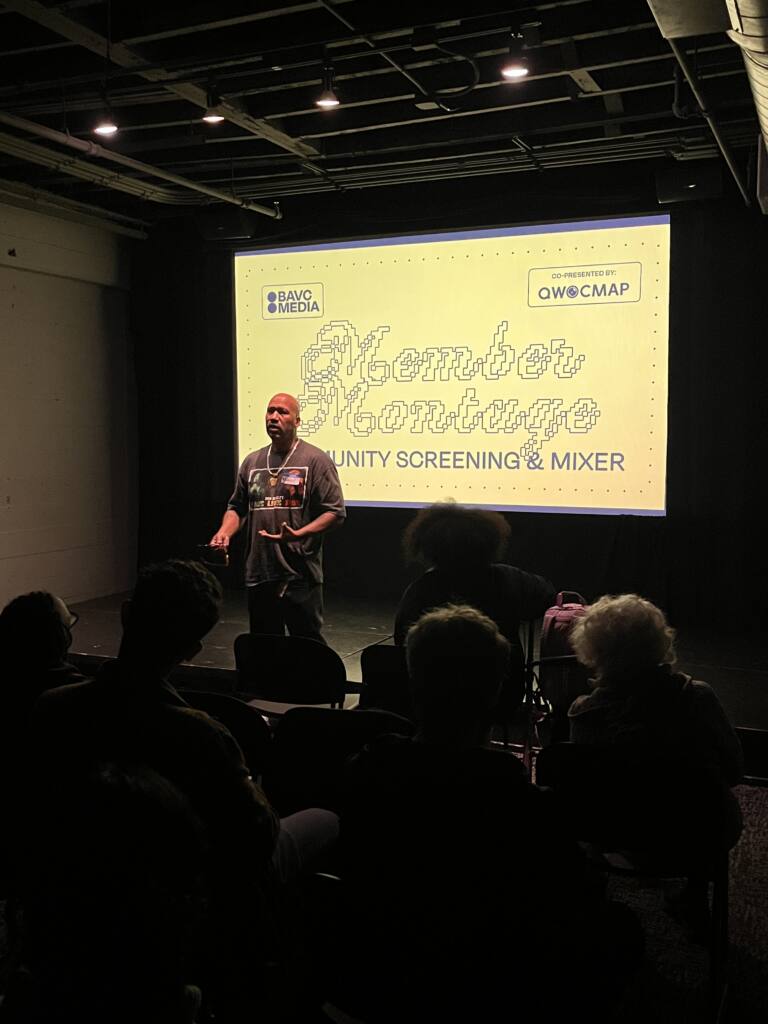
So far, we’ve hosted two such events and we’re planning a third for February. This screening series has brought together people with similar interests, who might have otherwise never met. Ideas flow, contacts are exchanged, and people leave the event feeling more activated to create with their communities. One of our members who screened his work at the Member Montage in October, Raheem Ballard, commented, “People need to know that they are supported, and that there are spaces which will help them achieve their visions.” Independent cinema bridges the gap between dreams and reality, and BAVC Media is trying to be there every step of the way.

The Member Montage is just the beginning for events coming in 2026. BAVC Media was founded in 1976, marking the new year as our fiftieth anniversary. I’ve been trusted to generate even more events to serve the needs of our member community.
We’ll be hosting structured networking mixers geared toward finding collaborators and pitching projects. We’ll also be taking our members on field trips to other fearless independent film organizations in the Bay Area. There are so many amazing things coming up in the new year, I hope to see you there!
Become a BAVC Media Member today!
The post 2025 Membership Recap appeared first on BAVC Media.
]]>The post Celebrating the 2025 BAVC MediaMaker Fellows appeared first on BAVC Media.
]]>On Wednesday, December 10, friends, collaborators, and supporters gathered at the Roxie Theater in San Francisco to watch the 2025 Fellows present their films and celebrate the culmination of their time together as a cohort over 9 months.
With the steadfast support of our incomparable pitch coach, Maria Santos, the fellows had their pitches dialed in. We heard from audience members that they were not only impressed by the caliber of the filmmakers’ presentations but moved by the beauty and sincerity of each of the films.
We’re so grateful to our sponsors that made the event possible:

Rewinding to the beginning of the final BAVC MediaMaker Fellowship convening of 2025, we didn’t just prepare for the final pitch event. We began with a trip to the North Bay to tour Skywalker Sound and hear from their masterful audio artists who are dedicated to working with independent filmmakers alongside Hollywood projects. We Zoomed in Jon Reiss to discuss the state of distribution for independent documentaries and answer the Fellows questions about what comes next.

Jin Yoo-Kim, Co-Director of the Fellowship:
“It feels so good to be back in person after not being able to join last year due to maternity leave. This year’s cohort was a tight-knit unit with a nomadic vibe, and they all created a sense of home and community among themselves. I felt so lucky to be a part of that. I learned so much from them – gentleness, coming home to oneself, centering commitment, being vulnerable enough to lean on each other.
Thank you to Alex, Luca, Joua, Anna, Thanh, and Hao for showing up for each other and for showing up for me, Dawn, and Brittney. Thank you to Maria Santos, for being such an incredible and accessible pitch coach. I also get goosebumps thinking about the BAVC staff that brought so much of their gifts and energy into making the night such a success. And, thank you to our awesome and engaged audience members, funders, board members, sponsors, and the historic Roxie for making our plans into a reality!”
Dawn Valadez, Co-Director of the Fellowship:
“This year began with great uncertainty in the documentary field, and while things have evened out somewhat, the landscape for broadcast, streaming, and other aspects of distribution continues to be disappointing. Public Television felt the blow with the federal elimination of the Corporation for Public Broadcasting, but PBS is holding strong in large urban markets. These outlets have traditionally been the spaces for independent documentaries. The proposed merging of major media outlets is also disconcerting. Providing optimism for our Media Maker Fellows was challenging, but their films, their dedication, and their resilience gave me hope. I share the thanks Jin showered on the fellows for their kindness and commitment to each other, to their films, and to the program team.
The crew was small but mighty and we made it through film festivals, Zoom meetings, and field trips. We had many guest speakers throughout the year who helped the fellows understand the independent documentary field and where their films fit within it. Their pitches at the annual celebration are just a glimmer of their talent and care. These stories are remarkable – not just because of the central characters but because of the tenacity and grit, generosity and love the filmmakers have to offer. It is truly an honor to be of service to the fellows and to our beautiful program.”
Thank you to the 2025 BAVC MediaMaker Fellows for your dedication to your stories, your artistry, your participants, and each other:
• Alex J. Bledsoe, OAKLEAD
• Luca Capponi, WHAT LIES OVER THE MOUNTAIN
• Joua Lee Grande, SPIRITED
• Anna Clare Spelman, MEANT TO BE MADDIE
• Thanh Tran, FINDING MÁ
• Hao Zhou, ALL FIXED UP
GALLERY
Photos by Tommy Lau


The post Celebrating the 2025 BAVC MediaMaker Fellows appeared first on BAVC Media.
]]>The post World Premiere of TRACES OF HOME by Colette Ghunim appeared first on BAVC Media.
]]>Traces of Home follows Ghunim as she joins her parents in searching for the ancestral homes they were forced to flee as children in Mexico and Palestine. What begins as a journey to reconnect with their histories evolves into a profound exploration of home, displacement, and self-discovery.
Read the full interview below. It has been edited for length and clarity.
What role has BAVC Media played in your filmmaking journey?
BAVC has played an integral role in getting the film to completion – being part of the media maker fellowship in 2020 was the launching pad from moving this deeply personal film out of the Chicago industry, and into a national documentary landscape. Being part of a cohort model and being able to learn from others on their own journeys at different stages was so deeply in inspiring, and I still keep these connections and friendships until today. They have become my advisors and guides along the process,
Being part of a cohort model and being able to learn from others on their own journeys at different stages was so deeply in inspiring, and I still keep these connections and friendships today. They have become my advisors and guides along the process, and the staff at BAVC have gone above and beyond over the past five years to continue to support the film through post-production. We have cohosted feedback screenings, as well as our strategy summit at the Bay Area office, in partnership with Working Films. The team has been instrumental in providing both creative feedback and fundraising strategy, as well as being an emotional support during the toughest times in the process. I have truly felt so held by this community.
How did the Bay Area filmmaking community support or influence your approach to your film?
Moving to the Bay from Chicago a little over two years ago, I had no idea what a robust and thriving film community I would be entering in to. I have learned so much from such heart-centered, authentic filmmakers, who deeply care for social justice and inner healing. They have allowed me to expand from my own confines of what I thought documentary filmmaking was, to be even more creative and lyrical in my own approach to Traces of Home.
We held multiple feedback screenings over the past two years in the edit room with local filmmakers, and the level of support and selfless service towards making this film the best possible has moved my own heart so deeply. I can only hope that I am able to pay it forward and give back to this community that has shaped Traces of Home to what is today.
Can you describe the journey of bringing Traces of Home from concept to final cut? What were some of the biggest challenges?
My motivation for making Traces of Home began in 2016, when the previous administration started vilifying Arabs and Latinos through discriminatory policies, e.g. the refugee ban, the Muslim travel ban, threats to DACA, and family separations. Knowing that my parents had parallel stories to Trump’s Latino/Arab targets, I felt compelled to share my own parents’ stories of forced migration.
However, once I entered into production, I was forced to confront my deeper, more personal motivations for returning to explore my parents’ childhood roots and confront my own disconnect to “home”. Growing up removed from my origins, I had never before unpacked how my parents’ childhood trauma shaped all of our lives after fleeing their homelands. I now recognize my mother’s stunted childhood resulted in a strong need to control throughout her life, including her household and her children. I felt uncomfortable being my full self as she scrutinized my behavior and choices. The impossibility of showing authentic emotional vulnerability in my home weakened our relationship and my own self-esteem until the present.
On the surface, Traces of Home gives crucial historical context to the ongoing genocide in Gaza, as well as to current stories of forced migration from Mexico to Palestine. In its deeper layers, the film reflects on buried emotional walls carried down to our generation of children of immigrants and refugees. Discussing this with several first-generation Americans, I realize this disconnect is an all too common outcome of intergenerational trauma.
Traces of Home is a deeply personal film that strives to articulate feelings of loss of home that my family and I struggle to both admit to and find the words for. Over the past five years of therapy and deep reflection, I have come to the realization that, at its core, making this project was a route to heal the blocked relationship not only with my family, but with myself. By witnessing my path to true self-acceptance, I aim for my community to be able to do the same.
What do you hope audiences take away from Traces of Home?
Traces of Home’s impact vision is to contribute to the healing of intergenerational trauma within BIPOC communities in the United States and globally by raising awareness of the lasting mental, emotional, familial, and communal impacts of forced displacement due to violence.
Our primary audiences are Arab, Latino, and biracial first-generation American audiences. Rarely seeing ourselves on screen, the film speaks directly to our collective yet underexplored experiences with our refugee and immigrant parents. Rarely seeing ourselves on screen, the film speaks directly to preserving our collective yet underexplored legacies with our refugee and immigrant parents. As many children of immigrants are only now beginning to understand the impacts of colonization on themselves, our families, and our communities, this film is essential in beginning the process of exploring our own disconnected identity and sense of self.
Healing our trauma and unlearning supremacist conditioning is an essential first step for the mobilization efforts needed to ensure equity and justice to shift the legacy of the generations ahead.
This documentary fills a much-needed gap, delving into the lived experience of children of immigrants, exploring the impact of trauma that we inherited from our parents’ disconnect from our native lands and cultures. Traces of Home touches on sensitive topics such as self-worth, addiction, and lack of belonging, which are often kept secret within immigrant families. It also has the ability to be a bridge builder across cultures, seeing as it will bring together both Latin American and Arab audiences.
Our biggest aim is for it to become a Trojan horse for greater movement building around already existing campaigns for migrant rights and to end U.S. military aid to Israel; because it is so deeply personal, it creates a space of personal inspiration to take action in a way that an explicitly political film may not be able to.
The film takes place across two countries with deep personal and political histories for your family. What kinds of preparation or collaboration were needed on the ground in Mexico and Palestine to make those shoots possible?
Growing up in the suburbs in the United States, I never understood the severity of what my parents endured to escape Mexico and Palestine. After visiting a migrant shelter in Tijuana and demolished homes in the West Bank while filming, my parents’ experiences completely transformed. I realized their traumas decades ago directly parallel the atrocities occurring today in both communities. This new awareness made it crucial for me to include each community’s present-day struggles in the film.
Traveling to Mexico and Palestine together while attending therapy forced me to confront the disconnect not only to my culture, but to my family. The intentional space to reflect on the impact of their trauma slowly transformed the heart of the film into my own internal quest.
Regarding the film team, I have been extremely intentional in the hiring of local crew that come from my own communities. My editors are all Arab and/or Latina immigrant womxn; I worked with local production crews in Mexico and Palestine to boost their local industries and gain a first-hand understanding of these places I had never been to, even if they are in my heritage. This intentional selection of the team’s background allows us to explore these complex issues with a unique depth and sensitivity.
It was imperative to me since the inception that my entire family is part of the production process of Traces of Home. My brother has filmed and interviewed my parents and vice versa. I allow my family to ask me questions, to ensure that I am being just as vulnerable as them and sharing my own experiences on camera.
During the trips to Mexico and Palestine, my parents did not participate in activities that could potentially trigger their past traumas. I hired a Palestinian film crew that would allow my father to speak in his native language. On challenging days such as the political tours in Mexico and Palestine, I built in time to rest and process what we had experienced.
You worked extensively creating awareness and generating wide support for your film over the past 9 years. How did you approach building an audience for Traces of Home during the production and fundraising process, and what have you learned about reaching people who connect with your story prior to its release?
Over the past 9 years, we organized an advisory board of over 200 relevant nonprofit organizations that work in the spaces of Arab, Latinx, mental health, and immigration communities. Creating this advisory board was essential to build relationships at the early stages, and especially now, once the film will be released in various parts of the United States. I realized that having even just a one-pager and a trailer is enough to begin to garner interest, and that these organizations already have so many existing initiatives that are directly aligned with the themes of the film.
By having a quarterly newsletter with updates about the film, we were able to stay in touch and begin to develop deeper relationships with the organizations that we knew would be integral to our audience outreach, strategy, as well as our impact campaign vision.
What advice would you give to filmmakers for finding the audience for their film?
No matter how niche or specific your film may feel, there are people who will deeply resonate with it, and your film will be the transformational key for their own understanding of themselves and their community. Do not be afraid to get very specific in your audience outreach. It is better to become more specific than to cast a wide net for those who may not resonate as deeply at these early stages of the filmmaking process. I would also say having a one-pager and a trailer is essential for this outreach, which includes a brief description about the film and your distribution vision, as well as options of how organizations can become involved and stay up-to-date on the film’s progress.
Get tickets for Traces of Home at DocNYC on Friday, November 14 here. Follow Traces of Home on Instagram for updates on more upcoming screenings.
The post World Premiere of TRACES OF HOME by Colette Ghunim appeared first on BAVC Media.
]]>The post Reel Stories Planning Brunch appeared first on BAVC Media.
]]>
On October 18th, BAVC Media’s Reel Stories team gathered with supporters of the program for brunch and strategic planning at our Oakland hub, Oakstop. Attendees included several former Reel Stories board members and foundational leaders, such as Penny Krueger (current BAVC Media board president), Niema Jordan, and Heidi Cregge Cabra, program alumnae and current interns, media teachers, parents, and women and gender-expansive filmmakers at different stages of their careers.
With so much change and disruption happening in the film and entertainment industry, the group set out to brainstorm key priorities and ideas for further development, as we get ready for Spring and Summer programming 2026.
Morgan Lewis, Project Manager, opened the brunch by thanking everyone for showing up: “Everyone is here today because we love and care about Reel Stories and we want to see the next 10 years stronger and sustainable!”
Conversation topics explored what has worked about Reel Stories and what needs improvement, how/if we should adapt to current technologies and forms, like AI (especially AI literacy) and the content creator market, how can we support women and gender expansive filmmakers after they’ve gone to college or launched their careers, should we broaden our lens to support “storytellers” rather than solely film and media makers, how do we expand our funder and community partnerships, and what could it look like to include boys in select aspects of Reel Stories programs, to help support “feminist boys”? The focus was on sustainability and making the programs relevant and desirable for young women, gender-expansive youth, and their families. What do students need and want? And how can the programs pay for that?
“Reel Stories is such a great program. I was so excited to bring our community together to hear fresh ideas on where the program could go and how to grow it for the next generation of filmmakers.” – Penny Krueger
Reel Stories student board members, Madeline (Maddie) Wilson and Amara Kapur, with Morgan Lewis, set the stage for the discussion by doing a landscape analysis of other media organizations and programs that serve girls, women, and gender expansive people.
We are so grateful to all of you who attended! It was great to see such incredible support for this beloved program. We are honored to steward an improved and more sustainable program in the new year. Thank you!
Reel Stories will be back in 2026 with the support and guidance of our community. Please complete this survey to add your voice to this process.
The post Reel Stories Planning Brunch appeared first on BAVC Media.
]]>The post 2025 MediaMakers at 21st Camden International Film Festival appeared first on BAVC Media.
]]>Brittney’s Recap:
 What a special year at CIFF! Between seeing films and pitches from MediaMaker alum in packed houses, gathering with supporters and friends new and old on a crisp evening in Camden, and climbing Beech Hill to join the Remaining Native Community Run on a beautiful Sunday morning. This was my 5th time joining the BAVC MediaMaker Fellows in midcoast Maine to commune with the documentary community – it was a thrill and an honor to be able to return.
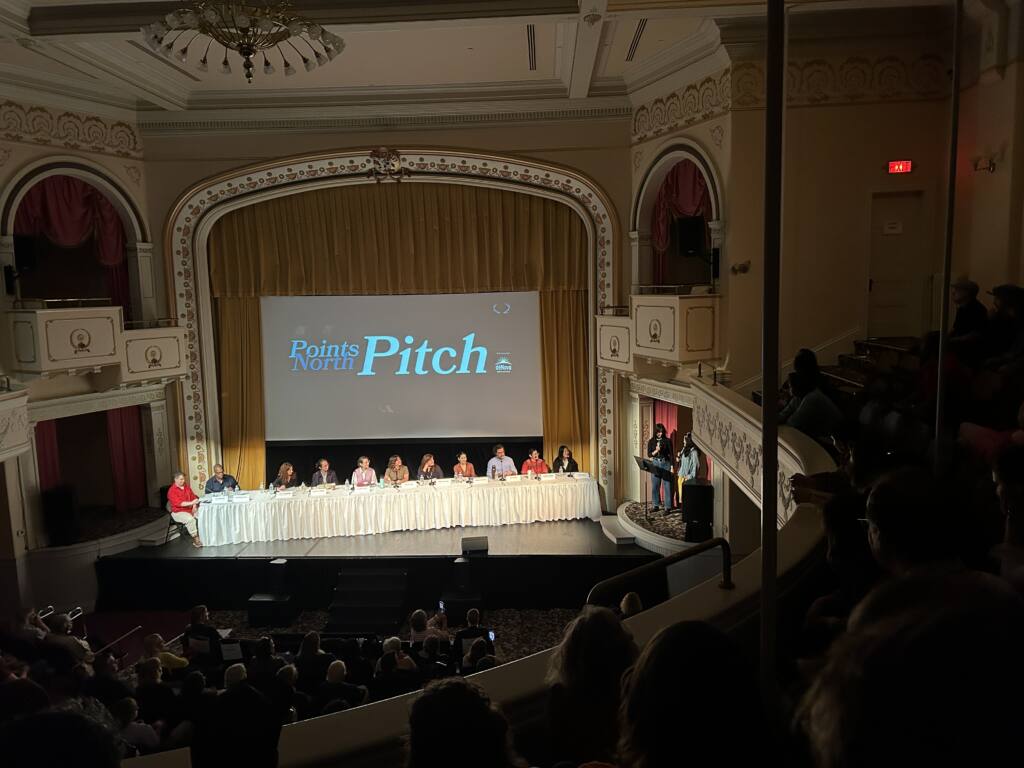
Plus, Carolina Gonzalez Valencia and Brenda Avila-Hanna presented How to Clean a House in 10 Easy Steps on stage at the Points North Pitch with a special appearance by Carolina’s mother.

Photo by Jess Epstein
On Saturday evening, after the Documentary Town Hall, we hosted a happy hour on the patio of First Fig, where folks could connect over wine or tea as the sun set. It was great to see many familiar faces, make new acquaintances, and let the 2025 BAVC MediaMaker Fellows shine.
Remaining Native Community Fun Run

Photo courtesy of REMAINING NATIVE team
The award-winning Remaining Native had its Maine Premiere and a special community fun run at CIFF on September 11 at the Strand Theatre. We asked Paige Bethmann, 2023 MediaMaker Alum and director; and Jess Epstein, Producer of Remaining Native and Associate Director of Strategic Partnerships for BAVC Media how the experience was for them.

Photo by Josh Povec
Paige Bethmann, Director, Remaining Native, MediaMaker Alumn ‘23:
Remaining Native had an incredible time at CIFF this year. It felt like a homecoming and we were so grateful to have the support of BAVC not only at our screening but for the 5k Run/Walk we hosted alongside a number of incredible partners. Our team first met BAVC Media back in 2022 when we were supported artists, we were embarking on our first independent doc feature and BAVC Media ended up becoming one of our key supporters through the MediaMaker Fellowship. Check out our website to see all the partners we brought together and some more pictures from the run.
Coming back to Camden as a MediaMaker alum and a points north supported artist with a finished film truly was a full circle moment. It’s an incredible feeling to be able bring together so many circles of support we’ve received over the years and see the impact of the work resonate deeply.

Photo by Josh Povec
Jess Epstein, Producer, Remaining Native, Associate Director of Strategic Partnerships, BAVC Media:
As part of the BAVC Media Team and as a producer on Remaining Native, I can’t imagine having been at Camden without the support of BAVC. To work at a place that is built by and for media makers through and through and then see the work out in the world with audiences in the theater and on the land through our community events is truly special. Having BAVC’s support is something that made not only the event possible but my own work as an independent producer.
MediaMaker Fellows Who Screened at CIFF:

Paige Bethmann’s Remaining Native
A coming-of-age documentary told from the perspective of Ku Stevens, a 17-year-old Native American runner, struggling to navigate his dream of becoming a collegiate athlete as the memory of his great grandfather’s escape from an Indian boarding school begins to connect past, present, and future.

In 1983, a disabled Californian woman named Elizabeth Bouvia sought the “right to die,” igniting a national debate about autonomy, dignity, and the value of disabled lives. After years of courtroom trials, Bouvia disappeared from public view. Disabled director Reid Davenport narrates this investigation of what happened to Bouvia.

An exploration of Black generational farmers in the American South reveals the fragility of legacy and the significance of owning land.
BAVC Media is currently looking for documentary filmmakers from across the country who are committed to creative, ethical, and collaborative nonfiction practices for the 2026 BAVC MediaMaker Fellowship. Deadline to apply is Monday, September 29, 2025, at 11:59pm PT. Learn more about the fellowship and the criteria to apply.
The post 2025 MediaMakers at 21st Camden International Film Festival appeared first on BAVC Media.
]]>The post World Premiere of LIBERTAD by Brenda Ávila-Hanna appeared first on BAVC Media.
]]>The documentary focuses on Alejandra’s story as an indigenous transgender woman on a lifelong quest for a safe place to call home is told through a combination slice-of-life moments shot over the course of 7 years with animated sequences based on Alejandra’s original artwork. The result is a film that doubly serves as an intimate portrait and a beacon of hope and solidarity.
About Brenda Ávila-Hanna

Born and raised in Mexico city and currently based in the Bay Area, Brenda received a Master’s degree in Social Documentation from UC Santa Cruz where she completed her first documentary short, Vida Diferida (Life, Deferred), the coming-of age story of an undocumented teenage girl. The film screened at several film festivals including the San Francisco Latino Film Festival and Lakino Berlin. She has also directed several films in Mexico and the USA, including Güerita, a fiction short with the award-winning Mexican actress Luisa Huertas as the lead. Brenda is currently co-producing a short documentary for The Guardian and teaches a course entitled Visualizing Human Rights in Latin America at the University of California, Santa Cruz.
Tell us what your film, Libertad, is about?
Libertad is the story of Alejandra, a dear friend who is an indigenous transgender woman from Oaxaca, Mexico, who now lives in California and has become a beacon of solidarity in our community. The film begins when Alejandra arrives at an important crossroads in her life and decides to petition for asylum in the United States. This decision leads her to grapple with all that has been lost and gained after she left her hometown and her mother back home many decades ago, and what’s at stake regardless of the outcome of this petition. Ultimately, Alejandra’s journey is a testament to the importance of a transnational solidarity that follows the lead of those who are often pushed to the margins of mainstream society as the key to collective liberation, or libertad.

What role has BAVC Media played in your filmmaking journey?
BAVC Media was an absolute turning point in my career. Libertad is my first feature film as a director, and BAVC Media was the first place that supported the film with both funding and mentorship. As an immigrant and emerging filmmaker, I was still fairly unfamiliar with processes and pipelines, still very insecure and a bit lost on how to take space and carry myself in filmmaking spaces. BAVC Media took us to festivals and industry spaces with so much care and guidance, provided incredible mentorship and career advice. This wasn’t just about the film, it was about us as artists and individuals. Over the years, my relationship with BAVC Media continues to grow, having worked on other local projects with them, presenting films at their youth workshops, or collaborating in other initiatives and spaces such as BAMMS or the Watsonville Film Festival. I’m even currently a producer for a 2021 BAVC MediaMaker Fellow project, How to Clean a House in Ten Easy Steps. I met the director, Carolina Gonzalez at a BAVC Media event!
How did the Bay Area filmmaking community support or influence your approach to your film?
Everyone who worked on this film is either in the Bay Area/Central Coast or Oaxaca, Mexico. I met one of the producers, Andre Perez, during my time at BAVC Media when he was based in Oakland. I also met Editor Melina Tupa around the same time, not long after she finished her MFA at UC Berkeley. One of the lead participants of the film, Dr. Jennifer Hastings, has a large network of transgender healthcare advocates in the Bay Area who supported the film, and some of their work inspired and informed our approach to the story. Several filmmakers and dear friends from the Bay Area attended feedback screenings and provided invaluable advice and mentorship. We had a short version of the film in 2017, and Frameline amplified the film for other regional screenings and even a short streaming event during the height of the pandemic. Several crew members and supporters are based in Santa Cruz county, which is not officially Bay Area but right next door, including Arts Council Santa Cruz and the Watsonville Film Festival.

Can you describe the journey of bringing Libertad from concept to final cut? What were some of the biggest challenges?
The concept changed so much over the years because some of the key issues in the film, especially immigration policy and trans rights, have also changed drastically over the past years, let alone the fact that this film grapples with both sides of the border -or at least with the experiences of those of us who experience our lives transnationally.- Additionally, funding was very challenging as a first-time filmmaker. We had to take long pauses of several months at a time, even a full year at some point, because there was no funding and we had to move on to other jobs. We also struggled to contain the story into one cohesive storyline when there are so many intersections in Alejandra’s experiences, but she was very gracious with sharing the things that were most important to her, and what she ultimately wanted audiences to take from her story. This was a big north star to help us shape the story into something more nuanced and open ended, rather than preachy or didactic. Her safety, empowerment and comfort are extremely important to us, and unfortunately we were not predicting the current political climate when we started the project 8 years ago, so we are continuously navigating how to meet the current moment and keep everyone involved safe and empowered.
How did you balance telling Alejandra’s deeply personal story with addressing broader systemic issues surrounding LGBTQ+, Indigenous and women’s rights, as well as immigration?
One of the things that Ale and I share in common is that we are both immigrants who came to the US as young adults. Our lives are deeply transnational, and we share circles of friends and spaces in our community that align with these experiences. We often talked about the kinds of things we wanted our own communities to understand about solidarity, about the transgender experience, about colonialism, immigration, and machismo. These conversations guided the scenes that made it into the film, how we strung them together and how these slice-of-life moments addressed the issues organically and intersectionality. The film is greatly informed by these conversations. The concept of animations mostly emerged because we often talked about liminal spaces where one can grapple with these things, share their truths, inhabit their memories, dreams and fears.
What do you hope audiences take away from Libertad?
We hope audiences, especially Latine audiences, walk away from the film with a greater appreciation of transgender immigrants as members of a common struggle, dream and community, as well as indigenous immigrants. That we understand the role each of us plays in keeping our trans siblings safe, and that keeping them safe is fundamental for everyone’s safety and liberation. The same goes for LGBTQ+ communities and activist circles so that they grapple with the urgency of protecting their immigrant members and their Indigenous members, or that Indigenous communities include their immigrant and trans siblings in their path to liberation. I hope audiences also walk away with more curiosity about the arbitrary nature of our immigration and asylum process, and a more nuanced understanding of what it is like to experience life transnationally.
Libertad is screening at Regal Union Square in New York on September 17 at 6:45 pm. Get tickets here.
BAVC Media is currently looking for documentary filmmakers from across the country who are committed to creative, ethical, and collaborative nonfiction practices for the 2026 BAVC MediaMaker Fellowship. Deadline to apply is Monday, September 29, 2025, at 11:59pm PT. Learn more about the fellowship and the criteria to apply.
The post World Premiere of LIBERTAD by Brenda Ávila-Hanna appeared first on BAVC Media.
]]>The post Mapping the Magnetic Media Landscape report appeared first on BAVC Media.
]]>[This announcement was first published by Documentary Magazine on September 8, 2025]
SAN FRANCISCO, CA — September 9, 2025 — BAVC Media (Bay Area Video Coalition) has published Mapping the Magnetic Media Landscape, a nationwide research study designed to learn more about the state of magnetic preservation efforts happening across the country in our archives, libraries, community organizations, and historical organizations. Co-authored by Moriah Ulinskas, Kailen Sallander (Research & Development Manager, BAVC Media), and Kelli Shay Hix.
Early findings from the Mapping the Magnetic Media Landscape study were published in Documentary Magazine (“What Filmmakers Should Know About Privacy and Copyright From BAVC Media’s Upcoming Landmark Study on Magnetic Media” April 16, 2025).
The purpose of this research was to develop an expansive, data-driven understanding of the field of analog audiovisual media digitization and conservation in the United States. The resulting data will be used to identify and respond to our greatest challenges in the changing field of audiovisual preservation. Upon the conclusion of the survey and its evaluation, participants will receive a media toolkit and resource guide that synthesizes and interprets the study’s findings.
“Cultural preservation has long been a cornerstone of BAVC Media’s work. For over 30 years, our preservation team has worked with some of the most influential video artists to preserve thousands of hours of media. This national study addresses the urgent need to understand what’s happening on the ground in the preservation and archival field, and who’s doing the critical work.” – Paula Smith Arrigoni, Executive Director of BAVC Media.
Aside from working with filmmakers, historical organizations, museums, and universities, BAVC Media’s commitment to preservation also extends to its local community. Through the SF COMMONS Playback Lab, BAVC Media offers a free, do-it-yourself audiovisual preservation service for San Francisco residents to digitize their own audiovisual artifacts held on VHS, Video8/Hi8, and digital video formats.
The Mapping the Magnetic Media Landscape project was developed with the support of the National Endowment for the Humanities and involved four primary research methods to gather quantitative and qualitative data. These methods included:
- A survey delivered to magnetic media collecting organizations.
- A series of in-depth interviews with collections stewards whose organizations participated in the survey;
- Three in-person site visits with geographically diverse organizations of differing sizes and structures; and
- Five interviews with non-collecting organizations that work in magnetic media preservation on a national level.
Nearly all respondents (99%) report that their collections contain unique, irreplaceable content that captures otherwise lost voices, cultural practices, and histories. Interviewees agreed that the emotional impact of archives was of primary importance. People felt connected to their past through these materials.
Collections include:
- Government and public broadcasting, such as children’s programming, Senate TV, and local news archives
- Performing arts, like dance documentation, video art, and experimental music recordings
- Regional and cultural history programs and recordings
- International and cultural film programs
- Footage documenting marginalized communities
- Documentation of labor and social justice movements and union activities
- Academic and educational materials, like university lectures and sports footage
- Corporate and institutional records
Among the key takeaways from the report, only 6.5% of respondents reported being extremely confident they can digitize their magnetic media collections, while 29% reported being not confident at all. Respondents reported a significant need to continue their education as preservation standards shift over time. Interviewees also strongly emphasized the ability of audiovisual collections to capture and preserve cultural practices, voices, and perspectives that might otherwise go undocumented or be overlooked. 50% of survey respondents reported that their staff did not have training in stewarding and describing culturally sensitive materials.
A standout challenge for the field is the heavy reliance on grant-funded projects. Approximately 80% of survey respondents are funded in part by government grants, and 87% report receiving non-government grants for their organizations.
We know that critical federal funding for U.S. organizations has been dramatically reduced or eliminated since this study, particularly jeopardizing marginalized communities by eliminating grants for preservation, digitization, and access to endangered cultural heritage. A short follow-up form was sent to survey respondents to get a sense of the impact. 37 organizations responded, 56% of whom reported being affected by the recent cuts to federal funds. “All our digitization projects are funded by grants, including those from the National Endowment for the Humanities (NEH) and National Endowment for the Arts (NEA),” shared one respondent. “Without these grants, mass digitization will not happen at our organization.”
Responding organizations estimate a shared loss of $11,747,643 due to the cuts. The full impact of these cuts, especially the long-term effects on magnetic media preservation, cannot be fully described at the time of this report. Sections of this report that include references to federally funded work usually refer to work performed before the cuts. They may serve as a valuable comparative resource in the future.
The study not only identifies the shared challenges but also uplifts the interventions and solutions actively being used to address them. Kailen Sallander, Research & Development Manager at BAVC Media, comments: “Working firsthand in the community of audiovisual archivists for the last three years has shown how genuinely resilient, creative, and resourceful the stewards preserving our shared history are. The practitioners in this field are dedicated to collectively solving their shared challenges and preserving their collections – from working on internal education and advocacy, to building regional networks, and utilizing DIY equipment. Being able to share these findings and recommendations with the field nationally and internationally, online and at upcoming conferences, is a vital final step in maximizing the ongoing impact of this study.”
Findings from Mapping the Magnetic Media Landscape will be presented at upcoming conferences, including The International Association of Sound and Audiovisual Archives (IASA), Honolulu, HI, in September; The Australasian Sound Recordings Association (ASRA), Sydney, Australia in October; and The Association of Moving Image Archivists (AMIA), Baltimore, M,D in December.
The Mapping the Magnetic Media Landscape final report is available to download now at bavc.org/magnetic-media-study
Co-author biographies
Moriah Ulinskas
Moriah Ulinskas is the Project Advisor. She is an archivist, public historian, and Community Archiving Workshop (CAW) Collective member. She provided methodological guidance, supported data collection, and led the analysis and writing of interview findings for the narrative report. She was the Preservation Program Director at BAVC Media from 2011 to 2014. In her role, she oversaw the development of the first release of QCTOOLS and the AV Artifact Atlas, open-source tools for audiovisual preservationists, and established the NEA-funded Preservation Access Program.
Kailen Sallander
Kailen Sallander is the Research and Development Manager at BAVC Media. She designed and implemented the survey, coordinated interviews, and led the analysis and writing of the survey findings for the narrative report. In her role at BAVC Media, she leads program evaluation, data collection, and field-wide studies at BAVC Media. She has previously worked with the San Mateo County government, and the research institution Child Trends on data-driven projects.
Kelli Shay Hix
Kelli Shay Hix is the Project Director for the study. She is a consultant, Fulbright Specialist, and Community Archiving Workshop (CAW) Collective member. She led the development of the content of the survey and interview questions, designed the site visit protocols, authored the case studies, and synthesized statistical and narrative findings into final recommendations. Her past clients include the Smithsonian Institution, the National Geographic Society, and the Country Music Hall of Fame and Museum.
The post Mapping the Magnetic Media Landscape report appeared first on BAVC Media.
]]>