DWeb Seminar Weekend participants sharing a meal in San Francisco. (Image from Wendy Hanamura licensed CC BY-SA 4.0)
Our communities will continue to be shaped by digital networked technology, changing the way we work, learn, and go about our lives. DWeb is a community of people deeply engaged with these changes, earnestly grappling with what it means to design and build values-centered tech. It is a community that is not only reacting to shifting realities, but one that activates transformation — constructing alternative tools, languages, and approaches using our skills as technologists, organizers, designers, artists, and researchers.
Last year, we decided that it was time to see how we could further decentralize the DWeb movement. By taking a year off from organizing DWeb Camp, our team of DWeb Core Organizers directed our energy toward attending and organizing focused events and workshops throughout 2025. Dweebs around the world were already convening locally and planning aligned events, we also wanted to support the growth of our international network of Nodes (more on their activities below).
We’re thrilled to see all that our community has done this past year: gathering, developing, and dreaming together. Here is a look back at the major events and happenings across the DWeb Network!
Conferences + Gatherings
RightsCon25
The first major event DWeb participated this year was RightsCon in Taipei, Taiwan. In February, Senior Organizer, mai ishikawa sutton, co-organized a pre-conference workshop on community mesh networks with g0v, the leading decentralized civic technology community in Taiwan, focused on local community networks at the National Taipei University of Technology. We also participated in several sessions at the conference itself. Several other DWeb community members, including Ying Tong Lai and riley wong, organized and participated in a community privacy residency in the weeks surrounding the conference.
In early June, members of the organizing team, Ira Nezhynska and Arkadiy Kukarkin, set up the DWeb Atelier at the Funding the Commons Forum in Berlin. The cozy hang out area at the Forum was a space for new and familiar faces to give small talks and host emergent discussions on human-centered network infrastructures that center privacy, community, and digital autonomy.
DWeebs hanging out at the DWeb Terrace at FtC Berlin Forum, 2025 (Image by Ira Nezhynska licensed under CC BY-SA 4.0)
About 60 dweebs gathered this summer on Salt Spring Island for the first DWeb Camp Cascadia. The leaders of DWeb YVR (Vancouver) organized a beautiful three-day event from August 8-10. It included talks, demos, and workshops on topics ranging from local-first networks, mesh technologies, and open social webs
In mid-August, 10 advanced peer-to-peer (P2P) developers and researchers, two research directors, one editor, and three stewards met for three days and nights in San Francisco to discuss the current state of local-first, P2P protocols and strategize to overcome the immediate challenges ahead. The premise was: brilliant minds + human connections = potential breakthroughs. The seminar concluded with the DWeb Weekend, with talks (recordings available here) showcasing the protocols and approaches to building offline-first, permissionless, trustworthy, and resilient networks.
Photo of DWeb Seminar Weekend participants on a hike in San Francisco. (Wendy Hanamura, CC BY-SA 4.0)
DWeb Node Network
Since our first DWeb Camp in 2019 at the Mushroom Farm, dweebs have continued to gather locally around the world. The Node Network has grown, contracted, and shifted in the past six years. Some meet several times a month and some meet once or twice a year. As the DWeb Core team, we do what we can to support those organizing local meetups and encourage those with the commitment and capacity to more formally establish a Node in their city or region.
Here are the Nodes that met in person to explore DWeb topics and projects as they relate to their local context:
Our most active Node, DWeb YVR organized DWeb Camp Cascadia and hosted more than 30 events in 2025! They have regular meetups on AT Protocol, mesh networks, Folk Tech, and more recently, a monthly book club.
“DWeb Vancouver’s first #lofiwknyvr was a big success in January, here Boris, David and Chad are starting us off with a welcome from the proprietor of ZSpace, a coworking hub with a lot of local DWeb overlap.” (Photo and caption by Emily McGill, CC BY-SA 4.0)
Members of our Node in New York met up at Hackers On Planet Earth (HOPE) in August at St. John’s University in Queens. They set up a DWeb table and shared what DWeb is about with the east coast hacker community.
Rosalind, Charles, and Val tabling at HOPE_16 in August (Image from DWeb NY, licensed CC BY-SA 4.0)
They also designed and printed these cool stickers!
Limited edited DWeb @ HOPE stickers at the DWeb table. (Image from DWeb NY, licensed CC BY-SA 4.0)
DWeb Shanghai
Though they took a bit of a hiatus, Shanghai is one of our longest running Nodes. They organized a weekend meetup last month in November, in-person and online. Wendy Hanamura, our Senior Organizer, gave an introduction to DWeb, Brooklyn Zelenka gave a talk on local-first tech, and they also featured speakers on AT Protocol.
New and Upcoming Nodes
We’re excited by the prospect of two new potential Nodes emerging! This month, dweebs in Tokyo met up for a kick-off meetup where they discussed the social implications and state of the current web, and played with meshtastic radios.
Group hoto from the first DWeb meetup in Tokyo. Clockwise from top left: Tora, Yuuya, Shotaro, Takumi, Seiya. Justus. (Image by DWeb Tokyo licensed under CC BY-SA 4.0)
And just last week, about 20 people met up at the Atlanta Blockchain Center for the first DWeb Meetup in Atlanta. Senior Organizer, mai ishikawa sutton, had a fireside chat with 2023 DWeb Fellow, Blake Stoner, to discuss the DWeb Principles, and the future of the web.
Group photo from the first DWeb meetup in Atlanta (Image from Blake Stoner, licensed CC BY-SA 4.0)
Virtual Meetups
To keep the conversation and ideas flowing across the DWeb Network, we organize virtual meetups for people to showcase their projects, ideas, and approaches. You can watch all of our virtual meetups from 2025 below.
DWeb Meetup – Bluesky & Beyond(February 2025) // On Bluesky, AT Protocol, and efforts to build an open interoperable ecosystem of social networks.
DWeb Meetup – Decentralized Tech to Resist Authoritarianism (July 2025) // On decentralized technologies and approaches people are using to resist authoritarianism. Speakers demonstrated tools in use today around the world that combat censorship, promote privacy, and strengthen peer-to-peer movements.
We always feel the need to use more of the DWeb tools that we nurture through our organizing work. This year, we were able to practice what we preach by decentralizing some of our infrastructure.
One major achievement was the launch of DWeb.events, our shared calendar hosted forked from open-web-calendar. It enabled anyone to see what’s going on in our community and subscribe directly to the events.
DWeb Websites
This year, we made getdweb.net and dwebcamp.org accessible through the decentralized web, thanks to Distributed Press. To check it out, visit ipns://getdweb.net from your favourite decentralized browser like Peersky, or just by installing the IPFS extension on a regular browser.
We were also able to update the software infrastructure behind the DWeb Camp website — made possible through the generous contributions of Justus Perlwitz (who also happens to be one of the organizers of the meetup in Tokyo!).
DWeb Discord <> Matrix Bridge
Our DWeb Core Team is constantly asked, “Discord isn’t decentralized, so why are you using it?” It’s a totally fair question. The reason is that we want to have a community chat that’s as friction-less to use and is a platform that meets people where they already are as much as possible. But we also do recognize that it’s not a values-aligned platform.
We’ve long had a channel on Matrix as well — which is an open, decentralized real-time communication protocol. And now, these two services are bridged! Thanks to Hypha Worker Co-op who is hosting our Matrix server and bridging service. How can you get more decentralized than that?
As we move into a new year, the DWeb Core Team looks forward to continuing to steward this community of people passionately committed to building a better Web.
…and stay tuned for details on DWeb Camp 2026, coming soon!
We’re thrilled to see how much our hope for DWeb to decentralize globally has been fulfilled this year. In our blog announcing the Core team’s decision to take a hiatus from holding DWeb Camp in California, our Senior Organizer Wendy Hanamura wrote:
[It] is time to put our energy into truly decentralizing DWeb. We want to nurture this movement in a way that empowers nodes around the world, especially those outside of the United States. We want to focus our energies in 2025 on helping local networks build capacity and grow.
In 2025, we held gatherings in Taipei and Berlin before a summer jam-packed with DWeb happenings: DWeb was at What Hackers Yearn in the Netherlands, HOPE_16 in New York, along with the intensive, hands-on week of p2p and local-first protocol learning at the DWeb Seminar SF & Weekend (stay tuned for more writing to come from that).
And of course, DWeb Camp Cascadia, organized by the stellar folks of the DWeb YVR Node. By the spring, we had been hearing murmurs of their planning the event. It all came together when they decided to hold it early August on beautiful Salt Spring Island, a 45-minute drive and 90-minute ferry ride from Vancouver. This was only the second camp outside of California since DWeb+Coolab Camp Brazil in 2023.
View from inside a tent at DWeb Camp Cascadia
For anyone who was there in 2019 at DWeb Camp at the Mushroom Farm — it felt so much like our first DWeb. It was held at the Farmers’ Institute, which is regularly used for an annual farmer’s fair for the whole island. About 60 participants in total attended throughout the weekend. An informal polling (raised hands during the opening) showed that about 40% of attendees traveled from the US, with the remaining 60% from Canada — several of whom live on Salt Spring Island itself. It spoke volumes that the local attendees really enjoyed the event while having various interests: from regenerative agriculture and responsible land stewardship to music and web development.
The event kicked off on Friday evening with remarks from Member of Parliament, Elizabeth May, whose federal electoral district spans across seven islands, including Salt Spring Island. As leader of Canada’s Green Party, May’s team is working to shape Canada’s upcoming AI legislation. She first gave an acknowledgement of the ancient indigenous history of where we were and its colonization. Then she called attention to Big Tech’s ongoing global dominance, and the recent occurrence of the democratically decided Digital Services Tax having been scrapped by the Canadian Prime Minister over tariff negotiations with the U.S. Following her speech, I (mai), gave a history of the DWeb events and shared the DWeb Principles, with campers getting up to read each of the five principles. Campers then got into small groups to discuss them, with a few of them coming up to share their own reflections.
Campers watching Member of Parliament, Elizabeth May, speak at the Opening Session
Saturday and Sunday were packed with talks, discussions, and workshops. Unlike the main DWeb Camp where we have many concurrent tracks, mornings were a single track of programming followed by afternoons with three parallel unconference sessions. DWeb Camp Cascadia’s cornerstone themes were decentralization, democracy, open social networks, regenerative agriculture, and included community talks by local technologists living in and around Salt Spring Island.
Brooklyn Zelenka of Ink & Switch and spec editor for the UCAN distributed RPC and auth system, gave an excellent talk Saturday morning introducing local-first technologies and the affordances of networks that prioritize local, people-centric connectivity. Brooklyn described how big data “cloud” services centralize infrastructure in a way that always requires connectivity (such as when you can no longer edit a Google document when you lose internet access). Offering a powerful metaphor, Brooklyn suggested most services today rely on networks that act more like a military aircraft carrier, when many personal or local services could act more like a bike — nimble, resilient, and scaled down to meet the unique needs of individuals. You can check out the recording of the August DWeb Virtual meetup where she gave the same presentation.
Brooklyn Zelenka giving a talk on local-first networks
There was a cornerstone session for the Open Social Web, led by Nigini Oliviera (DWeb Seattle Node lead) and featured Ian Davis, Matthew Lorentz and Mike Waggooner, each discussing their work with ATProtocol, ActivityPub, and Nostr. They discussed the differences between social media protocols and how each of them hold potential for new apps to be built on them.
Jacob Sayles of Cascadia Collaborative Design gave a workshop on Meshtastic radios. All over the world there has been a growing popularity of LoRa (Long-Range) devices, particularly with the release of Meshtastic software that is increasingly making it easier for anyone to send short, SMS/text-length messages to those nearby. It’s completely decentralized in that it requires no dedicated router and enables messages to hop from device-to-device to go to its intended recipient(s). In practical terms, it’s currently most useful for emergency situations and other situations as an alternative to mobile and internet connectivity. While messages are encrypted, there are still privacy issues with the software/hardware that make it less useful for privacy-sensitive uses.
Poster with unconference sessions scheduled on Sunday, the last day of Camp
Some of the unconference sessions included:
What would a decentralized iNaturalist look like?
Bioregional learning and digital tech
Robotics without data centers
AI safety and how to dwebbify AI
Conscious use of AI by appreciating artisanship
Clean tech + climate tech
“Privacy party” — sponsoring network effects
Fractal cells + self-organizing
How to contain sociopaths
Practical local-first
Pretzel and quark cheese making
Gymnastics + parkour
In addition to these sessions, what made the gathering feel like a DWeb Camp were the other activities throughout the weekend: yoga in the mornings, visits to local regenerative farms, and a hike through redwoods to swim in the ocean.
Photos of a hike through redwoods in Burgoyne Bay
On the first night there was an impromptu karaoke session backed by acoustic guitar played by Paul d’Aoust and cajon played by Nigini Oliviera. On Saturday night we had a dance party and on Sunday night — as may now be tradition — an open mic that featured nine campers showing off their music and comedy.
Campers singing karaoke along on the first night
What I often hear from campers year-to-year is that DWeb is exactly the kind of community they were looking for. People who are deeply engaged with what it means to design and build values-based technologies, who are also themselves people who clearly understand what it means to listen and take care of each other. Along with our curiosity and passion for how we can build better networks, campers are able to integrate that focus with how we are as people — how we want to be better in our communities and the lands we live on. At a time when mainstream technologies seem intent on stripping away our humanity with their use, cultivating these spaces not only feels critical, it’s exhilarating.
On the ferry ride back from Salt Spring Island, members of the DWeb YVR Node were already starting to discuss plans to organize it again for next year with more campers. As someone who’s been involved in DWeb Camp from the beginning, I will say that seeing this event grow feels incredibly affirming: that there’s a need and desire to bring together in-person those ready and able to build better digital networks during these turbulent times.
Sunset over the Farmers Institute, the venue for DWeb Camp Cascadia on Salt Spring Island, Canada
~
This blog post has been written by mai ishikawa sutton, Senior Organizer of DWeb and member of the DWeb Core Team.Learn more about DWeb at: https://getdweb.net/
Applied Cryptographer, Ying Tong Lai, presents her unconference topic at DWeb Weekend
As I understand it, the concept of the “adjacent possible” describes changes just within reach given the current state of a system’s knowledge, resources, and components. It’s a “shadow future” of the possibilities on the edge of the present. The adjacent possible asks: what can you learn from existing building blocks to create new ones?
That is, at heart, what the DWeb Seminar set out to do.
The recipe for DWeb Seminar
THE EXPERIMENT: Over the course of three days and nights, in a house in the Presidio of San Francisco, can you take 10 core peer-to-peer (P2P) developers, 2 research directors, 1 editor, and 3 stewards, mix them up, expose them to provocative prompts, and see if some breakthroughs in understanding and technical consensus are possible?
THE PRECEDENT: The inspiration and format of the DWeb Seminar comes directly from Professor Christian Tschudin’sP2P Basel, the annual workshop he runs at the University of Basel for offline-first, P2P researchers and protocol builders in Europe. Over the course of five P2P Basel annual gatherings, Christian and his associate research director, Erick Lavoie, have honed the recipe: 10 participants (not more), cooking and doing dishes together (a key lubricant), in a smallish space (no escape!), for three days (it’s exhausting!). At DWeb Camp 2024, I heard from DWeb Fellow Andreas Dzialocha (P2Panda) that this three-day workshop in Basel had been a turbo-charging event for his work. To be in a place where everyone understands intimately what a CRDT (Conflict-free Replicated Data Type) is, has a basic grasp of cryptography — that allows the participants to move fast and deep very quickly. I wondered: could we replicate what the folks in Europe were doing in the Americas?
THE RAMP UP: In August 2024, on the balcony of the Hackers Hall at Camp Navarro, I approached Christian Tschudin with an idea: would he work with me to create a DWeb version of his workshop, across many DWeb projects and specialties? I started to introduce him to DWeb protocol builders and he attended their technical talks to begin understanding developers’ focus areas in the DWeb ecosystem. We sought to have representatives from every part of the tech stack, and luckily, at DWeb Camp 2024 you can find many accomplished protocol builders just chatting around the campfire.
The Japanese have a core concept called nemawashi– preparing the roots – which is critical to any venture’s success. It’s a time of informal listening, building relationships, coming to a shared vision before any formal announcement is made. Late 2024, Christian and I started our nemawashi. We needed to create a budget, raise the money, so eventually we could hire an Associate Research Director, an editor for an eventual publication, and stewards for the process. I wanted to add on a DWeb Weekend, where the public could contribute ideas and learn from our participants.
Fortunately, the Internet Archive’s founder, Brewster Kahle, was enthusiastic about sponsoring the event from the get-go. He has always been about building working code, testing it in the wild, making tools that are useful for people. So a week-long event anchored at the Internet Archive, dedicated to deepening our understanding of what remains to be built – that resonated with his call long ago to create a “third path” for developers who want to use technology to help humanity. Brewster and his wife Mary Austin even allowed 16 of us to use every nook and cranny of their house, to camp in their backyard, cook in their kitchen, and debate around their dining table long into the night.
The recipe for a successful seminar called for meals prepared together at Brewster & Mary’s house
THE EXECUTION: We decided to title the DWeb Seminar “Current Science & Grand Challenges” to map the current and future DWeb landscapes, and from August 13-15, 2025, we gathered some of the top researchers and builders in the Americas. There were experts in object capabilities (David Thompson/Spritely Institute) and applied cryptography (Ying Tong Lai.) Our editor, Dmitri Zagidulin brought with him deep knowledge of data types and decentralized identity (DID) standards. Some were founders of venture-backed startups (Brendan O’Brien/iroh) or worked for well-funded P2P companies (Rae McKelvey/Ditto). Matthew Weidner studied CRDTs for his PhD (now on hold.) Others worked on grants and contracts, in small teams or in universities. Many were experts in the data layer of the stack, able to debate the ideal decentralized stack like few others in the world could. We sought a group with a shared vocabulary, diverse specialties, collaborative temperaments, and a willingness to listen to others.
DWeb Seminar 2025 Participants – Missing: Rae McKelvey
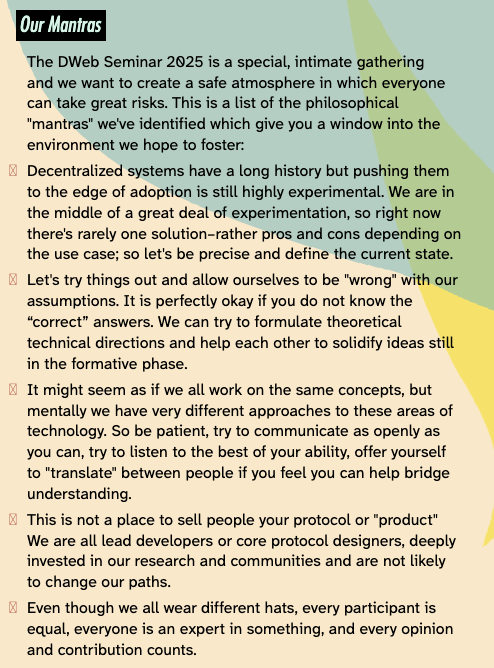
THE PHILOSOPHY: Whenever you gather a small group of highly knowledgeable people, some intimidation and fear can creep in. Many confessed later that they harbored feelings of “impostor syndrome,” and feared that they wouldn’t be able to keep up or be understood. But anticipating this, our research directors, Christian Tschudin and Andreas “adz” Dzialocha created a set of “mantras.”
When I asked our organizing team what they hoped to create, they replied, “A safe space,” “a house with good food, and interesting conversation,” “a caring environment” for growth.
I believe if you create a container where people feel safe, they will feel free to argue, and from that friction often comes accelerated progress. What I wanted was for this deeply talented group of people, who often feel alone and unsupported, to know that others share their burdens, encourage their successes, and are there to help burnish their ideas. In this comfortable house, filled with delicious home-cooked meals, what kind of heat could we generate from the clash of ideas about how to build the DWeb?
THE PROCESS: We started the proceedings with a “keynote” talk by Danny O’Brien and Kurt Opsahl, both formerly with the Electronic Frontier Foundation and now with the Filecoin Foundation, who tried to set the regulatory scene for our builders. When you are heads down in your code, it’s hard to keep your eyes trained on the tech policy regimes in each country. Kurt and Danny were both encouraging. “You have the power to create the rules,” Danny emphasized. “Dreams are what our stuff is made of,” declared Kurt. “Think a lot about how to build good values into your code.”
Dmitri Zagidulin (center) guides the group through the Seminar unconference days
On the first day, each participant gave a 15-minute “input” talk about a topic of their choosing. They ranged from “Invariant-centric threat modeling” by Ying Tong Lai to “Homomorphic Quantum-resistant Proxy Reencryption (aka Recrypt) by Duke Dorje (Identikey). Rae McKelvey traced her decade-long career from PhD student, DAT developer, Awana Digital developer, Ink and Switch researcher, to venture-backed team manager. She recognized that her throughline is “purpose built apps” that solve societies’ problems with code. Brendan O’Brien (iroh) shared tips for picking partners to build the “Cozy Web, “ while Eric Harris-Braun (Holochain Foundation) explained why social coherence is his “Big Why” for building decentralized tech. Around the dining room table, our group came to understand a little better where each person was coming from. Were we brave enough to share not only our conceptual frameworks, but also the problems we were having trouble solving?
Greg Slepak of OK Turtles Foundation leads a session outdoors
The group narrowed topics to seven sessions.
Days 2 and 3 were pure unconference, as the group curated rounds of discussions on topics they wanted to dive into deeply. Redesigning an “Internet 2” stack drew from every area of the group’s expertise; UI Patterns for Peer-to-peer, and collaborative data model requirements were other hot topics.
Over homemade falafel and fudge brownies, the group powered through topic after topic. Byzantine Fault Tolerance (BFT) blended nicely with barbequing vege-kebabs and much CRDT work (aka –Cooking Real Delicious Tri-tip) was accomplished by all. Matthew Weidner proved he had mastered decentralized collaboration, at least with his partner Tiffany as they whipped out fruit galettes. We discovered the best conversations occur over a basin of soapy dishes.
Master chef, Scott “Nanomonkey” Garrison and Brendan O’Brien contemplate BFTs over the grillTiffany and Matthew prepared fruit galettes to keep the group going long into the evening.
THE PUBLIC: Next this group brought their core questions to the public in the DWeb Weekend (August 16-17) at the Internet Archive. Day 1 focused on unconference-style discussions, while Day 2 was devoted to talks and hands-on workshops. Across five spaces and three sessions, the community brainstormed on topics such as Christian Tschudin’s table of contents for a DWeb Textbook, and Commons Infrastructure with Dmitri Zagidulin. Duke Dorje led us through a simulation of a future-state in which censorship, statelessness, and dissolving trust are answered in part by new forms of cryptographic key management.
Associate Research Director Andreas Dzialocha adn Dmitri Zagidulin, editor, kick off the DWeb Weekend unconference day at the Internet Archive in San Francisco
On Sunday, people got the chance to play with apps built on Holochain’s Moss or send small packets from device to device using Tiny SSB. In one room was a debate with HyperHyper Space’s founder, Santiago Bazerque, and in another were coders testing out Greg Slepak’s (OK Turtles Foundation) Shelter Protocol and its first implementation, Chelonia. David Thompson (Spritely Institute) explained the nuts and bolts of object capabilities, helping a roomful of CRDT experts imagine how they might build on top of Spritely. Later, Matthew Weidner drew from his academic work to show how collaborative editing might be possible in the DWeb. Akhilesh Thite demoed his Peersky Browser, a browser that natively runs decentralized protocols like IPFS, IPNS, and Hypercore. And rounding out the day, Ying Tong Lai took us through a threat modelling exercise with an eye to the fact that the EU is rolling out digital IDs in just a few years.
Santiago Bazerque (center) leads a discussion “From ‘conflict free’ to ‘conflict resolution’: a case for a BFT distributed database”
THE OUTCOMES: The DWeb Seminar was structured with a tangible output in mind: that the participants would produce a paper synthesizing what happened during our time together. Christian mused it could capture a “timestamped zeitgeist” so that in a decade we can look back at what this group thought was important.
The idea of a DWeb Textbook is being nurtured as an open source, community collaboration, with the assets to be stored in the DWeb’s Gitlab. A group of a half dozen people stepped forward to get the ball rolling.
Conceptual models of the base CRDT layer
The group is refining their schema for decentralized, offline-first systems
Among the Seminar participants, there seems to be emerging a first rough consensus on how a “Base CRDT” could be configured. From concept drawings to presentation slides, our group is sharing their architectural ideas with the wider public, refining the principles, soliciting feedback.
As I helped do the final cleanup of our homey venue, the post-its left behind formed a patchwork quilt of key challenges to solve: Pruning, Composability, DAGs, BFTs, Authorship Provenance. These are the “shadow future” on the edge of our DWeb present. But the real impact of our week is undoubtedly human. Can Andreas run P2Panda over David’s Spritely? Should this group be building atop Brendan’s iroh stack? Now that Eric and Santiago share a common vocabulary, is collaboration more likely? Only time will tell. The mission of the DWeb is to “connect people, projects and protocols to build a decentralized web,” but there is a reason we put “people” first.
Seminar organizers Wendy Hanamura, Scott Garrison, Christian Tschudin, Kevin Nguyen, Andreas Dzialocha. Missing: Dmitri Zagidulin
THE WHY: When Brewster asked me to produce the first Decentralized Web Summit in 2016, we featured the “Father of the Internet” Vint Cerf, and the “Father of the Web” Sir Tim Berners-Lee, pioneers in the brave, new online world we now inhabit. The original 80 people we invited to Builders Day included the next generation of builders of a radical redesign of Web 2.0. Today, nine years later, yet another generation of P2P architects is sketching out the stack they hope others may one day come to use. I believe this week of deeply esoteric conversations has brought us a few steps closer. (Brilliant minds + human connections = potential breakthroughs.)
But why do I commit myself to this vision? In 2023, I retired from the Internet Archive, and yet here I am camped out in a house with 15 developers. It doesn’t take a seer to imagine our near future: massive amounts of data are erased from the Web; truth fractures; climate change and war create people who are stateless and without official identities; the chasm between the powerful and powerless grows ever wider. These problems are creating demand for new and better tools. Users are looking for alternatives in the marketplace. Our friends at Bluesky could not have predicted Elon Musk’s Twitter take-over, but fortunately, their protocol and app were relatively ready for the moment when millions flocked to them away from X. We need to be ready.
The moment for local-first, P2P working code is here. As Larry Lessig said, “Code is Law” and if you write good values into the code, perhaps that can combat the seemingly intractable power imbalances before us. Maybe not. But I want to do everything in my power to support those who are speaking righteously through their code. I believe the adjacent possible is attainable.
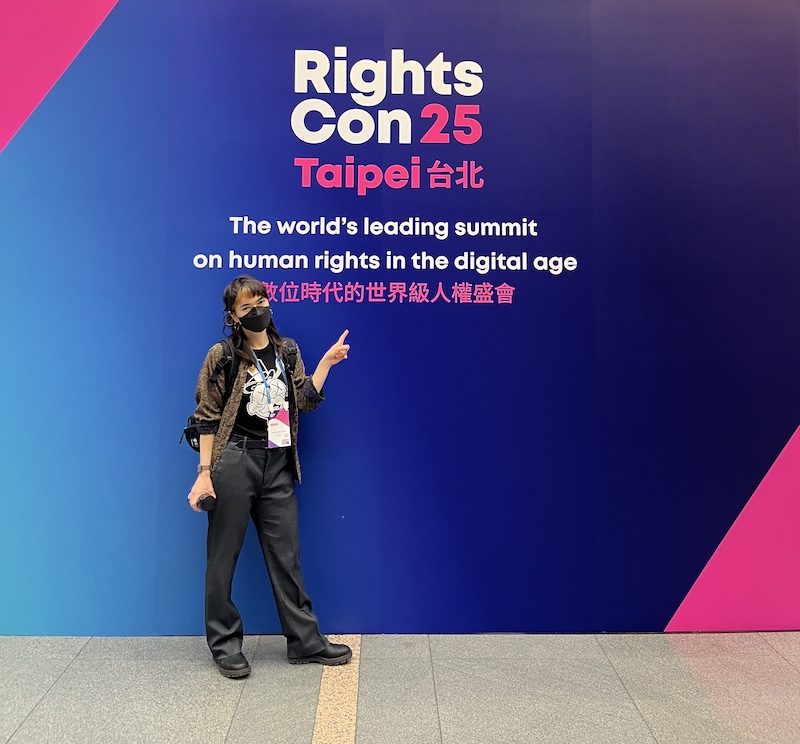
Senior Organizer, mai ishikawa sutton, in front of the RightsCon25 sign
In late February, members of the DWeb Core Team and the DWeb community were in Taipei to attend the 13th edition of RightsCon, the largest global summit on human rights in the digital age. Namely, we were there to connect with the digital rights community. We wanted to participate in an event where thousands of people travel from around the world to discuss the current and future state of the internet, and to meet others who were involved in building decentralized, distributed, and peer-to-peer network technologies.
Thus we took the opportunity to organize activities before and during the conference: a local networking workshop co-organized with g0v, sessions on both DWeb organizing and how fiction can better depict surveillance technologies, a DWeb dinner, as well as a final day of tabling in the halls of the venue.
DWeb x g0v Local Network Workshop
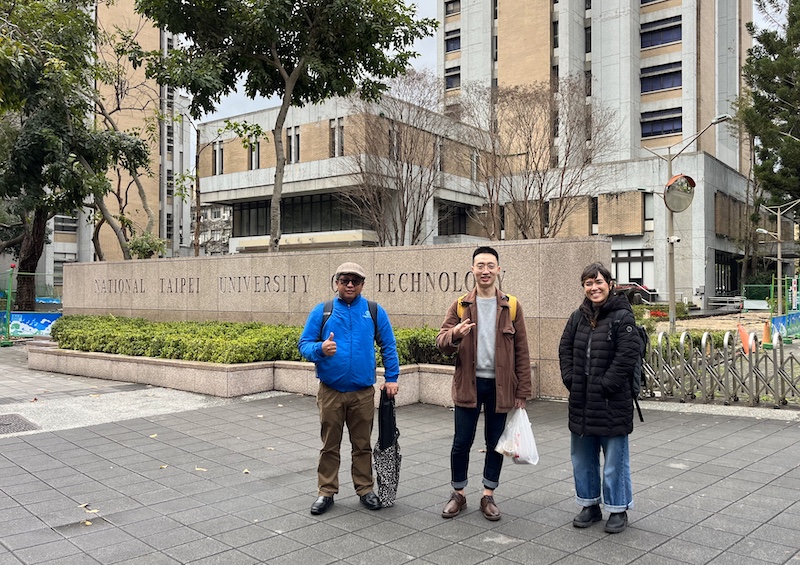
Michael Suantak, Cheng of g0v, and mai standing in front of National Taipei University of Technology where the community network workshop took place
We partnered with g0v, the leading decentralized civic technology community in Taiwan, to co-organize an event focused on local community networks at the National Taipei University of Technology. When we met with them several months ago, g0v leaders told us that they wanted to connect with those building and stewarding community networks. Such networks are controlled directly by communities, especially in places where internet access is non-existent or undermined, in order to maintain local network services and ensure internet connections are available or affordable. In Taiwan, these types of decentralized network infrastructures are a potential lifeline, as internet shutdowns in the country remain an ever-present threat.
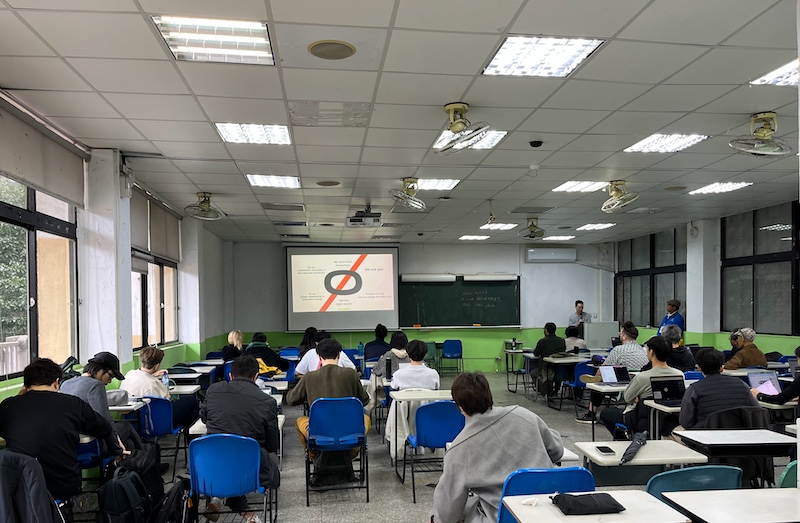
DWeb standing banner in front of the classroom where the workshop took place
Our event, “Building Resilient Connections: A Hands-on Local Network Workshop” dove into the core concepts of community networks, their technical setups, and the ways they’re making a difference in under-served communities worldwide.
We had a great turnout: attended by more than 35 people. Since we had a survey built into our registration form, we knew what topics the participants were interested in learning about and tailored the workshop to them. These included community networks’ key challenges and opportunities, technical overview and tools, and issues surrounding their ethics, privacy and security.
Cheng introducing g0v at the community network workshop
Notably, we had community network leaders from Myanmar, Taiwan, and Indonesia present case studies on their community networks, from the technologies they use to the ways they govern and manage the networks. We were lucky to be able to bring Michael Suantak to lead the presentations and the workshop on locally-hosted services. He was a 2024 DWeb Fellow, but for visa reasons he was not able to attend DWeb Camp in person, so we were happy to learn from him in person!
Michael Suantak giving a presentation on local community networks
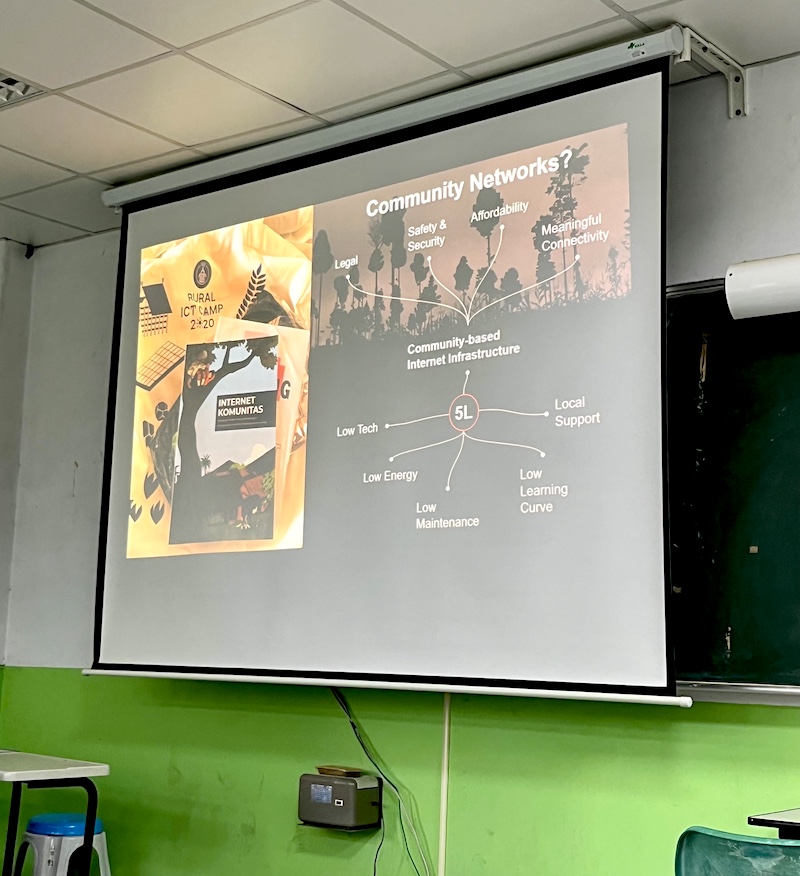
Sean of Mesh TWC also gave a presentation and workshop, as well as Gustaff H. Iskandar of Common Room who joined us from Indonesia. The sessions were not recorded, but you can view their notes and slides below (note: these are Google docs and Google slides).
Slide from a presentation by Gustaff of Common Room on community networks
We ended with a few hands-on activities with Meshtastic LoRa devices and local-first services, as well as a discussion on the role of community networks in digital literacy and empowerment.
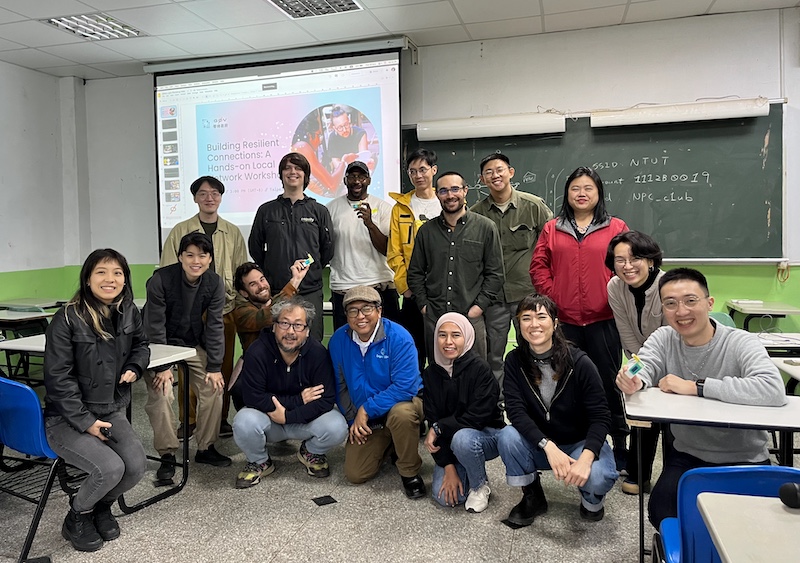
Group photo of the community networks workshop who stayed until the end!
Attending RightsCon 2025
RightsCon brings over 3,000 people from all corners of the globe to discuss the most pressing concerns facing people’s digital rights today. At a sprawling convention center in Taipei, hundreds of sessions took place across the last week of February, on issues related to free expression, privacy, and innovation and creativity online — specifically surrounding organizing tactics, policy advocacy, and sustaining movements in the face of rising authoritarianism worldwide. There was also notable interest in decentralized web solutions to these crises, with sessions led by DWeb Camp attendees, the Social Web Foundation, Equalitie, Project Liberty, Open Future, WITNESS, Open Archive, and Creative Commons.
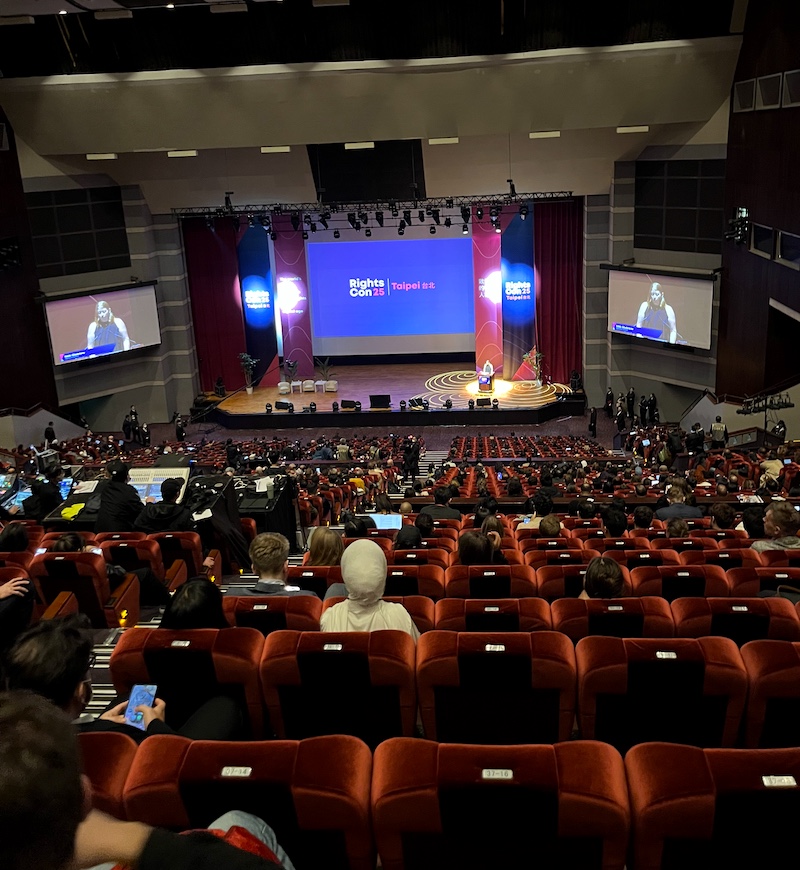
RightsCon25 Opening Ceremony
Round Table DWeb Workshop
We led a workshop discussion on strategies for decentralized, transnational organizing. Approximately 25 people attended and came to learn about the DWeb community. We shared our approach to building trust and solidarity between projects and individuals working to create a decentralized web that is usable, secure, and people-centric, all in spite of the exploitative and profit-driven status quo of the Internet. We spent the hour strategizing effective tactics for transnational organizing. Namely, how to use in-person and online gatherings to organize, share resources, and build enduring connections to strengthen our efforts.
Stop Surveillance Copaganda Workshops
Lia Holland of Fight for the Future and I co-facilitated three workshops on the Stop Surveillance Copaganda project, a partnership between Fight For the Future and COMPOST Magazine. The discussions centered around how we better support fiction that depicts futures and alternate realities where privacy is a universally respected human right. Attendees shared useful resources and analyses of surveillance tech’s impacts, as well as real-world tactics to resist illegal surveillance. Everything we gleaned from that week will go into a toolkit for authors and artists to more justly depict surveillance technologies.
Stop Surveillance Copaganda Session at RightsCon25
RightsCon Booth
We signed up to table at RightsCon in order to introduce ourselves to the digital rights community and meet those working to build alternative, decentralized technologies. Dozens of new and familiar faces stopped by to grab our stickers and zines, and to learn about what the DWeb community has been doing to build our movement.
Senior Organizer, mai, tabling at RightsCon25
DWebbers Dinner
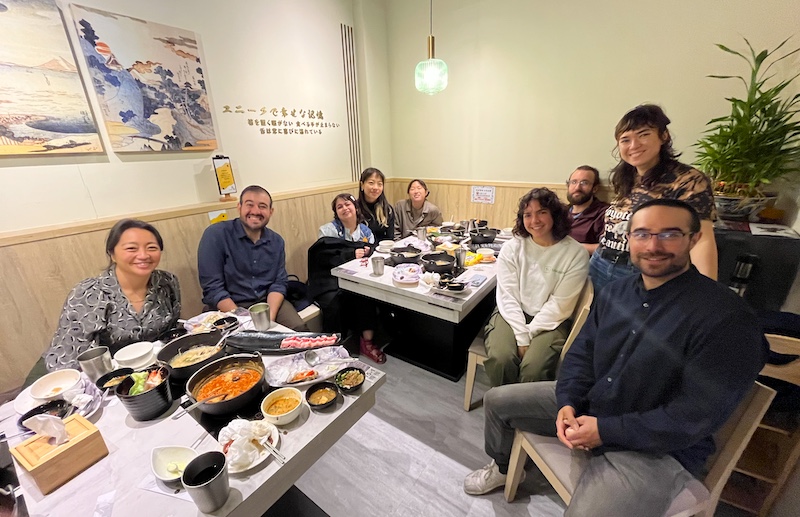
Mid-conference, we organized a DWeb hot pot dinner for those of us in town for the event!
Group photo of DWebbers having hot pot!
Attending RightsCon this year felt incredibly productive and worthwhile. We’ll likely be there at the next one — in order to build better webs and learn from the past, it’s crucial that we connect with those directly confronting the pervasive challenges of the mainstream internet. That has always been our north star: to build decentralized technologies that help solve real world problems, not just in the future, but now.
Looking back at 2024 and a summary of ideas for what comes next
Photo of Campers sitting under the redwoods discussing how to decentralize DWeb.
This year marked the eighth year of DWeb – since 2016 scores of us have gathered in the redwoods, in the halls of Greco-Roman buildings, on the beaches of California and Brazil, in hackerspaces, on the Playa — and online, spanning international time zones, languages, expertise, and interests. Over these years, DWeb has become a dynamic community of dreamers and builders creating alternatives to the dominant, centralized and corporate internet. We want to build a web that manifests trust, human agency, mutual respect, and ecological awareness. And DWeb is a space for thoughtful conversation and finding the collaborators and resources to bring decentralized, distributed, and local-first networks to life.
DWeb Camp 2024
By many accounts (and feedback survey responses), DWeb Camp 2024 was our most successful camp yet. It was our fourth Camp, with more than 520 people flying from all corners of the world to meet in the redwoods of Navarro, California. We held our first Demo Night Market, where 32 projects showcased their working code, allowing campers to try out and provide meaningful feedback to builders. We held over 420 sessions and workshops over five days and this year we brought 25 DWeb Fellows from 21 countriesacross Europe, North America, South America, East Asia, South Asia, West Africa, East Africa, and the Middle East.
You can read some of the reflections about this year’s camp here, here, and here. While we are taking a break from holding Camp in 2025, stay tuned for details on DWeb Camp 2026.
As we close out 2024, let’s look back at the other highlights of the year.
Local Node Meetups — Across our local Nodes, there were over 12 in-person meetups in San Francisco, Los Angeles, Seattle, Vancouver, Hanoi, Buenos Aires, Burning Man Playa. See more below on ways we’re planning to grow the DWeb Node network next year!
What were some other notable happenings in our ecosystem?
Bluesky’s Massive User Growth — Many of the core team of leaders and developers at Bluesky have been a part of the DWeb community. The network relies on content-addressed content and is working towards making “credible exit” possible, especially in light of the major exodus from X-Twitter. So while it’s debatable whether it’s truly a decentralized social network from a technological perspective, we cannot help but feel like this is a big step forward for the DWeb movement (note: the back and forth written exchange between Christine Lemmer-Webber and Bryan Newbold is worth checking out ICYMI).
We’re sure we missed some other highlights from 2024 — tag us on our social networks so we can boost your successes from the year on Bluesky (@dweb.bsky.social) and on the Fediverse (@[email protected])!
What’s Next for DWeb in 2025
When the DWeb organizing team decided to take a year off from holding Camp in California, a big part of our decision was weighed by our desire to work towards decentralizing the movement. Our vision in 2025 is to support the growth of DWeb nodes around the world, empowering and aiding them in hosting DWeb gatherings big and small. Rather than focus on one big convening in Northern California, we will be supporting smaller regional gatherings in Vancouver, Taiwan, Healdsburg, and Brazil.
But we want to hear directly from the DWeb community and understand what you want to see happen in the coming year. So at last month’s virtual DWeb meetup, we asked: how could DWeb better support our community’s goals in building a decentralized/distributed Web? And how do we each want to contribute to help support this network?
Following a short presentation from core organizers about the events and projects we’d like to pursue next year, we opened the floor for an open discussion. Following that, the 60 or so of us present divided into small groups and discussed what we’d like to see next for DWeb. You can find the recording of the whole meetup here.
Here are the highlights of what we heard:
Let’s Walk Our Talk
Many expressed the desire for us to do more to highlight the projects and best practices for replacing the “centralized, attention hijacking, surveillance technology” of the dominant internet with “decentralized technology that supports human values including autonomy, personal data protection, privacy, etc.”
People felt that we should find ways to encourage participatory design by building bridges to communities to better map needs to solutions, and solutions to needs. A key to this (repeated by many across) was that people find it really helpful to receive feedback on their projects. They want to understand how their tools can work better, and how they can get collaborators and financial support. One of the main ways people find value in the DWeb community is to allow people to share their projects to make them more usable and viable. Offerings by people included holding branding / UX design workshops and working with the DWeb Principles to make them more robust and actualized.
DWeb has a robust website with resources on DWeb technologies and analysis, but it currently needs some brushing up and updating. One person desired specific resources for counter-surveillance measures for high-risk communities including indigenous and queer communities. These types of resources would be critical in showing how DWeb can be immediately useful for those who are in urgent need of alternatives.
DWeb Project Directory
An oft-repeated desire that we’ve heard is for a DWeb Project Directory, where people can find aligned projects, affinity groups, and potential collaborators. People want to know where the DWebbers are!
Such a curated directory could map individual people’s skills, interests, and locations for people to interact and post topics/needs/projects for them to find each other. It was particularly noted that it should include non-developers, with people skilled in communications, UX design, organizational and governance design, fundraising, community management and more. The directory could be shaped by select community members, and also be used to shape an ecosystem map to visualize the domains of decentralization happening across the network stack.
Nodes Network and In-Person Gatherings
There were calls for decentralizing the technological infrastructure of DWeb. One of the main ways we hope to achieve this is by growing our Nodes network – where people within a region can meet in-person and have regular local get-togethers. We’ve heard that a toolkit and support system would be helpful for those wanting to get their local Node off the ground. One person said that they wanted to help set up local nodes around the DWeb Principles “that go beyond the technology layers to involve social governance and way[s] of living / growing.”
On that note, there’s a growing contingent who would like to see a kind of DWeb residency, where people would go to a place for a period of time to work on a project together and co-create the experience, much like Camp. There have been Hacker Houses that have done something similar, and they tend to meet alongside related events such as Ethereum DevCon. There are a few folks in our midst who are already (or are interested in) experimenting with co-living. They said that they’d like to try a similar model with the residency using a benefactor model, where people could live somewhere for a certain period, with all their expenses paid, so they could collaborate in person on building DWeb infrastructure. This would also entail building relationships with people on the ground who live there, who want and need the kinds of tools that would be created through the residency.
Many would also like to see a DWeb Calendar, which people could add events to and subscribe to directly with their calendar app of choice. One person said “it would be incredibly supportive for dweb as an attractor of brilliance and credibility to endorse distributed events who apply for said endorsement.”
Virtual Gatherings and Communications
DWebbers want to continue to see virtual meetups happen throughout the year. Some suggested that the virtual meetups can be more experimental, with meet and greets where people can be invited to share asks and offers. But a few people suggested that in lieu of meeting at Camp, there could be a big virtual summit that takes place to bring people together virtually for a few days — much like DecentSocial from a few years back.
We could also do a better job of providing ongoing news, updates, and publications across the DWeb ecosystem. Many echoed the fact that they wanted to make sure that they didn’t miss any big updates. So people suggested a DWeb News Digest – where people could also describe their needs, request specific help, post or offer jobs and opportunities. It was noted that it would help to establish a habit amongst the community to see this as a kind of clearinghouse for DWeb news. This would likely have to interface with the Directory mentioned above.
And lastly, the topic of storytelling came up across the groups. Those new to the space don’t quite understand what DWeb is and its community’s values and approaches. DWeb regulars note that they continue to participate in DWeb because it energizes both the “heart and the head” and that they’ve come to know the community for being “rigorous intellectually and generous in openness”. A regular DWeb Blog with writings and media could help better reflect how our values can be embodied in the technologies that we build.
*~*~*~*~*
With all the challenges in the world and a shifting landscape in the U.S., we don’t know what’s in store for us in 2025. But as the DWeb Organizing Team, we truly look forward to continuing the conversation and maybe even seeing you at some of the events planned in the new year.
We have a new pop-up space at DWeb Camp this year: the Migration Station, a space for archiving migration mementos and self-organized workshops. The exact location is TBD, but it will be located near the Library and rock climbing station.
Planned layout of the Migration Station
Our theme of this year’s Camp is Migration: Moving Together — to touch upon what is a pertinent reality for so many worldwide, and relate their experience to the DWeb. Beyond a poetic metaphor for moving people from the centralized web to the decentralized web, we’d like to acknowledge how masses of people are displaced due to war, genocide, climate change, and other reasons, for the sake of survival. We want to reflect on how network technology can address their needs amidst catastrophe.
And along this theme, we’re inviting all Campers to bring a small memento (up to 5×5 inches/120×120 mm) to reflect on their own personal, or resonant, migration stories. At the Migration Station, you will be able to photograph the item, write a note, and record an audio story using the Custodisco and Audiovisco kiosks.
Photo of the Custodisco Kiosk, where you can photograph and add your migration story to the digital memento archive.
Over the course of the week, you will have an opportunity to add your objects and stories. After Camp, we will take this archive, as well as a carefully selected set of small objects folks are willing to part with, and create both a digital and physical time capsule to be buried for 24 years and unearthed in 2048. The physical time capsule will be buried at the Internet Archive. The digital time capsule will be preserved using a variety of different DWeb tools and protocols in order to practically test different approaches for cultural preservation.
The exact location where we’re planning on burying the physical time capsule, at the Internet Archive garden.
Memento Ideas
Possible mementos include: A copy of family photo or historical document; a shawl, scarf or other textiles that was worn or used to carry objects; hand made art, small statues, talismans or other religious artifacts; an interesting rock from a special place; jewelry, baskets, bags, or even an old key and the story of what it once unlocked.
If you’re unable to bring a memento, you can always visit the Art Barn to create something at Camp.
A very limited number of objects will fit into the time capsule, so if you’d like your object to be considered for inclusion, please bring a memento that is no larger than a CD and is robust enough to survive for 24 years underground (i.e. no low quality paper or organic material). If your object is larger than a CD, or you don’t want to part with your object for sentimental reasons, you will still have the opportunity to create an entry in the digital archive recording your object and its story.
Above is a photo of DWeb Camp’s Executive Producer, Wendy Hanamura’s grandmother and grandfather. Wendy will be archiving the story of how both of her grandmothers came to the United States as picture brides through Angel Island in California.
Migration Station Workshops
Throughout the week, the space will also offer self-organizing workshops, including:
Collective story sharing/listening
Archive exploration sessions
Discussions on archiving experiences
Map drawing workshops
Working with the archival material (ex. noise cleaning, translations)
Reviewing favorite archived materials
Discussions on the future significance of the archive
We hope you bring your mementos, stories, and dreams.
Guest blog by ngọc triệu, DWeb Fellowship Director
The DWeb Camp 2024 theme is “Migration: Moving Together.” Migration, in the context of decentralization, involves moving people and their data to a more open, secure, equitable, and accessible decentralized web. It is a call for collective action and resource gathering that will not only enable these migrations, but also surface and address the various issues that come with them.
Conversely, communities experience forced migration due to war, environmental degradation, corporate land grabs, and political forces beyond their control. Decentralized and distributed tools can offer significant benefits to these displaced populations by providing solutions to secure identity verification, access to resources and currency, censorship resistance, data sovereignty, and the preservation of cultural artifacts. We’ve learned this through the story of the stateless Rohingya people and how they’ve overcome authoritarian controls to preserve their identity and culture, the story of how Maasai Tribespeople of Tanzania locate and map their oral storytelling traditions about places of significant meaning, and the story of how communities in repressive environments bypass censorship or maintain secure community-owned and operated networks in the face of Internet shutdowns and intermittent connectivity.
Tools are better when they are built with the communities they are intended to serve. This is why the DWeb Fellowship Program seeks out people who work directly with marginalized communities, or in service to them. Often, our Fellows find themselves navigating the harsh realities of repressive regimes, striving to challenge and counteract the many oppressive forces at play. These exceptional individuals stand on the frontlines, harnessing technology to forge pathways to liberation, resilience, agency, and autonomy for those who need it most.
This year, we are honored to welcome 25 Fellows from 21 countries across Europe, North America, South America, East Asia, South Asia, West Africa, East Africa, and the Middle East — 21 of whom will be joining us in the ancient Redwoods of California, eager to share their knowledge, learn, and connect.
Our Fellows represent a diverse tapestry of cultural and professional backgrounds. They are human rights activists, technologists, educators, community organizers, archivists, researchers, artists, musicians, scientists, cultural conservationists, civil society workers, and digital security experts. Through intersectional approaches to decentralization and decolonization, our Fellows fight for environmental and social justice. Together, they strive to ensure equal access to knowledge, enhance security and privacy, and uphold sovereignty and autonomy for their communities. Together, they spearhead the DWeb movement, moving toward a more just, inclusive, and accessible web.
Please meet our 2024 DWeb Fellows:
Alex Zhang
Alex Zhang is strongly passionate about research and activism in the areas of censorship measurement and circumvention. Over the past five years, the work he led has helped millions of users in China and Iran to bypass various emerging censorship challenges during politically sensitive periods of time. His work has thus received media coverage and several awards: the IMC 2020 Best Paper Runner-up, the 2023 Best Practical Paper Award from the FOCI community, First Place in the CSAW 2023 Applied Research Competition, and the IETF/IRTF Applied Networking Research Prize in 2024. Additionally, Zhang has been contributing to the GFW Report, an English and Chinese website focused on studying and understanding censorship incidents in China.
Andreas Dzialocha is an electric bass player, producer, composer and developer. His work consists of both digital and physical environments, spaces, festivals, software or platforms for participants and listeners. The computer itself serves as an artistical, political, social or philosophical medium, dealing with computer culture, machine learning, platform politics or decentralized networks.
He is member of the band Sun Kit with Jules Reidy, member of the Berlin-based community computing space offline, co-founder and core-contributor of the local-first protocol p2panda, co-founder of the music label Hyperdelia and the intermedial score platform Y-E-S. Sometimes he teaches artistic computer practices, recently at UdK Berlin. He studied art history, musicology, media philosophy and computer science in Berlin where he also lives and works.
Batool advocates for transforming cultural norms to facilitate the adoption of open research practices, tools, and ethos, while addressing the existing power dynamics and inequalities in knowledge production. She believes that Open science is fundamentally about decolonization by challenging the legacy of settler colonialism, which often marginalized indigenous knowledge systems, and by promoting the integration and respect of these diverse perspectives in the broader scientific discourse. She founded the Open Science community in Saudi Arabia (OSCSA), which introduces and contextualizes Open Science practices in Arabic-speaking countries.
Batool is actively engaged as a mentor and governance committee member for The Open Life Science program. She is also a core contributor to The Turing Way and a member of the Open Science expert group organized by the International Association of Universities (IAU) where she co-develop a new approaches to assessments of and incentives for researchers to engage in Open Science in the Universities.
When she’s not coding, Batool loves going on spontaneous road trips to explore new places.
Bendjedid Rachad Sanoussi is a telecom engineer passionate about environmental protection, focusing on sustainable solutions to socio-economic and environmental challenges. Currently, Rachad is pursuing a PhD in digital and artificial intelligence for management.
As Technical Lead at Digital Grassroots, a youth-led organization enhancing local digital citizenship, Rachad led the Digital Rights Monopoly project, creating a virtual platform for decentralized power distribution and amplifying marginalized youth voices.
Rachad’s interest in internet-related issues began in 2016 with the Internet Society Benin, where he now serves as Secretary-General. At Digital Grassroots, he curated the Community Leaders Program for Internet Advocacy, focusing on democratic participation through the Internet. He also coordinated the universal access and meaningful connectivity working group for the Project Youth Summit. As an Open Internet Leader, Rachad collaborated with the AU-EU Digital for Development Hub to represent youth at the 17th Internet Governance Forum (IGF).
Rachad received the Youth Digital Champion Award and the Inaugural Paul Muchene Fellow Award, honoring an ICANN staff member dedicated to enhancing the Internet’s resilience. He advocates for youth inclusion in environmental and digital policies and aspires to become a policy analyst. His hobbies include agriculture, tourism, and football.
Billion is Taiwanese and a co-founder of Cofacts. She started this project in 2016 and she has been advocating for marriage equality and open freedom, dedicating herself to connecting different communities and providing empowerment courses to combat disinformation. She has previously visited PolitiFact in the United States as a fellow. She has exchanged and connected contributors from different countries, to collaborate on clarifying information. She manages a community working on OSINT fact-checking skills and media literacy. She likes cakes and cookies.
Evan Hahn is a computer programmer based in Chicago. He works at Awana Digital (previously known as Digital Democracy) building Mapeo, a Hypercore-powered mapping app used by frontline communities to defend their environmental and human rights. Previously, Evan worked at Signal, the encrypted messenger.
fauno’s work and activism focus on investigating, re-thinking, adapting, modifying, and implementing ecological and resilient technologies, especially autonomous, collectively managed infrastructure.
He has been involved in free software and hacktivist communities since 2007, with a special interest in the intersection of technology and grassroots organization. This interest led him to work on technology development from intersectional, trans-feminist, anti-oppressive, decolonial, and ecological perspectives, along with many friends and colleagues.
In the last six years, he has been working almost exclusively on resilient websites and developing a platform for updating and hosting them called Sutty, which is also the name of the worker-owned cooperative through which he sustains this work.
This work has led him into the dweb space. Through his alliance with Distributed Press, the websites built at Sutty are available on several distributed protocols, and lately, he has enabled social interactions through ActivityPub, the protocol for the Fediverse.
Juan Cruz was born in Venezuela and has been living in Colombia for 6 years. He’s currently a final semester student pursuing a degree in Systems and Computer Engineering. His journey with community networks began over two years ago when he joined Red Fusa Libre. What started as a quest for knowledge and a desire to contribute has grown into a deep passion for connecting marginalized communities with the world.
He is dedicated to community networks stems from witnessing firsthand the transformative impact of internet access in underserved areas. Through his work at Colnodo, Juan has been involved in implementing and supporting various community-driven initiatives across Colombia. These experiences have not only sharpened my technical skills but also taught him invaluable lessons in empathy, collaboration, and resilience.
Juan is committed to advocating for decentralized technologies and believes in empowering communities through digital inclusion. His goal is to leverage technology to bridge the digital divide, ensuring that everyone has equitable access to information and opportunities.
As a software developer and sociologist, Marie Kochsiek (she/her) is particularly interested in the intersections between societies, technologies and sexual health. She is an active member of the Heart of Code, a feminist hackspace in Berlin. With a team of three she started the drip app, a free and open source period and fertility tracking app.
Melquiades (Kiado) Cruz is a prominent Zapotec communicator, activist, and researcher from the community of Yagavila in the Rincón de la Sierra Norte of Oaxaca. He is a co-founder of SURCO, Servicios Universitarios y Redes de Conocimientos en Oaxaca, A.C. where he has worked to support community media projects, access to information, open source technologies, and community education. He is currently contributing to the INDIGITAL initiative, a collaborative project focused on ensuring access to information in indigenous languages and data. He was a 2023 participant in the LACNIC (Latin American and Caribbean Internet Addresses Registry) Líderes Program on Internet Governance, and will be a Digital Civil Society Lab Technology & Racial Equity Practitioner Fellow with the Center for Philanthropy and Civil Society at Stanford University during the 2024-25 academic year.
Nádia Coelho (she/her) is an electrical engineer, who’s been studying regenerative agriculture for the last five years. After spending three years visiting and researching alternative farming experiences throughout Brazil, she established herself in the Atlantic Rainforest in the State of São Paulo. There, she co-founded Tekoporã, a project focused on building tailor-made digital systems for agroecological social organizations, using proper tools with free software and hardware.
Nat Decker (they/them) is a Chicago-born Los Angeles-based artist interrogating the politicality of the alienated body/mind networked within a call for collective care and liberation. Working critically with technology, they identify the computer :::as a portal::: as an assistive tool affording a more accessible and capacious practice. They reflect on the virtual as a space of potential requiring contestation for the ways it mirrors patterns of exploitation and exclusion. Their practice fundamentally integrates accessibility, collectivism, and friction as generative mediums.
Working with computational and sculptural processes, they trace serpentine connections between the body and modes of technology. They render the mobility device/disabled body as cultural expansion and agitation of conventional desirability politics, as formal object laden with stigma while freedom-giving, sterile and metallic while sensual and soft, (un)aestheticized while interacting with designations of usefulness, function, and capitalistic innovation.
Nat is a 2024 Eyebeam Democracy Machine Fellow with their collective Cripping_CG, a Y10 member of NEW INC and was a 2023 Processing Foundation Fellow. They are also a community organizer and access worker. In June 2022, they graduated from UCLA with a degree in Design|Media Arts and Disability Studies.
Muhammad Noor, a Rohingya visionary and the founder of the Rohingya Project, is a pioneer in blockchain for social and financial inclusion for stateless communities. His multifaceted role extends to founding and directing impactful institutions, including the globally acclaimed Rohingya Vision (RVISION) TV broadcast station, watched by millions worldwide. With vast expertise in journalism, humanitarian work, and corporate leadership, Noor actively uses technologies such as Blockchain, AI, Crypto, Metaverse, Data Science, security, and privacy to benefit marginalized people. He also mentors students and has given talks on refugee issues and technology at universities throughout the world.
Sarah Grant is an American media artist and educator based in Berlin, Germany. She is a member of the Weise7 studio in Berlin and Lecturer in the Digital Arts program at Die Angewandte in Vienna, Austria. She holds a Bachelors of Arts in Fine Art from UC Davis and a Masters of Professional Studies in Media Arts from New York University’s Interactive Telecommunications Program. Her teaching and media art practice engages with the electromagnetic spectrum and computer networks as artistic material, social habitat, and political landscape. With a focus on radio art and computer networking, she researches and develops artworks as educational tools and workshops that demystify computer networking and radio technology. Since 2015, she has organized the Radical Networks conference in New York and Berlin, a community event and arts festival for critical investigations and creative experiments in telecommunications.
Senka Hadzic is a telecom engineer, researcher and public interest technologist working on affordable connectivity solutions for remote areas and disadvantaged populations. She is part of the iNethi team, a Cape Town based project enabling decentralized content distribution in community networks, and collaborating with Grassroots Economics to bootstrap circular economy in the communities by using a locally-owned network and community inclusion token as a catalyst.
Shadrach Ankrah is an Information Technology (IT) Specialist and the Founder and Executive Director of Connect Rurals, a nonprofit organization focused on bridging the digital divide in rural and underserved communities in Ghana. The organization provides digital skills training including coding and graphic design, and is committed to connecting rural communities to the Internet to provide access to various opportunities. He advocates for Internet access and has actively participated in Internet governance discussions and initiatives since 2017. He has mentored and guided over 150 youths on Internet governance issues, helping them navigate the ecosystem and contribute to the development of the Internet. He is affiliated with various global Internet organizations, including the Internet Society (ISOC), the Internet Corporation for Assigned Names and Numbers (ICANN), the African Network Information Centre (AFRINIC), and the United Nations Internet Governance Forum (IGF). Shadrach has been a fellow at ICANN72 & ICANN77, AFRINIC-31, and the 2019 Hackathon@AIS (Africa Internet Summit). His vision is to see rural and underserved African communities have access to decentralized technologies and tools that provide them with Internet access, digital literacy, and job opportunities.
Stacco Troncoso is an avid synthesizer of information and a radical polymath working towards elemental, people-led change on a burning planet.
Stacco lives, breathes, teaches and writes on the Commons, P2P politics and economics, open culture, post-growth futures, Platform and Open Cooperativism, decentralized governance, blockchain and more as part of DisCO.coop, Commons Transition and Guerrilla Translation.
Tanveer Anoy (They/Them) is a Bangladeshi queer author, academic, archivist, and human rights activist. Anoy has provided leadership and edited several queer print productions. As a writer, Anoy addresses critical socio-political issues such as the gender binary, bullying, and religious violence. Anoy is the founder of MONDRO, the first and largest Bangladeshi queer archive that collects and preserves the artistic and cultural history of communities of marginal gender and sexual diversities. Anoy also established Bangladesh Feminist Archives, a comprehensive digital platform dedicated to preserving, documenting, and promoting the intersectional feminist movement in Bangladesh.
Wassim Alsindi is the founder and creative director of the 0xSalon, which conducts experiments in post-disciplinary collective knowledge practices. A veteran of the timechain, Wassim specializes in conceptual design and philosophy of peer-to-peer systems, on which he writes, speaks, teaches, and consults. He has an editorial column at the MIT Computational Law Report, and he co-founded MIT’s Cryptoeconomic Systems journal and conference series. Wassim has curated arts festivals, led a sculptural engineering laboratory and published experimental music, satirical theater, fiction, games, poetry, and speculative scripture. Wassim holds a Ph.D. in ultrafast supramolecular photophysics from the University of Nottingham.
As a Gen-Z artist, Ziye Zhang leverages diverse digital tools and mediums to delve into contemporary culture and the nuances of social life in the digital era, highlighting the unique challenges encountered by the Digital Native Community. Additionally, Ziye has a high level of expertise in emerging technologies in VR, virtual production, and motion capture.
Ziye also uses his game design knowledge to encourage people to solve social issues through games and hosts board game design workshops at MIT, NYU, etc. In addition, Ziye is an invited guest speaker by Hasbro China.
Now, he is conducting field research and studies for his new works, which will discuss individual consciousness neglected on the internet through interactive installations, continuing to refine his theoretical research and artistic language.
Zoe is a software consultant, open source advocate, and conference organizer. Her work often focuses on underserved communities. She is currently working to restart Oakland’s Sudomesh network. Away from tech, her hobbies include photography, fixing bicycles, and flying and maintaining experimental aircraft.
Fendji is an Associate Professor in Computer Science at the University of Ngaoundere, Cameroon, and Research Director at Afroleadership. He holds a Ph.D. from the University of Bremen, Germany. Post-Ph.D., he collaborated with German cooperation initiatives in Cameroon to establish community networks in the northern regions of the country. With APC funding, he proposed a regulatory framework for community networks in Francophone African countries.
Fendji’s recent research interests include artificial intelligence, particularly natural language processing, sustainable agriculture, education, and addressing bias and ethical issues. He collaborated with the Alan Turing Institute on the ADJRP project and held sessions at the Mozilla Festival. In 2021, he facilitated the UNESCO Forum on Youth and AI in Yaoundé.
He has been awarded fellowships at the Stellenbosch Institute for Advanced Study and the Hamburg Institute for Advanced Study. Fendji is a member of the ICT and AI Commission at the National Committee for Technology Development in Cameroon and mentors in the African track of the Scaling Responsible AI Solutions project led by CEIMIA and GPAI.
Michael Suantak, also known as Pumsuanhang Suantak, is a distinguished social innovator and entrepreneur known for his impactful work in Myanmar and India. He founded and directs ASORCOM (Alternative Solutions for Rural Communities), where he has established community wireless networks connecting over 20 remote jungle villages in Myanmar’s Chin State, providing vital educational content and local news. Beginning his career as a founding member of the Burma Information Technology (BIT) team in 2002 and later serving as an organizational manager in New Delhi, Suantak has also become a prominent digital and cybersecurity trainer. His expertise includes policy development, law, and integrating modern technology into education across Asia. As a DeBoer fellow, he leads digital and cybersecurity research at ASORCOM, enhancing community development through strategic internet and wireless technology use.
Nzambi is an experienced and skilled professional with a strong background in data collection, operations, program support, and project Implementation. Her work has involved collaboratively designing, implementing, and coordinating projects with data, technology, and design components, making her well-equipped to contribute to the DWeb ecosystem.
She is a techie who believes that her passion for using technology to address societal issues, combined with her strong project management and research capabilities, makes her a valuable asset in the pursuit of a more decentralized, equitable, and inclusive web. She looks forward to engaging with the DWeb Community and exploring ways in which she can collaborate to advance the DWeb movement.
Shalini finished her Bachelors of Engineering in Tumkur and joined Servelots and Janastu soon after. And that was 15 years ago. After realizing that her role is essential for keeping the programs of working with communities alive she decided to get involved with all activities of the organizations including keeping the account books ready! Now she is working with the village women in various capacities — craft center to local mesh deployment, while also handling the overall management of activities of the organizations. One of them being the decentralization of a platform that caters to keeping the local knowledge, much of which also has personal stories of women. Shalini works with the women, listening to their stories and keeping it for next iteration. In the meantime, the stories are shared with the people the women trust and annotated so they can get back fast to things that are of interest to them. This also means that the annotations will be media that will be tagged. Most women are not literate so we have a way of asking them to associate with a person who they trust and can use the system. Shalini and her team are looking at ways to include them as first class users of the system – with face and voice recognition to start.
Taslim is a software engineer at eQualitie, an open-source company dedicated to developing tools for online freedom and privacy. He contributes actively to the company’s open-source browser, Ceno Browser, which aims to provide secure access to online content for all users worldwide.
Guest blog by ngọc triệu from the DWeb Camp Core Organizing team.
Since the program kicked off in 2019, the DWeb Fellowship has welcomed 62 fellows from more than 20 countries across five continents, spanning North America, South America, Asia, Europe, Africa, and Oceania.
Recently, I had the opportunity to reconnect with some of the DWeb Fellows from previous cohorts. We caught up on how we’ve been since our last encounter, delved into our current projects, and reminisced about our shared experiences at DWeb Camp.
In this post, let’s join Stacco (Fellow 2023), Remy (Fellow 2022), and me in our conversations below!
*Please note that the conversations have been edited for length and clarity.
____
Q1 ngọc: Thank you for taking the time to chat with me today! Can you start by introducing yourself and sharing what you’re working on right now?
Stacco: Hi, yes!I’m Stacco from DisCO.coop, which is the project I represented at DWeb Camp 2023. DisCO is a cooperative intersection of feminist and anticapitalist responses to a lot of things like DAOs, what we want to do in the workplace, and how we want to spend our time productively. And it’s also a critical approach to designing technology. DisCO was founded in 2018, but it came out of the experience of a cooperative that we founded on distributed principles, called Guerrilla Media Collective. And a lot of the stuff that we prototype in Guerrilla Media Collective with economics and governance have led into DisCO.
Remy: Hey there, I’m Remy, from the 2022 cohort. I’m currently working at the Open Technology Fund as a programme specialist. I’ve worked kind of on an array of projects, but we get a series of applications that focus on circumventing Internet censorship in authoritarian contexts, whether that be research projects, community, convenings and so on.
Q2 ngọc: What’s one thing from DWeb Camp that you’ve taken with you into your current work?
Remy: When reflecting on my experience at DWeb Camp, I find two significant takeaways:
The first one being that, at that time, I was coming from a very academic space. So, most of the work that I was doing was really focused and consolidated within academia, which was a fairly small realm of people. It was mainly archivists that I was working with, so we had kind of a narrow lane and scope.
However, upon engaging with the broader web community, I was exposed to a diverse array of individuals working on directly related projects, each with intersecting identities and roles. I remember meeting a speculative fiction author, and I was like: “Wow, this is kind of an interesting addition to this cohort of people that I don’t think I would have naturally included in a conference!”. I also got to unlearn what a conference is and looks like, you know, I’m going to show up with my little briefcase and give my presentation, because that’s what academia looks like. And then coming in, it was a much more kind of relaxed vibe and open conversation with an array of different people. So I thought that was really interesting and opened my eyes like, wow, we do need to include more people in these conferences that we’re at, because designers play just as big a role as researchers and developers.
And then I would say, the second thing that I learned was really what it takes from the ground up to develop a mesh network. I always kind of come back and think about that — all the love and time that it takes, and the patience to care for these systems. It really got me on a whole journey about thinking of systems of care, and what those look like in technical spaces.
Stacco: Following DWeb Camp 2023, I invited brandon (Fellow 2022, 2023) and mai (DWeb Fellowship Director 2019-2023) to Spain for a meeting called “DisCO Remastered”, which mai covered in an article. From this experience, we developed two prototypes, including one called “community supported digital commons,” inspired by the principles of community-supported agriculture. We have people who are more conscious about the food they eat and where it comes from. So how about we have that type of consciousness for the digital tools that mediate our daily lives? Having community funding and accessibility for digital commons is very important to ensure fair compensation for labor and improve accessibility to technology.
Additionally, collaborating with brandon, we aim to explore cooperative alternatives to platforms like Spotify, but going much further. What if the musicians could develop their own technology with torrents? What if they could take full control of their work and earnings?
Also for me, I really love the diverse age ranges, genders, sexual orientation, and provenances of DWeb Camp, especially among the Fellows. The Fellows was a super varied group and it was really fascinating to engage with people whose experiences differed from mine. I’m like, “Oh, your background is totally different from mine, let me find out about it!” There was like this commonly held space, and that really inspired me. When I was writing the introduction for our newly released website, I was actually thinking of the Fellows!
Q3 ngọc: We’re gonna get a little bit retrospective here, what motivated you to apply (or reapply) for the Fellowship? Did the program meet your expectations and were you able to accomplish what you set out to do as a Fellow?
Stacco: Yeah, absolutely. So the first time I couldn’t go. The second time, I applied again because I wanted to get a taste of what the decentralized community is like. More than the projects, I wanted to see what the humans behind them are like. There were a lot of contradictions which I also saw at Camp that were very interesting: There were projects which I had no interest in whatsoever, and there were other projects that I found really interesting. There’s also humans that I wanted to meet. I had been collaborating with brandon from Resonate Coop for four years and it was a great chance to meet him in person. It really was maybe like the best week I had last year. I was really, really happy. And I was really happy because of the human connections.
With brandon king, I did a presentation that was quite successful. It was very great because we spoke about technology in a critical way and we mixed it with music, the audio, and the video. Then we left all the devices behind and we walked into the forest. That was really special. Some of the human connections that were fostered have carried on. That’s the quality time that you can only get, especially post-pandemic, by sharing a physical space.
We were also really privileged. If you think about it, at least for the Fellows, for a week, we didn’t have to think about money or anything. We ate, we slept, we walked, we rested, we played guitar, and we danced. And that took money to do. Only that didn’t come from Mars, but money, which is like a pittance compared to some of the budgets that are being handled. So it makes you think, well, with about the distributions of value, what would life be like if it was more like DWeb all over?
Remy: I remember, I found the Fellowship through a mutual colleague who worked at the Internet Archive. And at the time, I was really interested in the Internet Archive because I was working at a small human rights organization. We were using the Internet Archive all the time and I thought it was a really cool project. I was interested in finding out who these people that run it are and what does it look like?
And then the Fellowship popped up. At that time, I had been inhabiting a tiny little bubble that no one else really understood: I was a master’s student caught between an archivist school and public policy and people were kind of looking at me cross-eyed for talking about distributed archives or decentralised archives. So when I found out the Fellowship, I was like, wow, here’s a group that I really like and admire, and they are talking about the same thing I’ve been talking about. That’s kind of what motivated me — maybe I can learn from a lot of these people who are probably much more developed in the work than I am, and I can share this small use case that I’ve been doing and working on.
When I read the blurb about DWeb Camp, I was like, it’s a group of people going to the woods and talking about tech. I thought it didn’t even seem real. I was wondering, like, is this real? I didn’t have much of an expectation rather than a feeling that I am going to meet really interesting people that are really smart and working on interesting projects. And then I was pleasantly surprised by how many projects I had been aware of, there were projects I’d written about in my papers as things to look at, and then I was able to meet them at the DWeb naturally.
I mean, you’re just chatting, and then you were like: “Your project sounds really familiar. What’s it called?” And then you were like, “Whoa, that’s crazy. I was writing about your project!” I was just shocked that I was naturally coming across those people in the space, it felt like a very surreal moment. I got to meet Mark, who’s the director of the Wayback Machine. And subsequently, I’ve seen him so many times at other conferences that we’ve been to. And it’s always like, I just get so excited and happy and like, want to give him a big hug. It takes me back to that special time that we all spent together.
ngọc: What’s one piece of advice or recommendation you’d like to share with the future cohort?
Remy: Well, that’s a good question! I’d say, be confident in your ability and skills that you’re bringing and know that it’s a space of people that want to collaborate and work with you. It can be incredibly intimidating, walking into a space where you don’t know anyone and sometimes it feels like maybe there’s pre-existing communities of people that already know each other, but have the confidence to just walk up and start talking to them and know that it’s a very open community and everyone is really welcoming.
It just sometimes takes the courage within you to make that first step forward and just walk into a circle of people and say: “Hi, this is who I am.” I know it’s always easier said than done, but I have thought that that was when the most natural conversations happen. And you know, be kind to yourself. A lot of these conferences can feel like a marathon sometimes and it can feel like you’re missing out on this or that, but the experience is always there so if you’re feeling a little bit overwhelmed or burnt out, just step out. Some of my favourite moments from Camp were sitting with the Fellows and making buttons and just giving ourselves a second to breathe outside of everything else that was going on.
So be confident, be courageous, and be kind to yourself when you’re there experiencing it. Another thing that I found really helpful was journalling. I journaled two or three times a day to help remember how I was feeling and what I was doing. And that was a really interesting experience to look back and read on. That would be my tips for people going to DWeb.
Stacco: I’d advise people to not go crazy and try to join every talk or session at Camp. Just be where you are and you’ll find interesting people to talk to and interesting projects to collaborate on. While you’re there, make yourself known. In addition, don’t be shy and don’t be afraid to challenge people in a friendly way. The most special thing are the Build Days, when you’re setting up camp and we’re getting to know people. Don’t miss it, that’s my recommendation!
___
Thanks to Remy and Stacco for joining the conversation and sharing their experience as a DWeb Fellow.
We’re currently at the final stage of reviewing all 2024 Fellowship applications. Stay tuned to meet our new cohort in June!
Guest blog by ngọc triệu from the DWeb Camp Core Organizing team.
Thank you to all who joined us in our Information Sessions and took the time to share your questions with us over the past month. We received a great number of inquiries and have tried our best to answer them in this blog post.
If you find that your questions are not covered or if you need further clarification, please don’t hesitate to reach out to us at [email protected].
Fellowship
Q: What are the qualities that you are looking for in Fellows? A: In selecting Fellows, we seek individuals who are building or leveraging network technologies to uplift communities facing systemic inequality and help bring about autonomy, resilience, justice and social equity. Rather than adhering to a rigid set of criteria, we embrace diversity in backgrounds and expertises among our Fellows.
Q: How are the Fellows selected? A: The Fellows are chosen by the Fellowship Selection Committee, which comprises past Fellows and members of the DWeb Core Team. Applications will be evaluated across four key areas:
DWeb Technology and Organizing: To what extent does the applicant utilize decentralized web technology and/or decentralized organizing tactics to tackle real-world challenges?
Community Engagement: How actively does the applicant work directly with and for under-resourced constituencies or marginalized communities?
DWeb Principles Alignment: Does the applicant and their work resonate with the values and spirit of the DWeb Principles?
Camp Participation: To what degree would the applicant benefit from attending Camp, and vice versa, how important is it that their perspective and experience is shared at the event for others to learn from?
Q: Do Fellows have to be super technical (in other words, do they need to know how to code)? A: No. Even though we prioritize applicants who have experiences developing and utilizing DWeb technologies in their work, we have also accepted Fellows who are not as technical in the past.
Q: What’s the best way to prepare for an application? A: The best way to prepare for your application is familiarize yourself with the DWeb Principles. You can also gain insight into previous Fellows and their projects: 2019 Fellows, 2022 Fellows, 2023 Fellows. This will help you assess whether you and your projects align well with the Fellowship Program.
If you have a technical background, emphasize how your work relates to DWeb technologies and their application in real-world situations. For non-technical applicants, discuss how your work could benefit from DWeb technologies and outline the support or connections you are seeking for at Camp.
We value brevity in responses. If you choose to apply through a written application, consider drafting your responses in a separate document to avoid losing your work while using a browser.
Q: What kind of knowledge, skills, and/or experience do you expect Fellows to share? A: Fellows are expected to share about the projects they work on and intend to present at Camp. This might encompass practical knowledge, professional skills, community stories, and related work experience, such as how they have utilized DWeb technologies to address the challenges facing their communities.
Q: What are examples of workshops or presentations that Fellows have organized at camp in the past? A: Here are some examples of workshops and talks the our previous Fellows organized:
Co-creating Terrastories. A multi-day build-a-thon workshop where participants worked on improving Terrastories (an open-source, offline-first app for mapping oral histories) to better suit the needs of the Haudenosaunee Indigenous community who are mapping traditional knowledge of water alongside scientific research about river contamination. Led by Rudo Kemper, 2022 Cohort and the Digital Democracy team.
Mesh Network Building Session. A workshop where participants learned how to crimp ethernet cable, build wireless links, and attach applications to the DWeb mesh community network. Led by Esther Jang, 2022 Cohort.
Old Policy, New Tech: Reconciling Permissioned Blockchain Systems with Transatlantic Privacy Frameworks. A talk by Remy Hellstern, 2022 Cohort.
This Is a Journey Into Sound: A Proposal for Beats, Tech and Future Economies. A workshop led by brandon king & Stacco Troncoso, 2023 Cohort.
Data Feminism: An Intersectional Approach to Data Gathering, Analyzing, and Sharing. A workshop led by Jack Keen Fox, 2023 Cohort.
Designing for Intersectional Data Sovereignty. A talk by Camille Nibungco, 2023 Cohort.
Q: How big will the cohort be this year? A: We aim to bring approximately 20 to 25 Fellows to DWeb Camp this year.
Q. Does the Fellowship cover visa fees? A: No, unfortunately, we can only cover travel expenses to/from your place of origin to Camp. However, we can provide you with a sponsorship letter and request expedited processing for your visa.
Q. Does the Fellowship cover travel from where the applicant is to Camp and back? What about food? A: Yes. If you arrive at Camp with a car, your gas and related expenses will be reimbursed. If you require a flight, our team collaborates with a travel agency to assist you in arranging your travel to and from Camp. In some cases, we can provide a stipend for taxi fares and meals when you’re in San Francisco.
At Camp, all meals are provided, including breakfast, lunch, dinner, and late-night snacks. Please note that there are no financial transactions at Camp and we encourage our campers to bring snacks to share with the community.
Q. Do you have to know how to set up a tent? A: No. As Fellows, your accommodation will be provided for you. However, if you are interested in learning how to set up a tent, we are happy to show you how during Build Days.
Q. Where to find prior nodes? Has there been traction from Fellows to set up new nodes in their country beyond the US and Europe? A: You can find a listing of all DWeb nodes here. Our Fellows have organized events and contributed to their local nodes worldwide over the past years. Last year, a few Fellows gathered and hosted the first DWeb Camp in Brazil with the support of CooLab.
You can read our reflections about the event here (in English) and here (in Spanish).
DWeb Camp
Q: What’s the focus of DWeb Camp this year? A: The theme of DWeb Camp 2024 is Migration: Moving Together. We’ll be exploring how we can move together toward the Web we want and deserve. Stay tuned for more information on our website!
Q. How many people do you expect to attend DWeb Camp this year? A: Last year, we had approximately 470 attendees and 35 Fellows at DWeb Camp. It’s worth noting that our event caters to a diverse age range, as we welcomed 25 attendees under the age of 18. We expect the same amount of attendees this year.
Q. Can you explain the different ways to volunteer if I’m not selected as a Fellow? A: Yes! There are three ways to volunteer:
1. Space Steward. As a Space Steward, your responsibilities include organizing and managing the schedule for your space, ensuring familiarity with Camp Navarro, and preparing the required space, equipment, and materials for talks and workshops. Your Camp ticket will be provided.
2. Camp Volunteer. As a Camp Volunteer, you’ll assist in setting up and taking down camp infrastructure, handling various kitchen duties, cleaning up, etc. You’ll be asked to work five 3-hour shifts (total 15 hours). You’ll receive a 50% discount on your camp ticket.
3. Weaver. As a Weaver, your role involves facilitating conversations among campers within small groups during Camp. This position is not compensated and requires the least time commitment.
Q: How are DWeb Camp & the Fellowship funded? A: DWeb Camp and the Fellowship Program are funded by various organizations and individuals. Some of our past sponsors include the Internet Archive, Filecoin Foundation, Ford Foundation, Mask, Gitcoin, Jolocom, Bluesky, Ethereum Foundation, and more.
Guest blog by Antonia Bustamante from the DWeb Camp Core Organizing team.
Cerca de Ubatuba, a cuatro horas de la inmensa capital del estado de São Paulo, nos recibió en septiembre un paraíso brasilero de montaña y mar donde uno quisiera quedarse para siempre: el Instituto Neos. Allí Coolab (laboratorio cooperativo de redes libres) organizó el primer DWeb+Coolab Camp, versión brasilera del DWeb Camp.
El Instituto Neos está ubicado en un espacio que a principios de la década de 2000 funcionó como centro cultural y de exploración artística para niñxs y adolescentes. Años después fue abandonado y la ávida vegetación tropical comenzó a devorar los edificios vacíos. En 2017 el predio fue rematado y algunas personas, que conforman el colectivo Neos, lo compraron para construir un proyecto de sociobiodiversidad. Este fue el lugar que Coolab eligió para alojar el encuentro, aprovechando además para dejar al Instituto la infraestructura de mejoramiento físico de acceso a Internet construida durante el evento.
Equipos para mejorar la infraestructura de la red de conexión a Internet.
Los días que pasamos allí dormimos en carpas y habitaciones compartidas. Delicias culinarias preparadas por la gente del colectivo con especies animales y vegetales locales nos alimentaron. Todxs nos turnamos las tareas de limpieza y bienestar, y algunxs asistentes trilingües nos hicieron sentir como en casa saltando del portugués al castellano y al inglés sin ningún esfuerzo.
En agosto de 2022 y nuevamente en junio de este año se organizó el DWeb Camp en un bosque de sequoias ubicado unas horas al norte de San Francisco. En este encuentro se convoca anualmente, durante cuatro días, a personas de distintas partes del mundo que trabajan y se interesan por la descentralización de la web, tanto desde el aspecto técnico como desde lógicas colectivas y proyectos de empoderamiento social.
En medio de ese bosque, el año pasado, un círculo alrededor del fuego invitó a hablar sobre una posible versión brasilera del encuentro. La cosa tomó forma y este año Coolab organizó la primera edición, siguiendo con su labor de abrir espacios de diálogo y cooperación sobre redes comunitarias y tecnologías de descentralización y apropiación tecnológica.
Los contextos naturales de ambos eventos, aunque bellísimos, son radicalmente distintos. También las lógicas de organización y de interacción entre las personas fueron otras. El Sur y el Norte haciendo sus propias versiones de un encuentro en el que tenemos todxs objetivos comunes pero, a la vez, particularidades locales a las que pensamos que es necesario responder con el desarrollo de tecnologías, narrativas y estrategias particulares.
Conversación al aire libre sobre formas cooperativas de trabajo.
Esa fue una de las preguntas que estuvo presente en los días que pasamos juntxs en Brasil: ¿Qué es para nosotrxs la web descentralizada? ¿Cuáles son sus principios?
En el sitio de DWeb pueden leerse los principios propuestos desde el Norte por la organización:
Un atardecer, sentadxs en la playa, conversamos sobre ellos: ¿Estamos de acuerdo o quisiéramos proponer otros? ¿Entendemos de la misma forma la web, Internet, las redes comunitarias y las tecnologías de comunicación digital? Más que respuestas nos llevamos preguntas e ideas inspiradoras.
Conversación en la playa liderada por Nico Pace de APC.
En diálogo con las posibilidades de descentralización de la web, el encuentro en Brasil se enfocó, en gran parte, en la agroecología. Brasil tiene una larga historia de movimientos políticos relacionados con la tierra y el cultivo. Desde los años 70 del siglo pasado el Movimento dos Trabalhadores Rurais Sem Terra (Movimiento de los Trabajadores Rurales sin Tierra – MST), uno de los movimientos sociales más grandes de América Latina, ha luchado por la reforma agraria y por la propiedad productiva de pequeñas y medianas extensiones de tierra por parte de quienes la trabajan. Hoy el movimiento reúne a cerca de 450 mil familias en 24 estados del país.
Al DWeb+Coolab Camp fue gente que trabaja la tierra, en la tierra, que nunca antes había salido de sus pueblos. Llegaron planteando problemas técnicos particulares y localizados. Fueron también personas que viven en la periferia de las ciudades brasileras y tienen proyectos de educación popular y uso de tecnologías digitales. Niñxs, adolescentes y adultxs llegamos desde el Sur y el Norte de América, y desde Europa. Yo me fasciné una vez más por la fuerza, el amor y la cooperación que une a esta comunidad y por la calidez del Brasil y su gente, que destila cariño y simpatía cada vez que canta, baila, ríe o habla en serio.
Uno de los invitados brasileros contándonos que nunca antes había salido del lugar en el que vive.
Los temas de las actividades propuestas por lxs asistentes (talleres, charlas, juegos, círculos de conversación…) fueron amplios. Desde las posibilidades o soluciones técnicas que ofrecen herramientas y desarrollos ya existentes, hasta preguntas humanas sobre el trabajo cooperativo, las formas de la atención, la relación con otrxs, la creación colectiva y la improvisación. Resalto entre los aprendizajes la importancia de vivir y comprender a fondo las problemáticas localizadas, las particularidades, el territorio, la temporalidad, el contexto, antes de proponer soluciones tecnológicas desde la abstracción de una pantalla o la distancia de las ciudades. Cada comunidad o grupo humano tiene sus lógicas de trabajo, de comunicación, sus ritmos, sus prioridades, sus formas, y es de esto que debemos partir para el desarrollo técnico. Lo contrario es a menudo violento o inútil.
Hiure (Coolab) hablando sobre el evento en el anfiteatro
En la comunidad de la web descentralizada (DWeb) aprovechamos Internet, que nos une, y trabajamos por la construcción de redes que faciliten y extiendan el acceso al conocimiento, pero sabemos que una red es mucho más que un conjunto de aparatos, cables y señales eléctricas. Una red es sobre todo la gente que construye, que enseña y aprende, que dialoga y sostiene. Larga vida a Coolab y al DWeb Camp y ojalá que en cada encuentro el movimiento se fortalezca cada vez más y halle nuevas razones e impulsos para existir y resistir.
Antonia Bustamante nació en Bogotá, Colombia. Se interesa por las relaciones entre el código, las tecnologías, las artes y los medios, especialmente en el ámbito digital. Trabaja como programadora e investigadora en el laboratorio EnFlujo (https://enflujo.com/) de la Universidad de Los Andes y como ingeniera de sonido en vivo con distintos grupos musicales. En su tercera vida cursa una maestría en Filosofía y cuida gatos.
Antonia Bustamante was born in Bogotá, Colombia. She is interested in the intersection between code, technologies, arts and media, especially in the digital realm. She works as a programmer and researcher in the EnFlujo laboratory (https://enflujo.com/) at Los Andes University and as a live sound engineer with different musical groups. In her third life she is pursuing a master’s degree in Philosophy and takes care of cats.