
Getting matched to a mentor was one of the most memorable parts of my Coding it Forward Fellowship. At first I was nervous because I didn’t quite know what a mentor-mentee relationship looked like. Over time that feeling changed and I began to discover how valuable it is. Below are the three biggest lessons that helped me maximize the ten short weeks I had with my mentor as part of the Coding it Forward Fellowship.
Lesson 1: Set clear goals
In our first meeting, my mentor introduced a master doc for our mentorship. It housed notes from each session and outlined the focus for our meetings. Early on, she asked me what I wanted to learn and why I had chosen her as my mentor. Her proactive approach made me realize that the more I clearly communicated my goals, the more impactful our meetings would be. Setting clear goals not only helped me define how I wanted to grow, but also gave my mentor a roadmap for how to best support me. By setting those goals from the start, she set our relationship up for success!
Lesson 2: Share your passions
In our second meeting, my mentor asked why I was curious about her past design work at a local newspaper. I explained that while it was different from my role as a Design Fellow, I’ve always been drawn to designs that actually go out into the world. Having done similar work for a college club, I was exploring how to turn that passion into a career. That conversation opened up space for us to connect on a more personal level and helped my mentor better understand how our interests overlapped. I found that being open about what excites me made conversations more meaningful and helped build a path forward for us.
Lesson 3: Reflect constantly
After each meeting, I’d ask myself: Did this go the way I hoped? What went well, and what could I improve next time? That simple reflection loop helped me re-evaluate my goals with each meeting and take greater ownership of the experience. Sometimes I realized I hadn’t managed my time well enough to ask all my questions, which pushed me to prepare more thoughtfully for future meetings. Other times, I noticed I’d held back on the questions I was truly curious about, reminding me to lean into openness instead of hesitation. Taking a moment to reflect after each meeting is a small step that helped make my mentorship experience far more transformative and kept me on top of my goals.
My mentorship last summer helped me in more ways than one. Reflecting on the experience, I can easily say it was one of the highlights of my Fellowship and one of the most rewarding parts of my summer at large. Each meeting pushed me to grow in ways I did not expect and helped me gain greater confidence in my professional journey. More than anything, the experience taught me how to approach mentorship through building lasting habits and meaningful connections that I hope will extend into the next stages of my career.
Madelyn Lee was a 2025 Design Fellow with Coding it Forward and received a Bachelor’s degree in Informatics from the University of Washington.
Maximizing Mentorship with Madelyn Lee was originally published in Coding it Forward on Medium, where people are continuing the conversation by highlighting and responding to this story.
]]>
Corrina Calanoc was a 2023 Data Fellow who was placed at the U.S. Census Bureau. A graduate of Georgetown University, Corrina currently works at the City of Los Angeles Department of Water and Power (LADWP) as a Database Architect.
What brought you to the Coding it Forward Fellowship?
I was finishing up the first year of my Master’s degree in Data Science and Analytics at Georgetown. The program was heavily focused on research rather than deployment and I wanted a chance to apply my data science learnings. Living in DC also made me excited about the prospect of working in government. My school shared the Coding it Forward Fellowship opportunity with us and it seemed like a meaningful way to achieve both of my interests.
Where was your Fellowship placement at and what was it like?
I was a Data Fellow placed at the Economics Indicators Department within the U.S. Census Bureau. My project centered around creating an algorithm that could predict what percentage of businesses do or do not have e-commerce. Their theory was that e-commerce figures had been severely underreported over the past few years.
To get started, I researched what the exact definition of e-commerce was and studied what reported data we had. Then I used Python to web scrape any text that indicated the presence of e-commerce, like words such as shopping cart, buy, or purchase. Eventually I discovered building an algorithm wasn’t super necessary since the webscraping solved about 90% of our cases. For my final deliverable, I was given a sample set of a hundred or so businesses to run my code on. It determined that a lot more businesses had e-commerce than was reported.
Were there any specific people who positively impacted your experience as a Fellow?
Yes, I really enjoyed the direct supervisor I had that summer. She gave me a lot of professional insight into working in government. Until then, my work experience was in the nonprofit space so I was pretty unfamiliar with the structure of it all. She would schedule check-ins for us and go over the work I was doing, how it translated to the larger department, compare different teams, and just explain in general how the Census functioned. She answered so many of my career questions and cared about what my future goals were. That support was really nice.
What was the journey like post-Fellowship to your current position at the City of Los Angeles?
Leading up to graduation, I applied to private and public opportunities exclusively for Data Science roles, but found out that specialization was limiting me so I expanded my search to include other types of data roles. At one point, a previous supervisor from Georgetown was trying to connect me to a role at the Department of Education but funding was not yet secured so I had to continue submitting applications. My persistence paid off. About seven months into testing and completing multiple interviews with the City of Los Angeles, I was offered a position at the Department of Water and Power.
What’s a typical day look like for you as a Database Architect?
I work on a team responsible for maintaining the LADWP’s databases revolving around customers and billing. As you can imagine, the city of Los Angeles is huge with almost four million residents so keeping these databases running is really critical. A typical day would start with logging into our database monitoring platform and checking for any issues within the database itself or automated jobs and processes that manipulate the data. Sometimes we’ll have database code deployments, refresh the data in our test environments, or plan for data migration work that’s happening in the future. There’s also security stuff like changing passwords, applying new patches, etc. We have to be super responsive to anything that pops up since it could potentially prevent millions of residents from accessing their utility accounts and paying their bills.
What’s something you’re proud of when it comes to your work?
I had no experience with on-prem Oracle databases since I primarily worked with cloud databases in previous jobs. There were a lot of hardware components and concepts that I needed to learn quickly. It was very intimidating and sometimes I felt like I wasn’t contributing enough to my team. But I survived those early months which I’m really proud of. One of the most helpful things was just talking back and forth with an AI chatbot about database concepts to make sure I was understanding them correctly. I also used online courses through Oracle University and LinkedIn Learning for specific skill building. Now I can have conversations about CPU utilization or disk storage with confidence and when problems arise with the databases, I’m able to solve them for the most part.
What do you love about working with data?
What has always drawn me to data is the impact that it has on people’s everyday lives. I honestly didn’t have any direction of how I wanted to use my Computer Science degree when I was in undergrad until I started interning at an education organization and saw how data was used to directly support students who were struggling. I love the detective work that it takes to determine what data points are necessary and useful to tell a story. This new role has also given me a newfound appreciation of how data drives even the most basic necessities in life like water and electricity, with my new detective work dedicated to safeguarding and securing our data.
What do you feel like is next for you and your growth as a technologist?
The areas of technology that I want to expand and grow in are cloud computing and large language models. It just so happens that a lot of my goals as a technologist align with the growth that LADWP is also experiencing. Some of our critical databases will be migrating to the cloud, so I have gotten the chance to learn more about how to set up and administer cloud databases. LADWP also recently hired a Chief of AI and that line of work is going to become increasingly important. I would love to continue expanding my skills in large language models and statistical modeling in case future positions pop up within my department.
This blog is part of a series chronicling the unique career trajectories of Coding it Forward alumni and the impactful lessons they’ve learned along the way.
Making Data Driven Impact: A Conversation with Corrina Calanoc was originally published in Coding it Forward on Medium, where people are continuing the conversation by highlighting and responding to this story.
]]>
Calgary Haines-Trautman was a 2022 Product Fellow who was placed at the City of Boston. A graduate of the Rhode Island School of Design, Calgary currently works as a Cornell Tech Urban Innovation Fellow supporting the New York City Mayor’s Office of Contract Services.
Before the Coding it Forward Fellowship started, where were you in your college career?
I was finishing up my first year of my Master’s Degree in Industrial Design at the Rhode Island School of Design. Our professors taught us to analyze problems and deeply understand the needs of the people who would be using our solutions. I learned about designers applying these skills in social impact and government work and I became curious about other types of design opportunities. That’s when I found the Coding it Forward Fellowship and decided to apply.
Where was your Coding it Forward Fellowship placement?
I was a Product Management (PM) Fellow at the City of Boston’s Strategic Procurement Team. I did consider applying for the design position, but I felt like some of the PM’s responsibilities regarding stakeholder management fit my past work experience better. Luckily, I did get to support the team with design strategy and research throughout the Fellowship, which was great!
Although I had some transferable skills for the PM role, I had no idea what procurement was. The initial research I found about it made it seem very dull, if I’m being honest. But the team’s enthusiasm and knowledge completely changed my mind. Thanks to them, I’m still working on government procurement today, so it was actually a very pivotal moment in my education!
How wonderful. Can you define what procurement is?
I’d be happy to! I joke all the time that procurement is my “Roman Empire.” It’s the thing that I think about constantly. Procurement is how the government buys goods and services. And because it’s the government, and we’re spending taxpayer dollars, there’s a lot of rules in place to make sure that money is spent responsibly, and not wasted or fraudulently spent. Those guardrails can slow things down and make a lot of people think of procurement as this bureaucratic compliance activity that’s only about checking boxes off. The City of Boston taught me instead to think of procurement as a strategic tool. Like okay, we have this policy — now, procurement is how we’re going to actually implement it in a way that’s innovative, valuable, and efficient. It’s about how we make investments in our community and build trust.
That’s so helpful. Can you share more about your work with the City of Boston?
Yes. My initial project was focused on improving how the city’s procurements are advertised to vendors. The system was pretty onerous for city staff to go through, and often the advertisements didn’t have much useful information for vendors. Halfway through the Fellowship, I also started helping create a new vision for how the procurement system functioned in general. The work I had done on procurement advertising brought up a lot of duplicative data entry and communication disconnects, and we saw an opportunity to do more than just put a bandage on one part of the system. Everyone wanted a more user-friendly, efficient way to navigate the procurement process. After the Fellowship, I was able to continue this work as an independent consultant throughout my second year of graduate school.
Any other highlights from that summer or something you were most proud of?
I mentioned earlier that I was able to bring my design and research skills to the team. I was so proud of bringing an iterative design process to the work, because it really showed everyone how design thinking and user-centered design could benefit procurement, specifically around making decision-making faster and more evidence-based.
What was the journey from your Coding it Forward Fellowship to your current role?
I’ve held multiple positions in-between! For some time, I was working with Coforma, a human-centered design and technology consultancy that does a lot of work with government and mission-driven organizations. Then, thanks to the City of Boston, they connected me to an organization called Open Contracting Partnership, which works to make public procurement more open, fair, and effective. Through them, I worked with the Procurement Team in the City of Portland, Oregon, redesigning one of their procurement templates. And now, I’m working with the City of New York as an Urban Innovation Fellow for the next two years. It felt like a perfect role because procurement was at the center of the Fellowship concept, and they appreciated my unique design and procurement background.
What work do you currently do as an Urban Innovation Fellow?
The Fellowship is designed to help spur technology innovation in City agencies. In my work at the Mayor’s Office of Contract Services, I’m helping standardize challenge-based procurement, which makes it easier for agencies to pilot innovative approaches to the City’s challenges. Agencies can pilot multiple ideas, and can easily scale up successful pilots, which is amazing.
I’m also helping implement public hearing reform. Previously, there was a requirement that most proposed contracts in the city had to have a public hearing before they could be finalized. The hearings were very burdensome, because New York City is huge and we have tons of contracts that are over the $100,000 threshold. A state law was passed that allows us to do public comment instead, like submitting comments online. I did all the research and prototyped different options to integrate the new rule into the digital procurement system and our policies, to make it a smooth transition for agencies.
What do you love about doing design work in local government?
Like most people in public service, I want my design work to make an impact on the world. I like thinking about how to make my local community better. In order to do that, I’m having to work through really tough, complex challenges. It’s not easy, but that’s what I enjoy about it. And I think a lot of people in government are excited to embrace people that think differently and are ready to collaborate.
What advice would you give to anyone wanting to work in public interest technology?
Connect with as many folks in the ecosystem as possible! Learn about their roles, passions, and work. See how you can nurture those relationships and be supportive. I know for certain I would not be where I am today without the wonderful public interest tech professionals that Coding it Forward first introduced me to.
This blog is part of a series chronicling the unique career trajectories of Coding it Forward alumni and the impactful lessons they’ve learned along the way.
Building Community Trust through Procurement was originally published in Coding it Forward on Medium, where people are continuing the conversation by highlighting and responding to this story.
]]>
Hannah Chu was a 2021 Design Fellow who was placed at the City of San Jose. A graduate of UCLA, Hannah currently works as a Content Strategist for the MBTA, Greater Boston’s transit system.
Where were you in your academic journey when you started the Fellowship?
I started the Fellowship between my freshman and sophomore years of college at UCLA. I don’t think I had even declared a major yet! But I was heavily involved in a student club on campus that designed and built software for nonprofits. It was a lot of self-teaching and learning from my peers through group project work and mentorship. Those experiences got me really excited about UX design and how I could use it to make a difference in my local community. Then I heard about Coding it Forward and applied!
What was your Fellowship placement like?
My placement was with the City of San Jose, working as a Design Fellow for the Mayor’s Office of Technology and Innovation. I was placed on a team with a Coding it Forward Software Fellow and other college students from an outside program focused on tech and law. Together we collaborated on data privacy and government transparency initiatives.
In particular, we focused on building a website where the police department could more proactively release reports of officer misconduct. Typically when constituents requested to view misconduct records, it could take a very long time to process the request. We wanted to help speed up that response time and give constituents the ability to research and review records online.
Since you were self taught, did joining a major city project feel like a big jump for you?
At first, yes. Joining such a big project was intimidating. Each day there was more for me to learn — like how the records release process worked or how best to collaborate with the rest of my product development team.
But, I felt really lucky being matched to a team full of other students. It helped me find something familiar in all of the novelty. Our supervisors also understood that we were all still developing our skills, so they gave us a meaningful say in what we wanted to learn and work on that summer.
What was your personal or professional highlight that summer?
Developing my collaboration and leadership skills! As the only designer on my team, I got more confident in my area of practice: By the end of the ten weeks I had started my own design system, and learned how to document my process well.
My team full of students also definitely learned how to collaborate better. In the beginning we didn’t have stand-up meetings or much visibility into one another’s work. As the summer went on, we found ways of communicating that worked well for us and our camaraderie and quality of work improved.
How did you go from the Fellowship to your current position?
For the next few summers in college I interned in the private sector for design agencies and tech companies — I wanted to explore different industries. This helped me realize that I wanted to specialize in UX content. With this clarity, I started looking for content design openings and with my Fellowship experience, I got the most traction when I applied to public interest technology roles.
Tell us what you do as a Content Strategist.
I’m a web content strategist on a team that builds and maintains mbta.com. Our goal is to keep riders informed about their transit system, any changes to their service, and how to get involved in our transit network. I collaborate with subject matter experts at the MBTA to write and edit webpages that are accessible and informative.
How did the Fellowship prepare you for this role?
Having previous exposure to local government has been really helpful. I’d say roughly 50% of my job is navigating stakeholder management, like figuring out the right person from the right department to collaborate with on any piece of web content. The Fellowship showed me the value in creating inter-department connections — now I feel confident reaching out across teams and functions.
What keeps you working in public interest technology?
The communities and the people. I’m always thinking about the specific communities I’m designing content for. Right now, that’s riders in the Greater Boston area. Everyone I work with is so committed to making sure riders have access to the resources they need and trust our services.
It reminds me of that first school club I joined at UCLA, designing for nonprofits. I loved getting to learn about the communities those nonprofits worked with. Public interest tech for me is about the people, the communities, and getting to know them better — that relationship gives me energy.
This blog is part of a series chronicling the unique career trajectories of Coding it Forward alumni and the impactful lessons they’ve learned along the way.
Community Centered Design was originally published in Coding it Forward on Medium, where people are continuing the conversation by highlighting and responding to this story.
]]>
Dylan Irlbeck was a 2021 Software Fellow who was placed at the General Services Administration (GSA). A graduate of the University of Illinois at Urbana-Champaign, Dylan currently works as a Legislative Assistant for Congresswoman Lori Trahan.
How did you first learn about the Fellowship?
It was right before my senior year of college when a friend told me about Coding it Forward. I was studying Computer Science at the University of Illinois at Urbana-Champaign. At that point, I was growing increasingly skeptical of a potential career in the private sector, having already interned at start-ups and large private tech companies. Hearing my friend talk about the Fellowship’s mission really resonated with me and it felt like an opportunity to transition into public interest tech. Despite knowing it probably wouldn’t lead to a full-time job straight out of school, I couldn’t pass up the chance to forge real connections with other young civic technologists and explore what working in government was like. It proved invaluable.
Where was your Fellowship placement?
I worked as a Software Fellow within the General Services Administration (GSA), which is kind of like the secretary of the government. They oversee federal real estate and do a lot of procurements. However, they also build shared digital services, whether that be frameworks for government websites, public identity verification systems, text message notification systems, and beyond. Inside of GSA is a unit called the Technology Transformation Services (TTS) which is more specifically where I was. We were developing this internal handbook that translated complicated policy jargon into understandable and accessible language that empowered TTS employees to work more efficiently. Although my role was technical, it also required strong communication skills since I was speaking to dozens of people at the agency to collect feedback. So many of the folks I met through those initial conversations I’ve now reconnected with through my current work in tech policy. The role really exposed me to how agencies function, why building digital services and products matters, and who is in the DC ecosystem.
On the topic of relationships, was there a particular person from the Fellowship whose presence really impacted you?
Yes, far and away, it was my mentor Aidan Feldman, whom I continue to be friends with. He was the lead on my team at TTS, worked at 18F for a number of years, and was also an adjunct professor at NYU, teaching policy students how to use data science to improve their work. He was deeply embedded in the civic tech system and showed me ways to hack the bureaucracy. For example, he advocated for TTS to get better software like Slack and Macbooks, which other offices did not have, to improve our efficiency. He approached the work with grace and an open mind. After the Fellowship ended, he was kind enough to serve as my professional reference for many years.
What did you do after the Fellowship?
I graduated college, worked in private tech for a bit, then joined TechCongress. I had first heard of it when I was in the Coding it Forward Fellowship. We had a PIT networking session, and I was placed in a breakout room with TechCongress founder Travis Moore. The conversation stuck with me, and I realized that a passion for policy had always existed. I did congressional debate in high school and took some political science courses in college. If I went on to become a government coder, any work I’d be doing would be constrained or empowered by policy. This realization made applying to TechCongress as a civic technologist feel striking. As I waited to hear if I was accepted into the program, I continued familiarizing myself with different programming languages and cloud technologies at my day job in the private sector. On the weekends, I would read up on the work 18F and TTS were doing and attend civic tech happy hours whenever they popped up. Eventually, I got accepted into TechCongress. I think one of the reasons they said yes to me was because I had a strong narrative from my time at Coding it Forward, gaining that initial exposure to the unique needs of the civic tech community and how people on the Hill can better understand and advocate for their work.
Where do you work currently?
I’m a Legislative Assistant for Congresswoman Lori Trahan. She is a senior Democrat and represents Massachusetts’ Third District. She also sits on the Energy and Commerce Committee, which has jurisdiction over a lot of private sector tech stuff, consumer protections, and energy issues. I cover her tech portfolio, focusing on consumer privacy, platform transparency, and AI. Additionally, I work to ensure that federal entities are not using technology for perverse goals under the guise of fighting waste and fraud. It’s a human-centered approach that understands the broader vision of government modernization that empowers and serves society at large.
What keeps you working in the public sector?
The reason I was inclined to work in the public sector back in college is still the same reason I’m here today. I wanted to bridge my computer science background with my natural inclination for service. I’m energized by all the people I interact with daily and the impact I know I’m making. The work has never felt more urgent. Being on the front lines fighting for our Constitutional Republic is incredibly exciting. I love knowing that my fidelity at the end of the day, lies with the public and not some random shareholders. For anyone who feels aligned with that, I’d encourage them to apply for the Fellowship because their services are needed now more than ever.
This blog is part of a series chronicling the unique career trajectories of Coding it Forward alumni and the impactful lessons they’ve learned along the way.
Working in Tech Policy was originally published in Coding it Forward on Medium, where people are continuing the conversation by highlighting and responding to this story.
]]>
Lydia Rogers was a 2022 Data Fellow who was placed at the U.S. Census Bureau. A graduate of University of Michigan, Lydia currently works as an Operations Data Analyst with the State of Colorado.
Why did you apply to the Coding it Forward Fellowship and what was your placement like?
Right before I started the Fellowship, I was in graduate school at the University of Michigan, Ann Arbor for a degree in applied statistics. I wanted more experience working with big data that had a real world impact. I got that by working at the U.S. Census Bureau in the Economic Management Division as a Data Fellow. My team’s primary goal was to redesign economic census surveys and combine them all into what is now known as the Annual Integrated Economic Survey. I got to analyze the pilot data from that gigantic survey, which included businesses that may have one location or thousands across several industries. The variation made it a fun challenge to sort through.
What’s a highlight from your Fellowship experience?
My favorite part of the Fellowship experience was having another Fellow on my project. They just so happened to also be in grad school at the University of Michigan which was a fun coincidence. We were able to meet up for coffee, talk about our experiences, and bond over public interest tech.
Another highlight was having a mentor. Although mine wasn’t in data, she shared knowledge about procurement and product management which were other areas I was interested in. She also took the time to sit with me and review my resume and LinkedIn. Thanks to her feedback, I learned new ways to market myself. It was great knowing someone was rooting for me.
What advice do you have for new graduates looking to be more marketable?
Think about what sets you apart from other candidates. Everyone applying for that data job probably has the same baseline technical skills, so what else do you have to offer? I know for myself that I also love graphic design and find ways to show that off in applications. Another strength I highlight in interviews is my communication skills. In graduate school, I taught “intro to data science” to undergrads. This forced me to learn how to translate highly complicated theories into accessible conversations.
I use my communication skills daily in my current role where I present recommendations to a diverse set of people: from an executive with no technical background, to the business affairs team, to other data analysts. I do this by seeing things from their perspective and meeting them where they are at. Knowing what their stake is in our conversation and the best way they will receive information is key to getting them on board with what I’m proposing. For new grads solely focused on technical skills, I would urge them to interrogate their soft skills too and see how they can hone those in. It’ll make them a better technologist and an asset on any team.
How does working at the state level compare to your experience in the federal space?
They both require a ton of cat herding — knowing who to talk to and trying to get a meeting with them to boost buy-in on your idea. Also, both spaces focus on thinking about which constituents may be getting left out of the service or product you are creating. For example, in Colorado, 85% of Coloradans live near the Front Range Corridor. That means we must work hard to ensure folks living on the east and west sides of the line and in more rural areas are factored into our decision-making. I love working towards this effort for greater inclusion. A big difference I notice is that my work in state feels more people facing and focused. We’re operating on a smaller scale and can more immediately see the impact of our work.
What’s been most interesting for me is witnessing the relationship between the state and federal governments. Our country’s constitution grants states power; however, we still need federal support for certain things. Sometimes, there are threats to withhold that support. We’re seeing that play out right now in Colorado with the cancellation of grant programs that help our farmers and ranchers. In spite of those hurdles, we remain focused on our mission and committed to serving constituents the best we can.
What can people new to working in government expect?
I have a few thoughts! First, for anyone uncertain about entering this field during the particular moment we’re in right now, I’ll share something my supervisor told me when I was starting out. They reminded me that we work to serve the people, not whatever person or political party is in power at the time. Focusing on your constituents and the vital services you are providing for them really helps keep you focused, especially during challenging work days.
Another great thing to remember is that you are never alone in this work. Once you’re hired, you will inherit a staff of experienced colleagues who are there to support and empower you. Although they are experts in their field, you’ll be surprised by how many colleagues are eager to hear your fresh ideas. Particularly, when it comes to doing something more efficiently or in a way that can save money.
What keeps you excited about working in state government?
It always comes back to making an impact. For example, I love knowing that a dashboard I built could help a constituent know a little bit more about where their tax dollars are going. Every project, no matter how big or small, makes a difference. I know this because I’ve also done internships in the private sector and did not have that feeling. Instead, it often felt like the goals of those projects I worked on didn’t always align with my values.
Additionally, I find the problems that pop up in state government to be really interesting. There are never straightforward answers, and exploring them requires a lot of creativity and resourcefulness. Right now, I’m supporting my team on building out a process that speeds up processing unemployment insurance claims. To do that, I’m looking at what regulatory frameworks Colorado has that might be holding us back, or just based on the data, what are some actions we can take now that will cost us less so that we can move forward. Opportunities like this keep pushing my technical skills in new and exciting ways.
This blog is part of a series chronicling the unique career trajectories of Coding it Forward alumni and the impactful lessons they’ve learned along the way.
Why I Work in State Government was originally published in Coding it Forward on Medium, where people are continuing the conversation by highlighting and responding to this story.
]]>
Ivy Li was a 2021 Design Fellow who was placed at the State of Utah’s Governor’s Office of Planning and Budget. A graduate of Yale University, Ivy currently works as a UX/UI Design Consultant at Deloitte in their government and public services practice.
Where were you in your academic journey when you applied to the Coding it Forward Fellowship?
I was a senior in college at Yale studying architecture and urban studies. Throughout my four years, I took a lot of classes in design though. Until that point, I had never considered working in tech — I thought I was going to be an architect. But then COVID happened and it was a major inflection point in my career.
A former classmate had been selected to work on a Mozilla Builders Incubator project, and was looking for someone to design a website, so I joined the team. Then I audited a course at Harvard Kennedy about product management in society. This supercharged my interest in public interest tech and soon after, I learned about Coding it Forward’s Fellowship. It seemed like an exciting opportunity to use my burgeoning tech skills for something useful and important.
What was your Fellowship placement like?
I was assigned to the Utah Governor’s Office of Planning and Budget as a Design Fellow. I worked on a management portal that would allow all of the agencies within the state to track their performance. The former system was dated, confusing, and not user-friendly so we went in and tried to make it more intuitive. As one of the only designers on the team, I really had the chance to drive the user research and UX/UI design from the ground up.
What were some highlights from your Fellowship summer?
My team was definitely the highlight. I remember jumping on calls after I designed something and having actual time with everyone to work through the feedback. If something didn’t go right, our Product Manager would acknowledge it by saying we’ll just do it differently next time. I thought that was a cool approach to leadership and made me want to work harder.
The person on my team who left the biggest impact on me was our supervisor, Rachel Stone — a previous Coding it Forward Fellow! I found her incredibly collaborative and supportive. For example, I avoided mentioning that my degree was in Architecture since my other teammates had technical degrees. I was worried that our stakeholders would question my experience but Rachel never doubted my skills. She encouraged me to view the Fellowship as a learning experience. And when it ended, she went on LinkedIn and wrote me an endorsement. I hadn’t even asked her for one — she just did that on her own. It meant so much, especially since I was about to start my job search.
At this point, did you feel connected to the work and a future in public interest tech?
Definitely. Rachel always emphasized how important the work we were doing was. When I spoke to stakeholders during meetings, they also shared how useful they found our tool. The direct impact was clear. On a personal note, the Fellowship also made me more civically engaged. Through our work, I was able to look under the hood of government and understand stuff like budgets and appropriations — things that trickle down and affect the daily lives of our communities. I began to see how technology fit into that picture and could make systems more functional.
What was the journey like to your current position at Deloitte?
After Coding it Forward, I spent a year in Korea for a language Fellowship and graduated. During that time, I did some freelance design work which helped build up my portfolio. Then, I began looking for a more permanent career opportunity and found Deloitte. They were looking for a designer who could support government projects.
I work at their studio, which is full of in-house designers, software developers, product managers, etc. Because it’s a consulting model, I can work on different contracts with clients at the local, state, and federal levels. My UX/UI work for them mostly focuses on revamping websites and digital tools. I really like collaborating with stakeholders and business analysts to identify where we can innovate, so there’s a bit of service design in my role too.
Why is it vital to invest in early career technologists?
Early career technologists are our future. They pay attention to how leaders in our offices talk about constituents, uphold certain policies, and create welcoming environments to work in. It’s our responsibility to instill not only a hard work ethic but also a commitment to public service that can fuel them for years to come.
This blog is part of a series chronicling the unique career trajectories of Coding it Forward alumni and the impactful lessons they’ve learned along the way.
Empowering Early Career Technologists was originally published in Coding it Forward on Medium, where people are continuing the conversation by highlighting and responding to this story.
]]>Akhil Raote

Akhil is a rising sophomore at the University of Washington studying Industrial Design. He will be working as a Design Fellow at the City of Boston this summer.
Q: What’s one thing you hope to get out of the CIF Fellowship?
A: I hope to get good insights into the world of public interest technology, and to gain experience in UI/UX design.
Q: What is your favorite thing about technology and why?
A: My favorite thing about technology is how it connects people, because that’s where I believe it provides the most benefit to society.
Andrea Danila

Andrea is a recent graduate of the University of Washington and studied Computer Science and Data Science. She will be working as a Data Fellow at the General Services Administration this summer.
Q: What’s one thing you hope to get out of the CIF Fellowship?
A: Working with the General Services Administration, one thing I hope to get is a greater understanding of big data and its impact.
Q: What is your dream job and why?
A: My dream job is to be a data scientist, i.e. analyzing data and using computational methods like deep learning to tell a greater story and answer interesting questions about science, society, and more!
Ash Chu

Ash is a recent graduate of the University of California, San Diego and studied Cognitive Science with a Specialization in Machine Learning and Neural Computation. They will be working as a Data Fellow at the United States Department of Agriculture.
Q: What role does tech have in putting our country back together again?
A: If applied thoughtfully, I think tech can inform, connect and empower us to make better collective decisions. For example, I think data can help us better understand how to allocate resources and take better care of people.
Q: What’s a fun fact about you?
A: I played college rugby for three years as a hooker and flanker.
Ben Kim

Ben is a rising senior at the University of Chicago studying Computer Science and Law, Letters, and Society. He will be working as a Data Fellow at the City of Longmont this summer.
Q: What role does tech have in putting our country back together again?
A: Tech has the ability to mend fractures and bridge gaps. That is, if we are careful with our choices. With the rapid advancement of technology recently, we now have the opportunity for fixing the broken, but we must be conscious of what our decisions might do.
Q: Who is your career hero and why?
A: I admire the work of Shoshana Zuboff. I encountered her during my time at university, and her discussion of surveillance capitalism and topics surrounding data, corporations, and privacy were all thought-provoking.
Galiba Anjum

Galiba is a rising senior at Cornell University studying Computer Science and Information Science. She will be working as a Data Fellow at the United States Department of Agriculture this summer.
Q: What’s one thing you hope to get out of the CIF Fellowship?
A: I want a deeper understanding of how government agencies use data to serve communities and make informed policy decisions. I would like to see how data science can be applied in real-world settings to address systemic challenges and create solutions that serve people.
Q: Who is your career hero and why?
A: My career hero is my mom. She has worked tirelessly since I was young, balancing long hours with raising me and my brother while always pushing me to be the best version of myself. Her strength reminds me to keep going, even when things are difficult and most importantly, to use my work to uplift others the way she’s always uplifted me.
Harris Wang

Harris is a rising senior at Emory University studying Data Science and Computer Science. He will be working as a Data Fellow at the City of New York this summer.
Q: What is your favorite thing about technology and why?
A: Technology is woven into nearly every aspect of daily life, making it a frequent focus of debate and controversy. Yet that very attention draws fresh thinkers who approach today’s challenges from multiple angles.
Q: Who is your career hero and why?
A: I admire Chinese-American computer scientist and Stanford professor Fei-Fei Li for her pioneering role in launching the deep-learning revolution in computer vision. I especially commend her leadership in creating ImageNet and her ongoing efforts to direct AI research toward equitable, human-centered outcomes.
Jia Qi

Jia is a rising senior at New York University studying Data Science and Computer Science. She will be working as a Product Fellow at the State of New Jersey this summer.
Q: What’s one thing you hope to get out of the CIF Fellowship?
A: Meaningful connections with my coworkers and other Fellows!
Q: What’s a fun fact about you?
A: I’ve studied abroad twice! Once in Shanghai and once in Seoul.
Koji Wong

Koji is a rising sophomore at Washington University in St. Louis studying Computer Science and Mathematics. He will be working as a Software Fellow at the City of New York this summer.
Q: What is your dream job and why?
A: I hope to become a software engineer and develop innovative public interest technology, either in the ed tech or green energy space.
Q: What is your favorite thing about technology and why?
A: I love being creative and building things, and technology allows me to create interesting things that can make tangible impact.
Luna Chen

Luna is a recent graduate of the University of Washington and studied Computer Science. She will be working as a Software Fellow at the State of New Jersey this summer.
Q: What role does tech have in putting our country back together again?
A: Technology can help rebuild trust in our institutions by making government services more transparent and accessible. From open data platforms to AI-driven policy tools, tech empowers communities to participate more fully in democracy.
Q: Who is your career hero and why?
A: Joy Buolamwini because of her groundbreaking research on accessible technology and how she advocates for those who are often overlooked.
Madelyn Lee

Madelyn is a recent graduate of the University of Washington and studied Informatics with a Minor in Japanese. She will be working as a Design Fellow at the General Services Administration this summer.
Q: What is your dream job and why?
A: Accessible play! I love pushing for designs that are not only accessible but also fun!
Q: What’s a fun fact about you?
A: You can catch me trying every possible matcha combination in the mornings!
Vannessa Wong
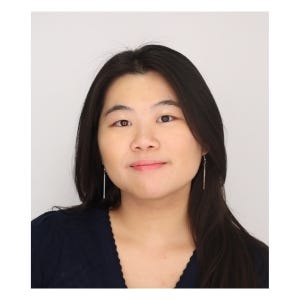
Vannessa is a recent graduate of Cornell University and studied Information Science. She will be working as a Design Fellow at the City of New York this summer.
Q: What is your dream job and why?
A: I hope to be a product designer or manager working on the frontlines to help citizens access the resources, support, and benefits they need to thrive and connect with others. But first, I’m considering a graduate degree in cyber policy soon!
Q: What’s a fun fact about you?
A: I’ve done lion dance acrobatics for Cornell for three years! My favorite tricks are aerial kicks and stacks.
Yalda Nafisinia

Yalda is a recent graduate of Seattle University and studied Computer Science. She will be working as a Software Fellow at the General Services Administration this summer.
Q: What is your favorite thing about technology and why?
A: My favorite thing is how fast technology evolves. There is always something new and exciting to learn in this field, never a dull moment.
Q: What is your dream job?
A: Working as a software development engineer!
Check out our website and sign up for our mailing list to learn more about future opportunities with Coding it Forward.
Meet the 2025 Coding it Forward Fellows was originally published in Coding it Forward on Medium, where people are continuing the conversation by highlighting and responding to this story.
]]>
This year began with news of major cuts to the federal government issued by the Department of Government Efficiency (DOGE). This meant that 1) many in our community lost their jobs; 2) the fate of crucial tech projects and public services is up in the air; and 3) we would not be able to place as many Fellows in the federal government as we usually do.
The timing felt devastating. Coding it Forward celebrated 8 years of empowering next generation tech leaders in January, and I just completed my first year as CEO. Since 2017, we’ve placed more than 700 early career technologists in 80 local, state, and federal government offices across the country.
This year, it frankly isn’t possible to replicate what we’ve done in the past. But we knew we couldn’t forsake the young talent who come to us to get a foot in the door in the public interest technology ecosystem. An overwhelming 6,000 people applied for our Fellowship this year. Even before DOGE started eliminating jobs, we knew we needed to find ways to scale up our work; scaling back is not an option.
That is why I am so proud to launch Coding it Forward’s Discovery Program.
About the Discovery Program
On June 9, 100 undergraduates, graduate students, and recent graduates will join us for a 10-week program where we’ll offer weekly professional development sessions, one-on-one mentorship, panel discussions, and coffee chats with experts in civic tech.
Some of the professionals who’ll be joining us are our friends at Technologists for the Public Good, the Georgetown Beeck Center for Social Impact + Innovation’s Digital Service Network, as well as pioneers like Tina Wahla, CEO of the U.S. Digital Response, Marcy Jacobs, Chief Digital Experience Officer of the State of Maryland, and Nick Sinai and Marina Nitze, authors of Hack Your Bureaucracy, to name a few. Our goal is to connect participants with role models doing the kinds of jobs they can see themselves in. Together we’ll explore themes like:
- Designing and delivering government services
- Implementing AI and ethical guardrails in government
- Pivoting between the public and private sectors, and
- Exploring early career pathways in public interest technology
Why Now?
One thing I hear over and over in my work is that young technologists don’t want to go into public interest work. But that simply isn’t true. Since 2017, 21,000 people have applied to our flagship program, the Coding it Forward Fellowship — and the number grows each year. The limiting factor has always been having meaningful, paid opportunities like internships, entry-level and mid-career level jobs to connect them to. The challenge we have been working to solve since day one is that there aren’t enough positions in public interest tech for all the early career folks who want them.
The future of civic tech right now feels uncertain. But here’s one thing I know: if we don’t invest in our young people now, we will not have the talent and expertise to build what’s needed in the future. This dilemma stretches beyond 2025, or even 2028.
Coding it Forward has been doing this work for nearly a decade. We know that mentoring and exposing talent to the possibilities in public interest tech is what works — so we’ve designed our Discovery Program with that in mind.
Tough times call for creative solutions. We are extremely grateful to the mentors and speakers who are helping us meet this moment through a new program. Given the terrible impact the job cuts are likely to have on public services and the field as a whole, now is the time to double down on investing in new talent.
Our Discovery Program is just the beginning. Today’s emerging talent becomes tomorrow’s leaders, and we know ultimately, they will lead the charge.
As we continue to work on meeting the demand from talent through our Fellowship and our new Discovery Program, we are always looking for new ideas, guest speakers, and resources. We’d love to connect at [email protected].
Introducing Coding it Forward’s Discovery Program was originally published in Coding it Forward on Medium, where people are continuing the conversation by highlighting and responding to this story.
]]>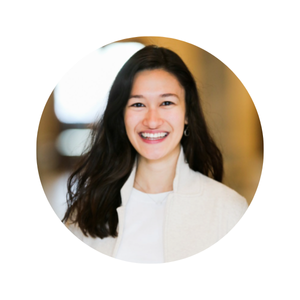
Rachel Stone is a 2018 Product Fellow who was placed at the Department of State. A graduate of Brigham Young University, Rachel currently works as a Product Manager at the State of Utah’s Department of Government Operations Division of Technology Services.
Why did you apply to Coding it Forward’s Fellowship?
In 2018, Coding it Forward was still really new and I was desperate to be a part of a community in civic tech. There were no opportunities like it so I took a hiatus from my first full time job to join the cohort and then went back to my job as a Data Analyst. I’m so grateful they let me do that because the Fellowship was an invaluable experience.
How did you get to where you are now?
I dreamed of working in government and knew what a big role technology was going to play in shaping our future, so during undergrad I made sure to take computer science classes whenever possible in addition to my political science major. I also picked up an internship with my city council helping them with IT and e-service delivery.
After the Coding it Forward Fellowship, I happened to present at a conference. Sitting in the audience was someone leaving their position at the Governor’s Office. They later approached me with an invite to apply for their job.
What piece of advice do you have for succeeding in public interest tech?
Rise to the occasion. At the Governor’s Office, I quickly realized they were looking for someone to take initiative and execute their new projects. One of my first assignments was launching this massive data sharing project which I was excited about. As I dug into the work, it was clear I was filling in for the role of Chief Data Officer. No one in the state held that title so I advocated for it, knowing that it would increase buy-in and resources to accomplish the project.
What was the highlight of your Fellowship?
As a Product Fellow at the Department of State we were tasked with redesigning their website and building an impact map of their work in every state. My highlight was working on an interdisciplinary team for the first time. Having a designer to collaborate with was a game changer. Finally there was somebody who knew how to use Adobe XD and Figma! Working with them showed me why having designers, ux researchers, and product managers are vital to the success of any tech team.
Tell me something most people don’t know about public interest tech?
Government doesn’t typically know to hire for the skill sets that are necessary to do a good job building government technology. For example, government will say there’s a tech project, so we need developers. But with my experience, I know what they actually need is a product manager, a designer, ux researcher; otherwise they are wasting your taxpayer dollars when they inevitably need to rework the product. Getting to see that model so early in my career helped. It’s also connected me to a national community of passionate technologists outside of my home state.
This blog is part of a series chronicling the unique career trajectories of Coding it Forward alumni and the impactful lessons they’ve learned along the way.
Carving Your Own Path in Government: A Conversation with Rachel Stone was originally published in Coding it Forward on Medium, where people are continuing the conversation by highlighting and responding to this story.
]]>