The post Bridging Voice Launches New York State Initiative to Ensure No New Yorker with ALS is Left Without a Voice appeared first on Bridging Voice.
]]>
Bridging Voice Launches New York State Initiative to Ensure No New Yorker with ALS is Left Without a Voice
Program will expand access to personalized support, the latest innovations in communication technology, and statewide training to enable all New Yorkers with ALS to communicate
New York, NY — March 16, 2026 — Bridging Voice announced the launch of its New York State Initiative, a statewide effort to ensure that every New Yorker with ALS has the ability to communicate and stay connected throughout the course of the disease. Commonly known as Lou Gehrig’s Disease, ALS (amyotrophic lateral sclerosis) is a progressive neurological condition that causes people to lose the ability to move and speak, even as their minds remain fully intact. Bridging Voice is a national nonprofit that provides free, one-on-one education, technical support, and custom solutions to help people living with ALS understand and optimize their use of sophisticated communication technologies so that they are always able to communicate, regardless of the progression of the disease.
Since 2019, Bridging Voice has served more than 6,000 people living with ALS across all 50 states and 49 countries, delivering comprehensive, remote, and fully free services regardless of insurance status or geography. New York represents one of the largest opportunities for Bridging Voice impact, with an estimated 1,700 people living with ALS statewide at any given time and significant disparities in access to specialized communication services. Although New York is home to some of the world’s most advanced medical and technological innovation, many people with ALS still lack the personalized support and technical resources needed to actually use these tools effectively in their daily lives.
“As one of the first people to work with Bridging Voice in New York, I’ve seen firsthand how life-changing access to AAC technology and innovative tools can be for individuals living with ALS. The ability to communicate isn’t just about technology, it’s about dignity, connection, and staying present with the people you love. Expanding this support statewide, especially to families in rural and upstate communities, will make a meaningful difference for so many who otherwise might not have access to these critical resources.”
— Tim Green, best-selling author, former NFL player, and Bridging Voice client
Through this initiative, Bridging Voice will provide free, personalized communication support to every New Yorker with ALS, with a focus on reaching rural and underserved communities. The initiative will give New Yorkers early access to Bridging Voice’s custom communication solutions that harness the power of emerging technologies (like AI voice cloning and conversation tools), while also ensuring every participant receives one-on-one guidance from expert clinicians and technologists. The program will also build statewide capacity by training healthcare practitioners, creating public resources for clinics and community partners, and supporting the integration of communication technology into standard care across New York.
The New York State Initiative is designed as a collaborative program, bringing together nonprofits, healthcare systems, and universities around a shared goal: ensuring that no person with ALS in New York is left without a voice. Bridging Voice is currently working in collaboration with partners including ALS United Greater New York, Empire State ALS Alliance, University of Rochester Medical Center and Columbia University Irving Medical Center, with additional partners to be announced.
“ALS United Greater New York is proud to partner with Bridging Voice to help ensure that every New Yorker living with ALS has access to the communication tools and personalized support they need to stay connected and maintain their independence. This collaboration reflects our deep commitment to delivering essential local care while expanding resources through the New York Statewide Initiative. Together, we are building a stronger, more connected network of support so that every person impacted by ALS across New York State has access to the comprehensive care and services they need to live their lives to the fullest.”
— Kristen Cocoman, President & CEO, ALS United Greater New York
The New York State Initiative is supported by a group of lead philanthropic partners who share a commitment to expanding communication access for people living with ALS. Bridging Voice is grateful to have received early support, including significant leadership gifts from a board member, an anonymous donor and, the Pulley Family Foundation. Together, these partners are enabling Bridging Voice to scale its services, invest in innovation, and build long-term capacity for people with ALS and the organizations that serve them across New York.
“Our statewide programs in New Jersey and Maryland have shown how transformative this model can be,” said Karina Nagin, Executive Director of Bridging Voice. “When people living with ALS receive the personalized, human support they need to actually use today’s communication technology, the impact is life changing. This initiative allows us to bring powerful new innovations to the New Yorkers who need them most and to ensure that no one loses their voice simply because they don’t have access to the right tools and training.”
Learn more about the initiative and request services for New Yorkers living with ALS at:
www.bridgingvoice.org/newyork.
About Bridging Voice
Bridging Voice is a 501(c)(3) nonprofit that empowers people living with ALS to meaningfully communicate by removing barriers to assistive technology. The organization is the only nonprofit in the country exclusively devoted to communication access for people with ALS. Through personalized technical support, clinical expertise, and innovative tools, Bridging Voice helps people with ALS preserve independence, dignity, and connection throughout the course of the disease. Learn more at www.bridgingvoice.org.
About ALS United Greater New York
ALS United Greater New York is a nonprofit organization that has been serving the ALS community for over 30 years. It supports more than 1,200 people living with ALS and their families across New York City, Long Island, Northern and Central New Jersey, and the Hudson Valley. Dedicated to the fight against ALS, the organization empowers the ALS community through a collaborative approach that fosters bold research initiatives, advances national and state advocacy, and provides comprehensive local care and support to individuals and families affected by the disease. For more information about ALS United Greater New York, visit als-ny.org.
The post Bridging Voice Launches New York State Initiative to Ensure No New Yorker with ALS is Left Without a Voice appeared first on Bridging Voice.
]]>The post We’re Hiring: Looking for an Associate AAC Specialist appeared first on Bridging Voice.
]]>
We’re Hiring: Looking for an Associate AAC Specialist
Spread the word and help Bridging Voice find our next colleague!
Position: Associate AAC Specialist
100% Remote | Full-Time
About Bridging Voice
Bridging Voice is a 501(c)(3) nonprofit dedicated to supporting people living with ALS (pALS) by ensuring access to effective, personalized communication and computer access solutions. We provide holistic, client-centered technology support—including education, training, technical assistance, and custom solutions—entirely remotely and free of charge.
At Bridging Voice, we believe communication is a fundamental human right. Our work is grounded in compassion, collaboration, and innovation, and we partner closely with individuals, caregivers, and clinicians to support quality of life at every stage of the ALS journey. Learn more at: www.bridgingvoice.org
Position Summary
The Associate AAC Specialist plays a vital role on Bridging Voice’s care service team, providing direct education, training, and ongoing support to people living with ALS and their caregivers around communication and computer access.
This role works closely with a multidisciplinary team—including Speech-Language Pathologists, Occupational Therapists, and programmers—to ensure each client receives high-quality, personalized, and responsive support. The Associate AAC Specialist manages an independent caseload while contributing to a collaborative, mission-driven team culture. This position is 100% remote.
Key Responsibilities
- Client Onboarding & Engagement
- Welcome and onboard new clients, clearly and compassionately explaining Bridging Voice’s mission, services, and approach
- Build trust and rapport with pALS and their families from the first point of contact
- Direct Client Support
- Manage an independent caseload, ensuring clients receive effective, timely, and individualized communication and computer access support
- Proactively follow up with clients to ensure they are getting the most out of their technology and feel supported over time
- Education & Training
- Provide clear, accessible education and training to pALS, caregivers, and—when appropriate—other professionals
- Support the development of educational materials for clients and partner organizations
- Collaboration & Problem-Solving
- Work closely with internal team members and external partners to troubleshoot challenges and develop creative, client-centered solutions
- Participate in team meetings and strategic planning to support organizational growth while maintaining exceptional service quality
- Professional Growth
- Participate in ongoing trainings and stay current with developments in AAC, assistive technology, and access methods
Who We’re Looking For
We are seeking a candidate who brings both technical competence and deep human care to their work. While experience with AAC and the ALS population is important, we place equal value on finding someone who aligns with Bridging Voice’s mission, values, and collaborative culture.
Applicants from across the United States are welcome. Candidates based in New York are strongly encouraged to apply.
Required Qualities
- Attentive & Empathetic
- Genuine passion for supporting people with disabilities and improving quality of life
- Patient, warm, and skilled at putting people at ease
- Strong listener who responds thoughtfully and follows through reliably
- Curious & Proactive Learner
- Strong interest in assistive technology and AAC
- Enthusiasm for learning new tools and adapting to a rapidly evolving technology landscape
- Thoughtful Problem-Solver
- Ability to understand complex, nuanced challenges and identify practical solutions
- Experience carrying ideas from concept through implementation
- Collaborative Team Member
- Enjoys working closely with others and contributing to a respectful, supportive team environment
- Comfortable asking for help and offering support when needed
- Self-Directed & Organized
- Able to manage time, caseload, and responsibilities independently in a remote environment
- Strong Communicator
- Excellent written and verbal communication skills
- High standards of professionalism, integrity, and reliability
Required Skills & Experience
- Experience working with people living with ALS and their caregivers
- Experience with Assistive Technology, alternate access methods, and AAC
- Minimum of 5 years of relevant professional experience
- Speech-Language Pathologists and Occupational Therapists are encouraged to apply.
Salary Range: $65,000–$75,000 (commensurate with experience)
Benefits include:
- Fully remote work with flexible hours
- Health, dental, and vision insurance
- 4 weeks paid vacation
- Paid holidays
- Professional development support
- Wellness plan
How to Apply
Please submit:
- Your resume
- A brief letter of interest explaining why you are drawn to this role and to Bridging Voice
Email: [email protected]
Subject Line: Associate AAC Specialist Application
Applications are reviewed on a rolling basis. For questions, please contact: [email protected]
The post We’re Hiring: Looking for an Associate AAC Specialist appeared first on Bridging Voice.
]]>The post Welcoming Two New Board Members appeared first on Bridging Voice.
]]>
Welcoming Two New Board Members
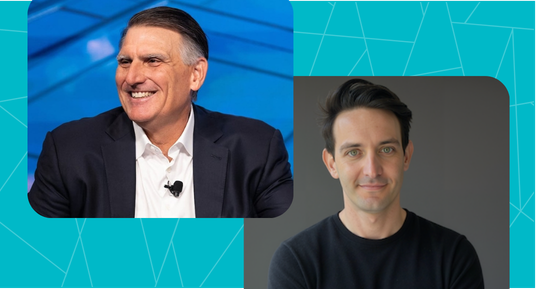
Bridging Voice is thrilled to welcome Dustin Blank and Tom Pulley to our Board of Directors!
Bridging Voice is proud to welcome Dustin Blank and Tom Pulley to our Board of Directors. Each brings unique experience and perspective that will help strengthen our mission to expand communication access and innovation for people living with ALS.
Dustin Blank leads Partnerships at ElevenLabs, where he helped build the Impact Program—an initiative dedicated to empowering one million voices by providing free access to AI voice technology for individuals with accessibility needs. Dustin has been a key force behind Bridging Voice’s groundbreaking partnership with ElevenLabs, which ensures that every person diagnosed with ALS can receive a free license to create a realistic AI voice clone and integrate it directly into their communication device. Through this collaboration, Bridging Voice has already supported more than 2,000 people with ALS in preserving and reclaiming their voice. Dustin previously held leadership roles at MGM, Disney, Fox, and NBCUniversal, and holds a BA from the University of Pennsylvania and an MBA from Columbia University.
Tom Pulley brings more than 25 years of experience in global investment and finance. He previously served as Global Head of Real Estate Equity at Fortress, where he led investments across the United States, Europe, and Asia. Diagnosed with ALS in 2024, Tom has become deeply committed to ensuring that people living with ALS and their families have access to the resources and support they need. He holds a BA from the University of California, Berkeley and an MBA from the Wharton School.
The post Welcoming Two New Board Members appeared first on Bridging Voice.
]]>The post Bridging Voice Receives $40K Quality of Life Grant from the Christopher & Dana Reeve Foundation appeared first on Bridging Voice.
]]>
Bridging Voice Receives $40K Quality of Life Grant from the Christopher & Dana Reeve Foundation
Bridging Voice is proud to be the recipient of a 2025 Quality of Life Grant from the Reeve Foundation for our project Rural ALS Care: Expanding Communication Support & Building Partner Capacity.
Bridging is proud to announce that it has been awarded $40,000 as part of the Christopher & Dana Reeve Foundation National Paralysis Resource Center (NPRC) 2025 Priority Impact Quality of Life grants. Nineteen grants totaling $691,707 were awarded. The Quality of Life Grants Program supports nonprofit organizations that help individuals living with paralysis. Since the Quality of Life Grants Program’s inception, more than 4,100 grants totaling $50 million have been awarded. Funding for this program was made possible through a cooperative agreement with the Administration for Community Living (ACL grant #90PRRC0006-05).
The Reeve Foundation’s National Paralysis Resource Center has several grants under the Quality of Life program, awarding grants in different category areas, varying in different amounts. The Priority Impact grants program funds organizations to support a wide range of projects and activities that will impact individuals living with paralysis and their families.
“These grants represent more than funding—they represent freedom, possibility, and dignity for individuals living with paralysis,” said Dan McNeal, Director of the Quality of Life Grants Program at the Reeve Foundation. “At the heart of our mission is a commitment to improving
everyday life for our community. We’re proud to support organizations nationwide that are expanding access and creating programs built on accessibility, care, and respect.”
Many people living with ALS (pALS) in rural communities face severe barriers to communication support, including limited local services and access to assistive technology. Bridging Voice provides free, fully remote communication support to pALS nationwide, serving over 5,000 clients to date through a network of 120 referral partners. Bridging Voice will use this funding to strengthen our partners’ capacity to identify and support rural clients, onboard new partners serving rural areas, and provide direct communication support to at least 90 new rural pALS. Together, these efforts address the urgent communication and access needs of rural pALS while also building long-term capacity and strengthening the overall rural healthcare ecosystem.
About the Reeve Foundation:
The Christopher & Dana Reeve Foundation is dedicated to curing spinal cord injury by funding innovative research and improving the quality of life for individuals and families impacted by paralysis. By uniting the brightest minds in the field, we are working tirelessly to accelerate scientific discoveries across the field of spinal cord research by investing in labs across the globe. Additionally, through a cooperative agreement with the Administration for Community Living, the Reeve Foundation’s National Paralysis Resource Center (NPRC) promotes the health, well-being, and independence of people living with paralysis, providing comprehensive information, resources, and referral services assisting over 139,000 individuals and families since its launch in 2002. The Reeve Foundation is committed to elevating our community’s voices and needs to achieve greater representation and independence. We meet all 20 of the Better Business Bureau’s standards for charity accountability and hold the BBB’s Charity Seal. For more information, please visit our website at www.ChristopherReeve.org or call 800-225-0292.
About the Bridging Voice:
Bridging Voice is a nonprofit that enables and empowers people with ALS to meaningfully communicate by
removing the barriers between them and assistive technology. We provide education, one-on-one training,
technical support, and custom solutions to ensure people with ALS are always able to connect and
communicate with family, friends, medical providers, and the broader world. We believe that this is a critical component of the human experience, and no diagnosis should be allowed to rob an individual of that possibility. Learn more at www.bridgingvoice.org.
The post Bridging Voice Receives $40K Quality of Life Grant from the Christopher & Dana Reeve Foundation appeared first on Bridging Voice.
]]>The post Holiday Books for Your Eye Tracker appeared first on Bridging Voice.
]]>
Holiday Books for Your Eye Tracker

This holiday season, our team wanted to create something special for everyone in the ALS community. With this free tool, you can easily read holiday books from your eye tracker in your own voice using your ElevenLabs voice clone.
Works in C5 and Grid3. Enjoy four classic holiday stories and share the joy of the season by reading to the little ones and the young-at-heart in your life!
How To Access and Install
- Download the installer for free: Download
- Once downloaded, double click and run the installer program.
- Then watch the video for your software for step-by-step instructions:
- We recommend watching the videos before getting started to ensure a smooth setup.
Communicator 5
Grid 3
This Year’s Holiday Book Collection
- The Snowy Day by Ezra Jack Keats
- A Chanukah Story for Night Number Three by Dina Rosenfeld; illustrated by Vasilisa and Vitaliy Romanenko
- `Twas the Night Before Christmas illustrated by Jessie Wilcox Smith
- Li’l Rabbit’s Kwanzaa by Donna L. Washington
Happy Holidays from all of us at Bridging Voice!
The post Holiday Books for Your Eye Tracker appeared first on Bridging Voice.
]]>The post Bridging Voice at ASHA 2025: Three Sessions You Won’t Want to Miss appeared first on Bridging Voice.
]]>
Bridging Voice at ASHA 2025: Three Sessions You Won’t Want to Miss
.
Bridging Voice AAC specialists Abby Marx and Annie Roche will be leading three sessions at the 2025 ASHA Convention, taking place November 20–22 in Washington, DC.
Each session offers a deep, practical look at communication support for people with ALS and other progressive neurological conditions. Whether you’re new to AAC or an experienced clinician looking to expand your toolkit, these sessions offer evidence-based strategies, real-world insights, and immediately applicable clinical skills. Below is a look at what we’ll be sharing at ASHA this year.
The Communication Journey in Progressive Neurological Conditions: Looking Ahead at the Possibilities
Session #1480: Friday, November 21 at 1:30pm
Progressive neurological conditions—such as ALS, MS, Parkinson’s Disease, and others—require thoughtful, responsive, and compassionate communication support. This session offers a comprehensive overview of communication needs across the entire progression of these conditions.
We will guide participants through:
- Early-stage AAC considerations like voice cloning, traditional voice banking, and message banking
- Introducing and supporting multimodal communication, including paper-based tools, tablets, or manual boards
- Matching access methods as needs change—from handwriting supports to eye tracking and switch scanning
- Partner training and advocacy to ensure clients maintain communication autonomy
- Environmental and cognitive factors that influence AAC use over time
- The essential role SLPs play in supporting end-of-life communication, ensuring individuals can express their needs, values, and stories with clarity and autonomy
This session serves as a foundation for clinicians who support individuals with degenerative neurological conditions and provides practical resources to guide AAC decision-making across the journey.
Resources from this session:
Handouts
Bridging Voice Manual Communication Boards (English & Spanish)
Previous Bridging Voice Trainings
ALS & Communication: An Overview of Strategies from Diagnosis Onward
How to Choose the Best Communication System/App
Voice Control on iOS
Alternate Access on Android
Voice Preservation Beyond Recording: How to Use Your AI Voice
Session #1769: Saturday, November 22 at 9:30am
Voice preservation is evolving rapidly, and so is the SLP’s role in supporting it. This session explores how clinicians can help clients not only record their voice, but use it meaningfully throughout their lives.
We will cover:
- The differences between message banking, voice banking, and AI voice cloning, and how each supports identity, autonomy, and emotional connection
- Counseling strategies to help clients prioritize what to record (and when)
- The latest advancements in AI-generated voices, including options for people with sudden speech loss
- How to integrate preserved voices into AAC apps and SGDs
- Real-world tips for improving buy-in, transitioning from natural speech to AAC, and maximizing functional communication
- Ethical considerations in using AI to support communication while honoring personal authenticityuals can express their needs, values, and stories with clarity and autonomy
This session is built for clinicians who want a clear, updated roadmap for voice preservation and who want to help clients use their voices for everything from phone calls to speeches to everyday conversation.
Resources from this session:
Handouts
AI Voice Cloning with ElevenLabs
Voice Banking & Cloning Overview
Previous Bridging Voice Trainings
Voice Preservation Beyond Recording: Creating and Using My Preserved Voice
The SLP’s Role in Effective Access to Communication via Eye Gaze
Session #1887: Saturday, November 22 at 1:30pm
Eye gaze technology can open the door to rich, independent communication. But when it stops working—or never works well in the first place—many clients are left without a reliable way of communicating. This session equips SLPs with the knowledge and confidence to troubleshoot and optimize eye tracking at a clinical level.
Attendees will learn:
- How common medications (like baclofen, gabapentin, or anticholinergics) and medical factors impact eye movement and tracking
- How conditions such as ptosis, cataracts, nystagmus, and strabismus alter performance—and how to identify them through calibration results
- Practical adjustments to calibration, dwell time, target size, and selection type that can dramatically improve accuracy
- How to pair low dwell settings with automatic pauses for clients with reduced control
- Strategies to reduce technology abandonment by tailoring systems to the individual’s medical history, motor profile, and communication goals
- Tools and demonstrations for supporting communication beyond face-to-face interactions, including computer access, environmental control, and more
Through hands-on examples, videos, and case-based discussion, Abby and Annie will demonstrate how thoughtful feature matching and troubleshooting can restore access to communication, even in the most complex cases.
Resources from this session:
Handouts
Eye Gaze Troubleshooting Guide
Previous Bridging Voice Trainings
Decoding Eye Tracking Calibration
Customization: There’s More to Eye Tracking Than Meets the Eye
The post Bridging Voice at ASHA 2025: Three Sessions You Won’t Want to Miss appeared first on Bridging Voice.
]]>The post Bridging Voice + Her ALS Story: Finding Connection in the Chaos appeared first on Bridging Voice.
]]>
Bridging Voice + Her ALS Story: Finding Connection in the Chaos

This post was written by Michele Stellato using her eye tracking device. Michele is a member of Her ALS Story, a partner organization of Bridging Voice. Her ALS Story is an organization of women diagnosed with ALS before their 35th birthday that raises awareness for ALS and provides a community for young women to connect, learn from each other and find support to live their best lives.
Two zoom calls changed my life forever in 2020. My strange symptoms of weakness and stiffness followed by muscle twitching intensified just as the Covid pandemic was exploding, so my diagnosis journey had shifted to telemedicine. The first neurologist I saw told me I had to do some testing, but I had nothing to worry about because only old men got ALS. Being a perfectly healthy 32 year old woman made that outcome seem pretty unlikely. So when a specialist confirmed my diagnosis through the screen I was dumbfounded, terrified and pretty pissed to be an outlier. But the second call was transformational in an entirely different way. Speaking with Leah Stavenhagen made me feel energized and not so alone. Leah was diagnosed the year before me at 26. She was frustrated that no one talked about young women getting ALS and was determined to connect with women like her. We began chatting online and meeting virtually to share our experiences. I felt less like an unlikely statistic or a sad story. I felt understood. This group of about 10 women across the country became Her ALS Story. Today, we are an organization of 120 members across the globe diagnosed before 35.
Arguably the toughest thing about ALS is how isolating it is. It becomes harder to leave your house to socialize, difficult to communicate with your loved ones, and the people around you simply can’t relate to what you’re going through. It’s a recipe for being disconnected and alone which is why it’s so important to find a sense of community. I had a hard time envisioning a happy life being paralyzed. Who was I without the ability to take care of myself, hug my friends and family, or enjoy my passions like exercising. Connecting with women like me changed my perspective completely. The thought of a feeding tube was suddenly less scary when I heard about a member enjoying the effects of tequila without the taste. I was relieved to hear there were still fashionable clothing options even when it got difficult to dress yourself. I was amazed to learn that women with ALS were traveling the world, being active parents and finding ways to live fulfilling lives. Her ALS Story was demystifying what life with a terminal illness is and it wasn’t all clinic visits and planning a funeral. This community saved me.
With a professional background in communications, I enjoyed storytelling, presentations and writing. Her ALS Story gave me an opportunity to put my skills to good use to advocate for ALS. We were asked to present at a star studded ALS gala. Writing and presenting that speech was one of my proudest moments. I was interviewed by the media advocating for the landmark ACT for ALS bill and I was one of the subjects in a PBS documentary about ALS. I had found my community and my purpose and it felt awesome. Just as I was adjusting to slurred speech, trouble walking and limited dexterity, ALS progression came and pulled the rug from beneath me. I was losing the ability to type and speak rapidly. I feared my advocacy days were behind me. My Her ALS Story sisters could barely understand me on our calls and scrolling through our chat and typing messages became exhausting. I was losing connection and purpose.
I feared the isolation would consume me, but Bridging Voice helped me acquire an eyegaze device, a Tobii Dynavox, and taught me tips that helped me adjust quickly. They programmed a special screen to make it easy to operate my phone through voice control using my Tobii and uploaded my ElevenLabs AI cloned voice so I sounded like me instead of a computer. It took time to practice and gain confidence to own my new identity as a non-verbal person. I knew who to turn to for inspiration. Her ALS Story has a chat for people who use eyegaze devices and I learned everything from the experts, from the best way to handle ignorant questions from strangers to troubleshooting tech issues. Having a built-in network of people going through the same challenges as me makes navigating ALS doable.
Embracing the transition to my Tobii has allowed me to reconnect with the world and has given me a voice again. I write press releases, blog posts, fire off emails and even give presentations. Last year, I presented at an ALS fundraiser using my AI cloned voice and seeing the crowd’s reaction was priceless. I have maintained a part of my life I was sure I’d lost. It still amazes me that some of the most talented, funny and hard working people I know are living with ALS. I know I wouldn’t be here today living such a purposeful life without Her ALS Story. While it breaks my heart that our group continues to grow, I’m comforted knowing their lives are about to be transformed just like mine was.
Check out more stories from the women of Her ALS Story on their blog and follow their adventures on Facebook and Instagram.
The post Bridging Voice + Her ALS Story: Finding Connection in the Chaos appeared first on Bridging Voice.
]]>The post Bridging Voice + AudioShake appeared first on Bridging Voice.
]]>
Bridging Voice + AudioShake
Bridging Voice + AudioShake
We at Bridging Voice were honored to work alongside AudioShake and ElevenLabs to help our client, Mike G., regain his voice using AI. He can now use his own voice, restored from old recordings, to communicate again—most importantly with his granddaughters!
Read more about Mike’s amazing story and learn more about how AudioShake’s technology helps Bridging Voice extract a patient’s voice from complex recordings with incredible precision.
The post Bridging Voice + AudioShake appeared first on Bridging Voice.
]]>The post ElevenLabs + Bridging Voice Partnership appeared first on Bridging Voice.
]]>
ElevenLabs + Bridging Voice Partnership
ElevenLabs’ Impact Program Aims to Empower 1 Million Voices through AI Voice Technology
Bridging Voice and Scott-Morgan Join As First Non-Profit Partnership to Provide Free Licenses to All ALS/MND Patients Worldwide
ElevenLabs, a pioneer in AI audio and voice technology, has joined forces with Bridging Voice and The Scott-Morgan Foundation, leading accessibility focused non-profits, to launch an initiative to help remove communication barriers for those affected by Amyotrophic Lateral Sclerosis (ALS) and Motor Neuron Disease (MND). ElevenLabs will be providing free access to their voice cloning and text-to-speech platform to ALS/MND patients who have lost or are at risk of losing their ability to speak. Bridging Voice and The Scott-Morgan Foundation will provide dedicated support to ensure everyone can get onboarded and take advantage of the technology.
Amyotrophic Lateral Sclerosis (ALS), also known as Lou Gehrig’s disease, is a progressive neurological condition with no current cure. The average life expectancy after diagnosis is 2 to 5 years. This disease leads to loss of muscle control, often resulting in the loss of speech, which significantly impacts patients’ ability to communicate.
According to recent statistics:
- 1 in 300 people will receive an ALS diagnosis in their lifetime.
- In the United States, approximately 30,000 people are living with ALS at any given time.
- Worldwide, it is estimated that over 300,000 people are living with MND.
- Up to 95% of people with ALS/MND may lose their ability to speak as the disease progresses.
ElevenLabs allows for the creation of highly accurate digital voice replicas. By partnering with Bridging Voice and The Scott-Morgan Foundation, the company aims to not only distribute ElevenLabs voices to ALS and MND patients at scale but also integrate them into speech-generating devices.
The initiative will work as follows:
- ALS and MND patients will be able to apply for a free voice cloning license by visiting ElevenLabs’ non-profit partner sites. ElevenLabs will route participants to relevant partners through this form: elevenlabs.io/impact-program
- Eligible patients will provide voice recordings, which will be used to create a digital replica of their voice.
- The voice clone can then be used from the ElevenLabs platform and with various assistive communication devices and software, allowing patients to “speak” in their own voice.
Tim Green, a former NFL lineman for the Atlanta Falcons and sports broadcaster, was diagnosed with ALS in 2016 and later lost his ability to speak. Through the support of Bridging Voice, he created a voice replica on ElevenLabs with old recordings that he now uses for his podcast, “Nothing Left Unsaid”. Tim said:
“When my family first heard MY voice again, they cried. I couldn’t stop smiling.”
When we were negotiating our podcast sponsorship agreement with ElevenLabs, it was important to try to give as many people their voices back as possible. ElevenLabs was extremely generous and wanted to help.
By partnering with Bridging Voice, ElevenLabs is going to be able to help exactly the people who will benefit the most from their compassion. These are the two groups I personally work closely with and would recommend them to anyone who has lost their voice.
Erin Taylor, a 24-year-old botany graduate diagnosed with ALS in August 2023, has become a powerful voice in the ALS community. With the support of The Scott-Morgan Foundation, ElevenLabs, and digital avatar company D-ID, Erin can communicate with her authentic voice and likeness, preserving her identity and amplifying her message. This technology empowers Erin to connect with her followers, continue her vital ALS awareness advocacy, and contribute to assistive technology advancement, potentially making meaningful contributions to society.
“Over last year, we couldn’t be more inspired by the individuals that are reclaiming their voices despite all the challenges and our opportunity to help play a small part in that process. Now, through the incredible partnerships and support of Bridging Voice and The Scott-Morgan Foundation, these efforts are being taken to a new level. We’re honored to be part of this collective mission of empowering people and helping remove communication barriers.”
-Mati Staniszewski, Co-founder and CEO of ElevenLabs.
“By democratizing access to ElevenLabs’ hyper-realistic voice technology, we’re not just improving communication for those with ALS/MND – we’re restoring dignity and empowering individuals to fully express themselves. This is more than technology; it’s about preserving identity and human connection.”
-LaVonne Roberts, Executive Director at The Scott-Morgan Foundation.
“Communication with loved ones and the world is at the heart of what it means to be human. No diagnosis should ever strip that away. This partnership isn’t just about giving a voice to those living with ALS/MND—it’s about helping them rediscover their voice. It’s a reminder that their unique voice, full of love and strength, will always be heard.”
-Karina Nagin, Executive Director at Bridging Voice.
This collaboration represents a significant step forward in improving the quality of life for ALS and MND patients. By preserving their unique voices, the initiative aims to maintain a crucial aspect of patients’ identities and facilitate more natural communication with loved ones and caregivers. Of course, there is much more opportunity to make an impact. You can donate to Bridging Voice here and The Scott-Morgan foundation here.
For more information about this initiative or to apply for a voice cloning license, please visit elevenlabs.io/impact-program.
Contact: [email protected]
About ElevenLabs
ElevenLabs researches and builds audio AI tools for creators, media, and businesses. Their models use proprietary methods for context awareness and high compression to deliver lifelike, compelling, and nuanced speech, voices, and sound effects across 29 languages. The company’s AI tools are used to voice audiobooks and news articles, animate video game characters, assist in film pre-production, automate localisation processes in entertainment, create dynamic audio content for social media and advertising, as well as train medical professionals.
About Bridging Voice
Bridging Voice is a non-profit that enables and empowers people with ALS to communicate by removing the barriers between them and assistive technology. Bridging Voice provides education, training, technical support and custom solutions to ensure people with ALS are always able to express their basic needs and biggest dreams.
About The Scott-Morgan Foundation
The Scott-Morgan Foundation is a nonprofit developing AI-powered assistive technologies, starting with ALS and extending to people with severe communication and mobility disabilities worldwide. We create an integrated ecosystem of customizable solutions, offering users a customizable menu of cutting-edge technologies to meet their unique needs. Through strategic partnerships with leading technology companies, we leverage AI to democratize access to these advanced, personalized platforms. Our “concept car” philosophy drives us to develop premium prototypes that we adapt and scale for widespread global use, empowering individuals across a spectrum of disabilities to express themselves and maintain independence.
The post ElevenLabs + Bridging Voice Partnership appeared first on Bridging Voice.
]]>The post Endgame: Playing Chess with Fran Farrell appeared first on Bridging Voice.
]]>
Endgame: Playing Chess with Fran Farrell
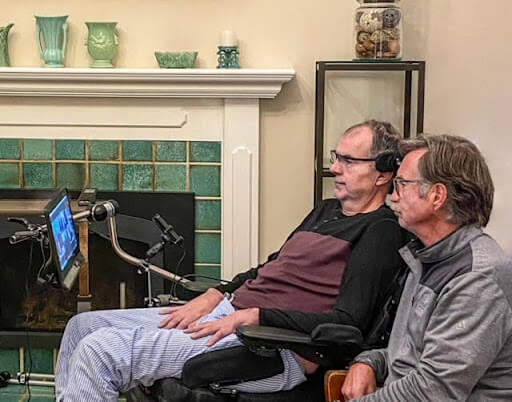
I started playing chess with Fran Farrell about ten years ago, shortly after I learned he had been diagnosed with ALS.
I started playing chess with Fran Farrell about ten years ago, shortly after I learned he had been diagnosed with ALS. At the time when we began playing, we were more acquaintances than friends, but regular play brought us closer together. After I heard about his diagnosis, I proposed that we start playing as often as we could, as I knew that ALS would eventually wreak havoc on his body, but his mind would remain sharp and alert, something that you needed when playing chess. At first, we played actual games over a board, but when his arms began to fail him, we switched to online play, first on the app Chess with Friends and then eventually on Chess.com, which he could handle better with eye-gaze technology. He gave himself the name Bridgepoint, after the street on which he lived, and I gave myself the name LHOOQ, after the five letters that the artist Marcel Duchamp wrote below an image of the Mona Lisa (that artist having been the specialty of my studies in art history, as Duchamp was himself an avid chess player).
When we started playing, I was the stronger player. According to the app, I was rated at around 1300, whereas Fran was around 1000, but it was enough of a difference for me to win consistently. I loved playing with him, because, at first, I gave little thought to each move, feeling confident that even if I made a mistake, more precise play would keep me winning. Some thought my consistent wins were cruel, but I was incapable of throwing a game, not only because I lacked the skill to do so convincingly, but because I knew Fran would know. We just kept playing and I kept on winning, that is, until one night when I realized that in one particular game, I was in trouble. No matter what I did, it looked like I was going to lose. Eventually, I came to the reluctant conclusion that there was nothing more I could do, so, with some reluctance, I clicked onto the little tab and resigned. Back then, Chess with Friends would play a little song when you won, and I knew that Fran was about to hear it for the first time, which put a smile on my face, even though I felt some pain in having lost. A few minutes later, Fran’s wife Denise called me. They were in a hotel in Ithaca, New York, having moved their daughter into a dorm room at college. She said that when Fran won, he jumped up off the bed and started dancing. It was his first win playing against me, but not his last.
Playing chess is such a wonderful experience that I wish I could share it with everyone for whom I cared. Occasionally, the app told me, I would play with a rating of around 1600, but that was only when I managed to play well against an opponent who was more highly skilled. Eventually I started playing others who were randomly assigned to me by the app, whereas Fran played only those whom he knew, like his son-in-law Dom, who was a far stronger player than either one of us. Once I managed to beat someone in an exceptionally spectacular fashion, with a move that I could not help but to share with Fran. When the game finished, I ran over to his house to go over the game with him. I remember that it involved a position where I sacrificed a piece and knew that if the guy took it, I would entrap his Queen. That’s exactly what happened. I so loved watching games being played that I wanted Fran to go with me to St. Louis to attend tournaments at the World Chess Museum and Hall of Fame, which I visited on occasion. Although his mind was willing, his body could no longer sustain the stress of a trip like that, so I regret that we never went. I tried to get Fran to view games analyzed by Antonio Radić, a Croatian chess player and YouTuber who, I felt, was the best person analyzing tournament games on the Internet. Fran preferred playing with people he knew, for it was the one-on-one exchange and camaraderie that most stimulated his interest in the game.
Neither Fran nor I ever studied chess seriously, so we did not know any of the standard openings, yet we knew instinctively how to avoid some of the more obvious traps. Once we got through the opening, we were both amazed at how the game suddenly and inexplicably took on a unique identity of its own, not resembling any game that we had played before (nor, for that matter, anyone else). It is said that the variations of the game are greater than the number of atoms in the universe, which is a ludicrous calculation (since we don’t really have a clear idea of how large the universe is). Nevertheless, there is enough of a difference between one game an another to make you think the variations are infinite. In our games, Fran kept falling for the Royal Fork, where, with my knight, I would check his King and Queen in the same move, forcing him to move his King and loose his Queen in the process. This frustrated him to no end, until I told him that whenever a knight of mine gets close enough to his King to check it, start looking carefully at the position of his Queen, because there is no doubt that I’m coming after it. Despite my warning, I pulled off a Royal Fork in the third game before our last, but something else happened. Even though he lost his Queen, he still beat me in the game! There is no question that, over time, Fran became the stronger player. You can send your opponent a message through the app, so I explained that I was losing because I was being timed out of the games. Even though Fran found it difficult to respond to any message (since he needed to peck out each letter individually on the computer screen), he responded with one word: “Coward.”
About a week before Fran died, my wife and I visited him at his home and somehow it came up that I had recently celebrated a birthday. Without telling anyone, after we left Fran went onto Amazon.com and purchased a pair of black-and-white socks with chess pieces printed on them. They arrived when he had already left his computer and was preparing for his final hours. When his wife asked who they were for, he said “Francis’s birthday,” nearly the last words he ever spoke. A few days after my good friend and chess partner departed from this planet, I went to my phone to check out the game we had in progress. We are approaching the endgame. We have the same number of pieces, although he has a rook and I have only a knight. His King, however, is out in the open, and I have been checking him for the last three moves, although I must be careful, for Fran is only one move away from checkmate. In the upper right corner of the screen the words “3 days” appears, which indicates the amount of time we each have to make a move. When I touch that warning, the following message appears: “Bridgepoint is on vacation! They have months of vacation time left, but may be back sooner.” I later learned that, just before Fran left his computer for the last time, he sent that same message to all of the people he was playing chess with. It was a wonderful gesture, as it suggested that our games were placed in a position of indefinite suspension, to resume at some point when he decides to come back from vacation. I can’t help but to think that these are all games Fran will win.
The post Endgame: Playing Chess with Fran Farrell appeared first on Bridging Voice.
]]>