“Living on the edge: a continental scale assessment of forest vulnerability to drought”
Huge effort over 4 years and across 7 TERN SuperSites!
]]>
Embolism (air-filled vessels, dark circles) spread in Eucalyptus camaldulensis under drought stress.
X-ray microtomography allows us to scan plants noninvasively and at high resolution to examine the state of hydraulic failure in xylem conduits. In our recent article in New Phytologist, we directly compared theoretical estimates of hydraulic conductivity provided by microCT imaging with the loss of conductivity measured with a liquid flow meter. While imaging and hydraulic techniques have been compared before, this is the first time both methods were applied to the very same samples.
We show that results from these techniques corresponded well in a Eucalyptus species. Furthermore, we also describe a method to optimise microCT image analysis while overcoming some common potential constraints of current lab-based microCT systems.
Our results help strengthen X-ray microCT as a reference method for plant hydraulic questions, and introduce a reference-based way to calibrate imaging-based vulnerability analysis.
More information: Visualization of xylem embolism by X-ray microtomography: a direct test against hydraulic measurements
]]>In the project, the student will utilize cutting edge non-invasive imaging techniques to study the dynamics of drought-induced cavitation in plants. These techniques allow unambiguous measurement of how cavitation is propagated within and between different plants organs (leaves, stems, roots). These measurements will be used to establish thresholds in lethal water stress for a range of plant species.
The student will be based at HIE but will be expected to travel to the University of Tasmania for collaborative work with A. Prof. Tim Brodribb during the course of the project. There will also be opportunities for travel to France for collaborative work with Dr Sylvain Delzon and Dr Herve Cochard (INRA), and Dr Philippe Marmottant (CNRS).
To apply for this scholarship please contact me at [email protected]
Further details on the application process can be found here.
Applications close on 31 March 2017.
]]>
Drought- and heat-induced regional tree mortality events around the world.
Brendan Choat was a co-author on a study recently published in PNAS. The study, lead by Bill Anderegg (University of Utah) discovered a strong link between the mortality of tree species resulting from drought and plant hydraulic traits. Data were gathered from 33 published studies of tree mortality that included 475 tree species and more than 760,000 individual trees. Mortality rates for each species were then compared to 10 tree physiological traits, searching for commonalities. The traits included wood density, rooting depth, and basic leaf characteristics as well as plant hydraulic traits such as vulnerability to embolism and sapwood specific conductivity. The results provide support for the hypothesis that hydraulic traits capture key mechanisms determining mortality and highlight that physiological traits can improve vegetation model prediction of tree mortality during climate extremes.
]]>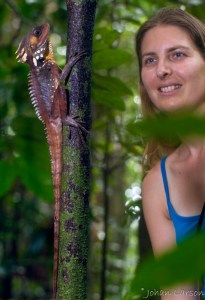
Jen Peters (right) at the Daintree Rainforest study site.

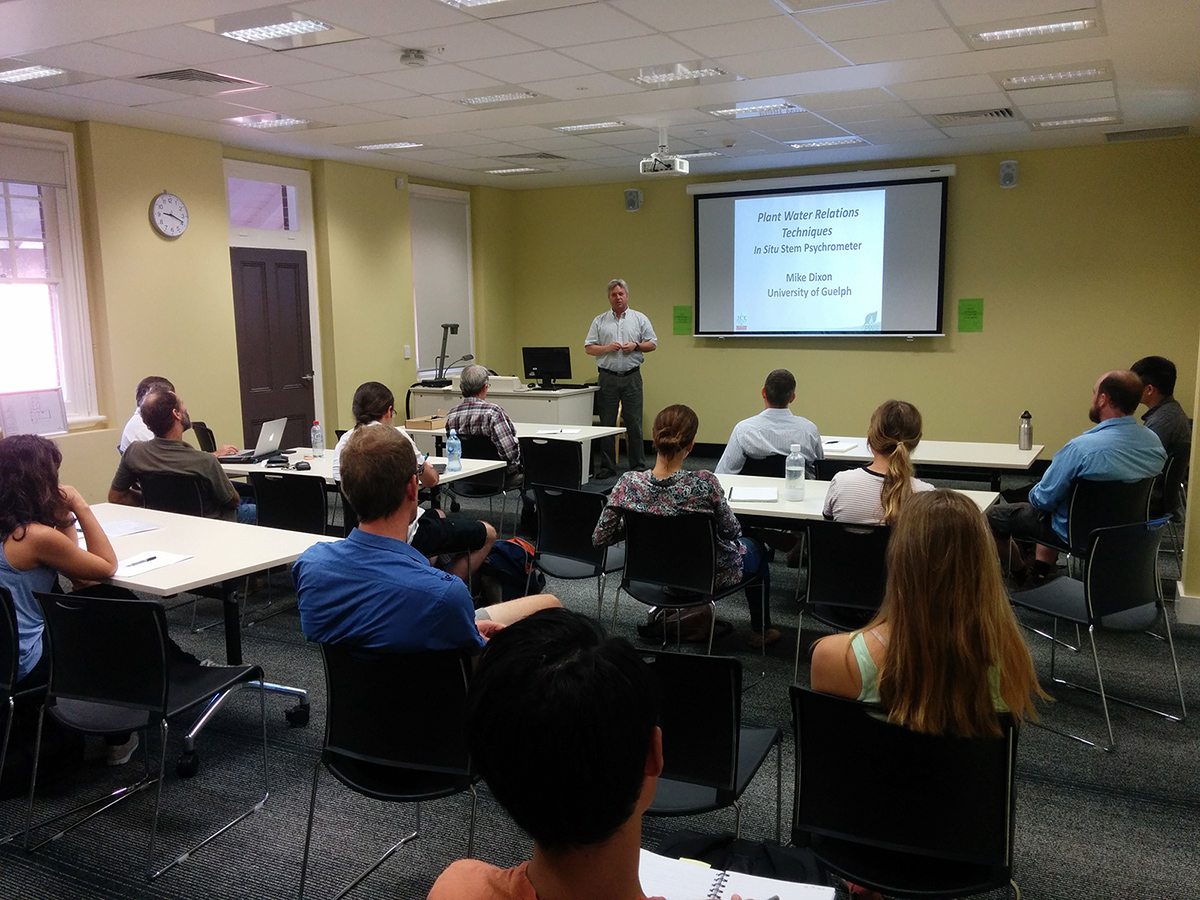
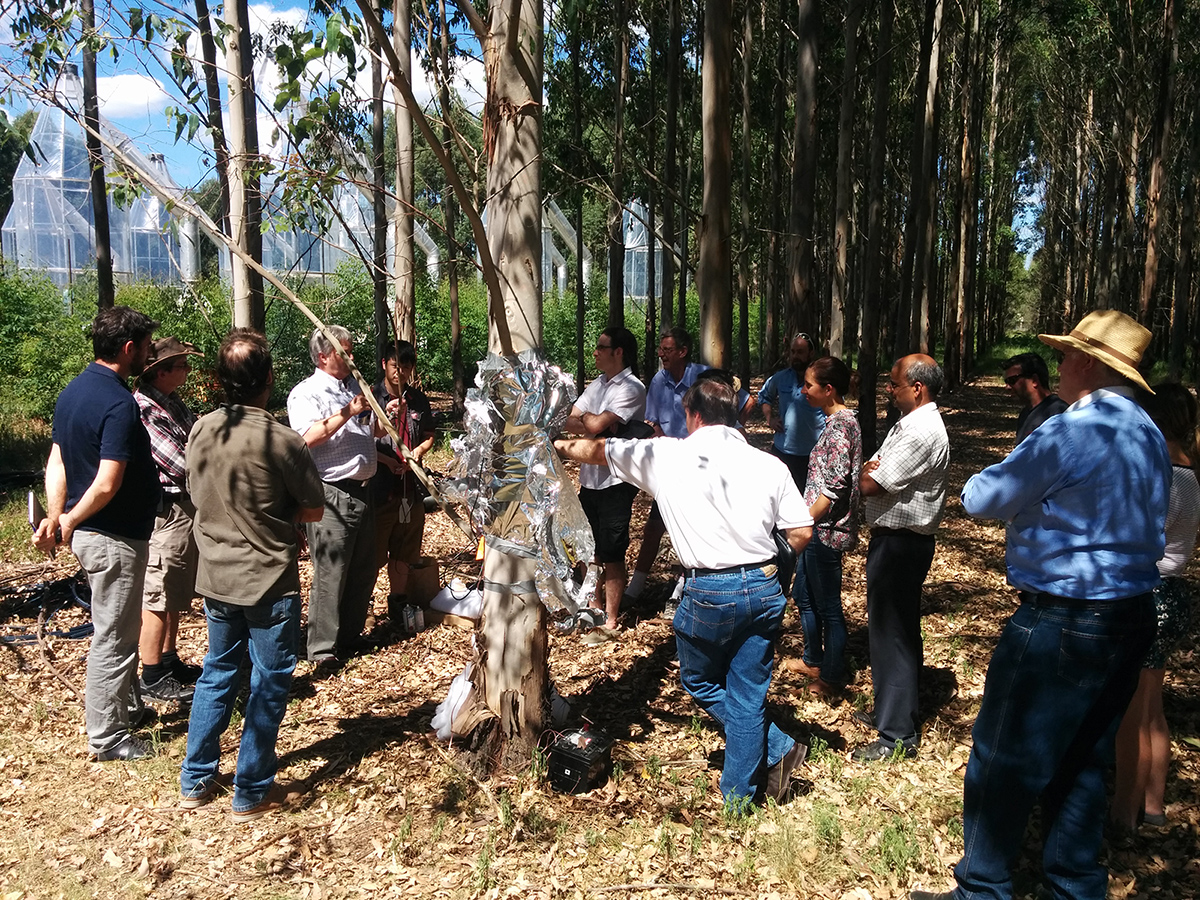
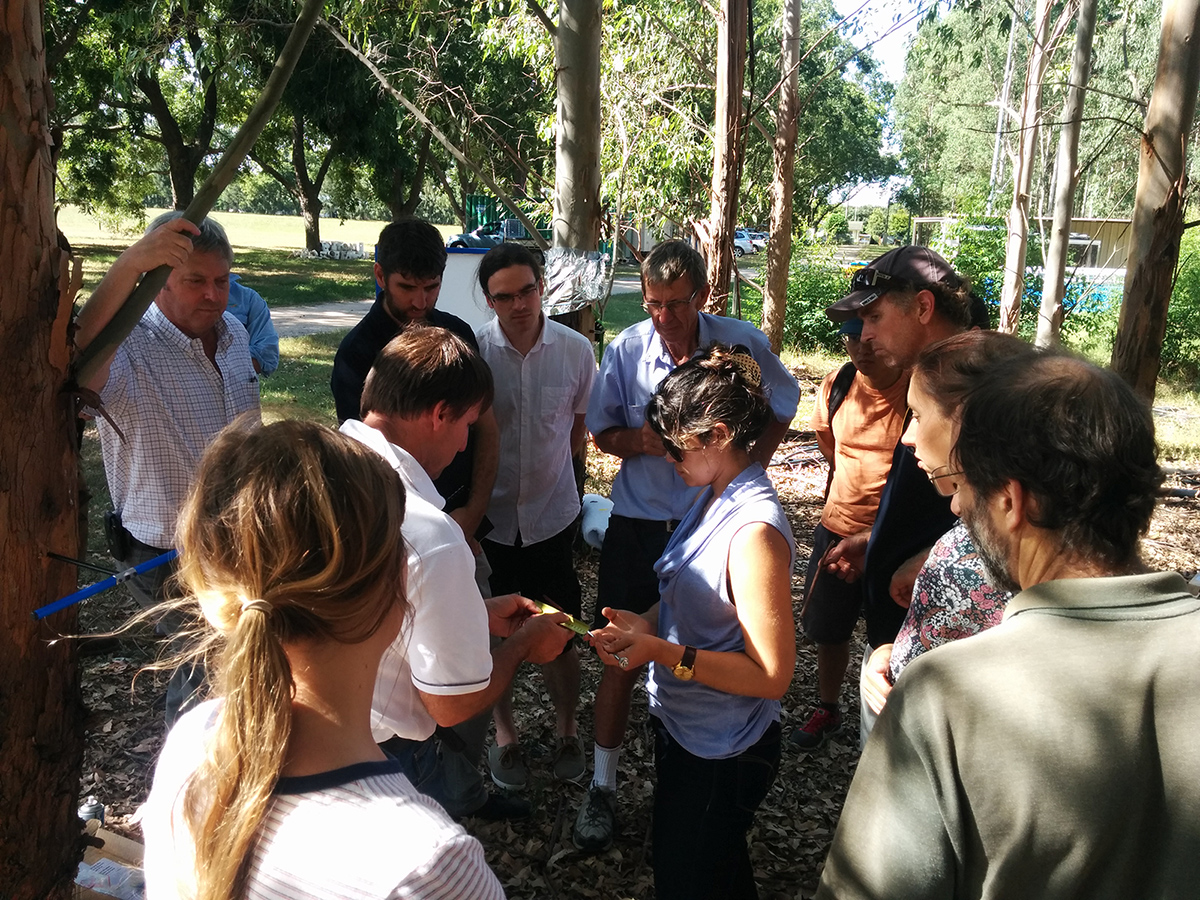
ICT’s PSY-1 stem psychrometer allows automated, repeated measurements of plant water potential using high-precision thermocouples installed on a plant, and we have been using them in lab- and field based setups from the tropical rainforest in Far North Queensland to the semi-arid South Australian mallee. The first part of the workshop consisted of presentations around automated plant physiological measurements using stem psychrometers (for plant water potential) and sap flow meters (which quantify water transport). In the second part, we demonstrated the installation and handling of these sensors at the Hawkesbury Forest Experiment, and collected data from psychrometers and sap flow meters to discuss data interpretation.
We were happy to host 25 very interested participants from research and industry backgrounds, to discuss possible sensor applications and spark future collaboration.
The article (introduced here) investigates the internal coordination of hydraulic parameters in a tropical lowland rainforest. Most of our sampling for this study was done directly from the rainforest canopy using the Daintree Rainforest Observatory‘s canopy crane, which is pictured on the journal cover.


Cover caption: Canopy crane in the Daintree Rainforest Observatory Research Facility in Cape Tribulation, Queensland, Australia. Nolf et al. (pp. 2652-2661) studied hydraulic properties of stems and leaves in three native, co-occurring species in this forest. They show that the species used operated at water potentials close to those causing embolism, with only narrow safety margins. However, hydraulic characteristics were finely tuned between leaves and stems such that safety margins were smaller in leaves than in stems. This coordination of hydraulic characteristics makes it more likely that embolisms will occur in leaves, which are more expendable than stems.
Citation: Nolf M., Creek D., Duursma R., Holtum J., Mayr S., Choat B. 2015. Stem and leaf hydraulic properties are finely coordinated in three tropical rain forest tree species. Plant, Cell and Environment. doi:10.1111/pce.12581
The full paper is available in Plant, Cell and Environment and can also be requested on Researchgate.
]]>


The video below is a short time-lapse clip which was recorded during leaf sampling for anatomical analyses in the canopy, using the DRO canopy crane.
]]>
Herve, Rosana and Brendan at Mt Banks, NSW
We were lucky enough to receive a visit from Dr Herve Cochard, aka “The General” of INRA. Herve, a world leader in plant hydraulics, is a close collaborator with the lab and a co-sponsor of Rosana’s Marie Curie Fellowship. Here we are at Mt Banks in the Blue Mountains NP, NSW.
]]>In collaboration with Iain Young and Richard Flavel at the University of New England, Armidale, we recently scanned the stems of young Eucalyptus trees at high resolution using X-ray Micro Computed Tomography (microCT) to visualize the loss of hydraulic function at increasing levels of drought. This allowed us to analyse the species’ vulnerability to drought-induced embolism, and validate hydraulic data using an independent, non-destructive method.

MicroCT cross section of a Eucalyptus stem.
In the above image, you can see the cross section of a Eucalyptus stem in which air-filled areas appear darker than water-saturated tissues. From the centre outwards, you can see the central pith and primary xylem, followed by a ring of embolised vessels in the outer xylem area.
The outermost light-grey lines are peeling strips of bark with a marker spot (white), and the top right of the image shows part of the bamboo rod that stabilized the plant in the scanner.