The post ClimateWest Annual Report: Advancing Climate Adaptation Through Collaboration appeared first on ClimateWest.
]]>This year, the report highlights the partnerships and collaborative efforts that are crucial for preparing communities to face the potential hazards and impacts of a changing climate. Fostering partnerships with organizations that share ClimateWest’s vision of a climate-resilient future is at the centre of the organization’s approach.

Elaine Fox, Board Chair of ClimateWest, emphasizes the importance of these relationships, stating, “Collaborative initiatives and partnerships remain pivotal in building climate resilient communities across Canada that will thrive in our changed and changing climate. We are proud to work with remarkable organizations that share our goal of building climate resilience and preparedness in Alberta, Saskatchewan, and Manitoba, and beyond.”
Impactful Initiatives
The 2024/25 Annual Report showcases a series of joint projects with organizations that are working to advance climate adaptation through capacity building, education, communications, vulnerability assessments, and more. Here are some key highlights:
- Adaptation in Action Program: Through the Adaptation in Action Program, ClimateWest committed to support six regional organizations on impactful adaptation and resilience projects in Alberta, Saskatchewan, and Manitoba. A total of $300,000 in funding was awarded to ALUS, City of Saskatoon, FortWhyte Alive, North Saskatchewan Watershed Alliance, Prairie Climate Centre, and Resilient Rurals.
- Climate Ready Prairies: ClimateWest partnered with Re.Climate to deliver the Climate Ready Prairies project, a Prairie-specific training program and a research study on communicating and engaging communities on climate adaptation. This three-year project will deliver a two-part training program and a community of practice in each of the Prairie provinces, followed by a final resource guide to encourage widespread application across the region and beyond.
- Western Flood Mapping Conference: ClimateWest partnered with Natural Resources Canada and the Pacific Institute for Climate Solutions to host the Western Flood Mapping Conference. The conference brought together invested parties from all related sectors to address key challenges concerning flood hazard mapping methodologies specific to Western provinces and territories.
Building a Network
Strengthening the climate adaptation network in Alberta, Saskatchewan, and Manitoba, has remained a core priority for the organization. ClimateWest continues to create relevant networking opportunities that promote cross-sector and interprovincial knowledge-sharing on climate resilience and preparedness through both in-person and virtual events.
- Over 130 in-person guests and 100 virtual participants attended the 2nd annual ClimateWest Forum to hear the voices, stories, and work of those at the forefront of climate adaptation and resiliency action in the Prairie region.
- Hosted or moderated seven webinars covering topics from natural infrastructure to the benefits of early adaptation action.
- Organized or attended 75 networking and engagement meetings across multiple sectors.


To explore ClimateWest’s projects, partnerships, and progress, download the 2024/25 Annual Report.
To stay up to date with ClimateWest’s work, subscribe to the monthly newsletter or follow on LinkedIn.
The post ClimateWest Annual Report: Advancing Climate Adaptation Through Collaboration appeared first on ClimateWest.
]]>The post Reflecting on Resilience: Key Takeaways from the ClimateWest 2025 Forum appeared first on ClimateWest.
]]>Over the course of two days, participants heard from 24 inspiring thought leaders and practitioners who shared their strategies, experiences and reflections on working to adapt to the changing climate in the prairie provinces. Presenters explored the impacts of climate change on both people and the land; the importance of working with nature to build resilience; adaptation strategies from northern, Indigenous, and rural communities; water and drought management; and strengthening local food systems in a changing climate. The forum also introduced practical, interactive tools designed to support climate preparedness across sectors.
By convening prairie-based leaders in climate services and adaptation, and showcasing grounded examples of resilience in action, we were able to exchange knowledge, strengthen networks, and identify shared priorities for building regional climate resilience. Continue reading below to discover our top five key takeaways from the Forum or download the report.
Dr. Elaine Barrow, who is based in Regina, opened the forum with an overview of the projected climate change impacts across Alberta, Saskatchewan, and Manitoba. According to current climate models, the southern prairie region is projected to experience increases in severe drought under a moderate emissions scenario (SSP2-4.5). Under a high emissions scenario (SSP5-8.5), the region could experience severe drought conditions 50% of the time by the end of this century. This underscores the importance of drought preparedness as a critical climate adaptation measure.
We heard from several organizations working to address this growing challenge. Chuck Deschamps from Ducks Unlimited Canada and Bridget Andrews from Saskatchewan Association of Watersheds highlighted their work to enhance water conservation on the prairies through wetland and native grassland restoration. The City of Saskatoon shared some of their targeted infrastructure upgrades to improve water conservation including the installation of more efficient nozzles at spray pads.
While drought preparedness is essential, Scott Millar from the North Saskatchewan Watershed Alliance and Michael Martineau from the Confederacy of Treaty 6 First Nations pointed out in their presentation on a Drought Resilience Needs Assessment project for First Nations in Alberta, that water security more broadly is an overarching concern for many First Nations, as numerous communities still lack the critical infrastructure needed for safe, reliable access to clean water.


In the opening session, the audience heard from two inspiring youth leaders, Jordyn Burnouf, and Abhay Singh Sachal from Break the Divide. Their passion, moral clarity and deep understanding of the challenges posed by a changing climate underscored the vital importance of engaging young people in climate action. Jordyn also shared stories about working directly with youth; young people understand the issues clearly but emphasized the need to empower them. Jason Cardinal from Flying Dust Market Garden (FDMG) introduced an innovative co-learning exchange program. This initiative involves hosting students from around the world, allowing them to bring fresh perspectives to farm operations while FDMG is able to share their traditional knowledge and sustainability practices globally.
However, it was also acknowledged that youth needed more support, encouragement, and platforms to grow into confident climate leaders, and recognize their leadership skills in this space.
While youth can be powerful agents of change, Abhay’s presentation highlighted a sobering truth: the climate crisis is taking a serious toll on their mental health. Crippled with heavy emotions like climate grief, anxiety, and fear, many youth feel overwhelmed by the uncertainties that lie ahead. Developing emotional intelligence and fostering relationships with each other and with the land not only helps to alleviate this but is essential for moving youth from paralysis to engaging in meaningful action. As Abhay poignantly stated, “to heal the planet, we have to collectively heal ourselves. Let’s start with young people.”


Grounding climate adaptation in the local context and recognizing the importance of stewardship are key to success. Roger Daniels from Mistawasis Nêhiyawak reflected on how his community deepened their commitment to land stewardship after regaining sovereignty over their land management decisions. In the natural infrastructure session, Renny Grilz from Meewasin Valley stated that “stewardship sustains resilience.” In the final session on agriculture, Nicole Baldwin from ALUS and Adrienne Tastad from Living Lab – Central Prairies both shared how the active participation of farmers in their programs helped shape practical, locally-adapted regenerative agriculture practices on the prairies.
Jordyn Burnouf urged the audience to recognize the vital role of knowledge keepers and land-based practitioners, whose intergenerational knowledge and intimate understanding of the land are essential to climate adaptation. Michaela Sidloski from the University of Saskatchewan advocated for the need to embrace complexity, iteration, and nuance when working with communities on adaptation planning.
Successful climate adaptation depends on listening to communities, involving them in decision making and prioritising long-lasting relationships. It requires flexibility and deep respect for lived experience and local and traditional knowledge, all of which contribute to long-term community resilience.


Successful adaptation is not merely a matter of staving off the worst consequences of climate change. When done effectively, it can also help address other socio-economic and environmental issues, and often at lower costs. This is especially the case for natural infrastructure, as was highlighted throughout the forum. For example, the City of Saskatoon’s Green Network provides an estimated $48 million annually in ecosystem services from storm water management and temperature regulation, to support cultural and economic activities like tourism. Meewasin Valley has been exploring how the restoration of ecological processes—such as controlled burns and targeted grazing—can strengthen native grassland ecosystems. This approach enhances their ability to retain water, sequester carbon, and provide habitat, thereby addressing the various needs of climate resilience, mitigation, and biodiversity improvement. The farmers we heard from, Alanna Carlson and Keaton Sinclair from AKreGeneration, and Mark Hoimyr owner and operator of Box H Farm, further underscored how working with nature can increase yields while also reducing input costs for farmers, making their operations, and communities, more resilient.
While nature provides many quantifiable benefits, it is also important to remember that the natural world has value in its own right beyond what can be measured in dollars, as many of our Indigenous speakers emphasized throughout the forum.


As was evident in each session, the prairie provinces face numerous challenges in their path to becoming climate resilient. As Dr. Elaine Barrow noted, the prairie region is warming faster than the majority of Canada, with significant drying already taking place– an issue underscored by the intense wildfire season in the region. Other speakers noted additional barriers, including the rural to urban divide, increasing polarization and misinformation, lack of critical infrastructure, and the challenges inherent in forging a path towards reconciliation with Indigenous Peoples.
Despite these challenges, one theme echoed clearly across all presentations: the spirit of collaboration remains a powerful force in the prairie provinces. In every session, we heard story after story of presenters working together, amplifying their impact through partnership. Mistawasis Nêhiyawak worked with Ducks Unlimited Canada on establishing conservation easements under Mistawasis’s land law; Saskatchewan Association of Watersheds is collaborating with ALUS to help farmers implement nature-based solutions; and the City of Saskatoon is partnering with Meewasin Valley on protecting wetlands and swales. It’s through this sharing of knowledge, resources and responsibilities, that our provinces will be able to weather these storms together. After all, nature doesn’t exist in a vacuum, nor should our work.
Download the full report to explore a list of resources shared at the Forum.
Download Forum Key Takeaways
Missed the Forum? Access presentations and recordings here.


The post Reflecting on Resilience: Key Takeaways from the ClimateWest 2025 Forum appeared first on ClimateWest.
]]>The post Enhancing Climate Resilience: ClimateWest’s Adaptation in Action Program Champions Impactful Climate Adaptation Projects in the Prairie Provinces appeared first on ClimateWest.
]]>Launched in December 2023, ClimateWest invited proposals from communities, non-profits, research centres, businesses, and other organizations with diverse perspectives for projects that build resilience to our changing climate. A total of $300,000 in funding was available, with up to $50,000 per project. Almost 50 applications were received and a total of 6 recipients were selected.
“We are thrilled to unveil the list of communities and organizations who are championing climate adaptation and share our vision of a more climate resilient future,” says Elaine Fox, Board Chair of ClimateWest. “With nearly 50 applications submitted, it’s clear that there is growing recognition of the necessity for preparedness and adaptation in Alberta, Saskatchewan, and Manitoba. We look forward to supporting our expanding network across the Prairie region, and sharing project outcomes to inspire others.”

Scroll through the document below for an overview of the impactful and innovative projects across the Prairie Provinces. Stay tuned for further project details, updates and outcomes for these projects over the coming months at www.climatewest.ca.
Program Recipients - Adaptation in Action
About the Adaptation in Action Program
The goal of the Adaptation in Action Program, as a stand-alone project funding initiative, has been to support impactful projects in Alberta, Saskatchewan, and Manitoba that:
- Build understanding about the range of plausible future climate conditions and how this may impact communities, businesses, governments, and organizations;
- Bridge Indigenous and Western knowledges to better advance climate adaptation;
- Identify and assess climate risks and vulnerabilities that result in learnings that apply across the region; and
- Develop information and communication materials that enable adaptation action and investment.
ClimateWest’s past work has supported the development of several beneficial regional adaptation resources, initiatives, and events specifically to address the adaptation needs of the Prairie Provinces. Most recently, these include the Costs of Climate Change on the Prairies, A Snapshot of the Changing Prairie Climate, the Uncertainty Primer, and the recently released Socio-Economic and Ecological Data for Community Adaptation Planning guide. An annual forum hosted by ClimateWest brings together the climate adaptation community across the Prairie region to gather, share experiences, and learn about the state of knowledge on climate adaptation. ClimateWest also provides access to capacity-building materials such as training videos and resources specific to Alberta, Saskatchewan and Manitoba. The Adaptation in Action Program further expands this work with a continued focus on collaboration and addressing the unique challenges of our region. Support for this program has been made available through ClimateWest’s partner governments of Canada, Alberta, Saskatchewan and Manitoba.
The post Enhancing Climate Resilience: ClimateWest’s Adaptation in Action Program Champions Impactful Climate Adaptation Projects in the Prairie Provinces appeared first on ClimateWest.
]]>The post Beyond Climate Data: Integrating Socio-Economic and Ecological Insights for Effective Adaptation Planning appeared first on ClimateWest.
]]>When developing a climate adaptation plan, using climate data projections to identify risks, vulnerabilities and opportunities is a key piece of the puzzle. Understanding your climate risk starts with having good climate data. While there may be an element of uncertainty, climate data projections are essential to help you understand the range of possibilities for what to expect from our changing climate. Check out our blog and guide for further guidance on the importance of climate data and where to find it for free.
In addition to traditional climate data projections for variables like temperature and precipitation, socio-economic and ecological data should also be considered in the planning process to create a more robust plan for the future.
What is socio-economic and ecological data?
Socio-economic and ecological data is information relating to the social, environmental and economic prosperity of a system or individual. Socio-economic data provides insight into the human dimension of climate change. Examples of socio-economic data include age, income, ethnicity, and education level. Ecological data helps us understand the health and sustainability of natural systems that are vital for community resilience. Examples of ecological data include species count, forested area and water levels.
Why should I use socio-economic and ecological data?
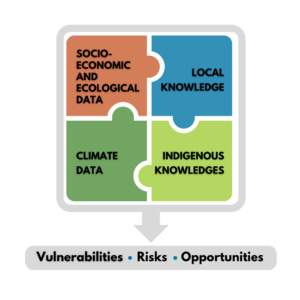
Using other types of data alongside climate data will help to build a more complete picture and increase the likelihood of success. Together, socio-economic and ecological data provide information about a community’s health and wellbeing, nature and biodiversity, disaster resilience, infrastructure, and economy and workers. By integrating these diverse data sets, communities can create a more nuanced and comprehensive understanding of how climate change impacts different facets of the community. This holistic approach enables the development of targeted strategies that address specific vulnerabilities and leverage unique strengths.
How should I use it?
Socio-economic and ecological data can be used at the initial, planning, and implementation stages of the adaptation planning process and may help communities:
- to direct resources effectively under future changing climate conditions.
- to minimize the risk of identifying solutions that are maladaptive, i.e. unintentionally create more risk and vulnerability to a community’s people and/or ecosystems.
- to consider their ability to address costly future impacts such as infrastructure damage.
For instance, age demographics can inform emergency response plans by identifying populations that may need additional assistance during extreme weather events. Income data can highlight areas where financial resources for adaptation measures may be limited, guiding equitable distribution of aid and support. Education levels can affect public awareness and engagement in sustainability initiatives, while understanding ethnic diversity can ensure that communication strategies are culturally sensitive and inclusive.
Tracking species count and biodiversity can indicate ecosystem health and identify areas at risk of collapse, which could exacerbate climate impacts. Monitoring forested areas and water levels is crucial for managing natural resources and reducing the risk of wildfires and floods. By preserving and restoring ecological systems, communities can enhance natural defenses against climate impacts and maintain essential ecosystem services such as clean air and water.
Where can I find it?
Socio-economic and ecological data is often harder to find than climate data. To help communities identify and find this data, ClimateWest collaborated with the International Institute for Sustainable Development (IISD) to develop a user-friendly guide for communities in Alberta, Saskatchewan, and Manitoba. Beyond Climate: An Introduction to Socio-Economic and Ecological Data for Community Adaptation Planning in the Prairies is a practical tool to navigate key data sources specific to the three provinces The goal of the guide is to help users find existing data from easily accessible sources, such as statistical platforms hosted by governments. Particularly when resources are scarce, using publicly available data can strengthen adaptation planning processes, but the actors involved may not be aware that it exists, or how it can be accessed.
The plain language guide is divided into three sections. The first section provides a basic introduction to socio-economic and ecological data and its role in adaptation planning. The second section begins with an overview of general socio-economic and ecological data that may be useful for adaptation planning in the three provinces. It then provides sector-specific data, organized into themes that align with the pillars used in Canada’s first National Adaptation Strategy, namely:
- Health and Wellbeing
- Nature and Biodiversity
- Disaster Resilience
- Infrastructure
- Economy and Workers
The final section briefly addresses some of the key challenges involved in incorporating socio-economic and ecological information into the adaptation planning process and provides some suggestions on how to manage them.
The Beyond Climate guide provides many socio-economic and ecological data sources at the national and provincial level that are publicly available, but also highlights how the first and best place to find high quality, reliable data is at the local level. Local level data is essential in understanding the history of a community’s citizens, infrastructure and environment, and to identify what makes them unique in terms of risks and opportunities to enhance preparedness.
While the use of Indigenous Knowledge in adaptation planning is beyond the scope of the guide, ClimateWest recommends that adaptation planning includes Indigenous engagement and advisors from the beginning of the planning process.
By embracing a data-driven and inclusive approach to climate adaptation, communities can build resilience against the growing challenges posed by climate change, ensuring a safer and more sustainable future for all.
What next? If you have questions about this report or how to take the next steps, reach out to our Help Desk by calling 204-995-6514 or email us at [email protected]. You can also check out our publications page for further resources that might be relevant to you.
Confused? We strive to talk about climate adaptation in approachable, easy-to-understand language. However, if you are unsure of any of the terms or concepts used in this article, visit our Get Started page or take a look at these resources:
- Climate Change Concepts, Environment and Climate Change Canada
- Climate Change: The Basics, Prairie Climate Centre
- Glossary and Learning Zone, ClimateData.ca
The post Beyond Climate Data: Integrating Socio-Economic and Ecological Insights for Effective Adaptation Planning appeared first on ClimateWest.
]]>The post ClimateWest Team Expands: Meet Asha and Brooke appeared first on ClimateWest.
]]>Asha brings a wealth of experience in food sovereignty and community development, having set up a non-profit organization, Fireweed Food Co-op. She has a passion for addressing environmental issues through a social justice and equity lens. Brooke comes to us from the environmental conservation sector, having worked with Ducks Unlimited and most recently in renewable energy development. She has experience working with diverse groups and enjoys the community-building aspect of tackling environment and climate issues.
Together, with a shared passion for the environment and community, Asha and Brooke will play a crucial role in facilitating meaningful climate adaptation actions and conversations across Alberta, Saskatchewan, and Manitoba. Read on to find out more about Asha and Brooke…
Where did you grow up?
Brooke: Small town Saskatchewan! Home was Biggar, then Battleford, but with a lot of time spent at family farms on either side (Senlac for my Dad’s family, Leask area for Mom’s) and Jackfish Lake in the summer.
Asha: Winnipeg has been home for most of my life but I also lived in Morocco for a couple years as a young child and Kuala Lumpur, Malaysia as a teenager.
Where is your favourite place to be in the Prairies?
Brooke: The family farm near Leask, where I am currently based! It’s on the boreal fringe so the farmland is interspersed with bush and wetlands making it a great place for birding and watching the seasons change. That said, next summer I would really like to visit Grasslands National Park!

Asha: I probably identify the most with the landscape of the Canadian shield in eastern Manitoba. I grew up camping and canoeing in this area with my family, and regularly return for canoe trips and other adventures. My recent discovery of cross-country skiing has also taken me across the province to explore new trails, and helped restore my relationship with winter— a necessity when living in the prairies.

What is your proudest achievement?
Brooke: I went tree-planting on a whim at 20 and returned for three seasons. While it had its ups and downs, it taught me perseverance, grit, and the power of adding humour when reality is harsh. I made great friends and was able to pay my way through university which felt like a big accomplishment.
Asha: Looking back, I would say one of my proudest achievements was helping to build a non-profit, Fireweed Food Co-op, from the ground up. It was incredibly challenging to say the least, but also such a rewarding and thrilling chapter of my life. A couple of years ago, my partner and I also completed a six week bikepacking trip through Patagonia. Our prairie legs suffered for the first week, but we got stronger with each day and were able to immerse ourselves in the most breathtaking landscapes. I’m pretty proud of that accomplishment.
How do you like to relax?
Brooke: I enjoy running, biking, paddling… pretty much any outdoor activity works well to quiet my mind! I also find taking care of my plants and gardening to be meditative and am already planning for next spring.

Camping along the Boreal Trail between Goodsoil and Meadow Lake, SK
Asha: I love the combination of movement and being outdoors, whether it be cycling, climbing, canoeing or cross-country skiing. It might sound like a strange way to relax but these activities help me feel present and connected to nature. I also love reading, either in hammocks in the summer or curled up on a couch with a hot cup of tea in the winter.
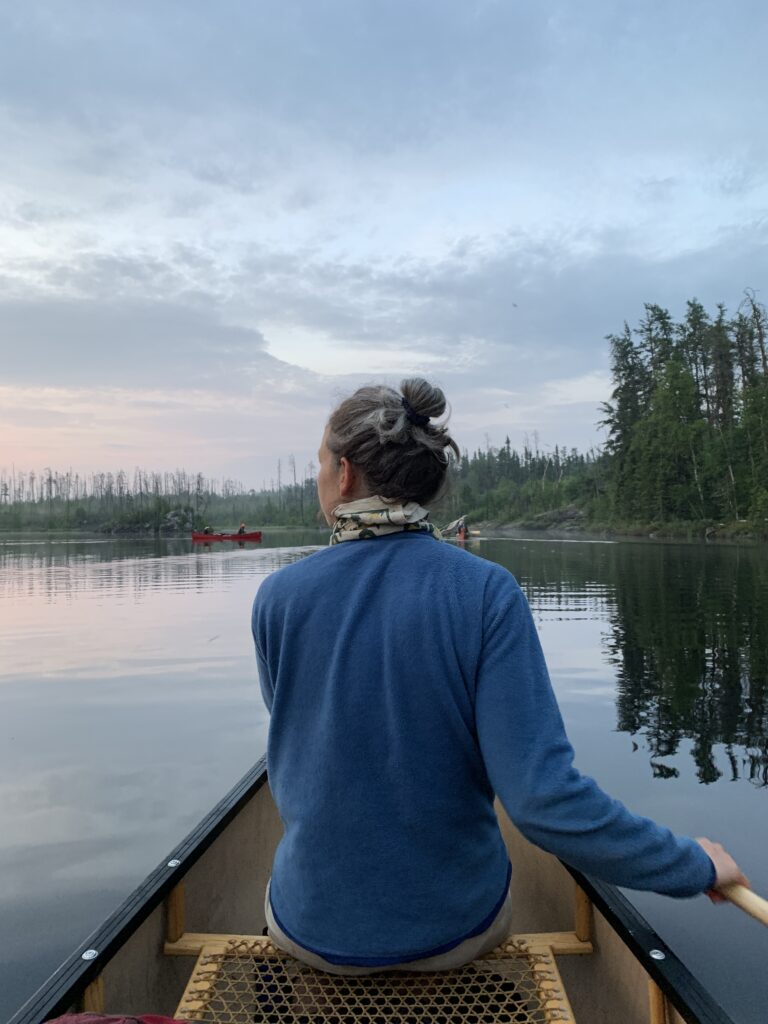
Asha on one of her yearly week-long canoe trips with friends in the Canadian shield
In one word, how would you describe your role with ClimateWest?
Brooke: Organizer
Asha: Facilitator
What attracted you to this role, and what are you most excited about?
Brooke: I’ve always appreciated the natural world and have a deep desire to conserve it for future generations. While there are many ongoing global issues, climate change feels the most pressing to me, and where I personally can make the most impact. From tree-planting to farming, I’ve seen how climate adaptation solutions (whether they are described as such or not) can bridge the growing gap between those who support and take part in climate action and those who don’t. I know that many climate solutions are beneficial to everyday people, regardless of where they fall on that spectrum. I am excited to work on climate adaptation goals in my home province and help build that bridge!
Asha: I distinctly remember one of the most damning IPCC reports being published while I was in university and it turned my world upside down. After struggling with the grief for a while, I felt compelled to get involved. In many ways, it is the most defining issue of my generation, intersecting with every aspect of life, from our health and housing to food security and the economy. As the Canadian Prairies are a hotspot for climate change—not just within Canada, but across the world – I was excited to apply for a position with ClimateWest, an organization committed to building climate resilience in the region.
What keeps you motivated?
Brooke: The drought of 2021 was the first time that climate anxiety felt really tangible but, something I’ve learned from farming is that you get up every morning and do the best you can with the tools you have. I think that today, we have more and better “tools” than ever before and that is empowering. I also actively seek out uplifting news stories and organizations as what you focus your energy on tends to flourish. And that’s how I found ClimateWest!
Asha: Working on climate issues can feel heavy and discouraging at times. However, I find connecting with others in the field, sharing knowledge and support, can feel incredibly energizing and uplifting. I also believe the transformations required to respond to the climate crisis offer us an opportunity to reimagine the future we want. I suppose this vision keeps me going!
We will share more about the projects Asha and Brooke are working on in the coming months – watch this space!
The post ClimateWest Team Expands: Meet Asha and Brooke appeared first on ClimateWest.
]]>The post Meet Elizabeth Shearer appeared first on ClimateWest.
]]>

Where did you grow up?
I was born and raised in Winnipeg, Manitoba.
Where is your favourite place to be in the Prairies?
My happy place on the prairies is anywhere I can be in nature with my family and friends. I spend a lot of time in the interlake at my family cabin on Lake Winnipeg. In the summer I enjoy checking out local music festivals scattered throughout the prairies and hope to visit more in the future. During the winter I bundle up for our frosty temps and walk along the river or through urban forests. I am hoping to expand my winter activities to include skiing more often – If you have any tips on keeping your toes warm while skiing I would love to hear from you!
What is your proudest achievement?
I am proud to have earned an MBA in Community Economic Development. I wasn’t expecting to have taken on a Master’s program during a pandemic but am so glad I persisted. I graduated in the spring of 2022, and then continued onto my even prouder achievement of giving birth to my first child in December of that same year!
How do you like to relax?
After a busy evening or weekend chasing my toddler around, I like to unwind by listening to music or watching a comfort show like the Office. I also feel best when I have a consistent yoga or meditation routine to care for mind and body wellness.
In one word, how would you describe your role with ClimateWest?
Connector!
What do you enjoy most about your job?
I get to work with a great team of solutions-focused professionals that span a dynamic area of sectors. From scientists and engineers to city staff, policy makers and educators, I get to connect with a wide network of actors to build awareness and connect folks to the tools they need to adapt to a changing climate on the prairies.
If you are looking to prepare your community or organization for the effects of climate change, Liz will be able to direct you to valuable climate adaptation resources to help inform your decisions. Please reach out to her with any questions! Email [email protected] or reach out on LinkedIn.
The post Meet Elizabeth Shearer appeared first on ClimateWest.
]]>The post Building a Climate Resilient Future: upcoming forum focuses on collaboration and preparedness in the Prairies appeared first on ClimateWest.
]]>
Why a forum, and why now?
The Canadian Prairies are a hotspot for climate change —not just within Canada, but across the world according to a recent report prepared by the Prairie Climate Centre. One of the key takeaways from the 2023 ClimateWest Forum held in Winnipeg, is that the climate has already changed and will continue to change. In accepting the reality that we are not returning to the climate of the past, we can move forward together.
Participants at the 2023 forum also told us they value the opportunity to come together in person to hear the latest knowledge from climate experts, share experiences, and learn from each other. “The ClimateWest Forum highlighted the value of being in a community with other climate action practitioners who understand the challenges and the importance of working together to take climate action based on mutual respect, strength in diversity, and the inclusion of Indigenous ways of knowing and being. The sense of connection I felt at the forum has inspired me to attend future adaptation conferences to fill the tank for more work and progress,” said Kayla Dawson, Civil Engineer/Community Consultant and 2023 forum participant.
What to expect
This year’s forum features over 20 confirmed speakers covering topics that explore how to build climate resilience through being prepared, working together, and creating change. The keynote speaker, Hetxw’ms Gyetxw (Brett D. Huson), will kick off the forum with a session on Weaving Indigenous Knowledges to Enhance Climate Resilience. “We are delighted to have Hetxw’ms Gyetxw open the ClimateWest Forum. Creating inclusive approaches is key to building climate resilience and one of the principles at the heart of ClimateWest’s work. We look forward to bringing together diverse perspectives and knowledges in a safe, shared space that promotes cooperation and knowledge-sharing,” said Kerra Chomlak, Executive Director of ClimateWest.
Following the keynote talk, Dr. Heather Morrison (Environment and Climate Change Canada) and Dr. Richard Schneider (Nature Alberta) will shed light on the changes seen in Alberta, Saskatchewan, and Manitoba as a result of a warming climate along with future projections. New for 2024 and following feedback from 2023 forum participants for more youth voices, the forum organizing committee has collaborated with The Youth Harbour to design a youth panel session. Participants will hear youth perspectives on our changing climate in the Prairie region, and practical tips for engaging with youth and incorporating youth perspectives into climate resilience planning.
Day 2 of the forum will begin with an ‘In Our Communities’ session showcasing local, grass-roots initiatives such as Resilient Rurals and For Our Kids, and a presentation on Eutrophication and Treaty Rights by Dr. Hughie Jones (Alexis Nakota Sioux Nation). This will be followed by an interactive session led by Dr. Sherilee Harper (School of Public Health, University of Alberta) on how climate change impacts mental health. The afternoon will begin with a session on being prepared and working together concerning water scarcity and emergency planning. Participants will hear from a diverse panel of speakers, including Nicola Lewin (EPCOR), Andre Asselin (Alberta Water Council), Emmeline Marshall-Hill (EMH Consulting Inc.), and Dr. Timothy David Clark (Willow Springs Strategic Solutions). The day will conclude with one of Canada’s top climate communication strategists and capacity builders, Amber Bennett (Re.Climate), sharing her tips on communicating about climate change in the Prairies and motivating change.
Chomlak reflects upon the goals of the upcoming forum. “We are excited that the forum will both bring people together and showcase the passionate organizations across our provinces that are striving for climate resilience. There is a lot of positive work being done that we hope will inspire and empower others to prepare for what lies ahead and work towards a hopeful future.”
Take a look at our full agenda here.

A Sustainable Event
ClimateWest is conscious of emissions from travel and, as such, the forum will once again be a hybrid event. Our goal is to balance the benefit of face-to-face collaboration with the need to travel. As our network covers three provinces, we will rotate the event throughout the three provinces each year. The 2025 Forum will be held in Saskatchewan.
Thanks to our in-kind partner, Bullfrog Power, the 2024 forum will be powered with 100% green electricity. This means that Bullfrog Power’s generators put 100% green power into the grid to match the amount of conventional electricity the forum will use, displacing energy from higher emissions sources. Across Canada, Bullfrog Power’s green electricity comes from a blend of wind and low-impact hydro power sourced from new Canadian renewable energy facilities.
Reserve your spot!
Registration is currently open for virtual attendance.
Land Acknowledgement
ClimateWest’s work occurs on the traditional land of Treaties 1 through 8, and 10. This area includes many Indigenous Nations. The ClimateWest office is located on Treaty 1 Territory, the historic meeting place of the Anishinaabeg, Cree, Inninewuk, Anishininiwag, Dakota and Dene, and the Homeland of the Métis Nations.
The 2024 ClimateWest Forum is being held in ᐊᒥᐢᑿᒌᐚᐢᑲᐦᐃᑲᐣ (Amiskwacîwâskahikan) on Treaty 6 Territory and in the Métis Nation of Alberta Region 4. The City of Edmonton is also home to one of the largest Inuit populations south of the 60th parallel.
The post Building a Climate Resilient Future: upcoming forum focuses on collaboration and preparedness in the Prairies appeared first on ClimateWest.
]]>The post ClimateWest Annual Report: Advancing climate resilience in the Prairie provinces appeared first on ClimateWest.
]]>
ClimateWest’s founding partners – the Prairie Climate Centre (PCC), the Prairie Adaptation Research Collaborative (PARC) and the International Institute for Sustainable Development (IISD) – harnessed their unique strengths to create a hub of Prairie-focused climate information, research, analysis, training, outreach and tools. Today, ClimateWest continues to build on the strong foundation established by these three highly respected organizations, meeting the need for an organization dedicated to amplifying, connecting, collaborating, championing, facilitating and translating climate adaptation information for a diverse audience.
ClimateWest’s goals are to increase capacity and understanding regarding a changing climate and to support region-wide efforts to adapt to these changes in the Prairie region. With this in mind, highlights from the past year include the first annual forum, 3 regionally relevant knowledge products, expanding and strengthening the network through 54 one-on-one networking meetings, a 145% increase in combined social followers (newsletter, LinkedIn, and X), and the launch of the Adaptation in Action Program.
Kerra Chomlak joined ClimateWest as the Executive Director in September 2022 and was instrumental in the early 2023 strategic expansion. “I am delighted to have contributed to ClimateWest’s growth over the past year. Our latest knowledge products, webinars, workshops, and the Inaugural Forum have positioned ClimateWest as a trusted source of information for many in Alberta, Saskatchewan, and Manitoba. Building this trust has been possible due to the invaluable contributions of our three founding partners, along with the ongoing support from the governments of Canada, Alberta, Saskatchewan, and Manitoba,” said Chomlak.
Looking ahead to the future, Chomlak reflected upon the principles at the heart of ClimateWest’s work. “Recognizing the significant task ahead to build climate resilience in these provinces, we are committed to upholding our core values of inclusivity, collaboration, and equity. We encourage everyone to reach out to ClimateWest with their climate questions, big or small.”
In 2024, ClimateWest will focus on:
- Raising awareness about ClimateWest and the free services the organization provides to build climate resilience in Alberta, Saskatchewan, and Manitoba.
- Expanding the organization’s network by connecting with more organizations working on climate resilience in the three provinces.
- Encouraging the use of climate data in decision-making and promoting early action.
- Hosting the second annual ClimateWest Forum in Edmonton, Alberta in Spring 2024, followed by another in Saskatchewan in 2025.
- Engaging with Indigenous communities and organizations to enhance ClimateWest’s role as a trusted messenger on climate resilience in the Prairies.
The results of the Adaptation in Action Program will determine ClimateWest’s project priorities for the next two years.
Download the 2022/2023 ClimateWest Annual Report
The post ClimateWest Annual Report: Advancing climate resilience in the Prairie provinces appeared first on ClimateWest.
]]>The post ClimateWest Seeks Projects to Advance Climate Adaptation in Alberta, Saskatchewan, and Manitoba appeared first on ClimateWest.
]]>As the Canadian Prairie Provinces are projected to continue warming much faster than the global average, the need to prepare and adapt to our changing climate becomes ever more pressing. Municipalities, Indigenous communities, businesses, non-profits, and governments need reliable tools, resources, and services to inform the actions that will strengthen their communities. Through the Adaptation in Action Program, ClimateWest will collaborate with the network of adaptation actors across Alberta, Saskatchewan, and Manitoba in addressing this need.
 “We are pleased to offer this opportunity to communities and organizations who share our vision of a more climate resilient future,” says Kerra Chomlak, Executive Director of ClimateWest. “With the help of partners specializing in climate adaptation in Alberta, Saskatchewan, and Manitoba, ClimateWest has already developed valuable resources that advance our mandate. We’re eager to expand on these achievements and support initiatives from others in our region who are passionate about improving preparedness in the face of a changed and changing climate.”
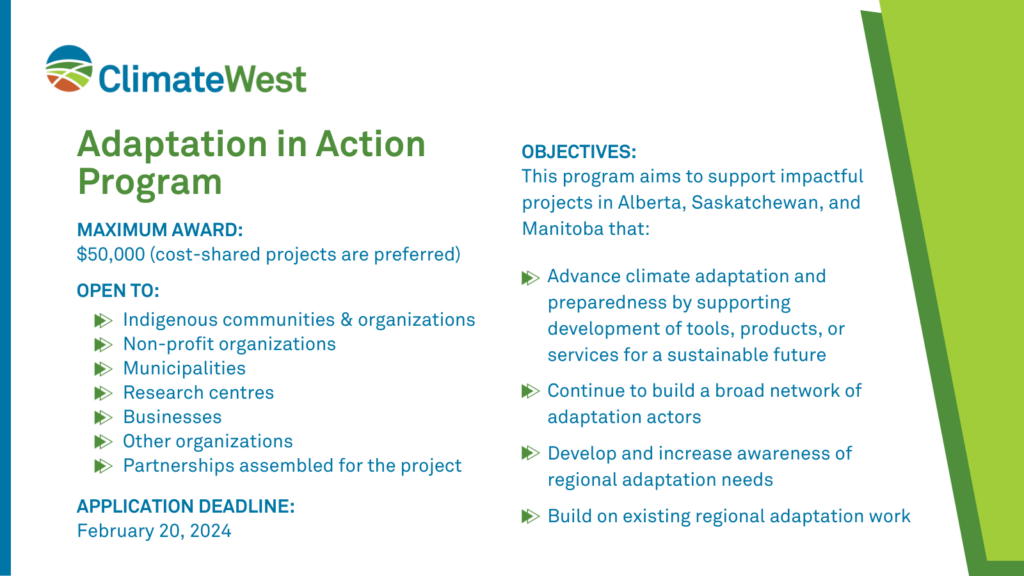
The goal of the Adaptation in Action Program is to support impactful projects in Alberta, Saskatchewan, and Manitoba that:
- Build understanding about the range of plausible future climate conditions and how this may impact communities, businesses, governments, and/or organizations;
- Bridge Indigenous and Western knowledges to better advance climate adaptation;
- Identify and assess climate risks and vulnerabilities that result in learnings that apply across the region; and
- Develop information or communication materials that enable adaptation action and investment.
ClimateWest’s past work has supported the development of several beneficial regional adaptation resources, initiatives, and events specifically to address the adaptation needs of the Prairie Provinces. Most recently, these include the Costs of Climate Change on the Prairies, A Snapshot of the Changing Prairie Climate and the Uncertainty Primer. An annual forum hosted by ClimateWest brings together the climate adaptation community across the Prairie region to gather, share experiences, and learn about the state of knowledge on climate adaptation. ClimateWest also provides access to capacity-building materials such as training videos and resources specific to Alberta, Saskatchewan and Manitoba. The Adaptation in Action Program will further expand this work with a continued focus on collaboration and addressing the unique challenges of our region. Support for this program has been made available through ClimateWest’s partner governments of Canada, Alberta, Saskatchewan and Manitoba.
“Through the Adaptation in Action Program, our hope is to share project outcomes to build capacity and empower a community of change-makers across the Prairie provinces,” explains Chomlak. “We look forward to fostering strong partnerships and collaboration on action that improves preparedness for our changed and changing climate.”
Visit the Adaptation in Action Program page for details on eligibility and how to apply.
The post ClimateWest Seeks Projects to Advance Climate Adaptation in Alberta, Saskatchewan, and Manitoba appeared first on ClimateWest.
]]>The post What are the Financial Costs of Climate Change in the Prairie Provinces? appeared first on ClimateWest.
]]>Understanding the economic consequences of climate change is crucial in determining when and how much to invest in adaptation. This information is particularly important in the Prairie provinces which are a hotspot for climate change – not just within Canada, but across the world (Loxley, 2022). Findings from a 2020-21 regional survey identified that Prairies region communities want more data on the impacts of climate change and how local business, infrastructure, and human health are affected. ClimateWest’s newly-released Costs of Climate Change on the Prairies report, prepared by All One Sky Foundation addresses this need.
“Decision-makers across Alberta, Saskatchewan, and Manitoba need to be equipped with accurate and regionally-relevant data to help them make informed choices. Our latest report will support them in assessing risks and actions to protect people, assets and the environment,” states Elaine Fox, ClimateWest’s Board Chair. “The data in this report presents a strong business case for investment in proactive adaptation, which ultimately will save them money in the long run.”
The Costs of Climate Change on the Prairies report highlights that “while our changing climate is anticipated to bring some benefits for the Prairies, the total economic impact is projected to be overwhelmingly negative and significant.” The report is based on the findings of several previous studies and detailed assessments for the City of Edmonton and the City of Calgary, and identifies economic losses per sector that are attributable to climate change.
Key findings across climate-sensitive sectors analyzed in the report based on a high emissions scenario include:

*Note the report indicates these estimates as optimistic as they do not account for some other significant challenges that climate change presents. For example, climate extremes affecting the agriculture sector are projected to intensify, including heat stress and impacts to water availability, as well as increased risks of pests, vector-borne diseases and invasive species.
The report also examines insured losses by province from extreme weather up to 2021. While the combined losses across Alberta, Saskatchewan, and Manitoba are conservatively estimated at almost $16 Billion per year by the 2050s under a high emissions scenario, over half of these losses are in Alberta because of its larger population, asset inventory and economy. On an annual per capita basis, the largest losses are expected to occur in Manitoba ($2,235 per person), followed by Saskatchewan ($1,875 per person), then Alberta ($1,300 per person).

Many of the report findings were presented by the author, Dr. Richard Boyd at the inaugural ClimateWest Forum, held in May 2023 in Winnipeg, Manitoba. Two of the key takeaways from the Forum were that proactive climate adaptation action offers a good return on investment, and that there is a need to scale up adaptation investments to match the risks that Canadians face. Per year, one study estimated that 0.26% of GDP is needed nationally to be invested in municipal climate adaptation investments (IBC & FCM, 2020).
As decision-makers increasingly want more information on the economic consequences of climate change, the Costs of Climate Change on the Prairies report supports a strong business case for proactive climate adaptation in the Prairies provinces and beyond.
To learn more about the economic impact of climate change in the Prairies, read the full report.
Watch Dr. Richard Boyd’s presentation at the ClimateWest Forum or download the slide deck.
What next? If you have questions about this report or how to take the next steps, reach out to our Help Desk by calling 204-995-6514 or email us at [email protected]. You can also check out our publications page for further resources that might be relevant to you.
Confused? We strive to talk about climate adaptation in approachable, easy-to-understand language. However, if you are unsure of any of the terms or concepts used in this article, visit our Get Started page or take a look at these resources:
- Climate Change Concepts, Environment and Climate Change Canada
- Climate Change: The Basics, Prairie Climate Centre
- Glossary and Learning Zone, ClimateData.ca
References
Loxley, M. (2022). A Snapshot of the Changing Prairie Climate, Prairie Climate Centre for ClimateWest. https://climatewest.ca/publications/a-snapshot-of-the-changing-prairie-climate/.
IBC & FCM. (2020), Investing in Canada’s Future: The Cost of Climate Adaptation at the Local Level. https://fcm.ca/en/resources/investing-in-canadas-future.
The post What are the Financial Costs of Climate Change in the Prairie Provinces? appeared first on ClimateWest.
]]>