The post Never Miss an Exam Again – Real-Time Scheduling with Pearson VUE RTEN appeared first on Cobalt.
]]>For certification candidates, that “something” is often their exam appointment. Between busy schedules, overflowing inboxes, and multiple logins, it’s easy to lose track of when and where they’re supposed to show up. The result could lead to missed exams, stressed candidates, and frustrated staff trying to fix problems at the last minute.
We’ve all seen it happen: a candidate registers for an exam but weeks go by without a reminder. They scramble to remember the date, show up late (or not at all), and suddenly their hard work and your staff’s time are wasted.
Cobalt 4.1 brings a new enhancement: Pearson VUE Real-Time Event Notification (RTEN).
With RTEN, exam appointments now flow into your system in real time.
- Candidates book through Pearson VUE and you see the date instantly
- They reschedule or cancel and your system updates right away
- Staff can send timely reminders and resources to help candidates prepare.

Every time something changes with an exam appointment, Pearson VUE “pings” your system. The update appears automatically – no more waiting for overnight files or manual checks.
This leads to fewer no-shows thanks to proactive reminders, better-prepared candidates who get resources when they need them, and less admin overhead for staff managing exam logistics.
Certification is a big commitment. The last thing candidates should worry about is missing their exam date. With Pearson VUE RTEN, you get real-time visibility – so candidates can stay on track, staff stay informed and exams run smoothly.
The post Never Miss an Exam Again – Real-Time Scheduling with Pearson VUE RTEN appeared first on Cobalt.
]]>The post Exam Sections & Retakes — Fairer Paths to Certification appeared first on Cobalt.
]]>Exams are high-stakes. Requiring a full retake after one section fails can be discouraging. Flexible retake policies make certifications more achievable while maintaining thoroughness.
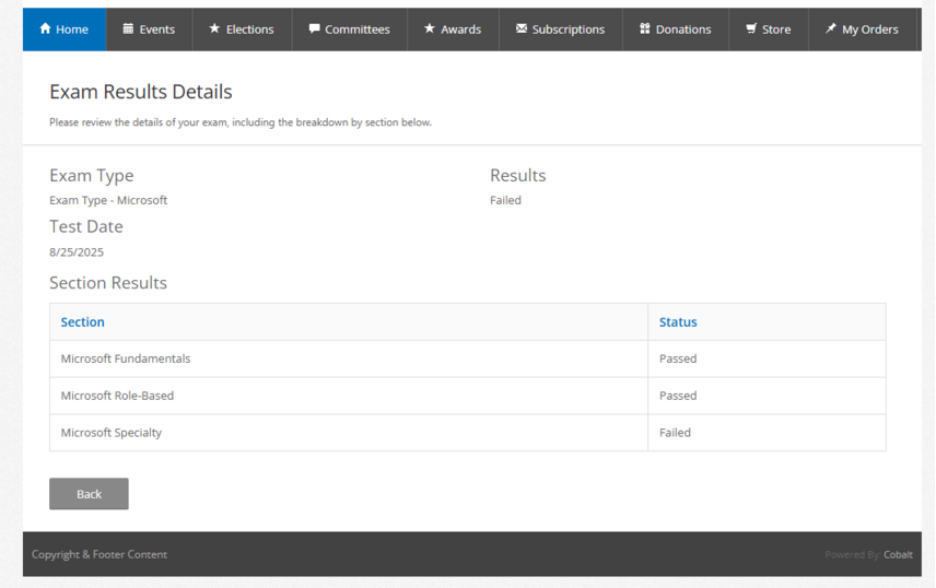
Cobalt 4.1 introduces exam sections and retake limits, giving organizations control over how exams are structured and how candidates can retake failed parts.
Exams can be divided into sections, each graded independently. Candidates can retake specific sections based on rules set by the organization (e.g., how many times a section can be failed before requiring a full retake). Results are tracked for reporting and fairness.
With retakes:
- Candidates save time and cost by focusing on weak areas.
- Organizations maintain standards while offering flexibility.
- Certification programs become more candidate-friendly, boosting completion rates.
The post Exam Sections & Retakes — Fairer Paths to Certification appeared first on Cobalt.
]]>The post Special Accommodations — Supporting Every Candidate’s Success appeared first on Cobalt.
]]>Organizations that offer certification must ensure accessibility. Without a built-in way to handle accommodations, processes become inconsistent and frustrating for both candidates and staff.
Cobalt 4.1 adds special accommodations management into the certification and exam application processes. Candidates can now request accommodations upfront, and staff can review, approve, or deny requests in a structured way.

When applying for certification or scheduling an exam, candidates see an option to submit accommodation requests. Staff receive the requests in the system, review them, and approve or deny with clear communication back to the candidate.
With this feature:
- Candidates feel supported and included.
- Staff gain a consistent, trackable process.
- Organizations strengthen their commitment to accessibility and fairness.
The post Special Accommodations — Supporting Every Candidate’s Success appeared first on Cobalt.
]]>The post Voucher Management — Smarter Bulk Purchasing for Members appeared first on Cobalt.
]]>For large accounts, purchasing fees one-by-one is inefficient. Staff juggle payments, members face administrative hurdles, and organizations lose opportunities to streamline onboarding and compliance.
Cobalt 4.1 introduces voucher management, giving account administrators the ability to pre-purchase and manage vouchers for affiliated contacts.
An account admin buys a set of vouchers (like prepaid coupons). They can assign them directly, leave them unassigned for later, or reassign as needed. When a member registers, the voucher applies automatically at checkout. A central portal view lets admins track usage and redemption.
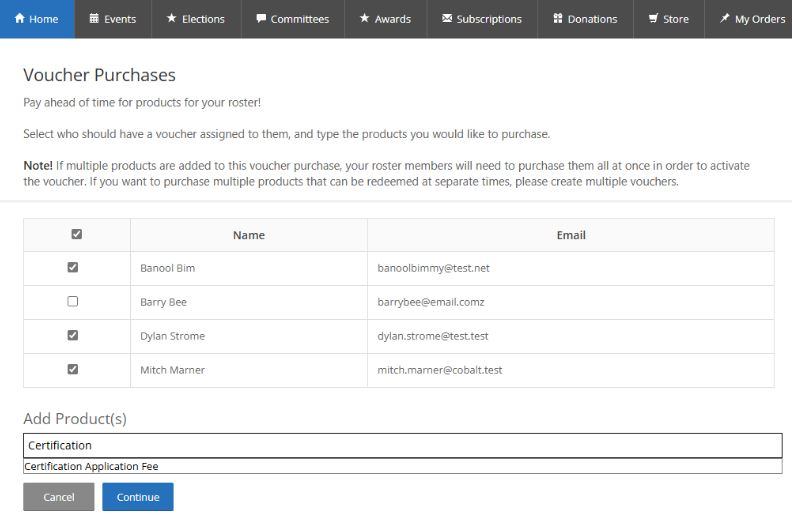
Voucher Management delivers:
- Cost savings through bulk purchases
- Simplified registration for members
- Fewer administrative headaches for staff
- Timely compliance by ensuring members meet licensing or certification requirements
It’s a win-win: streamlined for members, controlled for administrators.
The post Voucher Management — Smarter Bulk Purchasing for Members appeared first on Cobalt.
]]>The post Multi-Entity Accounting — Financial Clarity Made Simple appeared first on Cobalt.
]]>Many associations and nonprofits manage multiple financial entities under one roof. Without system-level support, finance teams are forced into manual reconciliation. That means delays, errors, and frustration — especially at audit time.
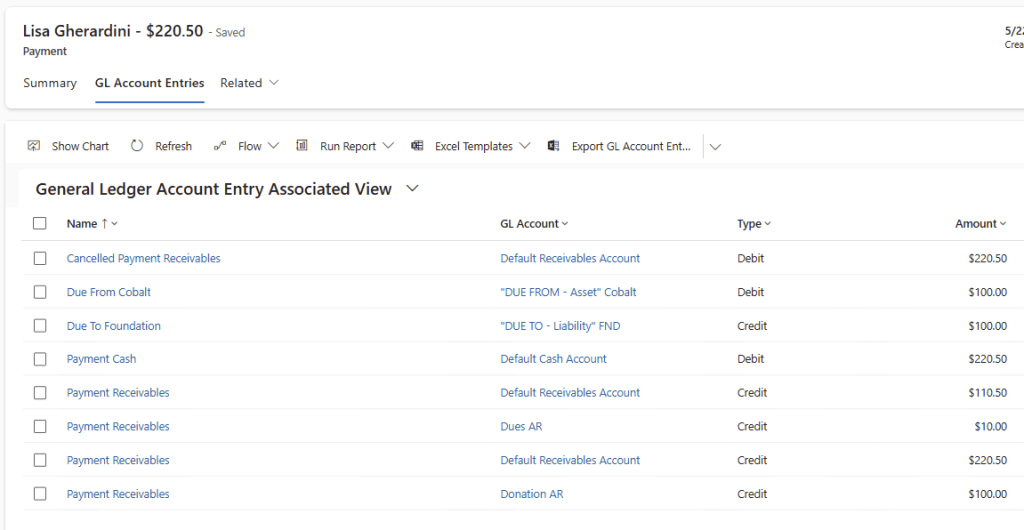
Cobalt 4.1 introduces support for multi-entity accounting, a long-requested enhancement that automatically identifies “due to” and “due from” amounts across entities.
When a transaction spans multiple entities (like dues + donations), the system tags each product line with the correct financial entity. Reporting and general ledger entries reflect these allocations, so finance teams can clearly see what belongs where. Payments still flow to the same account, but reporting is accurate from the start.
Here’s what Multi-Entity delivers:
- Finance teams saving hours simplifying transactions
- Organizations can report with confidence across entities
- Members experience seamless transactions without hidden complexity
It’s transparency and efficiency where it matters most.
The post Multi-Entity Accounting — Financial Clarity Made Simple appeared first on Cobalt.
]]>The post Copilot — Your Always-On Portal Assistant appeared first on Cobalt.
]]>Support teams spend countless hours answering FAQs: “Where do I upload my documents?” “How do I schedule my test?” “Where do I check my renewal status?” These questions are important, but they pull staff away from high-value tasks. Self-service solutions not only reduce support load but also create faster, more satisfying member experiences.
Cobalt 4.1 introduces a Copilot chatbot embedded into the portal. Unlike generic bots, Copilot is powered by your own knowledge base, documentation, and FAQs, delivering context-rich responses tailored to your organization.
Members can ask natural questions right inside the portal. The bot responds with guidance sourced from approved documentation and articles. Today, the chatbot focuses on general support (not user-specific data), but it’s a powerful first step toward smarter, scalable, self-service assistance.
Here’s the value:
- Members get instant answers anytime, without waiting on email responses.
- Staff spend less time on repetitive inquiries and more time on complex cases.
- Organizations deliver a modern support experience that matches expectations set by consumer apps.
The Copilot chatbot allows organizations like you to extend your team’s reach and availability.

The post Copilot — Your Always-On Portal Assistant appeared first on Cobalt.
]]>The post Certification Progress Visualization — Clarity for Every Candidate appeared first on Cobalt.
]]>Organizations invest heavily in certification programs to boost credibility, strengthen member value, and drive revenue. But if candidates get stuck asking “what’s next?”, the process breaks down. Staff waste time answering status questions instead of guiding candidates, while candidates feel disconnected from their own progress. Transparency is key to trust.
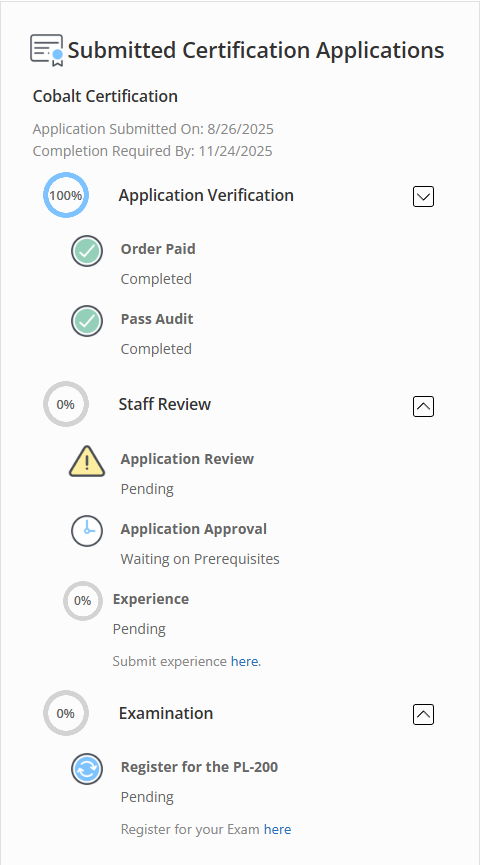
With Cobalt 4.1, the applicant portal introduces a visual certification progress tracker. This feature takes the guesswork out of the process by showing:
- Each step and requirement in the certification journey
- A completion percentage for quick reference
- Intuitive icons that highlight what’s done, what’s pending, and what’s next
After submitting an application, candidates see a progress tile on their homepage. It updates dynamically as requirements are met. Whether they’re submitting documents, logging experience, or scheduling exams, the tracker shows them exactly where they are and what’s left to complete.
For candidates, the experience feels modern and supportive. For organizations, it reduces routine support inquiries and creates a smoother, more professional candidate journey. Ultimately, it increases completion rates and reinforces the value of certification as a reliable, transparent process.
The post Certification Progress Visualization — Clarity for Every Candidate appeared first on Cobalt.
]]>The post Momentive Software Expands Association Management Software Portfolio with Acquisition of Cobalt appeared first on Cobalt.
]]>May 27, 2025 – ST. PETERSBURG, FL – Momentive Software, a leading provider of cloud-based software, services and payment solutions for purpose-driven organizations, today announced the acquisition of Cobalt, a provider of association and certification management software built on the industry-leading customer relationship management (CRM) platform Microsoft Dynamics 365. This is Momentive’s second acquisition under its new brand identity, after purchasing learning management software and services provider Blue Sky eLearn.
Software continues to play a vital role in helping mission-driven organizations operate more efficiently and achieve greater impact. By streamlining business processes, enhancing member engagement, managing certification workflows, and supporting successful fundraising events, technology empowers these organizations to focus more effectively on their core mission. Access to accurate and actionable data is also essential, providing the necessary insights to make informed decisions, evaluate mission effectiveness, and develop targeted initiatives that deliver measurable outcomes. With the right digital tools in place, nonprofits and associations are better equipped to create lasting, positive change within the communities they serve.
With this acquisition and the previous Blue Sky eLearn acquisition, Momentive Software continues on a fast track of innovation that is driven by the customer experience and integration via the Momentive Data Hub. The company’s comprehensive solution suite encompasses end-to-end tools that address the unique challenges of mission-driven organizations. It includes software that improves efficiency, strengthens member and donor engagement, and offers access to data that tracks and reports on mission impact, ensuring that purpose-driven organizations can adapt and thrive in a rapidly changing environment. The acquisition of Cobalt expands Momentive’s depth of AMS and certification offerings to help associations of any size successfully manage business processes, membership engagement, credentialing, events and their overall impact.
“Our focus is on how we can better support mission-driven organizations by simplifying the unique challenges they face, so they can concentrate on what matters most – advancing their mission and creating lasting impact,” said Mike Henricks, CEO of Momentive Software. “Acquiring Cobalt underscores Momentive’s dedication to making strategic technology investments that deliver greater value to our customers and partners. The Cobalt team is joining us at a great time in our journey, and I look forward to growing our team and continue delivering user-friendly solutions to help nonprofits and associations sustain mission growth. Our recent launch of Automated Payments for MIP Accounting and improved payment experience with Clover Go integration, coupled with these acquisitions forge the path in our ability to change the industry.”
Nearly 200 enterprise organizations leverage Cobalt’s Engagement Dynamics AMS and certification offerings to enhance membership and credentialing management and donor engagement, automate and streamline business processes, drive revenue and attract funding for greater community impact. The acquisition advances Momentive’s efforts to enhance its end-to-end solutions portfolio, offering customers a choice to meet their unique association management needs to maximize mission impact.
“It’s exciting for us to be joining Momentive Software at a time when they are leading the way in innovation to meet the evolving needs of associations by supporting their ability to make a significant impact and drive meaningful change,” said Russell Inman, CEO of Cobalt. “We share a customer first approach, and we look forward working together to create new possibilities for our customers and partners.”
Terms of the transaction were not disclosed. Sherrard Roe Voigt & Harbison, PLC (Nashville, Tennessee) acted as legal counsel to Momentive Software in the transaction.
About Momentive Software (formerly Community Brands)
Momentive Software amplifies the impact of over 30,000 purpose-driven organizations in over 30 countries. Mission–driven organizations and associations rely on the company’s cloud-based software and services to solve their most critical challenges: engage the people they serve, simplify operations, and grow revenue. Built with reliability at the core and strategically focused on events, careers, fundraising, financials, and operations, our solutions suite is bound by a common purpose to serve the organizations that make our communities a better place to live. Learn more at momentivesoftware.com.
Media Contact
Momentive Software | Heather Noll | [email protected]
The post Momentive Software Expands Association Management Software Portfolio with Acquisition of Cobalt appeared first on Cobalt.
]]>The post 2025 AMS Buying Guide appeared first on Cobalt.
]]>Get the 2025 AMS Buying Guide
This essential resource is full of our most transparent insider advice. Learn what AMS vendors are really thinking during your sales conversations, what you should ask AMS providers to ensure you’re getting the system you really need, and more. Download a free copy for your team today!

Let’s dive into what really matters when selecting an AMS that will serve your association for the next decade.
Three Principles That Drive Successful AMS Selection
After helping hundreds of associations through this process, we’ve identified three core principles that consistently lead to successful outcomes:
Don’t Shortcut the Process
Real due diligence requires investing time upfront. Talk with staff and members, research options thoroughly, and request demos from multiple providers. This foundation work pays dividends throughout your AMS lifecycle.
Engage Potential AMS Providers Authentically
The most successful implementations begin with transparency. Share your actual needs, budget constraints, and organizational challenges openly. This allows potential partners to propose tailored solutions rather than generic offerings.
Partner First, Software Second
Here’s a truth many vendors won’t admit … no AMS is perfect out-of-the-box. Every implementation requires some level of configuration or customization. Finding a vendor whose approach and communication style align with your organization often matters more than specific feature checkboxes.
Understanding Your AMS Options
The AMS marketplace typically breaks down into three distinct categories:
Entry-Level (Small Associations) Don’t let the name fool you – these solutions often provide comprehensive functionality. The limitation isn’t features but flexibility; they deliver solid performance within their designed parameters but offer limited customization options.
Mid-Market (Growing Associations) These platforms serve organizations that have outgrown entry-level systems. They offer enhanced features and significantly more robust customization and integration capabilities to support evolving needs.
Enterprise (Large Associations) Built on established CRM foundations like Salesforce and Microsoft Dynamics 365, these sophisticated platforms handle complex relationships and extensive data volumes with highly customizable frameworks.
2025 AMS Trends Reshaping the Industry
Based on our ongoing work with associations and technology partners, we’re tracking three significant trends:
AI Integration Beyond the Buzzwords Artificial intelligence has moved past marketing hype to deliver real value through predictive analytics for membership trends, personalized content delivery, and automation of routine administrative tasks.
Member-Centered Experience Design Modern platforms prioritize the member journey through intuitive online communities, personalized digital experiences, and mobile-first design that meets members where they are.
Connected System Ecosystems The standalone AMS is disappearing. Today’s solutions must seamlessly integrate with your entire technology stack – from marketing automation to accounting systems – creating a unified data environment that eliminates silos.
Three Pitfalls That Derail AMS Projects
We’ve seen these common mistakes repeatedly compromise otherwise promising AMS implementations:
Inadequate Needs Assessment Organizations that rush through evaluating staff and member requirements inevitably struggle with adoption. We recommend creating a dedicated task force to methodically document daily workflows, pain points, and member expectations before evaluating vendors.
The “RFP Blast” Approach Distributing RFPs to numerous vendors creates an overwhelming evaluation burden and often drives away premium providers. Instead, conduct initial demonstrations with 5-10 vendors, then invite only your top 3-5 candidates to submit detailed proposals.
Skipping the “Reverse Demo” Beyond standard vendor presentations, insist on a session where you demonstrate your current system usage to potential partners. This 1-2 hour walkthrough of your daily operations provides crucial context that helps vendors tailor their solution appropriately.
Building an Effective AMS Task Force
One step that consistently separates successful AMS implementations from problematic ones is the creation of a well-structured AMS Task Force. This cross-functional team becomes the backbone of your selection process and implementation strategy.
Your task force should represent diverse perspectives from across your organization. At minimum, include representatives from:
- Leadership/Executive Team: To provide strategic direction and decision-making authority
- Membership Team: To advocate for member experience and engagement requirements
- Finance Department: To ensure accounting integration and financial reporting needs are addressed
- IT Staff: To evaluate technical requirements and integration capabilities
- Daily AMS Users: To represent the practical, day-to-day operational requirements
When assembling your task force, look beyond titles. Seek out your organization’s “power users” – those staff members who have deep knowledge of current processes, regardless of their position. Often, administrative staff who use the system daily have invaluable insights that higher-level managers might miss.
Once formed, your task force should:
- Document current processes before discussing new solutions. Understanding your existing workflows creates a baseline for evaluating new systems.
- Identify pain points and inefficiencies in your current system. These become critical evaluation criteria for potential replacements.
- Prioritize requirements into “must-haves” versus “nice-to-haves.” This distinction helps focus your selection process on what truly matters.
- Develop member personas to ensure the new system will serve different segments of your membership effectively.
- Create evaluation criteria that will be used consistently across all vendor demonstrations.
The investment in a well-organized task force pays dividends throughout your AMS journey – from more targeted vendor evaluations to smoother implementations and higher adoption rates. Remember, your task force members will become your internal champions, helping drive acceptance across the organization when the new system goes live.
What AMS Vendors Aren’t Telling You
As an AMS provider ourselves, we believe in transparency about how the industry works:
Pricing Models Vary Dramatically Implementation quotes can be structured very differently between vendors. Take time to understand exactly what each proposal includes and excludes to make meaningful comparisons.
Data Migration Determines Success Review data migration specifications carefully in every proposal. Vendors who underestimate this critical component or shift excessive responsibility to your team are creating future problems. Remember: even the best system fails with flawed data.
Quick Proposals Signal Trouble Comprehensive implementation estimates require careful analysis. When vendors ask minimal questions or deliver proposals quickly, that’s suspect. They likely don’t understand your requirements – which typically leads to challenges during implementation.
Customization vs. Integration Decisions Associations using their current AMS for extended periods often accumulate numerous customizations. When evaluating new systems, you’ll need to decide between customizing the new platform or integrating specialized solutions. While we generally recommend integration, customization remains appropriate in specific scenarios.
Get the 2025 AMS Buying Guide
This essential resource is full of our most transparent insider advice. Learn what AMS vendors are really thinking during your sales conversations, what you should ask AMS providers to ensure you’re getting the system you really need, and more. Download a free copy for your team today!
Final Words of Wisdom
As you embark on your AMS selection journey, keep these proven recommendations in mind:
- Leverage Peer Knowledge: Connect with similar associations to learn from their experiences rather than starting from scratch.
- Begin Earlier Than You Think: Selection through implementation typically takes 12-24 months – start well before your current contract expires.
- Invest Appropriate Time: This decision impacts your association for 7-10 years – the process deserves thorough attention.
- Practice Radical Transparency: Share comprehensive information with potential partners to receive tailored, realistic proposals.
- Prioritize Partnership Fit: Cultural alignment and communication style often determine implementation success more than technical specifications.
Connect with an AMS Expert
We understand associations and the needs you have throughout the process of researching, selecting, and implementing new membership management software. Wherever you are in your AMS search today, we can help you find clarity about your options and take the next steps with confidence.

The post 2025 AMS Buying Guide appeared first on Cobalt.
]]>The post 2025 Association Trends in Credentialing appeared first on Cobalt.
]]>Watch the full version of Weber and Capistran’s webinar: Top 5 Credentialing Trends for Associations to Consider in 2025.

Quickly Getting Past the AI Buzz for Credentialing
AI is clearly still dominating headlines across industries. But the credentialing sector has emerged as a group of early adopters with practical, value-driven implementations. Unlike many industries still searching for meaningful AI applications, credentialing organizations have found natural fits for this technology, particularly in test development and administration.
One of the biggest use cases is how organizations develop and validate test questions. AI is also making it easier to detect potential biases, and even proctor online examinations. However, this implementation comes with important considerations. One of the toughest challenges right now is how to develop comprehensive AI policies that address ethical use, human oversight, and copyright considerations. For accredited programs, it’s crucial to ensure AI usage aligns with accreditation standards.
The key to successful AI integration lies in finding the right balance between automation and human expertise. While AI can enhance efficiency and reduce bias, human review remains essential for maintaining the integrity and validity of credentialing programs.
We’re Not Done with Diversity, Equity, and Inclusion
DEI has emerged as a fundamental consideration in credentialing, moving beyond surface-level compliance to become a core component of program validity and relevance. This focus manifests in multiple ways:
Organizations are recognizing that DEI isn’t just about social responsibility—it’s about ensuring their credentials maintain relevance and value in an increasingly diverse professional landscape. When credentials are perceived as fair and inclusive, they gain greater industry acceptance and provide more value to certificate holders.
Microcredentials: Small Investments with Big Potential for Associations
We’ve been talking about [microcredentials] for many years … in the credentialing space … We found this out through a training needs analysis survey of our membership this past summer: … people don’t have time to take longer courses or prepare for larger kinds of commitments of time or money. They want kind of quick hits in terms of recognition for skills earned so they can show their employer or their potential employer things like that. — Pam Weber
Microcredentials represent a significant shift in how organizations approach professional development and recognition. These focused, specialized credentials offer several advantages:
For Associations
For Professionals
One of our clients, the Pharmacy Technician Certification Board, has really embraced microcredentials. There are so many specialties within the pharmacy industry, so having some specialty credentials around that has been a boon for them — and a really good way to highlight people’s different areas of expertise. So it’s not just a moneymaker, but something that also helps with career advancement. — Chris Capistran
The keys to associations implementing successful microcredential programs lies in market research and industry alignment. You have to work closely with employers and industry stakeholders to identify high-value skills and knowledge areas that warrant specific recognition.
Digital Credentialing: Beyond Basic Badges
Digital credentialing has evolved far beyond simple digital badges to become a sophisticated ecosystem of verifiable professional achievements. Modern digital credentials leverage technologies like blockchain to provide tamper-proof verification and real-time validation.
Some of the true value of digital credentials lies in their metadata—the rich information they contain about the achievement, including:
However, organizations must strike a careful balance in their digital credentialing strategy. While digital badges and credentials offer convenience and verifiability, their value can be diminished if they’re awarded too freely. Strategic implementation should focus on meaningful achievements that provide real value to credential holders and employers.
Continuous Learning is Becoming the New Normal
The traditional model of credentialing renewal—often involving bulk continuing education credits submitted every few years—is giving way to more dynamic continuous learning approaches. This shift reflects the reality of today’s rapidly evolving professional landscape, where staying current requires ongoing engagement.
Modern continuous learning programs often feature:
This approach offers several advantages:
Takeaways and What’s Next for Associations and Credentialing
It’s the changing professional needs that continue to drive the rapid changes in the credentialing industry. The association teams who successfully adapt to these changes an adopt trusted, secure credentialing systems have something timely and increasingly valuable to offer their members.
What will it take for associations to make the leap and keep up with everything that’s changing around credentialing?
For organizations looking to develop or update their credentialing programs, the key is to leverage the extensive expertise available in the credentialing community. Organizations like the Institute for Credentialing Excellence (ICE), Certification Network Group (CNG), and the American Society of Association Executives (ASAE) provide valuable resources and networking opportunities, while experienced consultants can help navigate the complexities of program development.
As we move forward, the focus should remain on creating and maintaining credentials that provide real value to professionals and their employers. By embracing these trends while maintaining high standards for quality and integrity, credentialing organizations can ensure their programs remain relevant and valuable in an ever-changing professional landscape.
The post 2025 Association Trends in Credentialing appeared first on Cobalt.
]]>