Published07/03/2026 às 22:19


95 people reacted to this.
 41Liked
 11Amei
 1Haha
1Haha
 17Uau
17Uau
 15Sad
15Sad
 10grr
10grr
| ouça este conteúdo | readme |
In the Gobi Desert, China replaced unsuitable trees with thatched roofs, hardy shrubs, solar panels, and precision planting, reducing wind force, trapping dew and rain, stabilizing shifting dunes, and creating an ecological recovery that went from sounding like propaganda to becoming a fertile, concrete landscape once again.
No Gobi DesertThe crisis ceased to be merely a hostile landscape and transformed, over decades, into a direct threat to agriculture, transportation, water, and human habitation. In the 1970s and 1980s, desertification advanced more than 3.000 km² per year, burying villages, blocking railways, destroying crops, and pushing millions of people into a state of environmental displacement within China itself.
It was in this context that a seemingly ridiculous idea began to take shape. Instead of focusing solely on large trees or expensive construction projects, workers started burying dry straw in the sand in geometric shapes. What seemed like improvisation turned into ecological engineering.…and what seemed like waste became a base for retaining moisture, blocking the wind, and… restore stability the dunes that previously moved uncontrollably.
When sand ceased to be a local problem.
]]>
News Blog

By A Representative
A proposal by the Karnataka State Policy and Planning Commission (KSPPC) to construct a 350-kilometre-long ‘green wall’ across five districts in North Karnataka has drawn sharp criticism from a senior power and climate policy analyst, who has urged the state government to prioritise protection of existing natural forests over launching what he termed a “grandiose and uncertain” afforestation initiative.
The planning panel recently recommended building a green corridor from Belagavi to Bidar to check desertification in the arid and semi-arid regions of North Karnataka. The proposal envisions a continuous stretch of plantations cutting across five districts as a climate adaptation measure.
In a detailed representation dated February 25 and addressed to the Deputy Chairperson and Chairperson of the Commission—who also serves as Chief Minister—Shankar Sharma, a Karnataka-based Power and Climate Policy Analyst, questioned both the ecological rationale and implementation feasibility of the project.
While acknowledging that the proposal may increase green cover in some districts, Sharma argued that large-scale “green wall” models have had limited proven success globally and within India. He expressed concern that such projects often rely on monoculture plantations, suffer from low sapling survival rates beyond 10–15 years, and face weak long-term protection mechanisms. He also cited what he described as the state’s poor track record in forest conservation and compensatory afforestation, suggesting that authorities have struggled to safeguard even existing forest lands.
Instead of a linear plantation belt, Sharma recommended strengthening decentralised social forestry initiatives across taluks, towns and cities, with an emphasis on drought-resistant, native species that require minimal water and support biodiversity.
A major thrust of the representation focuses on forest diversion in the ecologically sensitive Western Ghats, a UNESCO World Heritage region and the origin of many of Karnataka’s rivers. Sharma argued that with nearly 70% of Karnataka officially classified as arid or semi-arid and over half marked as drought-prone, preserving natural forests in the Ghats should be the state’s top ecological priority.
He noted that Karnataka’s total forest and tree cover currently stands at about 23%, well below the 33% target set under the National Forest Policy. According to him, the figure has not exceeded 26–28% for decades, even as successive governments have permitted diversion of forest lands for infrastructure and energy projects. Sharma claimed that project proposals under various stages of approval in the Western Ghats could result in the felling of over 20 lakh trees.
In his letter, Sharma highlighted several major projects that allegedly involve diversion of forest land, including the proposed 2,000 MW Sharavati Pumped Storage Project in the river valley, which he said could affect around 400 acres of tropical rainforest; a 1,500 MW pumped storage project in the Varahi river valley involving forest land within wildlife sanctuaries; a 1,500 MW project in the Malaprabha river catchment area reportedly requiring felling of over 50,000 trees; the Mekedatu balancing reservoir project involving more than 10,000 acres of forest land, including significant portions within a wildlife sanctuary; and diversion of forest land in the Kali region for a 400 kV power transmission line.
Sharma contended that many such projects are either non-essential or have feasible alternatives that would require little or no forest diversion. He specifically advocated consideration of Battery Energy Storage Systems (BESS) as an alternative to large pumped storage projects in ecologically sensitive zones.
Linking the debate to climate change, Sharma argued that loss of natural forest cover is often the first step toward desertification. He warned that if deforestation continues unchecked, even parts of the Western Ghats could face long-term ecological degradation. He called for a holistic review of the green wall proposal in light of projected climate risks and the state’s rising electricity demand. Rather than investing thousands of crores in what he described as a vague project, he urged the government to prevent diversion of existing high-value forests and apply rigorous cost-benefit analysis to all major infrastructure proposals.
As a more sustainable strategy, Sharma recommended a time-bound plan to raise Karnataka’s overall forest and tree cover to 33% within the next 8–10 years through district-level afforestation programmes tailored to local ecological conditions. He also requested that the Commission convene discussion sessions involving civil society groups, environmental experts and energy planners to deliberate on biodiversity protection, freshwater management and the state’s future energy pathway. Two discussion papers have reportedly been submitted to support informed deliberations.
There was no immediate response from the Commission or the state government to the concerns raised. The green wall proposal is expected to figure in upcoming policy and budget discussions, even as environmental groups signal that the debate over balancing development, energy security and ecological preservation in Karnataka is likely to intensify in the weeks ahead.
]]>Published : Sunday, 8 March, 2026 at 7:30 PM Count : 254


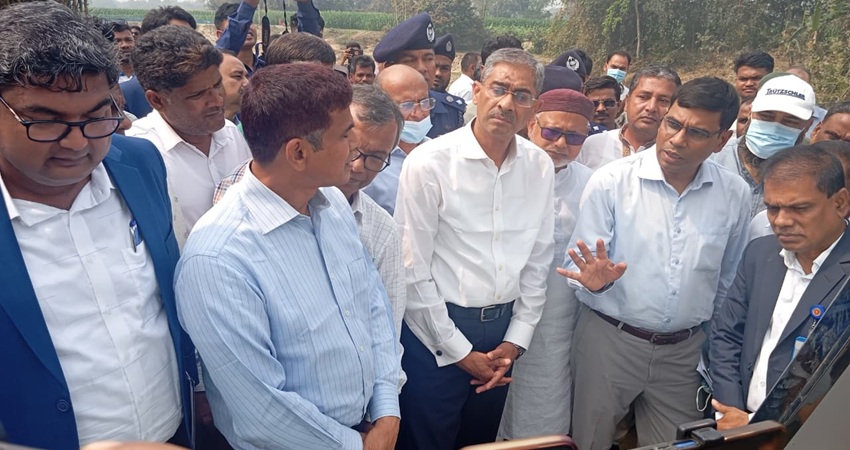
Water Resources Minister Md Shahid Uddin Chowdhury Anee has stated that the government will protect country from the threat of desertification by implementing a nationwide canal excavation program and ensuring proper water conservation.
He made the remarks while speaking to journalists during a visit to inspect the Balrampur Sahapara canal in Dinajpur’s Kaharol upazila on Sunday afternoon.
The minister said that under the canal excavation program, rivers, canals and water bodies covering about 20,000 square kilometres across the country will be re-excavated. The initiative aims to conserve water resources and improve irrigation facilities for agriculture.
He also informed that the official inauguration of the canal excavation program will be held on March 16, 2026, and will be inaugurated by Prime Minister Tarique Rahman. The program will be launched simultaneously across the country.
According to the minister, the re-excavation of the Balrampur canal in Kaharol will bring around 6,000 acres of agricultural land under cultivation, benefiting local farmers and strengthening agricultural production in the area.
]]>Once seen as unstoppable, northern China’s deserts are now being reclaimed by forests, sprawling solar farms and even tropical fruit plantations. While officials hail it as a triumph, how durable is this green transformation? Genevieve Woo sits down with correspondent Tan Si Hui to discuss the scale of China’s long-running anti-desertification drive, the people on the front lines and the trade-offs involved. Highlights: 00:56 What is anti-desertification? 02:25 People living in China’s deserts 07:00 Why some are leaving – and some are willing to stay 08:55 Growing fruit in the middle of a desert 11:09 It’s not just about planting trees. It’s about livelihoods. 15:06 Why climate change could derail everything 16:39 Will they be on track to meet their 2050 goal?
]]>By Joshua Hawkins – March 8, 2026 9:17 am EST
Calvin Chan Wai Meng/Getty Images
Over the past 60 years, scientists in China have been working on a project that could change how we approach the ongoing risks of desertification throughout the world. The idea is to take sandy, desert areas and then transform them into places where fertile soil can finally exist again. The benefit is two-fold. Not only would it create more fertile soil in those areas, but it would also increase the strength of the soil against erosion.
When you think about deserts, the first thing to spring to mind is likely the most iconic sandy place on our planet, the Sahara Desert. While humanity may have actually helped slow the desertification of the Sahara and places like it, it’s clear that the problem hasn’t been solved, as arid areas continue to erode and become drier. That’s why the Chinese are taking action, particularly in the Tengger and Kubuqi Deserts in the north of the country.
Finding ways to improve soil quality and slow erosion has been a key goal for Chinese scientists over the past several decades. In fact, a study published in the journal Soil Biology and Biochemistry in 2020 actually looked at a process that scientists have been using for over 60 years now. That process relies heavily on what researchers refer to as induced biological soil crusts (IBSCs), which basically act as barriers to protect soil and slow erosion, not only by trapping nutrients within, but also by holding everything together even in some of the harshest of winds.
Cyanobacteria, an ancient glue
Ray Hugo Tang/Shutterstock
There are three primary types of IBSCs used by scientists, lichen, moss, and cyanobacteria. And in this particular study, researchers have been using cyanobacteria alongside the other IBSCs to try to understand how the process can work, and how effective it is at slowing or even stopping desertification and erosion. The key to the process is what they call a soil “seed” which helps to form an artificial crust over the sand. Not only does this lay the groundwork for plants to actually grow in the sandy regions, it also helps to hold the sand together, by effectively gluing it down.
Cyanobacteria is estimated to be at least 3.5 billion years old, and may have once been responsible for turning Earth’s oceans green. However, what makes this bacteria so important to the researchers is its ability to provide much-needed resources like nitrogen to the soil around it. This allows the soil to soak up important resources it wouldn’t otherwise have ready access to naturally.
Beyond providing the soil with the needed resources to be considered “fertile,” the cyanobacteria has provided a good stopping point for erosion by dampening the effect of wind storms in the areas in which the process has been utilized. The glue-like layer that the cyanobacteria form helps to keep sand in place long enough for the roots of the plants to take hold, which in turn helps to hold the sand and surrounding dirt in place even better.
How cyanobacteria helps stop erosion
Dynamoland/Getty Images
However, desertification goes much further than just these deserts, especially as the fight against climate change continues. And with more desert-like areas spreading, scientists have been looking for ways to not only give plants in those affected areas a new lease on life, but also a way to stop the continued erosion of those areas entirely.
By turning the soil into something more fertile, the researchers also helps to stop the sand from being picked up by dust storms. This not only protects the plants from the harsh effects of those storms but also helps to limit further erosion in the areas where the cyanobacteria have been spread. It’s a joint effort by the plants and the bacteria, which seems to be working.
Over time, the crust that the researchers placed has gradually evolved, changing from a simple cover of microbes and bacteria to one that is made up of lichens and patches of moss. This provides a stronger surface against dust storms. What is also extraordinary, is that the researchers found when comparing areas where cyanobacteria had been added to the microbial layers, the crust growth was expedited by years. A process that used to take decades to properly take hold could now be achieved in a matter of just two to three years.
]]>Mongolia and UNCCD unveil thematic days five months ahead of COP17 in Ulaanbaatar
Ulaanbaatar/Bonn, 17 March 2026 — Five months ahead of the seventeenth session of the Conference of the Parties (COP17), Mongolia and the United Nations Convention to Combat Desertification (UNCCD) today unveiled the thematic days and action agenda for the conference, to be held in Ulaanbaatar from 17–28 August 2026 under the theme ‘Restoring Land, Restoring Hope.’
Delegates from UNCCD’s 197 Parties will join scientists, businesses and land stewards in Ulaanbaatar for COP17 to advance action for healthy land as a cornerstone of global resilience, stability and prosperity.
Scaled-up finance for land restoration and drought resilience, alongside the future of the world’s rangelands and pastoralists, will shape the COP17 agenda, with the conference aimed at translating global commitments into measurable progress on the ground. As the first of the three Rio Conventions COPs—on land, biodiversity and climate—meeting this year, UNCCD COP17 will set the pace for the rest of 2026 and beyond.
UNCCD Executive Secretary Yasmine Fouad said: “Over the past decade, countries have committed to restoring one billion hectares of degraded land by 2030 and more than 70 now have national drought plans. COP17 is our opportunity to turn these commitments into real change on the ground. That means mobilizing finance at scale for land restoration and drought resilience, investing in preparedness rather than costly crisis response and recognizing rangelands as vital assets for economies, cultures and climate. The thematic days and action agenda for COP17 reflect a simple truth: healthy land underpins food security, water availability, economic resilience and stability everywhere —and the time to act is now.”
Mongolia’s Minister of Environment and Climate Change, Batbaatar Bat, stated: “For the Government of Mongolia, the Riyadh–Ulaanbaatar Action Agenda is a strategic, participatory framework to mobilize citizens, businesses, cities and all stakeholders to restore critical ecosystems, including rangelands and agricultural lands. It drives investment in the land–water nexus and strengthens drought resilience. We call on leaders from all sectors to join us at COP17 to accelerate solutions for resilient economies and societies.”
To help focus discussions and mobilize action, COP17 will feature thematic days dedicated to key priorities on the global land and drought agenda. These will bridge political decisions with real-world solutions, making everyone part of a powerful Action Agenda to advance land restoration and drought resilience. The four thematic days planed for COP17 are:
- Finance (24 August): Restoring land at scale requires around one billion US dollars per day, but current funding falls far short. Finance Day will bring together ministers of finance, development banks and the private sector to help close this gap and unlock large-scale investment.
- Water (25 August): By 2050, three out of four people worldwide are projected to face drought. Water Day will advance proactive drought risk management and strengthen cooperation on the integrated management of water resources.
- Land and People (26 August): Rangelands support the livelihoods of some 500 million people but remain among the most undervalued ecosystems globally. Land and People Day will place the voices of land stewards at the heart of discussions, highlighting the perspectives of Indigenous Peoples, local communities, pastoralists, youth, women and civil society organizations.
- Food Systems and Soil Health (27 August): By 2050, the world will need to produce at least 50 per cent more food, even as food systems remain the leading driver of land degradation globally. Food Systems and Soil Health Day will connect soil restoration to food security, agricultural productivity and the livelihoods of farming communities.
“The thematic days of COP17 are designed to focus global attention where it matters most — on the solutions and partnerships needed to restore land, strengthen drought resilience and support the people who take care of our ecosystems. By bringing together governments, scientists, businesses, local and pastoralist communities as well as Indigenous Peoples around shared priorities, we aim to move from commitments to implementation and help ensure that healthy land continues to sustain communities, economies and ecosystems for generations to come,” added Executive Secretary Fouad.
For media enquiries
UNCCD Press Office: [email protected]
Notes to editors
More information about UNCCD COP17 is available from: https://www.unccd.int/cop17
Applications for the UNCCD COP17 Land and Drought Media Reporting Fellowship are open until 15 April 2026: https://www.unccd.int/news-stories/stories/open-call-unccd-cop17-media-reporting-fellowship
About UNCCD
The United Nations Convention to Combat Desertification (UNCCD) is the global vision and voice for land. We unite governments, scientists, policymakers, private sector and communities around a shared vision and global action to restore and manage the world’s land for the sustainability of humanity and the planet. Much more than an international treaty signed by 197 Parties, UNCCD is a multilateral commitment to mitigating today’s impacts of land degradation and advancing tomorrow’s land stewardship to provide food, water, shelter and economic opportunity to all people in an equitable and inclusive manner.
]]>China’s outline of the 15th Five-Year Plan (2026-2030) places consolidating and expanding the ecological security barrier in a prominent position, with a focus on advancing desertification control through the Three-North Shelterbelt Forest Program (TSFP) — the world’s largest afforestation project.
The new five-year outline, approved by Chinese lawmakers on Thursday, calls for comprehensively advancing the three landmark projects of the national shelterbelt program in northeast, north and northwest China.
The three projects refer to the goal that by 2030, the country aims to achieve significant desertification control results through the TSFP in three regions: the Hexi Corridor-Taklimakan Desert region, the two sandy lands of Horqin and Hunshandake, and the areas near the meandering bends of the Yellow River.
To track progress, the outline establishes concrete environmental benchmarks for the TSFP zone by the end of the decade: forest and grassland coverage is targeted to reach 40.9 percent, 67 percent of treatable sandy land is to be brought under control, and the comprehensive vegetation coverage of sandy areas is expected to hit 22 percent.
Zhang Huaiqing, chief scientist of the Chinese Academy of Forestry, emphasized the need to adopt a more scientific approach to desertification control.
“As the TSFP enters a critical phase in its all-out campaign to tackle the toughest challenges, the philosophy behind science-based desertification control has evolved — from simply enhancing vegetation coverage to promoting comprehensive ecological restoration across affected areas. We are now utilizing technologies including remote sensing, artificial intelligence, and big data to make our efforts more precise and efficient. Sci-tech empowerment is helping us consolidate this ‘Green Great Wall’ in north China,” he said.

China to extend “green wall” in battle against desertification
]]>First published: 09 March 2026
ABSTRACT
Soil erosion strips away fertile topsoil, posing challenges to global ecology and food security, particularly in the karst regions of southern China. However, research on soil erosion risk in karst areas under the dual influences of climate and land use changes remains scarce. Specifically, the question of how soil erosion risk in karst regions will change probabilistically in the future has not been effectively addressed. This study proposes a novel assessment framework from a risk probability perspective. Within this innovative framework, we employ Bayesian Belief Networks (BBN) to link future Land Use and Land Cover (LULC), climatic factors, and soil erosion management. By integrating various SSP-RCP scenario data through Geographic Information Systems, we assess the probabilistic risk of soil erosion induced by future climate and socio-economic changes. BBN sensitivity analysis reveals that LULC, slope, and precipitation are key factors influencing soil erosion. Compared to 2020, the probability of various soil erosion levels under four future scenarios generally shows a declining trend, with the greatest decrease observed under the SSP126 scenario. High-risk areas for future soil erosion are primarily concentrated in the northern and western parts of the study area. Spatial planning for soil erosion control should focus on adjusting the key states of key variables for different soil erosion risk levels in these regions to reduce the likelihood of soil erosion risk. This study provides a promising visual decision-making tool for developing climate-adaptive soil erosion risk management plans and broadens new perspectives for future soil and water conservation planning from a risk probability standpoint.
]]>- Arab Times
- 16 Mar 2026
HOHHOT, March 15, (Xinhua): On the northern edge of Maowusu, the fourth largest sandy area in China, Zhang Zhanjiang, a veteran local farmer, found himself faced with unfamiliar modern planting techniques.
He did not expect that tree planting nowadays would involve such precise work. Overhead, drones were buzzing as they conducted monitoring and transportation of supplies, while on the ground, planting machines had largely replaced manual labor, with technicians using remote sensing data to track planting results.
Zhang was among more than 100 beginners to join the local afforestation campaign this spring in a township of the city of Ordos, north China’s Inner Mongolia Autonomous Region.
Watching a technician’s demonstration, Zhang crouched on the sand to adjust depth and angle in employing the planting machine to drill suitable holes for inserting branches of a desert plant, Salix mongolica, while also tamping the sand with his shovel.
He then went to check on his work via remote sensing data displayed on the technician’s tablet computer. Zhang carefully studied data such as soil moisture and made fine adjustments to planting spacing based on the feedback, as these factors can affect the survival rate of the seedlings.
“In the past, this sandy area produced shifting sand. Nothing planted could survive,” he said, while gesturing at the freshly planted rows of willow cuttings. “Now we’re learning how to fix it.”
As the group of trainees operated machines for planting, drones airlifted bundles of straw, which were to be used in weaving grass checkerboards to protect small trees.
This, notably, is the front line of China’s 2026 campaign to fight desertification. As the country marked its 48th National Tree Planting Day on Thursday, the National Greening Commission reported that China’s forest and grass coverage rate has exceeded 56 percent thanks to its greening efforts.
Meanwhile, local authorities in desertification-prone areas have embarked on this year’s greening drive armed with mobilized manpower, decades-long experience of afforestation innovations and intelligent equipment.
China is among the countries with the most severe desertification globally, with its desertified areas mainly located in northwest, north and northeast China, which are dubbed the “three-north.”
The country in 1978 initiated its landmark ecological project, the Three-North Shelterbelt Forest Program, which has become the world’s largest afforestation endeavor. Scheduled to be completed by 2050, the program has the aim of rehabilitating and greening desert-prone lands and desertified areas in the “three-north.”
To boost these efforts, Inner Mongolia, ranking top among the country’s provincial-level regions by accomplishing a total of 123 million mu (about 8.2 million hectares) of ecological construction and 66.88 million mu of sand prevention and control during the 14th Five-Year Plan period (2021-2025), plans to continue three major afforestation campaigns this year, expected to green a total area of 40 million mu, said Wu Guoqing, deputy director of the regional bureau of forestry and grassland.
One of the battlefields is located in the Alxa League, where smart equipment is playing an important role in the fight. Drones disperse grass seeds and seedlings from the air, while largescale desert control machinery traverses the sandy terrain.
Tong Keting, director of the rural revitalization office in Alxa High-Tech Zone, said that by combining mechanical operations and manual work, vegetation coverage in the targeted area has been increased from less than 5 percent to over 40 percent, while annual sediment inflow into rivers had decreased from 500,000 tonnes in 2016 to 300,000 tonnes in 2025, demonstrating tangible results.
]]>Michael Olugbode in Abuja
The federal government has intensified efforts to halt worsening desertification and environmental degradation across northern Nigeria with the validation of nine Strategic Catchment Management Plans aimed at restoring degraded landscapes and protecting water resources.
The plans are being developed under the Agro-Climatic Resilience in Semi-Arid Landscapes Project (ACReSAL), a major climate resilience initiative supported by World Bank and implemented by Federal Ministry of Environment, in collaboration with other key federal agencies.
At a high-level validation workshop in Abuja, government officials, development partners, and environmental experts warned that millions of Nigerians in the northern region were already grappling with severe ecological pressures that threatened food security, livelihoods, and community stability.
Nigeria’s Minister of Environment, Balarabe Lawal, said the environmental crisis confronting the region was no longer theoretical but a daily reality for farmers, herders, and rural communities.
Lawal said advancing deserts, erratic rainfall patterns, shrinking water bodies, and degraded farmlands were steadily eroding agricultural productivity and deepening poverty across the 19 northern states and the Federal Capital Territory (FCT).
“These are not abstract environmental concerns. They threaten the food on our tables, the income of our farmers and herders, and the stability of our communities,” Lawal said.
According to the minister, the ACReSAL project represents Nigeria’s most comprehensive response yet to the growing environmental emergency, bringing together Federal Ministry of Environment, Federal Ministry of Water Resources and Sanitation, and Federal Ministry of Agriculture and Food Security to drive coordinated climate resilience interventions.
He explained that the Strategic Catchment Management Plans formed the backbone of the intervention, providing a detailed roadmap for restoring degraded landscapes, protecting watersheds, and strengthening sustainable resource management across vulnerable ecosystems.
Representing Minister of Water Resources and Sanitation, Joseph Utsev, Director of Hydrology, Abohwo Ngozi, said the workshop was convened to review and validate the final nine catchment management plans developed under the ACReSAL framework.
Ngozi stressed that the plans will guide integrated management of critical water catchments, while addressing growing environmental threats facing communities across northern Nigeria.
She warned that desert encroachment, degraded soils, and unpredictable rainfall were already undermining food production and threatening the livelihoods of millions of farmers and pastoralists.
“As we meet here in Abuja, millions of citizens across the northern states are battling advancing deserts, unreliable rains, and shrinking water bodies,” she said.
“These are real pressures that threaten the food on our tables and the economic survival of our rural communities,” she added.
National Coordinator of ACReSAL, Abdulhamid Umar, represented by Shettima Adams, said the validation exercise marked a critical step in translating years of environmental planning into concrete actions on the ground.
Umar disclosed that the nine catchment plans covered Malenda, Oshin-Oyi, Gurara-Gbako, Aloma-Konshisha, Benue-Mada, Sarkin-Pawa-Kaduna, Zungur-Gongola, Gaji-Lamurde, and Hawul-Kilange.
According to him, the catchments cut across several states, including Adamawa, Bauchi, Benue, Borno, Gombe, Kaduna, Kano, Katsina, Kebbi, Kogi, Kwara, Nasarawa, Niger, Plateau, Taraba, Yobe and Zamfara, as well as FCT.
Umar stated that the catchment boundaries were designed around ecological systems rather than political borders to ensure more effective environmental management.
He said the plans were developed through extensive consultations with communities, farmers, and other stakeholders to ensure that the solutions reflect the realities on the ground.
“These plans are more than policy documents. They capture the voices of communities and identify the real environmental challenges they face — deforestation, eroding soils, shrinking water sources and overgrazed lands,” he said.
He added that the framework will guide future investments in tree planting, climate-smart agriculture, improved water management, and other rapid-impact restoration initiatives designed to deliver immediate benefits to rural households.
In a goodwill message on behalf of the World Bank Task Team Leader, Joy Iganya Agene, the bank’s representative, Henrietta Alhassan, said the validation of the catchment plans was a major milestone in efforts to strengthen climate resilience across Nigeria’s fragile semi-arid landscapes.
Alhassan emphasised that effective catchment management was fundamental not only for environmental protection but also for sustaining livelihoods, stabilising ecosystems and supporting long-term economic development.
“The work being validated here reflects the voices of communities, the insights of experts, and the commitment of government and development partners to safeguarding these critical landscapes,” she said.
Alhassan reaffirmed World Bank’s commitment to supporting Nigeria in advancing integrated catchment planning, climate adaptation, and sustainable management of natural resources as the country moves towards implementation of the strategies.
]]>Across northwestern China, a desert long described as empty is showing measurable ecological change. New research examining the Taklamakan Desert finds rising vegetation cover and seasonal carbon uptake linked to decades of state-backed planting efforts. The findings suggest parts of this hyperarid region are beginning to function as a modest carbon sink. Scientists analysed satellite records alongside ground observations and detected stronger summer photosynthesis and declining net carbon emissions in restored zones. The work connects these trends to the country’s vast shelterbelt programme, often called the Great Green Wall. While uncertainties remain about scale and durability, the data indicates that even extreme drylands can respond to sustained ecological engineering, with possible implications for carbon management and desert control.
]]>State planning commission recommends three-km-wide forest shield to protect five vulnerable district
Chandrappa M &Vijay Jonnahalli
For environmentalists, desertification is a dreadful term. And even more, if it happens over a large
For environmentalists, desertification is a dreadful term. And even more, if it happens over a large chunk of land in the world’s most populous country. Yes, if the current trend is not bucked, a vast
]]>(Xinhua) 14:52, March 13, 2026
HOHHOT, March 13 (Xinhua) — On the northern edge of Maowusu, the fourth largest sandy area in China, Zhang Zhanjiang, a veteran local farmer, found himself faced with unfamiliar modern planting techniques.
He did not expect that tree planting nowadays would involve such precise work. Overhead, drones were buzzing as they conducted monitoring and transportation of supplies, while on the ground, planting machines had largely replaced manual labor, with technicians using remote sensing data to track planting results.
Zhang was among more than 100 beginners to join the local afforestation campaign this spring in a township of the city of Ordos, north China’s Inner Mongolia Autonomous Region.
Watching a technician’s demonstration, Zhang crouched on the sand to adjust depth and angle in employing the planting machine to drill suitable holes for inserting branches of a desert plant, Salix mongolica, while also tamping the sand with his shovel.
He then went to check on his work via remote sensing data displayed on the technician’s tablet computer. Zhang carefully studied data such as soil moisture and made fine adjustments to planting spacing based on the feedback, as these factors can affect the survival rate of the seedlings.
“In the past, this sandy area produced shifting sand. Nothing planted could survive,” he said, while gesturing at the freshly planted rows of willow cuttings. “Now we’re learning how to fix it.”
As the group of trainees operated machines for planting, drones airlifted bundles of straw, which were to be used in weaving grass checkerboards to protect small trees.
This, notably, is the front line of China’s 2026 campaign to fight desertification. As the country marked its 48th National Tree Planting Day on Thursday, the National Greening Commission reported that China’s forest and grass coverage rate has exceeded 56 percent thanks to its greening efforts.
Meanwhile, local authorities in desertification-prone areas have embarked on this year’s greening drive armed with mobilized manpower, decades-long experience of afforestation innovations and intelligent equipment.
China is among the countries with the most severe desertification globally, with its desertified areas mainly located in northwest, north and northeast China, which are dubbed the “three-north.”
The country in 1978 initiated its landmark ecological project, the Three-North Shelterbelt Forest Program, which has become the world’s largest afforestation endeavor. Scheduled to be completed by 2050, the program has the aim of rehabilitating and greening desert-prone lands and desertified areas in the “three-north.”
To boost these efforts, Inner Mongolia, ranking top among the country’s provincial-level regions by accomplishing a total of 123 million mu (about 8.2 million hectares) of ecological construction and 66.88 million mu of sand prevention and control during the 14th Five-Year Plan period (2021-2025), plans to continue three major afforestation campaigns this year, expected to green a total area of 40 million mu, said Wu Guoqing, deputy director of the regional bureau of forestry and grassland.
One of the battlefields is located in the Alxa League, where smart equipment is playing an important role in the fight. Drones disperse grass seeds and seedlings from the air, while large-scale desert control machinery traverses the sandy terrain.
Tong Keting, director of the rural revitalization office in Alxa High-Tech Zone, said that by combining mechanical operations and manual work, vegetation coverage in the targeted area has been increased from less than 5 percent to over 40 percent, while annual sediment inflow into rivers had decreased from 500,000 tonnes in 2016 to 300,000 tonnes in 2025, demonstrating tangible results.
On the other fringe of Maowusu, which falls in northwest China’s Ningxia Hui Autonomous Region, the frozen sand is now being slowly warmed by a spring breeze, and volunteers can be seen plowing the fields and ferrying saplings, ahead of a massive artificial planting campaign scheduled for late March.
Guan Yuanbo, deputy head of the Yanchi bureau of forestry and grassland, said that in Yanchi County, which is perched in the desert, planting time should take into account factors such as soil moisture and the evaporation rate.
“Transplanting trees at this time minimizes harm to the tree’s structure. Once planted, the saplings can swiftly ‘awaken’ and adapt to their new surroundings,” he explained.
Guan is among many who have witnessed the transformation of the local ecosystem thanks to trees. Back in the 1970s and 1980s, there was a saying in Yanchi: “A wind a year, from spring till winter.” About three-quarters of the local population lived in desert areas back then, with their daily lives and work severely impeded by the harsh environment.
More than 2 million mu of the county’s sandy terrain has now been reclaimed via lush greenery, and 1.5 million mu of degraded grassland has been fully restored. The number of sandstorm days per year has also plummeted from 54 a decade ago to fewer than 10 today.
The improved ecological environment has also yielded economic benefits for this county. Yanchi has ingeniously developed pellet feed derived from caragana shrubs to support its primary industry, which is sheep farming. Each year, these products meet the needs of 210,000 sheep, generating an annual output value of 110 million yuan (roughly 16 million U.S. dollars). Additionally, the county has seen a surge in visitors, with eco-tourism emerging as a fresh catalyst fueling its economic growth.
According to Guan, Yanchi has set a target to green an additional 76,600 mu of land in 2026. “Situated at a turning of the Yellow River, Yanchi occupies a strategic location in shielding the river and its environs from sand and wind erosion,” he said. “Only through persistent tree-planting and greenery creation can we effectively safeguard our mother river.”
(Web editor: Zhang Kaiwei, Liang Jun)
]]>By James Wong
The farmers and scientists I spoke to are trying to solve a very important problem: how can agriculture reduce its environmental impact, and perhaps even one day be used to reverse climate change?
When you consider the scale of the agricultural industry, which covers 1.5 billion hectares (5.8 million sq miles) of the planet’s surface, you can sometimes lose sight of what is at its heart: plants.
Cutting down rainforests and digging up peatlands to create swathes of new farmland might be a significant driver of climate change, and needs to be stopped, but innovating with crops can help to mitigate some of this.
Crops, like all plants, draw carbon dioxide (CO2) from the atmosphere during the process of photosynthesis, which they use to generate stores of energy from sunlight. Some of that carbon is fixed in the soil, where it will remain if left untouched. Plants are part of a once balanced system that saw carbon cycling in and out of natural reservoirs in the land, sea, atmosphere and living things. So, could farmers redress the balance by using the vast amount of crops and land needed to feed us; as carbon sinks that capture and store carbon in the ground?
I asked Paul Hawken, the author behind Project Drawdown, which has modelled the 100 most substantive solutions to reversing global warming, why we need to rethink the carbon cycle. He says it is a misunderstanding to think of carbon as pollution – rather, it is part of a cycle that is out of balance.
The carbon stored on Earth vastly outweighs the carbon in our atmosphere. There is more than three trillion tonnes of carbon in farmlands, grasslands, forests, mangroves and wetlands – that is four times as much carbon as in the atmosphere, Hawken told me, adding that if we are able to increase stored carbon by 9% on Earth, just on the land, we will have sequestered all the carbon that humans have emitted since 1800. Hawken raises an interesting point: terms like ”carbon offsetting” and ”net zero” are commonly used, but to reverse the effects of climate change we will need to go beyond that by storing more carbon than we emit into the atmosphere.

James Wong visits farms at the cutting edge of research (Credit: BBC)
And that doesn’t include carbon stored in marine and aquatic systems. While visiting Portugal, I saw another innovator planting kelp forests to store carbon – and perhaps one day be used as a food source. Kelp, the largest species of seaweed, is a type of photosynthesising algae and not a plant.
And what if we could make cows green too? Cow methane is not a problem with the animal, but the microbes in its stomach. You can suppress this microbial activity by adding small quantities of charcoal or seaweed to the cow’s diet – which has no impact at all on our health or the health of the animal.
By cutting open sections of their leaves, kelp spores can be harvested, dried, cooled and sprayed onto gravel, which is then dropped into the sea. These stones, coated in kelp spores, then seed an underwater forest which only takes a few months to grow, quickly working to sequester carbon on the seabed.
Kelp is also a threatened species, so this work goes some way to protect biodiversity, too.
Kelp forests might look a little different to traditional farms, but seaweed is a natural source of the important EPA and DHA omega-3s, which are otherwise only found in animals. Kelp could one day be a very important source of low-climate impact nutrition.
Returning to dry land for a moment, I also had the privilege of visiting researchers at the University of Illinois’s Ripe project, which is experimenting with the way plants grow. Photosynthesis is a process that has evolved over millions of years. So, it’s strange to think that we could make the process better, but that is exactly what Lisa Ainsworth, the deputy director of Ripe, and her colleagues are trying to do.
The team here are modifying the genetics of plants to try to address more than one weakness in the way they photosynthesise – from boosting plants’ efficiency, to increasing reaction times when they transition from shade to sun, and even altering the density of the leaves.
For example, in a field of plants, only the uppermost leaves photosynthesise at maximum efficiency. The leaves lower down are in the shadow of the leaves higher up, and so they receive less sunlight and don’t photosynthesise as well. In fact, the lowest leaves might even contribute to carbon emissions (like animals, plants also respire, breathing in oxygen through their leaves and ”exhaling” carbon dioxide).
By making the uppermost leaves less dense, more light will penetrate lower down, meaning a greater surface area will be photosynthesising efficiently – that’s the idea, anyway. The advances the team are making are still works in progress.
But it is an exciting time to be trying to fix the carbon cycle. There are opportunities for farmers to increase the amount of carbon that’s stored in soil by taking a close look at what we grow and how we grow it.
In recent times, the term carbon offsetting has been used a lot, but what I know from speaking to experts is that it can be misused. The goal should be to leave as much carbon in the ground as possible, rather than to pay to continue to pollute as before, and plants will be key to achieving this.
* James Wong is an ethnobotanist and presenter of the BBC’s Follow the Food series.
]]>, Kangning Xiong1,*
, Anjun Lan2,*
, Min Zhang1
, Liheng You1
, Jifeng Zhang1
and Zhenquan Zhong1
1
School of Karst Science, State Key Laboratory Cultivation Base for Guizhou Karst Mountain Ecology Environment, Guizhou Normal University, Guiyang 550025, China
2
School of Geography and Environmental Science, Guizhou Normal University, Guiyang 550025, China
*
Authors to whom correspondence should be addressed.
Microorganisms2026, 14(3), 556;https://doi.org/10.3390/microorganisms14030556
]]>https://www.zmescience.com/ecology/china-microbe-seeds-stop-desertification/
]]>2 Min. 24. February 2026 Benedikt Schlotmann Bookmark

Transforming desert sand into fertile land. A technique has been developed in China that makes this possible in the long term. However, certain conditions must be met for this to work. Water is essential even for this technique.
Sand annually destroys many square kilometers of fertile land. The global spread of deserts (desertification) is a serious environmental issue. Human interventions such as overgrazing, deforestation, and intensive agriculture promote desertification.
The Chinese Academy of Sciences (CAS) has now developed a method to turn desert back into fertile soil. At least when the basic prerequisites are met. The results were published in the journal Soil Biology and Biochemistry (via sciencedirect.com).
Cyanobacteria form a soil crust on desert sand that can retain nutrients
What have the researchers done? Chinese experts have applied special, lab-cultivated cyanobacteria to sandy areas in desert regions, which were covered with straw nets in a checkerboard pattern.
These microbes form a so-called “biological soil crust”: They envelop sand grains with a slimy sugar film that hardens and holds the grains together like glue.
Within about 10 to 16 months, a stable, thin crust develops on the surface, significantly reducing sand erosion and better retaining nutrients and water in the topsoil. This creates a precursor to fertile soil, on which grasses and shrubs have a much better chance of growing and surviving.
What is special about this? Normally, the natural development process of such layers in nature takes decades. Chinese research now shows that this decades-long development process can be shortened to about a year with visible success: Loose sand becomes a stable surface that can subsequently be utilized (via indiandeferenceview.com).
Where can the technique help? The new method can curb sand erosion, build up topsoil, and support reforestation and greening projects in arid regions. According to researchers, it could significantly reduce desertification. More organic matter in the soil means potentially more carbon storage and fewer dust and sand storms (via earth.com).
What limitations does the system have? The method works primarily where there is at least occasional rainfall. Lack of precipitation or extreme heat can significantly hinder the formation and activity of the crusts. Therefore, the method does not work well in the deepest parts of the Sahara.
Long-term climatic damage or human interventions such as heavy overgrazing or deforestation cannot be compensated for with this technique.
]]>By Dan Lewis
As of this writing, the Gobi Desert in northern China/southern Mongolia is about half a million square miles (1.3 million km2) in area.
Yes, that’s “as of this writing” — because the Gobi Desert is growing.
Due to something called “desertification,” about 1,400 square miles (3,600 km2) of China’s otherwise arable land is turned into desert each year, as the Gobi creeps further and further south.
To make matters worse, winds often pick up the sand, blowing it toward the densely populated areas in China, resulting in immense dust storms. (Here’s a picture of a car windshield after Beijing’s 2006 dust storm season.)
The desert in China is expanding — kinda rapidly, too. Image by Frederic J. Brown/AFP/Getty Images.
But China is fighting back. With trees.
In 2001, the BBC reported on what has been called, colloquially, the “Great Green Wall,” a not-so-subtle reference to the Great Wall of China, but this “wall” is being made of trees.
The wall is part of a decades-long afforestation project that began in 1978 but isn’t expected to be completed until 2050, and it hopes to ultimately make areas currently too arid for habitation or agriculture into fertile homes to both.
A tree-planting exercise on the edge of the Gobi Desert in 2007. Image by Peter Parks/AFP/Getty Images.
One of the early phases was a forced participation drive — in 1981, China passed a law that required its citizens over the age of 11 to plant three to five trees each year — but in 2003, the country turned toward government works.
The Great Green Wall plan called for the creation of a 2,800 mile-long (4,480 km) belt of trees along the Gobi’s border.
As Wired reported a year later, this was no small task:
“To build the wall, the government has launched a two-pronged plan: Use aerial seeding to cover wide swaths of land where the soil is less arid and pay farmers to plant trees and shrubs in areas that require closer attention. A $1.2 billion oversight system, consisting of mapping and land-surveillance databases, will be implemented. The government has also hammered out a dust-monitoring network with Japan and Korea.”
A photographer looks out over the trees at the encroaching desert. Image by Peter Parks/AFP/Getty Images.
Whether it’s working, though, is another question.
One Chinese news agency, citing the State Forest Administration, reported in 2007 that “more than 20 percent of the lands affected by desertification in the project areas have been harnessed and soil erosion has been put under control in over 40 percent of the areas that used to suffer soil erosion in the past.”
And in 2014, the Daily Mail echoed these results, reporting that “a study says the measures are working, despite previous criticism.”
However, that same year, the Economist noted that many of the trees are withering in the dry, hot conditions and concluded the opposite.
Finally, there’s the middle ground, which the BBC reported in 2011: The afforestation process is working — but it’ll take 300 years to reclaim the lands the Gobi has already taken.
Either way, China intends to push forward. Given its original timetable, they have 35 years left to figure it out.
Dan Lewis runs the popular daily newsletter Now I Know (“Learn Something New Every Day, By Email”). To subscribe to his daily email, click here.
]]>European policymakers must act swiftly to prevent “industrial desertification,” panelists warned at a EUROMETAL roundtable, emphasizing that current protections for primary steel are insufficient and urging the EU to extend safeguards to downstream manufacturers and steel derivatives.
At the “Are we risking the EU industrial desertification?” roundtable, held by the European steel body as part of its event in Milan, Italy, Feb. 26, speakers also called for a shift from a cost-focused debate to strategies that stimulate demand.
Across Central and Southern Europe, industry representatives said the risk was no longer theoretical, with plant closures and a shift from domestic production to import-and-assemble models becoming more frequent. Concerns focused on gradual erosion, adding that once value chains were relocated, they rarely returned.
The EU’s Carbon Border Adjustment Mechanism, originally conceived as an environmental tool to prevent carbon leakage, is now widely viewed in the steel sector as an increasingly complex trade defense instrument. While intended to level the playing field by pricing carbon on imports, its heavy administrative burden and uneven product coverage risked distorting trade flows rather than stabilizing them, speakers said.

Safeguards and CBAM
Panelists noted that both the EU’s safeguard measures and CBAM have mixed effects. While intended to protect the industry, the new safeguard regime that is reducing quotas and CBAM that adds extra costs to the steel imports are inadvertently opening the door to steel derivative imports from outside Europe.
Franco Felisa, a representative of Electromechanics Synergy Network, highlighted the severe challenges facing European electromechanical companies. “Every day, we are losing a significant part of our market,” Felisa said, attributing the problem to a substantial gap in input costs rather than quality. He pointed out that Chinese raw materials are “at least 50%” cheaper than European equivalents, making it impossible for EU companies to compete with state-subsidized imports.
Piotr Sikorski, President of the Polish Union of Steel Distributors, described the deindustrialization trend as “already visible” in Poland and across Europe. “There is no single week when I don’t have a call telling me another client is out of business,” Sikorski said, warning that fragmented, small downstream companies remain largely unrepresented in policy discussions, leaving a critical blind spot.

Demand Stimulation Needed
Tayfun Iseri, Chairman of YISAD, the Turkish flat steel user, trader, and producer association, challenged the notion that the crisis was solely cost-driven. “We have a demand problem. It’s not only a cost problem,” Iseri said, urging policymakers to focus on boosting demand.
Tommaso Sandrini, head of Assofermet Acciai, the Italian distributors and re-rollers association, warned that delays in addressing steel derivatives could result in irreversible losses. “We don’t have time … In two years, a significant part of downstream manufacturing will never come back,” he said. He cautioned that once production relocates outside Europe, it is unlikely to return, risking not only plant closures but also the erosion of business models, with companies shifting to importing and assembling rather than manufacturing.
Platts, part of S&P Global Energy, assessed Feb. 26 domestic hot-rolled coil in Northern Europe at Eur670/mt ($791/mt) ex-works Ruhr and in Southern Europe at Eur665/mt ex-works Italy, both stable day over day. It assessed imported HRC in Northern Europe at Eur515/mt CIF Antwerp and in Southern Europe at Eur505/mt CIF S. Europe, both unchanged.
Author: Annalisa Villa
]]>
by News Desk

Listen
Scientists in northwestern China are using solid cyanobacteria-based “soil seeds” to transform arid desert areas into fertile land, forming artificial biological soil crusts that stabilize sand dunes and create conditions suitable for plant growth. Developed by the Shapotou Desert Research and Experiment Station under the Chinese Academy of Sciences, this innovative method reduces the time for desert sand fixation from decades to just a few years.
The soil seeds are made by mixing cultured cyanobacteria with organic matter and fine particles, producing a paste-like inoculum that can survive harsh desert conditions. This approach overcomes previous limitations, such as the need for pressurized spraying equipment, and allows for large-scale application in inaccessible areas, promoting faster and more efficient desert rehabilitation.
Incorporated into the new Three-North Shelterbelt Program, the technique is expected to rehabilitate over 5,000–6,600 hectares of desert over the next five years. This breakthrough represents a significant advancement in environmental science, offering a Chinese solution to global desertification challenges while supporting sustainable development and climate resilience.
]]>Chinese scientists develop soil “seed” technology to accelerate desertification control
New cyanobacteria-based innovation aims to stabilise dunes within three years
Text copied from https://tvbrics.com/en/news/chinese-scientists-develop-soil-seed-technology-to-accelerate-desertification-control/
Scientists in northwest China have developed an innovative soil “seed” designed to combat desertification by rapidly forming artificial biological soil crusts in arid regions, significantly reducing the time needed to stabilise shifting sand dunes.
The breakthrough was achieved by researchers at the Shapotou Desert Research and Experiment Station, part of the Chinese Academy of Sciences. The solid cyanobacteria inoculum they created can shorten the natural sand fixation process from around a century to approximately three years.
According to Xinhua News Agency, a partner of TV BRICS, spreading the solid “seeds” across desert surfaces allows biological soil crusts to form once exposed to rainfall, creating a stable foundation for future vegetation growth.
Cyanobacteria play a crucial role in natural desert ecosystems by binding sand grains together and enhancing soil stability. However, earlier attempts to transplant laboratory-grown cyanobacteria into open desert conditions proved unsuccessful, as moving sand grains destroyed the fragile biofilm within days.
Inspired by natural rainfall patterns, the research team previously introduced a pressurised spraying technique, injecting cyanobacteria into gaps between sand particles. This method reduced crust formation time from roughly 15 years under natural conditions to one or two years, with survival rates exceeding 60 per cent. It also helped prevent dehydration from direct sunlight while taking advantage of the sand layer’s inherent water retention capacity.
Researchers achieved this by combining cyanobacteria solution with organic matter and fine particles in carefully controlled proportions to create a paste-like substance, later processed into solid form. The method, likened to mixing cement, requires precise ratios and stirring techniques to ensure optimal performance.
Over the next five years, the technology is expected to support the rehabilitation of between 80,000 and 100,000 mu (approximately 5,333 to 6,667 hectares) of desert land.
]]>As the 2026 United Nations Water Conference approaches, the preparatory meeting in Dakar, Senegal, marked a decisive step in bringing water back to the heart of the global agenda. On the sidelines of this meeting, Africa Renewal spoke with Dr Birguy Lamizana Diallo, Head of Global Policies, Advocacy and Regional Cooperation at the United Nations Convention to Combat Desertification (UNCCD).
Water must be available to all people, but it also has to be managed sustainably. How can this challenge be met when the resource is limited?
There is no life without water. It is the first thing we touch every morning—in our daily, cultural, and religious practices. There is no such thing as a “dry” activity. But water is a finite resource that circulates in a closed cycle. We therefore have to learn to manage it sustainably.
Sustainability means providing water in sufficient quantity and quality, while using it efficiently. This concerns agriculture, for example through more precise irrigation techniques, but also industry, cities, wastewater management and reuse. Sustainable Development Goal 6 had the merit, for the first time, of taking all these dimensions into account: access, quality, wastewater management, efficiency, and ecosystem protection.
The Dakar preparatory meeting made it possible to examine SDG 6 in all its complexity and to reflect on how public policies, technologies, and the various actors—including the private sector—can fully play their role.
What specific contribution does UNCCD bring to the global debate on water?
UNCCD is sometimes seen as the most discreet of the Rio Conventions, but it plays a fundamental role. There can be no thriving biodiversity without restored lands, and no climate resilience without soils capable of storing water and carbon.
Our mandate is to restore degraded land and support countries in achieving land degradation neutrality. Out of 197 Parties, the majority have committed to this path. Water security, disaster risk reduction, and the prevention of conflicts linked to resources depend directly on the health of the land.
The Dakar preparatory meeting was essential in underscoring this inseparable link between sustainable water management and sustainable land management, in view of the United Nations Water Conference [later in the year] in Abu Dhabi.

Birguy Lamizana Diallo is Head of the Global Policies, Advocacy and Regional Cooperation Unit (GPARC) at the United Nations Convention to Combat Desertification (UNCCD). © Cheikh Seye/UNIC Dakar
Financing remains a major obstacle, especially in the most vulnerable countries. How can this constraint be overcome?
Today, the private sector contributes only about 2% of financing for the water sector, and around 6% for land restoration. That is insufficient. States cannot do everything on their own. We need to mobilize all actors and show that restoring land and protecting water is not only a burden, but also an economic opportunity.
Land restoration, for example, can be a real economic model if the conditions are in place and risks are shared. Multilateral development banks have a key role to play in reducing risks and encouraging private investment. Water and land are inseparable: water flows over land, and there is no quality water without healthy lands covered with vegetation.
How can Indigenous Peoples and local communities be fully integrated into water decision-making processes?
These communities hold valuable traditional and ancestral knowledge. They understand water cycles, flood-prone areas, and the rhythms of floods and droughts. In regions such as the Inner Niger Delta, this knowledge has enabled people for centuries to live in balance with the environment.
At the United Nations Convention to Combat Desertification (UNCCD), we have gradually institutionalized this participation, notably through dedicated caucuses for women, local communities, and youth. Techniques such as zaï pits or half-moons, widely used in West Africa, show that this know-how works. Scientists then come to explain the mechanisms, but innovation often comes from the field.
We cannot move towards sustainable management of water and land without listening to and integrating these voices.

Donkey water cart. © Cheikh Seye/UNIC Dakar
You are recognized as a field-based professional with an exceptional journey, moving from scientific research to coordinating major international programmes. How does this path shape your approach to water and land issues?
My background is indeed rooted in several disciplines, and above all in extensive field experience and in dialogue between science, public policy, and local communities.
This path has enabled me to understand both the vertical dimension—the formation of soils, rocks, aquifers, underground resources—and the horizontal, multidimensional dimension of ecosystems, made up of interactions, symbioses, and links between living organisms, water, and land. We often think some components are inanimate, but in reality there is extraordinary life in soils and in water systems.
I worked as a geologist in mining, on resource exploration, then as an engineer on dams, irrigated areas, and boreholes. Later, my work on wetlands was a turning point. It allowed me to work in Djoudj National Park, the Saloum Delta, along the Senegal River, all the way to Diawling National Park and the Banc d’Arguin in Mauritania, but also in Cameroon, Mali, and the Inner Niger Delta. There, I understood how essential these ecosystems are—not only for fauna and flora, but also for the communities that depend on them.
All of this shapes an interdisciplinary and deeply human approach. When you engage with communities, practitioners, scientists, or decision-makers, you learn to put yourself in the other person’s place. This ability is essential for designing effective policies for managing water and land.
After many years of painstaking work trying to counter desertification, scientists in China appear to have found a way to turn sand into fertile soil.
That process can now be achieved in about 10 months, according to a new reports by Earth and Xinhua, which say that scientists used microbes grown in laboratories to help desert sand bond and create a thin crust that allows teams of workers to plant shrubs and grasses that can survive harsh winds and heat.
The Chinese Academy of Sciences has tracked the progress of trials near the Taklamakan Desert in Xinjiang to show how these surface crusts were able to stabilize the sand after 10 to 16 months.
ALSO SEE: Germany’s Merz Lands in Beijing, Seeking Closer Ties With China
Cyanobacteria – an ancient bacteria powered by sunlight – was the key ingredient. It is said to aid this process by binding the sand together and holding nutrients and more microbes, which can hold water near the surface (when it comes) and reduce evaporation.
Lichens and moss also later helped keep the crust intact and become more stable. These were important lessons in China’s battle to fight sandstorms and protect roads in the country’s arid northwest.
‘Seeding’ the desert with bacterial organic paste
Scientists said the “seed” that created the artificial soil crusts was cyanobacteria inoculum, and it was developed by the Shapotou Desert Research and Experiment Station, at the Northwest Institute of Eco-Environment and Resources.
“It is capable of shortening the time required for desert sand fixation from a century-long effort to an achievable three-year timeframe,” Xinhua reported on Tuesday (Feb 24).
“If you spread these [cyanobacteria] seeds on the desert surface, soil crusts will form when they are exposed to precipitation,” Zhao Yang, deputy head of the Shapotou station, was quoted as saying.
Cyanobacteria was injected into the sand, and aided by pressurized spraying of water, crusts formed in one to two years, instead of 15 years under natural conditions, it said, and had a survival rate of over 60%.
The team then experimented with mixing a cyanobacteria solution with organic matter and fine particles in specific proportions to create a paste-like inoculum.
“The process is similar to mixing cement, requiring the optimal ratio and stirring method,” Zhao said. “The solid inoculum has not only overcome the limitations of the spraying method but also greatly enhanced the feasibility of large-scale promotion.”
This technique has now been used in a substantial area in the new Three-North Shelterbelt Programme and is expected to rehabilitate between 5,300 to 6,660 hectares of desert over the next five years, the report said.
- Jim Pollard
Ivninder Pal Singh
Tribune News Service
]]>Written by Romario Pereira of Carvalho
Science and Technology – Published 05/02/2026
Research from Unicamp creates unprecedented model, identifies new desertification area in Ceará, and points to the phenomenon advancing beyond historically affected areas.
The advance of desertification in Brazil may be greater than indicated by currently available official maps. Doctoral research conducted at the Institute of Geosciences of the State University of Campinas showed that the combination of climate change and intensified human land use is expanding areas at risk, especially in the Northeast of the country.
The study was conducted by researcher Mariana de Oliveira, a member of a group that investigates how climate variations and human actions impact soils, vegetation, and water resources.
Based on this work, a specific model was created to estimate the risk of desertification under Brazilian geographical conditions, providing a more detailed understanding of the dynamics of the phenomenon.
]]>The plan reflects Vietnam’s sense of responsibility and efforts to contribute to the implementation of the United Nations Convention to Combat Desertification (UNCCD) and fulfil the international commitments to which the country is a party.
Preventing and combating desertification is identified as a key task, helping with nature and biodiversity conservation, sustainable management of forests, water and land resources, and improvement of people’s incomes and life quality. It also supports poverty reduction, stable settlement, and the integration of desertification control objectives with national, sectoral and local strategies, as well as the UN Sustainable Development Goals (SDGs).
By 2030, the plan aims to identify and map desertification-prone areas nationwide and by socio-economic region; expand the meteorological and hydrological monitoring network for observation, forecasting and early warning; and develop adaptive management plans to mitigate impacts of drought and land degradation. Targets include sustainable use of land and water resources, maintaining 3.5 million hectares of rice farming land, ensuring forest coverage of 42–43%, improving forest quality, and conserving wetlands.
By 2050, total degraded land is to account for no more than 40% of the country’s natural land area, with severely degraded land and that at high risk of desertification kept below 4.5%. Average incomes in desertification-affected areas are hoped to reach at least 50% of the national average.

Among region-specific measures, northern midland and mountainous areas will have eroded and leached land restored through reforestation, sustainable farming on sloping land and agroforestry.
The north-central region is set to rehabilitate arid and infertile land; conserve protection, coastal, special-use, and large-timber forests; form concentrated citrus fruit, tea, peanut, and sugar cane cultivation zones; develop drought-resistant crops; and upgrade irrigation infrastructure.
Meanwhile, the south-central coast and Central Highlands will prioritise natural forest protection, water-saving practices, high-tech agriculture, and crop restructuring to avoid natural disasters, droughts, and saltwater intrusion.
In the Red River Delta, southeastern, and Mekong Delta regions, efforts will focus on controlling salinity and acidification, expanding irrigation and coastal forests, upgrading reservoirs and dykes, enhancing inter-provincial coordination in operating irrigation systems to prevent saltwater intrusion, promoting intensive and high-technology farming and increasing high-quality rice cultivation, and stepping up climate-adaptive crop restructuring linked to processing and markets./. VNA

Published on:
09 Mar 2021, 8:44 am
Cultivated lands in India are in the grips of desertification. The country’s Green Revolution pockets are especially prone to the problem. The biggest threat of desertification emanates from the major crops of the Green Revolution — wheat and paddy.
Sardara Singh Johl, a Padma Bhushan-awardee agricultural economist and chancellor of Central University of Punjab, has suggested that if agricultural land in Punjab is to be protected from desertification, the best way is to shift wheat and paddy cultivation to 5 million hectares of land in the Indo Gangetic plains of Uttar Pradesh, Bihar and West Bengal
Johl’s mantra, unfortunately, doesn’t provide concrete measures to pause desertification. The senior agricultural economist should have counteracted Green Revolution which gave birth to the problem. Transferring a disease from one geographical area to the other is not a remedy because we do not know how to get rid of the causal agent of the disease.
Across the globe
The area most affected by desertification is the dry land, which alone tightens its screws on about 40 per cent of Earth’s land area. Dry land is home to more than 2 billion people worldwide.
Out of the world’s arid land, an area of about 12 million square kilometres is affected by desertification. About 10-20 per cent of dry lands are already degraded. The rapidly expanding desertification threatens more than a billion people living in dry land around the world.
Desertification is, in a sense, crawling of death on the land. The desert means a dead land. The death may not be permanent. For example, cultivated land dies almost every year or after every crop season when the nutrient reserves in the soil are used up.
With application of sufficient amounts of nutrients through chemical and mined fertilisers, the soil gets a new lease of life with the onset of a new harvest season.
Agricultural land is in the cruel clutches of desertification almost everywhere. In the long run, despite the huge amount of external inputs applied in agriculture, death on cultivated land will go on creeping, irreversibly and permanently.
After cleaning the forest, the process of desertification begins naturally but the growth of the process depends on the management of farming practices, such as tillage intensity, amounts of chemical fertilizers and pesticides applied, frequency of irrigation, soil fertility management, among other things. The greater the intensity of tillage and amount of agri-inputs, the higher the rate of desertification.
India’s ‘green’ death knell
Introduction of the dwarf wheat varieties developed by Norman Borlaug in Mexico in the 1960s in India’s agriculture sparked the process of desertification of the earth. The dwarf wheat crops of the Green Revolution licked the fertility of the soil in a few years.
Then, in the 1970s, the International Rice Research Institute in the Philippines dispatched short-duration dwarf rice varieties. The new rice varieties fueled the processes of desertification.
With very high fertilizer, chemical and water consumption capacity, the dwarf crop varieties of the Green Revolution have two contrasting attributes to offer to humanity: food security and desert.
In the agronomic activities of the green revolution, the soil is so manipulated that its erosion and death are inevitable. Desertification, soil erosion and land degradation are interlinked. As a result of soil erosion and land degradation, natural systems also become victims of desertification.
An anthropogenic disaster
All deserts in the Earth’s geological history had emerged thanks to natural factors. But in our contemporary world, the process of desertification is virtually anthropogenic. Desertification associated with agriculture, in fact, is a deep concern that we need to focus on and chalk out workable strategies to prevent the process and reclaim desert lands into fertile fields.
Desertification begins with human activities involving removal of vegetation from the surface of the land, or deforestation and uncontrolled grazing by animals. The Green Revolution agricultural system has given a boost to the process.
There are many more developmental dimensions behind the soil erosion and land degradation. Deforestation, of course, has become a necessary evil for socio-economic progress in our times.
In the adoption of policies and schemes such as agriculture, road construction, urbanisation, industrialisation, which are important development signs of modern socio-economic development, the desolation of forests seems to have become an imperative.
The essence is that our contemporary world cannot live without devouring the earth’s forests. That is, the desertification of the Earth is at the core of today’s civilization
Agriculture, without which our existence would be at stake, is the root cause of desertification. Modern agriculture has no connection with forests. Chemical fertilisers, various types of chemicals and pesticides that destroy soil microbes and other organisms, alter the structure of the soil and destroy its flora and fauna.
Intensive tillage with heavy machinery and equipments, tendency of growing monocultures, overexploitation of soil and soil pollution are the processes turning fertile land into unproductive desert. Excessive and frequent irrigation, an essential need of the Green Revolution crops, salinises the soil, causing death of the soil in the long run.
Desertification takes only the upper fertile layer of the land into its clutches. The lower layers of the land are replete with nutrients.
Sometimes the nutrients in the upper layer may be abundant, but due to some factors, such as the high proportion of salts in the soil, soil water and dissolved nutrients do not become available to plants and vegetation does not grow on such soils.
According to data from the World Food Federation, 3.1 per cent of land in the world is affected by salinisation and 3.4 per cent of land by excess of sodium.
The Asia-Pacific region is at the forefront of these figures, with 6.3 per cent and 8 per cent of land salinisation and sodium excess, respectively. More than 9 million hectares of land in India is suffering from salinisation.
Regaining fertility
Soil fertility is a ‘byproduct’ of the microbial decomposition processes, and microorganisms in the soil thrive on nutrients in organic matter. The food chain of all organisms inside the soil is based on organic matter produced by photosynthesis.
Organic matter flows through the roots, leaves and other parts of the plant into the soil and from there into life via foods. In the soil, such bacteria also thrive, which fix atmospheric nitrogen into soil, making it available to the plants. But chemical fertilisers and agrochemicals destroy these bacteria further accelerating desertification.
To regain the fertility of the soil, we have to enhance the capabilities of photosynthesis. Although grain crops, like all green plants, do photosynthesis, but since they cannot absorb nutrients in the deeper soil layers, the desertification process cannot be stopped.
Unlike these, trees absorb nutrients from the depths of the earth and bring them to the upper surface of the soil, thus protecting the land from becoming a desert. Adoption of agro-forestry, raising legumes, recycling of nutrients, nurturing soil with organic fertilizers, expanding the biodiversity base of agriculture, proper management of soil water, and afforestation and reforestation on larger and larger areas of the land would prove vital for preventing desertification of the earth.
]]>LANZHOU — A study by Chinese and German researchers has shed light on the link between groundwater balance and plant water-use efficiency in desert ecosystems, offering valuable insights for ecological restoration and combating desertification.
The study indicates that vegetation restoration in arid drylands is an effective solution for preventing desertification, according to the Northwest Institute of Eco-environment and Resources of the Chinese Academy of Sciences.
The study, a joint effort by researchers from institutions in China and Germany, was published in the journal Water Resources Research on Nov 17.
Drylands often show a negative water balance due to low rainfall and high evapotranspiration, and water becomes the main limiting factor for plant survival and growth.
“Groundwater is an important water source in desert ecosystems. The water balance of groundwater ecosystems in drylands is closely related to plant growth and determines the sustainability of ecological restoration,” said Zhang Zhishan, a researcher at the Chinese institute and leader of the study.
“Groundwater is therefore crucial for ecological restoration works that are mainly based on vegetation reconstruction, as well as for desertification control efforts,” he said, adding that appropriate replanting strategies play a pivotal role in preventing desertification.
The researchers conducted the study based on the automatic simulation monitoring system for water balance in the Shapotou Desert Research and Experiment Station in Northwest China’s Ningxia Hui autonomous region.
The researchers used 12 lysimeter units, large-scale instruments for measuring evapotranspiration, to systematically quantify water balance components and plant growth dynamics across different desert ecosystems from 2019 to 2023.
These lysimeters were filled with wind-blown sand from the Tengger Desert and represented a range of conditions, from bare sand to plots planted with single-species shrubs and semi-shrubs, as well as mixed plantings.
The researchers then assessed plant growth performance, using water-use efficiency as the primary evaluation metric.
The study showed that groundwater recharge transformed the changes in soil water storage to a new water balance state, increasing the actual evapotranspiration and seepage. Linear mixed-effects models also showed that groundwater had a significant effect on the water balance components and enhanced plant growth performance.
Groundwater-dependent desert ecosystems exhibited higher actual evapotranspiration compared to groundwater-independent ones, according to the study.
It also highlighted that semi-shrubs play a key role in desert ecosystems with or without groundwater, providing a direct basis for the recommended plant configuration strategy for those desert ecosystems with groundwater.
“Our new study revealed that vegetation reconstruction in arid deserts is an effective solution for preventing desertification. Among which, a reasonable plant configuration method is the key to ensuring the long-term sustainability of ecological restoration and reconstruction,” Zhang said.
Xinhua
]]>
Chinese researchers are working on a massive geoengineering project of “artificial crusting.” They are using vast amounts of blue-green algae to turn barren dunes into stable, reclaimable land.
According to the South China Morning Post (SCMP), this method marks the first time microbes have been used on such a massive scale to reshape natural landscapes.
Known to have existed on Earth for billions of years, cyanobacteria are photosynthetic microbes found in almost every environment, from oceans to soil.
Developed at the Shapotou Desert Experimental Research Station, part of the Chinese Academy of Sciences (CAS), this innovative “biocrust” technology is a product of years of research in China’s Ningxia region.
This cyanobacteria-based crust, which can withstand winds of 36 km/h (22mph), is slated to reclaim up to 6,667 hectares in Ningxia over the next five years.
Interestingly, this low-cost, high-efficiency technology could serve as a blueprint for global desert restoration and climate change mitigation.
Reclaiming deserts
Deserts are notoriously difficult to reclaim. Most plants cannot survive the abrasive, shifting nature of sand.
However, researchers at a research station in Ningxia have found a way to glue the desert floor together by deploying specially selected strains of cyanobacteria.
SCMP explained that this creates an “ecological skin.” These microorganisms can endure extreme heat and bone-dry conditions for years.
Upon hydration from even slight rain, the cyanobacteria activate and proliferate, secreting a biomass-rich matrix that binds sand particles. This biological soil crust immobilizes shifting dunes and establishes a nutrient-rich substrate essential for the successional development of plant life.
In the natural world, a stable desert crust can take 5 to 10 years to form. This new blue-green algae technique cuts that time to just one year for the formation of soil crust.
Solid seed method
The process was perfected through trial and error. Initially, scientists tried spraying liquid algae, but the method was too reliant on heavy infrastructure.
After screening over 300 species, researchers identified seven key cyanobacterial strains as the foundation of the project. These strains were blended with organic matter into a nutrient-rich paste and cast into hexagonal molds.
The result is a specialized “solid seed” — a portable block designed to survive the journey into the deep desert and thrive upon arrival.
Once dispersed across the parched landscape, these engineered blocks lie in wait for moisture; the moment it rains, they burst into growth, knitting the sand together into a resilient, protective crust.
This technology is no longer just a laboratory experiment. Ningxia is preparing to apply the technique to over 6,000 hectares of desert in the coming years.
The geoengineering project is part of China’s ambitious “Great Green Wall” to fight desertification. It moves beyond traditional tree planting to address the root cause of desertification: shifting sands.
These strategies are now being scaled globally to Africa and Mongolia.
With the recent completion of a massive 1,856km (1,153-mile) sand control belt in Inner Mongolia, China continues to advance core technologies to fulfill its long-term mission of halting desertification and restoring arid landscapes on a planetary scale.
]]>Faten Derouez,
Adel Ifa,
Abdullah Al Shammre,
Mohammad Zayed &
Mahmaod Alrawad
Sci Rep (2025). https://doi.org/10.1038/s41598-025-34168-z
Abstract
In this study, based on the sample covering 1990–2023, we use ARDL methods to test potential driving forces of Desertification (DS), including key socioeconomic and climatic determinants in Saudi Arabia: renewable energy consumption (RE) , economic growth (EG) , CO₂ emissions(CO2E), temperature anomaly(TA) and vegetation index(VI). To address the lack of time-series-integrated data studies in Saudi Arabia, this article uses ARDL and VECM models to capture short-run dynamics and long-run equilibrium. The findings indicate that a 1% increase in renewable energy results in an average reduction of 0.1003% in desertification . In contrast, improvements in the vegetation index have been more effective and could reduce desertification by up to 8.7%.Conversely, improved economic growth and increased CO2 emissions significantly aggravate land degradation. These results illustrate the need to reconcile Vision 2030’s development aims with environmental protection. Recommendations on policy: Increase the proportion of renewable energy to 50% of total energy consumption by 2030; expand afforestation to restore 10% of degraded land per year; work toward universal environmental protection for major development projects at a rate commensurate with the scale and potential impact. .
]]>Chinese scientists are working on soil restoration and developing biotechnological plates capable of stabilizing arid lands and generating biological crusts in record time.
The advance of degradation of arid lands has found a new and powerful technological adversary.
A team of researchers from the Chinese Academy of Sciences has designed a method of soil restoration with cyanobacteria blocks, a kind of prefabricated “ecological skin” that allows transforming sand dunes into stable and biologically active lands in just twelve months, a process that, under natural conditions, would take decades to complete.
The science behind artificial biological crusts
The core of this innovation, led by the Northwest Institute of Ecology and Resources, lies in the biological soil crusts (BSC). These are organic communities composed of cyanobacteria, algae, mosses, and lichens that act as a protective shield in arid areas.
Unlike traditional sand fixation methods —such as straw barriers or chemical stabilizers—, these blocks use the intrinsic ability of cyanobacteria to secrete extracellular polymeric substances (EPS).
These substances function as a natural glue that binds loose sand particles, creating a consolidated structure that resists wind erosion and improves moisture retention.

A paradigm shift: From natural waiting to technical installation
Historically, the formation of these natural crusts is an extremely slow process and vulnerable to climatic conditions.
The Chinese technique breaks this limitation by creating biotechnological algae plates cultivated under controlled conditions. These blocks are installed on the ground as if they were tiles or a protective “skin“, eliminating the initial phase of vulnerability of traditional spray sowings.
Field test results have shown that this soil restoration with cyanobacteria blocks achieves coverage and stability equivalent to that of a mature natural crust in just one year.
In addition to stopping the movement of dunes, these blocks initiate a virtuous cycle: they increase the fixation of nitrogen and carbon in the soil, facilitating other plant species to colonize the area in the medium term.
Ecological impact and future viability
This system not only stands out for its speed but also for its resilience. The structure created by scientists from the Key Laboratory of Desert Environment Rehabilitation allows the artificial ecosystem to withstand extreme aridity conditions while recovering critical ecosystem functions.
By acting as a physical and biological barrier, it drastically reduces nutrient loss and promotes the microbiological biodiversity of the subsoil.
The implementation of this “ecological skin” represents a milestone in environmental engineering, offering a scalable and sustainable solution for countries facing the threat of desertification, a phenomenon that affects global food security and climate.
]]>
Dannie Pengin Beijing
Published: 7:15pm, 31 Dec 2025Updated: 7:46pm, 31 Dec 2025
Deserts are hard to reclaim because plants cannot survive on shifting sand, but scientists in northwest China are changing that – by dropping vast amounts of blue-green algae onto the dry terrain.
These specially selected strains of cyanobacteria can survive extreme heat and drought for long periods, according to China Science Daily on Thursday. When rain finally comes, they spring to life, spreading rapidly and forming a tough, biomass-rich crust over the sand. This living layer stabilises the dunes and creates the perfect foundation for future plant growth.
This is the first time in human history that microbes are being used on a massive scale to reshape natural landscapes. As the “Great Green Wall” – China’s massive multi-decade initiative to plant trees and fight desertification – expands to include efforts in Africa and Mongolia, the unprecedented geoengineering technology could one day transform the face of our planet.
This artificial “crusting” technique was developed by scientists at a research station in Ningxia Hui autonomous region, located in northwest China on the edge of the Tengger Desert, according to China Science Daily.
Ningxia has adopted the technique as part of its sand control strategy under the Great Green Wall. The technique is expected to be used on a massive scale to treat around 5,333-6,667 hectares (13,178-16,475 acres) of desert over the next five years.
It was developed over more than a decade of efforts by the Shapotou Desert Experimental Research Station, affiliated with the Chinese Academy of Sciences (CAS), in the city of Zhongwei in Ningxia.
Zhao Yang, the research station’s deputy director who led the team, told China Science Daily that they had enabled blue-green algae to accumulate on stable sand surfaces. It gradually bonded with soil particles to form a crust-like structure resembling soil clods – known to scientists as “cyanobacterial crusts”.
The crust serves as an “ecological skin” that covers the sandy terrain and is capable of withstanding winds of up to 36km/h (22mph).
Cyanobacteria are photosynthetic microorganisms that first appeared around 3.5 billion years ago. They can be found in nearly all natural ecosystems, including soil, freshwater and marine environments. Some species can produce toxins that harm people, animals or the environment.
It takes at least five to 10 years for a natural crust to form using traditional sand stabilisation techniques, according to the state-owned Science and Technology Daily.

09:35
How is China building a great green wall to protect itself from desertification
How is China building a great green wall to protect itself from desertification
The new blue-green algae method, in contrast, significantly speeds up this process, enabling the formation of soil crusts in around a year, greatly improving humanity’s ability to fight soil desertification.
Further Reading
China to power up world’s largest ‘super-cold air battery’ in the Gobi Desert
China’s quantum satellite can be hacked, Singapore-based scientist warns
China drafts Antarctica activities and environment law to protect interests
In 2010, Zhao learned from his supervisor that a type of cyanobacteria could produce soil when used in the desert. However, it took over a decade to fine-tune the technique.
During the early years, the main challenge was that the bacteria, which thrived in laboratory conditions, struggled to survive in the wild. In 2016, Zhao discovered that applying pressure to spray the cyanobacteria and forcing it into the gaps between sand grains could boost the survival rate to over 60 per cent.
However, this approach was later deemed unsuitable for large-scale use because of its reliance on electricity and road access.
This prompted Zhao to explore whether these biological crusts could be transformed into solid “seeds” for easier transport and dispersal, finally leading to a solid technique.
The team first selected seven cyanobacteria strains from over 300 species. Solutions containing blue-green algae were then mixed with organic matter and fine particulate matter to form a paste-like substance. This mixture was poured into moulds containing hexagonal grids, ultimately yielding seeds resembling soil clods.
“These soil blocks are not only easy to transport, but they also boast a very high survival rate,” Zhao told China Science Daily. When scattered across arid terrain, they grow rapidly after it rains and form stable soil crusts.
The Shapotou Desert Experimental Research Station, established in 1955, is affiliated with the CAS Northwest Institute of Eco-Environment and Resources. As China’s first comprehensive sand control research station, it is a vital platform for desert research in China and an internationally renowned desert science research base.
The research station is well-known for pioneering the “straw checkerboard” anti-desertification method. But it has also developed many other theories and practices for stabilising sand, which have been widely adopted around the globe.
According to an October article on the website of the National Development and Reform Commission, China has made significant progress in combating severe desertification, sandstorms and soil erosion in arid northern regions over the past four decades through the Three-North Shelterbelt Forest Programme – the official name for the Great Green Wall.
The article said the country still needed to “persistently advance” the Great Green Wall project, reflecting previous comments by President Xi Jinping. It called for speeding up developments in core technologies and promoting practical techniques and suitable models.
In July, China announced the completion of a 1,856km (1,153-mile) sand control belt spanning three deserts in Inner Mongolia autonomous region, covering a total area of 94,700 sq km (36,564 square miles).
]]>
By Justin Spike
Dec. 30, 2025 7:22 PM PT
- 6 minClick here to listen to this article
- Hungary’s Great Hungarian Plain faces severe desertification as groundwater depletes and droughts intensify, threatening agriculture and prompting government action.
- Farmers dubbed “water guardians” redirect thermal spa water to artificially flood low-lying fields, re-creating natural flooding cycles disrupted by river channelization.
- Early results show improved groundwater levels and increased vegetation, offering a potential conservation model for other drought-stricken regions worldwide.
KISKUNMAJSA, Hungary — Oszkár Nagyapáti climbed to the bottom of a sandy pit on his land on the Great Hungarian Plain and dug into the soil with his hand, looking for a sign of groundwater that in recent years has been in accelerating retreat.
“It’s much worse, and it’s getting worse year after year,” he said as cloudy liquid slowly seeped into the hole. ”Where did so much water go? It’s unbelievable.”
Nagyapáti has watched with distress as the region in southern Hungary, once an important site for agriculture, has become increasingly parched and dry. Where a variety of crops and grasses once filled the fields, today there are wide cracks in the soil and growing sand dunes more reminiscent of the Sahara Desert than Central Europe.

The region, known as the Homokhátság, has been described by some studies as semiarid — a distinction more common in parts of Africa, the American Southwest or Australian Outback — and is characterized by very little rain, dried-out wells and a water table plunging ever deeper underground.
In a 2017 paper in European Countryside, a scientific journal, researchers cited “the combined effect of climatic changes, improper land use and inappropriate environmental management” as causes for the Homokhátság’s aridification, a phenomenon the paper called unique in this part of the continent.
Fields that in previous centuries would be regularly flooded by the Danube and Tisza rivers have, through a combination of climate-change-related droughts and poor water retention practices, become nearly unsuitable for crops and wildlife.
‘Water guardians’
Now a group of farmers and other volunteers, led by Nagyapáti, are trying to save the region and their lands from total desiccation using a resource for which Hungary is famous: thermal water.
“I was thinking about what could be done, how could we bring the water back or somehow create water in the landscape,” Nagyapáti told the Associated Press. “There was a point when I felt that enough is enough. We really have to put an end to this. And that’s where we started our project to flood some areas to keep the water in the plain.”
Along with the group of volunteer “water guardians,” Nagyapáti began negotiating with authorities and a local thermal spa last year, hoping to redirect the spa’s overflow water — which would usually pour unused into a canal — onto their lands. The thermal water is drawn from very deep underground.
Mimicking natural flooding
According to the water guardians’ plan, the water, cooled and purified, would be used to flood a 2½-hectare (6-acre) low-lying field — a way of mimicking the natural cycle of flooding that channelizing the rivers had ended.

“When the flooding is complete and the water recedes, there will be 2½ hectares of water surface in this area,” Nagyapáti said. “This will be quite a shocking sight in our dry region.”
A 2024 study by Hungary’s Eötvös Loránd University showed that unusually dry layers of surface-level air in the region had prevented any arriving storm fronts from producing precipitation. Instead, the fronts would pass through without rain and result in high winds that dried out the topsoil even further.
Creation of a microclimate
The water guardians hoped that by artificially flooding certain areas, they would not only raise the groundwater level but also create a microclimate through surface evaporation that could increase humidity, reduce temperatures and dust, and have a positive effect on nearby vegetation.
Tamás Tóth, a meteorologist in Hungary, said that because of the potential impact such wetlands can have on the surrounding climate, water retention “is simply the key issue in the coming years and for generations to come, because climate change does not seem to stop.”
“The atmosphere continues to warm up, and with it the distribution of precipitation, both seasonal and annual, has become very hectic and is expected to become even more hectic in the future,” he said.
After another hot, dry summer this year, the water guardians blocked a series of sluices along a canal, and the repurposed water from the spa began slowly gathering in the low-lying field.
After a couple of months, the field had nearly been filled. Standing beside the area in early December, Nagyapáti said that the shallow marsh that had formed “may seem very small to look at it, but it brings us immense happiness here in the desert.”
He said the added water will have a “huge impact” within a roughly 2½-mile radius, “not only on the vegetation, but also on the water balance of the soil. We hope that the groundwater level will also rise.”
Drought task force
Persistent droughts in the Great Hungarian Plain have threatened desertification, a process in which vegetation recedes because of high heat and low rainfall. Weather-damaged crops have dealt significant blows to the country’s overall gross domestic product, prompting Prime Minister Viktor Orbán to announce this year the creation of a “drought task force” to deal with the problem.

After the water guardians’ first attempt to mitigate the growing problem in their area, they said, they experienced noticeable improvements in the groundwater level, as well as an increase of flora and fauna near the flood site.
The group, which has grown to more than 30 volunteers, would like to expand the project to include another flooded field, and hopes their efforts could inspire similar action by others to conserve the most precious resource.
“This initiative can serve as an example for everyone. We need more and more efforts like this,” Nagyapáti said. “We retained water from the spa, but retaining any kind of water, whether in a village or a town, is a tremendous opportunity for water replenishment.”
]]>STORY HIGHLIGHTS
Several countries emphasized that the ability to implement LDN depends on governance reforms linking national planning with community realities.
Delegates lauded Panama’s Nature Pledge – a national effort to integrate planning, monitoring, and reporting under the three Rio Conventions.
Concern emerged that leaving out recommendations of the Intergovernmental Working Group for a Future Scientific Framework would stand in the way of a strong outcome at COP 17 in 2026.
]]>After decades of human activities and overgrazing, desertification has accelerated at an alarming speed in China, resulting in sandstorms, flooding and drought. The economic repercussions are potentially affecting more than 400 million people. In the past, Chinese kingdoms and empires erected the Great Wall to prevent steppe nomads from invading from the north. Now, the government is planting a whole new kind of wall to protect from encroaching deserts.
]]>
Officials and experts from China and Africa attend the Fourth Taklamakan Desert International Forum in Nouakchott, Mauritania, Dec. 14, 2025. Officials and experts from China and Africa on Sunday called for stronger scientific and technological cooperation to address desertification and land degradation, urging closer coordination to advance Africa’s Great Green Wall initiative. The calls were made at the fourth Taklamakan Desert International Forum, held in Nouakchott, the capital of Mauritania, where participants stressed that desertification remains a shared global challenge requiring joint action and the sharing of experience.(Xinjiang Institute of Ecology and Geography/Handout via Xinhua)
NOUAKCHOTT, Dec. 14 (Xinhua) — Officials and experts from China and Africa on Sunday called for stronger scientific and technological cooperation to address desertification and land degradation, urging closer coordination to advance Africa’s Great Green Wall initiative.
The calls were made at the fourth Taklamakan Desert International Forum, held in Nouakchott, the capital of Mauritania, where participants stressed that desertification remains a shared global challenge requiring joint action and the sharing of experience.
Duan Weili, vice president of the Xinjiang Institute of Ecology and Geography under the Chinese Academy of Sciences, said China has developed a distinctive approach to combating desertification through more than 70 years of sustained efforts, combining scientific management, integrated treatment and livelihood-oriented ecological restoration.
China has taken the lead globally in achieving “zero growth” of land degradation, Duan noted, adding that practices from the management of the Taklamakan Desert, including ecological barriers and vegetation restoration along desert margins, could offer valuable references for arid and semi-arid regions in Africa.
He said China stands ready to deepen cooperation with African countries in research platforms, technology sharing and capacity building to support the localization and practical application of desertification control technologies.
Sidna Ahmed Ely, director general of Mauritania’s National Agency of the Great Green Wall, said the Sahara Desert and the Taklamakan Desert share many similarities in ecological characteristics and governance challenges, making the forum an important platform for dialogue between the two major desert ecosystems.
In recent years, Mauritania has worked with Chinese research institutions on pilot projects involving dune fixation, vegetation restoration and soil improvement, Ely said, expressing hope for expanded cooperation in information exchange, joint research and environmental monitoring.
Xiao Wensheng, economic and commercial counselor at the Chinese Embassy in Mauritania, said combating desertification is an integral part of global governance. Since joining the United Nations Convention to Combat Desertification, China has explored solutions suited to its national conditions and accumulated experiences that are both replicable and scalable, he said.
China is willing to strengthen policy coordination and scientific cooperation with African countries to support the Great Green Wall initiative and enhance regional ecological governance capacity, Xiao added.
Mauritanian Minister of Trade and Tourism Zeinebou Mint Ahmednah said climate change and land degradation have become critical issues affecting food security and socio-economic stability across Africa, noting that cooperation between Mauritania and China in combating desertification has become a practical example of South-South cooperation.
Jointly organized by the Xinjiang Institute of Ecology and Geography, Mauritania’s Ministry of Environment and Sustainable Development, the Alliance of International Science Organizations and the Pan-African Agency of the Great Green Wall, the forum featured keynote speeches, thematic discussions and a roundtable dialogue between experts on the Taklamakan and Sahara deserts. ■
]]>A delegation led by Spanish Ambassador to Moscow Ricardo Martínez has held talks with Turkmenistan’s minister of environmental protection to discuss regional efforts to combat desertification in Central Asia.
During the meeting, Ambassador Martínez congratulated Turkmenistan on International Neutrality Day and thanked officials for the warm reception, The Caspian Post reports via Turkmen media.
Discussions focused on strengthening bilateral cooperation in environmental protection, tackling desertification, and managing plastic waste.
A central topic was Turkmenistan’s presidential proposal, presented at the UN General Assembly, to create a specialized regional center to address desertification across Central Asian states. The sides explored potential areas for collaboration on this critical environmental initiative.
]]>Anusha Boya Nakkala,
Raghu Babu Kottala,
Padma Sree Pujari,
Sakram Gugulothu (2025)
Badapalli, P.K., Nakkala, A.B., Kottala, R.B. et al. Aeolian sand migration induced land degradation and desertification hotspots identification in the semi-arid rain shadow regions of Anantapur, India. Sci Rep (2025). https://doi.org/10.1038/s41598-025-31610-0 – https://www.nature.com/articles/s41598-025-31610-0#citeas
After decades of human activities and overgrazing, desertification has accelerated at an alarming speed in China, resulting in sandstorms, flooding and drought. The economic repercussions are potentially affecting more than 400 million people. In the past, Chinese kingdoms and empires erected the Great Wall to prevent steppe nomads from invading from the north. Now, the government is planting a whole new kind of wall to protect from encroaching deserts.
]]>A new report issued by the Central Statistical Organization (CSO) of the Ministry of Planning shows that land at risk of desertification has expanded to 96.5 million dunams, while more than 40 million dunams have already turned into desert.

IraqIraq’s desertificationIraqi Ministry of PlanningClimate change
ERBIL (Kurdistan24) — Iraqi authorities and environmental experts are raising the alarm over the accelerating spread of desertification across the country, warning that the phenomenon has moved beyond early warning signs and now poses a direct threat to national food security and livelihoods.
A new report issued by the Central Statistical Organization (CSO) of the Ministry of Planning shows that land at risk of desertification has expanded to 96.5 million dunams, while more than 40 million dunams have already turned into desert. The findings highlight the scale of the environmental challenges facing Iraq, one of the world’s most climate-vulnerable countries.
According to the report, the total cultivated area in 2024 stood at just 11.9 million acres. Of particular concern is the sharp decline in farmland dependent on river water, which has fallen to around 1.5 million acres—an indicator, experts say, of shrinking water flows in the Tigris and Euphrates river systems.
Specialists attribute the worsening situation to a combination of regional and domestic factors. Upstream water policies by neighboring countries, including dam construction and changes to river courses in Turkey and Iran, have significantly reduced Iraq’s share of surface water. At the same time, Iraq ranks among the five countries most affected by climate change, experiencing rising temperatures, prolonged droughts, and declining rainfall.
Domestic water management challenges have compounded the crisis. Experts point to the limited adoption of modern irrigation techniques, overreliance on groundwater wells, declining aquifer levels, and increasing soil salinity as key contributors to land degradation.
“What we are witnessing is not merely a temporary change, but a systematic destruction of the foundations of agricultural production,” said Saleh Mahdi, an agricultural engineer, warning that delayed action could make recovery far more difficult.
The consequences of desertification extend beyond agriculture. Environmental specialists caution that the loss of vegetation has intensified dust storms, affecting public health across the country. Lower river levels have also reduced fish stocks and agricultural output, further pressuring local food supplies.
Social impacts are becoming increasingly visible. The decline in farming capacity has driven waves of rural migration toward major cities, placing additional strain on urban services and increasing Iraq’s dependence on imported wheat, vegetables, and other basic food items.
Once known as the fertile “Land of the Two Rivers,” Iraq has gradually shifted toward a heavy reliance on food imports following decades of conflict, sanctions, and underinvestment in agriculture. Experts say reversing this trend remains possible but requires decisive action.
They stress that adopting modern irrigation technologies, rehabilitating degraded land, and strengthening water diplomacy with neighboring countries are essential steps to preventing an environmental and food-security crisis that could prove difficult to reverse.
Despite the severity of the findings, officials and specialists say the report provides a critical roadmap—one that, if acted upon swiftly, could help Iraq protect its remaining agricultural lands and safeguard future generations.
]]>Dust storms regularly affect northern China, including its capital Beijing. In recent years, Chinese scientists and officials have traced the source of the dust storms to its neighbour Mongolia.
Much of the dust over Beijing in the spring of 2023, for example, originated from parts of Mongolia, seemingly driven by the warming and drying of the climate in the region.
Mongolia’s environment has come to be seen as China’s problem. Chinese netizens have blamed Mongolia’s herders and miners for the exploitation of natural resources and environmental destruction.
In pointing the finger at Mongolians, they ignore the role that Chinese demand for Mongolian resources plays in Mongolia’s environmental problems. In the south of Mongolia, it is dust churned up by mining trucks carrying coal to China on unpaved roads that locals are concerned about.
In August 2026, a major UN conference will be held in Ulaanbaatar, Mongolia’s capital, on the subject of tackling desertification. According to the Mongolian organisers of the conference, the country is one of the most severely affected by this process, whereby fertile land becomes like a desert and vegetation disappears, with almost 77% of its land now classified as degraded.
In recent years, China has sought to export its own expertise in preventing and tackling desertification to Mongolia, and this conference will provide a platform for China to showcase its global leadership on tackling this phenomenon.
Questions remain, however, about how Chinese anti-desertification measures might work within Mongolia. In China, for instance, these measures have often targeted herders, while in Mongolia, nomadic herding is central to ideas of national identity.
In the spring of 2023, China was hit by a series of unexpectedly severe dust storms. Vulnerable residents of Beijing were told to remain inside their homes as the sky turned an apocalyptic orange.
Dust storms like these originate from dry bare soil exposed to seasonal winds in semi-arid regions, often hundreds if not thousands of miles away.
Increasing dust emissions are linked to climate change, reducing rainfall and increasing temperature, and to desertification. Land degradation due to poor management practices exposes bare soil, as well as leading to the expansion of huge areas of “sand seas”, which kick up dust.
https://www.youtube.com/embed/tA55gdDHS6A?wmode=transparent&start=0Massive dust storms hit Mongolia.
In recent decades, China has adopted a series of measures within its own borders in an attempt to prevent desertification. Notable among these has been the “great green wall”, initiated in 1978, which seeks to constrain the many deserts and sand seas in the north, north-east and north-west of the country by stabilising the shifting sand with extensive tree-planting. These also act as windbreaks.
Building a relationship?
In 2023, the China-Mongolia desertification prevention and control centre was established in Ulaanbaatar. At a meeting between China’s president Xi Jinping and his Mongolian counterpart Khürelsükh Ukhnaa, Xi pledged support for Mongolia’s “billion tree movement”. This initiative aims to plant that number of trees across the country by 2030.
Cooperation with Mongolia has also offered China an opportunity to demonstrate its expertise in desertification control techniques outside its borders.
Besides using traditional tree-planting and straw checkerboard sand barriers, Chinese engineers have developed techniques for immobilising sand dunes, as well as significant expertise in steel and concrete sand fence designs – and increasingly, in the installation of extensive solar panel farms, including novel vertical panels that also act as wind breaks. However, stopping sand dunes at the desert’s edge doesn’t necessarily prevent dust blowing off the soil in sparsely vegetated semi-arid land.
More broadly, China’s efforts to control desertification within its borders have targeted the livelihoods of herders, who are often from one of China’s ethnic minorities.
Official narratives have blamed herders for desertification, claiming they mismanage rangelands by accumulating excessive numbers of livestock. China’s top-down, state-led environmental plan has seen herders resettled away from the grasslands in a policy known as “ecological migration”. Those who remain have often been subjected to grazing bans or strict limits on the number of animals they can keep.
These policies are based on the privatisation of grassland use, often accompanied by the erection of fencing. This has severely reduced the mobility of herders. Some researchers suggest it is, in fact, this privatisation of land that is primarily responsible for the degradation of China’s grasslands.
It increases localised grazing pressure by preventing the herders and their livestock moving around. Enclosing large tracts of grassland to be turned into forests or solar farms further reduces the land available to herders.
So will China’s model of desertification prevention and control be exported to its neighbours? A recent headline in the South China Morning Post describes the possible expansion of China’s great green wall into Mongolia. Further afield, China has been a model for a similar project in Africa.
The idea of a Chinese great wall, however “green”, expanding into Mongolia would be unpalatable to many Mongolians, because of their deep anxieties over China’s territorial ambitions.
Official announcements from China talk instead of the joint construction of an “ecological security barrier” on the Mongolian plateau, which straddles the border between the two countries.
Unlike China, Mongolia’s grasslands remain largely unfenced. The country is proud of its nomadic heritage, and the kind of large-scale fencing of rangelands and livestock reduction programmes that have been seen in China would be highly contentious in democratic Mongolia.
For now, cooperation remains confined to small, isolated “demonstration zones”, scientific exchange, and support for Mongolia’s own billion-tree movement – which, not surprisingly perhaps, makes no reference to walls.
The upcoming UN conference in Mongolia will take place during the UN’s International Year of Rangelands and Pastoralists. It remains to be seen how China’s environmental diplomacy there engages with the growing international recognition of the positive role that herders can play in fostering biodiversity, and in helping prevent grasslands becoming deserts.
]]>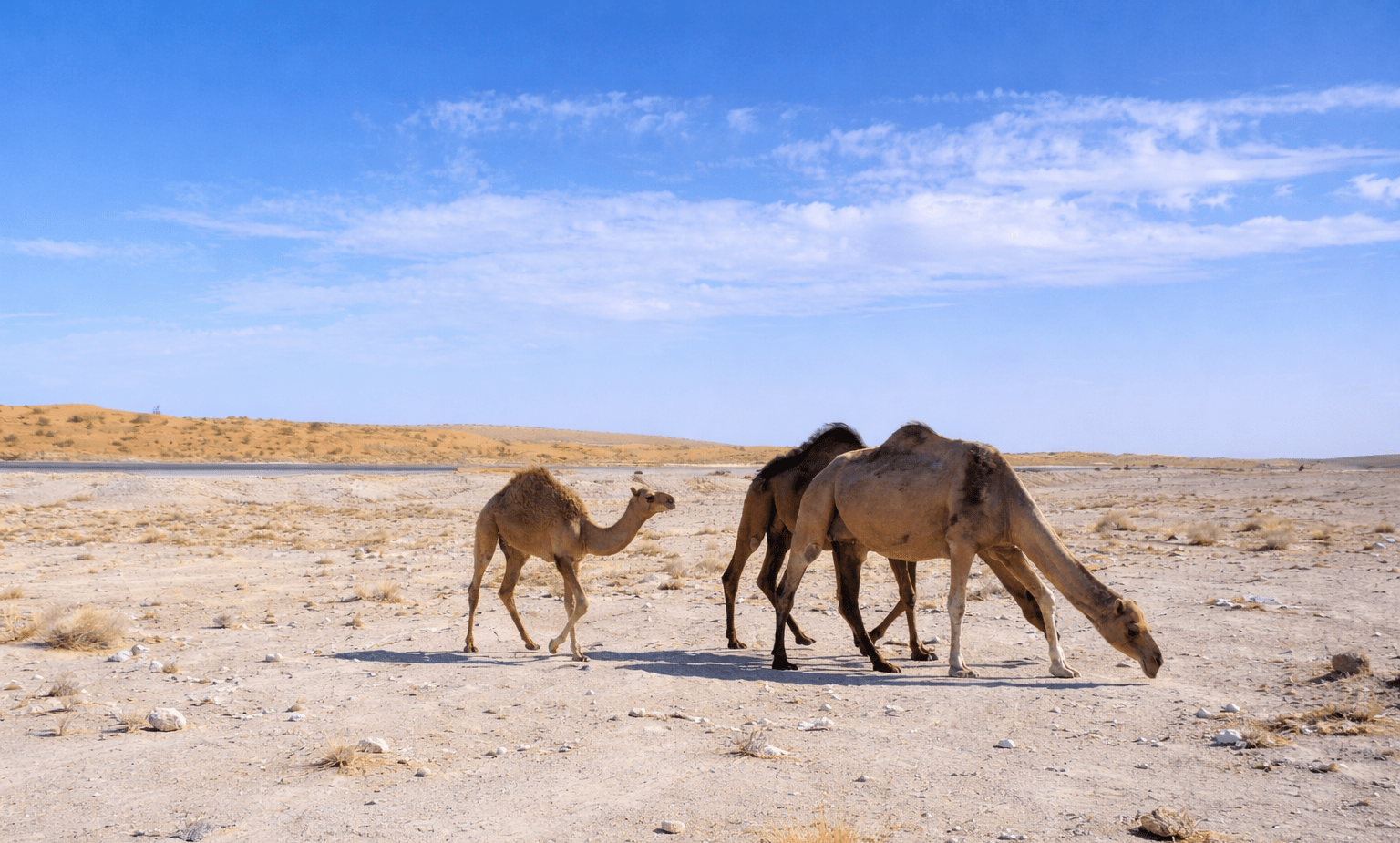
The Karakum Desert, Turkmenistan; image: TCA, Stephen M. Bland
Turkmenistan and Spain have discussed closer cooperation to address desertification in Central Asia, including the possible creation of a regional center focused on land degradation. The talks took place in Ashgabat during a meeting between Turkmenistan’s Minister of Environmental Protection and Spain’s ambassador to Russia, Ricardo Martínez Vázquez, who is also accredited in Turkmenistan.
The discussions followed Turkmen President Serdar Berdimuhamedov’s proposal at the United Nations General Assembly to establish a specialized regional center to combat desertification in Central Asia. The initiative is intended to strengthen cooperation among regional states and attract international expertise and funding.
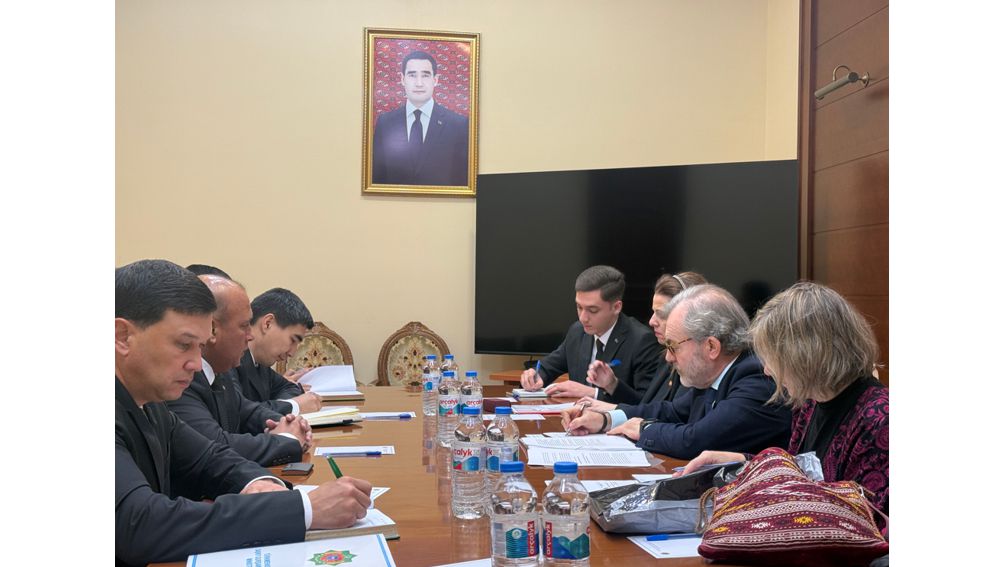
Image: mineco.gov.tm
Desertification is a growing concern across Central Asia, a region where arid and semi-arid landscapes dominate much of the territory. The United Nations Convention to Combat Desertification defines desertification as land degradation in dry areas caused by climatic variations and human activities.
According to the UNCCD, more than 20% of land in Central Asia is already degraded, affecting around 30% of the population. Much of this damage is linked to unsustainable water use, intensive agriculture, overgrazing, and the long-term effects of climate change.
Spain’s interest in desertification in Turkmenistan is rooted in their shared status as nations on the front lines of climate change. As one of the European countries most vulnerable to soil degradation, Spain co-launched the International Drought Resilience Alliance (IDRA) to export its expertise in “dryland” management and water conservation, which is directly applicable to the arid landscapes of Central Asia. This common challenge has fostered a diplomatic partnership focused on the United Nations Convention to Combat Desertification (UNCCD), where countries exchange strategies for land restoration and drought resilience.
Beyond environmental solidarity, Spain views Turkmenistan as a critical emerging market for its advanced engineering and agricultural sectors. Major Spanish firms, such as TYPSA, are already active in the region, providing technical assistance for massive infrastructure projects, such as desalination plants on the Caspian Sea, and modernizing irrigation systems for thousands of hectares of farmland. This commercial engagement is bolstered by Spain’s support for Turkmenistan’s proposal to host a Regional Center for Climate Change Technologies, which would serve as a hub for Spanish green tech in Central Asia.
The bilateral relationship also aligns with the broader EU Strategy for Central Asia, which prioritizes environmental stability as a means of ensuring regional security. By helping Turkmenistan manage its dwindling water resources and combat the encroaching Karakum Desert, Spain contributes to the EU for a Green Turkmenistan initiative. This cooperation helps prevent resource-driven migration and instability, and strengthens trade ties in a region that is becoming increasingly vital for global energy and logistics.
One of the most visible examples of desertification in the region is the collapse of the Aral Sea. Once the world’s fourth-largest inland lake, the Aral Sea began shrinking rapidly in the 1960s after its feeder rivers were diverted for large-scale irrigation projects. By the early 2000s, the sea had lost roughly 90% of its volume.

Desert ships on the former Aral seabed, Moynaq, Uzbekistan; image: TCA, Stephen M. Bland
The retreat of the Aral Sea created a new desert known as the Aralkum, covering more than five million hectares. The exposed seabed generates frequent dust storms that carry salt and chemical residues across Central Asia, damaging farmland and harming human health. The World Bank estimates that tens of millions of tons of dust and sand are lifted annually from the dried seabed.
Beyond the Aral Sea basin, desertification is advancing in steppe and pasturelands across Kazakhstan, Kyrgyzstan, Tajikistan, Turkmenistan, and Uzbekistan. Rising temperatures and more frequent droughts are worsening soil moisture loss and accelerating erosion. According to the World Meteorological Organization’s State of the Climate in Asia 2024 report, Asia is currently warming nearly twice as fast as the global average, a trend that has accelerated heatwaves, droughts, and other climate extremes across the region.
Governments in the region have launched national and regional initiatives to slow land degradation. Both Kazakhstan and Uzbekistan have planted large areas of drought-resistant saxaul shrubs on the bed of the former Aral Sea to help stabilize soil and reduce dust storms. Kazakhstan has also invested in the partial restoration of the North Aral Sea through infrastructure projects that have raised water levels and revived some fisheries.
All five Central Asian countries are parties to the UN Convention to Combat Desertification and have endorsed the global goal of achieving land degradation neutrality by 2030. Regional cooperation mechanisms, including the International Fund for Saving the Aral Sea, are aiming to coordinate environmental responses and attract donor support.
The proposed regional desertification center discussed by Turkmenistan and Spain would add to these efforts by creating a permanent platform for research, training, and policy coordination. While details remain under discussion, officials see the idea as a way to pool expertise and improve long-term resilience in one of the world’s most environmentally stressed regions.
As climate pressures intensify, the success of such initiatives may determine whether Central Asia can slow the spread of deserts and protect livelihoods tied to fragile ecosystems.

Stephen M. Bland
]]>https://www.barrons.com/news/turkmenistan-s-battle-against-desert-sand-82de5f0d
Pictures and video by Nikolay Vavilov
Residents in the remote Turkmen village of Bokurdak have long depended on the Karakum Desert for their livelihoods, cultivating every square metre they can in a constant battle with nature.
It is a battle that some fear they are now losing.
Over recent years, large dunes have started encroaching on the land in the village, while rolling desert sands have forced residents to shift further downhill, local pensioner Kakabai Baimedov told AFP.
For those who live in the desert — known as “gumli” in Turkmen — this has been “very difficult”, Baimedov said.
“The village of Bokurdak used to be on a hill north of this place. Then, due to the advancing desert, we had to move lower and lower,” Baimedov told AFP.
While sand and the steppe have always been part of life in Central Asia, scientists warn climate change and other human activities are accelerating desertification and the degradation of the land.
In addition to being an ecological and social problem, desertification is also an economic burden, costing an estimated six percent of Central Asia’s GDP annually, according to the World Bank.
The Karakum Desert covers more than 80 percent of Turkmenistan, a former Soviet republic bordering Iran and Afghanistan.
“If its vegetation and soil cover are not properly managed, the surface is easily subject to erosion, degrading farmland and forming sand dunes,” Turkmen scientist Mukhammet Durikov told AFP.
Deforestation is another key culprit, while severe droughts and dry winds fuelled by climate change are making the problem worse, he said.
Central Asia is especially vulnerable to climate change: average temperatures in the region have risen by about twice the global average since 1991, according to UN data.
Authorities in Turkmenistan — a politically isolated country of seven million people — have sought to curb desertification through a massive tree-planting campaign.
The government announced in the summer that 162 million trees had been planted over the past 20 years.
“The president himself actively participates in the fight against desertification,” an official from the environmental ministry told AFP.
The ministry and regional officials are responsible for planting sites for the trees, overseeing their planting and care, the official said.
AFP was not able to immediately verify the government’s claims.
The country bordering the Caspian Sea restricts independent reporting and keeps information about government activities largely secret.
Turkmenistan’s two leaders, father-and-son duo Gurbanguly and Serdar Berdymukhamedov, have been keen to show they are taking action in combating desertification.
State media shows Serdar regularly appearing with a shovel in hand planting trees.
“Previously, it was spruces or cedars, but today, we find endemic species better adapted to the climate,” Merdan Arazmedov, a member of Turkmenistan’s Nature Protection Society, told AFP.
In Bokurdak, scientists have mainly planted saxauls — a hardy desert shrub whose roots penetrate as much as 15 metres (49 feet) underground to capture water, Arazmedov said.
The saxaul — which is also being used in Uzbekistan and Kazakhstan — helps retain sand, improves soil moisture, and also serves as a natural barrier for homes.
Baimedov, who has become an amateur botanist, tends to about 15,000 saplings, which are aimed at forming a green wall against the sand.
“It takes 15-20 years to grow a tree like this,” he said, pointing to an eight-metre- (26-foot-) high saxaul.
The saxaul is also being used to protect the capital Ashgabat, where “environmental activists have planted more than 50 hectares of saxaul on the edge of the desert,” Arazmedov said.
“Now, the road to the capital is no longer covered in sand, traffic flows smoothly, and the number of accidents has decreased,” he added.
But for Baimedov, whose main weapon against the desert is planting trees, the battle has become all the harder due to climate change.
“In the past, it was enough to water young saxaul daily with up to 10 litres of water,” he said.
“Today, due to climate change and rising temperatures, it takes up to 20 litres each day to ensure rooting.”
Turkmenistan has employed other methods to beat the sand.
Last year, scientists in the country announced they had launched successful trials spraying the soil with cyanobacteria, also known as “blue-green algae” — a method that helps retain moisture and facilitate tree rooting.
In September, Turkmenistan’s president proposed creating a regional centre against desertification in Central Asia.
al-bk-cad/mmp/rlp/abs
The Barron’s news department was not involved in the creation of the content above. This article was produced by AFP. For more information go to AFP.com.
© Agence France-Presse

A view of the village of Bokurdak in Turkmenistan’s Karakum desert on October 11, 2025. — AFP pic
Stay updated on the latest news and insights. Subscribe to our newsletter here
(New users only) Enjoy FREE RM50 & unlock 4.2% p.a. fixed rate when you cash in RM3,000 into PRS offering via Versa Retirement. Sign up using code VERSAMM10 with min. cash of RM100 today!
Thursday, 18 Dec 2025 9:00 PM MYT
BOKURDAK (Turkmenistan), Dec 18 — Residents in the remote Turkmen village of Bokurdak have long depended on the Karakum Desert for their livelihoods, cultivating every square metre they can in a constant battle with nature.
It is a battle that some fear they are now losing.
Over recent years, large dunes have started encroaching on the land in the village, while rolling desert sands have forced residents to shift further downhill, local pensioner Kakabai Baimedov told AFP.
For those who live in the desert — known as “gumli” in Turkmen — this has been “very difficult”, Baimedov said.
“The village of Bokurdak used to be on a hill north of this place. Then, due to the advancing desert, we had to move lower and lower,” Baimedov told AFP.
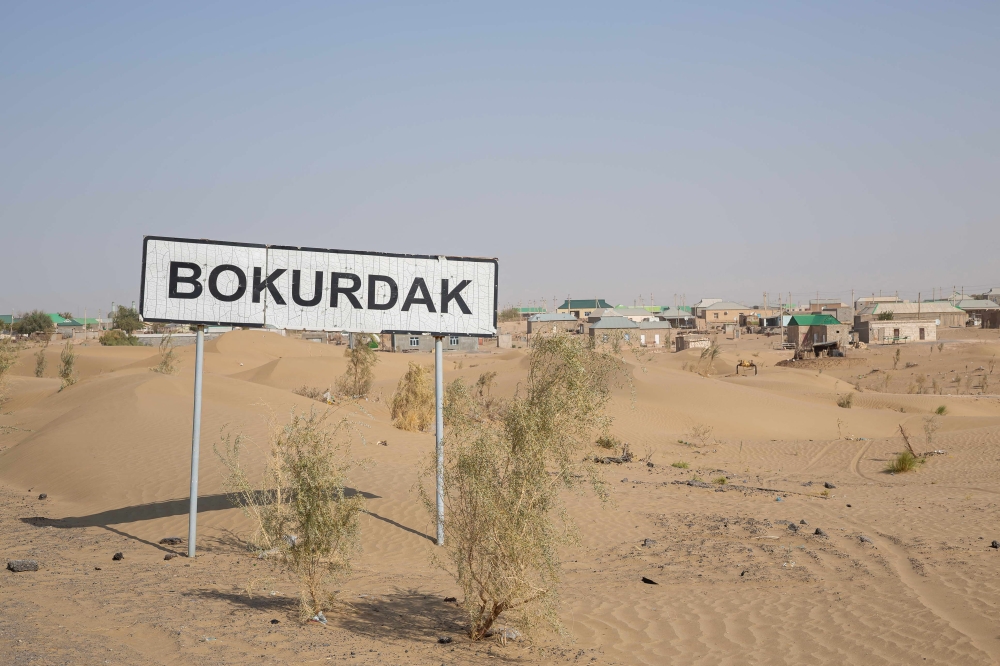
A view of Bokurdak. — AFP pic
While sand and the steppe have always been part of life in Central Asia, scientists warn climate change and other human activities are accelerating desertification and the degradation of the land.
In addition to being an ecological and social problem, desertification is also an economic burden, costing an estimated six percent of Central Asia’s GDP annually, according to the World Bank.
The Karakum Desert covers more than 80 per cent of Turkmenistan, a former Soviet republic bordering Iran and Afghanistan.
“If its vegetation and soil cover are not properly managed, the surface is easily subject to erosion, degrading farmland and forming sand dunes,” Turkmen scientist Mukhammet Durikov told AFP.
Deforestation is another key culprit, while severe droughts and dry winds fuelled by climate change are making the problem worse, he said.
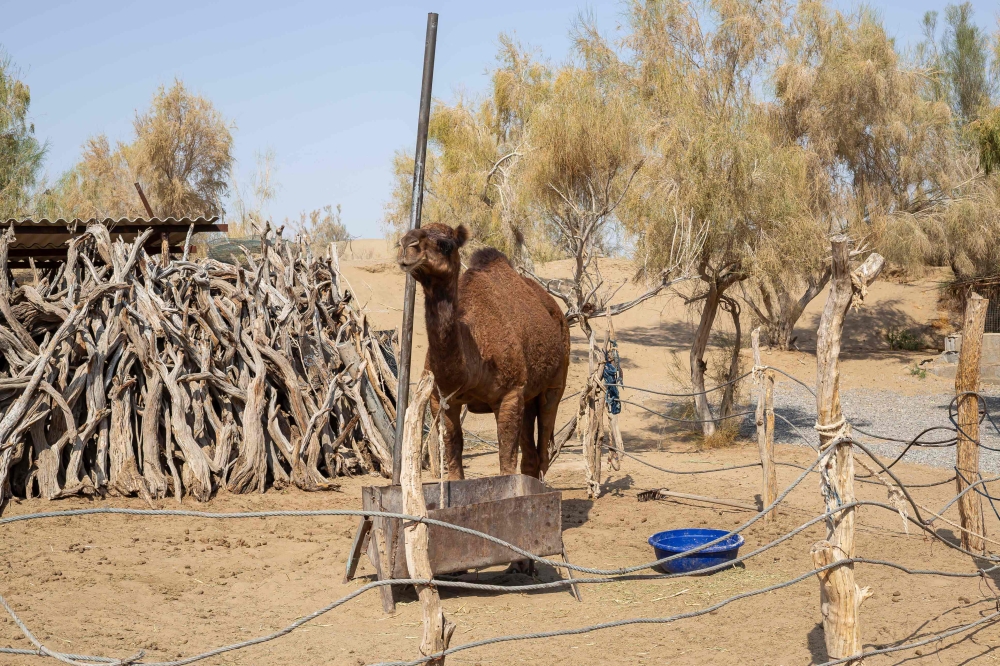
A camel spotted in the village. — AFP pic
Tree-planting campaign
Central Asia is especially vulnerable to climate change: average temperatures in the region have risen by about twice the global average since 1991, according to UN data.
Authorities in Turkmenistan — a politically isolated country of seven million people — have sought to curb desertification through a massive tree-planting campaign.
The government announced in the summer that 162 million trees had been planted over the past 20 years.
“The president himself actively participates in the fight against desertification,” an official from the environmental ministry told AFP.
The ministry and regional officials are responsible for planting sites for the trees, overseeing their planting and care, the official said.
AFP was not able to immediately verify the government’s claims.
The country bordering the Caspian Sea restricts independent reporting and keeps information about government activities largely secret.
Turkmenistan’s two leaders, father-and-son duo Gurbanguly and Serdar Berdymukhamedov, have been keen to show they are taking action in combating desertification.
State media shows Serdar regularly appearing with a shovel in hand planting trees.
“Previously, it was spruces or cedars, but today, we find endemic species better adapted to the climate,” Merdan Arazmedov, a member of Turkmenistan’s Nature Protection Society, told AFP.
Keeping water in the soil
In Bokurdak, scientists have mainly planted saxauls — a hardy desert shrub whose roots penetrate as much as 15 metres (49 feet) underground to capture water, Arazmedov said.
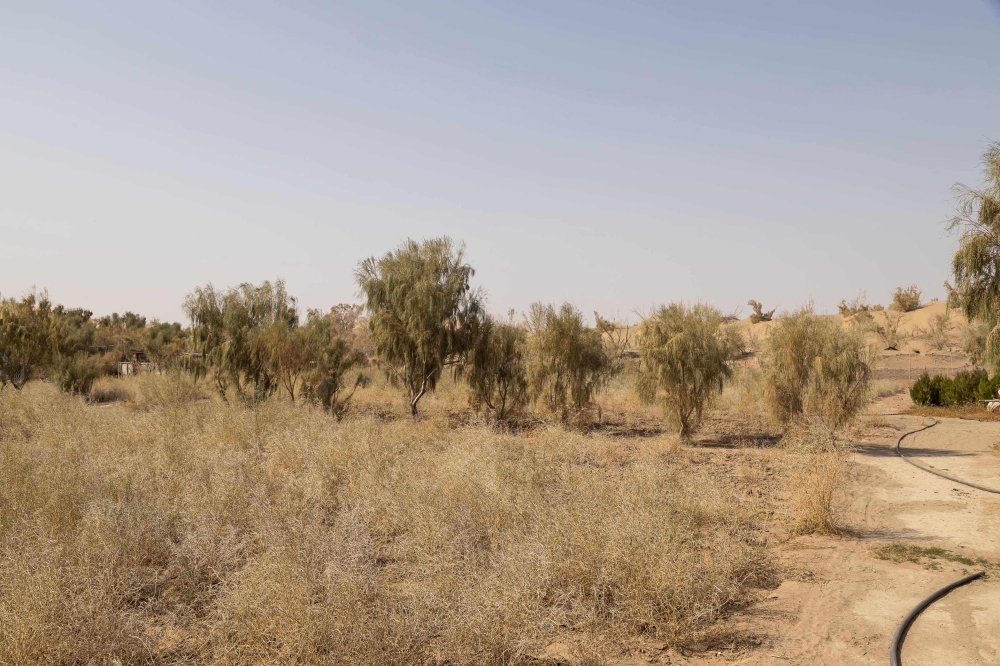
In Bokurdak, scientists have mainly planted saxauls, a hardy desert shrub. — AFP pic
The saxaul — which is also being used in Uzbekistan and Kazakhstan — helps retain sand, improves soil moisture, and also serves as a natural barrier for homes.
Baimedov, who has become an amateur botanist, tends to about 15,000 saplings, which are aimed at forming a green wall against the sand.
“It takes 15-20 years to grow a tree like this,” he said, pointing to an eight-metre- (26-foot-) high saxaul.
The saxaul is also being used to protect the capital Ashgabat, where “environmental activists have planted more than 50 hectares of saxaul on the edge of the desert,” Arazmedov said.
“Now, the road to the capital is no longer covered in sand, traffic flows smoothly, and the number of accidents has decreased,” he added.
But for Baimedov, whose main weapon against the desert is planting trees, the battle has become all the harder due to climate change.
“In the past, it was enough to water young saxaul daily with up to 10 litres of water,” he said.
“Today, due to climate change and rising temperatures, it takes up to 20 litres each day to ensure rooting.”
Turkmenistan has employed other methods to beat the sand.
Last year, scientists in the country announced they had launched successful trials spraying the soil with cyanobacteria, also known as “blue-green algae” — a method that helps retain moisture and facilitate tree rooting.
In September, Turkmenistan’s president proposed creating a regional centre against desertification in Central Asia. — AFP
]]>| Dear members of DesertNet International,We invite you to contribute to a survey that has been developed within the project MONALISA (MONitoring and Assessing prevention and restoration soLutIons to combat desertification; https://monalisa4land.eu/), funded under the Horizon Europe Mission Soil program. The main goal of MONALISA is to identify and promote innovative and tailored solutions to prevent and reverse land degradation and desertification (LDD) while demonstrating their socio-economic and environmental effectiveness. This survey aims to collect expert insights into the practices, success stories, and challenges related to combating desertification and land degradation in drylands. Your responses will help deepen our understanding of the drivers and barriers to implementing effective solutions, as well as identifying key success factors for sustainable practices and land management. We will also gather information on the indicators used to assess the environmental, social, and economic sustainability of these solutions. By taking part in this survey, you will have the chance to receive € 500 as contribution to cover the costs of a trip to visit one of our project’s case study sites, where innovative practices are being implemented. Among all participants, we will randomly select one winner who will be invited to experience firsthand how these new approaches are being put into practice. Your participation not only contributes valuable insights to our research but also gives you the opportunity to see real-world innovation in action! Thanks for your valuable contributions! |
| Click hereto submit your answers by 15 january 2026 |
Shafaq News
At dawn in Baghdad, the first thing many residents notice isn’t the warmth of the sunrise but the taste of the air — a faint bitterness settling on balconies, market stalls, and palm-lined streets where early commuters gather.
These mornings reveal how rapidly the city’s natural rhythms have shifted: less birdsong, more dust; fewer patches of green, and more concrete rising in every direction. Once shaped by rivers and orchards, Iraq’s environment is visibly transforming — a daily indication that something profound is changing beneath ordinary life.
Baghdad is no stranger to crises, yet the environmental decline sweeping its streets has reached alarming levels. Annual average PM2.5 concentrations now exceed 70–80 µg/m³ — nearly 14 times the World Health Organization’s safe limit. Iraqi monitoring stations and international climate observatories have consistently ranked Baghdad among the top 20 most polluted cities globally, and during sandstorm seasons, sometimes among the top five.
Breathing the Bill
The effects extend beyond hazy skies as public health, quality of life, and long-term economic prospects are all threatened by environmental decline. In 2024, the Ministry of Health reported that respiratory illnesses accounted for nearly 18% of clinic visits during peak pollution months, while the World Bank estimated that environmental degradation costs Iraq over $4–5 billion annually in lost productivity, healthcare burdens, and climate-related disruptions.
Government measures have targeted industrial waste and hazardous emissions, yet environmental specialists caution that limited technical capacity and uneven monitoring hinder progress.
Among those raising alarms, the Green Iraq Observatory, a team tracking environmental conditions across the country, reports stark findings: shrinking green belts, unplanned construction, and rising air contamination have collectively eroded quality of life in Iraqi cities.
The Observatory also noted that Baghdad has lost nearly 40% of its green cover since 2000, a decline accelerated by record-breaking heat waves and years of insufficient urban planning.
Environmental researcher Omar Abdul-Latif explained to Shafaq News that key pollutants — nitrogen dioxide and sulfur dioxide — are now widespread in the urban atmosphere. Readings from eastern Baghdad indicate NO₂ levels nearly double the global urban average, while SO₂ frequently exceeds Iraq’s own thresholds.
Short-term exposure causes nausea and discomfort, while prolonged exposure contributes to cardiovascular complications, reflected in a 15% increase in ischemic heart cases over the past decade.
Warning that acid rain, a byproduct of these emissions, is degrading soil chemistry and undermining vegetation, he noted the strains Iraq faces under rapidly intensifying climate change, pointing that last year alone, the country experienced more than 100 days of dust storms — a record unmatched in its modern meteorological history.
Read more: The air we breathe: How pollution is quietly rewriting Iraq’s future
Rivers Run Low
Officials in the Ministry of Environment acknowledge the crisis. Climate shifts have reduced river flows, worsened drought, and increased dependence on water sources controlled by neighboring countries. Iraq’s share of the Tigris and Euphrates has fallen nearly 30% since 2000, with projections suggesting a 50% drop by 2035 if current water policies persist.
Loay al-Mukhtar, the ministry’s spokesperson, told Shafaq News that a national strategy is essential to improve water efficiency, modernize irrigation, expand treatment infrastructure, and ensure sustainable resource use. Such measures are crucial for addressing acute shortages and enhancing water quality, particularly as per-capita water availability has declined from 2,100 cubic meters in 1977 to under 400 cubic meters today — among the lowest levels in the region.
Environmental experts are also monitoring rapid urban expansion. Ecologist Iqbal Latif Jaber observed to Shafaq News that rural migration and unregulated city growth are shrinking green spaces. Between 2000 and 2020, Iraq’s urban population rose from 66% to over 71%, adding six million city dwellers.
As fields give way to concrete, carbon emissions rise, waste accumulates, and chemical residues increase. The result is a fragmented urban ecosystem where soil becomes contaminated, natural streams disappear, and biodiversity that once supported city life quietly diminishes.
Official records illustrate the scale of the shift: Iraq has lost nearly 30% of its productive agricultural land over the past three decades due to climate pressures and prolonged drought, with the last four years marking some of the most severe water shortages in modern history. Rural provinces such as Nineveh, Babil, and Diyala have reported crop yield reductions of 40–70%, intensifying economic pressures and accelerating migration to already strained cities.
In response, the Ministry of Environment has conducted inspections targeting facilities responsible for hazardous waste. These measures include reassessing permits, tightening oversight, upgrading containment systems, and deploying digital tools to track waste disposal in real time.
The objective is to limit contamination from industrial and oil-sector byproducts. Iraq produces 31 million tons of solid waste annually, including millions from oil operations, yet only a fraction is treated with modern systems. Experts warn that outdated technology and weak supervision allow some facilities to operate without proper control.
]]>
Short Url
- Strategies link environmental conservation with economic resilience, community well-being
RIYADH: Drought in Saudi Arabia intensifies ecological imbalances by reducing water availability, degrading soils, and accelerating desertification in a landscape already adapted to scarce rainfall. The consequences are far-reaching: vegetation thins, pollinator and herbivore populations decline, seasonal valleys dry up, and the loss of plant roots increases wind and water erosion, weakening soil fertility and slowing recovery.
In addition, drought pressures groundwater resources as communities and agriculture compensate for surface water shortfalls, lowering water tables and threatening microhabitats that support migratory birds and endemic species. Over time, these environmental stresses ripple into human lives, endangering livelihoods and food security.
“The value of having a balanced ecosystem is that we then understand that it can sustain those people who rely on it,” Inger Andersen, executive director of the UN Environment Programme, told Arab News.
She added: “Some people who are living in cities may think they aren’t relying on the ecosystem because they get their food from the grocery store, but the reality, of course, is that there was an ecosystem somewhere in the world that provided that food that they purchase.
FASTFACT
Did You Know
- UN estimates suggest that by mid-century, droughts could impact over 75 percent of the global population.
- Nearly 2 billion people worldwide faced drought conditions between 2022 and 2023.
- Agriculture accounts for 70 percent of the world’s freshwater use, according to the World Wildlife Fund.
“So, we are all relying on that ecosystem not just on the food we eat, but also for the houses we live in because we construct houses out of things we take out of the earth.”
Globally, drought is a growing challenge. The National Centers for Environmental Information reported that 1.84 billion people experienced drought conditions between 2022 and 2023. The UN Convention to Combat Desertification and the World Meteorological Organization warn that hydrological extremes are intensifying as the planet warms.
One UN estimate suggests that droughts could affect more than 75 percent of the global population by mid-century if the environmental crisis continues. Already, 3.6 billion people worldwide face water access issues for at least one month each year, highlighting drought as both an ecological and humanitarian concern.

In Saudi Arabia, reduced rainfall limits recharge of wadis that feed various native plants, such as date palms and other wild shrubs, and degrades grazing lands, forcing communities in affected areas to change their livelihoods or increase groundwater pumping. (NCVC)
In Saudi Arabia, reduced rainfall limits recharge of valleys that feed native plants such as date palms and wild shrubs, while degrading grazing lands. Communities in affected areas often must adapt their livelihoods or increase groundwater pumping, perpetuating desertification and threatening biodiversity.
To address these challenges, Saudi Arabia has implemented multiple mitigation strategies. These include wastewater reuse, advanced irrigation methods such as drip systems, landscape restoration, and afforestation projects to stabilize soils. Among the most significant interventions is cloud seeding, which has been adopted as an active weather-modification tool.
In an interview, Mazen Asiri, executive director of the Regional Center for Climate Change, explained its benefits: “Among its benefits is that it supports tourism, and the surface water content, which enhances plant growth and vegetation cover.”

“We are all relying on that ecosystem not just on the food we eat, but also for the houses we live in because we construct houses out of things we take out of the earth.” – Inger Andersen, Executive Director of the United Nations Environment Programme
The Regional Center for Climate Change, established in 2020 under the National Center for Meteorology, builds a climate change database with high spatial accuracy projecting to 2100. It conducts climate scenario modeling, studies, and reports to predict future climate trends and assess impacts on the environment and human activity.
Cloud-seeding techniques employ aircraft and ground-based generators to spread seeding substances into clouds, stimulating droplet formation and increasing rainfall potential, depending on cloud conditions. Techniques include hygroscopic seeding — using salt particles to encourage coalescence—and ice-phase seeding with silver iodide or other nuclei to help create ice crystals when precipitation is high.
While cloud seeding can enhance rainfall and provide short-term relief for ecosystems, it cannot fully counter long-term drying trends caused by Saudi Arabia’s climate and global climate change. Realistically, it can improve seasonal rainfall in seeded storms, boosting local surface water and temporarily supporting agriculture and stressed ecosystems.
Alongside cloud seeding, Saudi Arabia pursues water supply diversification, landscape restoration, and regional climate adaptation planning to address the root causes of drought. Integrating these measures with sustainable water governance, managed water recharge, and public education on conservation provides a holistic strategy to restore ecological balance.
“We need concerted efforts, community integration, and raising awareness about environmental stewardship and conservation. What we do now is for the next generation, not for ourselves,” Asiri concluded.
]]>At a press briefing held during the 23rd session of the Committee for the Review of the Implementation of the UN Convention to Combat Desertification (UNCCD), Chief of the Secretariat of the Mongolian National Committee for Organizing COP17 Batmunkh Dondovdorj provided updates, MONTSAME reports.

He presented Mongolia’s preparations for the 17th Session of the Conference of the Parties (COP17), which will take place in Ulaanbaatar in 2026, outlining expected outcomes and the international significance of the event. Mr. Batmunkh emphasized that Mongolia is ready to make an active contribution to the global effort to combat desertification.
The press briefing was attended by UNCCD Executive Secretary Yasmine Fouad, Panama’s Minister of Environment Juan Carlos Navarro, as well as Vice Minister for Environment, Agriculture, and Water of the Kingdom of Saudi Arabia Osama Fakihah, representing the presidency of COP16. They noted that, as desertification, land degradation, and the impacts of climate change intensify worldwide, global environmental policy is increasingly focusing on ecosystem restoration, sustainable land management, new mechanisms for climate-risk financing, water accessibility and climate resilience, and greater private-sector engagement.
According to the Ministry of Environment and Climate Change of Mongolia, these priorities have become integral to global efforts to prevent desertification, reduce ecosystem degradation, and protect biodiversity.
Participants also responded to journalists’ questions regarding the need to strengthen multilateral cooperation within the mandate of the Convention, improve cross-sectoral coordination, and advance long-term goals for sustainable development and global ecological balance.
It should be noted, Turkiye to host COP31 climate summit after Australia concedes bid.
]]>
Author

Nazneen Ahmed
UNDP Policy Advisor, UNDP Regional Bureau of Asia and the Pacific
Aridity is a long-term climatic condition of persistent dryness and it doesn’t make headlines the way cyclones or floods do. It creeps in quietly- less rain each season, drying soils, shrinking rivers, and landscapes losing their resilience year by year. It is measured by the Aridity Index (the ratio of rainfall to evaporation), with drylands defined as areas below a certain moisture threshold. Over 77% of Earth’s land became drier from 1991 to 2020 compared to the previous 30 years. Even places not traditionally seen as “dry” are beginning to show clear signs of moisture stress. Drylands already cover about 40.6% of the world’s land. The population living in drylands has doubled in the past three decades, to 2.3 billion, and projections show this could rise to 5 billion (nearly 40% of the global population) by 2100.

Aridity poses greater challenges than drought, leading to agriculture being undermined, land degradation, and increased insecurity. Unlike drought, which is temporary, aridity represents a long-term shift in the water balance, making recovery increasingly difficult. In Mongolia, for instance, rangelands that once supported nomadic herders are degrading at a rate far faster than in most other regions, with nearly three-quarters of the land now affected. Across northern China, vast dryland belts are expanding, contributing to more frequent sand and dust storms that cross provinces and borders. In Iran, the slow drying of wetlands like Hamoun has turned once-productive plains into major dust sources. These examples may seem different, but together they reveal a common story: aridity magnifies existing vulnerabilities, and when left unmanaged, it accelerates a cycle of land degradation, rural poverty, and environmental risk.
Countries in the region are responding with approaches, in many cases with UNDP’s active role. Mongolia is experimenting with community-led pasture management and large-scale tree planting to restore rangelands and stabilise soils. China is combining traditional land knowledge with innovation, such as using drought-resistant vegetation like liquorice to fix sand dunes while reducing water use. Iran is restoring wetlands and strengthening local governance so that communities can adapt to dwindling water sources.

Crucially, regional cooperation is emerging as a cornerstone of aridity response. Sandstorms do not stop at borders. In 2023, with UNDP facilitation, China and Mongolia inaugurated a joint Desertification Prevention and Control Centre in Ulaanbaatar. In West Asia, Iran is collaborating with Iraq and Afghanistan to restore shared wetlands and reduce dust pollution, demonstrating how common threats can foster South–South cooperation. And across the wider Asia-Pacific, countries are contributing to regional initiatives (such as the proposed Global Coalition on Rangelands and Pastoralists) to pool resources and advocate for the often-overlooked needs of dryland communities.
Technology is adding a new layer of complexity to aridity. On the one hand, the rapid growth of artificial intelligence and cloud services is creating water-intensive infrastructure, data centres that demand huge volumes of cooling water in places already facing scarcity. Today’s data centers consume an estimated 560 billion liters of water per year (a figure that could double by 2030). Much of this demand is concentrated in already water-scarce areas. On the other hand, technology is also giving countries new tools to manage aridity. AI-driven drought prediction models, remote sensing systems that track land degradation in real time, and precision irrigation that reduces water wastage all offer powerful ways to stay ahead of change. Enhanced remote sensing and machine learning models now predict sand and dust storms with over 80% accuracy a day in advance. In agriculture, which uses 70% of global freshwater, AI-driven precision irrigation is a game changer: by delivering the right amount of water exactly when and where needed, farmers have cut water usage by up to 30% while boosting yields by 20% in some pilots. The challenge is to ensure that technological progress alleviates pressure on water systems instead of intensifying it. Without careful planning for the expansion of AI, even cities that are traditionally rich in water could experience strained supplies.

This is why the upcoming UNCCD COP17 in 2026 in Mongolia is an important moment for the region. It offers a platform for Asia-Pacific countries to bring these experiences together, learn from one another, and shape a collective response. Mongolia’s presidency is already steering global attention toward rangelands, drylands, and the communities that depend on them. For countries that are only beginning to see the signs of aridity, COP17 is an opportunity to take stock of emerging risks, embed aridity into national plans, and secure the partnerships and financing needed to act early. For those already living with advanced aridity, it is a chance to share lessons, scale what works, and call for stronger regional cooperation on sand and dust storms, water governance, and land restoration.

Addressing aridity is ultimately about changing the rhythm of how we plan. Instead of responding to crises after they unfold, countries need to anticipate the slow changes beneath the surface, changes in soil structure, groundwater recharge, vegetation cover, and seasonal rainfall patterns. Early action, smarter use of technology, and a stronger role for nature-based solutions can help break the cycle of degradation. But no country can do this alone. Aridity crosses borders, and so must the solutions.
]]>ERBIL, Kurdistan Region – More than 17,000 families from seven Iraqi provinces have been displaced over the past five years due to climate change and worsening desertification, Rudaw has learned, with most coming from the southern provinces of Dhi Qar and Diwaniyah.
According to Iraq’s migration ministry, around 17,365 families have left their homes since 2021. Dhi Qar recorded 9,525 displaced families, followed by Diwaniyah with 2,823. Muthanna has seen 1,668 families displaced, Maysan 1,643, Basra 951, Najaf 742, and Wasit 13.
Zainab al-Asadi, chair of the Agriculture, Marshes and Water Resources Committee at Dhi Qar’s provincial council told Rudaw, “Most of the northern wetlands in our province have dried up. We tried to revive some through the Tigris River, but the rest of our dried marshes have no solution.”
She added, “Last year, our province suffered severe drought and the water level in the marshes fell to nearly half a meter. This year, that half-meter is expected to drop even further because much of the water simply evaporates.”
The official results of Iraq’s latest census, released last week, showed that Dhi Qar has a population of over 2.3 million.
Meanwhile, 96.5 million dunams (about 231.6 square kilometers) are at risk of desertification, while only 13.5 million dunams (about 32.4 square kilometers) remain suitable for agriculture. Ministry figures also show that just 1.4 percent of Iraq’s land is forested or green.
Luay al-Mukhtar, spokesperson for the environment ministry, told Rudaw on Wednesday, “All our domestic and international efforts aim to increase Iraq’s green cover and reclaim lands under threat of desertification.”
“Some lands are naturally arid, but others are agricultural areas that lost fertility due to water scarcity,” he said.
In a similar vein, Bassam Kanaan, Director General of the Directorate of Forests and Desertification – an affiliate of the agriculture ministry – told Rudaw, “So far, over 1.3 million seedlings have been planted under the national afforestation campaign.”
He added that these efforts are part of a broader initiative led by Iraqi Prime Minister Mohammed Shia’ al-Sudani “to plant more than 8 million trees.”
Kanaan further said that a joint committee from the agriculture, environment, and other ministries is assessing fully desertified lands as well as areas at risk.
“Once the committee finishes its work, the government will launch official, long-term mitigation measures and allocate the necessary budget,” he added.
For his part, Shukri al-Hassan, a prominent environmentalist and geography professor at the University of Basra, told Rudaw that “the causes of desertification include natural factors, such as rising temperatures, reduced rainfall, and declining surface and groundwater levels.”
He also pointed to human-made causes, including “poor farming practices, urban expansion, population growth, and overuse of natural resources.”
Hassan warned that “desertification is a major threat to any country facing it,” noting its potential negative impact on “national food security, and an increase in temperatures and the frequency of dust storms.”
Malik Abbasi contributed to this piece.
Huge “regreening” efforts in China over the past few decades have activated the country’s water cycle and moved water in ways that scientists are just now starting to understand.
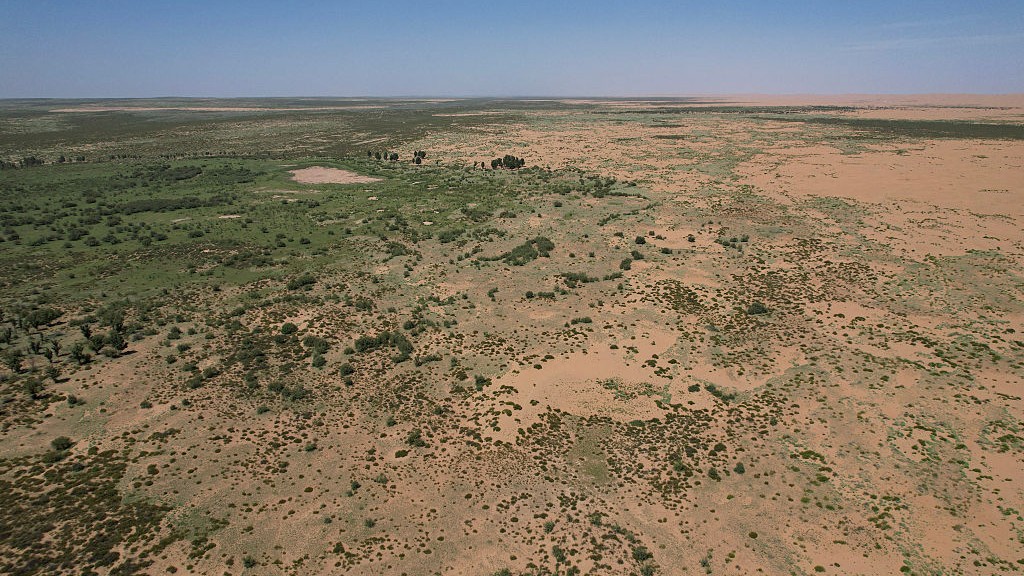
The Great Green Wall is a huge regreening initiative in China’s north aimed at slowing desertification. (Image credit: PEDRO PARDO/AFP via Getty Images)
China‘s efforts to slow land degradation and climate change by planting trees and restoring grasslands have shifted water around the country in huge, unforeseen ways, new research shows.
Between 2001 and 2020, changes in vegetation cover reduced the amount of fresh water available for humans and ecosystems in the eastern monsoon region and northwestern arid region, which together make up 74% of China’s land area, according to a study published Oct. 4 in the journal Earth’s Future. Over the same period, water availability increased in China’s Tibetan Plateau region, which makes up the remaining land area, scientists found.
“We find that land cover changes redistribute water,” study co-author Arie Staal, an assistant professor of ecosystem resilience at Utrecht University in the Netherlands, told Live Science in an email. “China has done massive-scale regreening over the past decades. They have actively restored thriving ecosystems, specifically in the Loess Plateau. This has also reactivated the water cycle.”
]]>Intense droughts driven by climate change are increasing the risk of land in arid areas degrading to the point they become unusable for agriculture – a process known as desertification. The LIFE-AgrOassis project is helping farmers in some of Europe’s driest areas to combat this process – with the help of hedgerows.
Unsustainable farming practices are among the key drivers of desertification due to the intensive water usage and damage they can cause to the soil, which are exacerbated by climate change. Across the European Union, 23% of land is moderately sensitive to being degraded to the point where it turns into desert, while 8% is highly susceptible.
The United Nation’s World Soil Day on 5 December highlights the need to preserve soils in vulnerable parts of the world while the recent EU Soil Monitoring and Resilience Law provides a framework to help achieve the goal of healthy soils across Europe by 2050.
Among the LIFE projects supporting these aims is LIFE-AgrOassis, which is working with olive and cereal farmers in the drylands of Cyprus, Thessaly, and eastern Crete in Greece.
The 4-year-long project, which began in 2022, aims to improve soil quality through 3 key approaches. First, teams of volunteers are being deployed to plant traditional hedgerows along field edges to help hold soil in place. Over two winter planting seasons since 2022, they have planted more than 6 000 deep-rooted, drought-resistant native trees and shrubs in Cyprus, creating 7.6 km of hedgerows. Among those taking part in the planting last December were members of the United Nations Peacekeeping Force in Cyprus. More planting is expected to take place this year.
The project team uses an innovative planting technique, with the trees and shrubs initially grown inside long tubes designed to train them to grow deep-roots before they are placed in the ground. These help the plants establish robust root systems that allow them to grow in dry conditions.
One farmer on Cyprus who has been planting hedgerows on his land with the help of the LIFE-AgrOassis project is Demetris Tsimouris. ‘By applying sustainable practices, such as hedgerows and better soil management, we can protect crops from extreme weather and improve our land,’ says Tsimouris. Dr Dimitris Sarris, director of KES Research Centre and scientific collaborator of LIFE-AgrOassis, says that intercropping, such as thyme, between fruit trees can also help save water and increase yields.
Ultimately, the LIFE-AgrOassis team hopes to plant more than 18 000 trees and shrubs in Cyprus and Greece by the end of the project in 2026, creating 33 km of hedgerows, with 30 km in Cyprus.
The LIFE-AgrOassis project team is also encouraging farmers to reduce the amount they till their fields, as the practice can increase erosion. Mulching – spreading a layer of organic material over the topsoil – is also promoted to prevent water loss and erosion.
The project is also working to turn agricultural waste and manure into sustainable compost that can be used to bolster soil quality in fields.
The LIFE-AgrOassis project contributes to the EU Directive on Soil Monitoring and Resilience, the Soil Strategy for 2030 and the Strategy on Adaptation to Climate Change.
]]>
Ginjoler al Parc Natural de Cabo de Gata-Níjar (Ziziphus lotus). Eduardo Milla CCBY

Communication Manager
Anna Ramon Revilla
I hold a degree in Biology (2005) by the Universitat Autònoma de Barcelona, and a Master in Scientific and Environmental Communication (2007) by the Universitat Pompeu Fabra. Since 2011 I
What is important is invisible to the eye. And in the world of plants, the most hidden and often least valued part is their roots. However, deep-rooted plants, those species capable of accessing water located more than 20 meters underground, are an essential ecological pillar for arid ecosystems around the world . Now, an article published in the prestigious journal Trends in Plant Science by CREAF researcher Josep Peñuelas , shows that climate change and human activity are harming these plants , a fact that could accelerate the desertification of vulnerable regions around the world, including large areas of the Iberian Peninsula.
According to the review article, rising temperatures, reduced rainfall, and falling water tables in aquifers make it difficult for seedlings or young plants to establish and for adult plants to survive . Under these conditions, plants expend much of their energy extending their roots to find water, an effort that compromises their ability to grow and reproduce. Furthermore, when the water table drops below the root zone, plant communities become entirely dependent on rainfall and become much more vulnerable to drought.
The study also shows that human disturbances such as overexploitation of aquifers, overgrazing, fires and intensive agriculture further aggravate this degradation . Currently, two billion hectares of the Earth, 15% of the world’s land surface, are already degraded; of these, 260 million hectares have been lost to overgrazing. In Mongolia, for example, 76% of the territory has become desertified due to overgrazing and excessive extraction of water from aquifers. Given this scenario, the authors argue that deep-rooted plants are the unknown guardians of arid lands, to which much more conservation efforts must be devoted. Their loss is already being associated with changes in vegetation composition, more erosion, more sandstorms, greater aridity and less capacity to retain carbon in soils.
“We need to maintain the benefits that deep-rooted plants offer us, and for this we need a much more integrated approach,” explains Josep Peñuelas , research professor at the CSIC and researcher at CREAF, author of the study. “This involves protecting aquifers with strict regulations on groundwater extraction, applying rotational grazing to avoid both overgrazing and soil compaction, and reinforcing soil health with practices such as crop rotation. We also need to include the traditional knowledge of local communities.”
]]>The retired admiral visited the Aveiro area today, starting his day with a tour of a fish processing plant in Gafanha da Nazaré. He then visited local businesses along Aveiro’s most iconic street, Avenida Lourenço Peixinho, and concluded his tour at the Agrovouga agricultural fair.
He discussed the need to “revisit the primary sector,” highlighting its importance “not just for production but also for environmental preservation.”
“We are witnessing desertification in our interior regions, and we must combat this. We need to engage with the primary sector with a renewed focus, as it not only produces but also prevents waste,” he told reporters.
The presidential candidate expressed his commitment to “encourage the repopulation of interior regions and revitalize the interior economy.”
As Gouveia e Melo walked up Avenida Lourenço Peixinho, he explored the Forum, paying attention to the promotions and words of encouragement from shopkeepers and patrons.
He chose a suit, though it remains unclear if it was in anticipation of an inauguration, prompted by promises of votes, or due to recent polls suggesting he may reach the second round of voting.
The admiral assured that polls “neither encourage nor discourage him” because “there are polls of all kinds, and the only poll that truly matters is the one on January 18, 2026.”
“I campaign with awareness of my proposals, and if the Portuguese people embrace them, I will be happier with the outcome,” he responded.
Regarding the warm welcome he received on the streets and the encouraging words, he acknowledged they provide him with motivation: “that is very positive indeed. People are very kind, and I appreciate their kindness,” he concluded.
]]>Benoît Pichon, Sophie Donnet, Isabelle Gounand, Sonia Kéfi
https://doi.org/10.1111/2041-210x.70205
Abstract
- Resource-limited ecosystems, such as drylands, can exhibit self-organized spatial patterns. Theory suggests that changes in these patterns can inform about the ecosystem degradation level. While the current theory is expected to work well when following a given site in time, we still lack ways of comparing different field sites using static observations of vegetation spatial structure. Such methods would be crucial to pinpoint the least fragile ecosystem areas from observation of spatial structure.
- Here, we tackle these limitations using an inverse-modelling approach relying on Approximate Bayesian Computing, which uses a snapshot of the spatial structure of ecosystems characterized by so-called irregular patterns and estimates a distance to its desertification point regardless of whether it is reached via progressive or sudden degradation. The approach allows us to comparably rank sites according to their distance to their desertification point (i.e. their resilience). We validated the approach on simulated landscapes from different models, showing that the approach performs well at ranking all landscapes.
- We applied the approach to a global dryland dataset and investigated the drivers of the estimated distances to desertification. We emphasized a possible application of our approach by combining these distances to desertification with aridity projections to illustrate the possibility of integrating our approach into the risk assessment of drylands. This made it possible to pinpoint the least resilient sites among those studied, therefore, paving the way for a risk-assessment method for spatially organized ecosystems.
- Our inverse-modelling approach can be extended to other ecosystems and other types of spatial patterns (e.g. periodic patterns). By allowing linking spatial structure and ecosystem resilience, it offers a promising development toward comparing and ranking sites of self-organized ecosystems from a single snapshot of their spatial structure.
Ladi Patrick-Okwoli – November 30, 2025
The National Agency for the Great Green Wall (NAGGW) has appealed to the federal government to support its 50 million date palm project aimed at combating desertification in Northern Nigeria.
Saleh Abubakar, Director-General of NAGGW, made the appeal during a courtesy visit to George Akume, Secretary to the Government of the Federation (SGF), in Abuja.
Abubakar explained that the initiative seeks to restore degraded lands in the 11 frontline states of the region.
Read also: FG targets N300bn from date palm in Yobe
He said the agency, during its 10th-anniversary ceremony in August, launched the project as part of efforts to curb desert encroachment. So far, the agency has distributed at least five million date palms across the frontline states and aims to scale up to 50 million by 2030.
]]>40% of Spain is undergoing desertification due to human activity, whether from agriculture, livestock farming or tourism. The data leaves the Balearics on the brink of ecological collapse, with 85% of the region heading towards desertification. This is revealed in the first atlas on this phenomenon produced by several dozen scientists from universities and centres belonging to the CSIC with the aim of providing a useful document for the country’s policy makers.
According to data from 2020, the main areas affected by desertification are located in the south-east of the mainland, the La Mancha plateau, the south of Extremadura, the wine-growing areas of Castile and León and La Rioja, as well as the Canary and Balearic islands, the Ebro valley and part of the Guadalquivir.
The “Atlas of Desertification in Spain” (ATLAS) is available on the website and was presented on Thursday in Alicante by the project coordinators, Jaime Martínez Valderrama, a scientist at the CSIC’s Arid Zones Experimental Station, and Professor Jorge Olcina, head of the Climatology Laboratory at the University of Alicante. The main objective has been to produce maps of degradation and desertification in Spain, using a Random Forest algorithm with evidence of degradation in groundwater, wetlands, soil condition and Sustainable Development Goal (SDG) indicators.
]]>Addressing global loss of fertile lands and escalating droughts will be the focus of the 23rd session of the Committee for the Review of the Implementation of the Convention (CRIC23), as 197 Parties to the United Nations Convention to Combat Desertification (UNCCD) convene in Panama this week.
The meeting comes at a crucial moment. If current trends continue, land almost the size of South America (16 million square kilometres) will show continued degradation by 2050, just as the global demand for food, water and energy continues to soar. Meanwhile, two-thirds of the planet have become permanently drier in the last three decades, and the past two years have seen the most widespread and damaging droughts in recorded history. In Panama, drought disrupted traffic through the Canal, significantly impacting global trade.

UNCCD Executive Secretary, Yasmine Fouad, said: “The resilience of our communities, economies and ecosystems depends on healthy land. Yet, we continue to degrade an area the size of Egypt every year, eroding the land’s ability to produce food, store water, support biodiversity and shield people from droughts, floods and sand and dust storms. Investing in sustainable land management, land restoration and nature-based solutions is not only an environmental necessity; it is a development imperative and a strategic investment in stability, prosperity and peace.”
“CRIC23 is a key moment to assess our collective progress, strengthen the bridge between Riyadh and Ulaanbaatar, and recognize land and drought resilience as the red thread connecting the Rio Conventions. Together, we can accelerate the shift toward a more resilient, food-secure and nature-positive future.”
From Riyadh to Ulaanbaatar
CRIC23 will review progress in implementing decisions taken at the 16th meeting of the Conference of the Parties (COP16) to UNCCD in Riyadh, Saudi Arabia in December 2024 and discuss the Convention’s post-2030 roadmap.
Osama Faqeeha, Deputy Minister of Environment, Water and Agriculture of the Kingdom of Saudi Arabia, UNCCD COP16 Presidency, said: “In Riyadh, world leaders established new priorities for land and drought action. One year on, this meeting is a crucial opportunity to accelerate the translation of COP16 decisions into concrete policies and practices and to advance the Convention’s agenda. Sustainable land management and drought resilience cannot wait: we depend on them to ensure food, water and energy security, as the world will need to produce 50 per cent more food by 2050.”
The meeting will hold thematic sessions on land tenure as the basis for investments in healthy land; discuss the growing threat of sand and dust storms; and host the second Gender Caucus to give a voice to women, who are disproportionately affected by land degradation and drought, while supporting the livelihoods of entire communities around the world.
Parties will also engage with other key stakeholders including youth, Indigenous Peoples and local communities, and see the launch of new reports on Small Island Developing States and rangelands.
In addition, the first of three informal and voluntary dialogues on drought resilience will be convened alongside CRIC23, building on the outcomes of COP16 and preparing for the resumption of negotiations at COP17. Led by the COP16 Presidency, the Tafa’ul Process is inspired by the Arabic word تَفَاؤُل (Tafa’ul), meaning constructive optimism and hopeful determination. CRIC23 recommendations will inform decision-making by the Convention’s 196 country Parties and the European Union ahead of the next UNCCD COP17, which will take place in Ulaanbaatar, Mongolia, in August 2026.
Mr. Batmunkh Dondovdorj, Special Advisor to the Minister and Chairman of upcoming COP17 Presidency National Office, stressed that the road from Riyadh to Ulaanbaatar must be a road of hope for communities and ecosystems that have long been undervalued. COP17 will coincide with the International Year of Rangelands and Pastoralists, offering a unique political moment to highlight rangelands, which are disappearing faster than rainforests.
“The meeting in Panama is crucial to set the basis for a successful COP17, which will bring to the fore the links between human wellbeing and healthy, productive and resilient landscapes,” said Dondovdorj. “That is particularly true for rangelands, which cover around half of the planet’s land area and are home to two billion people, but are often treated as empty, expendable spaces. For Mongolia – a country whose history, culture and economy are deeply rooted in pastoralism – this is not an abstract issue. It is about dignity, identity and opportunity for people who have been overlooked for far too long.”
Panama’s Nature Pledge
Today, Panama highlighted the centrality of land in its Nature Pledge, a roadmap that unifies national efforts to tackle land degradation, biodiversity loss and climate change to leverage the synergies between the three Rio Conventions and advance all of their interconnected goals, faster.
As part of its Nature Pledge, Panama plans to restore 100,000 hectares of degraded land by 2035.
Juan Carlos Navarro, Minister of Environment of Panama, declared: “Nature is the backbone of the global economy. The Panama Nature Pledge shows our commitment to restoring critical watersheds, protecting forests, and incentivising sustainable agricultural practices as a means to build the resilience of our economy and our communities. The Panama Natural Fund, in turn, guarantees long-term conservation actions across the territory. There is no time to lose: We must urgently take care of nature, so nature can continue taking care of us.”
A signatory to UNCCD since 1996, Panama has committed to achieve Land Degradation Neutrality by 2030, identified 31 critical hotspots, and is advancing reforestation and Dry Corridor adaptation programmes – underlining its role as CRIC23 host. This year, Panama became the first country to host meetings of all three Rio Conventions in the same year.
]]>Xinhua | Updated: 2025-11-28
URUMQI — The Taklimakan Desert sand-blocking green belt project in Northwest China’s Xinjiang Uygur autonomous region, which celebrated its first anniversary on Friday, has effectively protected surrounding oases, farmland and grasslands by curbing desert expansion, with sand sources now under control.
The 3,046-kilometer green ecological barrier — the world’s longest of its kind — encircles China’s largest desert like a “green scarf” to control sand diffusion. This project was globally recognized last month when it was listed among the “2025 Top 10 Global Engineering Achievements” by the World Federation of Engineering Organizations (WFEO).
Over the past year, 21 key counties and cities along the desert edge have expanded the barrier by 8.9 million mu (approximately 593,400 hectares), increasing its width by 110 meters to 7,500 meters. Infrastructure such as water supply, electricity and roads has been steadily improved, supporting the barrier’s growth and sustainability.
Residents like Tursunbaq Mahmuthet and Sudiumay Tursun from Hotan county have become active participants in desertification control, returning to their hometowns to spearhead ecological restoration initiatives.
“When we were young, this entire area was nothing but desert,” the couple recalled, gazing at the thriving sand date tree saplings. “We never imagined we’d be able to cultivate these trees here.” Their words carried a mix of excitement and nostalgia. “In the past, the village environment was so harsh; besides the frequent sandstorms in winter, even we locals were unwilling to stay in our hometown.”
Inspired by the project’s success, the couple co-founded a cooperative with 18 other households to cultivate sand dates on 1,000 mu of reclaimed desert land.
The expansion of the ecological barrier has transformed once-barren areas into verdant oases. In Hotan county alone, cumulative desert control efforts have reached 61,800 mu, benefiting 1,278 households and revitalizing local ecosystems.
“GREEN ADVANCING, DESERT RETREATING”
Cutting-edge technologies like photovoltaic systems and eco-agriculture are being integrated into the project, enhancing the resilience of the ecological barrier. Innovative techniques such as grass checkerboard stabilization and drought-resistant vegetation have effectively controlled mobile sand dunes, transforming the once-hostile “sea of death” into a thriving ecosystem.
Adopting a comprehensive approach that integrates engineering, biological and industrial solutions tailored to local conditions — including water scarcity and extreme winds — the project has achieved remarkable results.
In Yutian county, a region frequently battered by gales, the grass checkerboard and “terraced desert” model has reduced land leveling costs by 82 percent while boosting vegetation survival rates to 85 percent.
The Tarim Desert Highway, China’s first desert road, features a 436-kilometer-long shelterbelt with over 20 million drought-tolerant plants, including saxaul and rose willow.
Smart pipeline systems along the Tarim Desert Highway are undergoing upgrades, offering a pioneering “Tarim solution” for desertification control and regional development, as highlighted by Wang Long from PetroChina Tarim Oilfield.
In Shaya county, photovoltaic desert control technology harnesses solar power to extract brackish groundwater for drip irrigation, creating sustainable green zones. Song Ye, director of the Shaya forestry and grassland bureau, said that the county has now installed over 30 distributed photovoltaic water-pumping systems, converting 63,000 mu of desert into productive land.
These innovations mark a paradigm shift from the traditional “desert advancing, people retreating” scenario to a new era of “green advancing, desert retreating.” The integration of technology and ecology has established a multi-layered desert control system, enhancing environmental resilience and providing scalable models for arid regions worldwide.
Peter Gilruth, senior advisor at the Resource Mobilization Unit of World Agroforestry (ICRAF), emphasized that combating desertification extends far beyond protecting oases. “This is a systemic challenge affecting entire continents and the global community,” he stated.
During winter fieldwork, our team observed intensive sand dune stabilization efforts. “This represents a profound long-term commitment, blending financial investment, political will, and multi-stakeholder collaboration,” Gilruth explained. “The initiative involves not only Xinjiang’s administrative leadership but also integrates scientific expertise and private sector engagement through contractor-farmer partnerships.”
RISING SAND INDUSTRIES
Desertification control in Xinjiang has transitioned into a sustainable economic model, where ecological restoration initiatives have catalyzed industries including rose farming, cistanche cultivation and eco-tourism, forming a “golden necklace” of prosperity.
In Yutian, expansive rose fields bordering Highway G315 supply high-value ingredients for cosmetics and pharmaceutical products. Concurrently, the county produces 80 percent of China’s cistanche output, generating employment for over 10,000 local residents.
Enterprises such as Xinjiang Silu Guobao Agriculture Co. have invested in desert areas, leveraging improved infrastructure and supportive government policies, and cultivate roses and pistachios on reclaimed land.
Alimjan Abdueni, the company’s deputy general manager, emphasized that public-private partnerships allow land rentals to benefit villagers, fostering shared wealth.
Across the region, sand-based industries have expanded to 10.8 million mu of desert land, generating 28.975 billion yuan (approximately $4.1 billion) in annual output value and engaging over 360 processing enterprises.
In Makit county, a 460,000-mu shelterbelt integrates ecological conservation with economic forestry, where rangers like Nurgul Aihait earn a stable income of 3,000 yuan monthly plus dividends from cistanche sales.
Tourism has emerged as a key growth sector, with attractions such as the Shaya Poplar Forest and Yuli Lop Nur village attracting over 15 million visitors annually, generating 912 million yuan in revenue.
By 2025, the sand industry’s expansion had boosted the average annual incomes of 300,000 farmers and herders by 3,000 to 4,500 yuan, creating a virtuous cycle where ecological restoration fuels economic prosperity.
“I think the case study can be transferred to another. But what we need to do is to consider the local conditions. So transfer this model, apply it, but adopt it to the local conditions,” Mohamed Elfleet, consultant researcher at King Abdulaziz University (KAU) in Saudi Arabia, said.
]]>Indigenous Peoples and local communities must be at the centre of global efforts to prevent and reverse land degradation. Their knowledge, tenure rights and governance systems are essential for effective, just and lasting solutions.
At the twenty-third session of the Committee for the Review of the Implementation of the Convention to Combat Desertification (UNCCD CRIC23) in Panama City, FARN’s Deputy Director, Ana Di Pangracio, will participate as an accredited CSO Observer advocating for human rights, gender equality and ecosystem restoration to be fully integrated into land management.
Coherence across land, biodiversity and climate agendas is critical to address environmental challenges in a comprehensive and equitable way, along with transparent monitoring systems and equitable access to finance which are key in enabling Indigenous Peoples and local communities to lead on-the-ground action.
Through the GEF-funded project “Strengthening Civil Society Role in Achieving Land Degradation Neutrality”, FARN contributes its long-standing experience as both a member of Drynet and an active participant in UNCCD processes. As part of this initiative, FARN serves as a mentor, supporting civil society organizations in building the capacities and confidence needed for effective advocacy and communication that advance more inclusive and impactful land policies and programmes.
]]>Background
The twenty-third session of the Committee for the Review of the Implementation of the Convention (CRIC 23) of the United Nations Convention to Combat Desertification (UNCCD) will be held from 1–5 December 2025 in Panama City, Panama. CRIC is a key subsidiary body under the United Nations Convention to Combat Desertification (UNCCD).
UNCCD works together with the Food and Agriculture Organization of the United Nations (FAO) to raise awareness of and propose solutions to land degradation, desertification and drought while moving towards the achievement of zero hunger. CRIC assists with regularly reviewing the progress of the implementation of the Convention.
Land degradation puts agrifood systems under extreme pressure, even more so with an increasing demand for food production to feed a growing global population. According to the UNCCD Global Land Outlook 2022, over 70% of the Earth’s land has been transformed by humans, driving severe degradation and contributing to global warming. FAO estimates that over 60 percent of the 1.66 billion hectares degraded by human activities are cropland and pastureland. Together with sustainable and integrated water and drought management and investment, restoring degraded agricultural lands and soils must be a global priority in the fight against hunger and achieve food and water security. Tackling this urgent global challenge requires strong political will, significant investments, and integrated and coordinated action.
CRIC23 provides a platform to strengthen partnerships, align policies and accelerate progress towards food security and delivery of Sustainable Development Goal (SDG) 15.3: By 2030, combat desertification, restore degraded land and soil, including land affected by desertification, drought and floods, and strive to achieve a land degradation-neutral world. To better support countries and promote the transformation of agrifood systems to become more sustainable and resilient, at CRIC23, FAO will organize in collaboration with Partners and Members, events to share knowledge, data and information, and provide insights on actions and solutions for achieving LDN and contribute to better production, better nutrition, a better environment and a better life for all.
Join us at the CRIC 23 and contribute to strengthening our joint efforts to avoid, reduce and reverse land and soil degradation of agricultural lands and advance on related Sustainable Development Goals.
]]>The Executive Secretary of the United Nations Convention to Combat Desertification and Assistant Secretary-General of the United Nations Dr. Yasmin Fouad presented a comprehensive vision for the upcoming phase during an extensive meeting with Egyptian journalists specialized in environmental issues.
The meeting coincided with the 100-day mark of her assumption of the UN position. Her vision focuses on reshaping the role of the Convention and enhancing international coordination ahead of the CRIC23 (Committee for the Review of the Implementation of the Convention) meeting in Panama at the end of the year.
Dr. Fouad emphasized that her current vision centers around linking the Desertification Convention with the two other global agreements, namely the Climate Change Convention and the Biodiversity Convention. She pointed out that one of the key aspects of this approach is the “linking of issues like land degradation, desertification, drought, and global crises, including supply chain disruptions, food systems, conflicts, forced migration, and instability in certain local communities.”
In response to a question from the Middle East News Agency about Egypt’s role in the next phase of the Desertification Convention, Dr. Fouad stated that Cairo had presented its national drought plan, alongside a set of ready-to-finance projects that include the restoration of pastures, preventing overgrazing, and developing modern irrigation systems. She stressed that Egypt’s role in the Convention today goes beyond representing Egypt, as it serves 197 countries globally. The international success of this work reflects Egypt’s regional stature in environmental and climate issues.
Dr. Fouad emphasized that desertification is no longer just a matter of vegetation cover degradation; it has evolved into a developmental and security issue, directly linked to food production, livelihoods, population displacement, and women’s land rights, particularly in Africa. She noted that UN reports confirm that 40% of the world’s land has already degraded, necessitating a comprehensive restructuring of countermeasures.
She further explained that the Desertification Convention has an executive advantage not found in the Climate and Biodiversity Agreements, through the Global Mechanism, which provides direct funding to countries. This mechanism gives the Convention greater capacity to support governments, provide technical advice, and develop effective national programs.
Dr. Fouad highlighted some of the main results of COP16, hosted by Saudi Arabia, including the launch of a $2 billion international drought fund, the start of private sector involvement in land restoration efforts, and the development of a global system to predict land degradation over the next two decades. She affirmed that 70 countries, including Egypt and many Arab countries, are now eligible for funding from the new drought fund, thanks to having clear national plans to address desertification risks.
She also discussed the political challenges linked to the Convention, noting that land cannot be separated from national security. Regional conflicts, particularly in the African Sahel region, accelerate land degradation and increase displacement. She revealed that efforts are underway to include desertification and drought in the international security agenda in collaboration with Saudi Arabia and Germany, with plans to present the issue at the Munich Security Conference.
Dr. Fouad mentioned that the Convention is currently working on re-engineering financing mechanisms to make investment in land an economically viable option rather than merely developmental funding. She pointed out the establishment of a new investment fund in Luxembourg with an initial funding of $5 million, targeting investments ranging between $500 million and $600 million. Additionally, a forum for the private sector will be launched in Davos to promote investment in agriculture, pastures, and environmental restoration.
She also touched upon the upcoming agenda for COP17 in Mongolia, which will prioritize pastureland and local community rights, especially for African and Arab countries that depend heavily on natural pastures. She highlighted the Peace for Nature initiative, supported by Korea, which aims to study the impact of conflicts on lands and their restoration in affected areas.
Dr. Fouad warned about the increasing risks of sand and dust storms in the Middle East and North Africa, stating that they could cost some countries up to 2% of their GDP annually. She called for regional collaborative projects to address this transboundary phenomenon.
]]>Across Europe, scientists and citizens are uncovering a hidden legacy of contamination beneath their feet. From Denmark’s first PFAS crisis to a new generation of soil-mapping initiatives, a continent is learning to see — and stop — the pollution it once ignored
The ground beneath our feet can hide pollution. How can we map and prevent contamination?
Before 2021, Korsør was known mostly as a quiet, picturesque town on Denmark’s western coast — a place of grazing cows and calm waters. Few imagined it would become the epicentre of the country’s first PFAS contamination. At the time, almost no one in Denmark had even heard of PFAS, the so-called “forever chemicals”. If you Googled it, you got five hits. “Before our contamination, PFAS didn’t exist as a subject in Denmark,” recalls Kenneth Nielsen, a local biology teacher and former chairman of Korsør Cow Grass Association.
The discovery was made almost by coincidence. “A journalist called me asking if I had heard something about contamination of the ground where our cows were out in the summer,” Nielsen says. “I said, I have no idea what you’re talking about.” The cows grazed on land near a firefighting training site. It was later found to be heavily polluted with PFAS foam residues that had seeped into the soil and water for decades. Nielsen offered to have his meat tested. A week later came the call that turned their lives upside down and changed the way Denmark is treating forever chemicals.
They told him the test results of the meat: “It’s bad. It’s really, really bad. You can’t eat that meat. It’s not suitable for human beings, not even animals.” The city authorities quickly confirmed the results and issued warnings, but no one could explain what PFAS really was, or what risk it meant for those who had eaten the meat. “It was the most terrifying weekend I’ve ever had,” recalls Nielsen. “You just sit there thinking, what have we done to our families?”
He called his doctor on Monday, only to get a surprising answer. “I said, I have PFAS in my body — what should I do? And she said, ‘I can’t help you.’ Nobody knew what PFAS was or how to treat it. We were left alone.”
Nielsen did not give up; his persistent search for answers from the authorities and doctors is part of the reason why we know more about PFAs today.

From local tragedy to European
What started with a single steak from a family freezer soon became a national, then continent-wide wake-up call. “PFAS are mobile, persistent and toxic substances,” explains Hans Peter Arp, an environmental chemist at the Norwegian Geotechnical Institute and the Norwegian University of Science and Technology. “They are often called forever chemicals because they don’t break down naturally and can accumulate in animals, plants and humans over time, spreading silently through soil and water.” “In soil, they don’t degrade,” adds Arp. “If no action is done, they’ll be there beyond our lifespans — and our children’s. Unlike oil spills or metal pollution, PFAS contamination is invisible. “It’s not like an apocalyptic landscape,” Arp adds. “PFAS goes into the plants, but it doesn’t kill them. You can’t see it, but the animals — and the people — are contaminated.”
Searching for solutions
The Korsør crisis compelled Denmark to act — and drew European scientific attention. Across Europe, estimates suggest 60 percent of soils are unhealthy, making such efforts vital. Within ARAGORN, an EU project addressing soil contamination and remediation, Korsør is considered a “zero site” — a starting point for learning how to clean up and prevent similar contamination elsewhere.
“Our approach is co-creation,” says Arp. “We work with local experts, community members, and site owners to identify their concerns and goals. Then we combine that with our technical expertise to find a pathway forward.” Xenia Trier, ARAGORN’s coordinator, says the project is part of a broader European soil mission aimed at achieving healthy soils by 2050.
“Soil sits at the interface between where we live and have our activities, it supports our food production, it’s above water,” she explains. “If we want to combat contamination, we must first avoid adding new pollution — but also deal with what’s already there. Prevention is key, but so is reducing risk for people and ecosystems.”
That means mapping hotspots, prioritising urgent areas for remediation, and testing different methods before any large-scale work begins. “There’s no one-size-fits-all solution,” Trier says. “Decisions must include the people who actually live on the land. Co-creation ensures solutions are realistic, effective, and fit for purpose.”
“Without community involvement, it might not be a success,” Arp who also works within the ARAGORN project stresses. “You can’t just come in and fix it — you have to work with the people who live with it.”

A European effort
The lessons from Korsør are now shaping European policy. The European Union aims to phase out PFAS from firefighting foams, textiles, packaging, and even some industrial systems.
In October 2025, the EU adopted its first Soil Monitoring and Resilience Directive — a law requiring Member States to track soil health and map contaminated sites. ARAGORN supported it in various ways, for example, they helped with proposals on which chemicals should be regulated and what should be the principles behind it.
“We’re still at the beginning” says Trier. “We need a harmonised framework so that countries act consistently — not just where contamination has already been found, but to prevent new cases. If one law says one thing and another says the opposite, it frustrates land managers and slows down action. Harmonised, realistic regulation is crucial if we want to make progress.”
Prevention is the central playfield
“Factories that make PFAS need to reduce their emissions, or, ideally, stop making PFAS, make something else,” Arp says. “Some industries say they can’t replace PFAS in certain uses. But others can be restricted as soon as possible — like fluorinated gases or textiles in clothing. These are the things that we have to reduce right away.” Meanwhile, scientists are mapping dozens of sites across Europe that may already host PFAS pollution — a process inspired by The Forever Pollution Project’s cross-border investigation. “Mapping is essential if we want to act efficiently,” says Trier. “It helps us see where the problems are, and where intervention matters most.”
A high price for awareness
Four years on, Korsør remains a warning and a lesson. The land is monitored, and some remediation trials have begun, but for residents like Kenneth Nielsen, the emotional and physical impact endures. “I’ve eaten this meat for 17 years,” he says. “You can’t see PFAS, you can’t smell it — but it’s in us. It changes how you look at your home, your food, even your country.” He keeps speaking out, hoping it helps others avoid the same fate. “If our story means no one else has to go through this,” Nielsen adds, “then at least something good came out of it.” Stories like Nielsen’s and his community are a reminder of what is at stake. “Science and regulation can feel abstract, it may just be like numbers” Trier says. “But when you listen to people in places like Korsør, you see the human impact”.
From poultry waste to food packaging: the end of plastic wrap as we know it?
]]>China, Russia, and India are leading global forest growth over the past 10 years. New FAO data reveals how nations are tackling desertification. See which countries made the top list for nature restoration.
Fernando Molina24.11.2025
4 minutes read
Global Efforts in Forest Restoration
Over the past decade, several countries have seen a significant increase in forested areas around the world. According to recent data from the Food and Agriculture Organization of the United Nations (FAO), a number of states have managed to substantially expand their green zones, despite global challenges such as deforestation and ecosystem degradation.
China, Russia, and India are the top performers in this ranking. Their national forest restoration programs have become role models for other countries looking to slow desertification and improve their environmental situation.
China: Large-Scale Planting and Ambitious Projects
China continues to implement one of the world’s largest greening initiatives. Since the 1970s, the country has pursued the ‘Great Green Wall’ project, aimed at shielding cities from the encroaching Gobi and Taklamakan deserts. Over the past ten years, China has increased its forest area by 1.7 million hectares.
Although not all planted trees survive, especially in arid regions, the authorities are maintaining the pace of this work. The project is expected to be completed by 2050, which should significantly transform the landscape of the country’s northern and western provinces.
Russia: New Approaches to Reforestation
Russia ranks second in forest area growth. Over the past decade, almost one million hectares of new forests have been planted. Since 2018, government programs have been launched to expand green areas and restore zones affected by fires and logging.
Regional initiatives, as well as the involvement of private companies and volunteer movements, play a crucial role. As a result, Russia further strengthens its position as one of the world’s largest guardians of forest resources.
India: Climate Commitments and National Targets
India ranks third in the rate of forest restoration. Over ten years, the country has expanded its forest cover by 191,000 hectares. Authorities have set a goal to restore 26 million hectares by 2030, as part of both international climate agreements and internal environmental priorities.
India is actively introducing modern planting techniques, using native tree species, and encouraging public participation in reforestation. These efforts not only increase forest area but also help preserve biodiversity.
Global Context and Challenges
Forest restoration has become a key priority for many countries facing the consequences of deforestation, climate change, and soil degradation. Besides China, Russia, and India, other nations also rank among the leaders in increasing forested areas, though their results are significantly lower.
Experts note that the success of such programs depends on a comprehensive approach: it’s important not only to plant trees, but also to ensure their survival and prevent illegal logging. In some regions, the results are mixed due to challenging climate conditions and lack of resources.
In case you didn’t know: what is the FAO and why is its data important
The Food and Agriculture Organization of the United Nations (FAO) is an international body established in 1945 to fight hunger and improve global food security. The organization collects and analyzes data on agriculture, forestry, fisheries, and food markets. FAO develops recommendations for governments, supports scientific research, and implements projects to restore ecosystems. Its reports are considered among the most authoritative sources of information on global natural resource trends. Thanks to FAO’s work, the international community receives an objective picture of changes in forest resources, enabling more effective decision-making at both national and international levels. The organization also facilitates the exchange of expertise between countries and supports the adoption of innovative methods in agriculture and forestry. In recent years, FAO has paid special attention to sustainable development and biodiversity conservation. Its activities span over 130 countries, with headquarters in Rome. In 2025, FAO continues to play a key role in shaping environmental policy and monitoring the state of forests worldwide.
CGIAR
https://www.eurekalert.org/news-releases/1106730
19 November 2025, Bélem: Eight countries have announced their support for an innovative new Brazil-led accelerator that will unite governments and investors behind a shared goal: restoring the world’s farmland to strengthen food security, tackle climate breakdown, and protect biodiversity.
The Resilient Agriculture Investment for net-Zero land degradation (RAIZ) accelerator will assist participating governments to unlock and strategically allocate public and private investment for the restoration of degraded agricultural land at scale. The accelerator builds on the lessons of Green Way and EcoInvest in Brazil – an innovative mechanism that mobilised close to USD 6 billion in public debt and commercial loans to restore up to 3 million hectares of pastureland.
Dr Sandra Milach, Chief Scientist at CGIAR, which is supporting RAIZ as a technical partner, said: “Evidence shows every dollar invested in land restoration can generate up to $30 in economic benefits—yet inadequate risk assessment and impact tracking have constrained capital flows. RAIZ can change this by translating landscape restoration science into actionable guidance for structuring investment vehicles, embedding evidence-based metrics throughout fund lifecycles, and promoting rigorous monitoring systems that quantify climate, biodiversity, and livelihood outcomes. This approach can help de-risk restoration investments and unlock the institutional capital needed to close the funding gap and achieve the 250 million hectare target.”
Over 20% of the world’s agricultural land – around 1 billion hectares – is currently degraded. Degraded soils are less productive and resilient, contributing to food insecurity and incentivising expansion into natural ecosystems, including deforestation. Reversing just 10% of cropland degradation could restore 44 million tonnes of annual food production and meet the nutritional requirements of 154 million people.
However, capital is not flowing at the scale needed to address the challenge. A USD 105 billion funding gap remains, which governments alone cannot fill. The private sector could invest up to USD 90 billion in on-farm nature-based solutions, but struggles to mobilise funds due to high upfront costs, long payback timelines, and variable returns. Governments have a critical role to play in de-risking private capital. RAIZ is designed to help governments and financial partners co-design tailored financing solutions at the national level to unlock investment at scale.
Led by Brazil and supported by the governments of Australia, Canada, Japan, New Zealand, Norway, Peru, Saudi Arabia, and the United Kingdom, the accelerator will be officially launched at a Ministerial Event at UNFCCC COP30 in Belém on Wednesday, 19 November.
Bruno Brasil, Director of Sustainable Production at the Ministry of Agriculture and Livestock (MAPA), Brazil, said: “Building on initiatives like the Brazilian Green Way and EcoInvest programs, we can unlock billions globally to restore degraded farmland, protect biodiversity, and ensure food security. Scaling these models is key to driving restoration that works for farmers, communities, and the planet.”
The technical assistance provided by RAIZ will help governments to:
- Map degraded landscapes to prioritize areas for investment: An interactive mapping tool will respond to the need for accurate analysis, enabling funding to be directed to areas with the highest potential for productivity gains.
- Identify investable restoration solutions and assess the financing needs: Governments will be supported to identify investable restoration solutions and develop a Farmland Restoration Finance Assessment outlining costs, returns, funding gaps and identifying possible sources of finance.
- Design optimal co-investment mechanisms and scale proven solutions: RAIZ will convene governments and interested investors to build or tailor co-investment vehicles that leverage public finance to derisk private investments and reduce capital costs.
- Foster collaboration and knowledge exchange within the ecosystem: RAIZ will consolidate lessons from national experiences into case studies and guidance to inform global peer learning and improve enabling conditions for restoration finance.
The Honourable Julie Dabrusin, Minister of Environment and Climate Change, Canada, said: “Canada supports the overarching goal of RAIZ, recognizing its alignment with global efforts to address climate change, biodiversity loss, and land degradation. Canada looks forward to opportunities to contribute through knowledge exchange, technical collaboration, and engagement in a community of practice.”
Dr Osama Faqeeha, Advisor to the UNCCD COP16 Presidency and Deputy Minister for Environment, Ministry of Environment, Water and Agriculture, Kingdom of Saudi Arabia, said: “The UNCCD COP16 Presidency, represented by the Kingdom of Saudi Arabia, welcomes the RAIZ accelerator as a strong signal of the need for continued collaboration to finance farmland restoration globally and guarantee food security and rural livelihoods for generations to come. The UNCCD COP16 Presidency encourages collaborative efforts with other international and regional initiatives aiming to enhance land conservation and restore degraded lands such as the Middle East Green Initiative and the G20 Global Land Initiative”
Andreas Bjelland Eriksen, Minister for Climate and Environment, Norway, said: “Norway welcomes the RAIZ accelerator as a strong signal of the need for continued collaboration to finance farmland restoration globally and guarantee food security and rural livelihoods. Norway has worked collaboratively with Brazil and many other partners to maintain momentum on this vital issue through initiatives such as the blended finance-mechanism Catalytic Capital for the Agricultural Transition in Brazil (CCAT). Norway is happy to support the RAIZ initiative”.
Orlando Chirinos Trujillo, Vice Minister of Rural Development and Irrigation of Peru and President of PLACA, said: “Peru recognizes the importance of initiatives that contribute to productive soil restoration and the sustainable management of agricultural landscapes. The RAIZ proposal represents a significant step toward advancing models that integrate reduced land degradation, climate resilience, and the well-being of rural communities. We value Brazil’s efforts to promote a platform that strengthens technical capacities, encourages the exchange of innovative approaches, and fosters informed dialogue among governments and financial partners. Peru expresses its support for the objectives of RAIZ and will follow its progress with interest, along with any cooperation opportunities it may generate for the region and globally.”
Mary Creagh, Minister of Nature, United Kingdom, said: “The United Kingdom welcomes the RAIZ accelerator as a much-needed way to build collaboration and innovative finance to restore degraded land globally, which in turn supports our ecosystems, strengthens livelihoods, and builds food security and resilience. The UK is delighted to have worked with Brazil on the development of RAIZ and we look forward to the further progress of this important work.”
Governments and investors are encouraged to join this effort and work together to co-design and launch tailored national mechanisms for farmland restoration. Development banks, private investors, and philanthropic partners are all needed to unlock solutions that bring finance to farmers and restore the world’s productive farmlands.
Kaveh Zahedi, Director of FAO’s Office of Climate Change, Biodiversity and Environment, said: “RAIZ represents the enormous potential before us: to bring up to a fifth of the world’s agricultural land back into more productive and sustainable use. But the benefits go far beyond restoration. It is about sustaining land for future productivity, protecting food production and food security from climate risks, and ensuring the sustainable use of biodiversity. This is what agrifood systems solutions can achieve with the right investments and partnerships. FAO is honoured to support this initiative through the Food and Agriculture for Sustainable Transformation (FAST) Partnership, and we look forward to implementing it together with countries and partners.”
Morgan Gillespy, Executive Director at the Food and Land Use Coalition, said: “Despite millions pledged for regenerative agriculture in recent years, much of the financing remains fragmented — locked in small-scale, blended facilities tied to specific projects, commodities or geographies. To scale from millions to billions, we must move beyond a patchwork of efforts toward true systems change. Through RAIZ, FOLU and its partners are bringing investors and farmers to the table with governments to co-design joint investment mechanisms at national level that align public incentives with private capital, restoring degraded farmland at scale. Public and private investors alike recognise that restoring soils isn’t just about climate and nature — it’s about securing value chains, boosting farmer livelihoods, and strengthening rural economies.”
The launch of RAIZ supports key global policy goals, including the COP30 Presidency’s action agenda (Axis 3) on transforming agriculture and food systems, with a focus on land restoration (Goal 8). Farmland restoration is also central to the Rio Conventions (UNCBD, UNCCD, UNFCCC) and the UN 2030 Agenda, notably SDG 15.3 which aims to achieve Land Degradation Neutrality by 2030. By promoting more sustainable and regenerative agriculture, RAIZ advances efforts to restore degraded land, boost productivity, improve soil carbon capture potential, and reduce pressure on forests.
Andrea Meza Murillo, Deputy Executive Secretary at the United Nations Convention to Combat Desertification (UNCCD), said: “Land and soil degradation represent structural challenges for food and water security and for climate, biodiversity and development goals. Initiatives like RAIZ, which lay down foundations for cooperation across partners and conventions help farmers and communities to achieve healthy soils and healthy lands as building blocks of prosperous and resilient economies. We look forward to seeing how RAIZ could become a cross-COP accelerator for stronger cooperation on joint challenges and co-benefits, and assessing progress at UNCCD COP17 in Mongolia.”
RAIZ will be built and delivered by members of the Activation Group for Key Objective 8 – ‘Land restoration and sustainable agriculture’ – of the COP30 Action Agenda. The accelerator will be hosted by the Brazilian Ministry of Agriculture and Livestock (MAPA) under the FAO FAST Partnership, with the collaboration of the UNCCD G20 Global Land Initiative, and the Food and Land Use Coalition (FOLU) in partnership with the Action Agenda for Regenerative Landscapes. The initiative is supported by technical partners such as the Green Climate Fund, the World Bank, CGIAR, the Climate Policy Initiative, the Riyadh Action Agenda, Restor, Instituto Clima e Sociedade (iCS) and Agroicone.
Maria Netto, Executive Director of the Instituto Clima e Sociedade, said: “RAIZ arrives at a decisive moment for the global climate agenda. Around the world, degraded farmland is undermining food security, increasing pressure on forests, and weakening rural economies. What RAIZ offers is a practical pathway for countries to turn ambition into action — by mobilizing investment at scale, aligning public and private finance, and restoring productivity where it is most urgently needed. This is not only about land; it is about resilience, livelihoods, and a new vision of agricultural development that protects nature while strengthening economies. RAIZ can help countries unlock the transformative potential of restoration”.
Diane Holdorf, Executive Vice President of WBCSD, co-host of the Action Agenda for Regenerative Landscapes: “Restoring farmland requires business and government to work together to invest in landscapes at scale. RAIZ provides a unique opportunity for collaboration, where the private sector and government can co-invest, de-risk projects, and help deliver lasting benefits for climate, nature, and communities. RAIZ can build on lessons from the Landscape Accelerator Brazil and Action Agenda on Regenerative Landscapes, through which more than 40 organizations have committed to investing $9B+ in rural landscapes, covering more than 210 million hectares of land and reaching 12 million farmers across 90+ commodities and 110+ countries by 2030.”
]]>
A massive green push is underway in China’s Inner Mongolia, where 66.88 million mu (4.46 million hectares) of desertified land has been transformed over the past five years. The area is 2.7 times the size of Beijing. #China #InnerMongolia #desertification #environment


Voice reader
Riyadh, November 18, 2025, SPA — The presidency of the 16th session of the Conference of the Parties to the United Nations Convention to Combat Desertification (UNCCD COP16), assumed by the Kingdom of Saudi Arabia, underscored the growing importance of the private sector participation in global efforts aimed at land restoration.
This came as the Kingdom took part in a high-level event on the sidelines of the United Nations Climate Change Conference (COP30) in Brazil. The event, held for regenerative landscapes in cooperation with COP30 and titled “Land Restoration for Climate – The Evolution of Private Sector Efforts and Solutions,” showcased major recent achievements under the Riyadh Action Plan, a leading platform designed to mobilize governmental and non-governmental actors in land restoration.
Deputy Minister of Environment, Water and Agriculture for Environmental Affairs and Advisor to the COP16 President Dr. Osama Faqeeha emphasized that the Riyadh Action Plan holds particular significance in integrating land, ocean and atmosphere. This process requires practical measures to connect local plans, financing, and political support. He noted that forming just one centimeter of topsoil can take around 1,000 years, while its degradation can occur in as little as two years.
Faqeeha added that the world has already begun moving toward one of the five initiatives under the Riyadh Action Plan, originating from the private sector, indicating that more than 300 companies have begun taking serious, tangible steps to protect land. The aim, he said, is to encourage thousands of companies across real-economy sectors to help restore 1.5 billion hectares of land globally.
During the event, the Riyadh Action Plan, led by the COP16 presidency, presented its work to a group of partners that included Ambition Loop, the World Business Council for Sustainable Development (WBCSD) — which includes more than 250 global companies such as PepsiCo and OFI — Boston Consulting Group (BCG), and senior UN High-Level Climate Champions. These partners showcased transformative private sector innovations, ranging from insurance-based risk-protection solutions to emerging soil-health technologies.
https://english.news.cn/20251118/a01c26c91b5148549bd6ac688f7b6373/c.html
HOHHOT, Nov. 18 (Xinhua) — North China’s Inner Mongolia Autonomous Region has treated 66.88 million mu (about 4.46 million hectares) of desertified land over the past five years, an area equivalent to 2.7 times the size of Beijing, according to the regional forestry and grassland bureau.
The achievement constitutes more than 40 percent of China’s total desertification control from 2021 to 2025, reinforcing the ecological security barrier in northern China.
Inner Mongolia, home to four major deserts and four extensive sandy lands, is one of the areas most severely affected by desertification in China.
Authorities have pursued an integrated approach to ecosystem management in the region. Desertification control measures include establishing a dedicated fund, promoting public participation through incentive-based models, adopting new equipment and techniques, and applying new methods such as photovoltaic-based sand stabilization.
Thanks to such efforts, the region’s forest coverage rate has reached 21.98 percent — up 1.19 percentage points since 2021. Also, grassland vegetation coverage in the region remains above 45 percent. ■
]]>https://english.news.cn/20251124/6a52bd6d58ca42aca6ebd7a5a3f166c6/c.html
YINCHUAN, Nov. 24 (Xinhua) — Amid the chilling wind of an early winter morning, Nong Haojun, a 26-year-old PhD student, set out toward an experimental field deep in the interior of the Maowusu Desert, one of the major deserts in China’s northwest. This was his final trip this year to collect soil data after a six-month stay focused on wilderness research regarding desertification prevention.
Nong connected the sensors buried underground and transferred their readings to his laptop. This data, which included soil temperature, moisture and other basic indicators, forms the basis of long-term research endeavors in the area. “Some monitoring points have operated for more than a decade, so the collection cannot be interrupted,” he said.
Nong is in the fourth year of his stint at a national ecological monitoring and research station focused on this desert in Yanchi County, Ningxia Hui Autonomous Region in northwest China. He is among more than 400 students and faculty members from Beijing Forestry University, who have successively been stationed in this county since 2000.
After 25 years of tireless work by Nong and many others, the once barren, shifting dunes of Maowusu have been transformed into a lush, thriving expanse, which acts as a microcosm of China’s broader success in combating desertification.
Yanchi County is located on the southwestern edge of the Maowusu Desert, and receives little rainfall. In the 1980s and 1990s, overgrazing and excessive excavation had led to severe grassland degradation there, resulting in over 80 percent of land becoming desertified. Nightly winds roared through the area, with drifting sand sometimes piling as high as rooftops.
Every year during the growing season from April to November, students and researchers from Nong’s university “migrate” to Yanchi County, where they dedicate themselves to greening the desert.
This year, as usual, more than 10 students stayed on site to keep the research station running. They caught insects, counted vegetation, collected soil samples, and kept meticulous records and analysis — all to help develop scientific solutions for curbing desertification.
Nong’s daily research routine revolves around catching insects in the desert to uncover the true role that desert soil animals play in the process of arid land rehabilitation.
During the height of summer, when surface temperatures in the desert can exceed 45 degrees Celsius, Nong often walked for up to 30 minutes, braving swarms of mosquitoes to reach experimental plots. There, he drilled and dug holes to set cups containing alcohol in the ground to lure beetles and other soil arthropods. A week later, he would come back to collect them.
“By comparing the ratio of males to females in desert soil fauna, we can predict the future reproduction of a certain population,” Nong explained.
The research station, featuring not only a lab and storage space, but also the dormitory where researchers reside, is located about 5 kilometers from the nearest village. The researchers, who prepare their own meals, make a supply trip to the closest township once a week. With night temperatures dropping below freezing, they have to rely on electric heaters to stay warm, since there is no central heating at the station.
Drawing on research conducted at this station, Beijing Forestry University has published more than 300 academic papers, secured over 20 nationally authorized invention patents and cultivated more than 180 postgraduates in fields such as desertification control and desert ecology, thereby providing scientific and technical support for desert control and ecological restoration in not only Ningxia but also throughout the country.
After years of sustained efforts, vast, connected sand fields have been effectively contained. The overall vegetation coverage in Yanchi County has reached 58.56 percent, transforming the area from a windswept sand hollow into a steadily recovering landscape of green.
A report on ecological civilization released last week noted that China’s green development has been driven by national will, secured by institutional reform, powered by scientific and technological innovation and oriented toward win-win cooperation.
According to a national plan released in 2022, China aims to bring 67 percent of all treatable desertified land under effective management by 2030.
Nong said that ecological restoration, much like ecological research itself, is a slow and patient endeavor. It has taken generations of effort to produce the changes visible today. “I’m proud to carry on the work handed down by those who came before me,” he said.
Right now, Nong is busy sorting the samples he is bringing back to Beijing. Inside a foam box, more than 300 soil samples and over 500 herb specimens are neatly arranged, each carefully labeled. Once he returns to campus, a new round of indoor experiments will begin.
Nong said his favorite plant is caragana, known as ningtiao in Chinese, a pioneer desert shrub with deep, extensive roots that anchors loose sand and resists erosion, while blooming resiliently in the form of small yellow flowers.
“They fight against the wind and sand like warriors, paving the way for other plants to take root and grow,” Nong said. “In the desert, I wish I were a caragana.” ■
]]>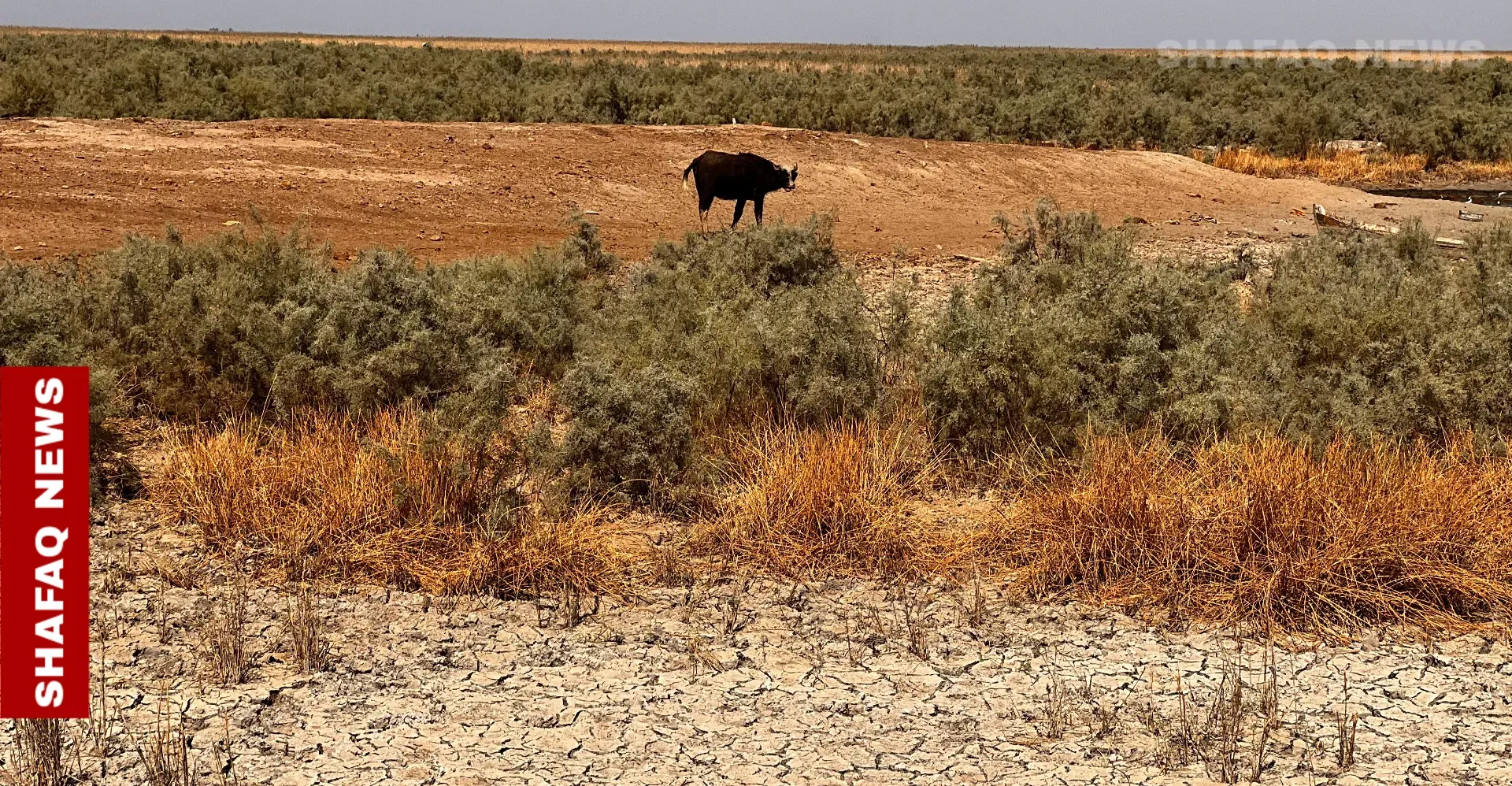
2025-11-24 13:35font
Shafaq News – Baghdad
Iraq’s desertified lands expanded significantly in 2024, according to new data from the Ministry of Planning.
The Ministry’s Central Statistics Office reported on Monday that lands classified as desert or threatened by desertification reached 96,500 square kilometers (km²), accounting for 55.5 percent of Iraq’s total territory. Fully desertified land rose to 40,400 km², or 23.2 percent of the country.
Read more: Iraq’s water crisis deepens: Reserves collapse, mismanagement continues
These figures mark an increase from 2021, when threatened lands stood at 94,300 km² and fully desertified areas at 27,200 km². While the national trend points upward, the report noted, some provinces recorded a statistical decrease in desert zones due to urban expansion encroaching on open land, particularly around Baghdad.
Total cultivated land for the year reached 11,900 km². Rain-fed areas comprised the largest share at 6,700 km², followed by 3,800 km² irrigated by groundwater and 1,500 km² dependent on river water.
The data highlights a continued decline in river-fed agriculture compared to areas using wells. The Ministry attributed this shift to restrictive water policies from Turkiye and Iran that limit flows into Iraq, compounded by low rainfall.
Read more: A century of promises: Iraq’s water diplomacy with Turkiye and Iran
Currently, the United Nations Environment Program ranks Iraq among the world’s five most climate-vulnerable nations due to these intensifying dust storms and land degradation.
]]>
13 Nov 2025 Speech Climate Action
One for all, and all for one on environmental action
Photo by UNEP
Speech delivered by: Inger Andersen
For: COP30 side-event: Bringing together synergies across the 3 Rio conventions
Location: Belém, Brazil
Excellencies and Colleagues,
We are gathered here in the country where the three Rio Conventions on climate, biodiversity and desertification were born over thirty years ago. There could be no more appropriate place to consider how to bind more closely these conventions – and the many other conventions, regional agreements and frameworks on the environment.
And if I may be so bold, there could be no more appropriate organization than UNEP to reflect on how to do this. Many Multilateral Environmental Agreements (MEAs) have their genesis somehow in UNEP or the UN Environment Assembly’s predecessor, the Governing Council. The family of agreements, regional conventions and scientific panels has grown since 1972 to encompass every aspect of the three environmental planetary crises: climate change; nature and biodiversity loss, and land degradation and desertification; and pollution and waste.
UNEP is privileged to host and administer the secretariats of over two dozen agreements, regional conventions and scientific panels – including the new global science-policy panel to support the sound management of chemicals and waste and to prevent pollution – which completes a global scientific trifecta alongside the Intergovernmental Panel on Climate Change (IPCC) and the Intergovernmental Science-Policy Platform on Biodiversity and Ecosystem Services (IPBES). It’s also why we know the impacts of fragmentation and benefits or synergies.
Each agreement has delivered successes, from slowing the rate of climate change, to protecting many species and huge areas of land and sea, to raising the profile of desertification and land degradation action. But we are not keeping up with the accelerating environmental crises. To have any chance of doing so, we need to act as one. These crises are indivisible. The earth’s systems are indivisible. Conventions should support this indivisibility.
Excellencies,
Achieving genuine policy coherence requires vision and high-level engagement, institutional reform, fiscal alignment, spending reviews and the integration of planning and reporting cycles under a shared national framework – moving from coordination mechanisms toward coherent governance systems. This is easier said than done, but we must try.
Integrated and systems approaches can enable cost-effective planning, implementation and monitoring of all commitments, targets and actions plans across the Rio Conventions and beyond.
Stronger domestic coordination and cooperation reduce duplication, enhances efficiency in decision-making and makes better use of resources for whole-of-government engagement.
Coherent integration into national budgetary processes and financing plans ensures that all ministries can participate in the implementation of the Rio Conventions.
And, of course, we must engage the private sector, Indigenous Peoples, women, youth and local communities to enhance the transparency, equity, and sustainability of MEA outcomes – in other words, ensuring a whole-of society approach.
Excellencies,
Let me be clear here. Synergy does not mean diversion – of focus, funds or efforts. It is not about shifting funding from climate to nature or pollution, or vice versa – it is about shifting more funding for everything. It is about delivering win-wins, such as investments in nature that bring dividends for extreme heat, delivering on both adaptation and mitigation. We are not trying to slice up the pie and fight for our share. We are aiming to increase the size of pie.
Synergies also only apply to topics where there is genuine convergence, so we should not waste time and money trying to pound square pegs into round holes. And let us remember that coordination and integration take time – so it is important to focus on what delivers impact rather than on information sharing and coordination for the sake of it.
Excellencies and colleagues,
As you know, we hosted the first-ever MEA day at the sixth session of United Nations Environment Assembly (UNEA-6). UNEA-7 convenes on 8-12 December, and we will again be holding an MEA day on 10 December – involving COP Presidents, Heads of States and Ministers, Executive Secretaries and Heads of MEAs, and participation from the whole UN system and stakeholders.
I hope you can all join us in Nairobi, the place where environmental diplomacy delivers, to keep striving for unity amongst all conventions and agreements, so we can deliver maximum impact across the three environmental planetary crises.
]]>India is making progress on the largest reforestation program in South Asia, aiming to restore 1 million hectares and curb desertification in arid regions.
India, known for its contrasts between overpopulated megacities and vast rural areas, is quietly conducting one of the largest ongoing reforestation programs on the planet. The country faces a challenge few nations confront on such a scale: more than a quarter of its territory shows some level of degradation, according to . Indian Council of Forestry Research and EducationIn this context, the Indian government has been betting on a long-term strategy that combines massive reforestation, recovery of arid areas, and planting of native species to transform regions threatened by desertification into productive green belts.
The numbers give an idea of the scale of the effort. In recent years, planting initiatives have mobilized millions of volunteers, state governments, and national forest management programs. In states like Uttar Pradesh, Madhya Pradesh, and Telangana, annual campaigns plant tens of millions of seedlings in a single day, always focusing on species adapted to the local climate. At the same time, national policies such as… Green India Mission, part of the National Climate Change Plan launched in 2014, established the goal of restore 1 million hectares of degraded areas through regenerated forests. It is a volume of land equivalent to twice the area of the Federal District.
Advancing desertification and the need for an Indian green wall.
The urgency for initiatives of this magnitude is evident. Studies by the Indian government show that desertification is advancing especially in regions of Rajasthan, Gujarat, Punjab, and parts of Maharashtra—areas where the semi-arid climate, soil salinization, and intensive agricultural use accelerate the loss of vegetation.
]]>
Listen
5 min
New: You can now listen to articles.


17 Nov 2025 04:00PM (Updated: 20 Nov 2025 10:37AM)
Read a summary of this article on FAST.
ORDOS, Inner Mongolia: A glistening sea of solar panels stretches across 400km of sand dunes in the vast Kubuqi Desert, located on the edge of Ordos city in China’s Inner Mongolia autonomous region.
The massive project, dubbed the Solar Great Wall, is poised to become one of the largest solar power installations in the world once completed by 2030.
According to local officials, the site will supply clean power to Beijing and its surrounding areas, reinforcing China’s broader ambitions to transition to green energy.
It is also a striking example of the country’s use of technology in its fight against desertification, which has long threatened its arid northern regions.

Subscribe to our Chief Editor’s Week in Review
Our chief editor shares analysis and picks of the week’s biggest news every Saturday.
This service is not intended for persons residing in the E.U. By clicking subscribe, I agree to receive news updates and promotional material from Mediacorp and Mediacorp’s partners.
Beyond its role in clean energy production, the Solar Great Wall will serve to stabilise the Kubuqi Desert’s sands and provide a shield from the wind, creating optimal conditions for shrubs to grow.
This is part of a broader strategy to prevent land degradation in the north caused by water shortages and human activities.
Kubuqi Desert, once called the “sea of death”, was plunged into desertification when centuries of grazing stripped the land of all vegetation. Since 1988, a Chinese firm has been working with locals and the Chinese government to combat the problem.
]]>
LANZHOU, Nov. 17 (Xinhua) — A new study by Chinese researchers and their German counterparts has shed light on the link between groundwater balance and plant water-use efficiency in desert ecosystems, offering valuable insights for ecological restoration and combating desertification.
The study indicates that vegetation restoration in arid drylands is an effective solution for preventing desertification, according to the Northwest Institute of Eco-environment and Resources (NIEER) under the Chinese Academy of Sciences.
The study, a joint effort by researchers from institutions in China and Germany, was published in the journal Water Resources Research.
Drylands often show a negative water balance due to low rainfall and high evapotranspiration, and water becomes the main limiting factor for plant survival and growth.
“Groundwater is an important water source in desert ecosystems. The water balance of groundwater ecosystems in drylands is closely related to plant growth and determines the sustainability of ecological restoration,” said Zhang Zhishan, an NIEER researcher and leader of the study.
“Groundwater is therefore crucial for ecological restoration works that are mainly based on vegetation reconstruction, as well as for desertification control efforts,” Zhang said, adding that appropriate replanting strategies play a pivotal role in preventing desertification.
The researchers conducted the study based on the automatic simulation monitoring system for water balance in the Shapotou desert research and experiment station in northwest China’s Ningxia Hui Autonomous Region.
The researchers used 12 Lysimeter units, large-scale instruments for measuring evapotranspiration, to systematically quantify water balance components and plant growth dynamics across different desert ecosystems from 2019 to 2023.
These Lysimeters were filled with wind-blown sand from the Tengger Desert and represented a range of conditions, from bare sand to plots planted with single-species shrubs and semi-shrubs, as well as mixed plantings.
The researchers then assessed plant growth performance, using water-use efficiency as the primary evaluation metric.
The study showed that groundwater recharge transformed the changes in soil water storage to a new water balance state, increasing the actual evapotranspiration and seepage. Linear mixed-effects models also showed that groundwater had a significant effect on the water balance components and enhanced plant growth performance.
Groundwater-dependent desert ecosystems exhibited higher actual evapotranspiration compared to groundwater-independent ones, according to the study.
It also highlighted that semi-shrubs play a key role in desert ecosystems with or without groundwater, providing a direct basis for the recommended plant configuration strategy for those desert ecosystems with groundwater.
“Our new study revealed that vegetation reconstruction in arid deserts is an effective solution for preventing desertification. Among which, a reasonable plant configuration method is the key to ensuring the long-term sustainability of ecological restoration and reconstruction,” Zhang said.
]]>A continental project with historical goals
The African Union launched the initiative in 2007 in 11 countries: Mauritania, Senegal, Mali, Burkina Faso, Niger, Nigeria, Chad, Sudan, Ethiopia, Eritrea, and Djibouti. By 2030, the goal is:
- Restore 100 million hectares of degraded lands.
- Create 10 million green jobs.
- Capture 250 million tons of CO₂.
Although initially conceived as a vegetative barrier against desert encroachment, today the proposal has expanded towards a comprehensive rural development approach: recovering lands, conserving soil and water, supporting agricultural and livestock production, and helping communities adapt to climate change.
Local advances and achievements
Despite obstacles, the Great Green Wall has shown positive results in specific areas:
- Planting millions of trees and restoring degraded soils.
- Sustainable agriculture practices and water management, which improve soil quality and livelihoods.
- Innovative techniques like crescent-shaped terraces and green trenches to retain water in arid zones.
- International recognition: the initiative has received awards from the UN for its contribution to combating desertification.
In Nigeria, for example, the execution reaches 50%, with more than 45 million seedlings produced and about 12,000 hectares restored between 2015 and 2024.

Persistent challenges
However, progress is uneven and faces major challenges:
- Insufficient funding: it is estimated that at least 33 billion additional dollars are needed to meet the goals.
- Low seedling survival rate: many die due to lack of irrigation or weak rainy seasons.
- Insecurity in the Sahel: armed conflicts and terrorist attacks hinder implementation in areas like Zamfara, Katsina, and Borno.
- Slow progress: after 18 years, the project has achieved only 30% execution in the 2020-2030 decade.
In Senegal, a study published in Land Use Policy revealed that only 2 of the 36 planted plots showed significant greening trends, highlighting the fragility of the process.
The issue of funding
At the One Planet Summit of 2021, 19 billion dollars were pledged to finance the initiative. Of that amount, 16 billion have already been disbursed, but it is still not enough.
The United Nations Convention to Combat Desertification (UNCCD) estimates that at least 33 billion dollars are needed to meet the objectives. Therefore, funding has become a central issue in international scenarios such as the African Climate Summit in Addis Ababa and COP30 in Belém, where Nigeria again called for more resources.
Regional expansion and future
The momentum of the Great Green Wall has extended beyond the initial 11 countries. The Southern African Development Community (SADC) is structuring a similar project in the southern part of the continent, which would cover 16 countries from the Democratic Republic of the Congo to South Africa.
The Great Green Wall is advancing, but at a slow pace and with significant challenges. Although it has achieved positive impacts at the local level, it is far from meeting its initial goals for 2030.
The project remains a symbol of hope and resilience against climate change and desertification, but it requires more funding, greater coordination, and solutions adapted to the realities of the Sahel. Its success will not only benefit Africa but will also be a crucial contribution to the global fight against climate change.
]]>Bonn, 7 April 2025 – Accelerating progress to restore 1.5 billion hectares of degraded land around the world and jumpstarting a trillion-dollar land restoration economy will be the focus of this year’s Desertification and Drought Day on 17 June. The theme of Desertification and Drought Day 2025 is “Restore the land. Unlock the opportunities”, underscoring multiple benefits linked to land restoration.
Ibrahim Thiaw, Executive Secretary of the United Nations Convention to Combat Desertification (UNCCD), said: “Land degradation and drought are major disruptors of our economy, stability, food production, water and quality of life. They amplify climate change, biodiversity loss, poverty, forced migration and conflicts over access to fertile land and water. Land restoration is an opportunity to turn the tide on these alarming trends. A restored land is a land of endless opportunities. It’s time to unlock them now.”
Healthy land underpins thriving economies, with over half of global GDP dependent on nature. Yet we are depleting this natural capital at an alarming rate—some 1 million km2 of healthy and productive lands, equivalent to the size of Egypt, are becoming degraded every year.
As the United Nations Decade on Ecosystem Restoration 2021-2030 marks its halfway point, we must accelerate efforts to turn the tide of land degradation into large-scale restoration. If current trends continue, we will need to restore 1.5 billion hectares of land by 2030 to achieve a land-degradation neutral world. To date, one billion hectares of degraded land has been pledged for restoration through voluntary commitments, such as the G20 Global Land Restoration Initiative hosted by UNCCD.
Breathing life back into land yields multiple benefits for people and nature. Every dollar invested in restoring degraded lands brings between US$ 7-30 in economic returns. But despite a strong investment case, land restoration is not happening at the scale and pace that are so urgently needed.
According to the latest financial needs assessment by UNCCD’s Global Mechanism, the world needs US$ 1 billion daily to combat desertification, land degradation and drought between 2025 and 2030. Current investments in land restoration and drought resilience stand at US$ 66 billion annually, with the private sector contributing just six per cent.
“We need to scale up ambition and investment by both governments and businesses. While the benefits of restoration far outweigh the costs, initial investments in the magnitude of billions are needed. We need to unlock new sources of finance, create decent land-based jobs and fast-track innovations while making the most of traditional knowledge,” UNCCD Executive Secretary Ibrahim Thiaw concluded.
About Desertification and Drought Day
Officially declared by the United Nations General Assembly in 1994 (A/RES/49/115), Desertification and Drought Day, marked annually on 17 June, is a unique occasion to highlight practical solutions to combating desertification, land degradation and drought.
The theme of Desertification and Drought Day 2025 is “Restore the land. Unlock the opportunities”, underscoring multiple benefits linked to land restoration. Countries and communities around the world organize activities to mark the Day. Previous global Desertification and Drought Day celebrations took place in Germany (2024), USA (2023), Spain (2022), Costa Rica (2021), Republic of Korea (2020), Türkiye (2019), Ecuador (2018) , Burkina Faso (2017) and China (2016).
For more information, please contact:
UNCCD Press Office [email protected]; https://www.unccd.int/events/desertification-drought-day
About UNCCD
The United Nations Convention to Combat Desertification (UNCCD) is the global vision and voice for land. We unite governments, scientists, policymakers, private sector and communities around a shared vision and global action to restore and manage the world’s land for the sustainability of humanity and the planet. Much more than an international treaty signed by 197 parties, UNCCD is a multilateral commitment to mitigating today’s impacts of land degradation and advancing tomorrow’s land stewardship in order to provide food, water, shelter and economic opportunity to all people in an equitable and inclusive manner.
]]>Sicily is experiencing more frequent climate emergencies such as floods, wildfires, droughts, and rising sea levels. The island’s temperature has increased by over two degrees Celsius, transforming its previously mild climate into extreme conditions. In 2024, authorities declared a state of emergency after drought affected 90 towns and 800,000 residents. Experts attribute a 50 percent higher chance of droughts to human-caused warming. With nearly 70 percent of Sicily vulnerable to desertification and worsening coastal erosion, it is increasingly being seen as Europe’s potential next desert.
]]>Representatives of 196 countries and the European Union will meet in Panama from December 1 to 5, 2025, to review their efforts against desertification, land degradation and drought under the United Nations Convention to Combat Desertification (UNCCD) – one of the three Rio Conventions, alongside biodiversity and climate.
The 23rd session of the Committee for the Review of the Implementation of the Convention (CRIC 23) to the UNCCD will convene some 500 delegates from governments, civil society, and academia to assess progress in advancing the Convention’s objectives.

A signatory to UNCCD since 1996, Panama has committed to achieve Land Degradation Neutrality by 2030, identified 31 critical hotspots, and is advancing reforestation and Dry Corridor adaptation programmes – underlining its role as regional host. In 2023, the country faced its driest year on record, when water shortages disrupted traffic through the Panama Canal and highlighted how local drought can trigger global consequences.
Juan Carlos Navarro, Minister of Environment of Panama, stated: “Never before has a country hosted, in the same year, the three major United Nations environmental conventions – on climate action, biodiversity, desertification, and sustainable land management. With this, Panama reaffirms its commitment to conserving nature and advancing sustainable development, while once again calling for the integrated management of these three pillars in order to confront the planetary crisis and build a resilient future for our communities.”
UNCCD Executive Secretary, Yasmine Fouad, said: “Severe droughts and the loss of fertile land are already straining food and energy production, uprooting rural communities, and threatening the livelihoods of millions. Nowhere is this more evident than in Latin America and the Caribbean, a region that is experiencing severe land degradation, affecting at least 20 per cent of its total area. By hosting CRIC23, Panama is placing itself at the center of collective response – from its national Nature Pledge to the regional Dry Corridor Initiative – and helping to build the momentum for the urgent need for drought resilience and land restoration worldwide.”
This CRIC will place particular emphasis on gender, highlighting best practices and bottlenecks in engaging women – including Indigenous women – who are among the hardest hit by land degradation and drought, yet remain at the forefront of sustaining families and food systems.
Recent UNCCD data underline the urgency: the world is losing nearly 100 million hectares of healthy land annually, and over 70 per cent of land has become drier over the past three decades, eroding the planet’s ability to support a growing population. Meeting global land restoration targets will require USD 1 billion per day until 2030—still only a fraction of what is currently spent on harmful subsidies and unsustainable investments.
CRIC23 will be held at the Panama Convention Centre, Panama City. Parties will: review progress and provide recommendations towards drought resilience and 2030 global targets on land; discuss the post-2030 strategic framework; engage with key stakeholders including women, youth, Indigenous Peoples and local communities; and see the launch of the Panama Nature Pledge and other key reports.
]]>The effects of climate change are leading to a drastic decline in cereal production this year, a crucial sector for the Russian economy. In the Rostov region, 17.5% of the territory has now become desertified. But in the crackdown on any voice of dissent, even environmentalists fighting to protect wooded areas are being targeted.
tect wooded areas are being targeted.

Moscow (AsiaNews) – Russia is grappling with a collapse in grain harvests, which fell to 105 million tonnes at the beginning of September compared to 130 million last year, according to the Moscow Ministry of Agriculture.
This is a crucial sector of the economy, especially for southern regions such as Rostov-on-Don, where the damage is estimated at around 4 billion roubles (40 million euro, ed.) mainly due to drought.
Climate change has transformed the ecosystem of the area, and the land does not receive enough moisture, causing crops to die. The authorities have acknowledged that 28 Russian federal subjects are affected by desertification covering approximately 80 million hectares, but attempts to save green spaces in Russia are considered a crime rather than a merit by citizens.
Twenty-six-year-old Evgeny Papirov from the village of Novobessergenevki in the Rostov region organised protests with others against reckless and environmentally dangerous deforestation, and control measures were imposed on him whereby he is not allowed to leave his home after 10 p.m. and is not allowed to leave his village by court order.
Papirov has been charged with assaulting a neighbour, causing him to break his arm, but local residents claim that the victim is on the list of the psycho-neurological clinic and that it was probably him who attacked first.
Evgenij himself believes that the charges against him are “a provocation”, organised precisely because he dared to raise his voice and send protests to all the authorities. According to his supporters, he fought to preserve a forest strip that was being illegally cut down on a site purchased in violation of the law by a former official, who threatened the young man with arrest.
In times of war against Ukraine and the West, any public display of discontent is considered a criminal act, and the preservation of green areas seemed to be the only issue on which it was possible to express any dissent, even if it is often blocked by authoritarian actions.
Yet protests are multiplying in many places, such as in Stavropol by gardeners from various companies, or by the inhabitants of Orenburg, and in Volgograd to preserve the forests of the Volga-Akhtube floodplain, all issues that have been under debate for years. In the Rostov region, 17.5% of the territory has now been desertified, yet the destruction of the forests of what was once called the “Plain of Love” continues.
Ecologist Vladimir Slivyak, co-chair of EkoZašita! and winner of the Right Livelihood Award in 2021, says that ‘there is only one way to combat desertification: to come up with various tricks to cultivate greenery. If you live in a hot area for most of the year, your first priority should be to care for greenery, maintain it as much as possible to prevent it from drying out, and plant new greenery, because without shade, the soil will simply die. Shade is as important as water.”
In addition to the deterioration of soil quality, another threat is dust storms, which begin in the eastern regions of Asia and Europe, such as Kalmykia, and sweep across the regions of Stavropol, Dagestan, Rostov, Astrakhan and Volgograd, turning the air into a whirlwind that obscures visibility and damages power lines.
Other activists have also been blocked by repressive measures, such as Sergei Belogvardeets from the city of Novocherkassk, who was forced into exile after arrests, kidnappings and violence for trying to defend the groves in the area known as “Red Spring” in recent years.
He had discovered a plan for illegal deforestation to make way for construction projects by hacking into the computer of a member of the administration, and raised major protests that did not stop the destruction of the forests. Like Sergei, several others have been silenced, unable to prevent southern Russia from gradually turning into a desert.
]]>
November 07, 2025
Short Url
Across the Arab world, land has always meant far more than soil. It holds our ancestors’ memories, the promise of tomorrow’s harvests, and the ties that weave families and nations together.
From the fertile banks of the Nile to the oases of the Maghreb and the date groves of the Gulf, entire civilizations flourished by learning to live in harmony with scarce water and fragile soils.
Today, that precious balance is slipping away before our eyes. Droughts arrive more often and last longer. Fertile soils are exhausted. Dust storms strip fields bare. Rising heat threatens the very crops that sustained our region for centuries.
The cost is not just measured in money, though land degradation already touches up to 40 percent of Earth’s land and drains hundreds of billions of dollars each year, but in the heartbreak of rural women who grow food without owning the land, and of young people who question whether they can build a future from it.
Yet our story is not only one of loss; it is also a testament to resilience and possibility. Across the region, communities are reawakening age‑old traditions of water harvesting, terracing and sustainable grazing.
Governments are investing in restoring degraded land, managing our precious freshwater wisely and building resilience to drought. Every dollar invested in land restoration can return up to 30, proof that caring for our land is not just environmental stewardship but economic common sense and a moral duty to future generations.
Land is our most ancient inheritance. To protect it is to safeguard life itself.
Yasmine Fouad
Recent meetings of the Council of Arab Ministers Responsible for the Environment in Nouakchott show how we can act together. Ministers placed land and water at the heart of their agenda. As the UN’s voice for land, the UNCCD highlighted three key opportunities: integrating land and water management as the foundation of food security; deepening synergies between the Rio Conventions on land, biodiversity and climate through integrated projects that bring multiple benefits; and mobilizing resources at scale, attracting private investment and international finance to build green economies that create jobs while safeguarding natural resources.
This agenda builds on the region’s recent leadership. At COP16 in Riyadh last year, Arab countries helped launch the Riyadh Global Drought Resilience Partnership, mobilizing over $12 billion, and the Business4Land initiative, putting the private sector at the center of restoration. These initiatives show that the Arab region can lead global sustainability efforts and turn deserts into thriving landscapes.
The momentum from Riyadh now leads us to Panama in December for the 23rd session of the Committee for the Review of the Implementation of the Convention, where countries will assess how they are tackling land degradation and drought. This will set the stage for COP17 in Mongolia in August 2026, a pivotal moment for the international community to raise its ambitions and step up action to restore degraded land and build resilience to drought.
But the real test of our resolve lies far from conference rooms. It lies in the villages where farmers watch their soils come back to life, in the businesses that grow by restoring land, and in the communities where women and young people become the champions of change.
Land is our most ancient inheritance. To protect it is to safeguard life itself. With a history of ingenuity and perseverance, the Arab region can once again show that even in the harshest conditions, deserts can bloom and hope can be restored, for us and for generations to come.
• Yasmine Fouad is executive secretary of the UN Convention to Combat Desertification.
]]>Story by Lorand Pottino
The Alarming Scale of European Land Degradation
The numbers tell a story that many prefer to ignore. Research indicates that the amount of territory with a high or very high sensitivity to desertification has increased significantly – across recent years. Consider that for a moment.
In just nine years, Europe lost productive land equivalent to two entire countries.
Areas considered at high or very high risk amount to 400,000 km2, with a hotspot in Spain (240,000 km2, practically half of the national territory) and an extension of sensible areas in Greece, Bulgaria, Italy, Rumania and Portugal. Spain alone has nearly half its territory under threat, while other Mediterranean nations watch their agricultural heritage slowly crumble into dust.
United Nations’ latest data, as presented by 126 Parties in their 2022 national reports, show that 15.5% of land is now degraded, an increase of 4% in as many years. But 2024 could become a seminal year for the fight against desertification. The acceleration is undeniable, and time is running out for meaningful intervention.
]]>LANZHOU — A newly published study has helped advance the understanding of the internal key physiological mechanisms of dryland shrub decline, according to the Northwest Institute of Eco-environment and Resources of the Chinese Academy of Sciences.
The study proposes a new perspective on the stress resistance mechanisms and environmental adaptation of sand-fixing shrubs in arid regions, said the NIEER.
Conducted by researchers from the NIEER and institutes of the United States, the study has been published in the journal New Phytologist.
Water transport is a fundamental process for plants to maintain life activities. Water can be transported from roots to leaves within a plant to form a continuous water column, whose integrity is particularly crucial for the survival of vascular plants in arid environments, according to Li Xinrong, an NIEER researcher and leader of the study.
“China has taken an active role in global desertification control. We endeavor to identify mechanisms of decreased performance with plant size in dryland shrubs, targeting to uncover the evolution of sand-fixing vegetation communities and finding solutions to sustain the fight against desertification,” Li said.
Researchers investigated crown dieback, growth, hydraulics, carbon assimilation, and nonstructural carbohydrate storage of two dominant shrub species at the southeastern edge of the Tengger Desert, China’s fourth-largest desert.
Clear contrasts in stomatal regulation of leaf water potentials were detected between both shrub species. Despite these contrasts, the study showed that radial growth, hydraulic transport efficiency, and carbon assimilation similarly declined in both species with increasing plant size, while NSC reserves remained unchanged.
The study results indicate that hydraulic and potential carbon assimilation constraints, rather than NSC depletion, govern growth-related dryland shrub decline.
“Findings of this study improve our understanding of how population demography impacts dryland forest response to climate change,” Li said. “This new study provides a scientific basis for the vegetation reconstruction and sustainable management of windbreak and sand-fixing shrubs.”
Xinhua
]]>This page is available in other languages:
Rivers cut by dams, farmland expansion and urban growth are putting food, water, biodiversity and livelihoods at risk unless urgent action is taken.
Bonn/Abu Dhabi, 11 October 2025 – Nearly one-third of the Earth’s land surface has already been profoundly transformed by human activity, leaving ecosystems degraded and fragmented, according to the Global Land Outlook Thematic Report on Ecological Connectivity and Land Restoration, launched today at the International Union for Conservation of Nature (IUCN) World Conservation Congress in Abu Dhabi.
Produced by the United Nations Convention to Combat Desertification (UNCCD) and the Convention on the Conservation of Migratory Species of Wild Animals (CMS), the study shows that Earth’s landscapes are interconnected like a living mosaic, held together by the movement of species and the natural flow of water, nutrients and energy. But today these lifeline networks of rivers, forests and grasslands – are increasingly under threat, disrupting and diminishing the functioning of natural systems
The findings are stark: more than 60 per cent of the world’s rivers have been diverted or dammed. One striking example is the Mekong River: once the world’s most productive inland, fishery is now fragmented by dams, disrupting fish migrations and threatening the food security of millions. Another is the Serengeti–Mara, where fences and expanding agriculture are constricting the ancient migrations of wildebeest and other wildlife, jeopardizing one of the planet’s last great natural spectacles.
Roads, railways and cities continue to carve up habitats — leaving only small, isolated patches of nature behind. Globally, the road network is projected to expand by 60 per cent by 2050, putting even more pressure on ecosystems.
This loss of connectivity harms both nature and people alike. It weakens soil, shrinks harvests, worsens water shortages and leaves communities more exposed to droughts, floods and wildfires. Today, land degradation already affects up to 40 per cent of the planet, putting nearly half of humanity at risk. The way we grow food- combined with expanding infrastructure, pollution and climate change-is fragmenting landscapes and driving deforestation, biodiversity loss and breakdown in ecosystem functions.
UNCCD Executive Secretary Yasmine Fouad stressed the urgency of action: “Life on our planet depends on healthy land and water systems-not only for nature, but for people. When these ties are broken, it is the most vulnerable who suffer first. This report shows that restoring ecosystems also means restoring the links between them- we must ‘connect to restore and restore to connect”.
Healthy ecosystems are nature’s own infrastructure. They keep water flowing, protect communities from extreme weather and secure food and drinking supplies. When landscapes are restored at scale, they also lock away carbon, reduce disaster risks, protect biodiversity and create jobs.
Echoing this, CMS Executive Secretary Amy Fraenkel noted: “Conservation of the habitats that wild animals depend on is important for their survival, but it is not enough. Unless the ecological networks that wild animals rely on are restored and reconnected, migratory species of animals such as big cats, antelopes, freshwater fish and birds will continue to decline, with many species already critically endangered. These animals are integral parts of healthy, well-functioning ecosystems that nature and human communities rely on. Protecting these pathways is protecting our shared future.”
UNCCD Chief Scientist Barron Orr warned that delay is costly: “When soils are depleted and rivers polluted, recovery is slow and costly. Prevention and large-scale restoration are far more effective than waiting for collapse and then trying to repair it.”
Building on this warning, countries are urged to act. Ecological connectivity must be included in land, water and infrastructure planning.
Successful models already exist the European Green Belt stretches through 24 countries from northern Europe to the Balkans and the Mediterranean, forming one of the world’s largest ecological networks. In Costa Rica, a national system of wildlife corridors has reconnected forests, brought back species like jaguars and supported eco-tourism and local livelihoods. In Bolivia, Indigenous communities are restoring connectivity through traditional agroforestry practices, enriching biodiversity while improving incomes, showing how local knowledge and rights are central to resilience.
At the halfway point of the UN Decade on Ecosystem Restoration (2021–2030), leaders are reminded that land, biodiversity and climate goals can only be achieved by working together. This aligns with the Kunming-Montreal Global Biodiversity Framework, which calls for restoring 30 per cent of degraded ecosystems by 2030 and securing the integrity and connectivity of the world’s natural systems.
This is not only about saving nature-it is about repairing the web of life that people everywhere depend on.
The Global Land Outlook Thematic Report on Ecological Connectivity and Land Restoration is available at: GLO Thematic Report on Ecological Connectivity and Land Restoration | UNCCD
For media enquiries, please contact
[email protected] , [email protected]
About UNCCD
The United Nations Convention to Combat Desertification (UNCCD) is the global vision and voice for land. We unite governments, scientists, policymakers, private sector and communities around a shared vision and global action to restore and manage the world’s land for the sustainability of humanity and the planet. Much more than an international treaty signed by 197 parties, UNCCD is a multilateral commitment to mitigating today’s impacts of land degradation and advancing tomorrow’s land stewardship in order to provide food, water, shelter and economic opportunity to all people in an equitable and inclusive manner.
About CMS
An environmental treaty of the United Nations, the Convention on the Conservation of Migratory Species of Wild Animals (CMS) provides a global platform for the conservation and sustainable use of migratory animals and their habitats. This unique treaty brings governments and wildlife experts together to address the conservation needs of terrestrial, aquatic and avian migratory species and their habitats around the world. Since the Convention’s entry into force in 1979, its membership has grown to include 133 Parties from Africa, Central and South America, Asia, Europe and Oceania.
www.cms.int
to convene in Panama City, 1-5 December 2025
Bonn/Panama City, 4 November 2025 – Representatives of 196 countries and the European Union will meet in Panama from 1-5 December 2025 to review their efforts against desertification, land degradation and drought under the United Nations Convention to Combat Desertification (UNCCD) — one of the three Rio Conventions, alongside biodiversity and climate.
The 23rd session of the Committee for the Review of the Implementation of the Convention (CRIC 23) to the UNCCD will convene some 500 delegates from governments, civil society, and academia to assess progress in advancing the Convention’s objectives.
A signatory to UNCCD since 1996, Panama has committed to achieve Land Degradation Neutrality by 2030, identified 31 critical hotspots, and is advancing reforestation and Dry Corridor adaptation programmes — underlining its role as regional host. In 2023, the country faced its driest year on record, when water shortages disrupted traffic through the Panama Canal and highlighted how local drought can trigger global consequences.
Juan Carlos Navarro, Minister of Environment of Panama, stated: “Never before has a country hosted, in the same year, the three major United Nations environmental conventions—on climate action, biodiversity, desertification, and sustainable land management. With this, Panama reaffirms its commitment to conserving nature and advancing sustainable development, while once again calling for the integrated management of these three pillars in order to confront the planetary crisis and build a resilient future for our communities.”
UNCCD Executive Secretary Yasmine Fouad said: “Severe droughts and the loss of fertile land are already straining food and energy production, uprooting rural communities, and threatening the livelihoods of millions. Nowhere is this more evident than in Latin America and the Caribbean, a region that is experiencing severe land degradation, affecting at least 20 per cent of its total area. By hosting CRIC23, Panama is placing itself at the center of collective response — from its national Nature Pledge to the regional Dry Corridor Initiative — and helping to build the momentum for the urgent need for drought resilience and land restoration worldwide.”
This CRIC will place particular emphasis on gender, highlighting best practices and bottlenecks in engaging women—including Indigenous women—who are among the hardest hit by land degradation and drought, yet remain at the forefront of sustaining families and food systems.
Recent UNCCD data underline the urgency: the world is losing nearly 100 million hectares of healthy land annually, and over 70 per cent of land has become drier over the past three decades, eroding the planet’s ability to support a growing population. Meeting global land restoration targets will require USD 1 billion per day until 2030—still only a fraction of what is currently spent on harmful subsidies and unsustainable investments.
CRIC23 will be held at the Panama Convention Center, Panama City. Parties will: review progress and provide recommendations towards drought resilience and 2030 global targets on land; discuss the post-2030 strategic framework; engage with key stakeholders including women, youth, Indigenous Peoples and local communities; and see the launch of the Panama Nature Pledge and other key reports.
Press Briefings: 12:00–13:00 (local time)
- 1 December: Opening press conference
Opening of CRIC23 with focus on the key expectations for the meeting and the launch of the Panama Nature Pledge on land, climate and biodiversity.
Speakers: UNCCD Executive Secretary Yasmine Fouad and Minister of Environment of Panama Juan Carlos Navarro.
- 2 December: Launch of Brief on Small Island Developing States (SIDS)
A new brief highlighting land and drought impacts and action in SIDS around the world, as the planet continues to warm.
Speakers: UNCCD and representatives from the Caribbean and the Pacific.
- 4 December: Launch of report on the Economics of Rangelands
Presentation of a landmark report on rangelands — vital for food security and climate stability but rapidly degrading despite covering 56 per cent of global land.
Speakers: Deutsche Gesellschaft für Internationale Zusammenarbeit (GIZ), UNCCD Chief Scientist Barron Orr, and regional experts.
December will also see the launch of the International Year of Rangelands and Pastoralists (IYRP), a milestone in the lead up to COP17 in Mongolia in August 2026.
- 5 December – Closing Press Release (World Soil Day)
Issued following the CRIC23 closing plenary and coinciding with World Soil Day. It will provide an overview of CRIC23 outcomes and their significance in the lead-up to UNCCD COP17 in Mongolia (August 2026)
3 December – Press Trip
Journalists are invited to join a field visit organized by the Panama Canal Authority (ACP) to farms in the Capira mountains showcasing sustainable land management practices. The tour will highlight:
- Agroforestry – integrating trees and crops
- Silvopastoral systems – combining trees, improved pastures, and good agricultural practices
- Family farming – producing food sustainably
The visit will also include the Coffee Processing Plant of the Association of Coffee Growers of the Cirí and Trinidad Rivers (ACACPA), with opportunities to interview farmers, Ministry of Environment staff, and ACP representatives.
These initiatives demonstrate how environmental economic incentives support sustainable land management, improve rural livelihoods, and advance Land Degradation Neutrality goals.
Accredited media representatives are invited to attend and report on CRIC23 and associated events.
Daily highlights of CRIC23 will be provided by the IISD Earth Negotiations Bulletin
Side events schedule is available here: https://www.unccd.int/cric23/side-events
Visual assets about CRIC23 and the UNCCD Data Dashboard are available here: https://trello.com/b/zq0kxtkK/unccd-cric23-panama-2025
Online registration for representatives from the media will be available from 15 September 2025 here: https://indico.un.org/e/unccd-cric23 (click on “Media Registration”).
To register, please provide the following documents:
- One recent passport-sized photograph;
- A valid press card;
- A copy (picture and signature pages) of the national passport (for foreign journalists) or national identity card (for local applicants);
- A letter of introduction on an official letterhead from the bureau chief, media house or publisher.
- Freelance journalists must submit a letter from the media organization assigning them to cover the conference.
After this date, on-site registration will take place at the Accreditation and Registration Centre at the Panama Convention Center (Calle General Juan D. Perón, Amador, Panama City) during official registration hours.
Journalists who register online will be able to collect their accreditation at the Panama Convention Center on presentation of a valid press card and an identity document.
For more information on the regulations governing visa applications and the introduction of reporting material into Panama please consult: https://es.tourismpanama.com/planea-tus-vacaciones/requisitos-de-viaje/
For inquiries about media accreditation or coverage of the event, please contact: [email protected]
A dedicated press and media working space will be available at the conference venue.
Additional information and media updates on the Convention and CRIC 23 will be available on the UNCCD website: https://www.unccd.int/cric23
About UNCCD
The United Nations Convention to Combat Desertification (UNCCD) is the global vision and voice for land. We unite governments, scientists, policymakers, private sector and communities around a shared vision and global action to restore and manage the world’s land for the sustainability of humanity and the planet. Much more than an international treaty signed by 197 Parties, UNCCD is a multilateral commitment to mitigating today’s impacts of land degradation and advancing tomorrow’s land stewardship in order to provide food, water, shelter and economic opportunity to all people in an equitable and inclusive manner.
]]>New research shows that the world’s continents are drying increasingly quickly, threatening long-term freshwater availability and spurring on rising sea levels. Millions of people around the world already face deadly droughts.
—
Terrestrial water storage is the total amount of water stored on land, including ice, surface water, groundwater and soil moisture. Although short-term droughts are not unusual, recent studies observed long-term changes in the global terrestrial water storage.
A new study based on data gathered between 2002 and 2024 by NASA’s GRACE and GRACE-FO missions found that these changes are here to stay – and accelerating at an alarming rate.
The research, published in July in Science Advances, concluded that regions that are subject to drying are growing by twice the size of California every year. In the Northern Hemisphere, this is giving rise to what researchers call “mega-drying regions” – interconnected hot spots of drought on a continental scale. Although there are also areas that are getting wetter, the balance is tipping firmly towards mass drying.
Driving this shift is large-scale groundwater depletion, the long-term reduction of water storage in underground aquifers due to its widespread pumping, mainly for uses in agriculture. This phenomenon accounts for 68% of observed changes in terrestrial water storage. Other causes include water losses in high-latitude areas such as Canada and Russia, where ice and permafrost are melting due to increasing temperatures, as well as extreme droughts in Central America and Europe.
The impacts of this trend are profound, according to the authors, and can be felt on a global scale. At the beginning of the study’s measurements in 2020, around 6 billion people, or 75% of the world population, lived in areas with decreasing freshwater availability. A terrestrial decrease in water availability translates into more sea water, eventually accelerating sea level rise. The study warns that this process is now a bigger contributor to the rising sea levels than the melting ice sheets.
The research followed the release of a report by the UN Convention to Combat Desertification (UNCCD), which found that some of the most severe drought events ever recorded have taken place since 2023. Tens of millions of people, especially in southern and eastern Africa, are driven to food insecurity, malnutrition, and forced migration due to the compound impacts of water mismanagement, El Niño, and climate change. In Somalia, for example, an estimated 43,000 excess deaths may have been caused by drought in 2022 alone, according to the report.
The report identifies drought hotspots all over the world, from the Mediterranean to Central and South America and Southeast Asia. In Spain, for example, 60% of the agricultural land was facing drought in April 2023, while 88% of the Turkish territory is currently at risk of desertification.
“Drought is no longer a distant threat. It is here, escalating, and demands urgent global cooperation,” said UNCCD Executive Secretary Ibrahim Thiaw. “When energy, food, and water all go at once, societies start to unravel. That’s the new normal we need to be ready for.”
To meet these new challenges, the report recommends “immediate action that involves systemic, cross-sectoral solutions and international cooperation,” looking especially at strengthening ecosystems and improving water management while ensuring that access to resources remains equitable.
Some quick fixes to mitigate the problem are available, according to the report.
In some parts of the world, for example, up to 80% of the available water is lost to leaks in aging or inefficient water infrastructure. Repairing and maintaining this infrastructure could significantly increase freshwater availability for some communities.
On its own, however, this is not enough. Decisive action to mitigate climate change by decreasing greenhouse gas emissions remains crucial. Likewise, shifting to more sustainable agricultural practices is critical, given that the sector is by far the largest consumer of freshwater in the world.
Featured image: “Moynaq, Aral Sea” by Arian Zwegers via Flickr. Licensed under CC BY 2.0.
]]>
Play Video
Satellite imagery shows China’s achievements in combating desertification in Xinjiang
Satellite imagery has showed that China’s effort to contain the expansion of the extra-large Taklimakan Desert by encircling it with a sand-blocking green belt has paid off.
The Taklimakan Desert, located in northwest China’s Xinjiang Uygur Autonomous Region, covers 337,600 square km and its circumference measures 3,046 km, making it the largest desert in China and the second-largest drifting desert in the world.
The project to fully enclose the desert with a green belt spanned over 40 years, and its completion was achieved at the end of 2024.
On the northern edge of the Taklimakan Desert lies the Aiximan Lake area, located in Awat County, Aksu Prefecture.
Previously plagued by desertification, soil erosion and wetland degradation, this lake area in the western part of the Aksu River basin was once a major source of windblown sand in the basin’s oasis.
Today, it is a lush landscape, with expansive forests standing tall and lucid rivers meandering along the forest’s perimeter.
This transformation began in 2021 with the implementation of Aksu’s ecological restoration and desertification control project. Harnessing recycled water resources from Aksu and Wensu County, the project utilized artificial irrigation as its central strategy to establish an ecological protection forest. This was complemented by the cultivation of economic and timber forests.
The region regenerates approximately 50 million cubic meters of water annually, supporting the irrigation needs of around 500,000 mu (about 33,333 hectares) of ecological restoration forests.
During the 14th Five-Year Plan period (2021-2025), Aiximan achieved ecological restoration across 788,500 mu (approximately 52,567 hectares). The forest coverage rate in the region jumped from 4.5 percent to 45 percent, and the wetland vegetation coverage rate rose to 82 percent.
Qiemo County on the southeastern edge of the Taklimakan Desert also undertook a desert control project at the same time, including the planting of 150,000 suosuo tree saplings across 800 hectares of previously desertified land.
Moving farther south to the edge of the Taklimakan Desert, one can witness a burgeoning green energy sector.
During the 14th Five-Year Plan period, photovoltaic stations were constructed along the desert’s southern edge, and large plantations of vegetation such as Alfalfa emerged on the outskirts of this vast desert, effectively halting the desert’s expansion.
]]>


Yuhan Corporation has launched a global cooperation project to prevent desertification in Mongolia and respond to the climate crisis.
The company said on the 14th that on the 30th of 4월 it attended a launching ceremony at the Mongolian National University practice forest management office in the Batsumber region of Mongolia for restoration of areas damaged by wildfires and a forest creation project in Mongolia. The event is a follow-up to a memorandum of understanding (MOU) signed 4월 in Seoul with the Mongolian government, the Asian Forest Cooperation Organization (AFoCO), and the local nongovernmental organization Billion Trees.
Before the launching ceremony, Yuhan Corporation met with Minister Batbaatar Bat of the Mongolian Ministry of Environment and Climate Change to discuss cooperation plans for forest restoration and responding to the climate crisis. The company will actively participate in the local forest creation project and, in cooperation with Mongolian National University, work to restore the ecosystems of areas damaged by wildfires.
The project aims to go beyond simple tree planting to establish a sustainable forest management system based on scientific surveys and community participation. It is expected to become a leading example of global ESG (environmental, social, and governance) cooperation that brings together corporations, governments, and international organizations.
Cho Min-cheol, head of ESG management at Yuhan Corporation, said, “The Mongolia forest creation project is a practical cooperation model for addressing the climate crisis across borders,” and added, “As Yuhan Corporation approaches its 100th anniversary, we will continue to fulfill our social responsibility as corporations and do our best to build a sustainable future together with the Mongolian government and international organizations.”
]]>
Countries in the Sahel region of Africa have made little progress on the “Great Green Wall,” a 5,000-mile-long band of trees planned for the southern edge of the Sahara Desert. Even where communities are planting new trees, few seedlings actually survive, new research shows.
The African Union launched the project in 2007, planning to create a 10-mile-wide strip of trees that would stretch from coast to coast, across 11 countries in the Sahel. By stopping desertification, the project aimed to protect farmers, help shore up the supply of food, stem migration, and even fight extremism. But as of last year, the project was estimated to be only 30 percent complete.
While wealthy nations have promised more than $20 billion to support the project, very little of that money has been put toward the Wall. Before grants can be disbursed, they must go through a lengthy approval process. And even when money reaches countries in the region, governments often lack the means to distribute funds at the local level.

Still, “after nearly two decades, even taking into account that not all the money pledged has materialized, results should be visible,” write researchers Annah Lake Zhu, of Wageningen University in the Netherlands, and Amadou Ndiaye, of Amadou Mahtar MBOW University in Senegal.
And yet, in a recent study, the researchers found that even in Senegal, one of the countries most dedicated to the Great Green Wall, only one out of 36 areas planted is greener than it would have been naturally. The likely reason, they say, is that many seedlings are dying off when rainfall is meager, or they are being trampled or eaten by cattle in areas without fencing. The findings were published in the journal Land Use Policy.
Researchers say that countries must stop looking at the number of trees planted as a measure of success and instead use satellite data to determine where the Sahel is actually greening. Governments must “reward success generously,” they say, writing in The Conversation. “This is the model for the future. It moves beyond symbolic pledges to focus on actual changes on the ground.”
]]>Bonn, 7 April 2025 – Accelerating progress to restore 1.5 billion hectares of degraded land around the world and jumpstarting a trillion-dollar land restoration economy will be the focus of this year’s Desertification and Drought Day on 17 June. The theme of Desertification and Drought Day 2025 is “Restore the land. Unlock the opportunities”, underscoring multiple benefits linked to land restoration.
Ibrahim Thiaw, Executive Secretary of the United Nations Convention to Combat Desertification (UNCCD), said: “Land degradation and drought are major disruptors of our economy, stability, food production, water and quality of life. They amplify climate change, biodiversity loss, poverty, forced migration and conflicts over access to fertile land and water. Land restoration is an opportunity to turn the tide on these alarming trends. A restored land is a land of endless opportunities. It’s time to unlock them now.”
Healthy land underpins thriving economies, with over half of global GDP dependent on nature. Yet we are depleting this natural capital at an alarming rate—some 1 million km2 of healthy and productive lands, equivalent to the size of Egypt, are becoming degraded every year.
As the United Nations Decade on Ecosystem Restoration 2021-2030 marks its halfway point, we must accelerate efforts to turn the tide of land degradation into large-scale restoration. If current trends continue, we will need to restore 1.5 billion hectares of land by 2030 to achieve a land-degradation neutral world. To date, one billion hectares of degraded land has been pledged for restoration through voluntary commitments, such as the G20 Global Land Restoration Initiative hosted by UNCCD.
Breathing life back into land yields multiple benefits for people and nature. Every dollar invested in restoring degraded lands brings between US$ 7-30 in economic returns. But despite a strong investment case, land restoration is not happening at the scale and pace that are so urgently needed.
According to the latest financial needs assessment by UNCCD’s Global Mechanism, the world needs US$ 1 billion daily to combat desertification, land degradation and drought between 2025 and 2030. Current investments in land restoration and drought resilience stand at US$ 66 billion annually, with the private sector contributing just six per cent.
“We need to scale up ambition and investment by both governments and businesses. While the benefits of restoration far outweigh the costs, initial investments in the magnitude of billions are needed. We need to unlock new sources of finance, create decent land-based jobs and fast-track innovations while making the most of traditional knowledge,” UNCCD Executive Secretary Ibrahim Thiaw concluded.
About Desertification and Drought Day
Officially declared by the United Nations General Assembly in 1994 (A/RES/49/115), Desertification and Drought Day, marked annually on 17 June, is a unique occasion to highlight practical solutions to combating desertification, land degradation and drought.
The theme of Desertification and Drought Day 2025 is “Restore the land. Unlock the opportunities”, underscoring multiple benefits linked to land restoration. Countries and communities around the world organize activities to mark the Day. Previous global Desertification and Drought Day celebrations took place in Germany (2024), USA (2023), Spain (2022), Costa Rica (2021), Republic of Korea (2020), Türkiye (2019), Ecuador (2018) , Burkina Faso (2017) and China (2016).
For more information, please contact:
UNCCD Press Office [email protected]; https://www.unccd.int/events/desertification-drought-day
About UNCCD
The United Nations Convention to Combat Desertification (UNCCD) is the global vision and voice for land. We unite governments, scientists, policymakers, private sector and communities around a shared vision and global action to restore and manage the world’s land for the sustainability of humanity and the planet. Much more than an international treaty signed by 197 parties, UNCCD is a multilateral commitment to mitigating today’s impacts of land degradation and advancing tomorrow’s land stewardship in order to provide food, water, shelter and economic opportunity to all people in an equitable and inclusive manner.
]]>
- Initiative, led by the National Center for Vegetation Cover Development and Combating Desertification, aims to advance the Saudi Green Initiative
- Governor praised the leadership’s support for environmental projects, which improve quality of life and protect natural resources
RIYADH: Qassim Gov. Prince Faisal bin Mishaal bin Saud launched this year’s afforestation season in the region on Monday, the Saudi Press Agency reported.
The initiative, led by the National Center for Vegetation Cover Development and Combating Desertification, aims to advance the Saudi Green Initiative.
The governor praised the leadership’s support for environmental projects, which improve quality of life and protect natural resources, the SPA reported.
Prince Faisal highlighted Qassim’s role as a pioneer under the Green Qassim Land initiative, which has planted more than 7 million seedlings in the region.
He added that these efforts support the nation’s strategy to strengthen environmental balance and combat desertification.
Qassim Municipality also works to enhance vegetation, increase awareness, initiate volunteer programs, promote a tree-planting culture, and run campaigns to prevent pollution and harmful practices.
These efforts aim to improve quality of life, achieve environmental sustainability and expand green spaces, in line with the Kingdom’s Vision 2030 reform plan.
]]>By Zhang Xiao | China Daily |
By Zhang Xiao | China Daily | Updated: 2025-10-28 09:20

Systemic concept
The Yellow River “ji-shaped bend” region serves as both a major source area and pathway for sandstorms affecting Beijing, Tianjin and eastern regions, and is the main sediment source for the Yellow River’s middle and lower reaches. This region forms an important component of the Three-North program as it features mountains, waterways, forests, fields, lakes, grasslands and deserts.
This area encompasses three major deserts — Kubuqi, Ulan Buh and Tengger — along with the Mu Us sandy land and over 10,000 sq km of loess plateau hilly and gully regions.
The Yellow River flows through this area, forming the shape of the Chinese character ji. The region faces unique ecological challenges, with both rivers and deserts, and particularly severe soil erosion problems.
For different areas in the Yellow River’s various reaches, with their distinct landforms, natural endowments and territorial functions, local authorities have implemented areaspecific approaches. In the upper reaches, which feature hilly and gully terrain called “kongdui”, they adopt a model of “planting trees on mountaintops, returning farmland to grass on slopes, building terraced fields on hillsides, and constructing dams in gully bottoms for land accretion”.
In treating the Yellow River’s downstream alluvial plains, salt-tolerant tamarisks take root first near water sources. At sand dune foundations, drought-resistant willows anchor shifting sands, while on dune tops, desert willows are woven into flexible grids to “shape” the dunes.
“Ten Major Kongdui” refers to 10 seasonal flash flood gullies on the Yellow River’s southern bank in Inner Mongolia, located in Dalad Banner of Ordos city. These gullies transport sediment to the Yellow River year-round, causing soil erosion.
Yang Jianlong, head of the Dalad Banner forestry and grassland development center office, said there has been a scientific approach to tackling this issue.
“The management concept for the entire Heilaigou Kongdui follows the comprehensive governance approach of mountains, waterways, forests, fields, lakes, grasslands and deserts,” Yang said.
“In terms of sediment transport, we previously delivered 27 million cubic meters annually to the Yellow River through the 10 Major Kongdui; now it’s 4 million,” he added.
]]>
Hosam Shawky, president of the Egypt’s Desert Research Center (DRC), receives an interview with Xinhua in Cairo, Egypt, Oct. 19, 2025. (Xinhua/Sui Xiankai)
CAIRO, Oct. 20 (Xinhua) — Egypt seeks to deepen cooperation with China in combating desertification, managing water resources, and boosting agricultural productivity, drawing on China’s expertise in greening arid lands and sustainable development, an Egyptian official said recently.
Hosam Shawky, president of the Desert Research Center (DRC), one of Egypt’s oldest research institutions and affiliated with the Ministry of Agriculture and Land Reclamation, highlighted China’s successful experience in controlling desertification — particularly in the Taklamakan Desert — as a valuable model for Egypt.
“China’s green belt and large-scale restoration projects are models we look up to,” Shawky told Xinhua in an interview on Sunday, adding that Egypt is eager “to draw on China’s expertise in sustainable land and water management.”
Cooperation between the two countries is already underway through scientific and academic exchanges. Noting that many Egyptian researchers have earned master’s and PhD degrees in China in fields related to the environment, agriculture, and desertification control, Shawky said these researchers now serve as “a bridge linking Egyptian and Chinese institutions.”
Last week, several Egyptian and Chinese research centers, including the DRC, signed a cooperation protocol to promote scientific research, academic collaboration, and the exchange of expertise.
As part of the agreement, a regional office of the China-Africa Research Center will be established in Cairo at the DRC to enhance bilateral and multilateral cooperation among Chinese, Egyptian, and North African research institutions. The office will also oversee joint training programs to build the capacity of African professionals.
Speaking about the new office, Shawky said it “will extend training and awareness programs to African partners,” expressing hope that the Egypt-China collaboration will become a model benefiting other African countries facing similar environmental challenges.
The DRC is also working with Chinese investors and scientists to cultivate non-traditional, high-yield crops that can thrive in saline and dry conditions, he added. “Our focus is on achieving the highest productivity with the least water consumption.”
According to Shawky, Egypt faces “a huge challenge” in meeting the food demand of a growing population amid severe water scarcity and limited arable land.
“Egypt has already exceeded the level of water poverty,” he said, noting that each citizen now has access to only 500 cubic meters of water per year — well below the international benchmark of 1,000 cubic meters that defines water scarcity.
To bridge the gap between water supply and demand, Egypt has adopted advanced technologies such as desalination and wastewater treatment, though high costs remain a challenge.
“Each year, Egypt loses land due to desertification, drought, and shifting dunes,” he said. “This makes cooperation with China in green belt and reforestation projects vital, not only to protect the environment but also to safeguard investments in new urban and agricultural areas.”
Highlighting the shared commitment of Egypt and China to sustainable development, Shawky said that through technology, research, and international cooperation — especially with China — Egypt can secure water resources, enhance food security, and safeguard the future of coming generations.
]]>