![[personal profile]](https://www.dreamwidth.org/img/silk/identity/user.png)
Difficult Listening Hour 2026.03.15
Mar. 15th, 2026 04:05 pmJust another bit of afternoon noodling around practice session. Started with a randomly chosen 120 BPM song and improvised from there.
Mirrored from Eclecticism.
Just another bit of afternoon noodling around practice session. Started with a randomly chosen 120 BPM song and improvised from there.
Mirrored from Eclecticism.
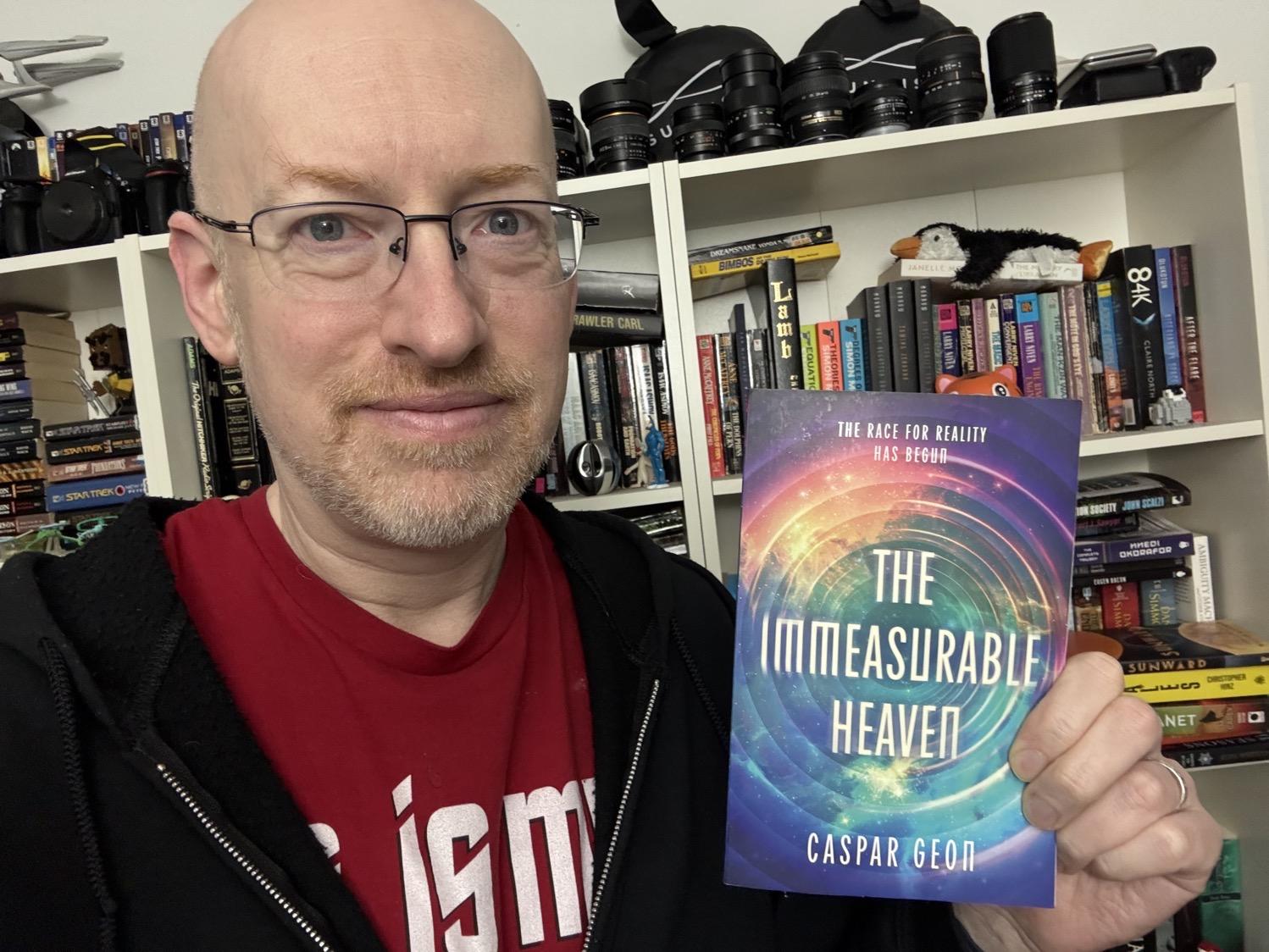
Book 8 of 2026: The Immeasurable Heaven by Caspar Geon.
Sixth Philip K. Dick award nominee of the year. As such, not reviewed.
Mirrored from Eclecticism.
Hey, look, it’s an actual weekly update! Exciting stuff, this. (For certain values of “exciting”.)
🚗 After last week’s unexpected car adventures, which ended well, but were not exactly un-stressful, we’ve been taking it easy this weekend.


Finished William Alexander’s Sunward, another of this year’s Philip K. Dick Award nominees. Just two to go and I’ll have them all read!
We watched the first two episodes of the Scrubs revival, and so far, they’re off to a good start, feeling much more like the first few seasons of the original run than the last few.
This afternoon we watched the recent I Know What You Did Last Summer reboot/sequel. It was a mildly entertaining bit of nostalgia for ’90s teen horror, but with several plot holes. In the end, while it doesn’t need to be actively avoided, neither does it need to be intentionally sought out.
One more Difficult Listening Hour practice session went live today.
Friday Nine Inch Nails released a remix album version of the TRON: Ares soundtrack, TRON Ares: Divergence, which found its way into my library when I got home that day.
Colin Gorrie at Dead Language Society: How far back in time can you understand English? (Internet Archive version of a Substack original): “It’s a thousand years of the English language, compressed into a single blog post. ¶ Read it and notice where you start to struggle. Notice where you give up entirely. Then meet me on the other side and I’ll tell you what happened to the language (and the blogger).” I was fine through 1300, started struggling at 1200, and was lost at 1100.
David Smith at The Guardian: ‘We’re losing accessibility’: America says goodbye to the mass-market paperback: “For generations of readers, the gateway to literature was not a hushed library or a polished hardback but a wire spinner rack in a supermarket, pharmacy or railway station. There, amid chewing gum and cigarettes, sat the mass-market paperback: squat, roughly 4in by 7in and cheap enough to be bought on a whim.¶ But the era of the ‘pocket book’ is drawing to a close. ReaderLink, the biggest book distributor in the US, announced recently that it would stop distributing mass-market paperbacks. The decision follows years of plummeting sales, from 131m units in 2004 to 21m in 2024, and marks the end of a format that once democratised reading for the working class.”
Ryan Moulton: The Hunt for Dark Breakfast: “Breakfast is a vector space. You can place pancakes, crepes, and scrambled eggs on a simplex where the variables are the ratios between milk, eggs, and flour. We have explored too little of this manifold. More breakfasts can exist than we have known.”
Tom BH: The Longest Line Of Sight: “The place on Earth from which you can, in theory, see further than any other is between an unnamed Himalayan ridge near the Indian-Chinese border and Pik Dankova in Kyrgyzstan. It is just over 530km.”
Mirrored from Eclecticism.
Another practice session with another random selection of whatever happens to come to mind in the moment.
Mirrored from Eclecticism.
Once again, I missed a week. These things happen! So here we are.
The biggest bits of the last two weeks at work were two afternoons on Zoom for the winter DSSC conference, connecting with disability services workers across the state’s college system, and finishing my annual performance review. Both went well, and for the latter, everyone still likes me, and I have a good set of goals for the next year.
On the home front, our big adventure last weekend was heading into Seattle on Saturday for an(other) anti-ICE protest. This one was primarily organized by Seattle-area higher education unions, and was then joined by health care and tech unions. Ended up being larger than we expected at first, with a rally at Seattle Central College and then a march down to the Federal Building. No clashes, no issues, and a good gathering of like-minded educators (including a co-worker who came along with us), healers, techies, and whomever else wanted to join in. Photos are in this Flickr album.
I’d already had plans to head out to the Mercury to get some goth clubbing in that night, so rather than having me drive back and forth from home to protest to home to club to home, we just got a hotel room nearby. After the protest we got set up in our hotel room, had dinner at a local favorite restaurant (the Annapurna Café), and then my wife got a nice quiet night in a hotel room while I went out bouncing around in a dark goth-y club for a few hours. Sunday we had a lazy, slow morning, came back home, and that was that.
This weekend was a slow Saturday of chores and dozing in front of the Olympics. We’d watched the opening ceremony on Friday evening and, well, were more underwhelmed than overwhelmed.
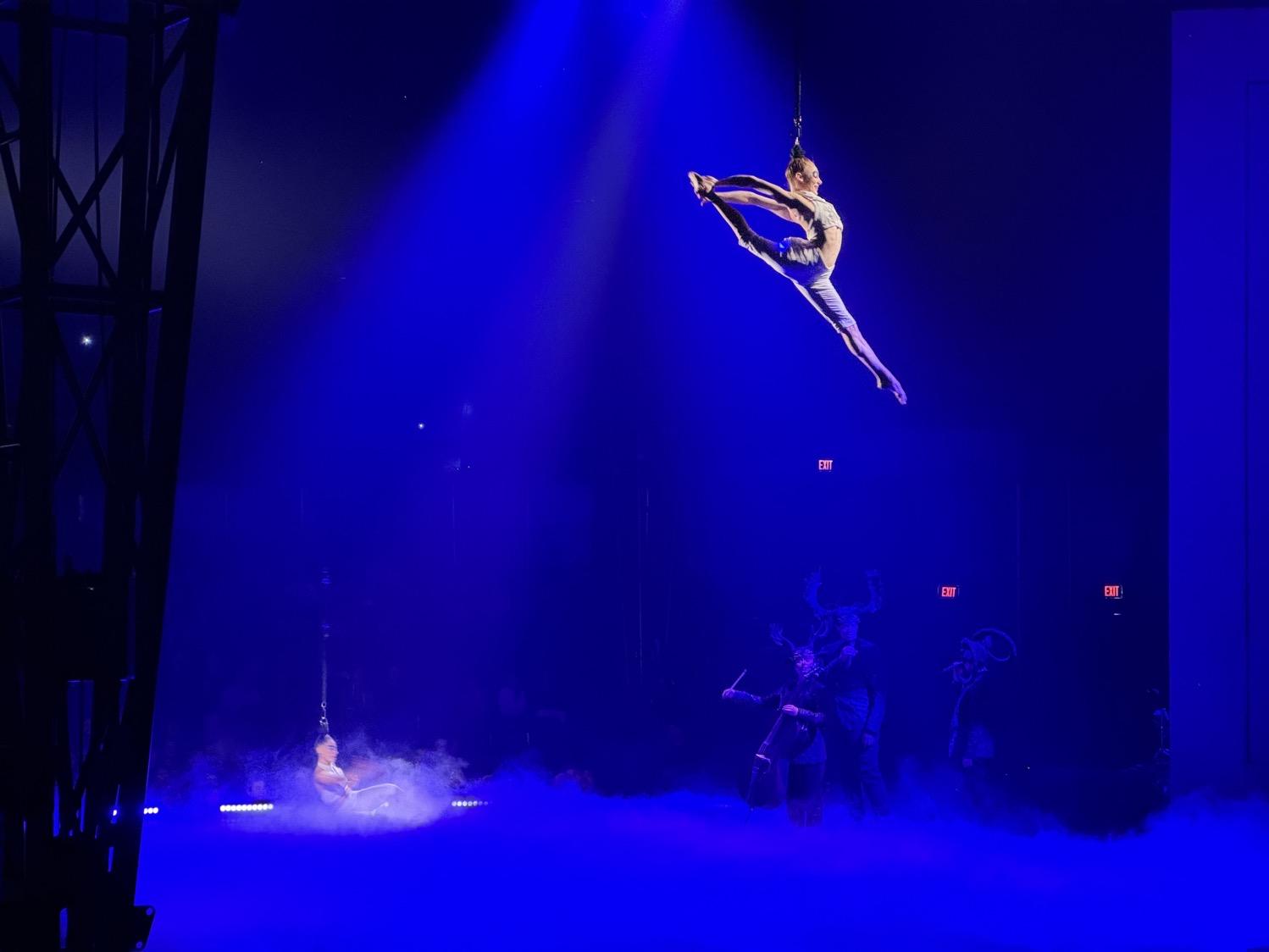
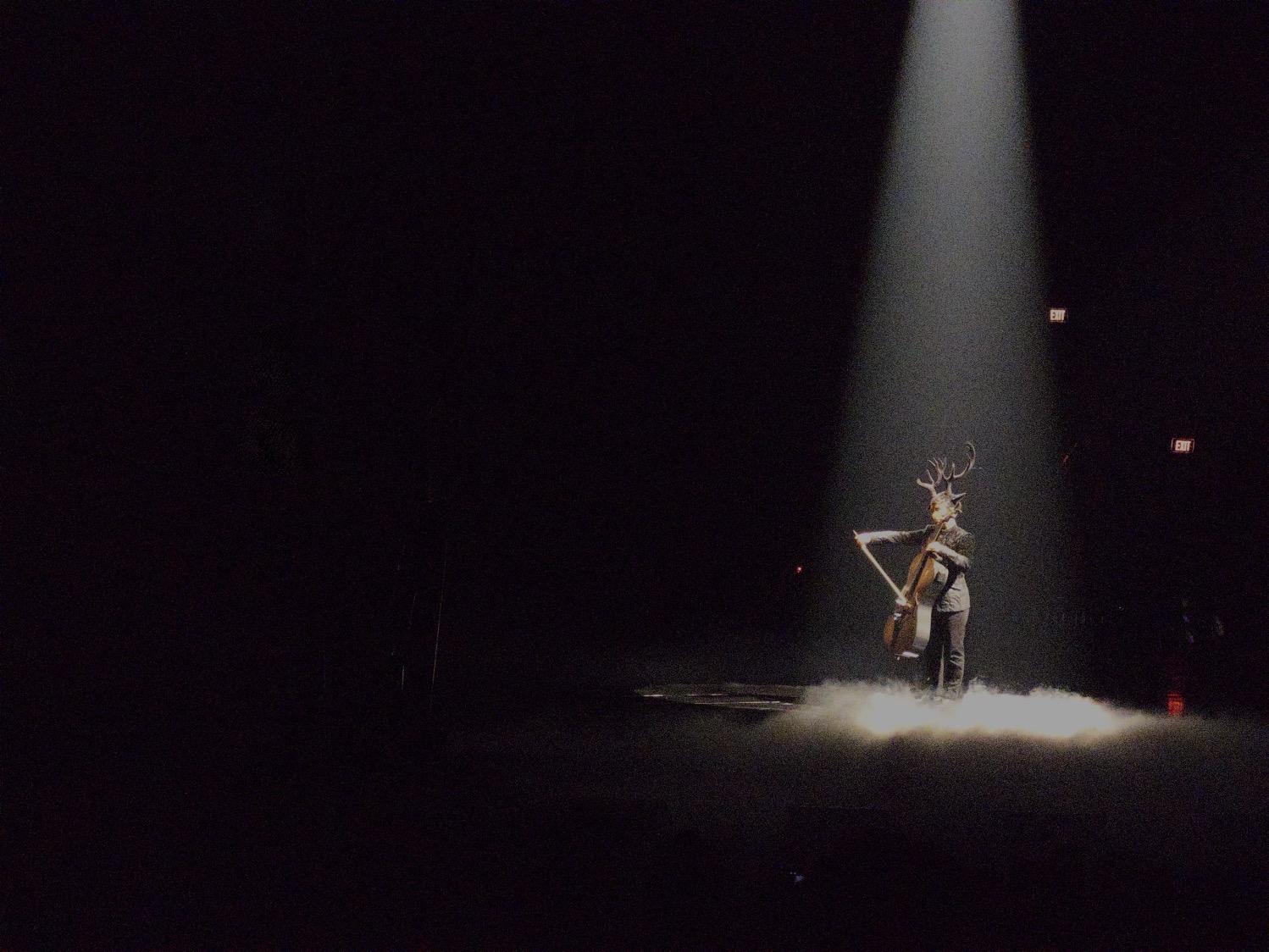
Today we went out to see Cirque du Soleil’s Echo, which just opened here. Really, really neat show — this was our first time seeing a CDS show, and it was totally worth it.




In addition to the little mini-review of the Winter Olympics opening ceremony already linked above, I also had a bit of a bit of a rant on Mastodon about modern Star Trek designing things that look neat rather than feel real. (I actually originally posted it on Bluesky, but it was on Mastodon where I actually got responses and engagement.)
I finished my second of this year’s Philip K. Dick nominees, Oliver K. Langmead and Aliya Whiteley’s City of All Seasons, and have started my third, M. R. Carey’s Outlaw Planet.
We watched the one-off Muppet Show revival, and really enjoyed it. I’ve seen a lot of other people also saying how much they enjoyed it, so hopefully it does get picked up for a full revival.
I found a 2023 article where Consequence posted a list of their picks for the 50 Best Industrial Songs of All Time, and while like any such list, not every choice is one I’d make, it’s not bad. While reading it, I realized that I had most of the tracks on the list already, so I went on a small binge and picked up those I didn’t. So I now have a playlist to match the article, and have been enjoying it and the new additions to my collection.
Plus, these were released recently:
Accessible Social: “Accessible best practices for social media content: Learn how to create a more inclusive online experience one post at a time.”
Laura Kalgan: Accessibility for Everyone: A free edition of this 2017 book on accessibility. Some details might have changed, but accessibility best practices remain the same.
Adam Serwer in The Atlantic: Minnesota Proved MAGA Wrong (gift link; here’s an archive.is link in case the gift link ever expires): “I don’t know what the feds expected when they surged into Minnesota. …what they discovered in the frozen North was something different: a real resistance, broad and organized and overwhelmingly nonviolent, the kind of movement that emerges only under sustained attacks by an oppressive state. Tens of thousands of volunteers—at the very least—are risking their safety to defend their neighbors and their freedom.”
Daphne Carr at Pitchfork: Understanding the LRAD, the “Sound Cannon” Police Are Using at Protests, and How to Protect Yourself From It: “Short-term exposure to loud noise like the LRAD’s deterrent tone may cause a sensation of stuffed or ringing ears, known as tinnitus, which can cease minutes after the exposure or last for days. Other sound injury symptoms include headaches, nausea, sweating, vertigo, and loss of balance. Signs of more serious injury include vomiting and mucus or blood from the ears. Exposure to acute loud sounds can tear eardrums and destroy hair cells in the cochlea, which causes permanent hearing loss.”
Robert F. Worth at The Atlantic: Welcome to the American Winter (archive.is link of a paywalled original): “Again and again, I heard people say they were not protesters but protectors—of their communities, of their values, of the Constitution. Vice President Vance has decried the protests as ‘engineered chaos’ produced by far-left activists working in tandem with local authorities. But the reality on the ground is both stranger and more interesting. The movement has grown much larger than the core of activists shown on TV newscasts, especially since the killing of Renee Good on January 7. And it lacks the sort of central direction that Vance and other administration officials seem to imagine.”
Cheyanne M. Daniels at Politico: Third ‘No Kings’ nationwide protest planned for March: “The group behind the nationwide ‘No Kings’ protests are planning their fourth demonstration of President Donald Trump’s second term — and are anticipating even greater turnout than their earlier rallies.”
Sarah Jeong at The Verge: Best gas masks: “There isn’t a lot of reliable information out there about how to buy a gas mask, especially for the specific purpose of living under state repression. But hopefully after reading this guide you’ll feel equipped to make an educated decision.”
Mia Sato at The Verge: The rise of the slopagandist (gift link; here’s an archive.is link in case the gift link ever expires): “We mostly talk about it in the context of AI-generated material, but slop does not need to be synthetic — AI slop is just a subgenre of a larger type of content that is made quickly and cheaply and poorly. The same lukewarm financial advice peddled by thousands of literal talking heads on Instagram Reels is slop. Falsehoods and oversimplifications about breaking news or contentious celebrity drama that snowball to millions of views is slop. Engagement bait is slop. The president’s social media posts are slop. The main function of slop is to take something from you: your time, your attention, your trust. It is passive in that it requires nothing from viewers but to sit back and consume it. Slop is boring, repetitive, and often inexpensive to make — the natural evolution of an internet built for scale and ruthless optimization.”
Christian Paz at Vox: Minneapolis is showing a new kind of anti-Trump resistance (archive.is link of a paywalled original): “In the Twin Cities area, meanwhile, this activism is well-organized; but it’s not a traditional, anti-government protest movement of the likes we saw during President Donald Trump’s first term. Some have called this new model ‘dissidence’ or ‘neighborism’ — or, more traditionally, ‘direct action.’ As one organizer described what’s happening in the city, ‘it’s kind of unorganized-organized.'”
Just the Browser: “Just the Browser helps you remove AI features, telemetry data reporting, sponsored content, product integrations, and other annoyances from desktop web browsers. The goal is to give you ‘just the browser’ and nothing else, using hidden settings in web browsers intended for companies and other organizations.” For Google Chrome, Microsoft Edge, and Firefox.
Minifigure Scanner: Use this website on your phone to check which figure is in that blind bag before you buy it.
Mirrored from Eclecticism.


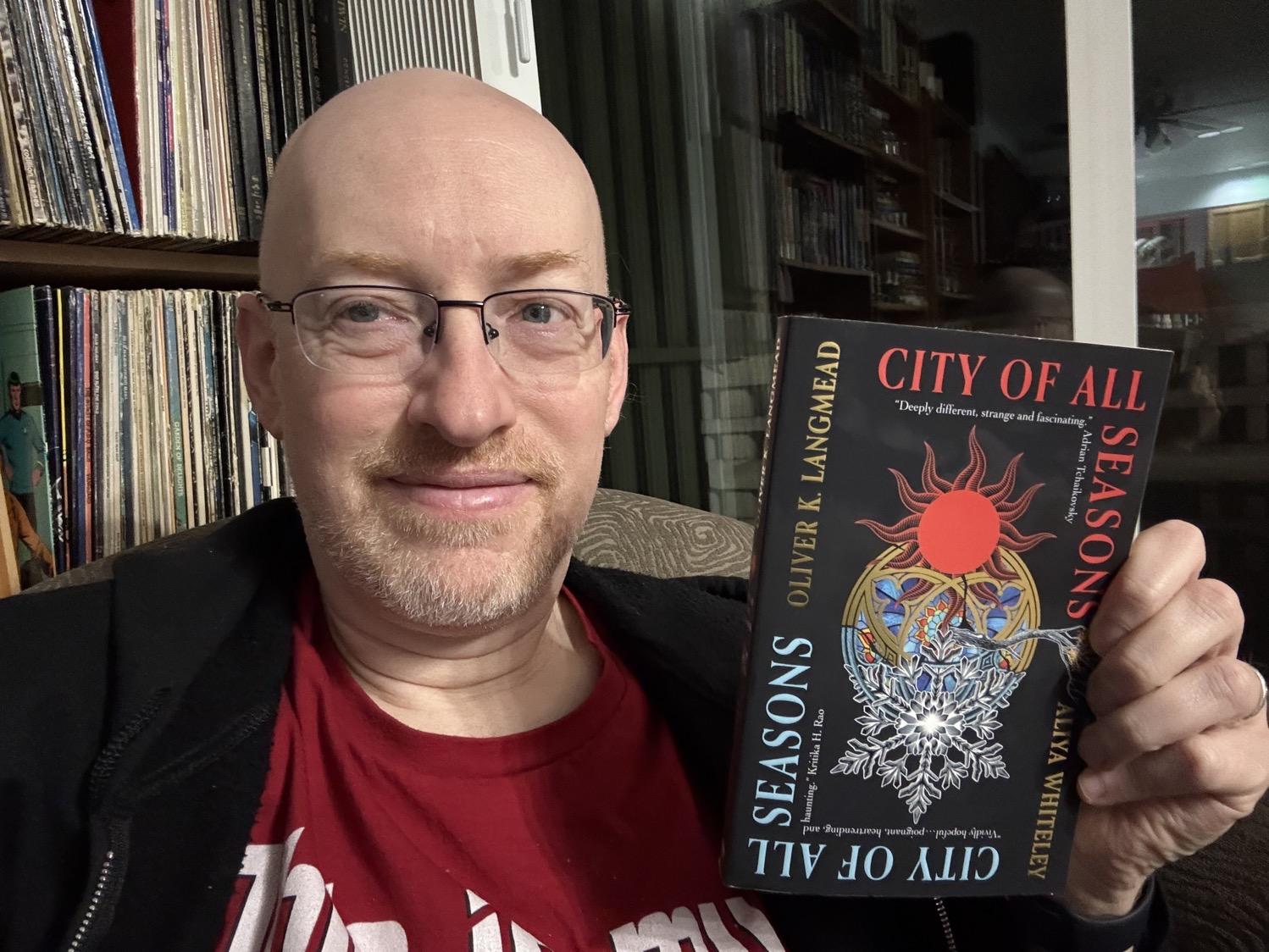
Book 4 of 2026: City of All Seasons by Oliver K. Langmead and Aliya Whiteley.
Second Philip K. Dick award nominee of the year. As such, not reviewed.
Mirrored from Eclecticism.
It’s been quite a couple of weeks, hasn’t it?
Two weeks ago, I caught a particularly nasty cold. It was bad enough that we went by urgent care to get tested for flu or Covid. Thankfully, neither of those popped positive, so it really was just a cold, but it meant that I missed a couple days of work. If you can avoid getting the crud this winter (or ever, really), I recommend it; it sounds like everything that’s going around right now is knocking people on their butts.
Over the weekend, we went to the Cougar Mountain Zoo, which we hadn’t explored before. It’s a smaller zoo, but very cute, with a neat collection of bronze statues of animals scattered throughout the grounds. Photos are in a Flickr album as usual.
This past week at work went pretty well, wrapping up with an event where we collaborated with the neurodiversity in education support group Roots2Wings. Highline’s Accessibility Resources department was there in several areas; my area was tabling as part of an accessible technology immersive lab, along with representatives from several other schools and organizations. Not a bad way to wrap up the week.
Out in the wider world, of course, things continue to be an ongoing nuclear dumpster fire. Unsurprisingly, the link roundup at the end of this post will not just be longer than usual (given that this is a two-week catchup), but pretty focused on the wider political shitshow. Maybe eventually things will improve, but for now…oof. Take care of yourselves.

We did not enjoy Thunder Force (2021).
I’m thinking I might start to try categorizing these, particularly when they get this long…
Unstream: Find your favorite music on alternative platforms, directly support the artists you love, and move off streaming.
Iceout.org: Tracking ICE sightings, interactions, and abductions across the country. “Our objective is to collect community-submitted information about possible ICE activity to help inform the public and raise awareness. All reports are reviewed by our moderator team before appearing on the map.”
Danielle Chelosky at Stereogum: Bandcamp Bans AI Music: “Bandcamp is banning AI music. ¶ The platform made the announcement today via Reddit….”
Amanda Silberling at TechCrunch: Amazon’s Ring to partner with Flock, a network of AI cameras used by ICE, feds, and police: “Amazon’s surveillance camera maker Ring announced a partnership on Thursday with Flock, a maker of AI-powered surveillance cameras that share footage with law enforcement.”
Anil Dash: How Markdown Took Over The World: “If markup is complicated, then the opposite of that complexity must be… markdown. This kind of solution, where it’s so smart it seems obvious in hindsight, is key to Markdown’s success. John worked to make a format that was so simple that anybody could pick it up in a few minutes, and powerful enough that it could help people express pretty much anything that they wanted to include while writing on the internet.” I’ve been using Markdown regularly for, well, decades now, since shortly after it was released, thanks to word spreading among the MovableType community. Nearly every post on this blog is Markdown (or a mix of Markdown and HTML).
Ryan Broderick at Garbage Day: We’re all just content for ICE: “…ICE agents make no effort to hide what ‘side’ they’re on. I’ve seen up close how intertwined the twin engines of the Trump regime are. Brutal state violence and hysterical right-wing internet content work together in lockstep. According to The Washington Post, the agency is under pressure from The White House to create as much content as possible. Which is why ICE agents have a phone in one hand and a gun in the other. But it goes beyond that.”
Miles Klee at Rolling Stone: Professor Forbidden To Teach Plato Assigns Article About University Censorship Instead: “Rather than teach a different course, Peterson elected to revise his syllabus, replacing the Plato readings with an article in The New York Times about the university’s censorship of the original material. Administrators have approved the change, he says, and he’s looking forward to teaching it in the context of free speech and academic freedom issues. ‘It’s going to be very, very fun,’ he says. Students who received the amended syllabus also found it annotated to highlight exactly what the school had forbidden Peterson from assigning and which alternative material had been added as a result.”
Ian Millhiser at Vox: The Supreme Court is about to confront its most embarrassing decision (archive.is link of a paywalled original): “It appears, in other words, that Americans around the time of the nation’s founding and the ratification of the Second Amendment were quite comfortable with laws banning gun possession on private land without the land owner’s permission. That should be enough to uphold Hawaii’s law under Bruen’s ‘historical tradition of firearm regulation’ standard. But it’s not that simple.”
Madison McVan at the Minnesota Reformer: In the car with the Minneapolis community patrols working to disrupt ICE operations: “Neubauer and O’Keefe started patrolling their south Minneapolis neighborhood recently as the Trump administration has ramped up its mass deportation campaign in Minnesota, sending in thousands of ICE and Border Patrol agents, with more on the way. They are some of the many thousands of Twin Cities residents who have come together over the past year to protest ICE and divert the agents from their mission, often resulting in tense confrontations.”
Sarah Raza at the AP: Minneapolis duo details their ICE detention, including pressure to rat on protest organizers: “According to organizers and an American Civil Liberties Union lawsuit, immigration officers have also been surveilling activists who have been observing their activities in the Twin Cities, violating their First Amendment rights. And Sigüenza, who like his friend O’Keefe is a U.S. citizen, said an immigration officer who questioned him Sunday even offered him money or legal protection if he gave up the names of organizers or neighbors who are in the country illegally.”
Laura Jedeed at Slate: You’ve Heard About Who ICE Is Recruiting. The Truth Is Far Worse. I’m the Proof.: “Somehow, despite never submitting any of the paperwork they sent me—not the background check or identification info, not the domestic violence affidavit, none of it—ICE had apparently offered me a job.”
Solarbird: What’s Permuting Itself Around In My Head, Part Two: The Election: “Christ, this all sounds so stupid, doesn’t it? It sounds like such conspiracy theory bullshit. But I remind myself and you both that this was the 2020-2021 plan, and they almost pulled it off. With someone like J.D. ‘Couchfucker’ Vance in place of Mike Pence, you know the elector count would’ve stalled out. It’s not even a question. ¶ So as thick, as just fucking dumb as all this is… ¶ …we have to be ready for it. At very least, we have to be watching very carefully for the same progress steps as were clearly visible last time.”
Mike Masnick at TechDirt: Everyone Knows Our Mad King’s Greenland Obsession Is Insane. Why Won’t Congress Stop It?: “A President who openly admits his foreign policy is driven by personal grievances over awards he didn’t receive is not fit for office. A President who threatens to invade NATO allies and won’t rule out military force against them is a danger to global stability. A President who doesn’t understand (or doesn’t care) that the Nobel Committee is independent from the Norwegian government has no business conducting diplomacy. ¶ These aren’t controversial statements. They’re obvious. Everyone knows it. ¶ But none of the political elite want to act.”
Sam Levin at The Guardian: ICE detains five-year-old Minnesota boy arriving home, say school officials: “Liam Ramos, a preschooler, and his father were taken into custody while in their driveway, the superintendent of the school district in Columbia Heights, a Minneapolis suburb, said at a press conference on Wednesday. Liam, who had recently turned five, is one of four children in the school district who have been detained by federal immigration agents during the Trump administration’s enforcement surge in the region over the last two weeks, the district said.”
Meg Anderson at NPR: The ICE surge is fueling fear and anxiety among Twin Cities children: “Parents, teachers, counselors and health care workers across the Twin Cities say many Minnesota children are living in fear or seeing those fears realized. They worry loved ones will be taken away, that they’ll witness violence, or get hurt themselves.”
Sofia Barnett at The Minnesota Star Tribune: Two women, detained by ICE, say they helped agent having seizure: “By the time emergency medical responders arrived, the women had been holding the agent steady for several minutes. They were detained but acting as first responders to the man who had detained them. ¶ Once the agent was transferred to medical care, Amundson and Zemien were placed into another vehicle and driven to Whipple anyway. ¶ ‘I asked if we could just go home,’ Amundson said. ‘I said, ‘We just saved his life. Is that cool with you?’ And they said no.'”
Derek Guy at Politico: There’s More to Greg Bovino’s Coat Than You Think: “Like field shirts, trenchcoats and combat boots, the greatcoat belongs to a shared military vocabulary that predates fascism and has been used by military forces around the world. […] Bovino’s coat may not be a Hitlerian symbol, but it is a symbol for something else: the increasing militarization of immigration enforcement.” I’m not entirely sure I agree with part of the article’s premise, that Bovino isn’t referencing the Nazi’s uniforms — from here, there’s no way to be sure, but I wouldn’t be at all surprised if he was — but the history and fashion shift over the years is interesting.
Dan Sinker: We Are All We Have: “We are all we have and the more you do, today, to reach out in your neighbors, your town, your community, the better off everyone is. ¶ Right now feels impossible, and unfortunately there’s a lot of impossible still to come. There’s no fast fix, no one easy trick to defeating fascism. ¶ But. ¶ But honestly I’ve never felt more hopeful that we actually have what it takes. That we can do the impossible, even when it seems insurmountable. ¶ Because what it takes is us.”
Mirrored from Eclecticism.
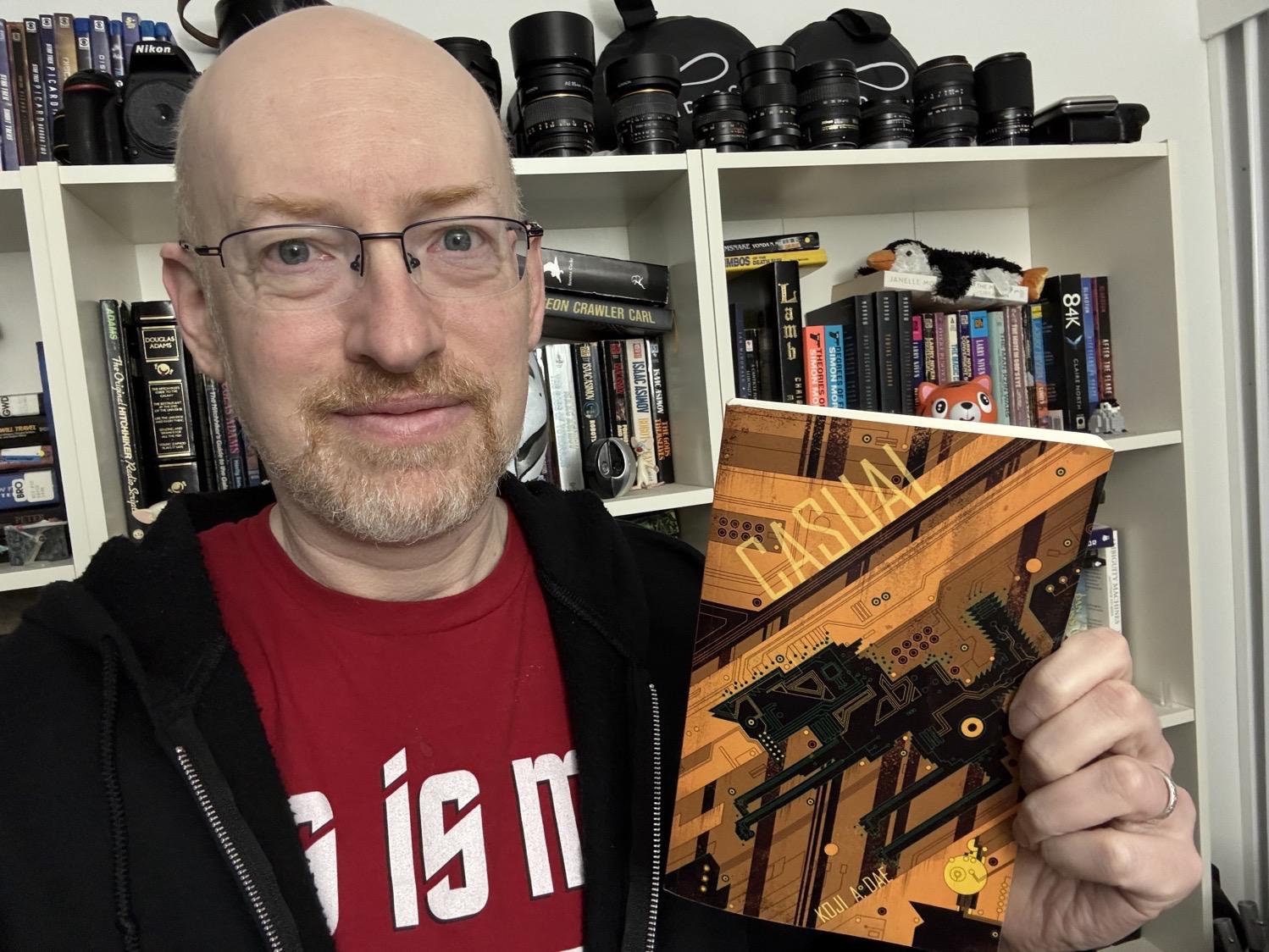
Book 3 of 2026: Casual by Koji A. Dae.
First Philip K. Dick award nominee of the year. As such, not reviewed.
Mirrored from Eclecticism.
Just a brief update to my prior Affinity by Canva Accessible PDF Output Test post. As Affinity recently updated to v3.0.2, I ran the test again.
The results are nearly identical; the only change I noticed was a regression: The footer text on the master page now appears once at the very bottom of the tag tree instead of being properly artifacted out. In the prior version of this test using Affinity 3.0.1, the footer text was properly omitted from the tag tree.
Updated versions of the test file and output may be downloaded if you’d like to play along at home:
Mirrored from Eclecticism.
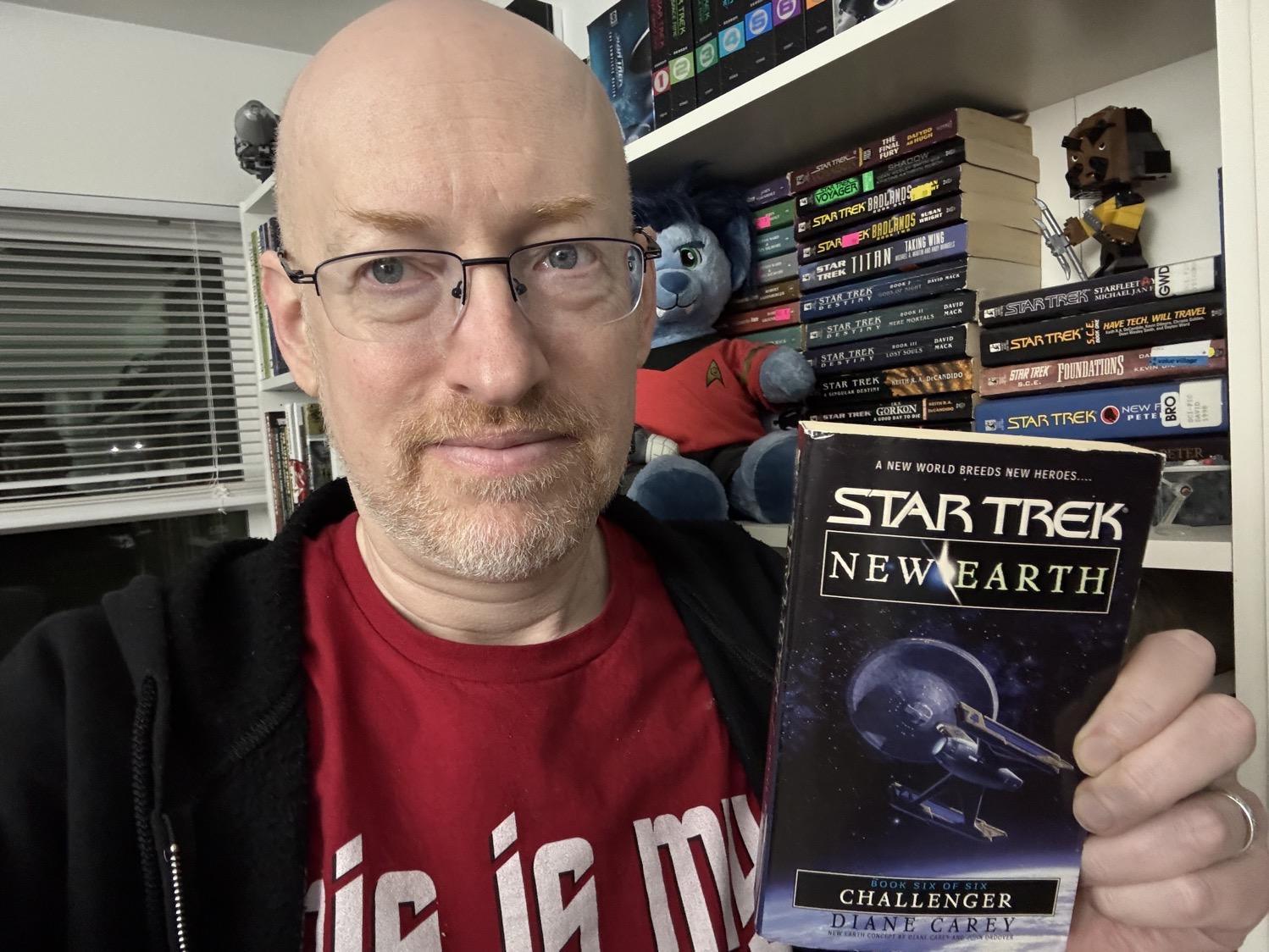
Book 2 of 2026: Challenger by Diane Carey: ⭐️⭐️⭐️.
The tone of this one was really odd. Much of it is centered on the main crew of another ship, which is fine in and of itself, but there was something about their interactions that was so flippant and irreverent that for me, it blew right past “different ship with a different, quirkier feel than the Enterprise” all the way to “how are these people functioning with each other, within Starfleet, or in the universe in general?” As a capstone to the series, it wrapped up all the major plot points well enough, but the odd tone was really off-putting for me.
Mirrored from Eclecticism.
Saturday night we went out to see one of the 40th anniversary theatrical showings of Labyrith. I don’t remember seeing it in the theater when it came out — I would have been 12, so right in the target range, but I have no memory of doing so — and it was a real treat to be able to do this. It holds up well!
Sunday we headed up to Seattle’s Cal Anderson Park for one of this weekend’s “ICE Out for Good” rallies. I’ve uploaded my full photo set to Flickr, as usual.

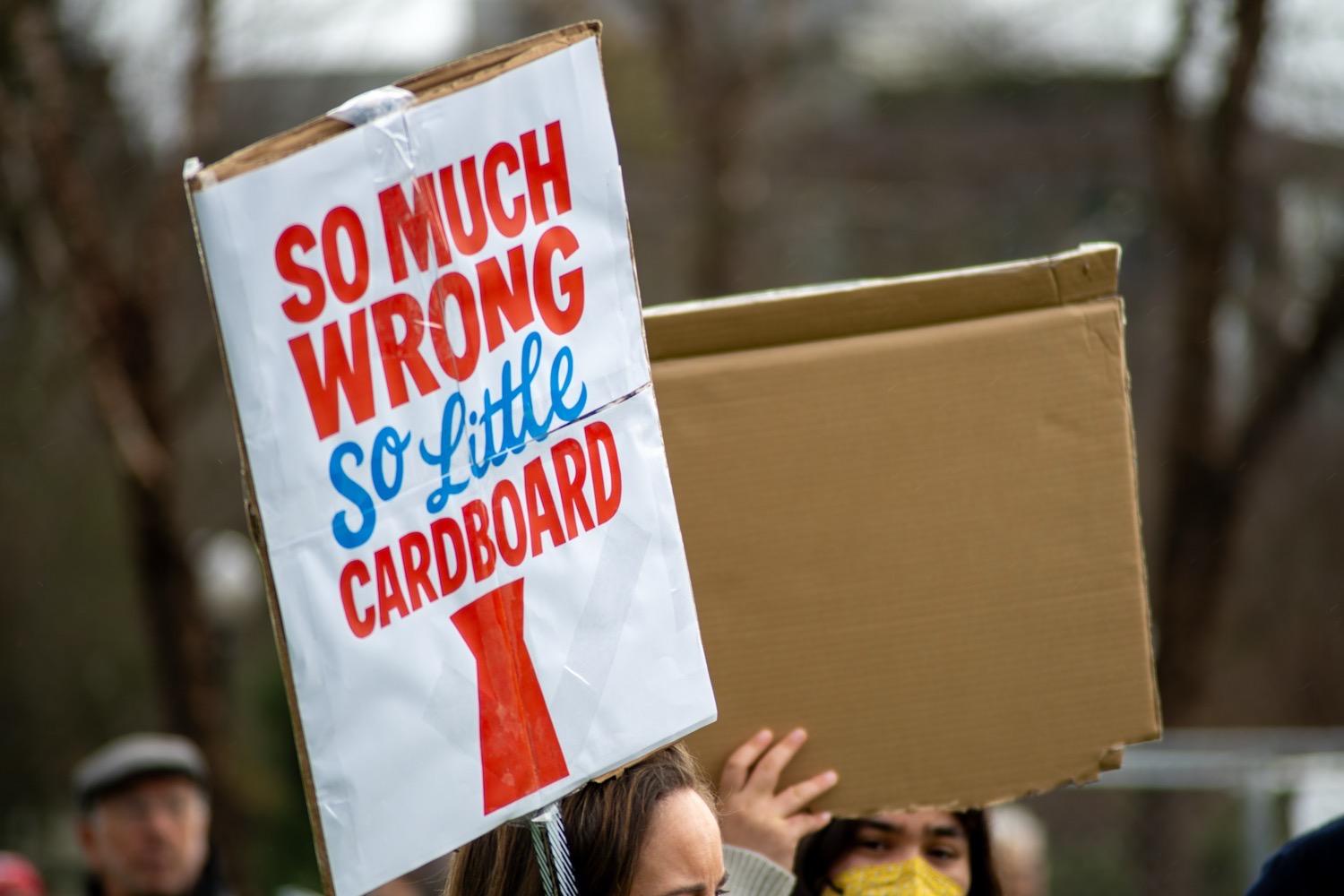
Niki Tonsky: It’s hard to justify Tahoe icons: “The main function of an icon is to help you find what you are looking for faster. ¶ Perhaps counter-intuitively, adding an icon to everything is exactly the wrong thing to do. To stand out, things need to be different. But if everything has an icon, nothing stands out.”
Casey Newton at Platformer: Debunking the AI food delivery hoax that fooled Reddit: “For most of my career up until this point, the document shared with me by the whistleblower would have seemed highly credible in large part because it would have taken so long to put together. Who would take the time to put together a detailed, 18-page technical document about market dynamics just to troll a reporter? Who would go to the trouble of creating a fake badge? ¶ Today, though, the report can be generated within minutes, and the badge within seconds.”
Stefano Marinelli: The Virtue of Finished Things: “I received an email yesterday morning. It was a thank-you note for one of the open-source tools I created and maintain. The sender explained how useful the software was for their specific needs, and as always, this brought me an immense sense of satisfaction. ¶ But at one point in the email, a question appeared – one that has become a recurring theme in the modern software world: ‘I notice there haven’t been any new releases for about ten months. Should I consider the project abandoned?'”
Teresa Duryea Wong at Quiltfolk: One Year After an Uncomfortable Choice for Best in Show: “This is a protest quilt. It was made by an artist whose day job puts her on the front lines of one of the most grotesque realities in America today. She is a teacher. ¶ What We Will Use as Weapons: A List of School Supplies is the title for this provocative work of art that features school supplies hurling toward the center on the front and an assault rifle on the back. This long, narrow quilt is the actual size and shape of a door. An outline of a human is stitched through the layers. On the front, the person is meant to represent a shooter, and on the reverse side, a teacher.”
Jacquelyn Jimenez Romero at the South Seattle Emerald: A Fistful of Loud: Seattle Neighbors Build Whistle Kits to Protect Immigrants From ICE: “‘By making noise, you bring visibility to what is happening on the street,’ said Kate Macfarlane, who started the WA Whistles project. ‘ICE relies on shock tactics and moving in very quickly … it turns [an] otherwise pretty silent abduction into a loud, highly visible opportunity for neighbors to rally.'”
WA Whistles: “Our purpose is to spread whistles throughout WA to help communities protect themselves against ICE.”
Joseph Cox at 404 Media: DHS Is Lying To You (archive.is link of a paywalled original): “At least four videos show what really happened when ICE shot a woman in Minneapolis on Wednesday. DHS has established itself as an agency that cannot be trusted to live in or present reality.”
Melissa Turniten at Fox9 KMSP: Minneapolis ICE shooting: Eyewitness accounts contradict ICE statement: “Minneapolis Mayor Jacob Frey calls the claim the shooting was self-defense ‘bullshit’ and is a ‘garbage narrative’ after seeing video of the shooting. Minnesota Gov. Tim Walz has also seen the video, saying ‘Don’t believe the propaganda machine. The state will ensure there is a full, fair, and expeditious investigation to ensure accountability and justice.'”
Jennifer Mascia at The Trace: How Many People Have Been Shot in ICE Raids?: “Using Gun Violence Archive data and news clips, The Trace has identified 16 incidents in which immigration agents opened fire and another 15 incidents in which agents held someone at gunpoint since the crackdown began. At least three people have been shot observing or documenting immigration raids, and five people have been shot while driving away from traffic stops or evading an enforcement action.”
Joseph Cox at 404 Media: Inside ICE’s Tool to Monitor Phones in Entire Neighborhoods (archive.is link of a paywalled original): “A social media and phone surveillance system ICE bought access to is designed to monitor a city neighborhood or block for mobile phones, track the movements of those devices and their owners over time, and follow them from their places of work to home or other locations, according to material that describes how the system works obtained by 404 Media.”
Andy Greenberg and Lily Hay Newman at Wired: How to Protest Safely in the Age of Surveillance: “Two key elements of digital surveillance should be top of mind for protestors. One is the data that authorities could potentially obtain from your phone if you are detained, arrested, or they confiscate your device. The other is surveillance of all the identifying and revealing information that you produce when you attend a protest, which can include wireless interception of text messages and more, and tracking tools like license plate scanners and face recognition. You should be mindful of both.”
Joanna Kavenna at The Guardian: Mass surveillance, the metaverse, making America ‘great again’: the novelists who predicted our present: “From Jorge Luis Borges to George Orwell and Margaret Atwood, novelists have foreseen some of the major developments of our age. What can we learn from their prophecies?”
Ari Anderson at The Stranger: What I Learned About the Future at Seattle WorldCon: “Like the standing on threshold of a cosmic portal, Seattle’s convention center buzzed with bards, fae, aliens, monsters, warriors and spaceships, far away planets and misty forests, innumerable stories of heartbreak and triumph, all tantalizingly within reach between the covers of a thousand books.”
Elizabeth Lopatto at The Verge: Tim Cook and Sundar Pichai are cowards: “Since X’s users started using Grok to undress women and children using deepfake images, I have been waiting for what I assumed would be inevitable: X getting booted from Apple’s and Google’s app stores. The fact that it hasn’t happened yet tells me something serious about Silicon Valley’s leadership: Tim Cook and Sundar Pichai are spineless cowards who are terrified of Elon Musk.”
Julia Shumway at the Washington State Standard: Federal judge blocks Trump election order, siding with Oregon, Washington: “A federal judge in Washington state on Friday permanently blocked the Trump administration from enforcing a 2025 executive order that sought to require voters prove citizenship and that all ballots be received by Election Day.”
Mirrored from Eclecticism.
Happy holidays (part two)!
Well, we wrapped up 2025…and as happy as we were to see 2025 end, 2026 is already looking to keep the dumpster fires burning bright.
At work, the week was fine. Back in the office this week, though as it was still in the holiday break, it was another pretty slow week. Next week classes start, so things will pick back up again. The slowdown is always nice, but it’ll also be good to have things back to normal after the holidays.
Here at home, we had a nice quiet New Year’s Eve. It was even a bit quieter than we expected, as there weren’t as many local unsanctioned fireworks as there have been in years past.
Out in the wider world, though, we all woke up one morning just a few days into the year to discover that the US had invaded Venezuela and abducted its president and his wife. Because…sigh. We are continuing to speed run becoming everything as a country that I was brought up being told that we weren’t. And even though the older I get and the more I learn, the more obvious it is how far we always have been from the ideals we claimed to uphold, it’s still mind-boggling to be where we are now.
As I said on Mastodon: “I’m confused: Is being a brown-skinned person accused of being involved with drugs something that gets you kidnapped and forcibly kicked out of the country or kidnapped and forcibly brought into the country?”
Though really, after what we saw of Trump in his first term and so far in his second, the only thing that’s really surprising me about all of this is how many people are just…going along with it (most notably Congress — especially, but not at all limited to, the Republican party — and the Supreme Court). The system of checks and balances has apparently given up trying to either check or balance, and that’s perhaps the most troubling part of all of this.
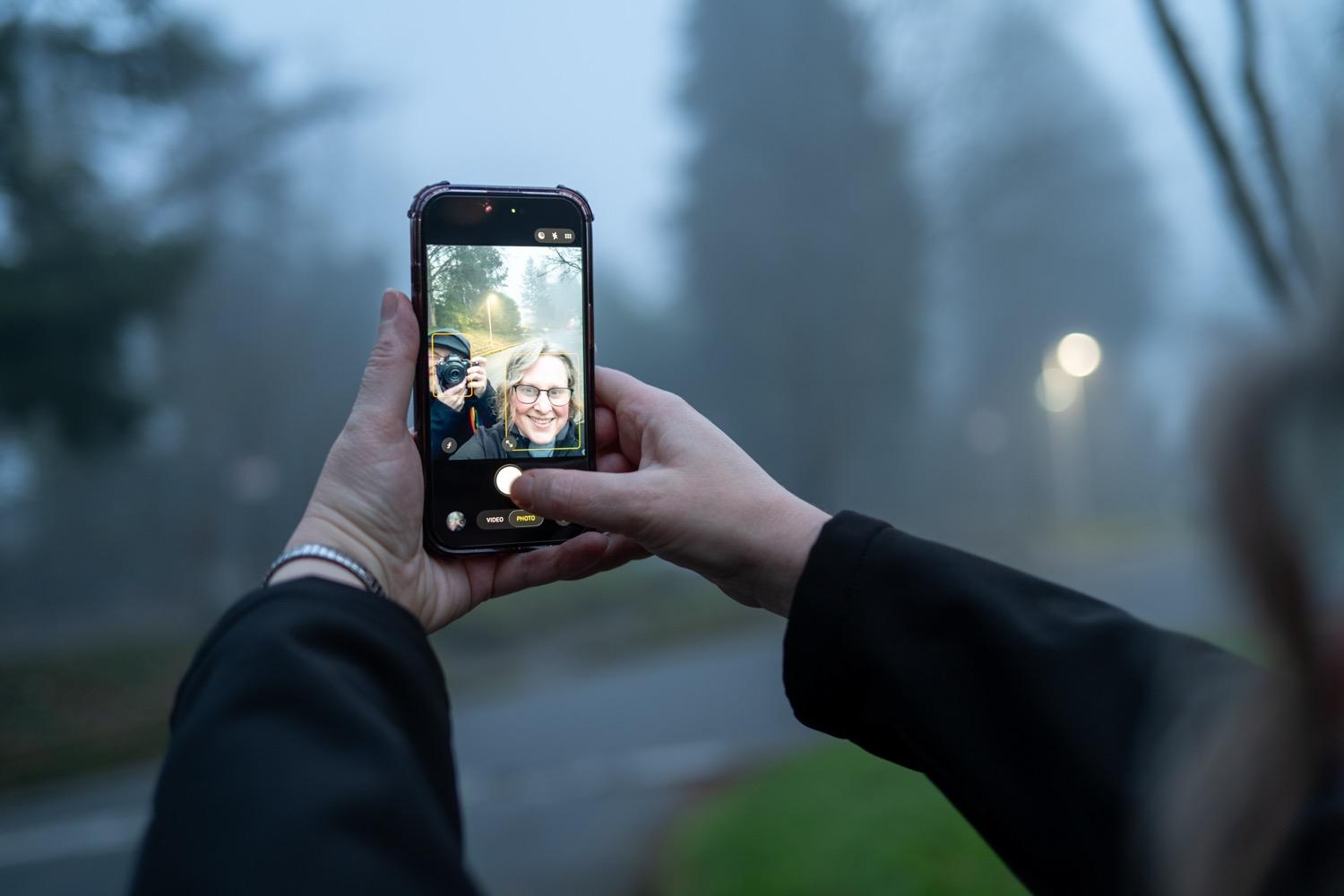

This week I recorded my responses to the current SFWA survey on AI use in the SFF writing/publishing industry, did my annual reading wrap-up for the year, and posted my resolutions for this year.
Finished my last book of the year, Rough Trails by L.A. Graf, and my first book of the year, Thin Air by Dean Wesley Smith and Kristine Kathryn Rusch, both parts of a six-book TOS-era Star Trek series.
We watched two movies over the weekend:
Mission Impossible: The Final Reckoning (2025): ⭐️⭐️: A particularly disappointing finale to the series.
NOTE: For regular readers (assuming there are any), a bit of clarification on how I link some items: I use archive.is for pages on sites that are paywalled (including sites that will only show content if adblockers are disabled) and for Substack pages (because Substack is another Nazi bar). Starting with this week’s post, I will also include links to the original pages, as not everyone has the same attitudes as I do about these things and may have subscriptions to the sites in question, not be as annoyed as I am at dealing with paywalls, ads, and the like, or have either accepted Substack as a “necessary evil” or are unaware of their problematic practices.
National Society of Tax Professionals: USPS Announces Changes to the Postmark Date System: “…while a postmark confirms the USPS possessed a mail piece on the date inscribed, that date does not necessarily align with the date the USPS first accepted possession of the item.” Potentially impactful in a number of important scenarios, including voting by mail. Undated informational page, but the rule took effect in November 2025.
Foz Meadows: Against AI (archive.is link of Substack original): “AI is unethical on a scale that SFF authors should be uniquely placed to appreciate, its evils mirroring metaphors that are older than our present civilization. AI is the cursed amulet, the magic mirror, the deal with the devil, the doppelganger that learns our secrets and steals our face; it’s a faerie illusion, leprechaun gold, the fox’s trick that gives rot the look of resplendence, the naked emperor parading with his cock out; it’s the disembodied voice that whispers let me in, the zombie virus that transforms the known into the unrecognizable, the corrupting fungi whose tendrils invade and poison. It’s the literal fucking One Ring, telling us that of course we’d use its power for good, compelling us to pick it up so that through us, it might do great evil.”
Chuck Wendig: My Open Letter to That Open Letter About AI in Writing and Publishing: “AI IS NOT INEVITABLE. ¶ The only strategy here is the sum total pushback against its uncanny horrors and its non-consensual intrusion into every corner of our world — it steals our content, guzzles our water, increases our power bills, is crammed into services we didn’t ask for it to be crammed into while also charging us more money for the “privelege.” There is no strategy here except to find the fields where the AI grows and metaphorically set them aflame. ¶ And shame and anger against corporate overreach is a powerful fire.”
Trekorama!: 3D walkthroughs of locations on various Star Trek ships, including the Enterprise 1701 (main bridge), 1701-D (main bridge, engineering, sick bay, Ten-Forward, transporter room, Picard, Data, Troi, and Worf’s quarters, and a shuttle), 1701-E (bridge), and Kelvinverse version (bridge and corridor), Defiant (deck one), Voyager (deck one, sickbay, transporter room, engineering, mess hall), Discovery (bridge, transporter room, mess hall, and corridor), and Klingon Bird of Prey (bridge), plus the real-world ISS.
David Reamer at the Anchorage Daily News: Termination dust: Its history, evolution in meaning and possible origin (archive.is link of a paywalled original): “…the history and evolution of termination dust as a turn of phrase offers education, enlightenment and entertainment. Over the decades, there have been changes in meaning and connotation. Throughout those years, it remains a significant detail of local history, a widely recognizable bit of slang whose lore maps closely against that of the town itself.”
Robin Young and Emiko Tamagawa at WBUR: ‘Wake Up Dead Man’: Rian and Nathan Johnson on blending mystery and faith in new ‘Knives Out’ movie: Brief but interesting interview touching on the religious motifs in Wake Up Dead Man.
John Scalo: Was Daft Punk Having a Laugh When They Chose the Tempo of Harder, Better, Faster, Stronger?: “I think our helmet-clad robot friends might have been making a little joke that we’ve apparently all missed. The BPM of Harder, Better, Faster, Stronger is actually 123.45.” Fun bit of music trivia, plus a bit of a peek at the difficulties of having a computer do something that seems relatively easy for humans; in this case, determining a song’s tempo.
Mirrored from Eclecticism.
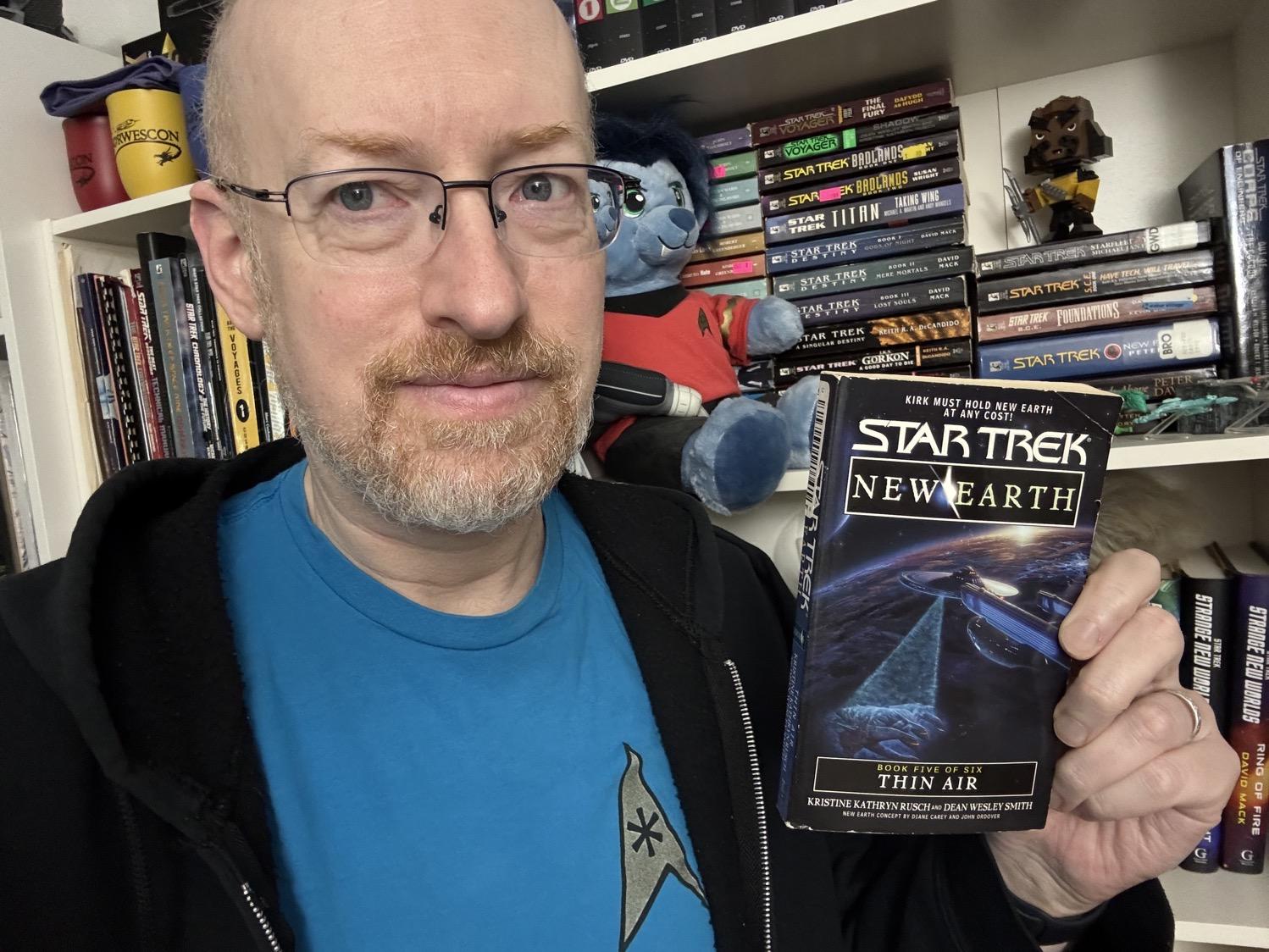
Book 1 of 2026: Thin Air by Dean Wesley Smith and Kristine Kathryn Rusch: ⭐️⭐️⭐️.
Another decent book in the series, with another crisis for the Enterprise to solve and the colonists to endure. I’m starting to wonder if they’ll actually be able to wrap up all the dangling threads in just one more book.
Mirrored from Eclecticism.
My resolutions for this year:
(That’s my Mac mini’s primary 4K monitor and secondary display, my MacBook Pro, and my iPad, iPhone, and Apple Watch, respectively. Yes, I make this same stupid joke every year, ’cause it makes me laugh.)
Mirrored from Eclecticism.
Every year, I set myself a goal of reading at least 52 books over the course of the year — an average of one a week. This year I made it to 67 books. Here’s a quick (not really) overview…

And again, the trend of the last few years holds true, with another year of primarily escapist fluff. Surprised? I’m not. Have you seen…everything? Still?
Non-fiction: Four books, counting for 6% of my reading, but I liked all four of them. On a historical bent, there was the World War II-era United States Office of Strategic Services Simple Sabotage Field Manual and Lucy Worsley’s A Very British Murder, John Tenuto and Maria Jose Tenuto’s Star Trek III: The Search for Spock: The Making of the Classic Film bridged the non-fiction world with my Star Trek fandom, and on a technical bent, Thom Hogan’s Complete Guide to the Nikon Z5II is a deep dive into the intricacies of my new camera.
Non-genre-fiction (where “genre” is shorthand — though not that short, if you include this parenthetical — for science fiction, fantasy, and horror): None, or perhaps almost none; the Nick Mamatas-edited anthology 120 Murders: Dark Fiction Inspired by the Alternative Era has a few speculative fiction entries, but as a whole probably wouldn’t be classified that way, so can count for this category.
Quality genre fiction: About the same as last year; primarily the Philip K. Dick nominees and my Hugo project, with a few others added here and there.
As usual, I read all of the books nominated for this year’s Philip K. Dick awards. However, I’m no longer posting my thoughts or review on the nominees, as I am the coordinator for the Philip K. Dick award ceremony at Norwescon. While I have no input into selecting any of the nominees or the eventual winner, I don’t want to give any appearance of impropriety. So, I’ll just read and enjoy each year’s nominees, and you all will have to make your own judgements as to your favorites.
I only added four books to my Hugo reading project, and one was somewhat accidental. Only getting through four was due to a few factors, including deciding to read the entirety of Martha Wells’s excellent The Murderbot Diaries series before attending this year’s Worldcon here in Seattle where she was a guest of honor (this also accounted for my “accidental” read, as I’d forgotten that Network Effect was a Hugo Best Novel winner), and slogging my way through Susanna Clarke’s Jonathan Strange & Mr Norrell, which took slightly over a month. Of the four I read this year, Network Effect was my favorite.
Outside of those two categories and in addition to reading all of the aforementioned Murderbot series, I also finished Lois McMaster Bujold’s Vorkosigan Saga, read two of the books in Bujold’s World of the Five Gods series (one of which, Paladin of Souls, is another Hugo Best Novel winner), and read both books of Catherynne Valente’s Space Opera series. All of those were good. Apparently it was a series binge sort of year.
Fluff genre fiction: Unsurprisingly, this once again ended up being the strong majority of this year’s reading. Lots of Star Trek novels, with a few detours here and there. And given everything that was going on in 2020 2021 2022 2023 2024 2025, it was very nice to have a bookshelf full of options that wouldn’t take a whole lot of brain power for me to disappear into. As I’ve now read most of the TOS books that have been released, most of this year’s reads were TNG-era, but I’m closing out the year with the TOS-era six-book “New Earth” series (again with “series” being something of a theme this year). That series will also start my 2026 reading, as I only got through four of the six before the end of 2025.
I’m still subscribing to two SF/F magazines (Uncanny and Clarkesworld), though I’ve slacked off on actually reading them for the past few months — not due to anything with the magazines themselves, but just because I’ve been more in the mood to work on emptying out my physical “to read” shelves. I’m not sure how much magazine reading I’ll do this coming year, but I will be continuing to subscribe, as I want both of these magazines to continue publishing, and it’ll be nice to have some back stock to dive into when I’m ready (or when I’m traveling, since these are both electronic distributions).
Finally, Storygraph’s stats on my year’s reading tell me:

On to 2026!
Mirrored from Eclecticism.
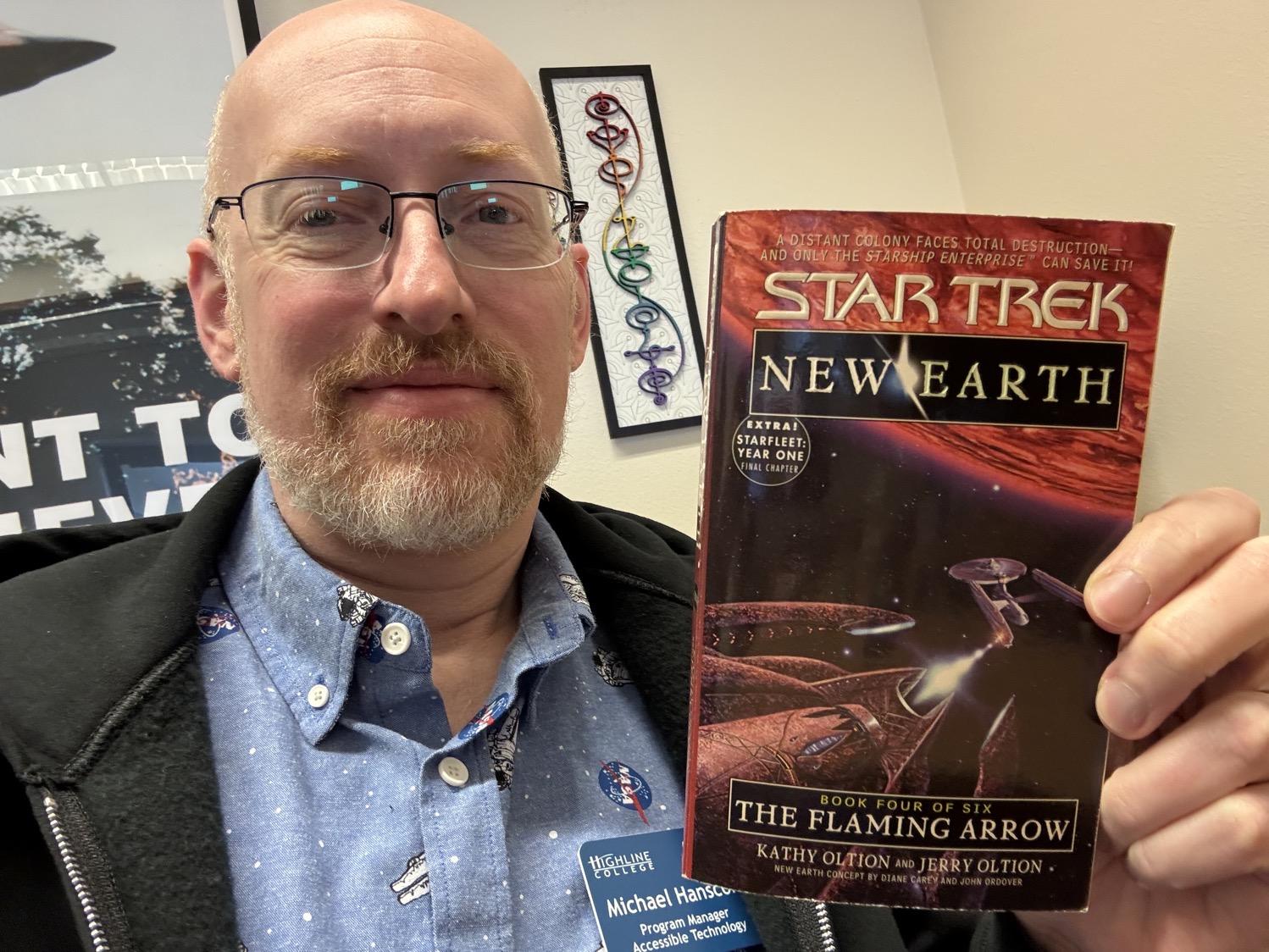
Book 67 of 2025: ⭐️⭐️⭐️
Almost a four-star, due to a particularly imaginative doomsday weapon that really had me lost as to how they were going to technobabble their way out of it. Settled on three, though, as it is a “middle book” that doesn’t stand alone on its own. Still, a more engaging entry than many middle books end up being.
Mirrored from Eclecticism.
While I’m not an SFWA member or even an author (beyond this little blog), as a lifelong reader of science fiction, I figured it was worth a few minutes to add my response to their current Survey on LLM Use in Industry. For the sake of posterity, here are my responses:
(Note: Some time ago there was an online tool to look up sources that were used in one of the earlier revisions of one of the larger LLMs; I don’t currently remember who offered the tool or the specifics of the training database being reviewed. I do remember that both this blog and the Norwescon website, of which I’ve been both author and editor of much of the content for the past 15 years, were included in the training database.)
How has your writing practice changed since the emergence of Generative AI and related LLM integrations?
(Note: The first and fourth of these options seem to contradict each other. For clarity, I either disable or, if it can’t be disabled, actively avoid using generative AI; as noted in the sidebar of this blog, I do use machine-learning/LLM-based tools such as speech-to-text transcription, but when I do, I check and edit the output for accuracy.)
Which of the following most closely resembles your position on the use of Large Language Models (LLMs) in the writing process?
My actual answer is probably somewhere between the first (no ethical use-case) and second (recognizing LLM use in some tools) options.
One of the biggest problems with the current discussions (including this survey and in the File770 threads started off of Erin Underwood’s open letter) is the grouping of several related but distinct technologies under the banner term of “AI”.
Machine learning and LLM-backed analysis models are one thing. These are the technologies that have been used for years in many different contexts, including (some) spelling and grammar checkers, speech-to-text transcription, simple text-to-speech generation (suitable for screen readers and similar applications, not for audiobook creation), medical analysis, and so on. These are analytical or simple transformative, not creative, processes. In all cases, though, the output should be reviewed and checked by humans, not accepted as-is by default.
Generative AI (genAI) is the severely problematic aspect, for all the reasons mentioned by many, many people advocating for its avoidance (the many unethical practices in the creation and ongoing use of the technology, social and environmental costs, high error rates, and many more).
It’s unfortunate that all of these aspects are now grouped together as “AI”, as it makes it nearly impossible to approach the subject with any amount of nuance. I suspect that was what Ms. Underwood was attempting to do, though, as she also falls victim to the same confusion, she sorely missed the mark (and has continued to do so in her responses).
As a reader, I would be very disappointed to see the Nebulas (and any other award) accepting the use of genAI in the creation of nominated (let alone awarded) works.
(Note:: I wrote about the machine learning vs. genAI confusion on this blog earlier this year.)
What forms of guidance do you think would most benefit writers trying to navigate the growing presence of LLMs in our industry?
Clarity in defining the differences among the technologies and determining which may be acceptable (such as speech-to-text transcription, spell/grammar checkers, etc.,) depending on the technology and its use, and which are unacceptable (genAI for text or art creation).
Mirrored from Eclecticism.
Book 66 of 2025: ⭐️⭐️⭐️
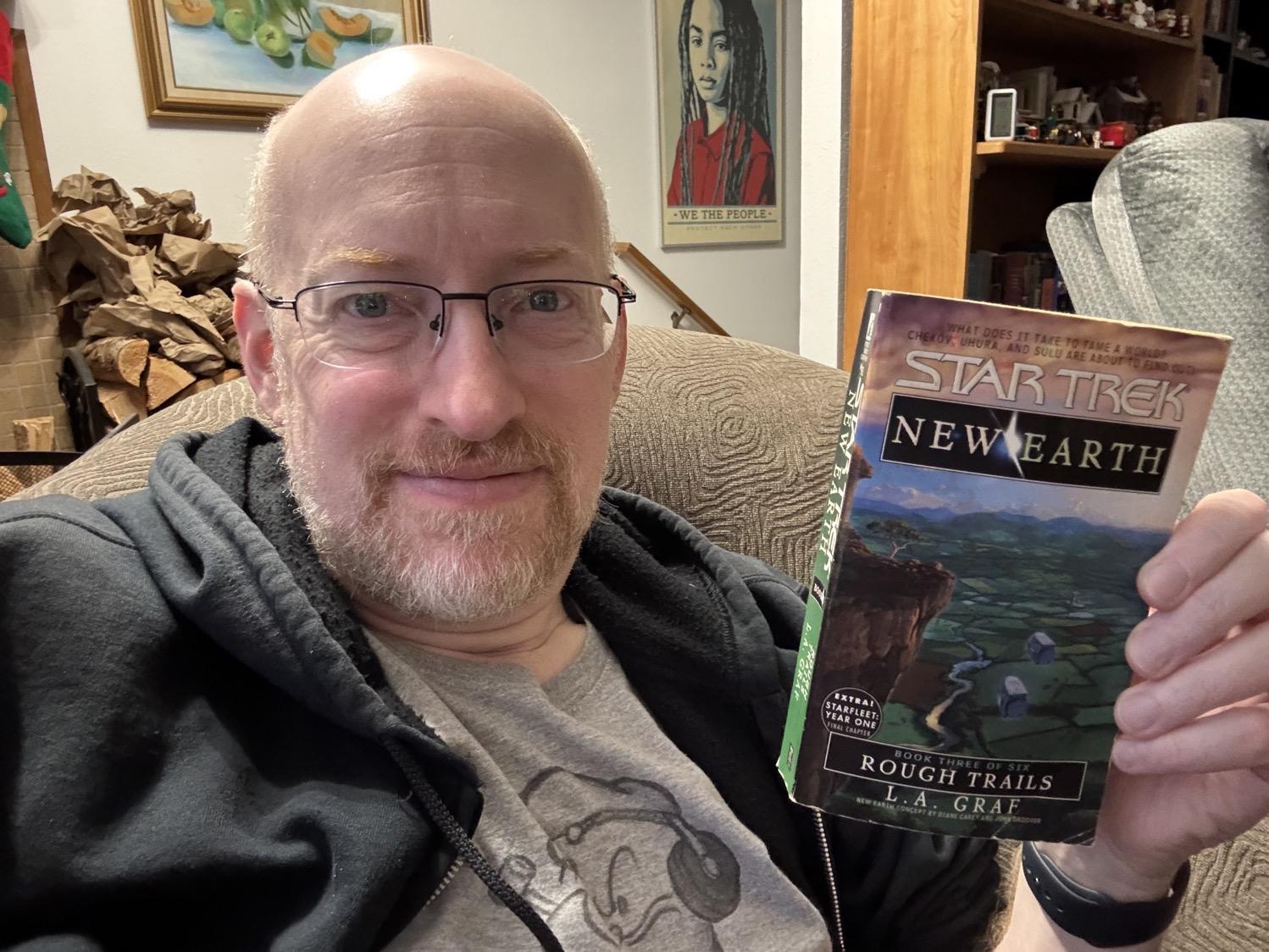
Colonization adventures continue on Belle Terre, as Sulu, Uhura, and Chekov deal with troublesome splinter groups and environmental aftereffects of the events of the prior book in the series. A solid mid-series entry, with a good focus on this secondary trio while the Enterprise is busy elsewhere.
Mirrored from Eclecticism.
Happy holidays (part one)!
This past week was, of course, Christmas week. One of the really nice things about working at Highline is that this entire week was designated a work from home week, and Wednesday and Friday (the two days on either side of Christmas) are considered “personal development” days, with a pleasantly broad definition of “personal development”. Email was monitored and work was done, but it definitely makes for a comfortably low-key week.
Our Christmas day was quite nice: Slept in as late as we could, had a fun breakfast of chocolate chip pancakes with chocolate-infused butter and chocolate whipped cream (there was a bit of a theme there…), a comfortable walk around the neighborhood, opening presents, and a lot of relaxing and reading.



I also “finished” one I’ve been working on for a few months now (since this year’s major gift wasn’t a surprise), Thom Hogan’s Complete Guide to the Nikon Z5II. “Finished” is in quotes because as it’s something of a reference book, there were sections that I skimmed, and this is one that I’ll be sure to keep on my iPad to refer back to whenever I need.
We’ve also watched several movies, two from the stable of holiday favorites, one new holiday favorite, and a couple that we’ve been looking forward to seeing. This week’s lineup was:
Walter Chaw at Film Freak Central: Avatar: Fire and Ash (2025): Absolutely devastating zero-star review of James Cameron’s latest “Dances With Ferngully” film. “The indigenous people, the Na’vi, are giant blue cats who literally meld with the natural elements on their planet, Pandora, through their naked mole-rat tails, and boast of a harmonious existence that nonetheless requires a warrior class because those are the two things indigenous people in white fantasies are allowed to be: ferocious warriors and children of the Earth.”
Randall Munroe’s xkcd: Funny Numbers: “The teens picked a new funny number.”
Ben Keough at The New York Times‘ Wirecutter: The First Nikon Z-Mount Mirrorless Lenses You Should Buy (archive.is link): Now that I have a new camera, though I can use (and absolutely will be using) my existing F-mount lenses, eventually I’ll be adding newer Z-mount lenses to my collection. Time to start dreaming!
Barry Petchesky at Defector: What Did We Get Stuck In Our Rectums Last Year?: The annual report! “This is the time of year to be grateful for not having things stuck in our asses, and to think of those less fortunate than us. So spare a thought for those Americans who misjudged the capacity of their own orifices.”
Lorraine Boissoneault at Smithsonian Magazine: A Civil War Cartoonist Created the Modern Image of Santa Claus as Union Propaganda: I had no idea about any of this.
Infinite Ball Drop: “On New Year’s Eve, the Times Square Ball drops for only 60 seconds over a measly 139 feet. What if we extrapolated from that and covered the entire year?”
Robin Buller at The Guardian: How effective is protesting? According to historians and political scientists: very: “From emancipation to women’s suffrage, from civil rights to Black Lives Matter, mass movement has shaped the arc of American history. Protest has led to the passage of legislation that gave women the right to vote, banned segregation and legalized same-sex marriage. It has also sparked cultural shifts in how Americans perceive things like bodily autonomy, economic inequality and racial bias.”
Doug Henwood at Jacobin interviews Émile Torres: Tech Capitalists Don’t Care About Humans. Literally.: “…there’s also a kind of capitalist influence, the idea that human beings do not matter in and of ourselves. In this worldview, we matter for the sake of value, rather than value mattering for the sake of us. ¶ …we are just means to an end. The only end is value, this abstract yet quantifiable concept that should be maximized to the physical cosmic limits. We matter only as the conduits through which this value can come into existence.
Mirrored from Eclecticism.
Book 65 of 2025: ⭐️⭐️⭐️⭐️
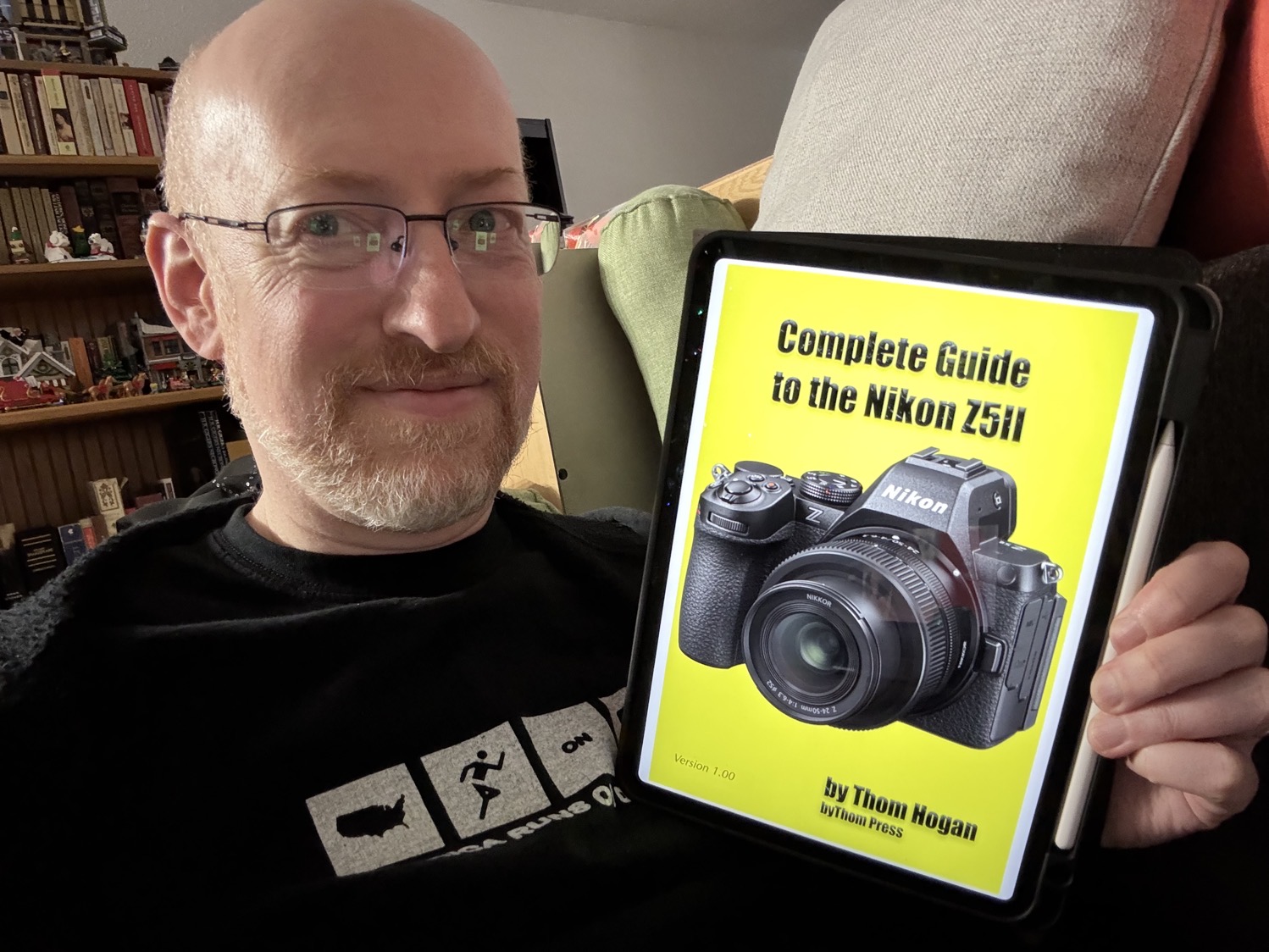
Really, this kind of needs two ratings: Five stars for the content, and two stars for the editing. Thom is incredibly knowledgeable about photography and Nikon cameras, and this book is an incredible deep dive into the Z5II, how it works, why it works the way it does, what all those settings mean, and suggestions on how to get the best results out of the camera. However, as he has obviously (and quite transparently; he mentions some of this on his website) adapted large swaths of this book from very similar books on other cameras in Nikon’s Z series, there are a lot of instances where the shift from one camera to another wasn’t caught, leading to everything from the wrong camera model being mentioned to slight errors (I’ve not come across anything major or that would cause a problem, though). Still very worthwhile, and I’ll be sure to keep this easily available on my iPad so I can reference it whenever I need.
Mirrored from Eclecticism.


![[personal profile]](proxy.php?url=https://www.dreamwidth.org/img/silk/identity/user.png) timeasmymeasure
timeasmymeasure