Domain Crawler https://domaincrawlercom.keplerhosting.cloud/ Comprehensive domain name database for digital investigations. Wed, 12 Mar 2025 15:31:14 +0000 en-US hourly 1 https://wordpress.org/?v=6.9.4 https://domaincrawler.com/wp-content/uploads/2020/09/Logo_512-blue-150x150.png Domain Crawler https://domaincrawlercom.keplerhosting.cloud/ 32 32 DomainCrawler launches new TLD Scanner https://domaincrawler.com/pr-tld-scanner/ Wed, 12 Mar 2025 09:34:27 +0000 https://domaincrawler.com/?p=14886 TLD Scanner, an enterprise-grade tool designed to provide full, accurate, and up-to-date data on all top-level domains worldwide. The platform offers registries, registrars, and M&A professionals access to essential domain insights in one place, helping businesses make data-driven decisions with confidence.

The post DomainCrawler launches new TLD Scanner appeared first on Domain Crawler.

]]>
TLD Scanner – The Full Picture of the Domain Market

DOMAINCRAWLER LAUNCHES TLD SCANNER

The most complete and reliable domain intelligence tool

Stockholm, 12.03.2025 – DomainCrawler announces the launch of TLD Scanner, an enterprise-grade tool designed to provide full, accurate, and up-to-date data on all top-level domains worldwide. The platform offers registries, registrars, and M&A professionals access to essential domain insights in one place, helping businesses make data-driven decisions with confidence.

TLD Scanner addresses key industry challenges by delivering:

  • Complete registration data that aligns with official records
  • Renewal statistics for tracking domain retention and market trends
  • Clear monthly reporting to identify real patterns without daily fluctuations
  • Transfer insights between registrars (coming soon) to monitor domain movement
  • Advanced filtering and scanning for customized data analysis

“The domain industry has long needed a tool that provides reliable, clear, and actionable insights,” said Anna Dobrovolska, CEO of DomainCrawler. “TLD Scanner brings transparency to the market, giving professionals the full picture without guesswork.”

Built for registries, registrars, and M&A analysts, TLD Scanner simplifies competitor tracking, market analysis, and portfolio audits.

Rickard Vikström, founder of DomainCrawler, added, “We created TLD Scanner to give complete visibility over the domain space. Whether for monitoring competitor activity, measuring renewal rates, or evaluating acquisitions, this tool provides the accuracy and depth needed to make informed business decisions.”

Rickard Vikstrom quote about TLD Scanner

As part of its early access phase, TLD Scanner is available at a special rate for the first quarter. Early adopters will have the opportunity to provide feedback, helping refine the tool further before its full public rollout.

Vadim Linnikov, TLD Scanner

Vadim Linnikov, software engineer at DomainCrawler, commented, “We designed TLD Scanner with flexibility and precision. Users can navigate data effortlessly, filtering and analyzing key insights without complexity.”

TLD Scanner is now available. Get real, complete domain insights today.
For more information, visit Product Page  – TLD Scanner

About DomainCrawler

DomainCrawler provides domain name data for businesses and cybersecurity teams, helping them find and manage attack vectors. The company works with organizations worldwide to track potential threats and improve security. With its strong reputation, DomainCrawler is trusted by businesses that need clear and reliable information to protect their systems.

Contact Information

Rickard Vikström, Founder
Email: [email protected]
Website: domaincrawler.com
Roslagsgatan 26A
113 55 Stockholm
Sweden

.

The post DomainCrawler launches new TLD Scanner appeared first on Domain Crawler.

]]>
New TLD go-to-market strategy https://domaincrawler.com/new-tld-go-to-market-strategy/ Wed, 27 Nov 2024 12:37:38 +0000 https://domaincrawler.com/?p=14784 DomainCrawler has introduced the New TLD Go-To-Market Strategy, a specialized resource aimed at helping aspiring new registry operators develop effective strategies for their top-level domain (TLD) applications. This service provides detailed market analysis to assess the potential of new TLDs, supporting operators in making well-informed decisions before committing to significant investments.

The post New TLD go-to-market strategy appeared first on Domain Crawler.

]]>
NEW TLD GO-TO-MARKET STRATEGY launched by DomainCrawler

NEW TLD GO-TO-MARKET STRATEGY

DomainCrawler has introduced the New TLD Go-To-Market Strategy, a specialized resource aimed at helping aspiring new registry operators develop effective strategies for their top-level domain (TLD) applications. This service provides detailed market analysis to assess the potential of new TLDs, supporting operators in making well-informed decisions before committing to significant investments.

The process of launching a new TLD is complex and costly, often requiring a clear understanding of market dynamics to ensure success. DomainCrawler’s solution delivers a comprehensive report that evaluates key factors such as regional demand, market size, and registrar activity. By analyzing these elements, registry operators can identify opportunities, understand risks, and determine whether their TLD has the potential to succeed in a competitive market

As the 2026 application window for new TLDs draws closer, the pressure on registry operators to make accurate, data-driven decisions has never been higher. DomainCrawler’s strategy includes insights tailored to address these challenges, giving registry operators the ability to refine their approach based on real-world data. For example, the service can reveal which regions show higher demand for specific TLD types, helping operators target their marketing efforts more effectively.

Rickard Vikstrom, Founder of DomainCrawler, highlighted the importance of preparation:

NEW TLD GO-TO-MARKET STRATEGY launched by DomainCrawler, Rickard Vikstrom

 “Starting a new TLD? You need to build the business case. A solid go-to-market strategy is essential for success. Our tool provides registry operators with the critical insights they need to make well-informed decisions about their TLD applications.”

Anna Dobrovolska, CEO of DomainCrawler, added on the service’s value: 

“Our goal is to reduce the risks for registry operators by providing clear, actionable insights into market potential. We work as partners with our customers, equipping them with the data they need to make confident decisions. This service not only  highlights opportunities but also helps address potential challenges, ensuring that operators are better prepared for every stage of the process.”

NEW TLD GO-TO-MARKET STRATEGY launched by DomainCrawler, Anna Dobrovolska

In addition to offering a clear view of market demand and competition, the New TLD Go-To-Market Strategy also explores alternative scenarios, helping operators adjust their approach based on different market conditions. By presenting all critical aspects in a single, detailed report, DomainCrawler simplifies the planning process for registry operators, supporting them to focus on execution.

For more information or to request a demo of the New TLD Go-To-Market Strategy, visit domaincrawler.com.

About DomainCrawler

DomainCrawler provides domain name data for businesses and cybersecurity teams, helping them find and manage attack vectors. The company works with organizations worldwide to track potential threats and improve security. With its strong reputation, DomainCrawler is trusted by businesses that need clear and reliable information to protect their systems.

Contact Information

Rickard Vikström, Founder
Email: [email protected]
Website: domaincrawler.com
Roslagsgatan 26A
113 55 Stockholm
Sweden

.

The post New TLD go-to-market strategy appeared first on Domain Crawler.

]]>
Anna Dobrovolska appointed as a CEO of DomainСrawler https://domaincrawler.com/anna-dobrovolska-appointed-as-a-ceo-of-domain%d1%81rawler/ Wed, 23 Oct 2024 12:52:52 +0000 https://domaincrawler.com/?p=14666 October 2024 – DomainСrawler, the leading provider of domain name data for business intelligence and trademark protection, announces the appointment of Anna Dobrovolska as its new CEO. With Anna’s deep experience in commercial strategy and marketing, the company is entering an exciting phase of growth.

The post Anna Dobrovolska appointed as a CEO of DomainСrawler appeared first on Domain Crawler.

]]>
Anna Dobrovolska CEO of DomainСrawler

Anna Dobrovolska appointed as a CEO of DomainСrawler

October 2024 – DomainСrawler, the leading provider of domain name data for business intelligence and trademark protection, announces the appointment of Anna Dobrovolska as its new CEO. With Anna’s deep experience in commercial strategy and marketing, the company is entering an exciting phase of growth.

Anna Dobrovolska CEO of DomainСrawler

“We have spent years at DomainСrawler refining our product and data quality, working hard to reach the top. We are now at a point where we can confidently step forward. Anna’s commercial instincts and structured approach are exactly what we need to push the company forward. Her experience in building brands will help us make even bigger strides.”

Anna Dobrovolska brings years of experience in scaling international businesses. Her vision for DomainСrawler focuses on strengthening its position while continuing to deliver value to its customers

“I’m excited to step into this new challenge at DomainСrawler. We have a strong foundation, and I see great opportunities for growth. My focus will be on expanding our reach and ensuring we remain a trusted partner for our customers.”

Anna Dobrovolska CEO of DomainСrawler

With Anna’s leadership, DomainСrawler is set to continue its growth and further establish itself as a key player in the industry

About DomainCrawler

DomainCrawler provides domain name data for businesses and cybersecurity teams, helping them find and manage attack vectors. The company works with organizations worldwide to track potential threats and improve security. With its strong reputation, DomainCrawler is trusted by businesses that need clear and reliable information to protect their systems.

Contact Information

Rickard Vikström, Founder
Email: [email protected]
Website: domaincrawler.com
Roslagsgatan 26A
113 55 Stockholm
Sweden

.

The post Anna Dobrovolska appointed as a CEO of DomainСrawler appeared first on Domain Crawler.

]]>
DOMAINCRAWLER DEVELOPS A PRODUCT IN ATTACK VECTOR MANAGEMENT https://domaincrawler.com/domain-crawler-develops-a-product/ Tue, 01 Oct 2024 11:03:09 +0000 https://domaincrawler.com/?p=14636 One of the major challenges for companies is knowledge of the attack vectors—the paths criminals use to gain access. DomainCrawler provides a crucial solution by offering domain name data that helps businesses identify and close these weak points before they can be exploited.

The post DOMAINCRAWLER DEVELOPS A PRODUCT IN ATTACK VECTOR MANAGEMENT appeared first on Domain Crawler.

]]>
DOMAIN CRAWLER DEVELOPS A PRODUCT IN ATTACK VECTOR MANAGEMENT FOR THE CYBERSECURITY INDUSTRY

DOMAINCRAWLER DEVELOPS A PRODUCT
IN ATTACK VECTOR MANAGEMENT FOR THE CYBERSECURITY INDUSTRY

Cyber attacks are becoming more frequent and dangerous. Every day, new threats appear, giving hackers more ways to break into corporate networks. One of the major challenges for companies is knowledge of the attack vectors—the paths criminals use to gain access. DomainCrawler provides a crucial solution by offering domain name data that helps businesses identify and close these weak points before they can be exploited.

Attack vector management has become a vital part of cybersecurity, and DomainCrawler has a clear strategy to become a partner and to play an essential role in this. 

Rickard Vikström about cyber threats | Domain Crawler

“Cyber threats aren’t just a future concern—they’re happening now. To protect themselves, businesses need to stop attacks before they even start. DomainCrawler provides the data needed to spot threats early and shut them down,” said Rickard Vikström, Founder of DomainCrawler.

Large companies, especially in sectors like finance, healthcare, and technology, have come to trust DomainCrawler for its detailed and fast insights. As a global provider, DomainCrawler helps clients worldwide identify attack vectors and secure their networks. This has made the company a key partner for those serious about staying ahead of threats.

What sets DomainCrawler apart is the scale of its data and the speed at which it delivers results. When it comes to speed, DomainCrawler considers minutes or up to an hour as an acceptable resolution time for data, unlike some peers in the attack vector industry who measure in hours or days. By constantly monitoring domain activity, it provides up-to-date information on emerging threats. As attack vectors continue to grow, businesses need this kind of real-time data to stay protected.

In today’s digital world, partnering with DomainCrawler is not just something companies might want—it’s something they need. The ability to manage attack vectors and secure systems is essential, and DomainCrawler helps businesses achieve this with its insights into the entire Internet.

About DomainCrawler

DomainCrawler provides domain name data for businesses and cybersecurity teams, helping them find and manage attack vectors. The company works with organizations worldwide to track potential threats and improve security. With its strong reputation, DomainCrawler is trusted by businesses that need clear and reliable information to protect their systems.

Contact Information

Rickard Vikström, Founder
Email: [email protected]
Website: domaincrawler.com
Roslagsgatan 26A
113 55 Stockholm
Sweden

.

The post DOMAINCRAWLER DEVELOPS A PRODUCT IN ATTACK VECTOR MANAGEMENT appeared first on Domain Crawler.

]]>
NEW DOMAIN CHANGES MONITORING FEATURE https://domaincrawler.com/new-domain-changes-monitoring-feature/ Wed, 28 Aug 2024 07:47:47 +0000 https://domaincrawler.com/?p=14570 DomainCrawler, a leading provider of domain name data for business intelligence and online counterfeit detection, has announced the release of its latest feature: Domain Changes Monitoring. This new tool is designed to enhance online security by identifying potential threats early.

The post NEW DOMAIN CHANGES MONITORING FEATURE appeared first on Domain Crawler.

]]>
DOMAIN CRAWLER EXPANDS PLATFORM WITH NEW DOMAIN CHANGES MONITORING FEATURE Strengthened online security through proactive protection

DOMAINCRAWLER ANNOUNCES RELEASE OF NEW FEATURES
Expanded opportunities for trademark safety on a market

DomainCrawler, a leading provider of domain name data for business intelligence and online counterfeit detection, has announced the release of its latest feature: Domain Changes Monitoring. This new tool is designed to enhance online security by identifying potential threats early.

Key features and impact of domain changes monitoring:

  • Weekly notifications.

Businesses will receive detailed weekly reports on any changes in their domain names. This ensures they remain informed and can act swiftly to address potential threats.

  • Early threat detection.

The feature monitors changes in domain name infrastructure that may indicate malicious activity. This proactive approach allows companies to detect and respond to potential cyberattacks before they escalate.

  • Comprehensive monitoring.

By covering DNS, Whois, and website content, this tool offers a complete view of domain activity, providing crucial insights to safeguard online assets effectively.

DOMAIN CRAWLER EXPANDS PLATFORM WITH NEW DOMAIN CHANGES MONITORING FEATURE Strengthened online security through proactive protection Rickard Vikstrom qoute

“This update underscores our dedication to advancing our platform and supporting our customers,” said Rickard Vikström, founder of DomainCrawler. “The Domain Changes Monitoring feature represents a significant step forward in domain security, setting new industry standards.”

Victor Jerlin, founder, added, “Our new tool continuously tracks changes in your domain names. Any suspicious activity is flagged immediately, allowing for swift action. It streamlines the detection and management of domain-related threats and infringements, making it a valuable asset for many businesses.”

Victor Jerlin about NEW DOMAIN CHANGES MONITORING FEATURE

To utilise this new feature, users can access it through the DomainCrawler platform by navigating to the “Monitored Domains” section under their username to set up and manage domain monitoring preferences.

For more information, visit DomainCrawler’s website or use the contact details below.

About DomainCrawler

Architected in 2008, founded in 2021, DomainCrawler combines industry expertise with innovative solutions. With one of the most comprehensive and frequently updated databases globally, DomainCrawler helps enterprises combat cyber fraud, prevent brand infringements, conduct thorough market research, understand their competition, and make informed business decisions.

Contact Information

DomainCrawler
Email: [email protected] 
Website: domaincrawler.com
Roslagsgatan 26A 
113 55 Stockholm
Sweden

.

The post NEW DOMAIN CHANGES MONITORING FEATURE appeared first on Domain Crawler.

]]>
NEW FEATURES: Expanded opportunities for trademark safety on a market https://domaincrawler.com/trademark-safety-opportunities/ Wed, 24 Jul 2024 08:34:00 +0000 https://domaincrawler.com/?p=14540 DomainCrawler, the leading provider of domain name data for business intelligence and trademark protection, announces a significant update to its platform. The new features are designed to help businesses monitor social media presence and identify potential brand imitators.

The post NEW FEATURES: Expanded opportunities for trademark safety on a market appeared first on Domain Crawler.

]]>
DOMAIN CRAWLER ANNOUNCES RELEASE OF NEW FEATURES Expanded opportunities for trademark safety on a market

DomainCrawler, the leading provider of domain name data for business intelligence and trademark protection, announces a significant update to its platform. The new features are designed to help businesses monitor social media presence and identify potential brand imitators.

Benefits of using Social Media Link Detection for brand protection agencies:

  • Faster threat identification.
    By scanning websites for social media links, you can quickly identify unauthorized accounts mimicking your clients’ brands. This allows for earlier intervention to shut down impersonators before they damage brand reputation or mislead consumers.
  • Improved monitoring efficiency.
    Instead of manually searching various platforms, social media link detection streamlines the process. This frees up valuable time for deeper investigations and taking down counterfeit products or malicious content.
  • Enriched data mapping.
    Social media link detection can be integrated with other data points to identify networks of fake websites, and coordinated campaigns targeting your clients. This allows for a more strategic takedown approach, disrupting entire operations instead of isolated accounts.

“Our latest update reflects our commitment to continuous improvement and delivering solutions that simplify and improve our customers’ daily operations,” said Rickard Vikström, Founder of DomainCrawler. “By integrating social media link detection, we are not just advancing our platform but also setting a new standard in brand protection and trademark enforcement.”

Alona Borzhemska, CCO, added, “This feature is essential for legal firms and agencies specializing in intellectual property rights. It simplifies the process of identifying and addressing online trademark infringements.”

The new features are now live and accessible to all DomainCrawler users. 

About DomainCrawler

Founded in 2021, DomainCrawler combines industry expertise, a global approach, and up-to-date innovative solutions. With one of the most comprehensive and frequently updated databases in the world, DomainCrawler is able to provide enterprises with accurate web data, allowing them to fight cyber fraudsters, prevent brand infringements, conduct comprehensive market research, understand the competition, and enable the best data-driven business decisions.

Contact Information

DomainCrawler
Email: [email protected] 
Website: domaincrawler.com
Roslagsgatan 26A 
113 55 Stockholm
Sweden

.

The post NEW FEATURES: Expanded opportunities for trademark safety on a market appeared first on Domain Crawler.

]]>
Shaping the future of online brand protection https://domaincrawler.com/shaping-the-future-of-online-brand-protection/ Tue, 14 Nov 2023 13:01:47 +0000 https://domaincrawler.com/?p=12701 Shaping the future of online brand protection. Interview with David Barnett, brand protection strategist at Stobbs, about the trends, challenges and opportunities in the sector.

The post Shaping the future of online brand protection appeared first on Domain Crawler.

]]>

Shaping the future of
online brand protection

INTERVIEW WITH DAVID BARNETT
BRAND PROTECTION STRATEGIST | STOBBS

David Barnett Headshot

David Barnett is an expert online brand protection consultant and analyst. He has almost 20 years’ experience in the online brand-protection industry, serving clients across a range of sectors and industries. He started his career at Envisional in 2004, subsequently moving to NetNames (2007) and CSC (2016). Since July 2023, David has been working as Brand Protection Strategist at Stobbs. He is an experienced thought leader, with an extensive portfolio of articles and experience of speaking at industry events and is author of ‘Brand Protection in the Online World’.

Tell us a bit about your journey as an online brand protection expert. Based on your experience it seems that you have been working within this sector from the day it emerged. 

I started in the industry as a Brand Protection Analyst at Envisional, a small, Cambridge-based start-up, in 2004. At that time, the Internet was rather different, not least in terms of the much smaller numbers of online channels to be monitored. However, some of the types of infringement, and the methods used by bad actors, have persisted to the current day. Much of my work during this time has involved working on the configuration of Internet monitoring tools and analysing the results identified, so as to identify the findings of greatest potential concern to our clients. This has enabled me to keep a close eye on trends and threats in the overall landscape as they have evolved.  

What are the most prevalent threats to online brands today, and how have these evolved over the past years? 

In some senses, the threats to brands are the same as they have always been, and depend on the type of company. Issues such as counterfeiting (which is relevant to manufacturers of physical goods), fraud (relevant to financial service providers and other entities holding customers’ personal details) and digital piracy (relevant to providers of content which may be distributed in digital form) remain significant areas of concern – since they result most directly in financial loss for the brand owner – even if the ways in these threats are manifested have changed over time. Really, much of the evolution of the Internet – such as the emergence and development of channels such as social media, mobile apps, etc. – has resulted in changes to the ways in which online crime can be carried out, even if the overall goals of bad actors (usually driven by financial gain) have remained similar.

Organizations will also be targeted through other types of brand infringement (traffic misdirection, false claims of affiliation, negative brand association, negative comment, etc.), although these overlap into areas where reputational – rather than directly financial – issues are at stake. However, this can of course also affect a company’s financial performance, through damage to brand value and customer behaviors. 

At the current time, newer technologies such as those related to Web3 (notably cryptocurrency, blockchain domains and NFTs) and artificial intelligence are often foremost in brand owners’ minds, even if the landscape here is relatively new and the nature and scale of the associated threats remains yet to be seen.     

Can you provide an overview of how the new gTLD programme works and why it’s important for brands to be aware of it? 

The new gTLD programme initially launched in 2012, and essentially consists of the addition to the Internet of a wide range of new generic domain-name extensions (top-level domains, or TLDs). A little over 1,000 new extensions have been launched in the intervening 11 years. Many of these were intended to be descriptive of the type of website content, and to reduce customer confusion, although uptake has not been at as large a scale as anticipated, and in fact the new-gTLDs have been disproportionately utilised by the creators of fraudulent sites, partly due to low-cost registrations with relatively lax requirements. 

A new round of applications is set to launch in 2026, and it is essential for brands to keep a close eye on this space as it develops. Some organizations may wish to apply to run their own branded domain-name extension (a ‘dot-brand’), which will give them full control over all domain applications over this TLD, although it’s a fairly costly and technically-demanding project to do so. Failing that, brands will want to utilize blocking or alerting mechanisms where possible, and to monitor the landscape, to gain visibility of potentially-threatening third-party registrations as they appear. Companies may also want to consider defensive registrations across the new extensions, or taking advantage of the new TLD space for their website presence – especially as the availability of short unregistered domain names across traditionally popular extensions such as .com is already significantly limited. 

David Barnett_Interview
David Barnett

How has the introduction of new gTLDs impacted the domain name landscape from a brand protection perspective? What can we expect to see with the future introduction of the new top-level domains? 

Much of the risk is really that there are now more options available to would-be registrants of fraudulent domains, and the benefits of defensive registrations by brand owners are increasingly seeing diminishing returns. This is resulting in a landscape where proactive monitoring in real time is increasingly becoming the most effective way of targeting infringements. We have also seen that many of the TLDs from the first round are highly utilized by infringers, and the same may be true in subsequent rounds. It is also noteworthy that some of the new extensions have potential for security concerns in their own right, with examples such as .zip, which has the potential for abuse through confusion with the file-name suffix. 

How do you see the intersection of emerging technologies, like artificial intelligence and machine learning, as well as web3, shaping the future of online brand protection? 

One of the main issues is the fact that the development of AI – often involving the scraping of data from social-media and other platforms, and thereby driving an increased push towards a restriction of access to this content – may itself drive an increased adoption by users of Web3 technologies, which are inherently decentralized and have an emphasis on users being able to curate their own content and avoid regulation and restriction.  

AI itself raises a number of open questions, such as the legal implications and uncertainty over ownership of AI-generated content.  

AI itself is also likely to facilitate the production of fraud-related content, even if not necessarily changing the types of attack which are possible.  

Web3 developments may also much complicate the online landscape, through the appearance of a range of distributed channels which may be extremely difficult to monitor, combined with factors such as the risk of domain-name collisions (i.e. the same domain name potentially appearing on multiple different blockchains, or common to both Web3 and Web2 (‘classic’ domain name) content. We are also seeing the emergence of new types of threats, such as blockchain domain names comprising imagery or artworks – brand protection technologies will need to evolve in order to address these types of content. 

Overall, though, AI is also likely to bring benefits for brand-protection service providers, raising the possibility for much more sophisticated monitoring and enforcement technologies – such as improved capabilities for image recognition, video analysis, sentiment analysis, automated prioritization of results, clustering analysis, learning of patterns in new infringement trends, and so on. 

Could you share some best practices or actionable steps for businesses, both large and small, to bolster their online brand protection efforts? 

Really, much of the top-level advice is the same as it has always been – specifically, ensuring that brand owners maintain an IP portfolio which is in good shape, and utilizing this as the basis for a proactive ongoing brand monitoring program of monitoring and enforcement, combined with a robust domain security posture. It is also essential to keep on top of new trends as they emerge, which is where partnering with a strong brand-protection service provider can help.  

Other factors which have traditionally been seen as good practice also continue to hold true – engaging with customers, encouraging them to serve as brand ‘ambassadors’ and report infringements, responding positively to negative feedback without taking an overly heavy-handed approach to enforcement, operating with clarity about the use of official online channels, utilization of product verification and tracking technologies, and so on, will always be beneficial.

To hear more from David and other brand protection and data industry experts,
watch our webinar "Summarizing the year for online brand protection" held on
on December 5th, 2023.

LEARN MORE ABOUT OUR PLATFORM

Domain Research Tool

Extensive data source for digital investigations
Visit

Internet Statistics Reports

Regular reports on your zone file / DUM
Visit

The post Shaping the future of online brand protection appeared first on Domain Crawler.

]]>
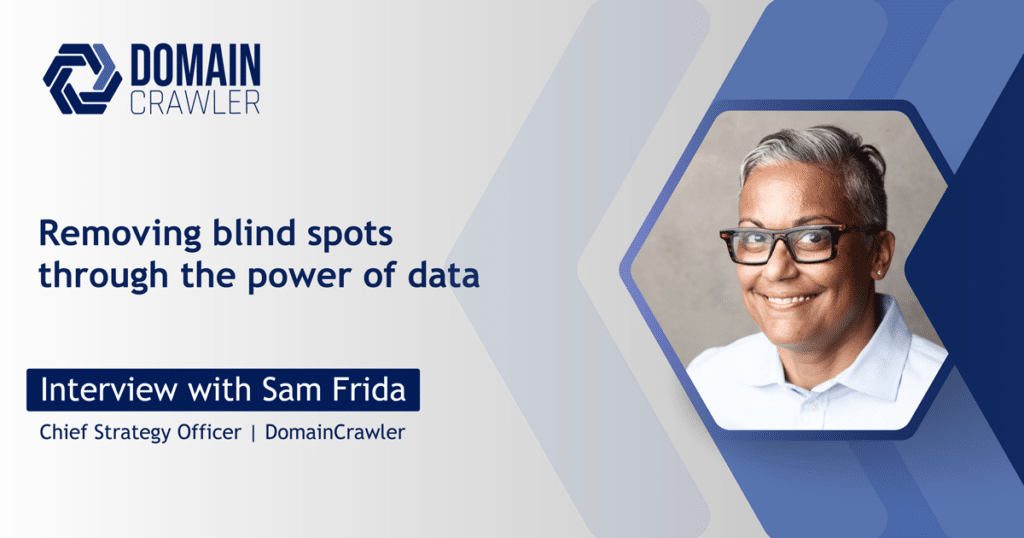
Removing blind spots with data https://domaincrawler.com/removing-blind-spots-with-data/ Wed, 26 Apr 2023 09:00:29 +0000 https://domaincrawler.com/?p=14168 Removing blind spots with dataInterview with Sam Frida, Chief Strategy Officer at DomainCrawler   Removing blind spots with data in domain management is now a must for companies that want to stay competitive. In this interview, Sam Frida, Chief Strategy Officer at DomainCrawler, explains how using data can change the industry. With accurate and useful […]

The post Removing blind spots with data appeared first on Domain Crawler.

]]>

Removing blind spots with data
Interview with Sam Frida, Chief Strategy Officer at DomainCrawler


Removing blind spots with data in domain management is now a must for companies that want to stay competitive. In this interview, Sam Frida, Chief Strategy Officer at DomainCrawler, explains how using data can change the industry. With accurate and useful data, businesses can overcome challenges, improve their strategies, and find new growth opportunities. Learn how data is reshaping domain management and why it’s important for future success.


What have been the key moments in your partnership with DomainCrawler during the past three months?

I approached this role without specific expectations. However, after meeting with Alona Borzhemska (CCO at DomainCrawler),I understood the company’s growth potential in removing blind spots with data, which excited me and motivated me to join.

My perspective on the power of data was fundamentally changed during the ICANN conference in Cancun. The external validation we received on the accuracy of our data was both impressive and eye-opening. I realized that I was on a personal growth journey as well, constantly learning new things.

Representing DomainCrawler at ICANN Cancun was my first public conference experience with the company. I scheduled back-to-back demos, immersing myself fully. What truly stood out was the overwhelming positive reaction to the accuracy of our data. Watching registries validate their zone numbers on our platform and observing their facial expressions was incredibly telling. The more demos I conducted, the more inspired I became, as I saw firsthand how our data’s accuracy was being validated. This experience has been both insightful and motivating.


You’ve compared data to GPS. Can you explain this analogy further?

When explaining complex concepts, I always aim to simplify. The GPS analogy naturally came to mind because data provides information, and insights derived from that data remove blind spots, offering clarity. Without access to insights, how can you determine the most efficient path? Like a GPS, data gives you signals and allows you to reconsider your route, showing you more efficient ways to reach your goals. When I work with data, removing blind spots with data helps customers gain clarity and improve their decision-making.

Much like a GPS that alerts you to speed traps, data empowers you to adjust your strategies based on the intelligence it provides. It helps you foresee threats and predict outcomes, making the journey just as important as the destination. Data puts you in control of your business, with blind spots removed, guiding you toward success.


How has the domain management industry evolved recently, and what key trends should we watch for?

One major trend is the ongoing mergers and acquisitions in the industry. The market is becoming more concentrated, with big players hunting for registrars and hosting companies. This makes the lifetime value (LTV) of a domain name and its customers more crucial than ever. Renewals are valuable, and attracting long-term customers is essential. The diversity in offerings now supports the end-user journey for the long term, making it critical to retain customers on your platform. Once a customer purchases a domain name, there should be no reason for them to leave because if they do, the chances of their return are slim.


Do you think registries and registrars are becoming competitors in their quest to attract the same end user?

I don’t see registries as competitors to registrars. Instead, registries are focused on controlling the destiny of their top-level domains (TLDs). The power has shifted to registrars, who have limited “shelf space” and may charge for TLD listings. It’s time for registries to step up. The traditional channels have been complacent, and legacy registries have contributed to this. Smaller registries and long-tail ones are missing opportunities. They need to empower themselves and move the needle collectively, not necessarily by adopting the same approach as the top registrars. The end user is the customer for both registries and registrars, and the channel is the funnel through which services flow to the end user. Somewhere between the registry and registrar, the end user may miss out on the value they need. If there’s no content to trigger the next step for the end user, both registry and registrar should take responsibility for fixing that.

This is why I’ve always supported empowering registries to help remove blind spots. Doing so positively impacts renewals and revenue gaps. When blind spots are removed, the information becomes valuable insights, benefiting the entire ecosystem. The behavior of the end user will reflect this.


Are industry professionals becoming more open to using data? Do you see a shift in attitudes?

Yes, there’s a slight shift in the industry. Professionals are more open to discussing data. I’m hopeful for more conversations about data strategy and its application beyond internal analysis to empower registrars and resellers. Organizations need a lead who can explore different use cases across teams, starting from a single signal. Partnering with registrars and resellers is crucial to understanding their business and supporting the growth of TLDs and the LTV of domain names. When the end user gains the value they need, they’re more likely to renew their domain names for multiple years. It’s not just about selling data; it’s about a partnership to extract insights.

It’s essential for every tier of the ecosystem to understand that this is a partnership. We all play a part in maintaining a healthy ecosystem. The renewal of a domain name should continue, which means increasing the LTV of a domain name or customer (think ARR) for a registrar. It also means that the registration should be of high quality because we want a clean Internet. Contributing to the health of the Internet is a bigger goal we should all strive for.


How can registries effectively use data to engage with their channel partners?

Recently, a ccTLD registry used a sample set of 5,000 names from one of their resellers for analysis. This registry is progressive and shared the insights we provided from the data crawl. This action prompted the reseller to take the steps the registry had hoped for. The key takeaway is to remove blind spots for your registrars and resellers in a customized and engaging way, using meaningful insights about their business. This approach will be beneficial for both parties. Be generous with the data insights, especially in removing blind spots with data to create customized, meaningful strategies for your registrars and resellers.


What challenges do ccTLDs face, and how can they overcome them using data?

The main challenge for ccTLDs is that they often focus solely on security, missing opportunities for removing blind spots with data that could drive growth. While security is crucial, there’s a missed opportunity to grow their zones if they don’t explore how other TLDs engage with people in their country. This is a blind spot they should remove, even if security is their primary concern. It’s important to understand your market comprehensively, not just in terms of the number of domain names in your zone and their security, but also in terms of how to grow your zones by understanding your customers and how they use domain names.

ccTLD registries should consider questions like: What are people in my country doing with other TLDs? Where are they registering these domain names? Where they register, there are potential resellers. If someone offers services to people in my country, let’s discuss a cross-sell program.


How can ccTLD registries compete with .coms?

I don’t believe ccTLDs need to solve a .com problem. They have an advantage—they aren’t as restricted by ICANN regulations. ccTLDs can position themselves differently and explain the value of their TLDs, especially if they serve a niche market.

For example, why not offer a domain name plus email as a package solution for any end user? Emails are sticky products that people rarely abandon, unlike domains. So, a registry could promote a package deal, like “Small Business, Start Communicating Today” with a domain and email. This allows a business to start operating professionally immediately, even without a website. Registries should explore different channels to engage with end users, such as small businesses offering accounting solutions or payment processing software—these are all potential resellers or partners.

I encourage registries to explore new channels.


How can registries leverage data for brand protection solutions?

For effective brand protection, removing blind spots with data involves identifying references to a brand at the domain name and content level, and staying on top of alerts. But this is just the first step. Continuous alerts are necessary to stay on top of the end goal: keeping the zone clean and safe.


What unique challenges do different types of registrars face in using data effectively?

All registrars are service providers, so they need to understand their customers as a starting point. Once they identify their healthy customers from a business perspective, they can derive personas from data insights and target these personas to acquire new customers. This increases growth efficiency and accountability, resulting in a higher LTV per customer. Developing a data strategy that starts with understanding your customer base is a good approach.

Domain investors typically rely on traditional methods to acquire data. However, exploring other avenues and signals could increase their efficiency toward their end goals. They could use additional signals to gain more insights into a domain name’s overall valuation. Investors can also identify potential buyers with long domain names that should be replaced with shorter, brandable, premium names. The goal is to create a niche dataset of potential buyers who can be pitched on why a shorter, brandable name is a better option.


What final message would you like to share with domain industry professionals?

Let’s start by being curious. Curiosity is the essential prerequisite for exploring the power of data.  


For press inquiries please contact
[email protected]

About DomainCrawler
Founded in 2021, DomainCrawler combines industry expertise, a global approach, and up-to-date innovative solutions. With one of the most comprehensive and frequently updated databases in the world, DomainCrawler is able to provide enterprises with accurate web data, allowing them to fight cyber fraudsters, prevent brand infringements, conduct comprehensive market research, understand the competition, and enable the best data-driven businesses decisions.   

The post Removing blind spots with data appeared first on Domain Crawler.

]]>
KYC practices for registries and registrars https://domaincrawler.com/webinar-kyc-practices-for-registries-and-registrars/ Thu, 17 Nov 2022 09:00:10 +0000 https://domaincrawler.com/?p=14164 KYC practices for registries & registrarsDomain Crawler hosts successful webinar on KYC practices in the domain industry In December 2022, Domain Crawler wrapped up its series of webinars for the year by hosting a highly informative session focused on KYC practices for registries and registrars. The event brought together domain industry professionals to explore the […]

The post KYC practices for registries and registrars appeared first on Domain Crawler.

]]>

KYC practices for registries & registrars
Domain Crawler hosts successful webinar on KYC practices in the domain industry

In December 2022, Domain Crawler wrapped up its series of webinars for the year by hosting a highly informative session focused on KYC practices for registries and registrars. The event brought together domain industry professionals to explore the current and emerging know-your-customer processes employed by industry operators, emphasizing their importance and potential development.

The topic of the webinar is KYC practices for registries and registrars and it will be dedicated to discussing the current and potential know-your-customer processes employed by industry operators, their importance and development.  


During the webinar, attendees gained valuable insights into:

      • Key traits of a well-profiled end user.

      • Effective methods for tracking registrant activity across multiple zone files.

      • Critical data points to monitor for enhanced customer understanding.

      • The best tools and solutions to invest in for improving KYC processes.

      • Strategies for conducting in-depth benchmarking against competitors.

    The speakers at the webinar were:  

        • Rickard Vikström, founder at Domain Crawler and also founder of Internet Vikings – one of the biggest domain name registrars for the iGaming industry in Europe. 

        • Danny Aerts, Senior Adviser at Domain Crawler, who served as CEO of the Swedish Internet Association for 15 years. 

      The importance of robust KYC processes

      Rickard Vikström highlighted the pressing need for strong KYC processes. He noted, “As the domain industry rapidly evolves, proper KYC practices are essential for registries and registrars to prevent abuse and strengthen their marketing efforts.” His insights underscored the growing importance of KYC in maintaining a secure and efficient domain industry.


      Who should watch the webinar?

      The event provided valuable information for a wide range of professionals, including registries, registrars, hosting providers, domain resellers, and portfolio managers. These insights are crucial for anyone looking to enhance their understanding of KYC processes and apply them effectively within their organization.


      Watch the full webinar recording here:

      https://youtu.be/5p8JTsbIW-w?si=vGdf6Ky9qJu4YIdI

      For press inquiries please contact
      [email protected]

      About Domain Crawler

      Founded in 2021, Domain Crawler combines industry expertise, a global approach, and up-to-date innovative solutions. With one of the most comprehensive and frequently updated databases in the world, Domain Crawler is able to provide enterprises with accurate web data, allowing them to fight cyber fraudsters, prevent brand infringements, conduct comprehensive market research, understand the competition, and enable the best data-driven businesses decisions.  

      The post KYC practices for registries and registrars appeared first on Domain Crawler.

      ]]>
      Prof. Jorij Abraham on the frontlines of combating online scams https://domaincrawler.com/prof-jorij-abraham-combating-online-scams/ Mon, 17 Oct 2022 09:00:33 +0000 https://domaincrawler.com/?p=14161 Prof. Jorij Abraham on the frontlines of combating online scams The fight against online scams is more crucial than ever. In an exclusive interview with Prof. Jorij Abraham, Managing Director of the Global Anti-Scam Alliance (GASA), we explore the current state of online fraud and what can be done to combat these increasingly sophisticated threats. […]

      The post Prof. Jorij Abraham on the frontlines of combating online scams appeared first on Domain Crawler.

      ]]>

      Prof. Jorij Abraham on the frontlines of combating online scams

      The fight against online scams is more crucial than ever. In an exclusive interview with Prof. Jorij Abraham, Managing Director of the Global Anti-Scam Alliance (GASA), we explore the current state of online fraud and what can be done to combat these increasingly sophisticated threats.


      Prof. Jorij Abraham, a key figure in combating online scams, has been instrumental in the international eCommerce community since 1997. With extensive experience as the Director of Research & Advice at Thuiswinkel.org and the European Ecommerce Association, Abraham is now at the forefront of global efforts to protect consumers from online fraud through the Global Anti-Scam Alliance (GASA).


      Experience with online scams
       
      Interviewer: Jorij, you have extensive experience in combating online scams. Have you ever fallen victim to a scam email yourself?
      Prof. Jorij Abraham: Yes, I believe everyone has at some point. We’re all busy, and with the constant expectation of deliveries, it’s easy to make a quick, wrong click on a phishing email.


      The launch of GASA: a global initiative to combat online scams

      Interviewer: Last year, you launched GASA. What was the motivation behind it, and how does it connect with your other projects like Scamadviser.com?

      Prof. Jorij Abraham: The Global Anti-Scam Alliance (GASA) is a non-profit organization that unites governments, law enforcement, consumer protection agencies, financial authorities, and businesses to combat online scams. One of our key solutions is ScamAdviser, a platform that helps over 4 million consumers monthly verify whether a website is legitimate. We analyze over 1 million new domains each month, sharing this data with law enforcement, brand protection agencies, and other partners to prevent consumers from falling victim to scams.


      Centralizing scam reporting

      Interviewer: If you could recommend one anti-scam policy for every country, what would it be?

      Prof. Jorij Abraham: To effectively combat online scams, we need to centralize scam reporting. Currently, consumers often don’t know where to report scams, and the process can be cumbersome. By centralizing and simplifying this process, and sharing the data internationally, we can make scammers more visible and enable faster action against them.


      Improving communication in the fight against online scams

      Interviewer: It seems that communication between anti-scam organizations is often lacking. Have there been any improvements in this area?

      Prof. Jorij Abraham: Yes, but progress is slow. Authorities in the United States and Australia are starting to collaborate more, and there is a bit more international cooperation than there was a few years ago. However, we’re still in the early stages of what needs to be a global effort in combating online scams.
      Prof. Jorij Abraham: Cooperation is essential. We already receive infringing domain reports from many brands and share this information with our data partners, including law enforcement and big tech companies. This collaboration allows us to quickly block fraudulent websites and warn consumers, effectively playing whack-a-mole with scammers in our shared mission of combating online scams.


      Understanding victim behavior in online scams

      Interviewer: Fraud comes in many forms. Is there a common denominator among scams?

      Prof. Jorij Abraham: Scams are unique because they rely on the victim’s compliance, which makes them different from other crimes. Victims often feel ashamed or think they were foolish, but they’re not. Studies show that even highly educated people fall for scams. We must eliminate the stigma around being scammed and encourage reporting to win this battle.


      Scammers’ technology and tactics

      Interviewer: What technologies are scammers using, and which ones do they avoid?

      Prof. Jorij Abraham: Scammers aren’t using high-end software like Salesforce or SAP, but they are becoming more professional. Some have developed entire platforms to easily replicate scams across multiple domains. In one instance, we measured that a site was taken down, and within 3.5 minutes, a new one was up. This shows the need for automation in our responses—manual efforts alone won’t suffice.


      The growing sophistication of scams

      Interviewer: Scammers are becoming more sophisticated. Are anti-scam technologies keeping up?

      Prof. Jorij Abraham: Unfortunately, we’re lagging behind. The World Economic Forum reports that only 0.05% of all scammers are prosecuted. Scammers currently have more resources, experience, and money than law enforcement. To turn the tide, we must significantly increase investment in anti-scam technologies.


      Cryptocurrency and ponzi schemes

      Interviewer: Cryptocurrency is a hot topic. How can investors distinguish legitimate companies from Ponzi schemes?

      Prof. Jorij Abraham: We advise investors to only invest in companies based in their own country that have been legally verified by their financial authorities. While this doesn’t eliminate all risks, it provides a level of legal protection and recourse if things go wrong.


      The Global Anti Scam Summit 2022

      Interviewer: Please tell us more about the Global Anti Scam Summit held in The Hague in November 2022.

      Prof. Jorij Abraham: The 3rd Global Anti Scam Summit (GASS) took place on November 9th and 10th, 2022. The event aimed to facilitate knowledge sharing among governments, financial authorities, law enforcement, and commercial organizations on fighting online scams. In 2021, we hosted nearly 500 virtual guests from over 70 countries. This year, we adopted a hybrid format, allowing both in-person and online participation.

      For press inquiries please contact
      [email protected]


      About Domain Crawler
      Founded in 2021, Domain Crawler combines industry expertise, a global approach, and up-to-date innovative solutions. With one of the most comprehensive and frequently updated databases in the world, Domain Crawler is able to provide enterprises with accurate web data, allowing them to fight cyber fraudsters, prevent brand infringements, conduct comprehensive market research, understand the competition, and enable the best data-driven businesses decisions.  


      The post Prof. Jorij Abraham on the frontlines of combating online scams appeared first on Domain Crawler.

      ]]>