
Last updated on January 22, 2026

Lorthos, the Tidemaker | Illustration by Kekai Kotaki
I’m not here to argue if you should use a Latin plural form for a word with a Greek origin. I’m going to call them octopuses. And you can’t stop me!!
This is either endearing or embarrassing, but Octopus’s Garden is one of my lower tier favorite Beatles songs. There’s something to be said about wanting to escape the surface world for an underwater realm where we’re warm, happy, and safe… wait, was that a Sharktocrab?
One of the core four sea creature types in Magic along with krakens, leviathans, and serpents, octopuses fit really nicely in a beefy, aquatic strategy. But now that cephalids count as octopuses, how do all octopuses compare to each other?
I’m going to spill some ink in search of the answer.
What Are Octopus Cards?
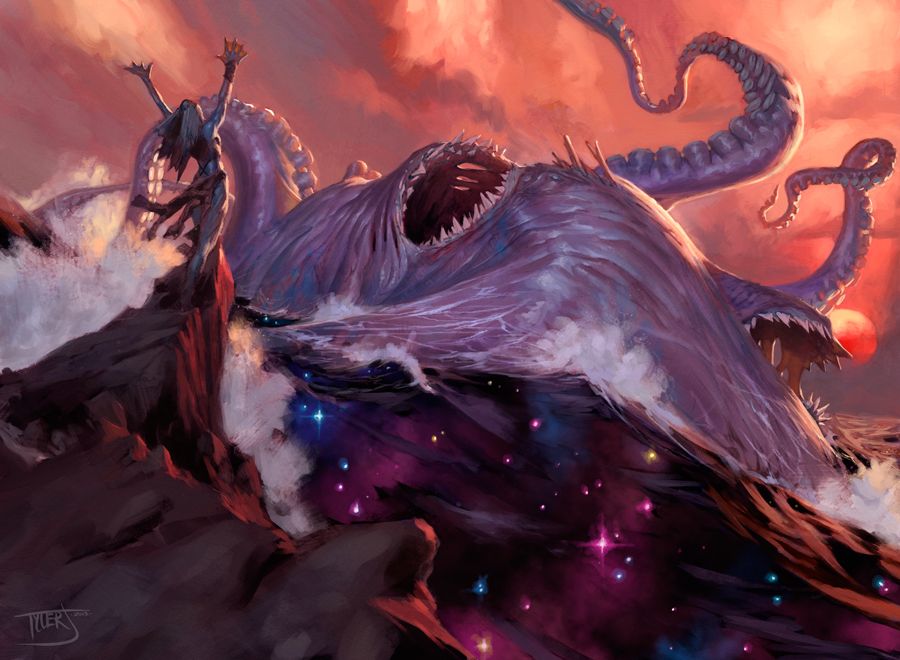
Godhunter Octopus | Illustration by Tyler Jacobson
Octopus cards are primarily blue creature cards that have “octopus” in their type line. As of Modern Horizons 3, cephalids have received errata, turning them into octopus cards. Notably, the cards from Battle for Baldur’s Gate that represent illithids remain horror creatures. Just because it’s got tentacles, that doesn’t automatically make it an octopus.
Most octopuses are blue creatures, as to be expected with many water-based entities. Among the several dozen octopus creatures in tabletop Magic, there is one silver-bordered card, plus a 5 others only available on MTG Arena. This list is weighted toward Commander.
Unranked: Non-Commander Octopuses


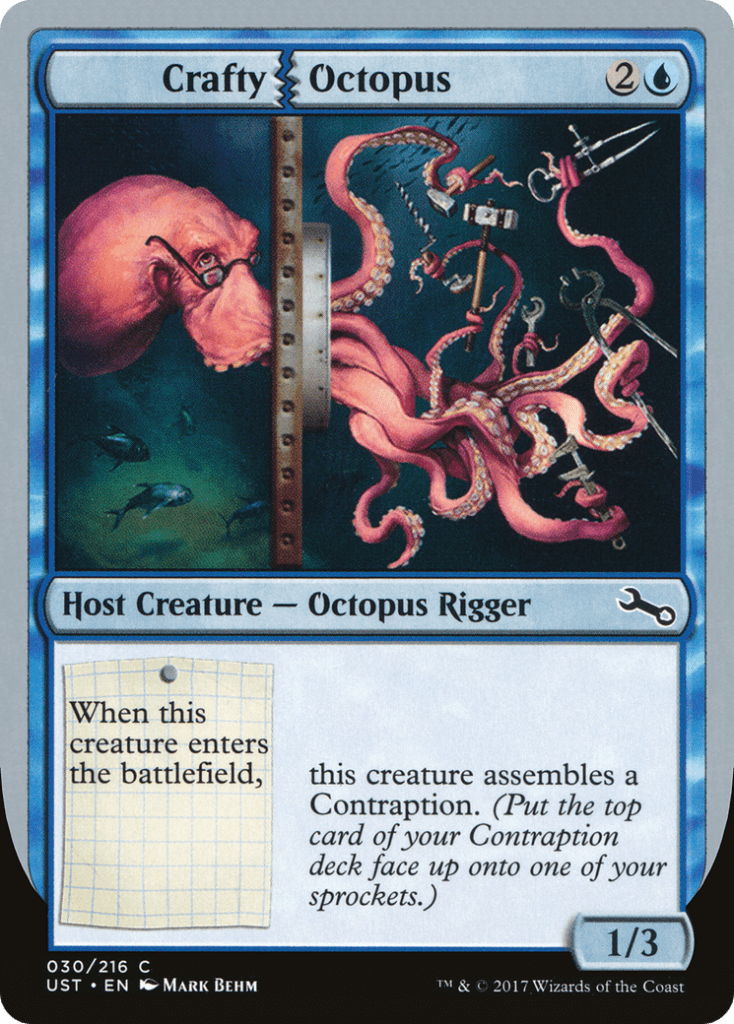


I’m a completionist, so I’ll include Crafty Octopus. But you can’t force me to learn about Unstable, contraptions, hosts, rebalances, or conjuring perpetual cards.
#42. Giant Octopus

The only things I’ll say about Giant Octopus is that it’s a 4-mana 3/3 vanilla creature, and its Ninth Edition printing quotes Jules Verne in its flavor text. Woo.
#41. Cephalid Snitch + Godhunter Octopus


File your Cephalid Snitch and Godhunter Octopus copies under “Way Too Specific” and move along.
#40. Cephalid Aristocrat

This is a weird intersection of abilities. Cephalid Aristocrat gives you self-milling when it’s the target of spells or abilities, which…. I’m thinking of Ivy, Gleeful Spellthief, but I don’t want self-milling in that deck. And I don’t see wanting a preponderance of auras or combat tricks in a self-mill deck.
#39. Keen Buccaneer

I like vigilance creatures but the toughness on Keen Buccaneer is below rate, and the expensive, one-time loot does little to improve it.
#38. Cephalid Sage

No. Cephalid Sage’s threshold ability means that it only really matters late in the game. I guess an early Sage is acceptable discard fodder if you’re playing a non-singleton Magic format.
#37. Cephalid Retainer

You’ve pumped 6 mana into Cephalid Retainer just to tap one creature. I don’t like that math much, do you?
#36. Backstreet Bruiser

Nah, this ain’t it. Backstreet Bruiser cares about counters, whether +1/+1 counters or keyword counters. But even Arcades, the Strategist won’t use this defender creature much, since you can get a higher toughness on a 2-drop.
#35. Revel Ruiner

Revel Ruiner’s conniving ETB trigger means it’s sometimes a 3/1 octopus rogue with menace and sometimes a 4/2 with menace. That's all I have to say about it.
#34. Cephalid Pathmage + Cephalid Scout


Also no. Cephalid Pathmage and Cephalid Scout are too expensive for what they do these days.
#33. Bubble Smuggler

Oof. That disguise cost is heavy and makes me want to cloak it or manifest it. The fact that I’m looking for ways around Bubble Smuggler’s disguise cost should tell you where this octopus slots.
#32. Purple Pentapus

Purple Pentapus is surprisingly useful. The cost to bring it back is a bit much, but the surveil on ETB makes it more useful as card filtering and graveyard filling. Plus any cards you have that want to get tapped without going into combat have a friend is this cute card.
#31. Caelorna, Coral Tyrant

The amount of toughness matter cards really helps strengthen the position of Caelorna, Coral Tyrant and could cause it to rise in value in the future. The sheer amount of stats you get for is excellent. One of it's best synergies is with Engulf the Shore and Scourge of Fleets.
#30. Unruly Krasis

Ravnica: Clue Edition gave us Unruly Krasis. And while I have no idea how it works in that specific product, I can’t really see how you’d use this shark octopus lizard in Commander decks. The obvious homes are Simic sea creature commanders like Kenessos, Priest of Thassa and Kiora, Sovereign of the Deep. But the thing is, most of the other sea creatures in those decks are going to have higher power than this Krasis anyway.
#29. Cephalid Vandal

Shred counters for an ability that churns through your library sounds like it belongs in an Un-set. Cephalid Vandal can fuel your self-mill strategy, and you can also proliferate to accelerate it.
#28. Sealock Monster

Budget sea creature. Sealock Monster‘s the kind of mid card that doesn’t make me want to clarify exactly how it interacts with Stormtide Leviathan, since its ability isn’t technically islandwalk. I’ll save myself the headache and run something else.
#27. Psychic Pickpocket

Psychic Pickpocket was designed to work with connive and what Obscura () cards were doing in Streets of New Capenna. You can bounce a problematic game piece an opponent controls or return something to your hand with an enters ability that you want to reuse… like another Psychic Pickpocket!
#26. Cephalid Inkshrouder

Speaking of spilling ink, Cephalid Inkshrouder can be unblockable and fuel your discard and graveyard synergies. There’s just so many more efficient and direct role-players out there that this octopus has a tough time competing.
#25. Aboshan, Cephalid Emperor

Now that you can use Aboshan, Cephalid Emperor as an octopus-centric commander, that’s opened up a small new niche for this Odyssey creature. The oracle text replaces “cephalid” with octopus, so you can run this with the other mono-blue octopuses here. You can also use it elsewhere to tap down fliers, although it’s a little slow and expensive to use solely as flying hate.
#24. Llawan, Cephalid Empress

Llawan, Cephalid Empress is only really useful in a mirror match. Locking your opponents out from a specific color isn’t impossible to get around, but I wouldn’t really find it fun being on either side of this octopus noble.
#23. Octoprophet

Octoprophet fits nicely into the middle of a sea creature curve. Its enters ability scries 2, and sea creatures with big mana values should find the extra information and planning that gives them very useful at that stage of the game.
#22. Ultros, Obnoxious Octopus

Look at your mana curve, and if you have a significant amount (aim for at least 10% of your deck) of qualifying cards to trigger the first ability on Ultros, Obnoxious Octopus, it's worth semi-removal slot. Unfortunately, I can't recommend you jam a bunch of 8-mana value cards in your decks just to win the prize of +1/+1 counters. It's a low-percentage play that leaves you with a large octopus with no additional combat abilities.
#21. Cephalid Inkmage

Cephalid Inkmage is very close to an unblockable creature with surveil 3. This fits nicely in self-mill decks and has a role when you need to trigger saboteur damage.
#20. Obscura Interceptor

This is not a beginner level interaction. Obscura Interceptor wants you to take advantage of its flash speed to connive and bounce a spell while it’s on the stack. This octopus wizard works fine in discard and connive decks, but that’s a weird counterspell-adjacent ability that I could see myself forgetting about most of the time.
#19. Callous Oppressor

While you won’t necessarily run into this in every deck, Callous Oppressor has a lot of potential homes. Level 1: Steal your opponents’ creatures and attack your opponent with them. Level 2: Steal your opponents’ creatures to fuel your own sacrifice outlets. I like the Geralf, Visionary Stitcher route, myself.
#18. Cephalid Broker + Cephalid Looter


Cephalid Broker gives you an easy way to consistently fuel second-card-draw synergies, whether you’re drawing your own like Ian Malcolm, Chaotician or forcing your opponents to draw with Xyris, the Writhing Storm. The “player” phrasing also helps if you’re playing some kind of 2v2 format, allowing your teammate to draw cards and replace part of a dud hand. Cephalid Looter is the 1-card version, so it’s not distinct enough to have its own slot.
#17. Cephalid Illusionist

What Cephalid Illusionist gains over its Aristocrat cousin is that its activated ability can help you to protect an important game-piece. That and the fact that it’s a 2-drop makes it far more useful, including in decks like Grolnok, the Omnivore or The Master, Transcendent.
#16. Sharktocrab

Love the name. The only thing I don’t like about Sharktocrab is how you can only use adapt once. You’ll need other sources of +1/+1 counters to trigger its ability and stun more than one of your opponents’ creatures.
#15. Tidal Terror

Tidal Terror has the staples of a sea-creature-coded octopus: mana value of 6, power 5, toughness 6. The basic landcycling is nice if you don’t have green in your deck, and a creature that can gain unblockable is good to pair with equipment that grants saboteur abilities.
#14. Marvo, Deep Operative

I will continue to include Marvo, Deep Operative as one of my pet cards because I love how it pays you off for the higher mana values that come naturally when playing sea creatures. I also enjoy commanders that give me a reason to talk about mechanics we rarely hear about, like clash.
#13. Shield Broker

Shield Broker has an enters ability that you’d want to reuse to gain control of multiple creatures, which is why it was reprinted in Bloomburrow‘s Family Matters EDH precon, after an initial appearance in Streets of New Capenna's Bedecked Brokers precon. Not so good in a deck where you plan to hard-cast it once, and only once.
#12. Mesmerizing Benthid

Useful curve filler in Commander, but I want to see some kind of blink deck with multiple Mesmerizing Benthids creating a sinister sea of stunning Illusions.
#11. Acquisition Octopus

Acquisition Octopus fits nicely into artifact strategies that also grant you some evasiveness. Flying, unblockable, fear, menace, all these evasion abilities help to make you more likely to gain a card from combat damage.
#10. Cephalid Constable

While sea creatures usually have abilities that tap or stun your opponents’ creatures, Cephalid Constable can bounce them. I can see lots of strategies in which you’d pile modifications like +1/+1 counters, auras, and equipment to make this octopus unblockable and buff its power to bounce more permanents, and it would work even better in multiples.
#9. Kamiz, Obscura Oculus

Kamiz, Obscura Oculus can be built in so many different ways. You can go the card draw route since you’re in the right colors to have Queza as your backup commander, but you can also stack your deck with sea creatures to grant unblockable and double strike to.
#8. Elder Deep-Fiend

Elder Deep-Fiend has an ability that taps down permanents at instant speed that’s very useful, especially when you want to clear the way for a beefy sea creature. Even sacrificing a token to pay the emerge cost is cheaper than hard-casting this Eldrazi octopus.
#7. Omen Hawker

Nothing too complex here. Omen Hawker. 1-drop mana dork. Gives you 2 mana, but limits it to activating abilities. It has very specific homes with other creatures that care about activated abilities and commanders with specifically costed abilities like Maeve, Insidious Singer.
#6. Lorthos, the Tidemaker

While you probably won’t use it as your blue commander, Lorthos, the Tidemaker is a strong piece to have at the top end of your mana curve in a sea creatures deck. Paying 8 for its ability is expensive and requires planning, but you need to be somewhat calculating if you want to play with cephalopods.
#5. Octavia, Living Thesis

Octavia, Living Thesis can be your elemental commander, though you’ll be leaning into some spellslinging rather than octopuses or other sea creatures. It also slots in nicely with other spellslinging commanders. You should have some token generators around to help widen your board and take advantage of Octavia’s magecraft, and flying Thopter tokens sound like a good place to start.
#4. Cephalid Facetaker

Can I borrow your face? I swear I’ll give it back….
I keep talking about how sea creatures often want to deal combat damage to players, and how you can load your deck with cards that grant evasion abilities. Another way to get there? Copy the best creatures with relevant saboteur abilities using Cephalid Facetaker. Such roguish behavior.
#3. Queza, Augur of Agonies

Queza, Augur of Agonies isn’t just one of the more popular Esper commanders (), it’s also really strong for an uncommon card. Card draw gives you lifegain and life drain; remember that each card you draw is a distinct event that triggers this ability. You can tune a Queza Commander deck to all kinds of power levels, but you can also pair it with Cephalid Broker and Cephalid Looter if you want that octopus flavor.
#2. Sea-Dasher Octopus

Sea-Dasher Octopus is a mandatory octopus to have in your sea creatures deck and your mutate deck. Especially when you cast it for its mutate cost, a way to grant your creature a saboteur ability for 2 mana with flash is just silly. It’s as close to a cantrip as you can have, plus you get any “whenever this creature mutates” triggers if that’s your gameplan.
#1. Shark Shredder, Killer Clone
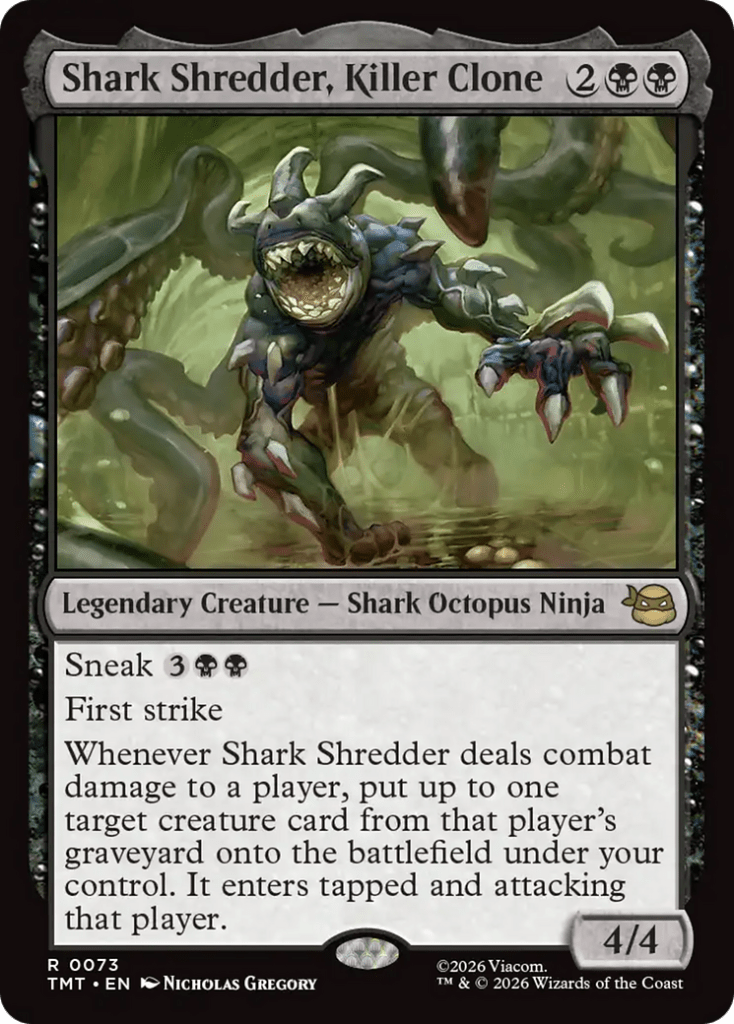

Shark Shredder, Killer Clone is a card with an alternate casting cost that you almost always want to use. The sneak ability is quite a payoff for the unblocked attacker, and getting a reanimated attacker from your opponent's graveyard for five mana is killer.
Best Octopus Payoffs
Octopus is one of what I call the Big 4 sea creature types (KLOS, for krakens, leviathans, octopuses, and serpents), so they benefit from sea creature payoffs and sea creature commanders.


Crush of Tentacles is a bouncing sweeper that can leave you with an Octopus token if you pay its surge cost. Other Octopus token generators include Fisher's Talent, Octomancer, and the Kiora, Master of the Depths‘ emblem. Summon: Leviathan has two different chapters and they're both excellent for the KLOS group as a one-sided board bounce and free cards upon attack.
Apart from explicit payoffs, blue devotion payoffs, high toughness payoffs, and big mana payoffs can be good supplemental strategy pieces, depending on which octopuses you’re running.


Meanwhile, Krothuss, Lord of the Deep can copy your nonlegendary octopuses to triple up on value (since it gives you two tokens of copied KLOS sea creatures). Spawning Kraken helps to widen your board by giving you Kraken tokens when your sea creatures deal combat damage to a player.


Kenessos, Priest of Thassa and Quest for Ula's Temple each have abilities that let you cheat some bigger octopus creatures into play. Since you spent the turn cheating an octopus into play, Unagi's Spray can be just the trickery you need to defeat an attacker or trigger a second draw.


Serpent of Yawning Depths is going to be one of your paths to victory, since it’ll make your octopus army mostly unblockable, except in mirror matches. Slinn Voda, the Rising Deep enters with a mass bounce effect if you pay its kicker cost, another way to clear the way forward. Of course, the sorcery version is Whelming Wave.
And while Aboshan, Cephalid Emperor is an explicit way of using your octopus creatures to tap your opponents’ creatures, I don’t find it as strong as some of the batched sea creature support.
Does a Cephalid Count as an Octopus?
Yes! As of Modern Horizons 3, all cephalids count as octopuses, and cephalid is considered an obsolete creature type. To help you find an example among the camouflage look closer at Aboshan, Cephalid Emperor which now reads “Tap an untapped Octopus you control…”
Wrap-Up (In Tentacles)

Queza, Augur of Agonies | Illustration by Josh Hass
And that’s our tour of the octopuses in Magic! I'm interested to see how future Magic sets mix the sea creatures archetype that octopuses have been batched into with the human angle that former cephalids bring to the creature type. Until then, we’ll keep looking at the cards we have and see how we can play older cards in new ways.
Which octopuses do you like to build your decks around? What do you want to see in future MTG sets? Let me know in the comments or over on the Draftsim Discord!
Thank you for reading and always swim with a buddy!
Follow Draftsim for awesome articles and set updates:



Add Comment