
Last updated on June 12, 2025

Clearwater Pathway | Johannes Voss
Lands are an integral part of any MTG deck. There’s been a wide variety of dual lands over the years, starting with the original duals that came in Alpha. But few (if any) have been as original as the Pathway lands.
Let's talk about that.
What Are Pathways in MTG?

Lavaglide Pathway | Illustration by Kieran Yanner
Pathways are “modal double-faced” lands, each side of which can tap for a different color. The mode you play it as is permanent, which is different from the “transform” double-faced cards that appear in sets like Innistrad.
Pathways were first introduced in Zendikar Rising in September 2020, and the cycle was completed in the following set, Kaldheim, in February 2021. Both sets featured MDFCs, which are double-faced cards that you can play either side of.


The art direction of these Pathways is really neat: both sides of the MDFC land mirror each other in the context of what their mana produces. For example, on Riverglide Pathway someone rides a Kitesail over a coursing river framed by floating grassy rocks on either side. On the reverse, Lavaglide Pathway, the same kitesail flies along a river of lava with dangerous looking rocky spires. This fantastic duality is present in each pathway’s artwork.
How Do Pathways Work?
You choose which side of a Pathway to play when you play it from your hand. The land can then be used to tap for one mana of the color that side produces. The land can’t be “flipped” to the other side without shenanigans from cards like Flickerwisp, or by returning it to your hand to replay it.
Pathways are double-faced cards so you need either opaque sleeves or MDFC placeholder cards, which you can find in booster packs of all sets since Zendikar Rising (when MDFCs were introduced).
Pathways also have other double-faced card quirks. If an effect would cause a Pathway to be “put onto the battlefield,” like Elvish Rejuvenator, it can only be put onto the battlefield front-face up. This differs from an effect that says you can play the card, like with Light up the Stage.
List of Pathways


- Hengegate Pathway / Mistgate Pathway
- Clearwater Pathway / Murkwater Pathway
- Blightstep Pathway / Searstep Pathway
- Cragcrown Pathway / Timbercrown Pathway
- Branchloft Pathway / Boulderloft Pathway
- Brightclimb Pathway / Grimclimb Pathway
- Riverglide Pathway / Lavaglide Pathway
- Darkbore Pathway / Slitherbore Pathway
- Needleverge Pathway / Pillarverge Pathway
- Barkchannel Pathway / Tidechannel Pathway
Full-Art Pathways
Kaldheim and Zendikar Rising
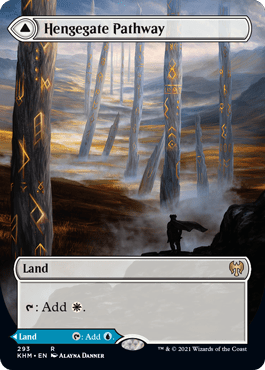
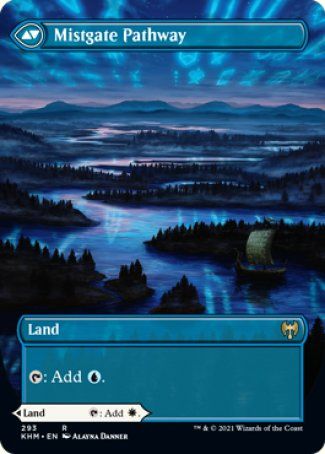
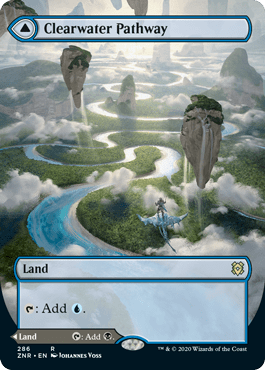

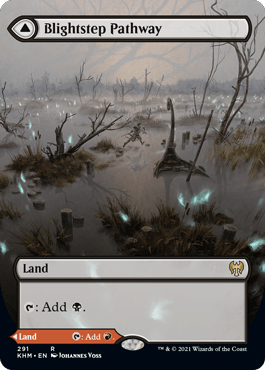
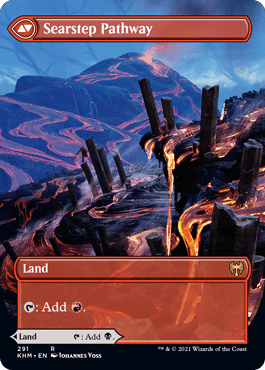

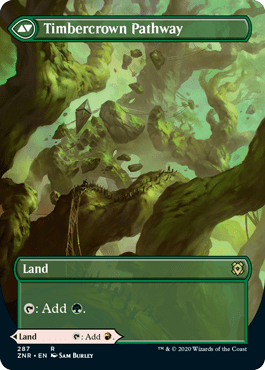
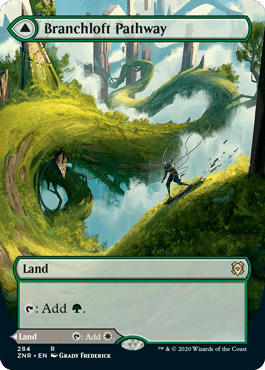
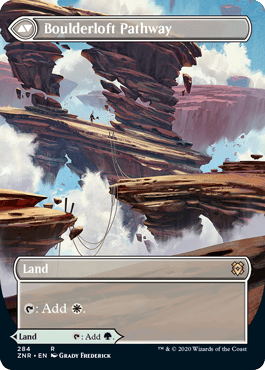
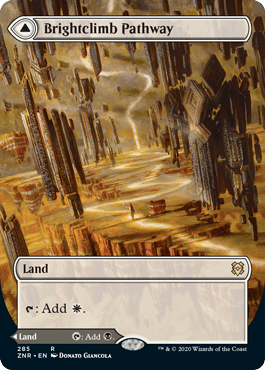

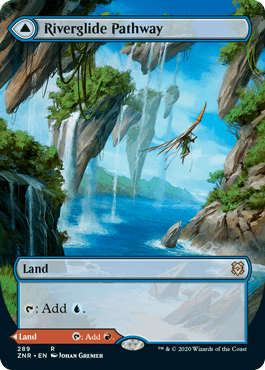

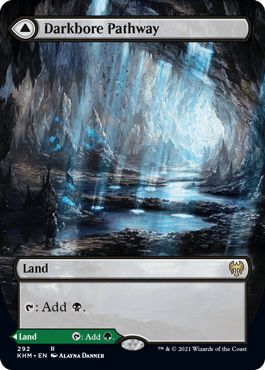
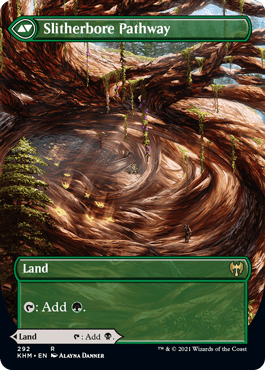


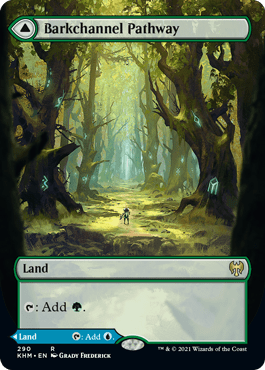
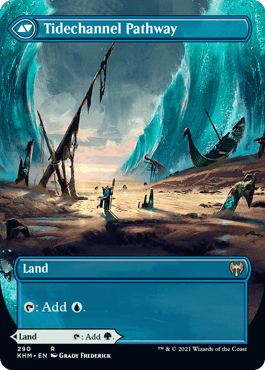
Secret Lair Ultimate Edition




What Sets Are Pathways From? How Many Are in Each Set?
You can find Pathways in both Zendikar Rising and Kaldheim. You might expect a 5-5 split of the 10 pathways, with the five allied colored lands in one set and the enemy colored lands in another. Instead there are six pathways in Zendikar Rising (three each of allied and enemy color pairs), and the four others are in Kaldheim. These are available in regular and borderless frames in both sets.

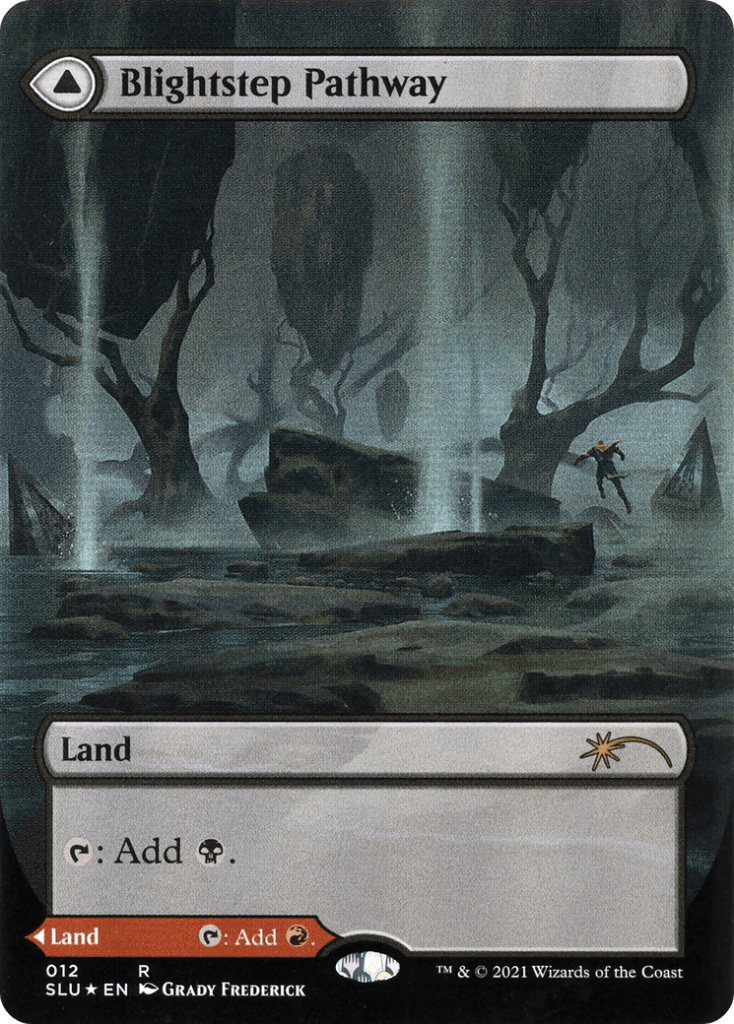
All 10 pathways got another printing in Secret Lair: Ultimate Edition 2, where full-art versions are available with art set in the opposite plane of their original printing.
- 10 borderless foil modal double-faced Pathway land cards
- Exclusive "plane swapped" art—lands previously only seen on Zendikar are now depicted on Kaldheim, and vice versa
- 5 plastic card holders
Are Pathways Good Lands?
The major advantage of Pathways is the ability to be played untapped in the early turns. But they aren’t perfect.
They struggle more in decks with 3+ colors since they can only be used to produce a single color of mana once played. They were helpful for their time in the Standard rotation, and they don’t see a huge amount of play in the wider formats that are often more demanding on the color versatility of their mana base.
They see play in a lot of Commander and Brawl decks as well as the faster Pioneer decks.
Where to Find Pathways
Pathways are generally easily findable from the usual suspects: TCGplayer, CardMarket, and Card Kingdom among others. They are generally not very expensive with both regular and full-art versions averaging about $5.
Are Pathways Better than Fetch Lands?

Erm… In a word, no. Fetch lands are arguably the best dual lands available in the game, though there is some discussion as to whether they or the original dual lands are more powerful. On the note of availability, fetch lands are banned from Historic and Pioneer, two formats on Arena which welcome pathways.
Pathways are fairly innovative with their double-sided design but can’t touch these multi-format staples. These do not beat something that easily supports mana bases of 3+ colors and still allows you to make plays early.
Wrap Up

Slitherbore Pathway | Illustration by Johannes Voss
Pathways are Schrodinger’s mana: neither you nor an opponent can truly know what you’ll use it for until it's on the field. They’re versatile mana fixing and useful at all stages of the game. And though they’re far from the most powerful lands, they’re consistently useful for a good amount of decks and will be for a while to come.
What do you think? Where do these rank on your top dual lands cycles? Do they belong back in Standard? Share your thoughts below or over in the official Draftsim Discord.
Until next time, stay safe and stay healthy!
Note: this post contains affiliate links. If you use these links to make a purchase, you’ll help Draftsim continue to provide awesome free articles and apps.
Follow Draftsim for awesome articles and set updates:


Add Comment