

Gatewatch Beacon | Illustration by Deruchenko Alexander
One of the great tricks to Magic’s continued success, in my eyes, is the variety of ways to play it. While competitive Magic in formats like Standard and Modern always get attention, players have never limited themselves to just those formats. Commander now dominates, and that’s a casual format, as are Oathbreaker and Cube.
But some niche formats take things further than imposing deckbuilding restrictions or crafting exclusive Limited sets. Some go so far as to change the integral rules of the game itself, using Magic cards as game pieces in ways they were never designed for. Shared deck formats form a slice of these, and as the name implies, they make everybody play with one deck.

Promise of Loyalty | Illustration by Sara Winters
Shared deck formats are niche micro-formats with special rules, the most significant being that all players in the game pull from a single, shared deck. These decks often have a theme, and performing well has more to do with manipulating the unique ruleset better than your opponents rather than just bringing the strongest deck.
Shared deck formats are often extremely skill-testing, as the participants have access to the same resources, putting the emphasis on outplaying your opponents (not that you can’t outplay in regular Magic!). This leads to a uniquely strategic type of Magic.
Dandân / Forgetful Fish
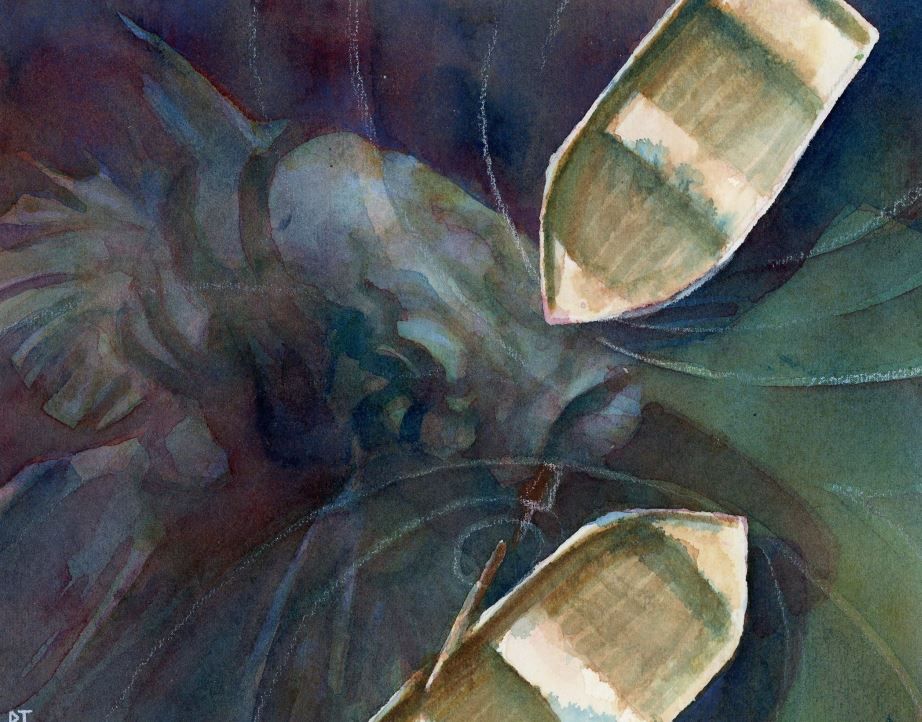
Dandân | Illustration by Drew Tucker
Creature (10)
Dandân x10
Instants (36)
Accumulated Knowledge x4
Brainstorm x2
Crystal Spray x2
Dance of the Skywise x2
Mystic Retrieval x2
Memory Lapse x8
Metamorphose x2
Mind Bend x2
Mystical Tutor x2
Predict x2
Ray of Command x2
Supplant Form x2
Unsubstantiate x2
Vision Charm x2
Sorcery (4)
Diminishing Returns x2
Mystic Retrieval x2
Land (32)
Halimar Depths x2
Island x18
Izzet Boilerworks x2
Lonely Sandbar x2
Mystic Sanctuary x2
Remote Isle x2
Svyelunite Temple x2
Temple of Epiphany x2
Credit: Nick Floyd
The best-known shared deck format is Dandân, also known as Forgetful Fish. Developed by Nick Floyd in 1996, the format utilizes a mono-blue shared deck built around the mostly unremarkable Dandân, a jank common from Arabian Nights. Many of the other shared deck formats were inspired by Dandân, often built around a singular card and its niche interactions. It grew so popular that Wizards printed a Secret Lair with a full Dandân deck! Wizards didn’t originally consult or credit Nick Floyd when they announced the Dandân Secret Lair, though Floyd has since posted that Wizards had reached out to him and that he was working with them to promote the Secret Lair Dandân Deck.

The Dandân format is designed to be played with two players who share an 80-card library and graveyard (thus, any effects that refer to your library or your graveyard are shared between players). Players start with seven card hands and have the standard mulligan rule, and they start with 20 life. The only threat available to both players are 10 copies of Dandân, surrounded by a slew of interaction.

Strategy in Dandân is, to put it lightly, convoluted. Since both players share a library, the decision trees grow quite complex with blue’s topdeck manipulation. The marquee card—next to Dandân—is Memory Lapse (the “Forgetful” in Forgetful Fish) because of its interaction with the shared deck: If Player A casts Dandân, and Player B Memory Lapses it, then Player B draws that fish for their next draw step!


Blue excels at topdeck manipulation; in addition to Memory Lapse, cards like Brainstorm, Predict, and Metamorphose also allow players to manipulate things. Heck, you could use a Mystical Tutor or Mystic Sanctuary not to set up your own turn, but to mess up the next player’s.
The strategic depth of Dandân and the novelty are instrumental to its enduring success. Having only 10 threats and similar resources to your opponent makes every action critical. The inclusion of blue only makes it more abstract, as cards like Brainstorm potentially set up your and your opponent’s next turns. It’s no wonder that this caught the community by storm, even if it took a few years.
Forgetful Ship

Phoenix Fleet Airship | Illustration by Thanh Tuan
Instant (12)
Bile Blight x4
Deadly Dispute x4
Eviscerator's Insight x4
Sorcery (20)
Beacon of Unrest
Curse of the Cabal
Hellish Sideswipe x6
Lost Hours x4
Painful Memories x4
Scrounge x4
Artifact (16)
Ichor Wellspring x4
Phoenix Fleet Airship x8
Planar Atlas x4
Land (32)
Barren Moor x2
Buried Ruin x2
Midgar, City of Mako x2
Polluted Mire x2
Swamp x22
Zhalfirin Void x2
Credit: u/Tagazok2012
Forgetful Ship makes its inspiration evident with the name, though the format varies greatly from Dandân. Developed by redditor u/Tagazok2012 in 2025, Forgetful Ship skews mono-black, centered around Phoenix Fleet Airship from Avatar: The Last Airbender.

Like Dandân, this format is built for two players that share an 80-card library and graveyard, with starting life totals at 20. The main difference is that you win with Pheonix Fleet Airship rather than Dandân, and the deck cares more about sacrificing permanents than manipulating the library.


Rather than focus on blue’s topdeck manipulation, this deck homes in on black’s sacrifice effects with cards like Deadly Dispute and Hellish Sideswipe to sacrifice permanents so the fleet grows. Topdeck manipulation isn’t wholly absent thanks to four copies each of Painful Memories and Lost Hours, but the format has a very different vibe than Dandân.
Though the gameplay differs, the spirit is incredibly similar. Not only are both formats built to amplify a specific card or two, they play deeply into the themes of their singular color. Where Dandân offers cerebral gameplay centered on manipulating information, Forgetful Ship has a more ruthless edge centered on sacrificing permanents and deciding just how much you’re willing to give up to seek greatness and dominion over your opponent; truly a mono-black format.
Ichorid

Ichorid | Illustration by Rk post
Creature (18)
Ichorid x18
Sorcery (4)
Instant (26)
Darkblast x2
Fade from Memory x4
Funeral Charm x4
Gods Willing x4
Gravepurge x4
Lapse of Certainty x8
Lands (32)
Caves of Koilos x4
Drifting Meadow x2
Polluted Mire x2
Swamp x22
Tainted Field x2
Credit: LV MTG
Another close Dandân variant, Ichorid was developed by YouTuber LV MTG specifically as a budget-friendly counterpart to Dandân; when the video was published, the price of a single Dandân ranged from $7-22, but the namesake Ichorid was only about $0.50.

Once again, two players battle with a communal deck (80 cards, again) and graveyard, lands in the deck, mulligan rules, and all that familiar jargon. A key difference in this format, however, is the starting life total: Players start at 15 rather than 20. This keeps the life totals balanced around the same idea as Dandân: Five hits from the namesake card and you’re out.


Ichorid has an extremely similar template to Dandân, with a few noticeable changes—for example, this deck contains 18 of the namesake card rather than 10 since some number of Ichorids will exile other copies to get themselves out in the game. It’s also much more of a 2-color deck. Where Dandân used Izzet Boilerworks solely for the flashback cost of Mystic Retrieval, Lapse of Certainty and Gods Willing provide actual white spells.


Where Dandân focused on blue’s ability to manipulate the library, this format cares far more about the graveyard, with cards like Darkblast, Fade from Memory, and Gravepurge to add or remove cards. Gravepurge is especially interesting, as it can nullify an entire turn by putting all Ichorids in the graveyard on top of the library.
Another big difference here is the pace: Ichorid games go much faster than Dandân games due to Ichorid’s abilities. The lower life total doesn’t really factor into it—since Ichorid has 3 power, 15 life means five hits take you out, just like Dandân at 4 power and 20 life. But Ichorid has haste, so it attacks the turn it hits play, and the need to sacrifice them means blocking isn’t an option. The rapid pace makes Ichorid a much more intense, combat-focused game than Dandân.
Gingerbread

Gingerbread Cabin | Illustration by Chris Ostrowski
Creature (28)
Academy Manufactor x2
Caustic Caterpillar x2
Dockside Chef x4
Feasting Troll King x2
Fierce Witchstalker x2
Gilded Goose x4
Gingerbrute x2
Green Slime x2
Gyome, Master Chef x2
Royal Assassin x2
Taunting Elf x2
Tireless Provisioner x2
Instant (10)
Bake into a Pie x2
Crop Rotation x2
Dash Hopes x2
Fell the Pheasant x2
Poison the Cup x2
Sorcery (10)
Bala Ged Recovery x2
Giant Opportunity x2
Mire's Toll x2
Pest Infestation x2
Taste of Death x2
Artifact (14)
Booby Trap x2
Golden Egg x2
The Underworld Cookbook x4
Trading Post x4
Witch's Oven x2
Enchantment (4)
Fae Offering x2
Trail of Crumbs x2
Land (38)
Forest x12
Gingerbread Cabin x8
Haunted Mire x4
Jungle Hollow x4
Swamp x10
Credit: u/electricbaba
Gingerbread’s first distinction is that it takes us pretty far from Dandân as an inspiration; rather than build around a specific card or color’s mechanic, it focuses on Food tokens as a resource. Created by redditor u/electricbaba, Gingerbread uses a 100-card deck (though the original list features 104 cards), with quite a few distinct rules from regular Magic:
- Each player starts the game with three Foods and a Dockside Chef in play. Each player starts with a hand of seven cards.
- Food tokens are used instead of life; gaining or losing life means creating/removing that many Foods. At the end of a turn, if a player has either 0 or 20+ Foods, the game ends and the player with the most Foods wins. Unless there’s a tie, in which case the player with the most Gingerbread Cabins in play wins. And if that’s tied up, the winner is determined with Gilded Goose. And if that fails, everybody wins!
- Food tokens are artifacts with no other abilities—so you can’t crack a Food to make three more.
- Unlike Dandân and other shared deck formats, Gingerbread can be played with 2-4 players instead of exactly 2.


Most cards in the deck either produce Food or destroy it; the handful of exceptions are cards like Royal Assassin and Taunting Elf meant to mess with opposing blockers or attackers to leverage combat’s ability to sabotage your opponent’s bakery.


This format develops a very interesting flavor, positioned as a challenge between chefs to create a baked feast while sabotaging the others. The use of Food as the primary resource that fuels victory creates extremely interesting decisions. Since each player starts at an effective 3 life, the decision to sacrifice Food to cards like Dockside Chef becomes very crucial. I especially appreciate the inclusion of Dash Hopes, a personal pet card that shines in a format like this.

The biggest draw to Gingerbread is novelty. That could be said for any shared deck format, but this feels like the greatest deviation from Magic. While knocking your opponents out is an option, you can also play a controlling game centered around making your Food count go up faster than theirs, and the balance of cards like Trail of Crumbs and Dash Hopes differ wildly due to using Food as a resource, and starting with so few. The original Reddit post mentions it “presents a more board game-like feel,” which I wholly agree with. It’s maybe the best example of a shared deck format that takes Magic’s game engine in new directions.
Battle Box

Fight Rigging | Illustration by Daarken
Battle Box strays very close to Cube, arguably closer than any other on the list. The format’s inception is credited to Brian DeMars, who wrote about his Battle Box—dubbed the Danger Room by Ben Stark—for Star City Games in 2014. DeMars’s goal with the Battle Box was “to eliminate the kinds of variance that really ruin games of Magic,” namely mana flood/screw.
The land system is one of the marquee features of the format. Each player starts with 10 lands in a separate zone—this is the Danger Zone, which no other player can interact with. Traditionally, these lands include five tapped allied duals and one of each basic land. Players can play one land of their choice from the pile with normal restrictions. The other standard rules as laid out by DeMars include:
- Players start at 20 life.
- Players have a maximum hand size of nine instead of seven to account for not playing lands from your hand.
- Players start with six cards in hand.
- Each player draws their 1 card per turn and any extra cards from a shared deck.

The shared deck is where the spice comes in. This is typically anywhere from 100 to 200 cards, often singleton, and since you get 10 land drops and near-perfect fixing, you don’t have to include lands and get to play cards of any color—though particularly color-intense cards like Zodiark, Umbral God might be a tough sell.
The creativity and personalization of the format comes from the near-total lack of restrictions on what goes in the shared deck. DeMars has a few tips, like avoiding cards that generate mana or destroy lands to keep everybody’s mana generation at the same pace, and keeping cards at a relatively flat power level so nobody wins just because they drew The Scarab God in a format of Goblin Pikers. But even those aren’t hard and fast rules.
Customization is the biggest draw to Battle Box. You can play with five different Battle Boxes and it’s unlikely that any two will be the same given the differing tastes and design ideals of each builder. Cube is similarly customizable, but you could argue that Battle Box has it beat; because you need so many fewer cards, it’s easier to keep a Battle Box to a very concise theme. A Cube designed to be drafted by eight players needs 360 cards, so you’ll have to either play very weak Limited cards or pull from sets with flavor and mechanics that complement Theros. But a 100-card battle box can easily be just Theros cards. Also, because it doesn’t use a set decklist, it’s one of the most accessible shared deck formats. If you have a sizable collection, you could whip something up in a couple of hours.
The games are also incredibly engaging because the format is designed to minimize the variance inherent to Magic. It doesn’t eliminate it entirely, but making it so players don’t win just because they drew a bomb or drew three fewer lands than their opponent makes it more likely that you, well, play more Magic.
Wizard’s Tower

Storm of Saruman | Illustration by David Rapoza
Credit: Ryan Miller
Wizard’s Tower shares some elements with Battle Box, with important distinctions. The format came about in 2013 when Ryan Miller wrote about it for Wizards’ website. It distinguishes itself because it involves sealed product: Miller’s original design for the format was one where players share a deck (the namesake Tower) composed of 80 lands (16 of each basic) and the contents of nine booster packs, blending Limited with casual play.
The other special rules for Wizard’s Tower include:
- Each player gets an opening hand of three cards from the shared deck.
- Starting life totals aren’t specified in Miller’s original article, but 20 is always a safe bet since that’s what cards are balanced around.
- The starting player may discard any number of cards and draw that many; then everybody else in turn order can. Once this is done, discarded cards are shuffled together and put on the bottom of the Tower.
- Before the game starts, the top seven cards of the library are exiled face up.
- At the start of each player’s draw step, they choose one of the face-up exiled cards and put it into their hand, then draw from the shared deck as normal. When the last card is drawn, exile the next seven.
Beyond these special rules, it’s a regular game of Magic that you can play with 2-5 players.


Though similar to Battle Box, Wizard’s Tower has a few distinct features, namely a much higher level of variance. Not only are lands shuffled into the deck as you’d expect in a regular game of Magic, but the nature of booster packs almost ensures that some cards are stronger than others—imagine cracking a pack of War of the Spark that contains both Charmed Stray and Liliana, Dreadhorde General. One of those has a slight edge. A fun element of that variance, though, is the similarity to Limited. It would be a good first shared deck format.
The face-up exile pile makes the gameplay incredibly interesting. Since you know 50% of the cards your opponent draws for their draw step, you can make informed guesses about their hand. Maybe they swiped the strongest card from the pile, so you know to hold up a counterspell, or they took something so unremarkable it has to combo with something else they have. It adds a rich layer of strategy you don’t get in regular Magic.
A very fun element of Wizard’s Tower is the choice of set. You could go for a Chaos Draft vibe with nine unique booster packs or crack open that box of Amonkhet gathering dust in your closet for a more thematic game night. You could even mix sets with similar themes—perhaps an Artificer’s Tower that draws on sets like Mirrodin and Kaladesh that support artifacts.
Some players don’t use booster packs for their Wizard’s Tower; they prefer to use a curated card list, like Battle Box, but with the rules of the Tower, like lands in the deck and the exile pile. Both are completely acceptable variants, and plenty of fun.
Judge Tower

Isperia, Supreme Judge | Illustration by Scott M. Fischer
Credit: u/kaminamina
I have some bias here, as Judge Tower is my favorite shared deck format and one of my favorite ways to play Magic overall. It’s also extremely different from a standard game of Magic. One of the first posts about it online was from redditor u/kaminamina, who posted the rules to Reddit in 2015:
- Players share a 250-card deck and a graveyard. The deck shouldn’t contain basic lands, though non-basics with abilities are fine.
- Each player starts the round with 0 cards in hand (some variants make the winner of the previous round start with 1 card in hand).
- Each player has infinite mana of all colors and infinite life.
- If you cast a spell with X in its cost, X is always 5.
- Each player draws one card from the shared library in their draw step, as normal.
- Each player must take any legal game action at the earliest possible time, and all mandatory modes are required so long as they can be played legally.
- Each player must activate all activated abilities of permanents they control as soon as possible. If an ability could be activated infinite times (i.e. Tasigur, the Golden Fang), it only needs to be activated once—but it must be as soon as possible.
- Players must make every legal attack and block available to them when possible.
- When you commit a rules violation, you’re out of the round.
- Rounds continue until there’s one player left standing. The player gets a point, then all cards involved in the round are removed from the game. This includes permanents in play, in the graveyard, and in each player’s hand.
- Continue playing these rounds until the deck is empty, and the player with the most points wins!
The TL;DR of all that is that each player shares a deck and must take every possible game action at the earliest possible time. If they miss something and someone notices, they're out. Being the last player standing earns a point, and you keep playing rounds until the deck is gone and the player with the most points wins.
Judge Tower was created as a training tool for judges. Magic judges need to keep track of incredible sums of cards at once and be prepared for all manner of niche interactions. The randomness of this format keeps them on their toes, and it makes for one of the most stimulating games of Magic you can play.
This is the format for the nitpickers and rules lawyers! Something so simple as casting an instant in your main phase or resolving abilities of a card out of order eliminates you. You need to be aware of what every card in every zone does at all times, not to mention all manner of timing restrictions. It’s incredibly complex and so fun. This is another super accessible one, too; so long as you have enough cards in your collection, you can construct a killer tower.
Absolutely! In fact, almost every single one of these formats was developed independently of Wizards of the Coast by creative and talented players. If you want to create your own shared deck format, I suggest starting from a single idea, like a card or interaction to build around or a specific alternate win that can be done only within the confines of this format. Once you have that foundation, you can build out from there.
Wrap Up

Share the Spoils | Illustration by Sidharth Chaturvedi
There are so many potential strategies within Magic’s recognized formats like Modern and Standard, but players can take it even further. These shared deck formats exceed anything Richard Garfield and the original team could have envisioned, reminding us that Magic’s charm rests within the community’s creativity.
Have you played any shared deck formats? Which ones would you recommend, or will you try? Let me know in the comments below or on the Draftsim Discord!
Stay safe, and thanks for reading!
Follow Draftsim for awesome articles and set updates:


Add Comment