

DU Beat – Delhi University's Independent Student Newspaper https://dubeat.com/ DU Beat Thu, 19 Mar 2026 06:30:25 +0000 en-US hourly 1 https://wordpress.org/?v=6.2.9 https://dubeat.com/wp-content/uploads/2023/02/fav.jpg DU Beat – Delhi University's Independent Student Newspaper https://dubeat.com/ 32 32 Internity 2026: JMC’s Annual Internships Expo https://dubeat.com/2026/03/19/internity-2026-jmcs-annual-internships-expo/ Thu, 19 Mar 2026 06:29:32 +0000 https://dubeat.com/?p=78585 With the vision of enhancing their students’ career prospects and providing practical experience, the Placement Cell at Jesus and Mary College brought a variety of internship opportunities under one roof at Internity, JMC’s annual internships expo. On Thursday, 26 February, the Placement Cell at Jesus and Mary College hosted Internity, the annual internships expo. It [...]

The post Internity 2026: JMC’s Annual Internships Expo appeared first on DU Beat - Delhi University's Independent Student Newspaper.

]]>
With the vision of enhancing their students’ career prospects and providing practical experience, the Placement Cell at Jesus and Mary College brought a variety of internship opportunities under one roof at Internity, JMC’s annual internships expo.

On Thursday, 26 February, the Placement Cell at Jesus and Mary College hosted Internity, the annual internships expo. It was organised under the second edition of Momentum, the flagship career summit of Jesus and Mary College. Intending to provide students with a platform to build expertise, practical skills and a professional network that enables them to excel in their careers, Momentum brings together industry leaders, recruiters and students to discuss career growth, evolving industry trends and skill-building, thereby “bridging the gap between academia and industry”. It also connects students with a strong alumni network of 900+ members, offering mentorship and career guidance. 

Internity provides students with direct access to internship opportunities across multiple industries, enabling them to select roles that complement their academic backgrounds and career goals. This opportunity was open to all students from all disciplines and course combinations at JMC who had registered via a Google form. A few seats were also available for non-JMC female college students on a first-come, first-served basis. Thirty four companies took part, with the majority setting up stalls on campus while others joined virtually. It was worth noting that there was a highly diverse pool of recruiters, ranging from startups and established corporations to non-profit organisations. Ventures working in areas such as vegan snacking, neuroscience, mental health advocacy, education, finance, environmental sustainability and cybersecurity participated, looking for enthusiastic content writers, social media managers, web developers, community engagement and public relations interns, research interns, as well as finance and marketing interns, among others. 

Internity witnessed massive participation, with many students dropping off their resumes at recruiters’ stalls. Recruiters also took the time to patiently explain the nature of the work and the roles and responsibilities and engage in meaningful discussions with students. All tables also featured QR codes, which, when scanned, directed the interested students to a Google Form-based application, thereby streamlining the process. Many organisations, especially non-profit ones, offered unpaid internships but promised a certificate of completion and a letter of recommendation, while others offered a stipend of up to even Rs. 10,000. Most of these internships were for one to three months and offered on-site, remote and hybrid working experiences. 

Reflecting on their event, the president of the placement cell stated,

Right now, we’re still upscaling our event—it is only the second edition. Last year, we focused on the number of companies, but this time we are more quality-orientated. We aim to help students become future-ready for upcoming placements and the evolving job market. The good thing is that this in-person experience is better than having to apply from group chats and links… Last year, around sixty to seventy students got offers from various companies.”

This shift towards quality and inclusiveness was also mirrored in student feedback. Speaking about their experience, a psychology student shared that for the first time, they encountered numerous psychology and mental health-related internships. They added, “There was inclusiveness—at most internship fairs, the companies that come are mostly commerce-orientated…for finance roles or for recruiting data analysts. But this time I saw that there were many NPOs and mental health organisations. Many students also described the opportunities as “flexible” and recruiters as “friendly, approachable and good to talk to”.

Students appeared genuinely enthusiastic about the expo, stopping by tables that interested them and looking forward to securing internships, gaining work experience and building strong resumes. Beyond simply seeking internships, Internity also served as a platform to build professional connections and gain access to valuable networks. In such competitive times, hands-on experience in the field is indispensable. Rather than independently searching for internships, it is immensely beneficial when the college itself brings these opportunities directly to the students.

Nasheta Zaidi
[email protected]

The post Internity 2026: JMC’s Annual Internships Expo appeared first on DU Beat - Delhi University's Independent Student Newspaper.

]]>
The oppressed as oppressor: notes on caste https://dubeat.com/2026/03/08/the-oppressed-as-oppressor-notes-on-caste/ Sun, 08 Mar 2026 12:07:59 +0000 https://dubeat.com/?p=78535 Caste survives by making oppression feel deserved and superiority feel accessible. In such a system, everyone is both oppressed and oppressor.   How does one preserve a system of oppression? You convince them that their place in society isn’t imposed, it’s deserved and therefore personal. Capitalism tells you that your lack of hard work brought [...]

The post The oppressed as oppressor: notes on caste appeared first on DU Beat - Delhi University's Independent Student Newspaper.

]]>
Caste survives by making oppression feel deserved and superiority feel accessible. In such a system, everyone is both oppressed and oppressor.


How does one preserve a system of oppression? You convince them that their place in society isn’t imposed, it’s deserved and therefore personal. Capitalism tells you that your lack of hard work brought you here. Caste tells you that your karma brought you here. But here’s where it goes a step further—it tells you that you are still better off.

“The oppressed tend themselves to become oppressors”, says Paulo Freire. However, in this system, we do not have a single oppressor or a single oppressed. While we use loose binaries of upper-caste and lower-caste, Ambedkar identifies a defining feature as “graded inequality”. Nearly every caste has a sub-caste, and every sub-caste has another beneath it. Each layer is granted the psychosocial right to superiority over another. Everyone gets a chance to oppress and to be oppressed.

This isn’t just symptomatic of a system; it’s structurally inbuilt. And this makes caste particularly enduring.

We see graded inequality in the shunning of marriage across sub-castes, in tensions between land-owning OBC communities and landless Dalits, and in the contempt sometimes directed toward sewer workers and sanitation labourers even within marginalised groups.  The system offers just enough social power to prevent the question, “Why am I oppressed?” It consoles you with the maxim that “at least I am not them”. 

A system is born where oppression feels like power, serving as nicotine to its dignity-starved victims. Marxist thinkers locate “false consciousness” as a feature of capitalism, the misrecognition of one’s position within capitalism. Caste does something more relational. Violence and discrimination towards the rung below you don’t feel like a replication of your oppression. It feels like a distance from it. It feels like upward immobility. 

Some have pointed to this dynamic in examining domestic violence in Dalit households. Persistent humiliation and economic frustration can cause emasculation and frustration, which is sometimes displaced onto women in the household. Dalit women thus become the “oppressed of the oppressed”. Systematically refusing respect and opportunity often reproduces microcosms of the hierarchies. Caste functions neatly, offering another layer to produce internally engineered exclusion.

Sub-oppression also operates through aspiration. M.N. Srinivas’ concept of Sanskritisation describes how marginalised castes imitate upper-caste rituals, food practices, and cultural codes to pursue social mobility. But imitation often means the preproduction of exclusion. Distancing oneself from those deemed “impure”—through altered food patterns, marriage boundaries, or discriminatory practices—becomes a performance of respectability. In seeking validation from a savarna order, one internalises its hierarchies. 

To Ambedkar, fraternity was the moral foundation of democracy, a recognition of shared humanity and shared humiliation. Graded inequality makes such recognition impossible. It does not just institutionalise inequality—it actually incentivises complicity. When society is arranged in a descending order of worthiness, it prevents horizontal solidarity from forming. Each group negotiates its oppression by asserting dominance over another, fragmenting anger and replacing it with competitive hierarchy.

How do you revolt when you are both victim and perpetrator?

Read Also: The Sensationalisation of “Authenticity”: Reading Sivakami Today

Image Credits: newsclick.in

Anjali P

[email protected] 

The post The oppressed as oppressor: notes on caste appeared first on DU Beat - Delhi University's Independent Student Newspaper.

]]>
Unclean Spaces and Neoliberal Urbanism: Graffiti as “Counterliteracy” https://dubeat.com/2026/03/08/unclean-spaces-and-neoliberal-urbanism-graffiti-as-counterliteracy/ Sun, 08 Mar 2026 12:01:40 +0000 https://dubeat.com/?p=78533 N.B.- I owe my theorisations and links heavily to the ideas disseminated by the lectures and work of Dr Sanchita Khurana, Asst. Prof., MSCFW, DU.   Graffiti haunts the liminal space between the abject and central, the impure and pure, the legal and the illegal. Post-graffiti in Delhi has seen a significant change in its [...]

The post Unclean Spaces and Neoliberal Urbanism: Graffiti as “Counterliteracy” appeared first on DU Beat - Delhi University's Independent Student Newspaper.

]]>
N.B.- I owe my theorisations and links heavily to the ideas disseminated by the lectures and work of Dr Sanchita Khurana, Asst. Prof., MSCFW, DU.


Graffiti haunts the liminal space between the abject and central, the impure and pure, the legal and the illegal. Post-graffiti in Delhi has seen a significant change in its ideological affiliations and creations when compared to the genesis of the art form in Philadelphia in 1967.


By the 1980s, the industrial economy of America had been voraciously replaced by the service economy characterised by its turning of “culture into resource” (phrase borrowed from George Yúdice). The “creative economy” was born, and along with it, the global narrative of the “creative city”. The creative city is always in competition with other global “world cities”, viewed as dedicated drivers of social growth and economic change through the capital generated by cultural productions as opposed to tangible “products” of the industry. Delhi was not immune to this shift. Dr. Khurana remarks, “Gautam Bhan (2009) notes that contemporary India has been shaped by the transformation to liberal market economies, a focus on developing world class cities and increasingly aspirational attitudes of the middle classes.” She further argues that we may, in this neoliberalisation of the Indian market economy, incipient in the 90s, locate the “emergence of the urban in Indian political economy.”


This inchoate neoliberal urbanism came with the need to aestheticise and beautify urban spaces. While this meant state-sanctioned projects of wall art and street murals to “decorate” urban space, it also meant the cleansing of the abject and marginal from the same space, i.e. political graffiti in direct contestation with the semiotics of urban arrangement. The contrast between state-sanctioned and/or internationally funded citizen–artist group collaborations flourishing within the neoliberalist state and Jadavpur University facing scathing allegations for its Pro-Palestine and “Azaad Kashmir” graffiti reveals this duality, repeating JNU’s history with the same. The need to co-opt the politics of graffiti is made clear in its signification as lying outside the semiotic and symbolic order of the state. The symbolic order refers to the patriarchal construction of a law, power, state and language that excludes the filthy feminine and its rhythmic, disordered imagination. Alistair Pennycook summarises this well; he argues that graffiti is an act of counterliteracy that “challenges, mimics, and carnivalizes the relations between text, private ownership, and the control of public space.” The Kristevan “abject” and its refusal to be purified is echoed here. For Kristeva, the abject constitutes the boundaries of the inner consciousness that always threatens to break in and disrupt the self as constructed within the symbolic order. The abject becomes the haunting peripheral presence, or absence—“something rejected from which one does not part”, as Kristeva describes. One recalls also the Freudian unheimliche, or the uncanny. The word unheimliche literally translates to “unhomely”. Peter Brooks writes about the unheimliche: “a monstrous potentiality so close to us—so close to home—that we have repressed its possibility and assigned an un as the mark of censorship on what is indeed too heimisch(homely) for comfort.” The abject, or the unheimliche, then becomes an irrepressible fragment of the consciousness and identity, or, within our context, the purified urban space; always contesting, haunting and resisting purification.  


 The aesthetic categories of “beauty” and “dirt” within the context of the Indian neoliberal “revanchist” state reveal strong associations with nationalist and classicist narratives of “upper-class hygiene and middle-class civility”(quoting Dr Khurana). Neil Smith identifies this revanchism as rooted in an exclusionary attitude towards minorities within an urban space and in urban discourses reflecting the interests of the hegemonic state. 


While the street art popular during this time—a part of the “cultural economy” of the newly born “creative city” of Delhi—was situated intellectually in its apparent reclaiming of urban space and a critique of the commercialised and elitist “gallery artist”, a close look at the class biases and the ideologically and investment driven state-sanctions of these projects deconstructs this spurious claim. Nancy Adajania observes, “Art that uses the public domain as site and resource does not automatically become radical because it is made outside the hallowed confines of a gallery or because it sidesteps the commodity nature of art. It requires constant negotiations with the authorities and diverse publics it comes into contact with.” This illusion of citizen-agency and autonomy as granted by the state is a device through which to subtly govern them from within. It utilises the neoliberal citizen’s capacity for self-governance. Slater and Illes explain, “…in Foucauldian terms, governmentality uses aesthetics to penetrate the subject more deeply, to tap into our capacity for self-government. If power has become life-like, it has also become art-like.” The Foucauldian “neoliberal subject” represents a government that exists through the psychologies of individuals and societies. To conclude, I quote Foucault:


“An enabling state that will govern without governing ‘society’—governing by acting on the

choices and self-steering properties of individuals, families, communities, organisations. This entails a twin process of autonomisation plus responsibilisation—opening free space for the choices of individual actors whilst enwrapping these autonomised actors within new forms of control (italics mine).”

Read Also: Banality of Evil

Image Credits: Vandalism by Goon and Chick, 1985

Aayudh Pramanik

[email protected]

The post Unclean Spaces and Neoliberal Urbanism: Graffiti as “Counterliteracy” appeared first on DU Beat - Delhi University's Independent Student Newspaper.

]]>
What Happens When a Student Builds a Course That Didn’t Exist at DU? https://dubeat.com/2026/03/08/what-happens-when-a-student-builds-a-course-that-didnt-exist-at-du/ Sun, 08 Mar 2026 06:29:19 +0000 https://dubeat.com/?p=78572 Universities are full of courses. But when I looked around the University of Delhi, I realised something surprising: there was no structured self-defence course for students. Instead of accepting that gap, I decided to try something ambitious—build one. On 4 February 2026, a group of students gathered at Jesus and Mary College for a self-defence [...]

The post What Happens When a Student Builds a Course That Didn’t Exist at DU? appeared first on DU Beat - Delhi University's Independent Student Newspaper.

]]>
Universities are full of courses. But when I looked around the University of Delhi, I realised something surprising: there was no structured self-defence course for students. Instead of accepting that gap, I decided to try something ambitious—build one.

On 4 February 2026, a group of students gathered at Jesus and Mary College for a self-defence training session. The session marked the launch of a university-approved self-defence certificate course I had spent more than a year conceptualising and developing. At first glance, it looked like any other skill-based class on campus. But what most people in that moment did not realise was that the course they were participating in had not existed anywhere within the framework of the University of Delhi just a year earlier.

The idea began with a simple question I could not ignore: what does Delhi University not yet have?

DU offers countless opportunities for students to lead, organise, and participate. There are societies dedicated to music, theatre, debating, entrepreneurship, consulting and almost every imaginable interest. Yet while exploring the ecosystem of student activities across different colleges, one gap stood out. There was no structured, skill-based self-defence training functioning as a formal course within the university system.

In a city where conversations about safety are constant, that absence felt striking.

More than a year ago, I began working on what I initially imagined was a self-defence society. But the idea quickly grew into something larger. Instead of creating another student organisation, I began developing what would eventually become a university-approved certificate course in self-defence, designed with a defined syllabus, duration, and institutional structure.

Turning that possibility into reality meant translating the idea into a structured and institutionally viable course. I developed the concept, designed its structure and syllabus, prepared the documentation required for institutional approval, and worked on several other aspects of building and sustaining the initiative that continue even today.

Before pursuing approvals, however, one question mattered more than anything else: would students actually want this? To find out, I circulated a student interest form more than a year ago. The response was immediate: over 100 students signed up. When registrations later opened for the official course, the number once again crossed 100.

Notably, this response came primarily from outreach among women students at Jesus and Mary College alone, suggesting how strong the demand could become as the course expands further across DU. The course runs for approximately two to three months, allowing students to engage with the training in a structured and sustained way.

The proposal then moved through multiple stages of review and coordination. It received approval from the principal of Jesus and Mary College, where the course is currently being conducted, and was subsequently approved by the University of Delhi under the Skill Development Cell. With these approvals, the self-defence certificate course I had developed finally moved from proposal to reality.

Transforming the concept into an operational course required sustained work, revisions, and coordination across different levels of the institution. To the best of my knowledge, this stands among the first instances of a student independently conceptualising and launching a university-approved certificate course within Delhi University.

In a university as large and layered as the University of Delhi, where most institutional courses are typically introduced through administrative channels, the possibility of a student initiating and building one from the ground up is relatively rare.

The course began with a pilot batch at Jesus and Mary College, with the long-term goal of expanding it across multiple colleges within DU so that more students can access structured self-defence training.

It integrates both practical and theoretical learning. Students undergo hands-on self-defence and martial arts training designed for real-life situations, while the theoretical component introduces legal awareness, protective laws, and psychological insights related to recognising vulnerability and potential threats. The aim of the training is not aggression but preparedness, which is equipping students with awareness, confidence, and the ability to respond when necessary.

The sessions are currently being conducted in collaboration with the Indian Army, whose involvement has brought discipline and technical expertise to the training. At the same time, the initiative remains open to collaborations with other institutions, organisations, and experts who share the goal of strengthening practical safety awareness among students.

The response from students has been overwhelmingly encouraging, with many participants even asking for longer sessions.

Watching students train in something that once existed only as an idea was a moment I still find difficult to fully describe. Standing there and seeing the sessions actually taking place felt almost unreal. For a brief moment, I genuinely could not believe what I was seeing, that something which had existed only as months of drafts, meetings, revisions, and persistent work had finally come to life in a real classroom.

It was also a reminder that universities are not only places where students participate in systems that already exist. They are also places where those systems can be created. I never set out simply to hold a title. I wanted to build something that would remain even after I graduate. Something different and not the usual. What began as a question has now become a functioning, university-recognised certificate course impacting more than a hundred students. Sometimes change in large institutions does not begin with policy or reform. Sometimes it begins with a student who simply refuses to believe that “this doesn’t exist yet” is a good enough reason for it to stay that way.


Tvisha Talwar

(3rd year B.A. (Hons) Sociology student at Jesus and Mary College, University of Delhi)

The post What Happens When a Student Builds a Course That Didn’t Exist at DU? appeared first on DU Beat - Delhi University's Independent Student Newspaper.

]]>
Reading Joyland: Altered Bodies and Alternative Desire https://dubeat.com/2026/02/24/reading-joyland-altered-bodies-and-alternative-desire/ Tue, 24 Feb 2026 17:34:45 +0000 https://dubeat.com/?p=78542 A lesson in the other of visuality, narrative desire, and body politics, Joyland revels in a deconstructive tune. Combining metaphors of emancipation, murder, and desolation, it is a masterclass in queer filmography and instructive in scripting the body and inscribing jouissance into celluloid.   Sadiq’s Joyland (2022) is at times blasphemous and at times gorgeous, [...]

The post Reading Joyland: Altered Bodies and Alternative Desire appeared first on DU Beat - Delhi University's Independent Student Newspaper.

]]>
A lesson in the other of visuality, narrative desire, and body politics, Joyland revels in a deconstructive tune. Combining metaphors of emancipation, murder, and desolation, it is a masterclass in queer filmography and instructive in scripting the body and inscribing jouissance into celluloid.


Sadiq’s Joyland (2022) is at times blasphemous and at times gorgeous, and, indeed, overwhelmingly both. The film bears an unimaginable density of truth, longing and grim premonitions. The vision is immense, distilled masterfully into delicate symbolism. The lights are equally brilliant, dispersed, a little out of reach, as happiness always is; the film does well to teach us. Haider’s (Ali Junejo) fragile frame, Biba’s (Alina Khan) ferocity, Mumtaz’s (Rasti Farooq) intrepid and boundless sense of self, and Nucchi’s (Sarwat Gilani) finally shattered feminine reserve, shelter abrasive and tender acts of resistance within themselves. The film is hardly an embittered tirade against a maiming and smothering patriarch (Salmaan Peerzada)—and it might as well have been a nifty jab at the phallo-monarchic imperial image that the throne he sits on is a wheelchair, himself limp as his enterprise. Rather, it locates its inexorable moment in the agonised body writhing for desire. That desire could and does possess the ability to simultaneously root and uproot patriarchal machinery; that desire wields a fearsome transformative aspect, altering societies and the bodies that inhabit networks of social relations, extraordinarily informs the narrative’s creative purpose.


Sadiq and his cast communicate in images. The wheelchair that inverts the patrilineal image; the blood pooling on the floor from the goat sacrificed by Mumtaz and not Haider that perverts the role of ‘the male in violence’, of ‘the male of violence’; the garish neon stars resting on the face of Haider and Biba, speaking, as if to the deeply moved voyeur, “Here are star-struck lovers”, quite literally; the eponymous Joyland itself that acts as a tether between the two bereft women as they lament the last time they ‘came’—came into orgasm, came into love, came into the privilege of expression encoding homoerotic desire. The most prodigious of images is set aside for the end, for it carries the full force of the film’s vision: the enormity of the ocean that Haider offers himself to—a distinct maritime metaphor of liberation. Mumtaz, like Antigone (her brick-prison the marriage), frees herself in death. Nucchi frees herself in snapping back at her husband and silencing him. Haider frees himself continually throughout the film: in joining Biba’s troupe as a dancer, allowing himself to be clad in a femininity that he had hitherto inhumed deep underneath a blistering masculinity that was not his own; in turning, in naked dance, and offering himself up to Biba so that he could be “had”; in undressing as he floats into the ocean, a final act of self-emancipation. The path of desire is not tread alone, the film emphasises repeatedly in the relationships that overtly or clandestinely unfurl before the audience. Haider’s queer, alternative desire finds company in Biba. Mumtaz’s barren, burning body finds company in the silhouette of a self-pleasuring stranger, the patriarch’s loneliness is balmed by the company of the neighbouring widow. They all want desperately to breathe, to maul the facade they force upon themselves. Normative codes of socialised and embodied desire stand utterly dismantled in the face of the altered bodies that come alive in the company of other desires, not at the cost of them. 


The deconstructive attempt does not stop at questions of desire. Gendered structures are threatened in the womb itself. The grotesque images and suggestions of Mumtaz’s partially conscious and unconscious attempts to kill the male baby in her womb on the patriarch’s birthday produce resistance at the level of the genome and by cumulative affective force, gendered civilisational organisation. It is as if she declares that she would not allow another one to replace the patriarch, to smith the murderous shackles of the household onto another woman, or man, for that matter. 


The film’s genius does not rest here. It manages to portray a complicated queerness in Haider that manifests in both his relationship with Mumtaz and his relationship with Biba. While the latter is quite glaringly obvious, albeit rocky, the former is not to be understood as a relationship that stifles Haider’s queerness. If anything, it helps construct who Haider is and what he means to himself and the world around him. The only person that Mumtaz feels a semblance of desire with is Haider, a desire to explore herself and to dwell outside of herself. There is a subversive ripeness in their relationship that we are allowed to view through the memory of Haider’s proposal to Mumtaz—her consent is of paramount importance to him. It is a ripeness that exists in their conversations, in their friendship, and in Mumtaz’s defending his implicit femininity. When Haider falls apart, Mumtaz collects him. When Mumtaz despairs, Haider, in his capacity, comforts her. They hold each other in the film till they are wedged apart by the expectation of a child, and thereafter the child itself. It is not Haider who kills Mumtaz; it is clear by the end.


A devastating ode to the desiring body and the body in desire, Joyland wields the peculiar ability to draw out the rage, the love, the lust and the fear in both the performer and the performed upon, the performance and the performed for. Working with vastly ambiguous affections, Joyland lures out, and sometimes wrenches free, a raw humanity that waltzes constantly at the precipice of danger, at the peril of its own self, and perhaps it is this reckless audacity that finally speaks to the audience. 

Read Also: Bodies as Battlegrounds: Regimes, Reproduction, and Resistance

Image Credits: Still from Joyland (2022)

Aayudh Pramanik

[email protected]

The post Reading Joyland: Altered Bodies and Alternative Desire appeared first on DU Beat - Delhi University's Independent Student Newspaper.

]]>
Bodies as Battlegrounds: Regimes, Reproduction, and Resistance https://dubeat.com/2026/02/24/bodies-as-battlegrounds-regimes-reproduction-and-resistance/ Tue, 24 Feb 2026 17:29:35 +0000 https://dubeat.com/?p=78537 It’s 2026, and the regimes load weapons not just for resources, but to harness strength from women’s reproductive capacities, turning bodies into battlegrounds of control. On Katie Couric’s podcast, Gloria Steinem, feminist luminary and a political activist, was posed the provocative query: “What if men bore the burden of pregnancy?” With a spark of irreverent [...]

The post Bodies as Battlegrounds: Regimes, Reproduction, and Resistance appeared first on DU Beat - Delhi University's Independent Student Newspaper.

]]>
It’s 2026, and the regimes load weapons not just for resources, but to harness strength from women’s reproductive capacities, turning bodies into battlegrounds of control.

On Katie Couric’s podcast, Gloria Steinem, feminist luminary and a political activist, was posed the provocative query: “What if men bore the burden of pregnancy?” With a spark of irreverent genius, she invoked the legendary civil rights lawyer Flo Kennedy: “If men could get pregnant, abortion would be enshrined as a sacrament.”

Today’s reality continuously reminds us how categorical gendered discrimination is forged through the tools of regime control. A very evident string of this reality is shown in the overturning of Roe v Wade in 2022. Imagine residing in a nation where 45% of pregnancies are unintended, only to learn from a conservative Supreme Court that your choice to abort rests at the mercy of your state. University of Colorado reports confirm the fallacy: since the judgment, 14 states have banned abortion outright, 11 more enforce prior illegal gestational limits, and one in three women of childbearing age now lives under such restrictions.


Regimes intensify their choreography of control over women’s bodily autonomy through calculated legislative manoeuvres, as exemplified by Russia’s draft bill—slated for State Duma review in March 2026—proposing a total abortion ban. What renders this story profoundly disturbing is the absolute prohibition, lacking any exceptions, already enshrined in countries like El Salvador, Vatican City, Malta, the Philippines, Madagascar, and numerous African nations, where even miscarriages or rape cases can incur imprisonment. Regimes’ political immaturity assumes restrictive anti-abortion laws erect protective boundaries around life. Instead, they unleash catastrophe: unsafe, unskilled, unregulated back-alley procedures.


Reproductive politics persistently shape regimes’ status quo and the legislation they craft to cling to power.  Bodily autonomy directly threatens entrenched power structures, rendering the enforcement of laws on an already marginalised half of the population a convenient pretext for those in authority. The death of Mahsa Amini in 2022 remains a deadly reminder of how power corrupts and is prosecuted at a woman who refuses to comply with the theocratic assumptions of how a woman is supposed to be. 


Disciplining women’s bodies and choices has long served as a potent tool for suppressing dissent, instilling internalised weakness by surrendering bodily agency to the state. Yet this sparks a profound debate: the fetus’s right to life, precariously suspended between ethical ambiguity and legal contention, making it hard to have a broad-based consensus over it. India navigates this adeptly under Article 21’s right to life and liberty, permitting abortions up to 20 weeks—and 24 weeks in exceptional cases—prioritising the severity of the cases, such as deformity of the foetus; however, this has to be approved by the Medical Board. 


Simone Debauvoir poses this existentialist crisis perfectly: “Is my body a site of freedom or a tool of oppression?” Patriarchal structure, time and again reinforce the agenda of collective surveillance over personal freedom. Maya Angelou’s ‘Still I Rise’ powerfully embodies the resilience of women of colour, rising against oppression with unapologetic strength. 


The conception of power and the body intertwine inextricably, with history revealing women’s reproductive capacities as instruments of domination. From China’s one-child policy enforcing quotas through forced abortions and sterilisations, to Nazi Germany’s Lebensborn program coercing Aryan women into multiple pregnancies for racial expansion, regimes have wielded demographics as weapons. Forced sterilisations—from Peru’s targeting of Indigenous women to India’s emergency-era campaigns—sustain graphs of control, reducing half the population to vessels for sadistic agendas of supremacy and subjugation.

Read Also: Understanding Ambedkar: lessons from an elective course

Image credits-Pinterest

Kinjal Sharma

[email protected]


The post Bodies as Battlegrounds: Regimes, Reproduction, and Resistance appeared first on DU Beat - Delhi University's Independent Student Newspaper.

]]>
Silence in Classrooms, Noise in Solidarity: JMC Boycotts Classes After Fest Axed https://dubeat.com/2026/02/24/silence-in-classrooms-noise-in-solidarity-jmc-boycotts-classes-after-fest-axed/ Tue, 24 Feb 2026 17:03:21 +0000 https://dubeat.com/?p=78528 Students of Jesus and Mary College boycott classes after the abrupt cancellation of Montage ‘26, demanding transparency, accountability, and clearer communication from the administration over security-related concerns. Students of Jesus and Mary College (JMC) boycotted classes on Monday, February 23, in protest against the sudden cancellation of their annual cultural fest, Montage ‘26. The action [...]

The post Silence in Classrooms, Noise in Solidarity: JMC Boycotts Classes After Fest Axed appeared first on DU Beat - Delhi University's Independent Student Newspaper.

]]>
Students of Jesus and Mary College boycott classes after the abrupt cancellation of Montage ‘26, demanding transparency, accountability, and clearer communication from the administration over security-related concerns.

Students of Jesus and Mary College (JMC) boycotted classes on Monday, February 23, in protest against the sudden cancellation of their annual cultural fest, Montage ‘26. The action followed a sequence of rescheduling announcements and what students have described as inadequate communication from the college administration.

Visuals from the empty classrooms at JMC on Feb 23rd. 

Montage ‘26 was originally scheduled for February 20-21. On February 14, the Student Council informed students that the fest had been rescheduled to February 23-24 after a meeting with the Station House Officer (SHO). According to the Council’s message, the upcoming AI Summit, scheduled to happen from 16th February to 20th February, and being of national importance, would lead to tighter security arrangements and restrictions on vehicle movement in the Chanakyapuri area, necessitating compliance with police directives.

While acknowledging that bookings had been finalised and all preparations were being done, the Council requested cooperation, emphasising that the decision to postpone was beyond its control.

However, on February 19, students were informed that the fest had been cancelled altogether. In subsequent communications, the Council stated that despite repeated queries, no detailed or official clarification had been issued by the college administration. The only explanation cited informally was “security concerns” and alleged incidents at another college.

In an emotional message, the Council clarified that preparations had been completed from its end. “The bookings were made, the MoUs were signed, the artist was confirmed, and every arrangement had been taken care of. The event has been cancelled solely because of security issues, not because of any lapse from our side,” the statement read. The Heads of the Council described the past two months as “a roller coaster,” adding, “We have fought, we have cried, we have argued and we have begged,” revealing the emotional strain following the decision.

The cancellation triggered dissatisfaction among students, particularly as other colleges under the University of Delhi continued to host or reschedule their fests. One student remarked, “I believe we as students have the right to know the exact reason behind the cancellation of the fest. It’s hurtful to see that other colleges like Sri Venkateswara College and Miranda House, which had their fests scheduled for this week, are having their fests, and other colleges have postponed their fests rather than directly cancelling them.”

Another student emphasised the broader significance of such events: “Fests form an integral part of college life where students invest months of effort, creativity and emotion into building this fest. For the freshers and those who were to attend their last fest, it’s very disappointing, especially when the administration has cited just security reasons without any clarity and transparent dialogue.”

Despite their frustration, students maintained that the boycott was not an act of hostility. “As students, we understand that security is a serious concern, and we respect the administration’s intent to ensure everyone’s safety. However, this boycott is a peaceful and democratic way for students to express their emotions and seek acknowledgement. We hope that our voices are not seen as opposition, but rather as participation in shaping a more transparent, inclusive, and student-responsive college environment,” a participant said.

Amid the ongoing developments, a controversy briefly surfaced on social media. An anonymous Instagram user with the ID “unicorn.7841926” commented under the boycott announcement post, alleging that the President of the Student Council, members of the Sponsorship Team, and the faculty had misappropriated approximately ₹5 lakhs from sponsorship funds. The comment was removed a few minutes later by the same anonymous account. No evidence supporting the allegation was publicly presented, and neither the administration nor the Student Council issued any official statement addressing the claim.

Messages circulated across departments urging students to remain absent from classes on Monday as a symbolic demonstration of unity. Attendance across several departments was significantly lower than usual, indicating substantial participation.

As of Monday evening, the administration had not released a comprehensive public statement addressing the concerns. For many at JMC, February 23 represents more than a missed fest—it marks a collective assertion of the student body’s demand for transparency, accountability, and meaningful dialogue in decisions affecting campus life.

Read Also: DU Proctor Issues Month-Long Ban on Protests and Public Gatherings Across Campus

Featured Image Source- Anonymous

Richa Choudhary

[email protected]

The post Silence in Classrooms, Noise in Solidarity: JMC Boycotts Classes After Fest Axed appeared first on DU Beat - Delhi University's Independent Student Newspaper.

]]>
Nexus ’26: The Annual Cultural Event of Venky https://dubeat.com/2026/02/23/nexus-26-the-annual-cultural-event-of-venky/ Mon, 23 Feb 2026 09:09:39 +0000 https://dubeat.com/?p=78517 From Sufi melodies to crazy mashups, Nexus’26 was three days of pure energy, talent and a star night to remember. Nexus’26, the Annual Cultural Fest of Sri Venkateswara College, unfolded over the 18th, 19th and 20th of February 2026, transforming the campus into a vibrant hub of art, music and collective celebration. Over the three [...]

The post Nexus ’26: The Annual Cultural Event of Venky appeared first on DU Beat - Delhi University's Independent Student Newspaper.

]]>
From Sufi melodies to crazy mashups, Nexus’26 was three days of pure energy, talent and a star night to remember.

Nexus’26, the Annual Cultural Fest of Sri Venkateswara College, unfolded over the 18th, 19th and 20th of February 2026, transforming the campus into a vibrant hub of art, music and collective celebration. Over the three electric days, students from across the University of Delhi poured in, making the fest a true confluence of cultures, talent and youthful energy.

Day 1 of the fest began with the classical dance event, setting a graceful yet powerful tone. This was followed by Madari, the street play (Nukkad Natak) competition, and then the classical singing event. Battle of Bands was also scheduled, but unfortunately could not take place because of the rains. For the guest night, the artists were Nizami Bandhu and Anirudh Varma Collective. While the former specializes in Sufi music, the latter is known for Indian classical fusion. This lineup truly reflected the spirit of Nexus, a convergence of two different yet beautifully parallel musical cultures.

The performance began with Anirudh Varma Collective, followed by Nizami Bandhu, who brought a deeply soulful energy to the stage. The highlight of the night was when both artists came together to perform Kun Faya Kun and Aaj Rang Hai. Kun Faya Kun, in all its glory, had the crowd singing at the top of their lungs; the energy was unmatched and truly electrifying. 

Ayushmaan for DU Beat

Day 2 of Nexus was filled with even more performances from several talented students across the University of Delhi. Dinuendo, where the music societies from several colleges showcased their rhythm and harmony through beautifully composed acapella mixes. Even soundchecks were hypnotic. Colleges, including Hansraj, Jesus and Mary College, and Miranda House, to name a few, all exhibited compositions in which the singers’ voices fused divinely. Solo performances also allowed students to shine and showcase their vocal abilities. Mehfil gave students a platform to exhibit their proficiency in classical music and instruments. Power-packed dance performances also hyped up the crowd.

Artistry exhibited the painting, sketches, handicrafts, and other spectacles which were pure manifestations of aesthetic sense and creativity. The day concluded with a DJ night by the artists Madari Live, flashing lights and an energetic crowd.

Ayushmaan for DU Beat

Day 3 was one of the most anticipated days, for it was the star night, and Ankit Tiwari performed that night. Initially the entry was only limited to Venkateswara College students, with the gates opening around 10am. However, by evening, the entry was opened to everyone, and the energy on campus noticeably shifted. Though there wasn’t much happening during daytime, the food stalls were constantly buzzing.

The artist arrived around 7pm and what followed after that was exuberant and wild to say the least. Ankit Tiwari really lit up the stage and the whole crowd with his performance. He was passionately dancing, performing and engaging with the crowd all while singing with full energy. One of the sweetest moments of the night was when he invited three students on stage who had won a YouTube contest organised before the fest.

Mahin for DU Beat

He also took a brief but touching moment to remember KK, paying tribute through a soulful rendition that had the audience swaying with phone flashlights in the air. It was deeply emotional and nostalgic. Alongside his popular tracks, Ankit Tiwari also played some unexpected and high-energy mashups that completely shifted the vibe, turning the venue into a massive singalong.

Mahin for DU Beat

All in all, Nexus’26 was a massive hit among the students, and it truly ended with a banger.


Thumbnail Image Credits: Ayushmaan for DU Beat

Souparnika Rajkumar

[email protected]

Ipshita Grover

[email protected]

The post Nexus ’26: The Annual Cultural Event of Venky appeared first on DU Beat - Delhi University's Independent Student Newspaper.

]]>
DU Beat 21 Under 21 Longlist https://dubeat.com/2026/02/22/du-beat-21-under-21-longlist/ Sun, 22 Feb 2026 09:10:46 +0000 https://dubeat.com/?p=78458 DU Beat 21Under21 Longlist 2025 is now live! 21Under21 is our annual initiative spotlighting 21 exceptional individuals under the age of 21 who are redefining achievement across the University of Delhi.    1. ACADEMICS Abhay Pratap Singh Abhay Pratap Singh is a final-year Bachelor of Management Studies student at Ramanujan College, University of Delhi, graduating [...]

The post DU Beat 21 Under 21 Longlist appeared first on DU Beat - Delhi University's Independent Student Newspaper.

]]>
DU Beat 21Under21 Longlist 2025 is now live! 21Under21 is our annual initiative spotlighting 21 exceptional individuals under the age of 21 who are redefining achievement across the University of Delhi. 


1. ACADEMICS

Abhay Pratap Singh

Abhay Pratap Singh is a final-year Bachelor of Management Studies student at Ramanujan College, University of Delhi, graduating in 2026 with a CGPA of 8.33/10 and perfect scores in major business subjects. He has interned with the Ministry of Panchayati Raj, Government of India; Tata Consumer Products; Federation of Indian Chambers of Commerce and Industry; and Bajaj Capital. As Founding Vice President of the Global Scholars’ Society, he led global initiatives. A published researcher on sustainability, he applies Python, R, SQL, and Power Business Intelligence to solve business problems.

Arpita Felix


Raised in a military background, Arpita Felix embodies confidence, resilience, and discipline. An extroverted communicator, she excels in public speaking, debating, leadership, and content creation. Passionate about cinema and writing, she combines storytelling with philosophical reflection, often engaging in ethical debates. Known among peers for her academic strength, she balances intellectual depth with creativity and ambition, thriving in leadership spaces that demand authenticity and command.

Dhruv Gupta


Dhruv Gupta is a second-year Economics student at Shri Ram College of Commerce. He cleared Chartered Financial Analyst Level One with a score of 1860 out of 1900 and secured Rank One in the commerce stream in the Central Board of Secondary Education examinations with 99.2 percent.  He secured AIR 7 (Mathematics Hons.), AIR 13 (BBA-FIA), and AIR 18 (Economics Hons.) in CUET 2024; AIR 414 and state rank 27 in CLAT 2024; AIR 874 in AILET 2024; and National Rank 1 in the National Finance Olympiad 2023. He researches heat-related risks in Bombay Stock Exchange 500 companies with an Indian Institute of Management Bangalore professor, runs Delhi University’s first running community, and actively debates. He is visually impaired.

Lalnundika Darlong

Lalnundika Darlong is a 2025 alumnus of Shri Ram College of Commerce. As Chief Secretary of The Placement Cell, he led 80+ members overseeing recruitment for more than 2,000+ students. He received the Hora Gold Medal from the Delhi Chief Minister and the College Principal for highest merit in leadership and organising ability. A National Winner of EY CAFTA and the Muthoot Case Quest, he interned at EY-Parthenon, International Business Machines, and Federation of Indian Chambers of Commerce and Industry. He also authored research on Artificial Intelligence and Corporate Governance and served as a United Nations Millennium Fellow leading projects on Sustainable Development Goals 3, 13, and 14.

Parv Agrawal

Parv Agrawal is a final-year Bachelor of Management Studies student at Shaheed Sukhdev College of Business Studies, University of Delhi, and a REX Karamveer Global Youth Fellowship Awardee. He secured Global Rank Four at the Emerging Markets Institute Corning Case Competition at Cornell University and achieved National Rank Three at Grant Thornton CaseQuest and the Institute of Management Accountants Student Case Competition. He worked at Takshashila Consulting and as Senior Associate at Impact Project, and is a Reliance Foundation Scholar.

Rucha Shah
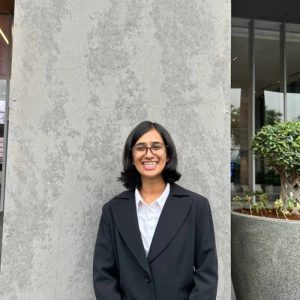

Rucha Shah is an Economics undergraduate at Lady Shri Ram College for Women, University of Delhi, and a state topper in the Central Board of Secondary Education Class Twelve examinations. As President of Enactus Lady Shri Ram College, she leads social enterprises in sustainability, agri-technology, waste-to-value, and artisan livelihoods. She was selected as a DESIS FinSpire Fellow at D. E. Shaw and interned at Boston Consulting Group, emerging as a National Winner and receiving a Pre-Placement Offer from Delhi University’s inaugural cohort.

Sreya S Motti


Sreya S Motti is a fourth-year Humanities and Social Sciences student at the Cluster Innovation Centre, University of Delhi. Her interests include gender studies, human rights, and public policy. She has worked with government agencies, non-governmental organisations, startups, and cultural festivals, and researched gender vulnerability, walkability, and Self Help Groups. She guides students through an internship-focused social media platform and manages a community of over 1,300 students, while using storytelling and media for advocacy.

Srishti Chalana


Srishti Chalana has explored social media, operations, and digital marketing through internships at Cannibals Media Private Limited and The Aarambh Organization, affiliated with NITI Aayog. She completed job simulations with Deloitte, EY, JP Morgan Chase, and Tata. Actively mentoring peers on LinkedIn, she combines experimentation, ambition, and determination while guiding students navigating early career pathways.

Virat Vaibhav

Virat Vaibhav is a Bachelor of Management Studies student at Shaheed Sukhdev College of Business Studies and founder of Sawaari H2H, pre-incubated within a Government of India-backed ecosystem. He represented India at the Emerging Markets Institute at Cornell University, securing the highest position achieved by an Indian undergraduate college. He earned National Rank Two at Ernst and Young’s CAFTA and Rank Three at Grant Thornton. His experience includes Ernst and Young, Invest India under the Ministry of AYUSH, Frost and Sullivan, Grant Thornton, Kroll, and startup projects.


2. Arts and Culture

Abhinav Dubey


Abhinav Dubey is a multidisciplinary creator blending art, performance, leadership, and digital storytelling. Through cultural societies, anchoring, fine arts, and public engagement, he combines creativity with leadership. His digital storytelling has reached over 1.4 million accounts, and he has collaborated with brands such as Philips, Rapido, and Cashify. As a Common University Entrance Test mentor and educational content creator on YouTube, he supports students navigating academic journeys with purpose-driven impact.

Ananya Arora


Ananya Arora is an Economics student at Lady Shri Ram College for Women and a Bharatanatyam dancer trained under Padma Shri Guru Kanaka Srinivasan. A recipient of the Centre for Cultural Resources and Training Scholarship from the Ministry of Culture, she has performed at Kalidasa Samaroh, Brahmotsavam in Tirupati, and presented her Arangetram at India Habitat Centre. In 2024, she represented India at the Indian Council for Cultural Relations Festival of Dance in the United Kingdom. She is Project Director at Enactus and founded Project Milan under the United Nations Millennium Fellowship. She has interned at Carnegie India and Nation with Namo and was a Top Fifteen finalist at Ernst and Young NextGen Women 2025.

Borishan Ghosh


Borishan Ghosh is a fourth-year Physics student at Hansraj College who bridges arts and sciences. He co-founded Delhizine, a student-run zine collective that has sold over 2,000 copies, raising Rs. 38,000 for free library projects and relief funds, with 1,600 active users across 26 countries. As illustrator and art director, he shaped over 50 zines and designed the website. A member of the Sky Watchers’ Association of North Bengal, he led telescope outreach and served as a weekly demonstrator under a National Aeronautics and Space Administration after-school initiative.

Navyasha
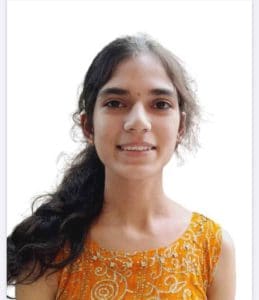

Navyasha is a Psychology undergraduate at Mata Sundri College for Women, University of Delhi, and a school topper with consistent academic excellence. She has trained in Hindustani classical vocal music for over seven years and has appeared for the Visharad Poorna examination from Gandharva Mahavidyalaya, the final level of the course, and is awaiting results. Her engagement with classical music reflects a deep commitment to understanding India’s musical traditions and cultural heritage.

Rinchan Lyall Robert


Rinchan Lyall Robert is a third-year English student at Jesus and Mary College, preparing for Journalism school. She co-founded Delhizine, overseeing editorial and production of over 2,000 zines that raised Rs. 38,000 for library projects and relief funds. Passionate about social work, she teaches underprivileged children and adults, serves as Vice President of Curiosus, the college Quiz Society, and actively engages in reading, sewing, and crochet.

Sohini Natta


Sohini Natta is an undergraduate at the University of Delhi trained in Indian Classical and Semi-Classical music. She later learned Korean Traditional Percussion Music and became the youngest member of India’s first official Samulnori team at seventeen. She has performed at national and international platforms, including a presidential-level event during India’s G20 Presidency. She has also worked with the Embassies of the Republic of Korea and France in India.

3. SCIENCE AND TECHNOLOGY

Deepika


Deepika is a Bachelor of Science (Honours) Electronics student at Sri Venkateswara College, University of Delhi, with a strong interest in cybersecurity, technology, and leadership. She served as a Gurugram Police Cyber Security Summer Intern 2025, contributing to cybercrime awareness and digital safety initiatives. As President of the Electronics Department, she leads student activities and operations. She also serves as a Google Campus Ambassador, promoting student programs and strengthening campus engagement.

Sanjay Singh


Sanjay Singh is a Cybersecurity Evangelist based in Noida, specialising in vulnerability research and artificial intelligence-driven defence strategies. He has identified multiple Common Vulnerabilities and Exposures and actively contributes to information security awareness and education initiatives. With a strong leadership mindset, he works at the intersection of technology, risk, and innovation to build resilient and future-ready cyber ecosystems.

4.LITERATURE

Anya Rao


Anya Rao is an English Literature student at Lady Shri Ram College for Women who has grown an online community of over 90,000 across LinkedIn, Instagram, and YouTube through writing and storytelling. Alongside creative and socially conscious content, she works as a ghostwriter and personal branding strategist, helping Indian and international founders build influence through writing. She has collaborated with Shark Tank India companies such as Akanksha Vishnoi and YesMadam, as well as international founders including Mackenzie Thompson and Gradjobs Australia.

Avni Jain


Avni Jain is a writer, poet, and performance artist pursuing Bachelor of Science (Honours) Mathematics at Jesus and Mary College, University of Delhi. For over five years, she has blended literature, performance, and social impact, foregrounding unheard narratives. She has collaborated with professors affiliated with Harvard Business School, Imperial College London, and Northwestern University to advance women’s workforce participation. Avni has conducted spoken word workshops at Indian Institute of Technology Delhi and Birla Institute of Technology and Science Pilani, performed widely across Delhi, served as Vice President of her college Poetry Society, and runs a literary newsletter reviewing over 90+ books.

Md Salman Raquib


Md Salman Raquib is a Delhi University student and visual storyteller from Bihar, currently studying Spanish Literature at the Department of Germanic and Romance Studies. His photography documents everyday life, cultural memory, and social realities with sensitivity. His award-winning photo essay, magazine publications, and cover feature highlight both artistic skill and social awareness. Working across street photography and environmental themes, he uses images to explore identity, lived experience, and community connection.

Sayan Das


Sayan Das is a student at the Delhi School of Journalism, University of Delhi, and a literary thinker from Tripura who approaches literature as both art and responsibility. His work spans philosophy, research, poetry, and narrative prose, addressing overlooked social realities. He has been honoured by the Government of Tripura for research-based literary work on consumer protection and digital ethics, and has received multiple state and national poetry awards, including the Best Poet title at Yuva Utsav.

5.SPORTS

Bhavya Tripathi

Bhavya is a professional shotgun shooter representing the Indian shooting team, with multiple medals at both
international and national levels.

OM Kharola

OM Kharola is a nationally and internationally accomplished chess player who has combined elite sport with academic and professional excellence. He has won multiple State Chess Championship titles across Delhi and Maharashtra, represented India at the Asian Youth Chess Championship, securing team gold and individual bronze medals, and competed at the World Youth Chess Championship. A 2025 Bachelor of Management Studies graduate from Shaheed Sukhdev College of Business Studies, University of Delhi, he is currently an Analyst at L.E.K. Consulting, applying strategic and data-driven problem-solving skills shaped by competitive chess.

6.SOCIAL IMPACT AND ACTIVISM

Ananya Singhal


Ananya Singhal is a driven undergraduate with a strong record in leadership, entrepreneurship, and social impact. She has founded and scaled student- and community-led initiatives across India and internationally, mobilising teams, securing funding, and delivering measurable outcomes. As a founding member and Chief Operating Officer of an education technology startup, she led stakeholder engagement and fundraising. Through roles in consulting and media organisations and leadership positions in college societies and non-governmental organisations, she has managed cross-functional teams while maintaining consistent academic excellence and national-level achievements.

Anjali Batra


Anjali Batra is a postgraduate Political Science student at the University of Delhi working at the intersection of policy and lived experience. Within the United Nations Foundation’s Girl Up network, she designed campaigns on menstrual equity, mental health, and gender justice engaging over 500 participants. She founded Project Mehviyat, a trauma-informed community for survivors from South Asian households, and serves as Chief Impact Officer at The Human Empowerment Organisation. A United Nations Millennium Fellow and Global Youth Ambassador with Theirworld, she advances people-centered change.

Badal Chaudhary


Badal Chaudhary is a third-year student at Ramjas College, University of Delhi, recognised for innovative student leadership. Elected Joint Secretary of the Bachelor of Arts Programme Department in his first year, he later became the elected student representative to the Internal Complaints Committee. He founded Ramjas Kranti Setu, Delhi University’s first student grievance and helpdesk web portal with real-time issue tracking. His campaigns introduced eco-friendly seed cards, personalised fresher envelopes, guidebook-style pamphlets, and digital storytelling initiatives, redefining campus activism.

Ishpreet Kakkar


Ishpreet Kakkar is a fourth-year Political Science student with a minor in English at Lady Shri Ram College for Women. Guided by the value of selfless service, she began social outreach during the COVID-19 pandemic by distributing masks, sanitizers, and food. She later founded the Sachi Seva Foundation, providing free meals to those in need. Selected to represent India at the National University of Singapore, she won 5000 Singapore Dollars for her social entrepreneurship pitch focused on improving employability for orphaned youth under eighteen.

Jaya Paul


Jaya Paul is a final-year History student at Lady Shri Ram College for Women who bridges archival research with grassroots action. Guided by the college’s ethos of leadership and social responsibility, she works through platforms such as the National Service Scheme to foster inclusion and accessibility. Her writing connects historical structures to present policy and lived realities, aiming to influence discourse beyond classrooms. Calm yet bold, she combines academic rigour with empathy to advocate meaningful social transformation.

Niyamat Kochhar


Niyamat Kochhar works at the intersection of gender equity, sustainability, and education. She founded Menstra, addressing menstrual health, period poverty, and waste reduction, and HerCode, a United Nations-funded initiative equipping girls with coding and digital skills. She serves with United Nations Women on the Youth Steering Committee for the Commission on the Status of Women in New York and is one of ten global Girl Up Teen Advisors. Her work integrates grassroots action, policy engagement, and youth leadership.

Pari Malla


At nineteen, Pari Malla has channelled personal struggles into purpose-driven organisations rooted in community building. Her work focuses on forging connections through social networking to create ecosystems of safety and hopeful identity. Often described as a bridge in social spaces, she strives to make environments feel inclusive and supportive. Guided by a belief that hope combined with action makes change inevitable, Pari consistently ideates and executes initiatives grounded in collective empowerment.

Rucha Shah


Rucha Shah is an Economics undergraduate at Lady Shri Ram College for Women, University of Delhi, and a state topper in the Central Board of Secondary Education Class Twelve examinations. As President of Enactus Lady Shri Ram College, she leads social enterprises in sustainability, agri-technology, waste-to-value, and artisan livelihoods. She was selected as a DESIS FinSpire Fellow at D. E. Shaw and interned at Boston Consulting Group, emerging as a National Winner and receiving a Pre-Placement Offer from Delhi University’s inaugural cohort.

Saloni Sharma


Saloni Sharma is a fourth-year Political Science student at Lady Shri Ram College for Women and founder of AICommons. A United Nations Millennium Fellow and former President of the English Debating Society, she approaches leadership through empathy and democratization. Through AICommons, she works to centre human dignity within technological futures, translating critical theory into actionable advocacy. Her work bridges technical systems and social justice, striving to build an inclusive digital future that serves all.

7.ENTREPRENEURSHIP AND INNOVATION

Akshat Kumar


Akshat Kumar is an 18-year-old second-year Bachelor of Technology student known for leadership and technical depth. A founding member of Geek Room, one of India’s largest student-led technology networks connecting over 150,000 developers, he has organised 30+ hackathons, including Code Kshetra 2.0, collaborating with Microsoft, Groq, and Mastercard. He has interned at Trae, OmniDimension (United States), and Misty Interactive (Canada). A national-level swimmer, he has represented Delhi at multiple championships.

Avishi Gupta


Avishi Gupta is a Commerce graduate from the University of Delhi and an Assurance and Audit Associate at Ernst and Young Global Delivery Services. Founder of Project Riayat, an adaptive clothing initiative for persons with disabilities, she led it from research to pilot within a year, building 12+ institutional collaborations and earning recognition in 25+ national competitions. As President of Enactus Deen Dayal Upadhyaya College, she led 150+ members. Her work has been featured by The Better India and Social Story.

Dhani Gupta


Dhani Gupta is a young entrepreneur and Founder and Chief Executive Officer of SkilltheHub India Limited Liability Partnership, training over 10,000 learners nationwide in entrepreneurship, business strategy, and leadership. She also leads The NAMAH Group, including NAMAH Model United Nations, engaging 400+ delegates across 20+ institutions. Her ventures include “Nani ki Chaupal.” With experience across startups, branding, programming, and classical dance, she has been recognised at national and international startup expos and youth leadership forums.

Nargis Parbin Barbhuiya


Nargis Parbin Barbhuiya is an Economics student at the University of Delhi with a strong interest in business and entrepreneurship. Originally from Assam, she founded and manages a handmade business on Instagram, overseeing branding, operations, and customer engagement. Her professional experiences have strengthened her skills in team coordination, client interaction, and people management. She thrives in fast-paced environments focused on innovation and aims to contribute to sustainable, impact-driven business ecosystems.

Shivalee Duara


Shivalee Duara is a final-year Economics student at Daulat Ram College and Founder of YIOS Consulting, a student-run consulting organisation that has worked with four startups. Passionate about entrepreneurship and trade economics, she has interned at the Indian Council for Research on International Economic Relations and the Federation of Indian Chambers of Commerce and Industry, and assisted on a project funded by the Indian Council of Social Science Research. She also serves as Chairperson of Global Alliance for Environment and Education India under the United Nations Sustainable Development Solutions Network.

Swonshutaa Dash


Swonshutaa Dash is a second-year English Honours student at Lady Shri Ram College, ranking third in her department. She has scaled a social enterprise built around elephant dung and developed nutraceutical solutions addressing anaemia. A national winner, including the Boston Consulting Group Bruce Henderson Ideathon and competitions at Shri Ram College of Commerce and Indian Institute of Management Indore, she generated ₹70,000+ revenue through Project Saarthi. Her campaigns reached 120,000+ accounts, including work for Blue Tokai Coffee Roasters, and have been featured in ThePrint and Youth Ki Awaaz.

Tamanna Gupta


Tamanna Gupta is an emerging consulting leader from Miranda House, where she founded and led the college’s first Consulting Forum. She built a 12+ project pipeline, launched a Consulting Festival, initiated a cross-campus mixer, and formalised collaborations with Indian Institute of Management Indore and Indian Institute of Technology Delhi. She led the creation of a 200-page Casebook used across 20+ institutions and competed in 150+ national case competitions. She is placed at Barclays as a Fraud Analyst.

Vinayak Sharma


Vinayak Sharma is a student entrepreneur working at the intersection of brands and students. After beginning college with limited technical exposure, he gained experience with Adidas, Lenskart, and Ogilvy, receiving Letters of Recommendation from each. He founded Zoffers, a student-first startup bridging brand and student needs. Recognised as a LinkedIn Top Voice in Business Strategy, he has been invited to speak at Punjab University and University of Delhi events on marketing and personal branding.

With 21 Under 21 we bring forth the young leaders, scholars, artists, athletes, activists, and entrepreneurs under 21 who are redefining excellence at the University of Delhi through innovation, impact, and ambition. More Details Coming Soon, Stay Tuned!

The post DU Beat 21 Under 21 Longlist appeared first on DU Beat - Delhi University's Independent Student Newspaper.

]]>
The Voter That Democracy Imagines https://dubeat.com/2026/02/22/the-voter-that-democracy-imagines/ Sun, 22 Feb 2026 05:36:58 +0000 https://dubeat.com/?p=78465 Voting is a right, but only if the system can recognise you. History, fragility and everyday loss of our most fundamental rights lead us to ask:  why does a government which is “by the people” still decide who counts?   We like to believe that democracy is loud, participatory, and forgiving. That once a right [...]

The post The Voter That Democracy Imagines appeared first on DU Beat - Delhi University's Independent Student Newspaper.

]]>
Voting is a right, but only if the system can recognise you. History, fragility and everyday loss of our most fundamental rights lead us to ask:  why does a government which is “by the people” still decide who counts?


We like to believe that democracy is loud, participatory, and forgiving. That once a right is granted, it stays granted. That voting, at the very least, is something the state does not ask you to earn again and again. But this belief rests on a fragile and transitory assumption that all citizens are equally visible, equally legible, and equally easy to recognise– they are not. 


Every democratic system, no matter how expansive, carries within it an unspoken imagination of the “ideal voter”. From its earliest articulations, the idea of the voter has been shaped less by equality than by eligibility. In ancient democracies, participation was a privilege. Some people were political by default. Others were never meant to be.


In ancient Athens, this imagination was not subtle. Only free men could participate in political life. Women, slaves, and foreigners were excluded not because they were invisible, but because they were never meant to count. Even Aristotle, often invoked as a foundation thinker of democracy, was clear that political participation belonged to those capable of reasoned speech and leisure. To vote was not to express oneself, but to signal that one already belonged to the correct moral and social category.


Rome refined this logic. Early modern societies tethered the right to vote to the right to own property—the voter must have a “stake” in society. Even under British rule, voting was a way to manage, not empower–rationed through educational qualifications, income and property. “Prove that you are responsible”. The logic is paternalistic, yet familiar.


We like to tell ourselves that we no longer ask who deserves to vote. That question sounds crude now, embarrassing even. Instead, we ask something softer. Something administrative: “Can you be verified?”


This shift matters because verification always asks for proof, and proof assumes stability. It sounds clean until you remember how easily lives fall apart. Even privilege does not guarantee permanence. Documents are lost. Names change. Paper yellows, tears, burns. Files slip out of folders during relocations that were never meant to be temporary. In bastis and slums, papers are damaged by rain, by fire, by evictions that arrive without warning. None of this is malicious. None of it is fraud. It is simply what living does to paperwork. 


And yet, when participation hinges on uninterrupted proof, the burden quietly shifts. The right to vote stops feeling like something you possess and starts feeling like something you must maintain. The system does not say you do not belong. It only asks you, again and again, to show that you do.


This is where the idea of the “ideal voter” returns, not as a moral figure, but as a logistical one. The ideal voter is someone whose life does not interrupt the system. Someone whose citizenship does not require explanation. 


History helps us recognise this pattern because it has repeated itself in different disguises. Once, voting was tied to property, education, lineage, and gender. Later, to literacy and rationality. Each time a barrier was dismantled, another took its place. More defensible and easily justifiable. Times changed, but the instinct did not. 


India’s decision to adopt universal adult suffrage was radical precisely because it resisted this instinct. It trusted people before they were orderly. It did not demand coherence. At a time when many democracies hesitated, India chose inclusion as a starting point, not a reward. That choice feels under strain today.


Processes like the Special Intensive Revision (SIR) of electoral rolls are presented as technical necessities. Accuracy. Clean lists. Integrity. On paper, this is very difficult to argue against. Who doesn’t want correctness? Who would defend error? But correctness is not the same as justice. Systems that prioritise order inevitably privilege lives that are already ordered. Exclusion, hence, rolls in like a fog of delay, confusion, missed deadlines and unclear notices. A fog you cannot cross without a level of attentiveness and stability that, simply put, most lives cannot afford. Disenfranchisement here does not announce itself. It accumulates.


What should trouble us is not that systems require maintenance, but that those who bear the cost are rarely brought to light. We choose to reassure ourselves with perfectly rational explanations that function in an inherently flawed system. These explanations are not wrong, but they are incomplete. They allow us to avoid the discomfort of admitting that democracy, when made too tidy, begins to shrink.


We imagine political progress as linear: more rights, fewer exclusions. But as history would suggest, another undeniable truth exists–as rights expand, the conditions attached to them mutate. Participation becomes conditional not in law, but in practice. The definition of the voter remains unchanged on paper, even as the experience of voting grows more fragile.


So, we return to the question that refuses to stay buried: who is the voter the state designed its systems to recognise? And perhaps, more importantly, who is the voter who must constantly keep proving that they belong?


If old age, poverty, displacement, or simple misfortune can interrupt political visibility, then democracy is no longer about voice. It becomes about endurance. About whose lives are resilient enough to survive bureaucracy. 


There is no quick fix for this tension. Democracy is not tidy. People move. Records fail. Lives refuse to align neatly with databases. A political system that prioritises order over access risks mistaking control for legitimacy. If democracy is to mean more than ritual, it must tolerate messiness. It must accept that inclusion requires patience and that trust cannot be fully replaced by proof.


A democracy that treats participation as conditional will always shrink itself, quietly and efficiently. The danger is not that it will collapse overnight, but that it will continue to function smoothly and procedurally. Leaving more and more people standing outside its frame. Narrowing the circle of those who remain visible within it, and narrowing, as history tells us, is never neutral.


Image caption: Unlike many other democracies, India chose inclusion as a starting point, not a reward. That choice feels under strain today.


Read Also: Elections, Voters and Vote Chori


Image credits: Paytm Blog


Suansh Dembla

[email protected]

The post The Voter That Democracy Imagines appeared first on DU Beat - Delhi University's Independent Student Newspaper.

]]>