Open-Earth-Monitor project https://earthmonitor.org A cyberinfrastructure to accelerate uptake of environmental information Tue, 11 Feb 2025 09:13:27 +0000 en-US hourly 1 https://wordpress.org/?v=6.9.4 https://earthmonitor.org/wp-content/uploads/2022/04/cropped-OEM_Logo_Color_1000x1000_transparent_OEM_logo_1000x1000_Transparent-32x32.png Open-Earth-Monitor project https://earthmonitor.org 32 32 Open letter from the community for the full consideration of Earth Observation in the EU Forest Monitoring Law https://earthmonitor.org/open-letter-from-the-community-for-the-full-consideration-of-earth-observation-in-the-eu-forest-monitoring-law/ Tue, 11 Feb 2025 09:03:52 +0000 https://earthmonitor.org/?p=27886

Recognizing the increasing pressures on European forests, a community of Earth Observation (EO) experts have issued an open letter for consideration in shaping the Forest Monitoring Law (FML). The law as proposed by the European Commission includes the collection and sharing of timely and comparable forest data obtained through a combination of ground-based measurements and Earth Observation technology.
 The EO community recognizes that the FML is currently being negotiated at the EU policy level and that there are considerations of the role EO in the available FML draft documents and recent discussions on the legislation. At the same time there seems to be some divergence of opinions and misunderstandings on the role EO should play in future forest monitoring in Europe. With the following letter, we summarize and explain the importance EO can play for underpinning a more resilient and sustainable future for European forests.
 
The letter has been signed by 78 forest Earth Observation scientists and experts from 17 European countries.
 
We hope that this community input helps the policy development process for shaping and implementing an efficient and integrated forest monitoring framework in the context of the FML.

]]>
Forschungsgipfel EuroGEO in Bozen: Erdbeobachtungsdaten sollen für alle zugänglich und nutzbar werden  https://earthmonitor.org/forschungsgipfel-eurogeo-in-bozen-erdbeobachtungsdaten-sollen-fur-alle-zuganglich-und-nutzbar-werden/ Fri, 27 Oct 2023 09:22:33 +0000 https://earthmonitor.org/?p=25176 Wichtige Einsatzbereiche sind Katastrophen- und Klimaschutz, nachhaltige Landwirtschaft und Wassermanagement  

Daten zum Wetter, zum Zustand der Vegetation und Wälder, zur Schneebedeckung: Verschiedenste Daten zur Erdoberfläche, erfasst sowohl von Satelliten als auch von Bodenmessstationen, sollen in einem einzigen System zusammengeführt und zugänglich gemacht werden. Das ist das Ziel der internationalen Initiative GEO, an der sich Nationalstaaten und ihre Forschungseinrichtungen weltweit beteiligen. Vom 2. bis 4. Oktober 2023 treffen sich die Mitglieder des europäischen Ablegers EuroGEO in Bozen. Organisiert wird der Erdbeobachtungsgipfel von Eurac Research in Zusammenarbeit mit der Europäischen Kommission (Generaldirektion Forschung und Innovation DG RTD) und dem Institut für Luftverschmutzung des italienischen nationalen Forschungsrats. Im Anschluss an die Konferenz findet vom 4.-6. Oktober ein Forschungs-Workshop des Projekts OEMC (Open-Earth-Monitor) statt, das auf den Aufbau einer Open-Source-Cyberinfrastruktur im Bereich von Umweltdaten abzielt. 

ürreperioden, wie sie im vergangenen Sommer in mehreren Gebieten in Europa vorkamen, sind nicht nur ein Problem im Hinblick auf die Wasserversorgung. Wenn Gewitter mit Starkregen folgen, kann der Boden das Wasser nicht mehr aufnehmen. Überflutungen mit großen Schäden können die Folge sein. Wissenschaftlichen Prognosen zufolge werden solche Extremwetterereignisse besonders auch in Europa in den kommenden Jahren zunehmen.  

Erdbeobachtungsdaten, kurz Geodaten, können bei zukunftsträchtigen Entscheidungen in der Politik und beim Verwalten von Ressourcen eine wichtige Rolle spielen. Besonders in den Bereichen Katastrophenschutz, Gesundheit, Energie, Klima, Wasser, nachhaltige Landwirtschaft und biologische Vielfalt erwarten sich die Mitglieder der Initiative GEO (Group on Earth Observation) durch die bessere Koordinierung der Daten einen großen Nutzen. „Es geht nicht nur darum, zu beobachten, was auf der Erde passiert und Daten zu einzelnen Ereignissen zu erfassen. Vielmehr geht es darum, aus dem Gesamtkontext heraus zu verstehen, warum etwas passiert und dadurch Risiken früh zu erkennen und abzuleiten, was wir tun können, um uns auf zukünftige Entwicklungen bestmöglich vorzubereiten. Dafür müssen wir uns sowohl auf wissenschaftlicher als auch auf globaler Ebene noch stärker vernetzen“, erklärt Alexander Jacob von Eurac Research, der den groß angelegten Erdbeobachtungsgipfel in Bozen mitorganisiert. Neben der Rolle als Gastgeber ist Eurac Research vor allem als wissenschaftlicher Partner in der Arbeitsgruppe „GEO Mountains” aktiv, sowie bei der Entwicklung von Standards zum Austausch von Geodaten im Kontext digitaler Zwillinge. Das sind virtuelle Modelle, in denen Prozesse oder Objekte aus der realen Welt in der digitalen Welt nachgebildet werden.   

Ziel der Konferenz in Bozen ist zum einen der wissenschaftliche Austausch unter Expertinnen und Experten. Außerdem soll ein Strategiepapier ausgearbeitet werden, das die Interessen der europäischen Länder enthält und somit eine Vorbereitung auf die globale GEO-Konferenz ist, die im November in Kapstadt stattfindet. 

Der Workshop zum Projekt OEMC (Open-Earth-Monitor) findet im Anschluss an die EuroGEO-Konferenz vom 4.-6. Oktober 2023 im Forschungszentrum Eurac Research in Bozen statt. Ziel ist es, eine „Open-Source-Cyberinfrastruktur“ aufzubauen, also eine frei zugängliche Infrastruktur, die Umweltinformationen auf europäischer und globaler Ebene besser nutzbar macht. Organisiert wird der Workshop von der OpenGeoHub Foundation in Zusammenarbeit mit Eurac Research.  

Programm und Infos zur EuroGEO in Bozen: https://egw2023.eurac.edu/  

Programm und Infos zum OEMC Global Workshop: https://earthmonitor.org/gw2023/ 

]]>
Open-Earth-Monitor Cyberinfrastructure Project 2023 – 2027: Open Environmental Data to Support EU’s Green Deal https://earthmonitor.org/open-earth-monitor-cyberinfrastructure-project-2023-2027-open-environmental-data-to-support-eus-green-deal/ Mon, 21 Aug 2023 06:20:54 +0000 https://earthmonitor.org/?p=24816 Prepared by: Tom Hengl (OpenGeoHub), Leandro Parente (OpenGeoHub), Luca Brocca (CNR), Gregory Duveiller (Max Planck Institute for Biogeochemistry), Martin Herold (GFZ), Santiago Ferrer (Vizzuality), Irene Eleta (Vizzuality)

The OEMC project was kick-started in June 2022. The first six months of the project were used to build a detailed implementation plan outlined in this document. The project aims to continuously develop and release a number of building blocks (back-end, front-end, software, and data solutions) components of pan-EU and global monitors that serve concrete use-cases i.e. diversity of user communities.

The main development principle of this cyberinfrastructure is that (a) it is a federated/decentralized system, (b) it is primarily based on FOSS and aiming at supporting open development communities, (c) it is user-centered hence improvements are based on interaction and feedback from users via 32 use-cases with concrete partners, and (d) it is an open data project based on FAIR principles.

The key project deliverables in OEMC project will include (WP2) Stakeholder committee and user engagement plans throughout project duration; (WP3) Open-Earth-Monitor computing engine and geodata cube; (WP4) Open-Earth-Monitor in-situ (ground) data services; (WP5) Open-Earth-Monitor suite of tools directly serving EU citizens and governance needs via easy-to-use data portals and apps; (WP6) Open-Earth-Monitor suite of tools serving global governance needs.

Introduction

The Open-Earth-Monitor Cyberinfrastructure (OEMC) project (Horizon Europe funding 2022–2027) aims at increasing European capability to generate timely, accurate, disaggregated, people-centered, accessible (GSM-compatible) and user-friendly environmental information based on Earth Observation (EO) data. We plan to achieve this by building a cyberinfrastructure anchored in FAIR data principles, leveraging and improving our existing platforms e.g. OpenEO.orgGeopedia.worldGlobalEarthMonitor.euEarthSystemDataLab.netOpenLandMap.orgEcoDataCube.euGeo-wikiLifeWatch.euXCUBE and EuroDataCube.com. The project is coordinated by the OpenGeoHub foundation and is closely aligned with the broader EuroGEO initiative.

OEMC runs in three main phases:

  1. Implementation of the computing engine and in-situ O&M data services (2023–2025)
  2. Direct application of the Open-Earth-Monitor to support EU Green Deal and other strategic actions (2024–2026)
  3. Dissemination and engagement of stakeholders & target users through a series of open workshops, then revise the tools and adjust them to better fit their objectives and limitations (2023–2026)

We specifically target to contribute towards actions in the following directions:

The proposed OEMC system consists of three groups of components:

  1. [Humanware] Development teams: grouped around various tasks and aiming at co-designing, co-developing building blocks, and serving use cases. User communities can also be considered to be part of the human-ware. Currently, +100 people are directly involved in this project.
  2. [Dataware and Hardware] Data pools and back-end infrastructure: large datasets/databases and computing infrastructure either on 3rd hosting infrastructures or local infrastructures;
  3. [Software] Software libraries, APIs, front-end solutions: R, Python, or other libraries, computational tutorials, and UI toolkits for importing, processing, and serving environmental data at continental (EU) and global scales;

Dataware, hardware, and software are considered to be the building blocks of the system.

OEMC project in a nutshell

OEMC project is, in a nutshell, a FOSS-based federated solution producing open data and cost-effective data services aiming at supporting European Union programs. At the center of the project, i.e. the main focus of our work, are the so-called “Use cases” i.e. practical applications of the OEMC where the partner organizations and their users are at the center of the use-case-centered design. Use cases are jointly designed and implemented with 3rd independent parties that are continuously kept in the loop / invited to join conferences and workshops, and a part of the OEMC Stakeholders Committee. OEMC project, hence, largely follows the implementation design of the successfully completed E-shape and similar Horizon Europe projects under the EuroGEO umbrella.

Illustration: OEMC general project structure: various building blocks are used to build solutions and serve concrete user communities (through use cases).

For comparison, the e-shape project had a total of 37 pilots, grouped around 6 major topics and strictly structured with objectives, development partners, targeted users/clients, expected outcome of the pilot, timeline of the pilot, nature of the outcome, means of release/means of access, user perspective, impact on the EO community at large, openness and sharing option, success stories clearly defined and tracked throughout the project. Likewise, the OEMC project has 32 use cases that will try to mimic the structure of the e-shape project as much as possible. Below is an example of one of the larger use-case conducted jointly with UNCCD.
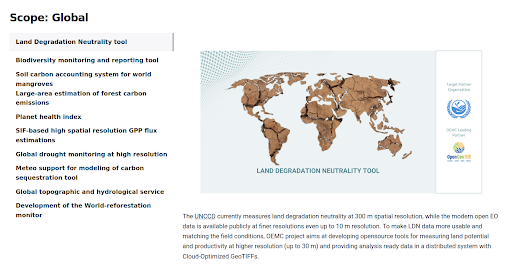
Illustration: Example of an use case: OEMC project will support UNCCD to transition with their Land Degradation Neutrality tool from 300-m spatial resolution to potentially 30-m spatial resolution. This is an enormous improvement in the level of detail and could potentially bring the order of magnitude more users and more interest in the LDN project. A full list of use cases is available at: https://earthmonitor.org/use-cases/

Other important inspirations for the OEMC project design are the general software solutions enabling easier access and usability of data across formats and cloud-optimized such as GDAL and Cloud-Native geodata formats, reproducible computational notebooks such as Jupyter notebooks and Rbookdown documents, Geo-wiki and Mastodon-type solutions for large networks of open development communities. Here especially Mastodon (2.5 million users and about 10k servers based on data from June 2023), which is a free and open source microblogging network built as a decentralized federation of independently-operated servers, is picked as the ideal model for organizing geodata-producing communities.

Main development principles in OEMC project

The project development team has agreed to adhere to some minimum general development principles. The four most important development principles are that: (a) it is a federated/decentralized system, (b) it is primarily (or solely) based on FOSS, (c) it is a user-centered system hence improvements are based on interaction and feedback from users, and (d) it is an open data project based on FAIR principles.

The system development will be also based on the following three key premises:

  1. We aim at building & serving analysis/decision-ready data: To increase usage of environmental information it should be distributed as what users consider as decision-ready data or (at least) analysis-ready data. Most current users of EO data have neither the expert domain capacity nor often the interest, to prepare data until it can be freely and easily used for complex analysis or used directly to serve decision-making. In addition, users do not require 3 or 4 overlapping datasets (e.g. Landsat, Sentinel, Proba-V land products), but ideally would prefer a single harmonized, complete, consistent, current, and rapidly updatable dataset. See for example the benchmarking dataset we prepared for the purpose of testing gap-filling algorithms. Another important aspect of decision-ready data is that the EO-pixels can directly relate to bottom-up information from national or regional censuses and statistical offices.
  2. We aim at producing economically-assessed environmental information: Climate action or any similar large-scale environmental management/restoration will struggle until most citizens are aware of the financial benefits and co-benefits of ecosystem services. We believe that environmental information needs to be extended to include societal benefits generated by ecosystem services or costs of environmental pressures. Often, though not always, monetary information is easier to apply, for example, by users from the business community. In other words: Climate and Biodiversity Action will not be undertaken unless financial benefits and co-benefits are (more) clear.
  3. Our data solutions are user-centered: Users, i.e. people, should be central to co-designing a system and ought to be involved from the start of the implementation phase. We promote a hybrid bottom-up/top-down approach that would put users at the center of design, without losing on the speed and efficiency of development. In the hybrid approach, prototype “top-down products” are presented mid-way through the project to users for evaluation/recommendations. Users might not be fully aware of what can be done, but once they see it, they can express preferences, suggestions, and requirements, and get engaged with producing the final “bottom-up products”.

Main project outputs

The OEMC system will deliver a number of outputs that can be classified as:

  1. New software solutions to help implement deliverables and especially to serve WPs 3–6. This can be and/or:
    1. New or updated existing R, Python, Julia, and OSGeo libraries
    2. Functions and services served through API; new standards e.g. for monitoring terrestrial biomass (see e.g. Labrière et al., 2023)
    3. Front-end solutions: passive and/or interactive apps, web-mapping portals, and dashboards.
  2. New value-added datasets at high spatial resolutions and served as Cloud-Optimized Analysis-Ready data that will serve as a demonstration of the functionality and added value of combining Machine Learning (ML) as implemented in FOSS with massive environmental and EO datasets. This can be and/or:
    1. Vector (point, line, polygon) data: most importantly we will generate standardized, analysis-ready training data representing Observations & Measurements (O&M) from federated networks (see e.g. Calders et al., 2023), including citizen science data (Fraisl et al., 2023), that can be used to run machine learning and produce value-added decisions-ready / analysis-ready datasets. This data will be entered into geospatial DBs and/or served through S3 via Cloud-Optimized formats e.g. FlatgeobufGeoparquet, or similar.
    2. Gridded Spatiotemporal datasets (usually complete, consistent time-series of COGs or zarr files) at various spatial resolutions (10, 25, 30, 100, 250, 1000 m) and various temporal support (daily, weekly, monthly, annual, long-term) covering the bounding box/mask of interest defined in the project (pan-EU and global, with special focus on Tropics).
    3. Sample datasets i.e. smaller subsets that are used for testing and demo purposes. Small datasets will be best distributed in simple tabular formats e.g. as Simple Features or multiarray with spatiotemporal coordinates of the center of pixels;
  3. Scientific materials: registered with a DOI and citable in the literature. This includes:
    1. Peer-reviewed scientific and technical publications
    2. Blog posts
    3. Lectures and demonstrations (multimedia materials)
  4. Use cases: demonstration of OEMC in action for solving real-life problems, serving concrete stakeholders, then receiving feedback and re-design, re-build, and re-publish improvements;

You can follow the project outputs continuously via:

Each project output would need to follow some minimum quality criteria and good practice guidelines. The minimum standards include:

  • Required data and software licenses are used (also following the Consortium Agreement).
  • An official file naming system is used.
  • Standard recommended vocabularies (codes, variables names, keywords) are used.
  • Files are uploaded and/or registered using official registries/project management systems.
  • Complete metadata is provided passing a minimum (automated) check via Geonetwork and/or STAC.
  • Software and data outputs are following the project specifications. They pass validity checks as specified in the minimum requirements column.
  • For each output, a support channel is available (GitHub, GitLab support channels, or similar) where users can ask questions and register eventual bugs/issues.
  • New attached publications + DOI’s (i.e. how to cite data is specified) are registered in the OEMC catalogs.

The key project deliverables in the OEMC project will include:

  • (WP2) Stakeholder committee and user engagement plans throughout the project duration
  • (WP3) Open-Earth-Monitor computing engine and geodata cube
  • (WP4) Open-Earth-Monitor in-situ (ground) data services
  • (WP5) Open-Earth-Monitor suite of tools directly serving EU citizens and governance needs via easy-to-use data portals and apps
  • (WP6) Open-Earth-Monitor suite of tools serving global governance needs
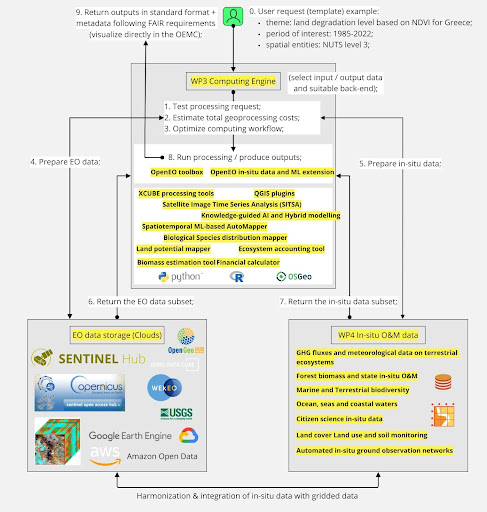
Illustration: Example of a planned typical workflow within OEMC. The WP3 serves a number of software solutions (library) that are used for specific tasks.

The back-end components Open-Earth-Monitor computing engine (WP3) and in-situ O&M data service are imagined here as the core functional components, i.e. building blocks, of the cyberinfrastructure that will ultimately support producing the most accurate and most complete and consistent analysis-ready data, which can then be shared via WP5 and WP6 (see complete list of monitors below). They might be made available to external parties in the later part of the project including as commercial services to ensure quality and sustainability.
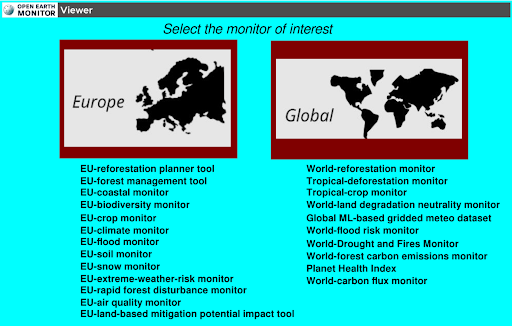
Illustration: Targeted list of pan-EU and global monitors. Each is led by a different OEMC project partner

OEMC monitors will be implemented as a 3-tier system:

  1. Tier 1: the central EarthMonitor.org App/viewer with quality-controlled layers and monitors
  2. Tier 2: partner-based monitors and building blocks (federated approach)
  3. Tier 3: on-demand monitors that users can build rapidly with few lines of code i.e. by using out-of-box FOSS solutions such as G3WLizmapxcube viewerRshiny apps or similar

The Tier 2 building blocks (e.g. Xcube viewer for EarthSystemDataLab.netOpenLandMapOpenEO.cloud editorEuroDataCube.comGeo-wikiGeopedia.worldEcoDataCube.eu and similar) are at the center of the development. Selection of the successfully produced layers and solutions in Tier 2 are then integrated into a single seamless system: the central EarthMonitor.org App. Consider for example the predictions of the future vegetation (biomes) described in Bonannella et al. (2023). The most extensive version of the data is hosted on OpenLandMap.org, while a selection of layers that can support on-the-ground activities / serving specific use-cases and partner organizations, will be added to the World-reforestation monitor (WP6) and will be made available in combination with other layers from Tier 2 stream.

The EarthMonitor.org App (central landing page) will be a cloud-based service with robust and secure back-end and front-end, and with data being updated on an annual, monthly or in some cases even weekly basis. The EarthMonitor.org App will be accessible from a single landing page (a professional and user-experience-designed GUI) via a single robust visualization framework i.e. a single landing page. The users will be able to directly engage with so-called “geo-stories” comparable to the Geostory extension in GeoNode. The geo-stories will be self-explanatory and allow users to seamlessly visualize and experience spatial and temporal trends, events, and effects of scenario testing. Their main purpose will be to quickly inform, explain and engage visitors regardless of their level of expertise.

What is an “Environmental monitor”?

One of the main objectives of the OEMC project is to build a number of environmental monitors to serve concrete organizations / European Union programs. But what is a “monitor”? In the EO context, an environmental monitoring system typically implies a back-end front-end solution serving decision-ready data e.g. through a web-GIS + dashboard, and which shows current, past, and/or future states of the environment and environmental events potentially affecting the quality of life of citizens and/or living beings. The main targeted uses of an EO-based monitoring system are usually:

  1. To help raise awareness / warn users of potential negative trends, unexpected events, and natural hazards or risks (hence we use geo-stories)
  2. To provide the most up-to-date information in a seamless visualization framework easy to interpret by the general public (ideal case) or at least by targeted professionals
  3. To serve as an objective basis for decision making i.e. as a support to local, national, and confederal governments
  4. To serve as input to statistical offices to register and archive events

Typical examples of EO-based monitors include e.g. (unsorted):

Currently, no single system in the world exists where users can track all aspects of the environmental dynamics across borders. In fact, for many environmental processes, we are potentially not even aware of the trends, main drivers of dynamics or events nor is there any decision-making/response. For example, we still know relatively little about land degradation, causes of loss of biodiversity/hotspot locations of the biodiversity decline and why and where exactly some insect species e.g. bees are disappearing the most. OEMC is trying to bridge this gap, especially by demonstrating that distributed data can be seamlessly integrated into data dashboards and used to raise awareness and help support decision-makers.

Environmental monitoring systems can be classified based on three main aspects: (1) the main type of monitoring, (2) the main natural resource of interest, and (3) spatial and temporal coverage. In the OEMC project, we also refer to the following classification system of monitors:

  1. Based on the nature of the monitoring target:
    1. Human-caused-events-based monitors: focusing on distinct events caused by individuals /human activity such as oil spills, industrial pollution, a distinct change of land use, clear-cuttings / unregulated deforestation (Camara et al., 2023), etc.
    2. Natural-hazard-events-based monitors: focusing on distinct natural events e.g. outbreaks of diseases, fires, earthquakes, and flood events.
    3. Ecosystem health monitors: focusing on longer-term processes, continuous activities, and transitions e.g. climate change, air and litter pollution, loss of biodiversity etc.
    4. Socio-economic monitors: focusing on how socio-economic processes and events (including political decisions and are hence country-based) impact environmental dynamics for example night-light dynamics.
  2. Based on the main resource of interest / main theme (these can be multiple applicable but one can be considered to be the main theme):
    1. Biodiversity;
    2. Forest resources;
    3. Soil resources;
    4. Fresh-water resources;
    5. Atmospheric resources;
    6. Oceans and seas;
    7. Mineral and geological resources;
  3. Based on the temporal coverage:
    1. Real-time;
    2. With daily to weekly updates;
    3. With monthly to seasonal updates;
    4. With annual updates;
  4. Based on spatial coverage:
    1. Global;
    2. Continental / regional;
    3. National;
    4. Provincial/local;

What makes an effective “environmental monitoring system” i.e. an effective dashboard UI? We recommend the following minimum checklist:

  • Users with no GIS skills should be able to engage with geo-stories. A possible solution is that users can directly run an animation telling a geo-story as in e.g. Google Earth Engine time-lapse.
  • Users can see information about data sets. E.g.: text blocks explaining where does the data come from, how to interpret it
  • Geo-stories are relevant and user-centered i.e. they are optimized based on the user requirements. A possible and partial solution is to track traffic (e.g. most visited geo-stories/best-ranked geo-stories are listed at the top making it easier to users to navigate through content);
  • All content is provided in a way that allows users to share it, save it, and embed it in their own blogs/websites. A possible solution is to use the OEMC URL bookmarking system.
  • Users should be able to easily orient themselves in the monitors and customize visualization. Possible solutions: spatial layers are combined with background maps and training ground-truth O&M; basic visualization tools such as transparency, slider-map-comparison, animation, and effects, are seamlessly integrated into the dashboard.

Advanced users can also access data in professional data catalogs and download it for their own purpose, which can be achieved through automatically generated cross-links.

How can the OEMC project help you with your work?

If you are producing global or pan-EU environmental monitors, especially if you are aiming at producing and maintaining open geodata that can be used to raise awareness and help reach people on the ground, we could potentially host your data on our infrastructure. Please contact the project lead via: https://earthmonitor.org/contact-us/ and let us know about your project and how you think we could help you.

If you are looking for commercial solutions i.e. customize services that you can use potentially within days or weeks, please contact directly our commercial partners in the consortium:

OEMC project in 2023/2024

What to expect from this project in 2023/2024? We are planning a number of workshops and hackathons at the Open-Earth-Monitor Global Workshop 4–6 October 2023, Eurac Earth Observations Institute, Bolzano (Italy) “Connecting open EO solutions to boost European and global goals”. Come and meet the consortium and interact with the key developers and components of the systems. Help us build better software and data for global good!

*For the most complete version of this document, we invite you to read it on Medium*

]]>
The first two hackathons of the OEMC project challenge young researchers to map land cover class using machine learning and to model FAPAR at a high spatial resolution https://earthmonitor.org/the-first-hackathon-of-the-oemc-project/ Tue, 27 Jun 2023 16:13:04 +0000 https://earthmonitor.org/?p=24563
  • These are the two first of a series of hackathons that will be organized by the OEMC project during its development in order to interact with young researchers.
    • The winners of each challenge will receive an invitation to present their results at the OEMC Global Workshop in Bolzano, Italy, processing credits in the Open EO platform and, a lifetime subscription to PeerJ Journal.

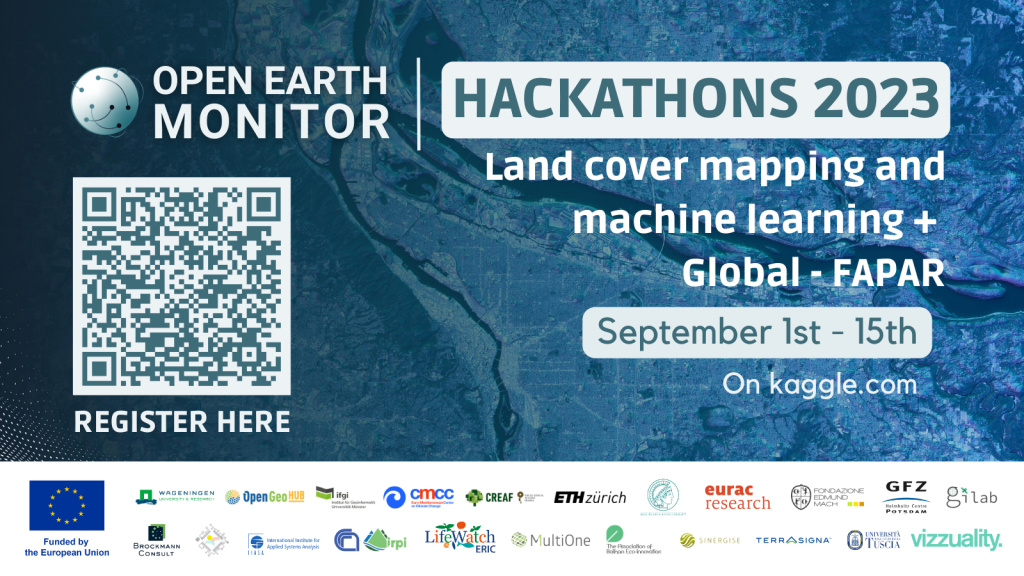
    Amsterdam, The Netherlands, June 21, 2023. The Open-Earth-Monitor (OEMC) project launches its first two hackathons and invites young researchers, students and members of the GIS community to explore machine learning solutions for land cover mapping. Similarly, the second hackathon will focus on modeling FAPAR using data-driven approaches. The events will take place online from September 1st to September 15th 2023 and will be hosted by Leandro Parente from OpenGeoHub (OGH) and co-organized by the International Institute for Applied Systems Analysis (IIASA)CREAFGILAB, the Institute for Geoinformatics of the Münster University (IFGI)Terrasigna and, Eurac Research.

    Since a good machine learning challenge needs to be based on a high quality input dataset, the participants of the first hackathon will work with ground-truth data provided by the LUCAS Survey, funded by the European Commission. Using data about land cover, land use, irrigation management and structural elements of European landscapes, the participants will be asked to map these landscapes using satellite images and machine learning models. The participant with the highest accuracy wins the challenge. As of the second hackathon, Global-FAPAR (Fraction of Absorbed Photosynthetic Active Radiation), participants will face a regression problem, i.e. modeling FAPAR at high spatial resolution using data driven approaches and biophysical variables.

    You can join us and participate in one of the two challenges by filling out the following registration formThese two hackathons are an opportunity for participants to connect with cutting edge developments and experts in the field of machine learning. It’s also a good chance to improve, share knowledge and build a creditable background within Earth Observation applications.

    The winners will be awarded with the chance to assist and present their results at the OEMC Global Workshop taking place in Bolzano, Italy from 4-6 of October. This international event brings together European and global policy-makers, business managers, researchers and civil society to discuss solutions to the greatest challenges in the field of open-source Earth Observation, geospatial applications and state of the art tools to monitor our environment. The winner will also have the opportunity to use the OpenEO Platform, a large-scale cloud platform able to access and analyze billions of satellite images and other Earth Observation data.

    The Horizon-Europe project “Open-Earth-Monitor’ aims for accelerating the uptake of key environmental data across borders anchored in FAIR and open data principles. We are convinced that in order to increase usability of OEMC outputs we need to interact with and involve diverse communities. That’s why we strive for including PhD students, young researchers, and members of the GIS community. Moreover, we encourage female researchers to join this challenge, as we believe there is a gap that needs to be filled in by women participating in science.

    The Open-Earth-Monitor consortium, formed by 23 international organizations, research institutes and private businesses from Europe and beyond, is also working closely with European Space Agency (ESA), EuroGEO (European members of the Group on Earth Observations) and GEOSecretariat on enabling easier access to environmental information through use cases and workshops.
    ]]>
    No Country for Only Men: Empowering Testimonies to the Rise of Women in STEM https://earthmonitor.org/no-country-for-only-men-empowering-testimonies-to-the-rise-of-women-in-stem/ https://earthmonitor.org/no-country-for-only-men-empowering-testimonies-to-the-rise-of-women-in-stem/#comments Mon, 13 Feb 2023 10:49:13 +0000 https://earthmonitor.org/?p=23764
    An assessment of how far women have come and what’s left to overcome in honor of the 8th International Day of Women and Girls in Science

    This article is a collaborative project between Valentina Delconte (OpenGeoHub), Alexander Wowra (Vizzuality) and Diego de la Vega (CREAF) and was originally published on Medium.com

    “Science is not a boy’s game, it’s not a girl’s game. It’s everyone’s game. It’s about where we are and where we’re going.”

    These famous words by former NASA Ambassador Nichelle Nichols encapsulate the truth. Research and innovations will advance the fastest the closer we come to closing the gender gap in the sciences.

    Many tremendous achievements by women scientists have fallen short of the recognition they deserved throughout history. “Hidden female figures” who played transformative roles in the Science, Technology, Engineering and Math (STEM) disciplines like Marie Tharp, geologist and oceanographic cartographer who helped create the first scientific map of the Atlantic Ocean floor, Florence Nightingale, statistician and founder of modern nursing studies, Gertrude Cox, statistician and founder of the Department of Experimental Statistics at North Carolina State University, represent just a few of the many historical role models that should inspire future generations of girls to pursue their passions for numbers and models.

    Today, there are actually some encouraging developments. Eurostat found that a majority of EU science workers are in fact women with a 26% increase from 10 years ago.

    Yet, despite these gains, significant gender gaps still persist throughout Europe’s STEM disciplines with only about 26% of full STEM professorship positions held by women and only slightly less than every fourth head of institutions in the higher education sector being a woman as of 2019. 

    A UNICEF report argues that limiting women in the ways they can contribute to scientific innovations and technical advancements and hampering their rise in leadership positions ultimately hurts economic growth and perpetuates gender-based segregation and stigmas.

    In other words, the more clearly society recognizes the rise of female scientists for the great opportunity it is, the more we all will benefit in the long term.

    This is why, in the lead-up to the United Nations’ International Day of Women and Girls in Science, OpenGeoHub, Vizzuality and Centre de Recerca Ecològica i Aplicacions Forestals (CREAF) decided to invite women scientists to share their thoughts and their experiences working in STEM. In the following interviews, they share what science means to them and what they are actively doing to encourage new generations of girls to pursue their dreams.

    At the EU level, in 2018, women represented more than 40% of academic staff on average. However, ascending higher along the academic ladder appears to be a bigger struggle for women as they make up only one-fourth (26.2%) of grade A positions (equivalent for full professorship position). Source: Women in Science database, DG Research and Innovation

    Julia Hackländer and Xuemeng Tian

    OpenGeoHub foundation, co-founded and co-led by Dr Ichsani Wheeler, is a Dutch geospatial research institute with a keen eye on the gender dimension of the data science sector. Here, Julia Hackländer and Xuemeng Tian have found a supportive environment where they are advancing their careers in data science and where they can merge their passions for the environment, programming and remote sensing.

    Julia is currently starting her PhD focused on mapping land potential and tracking land degradation using earth observation data for the Open-Earth-Monitor project. From a young age, she was encouraged to explore the world of programming by her father, a programmer himself.

    “I remember my parents gave my sister and me this book called HTML for Kids, and it certainly shaped our interests. And I think it is at that young age, where the support should start.” Julia said.

    Xuemeng, on the other hand, described her choice to focus on STEM disciplines as a result of her ‘rebellious spirit’ and the appeal of the multifaceted career opportunities in science. Xuemeng decided to specialize in marine technology at the Ocean University of China in Qingdao, “a major where you learn how to study the ocean through marine remote sensing, marine acoustics, and marine optics.”

    “What appealed to me the most in remote sensing is the fact that there are a lot of interesting problems that can be solved only with data, and I am really up for the challenge!” said the PhD researcher, who now works on spatial-temporal modeling of soil health indicators through a multiscale data fusion approach for the AI4SoilHealth project.

    For both OpenGeoHub scientists, the gender discussion was on their minds during their studies. While Julia positively recalled that “ the difference in gender representation in data science is much smaller compared to some other STEM disciplines, such as engineering for example”, she also observed that the difference is more evident in higher job level ranks: “In my study, for example, almost all of my lecturers were male and most technical job interviews I had were led by men. I see this changing now along with new generations, but this transition still needs to be supported.

    When I was studying for my Master’s, male students were actually outnumbered by girls, but I suspect that this was resulting from targeted policies and university regulations favoring women, which are still necessary in many cases to reach female participation in science, ” said Xuemeng.

    She was actually fortunate to find a female role model in her MSc thesis supervisor, Professor Susan Steele-Dunne teaching in the Faculty of Civil Engineering and Geosciences at Delft University.

    She always brought courage and happiness to us. Thanks to her, I had the chance to experience so many things, and she was really good at listening to my opinions and requests. Besides being an excellent scientist and supervisor, she is a great mother. She balances different roles perfectly with her sincerity, wit and humour, which are the source of my inspiration.” said Xuemeng with a subtle smile on her face.

    With an eye on the future, both scientists are hoping to see a more balanced gender representation with many new female leaders emerging in data science.

    To young girls choosing this career, I’d like to tell them to not let other people diminish them. Being alone with your personal experience may lead you to think that these barriers are part of normality. It is important to connect with other female scientists to exchange stories and support each other.” concluded Julia, underscoring the right of girls to choose the career that gives them joy without compromises.

    Elena Palao, Sofía Aldabet and Alicia Arenzana

    At Vizzuality, a science, tech and design company working on tools and projects related to the environment and sustainability, women scientists Elena Palao, Sofía Aldabet and Alicia Arenzana all struck a hopeful chord about gender issues in science. 

    I consider myself very lucky because I have always been surrounded by great people that have respected me, both personally and professionally,” said Elena who worked in civil engineering and hydrology before joining Vizzuality.

    Her fellow data science team colleague Alicia describes her career path in a similarly fortunate way: “Maybe I’ve been in a bubble but … I haven’t had a bad experience just because I was a woman in any of my jobs so far.”

    The third member of Vizzuality’s women data science power-trio is Sofía. She has also been spared many of the struggles other women may face as they advance through a career in the sciences. “For some women it’s still difficult to believe that they can grow in a field full of men or that they can do something that until now mostly men did,” she said.

    Looking back at her many professional and academic achievements, topped by the pursuit of a PhD in Geography, she pointed out that the sometimes rigid nature of academia can make it difficult for women to keep pace. “There are just moments in life in which it is not possible for many women to produce literature at the same rate as many men, which is not to say that men with kids don’t struggle too,” she said.

    But while she has perceived that there may be more awareness in the private sector for the need for equality, she is convinced that overall gender gaps in both sectors are intertwined. “I think one is the reflection of the other…. So I think there is a general gender problem, especially in technical fields.”

    Elena underscored these points adding that in the private and academic sectors, “stereotypes and unconscious bias can contribute to the lack of recognition for women’s contributions and in the gender pay gap.

    While Sofía, Alicia and Elena agreed that women can bring new valuable perspectives to the fields of science they were also keen to stress that this was not only a matter of gender but also diversity in general. “Diversity of origins and experience can bring a lot of value and different ways to look at science,” as Alicia put it.

    Perhaps it is no surprise then, that inspiration from many different sources has been the driving force behind all their careers.

    For Alicia, it was nature and her love for playing and working with hardware and electronics that originally set her on a path to environmental engineering.

    Meanwhile, Elena drew inspiration from her grandfather who unfortunately died before she was born. She frequently encountered his legacy as a civil engineer on display all around her hometown. His work still stands and reliably serves people generations later, yet, maybe even more importantly, it touched the heart of his granddaughter who he would never meet. With her internal desire to become a civil engineer ignited, Elena began building her own career.

    Sofía encountered many inspiring women throughout her life but right now she sees her colleagues in Vizzuality as role models. “Especially Alicia and Elena, because they are women, they are engineers, and they are senior scientists in a tech world that, with the exception of Vizzuality, is full of men.”

    With their own career paths, experiences and sources of inspiration in mind, the trio of Vizzuality women scientists drove home one key message about what they view as the most effective ways to close the gender gap in STEM: Make science accessible and intriguing for young girls.

    “First, girls need to be exposed to science. Without that awareness, it’s very difficult for girls to become interested and consider following this path,” Elena said. “ Secondly, science needs to be perceived as something attractive or portrayed in an interesting way, so girls can see the impact a career in science could have in the lives of others.”

    Imma Serra

    At the Centre de Recerca Ecològica i Aplicacions Forestals (CREAF) based in Cerdanyola del Vallès (Barcelona), Imma Serra works as a research technician in geospatial information systems and remote sensing, developing applications to process data in cloud environments.

    Nowadays, Imma contributes to several GEOSS projects, such as the E-shape project – EuroGEOSS Showcases: Applications Powered by Europe and the Open-Earth-Monitor, but when she started her studies in Technical Surveying Engineering, female references weren’t available.

    “When I finished secondary school, I wasn’t clear about what I wanted to study, but I realized that I liked math, in particular, trigonometry,” recalled Imma. “Also when I went on some trips I was always interested in looking at maps. This was when my curiosity started about these fields.”

    Following her curiosity, Imma decided to study ‘something within engineering:’ “ When I started to study at the university, the degree in these areas fascinated me. I worked for two years as an engineer in surveying and then I decided to continue studying in order to broaden my studies and my career. When I studied topography there were more men than women. Later in the degree of Engineering in Geodesy and Cartography, the number of female and male students was more balanced.”

    Today, to encourage more young girls in following a career path in STEM disciplines, the CREAF researcher also has taken part in STEM activities, speaking about her own career in primary schools.

    “Most of them didn’t know anything about these areas of study beforehand. I think it is very important to make it known in today’s society, there are many stereotypes and some jobs associated with the roles of men and others with women. I believe that it is essential to show young girls different options in order to open their career horizons.” Imma concluded.

    Final remarks

    The testimonies shared by Julia, Xuemeng, Sofia, Elena, Alicia and Imma shed light on some of the stories of people behind the statistical numbers that indicate a promising yet still somewhat impeded rise of women in science. They are women with impressive, fascinating backgrounds, remarkable skills and a lot of knowledge to share. Research in STEM, as part of society, needs to keep up with all those women who contributed, who are contributing and who will continue to contribute to its development. The goal has to be to leave no one behind. Addressing this challenge should be a joint commitment as the reward will be valuable for everyone.

    There is no silver bullet to achieving gender parity, but joining the conversation around #WomeninScience, undertaking actions for the visibility of women, creating the best working conditions for them and supporting female-led initiatives in STEM is definitely a good start.

    Indeed, from what we teach at home, to how education and governments shape the conversation to opportunities companies promote, there is a wide range of possibilities to entice girls’ interest in science at a young age.

    We want to thank all the interviewees for allowing us to have a valuable glimpse into women’s vast contributions to science. Their representation in STEM is a major opportunity for our society. By addressing the challenges hindering women in STEM, we open new doors for future students, workers and leaders benefitting the world economy and technological advancements.

    ]]>
    https://earthmonitor.org/no-country-for-only-men-empowering-testimonies-to-the-rise-of-women-in-stem/feed/ 1
    User communities at the centre of environmental data applications & Earth Observation technologies tools to achieve European and global goals https://earthmonitor.org/pressrelease_january2023/ Wed, 11 Jan 2023 10:34:06 +0000 https://earthmonitor.org/?p=23700
    Decision-makers, European research networks, business developers and NGOs are invited to be the protagonists of the Open-Earth-Monitor Global Workshop 2023 from 4th to 8th September in Bolzano (Italy) to test and improve open-source environmental monitors and dive into “Open Earth Observation and Machine Learning technology to support European Green Deal.”

    Wageningen, 11 January 2023 — Earth Observations and geospatial data – and their derived information – are key tools in monitoring regional, national and global environmental targets proposed by the ambitious European green policies. Decision-makers are therefore in need of accessible, science-based tools for timely and informed choices, long-term planning and progress tracking, and transparent evaluation processes.

    But how to lower the barriers of big data and ensure their full usage? How to shape monitoring tools that meet the needs of practitioners and provide decision-ready answers?

    One year after its start, the Horizon-Europe Open-Earth-Monitor project is organizing the OEMC flag-ship event to unfold the latest open data solutions and environmental monitors harnessing Earth Observations and Machine Learning technologies.

    Organized by the OpenGeoHub foundation in collaboration with Eurac Research, this international workshop will bring together European and global actors in policy and industry with open-source geospatial developers and OEMC researchers. Dedicated demonstrations and testing sessions will facilitate the dialogue between developers and users, improving the functionalities of the tools and empowering user communities with intuitive and usable open-source data applications.

    The Open-Earth-Monitor Global Workshop will give the stage to young researchers with scientific presentations and poster sessions. Photo credits: Valentina Delconte (OpenGeoHub)

    Call for workshop proposals | Deadline: 1st February 2023

    If you have developed (or are in the process of developing) a free and open source project and product related to EO and other related geospatial technologies that could support decision-making and the achievement of the EU Green Deal, or are part of a similar project, we invite you to participate by sending your proposal for a workshop. This will be an occasion to prepare a 60-minute workshop where to present, discuss and gather feedback directly from potential users of your products, making tools and data more accessible and usable.

    Submit your proposal here.

    Call for abstracts | Deadline: 1st March 2023

    While the focus of the workshops is open source software and methods in support of European policies and decision-making, we wish to provide a stage to a broader variety of knowledge and experiences, where new methods, tools and approaches are shared and novel collaborations are established. Some of the expected topics will be the research and application of geospatial technologies in various fields including governance, industries and in the public sector. We will focus also on the role of user communities and businesses in research and advancements in the open-source EO and Machine Learning technologies to achieve both digital and green transitions.

    Submit your abstract here.

    At the workshop sessions, end users and non-technical practitioners will test novel data tools, such as visualization platforms to improve their functionality. Photo credits: Valentina Delconte (OpenGeoHub)
    Useful links:
    Contact information:

    OpenGeoHub foundation
    Contact: [email protected]

    OpenGeoHub is a not-for-profit research foundation located in Wageningen, Netherlands. The main goal of OpenGeoHub is to promote, publish and sharing of Open Geographical and Geoscientific Data, using and developing Open Source Software.OpenGeoHub is the lead partner of the Open-Earth-Monitor project and participates in several technical work packages, as well as in the communication and organization of workshops and capacity-building events.

    Eurac Research
    Contact: [email protected]

    Eurac Research is a private research centre, established in 1992 in Bolzano. Our research activity is rooted in local issues which are then developed on a global level, thanks to a multidisciplinary approach and an international vision. Studies focus on issues that affect people, their health and the environment around them, with the aim of improving life in the societies of the future. Often, in response to regional problems, the centre develops concrete solutions that can be applied in different contexts, exploring new avenues based on interdisciplinarity and scientific excellence. Today, Eurac Research has more than 500 employees from over 25 countries.

    Click and share!

    Donwload the flyer

    ]]>
    Earth Observation and Machine Learning as the key technologies to track implementation of the Green Deal: 10 main takeaways https://earthmonitor.org/earth-observation-and-machine-learning-as-the-key-technologies-to-track-implementation-of-the-green-deal-10-main-takeaways/ Fri, 09 Sep 2022 12:20:19 +0000 https://earthmonitor.org/?p=22518

    Earth Observation technology for monitoring climate change

    In recent decades, the world has experienced rapid growth in Earth Observation (EO) technology, which has allowed us to gather plenty of information about planet Earth’s physical, chemical and biological systems. Be it land, sea or air, EO is the most robust technology to monitor and assess the status of, and changes in, the natural and artificial environment. Particularly relevant has become its role in rapidly assessing situations during extreme weather events or natural disasters, precisely assessing Greenhouse gas (GHG) emissions, making EO pivotal in ensuring consistent, long-term environmental assessments in face of unpredictable climate change.

    1. target cloud services at intermediate users instead of policy- and decision-makers / avoid over-engineered systems with a high level of abstraction;
    2. increase capacity-building to decrease the existing gap in cloud skills and uptake;
    3. provide a cloud certification mechanism to increase overall trust in cloud-based services.

    On July 19th 2022 OpenGeoHub foundation together with Wageningen University organized a public workshop entitled ‘Innovative governance, environmental observations and digital solutions in support of the European Green Deal’. This is the first of a series of interactive meetings within the Horizon-Europe Open-Earth-Monitor project that aims at bringing together Earth Observation and Data experts from business, policy and academia with the community of practice, and connect with potential end-users of the future platforms developed by the project.

    #1 Tracking impacts of environmental investments is not trivial

    For Joanna Ruiter of the Netherlands Space Office (NSO), one of the key problems of the projects funded by the NSO and the Dutch Government is that it is relatively easy to assign funds to organizations, but relatively difficult to track the effects of funds spent, especially in the terms of impact on the ground.

    #2 Overlap in pre-processing of EO data is huge (and highly inefficient)

    Patrick Griffiths of the European Space Agency in his talk “EO Platforms and Open Science in Support of Green Deal Ambitions” mentioned some of the key challenges of the EO field, for example, the data management burden affecting scientists, particularly in the EO space, who spend 80–90% of their time ‘cleaning’ data.

    The scientific community could address this burden by the simplification and democratization of processes, more collaboration and sharing of data and technologies, and reducing fragmentation and redundancy of platforms; for instance, a few projects are opening up novel solutions: the EuroData CubeOpenEO Platform and OpenEO API (Schramm et al., 2021). But in essence, enormous budgets are still spent on overlapping data cleaning tasks and overlapping functionality, and this is obviously inefficient.

    #4 Achieving Land Degradation Neutrality requires data co-design at every stage in decision processes

    Patrick Griffiths of the European Space

    Barron Orr, Lead Scientist at the UN Convention to Combat Desertification introduced the data and governance gaps in the context of achieving Land Degradation Neutrality (LDN), SDG target nr 15.3. 126 countries have pledged (or at least aim) at halting the rapid land degradation caused by damaging land uses, to ensure food security and healthy ecosystems.

    In general, EO, geospatial data, and derived information play insightful roles in monitoring the SDGs targets, planning, tracking progress, and helping nations and stakeholders make informed decisions, plans, and ongoing adjustments that will contribute toward achieving the SDGs. Orr described how data, and especially open data, is critical in achieving LDN since it broadens our understanding of the underlying land potential for any land use decision: for this reason data “must be used at every stage in decision processes, crucially at the beginning in the design process, rather than only for monitoring projects already in progress” concluded the UN scientist.

    #3 European EO platforms suffer from redundancies and fragmentation

    Patrick also concluded in his talk that “European EO platforms suffer from redundancies and fragmentation”. The European Commission, over the last decade, has invested significantly in EO and projects to channel EO technology into practice including commercial applications, but this has also resulted in high redundancies and many too small applications to survive the market needs. According to Patrick, what could be more efficient if we would “stop reinventing the wheel” and focus on collaboratively building blocks that can be easily combined and are de-centralized. This seems to match also the feedback received from the audience:

    Federated ecosystem of proven open source technology as a preferred solution for the future of EO in Europe.

    #5 Using EO data only for decisions is too risky: quality ground data helps improve EO and vice versa

    Gert-Jan Nabuurs of Wageningen University and Research discussed the challenges and opportunities when better connecting the European Ground Based Forest Inventories with EO Data. With his 27 years of experience gathering ground-based data, Nabuurs recalls how our global data collection and sharing capabilities have come a long way since the beginning of his career (where he ‘had to call government agencies by phone and request floppy disks in the mail.’)

    The key takeaway from his talk: using EO data for decision making in forest inventories and planning is too risky! This is illustrated with the example of Ceccherini et al. (2020) where abrupt harvested areas detected in Finland and Sweden were due to changes in the Landsat missions and issues in the Global Forest Watch product, and not as much due to increased harvesting.

    Another keynote, Matt Hansen, the Co-Director at Global Land Analysis and Discovery (GLAD) lab, spoke on Global Land Cover and Land Use Monitoring and likewise emphasized that it is the primary concern for global mapping projects to have high-quality ground data to ensure unbiased estimators. No map is unbiased and no map is perfect: known and quantified limitations should be published together with the produced map.

    #6 FAIR-TRUST-CARE data principles can help bridge the digital divide

    Yana Gevorgyan, Secretariat Director, introduced the Group on Earth Observations (GEO), the global network connecting government institutions, academic and research institutions, data providers, businesses, engineers, scientists and experts to create innovative solutions to global challenges based on open EO.

    F.A.I.R.: Findable, Accessible, Interoperable, Reusable; The first step in (re)using data is to find them: metadata and data should be easy to find for both humans and computers. Once the user finds the required data, it is necessary to know how it can be accessed, possibly including authentication and authorisation. The data usually need to be integrated with other data. In addition, the data need to interoperate with applications or workflows for analysis, storage, and processing.

    T.R.U.S.T.: Transparency, Responsibility, User focus, Sustainability and Technology; the TRUST Principles provide a common framework to facilitate discussion and implementation of best practices in digital preservation by all stakeholders.

    -The ‘CARE Principles for Indigenous Data Governance’: Collective Benefit, Authority to Control, Responsibility, and Ethics; the CARE principles are people and purpose-oriented, reflecting the crucial role of data in advancing Indigenous innovation and self-determination. These principles complement the existing FAIR principles encouraging open and other data movements to consider both people and purpose in their advocacy and pursuits.

    #7 Global and local EO products nominally offering the same, can be significantly different

    Gilberto Câmara, former director of National Institute of Space Research in Brazil and former director of the GEO Secretariat, explored the challenges of mapping Land Use and Land Cover, highlighting the necessity of having self-consistent maps and consistent definitions of terms, like deforestation, in order to create products that are both globally trustworthy and locally relevant. Just think of the subtle visual difference between a natural and an artificial landscape, like a savanna and a cattle pasture. Mixing or missing out on such classes in the EO product can totally change its usability and applicability.

    Gilberto illustrated how EO tools can fall short of being useful to policymakers at the local level when various end-users are not empowered in the development process through what he referred to as “bottom-up map production”. Mr Câmara pointed to the R-based sits library as an example of a commercially ready cloud services tool created with accessibility for end-users at its heart.

    #8 Mapping land cover and similar general classes will stay important even though we can today also map detailed continuous variables

    During the discussion session, Patrick Griffiths and Tom Hengl asked Gilberto if there is still a need for land cover maps and similar general EO products when we can now also map various continuous variables e.g. NDVI, FPAR, tree species percentage, crop types, canopy height, etc which basically represent land cover but at quantitative scales and in multivariate space, thus in much higher detail. Gilberto believes that land cover maps will remain in use because we need simple explanations of common features that people can interpret and relate to quickly: “especially the policymakers — they need something that they can relate with”.

    #9 There is always a creative way to ensure access to basic environmental ground-truth data that can then help extend research

    In the talk by Gert-Jan Nabuurs we looked specifically at problems of accessing the (at least for data mining purposes) e.g. NFI Forest inventory data, which is currently kept private by national organizations and hence is not available to the majority of the research community. But there are many creative ways to access this data. Participants have mentioned strategies such as building trust — signing collaboration agreements or offering joint products that benefit both sides. The alternative is to put pressure on the governments to require that all publicly funded data is eventually released and that providing FAIR datasets should be a requirement for publication or even promotion at work.

    #10 EO industry needs applications that their customers use to take action and solve problems… on a daily basis

    Going back to the topic from the start of this article, in one of his (now famous) blogs, Joe Morrison (“the Controversial industry figure”) questions the sustainability of many modern EO businesses: “lots of new analytics startups are pursuing the dangerously seductive strategy of building a new type of dataset and then closing their eyes and hoping customers will magically show up to start buying it”. Successful businesses should instead “build applications that their customers use to take actions and solve problems. If you use an application every day, you don’t mind paying a subscription for it”. Likewise, we also recognize in our work that EO-based services need to serve (as much as possible) Decision-Ready, relevant and easy-to-use information. As with many modern democratic digital systems, usability and usage (web traffic) will be our final judge of success.

    Word cloud of terms most associated with Decision-Ready-Information.

    Open-Earth-Monitor project

    To support democratic and efficient implementation of the European Green deal (and avoid profound geopolitical turbulence’s and the uncertainties brought by climate change), OpenGeoHub, together with 21 partners has launched an ambitious new European Commission-funded Horizon Europe project called “Open-Earth-Monitor” and which aims at tackling the bottlenecks in the uptake and effective usage of environmental data, both ground-observations and measurements and EO data.

    ]]>
    The Earth cyberinfrastructure that shifts the way we make and use open environmental information — for specialists and non-experts https://earthmonitor.org/the-earth-cyberinfrastructure-that-shifts-the-way-we-make-and-use-open-environmental-information-for-specialists-and-non-experts/ Fri, 09 Sep 2022 12:00:16 +0000 https://earthmonitor.org/?p=22502
    The Open-Earth-Monitor project was launched on July 18th, in Wageningen, where representatives from 21 organizations (from Europe and beyond!) gathered to kick-start the 4-year activities funded by the European Union's Horizon Europe research an innovation programme.

    Imagine as you wake up in 2030, you might get out of bed and check a digital device showing your town’s real-time pollution, UV levels and climatic data. Imagine as you work the land in 2030, you use your phone to plan your agro-ecological farmland in a resource-efficient manner, because you know exactly which crop to plant when – as a farmer, you have access to Big Data, thanks to open-source, user-friendly platforms gathering public environmental information, including soil, water and weather forecasts, or data through ground sensors.

    Imagine you enter your office in 2030, and you present your staff with your next application idea, which will provide timely water levels and drought risks to institutions and decision-makers based on climate scenarios and field data. These data are based on an open-source platform that allows you to build your business upon it.  

    These are just a few potential scenarios that European citizens, businesses, decision-makers and farmers could live in the future, and that is envisaged by the novel Horizon-Europe project Open-Earth-Monitor (OEMC) launched on July 17, 2022. OEMC aims at building a European cyberinfrastructure that could significantly accelerate the uptake of environmental information, and help build communities of users at European and global levels by 2026.

    To face a future of uncertainties brought by climate change, the project’s main goal is to directly support European and Global sustainability frameworks by producing and integrating a range of open-source, data-based and user-friendly tools monitoring European and global natural resources facilitating decision-making and actions on the ground.

    In a nutshell, over the next 4 years, the consortium of 21 partners led by the OpenGeoHub foundation will be (1) building a cloud-based, open-source EO computing engine integrating Earth Observations with field data from pilot cases, (2) releasing FAIR data portals that seamlessly integrate existing and novel European data with global ones, (3) while identifying, inviting and engaging with end-users: European agencies and programmes, European research organizations, United Nations and similar international organizations, user communities (NGOs, academia, EO service providers and developers i.e. SMEs, citizens, decision-makers, landholders).

    Ultimately, the tools generated by the Open-Earth-Monitor cyberinfrastructure aspire to translate big environmental data into real-world applications with usable tools, so the project has dedicated a team to generate use cases for early testing and garnering feedback on their functionality directly from the end-users — shifting the focus of existing and novel EO technologies towards users and people.

    A simplified version of the 5 objectives of the OEMC project as presented them at the OEMC kick-off meeting in Wageningen

    What is a cyberinfrastructure?

    Whether targeting technical or non-technical users, these open-source monitoring tools will serve to overcome the barriers of finding,using and understanding massive, complex data volumes and to unveil the changes of land, air, water, biodiversity and other natural resources with analysis- or decision-ready information. 

    But only with collaborative environmental research, accessible technology and transparent, evidence-based decision-making that hold governing agencies and industries accountable, we can achieve environmental data governance sustainably.

    This is why the Open-Earth-Monitor has proposed something more than a novel environmental platform, bringing forward the concept of a ‘cyberinfrastructure’, also defined as a system of “data and information management, advanced instruments, visualization environments, and people, all linked together by software and advanced networks to improve scholarly productivity and enable knowledge breakthroughs and discoveries not otherwise possible.

    A visual representation of the concept of the cyberinfrastructure based on the definition by Steward et al., 2010

    The synergies between the elements of this technological ecosystem –data, engines, people and governance– will be key in releasing of the OEMC monitoring tools that will support several sustainability-policy areas included in the European Green Deal, the European Data Act, the Destination Earth initiative, and on a larger scale the Sustainable Development Goals promoted by the United Nations, specifically in the sectors of: 

    But the OEMC will not limit its focus only to Europe, building global monitoring systems in support of the UN SDGs and other Global Sustainability Frameworks, such as:

    – World-reforestation planner; Tropical deforestation monitor; Tropical agriculture monitor;

    – World-Land Degradation Neutrality monitor;

    – Future Climate tool;

    – World-Flood risk monitor; satellite data is the only means to obtain an exhaustive vision of the situation in disastrous events (floods, forest fires, tsunamis, earthquakes etc.); floods seem to be especially important as they often dominate the civilian casualties

    – World-Drought and Fires Monitor;

    – Forest GHG emissions;

    Get involved!

    All in all, the Open-Earth-Monitor project will harmonize and improve several existing environmental platforms, and design robust data-science (EO+in-situ data) tools to deliver decision- or analysis-ready environmental information in a user-friendly interface for a diversity of real-world applications.

    People, in fact, are the ultimate users and will be central in the design and testing stages, and will be supported through established user communities across the world. Open licences, capacity-building activities and strong networks will facilitate the uptake of the novel tools, in full open-source spirit.

    We are therefore looking for interested people in the sectors of land and natural resource management, agriculture, restoration, risk management, financial accounting and decision-making for feedback-gathering sessions, co-design of monitoring and/or join the OEMC pilot case studies.

    Get in touch with us!

    Read more about the public workshop held in Wageningen on July 19, 2022, on the occasion of the OMEC kick-off event: ‘Innovative governance, environmental observations and digital solutions in support of the European Green Deal’.

    ]]>