The post All email marketing statistics updated to 2026 appeared first on Emailchef.
]]>The latest data and statistics to keep an eye on if you’re doing email marketing in 2026.
The world of email marketing is increasingly dynamic and constantly evolving. Now more than ever, the effectiveness of a strategy depends on the ability to adapt your communication to the new needs of users and the latest digital trends.
In 2026, email marketing continues to hold its role as a protagonist in corporate communication strategies, and to fully understand the current landscape, we have gathered and analyzed the most relevant industry statistics.
So, if you’re interested in improving the ROI of your email marketing in 2026, you’re in the right place.
Email Marketing: Key Statistics of 2026.
- Email marketing generates an average of €42 for every euro invested.
- Approximately 60% of emails are read daily on mobile devices.
- 81% of SMEs state they use email marketing to reach their customers.
- 89% of marketers use email marketing as their primary channel for lead generation.
- 82% of marketers worldwide utilize email marketing to communicate with their customers.
- 99% of users claim to check their inbox at least once a day.
- Marketing professionals have experienced a 760% increase in revenue through email list building and campaign utilization.
- Half of the world’s population owns an email address, totaling 4.48 billion accounts globally.
- 4 out of 5 marketers prefer email marketing over social media.
But how effective is email marketing really?
Email marketing undoubtedly remains among the most effective marketing tools even in 2026.
99% of users claim to check their email inbox every day, and the widespread use of mobile devices has made emails even more accessible at all times and in any context.
It’s not surprising, then, that marketers continue to leverage email marketing.
But how do you measure the effectiveness of email marketing?
You can discover this by monitoring a fundamental metric: ROI, or return on investment. By measuring it, you can accurately determine the success of your campaign.
And when comparing email marketing to other marketing strategies, the ROI of email marketing certainly can’t be beaten.
With a return on investment of €42 for every euro invested, email marketing continues to be the most powerful tool to take your business to the next level.
This equates to an ROI of 4,200%!
It is estimated that there are 4.48 billion people using emails worldwide.
Since emails opened a new era in communication in the 1970s, their prevalence has steadily increased. In 2024, the number of users who regularly used email reached 4.48 billion—half of the global population!
This figure is expected to rise to 4.85 billion by 2027. Among these users, over 370 billion emails are sent and received every day.
Source: DemandSage.
Only 25% of companies believe they adequately monitor the ROI of email marketing.
Despite the very high return on investment, some companies struggle to calculate the actual ROI of their email marketing. Less than 13% have stated that they analyze their ROI well or very well.
A surprising 50% have admitted to measuring the ROI poorly, very poorly, or not at all!
Source: Litmus.
Email marketing represents the most effective marketing channel according to companies.
Companies continue to proclaim email marketing as the most effective digital marketing strategy available, followed by paid ads, organic search, and finally social media. 79% of marketers have included emails among the top three primary marketing channels.
Source: Hubspot.
46% of people state that they prefer to receive updates about their favorite brands via email.
There’s no doubt we enjoy promotional emails, but how often? According to a study conducted on 2,057 adults, over 60% of them appreciate receiving promotional emails weekly. 38% would like to receive emails even more frequently, while 15% want them daily! 86% of respondents state that they would like to receive at least one email per month.
Source: Hubspot.
4 out of 5 marketers would prefer to give up social media rather than email marketing.
Social media may be the most popular marketing platform for brands, but in 2021, 95% of marketers found that a well-structured email marketing strategy was more effective in achieving their goals. That’s why 80% of marketers would prefer to give up social media entirely rather than give up email marketing.
Source: Hubspot.
54.9% of abandoned cart emails have converted subscribers into customers.
Abandoned cart emails have proven to be the most successful, reaching nearly a 55% conversion rate. This result was 168% higher than the average email sent.
Source: Barilliance.
63% of marketers worldwide use email marketing.
Globally, more than 6 out of 10 marketers regularly use email for their marketing campaigns. Additionally, 65% of marketers report using email automations. More than two-thirds of these marketers have stated that the success of their email campaigns remained stable or even improved in 2020, despite a global pandemic.
Source: Statista.
77% of marketers have reported an increase in email engagement.
This figure was collected in 2021, but it remains valid today. In fact, 49.5% of marketers had planned to increase their budget for email marketing, noting a growing engagement from the audience and, consequently, an improvement in ROI.
Source: Hubspot.
73% of marketers believe that email marketing is essential for a company’s success.
Nearly three-quarters of marketers believe that email marketing is crucial for their company’s overall success. However, one-third of them admit that email marketing has not yet been integrated with the rest of the marketing program.
Source: Hubspot.
The average email open rate worldwide is 20%.
Almost 20% of all recipients open the emails that arrive in their inbox. This generates an average click-through rate (CTR) of 2.6%. Marketing emails, in particular, maintain an average open rate of 14.1%, with only 0.1% unsubscribes. However, the emails with the highest open rate are welcome emails, with an average of 69% opens (reaching up to 80%).
Source: Statista.
Friday records the highest open rates, almost at 19%.
The last day of the workweek seems to be a successful day to plan your campaigns. In fact, it’s on Friday that the open rates are the highest.
Source: Hubspot.
59% of people state that email marketing is capable of influencing purchasing decisions.
It appears that email marketing is capable of influencing the purchasing decisions of nearly 6 out of 10 subscribers. At least once a month, 50.7% of respondents claim to have purchased something after receiving a purchase suggestion via email. On the other hand, 23.8% of people make a purchase through these means several times a month, and 3% do so more than once a week!
Source: Hubspot.
The post All email marketing statistics updated to 2026 appeared first on Emailchef.
]]>The post 6 reasons to NOT buy a mailing list appeared first on Emailchef.
]]>The post 6 reasons to NOT buy a mailing list appeared first on Emailchef.
]]>The post How to segment subscribers to a mailing list appeared first on Emailchef.
]]>Here is a quick guide to segmenting subscribers to a mailing list: you’ll be able send more effective messages and generate more conversions
Segmenting a mailing list will increase opening rates, decrease unsubscribes, and reduce the risk of being reported for spam. It’s an essential practice for achieving success in email marketing. So what does it mean to segment a mailing list and why is it so important?What is segmentation?
Segmentation is the division of subscribers to a mailing list into smaller group called segments. This process can be based on very different criteria: gender, age, behaviors, etc. If you want to deliver more relevant email to your subscribers, here’s the first step: you have to create personalized contents for a specif segment. A Consumer Electronics Retailer might use segmentation, for example, to create lists within their email subscribers for men and women; then he might add several interest-based segments such as appliance, fitness, beauty, TV, computer, video game and drones to create relevant email campaigns.Why create one or more segments from a mailing list
To create an effective email campaign and generate conversions, you need to send precise messages that are as personal to the reader as possible. You have to leverage the needs of each potential customer. After identifying your target and segmenting the list, you will be able to create tailored campaigns that will:- Increase the opening rate of your emails;
- Lower the unsubscribe rate;
- Reduce spam reports;
- Deliver a higher click-through rate on the CTA and links;
- Produce the highest probability of retaining the subscriber.
Examples of mailing list segmentation
There are various ways to segment a mailing list. Here are some examples.Segmentation by demographic
One of the most common approaches is to segment a list based on your contacts’ demographics: their age, gender, work, etc. These are very simple elements to identify but they let you create highly targeted campaigns. An e-commerce company, for example, could create different newsletters based on age or gender. An email addressed to a female reader could promote beauty products or personal care. It would generate more conversions than an email sent to everyone and offering generic products.Segmentation by location
Segmentation by geographical location can be very useful, especially for a company that has multiple outlets in different areas. A chain of stores, for example, that wanted to organize an event or launch a promotion in a specific region, could send email campaigns only to the contacts in that specific area.Segmentation by user behavior
Tracking the behavior of users lets you launch ad hoc campaigns and create very specific segments. One common example is to create a list of users who have abandoned their shopping carts. These are people who have put a product in their carts but haven’t completed the purchase. For this subgroup, autoresponders can send reminders to complete the purchase.Segmentation by time order and user status
You can also separate new users from long-term customers. Those who have just come into contact with your business will know less about your products or services than those who have used it for years. They’ll benefit from different emails. The most complete and detailed information will be sent to newbies, while leaner emails with less explanation can go to the most experienced users. In addition, a regular customer should receive different promotions from those who have yet to show their loyalty.Segment a mailing list with Emailchef
With Emailchef, segmenting a mailing list is really simple. It takes just a few steps:- Choose one of the lists you have uploaded and select the “Segments” category

- Click the “New Segment” button

- Create a name and description for the new segment

- Choose the parameters to select the contacts on your list and… you’re done!

The post How to segment subscribers to a mailing list appeared first on Emailchef.
]]>The post The Funnel and Why It Matters to Your Business appeared first on Emailchef.
]]>What is the Funnel?
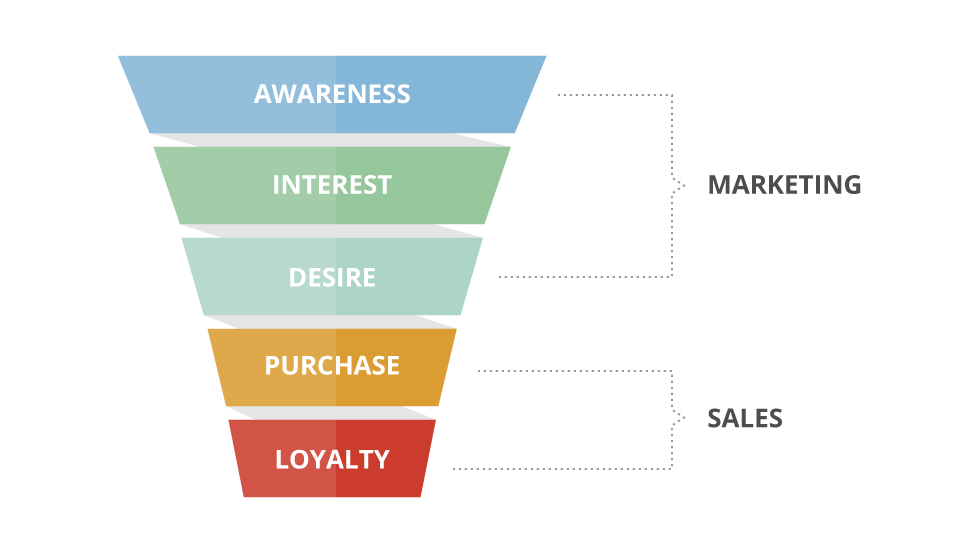
The funnel is a graphic representation of the different phases through which a user passes when he becomes the target of a web marketing action. The more he “descends” towards the neck of the funnel, the closer he comes to buying, or even becoming an ambassador for the brand.
The process is characterized by the involvement of the user in increasingly important actions, from the simple sharing of a post on Facebook to participation in a webinar, the download of a free ebook, through to the purchase of the product, perhaps with a coupon or a free trial period. The goal is not just to sell but to boost the perception of the value of the brand and increase profits over time.
The Construction of the Funnel
A funnel is divided into five phases:
- Create attention and awareness towards a category of products or services;
- Arouse interest in your product or service;
- Induce the desire to purchase;
- Stimulate the purchase;
- Achieve customer loyalty thanks to the positive experience throughout the process.
A Concrete Example
Let’s say that I’m moving house. I search online to find a place order boxes and packaging. My choice is vast. There are companies of all types, each with its own style of communication and presentation. How can I choose the right product for me?
I collect information. I make comparisons to identify (without losing too much time) a set of boxes of the desired size, check the delivery costs, and try not to forget anything important. I might ask the company about the materials or customer support.
In the end I choose one company over the others. I select the one that not only presents the products in a clear and simple way, but that meets my needs for quality and price. I give them my email address and consent to subscribe to their newsletter, allowing the company to keep the conversation open with me.
The company has obtained a big advantage. It’s sold a set of products, but it has also kept me from large platforms such as Amazon, which occupy every product sector.
Eventually, when the purchase (and delivery) phase ends happily, I retain a good opinion of the brand, remaining open to new purchases in the future. I am also willing to talk about the company positively with friends and relatives, and on online channels.
The Role of Email Marketing
As we can see from the example, the funnel theory means no more than the rational use of the tools that the Internet makes available for marketing.
User attention can be obtained through:
- Organic traffic (SEO activity)
- Blog
- Facebook Advertising
- Google Adwords
- Guest posting on other sites
- Sharing on social media
Interest in the brand can be induced by directing the user to a landing page. The content should persuade him or her of the quality of the product or service. The page could contain a form to subscribe to a newsletter, highlighting the advantages that a subscription delivers. Those benefits might come with a time limit, creating a sense of opportunity and urgency. The more the user keeps browsing the company’s channels, the more the inclination to buy increases.
Many companies maintain their relationship with the customer after the purchase. They periodically tailor the newsletter to the customer’s interests based on their first purchase. Or they might offer a coupon that they can share with a friend.
To understand the need for newsletters to be sent to a well targeted audience, read our in-depth “5 ideas to segment your contacts if you use ecommerce” and “How to segment subscribers to a mailing list“.
Your Funnel Is Unique
Every company has to decide which part of the funnel is most important to them. Online advertising tools can speed awareness, but landing pages, subscription forms and newsletters cannot be ignored. It is vital not to drop the user, perhaps after clicking a sponsored ad, as they pass through the funnel.
So how do you position your brand in each of the funnel’s phases? Where can you improve the process? Every company has its own dimension, needs and goals. The funnel does not have a fixed size or number of elements and is valid as long as there is something to sell.
The post The Funnel and Why It Matters to Your Business appeared first on Emailchef.
]]>The post What is the preheader and how to use it appeared first on Emailchef.
]]>
What is the preheader?
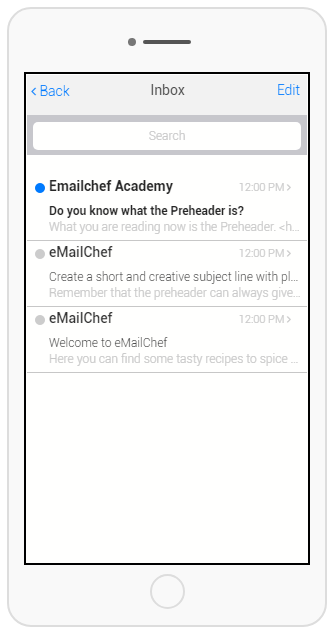
If you open your inbox, you will notice that, after the sender and the subject of the email, it follows a line of text: this is called a preheader.
Also known by other names (header, summary, Johnson box), it is used to relate the information contained in the subject, and allow the reader to get a clearer idea of the email topic.
If you view an email from a laptop or desktop computer, the preheader looks like this:

If you’re used to reading emails from a mobile device, you’ll see it like this:
3 reasons why it is essential to use the preheader
The use of the Preheader is very important for several reasons:
- it improves the readability of emails and makes the content clearer,
- it increases the open rates in mobile devices,
- it reduces spam rates and complaints.
1. It improves the readability of emails and makes the content clearer
The preheader has a very important function: it catches the recipient’s attention in an immediate and effective manner, illustrating the content of the email in the shortest possible time.
In an email, the sender specifies who sent the message, the subject specifies the topic that will be treated and the preheader offers a preview of the content, it grabs readers attention and invites to open the email.
2. It increases the open rates in mobile devices
Internet traffic through mobile devices increases day by day, so much that in 2016 it exceeded the traffic generated from desktop computers. This trend has already had repercussions in email marketing: currently 54% of readers open and read their emails from mobile devices.
This makes us realize how important is to optimize email content to be more friendly to smartphones and tablets, and for this reason the preheader becomes a great ally: when reading an email from a mobile device the preheader is almost as important as the subject, because it occupies more space and is more likely to display completely.
Then, the preheader becomes strategic to convince the recipient to open an email when reading from mobile devices.
3. It reduces spam rates and complaints
It often happens that a recipient does not recognize or do not remember the sender address of an email, and incorrectly marks it as unwanted or spam.
This can be avoided if the recipient is given a preview of the mail content, that is, an additional clue to understand that the message is not spam.
That’s why the preheader takes on great importance and turns out to be a great tool to reduce abuse reports or spam.
How to insert the preheader with Emailchef?
Not long ago, in order to insert the preheader, you needed to “manipulate” the HTML code, but thanks to Emailchef now everything is much simpler!
Adding it is really easy: First create a campaign and fill out the “Preheader” field that is in Phase 2, dedicated to customization.
You will also find a very useful character counter, to create headers that are not cut by email readers.

The post What is the preheader and how to use it appeared first on Emailchef.
]]>The post Email Marketing and spam – Reputation is (Almost) Everything appeared first on Emailchef.
]]>“Why do my emails go to spam?”
The risk that your marketing campaigns will end in the unsolicited email folder is not zero. The level of risk is impossible to determine or break down even where there are no fraudulent intentions on the sender’s behalf.
The work of anti-spam filters is a safeguard for everyone. In May 2019 alone, over 366 billion spam emails were reported per day.
Despite appearances, the mechanism behind the anti-spam filters is clear. There are three factors that increase the likelihood that your newsletters will end up in the junk mail: the content, the reputation of the IP address, and the reputation of the domain. The first is determined solely by human factors, the other two are related to the email infrastructure.
The Content
When it comes to the email content, to reduce the risk of anti-spam filters intercepting the emails, it’s always a good idea to avoid:
- Databases built on purchased email addresses;
- Databases affected by a high bounce rate;
- Lengthy emails;
- Expressions full of words written in capitals, such as “BUY NOW”;
- Many exclamation points;
- Expressions that seem fraudulent or spam, such as “call now” or “lowest price” or “lose weight”;
- Emails composed of a single image;
- Links that are broken or have been added to a blacklist;
- Non-personalized content, such as directing the email to a “user” instead of the recipient’s name;
- An email subject line that’s too short or too long or contains capitalized words, exclamation points, and currency symbols;
- HTML code created using editors not suitable for compiling the markup.
The Reputation of the IP Address
An IP address with a bad reputation will sooner or later be blacklisted from most email clients. In this case, anti-spam filters can divert your emails directly to the trash mail folder.
The cause could be malware on the computer from which the messages are sent, or it might have sent spam before. When an IP address is blacklisted, leaving the list is a very difficult task. This is why newsletters must always represent a potential added value for the recipients without forgetting the maintenance of the sending system.
The Reputation of the Domain
This is similar to the process that regulates the IP address. Once marked as spam, the emails will not even reach the recipients’ mailbox. Also in this case, finding a remedy for the problem and restoring the reputation of the domain is difficult.
In Conclusion
Preparing rich and relevant content for your recipients should be the core of the work behind an email marketing action. On the technical side, however, Emailchef offers you great help:
- High delivery rates thanks to the proprietary infrastructure;
- Drag & drop editor with optimized block HTML;
- Spam Scan to check newsletters before sending;
- Blacklist that automatically collects and isolates email contacts that have been subject to hard bounce.
Only a professional email marketing platform has the tools to help you write and send newsletters. Try Emailchef and ask for a free demo.
The post Email Marketing and spam – Reputation is (Almost) Everything appeared first on Emailchef.
]]>The post What Are Cold Emails and What Can They Do for You? appeared first on Emailchef.
]]>

 5 consigli per una cold email vincente.
 Ma cosa succede in caso di violazione della normativa?
The post What Are Cold Emails and What Can They Do for You? appeared first on Emailchef.
]]>The post 7 “Thank You” Emails to Send to Customers appeared first on Emailchef.
]]>It also means remembering the little things.
A simple thank you email can make all the difference when it comes to building trust with subscribers and customers. If your business is small or growing, it is essential that you stand out from the most established e-commerce firms or from the most popular hotel chains by focusing on the human side of marketing.
The good news is it doesn’t take much. Small touches can be enough. They require a very small investment of time and money but they can deliver huge benefits.
Today we want to talk to you about one of the simplest strategies for building a trusting relationship with your customers and leads: by sending “thank you” emails.
These kinds of emails are very powerful. They can trigger word-of-mouth recommendations that will grow your reputation and your business. Being able to count on an active and loyal user base that believes in you and in the values of your brand is an excellent starting point. It’s a real guarantee in times of crisis.
Not sure what to write in the texts of your “thank you” emails? Worried that you don’t have the right templates or don’t know the various types of “thank you” emails to produce? Don’t worry! We’re here to help.
Here are the 7 “Thank You” Emails you absolutely must send to your customers to get the most out of your email marketing strategy.
1.Holiday “Thank You” Emails
A special occasion is a good excuse for showing your customers that you think of them and that you want to thank them for their loyalty. Christmas and end-of-year emails, in particular, lend themselves well to displaying gratitude. Choose engaging and fun templates and reward loyal customers with coupons, special discounts and gifts.

2.Anniversary Emails
Anniversary emails make your customers feel part of your success. Go beyond simple generic thanks and contact them on special occasions, such as the anniversary of your company’s launch or the customer’s first order from you.
There is no better way to retain customers than to let them know that you are aware of the value they bring and that you’re grateful for their business.

3.Thanks For Coming
If you have a hotel or have invited guests to an event such as an exhibition, a presentation, or an auction, thank them for coming. Show them that for you and for your brand, people are not just numbers. They’re an integral part of the journey you’re on together.

4.Thanks for Registering
When a user subscribes to your mailing list (whether you’re using a single opt-in or a double opt-in method) they’ll expect an email confirmation.
With that confirmation, thank your new subscriber. Make them feel welcome in your new group. Take advantage of the email to explain your brand’s values, and insert links to your content or special discounts reserved for new subscribers.
Since subscription confirmation emails, as well as order confirmation emails, enhance your reputation, we recommend that you automate their sending with a professional email marketing platform like Emailchef.

5.Thanks for Your Order
When a customer places an order, they should immediately receive a confirmation email that includes:
- An opening “thank you” followed by the user’s name or a generic address.
- A summary of the order.
- A link to check the order status.
Use this message to offer additional information, such as an invitation to follow your social pages.
If you manage a hotel, don’t forget to send the booking confirmation to your future guests. For more ideas, consult our pages dedicated to email marketing for tourism and email marketing for hotels during the Covid emergency.

6.Thanks for the Feedback or Review
Reviews are key to building a good reputation. Use emails to encourage your customers to leave a comment and tell everyone how much they loved your service. Don’t worry if you receive negative reviews. Use them to improve. Send an email with a form to fill out, making your customers understand that their opinion is really important to you.
Don’t forget to thank those who use their time to write a review, offering discounts, gift coupons or special content in return.

7.Thanks for Sharing
Emails are a great way to network and encourage word of mouth marketing. Offer your users the ability to share discount codes with their friends and don’t forget to thank them!

The post 7 “Thank You” Emails to Send to Customers appeared first on Emailchef.
]]>The post 18 Email Marketing Strategies to Increase your Sales appeared first on Emailchef.
]]>
Although time and technology evolve, email marketing remains one of the most profitable digital marketing strategies, especially for sellers and e-commerce companies. According to data from McKinsey, email marketing is 40 times more effective at attracting new customers than Facebook and Twitter combined. The Econsultancy/Adestra 2019 Email Marketing Census confirmed the importance of email marketing, with 73% of marketers evaluating the channel as excellent or good, beating both SEO and paid search.
Email marketing isn’t an alternative to other kinds of digital marketing, such as social media or Pay-Per-Click (PPC) marketing. In fact, because email is the most popular communication channel between customers and brands, email marketing makes other digital marketing tools even more effective.
With statistics that place email marketing at the top of marketing channels for ROI, it’s vital to include email marketing in your marketing strategy. It’s low cost, delivers a high return of investment, and makes tracking results easy.
But to make the most of this method, you need to know the right email marketing strategies that can really improve your sales. Discover how to get the most out of your email campaign by following our 18 Email Marketing Strategies for Sellers and E-Commerce Companies.
Table of contents
- Give Your Visitors a Strong Reason to Subscribe
- Create Responsive Emails that Perform Well on Mobile Devices
- Re-Engage Inactive Subscribers
- Work Your Subject Lines
- Build a Dedicated Landing Page for Each Email Marketing Campaign
- Give Your Email’s Content the Right Template
- Use GIFs or Animated Content
- Send Exclusive Content
- A/B Test to Find the Most Effective Messaging
- Exploit Social Proof: Collect Reviews and Be Recognised as a Secure Seller
- Leave Your Readers in Suspense
- Create Appealing Welcome Emails
- Use CTAs
- Use the word YOU
- Integrate Email and Social Media
- Use Abandoned Cart Emails
- Stay Out of the Spam Folder
- Don’t Give Up Your Email Marketing Strategies marketing
1. Give Your Visitors a Strong Reason to Subscribe
The value of a website is measured by numbers — and especially the numbers of subscribers. But collecting those subscribers isn’t easy. People don’t just give their email addresses to anyone. They need a good reason to accept content in their inboxes.
So, what can you do? The best choice is to offer something in return. Your offer must be just juicy enough to persuade people to fill in the form and give you their data. Here are some examples of what you can offer your potential subscribers:
- A free quiz with the result sent to the user by email.
- A discount reward for signing up.
- A product related to your business, such as a trial lesson for a course, a fashion tip, or an ebook.
Keeping attention on the way you collect contacts for your list is one of the most profitable email marketing strategies for sellers. Don’t neglect it!
2. Create Responsive Emails that Perform Well on Mobile Devices
Creating emails that are optimised for mobile devices is now fundamental for a successful email marketing campaign. Some 61.9% of email opens now occur on mobile phones and tables. If an email isn’t responsive enough to be displayed on all kinds of screens, there’s a greater possibility that it will be deleted.
3. Re-Engage Inactive Subscribers
Re-engaging inactive clients or subscribers is easier than looking for new ones. All email lists have inactive subscribers who can be both a resource and a problem for your deliverability. Once you’ve decided how to determine when a subscriber has become inactive (generally after 3-6 months without engagement), you should try to recover anyone who hasn’t interacted with your content during that period. A number of strategies can re-engage dormant customers, such as the offer of a discount or a gift to encourage new orders. See the template below for inspiration.

4. Work Your Subject Lines
The subject line is the first thing subscribers see when they receive your email. It will affect the open rate. A well-structured subject line can incentivize users to open and read your message. On the contrary, a bad subject line can cause users to delete the email or report it as spam. Pay attention to your subject line, and employ these best practices:
- Try using emojis. Some studies have found some emojis to be effective… but not all. Use them carefully.
- Less is more: keep your subject line shorter than 60 characters.
- If misused, words and phrases like “free”, “percent off” and “help” may negatively affect your open rate.
- Be original!
5. Build a Dedicated Landing Page for Each Email Marketing Campaign
When you send a newsletter that encourages a purchase or offers some special content, you direct your subscribers to a web page. That page might be your homepage or a dedicated landing page.
To produce a real return on your customer conversion, you should create a specific landing page for each email marketing campaign you create. And you should pay the same attention to the content and layout of that landing page as you pay to the design of your email. Because a dedicated landing page is more targeted than a generic web page or homepage, it’s much more effective. The perfect landing page must honor the promises made in the email you sent, and should contain the following elements:
- Effective headlines and subheadlines.
- A strong call-to-action that pushes people to act.
- A clear template.
- Good images and videos.
- A section for reviews.
6. Give Your Email’s Content the Right Template
When you’re planning your direct email marketing, or DEM, strategy, don’t forget the importance of the right template. The placement of items in an email is as important as its content.
Don’t confuse your readers. Create linear and eye-catching templates that keep attention on the most important elements.
If you are not accustomed to HTML, use a professional service with a Drag & Drop Editor that’s very easy to use, and that has a good gallery of ready-made templates optimised for all devices.
Remember that your emails will need short paragraphs, with plenty of free space, subheadings, and bullet lists. That design will help you to focus users’ limited attention on the most important parts of your email, and increase the possibility of conversions.

7. Use GIFs or Animated Content
Surprise your subscribers with animated gifs and fun content, especially on holidays! Take advantage of Christmas, New Year, Easter, and birthday emails to engage customers and deliver special offers.

8. Send Exclusive Content
Use exclusivity to generate engagement. Create exclusive content for your subscribers or offer special products to your subscriber list. Exclusivity deepens the connection between brand and customers, and makes them feel special. Here are some ideas:
- Giveaways and promo codes.
- Tutorials and DIYs.
- Special communications.
- Insider news about your brand
9. A/B Test to Find the Most Effective Messaging
The A/B test is the best way to check the performance of your email. Design two or more versions of your newsletter and send them to different segments of your list. Compare the result with a professional DEM tool such as Emailchef, and you’ll be able to see which version performs best. Once you’ve identified the CTA that attracts the most clicks, and discovered the best place to put it, test the rest of the email elements, such as:
- Subject line
- Layout
- Images
- Offers
- Buttons
- Headline
- Text
Don’t test all the elements together. Check each item individually to see how each element affects your results. And keep the objective of each element in mind when you start the A/B test: test the subject lines for open rate, the layout for clickthrough rate, and so on. You’ll soon gain a better idea of what your customers want to read — and what makes them buy.
10. Exploit Social Proof: Collect Reviews and Be Recognised as a Secure Seller
Once you’ve collected a large number of contacts for your newsletter list, use them as social proof to collect others.
Invite users to join a big community, and use the email channel to ask customers to write reviews. The more reviews you get, the more you will be recognized, and the more the public will see your brand as safe and reliable.

11. Leave Your Readers in Suspense
How you end your messages can stimulate the curiosity of your subscribers and make them look forward to your next emails.
For example, if you sell online courses, you can engage users with weekly tips that promise more with each message. Use phrases like “We’ll teach you other techniques next week” or “We’ll send you another lesson next Monday” and your readers will look forward to their free advice.
You can do the same even if you sell clothing or food by periodically sending fashion tips or recipes.
End your emails with a cliffhanger and you’ll leave your readers with bated breath. See the example below:

12. Create Appealing Welcome Emails
Once a new user has subscribed, it is best practice to send a welcome email or even a series of welcome emails.
The perfect welcome is inviting, appealing, and capable of making users feel part of a privileged group. It should also tell the user what to expect from your next messages. Pay attention to graphics, texts, and images. Be original and, above all, study the right approach. If you fail to empathize immediately with your subscribers, you risk your emails being ignored in the future.

13. Use CTAs
It might be obvious, but you can’t overemphasize it: CTAs are essential for the success of your emails.The call-to-action button is the key to getting readers to perform the action you want them to take in your email.
Use A/B tests to discover the best position and phrase for your CTA. Use relief graphics and noticeable colors. There are no rules for CTAs. Play with your creativity and track the results!
14. Use the word YOU
The best way to make a subscriber feel part of your brand is to talk to them directly. Use the word “you.” Even better, once you have gained their permission to use their personal data, use their name.
According to research, seeing or hearing our own name causes special neurons to light up in our brains. Our name contributes to our identity so it is not surprising that an email that uses the names of subscribers attracts their attention.
But be cautious here. Research in this area has been contradictory and seeing your name in a context such as an email inbox could generate suspicion. If you’re not certain, use a generic but effective “You”!

15. Integrate Email and Social Media
People spend 142 minutes a day on social media so email marketing and social media marketing must work together. Use testimonials and track the influencers that operate in your field. Link your social pages in your emails and always keep them updated. Suggest that your subscribers interact with your social pages by, for example, launching a hashtag and asking them to use it in their Instagram photos!

16. Use Abandoned Cart Emails
Abandoned carts are potential purchases. Draw your customers’ attention to what they stand to lose by sending them a reminder.

17. Stay Out of the Spam Folder
Your campaign won’t have results if your emails don’t reach their destinations. Unfortunately, it’s not always easy to reach your subscribers’s inboxes. You have to put your trust in reliable platforms that guarantee you maximum deliverability. Rely on professional email marketing services that let you:
- Check your results using an email tracking system.
- Keep your emails out of the spam folder.
18. Don’t Give Up Your Email Marketing Strategies
If you follow all these tips, you should be able to build successful email campaigns. Remember, it takes patience to get results! Don’t give up if you don’t see immediate results. If there are any problems, improve them by using A/B tests and by choosing a professional email platform such as Emailchef.
Put our 18 seller strategies into practice and become an email marketing wizard!
The post 18 Email Marketing Strategies to Increase your Sales appeared first on Emailchef.
]]>The post Free Christmas Email Newsletter Templates (+7 Tips You’ll Love!) appeared first on Emailchef.
]]>Your business must take part. Christmas might be fun but for business owners it’s a time to be serious. We’re here to help. We have updated our library and added a rich selection of Christmas email templates, ready for use and available with all Emailchef plans.
Christmas Email Newsletter Templates
Whether you run a bricks-and-mortar shop or an online store, visit our library and find the Christmas newsletter template that’s right for you. Your content will make it unique, a perfect representation of what you want to communicate through your brand.
Here is a gallery of Christmas email templates, for all tastes and needs. You can browse them all after logging into your Emailchef account.
PS. If you are not yet our client, you can still use the templates for free with our Starter plan.


Of course it is not just stores, online and offline, that can enhance the value of Christmas emails. Travel and leisure businesses, sports accessories, shipping services, packaging distributors, and everyone else needs to be contacting their clients at this time of year.
For many brands, digital has turned into the most important showcase even when purchases are made offline. That’s because, email is the only marketing tool that establishes a one-to-one relationship with a potential customer. Only professional mailing services have the technology to target recipients based on specific needs and interests.
Now that you have your Christmas newsletter template on screen, let’s move on to some tips for creating an effective marketing campaign.
1 – Focus on Retargeting
If you have an ecommerce site, the holiday season is characterized by a peak of visits—and abandoned shopping carts. Focus on undecided users with a retargeting campaign!
A user who reaches the checkout phase has left his contact information. Send those users a personalized email inviting them to complete the purchase. You can motivate them even further with a special discount, a free delivery, or even a complimentary gift.


Sending those emails is much easier when your ecommerce business is integrated with your email marketing platform. Luckily, Emailchef does just that.
2 – Example Subject Lines for Christmas Email Templates
You can limit your email’s holiday feel to a few images with a winter and snow theme; it works! As for all special occasions, however, a holiday season is a good time to experiment with variations in your style and tone of voice.
It doesn’t matter whether your relationship with the recipient is B2B or B2C, during the holidays anyone can be cheerful, positive, and even a little bit childish. Consider tossing in one or two themed emojis ? ? ? ? 

Here’s a list of examples for effective subject lines. Always test and pay attention to the results.
3 – Design an Advent Calendar
The strategy draws heavily from Black Friday, where promotions vary continuously during the period that precedes (and immediately follows) the date.
You don’t need to think of special content for each day of December. Five emails sent at regular intervals are sufficient. Each will highlight a special offer limited to a short period after which a new promotion will begin.
In the “advent calendar” the design is very important for triggering the mental association with the old paper calendar that parents give to small children. It’s a good opportunity to be creative and stand out from the crowd.
4 – Insert a Countdown Timer
The offers you make in this period will end once the holiday season is over—or earlier if you run out of stock.
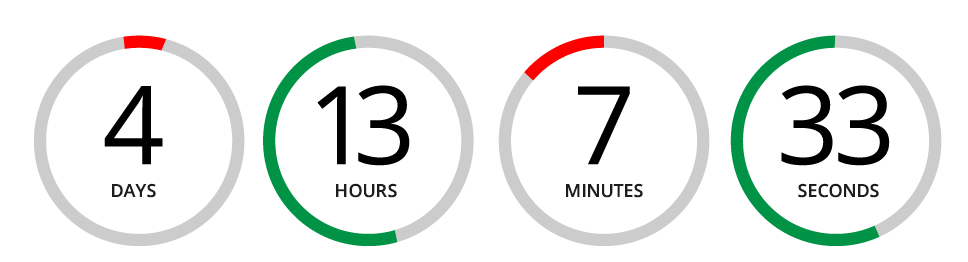
A countdown timer instils a great sense of urgency and drives users to take action now.
5 – Do You Want to Send Greetings With the Promotion?
Sending Christmas cards, whether paper or digital, is not always the most effective branding action. Many recipients, especially companies and public entities, receive a large number of greetings at Christmas. Standing out requires a great deal of customization.
You can get around this. Design your newsletter so that it divides visually into two sections: one above; and one below. In the upper section, add the text and graphics with traditional greetings. Take care not to personalize too much here.
In the lower half of the newsletter, add your promotional message, and “tie” the two parts with phrases like: “Come and choose your gift” or “Find out what’s under your Christmas tree.” As usual, be creative!
6 – Insist on the Usual Key Sales Points
Why should people buy from your store during the holidays (or any time)? Your subscribers might tell you that:
- You have a large catalog of interesting items;
- They save time and effort;
- They can make their purchases easily;
- The prices are lower than elsewhere;
- The service is friendly and reliable.
These needs are common to everyone, all the time, so stress them in your holiday emails too. And those messages should be clear regardless of the device the subscriber uses to view the email so watch out for optimization.
7 – Christmas Doesn’t End on December 25th
We hope that your Christmas email marketing campaign goes like a rocket. However your results, take advantage of the break to analyze the results and identify strengths and weaknesses.
You don’t have to stop your promotions instantly on December 25th. People will still want to spend money after the holiday. Continue your promotions with another newsletter.
You can also thank your customers and send them best wishes for a happy new year. And if you already have something in store for the winter sales season, why not give them a little preview? ?
The post Free Christmas Email Newsletter Templates (+7 Tips You’ll Love!) appeared first on Emailchef.
]]>