The post Open Call for Trainers and Training Opportunities 2026 appeared first on ENoLL.
]]>The post Open Call for Trainers and Training Opportunities 2026 appeared first on ENoLL.
]]>The post Living Labs as a competitive advantage for European companies appeared first on ENoLL.
]]>Direct Business Value for Startups and Scaleups
For startups and scaleups, the greatest challenge is not ideation but validation and scaling. Living Labs offer real-world environments where companies can test products, services, and business models with real users under real conditions, before committing significant capital. By examining real impact in real life, Living Labs can also be used to pivot new ideas for the same product, or a total new idea or product, maximizing the testing.
Through structured co-creation with citizens, customers, acedemia, public authorities, and industry partners, Living Labs enable startups and scaleups to validate product–market fit early and iteratively; reduce technical, market, and adoption risks, derisking innovation; generate evidence and performance data valued by investors and customers; and access early adopters and reference customers, including cities and public organisations.
When municipalities, hospitals, utilities, or regional authorities participate in Living Labs, they often move beyond testing roles to become early adopters, reference customers, even possibly first buyers or partners in innovation procurement. This early public demand strengthens credibility, provides initial revenue stability, and signals market viability to investors and private clients. In this way, Living Labs can transform public procurement into a strategic mechanism for scaling European innovation while supporting competitiveness and public-sector modernisation. By embedding innovation into operational contexts – such as cities, healthcare systems, industrial sites, or agricultural settings – Living Labs dramatically increase the likelihood that startups and scaleups reach successful market entry and sustainable growth.
Scaling Innovation for Industry and Corporate Actors
For established companies and industrial players, Living Labs offer a structured pathway to test and deploy innovation without disrupting core operations. They provide a neutral, multi-stakeholder space where new technologies, digital solutions, and sustainable processes can be piloted before full-scale industrial rollout. The benefits for Industry include a reduced investment risk when introducing disruptive technologies; faster innovation cycles through real-life experimentation; improved acceptance of new solutions by users, workers, and communities; and opportunities to collaborate with startups and scaleups in open innovation settings. Living Labs thus support industrial transformation while preserving competitiveness, resilience, and workforce trust.
From Real-Life Learning to New Business Opportunities. Crucially, Living Labs are not only instruments for scaling predefined innovations.
Through learning processes embedded in real-life contexts, companies gain a better understanding of user practices, operational constraints, and latent demand. This learning can reveal new insights about the market and often leads to the emergence of new business ideas, alternative applications, or adjacent markets that were not visible at the outset of the innovation journey.
A Key Instrument for FP10 Industry Impact
FP10 aims to increase the impact of EU R&I funding by strengthening deployment and scale-up. Living Labs contribute directly by functioning along the whole “innovation journey” from early experimentation to large-scale demonstration.
As hybrid Research and Technology Infrastructures, Living Labs provide companies with access to testing facilities, user communities, data, and regulatory learning opportunities. For businesses participating in FP10 projects, this can translate into higher-quality outcomes, faster commercialisation, and reduced failure rates.
Strengthening European Competitiveness Through Better Regulation and the European Competitiveness Fund (ECF)
The speed and nature of innovation challenge regulators to protect markets and public safety while enabling growth. As highlighted in the Draghi Report, Europe must improve its regulatory environment and mobilise instruments such as the proposed European Competitiveness Fund (ECF) to close its innovation and scale-up gap. In this context, Living Labs play a key role as regulatory learning environments, providing real-world testing grounds where companies, regulators, public buyers, and citizens can co-create solutions and regulatory approaches. This collaborative experimentation helps reduce regulatory uncertainty, identify barriers and opportunities, support innovation-friendly standards, and align innovation with market and societal needs. By generating evidence through iterative testing and stakeholder engagement, Living Labs can inform more agile and adaptive policymaking, accelerate the uptake of innovative technologies, and create a more predictable environment for companies to invest, scale, and compete globally. Policymakers should therefore support the development of Living Labs alongside regulatory sandboxes to foster a regulatory framework that strengthens competitiveness while ensuring societal value and public trust.
Competitive Advantage in the Green and Digital Transitions
Both FP10 and the ECF prioritise leadership in green and digital technologies. Living Labs allow companies to test climate-neutral, digital, and zero-pollution solutions in real conditions, ensuring they are scalable, compliant, and socially accepted. For companies, this means faster access to emerging markets driven by sustainability and digitalisation, while reducing reputational and deployment risks.
Shortening the Time-to-Market
In the current global race, speed is a metric of competitiveness. Living Labs allow companies to move from the lab to a real-world setting (a city, a hospital, a factory) much earlier in the cycle. By testing with real users under real conditions, companies can pivot early, preventing the costly mistake of scaling a product that doesn’t fit the market.
Conclusions
Living Labs translate European policy ambitions into practical business advantages. For startups, they lower barriers to market entry, de-risk innovation, and reduce the time-to-market; for scaleups, they accelerate growth and investor confidence; for industry, they enable safe and efficient transformation. By embedding Living Labs more strongly in FP10 and the European Competitiveness Fund, Europe equips its companies with a powerful tool to innovate faster, scale smarter, and compete globally.

Written by: Martina Desole
Director
The post Living Labs as a competitive advantage for European companies appeared first on ENoLL.
]]>The post Practice over Theory: A Deep Dive into Regenerative Tourism and Placemaking appeared first on ENoLL.
]]>Despite welcoming millions of visitors each year, Tourism Lab Amsterdam and Tourism Lab Rotterdam continue to explore these questions. They will address them during the upcoming Deep Dive into Regenerative Tourism and Placemaking, which takes place on 11 to 12 March across both cities.
Placemaking and regenerative tourism in practice
These questions sit at the heart of placemaking and regenerative tourism.
Placemaking starts from a simple idea. Cities are shaped not only by planners or designers, but also by the people who live in them every day. It focuses on streets that invite people to stay, public spaces that reflect local stories, and neighbourhoods that feel alive because communities recognise themselves in them.
Regenerative tourism takes this one step further. Rather than asking how tourism can simply be less harmful or less noisy, it asks how tourism can actively contribute to stronger social connections, resilient local economies, and urban development that benefitsboth residents and visitors.
As Roos Gerritsma, Associate Professor and Lab Lead at the Urban Leisure & Tourism Lab Amsterdam, explains:
“We have been running this lab for several years now, and multiple times a year we have one of those ‘wow’ moment. The key question is how do we make our spaces safer, fun, and overall more attractive?’’
Unlocking the potential of Living Labs for dynamic and safer cities
Behind the upcoming Deep Dive are Tourism Lab Amsterdam and Tourism Lab Rotterdam, two Living Labs rooted in very different urban realities.
Amsterdam, with its historic centre and high tourism pressure, constantly balances welcoming visitors with improving everyday life for residents.
Meanwhile, Rotterdam, a city rebuilt through experimentation, offers a different perspective. Here, innovation, culture, and community-led initiatives play a central role in shaping public space.
Together, the two cities form an ideal living laboratory where tourism and placemaking intersect in practice.
The labs work closely with local communities, municipalities, cultural organisations, and entrepreneurs. As a result, they explore new ways of thinking about leisure and tourism while responding to real places, people, and everyday challenges.
A hands-on learning experience
The Deep Dive moves away from a classic, one-directional lecture format. Instead, ENoLL experts designed the programme as a two-day, in-person learning experience for participants who want to strengthen their Living Labs skills.
Participants step into the city, engage with practitioners working on the ground, and exchange experiences with peers from different contexts. At the same time, they observe, discuss, and reflect together.
The focus remains practical. Participants explore what works, what does not, and what can be adapted elsewhere. In line with the Living Labs methodology, the process tackles critical questions and complex issues without offering pre-packaged or simple solutions.
In practice, this means walking through neighbourhoods and asking why some places invite connection while others do not. It also means leaving with new perspectives, practical insights, and meaningful connections that extend well beyond the two days.
Who should join?
This Deep Dive suits anyone working at the intersection of cities, tourism, culture, and community engagement. It also welcomes those who are simply curious about how urban places can be shaped more thoughtfully.
Participants will gain an insider view of regenerative tourism and fresh ideas for rethinking the future of tourism in cities.
Access the full programme and secure your spot for the event here.

Written by: Eleni Matraka from the Capacity Building Unit
The post Practice over Theory: A Deep Dive into Regenerative Tourism and Placemaking appeared first on ENoLL.
]]>The post Call Open: Host OpenLivingLab Days 2027 appeared first on ENoLL.
]]>OpenLivingLab Days is ENoLL’s flagship annual event and the key moment when the Living Lab community comes together to share experiences, results and future perspectives. Each edition offers a unique opportunity for ENoLL members to showcase their work and their local ecosystems through workshops, scientific paper presentations, matchmaking sessions, networking activities, site visits and more.
Beyond being the main annual gathering of the network, OpenLivingLab Days acts as a catalyst for collaboration, fostering partnerships between Living Labs, academia, industry, public authorities, policymakers and citizens. By hosting OLLD, members have the opportunity to place their organisation and region at the centre of an international innovation dialogue, while actively shaping the programme and legacy of the event.
Who can apply
The call is open exclusively to Members of the European Network of Living Labs (ENoLL).
How to apply
Interested Members are invited to express their interest by completing the Hosting Application Form, provided upon request.
- Submission deadline: 28 February 2026, at 23:59 (CEST)
- Applications will be carefully reviewed by the ENoLL Council, with the support of the ENoLL Secretariat.
- The selected host will be informed once the evaluation process is completed.
For further information, questions, or to receive the Hosting Application Form, please contact us at [email protected].
In the meantime, we look forward to welcoming the community at OpenLivingLab Days 2026, which will take place in Belgium.
We look forward to receiving your proposals and to discovering where OpenLivingLab Days 2027 will take place!
The post Call Open: Host OpenLivingLab Days 2027 appeared first on ENoLL.
]]>The post Living Labs Are Key to a Sustainable Water Future appeared first on ENoLL.
]]>The newly released UNU-INWEH Global Water Bankruptcy report makes a stark and urgent point: humanity is no longer facing episodic water shortages, in many basins and aquifers around the world, water systems have passed the point where they can return to historical “normal” without transformative action.
This condition, water bankruptcy, reflects chronic over-extraction, pollution, and climate pressures that reduce water security for billions of people and ecosystems alike.
At a time when “crisis” framing can imply temporary disruption, framing today’s reality as bankruptcy challenges us to shift from reactive fixes to structured, long-term management and recovery rooted in science, equity, and collaboration.
The role of Living Labs
Living Labs, with their emphasis on place-based experimentation, stakeholder co-creation, and iterative learning, are essential to making this shift happen on the ground.
They can help:
- Co-design water solutions with communities ensuring that responses reflect local needs, rights and knowledge, especially of those most affected by water insecurity.
- Test and scale innovations in water governance, data sharing, ecosystem restoration, sustainable agriculture and demand reduction in real-world settings.
- Explore adaptive practices that work within planetary boundaries, rather than assuming past water availability will return.
- Facilitate multi-actor learning bringing together citizens, researchers, municipalities, industry, and policy makers to experiment with equitable water allocation, pollution controls, and resilience strategies.
As the global water agenda resets around the 2026 UN Water Conference, Living Labs offer a bridge from awareness to action: from acknowledging water bankruptcy to testing equitable, sustainable, and locally adapted pathways forward.
We call on partners, policy makers, and funders to invest in living labs as pivotal engines of innovation and justice in water stewardship.
Together, we can generate solutions that are scientifically robust, socially inclusive, and environmentally regenerative!
The post Living Labs Are Key to a Sustainable Water Future appeared first on ENoLL.
]]>The post ENoLL partners with Urban Future 2026 appeared first on ENoLL.
]]>Through this collaboration, ENoLL members can benefit from a significantly discounted ticket to attend Urban Future 2026 (UF26) in person.
Exclusive ticket offer for ENoLL members
Thanks to this partnership, interested ENoLL members can attend UF26 for 399 EUR instead of the regular price of 899 EUR.
To receive the discount code, members are invited to contact the ENoLL team by email at [email protected].
Event details
- Website: Urban Future. The Better-Cities Event
- Dates: 24–27 March 2026
- Location: Ljubljana, Slovenia
Why attend Urban Future 2026?
UF26 is one of the largest sustainability events in Europe and the largest dedicated to cities.
It brings together the people and organisations shaping the future of urban environments, from across Europe and beyond.
Each year, Urban Future attracts participants from a wide variety of organisations, hierarchy levels, and more than 30 disciplines, including mobility, energy, housing, infrastructure, and real estate. This strong diversity makes Urban Future the most interdisciplinary urban event in Europe.
Attendees include representatives from 100+ city delegations, among them Europe’s Mission Cities, European Green Capitals, and iCapitals, as well as innovators, practitioners, researchers, and policy-makers.
Above all, UF26 is a place to meet passionate change-makers and build meaningful connections that support more sustainable, inclusive, and future-ready cities.
ENoLL at UF26
ENoLL will also actively participate in Urban Future 2026 with a dedicated session. More information about the session, including its focus and speakers, will be shared soon.
Interested in attending at the discounted rate?
Email [email protected] to request your discount code and be part of Urban Future 2026 with ENoLL!
The post ENoLL partners with Urban Future 2026 appeared first on ENoLL.
]]>The post A look back at OpenLivingLab Days 2025 appeared first on ENoLL.
]]>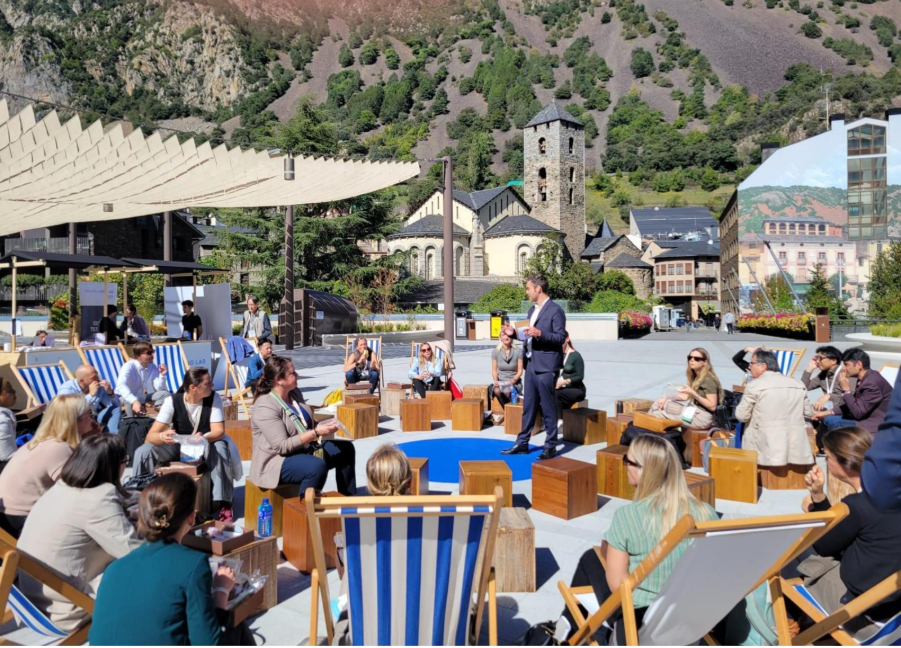
The OpenLivingLab Days (OLLD) 2025 event took place from 1–3 October 2025 in Andorra la Vella, Andorra, bringing together innovators, researchers, policymakers, and practitioners from across the globe. The event was hosted by the Andorra Research and Innovation Foundation (ARI), a member of the European Network of Living Labs (ENoLL) and home to the Andorra Living Lab.
This year’s edition was guided by the theme “Living Labs for Regenerative Futures: Connecting Local and Global Innovation Ecosystems.” The theme highlighted the growing role of Living Labs in fostering sustainable, inclusive, and regenerative innovation by bridging local experimentation with global collaboration.
OLLD 2025 offered a diverse programme designed to encourage knowledge exchange and hands-on learning. Over the three days, participants engaged in 16 sessions, 21 workshops, and 45 research paper presentations, complemented by three side events, five site visits, and two social evening events.
A central hub of interaction was the Networking Village, which was open to the public and featured seven exhibition booths showcasing innovative Living Lab initiatives. In addition, seven Village Talks – short, pitch-style presentations delivered by members of the ENoLL Network – offered concise insights into emerging ideas, projects, and collaborations within the Living Lab ecosystem.
As OLLD 2025 concluded, attention turned toward the future. The next edition of OpenLivingLab Days will take place in Belgium from 29 September to 2 October 2026. The 2026 edition will begin with a Policy Event day in Brussels, before moving to Antwerp, where the main programme will be hosted at the historic venue “A Room with a Zoo.”
Further details on the theme of OLLD 2026 and the dates of the Open Calls will be announced in early 2026, promising another inspiring gathering for the global Living Lab community.
In the meantime, we invite you to revisit the 2025 edition with the wrap up video:
The post A look back at OpenLivingLab Days 2025 appeared first on ENoLL.
]]>The post Anchoring a Lasting Legacy: Highlights from the UTMC Final Conference in Brussels appeared first on ENoLL.
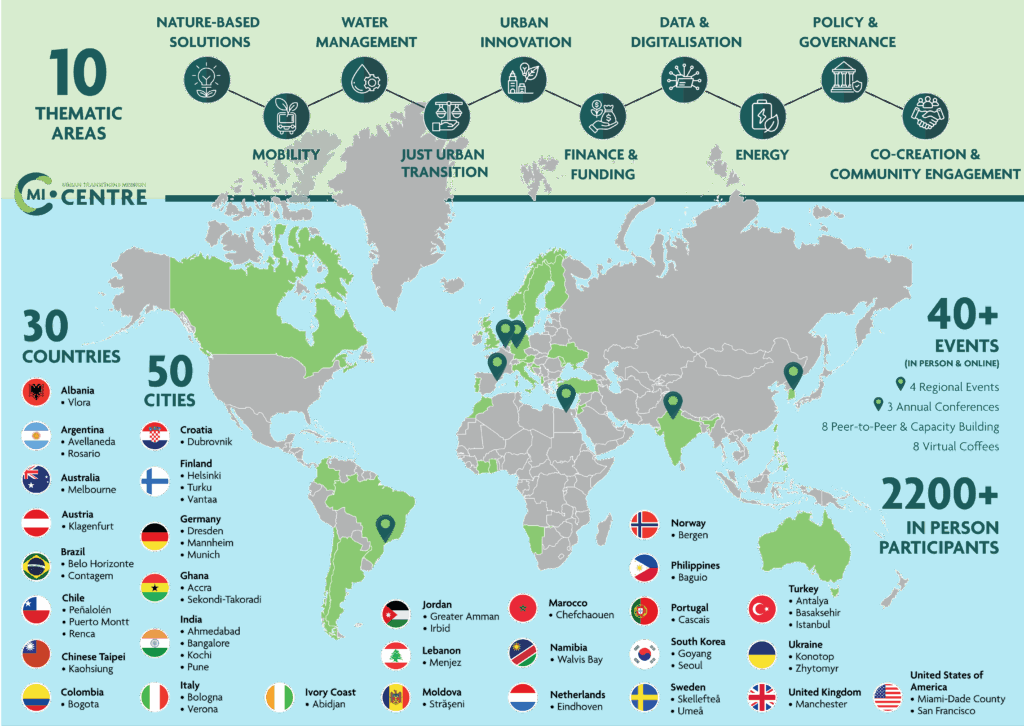
]]>The purpose of the Final Conference was twofold. First, to provide full visibility to the results of the Urban Transitions Mission Centre, including its platform, knowledge resources and global outreach. Second, to bring these achievements into direct dialogue with initiatives that can integrate and continue this work. This approach aimed to maintain continuity, avoid duplication and reinforce long-term alignment across the wider Mission community.
Setting the Tone: Reconnecting a Global Community
The conference opened with an informal networking session that allowed participants to reconnect with peers engaged throughout UTMC’s global activities. This created a collaborative atmosphere and reminded participants that the value of UTMC lies both in its technical outputs and in the community of practice that has grown around the Mission.

Presenting UTMC’s Achievements
The UTMC team provided a clear overview of the project’s core achievements. These included the UTMC Platform, the Knowledge Repository, the Funding & Finance Helpdesk, Funding Watch and extensive engagement across four world regions. Together, these elements demonstrated how UTMC has strengthened capacities, supported mission-oriented governance and improved access to structured knowledge for cities working towards climate neutrality and resilience.
This overview established the foundation for the discussions that followed and highlighted the pathways through which UTMC’s results can continue to support Mission Cities and international partners in the years ahead.

Connecting with Mission-Aligned Initiatives
A central part of the conference showcased contributions from European and international initiatives whose work intersects with the priorities of the Urban Transitions Mission. Their inputs demonstrated the richness of the wider ecosystem and the opportunities for stronger coordination.
NetZeroCities – NetZeroCities presented its systemic support model for climate-neutral cities. It highlighted lessons from Climate City Contracts, the importance of integrated project portfolios and the role of embedded City Advisors. The Climate City Capital Hub, the NZC portal and its measurement and learning frameworks showed clear potential for complementing UTMC’s Funding Helpdesk and knowledge tools.
Driving Urban Transitions (DUT) – DUT outlined its work as a major European research and innovation partnership. Its projects advance Positive Energy Districts, the 15-minute city and circular urban economies. DUT’s focus on structured knowledge, innovation portfolios and communities of practice strongly aligns with UTMC’s mission to consolidate actionable knowledge for cities.
LEAP-RE – LEAP-RE, representing long-term EU Africa collaboration on sustainable energy, highlighted the importance of research alignment, multilateral funding and peer-to-peer learning. Its emphasis on urban and peri-urban electrification connected directly with UTMC’s outreach activities in Africa and demonstrated how UTMC’s resources can support its community.
CapaCITIES – CapaCITIES presented its work supporting national and regional authorities in scaling the EU Cities Mission. Stronger governance structures, improved national coordination systems and reinforced capacities are central to its model. The initiative’s Europe-wide expansion creates clear opportunities to integrate UTMC tools and knowledge outputs.
DUT Urban Living Labs (Platform31) – Platform31 shared its structured approach to Urban Living Labs, including mapping national ecosystems, offering training modules, facilitating exchanges and producing practitioner guidelines. These priorities closely reflect UTMC’s methodologies for supporting place-based experimentation and collaborative innovation.
ERRIN – ERRIN highlighted the significance of multilevel governance and alignment across EU, national, regional and city levels. It emphasised the value of showcasing Mission achievements internationally, which mirrors UTMC’s focus on global engagement and knowledge dissemination.
NEUTRALPATH – NEUTRALPATH presented its approach to capacity building for Positive Clean Energy Districts, based on co-design and multi-year learning cycles. Its strong connection to Living Lab methodologies reinforces its alignment with UTMC’s mission-oriented approach.
CLIMABOROUGH – CLIMABOROUGH shared lessons from its fifteen urban testbeds covering energy, mobility, circularity, waste management and heat islands. Its core message emphasised that urban transitions often fail not due to a lack of technology but due to challenges in deployment and scaling. This directly connects with UTMC’s focus on capacity building and mission-oriented implementation. The initiative’s upcoming climate-neutrality handbook, data catalogue and low-code platform illustrate clear complementarities with UTMC’s knowledge architecture.

A Shared Understanding of Future Needs
Across all contributions, participants identified several common priorities. These included the importance of maintaining access to UTMC’s platform, the value of coordinated knowledge sharing across initiatives and the need to strengthen complementarities across European and international programmes. The discussions confirmed that UTMC’s legacy lies not only in its tools but in the governance approaches, partnerships and shared learning cultures developed during the project.
Securing a Long-Term Legacy for the Urban Transitions Mission
By gathering European initiatives, international partners and Mission Cities in Brussels, the UTMC Final Conference successfully anchored the Centre’s achievements within a broader and long-term ecosystem. The event reinforced a shared commitment to maintaining UTMC’s outputs, aligning strategies and strengthening collaboration across the Mission community.
As the Urban Transitions Mission enters its next phase, UTMC’s legacy will continue to support cities around the world. Its knowledge tools, methodologies, global engagement activities and mission-oriented governance models will remain essential resources for cities striving for climate-neutral, resilient and inclusive urban futures.

The post Anchoring a Lasting Legacy: Highlights from the UTMC Final Conference in Brussels appeared first on ENoLL.
]]>The post Insights from the Living-in.EU Digital Assembly 2025: “Empowering Cities and Regions through Data and People-Centred Digitalisation” appeared first on ENoLL.
]]>The theme – Empowering Cities and Regions through Data and People-Centred Digitalisation – set the tone for an urgent and candid discussion: how can cities and regions lead on digital transformation, harness the potential of artificial intelligence (AI) and data, while safeguarding inclusivity, trust and local benefit?
Across the session, several keynote contributions illuminated the path ahead and highlighted the gaps we still need to bridge. Below we summarise the key messages, emerging priorities and next-steps that the Living-in.EU Movement should champion.
Key Messages from the Discussion
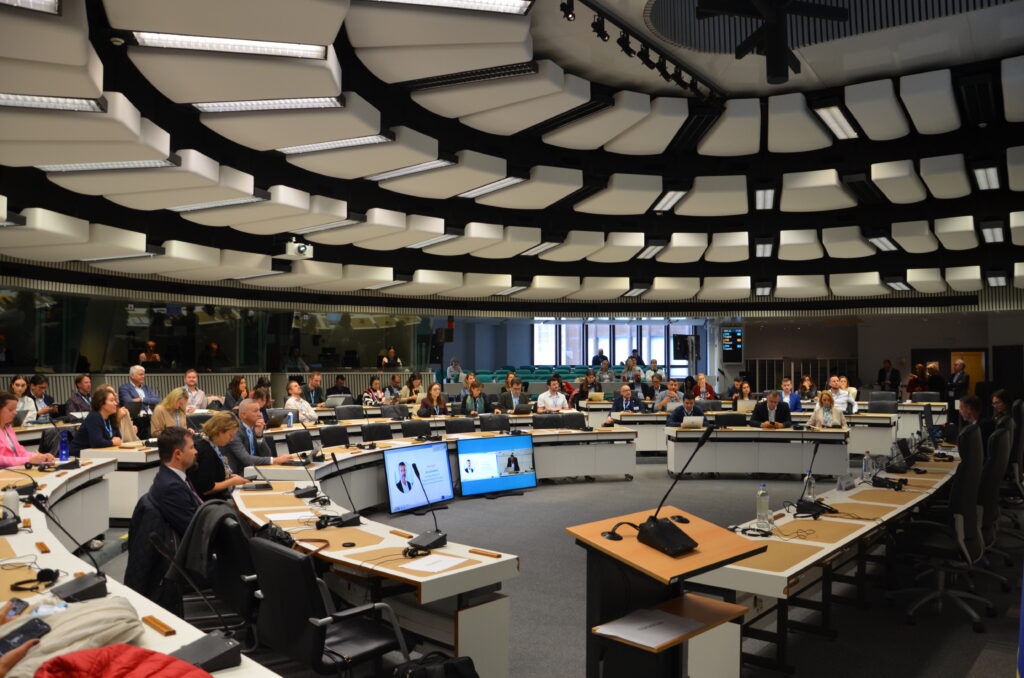
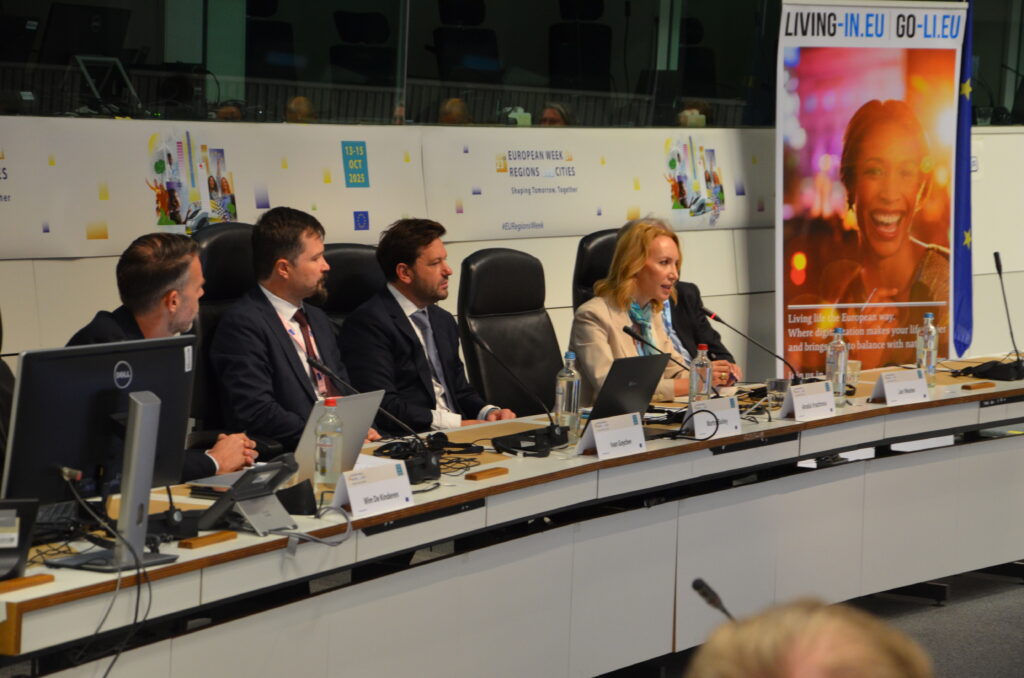
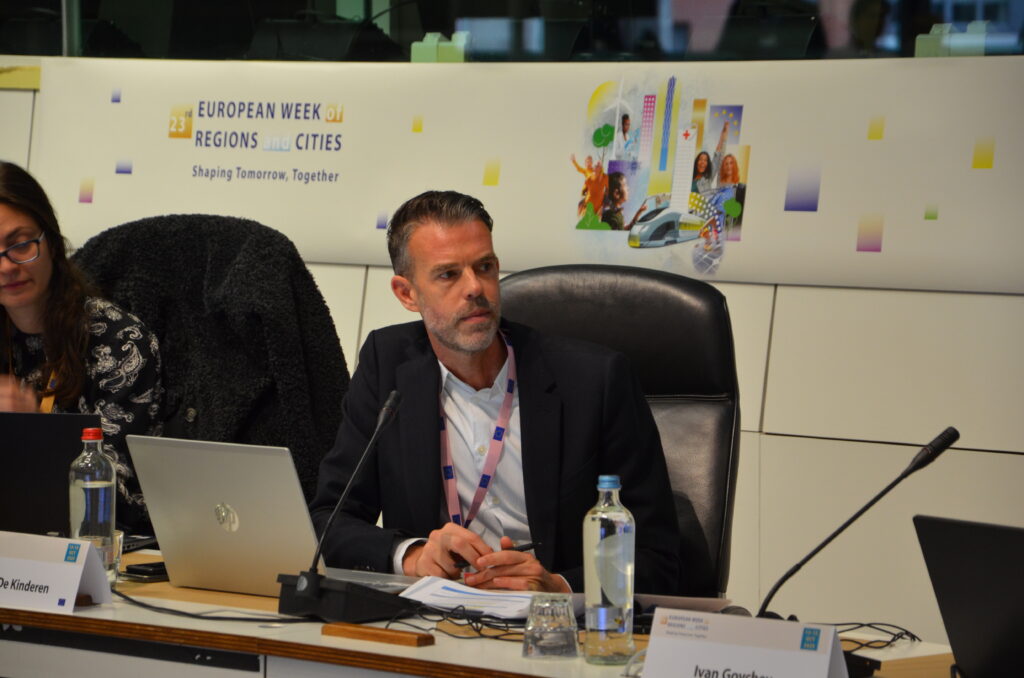
The 2025 Living-in.EU Digital Assembly was opened by the two co-chairs: Ivan Goychev, Deputy Mayor for Digitalisation, Innovation, and Economic Development of the city of Sofia, Bulgaria, and Lluïsa Moret, President of the Barcelona Provincial Council and Mayor of Sant Boi de Llobregat, Spain.
Their opening remarks set the tone for a session focused on how local and regional leaders can drive Europe’s digital transformation through collaboration, trust, and a shared commitment to people-centred innovation. Both underlined that cities are at the heart of Europe’s digital future: close to citizens, aware of their needs, and capable of turning policy ambition into real-world impact.
The Assembly featured a rich exchange among representatives from the European Commission, city administrations and innovation practitioners, all converging on a shared message: Europe must be bold, collaborative, and people-centred in its digital transformation.
Martin Bailey from the European Commission opened the discussion by emphasising that Europe needs to overcome its lingering apprehension about artificial intelligence. The EU, he noted, has at times fallen behind because many companies have been reluctant to invest in AI, while global competitors seized opportunities. To reverse this trend, cities and regions must take a leading role — not just managing risks but actively embracing the transformative potential of AI. While the Commission continues to provide significant support, Bailey highlighted the need for stronger local engagement: cities require access to the right tools and an enabling environment to harness AI effectively. He called for a closer nexus between public authorities, businesses, and academia to build self-sustaining, applied-AI strategies — beyond reliance on EU funding. This, he said, should go hand-in-hand with creating a marketplace for AI applications that can be scaled and adapted to local needs.
From a city perspective, Ivan Goychev, Deputy Mayor of Sofia, illustrated how open data can empower citizens and spark innovation. He recounted a simple yet powerful example: within three days of releasing public-transport data, a citizen had already built a map to support police outreach. This, he argued, demonstrates that cities do not need to solve every problem themselves, their mission is to provide the platforms, the data and the enabling conditions for citizens to act. Yet, not all municipalities currently have the capacity to open their data or maintain such platforms, which remains a critical challenge.
Amalia Vrachnou, Deputy Mayor of of Urban Resilience and Regeneration of Kifissia, added that modernising public services also means making them more transparent and participatory. In her city, digital systems now allow citizens to submit and track service requests, revealing bottlenecks and improving accountability. She underlined the importance of interoperability between systems, co-design processes that include students and citizens, and collaboration between academia and business. Her city’s work on sustainable mobility — developing Greece’s largest cycling network, new pedestrian routes and geolocation-based services — shows how data can guide tangible improvements in daily life, while internal digital-skills training ensures that public employees keep pace with innovation.
Jan Wester, Director LDT CitiVERSE EDIC, reminded participants that the technology is largely available: the challenge is to connect it meaningfully. Virtual tools and platforms must be integrated to create real value. He stressed that cities and regions need to collaborate across levels of governance, linking living labs and testbeds, blending skills and involving private partners in a framework of trust. Scaling innovation, he argued, will be impossible without public-private partnerships built on clear expectations, ethical principles and a shared commitment to the public interest. Cities, for their part, must “do their homework”: define how they want to be served, what outcomes they expect, and how technology can best enhance citizens’ lives.
Emerging Priorities for Cities and Regions
From the rich discussion emerged several clear priority areas:
- Build the AI demand-side and supply-side ecosystem
- Europe must feed both demand (cities, regions needing solutions) and supply (businesses, research deploying AI).
- The industrial AI leadership of Europe is at stake; cities and regions must be early adopters, and co-creators of tools for climate crisis, resilience and the green transition.
- AI-based models can help cities design for environmental change, plan for future shocks, optimise services.
- Empower citizens and open data platforms
- Opening data (transport, mobility, services) is a powerful lever when citizens are engaged.
- Cities should not feel they must solve everything top-down; rather, provide the infrastructure, the data, the tools, the platform for civic innovation.
- Transparency, tracking service requests, citizen participation (especially youth/students) are crucial.
- Interoperability, standardisation & co-design
- Many cities have digital tools, but they are siloed. Virtual technologies must be integrated, connected, and yield measurable value.
- Interoperability across systems, alignment of data management to national objectives, open platforms to speed decision-making are key.
- Co-design matters: business + academia + city administration + citizens working together.
- Scale and sustainability beyond project funding
- Many projects exist — but cities ask: how do we scale from pilot to deployment? How do we build sustainable business models so that we are not entirely reliant on EU grant funding?
- A marketplace for applications, solutions that optimise for local contexts, and private-public partnerships (PPPs) with trust are required.
- Multi-level governance: local, regional, national. Cities must “do their homework” to define needs and articulate demands (so Member States and the Commission can respond).
- Ethics, trust and public interest
- Digital transformation is more than technology – it must be ethically grounded, inclusive, just and human-centred.
- Cities bear the duty to serve the public interest: defining how tech serves people, ensuring digital rights, ensuring no one is left behind.
What This Means for the Living-in.EU Movement
As the political advisory body of the Movement, the Digital Assembly reinforced the call for local and regional voices to be central to European digital & green transitions.
For the Living-in.EU community—and in particular the ecosystem of living labs, cities, regions and industry partners aligned through ENoLL—this means:
- Advocacy: We must continue to raise the voice of cities and regions so that EU budgeting, regulations and programmes reflect ground-level needs for AI, data platforms and inclusive digitalisation.
- Collaborative networks: Strengthen connections between living labs, cities, private partners, universities – enable sharing of testbeds, best practices, operational models.
- Capacity building: Equip cities (especially smaller ones) with the tools, data literacy, governance frameworks, and open platforms necessary to engage.
- Scaling solutions: Move beyond “pilot → pilot” by identifying sustainable business models, marketplaces of solutions, frameworks for PPPs that deliver at scale.
- Ethical standards & citizen focus: Ensure digital transformation remains human-centred: inclusive, transparent, accountable—and ensuring citizens are empowered, not passive recipients.
Next Steps & Call to Action
- Cities and regions should Analyse their demand – what specific AI/data tools do they need, which outcomes they seek (mobility, climate, public services, inclusion).
- Regions should Align their ecosystem: bring together public sector, business, academia, living labs and citizens in co-design and implementation.
- Prepare for the next EU Multiannual Financial Framework: articulate how budgets should be allocated – cities must make their voices heard so the Commission and Member States can debate accordingly (per Martin Bailey’s call).
- Living-in.EU network members should share their own experience, case-studies and tools (for example Ivan’s open-data story, Amalia’s interoperability journey, Jan’s testbed linkage) – make those insights accessible to all.
- Pilot fast, but scale wisely: design for value, connect solutions, think about business models, interop, sustainable delivery (beyond funding cycles).
- Maintain a strong ethical and people-centred focus: ensure that data, AI and digital tools improve lives — not just efficiency metrics.
In Conclusion
The Digital Assembly brought into sharp relief both the tremendous opportunity and the significant challenge ahead. European cities and regions can become leaders in a data- and AI-enabled future — but only if they are empowered, connected, trusted and equipped. When citizens are at the centre, when data is opened responsibly, when platforms are interoperable, and when business, academia and public sector align — then we will see digital transformation that truly serves people and place.
As part of the Living-in.EU Movement, we are well placed to support this journey: through networks, living labs, good practice sharing and advocacy. Let us embrace the future, act together, and ensure that cities and regions across Europe can harness data and AI to build thriving, resilient and inclusive communities.
Thank you to all participants, to our speakers and to the entire network for making the 2025 Digital Assembly a platform for progress.
We look forward to engaging further – and to the many collaborations that will follow.
You can watch the recording of the Digital Assembly here.
The post Insights from the Living-in.EU Digital Assembly 2025: “Empowering Cities and Regions through Data and People-Centred Digitalisation” appeared first on ENoLL.
]]>The post ENoLL at Smart City Expo World Congress 2025 appeared first on ENoLL.
]]>As Official Partner, ENoLL will play a prominent role at this year’s Smart City Expo World Congress (SCEWC) — the world’s leading event on urban innovation — showcasing how Living Labs contribute to more inclusive, sustainable, and citizen-driven cities.
Throughout the three-day event, ENoLL representatives and members will take part in several high-level sessions and panels, highlighting the transformative power of co-creation and collaborative innovation in shaping the cities of tomorrow.
ENoLL Session: Inclusive by Design – Co-Creating Smart City Solutions through Living Labs
5 November 2025 10:30 – 11:15 | Agora Stage
As cities worldwide accelerate their digital transformation, the urgency to ensure that technological innovation remains inclusive and citizen-centred has never been greater. ENoLL will host an Agora session highlighting how city-led Living Labs are shaping digital solutions that are equitable, participatory, and responsive to societal needs.
The session will showcase pioneering city initiatives that are leveraging the Living Lab approach to advance digital inclusion. Each city will present a concrete example of how data spaces and emerging technologies—such as generative AI—are being used to co-create and test digital tools and services in real-life settings. These initiatives aim to improve accessibility, foster engagement, and enhance wellbeing across communities, with a particular focus on supporting marginalised and vulnerable groups at risk of digital exclusion.
From participatory platforms for urban planning to AI-driven solutions tailored for older adults, migrants, or low-income residents, the projects presented will provide practical insights into how inclusivity can be embedded within local innovation agendas. The discussion will also explore key enabling factors such as trust-building, ethical data use, cross-sector collaboration, and citizen engagement strategies.
The Alliance Advantage: Why Cities Thrive Through Collaboration
5 November 15:10 – 16:00 | Stage: People – First
ENoLL President Wim de Kinderen will also participate in this roundtable exploring how cities amplify their collective voices to promote democratic values, inclusive dialogue, and collaborative governance.
The session will highlight alliances and partnerships as key enablers for impactful urban innovation.
G100 Smart and Sustainable Cities Wing Panel
5 November, 17:10 – 17:55 | Clean Cities Stage
ENoLL Director Martina De Sole will join the G100 Smart and Sustainable Cities Wing session titled “Fostering More Inclusive, Resilient and Sustainable Urban Development”.
The session will discuss how inclusive governance, enabling technologies, and community engagement can drive more resilient and sustainable urban ecosystems.
ENoLL Projects at SCEWC25
MICAD – Smart & Green Cities for All: The MICAD Vision
4 November 2025, 13:00 – 13:45 | Stage: Impact Tech
The MICAD project will present its vision for inclusive digital and climate transitions in metropolitan areas. The session will feature insights from project partners and examples of how MICAD is fostering collaboration and capacity-building to support smart, sustainable, and human-centred urban development.
ENoLL will be in this session to explore the role of Living Labs in supporting climate-neutral, digitally inclusive cities.
Living-in.EU – European Cities and GenAI: Examples, Challenges, and Opportunities
5 November 2025, 09:30 – 10:15 | Stage: Tech X Cities
Organised by the Living-in.EU Movement, this session will bring together European cities and regions to share experiences on the responsible use of Generative AI (GenAI) in the public sector. From improving policymaking to developing citizen services, the session will highlight concrete use cases, ethical considerations, and ways forward for AI adoption across Europe’s local administrations.
Across all these sessions, ENoLL and its network reaffirm their commitment to empowering cities and citizens through open innovation, co-creation, and collaboration.
From AI governance to digital inclusion, climate action, and collective intelligence, ENoLL’s presence at SCEWC25 highlights the crucial role of Living Labs in designing the future of sustainable, fair, and participatory cities.
Join us in Barcelona from 4–6 November 2025 to connect with ENoLL and discover how Living Labs are transforming innovation into inclusive impact.
The post ENoLL at Smart City Expo World Congress 2025 appeared first on ENoLL.
]]>