
The SIM card (it stands for Subscriber Identity Module, by the way) has been with us since the early days of the cell phone revolution but it hasn’t changed a whole lot in that time (apart from getting smaller). Down the years, the ritual of moving SIM cards from old phones to new phones has been a traditional part of the upgrade experience.
Now though, we’re starting to see a serious shift in the tech, with the popularization of eSIM technology. These eSIMS (electronic SIMs) don’t use physica cards, but instead are loaded on your phone like an app or a file would be. If you want to learn more about eSIMs and are wondering “what eSIM should I buy?”, you’re in the right place.
Best eSIM providers for international travel:
What’s an eSIM?
Before we get into any comparison eSIM talk, it’s important to know what an eSIM is. Like a physical SIM, it identifies your cell phone on a network. It tells the network who you are—so the calls and messages coming from your friends and family reach the right destination. The difference is, there’s no card to pop in our out of your phone.
You can think of an eSIM like a profile page for a social media account. It’s stored on your phone, together with your number and some key details, and that information is then relayed to your chosen network. For this to work, you need a phone with eSIM support, but that’s now included in most modern phones.
One of the key benefits is the quick and easy setup process: There’s no need to open up your phone to fit a physical SIM, or to wait for a new one to come in the post. Changing your number or contract becomes as simple as downloading or updating an app. You can even have two eSIMs on the same phone, and switch between them.
Typically, eSIMs give you more control over how much you pay than traditional SIMs too, and let you jump between countries and different network providers more easily too. They’re the modern way of managing the identity of a phone, and give you lots more flexibility in how you get connected.
Comparative Overview of Top eSIM Providers in 2026
If you’re asking the question of “what eSIM should I buy?” in 2026, the good news is there are a lot of different providers and plans to choose from when it comes to comparison eSIM discussions. No matter what your budget or requirements, you should be able to find something to match.
1) Ubigi – Our Top Pick
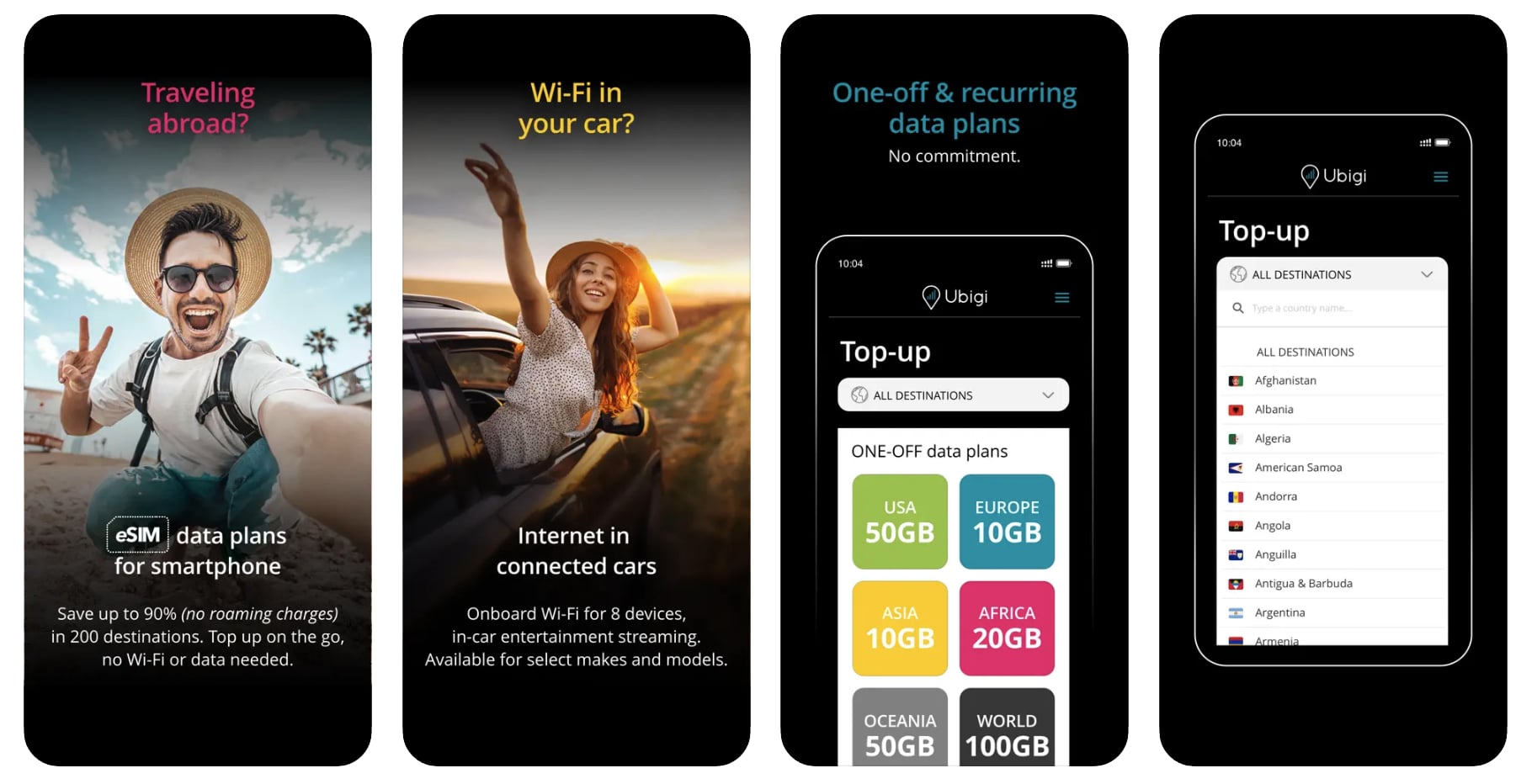
Load up the Ubigi site and you’ll see it offers extensive eSIM coverage for personal users, business users, and even connected cars. With a choice of flexible data plans to choose from and 5G support, it’s not difficult to find a plan that suits you, and once you’ve signed up you can rely on easy app management and dedicated customer support. Ubigi is by far one of the best eSIM providers for Europe and offers one of the best coverage in the U.S.
One of the reasons to go for Ubigi is the selection of recurring monthly subscriptions it offers, if you want to save money by committing for longer. It’s also one of the better options in terms of allowing hotspot connections from eSIMs, which are often restricted in some way by other services.
2) Saily
The friendly Saily tries to make eSIMs as simple as possible, starting with an intuitive app on your phone. The provider offers global coverage, with a variety of affordable and flexible plans, and built-in security features like virtual locations and ad blocking. There’s an emphasis on sustainability too, with everything handled virtually, making it a genuine contender for the best eSIM provider.
One of the key benefits is that you can use the same eSIM for any destination, so it’s perfect for jumping between countries: You don’t need to go to the hassle of registering a new eSIM each time you cross a border. Users report not always getting the very top speeds with Saily, though they’re by no means sluggish. It’s also worth bearing in mind that calls and texts aren’t supported with Saily eSIMs, only data.
Saily has been developed by Nord Security (the company behind NordVPN) and it has quickly risen to one of the best eSIM providers in the world. Saily leverages Nord Security’s reputation for online security and privacy and offers a reliable and user-friendly eSIM service for international travelers.
With extensive coverage in over 200 destinations (countries and regional plans), Saily ensures you stay connected in popular destinations like the US, Europe, Asia, Turkey, Thailand, and beyond. They support 5G where available as well as 4G/LTE. Saily offers a variety of data plans to suit different travel needs including short-term plans ranging from 7 to 30 days as well as regional and global plans catering to extended travel across multiple countries.
The regional plans cover areas like Europe, Asia, North America, and the Middle East while global plans cover over 100 countries. One of Saily’s key strengths is its competitive pricing with 1GB of data in the Europe costing just $4.99. Saily provides 24/7 customer support and you will always get assistance when you need it. They offer a refund guarantee if you encounter issues installing your eSIM which makes it one of the best eSIM providers in 2026. While Saily excels in many areas, they only offer data-only plans without traditional calls or SMS services (you don’t get any local phone numbers). This is actually also what the other eSIM providers listed below offer.

3) Airalo
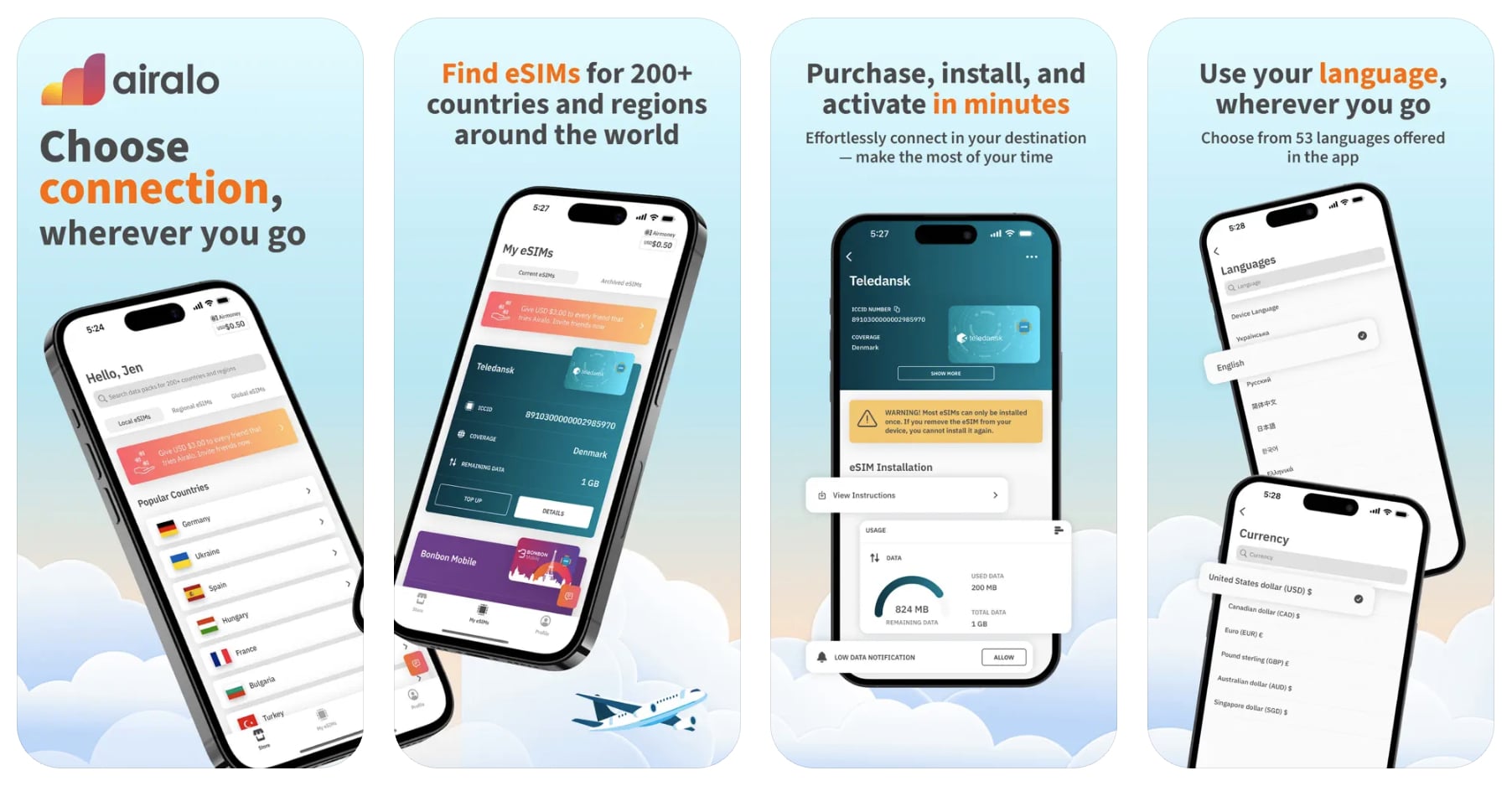
International travel is the particular focus of Airalo—though you can of course use these eSIMs at home too—and you’ll find a broad selection of destination options here, together with competitive pricing and easy activation once you’ve found the right eSIM. It’s a provider with a strong brand reputation, with eSIM sharing features included too.
What helps Airalo stand out is the loyalty bonuses that often pop up if you stick with this provider over the longer term—though they’ll vary depending on your location. It also tends to be a bit more expensive than some of its competitors, though you get plenty of reliable service and performance back for your money.
4) Holafly
With wide coverage and a focus on unlimited data plans, Holafly is another fine pick for your eSIM provider (and one of the best eSIM service for the U.S.), and promises to keep you connected wherever you go. The pricing options are simple to assess here—just pick the number of days—and there’s round-the-clock 24/7 customer support available to you as well.
When it comes to the mobile app, Holafly has one of the best in the business, and it’s a polished experience all round. There are some restrictions in place on what you can do with your eSIM, however: You can’t share data with other devices, for example, and there’s no support for calling or texting services, so bear that in mind when you’re wondering “what eSIM should I buy?”.
Device Compatibility and How to Check
While most of the phones available today now come with eSIM support, it’s worth double-checking that you do have a handset that’s going to work with an eSIM before you spend any money with one of the best eSIM providers.
If you’re using an iPhone, open iOS Settings then tap Cellular: If you can see an Add eSIM entry, your iPhone will work with eSIMs. In fact, any iPhone from the iPhone XS, XS Max, and XR onwards (from 2018) is eSIM-compatible, as long as it wasn’t manufactured for sale in mainland China.
With Android, the process varies slightly depending on your phone make and model. On Pixels, from Settings tap Network and Internet > SIMs > Add SIM: If there’s a Set up an eSIM option there, you’re good. On Galaxy phones, from Settings tap Connections > SIM manager to look for the Add eSIM option.
You can of course also check with your phone manufacturer or provider, or an eSIM seller. They should all be able to tell you if your phone works with eSIM technology—and failing that, a quick search online for your phone make and model should help.
Activating and Setting Up Your eSIM
Once the comparison eSIM process is out of the way, there are actually several ways of activating an eSIM and getting your profile set up on your phone. You might be emailed a QR code, for example: Scanning this will take you to an online page where you can simply follow the instructions to get the eSIM installed.
Alternatively, eSIMs can be enabled via an activation code. If you follow the steps listed above for your phone, you’ll eventually be asked to give an activation code, and often a confirmation code too—these will have been sent to you by your eSIM provider.
Yet another way of activating an eSIM is through the official app of your eSIM provider, which may actually be the easiest way: You confirm your identity by logging into your account, then the app handles selecting and installing eSIMs.
Many phones actually let you manage more than one eSIM, so you could (for example) have one personal number and one work number, or have a primary eSIM alongside a travel eSIM. Switching between plans and carriers is straightforward too, and takes just a few minutes using one of the methods described above.
Comparative Pricing and Plans
There are multiple ways to compare eSIM providers and deals, depending on what your requirements are. For example, here’s how the current pricing for a UK eSIM across four of the top companies stacks up, to help you answer the question of “what eSIM should I buy?” and from where.
Top eSIM providers for Europe in 2026:
| eSIM Provider | Duration | Data | Pricing |
|---|---|---|---|
| Ubigi | From 7 to 365 days | From 1GB to Unlimited | From 2,90 to 185$ |
| Saily | From 7 to 180 days | From 1GB to Unlimited | From 2,99 to 179$ |
| Airalo | From 7 to 180 days | From 1 to 100 GB | From 5 to 185$ |
| Holafly | From 1 to 90 days | Unlimited | From 6,90 to 139,90$ |
| AloSIM | From 7 to 180 days | From 1 to 100 GB | From 5 to 185$ |
| Jetpac | From 4 to 30 days | From 1 to 40 GB | From 4 à 39$ |
Security and Privacy with eSIM
eSIMs are actually considered more safe and secure than their conventional physical counterparts, for several reasons. They’re embedded right into your phone for a start, so no one can pop open the SIM slot and take your SIM card away with them.
An eSIM profile also has a secure element to prevent unauthorized access and hacking, while if your phone should be lost or stolen, the number can be shut down remotely (and again, the card can’t be removed from your phone).
All that said, you can’t be complacent when it comes to eSIM security. eSIMs aren’t 100 percent guaranteed hackerproof, and you should take care to avoid sharing your eSIM provider account credentials with other people.
As always, be on the lookout for phishing attempts, which is where bad actors will attempt to trick you into revealing the login details for your eSIM account: These scams may arrive over the phone, or via email, but whatever the method you should be wary of revealing your username or password. If in doubt, get in touch with your eSIM provider directly to check that the request is genuine.
Conclusion: Which Shall You Go For?
There are a lot of good reasons to switch to an eSIM then, from the extra convenience to the additional security protections you get. In many ways they’re the future of modern day communications: It may not be too long before we start seeing phones appearing that can only accept eSIMs, and do away with the physical SIM slot altogether.
Even in a packed SIM provider market, Ubigi manages to stand out as the best eSIM provider because it scores highly in all the areas that matter: The pricing is competitive and (just as importantly) flexible, a huge number of international destinations are covered, everything is simple to set up with the Ub igi app, and it comes with built-in security protections like ad blocking.