The survey and individual candidate results are available here.
Candidates were informed that survey results would be shared with coalition members and the public. Candidates were also informed their responses would be used solely for educational and informative purposes and will not be used as a scorecard or endorsement of individual candidates.
If you are unsure who your legislative candidate is, you can find out by entering your voting address in the search feature at the Montana Free Press’s Election Guide. If you would like assistance reaching out to your candidates, email the coalition using our Contact Form.
This is the second legislative candidate survey Grow Montana has completed in the last five years. The first survey was conducted in 2020 and received just over 50 responses from candidates. This year’s survey received over 70 responses, a sign that potential legislators are gaining interest in learning more about local food system policy work!
Grow Montana is thrilled by the number of candidates who requested more information about issues and expressed interest in working with the coalition. The coalition is grateful for the time all candidates took to share their opinions and look forward to the opportunity to continue our work building strong partnerships across the political aisle.
If you have any questions about the survey, please reach out to us HERE.
Voter Registration in Montana
There are just a few weeks left before Election Day on November 5, and many Montanans have already cast their vote early by absentee ballot. If you plan to vote in-person and are unsure of your voter registration status, or have other questions, VOTEMT.GOV has the answers. Use the links below to:
]]>Seeking Contractor to Assist with Advocacy Activities and Outreach
Request for Proposals
Grow Montana Seeks Contractor to Assist with Advocacy & Outreach
Status: Part-time Contractor, 3 months with possibility for extension
Location: Remote within Montana.
Compensation: $10,000 – includes all costs associated with travel.
Period of Performance: Contract term is May 1, 2024 – July 31, 2024. Estimated to be 200 hours of work over 13 weeks. Hours per week will fluctuate based on project demand.
Supervisory role: No
Reports to: Grow Montana Policy Committee & Coordinator
Requirements: MT independent contractor status exemption
Recommended: Professional Liability Insurance
Duties and Scope of Work:
Are you passionate about building sustainable, equitable food and farm systems? Do you love working in a collaborative context? Grow Montana Food Policy Coalition (GMT) is seeking a contractor to help us build partnerships and lead campaigns to help reshape our food system into one that supports sustainable Montana-owned food production, processing, and distribution, and that improve all our citizens’ access to healthy Montana foods.
This role will build on your skills and experience in policy research and development, direct advocacy, and grassroots engagement to address local and regional food systems, value chains, healthy food access & equity, and more. The Contractor will focus on a variety of issues and interact with Coalition members through issue-specific committees; in this role, you will build critical relationships, act strategically to advance reforms to public policies, and be well versed in relevant issues.
Project Deliverables:
- Attend Grow Montana Policy Committee Meetings (minimum 3 meetings)
- Assist with development and review of Legislative Candidate Survey
- Assist with development and review of Grow Montana Policy Book
- Work with Grow Montana to create a questionnaire for legislators, stakeholders, and partner outreach.
- Create a shared list of potential GMT supporters (regulatory agencies, relevant private and nonprofit entities, state legislators
- Complete outreach to 2024 Legislative Candidates, utilizing the developed questionnaire & legislative candidate survey to aid in conversations.
- Conduct Initial outreach of potential supporters.
- Provide follow up report to GMT of status of interest & relationships.
- Report of any potential legislation being developed that GMT should be aware of in the upcoming 2025 Legislative Session
Key Responsibilities:
Advocacy: 20%
- Make the best case for our policies directly to decision-makers. Build relationships with players in regulatory agencies, relevant private and nonprofit entities, and state legislators in Montana.
- Help coordinate grassroots advocacy training and events for GMT stakeholders.
Campaign Strategy: 30%
- Assess opportunities for building political support for GMT priorities and campaigns through grassroots organizing, media coverage, endorsements, and message development.
- Assist with development and review of the GMT Policy Book leading up to the biennial legislative session.
- Provide insight, education, and advising on strategy to advance our priority areas.
- Coordinate campaigns for policy related goals such as fielding requests for stories and empowering community members.
- Provide weekly analyses of bills and legislative action to GMT’s membership and grassroots network.
Coalition Building: 30%
- Meet with other groups who are concerned about our priority issues and work with them to maximize our impact.
- Assist with the development of a long-term plan for developing and sustaining GMT’s presence, awareness, and credibility among the State through relationship building and maintenance.
Legislative Monitoring: 20%
- Track interim committees and ensure GMT is represented with the appropriate positions on issues determined relevant by the GMT Coalition
- Monitor and analyze proposed state legislation, emerging issues, trends, and provide recommendations for appropriate action and identifying key focus area.
Preferred Qualifications
- An understanding of and passion for sustainable agriculture and food systems.
- A working knowledge of the state level policy-making process.
- Demonstrated understanding of how racial equity intersects with agriculture and food systems and the ability and enthusiasm to apply this understanding to specific policy development and decision making.
- Exceptional initiative and interpersonal skills, including the ability to work independently and collaboratively, listen well, build trust, and model healthy conflict resolution.
- Willingness & ability for intrastate travel (proof of automobile insurance will be requested)
Preferred Experience:
- Legislative and administrative advocacy experience at the state or federal level
- Background with grassroots advocacy campaigns (e.g. field organizing, lobby days, etc.) or large, multi-organization grassroots coalitions, including facilitation and consensus building.
- Experience on a farm or value chain business (food hub, processor, farmers market, etc.)
To apply, please respond by email with the following information by April 15, 2024:
- Your full name.
- A phone number where you can be reached.
- Why are you interested in this position?
- What are the key strengths you would bring to this role?
- What relevant skills and experience will you bring to this role?
Email your responses and current resume to [email protected]
In 2021 the MT Local Food Choice Act (MT-LFCA) was passed into law which allowed certain foods that were made in home kitchens and potentially hazardous to be sold to an “informed end consumer” at farmers markets. The bill’s author, Sen. Greg Hertz (R) is requesting revisions to this law, proposed in Senate Bill 202. Our understanding is that these revisions are to add clarifications to the law regarding where homemade foods can be sold. Grow Montana wants to make sure farmers market operators have a chance to review these revisions, ask questions, and contact your representatives if you wish to do so. The proposed amendments can be read HERE.
The revised bill has passed the Senate and has been referred to the House Agriculture Committee and was heard on March 21. There were three opponents who testified against the bill, but we have been informed there were many proponents that sent in written letters of support. If you feel strongly about keeping this bill from passing, then sending a letter to the committee is recommended.
You can now contact the committee members and ask them to preserve farmers market managers’ autonomy by stopping the bill or redrafting it to preserve the agency of farmers markets.
We have developed language in THIS DRAFT LETTER which you are welcome to use to contact the committee members and representatives. You can send one letter to the entire committee or individual legislators using THIS FORM. You can find your representative using this INTERACTIVE MAP. Also available is THIS GUIDE on how to share written comments or virtual testimony.
Grow Montana has sought guidance from state agencies and organizations to advise on how these revisions would impact farmers markets. We learned that no one is sure, which is a problem. Revisions should make things clearer, not muddy the waters. Farmers markets are often required to assume liability for injury or personal harm, and Grow Montana believes farmers market operators should have the right to decide what is allowed to be sold at their markets. We know these decisions are informed by community members and neighbors, and that right should remain intact. We are concerned these revisions may impede farmers markets’ ability to set their own, stricter rules on what could be sold at the market, and we are worried that the revisions may force market operators to allow foods sold under MT-LFCA, whether they want to allow them or not.
In the original MT-LFCA, it was understood that farmers markets and their organizing bodies would be able to decide whether to allow foods sold under MT-LFCA as part of individual market rules. It is our understanding that the ability for a market to determine if they will or won’t allow potentially hazardous homemade food items is based on the fact that the MT-LFCA did not amend the existing farmers market statute. When a market wanted to act with caution, they could just ‘choose to follow’ the farmers market statute. This proposed revision would disallow that option as, if passed, homemade food would now be included in the items ‘allowable’ for sale at farmers markets under “Requirements for Farmers Markets” (50-50-121).
Grow Montana Releases New Study: “Economic Value and Impact of Local Food in Montana”
Grow Montana Food Policy Coalition has released a new report, providing up to date information about the economic impact of local foods in Montana. The report, “Economic Value and Impact of Local Food in Montana”, was completed by Highland Economics on behalf of the coalition and aimed to answer questions regarding consumption of Montana foods and retail purchases by Montanans. The report evaluates the economic value of “local food”, food produced and consumed in the state of Montana without leaving the state for additional finishing and processing elsewhere. Download the full report HERE.
Highland Economics began research in January of 2021, and interviewed local food consumers, producers, and intermediaries (processors and institutional buyers such as schools and hospitals) to understand the current climate of local food purchasing in the state. An extensive literature review on local foods in Montana and nation-wide was also conducted.
Key Take Aways Include:
- $158 million is the estimated total of retail value of local food sales in Montana: $118 million comes from sales at stores, restaurants institutions, and processors. Direct-to-consumer sales, such as farmers markets, farms-stands, and community supported agriculture (CSAs) subscriptions account for $40 million in local food sales.
- Montana farm sales contribute $77 million to the local food market.
- Local food production in Montana supports 1,110 Montanan held jobs and supports $31.9 million in MT labor income.
- Less food processing capacity (and associated employment) in Montana: Montana employed 3,000 people in the food processing sector in the 1950’s and while the population has doubled there are only 2,647 people employed in this sector today (2021).
- More reliance on processing outside the state and distribution infrastructure: This is particularly evident in meat processing. Montana is known for animal production, cattle in particular. Even though the state has the third highest ratio of cattle to people across the US most of the meat consumed in the state is imported (or re-imported) after it is finished and processed elsewhere.
- A smaller portion of the retail spending on food going back to the farm and ranch: The farm and ranch share of the food dollar spent by consumers in 1910 was 60 percent, and today it is estimated at 16 percent.
 Invitation to Join Grow Montana Community Focus Groups
Grow Montana is undergoing a strategic planning process to help us set our goals for the future. This plan will center both racial and economic equity and to help inform this process, we want to hear from the diverse stakeholders that make up the Montana food-system.
We invite small business owners, community leaders, and potential partners to join one of three conversations to help the coalition in our planning process. Montana farmers market managers & vendors, producers (small, mid-scale, and conventional agriculture), members of Montana Native American Tribes and BIPOC communities are encouraged to participate.
A professional facilitator will guide the sessions and the coalition’s coordinator will attend to answer general questions and provide context for the conversations.
Sessions are capped at 12 participants. As an acknowledgement of your time and effort, each participant will receive a $100.00 honorarium for participation with a submittal of a W9.
If you are enthusiastic about your role in the food system and are comfortable speaking up in a virtual environment with new people, this would be a fantastic opportunity for you!
Questions? Contact the Grow Montana’s coordinator, Maura Henn at [email protected] or at 406-723-7579
Use the link below to register for a session**. Zoom details will be sent once registration is received.
**September 9th is the only session with seats available.
Community Focus Group II – Friday – September 9th, 2022, 10AM- 11:30 AM.
]]>
Grow Montana focused on four food and agriculture issues during the 67th legislative session: soil health, country of origin labeling, Double SNAP Dollars, and Farm to School. The coalition worked with our lobbyist Cole Mannix to engage on the the following bills:
Soil Health Subcommittee Bill (SB180)
The Soil Health Subcommittee Bill, sponsored by Senator Pat Flowers (D-SD32), aimed to appoint a soil health task force to explore how the state can promote and support farming and ranching methods that improve the health of our soils, and the yield and profitability of our agricultural lands.
The bill was introduced in the Senate Natural Resources Committee and passed executive action (7-5). The bill moved to the Senate floor and unfortunately was not passed (23-27) and indefinitely tabled (31-19). SB180 was the first soil health bill proposed in the Montana legislature and has led to a larger statewide effort to continue supporting producers and soil health in the state.
Country of Origin Labeling Bill (HB324 & SB210)
The Country of Origin Labeling Bill House bill, sponsored by Frank Smith (D-HD31), and Senate bill, sponsored by Tom Jacobsen (D-SD11), asked retailers to put up signs in front of beef and pork that clarifies the product was born, raised and processed in the United States.
HB324 was introduced in the House Agriculture Committee and was tabled. SB210 was introduced in the Senate Agriculture Committee, but unfortunately was also tabled before it could be heard on the Senate floor. Both of the Country of Origin of Labeling bills raised the profile on these issues and built up grassroots support for more transparency in labeling and packaging in Montana.
Double SNAP Dollars Bill (HB235)
The Double SNAP Dollar Bill, sponsored by Tom Welch (R-HD72), sought state funding of $95,000 for the biennium to support the statewide nutrition incentive program, Double SNAP Dollars at farmers markets, community supported agriculture sites, and grocery stores throughout Montana.
HB235 was introduced in the Health and Human Services committee, where it passed the committee and was submitted for a second reading in the house. HB235 passed the second and third readings in the house with an updated fiscal note and then referred to the Senate Public Health, Welfare, and Safety committee. The bill was tabled in the senate committee, but in a surprise turn of events, supportive Senators worked to bring HB235 back through a move called “blasting the bill out of committee.” To do this, bipartisan votes were recruited to bring the bill back to the Senate floor. HB235 then successfully passed the second and third reading on the senate floor and was sent to the Governor’s Desk to be signed into law or vetoed. Ultimately, Governor Gianforte vetoed the bill. Though this was not the outcome Grow MT was working towards, the bipartisan support and outpouring of advocacy and testimony from citizens showed that Double SNAP Dollars is an important program that makes a difference in peoples’ lives.
Farm to School Bill (HB642)
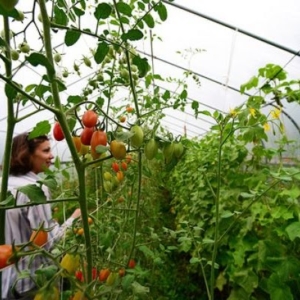
The Farm to School, sponsored by Laurie Bishop (D-HD60) would have created a competitive grant program through the Office of Public Assistance that would allow schools to apply for funds that would help pay for starting or expanding current purchasing of Montana grown or processed foods. HB642 sought state appropriations in the amount of $200,000 over the biennium.
The bill was heard in the House Education Committee, where 13 witnesses testified in support of the bill, with several others sending in written testimony, but the bill was ultimately tabled in the committee. Grow Montana is committed to promoting and advocating for farm to school initiatives and will consider how the coalition can provide support in the 2023 legislative session.
Grow Montana would like to thank everyone who supported the coalition and advocated on behalf of these bills during the 2021 Montana Legislative session. We look forward to the next legislative session and continuing to build healthy food and agriculture systems in the meantime!
]]>HB642 supports healthy Montana kids, strong communities, and vibrant agriculture by creating a pilot Farm to School Grant program, incentivizing local purchases.
HB642 was heard in the House Education Committee on 3/24/21. Thank you to the 13 witnesses who testified in support of the bill and the many supporters who submitted written testimony. Stay tuned for more updates on this bill as we wait to hear back when the committee will vote on HB642. In the meantime, if you haven’t expressed your support for Farm to School, you can reach out directly to the committee or your legislator on the committee at this link. Write to them TODAY and urge them to pass HB642.
]]>ACTION ALERT: Support HB 642 | Farm to School Grant Act
HB642 supports healthy Montana kids, strong communities, and vibrant agriculture by creating a pilot Farm to School Grant program, incentivizing local purchases.
The bill will be heard in the House Education committee on March 24th at 3pm in room 137. Please urge your legislator to support HB642.
How to Take Action
-
Find your legislator: https://leg.mt.gov/legislator-lookup/
-
Message your legislator or the committee: https://leg.mt.gov/web-messaging/
-
Make your voice heard by providing virtual, in-person, or written testimony to the House Education committee on March 24th at 3pm in room 137. Request to testify virtually and submit supporting documentation by 12PM March 23rd here: https://leg.mt.gov/public-testimony/
If you are planning on providing in-person or virtual testimony please let us know by contacting us at [email protected] so we can coordinate our efforts.
The Farm to School Grant has the potential to:
-
Spur economic growth. Montana schools serve 19 million meals per year, providing an excellent opportunity for farmers, ranchers, and food businesses to sell their products to schools and thus to have a steady market opportunity. Each dollar spent on local foods creates up to $2.16 in additional local economic activity.
-
Enhance kids’ health. Montana children will have access to healthy, fresh foods in schools by providing needed funding incentives to K-12 schools to purchase, promote, and educate about Montana grown and raised foods. After participating in Montana Harvest of the Month, children increased their acceptance of the Harvest of the Month foods. Research indicates farm to school programs can increase children’s consumption of healthy foods, especially fruits and vegetables. Farm to school programs improve school meal quality. 1 in 6 Montana children struggle with hunger and need high-quality, healthy foods in school.
- Promote Montana agriculture. Improve Montanans’ knowledge and attitudes toward agriculture, food, nutrition, and environment. This can lead to increased access of healthy, local foods and improved food security.
Farm to school is a win-win-win!

The Farm to School Bill HB642 was introduced in the House and referred to the Education Committee, where it had its first reading this week. You can find the bill information here. Stay tuned for future action alerts and ways to support Farm to School in Montana by following us on social media. In the meantime if you’d like to learn more about farm to school, check out the Montana Farm to School 2019-2020 Annual report here and Grow Montana’s fact sheet below.
]]>Local Food for Local Kids: Reducing Barriers to Local Foods In Montana Schools.
Over the summer of 2020, two researchers from Mission West Community Development Partners and National Center for Appropriate Technology completed in-depth interviews with public school food service directors. Interviewers used a semi-structured format in order to provide the participants with enough freedom to speak conversationally while also covering specific thematic
areas. Each question included a number of additional probing questions which the interviewers could use to elicit a more detailed response. The final interview guide contained 16 questions that were organized thematically (see Appendix A). The first set of questions were about the school districts’ food service operations, the second set of questions covered procurement, the third set of questions related to the challenges of procuring local foods, and the final set was about opportunities related to local procurement.
Farm to School