
I have been fortunate enough to travel to Laon on several short trips. While there I made the acquaintance of one of the nicest archivists ever! Over the summer he was called out to collect a bunch of old boxes of documents that had been housed in the city hall of a small village in Picardy. An early catalog for these holdings purported a 13th-century obituary that had since been lost. The archivist made his way to fetch the collection of old papers and take them to the departmental archives in Laon. His preliminary search found no obituary but then…. just as he was about to finish for the day and drive home, he found an old plastic bag in the bottom of a cupboard and inside it was a long-neglected obituary. I can only imagine what it feels like for an archivist to make such a find! The last time someone took it out to look at it was perhaps just after the French Revolution. Because he knew this kind of document was just the kind of thing I’d be interested in, he emailed me to let me know he had it. On one of my later visits to Laon, he brought it up from the vault and let me look at it and photograph it … and it hasn’t even been catalogued in the archive’s inventory yet! This post is dedicated to the wonderful archivists who support the work we do!
Posts
The Neighborhood of Saint-Remi in Laon
I recently revisited the archives of Laon, the city where most of the people I research lived and worked in the twelfth and thirteenth centuries.  The Hôtel-Dieu of Laon was founded sometime around the early eleventh century and somehow maintained an organized archive that just kept growing as the centuries passed. Many of these documents still survive. This “petit cueilleret” lists the rents due to the Hôtel-Dieu around the mid-thirteenth century.
This page refers to rents specifically from the parish of Saint-Remi-en-la-Place, an area of the city located between the royal palace and the Bishop’s palace. One can imagine that perhaps the elite, and those aspiring elites, dreamed of holding real estate in this neighborhood. Look below to find out more about those who at least had enough money to rent houses held by the Hôtel-Dieu. Here’s what they owed in rents:
Joifrois, [?] x sous por le maison qui fu Gervais l’Ormier en la rue l’Evesque a landemain de Paskes. [Geoffroy, ten sous for the house which once was Gervais l’Ormier’s in Bishop’s street, (rent due) the day after Easter.]
Rose, la feme Girart Corbel qui fu, xii sous por la maison qui fu Ernoket. [Rose, the wife of Gérard Corbel, now defunct, twelve sous for the house which once was Ernoket’s.]
La feme Adam Porchet qui fu, iiii sous iii deniers mains, por sa maison sur les murs. [The wife of Adam Porchet, now defunct, four sous minus three deniers, for her house along the walls.]
Wiars d’Avains, v sous por la maison qui fu Jehan le Blonc. [Wiars d’Avains, five sous for the house which once was John le Blonc’s.]
Willaumes d’Orliens et Ioie, sa feme et Pierres de Busci, xxxvi sous por la maison sur les murs. [William of Orléans, Joy, his wife, and Peter of Bucy, thirty-six sous for the house along the walls.]
Jakiers li Petis, x sous pro sen pre de sa maison. [Jacques le Petit, ten sous for his meadow of his house.]
Mehaus de le Court l’Evesque, xl sous por le part de sa maison qui est dales le maison qui fu Helewi d’Avains. [Maude from the Bishop’s Court, forty sous for the part of her house which is next to the house which was Helvide d’Avains’s.]
Le maison Wiart le Charpentier, xx sous qui est dales le porte l’Evesque a la fests Saint-Remi. [The house of Wiard, the Carpenter, twenty sous, which is next to the Bishop’s Gate, (rent due) on the feast day of Saint Remy.]
Richiers li chapentiers, xxx sous por la maison desous la porte l’Evesque a le feste Saint-Remi et a Nouel et a Paskes. [Richier, the Carpenter, thirty sous for the house below the Bishop’s Gate, (rent due) on the feast day of Saint Remy, at Christmas, and at Easter.]
Li manoir Cesile de Beaune qui fu Oudart de Beaune, ausi bien en la parroche Saint-Remi a la place que la parroche Saint-Remi a la porte, ii deniers de bone monete et iustices et venditiones. [The manor of Cécile de Beaune, which was once Oudard de Beaune’s, situated both in the parish of Saint-Remi-en-la-Place and Saint-Remi-à-la-Porte, two deniers of good money, as well as the rights of justice and sale.]
Although the houses are no longer in existence, their place names and locations can be spotted today. There stills exists the rue des Charpentiers (Carpenter’s Road) that runs from the Bishop’s Palace to the square that once held the Royal Palace. It also happens to run alongside what would have been the Hôtel-Dieu in the thirteenth century. This is likely the same street that held the houses of Wiard and Richiers! The Bishop’s Gate still survives, one of nine that permitted access to the hill-top city.
This is an early example of the written French vernacular in Picardy and there is still a certain fluidity in spelling and gender. “Maison” appears to be both masculine and feminine.
There seems to be a range of rents within this small parish that likely reflect the grandeur of the house/manor. The smallest rent mentioned is three sous, nine deniers; the largest is forty sous. The houses closer to the Bishop’s Gate appear to be more expensive and the carpenters of Laon appear to be able to afford them.
Cécile’s house is unique in this instance. She owes a rent of only two deniers. However, this low rent may have been compensated by her signing over the rights of justice and sale to the Hôtel-Dieu.
What is fantastic to find is the presence of six women in this one-page list! These women appear as both widows and wives. Clearly in the mid-thirteenth century there was no hesitation in claiming rents from women or in making references to houses as the “house of a particular woman.” It seems that women and real estate were an accepted phenomenon, a fact that is backed up by the charters I have studied from the same time and place.
Most interesting for me is Rose, wife of Gérard Corbel. Her last will and testament can be found in the Cartulary of Saint-Jean de Laon. Although she seems to be paying a small(ish) rent on the house above, she left 1300 pounds to her heirs. That’s a lot of money in the thirteenth-century! This house was just one of many she held. By the time Rose died in 1264 she already had a second husband after Gérard. So the “petit cueilleret” was likely drafted a few years before the date of Rose’s death.
Alison Altstatt’s “Re-membering the Wilton Processional: A Manuscript Lost and Found.”
On Friday September 4, 2015, Professor Alison Altsatt, medieval musicologist from the University of Northern Iowa, presented her paper entitled “”Re-membering the Wilton Processional: A Manuscript Lost and Found.”

Her research began with one of the manuscript leaves held in The University of Iowa Libraries, Special Collections! Altstatt recognized the leaf as “familiar”. Indeed, she found that it was identical to the transcription of the Wilton Processional (13th/14th century) carried out by the monks at the Abbey of Solesmes in the late 1850s. By 1860 however, all trace of the original had disappeared!

Professor Altstatt has re-found it and since traced another 33 leaves across the country. She discussed how this manuscript, which had once been whole, had been dismembered and sold off as individual leaves by the book dealer Phillip Duschnes and self-proclaimed bibliophile Oto Ege.
Altstatt’s findings carry implications for musicologists as well as historians of the book. But most importantly perhaps, she calls for more interdisciplinary work and the convergence of digital databases that catalogue texts and those that catalogue musical notation such as CANTUS.
Shap Abbey
After a disappointing trip to the tourist office in Appleby, Westmoreland in search of tickets for a castle tour (afternoon tea included), my English friends and I set off for a walk along Hawkswater. On the way there we serendipitously spotted a small brown sign of the type that indicates an historic monument or point of interest in England. Since the castle had sadly been struck off our itinerary, we decided to capitalize on this opportunity and follow the intriguing narrow road allegedly leading to “Shap Abbey.”
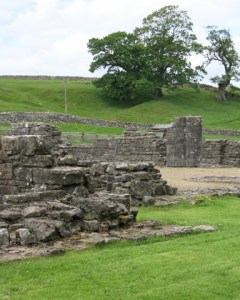
A fantastic find! Add Premonstratensian to the discovery and it moves from serendipitous to meaningfully coincidental…since one of my dissertation chapters deals with the founding abbey of the Premonstratensian order, Prémontré.
From information provided at the site and a little digging on the internet I discovered that this abbey was founded in or around 1199/1200 when land beside the river Lowder was granted to the canons by a local noble named Thomas, son of Gospatric.
Apart from this, it seems that little is known on the history of Shap Abbey, likely the unfortunate consequence of the destruction of documents in the aftermath of Henry VIII’s dissolution of the monasteries. Shap Abbey survived and flourished for over three centuries until it was one of the last abbeys to be dissolved in 1540.
But what is wonderful is that in the absence of documentary evidence, there is archaeological evidence! As a historian that deals with text, text, and more text, my eyes had to adjust to a different type of information that can be gleaned from the archaeology of space and place. For example, the abbey’s dormitory was located above the day room.


 From the size of it, I guessed about 20 canons could have slept there. When I checked online, other estimates confirm the size of the abbey as varying between 12 and 22. Moreover, the latrines backed up to the river for easy sewer disposal. Their location vis à vis the infirmary was also logical and intentional since the infirmary was situated upstream from the latrines and I assume the canons would have wanted to take their clean water from the river before it became contaminated with their waste.
Some of the online references to Shap Abbey mention two important people in its history. Richard Redman (d. 1505) was an abbot at Shap and later became the head of the Premonstratensian order in England and Bishop of Ely.  His efforts resulted in the building of the abbey’s tower, the one structure that remains mostly in tact today.
A second important person was the “Yellow Earl,” 5th Earl of Lonsdale (1857-1944), a colorful character in the abbey’s history, pun not intentional, but fitting nonetheless.
 In his youth he had gone to America to hunt buffalo and had stayed to make his fortune in cattle, alas unsuccessfully.
  As a second son, Hugh Cecil Lowther never imagined he would inherit the title from his elder brother, but did just that in 1882 at the age of 25. Once Earl, he had Lowther Castle, the family home, rebuilt using stones from Shap Abbey.

While I was caught up in the history and archaeology of this find, my English friends were intrigued by the use of the word “garth” in place of the word “cloister.” They attributed this to local tradition and the origin of the word would confirm this. (They are so smart!!!!)  The word “garth” comes from the old Nordic garðr, which means a yard or courtyard, and almost certainly stems from the influence of Viking settlements in the north of England. In all my encounters with abbeys and monasteries in France, I never once stopped to question the use of the word “cloister.” I had just assumed there was no other word. But now, its origins appear so obviously Latinate (from the Latin “claustrum”) when placed alongside “garth.” Many thanks to my friends’ inquiring minds and willingness to travel down narrow paths in search of history with me!
Being a scribe!
During the last week of the Middle French Paleography Workshop 2015, we were able to visit Columbia University’s conservation lab, located on the bottom floor of Butler Library.
We saw an astronomy and math treatise from 1586-1597 written on paper from Nicolas Lebé’s paper mill. The watermark was similar, but not identical, to the one from BnF Fr. 640.
Even more exciting was a demonstration on how to make iron gall ink and practice time with said ink!
The ingredients:
1. Cheap white wine (you can imagine this)
 2. Solid gum Arabic on the left
3. Powdered Aleppo galls (using a mortar and pestle to grind them) on the right
 4. Iron sulfate
The result:
We were all very surprised to see how the iron gall ink went on as a brownish color but then darkened up in front of our eyes into deep black.
I was as close to the 12th/13th-century scribes that I read for my dissertation work as I’ll ever be – writing with a quill pen, using homemade iron gall ink, on parchment. Blissful.
Medieval Tweet
So my trip to the Cloisters last week has produced an unexpected consequence. While searching their website, I fell upon the gardener’s blog. One of the entries showed the pages of the prayer book of Bonne of Luxembourg, Duchess of Normandy (1315-1349). The blog asked if readers could identify the birds painted in the margins. Luckily my father photographs birds and took the task quite seriously. Below are the birds he identified on fols. 311v-312r.


The bird circled at the top left is an Upupa Epops and the circled bird at the center top is a Northern Lapwing.


The bird at the top right is a European Goldfinch and the bird at the bottom left is a Eurasian Jay.
Quite astonishing that these birds have been illustrated in such detail that they can still be identified today.
On Being a Turtle (De existentia testudinis)
A 21st-century turtle, living in Central Park, New York, contemplating its 16th-century ancestor lying dead in a mold and ready for casting.

Molding and Casting Turtles

Little does this cute turtle know that he is about to be drowned in vinegar, spirits and urine, then poked, prodded and manipulated into a nice stance, then molded in two halves, and cast in a variety of material. Any guesses as to what the lines along the underside of the belly are? Perhaps these are the iron pins the practitioner recommends for holding up the shell?
BnF Fr Ms 640 in the laboratory!
Yesterday we went to the Making and Knowing Laboratory associated with the manuscript we’re transcribing. I ground sand (from Toulouse!) and watched a ring being cast out of tin/lead. The whole time I was thinking that the spirit of the author of this manuscript was watching over us and was having a good chuckle at how amateur we must have appeared. But it’s true! So much information has been lost between the practitioner’s own knowledge/skill/experience/assumptions and what he/she was capable of translating into the written word. It’s only when one is able to carry out the making of the recipes that a more holistic knowledge of the artisan (re)appears in the 21st century. The more exposure I have to this author and his/her manuscript, the more I begin to think about this connection between practice and theory and how it carries implications for other arts, even those that may appear quite straightforward or well-researched, such as scribal arts, illumination arts and book arts.  Grinding sand from Toulouse for casting metal.
This is for those of you who have always wanted to cast a live crayfish! Illustration included!
Here are the directions for your new life-cast crayfish. Don’t skip any parts or you may end up with something that looks perhaps like a snake or a turtle (BnF, Ms Fr 640, fol. 141v.)
 Heather Wacha