
AI Blind Spots: How Enterprises Detect Hidden Model Failures
AI systems can fail due to hidden blind spots. Learn how enterprises detect edge cases and structural gaps before deployment.
The post AI Blind Spots: How Enterprises Detect Hidden Model Failures appeared first on Innodata.
]]>Traditional training and evaluation pipelines often fail to account for the high variance and noise inherent in real-world data. Because of this evaluation gap, AI models may appear to perform well during testing but still contain hidden weaknesses that only emerge in production environments. As a result, enterprises sometimes deploy AI systems with blind spots that surface only when systems encounter real-world complexity.
The two primary sources of AI blind spots are structural gaps within the AI model and edge cases. So how can enterprises detect hidden weaknesses before their AI systems make critical mistakes?
AI models sometimes encounter inputs they don’t understand and make wrong or unpredictable decisions. These “blind spots” are basically gaps in what the model knows, and moments when it hasn’t seen anything similar before, and makes its best guess. The lack of context in these scenarios leads to incorrect or irrelevant outputs.
Edge cases in AI models
Structural Gaps in AI models
Blind spots are rarely caused by one factor. They usually arise when biased data, incomplete annotation, and limited evaluation intersect during development or deployment.
Statistical bias
Annotation gaps
Missing context
Lapse in evaluation and adaptability
Edge Cases
Edge cases, by definition, are rare and occur once or twice per thousand typical examples. But at enterprise scale, even rare failures can accumulate quickly, potentially disrupting workflows and operations.
For instance,
Structural Gaps
Structural gaps arise from routine conditions that an AI model was never designed to handle. It was found that in document-based or dialogue summarization, roughly one in three (30%) outputs can contain factual inconsistencies or hallucinations.
For example, Amazon suspended its ‘Just Walk Out’ system due to systemic mismatches between model assumptions and real-world complexity –
Consider a financial institution that deploys an AI system to extract key fields from invoices to automate accounts payable workflows.
Most invoices in the training data follow predictable layouts. Vendor names appear in the header, totals are clearly printed, and currency symbols are consistent. Under these conditions, the system performs well during evaluation.
However, a supplier submits an invoice that deviates from the expected format. The total amount is handwritten, the vendor identifier appears within a footer image, and the currency format differs from what the model has seen during training.
The AI system extracts the following information:
Vendor: Unknown
Amount: $1000
Currency: USD
The actual invoice total was $1800 CAD.
Because the document passed basic validation checks, the automated workflow approves the payment without triggering an alert.
This type of failure illustrates how blind spots emerge in real-world systems. The model performed well in testing because the evaluation dataset contained mostly clean, standardized invoices. When exposed to irregular formats and handwritten annotations, the system encountered conditions it had not learned to handle.
For enterprises operating at scale, even rare edge cases like this can accumulate into meaningful operational risk.
Models rarely, if ever, send a signal when operating outside their comfort zone, as they may not clearly identify ‘uncertainty.’ So when AI encounters an unfamiliar input, its behavior often falls into one of three patterns:
Short-Term Risks of Inaction
Unaddressed blind spots can cause:
Small failures can have a disproportionate impact when AI supports critical decisions.
Long-Term Value of Mitigating Risk
Diverse, scenario-driven data
Annotation, guidelines, and reinforcement learning
Strengthen Evaluation and Testing
Human Oversight and AI Governance
Reliable AI depends on how well systems handle the unexpected. Structural gaps, biased data, and poorly covered edge cases are often the root causes of failures in production. By improving data quality, annotation practices, and integrating continuous evaluation, enterprises can reduce blind spots and improve model performance in real-world settings.
Innodata supports enterprises across every stage of AI development from data collection and annotation to evaluation and model testing. Connect with an Innodata expert today to strengthen your AI pipelines and eliminate the risks hidden inside blind spots.
Innodata provides high-quality data solutions for developing industry-leading generative AI models, including diverse golden datasets, fine-tuning data, human preference optimization, red teaming, model safety, and evaluation.
Follow Us
The post AI Blind Spots: How Enterprises Detect Hidden Model Failures appeared first on Innodata.
]]>The post Trace Datasets for Agentic AI: Structuring and Optimizing Traces for Automated Agent Evaluation appeared first on Innodata.
]]>Agentic AI refers to multi-agent systems that plan and execute complex goals, using role-based orchestration and persistent memory. Through trace datasets and automated agent evaluation, enterprise AI leaders, platform and governance owners can manage operational challenges at scale, reducing costs, improving reliability, and ensuring compliance.
Traditional input–output evaluation assumes intelligence is expressed in a single response. However, agentic AI’s intelligence is reflected in the sequence of decisions, actions, retries, and adaptations that lead to an outcome.
In agentic systems, this loss of visibility is a material business risk, not a minor evaluation gap. For teams responsible for deploying and governing agentic AI in production, limited insight into agent behavior directly impacts operational cost, incident response time, and regulatory risk. Using traditional evaluation approaches, enterprises cannot understand:
Trace datasets and automated agent evaluation together form an enterprise-ready foundation for evaluating and improving agentic AI systems. By converting raw agent execution into a repeatable pipeline from traces to structured datasets to automated evaluation, enterprises gain the observability and governance capabilities required to operate agentic systems with confidence at scale.
This article covers:
Traditional evaluation assesses the relationship between an input and its resulting output using metrics such as accuracy, relevance, and correctness.
In agentic systems, this approach captures what happened but not how it happened, creating gaps in transparency, accountability, and trust. For example, two agents may produce the same output while following very different paths, with different costs, risks, and failure modes.
Agentic evaluation requires accounting for:
Without measuring these behaviors, enterprises cannot reliably diagnose errors, compare agent performance, or enforce policies.
A trace dataset is a structured record of an agent’s behavior across a task. For example, consider this structured trace:
{
“task”: “Customer refund request,”
“agent”: “Customer support AI”,
“trace”: [
{
“step”: “Understand request”,
“action”: “Identify refund intent”,
“result”: “Refund request detected”
},
{
“step”: “Check eligibility”,
“action”: “Query billing system”,
“result”: “Order not eligible”,
“time_ms”: 420
},
{
“step”: “Apply policy”,
“action”: “Escalate to human agent”,
“result”: “Escalation triggered”
}
],
“final_outcome”: “Escalated to human”,
“policy_compliant”: true
}
Key components
This trace becomes a unit of evaluation, capturing the sequence of decisions and actions leading to the outcome. A collection of such standardized traces forms a trace dataset for automated agent evaluation.
Evaluation-ready trace datasets preserve execution context and decision flow, including:
Trace datasets support:
By evaluating and enriching trace data, enterprises can, for example:
Agent traces are often unstructured and difficult to analyze or compare.
Before structuring | After structuring |
Fragmented logs | Ordered traces |
Tool-specific events | Unified fields |
Unordered outputs | Comparable runs |
Structuring traces and optimizing workflows for evaluation
Preparing for automated agent evaluation requires standardizing trace data:
Once structured, agent workflows can be optimized using these traces by:
This optimization loop enables continuous improvement without rearchitecting agent workflows.
Consistent trace data formats and standards
Enterprise value: With structured trace data, enterprises can compare performance, conduct automated analysis at scale, and integrate the insights into evaluation and governance pipelines.
Automated agentic AI evaluation measures behavior across tasks rather than judging outcomes in isolation.
Step-level evaluation asks
Outcome-level evaluation asks
These metrics are computed directly from individual trace steps rather than inferred solely from the final output. For example, escalation appropriateness can be measured by comparing policy-required escalation steps in the trace against the agent’s actual actions, while efficiency metrics such as cost or latency are computed from cumulative tool calls and step-level execution times within a trace.
Agentic AI Evaluation & Insight
Automated agentic AI evaluation platforms use trace data in live and offline environments to:
Labeling and enrichment typically occur at the trace-step level, turning evaluations into reusable training and analytics assets.
Example:
Common trace data labels include:
The resulting labeled and enriched trace data becomes a long-term asset, supporting continuous learning and automated agent evaluation.
Automated annotations add context by
Use Case: Customer Support Agent
Before adopting automated evaluation, it is important to understand the common challenges that can impact evaluation accuracy.
Key challenges to evaluating agentic AI
These challenges can be made tractable by:
Best Practices for Agentic AI Evaluation
Trace-based evaluation makes tradeoffs such as speed versus safety or autonomy versus escalation explicit and measurable. By grounding these tradeoffs in trace data, enterprises can tune agent behavior deliberately rather than discovering unintended risk only after failures occur in production.
To enable this,
Agentic AI cannot be governed, improved, or trusted using output-only evaluation.
Trace datasets provide the foundation for understanding and managing agent behavior. Trace-based evaluation ensures that agentic systems continue to operate as intended when embedded within enterprise workflows.
Innodata focuses on creating evaluation-ready trace datasets through trace structuring, step-level labeling, enrichment, and human-in-the-loop workflows. Our work complements existing agent frameworks and observability tools, enabling enterprises to evaluate agent behavior across both development and production environments consistently.
Connect with our experts to explore how trace-based evaluation fits into your agentic roadmap.
Innodata provides high-quality data solutions for developing industry-leading generative AI models, including diverse golden datasets, fine-tuning data, human preference optimization, red teaming, model safety, and evaluation.
Follow Us
The post Trace Datasets for Agentic AI: Structuring and Optimizing Traces for Automated Agent Evaluation appeared first on Innodata.
]]>The post Turning Human Motion into Better AI: How Kinematics Improves Data Labeling and Model Quality appeared first on Innodata.
]]>When most people hear “data labeling,” they picture someone clicking points on a screen all day. At Innodata, that’s only the starting point. We build labeling systems that capture structure, context, and motion, not just pixel locations.
Video from Wikimedia Commons, pose added by Innodata
In this post, I’ll walk through how we use the physics of motion—kinematics—to improve labeling accuracy for exercise and sports video, automatically detect annotation errors, and evaluate whether trained models are tracking motion realistically.
At the core of many AI systems is labeled data: keypoints on a body, bounding boxes around objects, or trajectories over time. One of Innodata’s main lines of business is providing this kind of high-precision annotation at scale, including detailed keypoint extraction on people, animals, and objects.
But doing this well involves more than hiring a team of annotators and giving them a drawing tool. We design workflows and tooling that:
That’s the foundation. The next step is understanding the motion itself.
Kinematics is the study of how things move: positions, velocities, and accelerations over time. For many types of video—exercise, physical therapy, and sports—this motion is the signal we care about.
If we understand the motion, we can move beyond frame-by-frame labeling and reason about the behavior itself:
In other words, kinematics turns raw labels into a structured description of behavior.
Example 1: A Smooth Triceps Press-Down
In one of our exercise videos, I perform a triceps press-down while we track keypoints on my arms and torso (this is my unofficial side gig as a middle-aged fitness model).
If you plot the vertical position of my hand or wrist over time, you see a motion that looks very close to a smooth, periodic sine wave: down, up, down, up, with no abrupt spikes.
Video and annotation information provided by Innodata
Why that matters:
This simple example shows how combining labels with motion analysis gives us a sanity check: the data behaves the way the underlying physics of human motion predicts it should.
Example 2: Bench Press and Automatic Anomaly Detection
Now compare that to a bench press video we use, sourced from Wikimedia Commons and annotated using a pose extraction model. When we examine the keypoint trajectories, we sometimes see abrupt jumps in the wrist position—sudden changes that don’t match how a human actually moves during a controlled bench press repetition.
Video data from Wikimedia Commons, pose and kinematics added by Innodata
To make this concrete, we:
Those spikes are strong indicators of anomalies:
Instead of manually scrubbing through every video, our quality control tooling flags these suspect segments automatically. Human reviewers can then quickly confirm, correct, or re-label them, closing the loop between analytics and annotation.
Innodata’s strength is not just in advanced labeling techniques but in using motion analytics as part of a continuous quality control loop.
Our approach ties together:
This combination lets us deliver datasets and models that aren’t just “labeled,” but physically coherent, statistically robust, and aligned with real-world behavior across applications ranging from fitness and sports to robotics and beyond.
Treating motion as a first-class signal is essential for AI systems that need to interpret how people or objects move. When labeling and quality control reflect the underlying physics of motion, teams can build models that perform more reliably in real-world conditions.
Innodata works with organizations building motion-heavy systems across fitness, sports analytics, robotics, and physical therapy. Our computer vision and robotics experts help design kinematics-driven labeling workflows, automated anomaly detection, and motion-aware evaluation pipelines that improve both data quality and downstream model performance.
To explore how this approach could apply to your use case, connect with an Innodata expert.
Innodata provides high-quality data solutions for developing industry-leading generative AI models, including diverse golden datasets, fine-tuning data, human preference optimization, red teaming, model safety, and evaluation.
Follow Us
The post Turning Human Motion into Better AI: How Kinematics Improves Data Labeling and Model Quality appeared first on Innodata.
]]>The post Innodata Selected by Palantir to Accelerate Advanced Initiatives in AI-Powered Rodeo Modernization appeared first on Innodata.
]]>Innodata’s data engineering and annotation capabilities support Palantir’s expanding AI platform deployments for event analytics
NEW YORK, NY / ACCESS Newswire / January 29, 2026 / INNODATA INC. (Nasdaq:INOD) today announced that it has been selected to provide high-quality training data and data engineering services to Palantir Technologies (Nasdaq:PLTR), supporting Palantir’s AI-enabled platforms for rodeo event analysis.
In support of Palantir’s partnership with rodeo operations, Innodata is now further empowering these customers by providing them with specialized annotation and data engineering for thousands of hours of rodeo video footage. This work enables computer vision models to detect animals, riders, and skeleton joints, allowing for the automated calculation and display of performance metrics in bull riding, bronc riding, bareback riding and barrel racing.
Innodata will be providing specialized annotation, multimodal data engineering, and generative-AI workflow support for select Palantir programs. Innodata teams work directly within Palantir’s development and deployment workflows, processing highly complex data modalities – including video, imagery, documents, and multimodal sensor data – with the scale, precision, and security standards required for customer use cases.
“Palantir is developing some of the most sophisticated AI capabilities in the world – from computer vision and geospatial analytics to secure, model-driven decision systems,” said Dimitrios Lymperopoulos, Head of Machine Learning at Palantir. “Innodata’s high-quality training data and data engineering expertise can help us to scale these capabilities with the accuracy, rigor, and operational excellence our customers demand.”
“Our work with Palantir reinforces Innodata’s role as a trusted data engineering partner to the world’s leading AI companies,” said Vinay Malkani, Senior Vice President, Innodata Federal. “Together, we are enabling next-generation enterprise AI deployments. Palantir’s requirements validate the investments we have made in domain-expert annotation, end-to-end generative-AI workflow enablement, rigorous quality systems, and secure global operations.”
Innodata’s engagement with Palantir reflects the accelerating demand for high-quality data engineering capabilities as AI becomes central to national competitiveness and enterprise value creation. As organizations increasingly seek to deploy AI in high-stakes, real-world environments, we believe that the need will continue to grow for trusted data partners with the ability to operate at scale, with precision and security.
About Innodata
Innodata (Nasdaq:INOD) is a global data engineering company. We believe that data and Artificial Intelligence (AI) are inextricably linked. That’s why we’re on a mission to help the world’s leading technology companies and enterprises drive Generative AI / AI innovation. We provide a range of transferable solutions, platforms and services for Generative AI / AI builders and adopters. In every relationship, we honor our 35+ year legacy delivering the highest quality data and outstanding outcomes for our customers.
Recently recognized by Wedbush Securities as one of 30 companies defining the future of AI, Innodata has been noted for expertise in domain-specific, high-accuracy AI solutions where precision, compliance, and subject matter expertise are essential. The Company serves five of the “Magnificent Seven” tech giants, leading AI innovation labs, and numerous Fortune 1000 enterprises, providing critical data engineering services that power the next generation of AI innovation. With Innodata Federal, we extend our mission to support U.S. government agencies with AI solutions that enhance national security, improve government services, and accelerate digital transformation.
For more information, visit www.innodata.com.
Forward-Looking Statements
This press release may contain certain forward-looking statements within the meaning of Section 21E of the Securities Exchange Act of 1934, as amended, and Section 27A of the Securities Act of 1933, as amended. These forward-looking statements include, without limitation, statements concerning our operations, economic performance, financial condition, developmental program expansion and position in the generative AI services market. Words such as “project,” “forecast,” “believe,” “expect,” “can,” “continue,” “could,” “intend,” “may,” “should,” “will,” “anticipate,” “indicate,” “guide,” “predict,” “likely,” “estimate,” “plan,” “potential,” “possible,” “promises,” or the negatives thereof, and other similar expressions generally identify forward-looking statements.
These forward-looking statements are based on management’s current expectations, assumptions and estimates and are subject to a number of risks and uncertainties, including, without limitation, impacts resulting from ongoing geopolitical conflicts; investments in large language models; that contracts may be terminated by customers; projected or committed volumes of work may not materialize; pipeline opportunities and customer discussions which may not materialize into work or expected volumes of work; the likelihood of continued development of the markets, particularly new and emerging markets, that our services support; the ability and willingness of our customers and prospective customers to execute business plans that give rise to requirements for our services; continuing reliance on project-based work in the Digital Data Solutions (“DDS”) segment and the primarily at-will nature of such contracts and the ability of these customers to reduce, delay or cancel projects; potential inability to replace projects that are completed, canceled or reduced; our DDS segment’s revenue concentration in a limited number of customers; our dependency on content providers in our Agility segment; our ability to achieve revenue and growth targets; difficulty in integrating and deriving synergies from acquisitions, joint ventures and strategic investments; potential undiscovered liabilities of companies and businesses that we may acquire; potential impairment of the carrying value of goodwill and other acquired intangible assets of companies and businesses that we acquire; a continued downturn in or depressed market conditions; changes in external market factors; the potential effects of U.S. global trading and monetary policy, including the interest rate policies of the Federal Reserve; changes in our business or growth strategy; the emergence of new, or growth in existing competitors; various other competitive and technological factors; our use of and reliance on information technology systems, including potential security breaches, cyber-attacks, privacy breaches or data breaches that result in the unauthorized disclosure of consumer, customer, employee or Company information, or service interruptions; and other risks and uncertainties indicated from time to time in our filings with the Securities and Exchange Commission (“SEC”).
Our actual results could differ materially from the results referred to in any forward-looking statements. Factors that could cause or contribute to such differences include, but are not limited to, the risks discussed in Part I, Item 1A. “Risk Factors,” Part II, Item 7. “Management’s Discussion and Analysis of Financial Condition and Results of Operations,” and other parts of our Annual Report on Form 10-K, filed with the SEC on February 24, 2025, and in our other filings that we may make with the SEC. In light of these risks and uncertainties, there can be no assurance that the results referred to in any forward-looking statements will occur, and you should not place undue reliance on these forward-looking statements. These forward-looking statements speak only as of the date hereof.
We undertake no obligation to update or review any guidance or other forward-looking statements, whether as a result of new information, future developments or otherwise, except as may be required by the U.S. federal securities laws.
Company Contact:
Aneesh Pendharkar
[email protected]
(201) 371-8000
SOURCE: Innodata Inc.

AI systems can fail due to hidden blind spots. Learn how enterprises detect edge cases and structural gaps before deployment.

Trace datasets reveal how AI agents behave and enable automated agentic AI evaluation for reliability, safety, and compliance.

How kinematics-based motion analysis improves data labeling, automated quality control, and computer vision models for fitness and robotics.
follow us
The post Innodata Selected by Palantir to Accelerate Advanced Initiatives in AI-Powered Rodeo Modernization appeared first on Innodata.
]]>The post AI Evaluation: 7 Core Components Enterprises Must Get Right appeared first on Innodata.
]]>AI systems often drift silently rather than loudly. Unlike traditional software, AI is probabilistic in nature, which means failures may emerge gradually through biased outputs, degraded accuracy, or unsafe behavior rather than obvious system crashes. When this happens in production, the cost is rarely technical alone. It shows up as regulatory exposure, loss of customer trust, or operational risk that compounds over time.
AI evaluation quantifies and measures how models behave, adapt, and whether they can be trusted in real-world use. If these systems can generalize beyond training data, handle uncertainty responsibly, and maintain fairness across contexts, they remain reliable and defensible as business assets rather than experimental tools.
The same model that performs flawlessly in a demo can fail in production when data shifts or conditions change. That’s why AI model evaluation must be a continuous discipline, not a one-time test.
AI evaluation strengthens reliability, exposes vulnerabilities, and ensures fairness and ethical performance.
Data quality focuses on input integrity. If the foundation is unstable, no amount of post hoc evaluation can fully correct model behavior.
Unchecked bias can turn automation into a liability, unless its outcomes are equitable across user groups.
While data quality addresses what goes into a model, bias and fairness evaluation examines how model decisions affect people in the real world. This distinction becomes critical as models scale across diverse populations and use cases.
In addition to traditional testing, enterprises must also evaluate the functionalities unique to AI models.
Unlike deterministic software, AI systems may produce different outputs for semantically similar inputs. Functional testing must account for non-determinism, context sensitivity, and emergent behavior that traditional test cases fail to capture.
Even accurate models decay as data and contexts evolve. Evaluation keeps them fast, efficient, and relevant.
Adaptability requires tradeoffs. Enterprises must balance retraining frequency, system stability, and operational cost to prevent performance gains from introducing new risks.
Transparency makes an untraceable AI model into a system that stakeholders can trust, thanks to explainability and risk management frameworks.
Explainability is not designed for data scientists alone. It is essential for executives, auditors, regulators, and risk teams who must understand why a system behaves as it does and whether it should continue operating.
AI introduces new threats, such as adversarial attacks, that require more than classic IT security. To address this –
As AI systems become more visible and influential, adversarial misuse becomes inevitable. Evaluation is the difference between detecting exploitation early and discovering it after reputational or financial damage occurs.
Lasting reliability comes from governance that outlives the development and post-training stages. Since active governance closes the feedback loop, evaluation becomes an ongoing process that is necessary for accountability.
Governance ensures that evaluation does not degrade into a checklist, but remains an active control system as models evolve.
Testing checks if an AI model works, whereas evaluation checks if it works as intended for people, policies, and purposes. Many enterprises stop at testing and assume their systems are production-ready. The distinction below explains why that assumption creates risk.
Aspect | AI Testing | AI Evaluation | Impact on Enterprise AI |
Core Question | Does the model work as designed? | Does the model behave responsibly in the real world? | Testing ensures the model’s features are reliable while evaluation helps maintain accountability and trust. |
Objective | To validate accuracy and performance. | To assess fairness, robustness, compliance, and societal impact. | Evaluation adds governance and ethics layers on top of testing practices to connect model performance and business integrity. |
Timeline | Usually, pre-deployment or during development. | Continuous across the AI model lifecycle. | The added layer of evaluation results in compliance, ongoing oversight, and adaptive risk management for enterprise AI models. |
Methods | Unit tests, regression checks, performance benchmarks. | Bias audits, red-teaming, and Human-in-the-Loop reviews. | Together, they introduce a multi-dimensional measurement that captures technical and ethical failure modes. |
Outcome | Technical validation that ensures the AI system operates as expected. | Provides strategic assurance that the system aligns with relevant policies, regulations, and public trust. | Enterprises can integrate a compliant AI model that is both technically accurate and culturally sensitive to produce reliable outcomes. |
Once the core components are in place, maintaining performance and accountability requires ongoing oversight. Continuous evaluation embeds monitoring, feedback, and governance directly into the AI lifecycle.
Use live dashboards to maintain transparency throughout the development and production phases, providing stakeholders with immediate visibility
AI-driven continuous testing: automated prompts and live feedback help detect vulnerabilities early.
Over time, continuous evaluation builds institutional knowledge that compounds, improving data quality, prediction accuracy, and organizational confidence in AI systems.
From data quality to governance and from fairness to explainability, evaluating AI isn’t just about metrics or compliance. It is about maintaining control over systems that learn, adapt, and influence decisions at scale.
Partner with Innodata to develop and deploy governed, transparent, and future-ready solutions that foster both innovation and trust.
Innodata provides high-quality data solutions for developing industry-leading generative AI models, including diverse golden datasets, fine-tuning data, human preference optimization, red teaming, model safety, and evaluation.
Follow Us
The post AI Evaluation: 7 Core Components Enterprises Must Get Right appeared first on Innodata.
]]>The post Innodata Awarded Prime Contract Position on U.S. Missile Defense Agency’s IDIQ SHIELD Program appeared first on Innodata.
]]>NEW YORK CITY, NY / ACCESS Newswire / January 20, 2026 / INNODATA INC. (Nasdaq:INOD) today announced that it was awarded a contract for the Missile Defense Agency Scalable Homeland Innovative Enterprise Layered Defense (SHIELD) indefinite-delivery/indefinite-quantity (IDIQ) contract.
The SHIELD program is designed to drive rapid innovation and deliver next-generation capabilities that strengthen the nation’s multi-layered homeland defense architecture. As part of the broader Golden Dome strategy, this selection positions Innodata to compete for future task orders across research, development, engineering, prototyping, and operations of critical Missile Defense Agency systems that support U.S. national security objectives.
The award was made as part of a list of companies eligible to compete under the program publicly announced by the U.S. Government on 15-Jan-26.
“We are proud to support our nation’s mission to defend the homeland,” said Vinay Malkani, SVP Federal of Innodata. “This contract award reflects our commitment to delivering innovative AI and data engineering solutions that strengthen America’s defense capabilities.”
About Innodata Inc.
Innodata (Nasdaq:INOD) is a global data engineering company. We believe that data and Artificial Intelligence (AI) are inextricably linked. That’s why we’re on a mission to help the world’s leading technology companies and enterprises drive Generative AI / AI innovation. We provide a range of transferable solutions, platforms and services for Generative AI / AI builders and adopters. In every relationship, we honor our 35+ year legacy delivering the highest quality data and outstanding outcomes for our customers.
Recently recognized by Wedbush Securities as one of 30 companies defining the future of AI, Innodata has been noted for expertise in domain-specific, high-accuracy AI solutions where precision, compliance, and subject matter expertise are essential. The Company serves five of the “Magnificent Seven” tech giants, leading AI innovation labs, and numerous Fortune 1000 enterprises, providing critical data engineering services that power the next generation of AI innovation. With Innodata Federal, we extend our mission to support U.S. government agencies with AI solutions that enhance national security, improve government services, and accelerate digital transformation.
For more information, visit www.innodata.com.
Forward-Looking Statements
This press release may contain certain forward-looking statements within the meaning of Section 21E of the Securities Exchange Act of 1934, as amended, and Section 27A of the Securities Act of 1933, as amended. These forward-looking statements include, without limitation, statements concerning our operations, economic performance, financial condition, developmental program expansion and position in the generative AI services market. Words such as “project,” “forecast,” “believe,” “expect,” “can,” “continue,” “could,” “intend,” “may,” “should,” “will,” “anticipate,” “indicate,” “guide,” “predict,” “likely,” “estimate,” “plan,” “potential,” “possible,” “promises,” or the negatives thereof, and other similar expressions generally identify forward-looking statements.
These forward-looking statements are based on management’s current expectations, assumptions and estimates and are subject to a number of risks and uncertainties, including, without limitation, impacts resulting from ongoing geopolitical conflicts; investments in large language models; that contracts may be terminated by customers; projected or committed volumes of work may not materialize; pipeline opportunities and customer discussions which may not materialize into work or expected volumes of work; the likelihood of continued development of the markets, particularly new and emerging markets, that our services support; the ability and willingness of our customers and prospective customers to execute business plans that give rise to requirements for our services; continuing reliance on project-based work in the Digital Data Solutions (“DDS”) segment and the primarily at-will nature of such contracts and the ability of these customers to reduce, delay or cancel projects; potential inability to replace projects that are completed, canceled or reduced; our DDS segment’s revenue concentration in a limited number of customers; our dependency on content providers in our Agility segment; our ability to achieve revenue and growth targets; difficulty in integrating and deriving synergies from acquisitions, joint ventures and strategic investments; potential undiscovered liabilities of companies and businesses that we may acquire; potential impairment of the carrying value of goodwill and other acquired intangible assets of companies and businesses that we acquire; a continued downturn in or depressed market conditions; changes in external market factors; the potential effects of U.S. global trading and monetary policy, including the interest rate policies of the Federal Reserve; changes in our business or growth strategy; the emergence of new, or growth in existing competitors; various other competitive and technological factors; our use of and reliance on information technology systems, including potential security breaches, cyber-attacks, privacy breaches or data breaches that result in the unauthorized disclosure of consumer, customer, employee or Company information, or service interruptions; and other risks and uncertainties indicated from time to time in our filings with the Securities and Exchange Commission (“SEC”).
Our actual results could differ materially from the results referred to in any forward-looking statements. Factors that could cause or contribute to such differences include, but are not limited to, the risks discussed in Part I, Item 1A. “Risk Factors,” Part II, Item 7.
“Management’s Discussion and Analysis of Financial Condition and Results of Operations,” and other parts of our Annual Report on Form 10-K, filed with the SEC on February 24, 2025, and in our other filings that we may make with the SEC. In light of these risks and uncertainties, there can be no assurance that the results referred to in any forward-looking statements will occur, and you should not place undue reliance on these forward-looking statements. These forward-looking statements speak only as of the date hereof.
We undertake no obligation to update or review any guidance or other forward-looking statements, whether as a result of new information, future developments or otherwise, except as may be required by the U.S. federal securities laws.
Company Contact
Aneesh Pendharkar
[email protected]
(201) 371-8000

AI systems can fail due to hidden blind spots. Learn how enterprises detect edge cases and structural gaps before deployment.

Trace datasets reveal how AI agents behave and enable automated agentic AI evaluation for reliability, safety, and compliance.

How kinematics-based motion analysis improves data labeling, automated quality control, and computer vision models for fitness and robotics.
follow us
The post Innodata Awarded Prime Contract Position on U.S. Missile Defense Agency’s IDIQ SHIELD Program appeared first on Innodata.
]]>The post Achieving State-of-the-Art UAV Tracking on the Anti-UAV Benchmark: Innodata Results appeared first on Innodata.
]]>Tracking unmanned aerial vehicles has become a critical challenge for aviation safety, security, and defense organizations. UAVs are now linked to a growing number of near midair collisions around major airports and repeated disruptions of airport operations¹ ². At the same time, small UAVs have become central to modern warfare, particularly in Ukraine, where inexpensive drones are deployed on a massive scale and have transformed the conflict into a proving ground for new battlefield tactics and autonomous systems³ ⁴ ⁵.
These developments have elevated UAV tracking from a niche technical problem to a real-world operational requirement. Detecting and tracking small, fast-moving objects in noisy visual environments places extreme demands on computer vision systems, especially when reliability and low false alarm rates are non-negotiable.
The research community has responded accordingly. CVPR has hosted an Anti-UAV track for the past five years, complete with a dedicated benchmark and public leaderboard for drone tracking models (https://anti-uav.github.io/). At Innodata, we have developed deep expertise in identifying small objects and building algorithms that can reliably detect and track targets under challenging, real-world conditions.
Given Innodata’s experience with small-object data and the growing importance of UAV tracking, I decided to run a series of experiments using the published Anti-UAV benchmark to evaluate how far we could push our tracking pipeline.
The dataset spans a wide range of scenes and sensor modalities, including RGB and infrared video. Drones in the dataset can appear as large as approximately 11,000 pixels in a frame or as small as just 12 pixels. Roughly 69 percent of labeled objects fall in the 1,000 to 5,000 pixel range, about 25 percent are between 500 and 1,000 pixels, and only a small fraction are either very large or extremely small. This long tail of small targets is exactly where many tracking systems begin to fail, making the benchmark a particularly demanding test of both sensitivity and robustness.
On Track 1 of the Anti-UAV benchmark, Innodata’s current tracking pipeline exceeds previously reported results on the published test set by 6.45 percentage points. This includes surpassing strong baselines such as SiamSRT (Huang et al., 2024)⁶ and related Siamese-network trackers that have dominated thermal infrared drone tracking in recent years⁶ ⁷ ⁸.
Figure 1. Innodata’s approach compared with other published results on the Anti-UAV Track 1 benchmark.
Figure 2. Detection demonstration across infrared and combined IR+RGB video frames. Full video available via provided link.
On Track 3, our multi-object tracking setup achieves strong performance across accuracy, precision, and recall, backed by thousands of true positives and only a handful of false alarms. In practical terms, the system does not just detect drones. It detects almost all of them, almost all of the time.
Key Performance Highlights (Track 3)¹
¹ Track 3 metrics are evaluated against a sequestered portion of the validation set, as the full test set is not publicly available.
Figure 3. Sample frames from Innodata’s multi-object tracker. Full demonstration videos can be found here for the left, and here for the right.
In operational settings, benchmark accuracy alone is not sufficient.
The same tracking pipeline described here can be tuned for deployment on SWaP-constrained edge devices, optimized for maximum probability of detection, or configured for ultra-low false alarm rates depending on mission requirements. Whether the use case involves protecting critical infrastructure, monitoring airspace around airports, or deploying on resource-constrained platforms in the field, the system adapts to operational needs.
While the tracking system is primarily focused on infrared channels, it generalizes effectively to RGB and combined RGB+IR sensor configurations, making it suitable for a wide range of deployment scenarios and sensor suites.
As UAV threats continue to grow in both civilian and military contexts, reliable high-performance detection and tracking capabilities are becoming essential. These benchmark results demonstrate that Innodata’s approach delivers the level of accuracy and robustness required for real-world deployment, whether securing an airport perimeter, protecting a military installation, or monitoring critical infrastructure.
Interested in learning more about Innodata’s UAV detection and tracking capabilities? Contact Innodata to discuss how this technology can support your specific operational requirements.
Innodata provides high-quality data solutions for developing industry-leading generative AI models, including diverse golden datasets, fine-tuning data, human preference optimization, red teaming, model safety, and evaluation.
Follow Us
The post Achieving State-of-the-Art UAV Tracking on the Anti-UAV Benchmark: Innodata Results appeared first on Innodata.
]]>The post Domain-Specific AI: Smarter, Safer, and Built for Your Industry appeared first on Innodata.
]]>Today, there is an AI for nearly everything. From simple tasks to solving problems that are unique to your domain, how can AI models improve industry-specific metrics?
Domain-specific AI models are fine-tuned on industry data. Contrary to general-purpose Large Language Models, they are precise, know the specifics of your industry, and context-aware. Generic LLMs often misinterpret specialized workflows, leading to unexpected outcomes and poor performance in high-stakes domains.

So, enterprises need AI models that are trained specifically on quality data and specific industry use cases. Making AI models aware of an enterprise’s context helps them solve common problems in their domain during training itself.
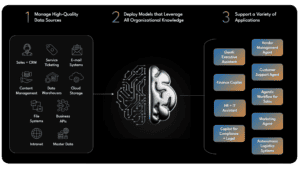
Domain-specific AI models understand niche workflows. When enterprises deploy them, it increases efficiency, trust, and makes the AI models reliable in the long run. Integrating them improves –
Building industry-specific AI models needs alignment with business priorities and enterprise-level complexities. The following practices help enterprises reduce risk, accelerate adoption, and maximize long-term value.
1. Define critical use cases before model selection
Identify the business problems where AI can create measurable value and which model is the best fit for your enterprise.
Align model design with ROI and long-term goals to avoid over-engineering generic solutions.
2. Leverage hybrid training data
Combine real-world datasets with synthetic data to capture both everyday and rare edge-case scenarios.
Use synthetic data techniques to address data limitations and unavailability in regulated or sensitive fields like finance or healthcare.
3. Embed explainability and compliance from day one
Incorporate explainable AI (XAI) frameworks that provide transparent reasoning for model outputs.
Include compliance checks to align with sector-specific regulations like HIPAA, GDPR, FINRA, etc.
4. Select the right build strategy
Evaluate whether to fine-tune a pre-trained foundation model or to develop a custom model from scratch.
Decide based on data availability, domain specificity, and long-term scalability requirements.
5. Adopt robust evaluation metrics
Go beyond accuracy to measure fairness, bias, precision, recall, and total cost for real-world reliability.
Set continuous monitoring triggers to detect drift and performance degradation over time.
6. Plan for integration with existing workflows and enterprise systems
Ensure models can plug into existing data pipelines, decision systems, and APIs with minimal disruption.
Design deployment strategies that allow for human-in-the-loop oversight during critical decisions.

1. Healthcare, Life Sciences & Pharmaceuticals
2. Banking, Financial Services & Fintech
3. E-Commerce, Manufacturing & Transportation
Data Availability & Quality
Regulatory Compliance
Integration Complexity with Legacy Systems
Ensuring Long-Term Adaptability
Domain-specific models consistently outperform generic AI in enterprises by delivering higher accuracy, trust, and relevance. They enable multi-modal integration, continuous learning loops, and AI agents with embedded domain expertise that autonomously execute complex tasks.
Partner with Innodata to design, train, and deploy AI models that understand your industry and your enterprise. Connect with an Innodata expert today.
Innodata provides high-quality data solutions for developing industry-leading generative AI models, including diverse golden datasets, fine-tuning data, human preference optimization, red teaming, model safety, and evaluation.
Follow Us
The post Domain-Specific AI: Smarter, Safer, and Built for Your Industry appeared first on Innodata.
]]>The post Implementing AI TRiSM in Agentic AI Systems: A Guide to Enterprise Risk Management appeared first on Innodata.
]]>Implementing AI TRiSM in Agentic AI Systems: A Guide to Enterprise Risk Management
What happens when AI drives itself? Agentic AI systems introduce new dimensions of risk. Unlike static models that follow predetermined workflows, agents can:
This opens new attack surfaces, trust and compliance risks, making oversight more complex. So, how to make agentic AI secure, reliable, and easy to monitor?
AI TRiSM (Trust, Risk & Security Management) secures agentic AI by enforcing real‑time policy controls, transparent decision trails, and automated compliance. This gives enterprises a competitive advantage by enabling safe, scalable autonomous agents.
This guide shows you how to implement trust, governance, and security management (TRiSM) at every level of agentic AI.
AI TRiSM in Agentic AI Systems
Stakeholder Trust
Compliance Acceleration
Competitive Edge
Proven Outcomes with AI TRiSM
1. Dynamic Policy Controls
Enforce policy‑aware action filters at runtime to enforce rules while agentic AI makes decisions. This blocks unsafe actions with great precision.
Deploy runtime governance mechanisms such as rule checks to ensure agents stay within approved boundaries.
This prevents incidents before they happen, preserving autonomy and uptime.
2. Transparent Decision Trails
Fuse explainability tools like LIME or SHAP with fixed logs for full visibility into agent actions.
Tag each decision with agent ID, policy version, and context metadata.
Enterprises can achieve 100% audit trail availability, boost stakeholder trust, and speed up reviews when done with rigorous implementation.
3. Implement Performance Metrics & KPIs
Track false positives vs. false negatives to fine‑tune filters to improve enforcement accuracy.
Measure the time it takes from data capture to report delivery and automate regulatory‑grade report compilation to improve audit readiness.
Monitor anomaly‑to‑alert latency and aim for under 2 seconds for autonomous agent monitoring.
Observability Platforms
Policy Engines
CI/CD Integration Patterns
Global Standards
How to Mitigate Risk and Align Agentic AI Systems with Global Standards?
TRiSM empowers enterprises to build trust, enforce precision controls, and scale agentic AI safely. As agents evolve, leaders in TRiSM will define the next era of responsible AI.
Discover how Innodata can help secure your autonomous AI systems. Connect with our experts today.
Innodata provides high-quality data solutions for developing industry-leading generative AI models, including diverse golden datasets, fine-tuning data, human preference optimization, red teaming, model safety, and evaluation.
Follow Us
The post Implementing AI TRiSM in Agentic AI Systems: A Guide to Enterprise Risk Management appeared first on Innodata.
]]>The post Why Did My AI Lie? Understanding and Managing Hallucinations in Generative AI appeared first on Innodata.
]]>What happens when your AI confidently lies and nobody corrects it?
AI hallucinations can have serious consequences, so much so that some companies now offer insurance to cover AI-generated misinformation. Hallucinations tend to not only make fabricated outputs that appear credible but also insist that they are correct. In high-stakes industries like healthcare, legal, and finance, hallucinations can undermine trust, compliance, and safety.
To prevent this, enterprises need to understand the ‘Why’ behind AI hallucinations. This makes it easier to address the five main root causes of hallucinations and understand their impact. Enterprises need to thoroughly evaluate their models and prepare to mitigate the impact if they occur.
AI Hallucination refers to when AI models generate outputs that are factually incorrect, misleading, or entirely fabricated. They typically occur due to five broad categories of root causes:
1. Data ambiguity causes an AI model to fill in gaps by itself when the input is unclear or limited. This happens if an AI model is trained on incomplete or flawed data, and leads to overgeneralization or making up information.
2. Stochastic decoding refers to when AI guesses the next word randomly. Even with accurate training data, the AI might generate a likely quote or statistic rather than checking for truth. This occurs because it picks a “likely sounding” word, even if it is not necessarily a factual one.
3. Adversarial and prompt vulnerabilities occur when a poorly phrased or intentionally manipulative input confuses the model. This leads the model to generate offensive, harmful, or nonsensical outputs.
4. Ungrounded generation by an AI model happens when there is no reference point for the model to verify facts. This phenomenon is usually observed in AI models that are trained on static text with no chance for data retrieval. Since there is no verifiable information available, the model generates responses based only on patterns in their training data.
5. Cross-modal fusion errors occur in AI models that handle more than one type of input together. Such AI models could sometimes mismatch them, making up things that don’t exist. For instance, you upload a photo of a dog, but the AI says, “This is a cat wearing sunglasses.” The image and text interpretations get misaligned.
OpenAI’s Whisper:
Microsoft Tay:
Norwegian User:
Google Bard Fabricates Science Facts:
Lawyer Cites Non-existent Cases:
Audit recent AI-generated content and classify the severity of each hallucination. Publicly correct any misinformation, whether it was customer-facing or public. Immediately notify the affected parties if any decisions were made based on faulty outputs.
Determine where and how hallucinations occurred, evaluate the AI model, and analyze the process breakdown.
Define where AI can and cannot be used and establish accountability for AI-assisted decisions. Refine prompt engineering to include more constraints and clarify expected outputs. Introduce mandatory human review for sensitive outputs and use dual-validation systems for all important tasks.
Communicate with employees and involved parties about what happened, show accountability, steps taken, and the improvements made. Transparency is important to restore credibility.
Train models to refuse low-confidence queries and embed refusal examples to cut harmful confabulations.
Provide a “creative” generation setting that relaxes factuality constraints but flags output as speculative, ideal for brainstorming sessions.
AI Hallucinations are a significant risk to enterprise trust, reliability, and reputation. By using quality data for training, proper oversight, and RAG pipelines, organizations can both prevent and correct fabricated outputs.
Is your AI framework equipped to deliver consistently accurate and verifiable insights? Innodata’s Generative AI experts can help you assess your model’s risk profile and implement robust mitigation strategies. Our expertise includes RAG, human-in-the-loop validation, SMEs, and domain-specific, high-quality training data.
Connect with Innodata’s Generative AI experts today to design custom AI services and turn potential liabilities into your competitive advantage!
Innodata provides high-quality data solutions for developing industry-leading generative AI models, including diverse golden datasets, fine-tuning data, human preference optimization, red teaming, model safety, and evaluation.
Follow Us
The post Why Did My AI Lie? Understanding and Managing Hallucinations in Generative AI appeared first on Innodata.
]]>