The post Remote-first company: How InPlanet designs a global team that actually works appeared first on InPlanet.
]]>We are a global team of 70+ people, with more than 70% of our international team based on the ground in Brazil, where our field operations, farmer partnerships, and real climate impact happen. Germany is equally foundational to our leadership, research coordination, and global integration. Our HQ is in the state of Sao Paulo and we have hubs in Rio de Janeiro, London and the US.
Being a remote-first company allows us to hire the best talent for the mission, not simply the best talent within commuting distance of an office. But I’m convinced this model only works when it is designed intentionally.
1. Autonomy Is Not a Perk. It’s the Engine.
In remote systems, you cannot manage by presence. You manage by outcomes. Decades of motivation research, including Ryan and Deci’s Self-Determination Theory, show that autonomy is a core driver of intrinsic motivation and sustained performance. When people truly own outcomes, they self-regulate differently. They move faster, think longer-term, and take greater responsibility.
Classic job design research by Hackman and Oldham similarly places autonomy at the center of experienced responsibility and motivation. That maps directly to how we describe culture at InPlanet: trust, urgency, impact. We give people the opportunity to work autonomously, and we expect them to drive.
The nuance is that remote work also changes incentive structures, and promotion dynamics can become more complex. Remote is not automatically better. Autonomy works, but only when paired with clarity. Clear expectations, clear ownership, and clear measures of success. Remote-first is not about flexibility. It is about responsibility.
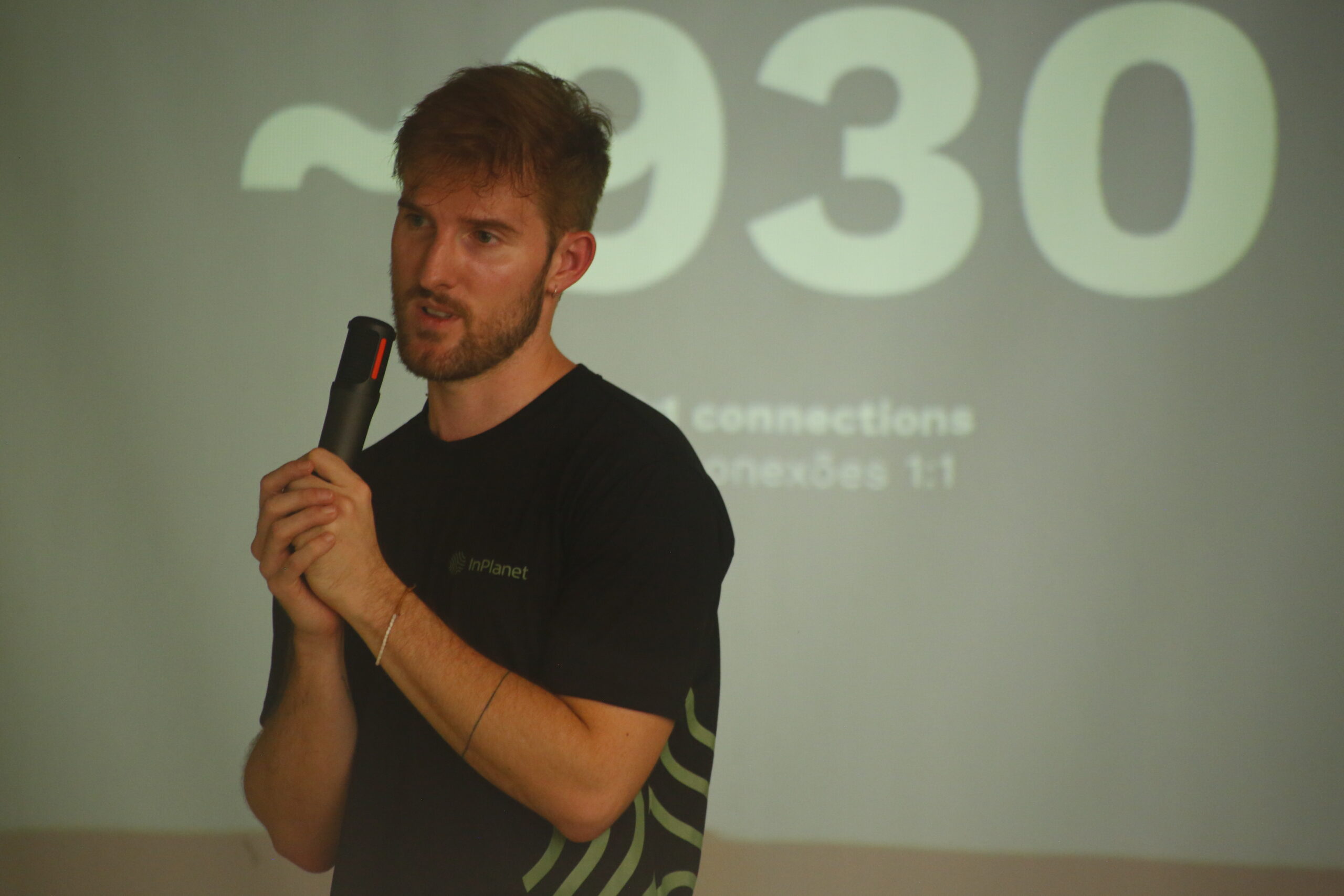
Image 1: Presenting how remote work operates at InPlanet and how our globally distributed team collaborates in practice.
2. Speed Requires Trust, And Trust Requires Design
There is a persistent myth that remote work automatically increases productivity. It can, but in my experience it can also fragment teams. Remote-by-default structures can make collaboration networks more static and siloed, with fewer bridging ties across groups. That matters. What also matters is that we started this design work from the very beginning of InPlanet. When I joined forces with the founders, my main responsibility was to set up a system that enables a truly global workforce. The secret is that before any people practice is implemented, you have to think in a remote-first setting. Every people practice needs to be tailored with that in mind, whether it is a recruitment strategy, our compensation philosophy, how we drive engagement, how we run town halls and communicate, how we recognize performance, or how we resolve conflicts.

Image 2: Team meeting with colleagues connecting from multiple countries and time zones. For many professionals working abroad, collaboration happens daily through virtual calls like this.
You constantly need to ask yourself one simple question: would this work in a remote-first environment? And if not, what can I change about this practice to truly empower a distributed workforce? Will it be productive? Will it create clarity? Will it ensure fairness across geographies? Designing for remote-first is not an afterthought, it is a foundational principle that shapes how the entire organization operates. It is really fun and worth the effort!
To further strengthen our approach, we partnered with OpenOrg for additional support. Working with Adam and John was a real highlight, not only did we learn a tremendous amount from them, they are also genuinely great and fun people to collaborate with. Their guidance helped us sharpen our practices, and we are proud to have received their OpenOrg accreditation in 2025.
At InPlanet, to turn this philosophy into action, we rely on four core principles designed to actively prevent siloing:
- A clear operating cadence
- A Notion-centered digital operating system
- Time-zone alignment, hiring between UTC-4 and UTC+1 to ensure overlap and coordination
- Structured in-person touchpoints
Trust formation is more fragile at a distance. Face-to-face interaction uniquely supports social bonding and the informal connective tissue that makes distributed work function. Trust does not emerge automatically in Slack threads, so we have to build it deliberately.
3. Offsites Are Not Perks. They Are Infrastructure.
If remote work can increase siloing, then high-bandwidth, in-person moments are not optional. They are countermeasures. I see our offsites as core infrastructure. Fully remote teams can integrate knowledge less effectively on conceptual, high-context work, and innovation requires context. Context does not travel well through screens.
That is why we run:
- One global offsite per year (entire company)
- One divisional offsite per year (twice for teams larger than 20)
- Four leadership offsites per year, two in Brazil and two in Europe
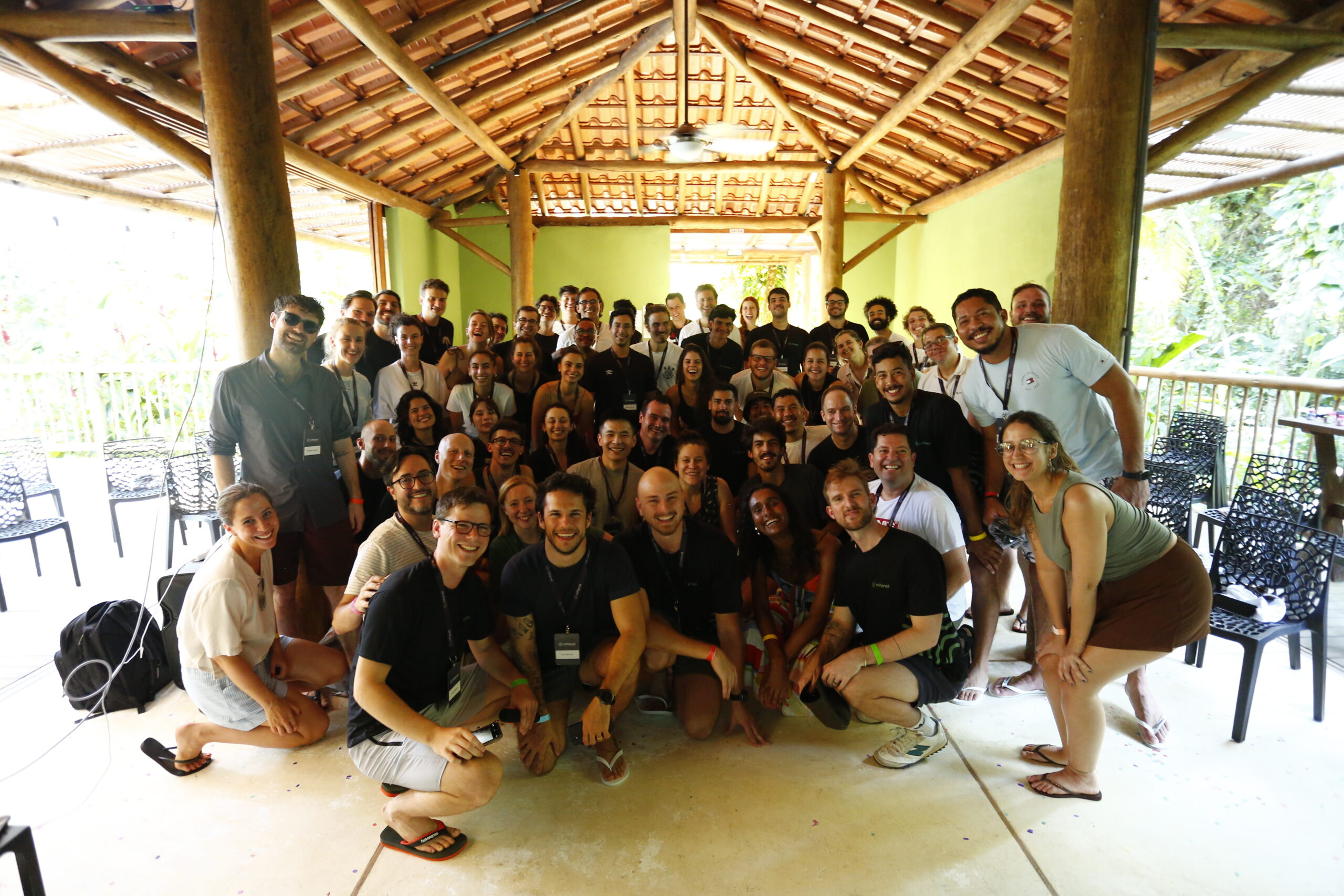
Image 3: Team InPlanet during our Global offsite in Ubatuba, Brazil, a few days of alignment, connection, and big ideas for the future.
At last year’s Global Offsite, many teammates met in person for the first time after months of intense collaboration. We achieved a 100% attendance rate and a satisfaction score of 9.5/10, results we are incredibly proud of. The improvement in alignment afterward was clear, with faster decisions, stronger cross-team coordination, and more shared clarity. If virtual teams are going to be truly effective, face-to-face time is essential for building cohesion and trust.
These are not retreats. They are execution infrastructure.
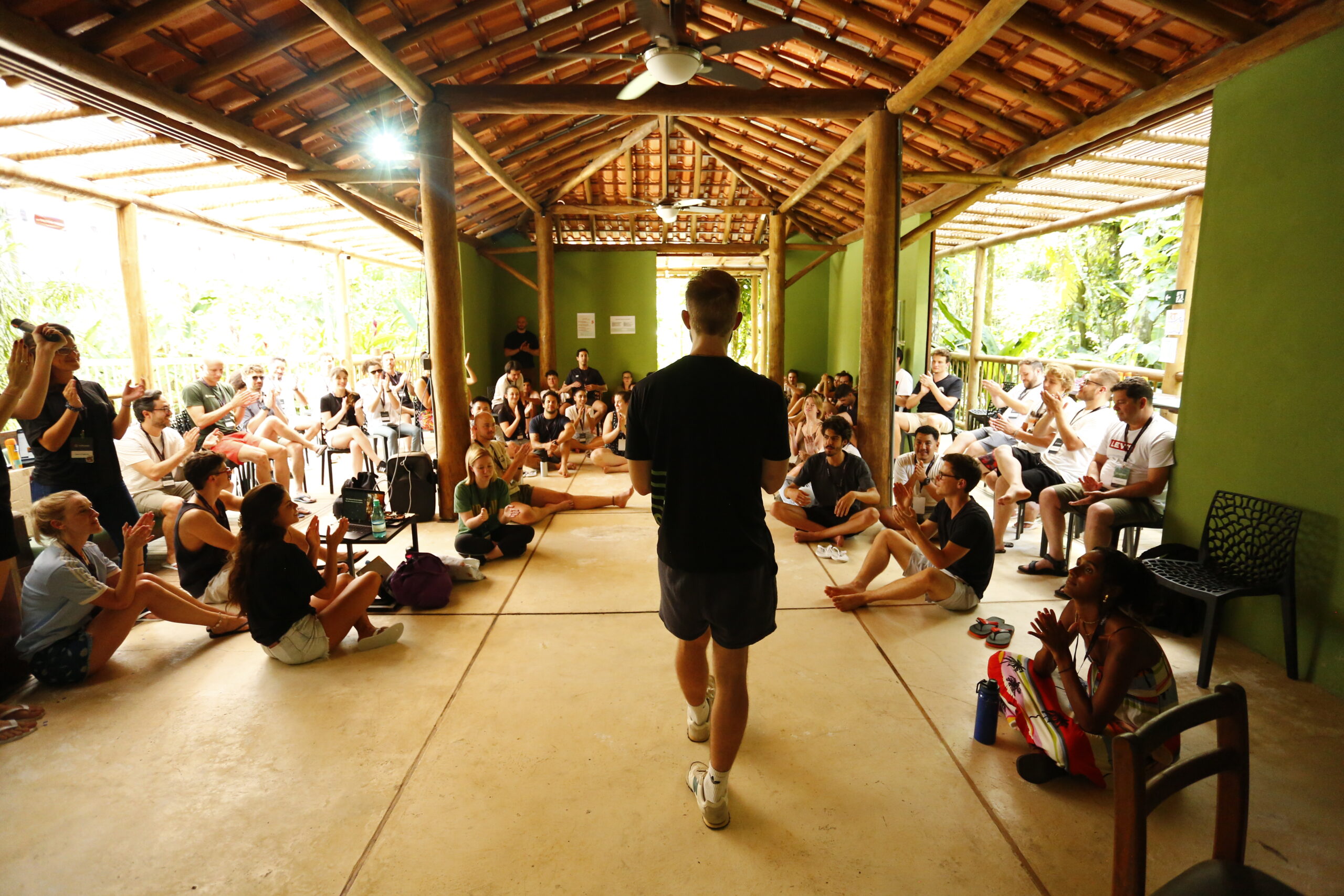
Image 4: InPlanet global offsite in Ubatuba, Brazil: building trust in distributed teams. Here InPlanet’s team aligned on priorities, shared key updates, and created space to challenge ideas and strengthen cross-team collaboration.
4. Remote-First Is a Design Problem
Remote work is neither uniformly better nor worse. In my view, it depends entirely on how it is designed. At InPlanet, it is a deliberate choice, one we made consciously as we built the company. If we were to prioritize autonomy without alignment, we would create fragmentation. If we prioritized control without trust, we would lose speed. I have seen both dynamics play out in different organizations, and neither supports the kind of execution we need.
We treat remote-first as an operating system built around:
- Autonomy, ownership and individual responsibility at the core
- A clear cadence and time-zone overlap to execute well
- In-person connection to rebuild context and cohesion
- Leadership close enough to operations to remove friction
To scale enhanced rock weathering, work with farmers on the ground in Brazil, and integrate science and delivery across Germany and Latin America, we need speed, trust, and resilience. Remote-first helps us achieve that.
Not because it is fashionable, but because it works when designed properly.
The post Remote-first company: How InPlanet designs a global team that actually works appeared first on InPlanet.
]]>The post InPlanet secures agreement to deliver 28,500 enhanced rock weathering credits to Microsoft appeared first on InPlanet.
]]>SÃO PAULO, BRAZIL, DECEMBER 17, 2025 – InPlanet, a pioneer in tropical Enhanced Rock Weathering (ERW), announced today that it has signed an agreement with Microsoft to remove more than 28,500 tonnes of CO₂ between 2026 and 2028. This purchase extends Microsoft’s commitment to ERW in Brazil.
ERW, the application of finely crushed silicate rock to soils, is emerging as a promising approach within carbon removal and regenerative agriculture. The process captures atmospheric CO₂ while improving soil health and supporting long-term ecosystem resilience. This agreement builds on InPlanet’s scientific research and Brazil’s favorable conditions for weathering at scale. It also underscores the role of tropical agriculture in global climate action, illustrating how high-integrity carbon removal can support environmental resilience and farmer livelihoods.
Demonstrated Agronomic and Climate Benefits
InPlanet’s projects have shown measurable improvements for agriculture and climate over the past 24 months. Fields treated with silicate rock powder demonstrated increases in soil fertility, reductions in fertilizer use, and reduced limestone applications. Together, these findings indicate that ERW delivers agronomic benefits while supporting durable carbon removal.
“As part of this agreement with Microsoft, we can deepen our scientific research and further validate Enhanced Rock Weathering under real-world conditions,” said Felix Harteneck, Founder & CEO of InPlanet. “Our team is monitoring every aspect, from soil chemistry to local water systems, to ensure each tonne of CO₂ is rigorously accounted for. The insights we gain from these deployments will improve our measurement and verification methods, setting an even higher bar for transparency in carbon removal. Ultimately, this is about building trust: we want every stakeholder to know that each credit we deliver is grounded in solid science and delivers permanent climate benefits.”
Today, InPlanet operates the largest ERW program in Brazil, measured by total farmland treated, with more than 12,000 hectares, an area comparable to the size of San Francisco. Furthermore, Brazil’s tropical climate accelerates silicate weathering compared with many temperate regions, enhancing the impact and scalability of ERW in the tropics.
Independent Verification Under Recognized Standards
Following InPlanet’s delivery of the world’s first independently verified ERW credits, all credits under the agreement will be issued under Isometric’s rigorous Enhanced Weathering Protocol and publicly listed on the Isometric Registry. The anonymized project data will also be shared through Cascade Climate’s ERW Data Quarry to support transparency and industry-wide scientific research.
“InPlanet’s commitment to measurement and monitoring bolster the integrity of their enhanced rock weathering carbon removal credits, which will contribute to Microsoft’s goal to be carbon negative by 2030,” said Phillip Goodman, Director, Carbon Removal Portfolio. “Their project illustrates how applying silicate rock to soils can offer benefits for farmers by improving soil health and supporting productivity. Enhanced rock weathering is a promising pathway to high-impact carbon removal, and we are encouraged by its potential to contribute to durable, positive climate outcomes.”
Through this agreement, Microsoft contributes to climate solutions that support Brazilian agricultural communities. By purchasing ERW credits, Microsoft helps enable improved soil quality, greater farm productivity, stronger food security, and advancing regenerative agricultural practices across Brazil.
About InPlanet
InPlanet is an AgTech company pioneering Enhanced Rock Weathering (ERW) as a scientifically rigorous pathway for durable carbon dioxide removal and regenerative agriculture. By applying finely crushed silicate rock to tropical soils, InPlanet accelerates natural weathering processes that permanently sequester CO₂ while improving soil fertility, boosting crop productivity, and reducing the need for agricultural inputs. Founded in 2022, InPlanet operates across Brazil and Germany, with more than 70% of its team based in Brazil. In December 2024, InPlanet delivered the world’s first independently verified ERW carbon-removal credits, which received a post-issuance ‘A’ rating from BeZero Carbon.
Contact:
Maria de Freitas
Head of Marketing and Public Affairs
[email protected]
The post InPlanet secures agreement to deliver 28,500 enhanced rock weathering credits to Microsoft appeared first on InPlanet.
]]>The post InPlanet at COP30: Representing the Global South. The North can take notes. appeared first on InPlanet.
]]>We see a geopolitical shift already underway
Global south nations are not merely well-suited for carbon removal, they are indispensable. Yet these countries remain held back by financing barriers and outdated regulatory caution, that no longer match the reality of the day.

Europe is opening the door to the global south
The EU’s recent decision to allow up to 5% international credits in its 2040 climate target marks a historic shift, one that many of us in the Global South have been fighting for. For the first time, Brussels is formally acknowledging that carbon credits generated outside the bloc may count toward Europe’s own climate goals. It’s a cautious step, but a meaningful one, signaling a simple truth: climate leadership does not end at Europe’s borders.
As a Global South operator, I see this as a positive and overdue development. It legitimises international climate cooperation, creates a pathway for durable removals, and, above all, offers a blueprint for what Article 6 could look like in practice. By allowing international credits to be recognised within one of the world’s most influential trading blocs, Europe has created the possibility of a real market. It is often said that Europe is the world’s leading exporter of policy, and yet here more than ever. The door is open. The question now is who will walk through it?
As Dr. Wietse Vroom, Chief Technology Officer at Inspiratus Technologies and Chair of the Global South CDR Coalition, put it on our panel:
“Europe is moving, but it is moving in slow, hesitant steps. This 5% flexibility could unlock significant volumes of high-quality credits, but only if policymakers understand the distinction between credible removals and everything else in the voluntary market. We have a long history of carbon credits that did not deliver the climate benefit they claimed. If Europe repeats that mistake, we lose both environmental integrity and political legitimacy. But if Europe uses this opening to recognize durable, scientifically robust removals, especially from the Global South, it can set the global benchmark for quality. The opportunity is enormous, but only if integrity is the starting point.”
Wietse is right to highlight the danger of repeating past mistakes, but from my perspective, this is also a moment to recognize how much has changed. We now have the science, MRV, durability frameworks, and CRCF guardrails to clearly distinguish credible removals from everything else. Integrity is no longer a vague aspiration; it is measurable, and operational. That is why I remain optimistic. The 5% is not a finish line, it’s a starting point. It marks the beginning of a more interconnected, rigorous, and global carbon market.
The global south has the world’s strongest natural advantages
“When we talk about carbon removal, we have to talk about comparative advantage. Europe’s comparative advantage is regulation, sophisticated, complex, often burdensome, but globally influential. The Global South’s comparative advantage is the sun. Sunlight drives photosynthesis for biochar, accelerates mineral weathering, powers low-cost renewable energy for DAC, and supercharges the entire carbon cycle. If you ask where the world can remove CO₂ efficiently, effectively, and affordably, the answer is the tropics. This is not ideology, it’s physics, chemistry, energy economics. The Global South is simply the place where carbon removal works best.”
Said Axel Reinaud, CEO of NetZero and member of the Global South Coalition.
Sitting on that panel, I felt the point land: the Global South doesn’t just contribute to CDR, it underpins it. In Brazil and across the tropics, the natural conditions for large-scale carbon removal already exist. Take Enhanced Rock Weathering (ERW). Brazil’s warm, humid climate accelerates silicate weathering, enabling faster and more reliable CO₂ capture than in many temperate regions.
This is why the next phase of global climate cooperation requires a genuine mindset shift. Today, about 45% of all carbon removals occur in the Global South, while Europe accounts for roughly 11%. If carbon removal is confined primarily to Europe or the US, it will be slow, costly, and limited to meet planetary needs. The physics are unambiguous: scaling carbon removal depends on the Global South.
In the Global South, we are not constrained by agronomy or renewable energy potential; we are constrained by the cost of capital and by outdated risk models built for another era. This is precisely why clear demand signals from Europe can be transformative. Offering a way to align climate finance with climate reality, directing investment to the regions where carbon removal works best, scales fastest, and delivers the greatest co-benefits for communities and ecosystems.Capital for carbon is like yeast, it makes the dough grow.
The financing challenge was underscored by Thoralf Gutierrez, co-founder and CEO of Sirona Technologies, when he described efforts to deploy direct air capture in Kenya. By all rights, Kenya should be one of the most attractive places in the world for Direct Air Capture (DAC), and yet, as Thor explained, capital remains the hardest part of the equation:
“Kenya should be one of the most attractive places in the world to deploy DAC. The renewable energy is abundant and cheap, the geology is extraordinary, and the co-benefits for the national grid are significant. And yet, financing remains the single hardest part of the entire equation. Banks don’t reject our proposals because the technology doesn’t work, they reject them because political risk models haven’t caught up to climate reality. Every time interest rates rise or there’s political unrest, the cost of capital doubles. So even though Kenya is scientifically ideal for DAC, international capital behaves as if we’re proposing something dangerous. This isn’t a technology gap, it’s a perception gap. And until that changes, we won’t scale at the speed the climate crisis demands.”
What struck me about Thor’s story is how familiar that barrier feels across the Global South. Whether in Kenya or Brazil, we are not held back by technology or by natural potential. We are held back by the financial system’s outdated perceptions of risk. The regions with the highest potential are being penalized by risk models built decades ago, models that haven’t caught up with today’s climate reality.
That is where carbon finance becomes transformational, for ERW, a well-structured carbon credit can turn a promising agronomic practice into a viable business decision, effectively covering the upfront costs of trying something new. In this way, carbon markets are not a charitable subsidy, but a catalyst that makes climate-smart innovation economically feasible for those on the front lines of agriculture.
The truth is simple: the Global South does not lack climate innovation, it lacks financial mechanisms that reflect local realities. Unlock that, and farmers become some of the most powerful climate actors we have, not because they are forced to, but because it genuinely strengthens their livelihoods.
In the global south carbon removal is a regenerative agriculture story
In Brazil, where my work is focused, what we’ve learned is that carbon removal stories are not climate first stories, they are, above all, regenerative agricultural first stories. Farmers in our region are not skeptical of innovation, they are skeptical of risk, and with good reason. One bad decision can affect a family for a generation. These growers are not considering abstract carbon markets, they consider soil pH, costs, yields, and whether their land will stay productive for their children. So when we introduce ERW or biochar, the conversation must begin with agronomy, not carbon.
Eduardo Bastos, one of Brazil’s leading agricultural policymakers and President of the Sustainable Agrocarbon Chamber at the Ministry of Agriculture of Brazil, articulated this vision on the panel:
“Brazil feeds over a billion people. We have tropical soils, vast agricultural landscapes, renewable energy, and decades of agronomic innovation. We also have the biological and mineralogical foundations for some of the most scalable carbon removal pathways in the world. Our potential is not theoretical; it is measurable, in tens of gigatonnes. But potential means nothing without policy. That is why Brazil has become one of the first countries to legislate explicitly for carbon removal, to design an ETS capable of integrating removals, and to create incentives for climate-smart agriculture. We can be a negative-emissions leader, but it will require both domestic regulation and international cooperation to turn this from possibility into reality.”
Listening to Eduardo, I felt deep alignment. His message captured exactly what those of us working on the ground in Brazil understand: Brazil holds all the ingredients for global climate leadership.
Brazil is already an agricultural superpower, but what excites me most is Brazil’s emerging role as a carbon-removal trailblazer. With the passage of its new regulated carbon market (the SBCE cap-and-trade system) in late 2024, Brazil became one of the first countries in the world to explicitly incorporate carbon removals into climate law. The country’s forthcoming emissions trading system is being designed to integrate high-integrity removals, creating a policy environment where ERW, biochar, and other carbon solutions can scale with integrity and speed.
Brazil also has unique fundamentals that bolster this effort. Over 90% of its electricity comes from renewable sources, giving the country one of the lowest-carbon industrial profiles in the world. It has decades of expertise in soil remineralization (known locally as rochagem) to improve soil health and yields, a practice now recognized for its carbon sequestration benefits. This combination of policy clarity, agronomic know-how, abundant clean energy, and rich mineral resources positions Brazil as a strategic supplier of high-quality carbon removal credits in the years ahead.
From my perspective, leaders like Eduardo Bastos exemplify the kind of leadership the Global South needs: pragmatic, science-driven, and rooted in the realities of farming communities. He sees that carbon removal is not a foreign add-on to Brazil’s development, but part of its economic future. And he is right, Brazil is not waiting for permission. It is moving confidently to position itself as a major exporter of high-integrity carbon removals. And that does not only serve Brazil; it strengthens the world as a whole.

The post InPlanet at COP30: Representing the Global South. The North can take notes. appeared first on InPlanet.
]]>The post Agronomic benefits of basalt rock powder on citrus farms: Insights from Project Aracari appeared first on InPlanet.
]]>InPlanet achieved the next historic milestone in the Carbon Dioxide Removal (CDR) landscape with its second issuance (and only fourth ever globally) of certified Enhanced Rock Weathering (ERW) carbon credits from Project Aracari. A total of 319.97 tCDR were verified for this project via the deployment of basalt on citrus orchards. The carbon credits were the 2nd issued under the Isometric enhanced weathering protocol, following InPlanet’s issuance of the world’s first ERW carbon credits at the end of last year. They were independently verified by 350 solutions. From this project, 200 tonnes have been delivered to our partner, Klimate.
Beyond the durable carbon removal achieved through this project, the agronomic co-benefits of deploying basalt rock powder were also studied, which are shared in this blog post.
Brazil is the world’s leading producer of oranges (USDA, 2025), supplying a significant share of the global juice market. Citrus trees are nutrient-demanding and highly sensitive to biotic and abiotic stresses, including bacterial infections such as greening and prolonged drought. These are conditions under which basalt rock powder, with its potential to release nutrients and ameliorate soil pH (Swoboda et al. 2022), may provide benefit. Additionally, basalt application may improve water availability through improving soil physical properties (Costanzo et al. 2025).
Project Background

Project Aracari involves two commercial orange farms located in central São Paulo state. Together, they cover 358 hectares, of which 339 hectares received a basalt rock powder application, while 19 hectares served as untreated controls.
Basalt spreading occurred between August and November 2024 at an application rate of 20 tonnes per hectare in the deployment areas.
The farms differ in their soil types and fertilization practices:
Farm 1 – business as usual consists mainly of the Argissolo Vermelho soil type, with some areas of Latossolo Vermelho. All areas received limestone (at a variable rate up to 7 t/ha) and NPK fertilization, in accordance with normal agricultural practice.
Farm 2 – limestone and gypsum substitution is dominated by the soil type Latossolo Vermelho. All farm plots received NK fertilization and P-fertilizer. In this farm, limestone (2.8 t/ha) and gypsum (1.2 t/ha) was directly substituted with 20 tonnes/ha of basalt in the deployment area, while the control area still received limestone and gypsum application.

Soil type note: Latossolos are deeply weathered, well-drained, and rich in iron oxides, whereas Argissolos show textural differentiation and thus stronger differences in nutrient retention and acidity between surface and subsurface.
Analysis
Soil samples have been collected (0-20cm) at baseline before the rock powder spreading and 9 months later using GIS-assisted paired sampling (i.e., samples were collected at the same geographical locations as the baseline sampling). This method allows direct evaluation of chemical and agronomical changes (Δ) at individual sampling points, greatly reducing the noise introduced by heterogeneous field conditions.

In addition, biometric data from experimental plots were collected to assess tree growth. Yield and fruit quality analyses are still ongoing, as the harvest has not been fully completed.

Agronomic Field Results
Effects on organic matter and soil pH
Organic matter and soil pH are major soil health metrics crucial for the availability of nutrients and plant available water, and ultimately higher yield stability (Lal, 2020).

On both farms, a statistically significant improvement (Wilcoxon rank-sum test) in the difference (Δ) in soil organic matter from baseline to post-application was seen relative to the control (Figure 2). The difference for each paired sample point is calculated by the post-weathering value minus the baseline. A positive value for the pairwise Δ graphs thus indicates an increase of the respective soil metric, and a negative value a decline. The absolute values for pH and organic matter after 9 months are documented in Table 1.

On farm 1, the Δ soil pHH2O slightly decreased (statistically not significant, details in Table 1) for the basalt application relative to the control, whereas the Δ soil pHCaCl2 increased (statistically significant) for basalt (Figure 3). The differences between pHH2O and pHCaCl2 are described in the pH note below.
On farm 2, basalt application improved both the Δ soil pHH2O (statistically significant) and pHCaCl2 (statistically not significant) compared to the control. Importantly, in Farm 2, limestone was only applied in the control area and fully replaced in the basalt deployment area. This indicates that basalt can substitute limestone as a pH corrective (Fig. 3).
Soil pH note: the pHH2O is measured in water and reflects the active acidity (H+ already in the soil solution). The pHH2O is the basis for most soil science concepts. The pHCaCl2 is measured in a 0.01 M CaCl₂ solution that is intended to represent the ionic strength of the soil solution. The more controlled ionic strength of pHCaCl2 is thus often more reproducible as it is less affected by soil physical and chemical fluctuations, and is closer to the soil´s potential acidity (H⁺ + Al³⁺ on the exchange sites). However, the pHCaCl2 requires careful conversion to compare with the benchmark pHH2O (Sanchez, 2019)

Furthermore, the pairwise comparison on farm 2 showed that basalt performed better in improving the baseline pH compared to the control with limestone, although the absolute values for pH after 9 months were actually higher in the control areas. The reason for this is that control areas had a substantially higher (0.485 units) baseline pH than the basalt deployment areas.
Nutrient Availability
Farm 1 – “Business as usual”
On Farm 1, fertilisers were applied in a “business as usual scenario”, meaning that both the basalt amended deployment areas and the control areas had NPK fertilizers applied.
Over the course of 9 months, and apart from potassium (K), the difference (Δ) between post-weathering and baseline improved for all soil nutrients in response to basalt application compared to the control (Figure 4). Statistically significant improvements were found for exchangeable Ca and Mg (details of the nutrient extractions are provided in the Nutrient analysis note below), the sum of bases (SoB, compound metric for exchangeable Ca+Mg+K+Na), bioavailable P (resin), and cation exchange capacity (CEC). Soil exchangeable P (Mehlich-1) increased, but was not statistically significant.
Nutrient analysis note: Mehlich-1 is an extraction procedure to determine soil exchangeable P, K, and Na. It is suitable for acid and low cation exchange capacity soils typical for the tropics. Resin P captures phosphate anions through an exchange resin from the soil solution, aiming to measure the bioavailable P that plant roots can directly access (Sanchez, 2019). Soil exchangeable Ca and Mg are measured via a KCl 1 mol/L solution (Embrapa, 2017).

Table 2 summarizes the pairwise Δ soil health metrics for 0 and 20t/ha. Importantly, table 2 also shows the absolute soil health values after 9 months, all of which were higher for the basalt amended areas compared to the control (see Table 2).

The substantial increase in exchangeable Mehlich-1 phosphorus (+131.9%, p=0.09) and bioavailable resin phosphorus (+31.1%, p=0.013) is particularly noteworthy. Phosphorus is one of the most essential plant nutrients, yet P fertilizers are costly, often imported, and relatively inefficient in tropical soils because phosphorus is rapidly immobilized on soil particles and becomes unavailable to plants (Sanchez, 2019). The P content of our basalt (0.5% P2O5) is unlikely to explain this substantial increase alone, indicating that other indirect mechanisms, such as silicon (Si)-induced P mobilization, were involved (see e.g. Schaller et al., 2024). Accordingly, any amendment that mobilizes P already present in the soil and thereby reduces reliance on external fertilizer inputs offers a direct agronomic and economic benefit.
Farm 2 – Replacement of limestone and gypsum
In contrast to Farm 1, the basalt-treated areas of Farm 2 received no limestone or gypsum, so basalt fully replaced these amendments. The control areas received 2.8 t/ha limestone and 1.2 t/ha gypsum.


On farm 2, most Δ (9-0 months) soil health metrics (SoB, K, Ca, Mg, P-resin, and CEC) showed no statistically significant change between control and basalt (Figure 5). Ca had an increasing trend, whereas SoB, K, Mg, P-resin, and CEC showed a decreasing trend. Mehlich-1 P decreased significantly in the basalt-treated soils. Details about the pairwise Δ soil health metrics and the absolute values at 9 months can be found Table 3.
Importantly, one reason for the substantial difference in nutrient availability on farm 2 could be the replacement of limestone and gypsum, as both materials influence soil pH and nutrient dynamics. Furthermore, another reason could be that some of the basalt-treated areas received less conventional fertilizers than the control areas due to variable fertilization rates. This illustrates the real-world challenges of integrating our basalt applications into the dynamic operations of a commercial farm. It also underscores the value of controlled field experiments for reducing the heterogeneity introduced by operational and environmental variability.

Vegetation Analysis
The biometric analysis was conducted on a controlled experimental site at farm 1 (BAU). Biometric measurements were performed every three months after application in an experimental block that also included higher basalt rates (40 and 60 t/ha).
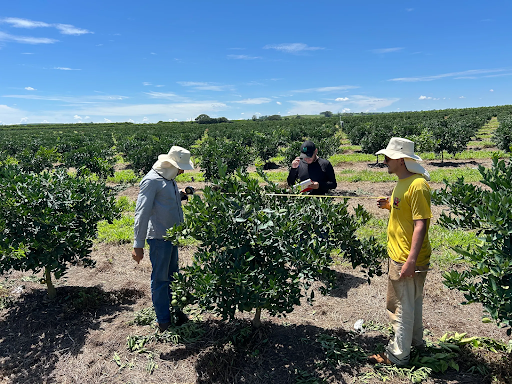
Vegetative vigor (VV), a key indicator of overall plant health and growth potential, was quantified using a composite index (Bordignon et al., 2003). This index integrates the key growth parameters plant height (H), average canopy diameter (CD), and rootstock trunk diameter (RTD) into a single value. Across the range of application rates tested (0 to 60 t/ha), the vegetative vigor index remained stable, with no statistically significant differences (Wilcoxon rank-sum test) observed between the treatment groups (Figure 6). Although a moderate positive trend was noted particularly for 40 t/ha, citrus trees are not expected to respond as quickly to basalt application as fast-growing, nutrient-demanding crops such as soy or corn.
Ongoing fruit yield and nutrient analyses will provide the final agronomic picture and clarify how basalt influences nutrient uptake, fruit quality, and overall productivity.

Conclusion
Overall, the results from both farms show that basalt rock powder can improve soil health under typical citrus production conditions, with effects modulated by each farm´s baseline soil properties and management practices.
On Farm 1, that received limestone and fertilizers on the whole area, basalt application improved several soil health metrics, and tree vigor remained stable on the experimental site, with a tendency to increase for 40t/ha.
On Farm 2, basalt proved capable of replacing limestone as a pH corrective, though shifts in nutrient availability reflected the farm’s baseline conditions and fertilization strategy. These differences suggest that there is great potential for optimizing soil health using rock powder in combination with, or partially replacing, traditional amendment strategies. As yield and fruit quality data become available, we expect to quantify these benefits further.
Overall, these results highlight that basalt rock powder is a promising agronomic amendment for tropical citrus orchards, while simultaneously contributing to durable carbon dioxide removal through enhanced weathering.
We gratefully acknowledge the support and contributions of the many individuals that made this project a reality including the mining and farming partners, Mariane Chiapini, Marcella Daubermann, Veronica Furey, Junyao Kang, Niklas Kluger, Murilo Nascimento, Igor Nogueira, Bruno Ramos, Felipe Reis, Mayra Maniero Rodrigues, Leticia Schwerz, Jeandro Vitorio.
References
Bordignon, R., Medina Filho, H. P., Siqueira, W. J., & Pio, R. M. (2003). Características da laranjeira ‘Valência’ sobre clones e híbridos de porta-enxertos tolerantes à tristeza. Bragantia, 62, 381-395.
Costanzo, Sarah A., Iris O. Holzer, Nall I. Moonilall, Amber Davenport, Benjamin Z. Houlton, and Mallika A. Nocco. 2025. “Preliminary Assessment of Crushed Rock, Compost, and Biochar Amendments on Soil Physical Properties.” Agricultural & Environmental Letters 10 (2): e70028. https://doi.org/10.1002/ael2.70028.
Embrapa Solos. (2017). Manual de Métodos de Análise de Solo – Parte II: Análises Químicas. 3ª edição revista e ampliada. Rio de Janeiro: Embrapa.
Sanchez, Pedro (2019). Properties and Management of Soils in the Tropics. Cambridge University Press. ISBN 9781316809785.
Schaller, J., Webber, H., Ewert, F., Stein, M. & Puppe, D. (2024). The transformation of agriculture towards a silicon-improved sustainable and resilient crop production. npj Sustainable Agriculture, 2, Article 27. https://doi.org/10.1038/s44264-024-00035-z
Swoboda, Philipp, Thomas F. Döring, and Martin Hamer. 2022. “Remineralizing Soils? The Agricultural Usage of Silicate Rock Powders: A Review.” Science of The Total Environment 807 (February): 150976. https://doi.org/10.1016/j.scitotenv.2021.150976
U.S. Department of Agriculture, Foreign Agricultural Service (USDA FAS). “Citrus: World Markets and Trade.” Published 30 January 2025. Available at: https://www.fas.usda.gov/data/citrus-world-markets-and-trade-01302025
Authored by:
Dr. Christina Larkin
Head of Science & Research
Dr. Philipp Swoboda
Impact & Science Lead
Dr. Matthew Clarkson
Head of Carbon
The post Agronomic benefits of basalt rock powder on citrus farms: Insights from Project Aracari appeared first on InPlanet.
]]>The post InPlanet welcomes Miguel Rodrigues as Chief Financial Officer to lead financial strategy appeared first on InPlanet.
]]>Rodrigues is a seasoned executive with over 20 years of experience in finance, strategy consulting, and climate-focused ventures. During his 15 years at Morgan Stanley, he led the Latin American Utilities Equity Research team as an Executive Director, advising global institutional investors on navigating equity investments in highly regulated sectors. Prior to that, Rodrigues spent five years with McKinsey & Company’s Corporate Finance & Strategy team, dealing with clients in multiple regions and industries. Most recently, he served as CFO of Cambium Earth Brasil, an ARR (Afforestation, Reforestation and Revegetation) carbon project developer, where he played a key role in the company’s expansion to Brazil.
As CFO, Rodrigues will lead financial strategy, fundraising, and investor relations. He will manage upcoming equity fundraising rounds, build robust financial operations, and ensure InPlanet is financially equipped to meet ambitious growth targets. He’ll also oversee strategic financial planning for expanding carbon removal projects, collaborating closely with the executive team to enhance profitability and impact.
Felix Harteneck, Co-Founder and CEO of InPlanet, welcomed Rodrigues to the team:
“We’re thrilled to welcome Miguel as our CFO at such a pivotal moment. His deep experience in climate finance and strategic leadership in Brazil and internationally will be crucial as we take InPlanet to the next level. Miguel’s expertise will help us solidify our financial foundations, scale our carbon removal efforts, and amplify our global impact.”
Rodrigues expressed enthusiasm about joining InPlanet’s mission.
“I’m honored to join InPlanet’s talented team and collaborate with its global-scale mission. Brazil’s unique competitive advantages, including vast agricultural land and abundant rock powder resources, make it an ideal location for leading ERW development. InPlanet’s innovative approach is a game-changer, offering enormous potential to remove gigatons of CO₂ while boosting agricultural efficiency. I’m excited to contribute to InPlanet’s growth, attract strategic investors, and scale our impact even further.”
About InPlanet
InPlanet is a climate technology company pioneering Enhanced Rock Weathering (ERW) as a scalable solution for carbon dioxide removal and regenerative agriculture. By applying finely crushed silicate rock to tropical soils, InPlanet accelerates natural geochemical processes that permanently sequester CO₂ while restoring soil health and improving crop yields. The company’s mission is to remove gigatons of CO₂ from the atmosphere to ensure a livable planet.
Founded in 2022 by Felix Harteneck and Niklas Kluger, InPlanet operates out of São Paulo, Brazil, and Germany, with over 70% of its international team based on the ground in Brazil. In January 2025, the company, in partnership with Isometric, ClimeFi, and Adyen, issued the world’s first verified Enhanced Rock Weathering carbon removal credits. These credits also became the first post-issuance ERW credits to receive an ‘A’ rating from BeZero Carbon, signaling high confidence in permanence, scientific rigor, and measurement integrity.
InPlanet has received widespread recognition for its leadership in the carbon removal sector, including the prestigious Keeling Curve Prize 2024 and selection as one of Fast Company’s 10 Most Innovative Companies in Latin America (2025). Backed by leading climate-focused investors, InPlanet is rapidly scaling ERW as a high-integrity pathway to climate stability.
Media Contact:
Maria de Freitas – Head of Marketing, InPlanet
[email protected]
The post InPlanet welcomes Miguel Rodrigues as Chief Financial Officer to lead financial strategy appeared first on InPlanet.
]]>The post Learnings from InPlanet’s first deployment appeared first on InPlanet.
]]>Acknowledgements
We gratefully acknowledge the support and contributions of the many individuals that made this deployment a reality including the mining and farming partners, Antonio Azevedo, Mariane Chiapini, Jessica Ferrarezi, Marcella Daubermann, Veronica Furey, Niklas Kluger, David Manning, Murilo Nascimento, Elisabete Pedrosa, Igor Nogueira, Bruno Ramos, Felipe Reis, Mayra Maniero Rodrigues, Leticia Schwerz, Karla Nascimento Sena, Philipp Swoboda, Jeandro Vitorio
Reviewed by: Zeke Hausfather, Frauke Kracke
Introduction
Robust and transparent Measurement, Reporting, and Verification (MRV) is paramount for establishing the credibility of the nascent Enhanced Weathering (EW) industry. For EW, translating theoretical geochemical principles to a complex real world deployment can present both challenges, but more importantly opportunities for learnings and improvement. Here, we report on the methodological learnings from our first large-scale EW deployment.
In April 2025, InPlanet achieved another milestone, our first credits were delivered to the Frontier buyers coalition, stemming from a pre-purchase agreement awarded in Fall 2022. It was part of their second set of carbon removal purchases, and it was the second enhanced weathering (EW) purchase made by the group. The purchase, from the $1B+ advance market commitment, directly funded our first deployment, Project Beija-flor. Project Beija-flor is based in São Paulo state, Brazil, and was designed to remove CO₂ while regenerating degraded tropical pasture soils. The project was instrumental in refining the MRV framework that ultimately led to the issuance of the world’s first third-party verified EW credits by Isometric in late 2024, which were associated with a subsequent deployment (Project Serra da Mantiqueira). This blog post documents the learnings as well as the solutions implemented during the foundational Project Beija-flor. The piece is intended for those with some technical understanding of EW measurement in order to help inform others looking to implement EW, and builds upon our technical review paper published last year1.
Project overview
Project Beija-flor encompasses approximately 900 hectares across 13 farms, with basalt powder applied at a rate of 10 tonnes per hectare (t/ha). The deployment targeted pasture, a biome where rock powders can potentially restore degraded soils through nutrient addition and pH adjustment. Brazil contains an estimated 160 million hectares (Mha) of pasture2, highlighting the immense scaling potential for EW in this context. Participating farms ranged in size from 10 to 400 ha, enabling engagement with both smallholders and larger commercial operations.
The feedstock, a basalt powder certified as an agricultural remineraliser in Brazil, was sourced as a byproduct from a local quarry. Reactive minerals include Andesine (42%), Augite (25%), Albite (10%) and Orthoclase (7%), contributing to a gross CDR potential of 0.268tCO2/trock. The powder has a D50 of 111 µm.
To minimise transport-related emissions3, all deployment sites were situated within a 100 km radius of the source. The surface application of the feedstock using conventional agricultural spreaders occurred between August 2023 and November 2024. Significant logistical delays at several farms extended the spreading interval, necessitating a phased delivery of credits to Frontier.
Monitoring design
Our initial monitoring framework was centred on a solid-phase mass balance approach, combining broad-scale soil sampling (one sample per 10 ha) with high-intensity monitoring at two dedicated field monitoring stations (FMS). Our measurement and calculation approaches are aligned with the Isometric protocol, although the sample density was lower than the recommended 1/1ha. Learnings from early operations prompted a refinement of this protocol, increasing the standard sampling density to one sample per hectare to help reduce uncertainty. Although 1 sample per 10 ha, in the case of our farms, captured the variability across the field scale, a tailored approach is needed for different soil types and regions. In addition, when crediting at one standard deviation below the mean, lower uncertainty in the measurement results in a lower uncertainty discount, therefore increasing sampling density helps increase the certainty, and therefore number of credits issued.
We incorporated data and learnings from our first pasture FMS, based at Luiz de Queiroz College of Agriculture, University of São Paulo (ESALQ) as part of a joint research grant funded by the Grantham Foundation, in collaboration with Profs Antonio Azevedo (ESALQ) and David Manning (University of Newcastle), for which we gratefully acknowledge the support of.
The monitoring protocol integrated two primary measurement strategies:
Solid-Phase Measurement: This approach quantifies net CDR by first calculating the gross potential dissolution of the applied rock powder4–6 using shallow samples at 0–5cm. Deductions are then made for system losses, including cation sequestration on soil exchange sites (0–20 and 20–40 cm depth samples), strong acid losses (to 40cm depth) and uptake by vegetation.
Liquid-Phase Measurement: This method provides a direct validation6 by measuring the flux of bicarbonate (the aqueous product of weathering) in soil water (leachate) at 40 cm depth.
While solid-phase samples were collected across the entire project area (1/10ha), liquid-phase sampling was concentrated at the FMSs. Here, leachate was collected approximately bi-weekly, at 20 cm intervals down to 1 m depth using suction-cup lysimeters within a randomised controlled plot design. At these FMS sites we also monitored the soils down to 1 m depth, and carried out soil characterization with a 2m soil pit. This was supplemented by lower-resolution liquid sampling across a subset of farms. In addition to this, we maintained control areas which were monitored in the same manner, but rock powder was not applied and the farmers maintained business as usual.
Results
CDR calculations were made following the approach of the Isometric protocol, conservatively crediting below the mean (16th percentile) for the gross CDR potential and, and using loss values above the mean (84th percentile). Calculation results are summarised in Table 1. Operational emissions are amortized equally across the first two years of the project.
The deployments achieved a net CDR of 81t, after accounting for Near Field Zone (NFZ) and Far Field Zone (FFZ) deductions. This equates to reaching ~40% of the total gross CDR potential of the rock powder within the first year of weathering.
There was no significant change in biomass yield or cation concentration during the reporting period, and hence no biomass losses were accounted for. Soil carbonates do not form in this environment due to high rainfall and low pH soils, again excluding this loss term. Strong acid losses, due to non-carbonic acid dissolution of the rock powder, were minimal due to the lack of widespread fertilization of the farms and because the cations charged balanced dissolved inorganic carbon (DIC) in measured pore waters. Despite the relatively low soil pH (range 5.8-6.1), soil pore waters had a higher pH (average pH=6.7), and showed stable bicarbonate concentrations. Additionally, there was no displacement of liming activity and hence no counterfactual losses.
The only significant NFZ loss term applicable to the deductions related to soil exchangeable phases. The temporary retention of cations in exchange sites is a well established concept in both soil science and natural weathering studies7 and an observed feature of ERW experiments8–11. This cation store is a temporary sink in the NFZ, resulting in a temporary deduction under the Isometric protocol, which acts as a safeguard against overcrediting.
For this deployment, ~175t CDR equivalent was ‘lost’ due to a statistically significant increase in control-corrected exchangeable Ca concentrations at 20–40cm, relative to baseline conditions (p=0.009; Wilcoxon signed rank test). This represents a deduction when calculating net CDR for the reporting period (Table 1). We emphasise that these loss terms are likely to be site-specific as we did not observe any significant changes in cation exchange in the first year of Project Serra da Mantiqueira. We hypothesise that this difference is due to the larger and significant plant uptake of basalt derived cations in sugarcane, a large and fast growing crop, compared to pasture, where no significant changes were observed.
Hypothetically, a later release of the exchangeable cation store, during a subsequent reporting period, would result in a reduction in the loss term for the later CDR delivery, allowing the temporary deduction to be claimed back. With this approach, there is no need for ex-ante projections of lag times and future credit availability, rather they are dealt with empirically in an ex-post manner across multiple crediting events. Multi-year deployment data are required to test this hypothesis.

Major learnings
From this deployment, there were several learnings, which we break down into 3 sections covering: 1) control and treatment designation, 2) solid phase measurement and 3) validation with additional measurements (liquid phase).
Control and treatment comparability
Control (13% of total area) and deployment areas were designated based on soil mapping, but final placement was subject to practical constraints, including farmer agreement and participation. This resulted in a non-contiguous control design where some smaller farms lacked dedicated control plots. In future deployments we focus on larger farms that are better able to manage a control plot in closer proximity to the treatment plots.
Despite this, a comparative analysis demonstrated that the aggregated control plots broadly captured the range of baseline agronomic conditions present in the treatment areas, including soil texture, pH, cation exchange capacity (CEC) and base saturation (Table 2).
We note that whilst the control sites were situated on farms with lower sand content compared to the treatments, the mean CEC is more comparable (Table 2). A wider CEC range would be expected to result in more variable exchange processes, and temporary CDR losses, however we did not observe any trends to suggest systematic differences in CDR performance across the CEC range.

Solid phase measurements
Rock powder resolvability
CDR quantification was performed using the immobile trace element (ITE) method4,5, which reconstructs feedstock dissolution by tracking the change in concentration of mobile cations relative to an immobile element present in the applied rock. This method’s efficacy is conditional on the geochemical distinctiveness of the rock powder relative to the baseline soil.
For this delivery, a statistically significant increase in Titanium (Ti) was observed in treatment sites post-application (p=0.046, one tailed Wilcoxon signed-rank test) but not in control sites (p=0.371, one tailed Wilcoxon signed-rank test), confirming Ti as a resolvable tracer for the applied basalt. However, ITE resolvability was found to be problematic in clay-rich soils, which exhibited high baseline concentrations of Ti and other potential ITEs (Fig. 1). This high background concentration masked the signal from the applied rock powder. Consequently, two farms with particularly high clay content were excluded from the final CDR delivery, as weathering rates could not be confidently determined. Future deployments in such soils may necessitate a total cation inventory approach, foregoing ITE-based calculations. Nevertheless, without an immobile tracer, it is not possible to account for physical movement or loss of the rock powder affecting the measured loss of cations. Future research will cross-validate these two methods.

Figure 1. Cross plot of TiO2 versus SiO2 in the soil at 0-20cm and 20-40cm depth. Ti concentrations are negatively correlated with SiO2 (a proxy for sand content) indicating a decreasing ability to resolve ITEs as clay content increases.
This resolvability issue is exacerbated by sampling depth, as deeper sampling depths effectively dilutes the signal of the rock powder. The project’s initial 0-20 cm sampling protocol was later revised to 0-5 cm to concentrate the rock powder signal (with surface application and shallow integration). This adaptation proved essential for resolving the weathering signature, although it introduces a potential risk of sampling noise for this specific delivery, as the baseline samples at 0-20 cm were compared with a post deployment sample at 0-5 cm. Nevertheless, we checked depth variations in ITEs in these soil types and saw no difference between 0-5 and 0-20 cm samples. Moving forward, we include 0-5 cm samples at baseline to ensure that soil depths are comparable across all sampling intervals.
Correction for background cation addition
A key assumption in EW MRV is that control plots can be used to quantify the background loss of cations from natural weathering. However, in this project, as in the subsequent Project Serra da Mantiqueira, an increase in cations was observed at the control sites. This finding points to external cation inputs, which is likely in farmland due to fertilizer inputs, such as phosphate or lime, which contain cations. In the case of pasture, the hypothesised source is cation addition from intensive cattle grazing across the sites, as livestock effluent will add cations to the soil. This is a key learning, as previously project developers and other scientific stakeholders have assumed the control site would have a stable or decreasing cation concentration. However, in farmland under standard management, including fertilization, the cation concentrations in the control and deployment areas will likely increase due to additional inputs.
Provided both sites are treated in the same manner, this can be accounted for using the control sites. Therefore, to account for this external input of cations, a conservative correction was applied. The change in cations at control sites was used to adjust the deployment data, preventing the misattribution of these external inputs as feedstock-derived weathering. It is important to examine evidence for the applicability of the background correction, confirming that the control and treatment are indeed managed in the same manner. In this case, it was unrealistic to track cattle grazing directly beyond farmer land use reports, however evidence from liquids samplers in both the control and treatment areas confirm an exogenic source of cations. This correction results in an increase in net CDR but is important in order to account for background farm activity. To ensure a conservative estimate and mitigate the risk of over-crediting, the lower of the mean or median cation change from the control dataset was used for this correction.
Data heterogeneity and outlier management
Soil systems are inherently heterogeneous, leading to noisy datasets. Mass-balance calculations for the fraction of dissolved rock powder (Fd) can consequently yield non-physical values (Fig. 2; Fd < 0 or > 1). While these values are part of the true uncertainty, extreme outliers can disproportionately skew the mean dissolution estimate5.

Figure 2. Raw dataset (upper) showing calculated Fd for Mg and Ca, illustrating the potential for non physical values due to system noise. Bootstrapped results (lower panel) removes the extreme outliers and we conservatively credit based on the 16th percentile to avoid any risk of over crediting.
To address this, a standard 3-standard-deviation threshold was employed for outlier removal during the bootstrapping uncertainty analysis (n = 10,000 simulations). This common statistical method proved to be a conservative approach; for our dataset, 80% of the simulation replicates required the removal of one or zero data points, with a maximum of two points removed in any single simulation (Fig. 3). This demonstrates a robust method for managing statistical noise while preserving the integrity of the underlying data distribution.

Figure 3. Number of outliers removed during every bootstrapping selection using 3 standard deviations (n=10000).
Redundant measurements for validation
The Isometric protocol requires that solid-phase CDR estimates be validated with an additional, redundant, measurement phase, such as with liquid-phase measurements. The dissolved inorganic carbon (DIC) measured in soil water should align with the net CDR calculated from solid-phase measurements after accounting for all loss pathways (e.g., cation exchange, biomass uptake).
Consistent with findings from other studies8,10, our results showed that net CDR estimates derived from liquid-phase measurements were systematically lower than those from the solid phase, although the wide uncertainty range in the solid phase measurement meant that they overlapped within uncertainty.
It is crucial to note that the liquid-phase dataset was limited due to challenges in sample recovery from the high-permeability sandy soils. Potential reasons for this discrepancy fall into two categories: an underestimation by the liquid phase or an overestimation by the solid phase.
Challenges in Soil Water Sampling: Passive lysimeters are often inefficient in fast-draining soils, leading to low sample recovery. Furthermore, sampling often occurs days after rain events, potentially missing the “first flush” of water that carries the highest solute concentrations. Significant spatial variability in DIC concentrations was also observed between different lysimeter locations, further complicating direct upscaling.
Potential for Solid-Phase Overestimation: To proactively address the risk of overestimation from the solid-phase data, a highly conservative approach was adopted for the final credit calculation. This involved using the 16th percentile of the estimated gross dissolution and the 84th percentile of the CDR loss terms. This conservative bounding reduced the final net CDR figure by an additional 32%. The data confirmed that cation exchange was the dominant loss pathway (56% of CDR potential), with negligible losses to non-carbonic acids.
Ongoing research continues to investigate other potential unquantified sinks, such as the binding of cations to iron/aluminium oxides or organic matter12, which could lead to overestimation in current solid-phase models. Continued refinement of MRV methodologies, including the integration of novel sensor technologies, is essential to resolving these discrepancies and further reducing uncertainty in field-scale EW deployments.
At InPlanet, we are actively investigating these mechanisms further, whilst maintaining conservative estimates to mitigate the likelihood of overcrediting. We currently have two research projects underway specifically on these topics, jointly with the University of Antwerp (Prof. Sara Vicca and Dr Harun Niron), funded by Cascade Climate and with Everest Carbon, funded by the Milkywire Climate Transformation Fund.
Conclusion and future outlook
The successful delivery of credits from Project Beija-flor to Frontier provides a critical proof-of-concept for deploying enhanced weathering at an operational scale. However, as with all early-stage deployments, its primary value to the scientific and climate community lies in the transparent documentation of key methodological learnings. Learnings, such as limited ITE resolvability in certain soil types, confounding background cation inputs in control sites, and the persistent discrepancy between solid- and liquid-phase quantifications are key learnings for the EW sector. Navigating these complexities requires adaptive field protocols and a commitment to conservative accounting principles, which proved essential for achieving credible, third-party verification for a subsequent deployment.
Ultimately, these findings underscore that the trajectory toward large scale EW deployment is contingent not on ignoring challenges, but on confronting and addressing them directly. Focused research into novel MRV technologies and the refinement of our understanding of fundamental soil processes is imperative to reduce uncertainties and build a robust scientific foundation for enhanced weathering as a durable climate solution.
References
1. Clarkson, M. O. et al. A Review of Measurement for Quantification of Carbon Dioxide Removal by Enhanced Weathering in Soil. Front. Clim. 6, (2024).
2. MapBiomas Project – Collection 9 of the Annual Series of Land Use and Land Cover Maps of Brazil,. (2024).
3. Lefebvre, D. et al. Assessing the potential of soil carbonation and enhanced weathering through Life Cycle Assessment: A case study for Sao Paulo State, Brazil. J. Clean. Prod. 233, 468–481 (2019).
4. Reershemius, T. et al. Initial Validation of a Soil-Based Mass-Balance Approach for Empirical Monitoring of Enhanced Rock Weathering Rates. Environ. Sci. Technol. (2023) doi:10.1021/acs.est.3c03609.
5. Suhrhoff, T. J. et al. Updated framework and signal-to-noise analysis of soil mass balance approaches for quantifying enhanced weathering on managed lands. CDRXIV (2025).
6. Sutherland, K. et al. Enhanced Weathering in Agriculture v1.0 — Isometric. https://registry.isometric.com/protocol/enhanced-weathering-agriculture (2024).
7. Tipper, E. T. et al. Global silicate weathering flux overestimated because of sediment–water cation exchange. Proc. Natl. Acad. Sci. 118, e2016430118 (2021).
8. Kanzaki, Y. et al. Soil cation storage is a key control on the carbon removal dynamics of enhanced weathering. Environ. Res. Lett. 20, 074055 (2025).
9. Kelland, M. E. et al. Increased yield and CO2 sequestration potential with the C4 cereal Sorghum bicolor cultivated in basaltic rock dust-amended agricultural soil. Glob. Change Biol. 26, 3658–3676 (2020).
10. te Pas, E. E. E. M., Chang, E., Marklein, A. R., Comans, R. N. J. & Hagens, M. Accounting for retarded weathering products in comparing methods for quantifying carbon dioxide removal in a short-term enhanced weathering study. Front. Clim. 6, (2025).
11. Larkin, C. S. et al. Quantification of CO2 removal in a large-scale enhanced weathering field trial on an oil palm plantation in Sabah, Malaysia. Front. Clim. 4, (2022).
12. Niron, H., Vienne, A., Frings, P., Poetra, R. & Vicca, S. Exploring the synergy of enhanced weathering and Bacillus subtilis: A promising strategy for sustainable agriculture. Glob. Change Biol. 30, e17511 (2024).
The post Learnings from InPlanet’s first deployment appeared first on InPlanet.
]]>The post Brazil’s Carbon Market Law appeared first on InPlanet.
]]>On December 12, 2024, President Luiz Inácio Lula da Silva signed Brazil’s regulated carbon market into law, marking a historic moment for both national and global climate action. With such, the Brazilian Emissions Trading System (SBCE) introduced a structured framework for emissions reduction, enabling a transparent and enforceable pathway to decarbonization.
The world urgently needs scalable solutions for carbon dioxide removal (CDR), and while many approaches are being explored, one stands out for its potential to deliver significant, verifiable, and beneficial outcomes: Enhanced Rock Weathering (ERW). Among nations poised to lead this crucial effort, Brazil, already a major supplier, is uniquely positioned from a policy standpoint to become one of the most effective markets globally for scaling up ERW.
The recent establishment of Brazil’s regulated carbon market, combined with the nation’s existing expertise in remineralization (Rochagem), availability of vast agricultural lands, and progressive regulatory landscape, creates an unparalleled opportunity. This confluence of factors solidifies Brazil’s role as the global epicenter for ERW innovation and deployment, promising significant advancements in both climate mitigation and agricultural sustainability.
A Landmark Moment for Brazil’s Climate Policy
With this legislation, Brazil enters a new era of climate governance, and the world should take note. With the signing of its regulated carbon market into law, the country is not only aligning with global climate efforts but positioning itself as one of the most investable and scalable environments for climate solutions.
The new legislation establishes a cap-and-trade system, setting clear emission limits across multiple sectors. Companies exceeding their allocated emissions must purchase carbon credits from entities that outperform reduction targets. This regulatory certainty makes carbon trading more credible, scalable, and financially viable, attracting both domestic and international investors.
However, what makes Brazil uniquely poised to lead is not just policy. It’s the fundamentals. Over 90% of Brazil’s electricity comes from renewable sources. Combined with vast natural carbon sinks, its forests, soils, and agricultural lands, this clean energy backbone gives Brazil one of the lowest-carbon industrial profiles in the world.
The SBCE is also designed with interoperability in mind, ensuring compatibility with systems like the EU Emissions Trading System (ETS). This means that Brazilian carbon credits can be recognized and traded in international markets, enhancing global integration, liquidity, and market efficiency. This allows Brazilian carbon credits to integrate seamlessly into global markets, boosting demand, liquidity, and price stability.
Innovation at the Intersection of Agriculture and Carbon Markets
One of the most exciting implications of this law is how it intersects with Brazil’s remineralization industry. For years, Brazil has been home to one of the most advanced remineralization ecosystems in the world. The use of rock powders to restore soil health, improve crop yields, and reduce dependence on synthetic fertilizers, known locally as Rochagem, has been widely studied, regulated, and applied across the country.

This originated in the 1950s, when Brazilian scientists first began researching the benefits of applying silicate rock dust to tropical soils. Their work sparked a national movement that brought together researchers, farmers, and policymakers around the goal of building soil resilience and reducing fertilizer imports. This culminated in the Remineralizers Law of 2013 and a technical norm issued in 2016, which together created a regulatory framework to certify and standardize rock powders for agricultural use.Today, Brazil boasts a growing network of certified mines, coordinated by associations like ABREFEN, and supported by national research bodies such as EMBRAPA. While the original focus of this ecosystem was food security and soil health, the emergence of ERW and carbon markets has opened up a unique opportunity. The regulatory framework now allows ERW projects to integrate into the carbon market, even making it possible for farmers to monetize their contributions to decarbonization. By applying the right types of silicate rock powders, Brazilian farmers can participate in carbon credit generation, creating an additional revenue stream while enhancing crop resilience and therefore, food security.
The intersection of remineralization and regulation offers a scalable, science-backed path forward, positioning Brazil to lead globally in both sustainable agriculture and durable carbon removal.
The Legal and Economic Case for ERW in the Carbon Market
While the regulated carbon market is primarily structured to address industrial emissions, it must also recognize and incentivize scalable carbon removal technologies. ERW presents several legal and economic advantages:
- Regulatory compliance: Under the new law, companies with high emissions will be required to cover their emissions using allowances from the compliance market, but also have the ability to purchase a limited amount of verified removal credits from the Voluntary Carbon Market (VCM). With proper MRV (Measurement, Reporting, and Verification), ERW can supply high-integrity credits that meet compliance market standards.
- Agricultural resilience: Beyond carbon sequestration, remineralization improves soil structure, nutrient availability, and crop yield, reducing reliance on synthetic fertilizers.
- Market incentives: Carbon credits derived from ERW can make remineralization financially attractive, offsetting initial adoption costs for farmers and accelerating widespread use.
At InPlanet, we are actively working to ensure that ERW is recognized within the SBCE, ensuring that Brazil leverages its natural carbon removal capacity and seizes this strategic opportunity to lead in the sector.

Despite its great potential, Enhanced Rock Weathering (ERW) has yet to receive the recognition it deserves. Although tacitly referenced in the original text, it has not been explicitly incorporated into the technical parameters of the new carbon trading system. This process will undoubtedly take shape through infralegal regulations currently being developed within the Agrocarbon Chambers of the Federal Government.
At InPlanet, we are actively working to ensure that ERW is recognized within the Brazilian Emissions Trading System (SBCE). We aim to ensure that Brazil leverages its natural carbon removal capacity and seizes this strategic opportunity to lead in the sector.
What Comes Next?
Brazil’s legal framework not only implements a system for decarbonisation, but in many ways is also setting the tone for the future of regulated carbon markets worldwide. Regulation is only the first step; now stakeholders must ensure that the system is efficient, transparent, and accessible to all sectors that can contribute to carbon removal.
A strong and transparent international carbon market, where verified carbon removal plays a central role, is essential for achieving global net-zero targets. This requires the synchronization of standards, continuous improvement of measurement methodologies, and the implementation of incentives for carbon removal solutions.

This is the time to turn commitments into concrete action, and create an international regulatory framework that balances technical rigor, legal predictability, and economic opportunity. Brazil is one of the major countries leading this transition, establishing itself as a global reference in building a robust, transparent, and innovation-driven carbon market.
The future of carbon markets will be shaped by those prepared to act boldly and commit to meaningful long-term solutions, and Brazil has unequivocally demonstrated its readiness to lead the world toward a more regenerative future.
References:
- Brazilian Presidency. (2024). President Lula signs law creating regulated carbon market in Brazil. Retrieved from gov.br
- Machado Meyer. (2024). What changes with the law that regulates the carbon market? Retrieved from machadomeyer.com.br
- Chambers and Partners. (2024). Brazil’s new carbon market. Retrieved from chambers.com
- Leonardos, O. H., & Theodoro, S. H. (2000). Remineralization for sustainable agriculture: A tropical perspective from a Brazilian viewpoint. Nutrient Cycling in Agroecosystems, 56(1), 3-9. https://doi.org/10.1023/A:1009855409700
The post Brazil’s Carbon Market Law appeared first on InPlanet.
]]>The post Enhanced Rock Weathering Policy Primer appeared first on InPlanet.
]]>The Carbon Business Council has highlighted the immense potential of enhanced rock weathering (ERW) as a scalable and cost-effective carbon dioxide removal (CDR) strategy in launching a report on ERW policy. The report, titled “Enhanced Weathering Policy Primer: Assessing the Opportunity,” explores the benefits, challenges, and policy recommendations needed to responsibly advance this promising CDR technology. Although initially published some time ago, the core recommendations for policymakers stand true to current conditions.
Why ERW is a compelling climate solution
There has been clear scientific consensus that CDR is required at the gigaton level in order to meet the goals of the Paris Agreement. Within this context, and the urgent need to remove gigatons of CO₂ annually to meet climate goals, ERW offers a compelling and viable solution. The primer emphasizes that ERW is not just about carbon removal; it also provides significant “agronomic and economic co-benefits to farmers” and to farming communities. These benefits include improved soil health, increased crop productivity, and potential cost savings through optimized fertilizer use.

Policymaker recommendations that matter
The policy primer outlines several key recommendations for policymakers to support the responsible advancement of ERW, looking closely at potential social, economic and environmental positive impacts. These include:
- Keeping a focus on farmers: Recognizing the importance of delivering value and benefits to farmers, the report suggests prioritizing funding for research and conservation programs that build awareness and offer on-farm demonstrations of ERW. InPlanet emphasizes close collaboration with our farming partners, in working toward shared data and learnings as well as strengthening the capacity for CDR.
- Implementing method-neutral policy: Governments should adopt policies that support high-quality CDR, regardless of the specific method used. This ensures a level playing field for ERW and other CDR technologies. It is widely accepted that organisations should take the approach of building CDR portfolios with a balanced mix of CDR technologies, inclusive of ERW.
- Supporting robust MRV for transparency: Developing and implementing scientifically robust Monitoring, Reporting, and Verification (MRV) protocols is crucial for building market trust and ensuring the efficacy of ERW projects. Several ERW companies are now contributing to technology platforms that allow shared access to data, such as Cascade Climate’s ERW Data Quarry.
- Investing in scaling alkalinity feedstock: Acknowledging that scaling EW will require a substantial increase in the supply of sustainably sourced alkalinity, the primer urges governments to create policy incentives to unlock new sources of alkaline feedstock. The report in fact emphasizes that not all mining residues represent appropriate feedstock for ERW, requiring careful, case-by-case assessment. Consequently, the National Academy of Sciences, Engineering, and Medicine estimates an up to 10Gt standing stock of alkaline mine waste potentially suitable for ERW, so that new mining will not necessarily be required for scaling of ERW.
- Maintaining commitment to responsible deployment: Stakeholders must prioritize the safe, equitable, and environmentally responsible deployment of ERW. Continuing scientific research, commercial deployments and sharing data as well as learnings, are all crucial to the advancement of ERW over time.
The role of InPlanet
At InPlanet, we believe in the immense potential of ERW, and are dedicated to making it a safe, scalable and effective CDR method. As noted in the primer, mining companies and the agricultural sector can play an important role in climate solutions, and we work closely with these stakeholders as well as political and corporate sectors. We collaborate with the Carbon Business Council and other industry leaders to drive innovation and best practices in the field. Our Head of Carbon, Dr. Matthew Clarkson, was part of the working group that developed the primer.
By continuing to implement the policy recommendations outlined in this primer, we can unlock the full potential of ERW to address climate change while benefiting farmers and communities worldwide.
The post Enhanced Rock Weathering Policy Primer appeared first on InPlanet.
]]>The post The need for radical transparency in carbon dioxide removal appeared first on InPlanet.
]]>Building trust in nascent CDR technologies, particularly for pathways like ERW, hinges on verifiable data and transparent methodologies. The voluntary carbon market has historically faced criticism regarding credit quality and additionality, underscoring the urgent need for heightened integrity. Transparency is not merely good practice; it is a prerequisite for a credible and accountable carbon market. Data transparency facilitates shared learnings, supporting the widespread scale-up of high-quality CDR.
InPlanet has consistently been at the forefront of ERW innovation, pioneering operations in Brazil under tropical and subtropical conditions and issuing the world’s first carbon credits with ERW. Today, InPlanet announced another significant milestone: it has become the first company to share its commercial CDR data through the Cascade Climate ERW Data Quarry. This comprehensive dataset originates from InPlanet’s Project Serra da Mantiqueira in Brazil, the same project for which the company issued ERW carbon credits with Isometric earlier this year. Crucially, the underlying data for this credit issuance is also publicly available on the Isometric registry.
This unprecedented move by InPlanet, making commercial CDR data available to academics via the ERW Data Quarry, represents a step towards fostering the radical transparency required for the responsible growth of the CDR industry. Academics can now apply to access the dataset, allowing for further research while supporting learning. The schematic below depicts how this process works. This initiative directly addresses the call for more empirical data from commercial deployments to inform scientific research and enhance confidence in CDR technologies.
We would encourage other CDR project developers, particularly those operating in nascent pathways to follow in InPlanet’s footsteps. Access to commercial deployment data will undoubtedly accelerate research and development, facilitate the creation of more accurate and robust MRV protocols, and ultimately provide the crucial learnings needed to reduce existing uncertainty and close fundamental research gaps. This collective effort is indispensable for rapidly advancing the entire field of ERW and ensuring its credible contribution to global climate change mitigation.

Authored by:
Dr. Junyao Kang
Data Analysis & Modeling Lead
Dr. Christina Larkin
Head of Science & Research
The post The need for radical transparency in carbon dioxide removal appeared first on InPlanet.
]]>The post Sustainability performance of ERW in Brazil is exceptional appeared first on InPlanet.
]]>
Brazil’s unique advantages
Published life cycle analysis (LCA) showcases Brazil’s unique advantages for ERW, demonstrating its high CDR potential with minimal negative impacts. Several factors contribute to this “exceptional” sustainability performance:
- High CDR Potential: Brazil exhibits higher CDR potential per cropland area compared to other countries [Eufrasio et al., 2022].
- Clean Energy: Brazil boasts a high proportion of hydropower in its energy mix, significantly reducing the carbon footprint of ERW operations [Eufrasio et al., 2022].
- Abundant Croplands: Extensive available croplands provide ample space for ERW deployment with no land use displacement, thereby limiting negative biodiversity impacts [Eufrasio et al., 2022].
- Geographic Proximity: The close proximity to the Paraná flood basalts reduces transportation distances and associated emissions [Eufrasio et al., 2022].
- Favorable Climate: Accelerated weathering conditions in the tropics enhance the efficiency of CO2 sequestration [Eufrasio et al., 2022].

Minimal environmental impacts
ERW, in general, exhibits low resource depletion levels compared to other CDR technologies; this is a huge win and an ideal scenario for ensuring high positive impacts for CDR. Typically this consists of less than 0.25% of available freshwater resources, with <0.05% of agricultural land loss [Eufrasio et al., 2022]. In Brazil, resource depletion levels are even lower, ranking as the lowest among 12 operating countries for this approach [Eufrasio et al., 2022].
Optimizing operations for sustainability
Comminution and mining processes, including transport, dominate the impacts within Brazil’s ERW supply chain [Lefebvre et al., 2019; Eufrasio et al., 2022]. Therefore, “spatially static” mining impacts can be minimized through optimized transport distances to improve the CO2 sequestration potential [Lefebvre et al., 2019]. InPlanet operations are restricted to within <100 km of mining sites for this reason.
Leveraging Brazil’s strengths
In conclusion, Brazil’s ERW deployment stands out as an exceptionally sustainable option for carbon dioxide removal, thanks to its unique geographic, energy, and environmental advantages. The country’s high sequestration potential, coupled with minimal resource depletion and the opportunity for operational optimization, positions ERW as a highly effective and environmentally responsible solution in the global fight against climate change. As ongoing research and scientific advancements continue to shed light on its benefits, leveraging Brazil’s strengths could play a crucial role in scaling up CDR efforts.
The post Sustainability performance of ERW in Brazil is exceptional appeared first on InPlanet.
]]>