As members of the World Book Capital Advisory Committee, the International Authors Forum (IAF) is proud to contribute to this important work. The committee brings together leading international organisations representing authors, libraries, publishers, booksellers and UNESCO, working collectively to evaluate candidate cities and support initiatives that strengthen reading cultures worldwide.
This recognition is not only a milestone for Medellín but also a meaningful achievement for all organisations involved in the World Book Capital programme. IAF looks forward to supporting the city throughout its World Book Capital year and continuing to champion the role of authors within global cultural initiatives.
You can read UNESCO’s full announcement here: UNESCO designates Medellín as World Book Capital for 2027 | UNESCO
]]>AIII has been established by WIPO to bring together creators, rights-holders, technology developers, and experts to explore practical, non‑normative solutions as AI technologies continue to shape creative and digital ecosystems. The platform focuses on how technical tools and systems can support creators and innovators while informing future Member State discussions.
The IAF welcomed the launch of AIII and acknowledged the shared commitment shown by Member States including Spain and Morocco. In particular, IAF supports calls for open, inclusive, and responsive solutions as the global community adapts to the impact of AI on the creative sector.
In his intervention, the IAF Secretary General, Kevin Fitzgerald, delivered the following statement:
“On behalf of the International Authors Forum I would like to agree with The Hon Minister Domenech from Spain and The Hon Minister Seghrouchni from Morocco, in commending Director General Tang for this initiative.
WIPO can play a unique role in being a neutral convenor for Member States and other stakeholders in dealing with the challenges of Artificial Intelligence.
We view this technical focus as being a very welcome first phase.
We would like to support the Hon Minister Sebhrouchni in her assertion that solutions should be open, responsive and inclusive.
We would very strongly like to support the Hon Minister Domenech in his call to protect creativity, to value the contribution of creators, to ensure that all members of the value chain are rewarded and most crucially to put in place a fair licensing infrastructure.
WIPO has precedents for this type of neutral activity. WIPO has worked with Member States to compile and present a number of non-normative licensing and legislative models. The CMO Toolkit is one of numerous examples.
The International Authors Forum supports Spain and calls on WIPO to include licensing models, as a second phase, to start quite soon, please, in this excellent AIII initiative”.
As AI continues to disrupt and advance creative and technological practices, AIII offers an important opportunity for constructive dialogue and evidence‑based understanding. The IAF will continue to engage closely with WIPO and Member States to ensure that the voices of authors and creators remain central to the discussion.
]]>We are working together with our host members SOMAAP, SAOV and AMETLI, ensuring the AGM reflects the perspectives of Mexico’s diverse creative community.
The AGM will take place in the morning and will be hybrid, allowing members who cannot attend in person to participate virtually. In the afternoon, there will be some panel discussions, followed by a cocktail reception in the evening. On the following day, IAF will co-host a full-day joint seminar with International Federation of Reproduction and Rights Organizations (IFRRO), fostering international dialogue and collaboration. The event will conclude with the IFRRO Latin America Committee meeting on the third day.
Please you can see the full programme of the three days event in both English and Spanish.
Please RSVP by 3 March 2026 to: [email protected] or [email protected] to confirm attendance in person.
If you are unable to attend, please let us know and return your proxy to us before 19 March 2026.
Hotel Recommendations
For members attending in person, we recommend the following nearby hotels with a discount rate*:
- Holiday Inn Mexico City – Plaza Universidad by IHG (IAF delegation will stay here): to see booking process and tariffs click here
- City Express Plus Patio Universidad: to see booking process and tariffs click here
We look forward to welcoming you to Mexico City for a memorable IAF AGM 2026.
*To book at the discounted rate for the IAF AGM, please indicate that you will be attending the International Authors Forum AGM at the time of reservation.
]]>Within this context, the International Authors Forum (IAF) had a prominent presence with its dedicated sessions, which established itself as a space for reflection and debate on the main challenges currently facing authors in the region and worldwide.
The IAF program included four roundtables featuring representatives from its member organisations, led by its Chair, John Degen, as well as experts from the publishing sector, collective management, and related fields such as translation, illustration, and literary works. The discussions addressed topics of highest relevance to the author community, creating a great attention from the audience, who participated actively and enthusiastically in each session.
During the first session, structural issues affecting professional authorship were discussed. The roundtable “What Do Authors Live On?” addressed employment instability, lack of social recognition, and the need for regulatory frameworks that guarantee fair and decent working conditions for those engaged in literary sector. Participants included Paula Casal from the Writers’ Union of Argentina, Carlos Wynter from SEA Panama, and John Degen, moderated by Jorge Comensal, a young and successful Mexican author. Later, the debate “Is Self-Publishing an Option for Authors?” critically analysed the role of digital platforms, the real costs of the publishing process, and the challenges posed by the relationship between authorship, the market, and emerging technologies, including generative artificial intelligence (AI). This panel featured Carmen Rodríguez, a Chilean-Canadian author, Rocío Martínez, CEO of one of Mexico’s most prestigious publishing houses, and Ana María Cabanellas, Argentine editor, Vice President of RRO Argentina, and President of the IFRRO Latin American Committee, moderated by Carlos Anaya, editor and former president of the Mexican Publishers Association.
The second session focused on one of today’s hot topics: Are generative AIs tools or competition for creators? Drawing on recent studies and the direct experience of writers, translators, illustrators, and literary agents, the discussion examined the impacts of AI on the book chain and the strategies needed to protect creative activity. Panelists shared their perspectives with the audience from their respective viewpoints: Alex Olvera, President of the Association of Translators of Mexico; Miryan Bahntje, President of the Argentine Illustrators Association; Vivian Lavin, journalist, editor, and former president of RRO Chile; and José Diego González, Manager of the Publishing Ecosystem at CERLALC, the regional international organisation for Latin America and the Caribbean. The session was moderated by Fernanda Mendoza, IAF Consultant for Latin America.
The IAF concluded its participation with a roundtable dedicated to Management of Image Use within Literary Works, a key topic in the context of the growing hybridisation between text and image. The discussion focused on authorisation procedures, rights management, and the aspects of using national and international visual works in publishing projects. Participants included Elizabeth Ambriz, President of the Mexican Visual Artists Society, and Quetzalli de la Concha, Vice President of RRO Mexico.
The presence of the IAF at FIL Guadalajara underscored the importance of fostering spaces for collective dialogue on authorship, cultural rights, and the advancement of the publishing sector. In a fair attracting millions of readers and professionals worldwide, the IAF sessions became a key reference for reflecting on the present and future of creative work, from a diverse, informed perspective committed to supporting those who make books possible.


Opening the session, Geoffroy Pelletier, Chief Executive of La Sofia, presented findings from a French economic study in collaboration with the French Ministry of Economy, showing that the resale of used books represents €350 million in value in just one market alone, with authors potentially missing out on €16 million, an amount comparable to the revenue they receive from public lending rights. The study also highlighted that resale often replaces the purchase of new copies, meaning these losses directly reduce creators’ income. These figures underscored the scale of the issue and the urgent need for frameworks that ensure authors benefit from the ongoing circulation of their works.
Florence Marie Piriu, Secretary General of La Sofia, outlined how the “exhaustion of distribution rights” principle, originally designed to enable free movement of goods, no longer reflects today’s digital and platform-driven resale economy. She pointed to existing exceptions, such as resale royalties for visual artists, public lending rights, and private copying levies, as evidence that compensation mechanisms can coexist with market access. A proposed book resale royalty, framed as fair remuneration rather than a restriction on resale, was discussed as a possible way forward.
Barbara Hayes, Chief Executive of ALCS, described the UK’s Author Share initiative, a voluntary scheme ensuring authors are remunerated when their books are resold. In partnership with booksellers like World of Books and Book Barn International, it has distributed payments to thousands of authors, amounting to under £500,000 annually. While modest, these payments demonstrate the principle that creative work continues to generate value long after first sale. Barbara emphasised collaboration, transparency, and governance, noting, “The easy thing is to do nothing. The right thing is to have these discussions and see what’s possible.”
Author Jewel Greene, President of the Trinidad and Tobago Writers Guild, offered a Caribbean perspective, highlighting how authors in smaller markets are only beginning to understand the scale and impact of second-hand book resales. She noted that access to data has been crucial in shifting perceptions, helping writers see resale royalties not as minor sums but as a potential path toward sustainable, full-time authorship. Green emphasised the need for further research, awareness, and policy dialogue so authors across the Caribbean can participate fairly in emerging resale frameworks.
Key takeaways included the importance of ongoing research, international collaboration, and continued dialogue. With studies underway in multiple countries, participants emphasized that coordinated action will be crucial to ensure authors can sustain their creative work in the evolving global book market.
Watch the full event here: Rethinking Author Rights in the Second Hand book Market
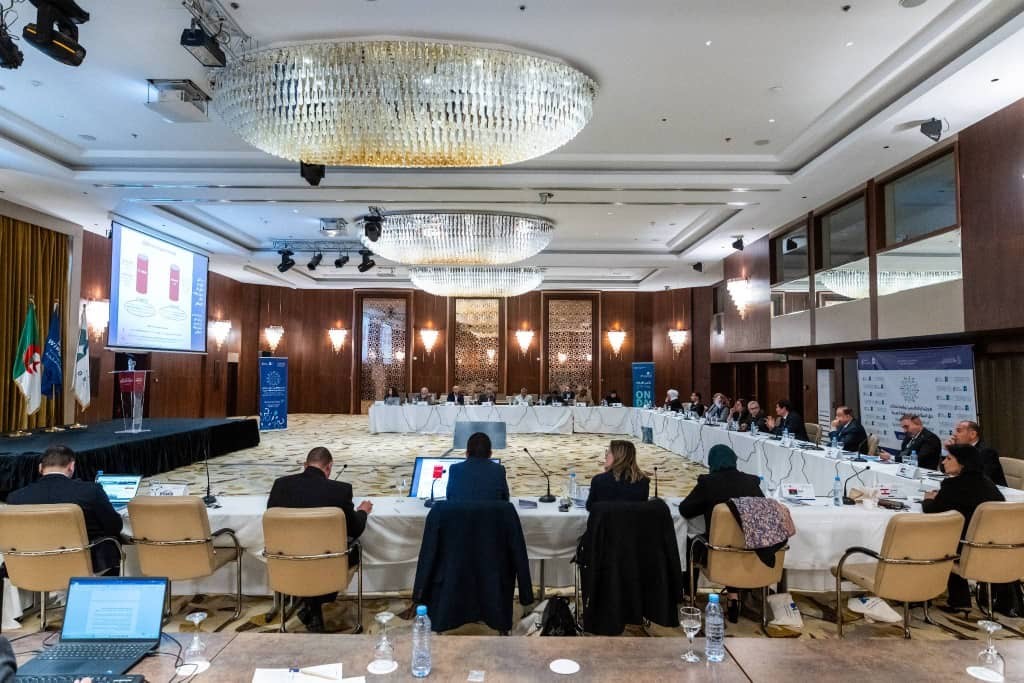
]]>Representatives from Copyright Offices of the Arab countries presented updates on their national strategies and talked about the copyright ecosystem, exploring solutions to foster a conducive creative ecosystem with strong legal frameworks and efficient infrastructure, addressing the challenges of digital diffusion and generative AI.
During the meeting the Algiers’ Roadmap was adopted, a huge step towards enhanced regional integration and the development of a balanced and more structured creative ecosystem for the countries of the Arab region.
IAF outlined the need for licensing solutions, specifically in the era of AI, where the Arab countries could further develop their position by implementing innovative ideas based on digital transformation. IAF highlighted the need for further support of Collective Management Organisations as the cornerstone of the creative industries.
Photo Credits: Chakib Tahar

The partnership between WIPO’s Accessible Books Consortium (ABC) and Dolphin Computer Access makes reading more seamless and inclusive. The app supports multiple formats, including DAISY, ePub, MP3, PDF, and large print, all in a single accessible platform compatible with iOS, Android, and Windows devices.
With this integration, users can access the ABC catalogue through libraries for the blind in countries that have ratified the Marrakesh Treaty. The collection is available in 18 languages and multiple accessible formats, free of charge.
“Working with ABC demonstrates how partnerships can make reading accessible to people everywhere,” said James Green, CEO of Dolphin Computer Access.
The International Authors Forum, as a member of the ABC board, fully supports the work of the Consortium and welcomes this news. IAF remains committed to collaborating with ABC to expand access and make more books available in accessible formats for readers worldwide.
For further details, you can read the full ABC article here.
]]>A settlement has been tentatively approved in a copyright infringement lawsuit in the USA against Anthropic AI. If the settlement is approved, more than *US$1 billion* will be paid out to some of the authors and publishers of 1/2 million books and ebooks that were illegally copied by Anthropic.
Payments will be roughly US$3,000 for each included book or ebook, divided between the publisher and the author(s) depending on their contracts.
*The works eligible for payments include works in all languages published worldwide, but non-US authors and publishers are unlikely to be notified or to receive any payment unless they make claims.*
The court will make a final decision on whether to approve the settlement in April 2026, but to receive payment, you must make a claim by *23 March 2026*. If you want to object to the settlement, you must object by 7 January 2026.
The *only* way to find out if your work is included and eligible for payment is to search for each of your works on the settlement website: https://secure.anthropiccopyrightsettlement.com/lookup
If your work is included, you can make a claim here:
https://secure.anthropiccopyrightsettlement.com/standard/claimant-info
More information and advice on making claims from the NWU:
https://nwu.org/anthropic
The case was brought forward in the summer of 2024 by authors Andrea Bartz, Charles Graeber, and Kirk Wallace Johnson, who alleged that Anthropic pirated millions of books from illegal shadow libraries such as LibGen and PiLiMi to train its AI tool Claude.
In June 2025, Judge William Alsup of the U.S. District Court for the Northern District of California ruled on summary judgment that using books without permission to train AI models could qualify as fair use, but only if the books were acquired legally. However, he denied the request from Anthropic for summary judgment on the piracy claims, finding that copying books from illegal sources was not fair use.
On July 17, 2025, Judge Alsup certified the piracy claims as a class action, including both authors and publishers whose works had been pirated, provided the books were registered with the U.S. Copyright Office and had ISBN or ASIN numbers.
Following mediation, the parties reached a proposed settlement, which was preliminarily approved on September 25, 2025. Anthropic agreed to pay $1.5 billion and to destroy the pirated datasets once litigation obligations end.
This case is a historic affirmation that authors’ work has real value and that copyright protections cannot be bypassed, even in the rapidly evolving AI landscape. It underscores the importance of defending creative rights and ensures that authors are recognised and compensated for their contributions even in this new digital age.
Read the range of responses and official statements from IAF U.S. members regarding this important news:
]]>