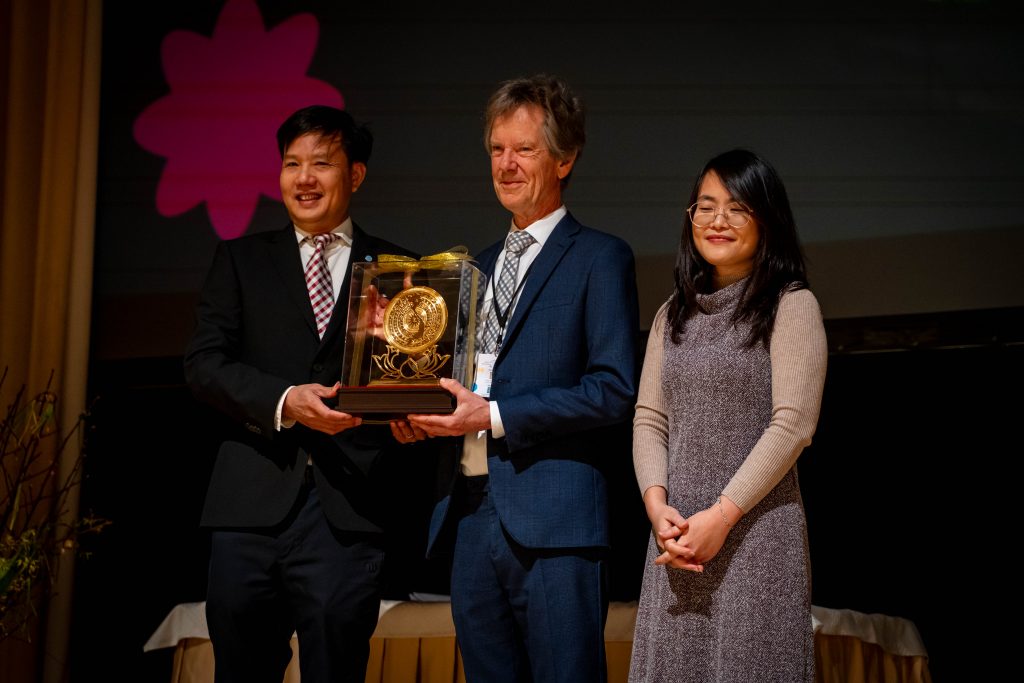
The event closed with the medal ceremony. Attendees were addressed by Tanja Fajon, Deputy Prime Minister of Slovenia and Minister for European and Foreign Affairs, who emphasized the importance of connecting young people as the future of ethical AI development and personally presented medals to medalists. Prof. Dr. John Shawe-Taylor, IAIO President and IRCAI Director, reflected on the Olympiad’s achievements and congratulated all contestants on their effort, knowledge, and dedication. Adrian Mladenić Grobelnik, AI researcher, presented his research about contemporary approaches to automating scientific discovery using large language models.
IAIO 2026 Winners
At the Closing Ceremony, 9 gold medals were awarded, alongside 15 silver medals, 24 bronze medals, and 14 honorable mentions.
Top 3 Gold Medalists:
Anango Prabhat, Great Britain
Bryan Zhu, Canada
Muyang Hou, China
Additional Gold Medalists:
Dale Liu, USA
Jianxu Chen, China
Xingzhi Lu, Great Britain
Kseniia Strelbytska, Ukraine
Dawid Kot, Poland
Victor Coen, New Zealand
“Congratulations to all medalists, and to every single contestant who competed at IAIO 2026. You’ve demonstrated to the world that the future of artificial intelligence combines technical brilliance with ethical awareness and social responsibility.” Prof. Dr. John Shawe-Taylor, IAIO President and IRCAI Director


About the IAIO 2026 Competition
The Olympiad unfolded in two rounds. The Scientific Round comprised demanding theoretical questions in mathematics, logic, physics, and data science. In the Practical Round, carried out via the Zindi platform, participants applied their programming skills to tackle real sustainability challenges. Contestants with the highest scores demonstrated that they are able to bring practical solutions closest to their answers in the theoretical round.
Throughout the competition, we encouraged the participants to develop solutions that are fair, inclusive, unbiased and accountable.
“Our goal is to present young people with a broader horizon for the use of artificial intelligence and to demystify it. We want young people to understand that AI can solve real-life problems — and that it must be used responsibly.” said Monika Kropej and Davor Orlić, IAIO’s Competition Directors.
Alongside the competition, participants explored Ljubljana and visited Center Noordung, building international friendships and professional connections that will last well beyond the event.
Beyond the IAIO 2026 Competition
At IRCAI, we are proud to support the next generation of AI professionals who will shape how AI is built. IAIO has become a launching pad for young AI talents to begin their successful careers. Gold medalist Anango Prabhat from Great Britain will begin studying Mathematics and Artificial Intelligence at MIT this autumn, with ambitions to become an AI researcher.
“UNESCO was founded 80 years ago with one of its founding principles being that of creating peace in the minds of the younger generation, bringing people together to meet and understand each other, avoiding the divergence and conflict that arises from misunderstanding. I hope that we have provided a forum within which those kinds of communication and understanding can be developed. We have demonstrated together that AI offers extraordinary opportunities, but also that we need to understand and manage its unintended effects, and use this amazing tool to tackle some of the biggest challenges that humanity is facing.” Prof. Dr. John Shawe-Taylor, IAIO President and IRCAI Director, closing ceremony
The next International AI Olympiad will be hosted by Vietnam in 2027.
Complete results are published on the IAIO’s official website.
]]>The event brings together winners of national AI competitions and their teams from 26 countries. IAIO 2026 is dedicated to developing a new generation of AI professionals who, in addition to advanced technical expertise, embrace an ethical, human-centered, and socially responsible approach to artificial intelligence.
This second edition of the IAIO comes to Ljubljana following a successful inaugural Olympiad held in autumn 2024 in Riyadh, Saudi Arabia, where Slovenian student Brest Lenarčič won first prize.
Organized by IRCAI in collaboration with ACM Slovenia, IAIO 2026 challenges participants in both theoretical and practical AI knowledge while developing solutions for environmental and social challenges. With access to the Zindi platform, which connects over 90,000 data and AI professionals in Africa and the Global South, competitors will create AI solutions for sustainable development.
“IAIO represents a unique opportunity for young people not only to test their technical skills, but also their understanding of the ethical dimensions of artificial intelligence,” explains Prof. John Shawe-Taylor, IAIO President and IRCAI’s Director. “We need a new generation of professionals who develop socially and environmentally responsible technologies. Slovenia and Ljubljana, with their strong tradition in education, research, and innovation in technology, are ideal hosts for this exceptional international event.”
The Olympiad is supported by leading AI experts including Prof. Stuart Russell (UC Berkeley), Prof. Serge Belongie (University of Copenhagen), Prof. Benjamin Rosman (University of the Witwatersrand), and Prof. Virginia Dignum (Umeå University), along with 15 UNESCO Chairs, and main sponsor Amazon Web Services (AWS).
“By organizing IAIO 2026, IRCAI strengthens its mission as a key global actor in connecting knowledge, education, and collaboration in responsible artificial intelligence,” say Monika Kropej and Davor Orlić, Competition Directors. “The second Olympiad confirms that we need events where high school students solve challenges and reflect on the ethical use of AI. They will be the ones who will significantly contribute to shaping responsible AI use in the future.”
Learn more at www.iaio-official.org
]]>The Top 100 2025 list is available here: https://ircai.org/global-top-100-outstanding-projects/results/
This year, participating applicants come from over 30 countries across all UN geographic regions: Africa, Europe, North America, Latin America, Asia and the Pacific, and Oceania. The 2025 call has proven that the use of AI in sustainability is thriving in research groups, startups, companies, non-profit organizations and public institutions. The AI innovations demonstrate higher project maturity, more advanced AI technologies, stronger integration of ethical and responsible AI practices, and clearer evidence of impact across all 17 SDGs. This year, we are expanding the scope of the programme by offering additional development and scaling opportunities to the highest-ranked projects with strong potential for further growth and real-world impact. The solutions listed are applicable and can credibly solve real development challenges.
Meet This Year’s Innovators
Outstanding Projects
CityRover AI (Canada) — AI-powered vehicle system that automates municipal infrastructure data collection, improving operational efficiency and reducing environmental impact for cities.
Child Growth Monitor (Germany) — AI smartphone app that detects child malnutrition through video analysis, delivering fast, low-cost nutrition assessments for children aged 6–59 months.
uLearn (Nigeria) — AI learning platform that generates curriculum-aligned STEM content in indigenous Nigerian languages, improving educational access and inclusion in local schools.
Cetus (Canada) — AI solution that detects and classifies whale populations using satellite imagery, enabling global monitoring and informed conservation decisions.
Valvur (Estonia) — Privacy-preserving edge AI tool that detects risky online behaviors and delivers gamified safety guidance, promoting digital well-being for children and families.
M-Situ (Kenya) — AI-powered IoT system that detects deforestation, wildfires, and illegal activities in real-time, enabling immediate conservation intervention.
ToumAI (Morocco) — Multilingual voice AI platform that enables inclusive access to digital and public services in underrepresented African languages and dialects.
Watchmen Platform (Germany) — AI manufacturing assistant that transforms machine signals into actionable insights, reducing downtime, energy waste, and CO₂ emissions.
Climate Policy Radar (UK) — AI platform that analyzes dense climate documents, supporting informed decision-making for policymakers, researchers, and advocates.
BioAutoML (Brazil) — Automated ML platform that enables non-experts to generate predictive models for biological sequences, democratizing AI in life sciences.
Briink (Germany) — AI platform that automates ESG reporting by extracting and benchmarking sustainability data from documents and websites.
Ishara AI (Kenya) — AI translation platform that bridges communication between Deaf and hearing communities through Kenyan Sign Language, text, and speech conversion.
Special Mentions
OpenProf (Slovenia) — Curriculum-aligned AI learning assistant that delivers step-by-step guidance and personalized feedback for students and educators in STEM subjects. (Oustanding category)
Zindi (United States) — Community-driven platform that connects over 90,000 learners in Africa and the Global South to AI career opportunities through data science challenges and training. (Oustanding category)
HumanAI (Spain) — AI tool that evaluates 35 socio-emotional competencies from text, providing bias-free insights for education, employability, and well-being. (Excellent category)
Aquascore (Morocco) — AI platform that ranks water criticality using multimodal data, guiding resource allocation decisions in water-stressed regions. (Excellent category)
Compar:IA (France) — AI platform that supports low-resourced languages while raising awareness of AI model plurality, cultural and linguistic bias, and environmental impact. (Promising category)
Monse (Slovakia) — AI monitoring system that detects routine anomalies in seniors’ daily activities, ensuring safety through real-time caregiver alerts. (Promising category)
Delia (Burkina Faso) — AI maternal health service that provides personalized guidance and triages health risks via SMS/WhatsApp, improving timely care access in Sub-Saharan Africa. (Early Stage category)
The Top 100, an AI & SDG global index, supports entrepreneurs, researchers, academics, and professionals in public agencies and social enterprises, especially those whose AI tools might not otherwise gain visibility in global markets or reach their full potential impact. The list includes outstanding, excellent, promising, and early-stage projects from all five continents, ensuring diverse voices are represented.
The reviewers looked for solutions that directly or indirectly solve sustainable development challenges, with a strong focus on AI, machine learning, and data science components. IRCAI made final decisions based on potential implementation and sustainability impact, as well as quality and maturity of scientific content, considering these criteria: robust AI component; clear, measurable SDG contributions; ethical and responsible AI practices; and implementation readiness with potential for tangible impact by the end of 2025.
Through the Top 100 platform, companies, organizations and individuals will have the opportunity to exchange knowledge, network and collaborate on shared goals across sustainable challenges in different regions. Solutions to the most important challenges of our time can be found in this network, which has the potential to transform into an ecosystem that supports the SDGs and continues to creates solutions for the benefit of everyone, worldwide.
The publication features contributions across two thematic tracks: one focusing on technical aspects of AI governance and digital transformation, and another bringing together interdisciplinary perspectives from fields including social science, public policy, law, and philosophy. Research topics address, for example, ethical governance frameworks, environmental sustainability, gender equality, cultural diversity, health and well-being, and ethical impact assessment, which are core priorities within UNESCO’s Recommendation on the Ethics of AI.
Access the Forum’s proceedings on UNESCO’s website.
With more than 2,700 participants representing 90 countries, the Global Forum served as a platform to highlight progress made since UNESCO’s Recommendation on the Ethics of AI was adopted by 193 member states in 2021—establishing the world’s first universally recognized framework for AI ethics. Prior to the Forum, IRCAI and UNESCO issued a global call for papers to engage researchers, practitioners, and policymakers to contribute their work on ethical, inclusive and human-centered AI. Selected submissions were presented at the research workshop, with 12 papers receiving recognition for their exceptional originality, rigor, and impact.
Best Paper Award Winners
Joint 1st Prize: Nancy Kwangwa, Danxia Chen, Yomna Ahmed Shawky Omran
Joint 2nd Prize: Ines Springael, Raghu Dhumpati, Shi Hao Lee, Supheakmungkol Sarin
Joint 3rd Prize: Aung Pyae, Isabella Ferreira Lopes, Nuttapat Ngernshoosri
Honourable Mentions: Ayoub Mohammed Albalushi, Juan Manuel Martínez García, Elham Albaroudi
Full details of the 12 best papers are available here.
These proceedings represent a significant step in collecting and disseminating research that drives the practical implementation of UNESCO’s AI ethics framework. The diverse contributions demonstrate a worldwide dedication to advancing AI innovation guided by ethical standards and public benefit.
]]>Artificial intelligence presents transformative opportunities for media, education, culture, and society. From newsrooms to classrooms and cultural institutions, AI can enhance teaching, storytelling, publishing, and cultural activities. This special issue aims to explore how AI technologies are integrated, adapted, and evolving in these settings as collaborative partners rather than autonomous tools.
We welcome submissions on:
- AI literacy and educational transformations
- AI in journalism, newsrooms, and publishing workflows
- Cultural identity and societal interpretations of AI
- Ethical, legal, and intellectual property implications
- Human–AI collaboration and the reshaping of professional identities
- Semiotic, psychological, and socio-cultural approaches to AI
- AI governance, policy, and global inequalities in adoption
- Socio-cultural AI (SCAI) and its implications for industry, society, and academia
Editors
Senja Požar, M.Sc.: JAISD Managing Editor and International Projects Manager at IRCAI and the Jožef Stefan Institute, Slovenia, with nearly 30 years of experience in publishing.
Mitja Jermol, M.Sc.: UNESCO Chair in Open Technologies for Open Educational Resources and Open Education, Deputy Director of IRCAI.
Panagiotis Kapos, PhD: Department of Communication, Media & Culture, Panteion University, Greece; Vice President of the Hellenic Foundation for Books and Culture (HFBC).
Nadim Sadek: CEO of Shimmr AI, recipient of AI Startup of the Year award, author, and thought leader on AI and publishing.
Key Dates
Abstract deadline: February 15, 2026
Full paper deadline: March 30, 2026
Publication: May 2026
Submissions
Submit your abstracts (300–500 words) to [email protected], indicating the issue title. Selected authors will be invited to submit their full manuscripts (4000-5000 words) by March 30, 2026.
For more information about the call and full submission guidelines, please refer to the call’s page.
]]>Science diplomacy for shared regional challenges
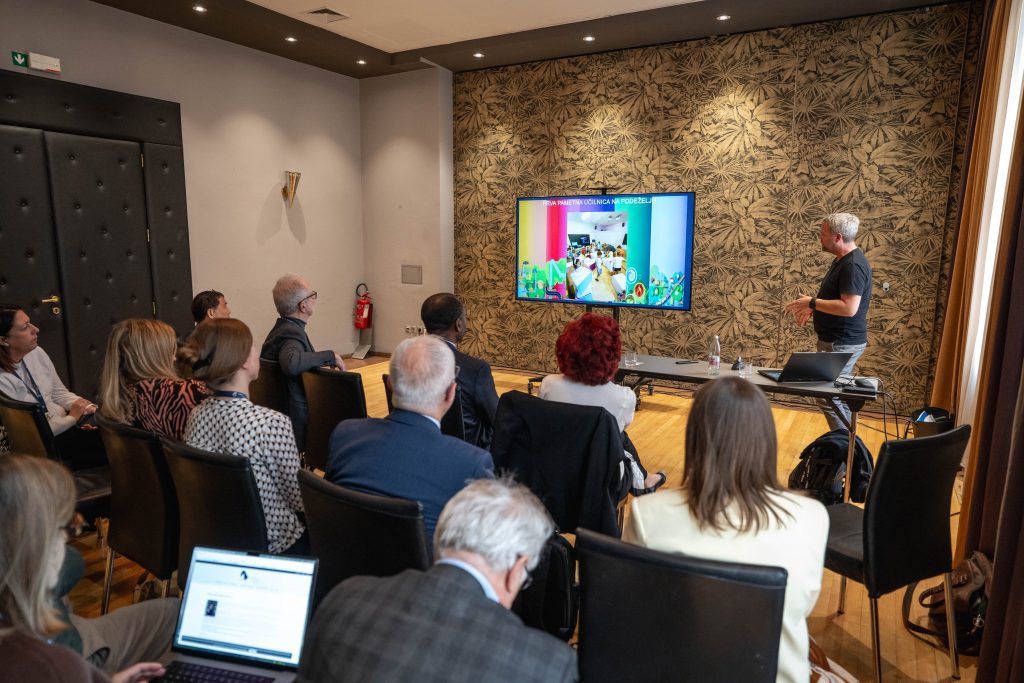
South-East Europe faces rapidly intensifying pressures—from climate impacts to uneven technological development and complex management of transboundary ecosystems. Participants agreed that science diplomacy is essential for building trust, aligning policies, and supporting evidence-based decision-making across borders.
In his opening remarks, Dr. Igor Papič, Minister of Higher Education, Science and Innovation of Slovenia, described science diplomacy as “a bridge connecting nations, fostering trust, and transforming shared challenges into opportunities for cooperation.”
Magdalena Landry, Director of the UNESCO Regional Bureau for Science and Culture in Europe, emphasised that “the region’s pressing issues—climate change, shared natural resources, and the equitable development of new technologies—can only be addressed through diplomacy grounded in science and mutual trust.”

Focus areas
The discussions centred on three priority domains:
- Climate change: South-East Europe and the Mediterranean are IPCC-defined climate change hotspots, where rising temperatures, floods, prolonged droughts, and ecosystem degradation are exceeding global averages.Experts also emphasised that water is central to regional stability. As one speaker noted, “Eighty percent of climate impacts manifest through water,” making water diplomacy indispensable—yet increasingly difficult—in a context of accelerating hydrological cycles, droughts, and floods.
- Emerging technologies: Technological transformation is reshaping cooperation and diplomacy. Without inclusive approaches, smaller and non-EU countries risk exclusion from AI, digital and scientific advances, widening existing gaps.
Participants underlined that access to open data is essential for science diplomacy, research security, and responsible technological development. While countries once guarded environmental and scientific data, the growth of open satellite and Earth observation systems has increased transparency and enabled more effective cross-border cooperation. Several experts stressed that scientific data becomes part of cultural heritage over time and should remain accessible for the benefit of all. - Shared natural resources: Many of the region’s most vital systems, such as the Danube, Sava, and Drin River basins, mountain ecosystems, and the Adriatic coastline, are transboundary systems that sustain livelihoods, biodiversity and economic activities. Yet, their joint management remains politically and technically complex.
Danube Basin case study
The Danube River Basin offers a notable example of science diplomacy in action. Through shared data platforms, cross-border research initiatives, and citizen-science projects involving 14 countries, UNESCO and regional partners helped build a long-term framework for cooperation. This bottom-up approach—from working with local communities and businesses to conducting scientific activities for children—demonstrated how science diplomacy can strengthen trust, improve resource management, and translate scientific knowledge into practical solutions. This example illustrates how science diplomacy can succeed when scientific collaboration, local knowledge, and communication expertise come together.
“Science can really solve our challenges, so it should rank higher in diplomatic efforts.” Agota David, Policy Officer at European Commission
“Trust allows closeness and diminishes barriers.” Giuseppe Provenzano, Project Manager at Union for the Mediterranean
“We should bring more consciousness about ethical science and technologies into diplomatic work.” Andrei Luca, Director of Cultural and Scientific Diplomacy at the Romanian Ministry of Foreign Affairs
Regional collaboration for the 2030 Agenda
Building on the first “Global Ministerial Dialogue on Science Diplomacy”, held at UNESCO earlier in 2025, and drawing on the ‘European Framework for Science Diplomacy’, participants explored approaches to mobilise science diplomacy in advancing climate action, ensuring equitable and ethical use of new technologies, and promoting sustainable management of shared natural resources in South-East Europe.
Through expert panels and thematic exchanges, the meeting identified ways to:
- Strengthen regional networks and knowledge-sharing
- Enhance science-informed policy cooperation
- Promote ethical and equitable governance of emerging technologies
- Improve the sustainable management of shared natural resources
The event served as a platform to share best practices and find solutions to common challenges. The resulting expert dialogue contributed to advancing the 2030 Agenda for Sustainable Development across the region.

Key outputs
Two deliverables will guide future collaboration in South-East Europe:
- Expert Recommendations for UNESCO’s engagement in science diplomacy in the region
- A Policy Brief highlighting successful initiatives and pathways for scaling effective approaches
These outcomes aim to support sustained collaboration and reinforce science as a foundation for dialogue, diplomacy, and peace.
In South-East Europe, science diplomacy plays an important role in lowering political tensions, supporting rapid responses to extreme weather events, and fostering cooperation on ethical technology development. Participants stressed that its impact must extend beyond shifting political agendas to deliver long-term regional benefits.
Organizers
The meeting was co-organised by the UNESCO Regional Bureau for Science and Culture in Europe, the Ministry of Higher Education, Science and Innovation of Slovenia, and the Slovenian National Commission for UNESCO, with the support of the Ministry of Foreign and European Affairs of Slovenia and the International Research Centre on Artificial Intelligence under the auspices of UNESCO (IRCAI).
Further reading
Cooperation through science diplomacy: Benefits and examples
The Role of Science Diplomacy in Water Supplies
UNESCO hosts global gathering to advance science diplomacy for peace
Scientists and policymakers tackling complex issues at the nexus of science and diplomacy
Bridging borders: Science diplomacy for water protection
Since its launch in 2023, the EU-LAC Digital Alliance has been fostering bi-regional cooperation across digital technologies, policy frameworks, and governance models. Bringing together EU Member States, Latin American and Caribbean countries, the Alliance reflects a shared commitment to advancing digital transformation under the EU’s Global Gateway Strategy. The programme organizes high-policy level dialogues with multistakeholders, such as regional organizations, civil society, academia, and the private sector to promote a human-centric, inclusive, and secure digital transformation.
“The Global Gateway stands for sustainable and trusted connections that work for people and the planet. It helps to tackle the most pressing global challenges, from fighting climate change, to improving health systems, and boosting competitiveness and security of global supply chains.“ The Global Gateway Strategy

IRCAI’s work within the Digital Alliance
Among the Alliance’s main priority areas – data governance, e-governance, cybersecurity, and connectivity – artificial intelligence has emerged as a key new component. IRCAI serves as the implementing partner for the AI priority area, working to ensure that the digital transformation contributes to sustainable development and equitable opportunities across Europe, Latin America, and the Caribbean.
Our work focuses on advancing human-centric, inclusive, and human-rights-respecting AI governance, aligning regional efforts with the EU AI Act, eLAC 2026, and global frameworks such as the UN’s 2030 Agenda for Sustainable Development and the Global Digital Compact. Through its leadership, IRCAI promotes alignment of AI governance and policy frameworks, supports countries developing national AI strategies and ethical guidelines, and fosters multi-stakeholder cooperation between governments, academia, and civil society.
In addition to policy coordination, IRCAI contributes to the development of AI observatories and research, capacity-building programmes, and regulatory innovation across the LAC region. By strengthening knowledge exchange between European and Latin American institutions, IRCAI supports the creation of robust AI ecosystems, emphasizing transparency, righs-based innovation, and the inclusion of local and indigenous knowledge.

Digital Alliance’s outcomes so far
Over the past two years, the Digital Alliance has made notable progress across its thematic pillars:
- Artificial Intelligence (AI): Joint initiatives are advancing ethical and responsible AI development across the region. Through high-level dialogues and policy cooperation, IRCAI contributes to promoting inclusive AI governance aligned with the SDGs.
- Cybersecurity: The EU-LAC SHIELD network is being established to combine reactive incident response with preventive strategies, strengthening digital resilience in LAC countries. Collaborative projects also support national cybersecurity frameworks and critical infrastructure protection.
- Connectivity and Digital Infrastructure: Projects such as the BELLA subsea cable and new satellite initiatives are expanding high-speed connectivity for research, education, and innovation—laying the foundation for cross-border collaboration in AI and data-driven science.
- Data Governance and e-Governance: Multi-stakeholder dialogues and capacity-building initiatives are supporting governments in implementing data protection, digital identity, and e-governance frameworks, ensuring that digitalization benefits citizens equitably.
- Innovation and Skills Development: Through the EU-LAC Digital Accelerator and related programs, over 1,500 start-ups, SMEs, and research institutions are driving inclusive innovation. Initiatives such as the Network of Women Leaders in Digital are also closing gender and digital divides.

Looking ahead
As the EU-LAC Digital Alliance enters its next phase, the focus will remain on deepening cooperation and aligning policy priorities between the two regions. In 2025–2026, IRCAI will continue supporting policy dialogues, technical workshops, research exchanges, and capacity-building activities aimed at strengthening responsible and inclusive AI ecosystems. In 2027, IRCAI and the Ministry of Foreign Affairs of the Republic of Slovenia plan to host a High-Level Policy Dialogue on AI in Slovenia, marking another milestone in advancing bi-regional collaboration and sustainable digital transformation.
For full information on the Digital Alliance’s outcomes over the past two years, please read this EEAS article.
Related links
New Agenda to strengthen EU’s partnership with LAC
Bella Programme
EU-LAC Digital Accelerator
Copernicus LAC Chile
D4D Hub
LAC4 – Latin America and Caribbean Cyber Competence Centre

As AI systems become increasingly embedded in public governance, media ecosystems, and civic infrastructures, ensuring that these technologies are aligned with democratic values, institutional trust, and civic agency is more critical than ever. This special collection invites interdisciplinary research exploring how AI can be designed, governed, and deployed to serve the public interest and uphold human rights.
Topics of interest include:
- Fairness, bias, and non-discrimination
- Trustworthiness, Safety, and Accountability
- Democratic Governance & Regulation
- Participation & Co-Design
- Media Integrity, Literacy & Information Ecosystems
- Public Services & Social Outcomes
- Data Governance & Privacy
- Ethical, Legal, and Social Implications (ELSI)
- Evaluation, Benchmarks, and Methods
Key Dates
Paper submission deadline: February 15, 2026
Publication date: April 2026
Submissions
Please send full papers (4000–5000 words) to [email protected], addressed to the JAISD Editorial Team or Mrs. Senja Požar, and indicate the title of this issue. For more information about the call and full submission guidelines, please refer to the JAISD’s issues page.
]]>Scheduled for November 8–9, 2025, the hackathon invites participants from around the globe to engage in collaborative AI development. The event will be held both online and in person across select cities, including Boston, London, Berlin, Lisbon, Linz, Zagreb, and Sarajevo. Participants will have the opportunity to work alongside top talent from prestigious institutions such as MIT, Harvard, and Princeton, as well as professionals from leading tech companies.
The hackathon offers an excellent opportunity for participants to:
- Compete for cash prizes
Top-performing teams will be awarded substantial cash prizes for their innovative solutions, providing recognition and financial support to help advance their projects. - Receive valuable sponsor credits
Every participant will receive credits, tools, or resources from event sponsors, which can be used to accelerate their AI development, cloud computing, or other technical projects. - Have projects reviewed by expert judges
A panel of AI researchers, industry leaders, and tech experts will provide detailed feedback on each submission, helping participants refine their solutions and gain mentorship. - Connect with a global network of innovators
Collaborate and exchange ideas with students, professionals, and researchers from prestigious institutions and leading companies worldwide, building long-term relationships that extend beyond the hackathon.
The hackathon is co-organized by IRCAI, CIC (Cambridge Innovation Center), Æthos, AI Tinkerers and SarAI – The Center for AI Innovation in Southeastern Europe.
As a co-organizer, IRCAI is committed to fostering AI solutions that contribute to sustainable development and empower innovators worldwide. We are dedicated to promoting ethical AI practices and supporting initiatives that leverage technology for the greater good.
Learn more and register for the event at its official website.
]]>“AI will not transform education, people will.” Mitja Jermol, IRCAI Deputy Director and UNESCO Chair on Open Technologies for OER and Open Learning
At this critical moment, as AI in Education adoption accelerates worldwide, IRCAI is committed to ensure that AI remains at the service of education, a fundamental human right (SDG4). The main message from the recent UNESCO’s Digital Learning Week was clear: AI in education must be ethical, inclusive, and aligned with human rights. Building on this global call, IRCAI translated these principles into action at ASEFClassNet18, supporting teachers to integrate AI ethically, inclusively, and responsibly in their classrooms.
Over 100 teachers, education specialists, and AI experts from more than 30 countries across Asia and Europe participated in the ASEFClassNet18 School Collaboration conference, held from 6 to 10 October in Maribor, Slovenia. The event, co-organized by the Asia-Europe Foundation, IRCAI, Open Education for a Better World (OE4BW) programme and the Institute of Anton Martin Slomšek, showcased the latest approaches to AI in classrooms.
The conference featured keynote speeches, panel discussions, workshops, and networking sessions, providing a platform for peer learning, knowledge exchange, and the presentation of Innovative Teaching Practices (ITPs) developed during the seven-month ASEFClassNet programme. IRCAI’s deputy director Mitja Jermol contributed as a keynote speaker and jury member, while Anja Polajnar led the OE4BW sessions on open education and OERs.
The ASEF Classroom Network (ASEFClassNet) programme helps schools engage with AI not only by adopting tools, but by fostering teacher agency, ethical frameworks, and locally relevant innovations. Through its hybrid model, international collaboration, and open-resource design, the initiative equips educators to guide AI use responsibly and has the potential to influence teaching practices and education policy across Asia and Europe.
“Let’s not leave the future of education to algorithms, investors, or policymakers alone. Let’s (re)claim it together.” Dr. Velislava Hillman, Founder of Education Data Digital Sovereignty (EDDS)
The conference explored diverse perspectives on AI in education, particularly the intersection of technology, policymaking, ethics, and pedagogy. Participants gained insights from Singapore, Slovenia, and other countries on integrating AI into classroom learning, promoting digital literacy, and encouraging ethical reasoning in students.
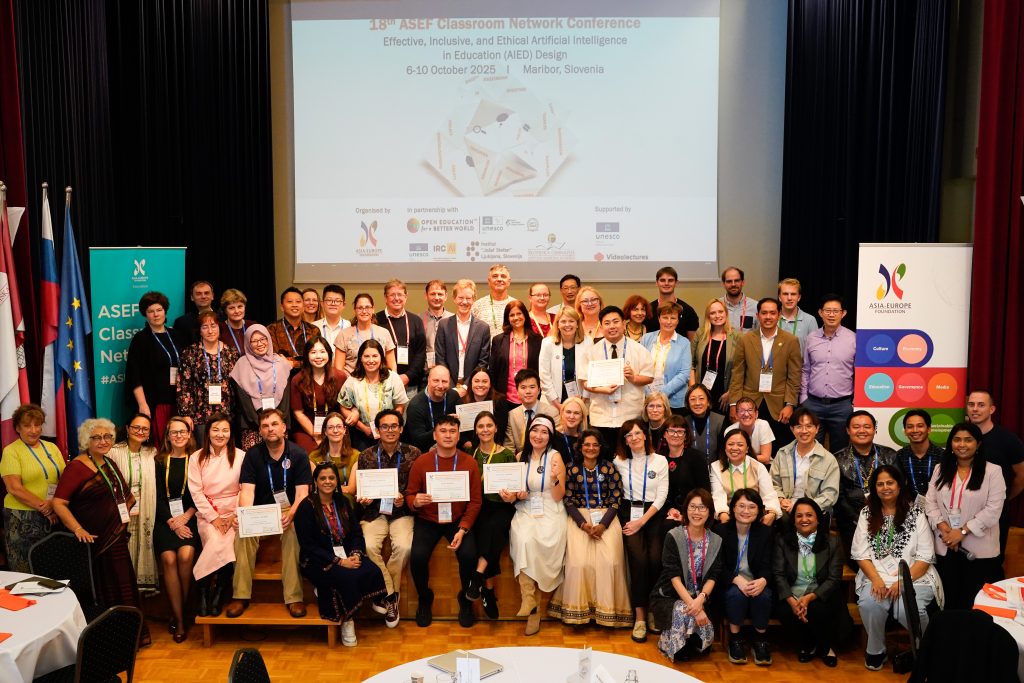
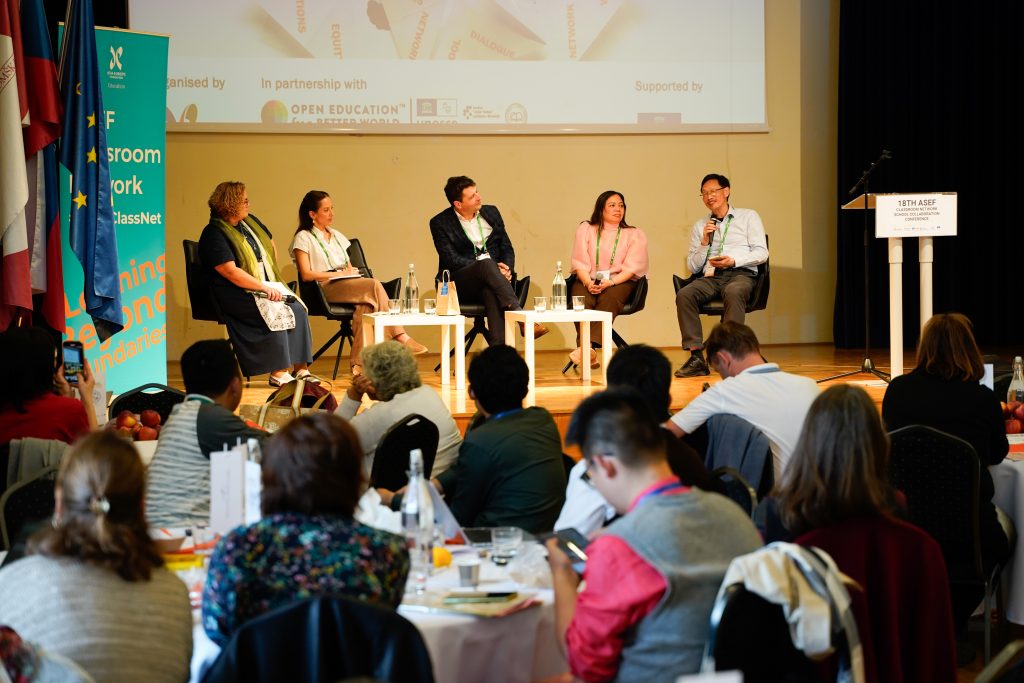
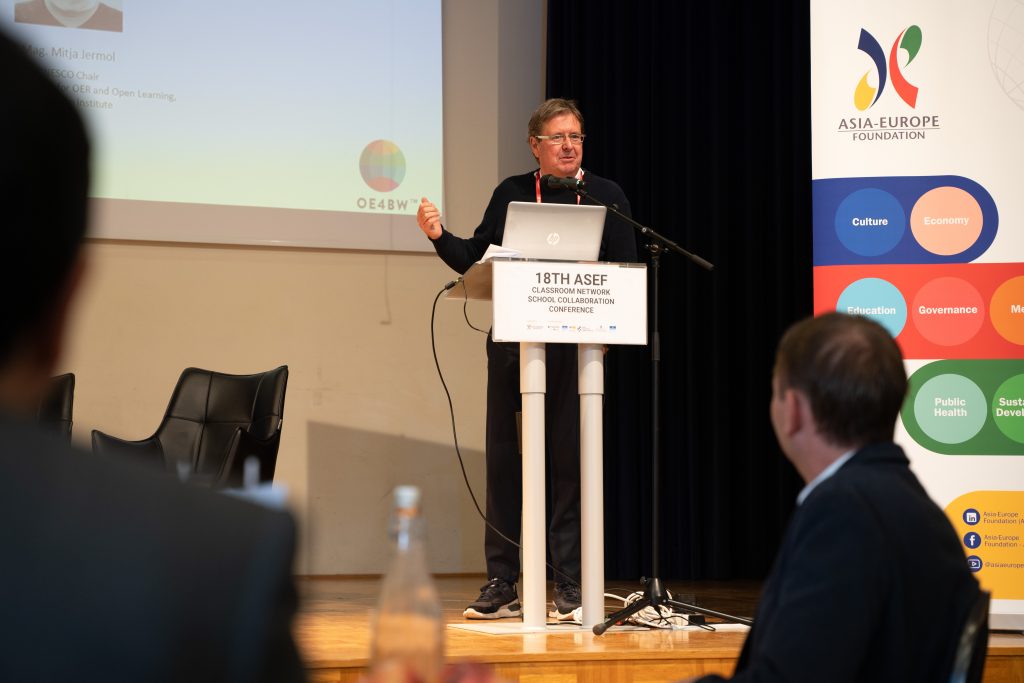
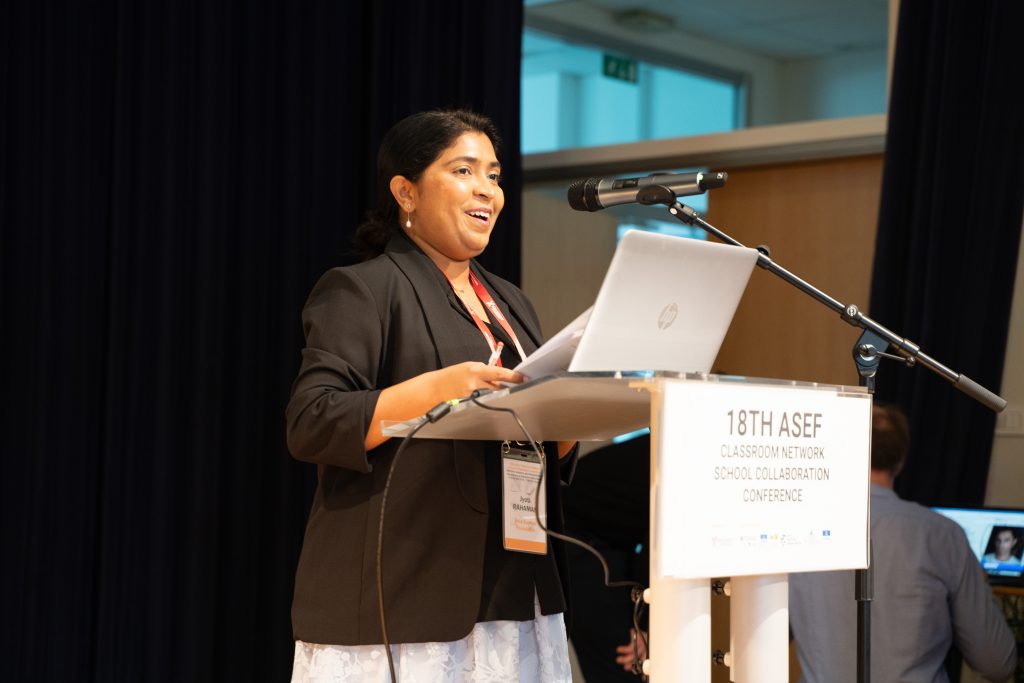
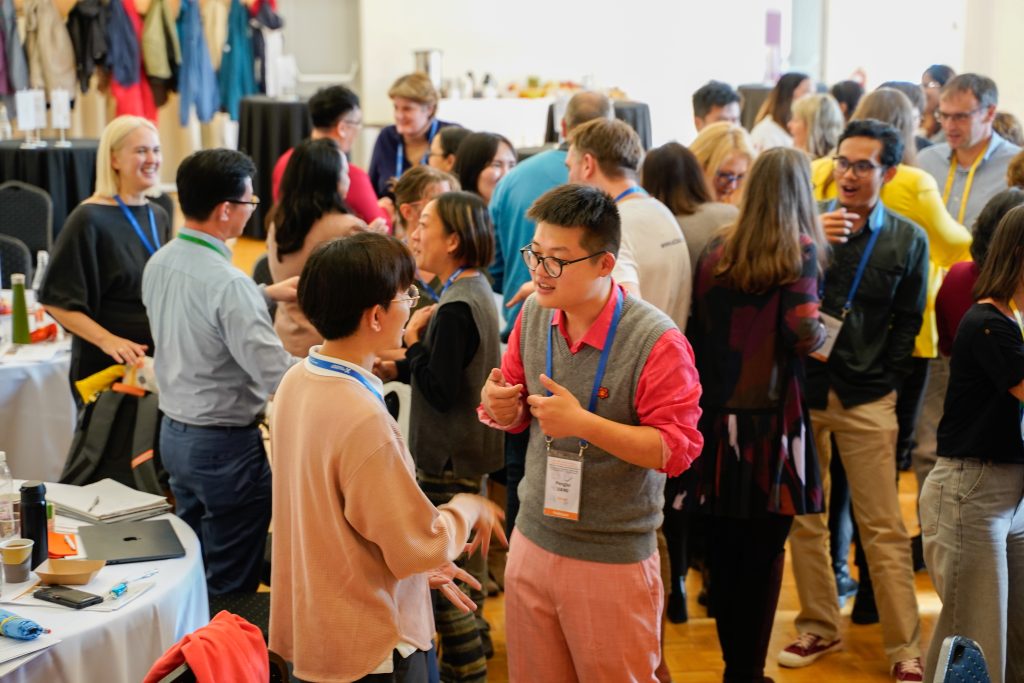
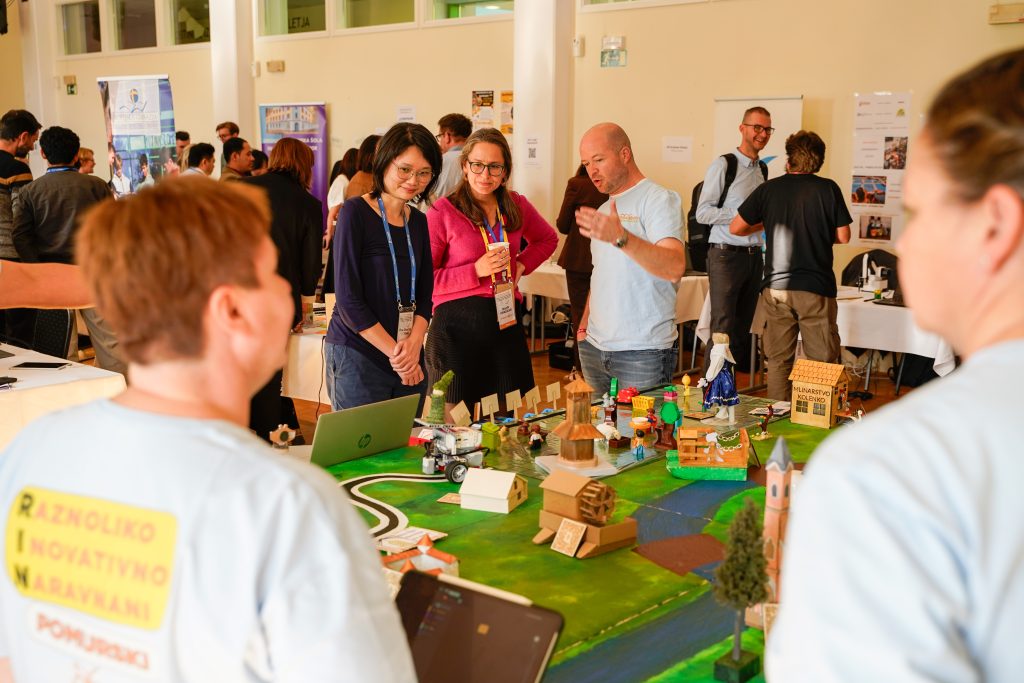
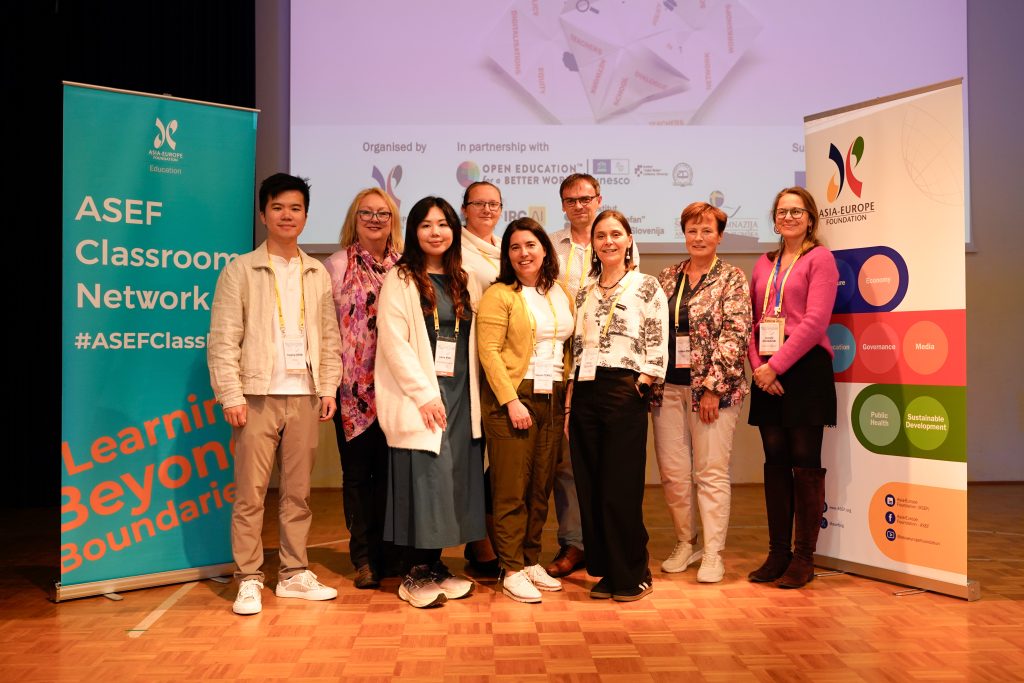
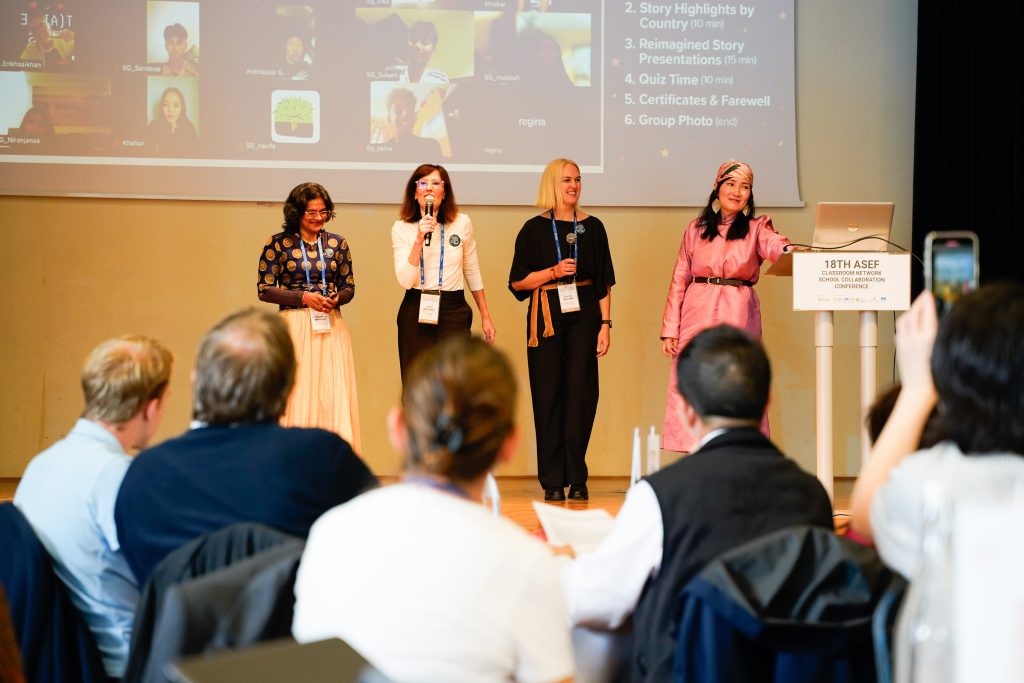
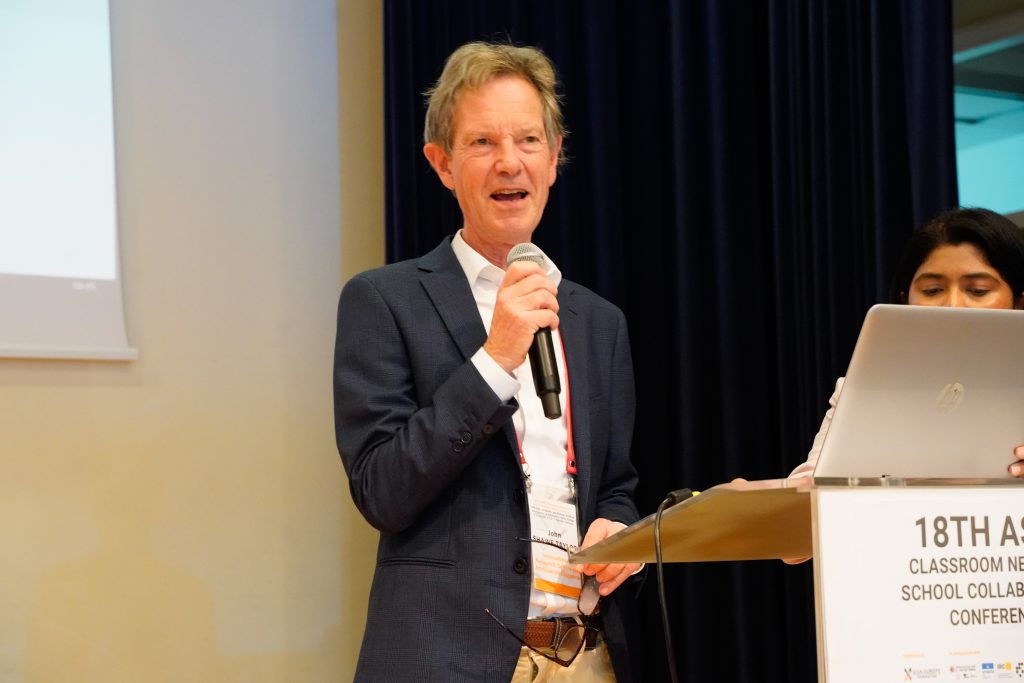
Photo credits: Videolectures.net
On the final day, the conference concluded with an awards ceremony recognizing the most effective and scalable Innovative Teaching Practices (ITPs). Each project demonstrates how AI can be implemented in classrooms across multiple countries, targeting secondary and vocational students, while providing an opportunity for wider adoption.
Gold Award: “The AI Horizon”
Developed by Melania Cini, Laurel Silvester, Dejan Košenina and mentored by Yuqing Long.
Integrates AI literacy and ethical awareness into classrooms in Malta, Australia, and Slovenia, helping students explore sustainability in daily life using AI tools. The project builds teacher confidence to embed AI responsibly across subjects, offering a scalable model for global AI literacy curricula.
Pearl Award: “A Cross-Cultural Civic Project: Evaluating AI through Human Perspectives”
Developed by Natalie Berndt, Mirela Petkova, Edwin Quinosa and mentored by Juliette Bentley.
Links schools in Australia, the Philippines, and Bulgaria through a civic learning project where students use AI tools like Perplexity and Brisk to analyse social and environmental issues. The practice teaches students to evaluate AI-generated content ethically and prepares teachers to guide critical AI use worldwide.
Jade Award: “3D StoryScape”
Developed by Mark Benesio Carace, Andreas Galanos, Parameswari Jayaprakash and mentored by Daniel Gonzales.
Combines storytelling and 3D design with AI tools such as DALL·E, Firefly, and Synthesia to help secondary students in Greece, India, and the Philippines create interactive visual narratives.
Special Award 1: “ Voices Across Borders: Using AI to Learn, Reflect, and Sustain”
Developed by Michael Harvey, Naimh Mc Nally, Yuxin Zheng and mentored by Susana Tomaz.
Connects students in New Zealand, China, and Ireland through an AI-enabled STEM project using Gemini Gems and Co-Pilot agents. By training students to question AI bias in energy data and sustainability, it models global teamwork and culturally aware AI education for replication in other contexts.
Special Award 2: “Folk Tales Reimagined: Bridging Cultures through AI and Storytelling”
Developed by Stasele Riskiene, Vesna Marinčić, Vemalathevey Manikiam, Nomintuul Byambatsogt and mentored by Maria Silva.
Engages students from Lithuania, Slovenia, Malaysia, and Mongolia in reinterpreting folk tales through AI-generated visuals and multilingual storytelling tools. The project improves language learning, fosters cultural understanding, and showcases scalable creative AI use across humanities curricula.
Special Award 3: AI FOOTPRINTS – Traces of Change through STEAM
Developed by Dedy Lucky, Marina Del Barco Molpeceres, Nam Ngo Thanh, Yuanting Liao and mentored by Lena Ang.
Brings together students aged 13–17 from Vietnam, Indonesia, Spain, and Taiwan to use AI and STEAM tools for environmental problem-solving. Students collect and analyse real-world data, co-create AI codes of conduct, and demonstrate how AI literacy can drive sustainability and citizenship education globally.
IRCAI has collaborated with ASEF for the past two years to advance SDG 4 (Quality Education), empowering teachers as leaders in ethical AI integration. IRCAI provides strategic guidance, expertise, and, through OE4BW, open and inclusive approaches to AI in education, ensuring no teacher or learner is left behind in the digital transformation.
The ASEFClassNet programme equips secondary, high, and vocational school teachers across Asia and Europe with knowledge and pedagogical skills to integrate AI thoughtfully and ethically. Spanning over seven months, the programme combines self-learning, collaborative team learning, and classroom implementation.
Rather than simply promoting AI tools, the initiative encourages critical evaluation and creative application. Teachers co-create and test AI-enhanced teaching practices that are context-appropriate, scalable, and sustainable. ASEFClassNet19, the next conference edition, will continue this work with a focus on human-centric AI in education, aiming to empower over 300 educators across Asia and Europe through the main programme and spin-off initiatives.
Learn more about the ASEFClassNet18 conference on the ASEF’s website.
]]>