The post March 2026 product updates: smarter analytics and faster workflows appeared first on Kortext.
]]>Discover our latest updates
This release includes batch editing and an updated analytics experience, offering faster insights and smarter filtering. There is also a series of updates across our Android, iOS, Mac and Windows apps to deliver a smoother, more consistent experience.
Kortext acquire
Batch edit
Batch edit makes it faster and easier for customers to update multiple items in an order basket at once.
- Prepare orders more quickly: Customers can update multiple items in one action – adjusting details, moving or copying titles between baskets and downloading selected‑item data, eliminating repetitive, title‑by‑title work.
- Maintain consistency across multiple titles: Bulk updates ensure copies, licences and item details stay aligned across all selected items.
- Reduce manual effort during acquisition workflows: Multi‑item editing streamlines ordering tasks and cuts out unnecessary manual work.
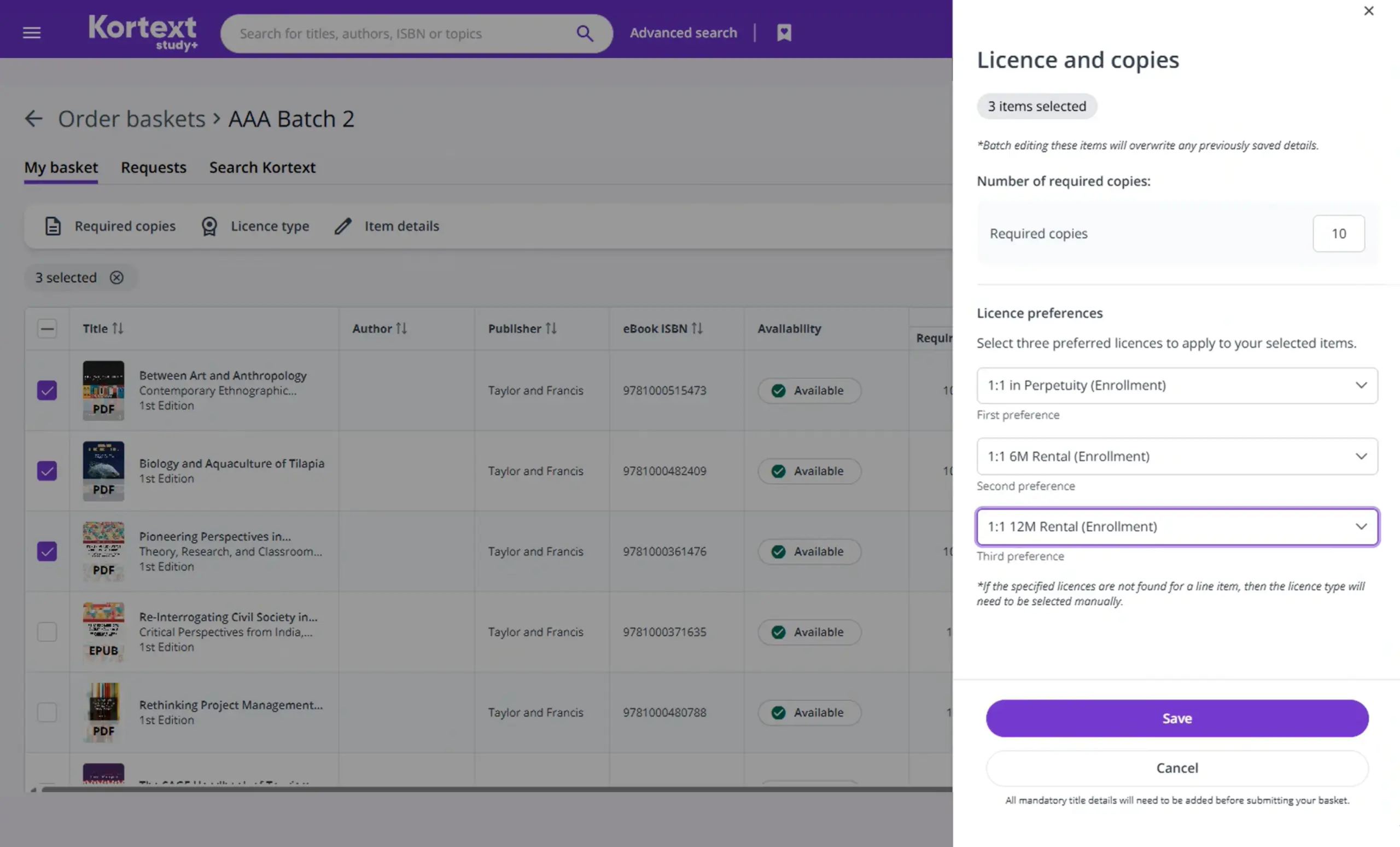
Kortext acquire and teach
Analytics
We’ve introduced updates to how analytics works, bringing a more intuitive, streamlined and accessible experience across both apps.
These updates apply consistently to both platforms, ensuring a unified analytics experience:

Updated acquire analytics

Updated teach analytics
- Streamlined Access to Analytics: A new, dedicated Analytics section has been added to the main navigation—making insights easier and faster to reach.
- Unified Reporting Workflow: Reports and their associated analytics are now consolidated into a single, integrated analytics space, eliminating new browser tabs and creating a smoother, clutterfree workflow.
- Smarter, Cascading Filters: Filters now automatically adjust based on user selections, ensuring only relevant and available options appear. This makes filtering faster, clearer and far more intuitive.
App updates
In this release we also made substantial changes and improvements to our various platforms, including to our Android, iOS, Mac and Windows apps.
Android app updates
- The app now alerts you when a newer version is available to download.
- PDFs now support vertical scrolling for easier page navigation.
- Double‑tap to instantly reset PDF zoom.
- The note save button now clearly shows when there are unsaved changes.
- The Book menu and My Files menu have been redesigned using a bottom‑drawer layout.
Apple app updates
iOS + Mac

- The apps now support Apple’s new Liquid Glass UI for Mac/iOS 26+ devices for a smoother experience.
- The note save button now clearly shows when there are unsaved changes (purple) and when everything is saved (grey).
- The download error message is clearer and easier to understand: “Unable to Download – We couldn’t complete the download. Please check your connection and try again.”
iOS‑only
- The search bar now hides automatically while scrolling through your Library and Collections.
Mac‑only
- ePUBs now default to Online Search for more accurate and relevant results.
- A new prompt now appears when switching between Read Aloud modes to clarify the change
As part of a continuous effort to refine and improve our products, we’ve also delivered several updates to make the user experience more reliable, more consistent and more accessible.
Why not read about another recent platform update? Learn about our new advanced search feature.
The post March 2026 product updates: smarter analytics and faster workflows appeared first on Kortext.
]]>The post Thriving at university with study+ and stream appeared first on Kortext.
]]>Thriving at university: how Kortext study+ and Kortext stream support student health and wellbeing
Written by Dr Rachel Maxwell, Director of Sector Engagement and Academic Research at Kortext. This blog is based on a recent Kortext presentation as part of a Student Minds webinar that featured guest speakers from the University of East London.
University life can be both exciting and challenging. While students embark on a journey of academic growth, they also face pressures that can impact their wellbeing. At Kortext, we understand the importance of supporting students in every aspect of their university experience.
In this blog, we explore how Kortext study+ and Kortext stream are designed to enhance student health and wellbeing.
Empowering students with Kortext study+
Kortext study+ integrates seamlessly with the Virtual Learning Environment (VLE), providing students with direct access to a wide range of resources, including those for wellbeing support.
Kortext study+ includes a permanent link to the Student Minds website, ensuring that students can access a mental health resources and support in just one-click – making help available anytime for students who need immediate assistance.
In addition to mental health resources, study+ offers a variety of open access collections, including a stress awareness collection, featuring books and materials specifically curated to support student health and wellbeing.
Universities can also create custom collections to add to the ‘My Library’ bookshelf about the specific mental health and wellbeing resources available within their institution.
Student mental health is also impacted by their study environment. Users of study+ have access to a range of features, designed to ease the administrative and logistical aspects of learning.
For example, the platform’s intuitive design allows students to highlight text, add notes, and even translate content into different languages – a feature that is particularly beneficial for international students who may find it easier to understand complex material in their native language.
By embedding these tools within the student learning workflow, study+ supports deeper learning and helps students engage more effectively with their coursework.

Enhancing learning and wellbeing with Kortext stream
Kortext stream takes student support a step further by leveraging data and analytics to monitor student engagement, which research has shown to be closely linked to mental health and academic success.
By tracking engagement levels, stream can identify students who may be at risk and prompt early intervention.
For example, if a student’s engagement drops significantly, stream can send a gentle nudge to the student, encouraging them to reach out for support. If the student doesn’t respond, a notification is sent to their tutor, prompting a support meeting.
This proactive approach ensures that students receive the help they need before escalation.
Kortext stream also provides valuable insights into student behaviour, helping universities tailor support. By analysing engagement data, universities can identify patterns and trends, allowing them to implement targeted interventions.
This data-driven approach not only supports individual students but also informs broader institutional strategies for student wellbeing.
The impact of early intervention
Early intervention is crucial in preventing mental health issues from becoming crises.
By identifying changes early and virtually, universities can provide timely support and prevent escalation by addressing issues long before they become apparent in the physical classroom.
“I was able to see when my anxiety started & to have a system like this made it so much easier to understand the journey as a whole … because it is overwhelming.”
(An NTU Business Management student interviewed for the BBC World at One 31/10/2019)
Building a supportive community
A supportive community is essential for student wellbeing. At the heart of Kortext’s approach is the belief that data should start conversations, not dictate actions.
Engagement data provides a starting point for meaningful conversations between students and staff, facilitating tailored support and connecting students with the appropriate resources.
Conclusion
Kortext study+ and Kortext stream are powerful tools in supporting student wellbeing. By providing easy access to resources, monitoring engagement, and facilitating early intervention, these solutions empower students to thrive academically and personally.
As universities continue to navigate the complexities of student support, Kortext remains committed to enhancing the student experience and promoting a culture of wellbeing.
Bring wellbeing support closer to your students by adding your resources to their Kortext bookshelves – get in touch today.
The post Thriving at university with study+ and stream appeared first on Kortext.
]]>The post Celebrating Kortext’s ladies in leadership appeared first on Kortext.
]]>International Women’s Day 2026: Hear from Kortext’s ladies in leadership
Hear from four women from our senior leadership team at Kortext where they’ll describe – in their own words – what they enjoy about their roles and how they contribute to the learning experience both at Kortext and for users all over the world.
Rachel Maxwell
Director of Sector Engagement and Academic Research
Rachel shares what she enjoys most about her role – from the freedom to collaborate across institutions and teams, to listening closely to customers and helping shape products that truly support students. All guided by a simple but powerful belief: our work should matter.
As a firm believer in collaboration as the key to progress, Rachel brings people together. She thrives on turning conversations into opportunities to learn, inform, and make a meaningful impact on the student experience. No two days are the same, and that’s exactly how she likes it.
Driven by a desire to make a difference, she listens deeply, connects thoughtfully, and shows up each day ready to contribute something that counts.
Swipe through to hear from Rachel in her own words…


Sangeeta Pan
Director of IT Project Management
Sangeeta reflects on what makes Kortext a unique place to work – from a culture of ‘failing forward’ that treats setbacks as opportunities to learn, to structured mentorship that accelerates growth and fosters trust from day one.
As a leader, Sangeeta is passionate about strong partnerships, high delivery standards and embedding thriving practices across the organisation. For her, it’s not just about delivering projects, it’s about building something bigger, together.
As Sangeeta puts it: “At Kortext, we are building the future of learning. One project, one partnership and one bright mind at a time.”
Swipe through to hear from Sangeeta in her own words…
Vicky Titley
Head of Human Resources
For Vicky, learning is everywhere. Sitting at the heart of our community and culture at Kortext, Vicky facilitates personal growth opportunities across the business, encouraging continued development and wellbeing.
Vicky is passionate about helping people unlock their potential without limitation, valuing the close-knit culture at Kortext, where teams know one another well and personal conversations still matter.
It’s that connection, combined with a shared drive to make a difference, that makes the work truly meaningful.
As Vicky puts it: “Surround yourself with people who genuinely want to make a difference. Together, you can help shape and drive growth into 2026 and beyond.”
Swipe through to hear from Vicky in her own words…


Emma Stephens
Head of Marketing
“We’re not just marketing a product; we’re shaping learning experiences that have real impact for students.”That’s how Emma sees her work at Kortext, and it captures her approach perfectly.
Driven by a collaborative team with a genuine shared sense of purpose, Emma finds meaning in knowing that what they do truly makes a difference. For her, marketing in edtech is about creating clarity, building connection and helping initiatives scale with purpose.
She’s energised by the bigger picture too. Learning is becoming more connected across the sector, and the conversations that emerge from moments like Kortext LIVE are something she feels genuinely proud to be part of.
Swipe through to hear from Emma in her own words…
A huge thank you to Rachel, Sangeeta, Vicky and Emma for taking the time to share their experiences and answer our questions. It was a fantastic opportunity to see leadership through their eyes.
International Women’s Day has been a great moment to celebrate the amazing women across our business and the wider sector. It’s inspiring to see more women stepping into leadership roles and setting powerful examples for the next generation of industry leaders.
The post Celebrating Kortext’s ladies in leadership appeared first on Kortext.
]]>The post THE Awards Outstanding Library Team of the Year 2025 appeared first on Kortext.
]]>An interview with THE’s Outstanding Library Team of the Year 2025
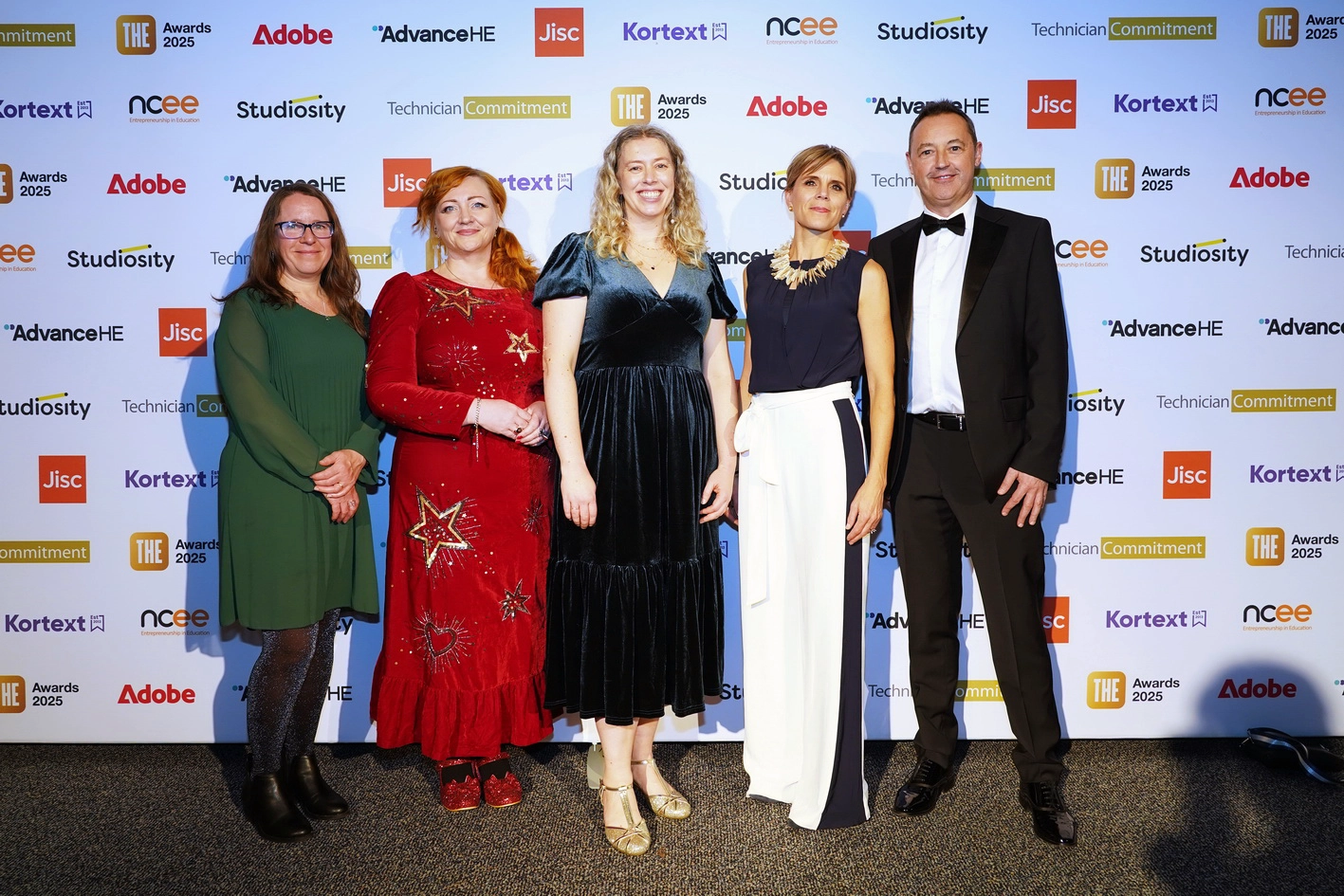
We were joined by Sarah d’Ardenne, Head of Library Services at the Royal Northern College of Music, to talk about what the win meant to the team and discuss the details of their award-winning submission.
Congratulations, Sarah! How did it feel to win the award?
Thank you, it felt amazing and we were very surprised. As a small, specialised institution it’s easy to feel like you can’t compete with the incredible projects that larger institutions are able to conduct – but it turns out we could!
It’s not an award that we’d ever gone for before, but we had lots of encouragement from our principal and I’m very grateful for the support we had from the development team in putting the submission together.
The win has been a fantastic morale boost for the team and a lovely recognition of each individual’s hard work and dedication. The day after, my inbox has never been more full with congratulatory messages from staff both past, present, and from other institutions as well.
It really highlights how recognised the award is and the appreciation of our department, which is a lovely feeling.
Could you tell us a bit more about your winning entry?
Absolutely, it really focused on what makes us a unique service which is our 1:1 support, bespoke service that we’re able to provide for staff and students – from point of offer to graduation and beyond.
23/24 was a big year for that and included a large number of initiatives that maximised the amount of personalised support that we could provide. This included collaborations with the Student Wellbeing Hub, our School of Wind, Brass and Percussion, and development projects that helped us to diversify our collections.
Talking a bit more about personalised support – how did your partnership with the Student Wellbeing Hub begin and what impact has it had on students?
We had a restructure of roles that enabled us to create a primary point of contact in the library for wellbeing staff and more importantly for the students with personal learning plans (PLPs).
Once the wellbeing team has set up a student’s PLP, they can refer them directly to this member of staff who will invite them to discuss any individual requirements that the library can assist with.
We’ve also developed a policy that provides students with a PLP extended time with lending materials, so they get that extra provision without needing to ask for it. This takes the stress away for the students who may be reluctant to ask for help.
The library provides offer holders with access to sheet music before enrolment – what motivated this initiative and how has it helped students feel connected before they arrive?
This came about after a presentation from the Student Recruitment Team. They were going through their ideas to keep offer holders engaged and that got me thinking about how the library could contribute to ensure that they make it through those doors in September – digital sheet music seemed like a great way to do that!
We’d had students past, present and future contact us to borrow sheet music so we could see that was a key factor for a potential offer-holder. Providing early access also means they use the library portal earlier so once they arrive in September, they’ve already got a sense of what’s available and how to access it.

Reflecting on the library’s collaboration with the School of Wind, Brass and Percussion, leading to the digitisation of over 400 scores with 14,500+ views – how do you see digital resource provision evolving for your library?
As a College of Music, getting rid of print entirely isn’t really practical yet. We are seeing a shift in students using devices for sheet music – especially in rehearsals – but there’s still a want for the physical copies so students can annotate as they rehearse.
Another way that I can see digital resource provision developing is something that we’ve initiated in terms of our archival and special collections materials. During our ‘Throwing Open the Concert Doors’ celebration of the college’s 50th anniversary, we started to digitise historic college performances. This is something we’d like to continue as it makes pieces far more accessible and supports preservation as well.
Your library team acquired 100+ African Heritage Art songs and targeted works by underrepresented female composers and African pianism. What guided your approach to diversifying the collection?
Projects like these are really guided by the expertise of other departments and academic staff. The African Heritage Art songs project came out of research done by the late Michael Harper – a Professor of Singing here at RNCM.
Michael founded the Williams-Howard Prize for vocal students and we developed the collection to support that prize. Michael’s input was essential and we’re able to support that prize every year and continue to expand and diversify the collection.
The collection of works by underrepresented female composters was also inspired by a colleague – peer-to-peer learning is so valuable in that sense and we’re lucky enough to support staff and students through acquisitions that support them in expanding their knowledge into personal areas of interest.
Your team provided 1:1 copyright guidance to around 250 students – why is copyright literacy so vital for emerging musicians?
We introduce copyright awareness from day one when students come in as a first year and then continually throughout their time at the Royal Northern, offering 1:1 meetings as they progress, all the way through to their final performances.
Copyright literacy is essential for musicians – no matter which sector of the industry they graduate into. Understanding how to protect their creative output is a core professional skill, which is why we embed best practice and ethical use of music throughout their training.
Kortext are proud to have sponsored the THE Outstanding Library Team of the Year award for 2025.
We’d like to extend a huge thank you to Sarah for taking the time to talk to us and another huge congratulations to the library team for their continuing success!
The post THE Awards Outstanding Library Team of the Year 2025 appeared first on Kortext.
]]>The post Kortext and COBIMET, Inc. partner to expand digital learning access in Puerto Rico appeared first on Kortext.
]]>Kortext and COBIMET, Inc. sign strategic distribution agreement to expand digital learning access in Puerto Rico
London, 17 February 2026 – Kortext, global edtech innovator, and COBIMET, Inc., national leader in library services, are forming a strategic distribution agreement to broaden access to digital academic solutions and flexible licensing options for academic libraries across Puerto Rico.
The new partnership links cutting-edge digital learning technology with trusted library distribution channels, broadening access to high-quality academic content. Together, the partners offer flexible library licensing options to Puerto Rican institutions – helping them control costs while enhancing teaching, learning and student success.
Kortext brings over a decade of experience in higher education digital learning solutions, partnering with publishers and institutions internationally to provide a bank of over 3.6 million eBooks. Through our partnership with COBIMET, Puerto Rican institutions will be able to provision digital resources to their students inside personalised bookshelves equipped with a range of cutting-edge smart study features that drive accessibility and promote deepened engagement with learning content.
COBIMET brings deep expertise in library services, academic resource distribution, and digital transformation across Puerto Rican HE and public-sector institutions. Through its established networks, technical support and training services, COBIMET helps libraries implement digital content solutions efficiently while aligning them with institutional needs and budgets.
“We’re thrilled to be partnering with COBIMET to enhance digital learning experiences in Puerto Rico. Together we’ll provide flexible licensing options that help institutions to control costs and enable future-facing experiences for students with our in-built accessibility features and tools for smarter study.”
Paul Johnson, Partnerships Director, Kortext
“At COBIMET, our mission has always been to strengthen libraries as engines of access, learning and innovation. This partnership with Kortext allows us to offer institutions flexible, forward-looking digital content solutions that align with evolving academic needs while supporting student success and long-term sustainability for libraries.”
Carlos Crespo, Executive Director, COBIMET, Inc.
This partnership brings together COBIMET’s library leadership and Kortext’s digital learning technology to expand flexible access to academic content. Together, they empower libraries to drive innovation, student success and sustainable digital transformation.
About Kortext
Founded in 2013, Kortext is the leading student experience and engagement expert, pioneering digitally enhanced teaching and learning in the global higher education community. We support institutions around the world to boost student engagement and drive outcomes with our AI-powered, cutting-edge content discovery and study products, market-leading learner analytics, and streamlined workflows for higher education. For more information, please visit: kortext.com
About COBIMET, Inc.
COBIMET, Inc. (Consortium of Metropolitan Libraries) is a non-profit focused on enhancing libraries and information services via collaboration, innovation and digital transformation. It supports academic, public and special libraries by providing access to high-quality digital resources, professional development opportunities and sustainable technology solutions that promote education, research and community engagement. For more information, please visit: cobimet.org
For media enquiries, please contact [email protected].
The post Kortext and COBIMET, Inc. partner to expand digital learning access in Puerto Rico appeared first on Kortext.
]]>The post LGBT+ History Month – an open access collection appeared first on Kortext.
]]>LGBT+ History Month – an open access collection
February is UK LGBT+ History Month, an opportunity to reflect on the histories, experiences and contributions of LGBTQ+ people, and to highlight the ongoing challenges shaped by social, cultural and institutional change.
This year’s theme is Science & Innovation, which focuses on both the contributions of LGBTQ+ people to scientific progress and the harm caused when science has been misapplied.
To mark LGBT+ History Month, we’ve curated a wide-ranging collection of open access titles that reflects the diversity of perspectives, disciplines and approaches across LGBTQ+ writing and research.
Here are five titles that reflect some of the different themes, topics and approaches explored across the collection.
1. A Guide to Providing LGBTQ+ Inclusive Reproductive Health Care: Pride in Birth by Mari Greenfield, Kate Luxion, El Molloy and Alice-Amanda Hinton (eds.)
This guide examines how reproductive healthcare can better meet the needs of LGBTQ+ people. Drawing on medicine, psychology, sociology, law and public health, it confronts the historic medicalisation of LGBTQ+ people within reproductive healthcare, positioning inclusive practice as both a clinical and ethical necessity.
Each chapter explores lived experience alongside practical tools and recommendations for care, making the guide relevant to contemporary debates around healthcare equity. Covering the full perinatal journey, the guide is well suited to student midwives and medical students, as well as educators and practitioners working in clinical settings.
2. Between HIV Prevention and LGBTI Rights: The Political Economy of Queer Activism in Ghana by Ellie Gore
This book examines the relationship between global HIV prevention initiatives and LGBTI rights activism in Ghana. Through ethnographic research, documentary analysis and global health data, Gore investigates how international health funding, development agendas and local political contexts intersect.
By situating HIV prevention within broader histories of colonialism, capitalism and state power, it offers a nuanced analysis of how science and global health policy can both support and undermine LGBTQ+ people. The book is particularly relevant for students in healthcare, sociology and politics, including those examining activism or political economy.
3. Lesbians on Television: New Queer Visibility and the Lesbian Normal by Kate McNicholas Smith
This book places lesbian visibility at the centre of analysis, tracing the evolution of lesbian representation on television. Using a combination of textual analysis, audience research, interviews and multi-platform media study, it examines recurring tropes, from stereotyping and marginalisation to mainstream visibility.
By combining audience research with media analysis, Smith offers fresh insight into how visibility, normalisation and inclusion have been shaped across historical and cultural contexts. Focusing on how representation operates not just on screen but in relation to wider social attitudes, this book will appeal to students of media and film and television studies.
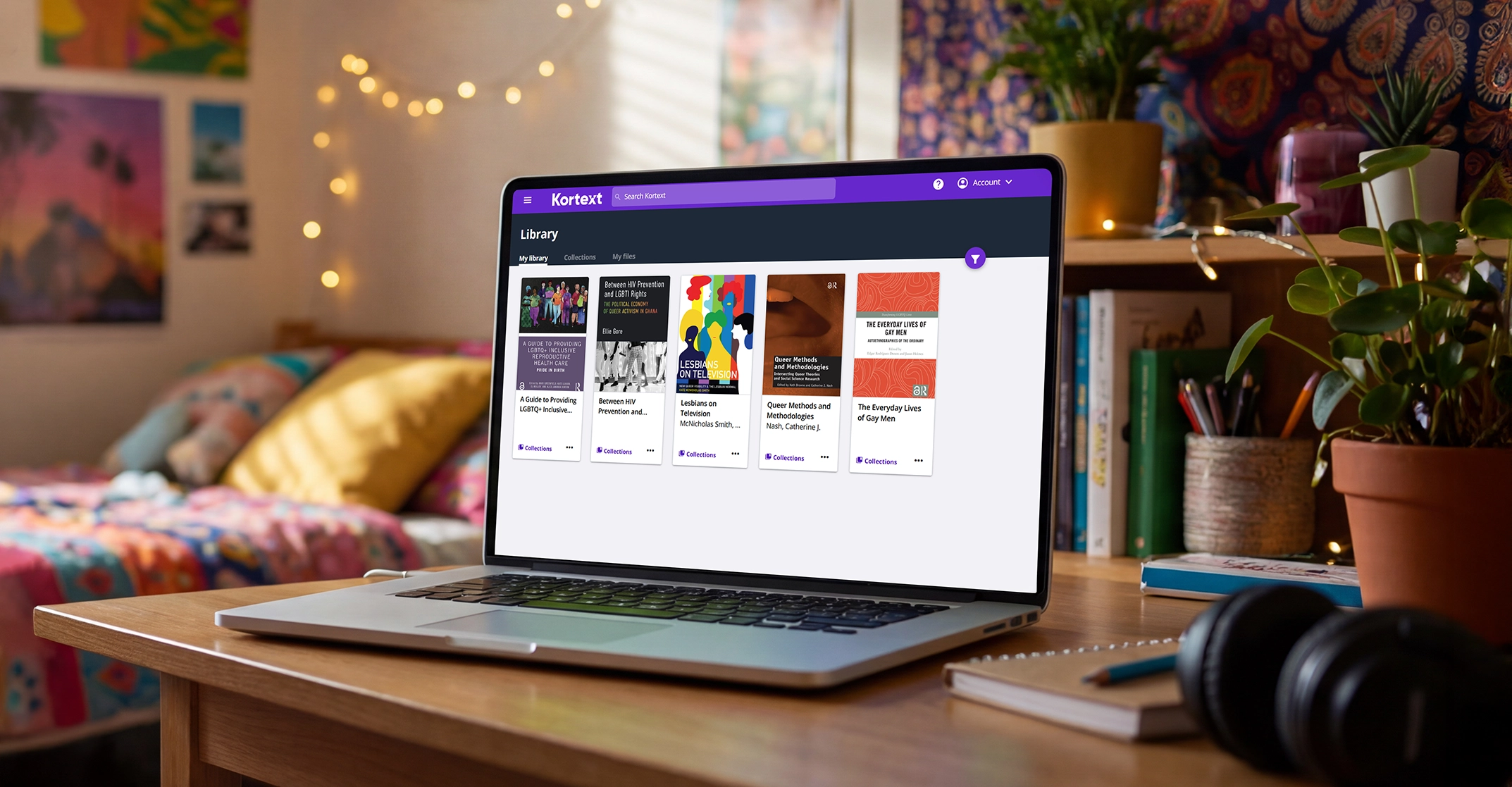
4. Queer Methods and Methodologies: Intersecting Queer Theories and Social Science Research by Kath Browne and Catherine J. Nash (eds.)
This edited collection offers a systematic exploration of what it means to conduct social science research from queer perspectives. It examines how queer theory reshapes research design, data collection, ethics and interpretation across disciplines.
Each chapter critically assesses both the limitations and possibilities of applying queer perspectives to established social science methods, making it a key contribution to debates about innovation in research practice. These approaches offer new perspectives on social science research, making the book relevant to students and researchers alike.
5. The Everyday Lives of Gay Men: Autoethnographies of the Ordinary by Edgar Rodríguez-Dorans and Jason Holmes (eds.)
This book brings together a collection of stories exploring the ordinary, everyday experiences of gay men, shifting focus away from exaggerated or sexualised narratives. Through first-person accounts, contributors reflect on identity, belonging and daily life, challenging narrow definitions of what it means to be gay.
By centring lived experience, the collection challenges traditional approaches to sexuality studies that prioritise external observation or sexual behaviour. It will be of interest to students studying sociology or specialising in gender studies, particularly those interested in qualitative research and lived-experience approaches to identity.
To access our new collection, please contact your Kortext Account Manager for more information.
You don’t have to be an existing Kortext customer to benefit from our Open Resources Collection. To find out more, talk to us today.
The post LGBT+ History Month – an open access collection appeared first on Kortext.
]]>The post Data: turning insights into action at Teesside University appeared first on Kortext.
]]>This post was written by Mark Simpson and originally published on HEPI’s website, a proud partner of Kortext.
Data is everywhere, but how do we turn it into insights that actually change outcomes for students and graduates?
At Teesside University, this question underpins strategies that have helped us achieve sector-leading recognition: TEF Gold for teaching excellence, Ofsted Outstanding, and Times Higher Education University of the Year 2025.
Did the predictions hold true?
In earlier blogs, we anticipated major shifts: the rise of AI in learning and assessment, deeper collaboration between institutions, and the growing importance of data-driven decision-making. So, did they happen?
AI adoption: far from being banned, AI is now embedded in teaching and assessment strategies, guided by ethic-focussed user principles.
Collaboration: regional partnerships have strengthened, particularly around employability and mental health, though mergers remain rare.
Data-driven action: the sector has moved beyond dashboards to interventions that improve student success, though capability gaps in data literacy persist.
These trends confirm what we argued – universities that embrace innovation and ethical data use are better positioned to deliver outcomes that matter: graduate success, employer confidence, and sector-leading recognition.
This blog moves the conversation from trends to action: the principles and practices that turn data into decisions, and decisions into impact for students, graduates, and employers.
Why actionable insights matter
Data tells us what happened. Insight explains why it happened and what to do next. In a sector where TEF narratives, OfS outcomes, and B3 metrics are under constant scrutiny, insight must be decision-ready: clear, timely, and connected to actions that improve student success.
One example from Teesside University: analysis of engagement and wellbeing data revealed predictable spikes in anxiety before assessments. That’s an insight, but the real value lies in what changes next: assessment tweaks, targeted comms, coaching, or extended mental health support. Without action, insight is just noise.
Principles for turning data into action
Insights only create impact when they lead to meaningful change. These five principles, proven in practice, help ensure your data works for you:
1) Clarity of purpose
Start with a precise aim: Which outcome will we improve, by how much, and by when? Clear goals turn data into a roadmap rather than a report.
2) Integration, not isolation
Data should flow across curriculum design, student support, careers, and employer partnerships into one coherent picture. Bringing in the student perspective ensures this integration is authentic, connecting learning experiences to aspirations, not just administrative targets.
3) Student voice driving decision-making
Students should shape decisions about data use. Co-design privacy, transparency, and wellbeing safeguards with them. Explain the why, what, and how in clear language, and make opting in meaningful by showing how their input drives change.
4) Timely intervention
Move beyond annual reviews to real-time decisions that matter most: before assessments, during placements, and at key transition points. Use student feedback to set the rhythm for dashboards, reviews, and action cycles so insight lands when it counts.
5) Collaboration and ownership
Insight should be co-owned across academics, student services, and employers – with students as equal partners. Involve them in approval panels, curriculum reviews, and evaluation loops. Their lived experience transforms data into stories that resonate and drive action.
Teesside University in practice
Teesside’s approach offers a concrete model for turning principles into practice.
Future Facing Learning (FFL) embeds digital empowerment, global citizenship, and entrepreneurial thinking – making employability part of the learning experience, not an add-on.
Learning & Teaching Framework (LTF) ensures course-first design, authentic assessment, and industry engagement, supported by staff CPD.
Laser-focused strategy & KPIs link performance to TEF and B3, with regular reviews and targeted improvement plans.
Breaking down silos brings employers onto panels and integrates meaningful student voice – feedback that leads to visible change.
Pragmatic AI strategy encourages innovation and future skills, adapting quickly to a world where 65% of today’s primary school children will work in jobs that don’t yet exist.
The challenge ahead (and how to navigate it)
We all face familiar constraints: full curricula and professional body frameworks, budget and time pressures, and capability gaps in data literacy and change management. Progress depends on:
· Course-first trade-offs: deciding what comes out when new skills go in; aligning assessments with employability outcomes.
· Authentic assessment: using live briefs, micro-placements, and employer co-designed tasks.
· Partnership by default: involve employers in approval events and reviews; move beyond advisory boards to co-production of learning.
· Data fluency for staff: providing CPD focussed on interpreting and acting on data.
· Targeted pilots: start small where the impact is highest (e.g. first-year transition), measure rigorously, and scale.
Turning data into action isn’t about having more dashboards, it’s about better decisions, made faster, with students and employers at the centre.
Teesside University’s experience shows that when strategy, frameworks, and student voice align, employability becomes a lived experience in the curriculum, not a promise on a prospectus.
Professor Mark Simpson is speaking at Kortext LIVE on 11 February 2026 in London. He will be discussing the strategic impact of data alongside Dr Rachel Maxwell. Find out more here.
The post Data: turning insights into action at Teesside University appeared first on Kortext.
]]>The post Transform or be transformed: why digital strategy is now central to university survival appeared first on Kortext.
]]>This post was written by Amanda Broderick and originally published on HEPIs website, a proud partner of Kortext.
Across higher education, there is a growing realisation that no cavalry is coming over the hill. Government support arrives with one hand while being withdrawn with the other, and universities are being asked to do more, for more people, with fewer resources. The choice facing the sector is stark: we must transform, or be transformed.
At the University of East London (UEL), we have been on this journey for some time. In many ways, it was almost serendipitous that the University reached a point of existential pressure years before similar headwinds struck the rest of the sector. That early crisis forced us to confront difficult truths, make bold decisions, and learn quickly what genuinely works. As we approach the final quarter of our ten-year strategy, Vision 2028, our transformation is evident. We have seen a 25 percentage point improvement in positive graduate outcomes (the largest in England), an unparalleled rise in NSS rankings, a move from 90th to 2nd in the country for annual student start-ups, and a financial sustainability strategy which now places us as one of only 15 universities in the country without any external borrowing, whilst delivering a £350m investment programme.
One area underpins each of these elements of our transformation: digital.
When we launched Vision 2028, digital transformation sat at its core – not as a technology programme, but as a strategic enabler. Our ‘Digital First’ approach was designed to ensure that the entire UEL community has the tools, confidence and freedom to innovate and develop continuously. That philosophy has shaped everything we have done since.
We have migrated from on-premises data centres to a cloud infrastructure, becoming the first UK university to be fully cloud-based in 2019. This has improved resilience, reduced environmental impact, and transformed how we use big data, from student retention predictive modelling to generative AI personal learning assistance to business intelligence and management information. We have invested in innovation spaces that allow students to build their own compute environments, redesigned our website to offer a more personalised browsing experience, and strengthened our digital architecture to mitigate downtime.
Sustainability has been a constant consideration – reducing data centre usage and re-using compatible hardware wherever possible. We have also made key software available anytime, anywhere, and consolidated multiple CRM-type environments into a single solution.
But digital transformation only matters if it serves a purpose. At UEL, that purpose is careers.
How can we prepare students for future careers if we do not embed digital skills throughout their education? That question sits behind our Mental Wealth and Professional Fitness curriculum, co-designed with employers to ensure students develop future-ready digital capabilities alongside cultural capital, confidence and professional inter-personal behaviours. Introductory modules are paired with sector-specific specialisation depending on course, with Level 3 and 4 modules already covering AI and digital tools for industry, digital identity and professional networks, data literacy, visualisation, and data ethics. Employability is not an add-on at UEL; it is embedded throughout the learner journey – which means that in-demand digital skills are too.
Our ambition extends beyond our enrolled students. We want to spread transformation across our communities so that opportunity is not confined to campus. Click Start, delivered by Be the Business and the University of East London in partnership with the Institute of Coding, is a powerful example. This four-week course equips young Londoners aged 18–30 with digital marketing and data analysis skills, delivering more than 90 hours of teaching alongside industry-recognised certificates from Google and Microsoft. Since June 2023, more than 230 young people have completed the programme – 41% women, 88% from ethnic minority backgrounds, and 70% from east London. Graduates have progressed into jobs, apprenticeships and further study, with some joining UEL itself and others using the programme as a springboard to transform their lives elsewhere.
This ethos of applied, inclusive innovation is reflected across our courses, and underpinned by active research centres and innovation hubs, from our UK Centre for AI in the Public Sector and Centre for FinTech, to our Child Online Harms Policy Think Tank and Intelligent Technologies Research Group. Alongside our industry partnerships, this cutting-edge research ensures that what students learn remains relevant, responsible, and future-focussed.
When a student’s whole experience is designed as digital first, technology stops being a blocker and becomes an enabler. It supports our shift from a ‘university-ready student’ model to becoming a ‘student-ready university’. UEL’s Track My Future app exemplifies this approach, bringing academic, careers, and support services into a single personalised platform. Putting students’ own data into their own hands and providing a digital route-map to university life, daily active use regularly exceeds 40,000 interactions – clear evidence that digital tools can strengthen engagement and belonging.
Compared with when I joined UEL in 2018, the scale of the digital transformation today is unmistakable. This is what purposeful digital transformation looks like: not technology for its own sake, but a platform for inclusion, resilience and impact. In a sector facing relentless pressure, that is not optional – it is essential.
Kortext is a HEPI Partner. Professor Amanda Broderick is speaking at Kortext LIVE on 11 February 2026 in London. Find out more here.
The post Transform or be transformed: why digital strategy is now central to university survival appeared first on Kortext.
]]>The post AI is challenging us to relocate our sense of educational purpose in the outward-future rather than the inward-past appeared first on Kortext.
]]>This post was written by Sam Grogan and originally published on Wonkhe’s website, a proud partner of Kortext.
As the debates and discussions around use of AI continue to develop, I reflect that, perhaps too often, the questions we ask as educators about the impacts of AI can be too small.
There seems to me to be a current over-preoccupation with inward-facing considerations of the impact of AI on our own practices and processes: How we can manage the risks of academic misconduct, how we make our assessments a bit more authentic, how we quality assure students’ development of “AI skills”. I don’t deny that these are important and timely questions, but I think they miss the bigger (knottier) purpose-led picture.
As AI continues to infuse our work in a variety of means and ways we seem sometimes too focused on management and adaptation of processes, rather than working strategically and purposefully to define broader outcomes which face off into the professional and graduate futures of our students and the world they will occupy and shape over the next 50 years.
Until we start asking the bigger questions about the more fundamental challenges to educational purposes that AI brings in its wake, we will not be in a position to understand the shifts in educator capabilities and competencies and indeed professional identities that such a paradigm shift will necessarily require.
Recently, with Prof. Nick Jennings, I argued that we can see two “swim lanes” emerging in AI: one focused on process optimisation and efficiency; one on invention and co-creation. Both are useful, but they require very different things from educators.
AI literacy for optimisation
AI tools offer compelling possibilities to support students with personalised learning support, rapid retrieval of relevant information and coaching prompts for personal and career development. I don’t see these tools replacing human academic and student services professionals; instead they offer a degree of personalised insight and augmentation to human-centric services.
Similarly, AI tools can assist with many of the functions of teaching and learning “delivery”, offering ideas for small-group activities, generating reading lists or other learning resources, offering prompts to structure discussion, rapidly processing student feedback, and so on. Again, this is an efficient, step change augmentation to the spectrum of digital tools that can support effective learning and teaching. Educators will adopt these if they find them to be useful, and according to their disciplinary culture, and their personal orientation towards technology in general.
Just as we have adapted to email or MS Excel (other software is available) as baseline administrative tools used in organisations and businesses, over time I see that academic workflows will no doubt evolve in response to collective learning and accepted wider practices about the usefulness and effectiveness of various AI tools when applied to different elements of academic practice. Some tools might genuinely make academics’ lives easier; others may promise much and deliver very little.
From an institutional perspective it makes sense to curate a flow of discussion about the adoption of AI tools for learning, teaching and student support. Doing so allows for the dissemination of useful practice, contributes to collective understanding about AI’s capabilities and limitations and, optimally, ensures that where AI tools are adopted they are applied ethically and in ways that do not compromise academic quality.
AI literacy for reimagining education futures
With the potential benefits of AI for optimisation duly noted, I don’t think that is the conversation that is going to be the most material for education leaders in the next few years. For me, AI does not represent a specific set of digital capabilities that must be mastered so much as it points to a future that is fundamentally uncertain, and subject to tectonic disruption.
That loss of predictability speaks to a very different set of purposes and outcomes for education – less the acquisition of a body of knowledge than the development of high end human competencies exercised and mediated through a developed technological literacy, all underpinned by a disciplinary knowledge base.
Every new technology, from writing to print to the internet to large language models has prompted a reconsideration of the relationship between educational purposes and disciplinary knowledge. Over time, instead of a student “coming to the discipline” as an apprentice and an assumed future practitioner, disciplinary knowledge is increasingly deployed in the service of a broader range of student outcomes – the discipline “comes to the student.” This is also increasingly reflected in portfolio careers in which core knowledge is rehashed, redeployed, recontextualised and directed towards the challenges of the world and of the workplace, none of which are solved by a single discipline. The difference between previous shifts and the paradigm shift being ushered in by AI is the speed, volatility and unpredictability of what it will do. We are in uncharted waters and, if we are honest, we are not really sure where we are headed or how best to help shape those future outcomes and destinations.
Despite these shifts, or perhaps in part because of them, the idea of the professor still defaults to the guardian and steward of disciplinary knowledge. Recognising that the strength of UK HE in particular comes from a tradition of being organised around somewhat compartmentalised deep disciplinary knowledge, this conceptualisation has remained remarkably consistent even as higher education has become more widely available and serving purposes beyond the passing on of knowledge.
In this sense AI can never (and should never) “replace” academics as stewards of disciplinary knowledge, but it should prompt a deep examination of what that reconfiguration of the relationship between knowledge and education purpose looks like for the different disciplines – and the moments when students need to cross disciplinary boundaries in service of their potential futures, rather than the futures we imagined when in their shoes.
The questions and discussion I am interested in curating asks academics about the potential shape of their discipline and its associated professions in 50 years: What does it mean to think, and “do” your discipline with and alongside AI? What does AI do to the professional practices and identities of the professions allied to your disciplines? The answers to such questions are more readily imagined through contemporary cutting edge research agendas than by established approaches to engaging students with existing bodies of knowledge.
It is only in light of our imagination of the possible futures that await our students that we can start asking what kind of educational environments and approaches we need to build to create the conditions for the development of the skills sets, attitudes and competencies they will need.
My hunch is that we will collectively need to “unwire” ourselves from “standard” PG Cert and PG Dip teaching development tracks and be prepared to look outside the classics of higher education pedagogy and literature, including to primary education, and innovative workplace CPD to find the approaches that work best. While we might retain a foundational basket of knowledge and skills required for entry to the academic profession, I think these will resonate more strongly with a broader set of high end human competencies than with the traditional skills associated with teaching development.
It is likely we’ll need to take a more experimental, co-creative approach to the higher education pedagogy, which engages in the outward facing futurology of graduate paths across the next 50 years as a fundamental starting point for considering our own purpose-led practices. In this we might then retain concepts and theories that serve those purposes while discarding those that have outlived their usefulness.
Sam Grogan will be among the speakers at Kortext LIVE education leaders event on 11 February in London, as part of a panel discussing the Wonkhe/Kortext project Educating the AI Generation. Find out more and book your free spot here.
The post AI is challenging us to relocate our sense of educational purpose in the outward-future rather than the inward-past appeared first on Kortext.
]]>The post Advanced searches & more: updates to acquire appeared first on Kortext.
]]>Advanced search & saved searches: our January updates to Kortext acquire
Kortext acquire is our content acquisitions platform, providing HE librarians with a gateway to over 3.5 million academic titles and a flexible range of library licenses as provided through our publisher partners.
We’re excited to introduce enhancements to our search functions throughout acquire, most notably through our advanced search feature, enabling librarians to search through our rich bank of content with additional book details than just title.
What is advanced search?
In our latest update, librarians will be able to create highly specific search queries to find the exact content they need in the Kortext inventory, including:
- Author
- Title
- Subtitle
- Publisher/Imprint
- Edition statement
- Publication date
- Series
- Format
- Number of pages (from & to)
- Language
- Description
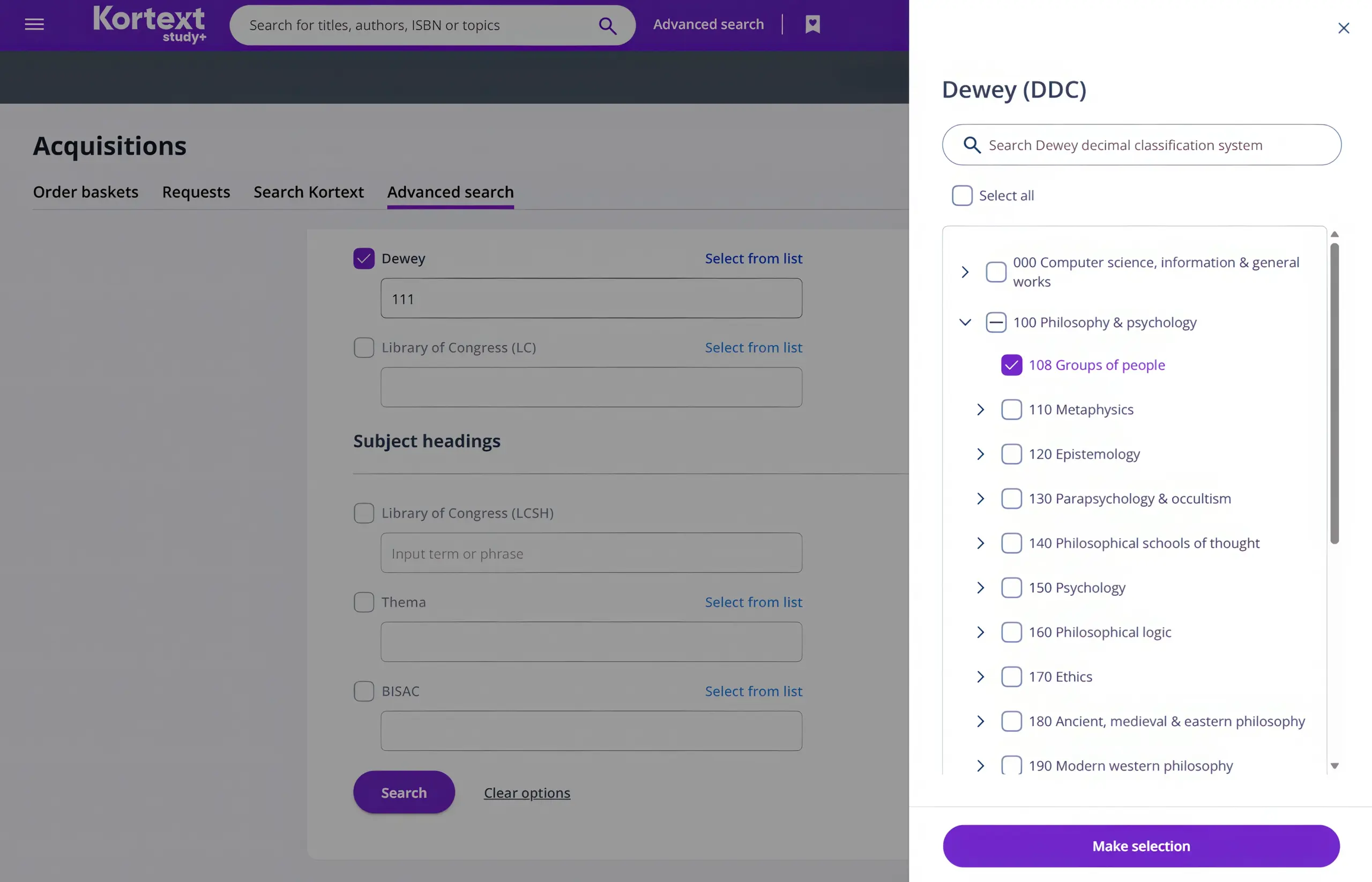
- Classification (Choose from Dewey and the Library of Congress LoC)
- Subject headings (Library of Congress Subject Headings LCSH, Thema and BISAC)
Other enhancements
- Universal basic search bar –our new search bar will appear in the top toolbar, so you can quickly look up titles from anywhere in acquire.
- Saved searches– Revisit your saved searches by clicking the bookmark icon in the top purple toolbar. This opens a sidebar where you can switch between basic and advanced searches, and even search within your saved results.
If you’re already an acquire user, log in now to see our latest updates.
Introduce integrated content acquisition at your institution – talk to us today.
The post Advanced searches & more: updates to acquire appeared first on Kortext.
]]>