The post AI Takes Centre Stage at Esri’s Partner Conference appeared first on Locus Limited.
]]>
I have had the good fortune to attend the Esri Partner Conference in Palm Springs quite a few times over a 25-year career in Location Technology, however this was my first time since 2019. The conference is refreshingly familiar; the venue, the format, the food, the premise, even the city itself felt very much like it did seven years ago. Esri haven’t fixed what isn’t broken, no need to freshen up a winning formula.
The San Jacinto Mountains continue to dominate the blazing blue skyline, ever present, analogous perhaps to Esri’s own dominance over the GIS market. But whilst the mountains are rarely troubled by anything other than seismic activity (the last big shake being more than 200 years ago), Esri is having to deal with a seismic shift in technology, (AI of course), which is changing at such a pace that bi-annual software updates seems strangely out of place.
Esri has been embracing AI in all its many forms, be it AI Assistants or AI Agents or Model Context Protocol (MCP) (if there is another tech acronym which fails to articulate its own importance more than MCP I would love to hear it), and therefore this has been a major focus of Esri.
This is not to say that Esri haven’t been busy in other areas, the Telecom Utility Network for example looks near complete for its release in June/July, there are many new features and functions added to ArcGIS Pro, and 3D GIS continues to grow in capability, but honestly AI dominated proceedings, muscling its way into almost all conversations, indeed Esri laid on a special 3rd part of the Sunday plenary session dedicated to it.
Before exploring AI a little more its worth saying that AI for all its amazing capabilities lacks one capability for which it seems humans seem more adapt, and for which the Partner Conference excels. The ability to create and rejuvenate true personal connections with other human beings. Within minutes of arrival at the conference centre, hands were shook, backs were slapped and conversations burst into life as the language of GIS took over. It was awesome to catch up with people I hadn’t seen in years. In many ways this is the point of the conference, personal connections as important, if not more important than technology.
This is something Esri were keen to encourage and there were ample networking opportunities – breaks between sessions, long lunches and both welcome, and goodbye functions.
John and I were there of course for all things related to Safe Software and FME, which as most know is closely aligned with Esri. It was great to be able to have meaningful conversations with Julian and Conor from Safe and spend time outside of the conference in their company at one of the many Mexican restaurants that adorned Palm Canyon Drive. I’m pleased not to have chosen the flight of margaritas enjoyed by John and Julian, the local craft beer being enough of an attraction, but I couldn’t go past the local street tacos which were a tasty alternative to enchiladas and burritos.


As ever our small nation was well represented at the conference with a large team from Eagle Technology, GBS, GPS-IT, Signal and others making more than enough for a rugby team. Special thanks to Eagle for hosting a dinner on Monday night – much appreciated, I don’t think the waiter had ever had quite some many orders for the Bombe Alaska!
But let’s return to AI for a minute, it took centre stage and it is fair to say that future releases are going to be the most AI packed yet with broad adoption across the entire platform. Whether using AI Assistants to help you make a better map, or to code/vibe code web applications better and faster, or creating AI Agents to help complete complex tasks, AI is going to change how you do things. So, prepare yourself, its not going to be something to ignore, and nor should you. In days gone by I have used the phrase “the power of GIS”, but today, whilst GIS remains a powerful tool, it is AI that has “the power”.
Fear not FME users because AI is also going to play an important role in your work as well. Safe Software and the FME platform is embracing AI just as much, but in slightly different ways. More on that in a later post, but for now Esri deserves the plaudits, an amazing conference well hosted in the desert oasis.
Learn more about FME
Join FME Accelerator, our free, instructor-led 90 minute introduction to FME – Register Now
Download the FME playbook, a high-level overview to FME and Locus – Learn More
The post AI Takes Centre Stage at Esri’s Partner Conference appeared first on Locus Limited.
]]>The post The Perfect Christmas Gift for FME Fans appeared first on Locus Limited.
]]>
Sure, FME socks are the classic answer but let’s be honest, not everyone has access to the Safe Software swag stash. And if you’re part of the Locus family, you’ll know the demand for those socks is so high we could never keep up!
So, what’s the next best gift for an FME enthusiast? The FME Transformer Explorer, of course!
This tool was designed especially for our clients (and really, for all FME users everywhere). It lets you dive into the world of FME transformers like never before. Instead of scrolling through long lists or guessing which transformer might help, you can explore them visually; by category, subcategory and how they relate to one another.
It’s perfect for learning FME, discovering transformers you didn’t know existed, or simply understanding how different pieces of the puzzle fit together in real workflows.
Think about that lull between opening presents and sitting down for Christmas dinner, the frantic hunt for AA batteries, the mystery of who gave you that gift, and the annual debate on how to make sprouts edible. Fun traditions? Maybe. Career-enhancing? Not so much.
Now, thanks to the FME Transformer Explorer, you can skip the chaos and immerse yourself in something truly rewarding: exploring the surprisingly tactile, interconnected world of FME transformers.
From all of us at Locus, Season’s Greetings and a very Happy New Year!
View the FME Transformer Explorer

Learn more about FME
View the FME Transformer Explorer
Join FME Accelerator, our free, instructor-led 90 minute introduction to FME – Register Now
Download the FME playbook, a high-level overview to FME and Locus – Learn More
The post The Perfect Christmas Gift for FME Fans appeared first on Locus Limited.
]]>The post Is Your Data Scientist Wasting Time on Plumbing? The Case for Visual Data Automation appeared first on Locus Limited.
]]>If automation is part of your role, you’re already driving meaningful impact. For leaders focused on measurable business outcomes, whether it’s multi-million-dollar pricing strategies or major operational efficiencies, the priority is clear: invest in the processes that deliver the greatest leverage.
But there’s a common challenge; the data pipeline often becomes the biggest bottleneck to scaling intelligent automation.

The Data Bottleneck Problem
Robotic Process Automation (RPA) has proven its value in streamlining human-centric tasks, and platforms like Snowflake offer incredible analytical power. Yet, bridging the gap between messy, diverse source systems and the clean, structured data your automation workflows need remains complex.
The answer isn’t more code or more bots, it’s introducing Intelligent Data Automation into your architecture.
Why Traditional Data Prep Holds You Back
If you’ve worked with legacy BI and data warehousing systems, you know the pain of heavy ETL coding and custom scripts. These approaches drain resources and slow progress, hardly the lean, agile mindset leaders strive for.
For leaders with a future focused mindset, this is the antithesis of efficiency. Maintaining the plumbing costs too much time and too many resources.
Enter FME: A Smarter Way to Automate Data
This is where a dedicated data integration and automation platform like FME (Feature Manipulation Engine) changes the game:
- Move Beyond Code: FME lets you visually design complex workflows, not just linear ETL, but dynamic, conditional automation pipelines. This cuts development time and simplifies maintenance for teams focused on rapid delivery.
- Tame Unruly Data: Whether it’s structured tables, geospatial data, APIs, logs, or documents, FME handles it all, transforming data precisely so your automation and analytics models get the clean inputs they need.
FME and Snowflake
Enterprises are making one of the biggest shifts in corporate data, what are we talking about there? Moving from legacy platforms like Teradata to cloud solutions like Snowflake. This isn’t just migration, it’s a chance to build a future-ready foundation for Intelligent Automation.
Did you know that FME now runs inside Snowflake?
With FME Remote Engines now available on Snowflake Marketplace, data workflows can run directly inside Snowflake. That means no more exporting, staging, or moving data just faster, more secure, and fully automated transformation. Complex, messy or spatial data can be processed in place, freeing your team to focus on insights and automation instead of plumbing.
Here’s how FME and Snowflake work together to solve two critical challenges:
| Challenge | Solution |
| Maximising Cloud Investment | FME integrates effortlessly with Snowflake, onboarding massive volumes of complex data from multiple sources and structuring it for Snowflake’s performance and scalability. |
| Scaling Automation | While RPA handles front-end processes, FME automates the data layer—creating resilient, repeatable workflows that run 24/7, feeding clean outputs into Snowflake or preparing Snowflake data for RPA. |
What does the payoff look like
Imagine your team focusing entirely on high-impact RPA and analytics, while FME takes care of data prep, movement, and governance, pushing clean data into a high-performance Snowflake environment.
This synergy lets automation leaders deliver on the promise of near-infinite scalability by automating the most complex, code-heavy part of the data lifecycle.
The real opportunity is this: modern tools like FME, now available natively in Snowflake, remove the manual bottlenecks that slow data teams down. When the plumbing takes care of itself, your data scientists can focus on the stuff that really matters – delivering insights, models and innovation.
Learn more about FME
FME Remote Engines Service on Snowflake Marketplace – Learn More
What are FME Remote Engines
Join FME Accelerator, our free, instructor-led 90 minute introduction to FME – Register Now
Download the FME playbook, a high-level overview to FME and Locus – Learn More
The post Is Your Data Scientist Wasting Time on Plumbing? The Case for Visual Data Automation appeared first on Locus Limited.
]]>The post 25 Years of Locus appeared first on Locus Limited.
]]>
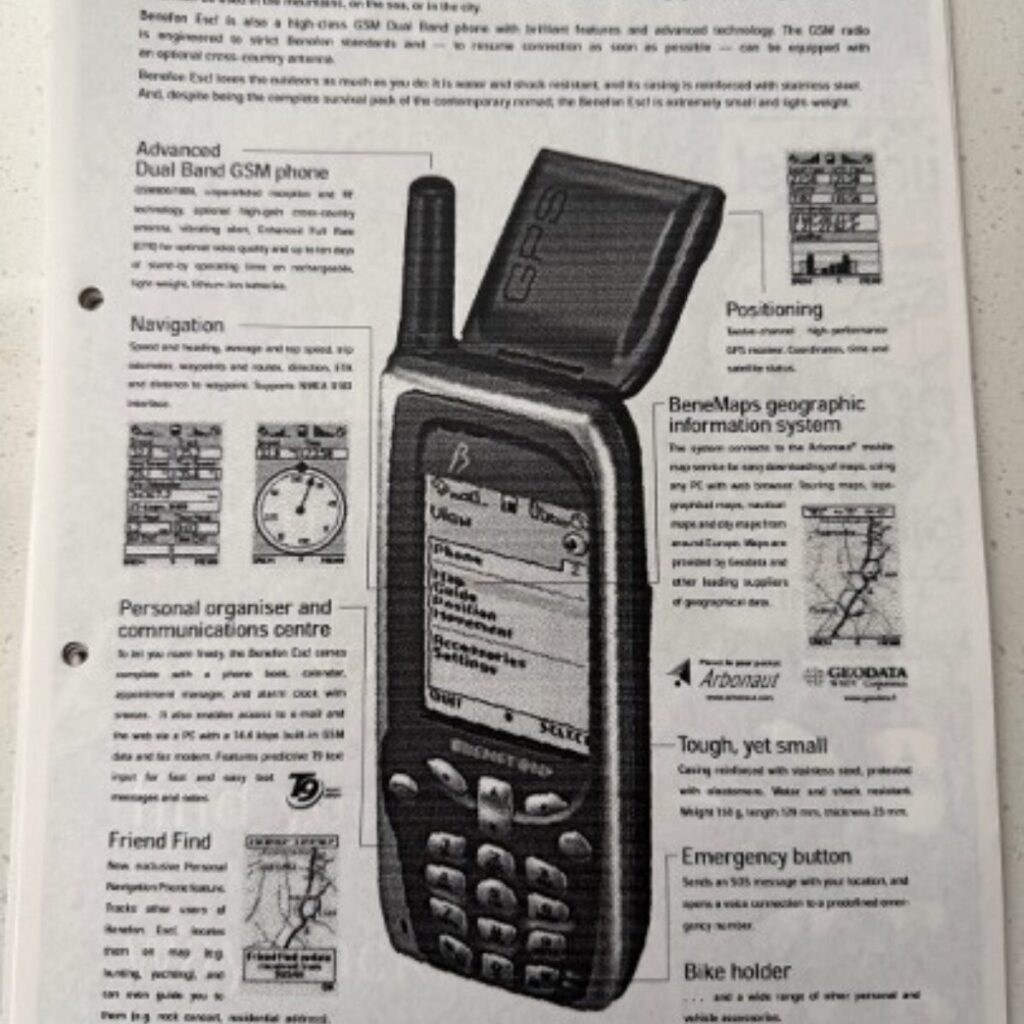
Little did I know that it was the beginning of what would become the Locus name and brand. Over time, the name and brand has grown to become recognised and well regarded not just in New Zealand, but around the world in the FME community and wider industry. That’s something that’s made the late nights worthwhile.
Getting back to the bit where I talk about Benefon… Early on, we had some exciting near misses, including vehicle tracking at the NZ Women’s Tennis Open. We sipped a few beers in the sponsor’s tent (common theme?) thinking we’d cracked it but it turns out Benefon was just ahead of its time. Those early experiments sparked a bigger idea; how could we take our curiosity about location and turn it into something real, something that could actually change the way people worked with data?
Fast forward a few years, and that curiosity led us to Safe Software and FME. At that time, there were only a handful of licenses in New Zealand and no local partner. We applied, Kirsta Schelesiger-Wright and the Safe Software team gave us the thumbs up, and the rest, as they say, is history.
Since then we’ve watched FME go from niche to a trusted, everyday BAU tool, supported businesses overseas, trained hundreds of people and helped/seen people build careers around it. Working life with data has got that bit easier with FME and knowing that we were the first partner to bring FME to market in New Zealand is pretty special.
Along the way, we’ve proudly sponsored and exhibited at every Safe Software Conference (now The Peak of Data & AI), taken the FME World Tour across New Zealand, and been honoured with multiple Safe Software Partner awards. Supporting the FME community in this way has been both a privilege and a lot of fun!
To our first believers in FME – and that’s you Rotorua Lakes, thank you. And a very special thank you to Greg Bennett for taking the leap of faith. And Bruce Harold – thank you also for the quiet endorsement of FME.
Our relationship with Safe has matured over the years and just saying thanks to Don Murray and Dale Lutz , the masterminds behind Safe Software and FME seems not quite enough. What an accomplishment to change the way business operates globally. Something you can both be truly proud of for life, together with the entire Safe Software team.


In the last couple of years, we’ve seen Safe, under Don’s leadership advancing the FME journey – how exciting it has been to be a part of that. The future is bright!
Over 25 years countless talented people have shaped Locus. Every single one has contributed to what we’ve built, with dedication, integrity and care. Do we get everything right all the time? Hell no. But do we give it our best? You bet. Would I do some things differently? Oh goodness yes. It hasn’t been perfect – a bit like life in general. Perhaps most importantly, we’ve always tried to do the right thing, supporting clients, helping people climb the FME ladder and working honestly with heart.
In concluding, I am grateful for the relationships and fond memories I have with so many in the world of FME, and of course the Locus team, past and present.
So thanks everyone who’s been part of the ride. Here’s to 25 years and the future. Onwards.
The post 25 Years of Locus appeared first on Locus Limited.
]]>The post How FME 2025.2 Speeds Up the Work Your Teams Do Every Day appeared first on Locus Limited.
]]>For many of our clients, these changes support one key theme and that’s future-proofing your FME environment before legacy components start holding you back.
Why This Release Matters
The most impactful change in FME 2025.2 is something your users may barely notice but your IT team definitely will.
External-Browser Authentication for Web Connections
OAuth2 and SAML logins now use your system’s default external browser, not FME’s embedded one. This shift aligns with how major SaaS vendors (Microsoft, Google, Esri, Salesforce, etc) are now enforcing authentication.
This upgrade delivers immediate benefits:
- Meets modern security requirements as embedded browsers continue to be deprecated
- Removes brittle connection behaviour caused by changes in embedded web engines
- Improves reliability for cloud, API, and enterprise integrations
- Reduces compliance overhead for organisations managing sensitive or regulated data
For many organisations, this update directly addresses authentication issues you may already be seeing in older FME versions.
Key Enhancements Across Sectors
FME 2025.2 includes updates that improve compatibility, broaden connectivity and streamline workspace development.
Highlights include:
New and Updated Formats
Support has been extended for:
- Delta Lake (lakehouse/Databricks ecosystems)
- MariaDB / SkySQL
- Microsoft Dynamics 365
- SharePoint Online Lists (expanded connector capability)
This strengthens cloud-native and enterprise data workflows which is crucial for Councils, utilities and all organisations modernising their data stacks.
Improved Compatibility with GIS Platforms
FME is now aligned with ArcGIS Pro 3.6.x, making life easier for teams upgrading their GIS environment and reducing the “version mismatch” headaches we see in support tickets.
Developer-Focused Improvements
Updates to the Geometry API and FME SDK provide more flexibility for custom transformers, automation extensions and specialised processing.
This is particularly valuable for organisations that maintain large automation environments or integrate FME with in-house systems.
More in 2025.2: Smaller (But Important) Enhancements
Some updates don’t make the headline but still improve day-to-day developer and analyst experience, let’s take a quick look at those:
- Cleaner, faster Flow interface for authoring, debugging and reviewing jobs
- Reduced reliance on Creator transformers when building API-driven workflows
- Enhanced connectors for cloud storage, databases and enterprise platforms
- Performance and reliability improvements across common high-volume processes
- Better error messaging and logging
Individually small but collectively valuable, especially for organisations running FME at scale.
Why Upgrade to FME 2025.2?
If you’re still on an older version, here’s what upgrading enables:
1. Stay Ahead of Authentication Changes
Major vendors are retiring embedded-browser flows. 2025.2 ensures your environment is ready
2. Reduce Operational Risk
Updated connectors, improved security handling and better compatibility prevent unexpected workflow failures
3. Unlock Advanced Use Cases
Telemetry, IoT ingestion, Power BI reporting, dashboards and real-time pipelines all benefit from the updated formats and Flow improvements
4. Prepare for New Projects and GIS Upgrades
Many organisations are moving toward hybrid environments or cloud first. FME 2025.2 provides a safer and more flexible foundation to build on.
Even if everything is working fine today… modern authentication and API lifecycles mean older versions will increasingly become harder to maintain.
Thinking About Upgrading? We Can Help.
Our upgrade lead, Darren Fergus, has helped dozens of organisations move smoothly to the latest FME versions with minimal downtime and maximum reliability.
Whether you’re planning a straightforward upgrade or a full platform review (format updates, server architecture, Flow optimisation), the Locus team can support you end-to-end. Reach out to Darren Fergus or Chris Morris to discuss further.
Learn more about FME and Locus at locusglobal.com
More Resources
Register for FME Accelerator: free 90 min intro to FME
The post How FME 2025.2 Speeds Up the Work Your Teams Do Every Day appeared first on Locus Limited.
]]>The post Unlocking AI in New Zealand: How FME Bridges the Gap appeared first on Locus Limited.
]]>While this comprehensive strategy, developed by the Ministry of Business, Innovation and Employment (MBIE) highlights the immense economic potential of AI, it doesn’t shy away from the challenges ahead.
While large businesses are starting to embrace AI, many of our vital small and medium enterprises (SMEs) remain hesitant, held back by concerns around complexity, ethics, value, and skills.
At Locus, we’re thinking deeply about how AI fits into our business and the wider community. We see data as the starting point and that’s where FME comes in. With powerful data integration and transformation capabilities, FME helps remove the barriers to smart, confident AI adoption.
FME is your bridge to smarter AI adoption
The government’s strategy emphasises “smart adoption” using AI to solve uniquely Kiwi challenges in areas like agriculture, healthcare, and education. FME supports this with a practical, flexible platform that helps organisations make their data AI-ready. Here’s how:
1. Get Data Ready, Fast
AI models thrive on clean, structured data but preparing it is often the hardest part. FME connects to hundreds of formats and systems, helping you pull together data from all corners of your business into a single, AI-ready source. Whether it’s spreadsheets, databases, or cloud systems, FME simplifies the grunt work so you can focus on the insights.
2. Integrating AI into Existing Workflows
You don’t need to rebuild everything to start using AI. FME can:
- Feed clean, relevant data into AI models automatically
- Trigger AI analysis based on events or thresholds
- Distribute AI-generated insights to dashboards, teams, or databases
This means your existing workflows can become AI-enabled without disruption
3. Close the AI Skills Gap
Worried about not having AI experts on your team? FME’s low-code, visual interface empowers non-developers to build and manage complex data workflows. It’s a practical way to grow in-house capability and build confidence across your team.
4. Build Trust with Transparent AI
Responsible AI is a major focus in the strategy and rightly so. FME supports transparency with full audit trails of data transformations. You can track how data flows through your system, enhancing explainability and compliance with ethical and governance standards.
So, what does this all look like in the real world?
Here are a few possibilities:
- Agriculture: Combine data from wearable devices and pasture sensors, and use AI to improve farm productivity and environmental outcomes
- Healthcare: Securely integrate patient data across systems for AI diagnostics, all while meeting privacy and quality standards
- Land Use: Use AI to identify building outlines, then automate their integration into national datasets with FME
AI Is the Future and FME Helps Get You There
New Zealand’s AI Strategy is a clear call to action. By breaking down the barriers to adoption, the government is opening the door for innovation across sectors. FME provides the bridge, turning AI ambitions into action.
For SMEs and large enterprises alike, now is the time to lay the groundwork. With FME, you can streamline your data, empower your people, and make AI work for your business and do it all confidently and responsibly.
Learn more about FME and Locus at locusglobal.com
More Resources
New Zealand’s AI Strategy: Investing with confidence by MBIE
Register for FME Accelerator: free 90 min intro to FME
The post Unlocking AI in New Zealand: How FME Bridges the Gap appeared first on Locus Limited.
]]>The post What’s New in FME 2025.1 appeared first on Locus Limited.
]]>Hot on the heels of the major FME 2025.0 release, Safe Software has launched FME 2025.1. This update is all about refinement, performance, and responding to user feedback. Safe has focused on stabilising the new features, speeding up core processes and adding new transformers.
Data Virtualization Takes Centre Stage
The headline feature of FME 2025.1 is Data Virtualization. This powerful new functionality allows users to create and expose data from any FME-supported source as a secure, OpenAPI-compliant REST API. This means you can now build and manage APIs directly within the FME platform without the need for custom coding or additional infrastructure.
This feature enables real-time access to your data, allowing for more dynamic and integrated systems. Whether you’re looking to share curated datasets with internal teams, connect to business intelligence dashboards or integrate with other web applications, data virtualization in FME 2025.1 provides a streamlined and secure solution.
Crafting Professional Documents with the DocumentPDFWriter
Creating PDF documents has been possible with FME for quite some time but in this latest release Safe have refined the offering, allowing for creation of more complex PDF documents.
While the DocumentPDFWriter is the component that writes the final file, the real star of the show is the DocumentPDFStyler transformer. This transformer acts as your digital layout artist inside a workspace.
With the DocumentPDFStyler, you can create and style various components of your document, page by page:
- Headers and Footers: Add page numbers, dates, or company logos
- Text and Paragraphs: Write descriptions or summaries using your data, with full control over fonts, colours and alignment
- Tables: Convert your features into formatted tables, styling the borders, headers and cell contents
- Images and Maps: Place logos, site photos, or map views generated by FME directly onto the page with precise positioning
You feed these styled “snippets” into the DocumentPDFWriter, which then intelligently assembles everything into a polished, multi-page PDF document.
Stepping into a New Dimension with the ARWriter
What if you could take your digital representation of underground services out of the screen and place them in the real world? The ARWriter makes this possible, converting your GIS utilities layers into 3D data that can be viewed on mobile devices using FME Realize, Safe’s Software’s Augmented Reality (AR) app.
FME Realize is a new opportunity for users to speed up their working practices out in the field by allowing users to ‘see’ their underground services and integrate into back end work management software.

Image Credit: Safe Software Feature Highlights FME2025.1
FME 2025.1 is now available for download. Use the quick links below to download this release or discover more about FME.
Learn more about FME at locusglobal.com
More Resources
Download Safe Software’s FME 2025.1
Register for FME Accelerator: free 90 min intro to FME
The post What’s New in FME 2025.1 appeared first on Locus Limited.
]]>The post The New Locus Training Pathway appeared first on Locus Limited.
]]>That’s exactly why we’ve created the Locus Training Pathway. It’s a new, customer-driven approach to learning for all skill levels, whether you’re just starting with FME or ready to push into more advanced territory.
Why a new approach?
We often hear from clients that time and business justification can be barriers to traditional, full-day training. You want to upskill, but it has to be relevant, time-efficient, and directly applicable to your work.
That’s where our new 4-hour short courses come in. These sessions are built to solve real-world problems and help you make progress, fast. Each course is designed around high-impact topics and they fold into the broader Locus Training Pathway, combining our standard two-day courses with flexible half-day short courses.
Three of our new half-day sessions are available now. Here’s a quick overview of what you can expect:
- Git & Governance: this course helps you start the right way by combining best practices and governance, including crucial GitHub integration. It’s foundational for ensuring collaboration and version control
- APIs & JSON: Explore making the most of integration by diving into APIs and JSON. This session is key for connecting FME with other systems and web services
- Data Virtualisation: Learn how to make a virtual API from any data. Explore powerful techniques to access and utilise data without needing to move or replicate it
The Locus FME Training Pathway
These three new courses are integral parts of the foundation and development levels within the Locus Training Pathway. The pathway is structured to take you from fundamentals through increasingly more demanding topics.
The ultimate goal of the pathway is a journey to certification, with dedicated prep sessions for both FME Form and FME Flow certifications available to give you the confidence you need prior to completing your exams.
With certified trainers and a deep understanding of industry-wide data challenges, our hands-on FME training is designed to meet individual learning needs and deliver real-world capability you can trust.

Ready to upskill?
To register your interest in one or more of our new half day courses or our more comprehensive options, complete the enquiry form on our FME training page or email [email protected]
Learn more about FME at locusglobal.com
More Resources
Register for FME Accelerator: free 90 min intro to FME
The post The New Locus Training Pathway appeared first on Locus Limited.
]]>The post How to Share FME Resources Across Your Organisation appeared first on Locus Limited.
]]>FIRST PUBLISHED: January 2025. Traditionally, FME has been a tool utilised by GIS or Spatial teams to manage and manipulate geospatial data. But as FME has grown into an All-Data Platform its capabilities have expanded beyond spatial data into integrating databases, business platforms and a wide range of other data sources. This shift means FME is no longer confined to specialists but is now being used across multiple teams in organisations. While this creates opportunities for collaboration and innovation, it also introduces new challenges.
As FME adoption grows, it empowers collaboration and innovation across teams. However it can also lead to silos and duplication of effort.
Let’s consider two key FME resource types:
Connections
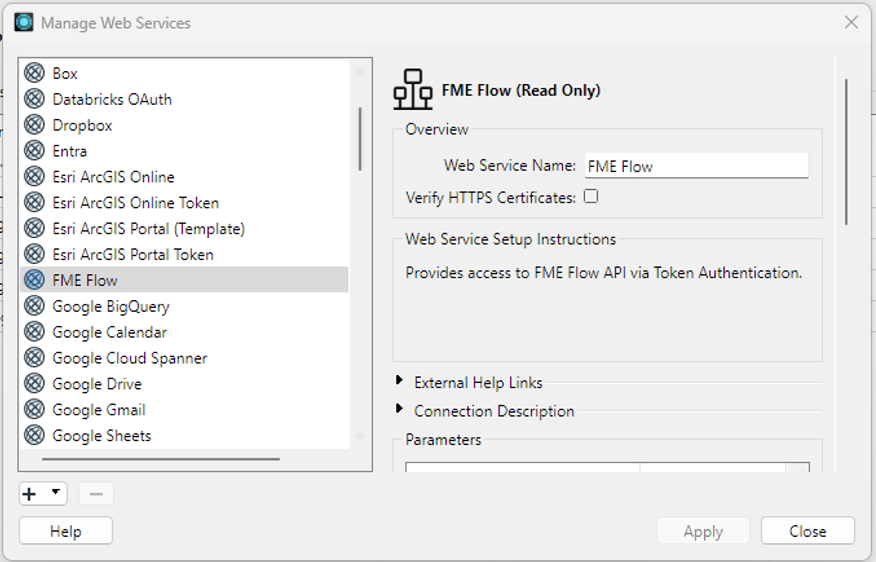
Connections in FME refer to database connections (containing connection details to database resources or credentials) and web connections (providing connection details to APIs and web services). By default, FME Form (Desktop) stores these in a local connection store on each user’s machine. This can result in:
- Access issues: When a team member sets up a database connection, others can’t access it
- Duplication: Multiple connections to the same service can be created by different users, often these will have different naming conventions or credentials
- Complexity: Over time, managing these connections – especially when they’re published to FME Flow – can become difficult and complex as they are hard to trace and maintain
Custom Transformers
Custom Transformers are another powerful feature and tool in FME. They package reusable and repeatable logic into a single transformer that can be duplicated in a single workspace or shared across many. A great example of a popular Custom Transformer is the NoFeaturesTester.

Within your organisation, you likely have processes or business rules that could benefit from being captured in Custom Transformers. However, if these are subsequently duplicated by sharing copies with colleagues or other teams, you end up with multiple unlinked copies spread across the organisation. When this logic inevitably changes or requires updating, it becomes a daunting task to track down where it is being used.
The Case for Centralising FME Resources
Fortunately, you can overcome these challenges by centralising resources. FME Form can be configured to use a shared network location for connections and Custom Transformers. The location is found in the Default Paths section in FME Options.
Centralising the location allows you to:
- Enhance security: Stored credentials are encrypted and not viewable by users. Many connections can also leverage Single Sign-On for greater security and ease of use
- Eliminate duplication: Maintain a single source of truth for database and web connections, therefore ensuring that standardised configurations are used
- Simplify infrastructure updates: When connection details are updated (e.g. infrastructure migrations/updates, credential or API key renewals) the new details only need to be entered in one location
- Centralise business logic: Custom Transformers stored in a central location ensure that any updates to the contained logic is reflected across all workspaces that utilise them
Building a Smarter FME Environment
Centralising your FME resources not only prevents duplication and streamlines updates, it also fosters and encourages collaboration across teams. It’s a small administrative change (and one that can be automatically rolled out) that can have a big impact on how efficiently your organisation works with data and business systems.
If you’d like to learn more about centralising FME resources and aligning FME Flow to enhance collaboration, contact us today. Let’s explore how we can help your organisation streamline processes and unlock FME’s full potential.
Learn more about FME at locusglobal.com
More Resources
Register for FME Accelerator: free 90 min intro to FME
Learn more about Locus Plus+
The post How to Share FME Resources Across Your Organisation appeared first on Locus Limited.
]]>