Supported by the event’s chair couple, Joe and Jennifer Palumbo, the event shared moments to reflect, honor and celebrate the progress made through discovery of groundbreaking research, advancements in access to care, local, state, and federal advocacy efforts, and equipping communities with lifesaving knowledge.
Event Highlights
- $750,000+ RAISED!
- Bill Meck, WLEX-TV chief meteorologist, was emcee for the 2026 Central Kentucky Heart Ball.
- Matt Grimshaw, market president, CHI Saint Joseph Health, part of CommonSpirit, raised a toast to the attendees.
- Chris Roty, market president, Baptist Health Lexington, spoke of the impact of the American Heart Association on Kentuckians.
- Steve Behnke, MD, president, Lexington Clinic, and wife Ashleigh will be the Heart Ball chair couple for 2027.
To learn more about the Heart Ball and the American Heart Association in Kentucky, visit heart.org/Kentucky.
]]>
Ko, whose platform for this year is physician wellness, stated in her presidential address, “If we can give some focus to our own self-care, I’m talking about humor in our lives, getting our financial house in order, focusing on our own nutrition and exercise, mindfulness and meditation, or even just taking a moment to breathe, I believe it will enable us to stay energetic and optimistic about why we went into medicine – to make a difference and to help improve the health of our fellow Kentuckians.”
The 2026 LMS leadership includes Tina Fawns, MD, vice president, and Daniel Hackett, MD, as the secretary/treasurer. Marisa Belcastro, MD, is the president-elect and Haider Abbas, MD, is the vice president-elect. Cottrill transitions to LMS executive board chair.

KMA Legislative Update and Forecast
Pat Padgett, KMA executive vice-president, gave the audience a preview of possible upcoming actions in the 2026 Kentucky legislative session and KMA priorities of prior authorization and physician wellness. Padgett also discussed expanded scope of practice initiatives by nonphysicians.
KY Physician Day at the Kentucky Capitol in Frankfort is scheduled for February 18, 2026.
The next Dinner Social meeting of the Lexington Medical Society will be May 12, 2026, at the Signature Club and will include a healthy living symposium. LMS members can bring a potential member at no charge.
Angela Dearinger, MD, LMS past-president, Pat Padgett, KMA executive VP, and Gil Dunn, editor/publisher of MD-Update.
Hope Cottrill, MD, hands over the ceremonial presidential gavel to Christine Ko, MD.
Bruce Belin, MD, CSGA, LMS past-president, and Thomas Hunter, MD, radiation oncologist with Baptist Health.
Marisa Belcastro, MD, Lexington Clinic, LMS president-elect, and husband Damien Bell.
Alan Beckman, MD, radiation oncologist with Baptist Health with his colleague Jonathan Feddock, MD.
Pat Padgett, KMA executive VP, listed KMA priorities and potential legislation in the 2026 session in Frankfort.
Photos by Joe Omielan
]]>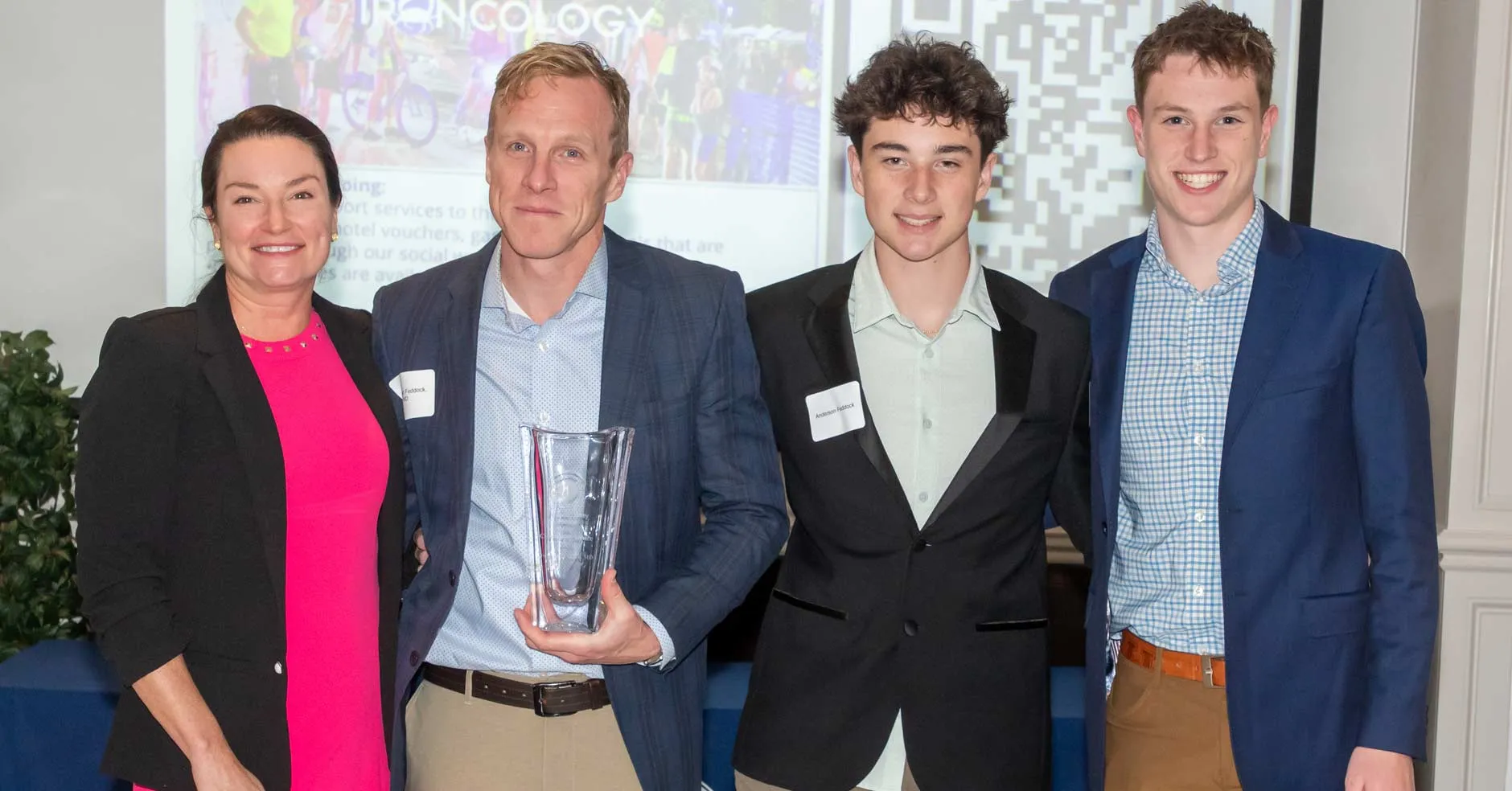
Feddock is a competitive runner and has taken his passion for running to the next level with community outreach and philanthropy.
In 2014 he created a fundraiser, Ironcology, with a goal of raising money for radiology equipment at the University of Kentucky. Ironcology is now a nonprofit that has raised almost four million dollars with the focus of providing resources to cancer patients traveling to Lexington for treatment with hotel rooms, meals, gas cards, and need-based grants.
Feddock is married to Shannon Florea, MD, and has two sons, Asher and Anderson. Both wife and sons are heavily involved in orchestrating the Ironcology event. He finds inspiration from encouraging patients to embrace exercise and well-being as coping mechanisms for their cancer diagnosis.
Feddock recently reflected, “My favorite thing about Ironcology is that if you come to the race at midnight you are going to see seasoned athletes running and biking as fast as they can. Then you are going to see the cancer survivor, who didn’t think they would be there last year, riding on the same bike loop. Then you are going to see the family and the kids. Just seeing the whole community is what the event is about.”
To support Ironcology, visit www.ironcology.org/donate. LMS will match donations, up to $5,000.
Shannon Florea, MD, with husband, Jonathan Feddock, MD, and sons Anderson and Asher Feddock.
Photo by Joe Omielan
LEXINGTON MEDICAL SOCIETY Physicians taking care of the community since 1799
The principal voice & resource for Central Kentucky physicians
LMS DINNER SOCIAL
Healthy Living Symposium: Local Experts Take On Facts & Myths May 12, 2026 The Signature Club 6pm
35TH ANNUAL LMS Foundation Golf Tournament Wednesday, May 20, 2026 University Club of KY 4850 Leestown Road
For more information visit lexingtondoctors.org or call (859) 278-0569
]]>Located in Building A of the Saint Joseph Office Park on Harrodsburg Road in Lexington, the updated suite offers a modern, patient-centered design and a refreshed experience for its patients, families and visitors.
The ribbon was cut by members of the physician care team at Saint Joseph Medical Group – Cardiovascular & Electrophysiology.

“We are excited to welcome patients to our new space, which will provide an updated and more efficient patient care experience to match and support the advanced heart care we provide to central Kentucky,” said Steve Lin, MD, Saint Joseph Medical Group – Cardiovascular & Electrophysiology and physician lead for heart care at Saint Joseph Health. “Fostering heart health in a high-risk state like Kentucky starts with streamlining care, improving access and upgrading the care environment for our patients with the compassion and care that comes with humankindness.”
Carmel Jones, MBA, CPA, CMPE, market president of Physician Enterprise at Saint Joseph Health, said the redesigned suite represents a meaningful milestone for Saint Joseph Hospital, long known as Lexington’s heart hospital because of the numerous pioneering advancements that have occurred at Lexington’s first hospital.
“Our heart experts are leading the way in providing advanced cardiovascular and electrophysiological care, and this investment reflects the quality care we aim to provide,” said Jones.
Providers at this practice include Brittnee Angle, PA-C, Mohamed Ayan, MD, Micha Greenlee, PA-C, Hussam Hamdalla, MD, Jamie Jordan, PA-C, Sharat Koul, DO, Steve Lin, MD, Erin Martin, PA-C, Nicole Moss, PA-C, Armaghan Soomro, MD, Autumn Westmoreland, APRN and Shengnan Zheng, MD with Saint Joseph Medical Group – Cardiology, and Yousef Darrat, MD, and Samy Elayi, MD with Saint Joseph Medical Group – Electrophysiology.
SEND YOUR NEWS ITEMS TO MD-UPDATE > [email protected]
]]> LEXINGTON — Saint Joseph Hospital has been once again named one of America’s 100 Best Hospitals by Healthgrades, placing the organization in the top 2% of U.S. hospitals for overall clinical performance for the fourth year in a row.
In addition to this distinction for overall clinical care, Saint Joseph Hospital has been recognized for its exceptional patient outcomes in key service areas, including critical care. These accolades further underscore Saint Joseph Hospital’s dedication to delivering the highest quality care to every patient, year after year.
“This recognition from Healthgrades is a testament to the dedication of our caregivers to provide exceptional care to the communities we serve,” said Terry Wooten, MHA, president, Saint Joseph Hospital. “As the new president at Saint Joseph Hospital, I’m excited to be part of the team that has been recognized as a leading example of high-quality care for the fourth straight year. I look forward to all that the future brings.”
Saint Joseph Hospital’s achievement is based solely on what matters most: patient outcomes. To determine America’s 100 Best Hospitals for 2026, Healthgrades evaluated risk-adjusted mortality and complication rates for more than 30 of the most common conditions and procedures at approximately 4,500 hospitals nationwide.
SEND YOUR NEWS ITEMS TO MD-UPDATE > [email protected]
]]>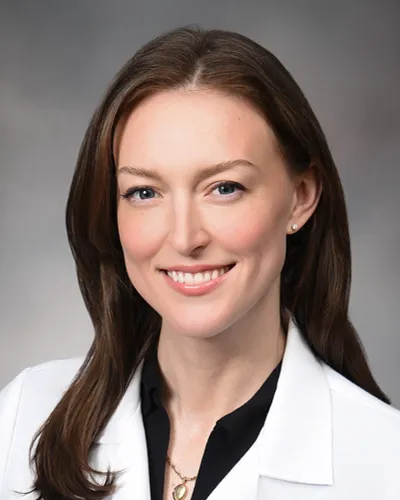
Taylor Patrick, MD, a family medicine specialist, received her medical degree from the University of Kentucky and completed her residency in family medicine at the University of Louisville.
Michelle Williams, PA-C, with expertise in family medicine, palliative care, and obesity medicine, received her physician assistant and kinesiology degrees from the University of Kentucky. She holds certification in basic life support and precision nutrition.
Randal Ball, PA, specializes in primary care, urgent care, and emergency medicine. He holds advanced degrees from the University of Nebraska Medical Center, the University of Kentucky, and the University of Pikeville.
SEND YOUR NEWS ITEMS TO MD-UPDATE > [email protected]
]]>
Kolt Pruitt, DO, is a primary care sports medicine physician who see patients at the Sports Medicine Clinic at UK-HealthCare – Turfland. He also serves as team physician for Eastern Kentucky University. Pruitte received his DO at the University of Pikeville Kentucky College of Osteopathic Medicine. He did both his family medicine residency and primary care sports medicine fellowship at the University of Kentucky.
Stepanie Biecker, MS, DO, is a primary care sports medicine physician who sees patients at UK HealthCare – Turfland. Her clinical interests include sports injuries, musculoskeletal care, and athlete wellness. Biecker received her DO from the New York Institute of Technology college of Osteopathic Medicine. She did her residency at Wright State University and fellowship at TriHealth in Cincinnati.
Charles-Antoine Mechas, MD, is an orthopedic surgeon specializing in spine care. He sees patients at the UK Orthopaedic Spine & Joint Clinic at Good Samaritan Hospital. Mechas received his medical degree and did his residency in orthopaedic surgery at the University of Kentucky. He did his orthopaedic spine surgery fellowship at the Mayo Clinic in Rochester, Minnesota.
SEND YOUR NEWS ITEMS TO MD-UPDATE > [email protected]
]]>Vent. Get it out. Don’t bottle it up.
So, it can feel almost heretical to say this—but it’s true:
Sharing your feelings doesn’t always help. Sometimes, it actually makes you feel worse. Not because emotions are bad. Not because support doesn’t matter. Because it’s not just talking that matters—it’s what happens next.
Rumination: When Your Mind Gets Stuck on Repeat
Rumination is what happens when your mind keeps replaying the same problem or feeling, hoping that thinking harder will finally bring relief—while quietly making you feel worse.
It’s not reflection. It’s not problem-solving. It’s your brain stuck in replay mode—running the same scene, over and over, without moving the story forward.
Dr. Jan shorthand: Rumination is replay without resolution.
Telltale signs: – The same thoughts, the same conclusions, the same ending – A tight emotional close-up with no zooming out – A familiar false promise: “If I replay this enough times, something will finally click.”
The hardest part is that you may not realize you’re ruminating—it feels like you’re figuring something out.
Co-rumination: When Connection Keeps You Stuck
Co-rumination is replay mode with an audience.
It’s when two or more people keep re-running the same story—what happened, what was said, how unfair it felt—creating closeness around the distress without changing where the story is headed.
Why it feels good at first: – Someone else is watching the tape with you – You feel understood, validated, less alone – The connection deepens in the moment
Why it quietly backfires: – The story gets replayed, not reframed – Emotional volume goes up, not down – You leave feeling closer—but no freer
The questions keep coming, the story keeps replaying, and the emotional volume gets stuck.
“But I thought talking about feelings was healthy?”
This is usually where clients stop me short.
We’re not wrong to be confused. Popular culture tells us that expressing our emotions is healthy and good for us. And this isn’t just a trendy, modern idea. Aristotle first suggested that emotional expression brings relief. Freud later jumped on the bandwagon big time and reinforced the belief that talking things through is inherently therapeutic.
But research tells a more nuanced story. Studies following 9/11 and the shootings at Virginia Tech and Northern Illinois found something deeply counterintuitive: people who shared the most about their thoughts and feelings often experienced higher levels of ongoing distress and poorer physical health than those who shared less.
And similar patterns show up well beyond large-scale trauma.
So what gives?
Are we supposed to isolate? Handle it alone? Swallow our feelings?
No. And this is where the conversation usually goes off track.
How Talking Goes Wrong (Without Anyone Meaning It To)
Seeking others out when we’re distressed does help us feel safer and more connected—at least at first. That part works.
The problem is what happens next.
With the best of intentions, support can slide into: – retelling the story – revisiting the details – re-experiencing the emotional surge
Instead of helping someone recover, we can end up encouraging them to relive—and sometimes even re-traumatize—the experience.
It’s subtle. All you’re trying to do is be caring and supportive. Let the person talk about their feelings. Let off steam.
But what if our intricately complicated human brains don’t work exactly like an efficient hydraulic system?
In our human complexity, letting off steam doesn’t always relieve the pressure building inside.
The Distinction That Changes Everything
Here’s the distinction I find myself making in my own conversations with clients, and just about anybody else, again and again:
Rumination asks: Why does this feel so bad, and why am I stuck watching this again?
Co-rumination asks: Can we keep replaying this together a little longer?
Healthy reflection asks: What matters most here—and what’s the next step I can take?
The first two keep us watching instead of choosing.
That’s why—despite its enormous potential to help—talking about emotions can backfire.
What Actually Helps: Validation and Perspective
When you’re under stress or feeling threatened, your brain first prioritizes emotional needs. Feelings come first. That’s why being able to talk about your distress matters—at least initially.
Effective support does two things: – It helps you feel understood – It helps you step back from the emotional close-up
Validation matters. Full stop. But validation alone doesn’t change the channel.
What helps is someone who can sit with you—and then help you zoom out—turning down the emotional volume so thinking can widen. Now you’re in a position to take perspective. You can start reframing and problem-solving.
Connection without movement keeps us stuck. Perspective creates traction.
A Surprising Model That Gets This Right
It even works in high-stakes conversations like hostage negotiations.
NYPD hostage negotiators saw an immediate drop in bad outcomes when they adopted a breakthrough approach developed by police officer and clinical psychologist Harvey Schlossberg.
Listening → empathy → rapport → influence → behavior change
This progression works not because it’s dramatic, but because people can’t think or choose clearly until things feel steady—even in extreme situations.
Listening and empathy come first. They help emotions settle. They create enough stability for perspective to return.
Only after that does influence make sense. Only then does behavior change become possible.
You don’t jump to solutions first. But you also don’t stay in empathy forever.
Support should help you steady first and think better—not just feel understood.
A Simple Gut-check You Can Use Right Away
Whether you’re seeking support or offering it, ask: – Is this conversation helping me gain distance—or just replay the scene? – After feeling understood, do I feel more capable—or simply more emotionally activated?
If talking doesn’t widen your options or calm your nervous system, you’re probably stuck in replay mode—alone or together.
The Takeaway
- Replay without direction = rumination
- Shared replay without movement = co-rumination
- Perspective plus choice = change
Talking about feelings isn’t the problem. Getting stuck there is.
The goal isn’t to shut emotions down—it’s to help them steady enough so you can choose what comes next.
If This Sounds Familiar
If you recognized yourself in this—replaying conversations, looping through worries, or getting stuck in the same emotional groove—you don’t need to try harder or talk it out one more time.
What often helps is learning how to steady first, widen perspective, and decide what actually comes next. That’s the work I do with individuals, couples, and families when talking alone isn’t helping anymore.
If you’re curious what that kind of support could look like for you, you’re welcome to schedule a brief, no-pressure consultation. We’ll start with what’s been on repeat—and explore what would actually help you move forward with more steadiness, perspective, and choice.
Jan Anderson, PsyD, LPCC Counseling with a Coaching Edge Executives & Professionals Couples Family Estrangement [email protected] DrJanAnderson.com 502.426.1616
]]>Approved by the US Food and Drug Administration in November 2023, the Symplicity Spyral renal denervation (RDN) system is designed to help reduce blood pressure by targeting overactive nerves near the kidneys that contribute to hypertension.
“Bringing advanced cardiovascular care to our community is a priority for Harrison Memorial Hospital,” says Kathy Tussey, HMH chief executive officer. “We are proud to be the first hospital in the region to offer the Symplicity blood pressure procedure, performed by Dr. Matthew Shotwell. This innovative therapy reflects our commitment to providing patients with access to the latest evidence-based treatments close to home.”
Also known as the Symplicity blood pressure procedure, RDN is approved as an adjunctive treatment for patients whose blood pressure is not adequately controlled with lifestyle changes and antihypertensive medications alone. The procedure does not replace medication or lifestyle modifications but works alongside them to help achieve improved blood pressure control.
Hypertension is the single largest contributor to death worldwide and affects approximately 50% of U.S. adults. Among adults who are aware they have high blood pressure, nearly 80% do not have it under control. Uncontrolled hypertension significantly increases the risk of heart attack, stroke, kidney disease, and other serious health complications.
The Symplicity blood pressure procedure has been clinically proven to help reduce blood pressure, which can lower the risk of serious cardiovascular events. During the procedure, performed under mild sedation, a physician inserts a very thin catheter through an artery leading to the kidneys. Controlled energy is then delivered to calm the excessive nerve activity contributing to high blood pressure. The catheter is removed at the end of the procedure, leaving no permanent implant behind. The procedure is performed at Harrison Memorial Hospital by Matthew Shotwell, MD, interventional cardiologist.
“High blood pressure is one of the most common and challenging conditions we treat, and for many patients, medications and lifestyle changes alone simply aren’t enough,” says Shotwell. “Renal denervation offers a new option for carefully selected patients by addressing one of the underlying drivers of hypertension. This procedure provides consistent blood pressure reduction without the need for an implant, and we are excited to offer this advanced treatment to patients in our region.”
At HMH, patient evaluations for renal denervation are led by Yaz Daaboul, MD, along with advanced practice providers in the HMH Cardiology Clinic. This care team works collaboratively to assess each patient and determine whether the blood pressure procedure is an appropriate treatment option. Shotwell then performs the procedure itself.
Matthew Shotwell, MD, and Yaz Daaboul, MD, at Harrison Memorial Hospital
]]>“My job isn’t just to open arteries — it’s to understand when and why intervention is needed, and when a patient is better served by medical therapy or lifestyle change.”
Chowdhury, an interventional cardiologist at UofL Health, and director of the cardiac cath lab, says, “I’m trained not only in complex coronary interventions, but also in noninvasive cardiology, including nuclear cardiology, and echocardiography. That background allows me to see the whole picture before ever reaching for a catheter. I also believe deeply in the power of prevention. A large part of what I do involves helping patients understand their disease, modify risk factors, and take ownership of their heart health. Because the best procedure is the one you never need — and empowering patients to avoid that path is just as rewarding as performing a successful intervention.”
Chowdhury grew up in India, in a town at the foothills of the Himalayas. After attending Bharati Vidyapeeth Deemed University Medical College to obtain his bachelor’s degree in medicine and surgery, he did his internal medicine residency at St. Peter’s University Hospital, Rutgers-Robert Wood Johnson Medical School.
“I was fortunate to receive the Maulana Azad national scholarship, which was awarded to me by the President of India,” he says. “That recognition really set me on the path that would eventually lead me halfway around the world. After earning my degree in India, I came to the United States to further my training.”
At St. Peter’s, he served as chief resident. From there he completed a fellowship in cardiovascular medicine at State University of New York where he was elected chief fellow. This was followed by a fellowship in Interventional Cardiology at the University of Massachusetts in Worcester, where he specialized in complex cardiology interventions, mechanical circulatory support, advanced pulmonary embolism interventions, and interventional management of advanced cardiogenic shock.
All in the Family
Now at UofL Health, Chowdhury specializes in treating patients with coronary artery disease as well as patients with pulmonary embolisms. Apart from placing stents, he’s treating patients by removing clots from their lungs and using percutaneous techniques to close PFOs or “holes in the heart.”
“I take care of the sickest of the sick,” he says. “It is a privilege of bringing people back from the brink.”
Treating patients with cardiac issues is personal for Chowdhury. Not only is medicine something that runs in the family, but cardiovascular health issues took his grandfather. Chowdhury’s wife, Mrin Shetty, MD, is an advanced multi-modality imaging cardiologist and director of the Women’s Heart Program at UofL Health. Chowdhury’s father-in-law is a renowned cardiac surgeon in Mumbai whose work has inspired a generation of young surgeons. His great-grandfather was also a physician and is known for his work on snake venom research in India.
Choosing cardiology as a specialty came from his experiences watching his father deal with heart disease and his grandfather deal with a stroke.
“I think those experiences introduced me to the fragility of the cardiovascular system long before I ever even stepped into a cath lab,” he says. “Those experiences made the science deeply human for me. That’s why every case still feels so personal. In training, I discovered that I thrived in an environment where precision meets pressure, where the outcome hinges on timing, skill, and calm decision-making.”
Seconds Matter in the Cath Lab
A fascination with the intricacies of hemodynamics and how subtle shifts in flow resistance can have impacts on a patient’s health led to his career in the cath lab where, he says, doctors can turn physiology around in real time.
“Advanced mechanical circulatory support and device innovation became extensions of that passion, allowing me to guide the course of management for our patients in cardiogenic shock due to massive myocardial infarction, where seconds really matter,” he says. “The same mindset extends to my interest in pulmonary embolism intervention. It’s another time-sensitive, life threatening scenario where endovascular expertise can be the difference between survival and loss.”
Chowdhury and his wife joined UofL Health in 2023, largely because of the program’s potential to grow, he says. The facility serves as the focal point of heart care in the region, which allows him to best use his skills in complex coronary interventions and pulmonary embolism therapies.
While coronary interventions are the cardiologist’s bread and butter, Chowdhury says, other treatments, like pulmonary embolism intervention and micro-vascular dysfunction testing, can be just as lifesaving.
“Pulmonary embolism intervention is something I’m doing more and more of, as awareness around it is increasing,” he says. “We have developed a highly effective protocol in collaboration with vascular surgery, interventional radiology, the ER, and the critical care unit for the management of these conditions. Treatment options vary by severity but also specialty. Many can be managed with blood thinners, but high acuity patients require invasive interventions, and that can include extracting that clot from a blocked artery in the lungs to restore circulation, potentially saving their life, or infusing clot busting medication directly into the arteries where the clot is, thereby restoring flow.”
Restoring Quality of Life
“Here we are not just performing procedures, we are building a regional hub for advanced cardiovascular care capable of treating the sickest patient. I think those things really drew both of us,” he says.
A High-Risk Patient Population
Most of his patients are middle aged and older, but there are quite a few younger adults that he sees. The patient population is diverse and ranges from those with advanced coronary disease to those with adult congenital heart disease. He has a reputation for taking on high-risk patients that others might turn away.
Increasingly, he says, the practice is caring for patients with complex coronary disease and pulmonary embolism that are referred to the practice from hospitals around Kentucky and southern Indiana.
“They’re often critically ill patients, and with timely catheter directed interventions, we are able to restore circulation and prevent long-term complications,” he says.
“This is an incredibly exciting time for interventional cardiology. We’re moving from a one-size-fits-all approach to truly precision-guided care,” he says. “Advances in intracoronary imaging now allow us to see the vessel in microscopic detail and tailor every stent to the patient’s individual artery. That really has improved outcomes and the longevity of these stents.”
“With mechanical circulatory support, we can now safely perform complex interventions in the sickest hearts — providing temporary support without opening the chest or placing patients on heart-lung bypass. It’s changed what’s possible for those once considered too high risk.”
And as we start to see a second wave of patients with blocked prior stents, drug-coated balloons are an elegant solution, allowing us to recanalize arteries without adding new metal, restoring flow and durability with less long-term risk.
Pulmonary embolism disproportionately affects women and does not spare the young. Interventional approaches to treat this can stave off long-term complications.
“For a lot of young people, it preserves their quality of life, where they’re able to live a robust life — go for a hike, enjoy time outdoors. And to do those things without functional limitations. In the past, we were just managing with medications and not achieving the same results.”
“There’s nothing like watching a patient go from critical to stable because of something you did with your own hands and heart. That’s what keeps me showing up – not the titles, not the technology, but the privilege to restore life when it’s slipping away. I think that’s my strongest why,” he says.
“A lot of times I meet these people at their weakest moment. There’s a family out there waiting; they’re distraught; they don’t know what the next couple of hours are going to look like. But once the dust settles, and health is restored, you get to go in and restore hope… it’s such a beautiful feeling to wrap up your day like that, to have made that difference, to have changed a life, to change the entire trajectory of what could have happened.”
]]>