This is one of the most distinguished conferences in the field of Music Perception and Cognition, and the theme this year was Echoes and Ecologies: New Landscapes for Music Perception and Cognition. The line up included incredible talks across a wide range of disciplines and research areas, including Neuroscience, Memory, Cognition, Musicology, Evolution, and so on. The high-profile nature of this conference made me nervous about the preparation of my presentation, but I was equally excited to undertake this challenge, as it meant that I could travel to the vibrant city of São Paulo, Brazil, and meet amazing researchers from across the globe.
Preparations…
And so, I began to prepare for the conference and the travel. This included watching countless videos about the best restaurants in São Paulo, alongside travel tips for this megacity (apparently, it is the largest city in the Southern Hemisphere!). I also read about the other presenters at the conference and their current research projects. And of course, I worked on creating my presentation!
Arrival
After my extended research about this great city, I decided to arrive a few days before the conference. This decision paid off, as the vibrancy of the city was palpable from the moment I landed. I walked around and discovered many new things that sustained me throughout the conference – first, formigas at Ama.zo Cozinha Peruana (highly recommend), then a great variety of tropical fruit from the markets.




ICMPC 18
When ICMPC 18 began, of course, I was initially worried about what it would be like for me. Nevertheless, the events, talks and lunches quickly formed a rhythm that I now wish could be part of regular life. I was staying in the Higienópolis neighbourhood, and I soon came to know the people at Kez Padaria, the local bagel shop that I frequented for breakfast. Each day of the conference involved talks and poster presentations, with plenty of stimulating (and delicious!) coffee breaks. Every lunch featured conversations with fellow presenters about future collaborations over feijoada, churrasco, or incredible ramen in the Liberdade Japanese neighbourhood.
In the evenings, workshops, concerts, and dance classes were organized to enrich the experience. On the first night, Sala São Paulo hosted a chamber orchestra that played Haydn as part of the 55th Campos do Jordão Winter Festival. This was a lovely opportunity to get to know everyone at a beautiful venue with lots of cake. On another evening, Professor Liliana Araújo led a workshop about musicians’ cognitive health, highlighting essential skills and habits that we ought to implement in our everyday lives (yes, including exercise).
A highlight of the conference was a presentation that examined South Asian rhythms and melodies, Percussion Patterns, Rhyming Poetry, and the Expectation of Recurring Timbres: Case Studies from South Asia by Dr Eshantha Peiris. After this talk, I went for coffee with the presenter and a few other conference members to talk more in depth about our individual research topics. Being able to connect with fellow researchers was one of the things that I enjoyed most, as it enabled me to learn from wonderful researchers, alongside making friends from all over the world.
The Presentation
ICMPC 18 went on for three exciting days until we got to the fourth day, when my presentation was scheduled for (ICMPC 18 was five days). While I thought that I would be nervous all the way up to my presentation, the exciting talks and meeting all the interesting people distracted me from my worries. My presentation was about how concrete and abstract music cues influence autobiographical memories. Despite my nerves, I really enjoyed the experience, and I am very thankful to the many familiar faces that attended. The fact that my presentation was on the fourth day had another silver lining: I could talk to fellow presenters about my research, and it was so encouraging to see many new friends in the audience. I think supporting new-found friends like this is what conferences are all about!

The other side – dance night and island visit
On the last night of the conference, when my presentation was finally over, we had the opportunity to attend a very exciting evening of Samba de Gafieira. This is a traditional Brazilian dance form that emphasises human connection. We took part in a dance class, and watched professionals do a better job of it afterwards, bringing to an end a delightful five days.
Perhaps the best thing about the conference was making life-long friends. I met a fellow researcher from Germany on the first day of the conference and by the fifth day we decided to book a spontaneous girls trip to Ilhabela – one of the most gorgeous islands in Brazil.


As you can see, it is very beautiful – more so in person, and I fear that my attempts to describe it would do it an injustice.
So, if you are just beginning your first PhD or are about to complete your fourth, do not miss the opportunity to attend a conference in person: the least that could happen is that you get to experience a new culture – at most, you might fall in love with it.
Bonus tip
If you travel to São Paulo, Sushi Bar Hamatyo is an absolute must visit. It is a small tucked away family ran Japanese restaurant offering the best sushi I have ever had!

“These conferences seem cool, but what do you get out of attending them?”
—asked my ever-inquisitive brother, curious why we bother travelling to different cities and countries to… do more work? Chat with some friends?
At some point during your academic quests, you’ve probably been in conversations with peers or supervisors about conferences; which ones are you thinking of attending? What research could you present? Who else might attend that you should connect with? When is the abstract deadline? Would you do a poster or a spoken presentation?
But let’s take a step back; what’s the deal with these conferences anyway?
Hopefully this post spotlights why you should consider attending an academic conference, supplemented by the recent experience of some MPL lab members who attended the 18th International Conference for Music Perception and Cognition (ICMPC18), this July in São Paulo, Brazil.

Here are some key takeaways we’ll dive into a bit more.
Conferences provide the opportunity to:
- network and make connections
- develop important transferable skills
- practice explaining your research and responding to questions
- hear about the latest research developments directly
- learn more about other labs, institutions, and research from other cities, countries, and continents
Networking & Connecting
Networking and connecting go hand-in-hand in explaining what I value most about conferences.
Networking – knowing more people – is extremely valuable. In a shared venue with tens to hundreds other people, this mission is pretty straightforward; talk to other attendees, go to presentations, posters, workshop sessions, and get to know other researchers who (would you believe your luck) share fields of research and interests with you! Networking is not only fun during mingling time but may also prove helpful when you are looking for collaborators and even future positions or places of work…
If networking is the cake, connecting – knowing people more – is the filling.
Generally, most conference attendees are travelling to attend the hosting location, and everyone is pretty tired from the packed schedule each day. This means everyone will be on the hunt for places to eat lunch and dinner and someone to tell them where to go.
These offer perfect opportunities to ask people (go wild and get a group together!) to join you at a food spot you’ve found. I find it’s these more relaxed environments in which I build the strongest connections. Take full advantage of the hosting location too – explore, sightsee, try new food, and get a feel for the culture of the city.
Be sure to step outside your comfort zone – talking to new people, note down emails (or look them up later!), and follow up with them after the conference. Oftentimes, this is the one time you will get to see these people in person for a while depending on the location and size of the conference, so make the most of it!


Delivering presentations & Receiving feedback
Presenting your research is both thrilling and daunting. Most academics will tell you that they still have nerves before they speak. Nevertheless, the experience gained from presenting is crucial to your studies and whatever lies ahead – next job interview, your PhD thesis, public-facing interviews with news corporations, think big!
Conferences provide the opportunity to present your work (completed or in-progress), opening it up to questions and feedback; think of this as an idea exchange. You can learn from other researchers, practice receiving and answering questions, test your explanations and justifications for certain choices, etc. etc.
Conferences can be treated as a friendly preparation experience to build skills needed to handle those other academic tasks that hold a little more immediate consequence…

Scoping out the field
Researchers, just like you, are coming to these conferences excited to share their most recent insights, findings, and works-in-progress. By attending these presentations, you’re getting a front row seat to hear about the freshest developments in the field.
Not only is this stimulating, but it is also informative and probably helpful in guiding your own future studies – what are promising avenues to investigate next? What has/is already being done? Where are the remaining and new gaps? Bonus question: who might be useful to get in contact with to discuss a potential collaborative project?
Additionally, going to conferences is an opportune chance to get a “lay of the land”. This could be getting the low down on your favourite researchers, discussing university differences, and learning some cultural tidbits from others.

Final points
Academic conferences can be quite tiring from all the talking, taking notes, presentation pressures, and realities of work waiting for you when you get back. Yet even still, I always find myself energised with a renewed motivation and enthusiasm for research upon leaving.
Everyone else has their own special interest, looking for new directions to take their explorations, and going through those familiar stages of experimental designs, data collection, analyses, and write-ups — just the same as you.
Being around others who are producing new, interesting research, and are equally as interested in what you have been thinking up is one of the best things you can do to remind yourself of why you started on this academic quest in the first place.

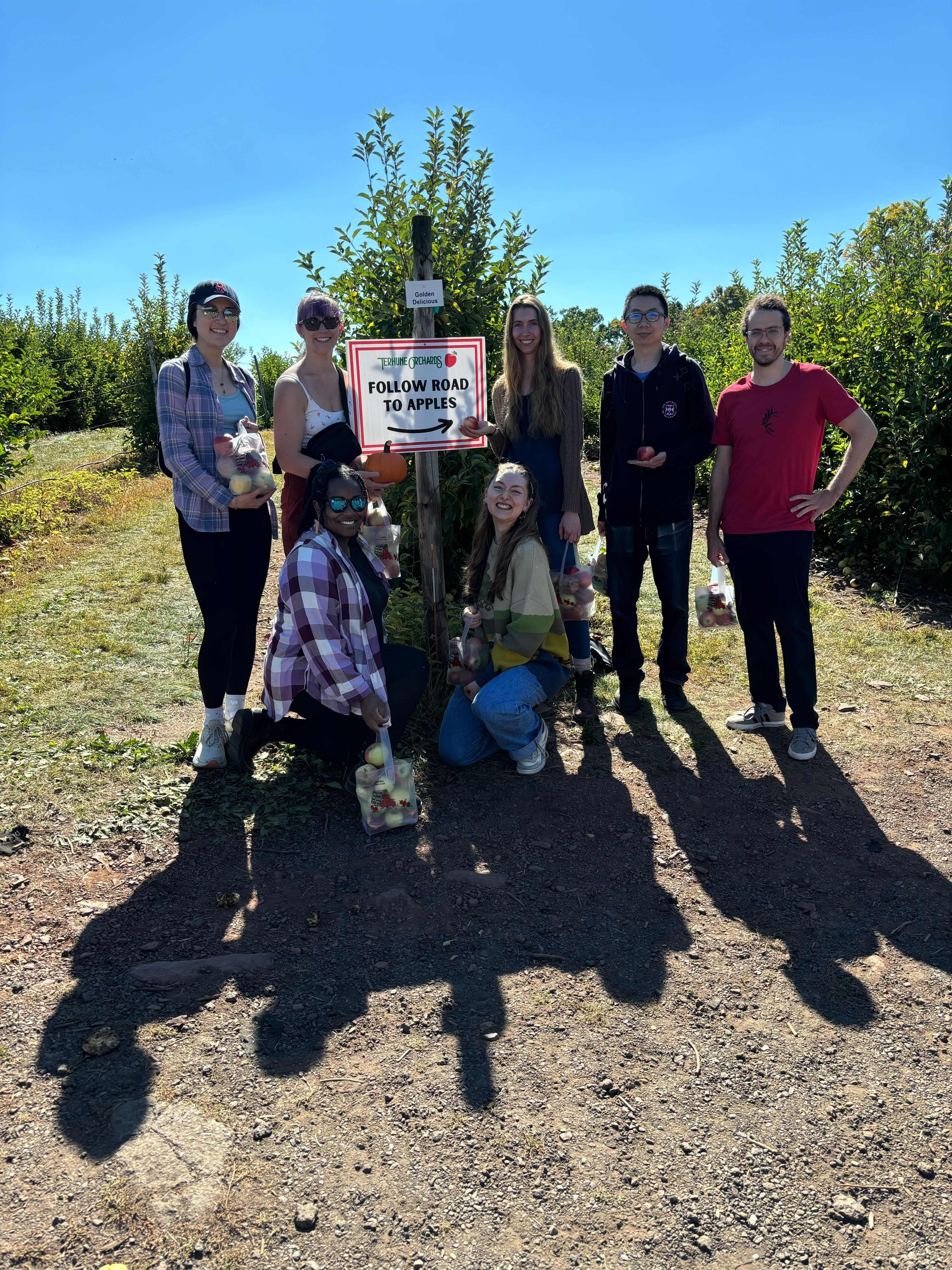
(left to right: Hazel, Connor, Caroline, Aliya, Katie, Fruzsi)
BONUS SECTION: ICMPC18 notes & retrospection
ICMPC is a well-known conference and large event in the field of Music Psychology and has showcased a multitude of innovative and informative research projects within the field.
The conference spanned five full days and had many informative talks and keynotes, plus a range of workshops and events featuring psychology and neuroscience techniques to performances of music and traditional capoeira dance! We were able to attend sessions from presenters in-person and online from our music psychology community around the globe on a variety of topics – music technology, culture, dance, 4E-cognition, measurement techniques, and imagination.
In our time off the clock from the conference schedule, we enjoyed adventuring out together to enjoy the incredible nature in the cities and dedicated parks, the phenomenal range of art galleries and museums, and of course the food. Some favourite Brazilian food we enjoyed together included Pastel de Palmito (fried pastries with heart of palm in them), Coxinha (chicken croquettes), Pão de Queijo (cheese bread), and Brigadeiros (rolled chocolate-based truffles).
Overall sentiments: we are extremely grateful to have been able to travel and experience ICMPC in São Paulo this year – an inspiring conference hosted in an incredible city.


Hi, we’re Hazel and Connor, PhD students based in the Music Department and the organisers of the new ReproducibiliTea journal club we’ve set up here at Durham University.
WHAT IS “ReproducibiliTea”?
ReproducibiliTea is a global grassroots journal club initiative helping researchers build local communities to discuss issues and ideas about the Open Research movement.
For ReproducibiliTea Journal Clubs, papers and case studies are selected to cover a range of Open Research topics relevant to the replication crisis and research improvements, from ontology and methodology to publication and authorship.
These papers and case studies are discussed during regular journal club meetings, often over cups of tea, lunch, or snacks.
WHAT IS OUR AIM?
The Open Research (more commonly, Open Science) movement has predominantly focused on the sciences. However, improving research practices is relevant for all disciplines!
During our journal club, we hope to facilitate discussions about the issues and experiences surrounding Open Research practices from the sciences to the arts.
You can check out our OSF journal club repository to see what we will be discussing in the coming weeks!
I would love to get involved! How do I find out more?
To find out more, or if you want to get involved in another way, email Hazel [[email protected]].


I’m thrilled to announce the release of my new textbook in the fields of music and science and music psychology. This book, titled Music and Science: A Guide to Empirical Research, accumulates a decade of experience of teaching these subjects at Durham University. Over the past five years, both undergraduate and postgraduate students have accessed earlier drafts, and their invaluable feedback has shaped the book’s content and tone.

The book explores empirical research in music and music psychology, as well as computational approaches to music research. These disciplines share strong synergies, overlapping interests, and similar methodologies. The chapters guide readers through historical foundations, key concepts, empirical methods, research design, data sources, and statistical analysis techniques. Dedicated chapters focus on computational methods, including audio analysis, event-based and symbolic approaches, and corpus studies. A standout feature of the book is its emphasis on diversity. I’ve intentionally included a broad range of references, highlighting contributions from female scholars and researchers from outside the Anglo-American sphere. The music examples are equally diverse, drawing on Indian music, protest music, popular genres, and folk traditions.
Promoting Open Research
One of the objectives of my book is to emphasize Open Research practices, with extensive discussions on transparency, preregistration, replication, data sharing, open-access publishing, and preprints. Concrete examples illustrate these principles, many drawn from recent studies conducted at the Music and Science Lab, where we’ve actively embraced these initiatives. While it wasn’t feasible to release the book as an open-access monograph, I hope the softcover version remains affordable, offering 298 pages of insights and guidance, sold by Routledge and Taylor & Francis (see their page for previews, contents, and reviews).
To support readers further, I’ve created an electronic repository on GitHub, housing the computer code used in the book. This Quarto-powered repository includes R and Python scripts for relevant chapters, along with links to interactive notebooks that can be run in Google Colab. These resources enable readers to replicate the analyses and visualizations in the book and encourage the adoption of transparent practices in their own research.
Acknowledgments
Lastly, I’d like to extend heartfelt thanks to the many students and colleagues who contributed to this project. The work done by the alumni from our Music and Science Lab, including Scott Bannister, Lennie Thomas, and Annaliese Micallef Grimaud, whose fascinating research is featured in the examples. The closest colleague at Durham, Kelly Jakubowski has also supported the project along the way. Juan Sebastián Gomez-Cañón provided inspiration and technical suggestions that encouraged me to take all code to GitHub as Jupyter notebooks. A very special thanks goes to the following colleagues – Mats Küssner, Laura Leante, Fabian Moss, Imre Lahdelma, and Brian McFee — for their detailed feedback on the initial drafts. SEMPRE made the release possible through their book series Sempre Studies in the Psychology of Music.
I hope you enjoy the book and find it useful or inspirational.
Tuomas Eerola
P.S. The cover image was created by me with the help of Midjourney.
]]>Located at the Woolworth Center for Musical Studies, Professor Elizabeth Margulis’s Music Cognition Lab at Princeton University is one of the most successful laboratories that study cognitive science of music. Since January/February of 2024, we have had the honor to remotely collaborate with Professor Elizabeth Margulis on our supervisor Dr Kelly Jakubowski’s Leverhulme Trust project “Using music to investigate perceptual and cognitive constraints on imagination”. This research trip brought all four of us in person for the first time and gave us a chance to meet many wonderful people in the Princeton lab and beyond.

During this trip, I had the opportunity to attend plenty of lab meetings, seminars and tutorials. These events cover a wide range of topics, from musicology to music psychology to natural language processing and data science, which deepened my understanding about music cognition as an interdisciplinary subject at the intersection of the humanities and the sciences. One of the highlights of this research trip was the music-evoked imaginings workshop, which was hold on 15th October at Princeton.
The music-evoked imaginings workshop brought researchers from different disciplinary backgrounds together and discussed the cognitive and neural mechanisms supporting music-evoked thoughts. During the workshop, Kelly, Hazel and I represented the Music Psychology Lab at Durham University and presented our latest research with the topic “Stimulus and Listener Factors Impact Music-Evoked Imaginings”. In our presentation, Kelly first reviewed past literature and summarized the importance and suitability of using music to investigate human memory and imagination systems. After Kelly, Hazel introduced a recent music stimulus set from our lab – MUSIFEAST-17 (MUsic Stimuli for Imagination, Familiarity, Emotion, and Aesthetic Studies across 17 genres), and demonstrated how we used this normed dataset to examine the relationship between music features (e.g., music genre, familiarity and contrast etc.) and types of thoughts evoked by music. Finally, I presented some preliminary results from our most recent music-evoked thoughts study, which suggests that both perceptual factors (e.g., music genre) and listener factors (e.g., age group of participants) could affect the semantic content of music-evoked thoughts.
Besides our team from Durham, researchers from a range of universities and institutes also presented their scientific findings at the workshop. For example, one of the highlights for me included Professor Kalina Christoff’s discussion of the neural substrates supporting mind-wandering and its dynamic nature. In Professor Christoff’s work, mind-wandering is understood as a type of spontaneous thoughts, which could engage and interact with human creativity and activate the relevant neural networks (e.g., the default mode network). Other researchers and their work, for example Dr Ruben Van Genugten who talked about studying autobiographical memory with natural language processing, and Dr Itamar Jalon who compared narrative imagining to music versus speech, were all very informative and enlightening to me.

Other than the academic activities themselves, I also had a taste of living and working in a new environment at Princeton during this trip. Although I had had a few experiences in taking research trips to the United States in the past, through my interaction with the university systems, the campus and the people, I still felt the Princeton trip very fresh and interesting. For example, people in the Music Cognition Lab are all extremely welcoming and talkative, which made it easy for us to become friends. On one of the Saturdays, we visited an orchard in Princeton suburb and did apple picking together. We also went for dinner or Karaoke for a few times. All these experiences have become valuable memories of mine and taught me some American-style social skills (which is good for me as a quiet person).
In sum, this research trip from Durham to Princeton provided me an opportunity to work in a new environment, to experience a new culture and make new friends. The music-evoked imaginings workshop was also a valuable experience, during which I had the chance to share my own research and to learn from the brightest minds. Finally, although every research trip is different, I hope this article can still be helpful for those who are considering to take a research trip to another university or institute.
]]>Visiting another lab or research group during your PhD can be an incredible opportunity to expand your thinking and broaden your academic horizons, connecting with scholars both within your field and beyond your specific research focus. Recently, I had the privilege of spending time at Princeton University, exploring my own research on music-evoked imaginings together with the Music Cognition lab there, and diving into interdisciplinary discussions within a diverse intellectual community. In this post, I want to share my experiences of soaking up all that collaborative research visits can offer (should you be brave enough to grasp it with both hands!) and provide some reflections on the value of engaging within and across disciplinary boundaries. The joys and excitement of seeing research thrive through interdisciplinarity! Hopefully, this will encourage and push others to seek out the same for their own research.

Conversations… Music-Evoked Imaginings Workshop
One of the standout experiences of my visit was attending the Music-Evoked Imaginings workshop, which brought together scholars from a wide range of fields and institutions to explore imagination, memory, and spontaneous thought. It was fascinating to see experts from various fields—including cognitive psychology and neuroscience—come together to share and discuss their unique perspectives on investigating imagination.
For me, as a music psychology PhD student, I’m used to thinking about these questions from the perspective of music, so seeing the diversity of approaches to the same topic but through different lenses was truly fascinating. The range of methodologies and conceptual frameworks from this multidisciplinary group really struck me and helped me think more broadly about my own research. How are our terms and definitions of concepts like ‘imagination’ and ‘spontaneous’ thought informing our approach to studying mental landscapes? Can music be considered both a deliberate and automatic constraint on imagination, dynamically informing and enriching dynamic transitions between thoughts? What assumptions about the interplay of thought types are we bringing to our investigations—for example, how does counterfactual memory reconstruction shape imaginative experiences during music listening?
This workshop showcased just how much interdisciplinary collaboration can enrich our understanding of complex phenomena. It made me think about how different disciplines can offer unique insights, even when looking at the same subject. Engaging fully in conversations and co-conceptualising reinforced how important stepping outside of our own research silos is and considering how others might approach the same questions.

Connections… Music Interdisciplinarity
During my visit, I also had the chance to attend a graduate seminar on Music Interdisciplinarity. We were encouraged to think about how we can communicate across subdisciplines like music history, theory, and psychology. What made this seminar even more enlightening was the graduate student’s mix of research area interests and the willingness to engage with and see what we could glean from each other’s domain.
One session involved comparing papers written for narrow academic audiences with those aimed at a broader readership in music studies. Together, we unpicked the trade-offs of depth offered by disciplinary-specific research versus the broader connections and innovative insights aimed for in interdisciplinary work. What do we lose when we try to appeal to everyone? Even though we all came up against challenges in trying to understand and to bridge the gaps between different fields, we saw how doing so can spark new ideas and lead to more innovative work. Interdisciplinary research requires finding common ground and learning how to communicate across different academic ‘languages’. Yet, that very challenge is what makes it so rewarding—it pushes you to think creatively and see your work in new contexts.

Collaborations… The Value of Sustained Interdisciplinary Dialogue
One of the most valuable takeaways from my visit was the importance of sustained dialogue between disciplines. Whether through formal workshops, seminars, or even informal discussions over coffee, I found that talking to people with different perspectives and conceptual frameworks really stretched and challenged my understanding of my own research. It was refreshing to step outside the bubble of music psychology and see how cognitive scientists or music historians might think about similar questions in completely different ways.
Immersing myself in the interdisciplinary environment at Princeton was not only intellectually stimulating but also a great reminder of how important it is to keep collaborating across fields. This experience has made me more aware of the potential for interdisciplinary connections back at Durham, where there are researchers with diverse interests in music across several departments. These conversations have sparked new ideas for my own research and visions for future possibilities with continued connection and collaborations—I’m eager to see how these exchanges will continue to shape my work and to continue building on the collaborative momentum from my time at Princeton.

Conclusion.
Research visits are about more than just advancing your own project—they’re an opportunity to immerse yourself in a new intellectual environment, collaborate with peers, and engage with different perspectives. My time at Princeton broadened my horizons in ways I didn’t expect, deepening my understanding of interdisciplinary research and collaboration.
For anyone considering a research visit, I encourage you to seek out experiences that push you beyond the boundaries of your own discipline. Whether through interdisciplinary workshops, seminars, or casual conversations, engaging with diverse perspectives and methodologies can enrich your capabilities as a researcher, spark new directions for your own work, and open up new avenues for collaboration. My visit to Princeton has certainly left a lasting impact on me, and I hope this post inspires you to explore similar opportunities.
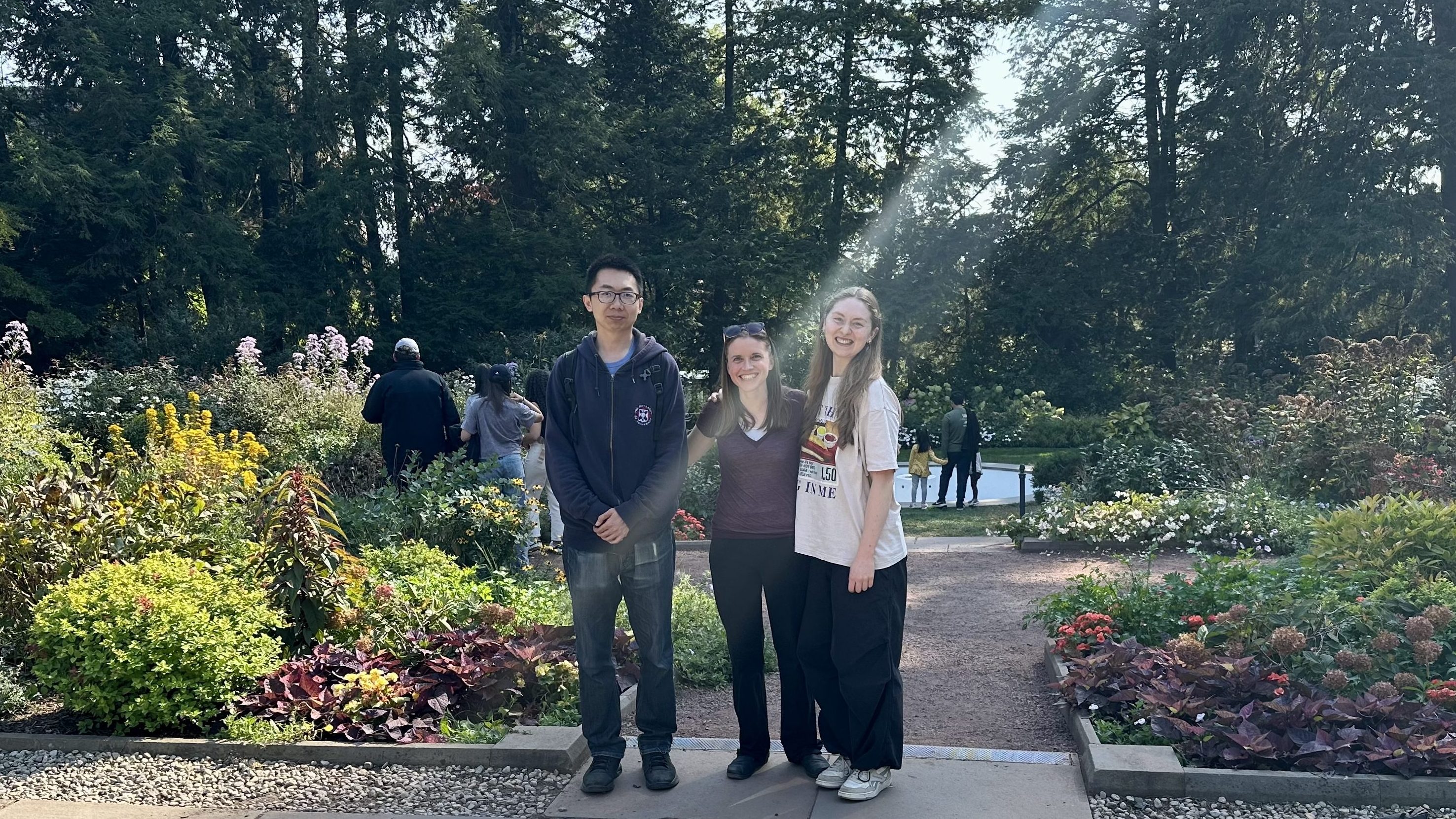

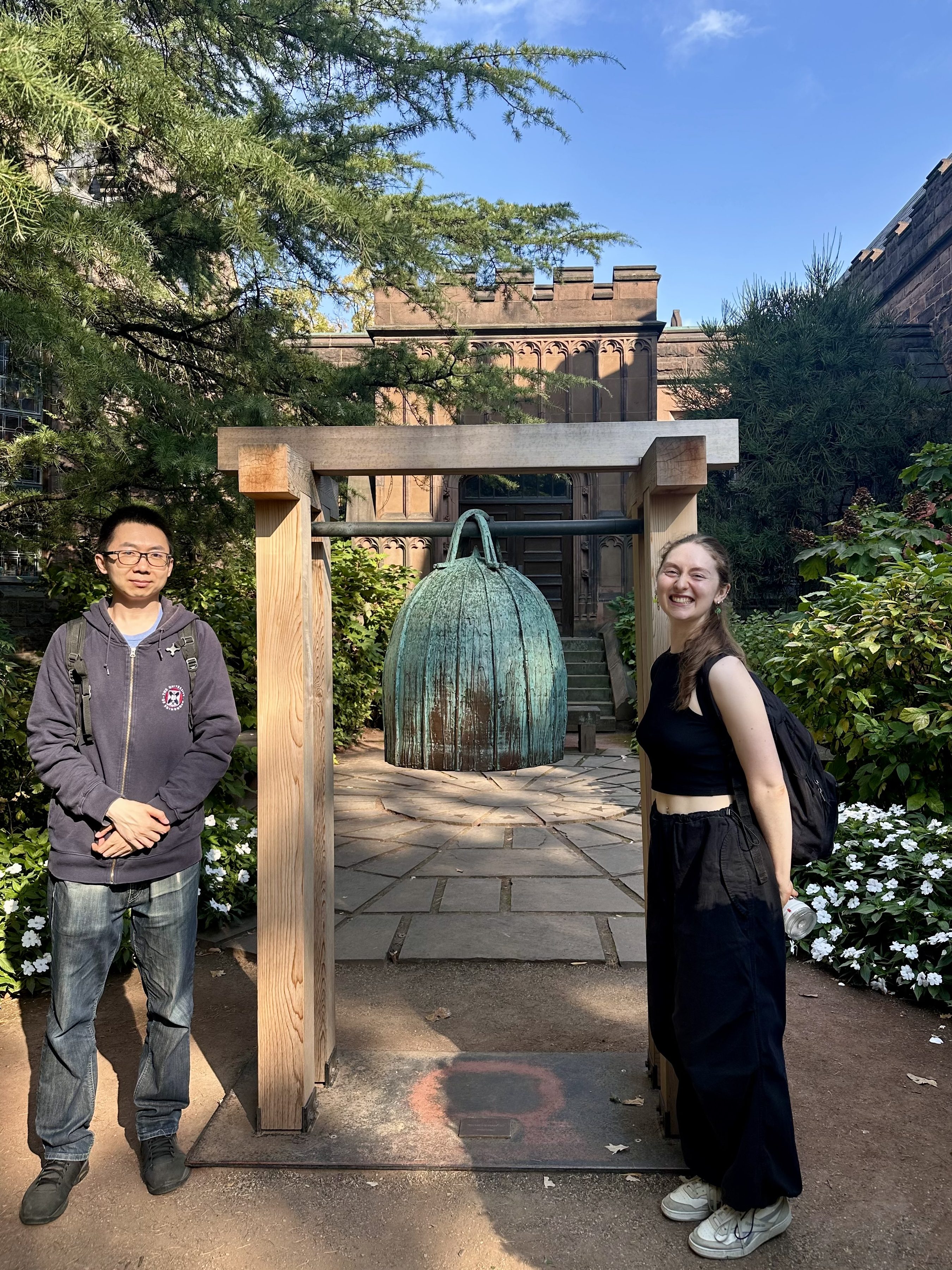
Many, many thanks to Lisa and the entire Music Cognition lab over at Princeton who have made me feel so welcomed and involved from the moment I arrived. Your enthusiasm for collaboration and willingness to share insights between our projects have inspired me immensely. I leave feeling energised and motivated in my own studies, and I’m truly excited to follow the emerging work from your lab in the future! Thank you for making my time here so memorable—it’s been a game changer.
]]>When we think of music, we often bring to mind the music that is most familiar to us. However, it is important to remember that, across the globe, there is a wide range of musical styles, each with their own musical language that is made up of a set of characteristics including rhythm, melody, instrumental textures and harmony. The field of music psychology benefits greatly from studying as wide a range of musical styles as possible in order to understand which aspects of music perception and cognition are universal and which are context-specific. One fascinating musical style is Sutartinės, prevalent in North Eastern Lithuania. Sutartinės are folk songs sung by two to four female singers without instrumental accompaniment. This style has a long history, starting as a living oral tradition of working songs. In the latter days of the Soviet Union, Sutartines grew in popularity as an assertion of Lithuanian national identity. More recently, the Sutartinės style has been associated with the neo-Pagan movement. We are lucky at Durham to have a research relationship with Rytis Ambrazevicius, who happens to be one of the foremost directors of Sutartinės groups when he is not doing his day job as a professor of ethnomusicology and music cognition.

One of the defining stylistic features of Sutartinės is the prevalence of parallel seconds. Though often notated as major or minor seconds in Western notation, the interval as sounded by expert singers corresponds to an interval that is typically a little flatter than the major second in an equal temperament scale. In many musical styles, seconds are considered dissonant. This phenomenon is not unique to the Sutartinės style – it is also found in Ganga (Bulgaria), mizwhiz (Middle East) and in vocal music in parts of Indonesia. In Western diatonic harmony, we hear seconds reasonably frequently, but typically they quickly resolve to a consonant interval. The Sutartinės style, and some of the examples listed above, often contain long sequences of seconds in parallel.

This raises an interesting question – why are some intervals considered consonant in one style, but not in another? On one level, we can answer that consonance and dissonance are cultural constructs, and exposure to a particular musical culture will shape a listener’s perception of which sounds are consonant and which are dissonant. On the other hand, we know that the human auditory system is better equipped to deal with some sounds than others, and the minor second in particular is one that poses problems for an obscure part of the inner ear called the basilar membrane. (Narrow intervals fall within the same ‘critical band’ leading to a perceptual phenomonen known as roughness – there is a digestible introduction here). This line of thought should lead us to think that certain aspects of consonance and dissonance perception should be universal. So, questions of consonance and dissonance are often framed in terms of the Nature vs Nurture debate.
The Nature vs Nurture debate is prevalent in almost every area of psychology. In many areas, such as mental health research, psycholinguistics or child development there has been a fruitful dialogue between the two standpoints, and researchers attempt to determine the relative contribution of each. However, researchers in consonance-dissonance typically remain polarised into two camps. One school of thought argues that harmony is a cultural construct, another argues that the auditory system is attuned to particular ratios of sounds (i.e., their harmonicity). Relatively few scholars take a position that integrates the contribution of both culture and biology into a unified approach to consonance-dissonance studies.
Although the broader question of whether consonance or dissonance is biologically innate or culturally learned is still a matter of debate, musical styles such as Sutartinės suggest that dissonance is associated with culture. To try to resolve this conundrum (why do people enjoy listening to and performing music that contains sounds that are tough for the inner ear to resolve properly), and to attempt to unravel the Nature vs Nurture debate in consonance-dissonance, we devised an experiment to test two different types of response to the squeezed second interval: automatic responses and conscious ratings.
Before we go further, it is necessary to take a brief detour into the world of affective priming, which has been used in social psychology for almost forty years as an implicit measure of attitudes. A detailed description of the affective priming method in music is given here by my colleague, Imre Lahdelma. The TL;DR version is this: participants hear a chord just before they see a word on a computer screen. They are asked to categorise the word as positive or negative as quickly as possible. If the chord and the word are congruent (a consonant chord paired with a positive word or a dissonant chord paired with a negative word), the classification will be faster and more accurate compared to when the chord and the word are incongruent (a dissonant chord paired with a positive word or a consonant chord paired with a negative word). In effect, the gap between the sound and the word is so short that the listener’s response to the sound interferes with their response to the word. (The experiment is simpler than it sounds – try it here!)
The first task was an affective priming experiment of the sort described above. Participants were presented with a sequence of 256 words and were asked to categorise each word as positive or negative. However, just before each word, they heard a musical sound – either a squeezed second or a perfect fifth in a vocal timbre reminiscent of the Sutartinės style.
In contrast to the complexity and quickfire response of the affective priming task, the second task was a more familiar rating task where participants were asked simply to rate a squeezed second and a perfect fifth on a scale of 1 – 7, where 1 is the most negative and 7 is the most positive.
Both of these tasks were completed by four groups of participants: Sutartinės singers, Lithuanian non-musicians, musicians trained (only) in Western styles, and Western non-musicians. This allowed us to work out whether any differences between Sutartinės singers and controls were because of something specific to the Sutartinės style or whether they were a result of musical training in general.
The ‘Nature’ argument – i.e., that our sense of consonance or dissonance is dictated by the human auditory system – predicted that there would be no difference between the groups. The ‘Nurture’ argument – i.e., that our sense of consonance and dissonance is learned through exposure to a particular musical culture – predicted that Sutartinės singers would give a null result because, in their case, the squeezed second did not carry a negative connotation, whereas all other groups would show congruency effects.
In short, we had two competing hypotheses for the automatic task:
1. There would be no difference between groups for the automatic task, i.e. that all participants would show the same congruence effects. (i.e., the “Nature” argument)
2. Congruence effects would be present for the Western groups and the Lithuanian control group, but not for the Sutartinės singers. (i.e., the “Nurture” argument)
For the rating task, we predicted that Sutartinės singers would rate the squeezed second more positively than the other groups, but that all groups would rate the perfect fifth equally positively.
What happened? In the automatic task, hypothesis 1 was the winner. We found that all groups responded in the same way – we saw congruency effects for all people. Critically, this means that Sutartinės singers perceived the squeezed second as dissonant at a purely reflexive level. However, in the conscious rating task, Sutartines singėrs rated the squeezed second as more positive as compared to the other groups.
Surprisingly, we found that Sutartinės singers rated the perfect fifth more positively than did all the other groups. We had anticipated the higher rating for the squeezed second, but this was not a possibility we had anticipated. So – how did we account for this unpredicted result? We suspect that the familiarity argument we had used for the ratings extends also to timbre. The synthesized voice timbre we used had been designed to sound like the Sutartinės style. We surmise that the Sutartinės singers’ familiarity with this timbre was responsible for their liking this interval more than the other groups did.
What does this mean for the Nature vs Nurture debate in consonance and dissonance? At first sight, the apparently conflicting results may appear to confuse the issue further. However, on closer look, the results are indeed consistent. It makes sense that our instinct is to perceive the ‘rough’ squeezed second as negative – yet the rating results suggest that familiarity with a musical culture where seconds are used frequently results in a subjective view of these intervals as positive. All in all, is our perception of consonance and dissonance down to nature or nurture? It seems that the answer is that it depends on quite how you ask. Our reflexive response seems to be governed by how an interval interacts with our auditory system and in particular the basilar membrane, whereas our slower, more considered response seems to be governed by which musical styles we are accustomed to hearing. Perhaps music psychology scholars should look outward to other disciplines in psychological science to find a way of working that allows us to combine the strengths of both the Nature and the Nurture arguments.
We would like to express our thanks to the Institute of Acoustics for funding this research, to Akvilė Jadzgevičiūtė for assistance with English-Lithuanian translation, and to the participants who took part in the study.
The full text of our recent article is available:
Armitage J, Lahdelma I, Eerola T, Ambrazevičius R (2023). Culture influences conscious appraisal of, but not automatic aversion to, acoustically rough musical intervals. PLOS ONE 18(12): e0294645.
During your PhD or at other times in your career you may be fortunate enough to be able to organize a research visit with another research group in a different university or institution. Trips like these can be an exciting premise for your research and professional life but the work to set this kind of trip up and the stress regarding your research outcomes can be overwhelming. Don’t worry! To help you navigate the process I have spread some general points throughout this blog, 1) how to organize a research visit, 2) what are the advantages and challenges associated, and 3) what is valuable about visiting another research group. I’ll contextualize these points by sharing my recent experiences from a research trip to the Centre of Excellence in Music, Mind, Body and Brain at Jyväskylä, Finland (which was my first research trip!). Otherwise, this blog is structured to provide general advice and act as a starting point for what to consider when organizing a research visit.

Setting up your research visit
If you are thinking of going through the process of setting up a research visit, do it! Besides being a rewarding experience, the visit can also benefit your research project. You might be currently collaborating on an ongoing project, wanting to access specific resources, or you need to study a specific method another research group excels at. Regardless of the purpose of the trip you will be submerged into another research culture, operating alongside peers, contributing to the development of new ideas or showcasing your expertise. At every institution they will have rules, regulations, and admin to hurdle over before you can get stuck in with your project. However, I do have a few snippets of general advice for you to help make the research trip as successful as possible for everyone involved.
Step 0 in setting up a research visit should be to communicate with your supervisor(s) about your rationale for a research trip. Your supervisor is likely attuned to discourse in the field and will have a pretty good understanding of what work is going on in a variety of research groups closely associated with your own research area. This means they will likely be able to advise you about who to contact, aid in setting up your trip, and guide you about what outcomes and aims you should have for the trip. Having a conversation with your supervisor(s) concerning collaboration is also important as they can give some guidance about best practices and direct you to visit another university or institution where you’ll get the most out of your research visit.
Speaking of goals, some valuable discussions with your supervisory team should be centered around how a research visit would contribute to your research portfolio, “how will doing research at another lab help me?”, “what skills will I work towards during the visit?”, “what publication outcomes are there?”, or simply how does this visit contribute to your PhD. These academic or project specific goals are only a piece of the puzzle when you consider that a research visit is a great time to meet potential colleagues and future collaborators. Knowing beforehand what personal outcomes you’d like to achieve can also guide your attention toward what sort of experiences would be most beneficial during your visit.

Reach out to the host organization far in advance of your potential trip dates and do some research about the organization of the host research group. Don’t forget to speak with the colleague(s) you’d like to work with so you can schedule a visit which suits both of you. Afterall, it would be a real shame if you showed up and the university was closed for a term break or summer holiday. Doing a bit of research about what modules/classes are on offer at the host university might also be beneficial to you for your project. I was able to sit in on method meetings in Jyväskylä where lab members would present the methodology and explain specific methods they were using for ongoing research projects. These were exceedingly interesting and engaging on topics ranging from guidelines for systematic reviews by Dr. Andy Danso to methods for gathering neural sensorimotor coordination data by Dr. Patti Nijhuis. In short, a bit of planning beforehand on what is going on in the research group you are visiting can guide you toward what sort of academic experiences would be most beneficial for you during your visit.
Finally, be prepared to sort through the forms and paperwork from both your university and the institution you are going to visit. The administrative hassle ensures that you are safe and sound by both your home institution and the one you are visiting. In some cases, forms might even be necessary for immigration purposes or for submitting ethical approval, so don’t take it lightly. A potential disadvantage is that sorting through and filling out all of these forms can take a significant amount of time away from other writing you could be doing. If I were to organize another visit, I would construct a spreadsheet of all the necessary forms just so I could handle it all in one place. However, in my experience the administrative process felt easy because I was proactive with both my application and communication with the staff in the Centre of Excellence at Jyväskylä.
Researching in a new environment
Traveling to and trusting a new place can be a big deal. Expectations from your supervisor(s) aside, you’ve got to figure out how you will navigate interactively with new systems, procedures, and people. A rule set made by Corita Kent (Figure 3) has functioned as some overall guiding principles for me in my academic life. During my research visit to Jyväskylä I had to remind myself of some of the simple hints and hopefully these will also be useful for you.

Always be around: If you are going to spend the time, funds, and energy to visit another research group then this is a good hint to abide by. You’d be surprised at how much of an impact just being in the vicinity of a new group of people can have on your own outlook. You end up collaborating on ideas, projects, talks, conferences, and presentations just from mingling and being around. This turns into a gateway into personal discussions, becoming friends, assisting in piloting a study, building working relationships, and having a good time. Doing so requires getting stuck-in, coming in early, leaving late, trying to seemingly be everywhere to soak up all that the experience has to offer. This doesn’t imply that you should seek to ruin your work-life balance but that you should take being around as an experiment for yourself in this new place.
Come or go to everything: In a similar vein to always being around, you should seek to explore everything available to you while visiting another university or institution. All of the meetings, classes, workshops, organized talks, presentations, lunches, parties, etc. You’ll find that differences in operation and processes might be unfamiliar, but most are similar enough across institutions that you’ll feel as if you were back home. Going to everything is also an opportunity to pick out how an operation at your visiting institution may be useful for when you return back to your own research group. For example, colleagues in Jyväskylä hold a monthly meeting called Boominar (a fun name!) where they have presentations concerning ongoing projects and at the end of this meeting they toast papers which have been recently accepted for publication. These toasts are a nice way to acknowledge the work lab members are putting in and are quite the experience. As an example, to celebrate a recent article publication by Dr. Joshua Bamford and colleagues (https://doi.org/10.3389/fpsyg.2024.1302548) the authors sang the abstract during the toast! The community aspect of highlighting achievements of colleagues within the research group is something I hope to bring into practice at Durham. However, if I had not gone to events, I never would have experienced the fun of Boominar!
Consider everything an experiment: Try out new methods, go outside of your comfort zone, become friends with everyone, and just generally be challenging yourself to experience new things. At home you are comfortable with your system, environment, and daily procedures but while you are away you have the opportunity to reinvigorate yourself. This can come from what you gather by being around and going to everything the host research group has to offer but it can also come from you. During my visit to Jyväskylä I had to reconfigure my note taking habits because (some of you may laugh) I was doing everything by hand onto notecards and could not possibly bring them along. As an experiment for my trip I switched over to using Obsidian (https://obsidian.md/) so that I could keep notes on my computer in a manageable way. Absolutely revolutionized my workflow while I was on the research trip and I find myself now actively using the notes I take rather than hoarding them.
Conclusion
It is difficult to elaborate on the value of doing a research trip for a simple reason that every research journey is different. Throughout this document I have tried to highlight reasons why it is beneficial to seek out this type of experience but don’t discredit challenges that you will need to overcome as they will inevitably pop up from time to time. To alleviate headaches, be proactive, communicate, and gather a pool of people you can rely on to help you through tough things. Hopefully I have given you some useful insight about organizing a trip, what to expect, and how to get something out of your experience. For me, going from Durham to Jyväskylä on a research trip provided the opportunity to experience a new culture, make countless friends (who insisted I try salmiakki-kossu, Figure 4), learn from some of the brightest minds, and gave me time to get a good chunk of work done for my PhD!

When starting out my music psychological research a good ten years ago (can’t believe I’m writing this!) I was interested in the question of whether the smallest building blocks of musical harmony, namely single isolated chords, could convey emotions to listeners in a robust and consistent way. For this end we (together with Professor Tuomas Eerola) designed a straightforward experiment that demonstrated conclusively that common tonal chords do indeed convey distinct emotions to both musicians and non-musicians, and it would not be an exaggeration to say that since establishing this ‘ground truth’ most of my research has been concerned with trying to unravel whether these emotional connotations have biological roots in how the human auditory system makes sense of acoustics, or if these affective responses are driven purely by learning in the form of enculturation (or possibly through a combination of these two extremes).
A very useful method to dig deeper into the underlying mechanisms behind emotional connotations to musical chords is a method called ‘affective priming’. Borrowed from social and cognitive psychology, it offers an objective and automatic measure of affective processing and it bypasses many of the obstacles related to semantics present in mere self-reports. It essentially brings some much-needed objectivity to a question that is notoriously prone to armchair theorising and (over)generalising without very much data. The affective priming method consists of two stimuli (the prime and the target) presented in quick succession. The extent to which the first (prime) stimulus influences responses to the second (target) stimulus is indexed by a reaction time and an accuracy rate. Target stimuli are typically evaluated more quickly and accurately when preceded by a prime of the same affective category (known as congruence) compared to when preceded by one of the opposite category (known as incongruence). The useful thing about the affective priming method is that it taps into unconscious, automatic responses. The participants simply do not have time to consciously consider their responses: if a preceding prime’s emotional quality spills over to the ensuing target word’s classification speed and accuracy, this is taken as evidence of the prime’s (in this case a chord) positive/negative emotional charge.
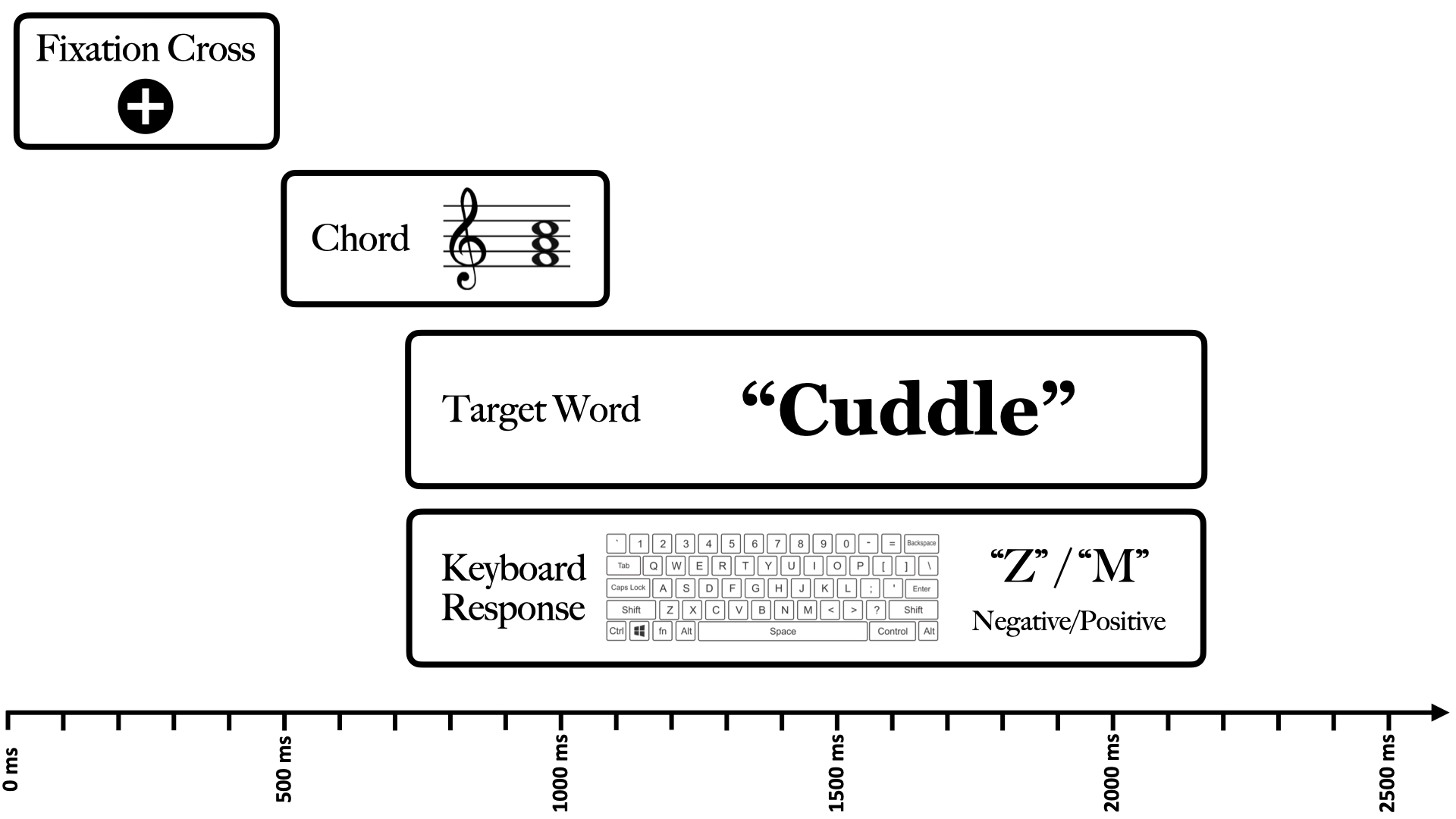
The affective priming method has been used only very sporadically to investigate harmony perception in the last 20 years; however, together with my colleagues here at Durham University we have been implementing this method quite regularly in recent years to rigorously and methodologically test theories of which acoustic/cultural predictors drive automatic responses to intervals and chords. Rather surprisingly our study on intervals (lead by our hard sciences expert James Armitage) demonstrated that pairs of intervals that carry quite specific cultural conventions in terms of positive vs. negative emotions (e.g., perfect fifth vs. tritone, major third vs. minor third, major sixth vs. minor sixth) do not influence target word processing. Instead, in intervals, influence on target word processing is driven exclusively by contrasts in acoustic roughness (i.e., the jarring sound quality that arises when musical pitches are so close together that the inner ear cannot fully resolve them; this acoustic roughness phenomenon has been demonstrated to influence chord perception also across cultures). When the contrast in acoustic roughness is large, the interval stimuli starts influencing the categorisation of target words in the expected manner (high roughness in dissonant intervals resulting in faster categorisation of negative words and vice versa). This curious finding got us thinking whether affective priming in chords would be driven by this same roughness contrast too: after all, previous studies on consonance/dissonance using the affective priming paradigm had all been using exclusively acoustically rough chord stimuli.

There were a few aspects on closer look that got us to hypothesise that intervals may well be a special case and that chords would not follow this congruence pattern driven exclusively by contrasts in acoustic roughness. First, intervals are heard fairly infrequently in isolation in actual music and are hence less familiar compared to chords which are positively ubiquitous. Second, chords contain more acoustic information due to the higher number of pitches (intervals contain only two distinct pitches while chords contain three or more pitches). Third, major and minor triads have previously been shown to create positive/negative congruence in an affective priming setting even with a negligible difference in acoustic roughness between them. In fact, we were so sure of our hypotheses of which chord pairs would create positive/negative congruence with target words that we decided to pre-register our study design and hypotheses beforehand in the form of a registered report in the Music Perception journal (the final report was published in Volume 43, Issue 3); my co-author Professor Tuomas Eerola has written in a related blog post in more detail about the concept of the registered report and its pros and cons). In our study we decided to test the very cornerstones of Western harmony, namely all four triads (major, minor, augmented, diminished) as well as a common trichord (suspended 4th) to map how the general population (listeners without musical expertise) perceive these chords in an affective priming setting. Let’s dig into the obtained results, chord pair by pair. You can listen to each chord below to refresh your memory on how they sound:
Major triad vs. Minor triad
A classic face off, the most famous of the emotional distinctions with regard to chords in Western music. As self-reports have shown a very robust mode of response of positive (major) vs. negative (minor) valence regardless of musical expertise we expected this to be reflected in automatic responses as well. To our great surprise however this pair did not deliver robust results in an affective priming setting. While on a self-report level non-musicians indeed consistently report perceiving this affective difference between major and minor, on closer inspection this difference according to musical expertise in the automatic responses is actually present in both previous affective priming studies (Steinbeis & Koelsch, 2011; Costa, 2013) with musicians showing much clearer automatic positive/negative congruence compared to non-musicians. In addition to serving as an important reminder that you cannot be too careful and meticulous when constructing pre-registered hypotheses based on previous research, this finding is definitely another point for the ‘nurture’ camp at the expense of the ‘nature’ camp in terms of the origins of the major/minor affective dichotomy: after all, if this automatic mode of response works robustly only with listeners who do have musical expertise but starts falling apart when tested on the general population, it is hardly corroborating theories according to which this affective distinction would be universal or based on spectral properties of human speech. Instead, it is in line with previous findings pointing to the strong role of learning and enculturation. While the cultural relativity of the major/minor affective mode distinction has for long been clear to many ethnomusicologists and musicologists (see an excellent overview in Tagg & Clarida, 2003), the ethnocentric universalism myth is surprisingly hard to put to bed within the realm of music psychology; we believe the current results provide another nail in the universalist coffin in terms of the major/minor affective distinction.
Major triad vs. Augmented triad
As hypothesised, this chord pair delivered clear affective priming results in line with low pleasantness ratings obtained through self-report data in previous experiments. Interestingly, the augmented triad’s dissonance is hard to pinpoint acoustically, and it has indeed been proposed that its dissonance in Western music is rooted in its low familiarity. As the augmented triad is present in the (harmonic) minor scale but not in the (most familiar) major scale, this chord’s negative emotional connotation stemming from its rarity has been effectively utilised by composers since the 19th century onwards, its use as an independent chord sonority pioneered by the forward-looking Romantic composer/virtuoso pianist Franz Liszt. It is notable that as the augmented triad’s dissonance is virtually impossible to explain convincingly purely with acoustics, our own cross-cultural research (fieldworked by cross-cultural research powerhouse Dr. George Athanasopoulos) into this question corroborates its likely cultural origin: the Kalash/Khow tribes residing in the remote valleys between Northwest Pakistan and Afghanistan with minimal exposure to Western music remarkably perceived this chord as something unfamiliar relative to their own music, yet as a sonority that is not inherently unpleasant.
Major triad vs. Diminished triad
This chord pair provided strong affective priming results as hypothesised (this pair was actually the most robust in terms of affective congruence among the current stimuli), and again in line with the low pleasantness ratings obtained through self-report data in previous experiments. This finding is not surprising given the long pedigree of its use to denote negative valence in Western music: the diminished triad’s negative affective connotation goes back further in music history than the augmented’s, its origins stretching back to early Baroque recitative at least. By the 18th century the diminished triad was already established as somewhat of a ‘cliché’ of horror and this connotation was only reinforced later in film music starting with early silent movies. While the diminished triad is consistently rated as less dissonant than the augmented triad, it seems to be a more effective marker of negative valence in the Western musical tradition. Presumably this is not only because the diminished triad is historically more established than the augmented but also because it is more familiar from actual music: the diminished triad is part of major and minor (harmonic) key harmonisations on the VII degree and minor (natural and harmonic) key harmonisations on the II degree, whereas the augmented triad is only present in harmonic minor keys (on the III degree). In other words, a dissonant chord used in both major and minor keys is arguably a more familiar marker of negative valence than a dissonant chord used only in (harmonic) minor keys.
Major triad vs. Suspended 4th
As hypothesised, this chord pair did not create affective priming results, in line with the high pleasantness ratings obtained through self-report data in previous experiments in response to the ‘sus4’ chord. On closer inspection this finding, although expected, is bit of a paradox. As previous research has established that the high roughness value of the major second interval creates automatic negative congruence, it is curious that adding just one pitch class to this interval to make the sus4 chord fools the ear into thinking that there’s nothing fishy about this particular sonority. As discussed in more detail in our pre-registered report, we have come up with a few tentative theoretical explanations for this finding. 1) It has been suggested that perceived roughness in a single chord may be mitigated by placing it in a (in this case hypothetical) contrapuntal context. The sus4 indeed contains tension stemming from an implied voice leading situation in the 4th degree’s need of resolution to either the minor 3rd or more typically the major 3rd; it is not impossible that this strong tonal pull indeed mitigates the sensory roughness of the major second interval within the chord through this implied motion. 2) It is always possible that the major second interval’s roughness is simply irrelevant in a chord that contains positive valence through associative learning: as the sus4 chord most typically resolves to a major chord in tonal music, it is possible that its positive valence is learned wholesale through this contextual association. 3) Finally, there exists a possibility that there is an interaction with the combined overtones of the individual fundamentals present in the sus4 chord that effectively softens the sensory roughness of the major second interval through perceptual fusion. What can already be concluded from the sus4 chord’s curious case is that the arising overall quality of a chord can evidently be different from the sum of its parts (as per the classic Gestalt notion of holistic perception).
So there we have it: single isolated chords do indeed create automatic emotional responses in the general Western population (without musical expertise), and our results imply a strong role of learning and cultural mediation in this. How and when exactly these emotional connotations arise and consolidate are questions for comprehensive further research.
A list of publications using the affective priming method by the Music & Science Lab:
Armitage, J., Lahdelma, I., & Eerola, T. (2021). Automatic responses to musical intervals: Contrasts in acoustic roughness predict affective priming in Western listeners. The Journal of the Acoustical Society of America, 150(1), 551-560.
Armitage, J., & Eerola, T. (2022). Cross-modal transfer of valence or arousal from music to word targets in affective priming?. Auditory Perception & Cognition, 5(3-4), 192-210.
Armitage, J., Lahdelma, I., Eerola, T., & Ambrazevičius, R. (2023). Culture influences conscious appraisal of, but not automatic aversion to, acoustically rough musical intervals. PLoS ONE 18(12): e0294645.
Lahdelma, I., Armitage, J., & Eerola, T. (2022). Affective priming with musical chords is influenced by pitch numerosity. Musicae Scientiae, 26(1), 208-217.
Lahdelma, I., & Eerola, T. (2024). Valenced priming with acquired affective concepts in music: Automatic reactions to common tonal chords. Music Perception, 41(3), 161–175.
]]>On Friday 11th of November, the Durham University Music and Science Lab hosted the 7th biannual meeting of the Northern Network for Empirical Music Research (NEMuR 7) at Van Mildert College, Durham, where participants from seven member institutions across Northern England gathered in-person and online. As the three of us involved in this blog post are newly upcoming researchers, it was our extreme privilege to take part in and be surrounded by extraordinary minds in our field. Within the span of the day, members collaborated in presenting and discussing many topics which challenged our ways of thinking.
Decolonisation Research Workshop
NEMuR 7 opened with an interactive decolonisation workshop, led by Dr Eduardo Coutinho University of Liverpool, Professor Alinka Greasley of University of Leeds, and Dr Kelly Jakubowski of Durham University. This workshop aimed to identify the most pressing issues arising from colonising thought processes in the music psychology field and ways of addressing them. Attendees worked in small groups, collaborating across subdisciplines and academic experience levels. Five issues were identified as most critical by the workshop attendees: the assumed use of validated measures in populations in which they were not validated, the lack of non-researcher input in study design, ethnocentricity in distinguishing “cultural” and “non-cultural” studies, the tendency to research “on” communities rather than “with” them, and the issue of linguistic privilege in academic research. When discussing how these issues could be addressed within current research practices, we determined that efforts must be made at all levels of academic frameworks. Increasing accessibility of academic journals by providing translation assistance to authors and encouraging preregistrations would de-Westernize the visibility of research already in existence. In terms of developing new research, academics can look for collaborative opportunities, consider the validity of their methods and theories within target populations, and incorporate the perspectives of these populations into study design from the outset. Those just entering the field can practise decolonisation by actively seeking out research from non-centred sources and encountering currently centred research through a critical lens to foster research tendencies that aim towards decolonisation. Members agreed that future NEMuR meetings will include sessions on decolonisation and feature key speakers with extensive experience on the topic.

Synchrony and Entrainment Workshop
First to present her project on synchrony and social bonding was Persefoni Tzanaki, a PhD student at the University of Sheffield. Her project explores the bidirectional relationship between empathy and interpersonal synchronisation in musical group interaction. She discussed that a positive feedback loop existed between empathy and synchronisation, as they enhance each other in relation to social behaviour, relationships, and personal traits. She outlined the first study of her project, ‘how does trait empathy affect the strength of the effects of interpersonal synchronisation and social bonding?’ Tasking persons to tap to the beat while synchronisation was manipulated, her results did not show a direct interaction between empathy and synchrony. It instead showed that faster tempo allowed for higher closeness and situational cognitive empathy and as a result, higher empathy allowed for stronger social bonding. With her stimulating research, she left us to question if there is a bilateral relationship between social behaviour and synchrony.
Hannah Gibbs, a current PhD student at the University of York, then presented her exploration of flow state in the context of Javanese gamelan performance. Using physiological methods, including a particularly novel way of recording ECG and skin conductance by attaching sensors to the foot to reduce performance interference, Gibbs found couplings of skin conductance levels between the participants. This coupling is physiological evidence of a shared flow experience. These results were similar across the experienced and non-experienced Gamelan players, signifying that although Gamelan is highly improvisatory, the process of making gamelan music creates a shared flow experience through interpersonal interaction.
Continuing the workshop was Professor Martin Clayton, Professor of Ethnomusicology at Durham University. His presentation elaborated on the methodology applied in and available to studies on entrainment and synchronisation, including the studies by the previous presenters. The coupling of two independent phases of events can be described in terms of accuracy and precision, where accuracy is the lead or lag of the events of one phase compared to the other phase, and precision means the closeness of matched events from the two phases. Both can be operationalised through measures of relative phase (a circular statistic) or asynchronisation (a linear statistic). While relative phase is useful in uncertain contexts where the matching of events is ambiguous, asynchronisation may be more useful for making comparisons across different kinds of music and allows for the computation of a group measure of synchronisation in ensemble performance. Therefore, the latter method was used in the analysis of the comprehensive corpus of the Interpersonal Entrainment in Music Performance (IEMP) project, in which several members of our MSL lab were involved.
The session closed with Professor Tuomas Eerola from Durham University who presented the R package ‘onsetsync.’ Developed in the course of the IEMP project, this is a powerful toolbox that facilitates the computation of the measures of synchronisation from audio data, as previously explained by Professor Martin Clayton. Eerola guided the audience through example calculations and shared tips for complex cases (which are quite common when analysing naturalistic music performance). In publicly sharing the collected data as well as the applied analysis methods, the IEMP project follows the principles of FAIR research (being Findable, Accessible, Interoperable and Reusable). In this regard, the presentation tied in with the highly important meta-debate on research practices that was stimulated in the decolonisation workshop. The ‘onsetsync’ package is available on GitHub.

Interdisciplinary Collaboration in Music
The day then turned towards focusing on discussion on interdisciplinary collaboration featuring a panel of members who shared their unique experiences and thoughts on collaboration. Dr Caroline Waddington-Jones from University of York shared her experience with collaboration among music psychologists, music educators, and health sciences/community art practitioners. She featured her work with CoMusicate, a project producing music technology to aid the musical and social interactions of adults with mental health conditions. Dr Kelly Jakubowski from Durham University shared her experience collaborating with music psychologists and ethnomusicologists in the Interpersonal Entrainment in Music Performance (IEMP), featuring over 20 international researchers in ethnomusicology, music psychology, and computer science. Dr Elaine King from Hull University reflected on her collaborations between music psychologists and music performers, which explored how ensemble performers use music analysis in performance preparation. Finally, Dr Michelle Phillips from the Royal Northern College of Music (RNCM), in collaboration with music psychologists, scientists, and music composers, shared her riveting music and mutation project. Biologist Nicholas Weise and the Lux Trio also joined the project, asking if genetic mutation can be represented in music, and further, if musical representation can make genetic mutation clearer. In discussing these amazing and contrasting projects, many similar themes of collaboration came up. All panellists agreed that in collaboration, a priority needs to be made to use common language and a shared understanding on aligned standards and set goals. Dr Waddington-Jones emphasised the need for researchers to always ask questions, to never assume, and to have transparent communications to eradicate issues that lie in the common understanding of a project. A question of hierarchy was brought up by Dr King as projects are usually only undertaken when researchers develop questions rather than performers. Finally, there was an overall understanding that interdisciplinary collaboration can reach broader and more diverse audiences if dissemination of research is managed outside of academic journals. Overall, it was of the general consensus of the panellists that different perspectives can inspire and educate individual collaborators.
Sharing Best Practices in Teaching: Discussion Session
The ultimate session of NEMuR 7 invited member institutions to share innovative concepts and methods of teaching music and science. In teaching, the ‘chalk and talk’ technique is left behind and concepts of student-to-student teaching and assessment and flipped classroom learning are explored. Several universities give students the opportunity to learn-by-doing in the forms of student research projects and applied professional projects with industry partners. Furthermore, informal ways of teaching and learning such as reading groups and research forums prove to be great ways to engage students. Of course, distance-learning remains a central topic even as universities go back to in-person classes, as it comes with advantages. From a student perspective, we appreciate that the NEMuR members try to customise the teaching to fit their students’ needs. Moreover, even members who do not have specific programs or pathways in music psychology provide opportunities to engage with the topic for students on every level of studies. These best practices confirm our experience that the members provide the best possible training for upcoming generations of empirical music researchers.

NEMuR 7 was a day filled with relevant thematic input and interdisciplinary discussions that left us inspired and encouraged to pursue our own academic activities. We enjoyed our encounters with like-minded researchers, both early in their careers and long established, during breaks and at the after-conference dinner. Fueled by enthralling exchange and collaboration, the meeting was rewarding in its entirety. We are looking forward to reuniting for the next edition this spring!
]]>
Durham University’s Music and Science lab were represented in the research presentation of Jane Davidson of the University of Melbourne on social cohesion through intercultural music engagement, on which Professors Tuomas Eerola and Martin Clayton of the Durham Music Department were co-investigators, as well as my own poster communicating my research on subjective feeling in qawwālī listening. The first of these was music to the ears of this ethnomusicologist, as the data strongly suggested that students who learn about music from a different background of their own show greater empathy for people of that group! The second, my own research, presented the results of two studies, suggesting three factors into which most emotions felt with qawwālī (Sufi music in India/Pakistan) listening at the shrine of Hazrat Nizamuddin Auliya in Delhi can be categorised: virtuous feelings, spiritual love, and religious trance, and thus supporting the view that different genres and cultures will report different musical emotion profiles.
Other highlights for me included Xi Zhang’s discussion of the relation between phonetic tones and musical melodies in Chaozhou songs, Graziela Bortz’s discussion of the continuation of the legacies of slavery in music education in Brazilian higher education, Hannah Marsden and Ruth Montgomery’s research on musical education for deaf children, and Sandra Trehub’s lifetime achievement award presentation in which she discussed a plethora of research on musicality in infants.
Other than the research presentations themselves, there were a number of elements especially for the 50th anniversary. These included the investment of up to £100,000 of research funding in various research projects over the last few years, and the world premier of a piece of music composed by Aubrey Hickman, a founder of the society.

In sum, this was a weekend which displayed the variety of the research engaged in by SEMPRE members, from cross-cultural work, through music therapy, music and emotion, music and wellbeing, music for early years education, and music education for neurodiverse people, among many others! Happy 50th birthday to SEMPRE, and here’s to 50 more!
]]>


Before the main event Annaliese and I took the opportunity to attend a satellite event being hosted by the Centre for Music in the Brain (MiB) where we got a whirlwind tour of some of the amazing research happening at MiB and a chance to view and ask questions about the many neuroscientific tools MiB has at its disposal in the attached university hospital (MEG, EEG, fMRI). Magnetoencephalography (MEG), the latest in the neuroscientific toolbox at MiB, is the only one in the country and has really allowed the staff and students at the centre to ask different questions, explained one of our guides. The day also saw several notable presentations from distinguished scholars at the centre. Prof. Peter Keller, new to MiB, opened the day with a collection of 20 years of research identifying the perceptual and motor based neural mechanisms which enable people to interact and communicate in musical contexts. Many other notable presentations highlighted the breadth of research happening at the centre including research into Parkinson’s care, beat perception and a 101 crash-course in modelling the brain from Assistant Prof. Henrique Fernandes.
Day two began with a treat. Keynote speaker Jonna Vuoskoski led us through her latest research looking at the social dimension of music cognition – a theme that was to become a recurring element to the conference. It’s always a pleasure to hear Jonna talk. Her profound ability to bring together multiple studies into a single narrative gives the audience a strong overview of all the current research ideas looking at social aspects of music. Appraisal theories in various forms (there are many types of appraisal theory) became a consistent theme across all the studies presented in the keynote, suggesting appraisal plays a key role in the social importance of music. A point we shall return to in the emotion and cognition session of day three. You can watch Jonna’s talk here https://www.youtube.com/watch?v=qayIrx2QuKM

After a few local beers with the wonderful cohort at MiB, SysMus21 kicked off with a welcome talk from the centre’s director Peter Vuust, pointing to some new and interesting hypotheses that allow predictive processing theories to become more directly testable, rather than just modelled. The first day quickly took up SysMus’ typical multidisciplinary approach with talks on wellbeing, data science, and visual imagery. PhD student Rory Kirk from Sheffield University presented some interesting Spotify API data for analysing music people use to fall asleep. Orla Mallon showed the music science field just what it can learn by looking beyond the music science bubble, with a unique approach to weighting problems in data mining taken from the long-established field of linguistics. Finally, Landon Peck at Oxford University brought together a battery of tests on aesthetic awe, showing just how important appraisal (conscious and unconscious cognitive evaluations of an event or stimulus that guide further emotion processing) is in musical emotions. After the presentations, leaving the audience time to digest the wealth of information, we broke out into workshops. I took the opportunity to attend Joshua Bamford’s (SysMus Chair) workshop on collaborations. Josh, as the conference’s former director, knows better than anyone that SysMus is all about the people – the people you might one day collaborate with.
There was just enough time to take stock of these many important findings over a coffee and a snack before the day rushed on. Persa Tzanaki presented a new feedback loop model of synchronisation and empathy while Maurusa Levstek noted the importance of music education in schools and many of the problems that can be overcome when working with protected data. Day two saw interactions between the in-person and virtual participants take shape through Gather Town. Such hybrid events highlighted within the conference programme allowed not only for a much more relaxed feel to the presentation schedule but offered a whole new dimension to networking. The non-formal environment allowed speakers from the day to host conversation tables that became hot-spots for new ideas. I not only met virtual attendees but also made connections with several in-person participants I hadn’t yet been able to talk to. The digital session blended seamlessly into the running of the conference and really added to the overall experience, instead of being the obligation it had become over the previous year.

After another evening of Danish hospitality and socialising, not forgetting the free pizza provided by ESCOM, the third and final day started with the other keynote from Nori Jacoby (https://www.youtube.com/watch?v=zf4Gam66f4w). Nori brought forth a fascinating new methodology for assessing the universality and cultural specificity of mental representations of rhythm. Using the classic 3-dimensional representation of rhythmic space, a tapping experiment that adjusts itself to small variations in participant reproductions of given rhythms shows cross-cultural groupings around smaller ratios, while more complex ratios display greater cultural variation. The experiment had been run both online and in person and across several cultures, including by the MSL’s own Kelly Jakubowski here at Durham University, providing an impressive data collection. Interestingly, online studies showed significantly less variation, leading to complex questions about the substantial benefits and disadvantages of online data collection. Future studies hope to expand on this methodology and look at specific populations, such as deaf participants, to see if representations of rhythm show similar cross-cultural standardisation and variation. There is exciting stuff to come from the Max Planck Institute for Empirical Aesthetics.
The last two sessions of SysMus21 (cognition and emotion) hosted a selection of interesting topics. Sarah Faber truly stole the stage with her light-hearted and thoroughly engaging presentation. She presented a Markov-model of music listening in multiple modalities not just across space but also across time. Most notably, and conveniently tied into the following session on emotion, Sarah highlighted the importance of interaction between emotional processes (arousal and valence – core-affect) and goal-directed movement as key components in the model. Durham’s own Thomas Lennie then began the final session on emotion, where goal-directed appraisal makes another key contribution to our understanding of musical emotions. A comparison between two emotions models (BRECVEMA and Dimensional-Appraisal) shows how the Dimensional-Appraisal model substantially outperforms the BRECVEMA. Such new models in music highlight a variety of different aspects to musical meaning that remain broadly unexplored by existing frameworks, including behaviour, social meaning, and personal relevance. This builds on a goal-directed account presented by Lennie & Eerola (under review) in their CODA (Constructivistly-Organised Dimensional-Appraisal) model, tying in closely with current understanding of social musical dimensions presented by Jonna.
Durham University’s Music and Science Lab making a substantial contribution to the emotion research presented at SysMus21, Annaliese Micallef Grimaud took to the stage next. She presented a concise overview of her PhD documenting the development of EMOTEcontrol, an interactive cue manipulation tool that requires no musical training to use. It is a tool with a promising future, as shown by the presentation that captured the audiences’ imaginations.
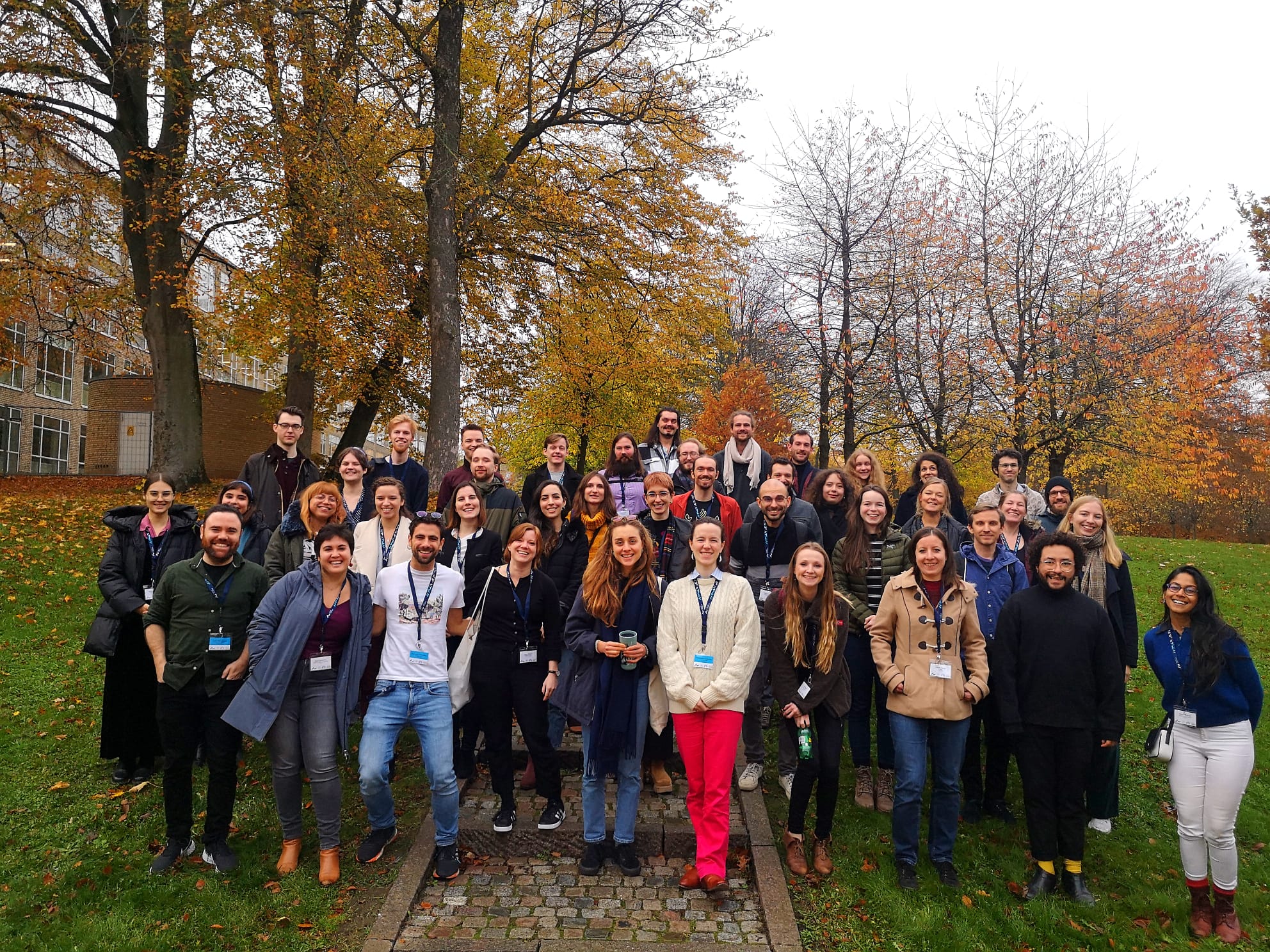
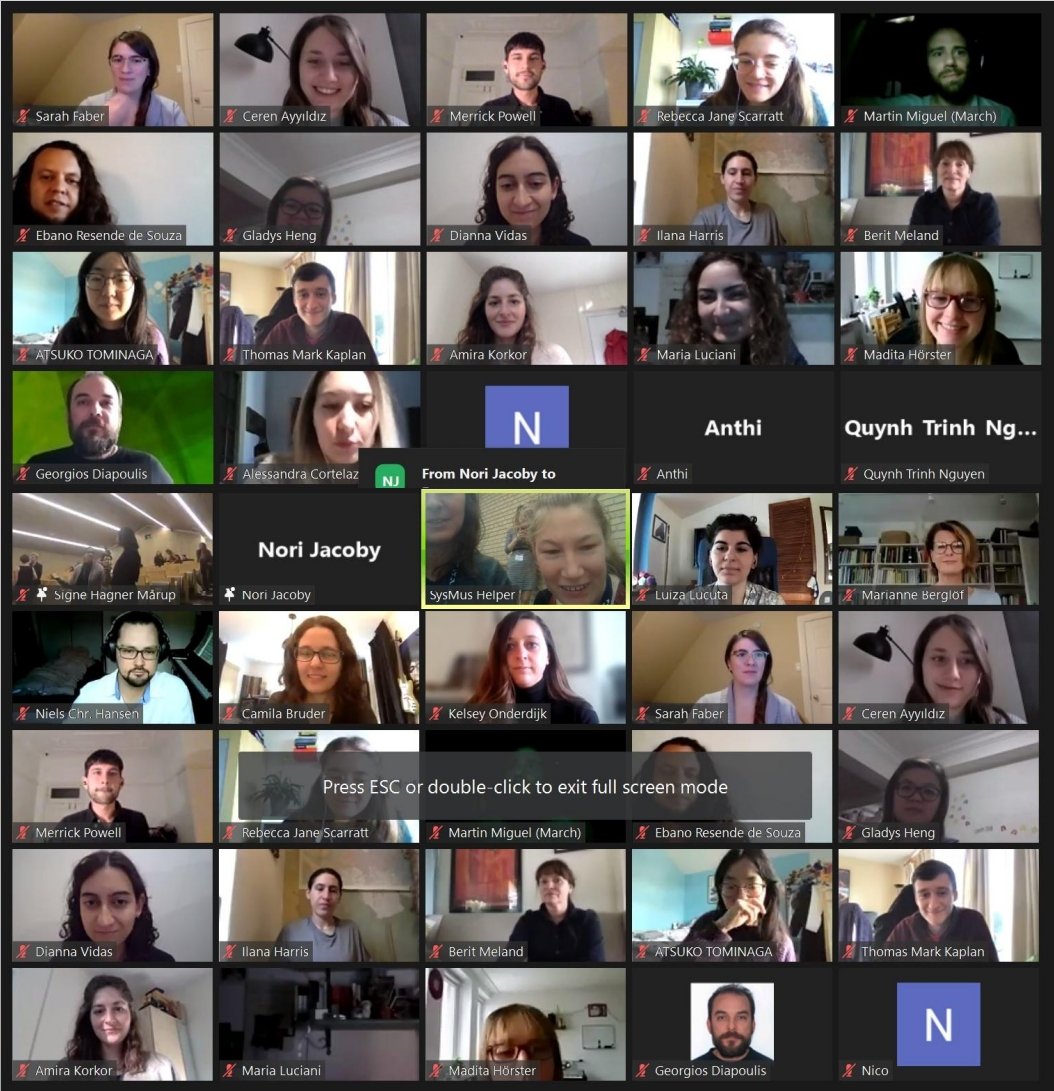
A huge thank you to Signe Hagner, Jan Stupacher, Niels Chr. Hansen, Christine Ahrends, and all those who helped in organising the event. Finally, the big reveal we’ve all been waiting for. Next year’s SysMus 2022 will be held in Ghent, Belgium, running in a similar hybrid format to make it accessible to all, and hosting keynotes from both Psyche Loui and Mendel Kaelen. It’s sure to be a great conference with the host university specialising in motion capture, EEG, and virtual reality. As ever though, the reason I keep going to SysMus is the people; friendly, informative, and thoroughly engaged in what’s going on. If you haven’t tried it yet; trust me, it’s worth it. And if you’re looking to make a few new friends too, make sure to come say ‘Hi’ to the MSL team.
]]>The preference for consonance varies across cultures but the aversion to harsh dissonance is universal
The division between consonance and dissonance, which is one of the cornerstones of Western music, has been studied scarcely across cultures. This is not surprising in the light that the perception of consonance and dissonance is quite mercurial and hard to grasp even in the context of Western music and with Western listeners (starting with the notorious definition issue of what we mean by consonance in the first place), let alone when studied across cultures. Perhaps not surprisingly, the few previous cross-cultural studies into this question have been highly inconclusive. The most recent of these investigations and the one that has undoubtedly received most scholarly attention is by McDermott and colleagues (2016). This study investigated how consonance and dissonance are perceived among the Tsimané, an indigenous population living in the Amazon rainforest (Bolivia) with limited exposure to Western culture. The study concluded that the Tsimané are completely indifferent to consonance/dissonance, although this conclusion seemed somewhat premature (as I noted in the blog post from two years ago) in the light that the stimuli in this study did not include highly dissonant sonorities; such highly dissonant chords have been demonstrated to elicit automatic negative responses in Western listeners and are hence good candidates for universally unpleasant stimuli.
As both the preference for consonance (allegedly due to consonant sonorities’ higher similarity to human vocalisations) as well as the aversion to high amounts of dissonance (due to the unpleasant interference created in the inner ear that the auditory system cannot fully resolve) have been proposed to be possible universals, these theories can be tested easily. If the preference for consonant harmonies that resemble harmonic human vocalisations would indeed be inherent and hence universal, they should be present across all human cultures. Accordingly, if the aversion to the jarring roughness of harsh dissonances is indeed a biologically determined universal, this again should be a recurring pattern across all cultures. To test these notions, we conducted a study on members of two remote tribes residing in Northwest Pakistan with minimal exposure to Western music and compared their responses to those of Western (UK) listeners.
Our results show both striking differences but also similarities between Northwest Pakistani and UK listeners with regard to harmony perception. Both Northwest Pakistani and UK listeners disliked the most dissonant of the presented chords (the chromatic cluster), supporting the claim that highly dissonant chords may well be universally perceived as unpleasant. Conversely, the preference for the consonance of the major triad was present only in the case of UK listeners as members of the Pakistani tribes did not indicate a preference for this chord. This is a very surprising finding, and while in line with the study by McDermott at al. (2016) in terms of a lack of universal preference for consonance, it does not corroborate the theory according to which consonance preferences are related to the perception of human vocalisations. Notably however, this lack of preference for consonance in a non-Western population is in line with cumulative evidence about the strong role of learning and familiarity in the consonance preferences of Western listeners as well. Contrarily, our finding of the cross-cultural aversion to harsh dissonance is line with the notion that dissonance perception might indeed contain a universal element, and this finding is all the more important in the light that previous cross-cultural studies have not yet contained highly dissonant chords in the experiment stimuli.

The positive major versus negative minor emotion distinction is not a cross-cultural universal
In addition to consonance and dissonance, another important dichotomy in Western music is the affective connotation of the major and minor modes. In Western culture this affective distinction is overarching (although naturally dependent on other musical cues such as tempo and timbre), and it holds even with single isolated chords both according to self-reports as well as neural responses. The origins of this convention are highly debated, but the crucial question of whether there is something inherent behind this phenomenon has remained unclear with conflicting reports of both universal emotion recognition (partly) based on mode as well as evidence linking it to a gradually learnt response in the West as well. Strikingly, according to our results this pattern of response was in fact reversed across UK and Northwest Pakistani listeners. The results indicate that de facto the biggest role in this affective distinction is played by familiarity through exposure and not by acoustic phenomena such as the minor triad’s more ambiguous root or the minor third’s similarity to subdued speech compared to the major third. While major keys and chords are considerably more common in Western music than their minor counterparts, this ratio is actually reversed in the musical culture of the Northwest Pakistani tribes. As a whopping 85% of their music utilises the minor mode according to our analysis of a corpus of the tribes’ music, it is no wonder that they clearly associate the minor triad with positive affect at the expense of the (for them) less frequent and familiar major triad. Notably, this finding is in line with previous theorising according to which the emotional differences between major and minor are arbitrary and were reinforced in a historical process of cultural differentiation. Of further historic interest is that also in 13th and 14th century Western polyphony pitch combinations corresponding to the minor triad (in modern terminology) were more prominent than pitch combinations corresponding to the major triad. This tendency did not flip until the 15th century, and the major triad became conspicuously more prominent than the minor triad only in the 16th century in Western polyphony as well. So, while the aversion to a high amount of dissonance seems to be a cross-cultural universal, the positive and happy character of the major versus the subdued and sad character of the minor is not a cross-cultural musical universal. Our data implies this both with single isolated chords as well as with actual musical excerpts using horizontal background harmonisations (successive chords).
Taken together these two years of research have definitely shed some much-needed light on the question of which aspects of harmony perception are biologically determined and which are products of our cultures. While the preference for consonance seems to be notably shaped by culture and familiarity, the aversion to high amounts of dissonance may well indeed be a cross-cultural universal. The affective connotations of the major and minor modes however seem to be very much a cultural construct, which is perhaps not that surprising in the light that this dichotomy has been shown to be a gradually learnt cultural convention in the West as well.
As it seems unlikely that we’ll be conducting further fieldwork in Northwest Pakistan anytime soon due to the still ongoing pandemic as well as the rising political unrest at the Afghanistan–Pakistan border, it feels all the more fortuitous that we managed to compare the perception of harmony across such diverse cultures just in the nick of time. Sadly, with the rapid speed of globalisation threatening the diversity of musical cultures such research endeavours will no doubt be harder and harder to conduct in the future.
A list of recent publications on consonance and dissonance by the Music & Science Lab:
Armitage, J., Lahdelma, I., & Eerola, T. (2021). Automatic responses to musical intervals: Contrasts in acoustic roughness predict affective priming in Western listeners. The Journal of the Acoustical Society of America, 150(1), 551-560.
Athanasopoulos, G., Eerola, T., Lahdelma, I., & Kaliakatsos-Papakostas, M. (2021). Harmonic organisation conveys both universal and culture-specific cues for emotional expression in music. Plos one, 16(1), e0244964.
Eerola, T., & Lahdelma, I. (2021). The Anatomy of consonance/dissonance: Evaluating acoustic and cultural predictors across multiple datasets with chords. Music & Science, 4, 20592043211030471.
Lahdelma, I., Athanasopoulos, G., & Eerola, T. (2021). Sweetness is in the ear of the beholder: chord preference across United Kingdom and Pakistani listeners. Annals of the New York Academy of Sciences. https://doi.org/10.1111/nyas.14655
]]>Why examine a PhD thesis?
There comes a time when you will be asked to review a doctoral thesis. This is a recognition that you have specific expertise that is in high demand; you have the necessary trappings to go with it (usually an academic post of some kind); some experience of supervision and examination; and finally, you are considered to possess sufficient interpersonal skills to be trusted to handle something as fragile as a doctoral student’s entire academic work. The financial compensation for this task is usually minimal (an honorarium can be 80-160 pounds) so money is never your motivation, and needless to say, you would not have made it this far if money was the incentive behind your career choice. The real driver is the academic citizenship which propels peer review, grant reviews, and all other review processes in academia that are demanding and time-consuming, but often rewarding and educational opportunities to learn what is happening in your discipline and to share your expertise with others. And since we have all benefitted from the reviews carried out by others for our dissertations, manuscripts, grant reviews and promotion reviews, you should not hesitate to return the favour when asked. Unlike normal peer reviews, a PhD examination does have an element of recognition or vanity since it is a public affirmation of the review.
Exam traditions
PhD examination traditions are different. I take the UK viva as the starting point here. The UK viva – officially viva voce – Latin for “by live voice” is held behind closed doors, usually with two examiners (external and internal) sometimes with a chair and – in my experience in rare occasions – other support members. This allows for focussed exploration of the work and the formal purpose is to check that the candidate is fully competent on the topic and demonstrate that the thesis makes a significant, original contribution to knowledge. It is a fairly short event (1-3 hours) after which the examiners will decide whether the work merits a “pass” or “pass with minor corrections” or “pass with major corrections” or something worse (e.g., resubmission). I have not seen the statistics of these decision categories but the folklore seems to imply that pure a “pass” (without any corrections) is exceedingly rare, and the “pass with minor corrections” or “major corrections” tend to be the realistic options.

I personally find the public examinations appealing if you accept the fact that they serve a double function; to inspect that the candidate is a recognised expert of the specific topic and to signal to the rest of the community (and particularly to the relatives, friends and wider scholarly community) that the candidate has achieved something academically valuable which is praised by experts in the candidate’s research field. In this case, the public examination can be regarded as a great showcase which allows the candidate to demonstrate the knowledge and competences acquired during the PhD process.
What is a good PhD examination?
In other European countries, PhD examinations are similar in function but are usually public events. For instance, Scandinavian doctoral examinations are open to the public and are more formal and celebratory events than UK vivas. The written work has already been externally reviewed by at least two, sometimes three international readers – who may not be the same person as the external examiner – before the work is allowed to be publicly examined. In the public examination, the candidate usually gives an opening lecture, and all sorts of formalities from the strict dress code, to Latin phrases are part of the event. These events may also last longer than the UK vivas but there are curious exceptions. In the Dutch PhD ceremony, a sizeable committee of academics (master of ceremony and four to seven scholars) ask penetrating questions from the candidate that has two support members at hand to withstand an inquisition lasting exactly 60 minutes.
Similar to other academic reviewing, you should be kind, constructive, clear, and try to find ways to improve the work as the examiner. Read the work diligently and think through the issues the work attempts to solve, and remember to scale the contribution to the right level (a 3-year PhD, not a 5-year funded research team project). And it pays off to read the institutional instructions since they vary across institutions (how the independent and joint reports are prepared and submitted, what the decision-making structures are, and so on).
In the examination itself, I find it useful to start with a friendly and open question to let the candidate warm up and build confidence in the viva. If the work is good, the examiners are usually allowed to tell the candidate this from the outset to set the positive tone. Many institutional guidelines suggest that the candidate uses the first 10 minutes to summarise the work and outline the main findings. As an examiner, hearing this is often a useful reminder of the decisions that have been made in the thesis. I tend to follow the introduction with a broad contextualisation of the work to align it to the disciplinary landscape. It is a matter of taste whether the flow of questions follows a ‘methods and results’ type of structure, or the actual ‘chapter-by-chapter’ review of the work. It is considered to be somewhat vulgar to focus on typos or presentational issues unless these are crucial to the understanding of the work.
If the PhD has serious flaws or shortcomings, it is even more important to be supportive and let the candidate understand that the examination is not only a quality check but potentially additional help to say what aspects of the work still need to be addressed. Sometimes the candidate can be nervous and struggling to respond. In such instances, there is nothing wrong with pausing and encouraging the candidate to relax and remind them of positive aspects already covered to build some confidence. The candidate can also utilise tactics which buy time such as checking something in the thesis or asking the examiner to reiterate the question in order to write it down. Every candidate should think beforehand about the list of possible questions and have an overall strategy of how to respond to these. The candidate can also wield a strategy to accept a critical comment as something that was a conscious decision at the time after considering the alternatives. This can work well, especially if the candidate can talk about the way the other options would have shaped the work.
Further benefits for the student and examiner?
In exceptional examinations, the discussion between the examiner and the candidate goes beyond the work being examined and addresses fundamental or pressing questions faced by the discipline and the research area in general. These can be inspirational for all parties involved and can perhaps shape the postdoctoral plans of the candidate. There are also some early career funding calls (e.g. British Academy Postdoctoral Fellowship) where the PhD examiner is deemed the best possible person to provide a statement about a research proposal, or they can provide a letter of reference being an independent scholar who knows the candidate’s work intimately. For the examiner, the inspiration often comes from engaging with talented PhD students, and it is also a good way to keep the network of your peers content and willing to offer their expertise when eventually one of your supervisees needs an expert but sympathetic external examiner.
]]>We are very pleased to be launching a new pathway in Music and Science within our Taught Masters (MA) programme in Durham’s Music Department from Autumn 2021. In this post we outline some of the key features of the programme, and our views on what makes it unique and exciting.
Students specialising in Music and Science within our MA programme will take a 60-credit module (Advanced Topics in Music and Science), which will be divided into two broad topic areas: Theory and Methods. Theory content will focus on the latest topics and theories within music and science research. These sessions will be informed by cutting-edge research from within our Music and Science Lab group, which comprises a range of leading experts on topics including music and emotion, music and memory, the psychology and physiology of music performance, and cross-cultural music perception and cognition. A full list of our Music and Science Lab staff can be found here. The Methods sessions will focus on developing practical skills for conducting music and science research, including qualitative and quantitative design and analysis, and computational methods. The aim of these sessions is to equip students with the tools to be able to design and carry out music and science research that is of a standard publishable in an academic journal. In addition to this pathway-specific module, all Music and Science MA students will complete a 60-credit dissertation project, which comprises a major piece of original, empirical research (e.g., experiment, observational study, corpus study) on a topic of their choosing, under close supervision from a relevant member of academic staff. Music and Science MA students will also be integrated within the wider MA programme in Music, through some shared modules and regular joint activities with MA students pursuing other specialisations (musicology, ethnomusicology, composition, and performance). As such, this programme represents a distinctive balance between specialisation in a chosen area of research and integration within the wider academic discipline of Music.

Our research group has several unique features that we believe make Durham an intellectually stimulating and rewarding environment for postgraduate study in music and science. Firstly, we have a very active research group, in which postgraduate students and academic staff are invited to come together for regular lab group meetings covering topics such as ongoing research projects, methodological innovations, and career development skills. Although the specific pathway in Music and Science is a new addition to the Taught MA, we already host a very engaged and positive community of postgraduate students doing music and science research, whom you can read more about here, into which the new MA students will be fully integrated.
Within the Music and Science Lab research group we pride ourselves on conducting highly interdisciplinary research, including collaborations between music psychologists, ethnomusicologists, computational musicologists, music analysts, engineers, music teachers and performers. As such, our research covers a wide remit, and has a range of practical, real-world applications. We also integrate our postgraduate students in discussions of the challenges and benefits of interdisciplinary research, and aim to equip them with the tools to work collaboratively with researchers from a range of backgrounds.
In the Durham Music and Science Lab we are also highly committed to reproducible, transparent research. This commitment permeates our teaching, in which we emphasise the importance of scientific principles including replication, Open Data, and transparent research practices. Our academic staff and postgraduate students regularly share data on Open Science repositories. In addition, we teach statistical analysis and computational music analysis using open-source tools (primarily R and Python) that enable students to build skills in coding/programming in a language that facilitates reproducible analyses and sharing of analysis protocols.

Durham’s Music and Science Lab hosts a range of specialist equipment and software for conducting music and science research, including devices for measuring psychophysiology (GSR, ECG, Respiration, EMG), 32-channel electroencephalography (EEG), portable accelerometers, and professional audio and video editing software. The Music Department benefits from two expert music technicians, state-of-the-art recording studios, and dedicated lab space for designing and running experiments.
**If you are interested in learning more about our group’s research and plans for the MA pathway in Music and Science, please consider signing up for our upcoming Music and Science Open Day on Friday, 26 March, 2021 (13:00-17:00 GMT) here.**
Questions about the Music and Science MA pathway can also be emailed to Professor Tuomas Eerola ([email protected]). General queries about the MA in Music programme, including entry requirements and application processes, can be directed to the Music Department’s Postgraduate Admissions Team ([email protected]).

As a music psychologist, I have worked in both psychology and music departments, and regularly go back and forth between presenting my research (in written and oral forms) for both psychologist and musician audiences. In the following sections of this post I explore some thoughts on the challenges one faces as a music psychologist when tasked with presenting research to either of these audiences. Several of the issues highlighted below will likely be quite familiar to those already working in this interdisciplinary field, but I hope these ideas may be of use to early career researchers just starting out in this area, or may provide some new perspectives to those already familiar with these issues.

Presenting research to an audience of psychologists
When writing an article for submission to a general psychology journal, one of the main things I make sure to address is the question of “why music?” That is, psychologists often want to know why you would be studying such a ‘messy’ subject as music, rather than a more ‘traditional’ subject like visual attention or face perception. I often have to spell out quite explicitly why studying music can provide a new or unique insight on a particular aspect of human cognition, whether that be memory, time perception, etc. Although some psychologist reviewers are completely accepting of music psychology as a legitimate subdomain of inquiry, others may see it as a niche area that focuses on a ‘hobby’, and may need convincing that research on music can still be done in a systematic way to reveal important insights on aspects of human perception and cognition. In some ways this need to answer the “why music?” question is a bit absurd, given that music has been found to exist in every known human culture on earth, with regular daily exposure and substantial value placed on it in many societies; it’s very unlikely these same reviewers would ask the question “why language?” in response to an article that reports a series of studies on speech perception. However, until music psychology becomes more widely accepted within the psychology community, it seems advisable to continue to be very clear in explaining why studying responses to music can be of constructive value from providing new insights in an array of areas, from auditory perception to joint action, sensorimotor integration, emotion, imagination, and aesthetics. In some ways, perhaps this constant need to justify one’s reasons for studying music is actually a good thing—it requires us to think critically about why our research matters, and more specifically, why music plays such an important role in what it means to be human.
Presenting research to an audience of musicians
On the other hand, when writing or presenting to an audience of music scholars, there is, of course, very little need to explain why music is the subject of interest. Instead, perhaps a primary pertinent question is “why psychology?”, or more generally “why science?” In some ways, the very idea of trying to make generalisations about how people respond to or interact with ‘music’ as a whole is in complete opposition to the detailed and in-depth work many scholars are doing in analysing single pieces of music, or examining the work of a particular composer in a particular style during a particular period. Part of the solution here may be to be particularly careful about making sweeping generalisations about effects of ‘music’, by qualifying what type of music you have actually studied (e.g., “we used chart-topping pop music from the last two decades, so the conclusions drawn here may or may not generalise to other music styles”). This is something I also come across occasionally in published work (often written by general psychologists, rather than musicians) and find quite annoying—for example, imagine reading a paper saying some ‘background music’ was played that improved aspects of cognition, but the details on what this ‘background music’ actually comprised are thin or entirely non-existent. A second, broader issue that can arise is the general suspicion some musicians still carry around the idea of investigating music from a scientific perspective. Although I am pleased to say I personally have not come across many lately, there are likely still many people out there who think that trying to understand music from a scientific perspective will somehow take away the sense of mystery and awe around the creation and performance of a beautiful piece of music. In some ways this bears parallels to the idea that ‘talent’ is something that simply magically appears in accomplished musicians, without taking into consideration the fact that even the most ‘talented’ musician has likely spent thousands of hours meticulously practicing their instrument; indeed, it has been demonstrated that educational professionals are almost twice as likely to believe that ‘talent’ is required to play music in comparison to playing chess or performing surgery (Davis, 1994, cited in Thompson, 2009). Therefore it may need to be made clear to such critics that breaking down our responses to music into their component processes—for instance to understand how people perceive rhythms and harmonies or mentally segment music—is no less reducing the ‘magic’ of hearing an expertly performed symphony than research on colour perception, object recognition, and edge detection is reducing our appreciation of famous paintings.

Conclusions
Here, I have presented just a brief summary of some of the challenges that arise in presenting music psychology research to different disciplinary audiences. Despite certain difficulties that inevitably arise from combining insights from two disciplines, perhaps this need to switch focus between different audiences is actually beneficial—it may force us to take a broader perspective on our work, and ensure that both the musical and psychological aspects of our research are well-informed and rigorously implemented. Being able to do research that is well received by both audiences may therefore be something to aspire to as a discipline.
]]>Everyone has felt the impact of COVID-19 and lockdown in different ways and similarly there have been substantial differences in the ways people have adapted to keep their work progressing. The different stages at which individuals were in their research projects at the time of the pandemic played a substantial role in responses to the imposed ‘home-office’ restrictions. People have shared their lockdown experiences with us and how it affected their research and everyday routine, both from the Music and Science Lab team; ranging from PhD candidates at different stages in their PhD, to academic staff members, as well as two PhD candidates from other universities (York and Sheffield). Finally, we identify the different adaptive methods utilised by researchers and highlight positive aspects that emerged from the working-from-home environment that we are going to take forward.
A new working environment: The impact of lockdown & adaptive methods
Some of the most prominent impacts of the lockdown have led to restricted access to certain resources, with particular disruptive effects on lab-based experiments. With the closure of buildings and social distancing restrictions, lab-based data collection had to be delayed indefinitely. As an alternative, studies were moved to an online platform, however, this might not always be possible. This heavily depends on the experiment design and materials required for the experiment to run. Certain licensed commercial software utilised for studies might not be available to use in a web-based environment, and on laptops/desktops outside of the lab or department grounds. This also applies to specialised hardware such as skin conductance response equipment and EEG, in which case the issue is two-fold. Apart from the inaccessibility of equipment due to the closure of buildings, another important resource for lab-based experiments became unreachable: participants. With lockdown and social distancing regulations in place, it is not possible to carry out studies which require the physical attendance of participants. In particular, research that involves aging comparisons and older individuals as participants might be impacted more as this vulnerable population might not be accessible for an indefinite amount of time. Therefore, sometimes it is not possible to completely replicate the original experiment and its methodologies in an online environment. This notion motivated researchers to adapt to the current situation by designing new studies which can be fully run online; utilising similar methodologies and investigating related research questions whilst also being slightly different to the original lab-based experiments that were supposed to happen. Apart from utilising similar methodologies, the lockdown has also pushed researchers to explore new technologies that might be utilised as alternative methods of collecting data remotely, such as applications that allow participants to collect movement data via their own smartphones using the devices’ built-in accelerometers, to substitute motion capture data collection that usually happens in labs, or using participants’ personal webcams as tools for eye-tracking studies. These motivations for a more in-depth planning and development of experiment methodologies are interesting outcomes of the lockdown in order to accommodate the current as well as future climate. Nevertheless, sometimes creating new studies may not always be possible, due to project collaborations and fixed commitments and deadlines that would have been already established and may be time sensitive.
Researchers who are currently in the writing up stage of their work were not affected as much by the lockdown with regards to resource accessibility. Nowadays, most reading resources and tools are available online, and most journals and books can be found on the priceless resource that is the world wide web. Nevertheless, university libraries also made arrangements for researchers who need to make use of resources specific to the library, by having the opportunity to request scans of book chapters and articles not available online.

Apart from implications on research, the lockdown impacted researchers from other perspectives. The loss of the workspace and shift to working from home may have caused a major disruption to the everyday routine that one would have established over the years. Building up a new routine and becoming comfortable with it may be rather time-consuming and taxing, from the simple task of identifying an appropriate workspace and getting accustomed to it, as well as perhaps the novelty of having to share a workspace with house mates. Apart from adapting to their new routine, most individuals also had to adapt to their household’s new routines, and how these overlapped and sometimes had to be merged together. This inadvertently makes working-from-home more challenging, as the number of potential distractions is at a high. Apart from trying to define a separation between work and home environments, the lockdown brought about other matters, such as home-schooling children, which meant researchers having to re-work their routine around their children’s as well as having the task of tutoring them. Aside from the challenge of working with novel, multiple distractions, the current situation also brought about anxiety and challenges to individuals’ mental health, what with fearing for family’s and friends’ safety, especially for individuals who are overseas, as well as the notion of being confined indoors for most of the day. These elements contribute to a lack of productivity as concentration levels are inadvertently affected by all these extraordinary circumstances.
The most common coping method for this current climate utilised by researchers has been a greater focus on mental health wellness and fitness, by maximising the daily allowance allocated to outdoor exercise, such as going for walks or runs in the countryside, or for us Durham-based individuals, strolls next to the picturesque river. The lockdown restriction on outdoor activities made individuals appreciate nature more, and take more attention to their wellbeing, which has been one positive outcome of the lockdown.
In the face of adversity: Keeping your research progressing
Aside from research method adaptations, researchers needed to generate unique ways to carry on with their research. For instance, the teaching staff and more experienced researchers have taken the opportunity to look back at old data to try and answer their current questions. Many have noted the benefit of this more broadly in helping to focus future experimental directions and generate new ideas. Others have persevered with writing papers and other academic work, noting the affordance the current climate offers to approach a backlog of data that’s been waiting to be organised and published.
At the other end of the scale, doctoral students and early careers researchers have typically not had the benefit of existing data to asses or a backlog of papers to write. Although, opportunities to use publicly accessible datasets through sources such as OSF were mentioned, relevant datasets remain rare in our field. Instead their focus was typically placed upon learning and developing new methodologies and writing-up. The focus towards new methodologies has shown to be incredibly beneficial with each new approach offering experience with new research skills, a quality that cannot be undervalued for those who wish to continue into the world of research. Academics who have been more concentrated on the writing elements of their research have noted fewer limitations or differences in their work. Many of the materials our discipline relies on becoming more and more accessible online and open-access. However, the most significant impacts, as noted above, have been on the lack of a support network and community that allows for the informal exchange of ideas. Tools like Focusmate, a virtual co-working environment that matches you up with strangers to work together for a timed session, have been suggested as helpful. Yet, the most popular variation of this is the emergence of small online working sessions with colleagues from your field. The added benefit of this is not only more focused idea sharing but a new form of networking.
Research in the ‘new normal’: What’s worth keeping and why
Moving forward we define our future society – and therefore research environment – as the ‘new normal’ but what does this really mean for research? Are we to go back to what we did before with mandatory masks and social-distancing? Or have we as researchers developed a new set of skills that has benefited our work and created new opportunities?
This can quite neatly be broken down into two categories, accessibility and inclusion. Accessibility is something that we as a research community have been working towards steadily, greater access to online resources, a stronger focus on open-access, more functional online work sharing tools and greater diversity of participants through online experiments. This highlights the importance of transparent research that science is moving towards. Experimental methodology, design and hypothesis can be pre-registered with open-access journals prior to the experimental data collection. This has been adopted by several members of the MSL whilst working from home and is something that should be encouraged in the future, to ensure transparent and robust research. The recent pandemic has only accelerated the process and shown just how much more we can get from these tools when we need to. There is however one scenario where this is not the case. Face-to-face participant interaction and lab-based experiments are still a staple in the music and science field and access to participants is a privilege. We as researchers must be careful about how we use this resource and not undervalue the data we receive from it. Reappraising the value of our data through different questions will help us get the most out of our research and not waste our precious time and resources.
Inclusion again is not a new idea and one that academia more broadly has been working towards and the recent change to our daily lives has allowed us to better ourselves in this regard. Part-time and distance students have been able to feel more involved and contribute to our research community. Colleagues from further afield have become more involved as part of our community, introducing new ideas, methodologies and collaborations without the environmental costs of increased travel. Finally, but possibly most importantly, lies the area where accessibility and inclusion overlap. The freedom a new style of working offers places a greater focus on wellness and the importance of acknowledging different working patterns. Along with a greater appreciation for the time we spend outside. One of the best activities the MSL has incorporated is research walks and meetings outside, rather than in the office, something that would be greatly beneficial to retain in the future.

Conclusion
The MSL Team like many researchers have had a variety of different and very individual challenges to overcome during lockdown, many of which remain even as restrictions are loosened. Research as a whole can benefit from several adaptions made to the way we conduct research as individuals and as a community. Accessibility and inclusion are the key concepts to focus on as we move forward and look to generate more transparent and robust research with a focus on re-evaluation and getting more out of the data we have access to. This would allow us to make the most out of our valuable time and resources. Finally, as we move forward into a new and undefined research environment, we can take the opportunity to design it in a way that allows for better research, time-management, well-being and work-life balance.
Written by Annaliese Micallef-Grimaud & Thomas Magnus Lennie
A special thank you for everyone who contributed to this blog post and kindly shared their ideas with us; The MSL Team: Kelly Jakubowski, Tuomas Eerola, Laura Leante, Martin Clayton, Simone Tarsitani, George Athanasopoulos, Chara Steliou, Matthias Lichtenfeld, Imre Lahdelma, Liila Taruffi, as well as, Diana Kayser (York) & Rory Kirk (Sheffield)
]]>As a scholar working on related areas of music perception and emotions induced by music, I am fascinated to learn about the pioneering work she did nearly 85 years ago at Durham. I am even more pleased to note that this field has consistently been in the hands of exceptional women; In the 1930s, Kate Hevner, who worked at the University of Minnesota, set the bar high for music and emotion research by publishing a string of seminal studies about what music can express (1935) and how different cues of music – such as mode, tempo or register – contribute to these emotions (1936, and 1937). She was not the only woman that developed empirical studies of music; in fact, the late 1970s and 1980s field of music psychology was spearheaded by Diana Deutsch, Lola Cuddy, Carol Krumhansl, and Sandra Trehub, who not only shaped the field through their studies, but took the initiative of creating societies and journals that established the field in the 1980s.
But let’s move back to the thirties and Clara Robertson’s PhD research. Clara wrote the dissertation in Adelaide, Australia, where she continued her career as a music critic. In her dissertation, she tackled a fundamental question of music that sits firmly between emotions, aesthetics and musical ability. The core idea was to define an aesthetic listening, which encompasses its meaning and beauty, and explain how it is shaped by experience. To quote her on the aims,
“It is my endeavour to show that musical listening in its highest form, aesthetic contemplation, depends on the subject’s ability to maintain an intellectual grasp of the music as music.”
Robertson, 1936, p. 3
She saw aesthetic listening as an intellectual process and not merely an emotional or a physical reaction to the music, or a memory of it. She acknowledges that much of the listening is not dependent on the qualities of music itself but shaped by our experiences and dispositions. She outlines these factors as temperament, our cognitive capacity, current mood, attitude and attention. These can be also regarded as some of the key variables of the contemporary music psychology. Her take on these is based on reading literature (Helmholtz, Hanslick, and Schoen) and using her intuition and perceptive account of her own listening experiences to determine how the variables are likely to influence aesthetic listening. In several places, she gives colourful personal recollections of experiences where the different factors gripped her while listening to music.
There are numerous ideas that resonate with contemporary research. One is the role of familiarity and novelty of music, where Clara Robertson argues that even really familiar music does not lose its charm and ability to evoke pleasure with repetition. This same observation is in fact part of the theory put forward by David Huron (2006). Elisabeth Margulis has recently published a whole book about the appeal of repetition (2014). Robertson also accounts how listening and performing are entirely different processes, and also acknowledges our limited capacity to take in all the possible nuances of the music in one listening, and how our bodies reacts to music such as breathing, blood pressure and kinaesthetic activity and “jigging the foot”. She interprets these as feeling-tone responses to music, which are not really what aesthetic listening is all about. She also condemns the purely sensory appeal of music as a secondary for aesthetic listening. Her examples of Wagner’s music with lush harmonies and storm-effects in “Overture to the Flying Dutchman” and the march from “Tannhäuser” provide entertaining reading and make the point eloquently. Her way of building the argument is to frame the question with literature and also to propose how a child, a non-musician, and musician would appreciate the passages of music in different ways. This, of course, illustrates how the acquisition of musical competence is the key to aesthetic appreciation, which later on has grown into developmental psychology of music. She also skilfully separates the emotional expression of the composer, performer and the listeners (a regular trick done by all musicologists and music psychologists alike).
Her values in music are conventional, and modern music is argued in the pages of the thesis to be pushing the natural ways Western music has operated for hundreds of years. For instance, she defends the Western tonality by referring to the nature of scales and acoustics, relying on Helmholtz work on acoustics and scales, and this is, in fact, an operation to state that the classical Western tonality is fundamentally satisfying; at least for those accultured in that system. She does explain how dodecaphony (a system where 12 different pitch-classes are used such as in the music of Anton Webern) requires reorientation and “appears simple on paper, but is difficult to understand through the ear” (p. 115). Also, she systematically covers all elements of music (pitch, rhythm, dynamics, structure, timbre, texture) – some of which had very little information to draw from in the 1930s.
If Clara Robertson would have been around today, she would have quickly realised that the questions are not entirely different despite progress in the empirical verification of concepts and issues. She would have been surprised to see the surge of neuroscience of music from 1990s onwards and how musical traditions from other cultures have gained more attention relative to Western art music. But she would have recognised many of the fashionable themes (embodiment, agency, personification, attention, aesthetic experiences, emotions) and probably would have been critical of contemporary research about musical abilities, which mainly rely on the capability of discriminating different elements of music, and leave aesthetic attitude and appreciation usually uncharted.

probably from her BA degree.
She received her degree in the Chapter House at Durham Cathedral. On that day, only 2 PhDs were awarded, although seven Doctors of Medicine were also awarded in the same afternoon. The Durham Advertiser reported that the “seat was occupied, and colour was lent to a picturesque scene by the scarlet and ermine of the academic robes…”. After gaining the doctorate, she became the first music critic in Australia.
Happy Women’s day!
P.S. The whole thesis can be found at Durham Library Digital collections, see etheses.dur.ac.uk/8347/
]]>All four projects investigate different aspects relating to the audience’s experiences of attending a music festival. The first group’s project, led by Catalina, Beth, Ruby and Ludivine, investigates the effect of attending a live music festival on well-being. The second project, led by Juliane, Nina, Phil (Berlin) and Phil (Durham), explores mind-wandering during a concert, looking at how the music and visuals might affect the attendees’ thoughts and mental images. The third project by Nikolai, Ceren and Marlene regards music and gender, and investigates whether the artist’s gender has an effect on the emotions, anxiety and confidence levels evoked in the audience. The fourth project by Leonard and Florian focusses on communication of emotions between the artist and the audience.

After weeks of refining their experiment designs and preparing their questionnaires (Berlin-Durham Skype meetings were held fortnightly in Term 1), the students were ready to carry out data collection in the field; in this case, the field being a music festival. This is why, two weekends ago, the Durham University students accompanied by our own Annaliese and Liila travelled to Berlin for three days, to meet their project partners from Humboldt University, finalise the materials required for their studies, and carry out the data collection at the CTM 2020 (www.ctm-festival.de).

The CTM Festival (festival for adventurous music and art) was founded in 1999, and it is an international festival which hosts a diverse range of music concerts, performances, and audio-visual installations which include contemporary, electronic, and experimental music, as well as club culture music. The CTM Festival is held in numerous locations spread across the vibrant city of Berlin, Germany. This year’s 10-day festival (24th January to 2nd February 2020) donned the theme of Liminal; phenomena or states that refer to transitional phases. The CTM Festival is a long-standing partner of the Department of Musicology and Media Studies at HU Berlin and kindly provided access to our team of young researchers.

Each group chose two live performances to attend, depending on the type of music they thought appropriate for their studies. Some of the selected artists were Deathprod, Jacob Kirkegaard, Dan Deacon, and Kamaal Williams. These performances varied from Deathprod’s soundscapes created with homemade electronics, filters, and modulators to name a few; to Jacob Kirkegaard’s ambient sounds’ work called Opus Mors, which consists of four pieces that represent four different processes that happen after death: a morgue, an autopsy, a cremation, and decomposition; to Dan Deacon’s electronic music, and Kamaal Williams’s fusion of Jazz and urban sounds.

The groups had pre-concert and/or post-concert questionnaires for audience members to fill in, and one group also developed a mobile app, which allowed for audience members to rate their evoked emotions during the music performance. Students collected data in various locations, such as concert halls, a club, as well a morgue-turned concert hall. The students had the first-hand experience of being researchers in the field, learn how to recruit participants in a very busy location and summarise a research project to explain to attendees.

The students will now have to work together to analyse the data collected, and they will present their research projects at a final workshop happening at Durham University on the 19th of June 2020. This time, the Berlin students will travel to Durham to be reunited with their group members and to conclude this fantastic research programme experience. Besides showcasing the outcome of the students’ projects, the workshop will also bring together leading researchers from music psychology and aesthetics, providing an interdisciplinary space to foster the understanding of contemporary live music experiences. Confirmed speakers include Karen Burland (University of Leeds), Stephanie Pitts (University of Sheffield), Andy Hamilton (Durham University), and Hauke Egermann (University of York).
]]>First, let me present some data to back up my claim that older adults are not very present in our research literature. I recently performed the following journal searches. Journals of Gerontology B (which specializes in cognitive and perceptual studies) has published 2523 articles in its history. Although no search strategy is perfect, I used the term ‘music’ as an intersecting keyword…and came up with exactly one article, from 1995. Similarly, I examined the APA journal Psychology and Aging. Again I looked the journal’s history of 2514 articles, and also used intersecting keyword term ‘music’. That yielded 12 articles (4 of them mine). How about the reverse search strategy? I examined the publishing history of Music Perception, and intersected that with ‘aging’ as a keyword and came up with a grand total of 5 articles with only 2 of those 5 about healthy aging (1 of them mine).
By any count, that is under-representation, considering that older adults are not a small proportion of the population, particularly so in developed countries, and the trend is continually increasing as people live longer and family sizes shrink. According to the UK Office of National Statistics, the proportion of people 65 and older the UK in 1996 was .15, rising to.17 in 2010, and projected to be .23 by 2035. People 85 and older are projected to constitute .05 of the UK population in 2035. US Census Bureau estimates that by 2060, the number of people 65+ in the US will nearly double from 52 million in 2018 to 95 million in 2060.
Well, perhaps one could argue that studying the musical lives of seniors is not so important because older adults are not musically engaged. I’m sure anyone reading this blog can come up with many many examples of older adults involved in music either professionally (Pablo Casals was conducting in the last year of his life, at age 97), avocationally (think of the age distribution of many a community choir or band) or as devotees (think of the age distribution at a concert featuring genres such as classical, jazz, or classic rock). See below for two graphs of participation rates in singing, and playing a musical instrument in the US (courtesy of National Endowment for the Arts); rates in age groups of 55 to 75 are about the same as 25 to 55 (the rates drop in the oldest cohort, although we may assume physical and cognitive limitations would be a factor).
 So we have a mismatch between representation of seniors in our studies, and representation of seniors in the population generally, and in music participation. Although we do not know all the reasons this might occur (it is hard to make conclusions from the absence of evidence), it is of course convenient to study young adults in many situations, such as a lab situated in a typical university. It is also true, albeit somewhat circular reasoning, that we know a lot more about other aspects of young adult functioning, such as cognitive, perceptual, social, emotional, and motor processes, that we use as background and baseline to situate studies using music.
Going above statistical considerations, I’d like to argue that extending the age range in our studies to those 60 and older is important on substantive grounds. Older adults provide an interesting, perhaps paradoxical, set of contrasts to younger adults. On the one hand, we know there are some behavioural and biological downturns in older age. One generalisation is that the speed of neural transmission is slower with age (on average) which has consequences for efficiency of functions such as working memory span, divided attention, and formation of new memories, as well as the obvious effect of slower motor reactions. On the other hand, the older we get, the more experience we accrue. This could take the form of explicit learning and training (for instance, the considerable additional years of formal study and performing an older musician might have over a conservatoire student) but also the knowledge gained by implicit exposure via listening to music on media, concerts, and in participatory settings like religious services. Older nonmusicians have heard much more music in these settings than their younger counterparts and researchers miss the opportunity to examine correlates of such exposure if we limit our population to younger listeners. The relative tradeoffs of these different kinds of ‘advantages’ can be very informative in clarifying many areas of music psychology.
As one example, I’ll cite a study I did some years ago (Halpern, Kwak, Bartlett, & Dowling, 1996). We recruited older and younger musicians and nonmusicians, and gave them a standard probe tone task: after hearing a triad, one of the 12 chromatic notes of the scale was played, and listeners had to rate goodness of fit of the probe tone to the triad context. Internalisation of the tonal hierarchy is reflected in a ratings profile wherein the tonic is rated as the best fit, followed by the other triad notes, the other diatonic notes, and lastly the nondiatonic notes. As is typically found, musicians had a more differentiated profile than nonmusicians.
Interestingly, older adults had as differentiated a profile as younger listeners, and in one sub-analysis, a more differentiated profile. But this age robustness was only evident when string tones, and particularly Shepard tones (which minimise cues to pitch height) were used. If the stimuli were sine waves, where pitch height is very salient, older adults were sometimes ‘captured’ by that dimension and rated probe tones as more similar to the context the closer in frequency it was to the tonic. This might reflect a lesser ability to inhibit an irrelevant dimension, an executive function that is known to be sensitive to age. But another interesting observation, which I’ve replicated many times (as have others, in different domains) was that age and musical background did not interact: the advantage of musicians over nonmusicians was the same in older and younger people. In other words, the cognitive and perceptual advantages conferred by younger age seem to stem from different resource pools (and possibly neurobiological substrates) than those associated with training/propensity.
Another example of where the age variable was valuable comes from a study on memory for melodies. Learning a list of new melodies for even immediate recognition is quite difficult, in comparison to learning a list of words, faces, or objects. In one study (Deffler & Halpern, 2011), we gave older and younger listeners (unselected for musical background) a list of novel tunes, and paired each with a baseline category label (Patriotic), a label plus a neutral fact (‘Played at military exercises’) or an emotional fact (‘Played at military funerals’). We thought that context might help memory, but that did not occur with the younger listeners. However, the older adults showed an interesting pattern: their recognition memory for the tunes declined in the neutral fact condition, but recovered to baseline when the fact was emotional. We interpreted this to mean that the different age groups had employed qualitatively different memory strategies: whereas the neutral fact seemed serve as a distracting condition for the older participants (similar to the probe tone study), the emotional information served as scaffolding at encoding, presumably providing a richer context for retrieval. The young adults were obviously not relying on this kind of encoding strategy.
So this kind of investigation can inform us of how lifespan experience, career choice, and biological aging processes may interact in music processing (and other domains). And such conclusions may usefully inform many other fields. For instance, music and other arts therapists could develop more targeted activities that older adults would profit from. I haven’t yet mentioned adults with cognitive impairments, but it is obvious that a more thorough understanding of normative functioning will be very helpful to understand impaired functioning when it comes to the arts. Another field that could benefit from this research is music education. Although we are accustomed to thinking of only children and young adults taking music lessons, there is increasing interest in encouraging people of all ages to continue, or to take up, training in music or participate in groups such as community choirs. Educators need to know how to tailor their approaches for older adults. Finally, the field of marketing needs to understand how to reach an increasingly aging population. Music is often used in adverts for both for-profit products and public services, to convey both the content and affect. It pays (!) to understand how the audience is hearing the message.
]]>