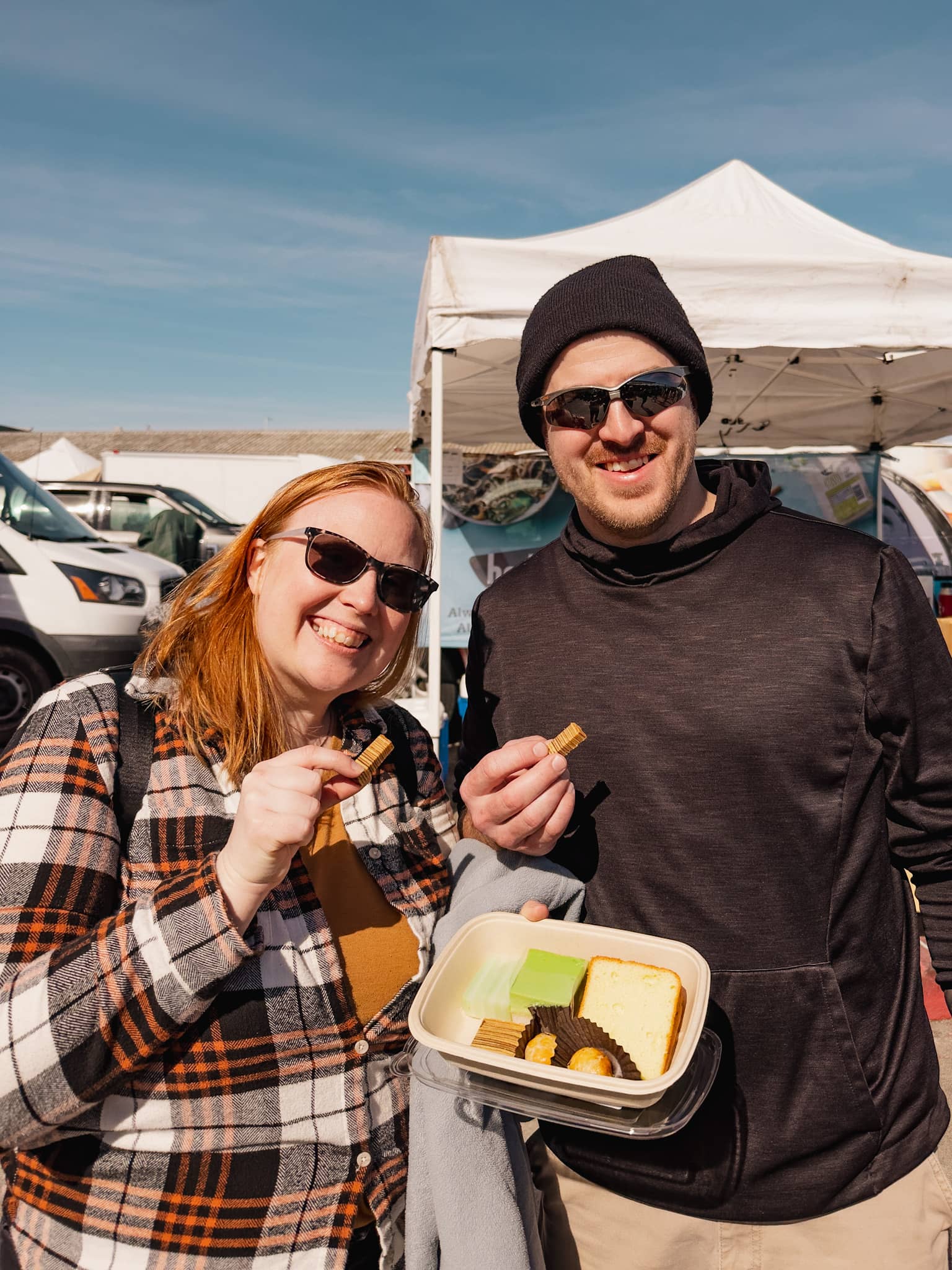
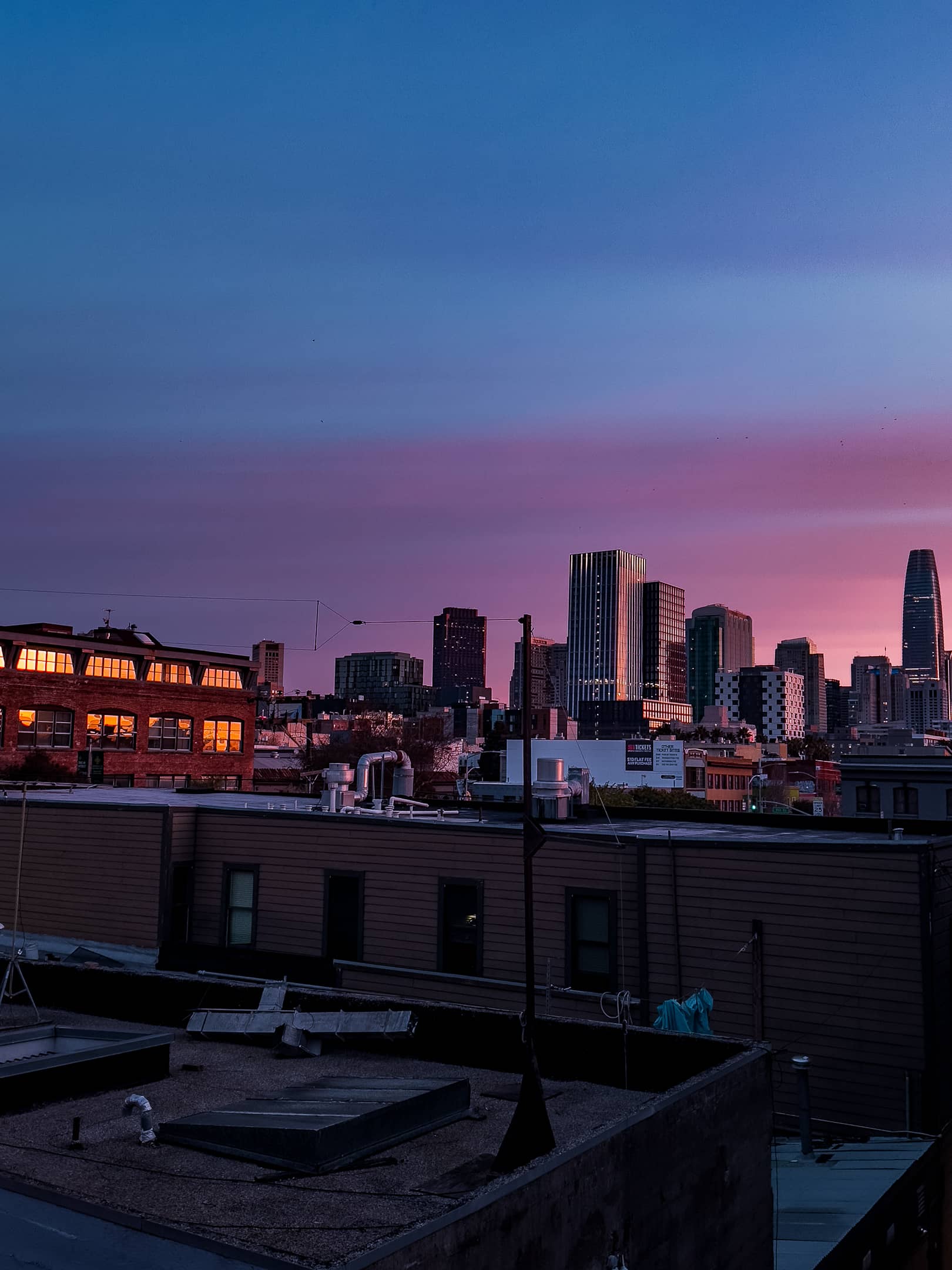
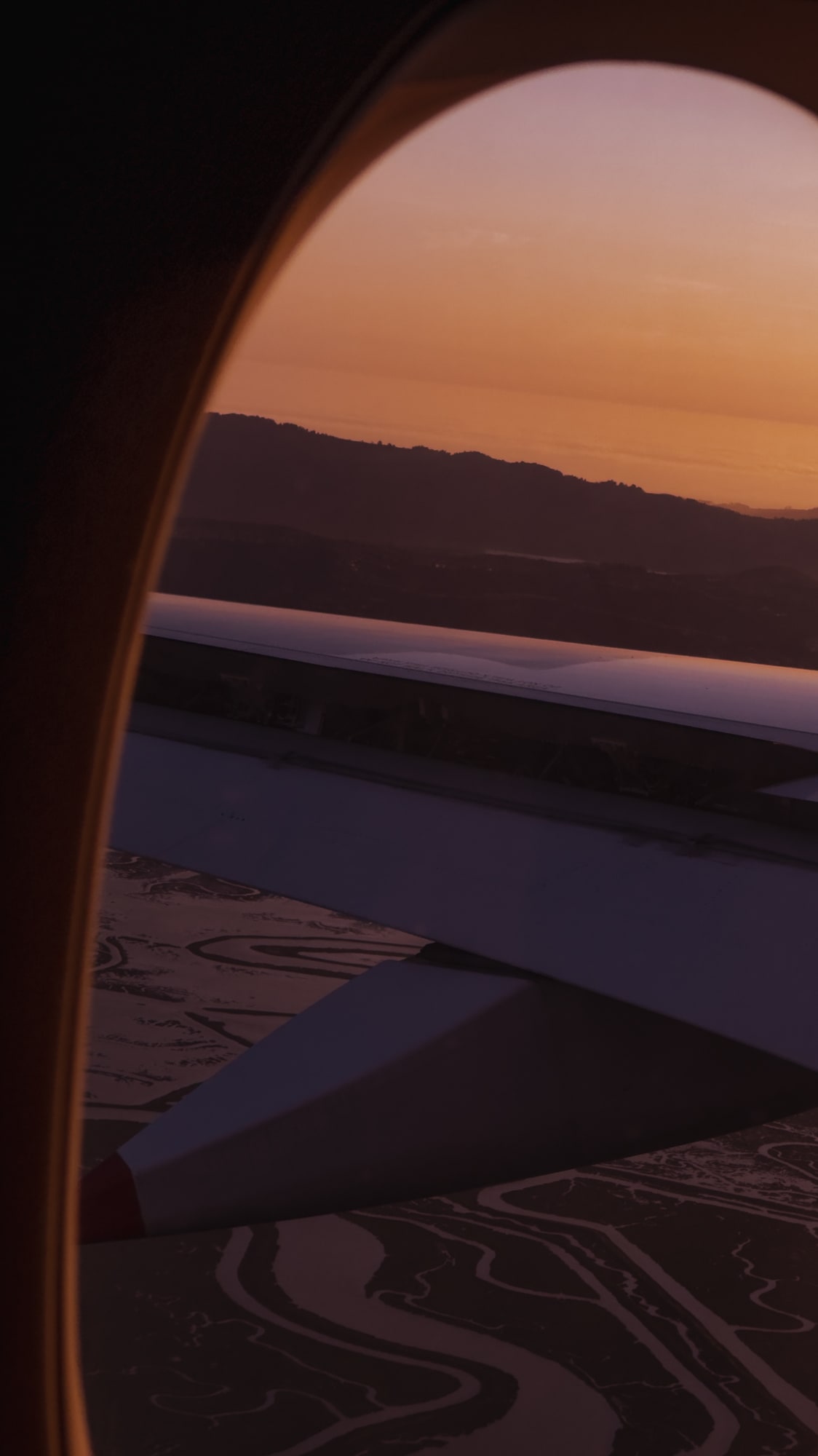
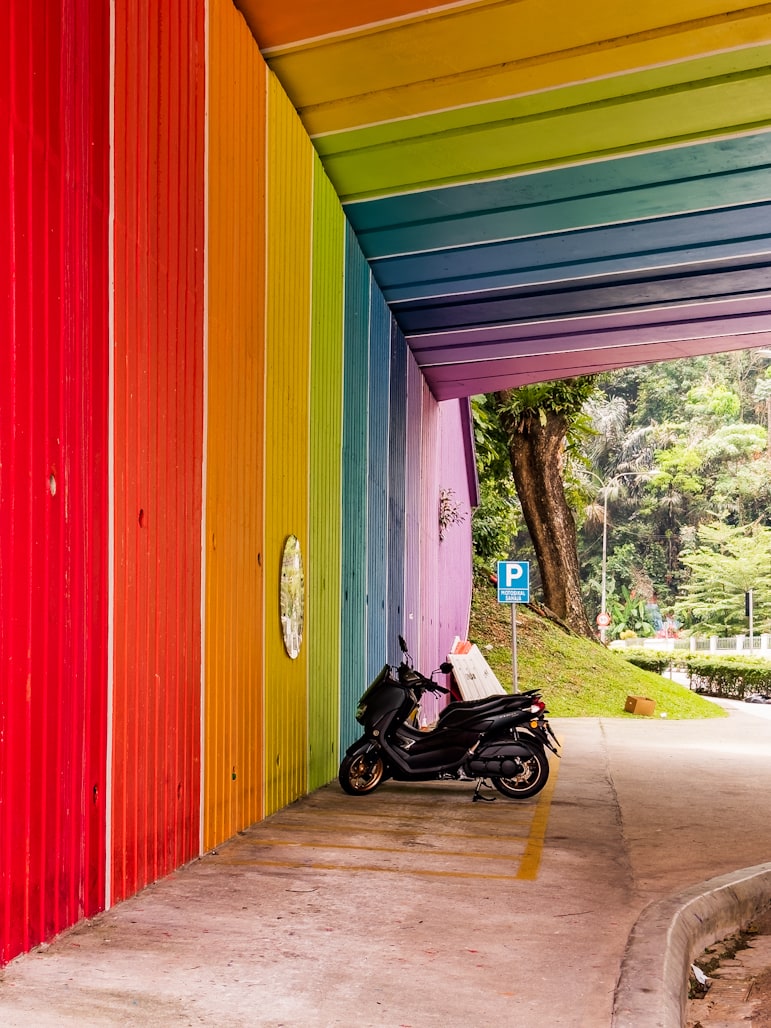
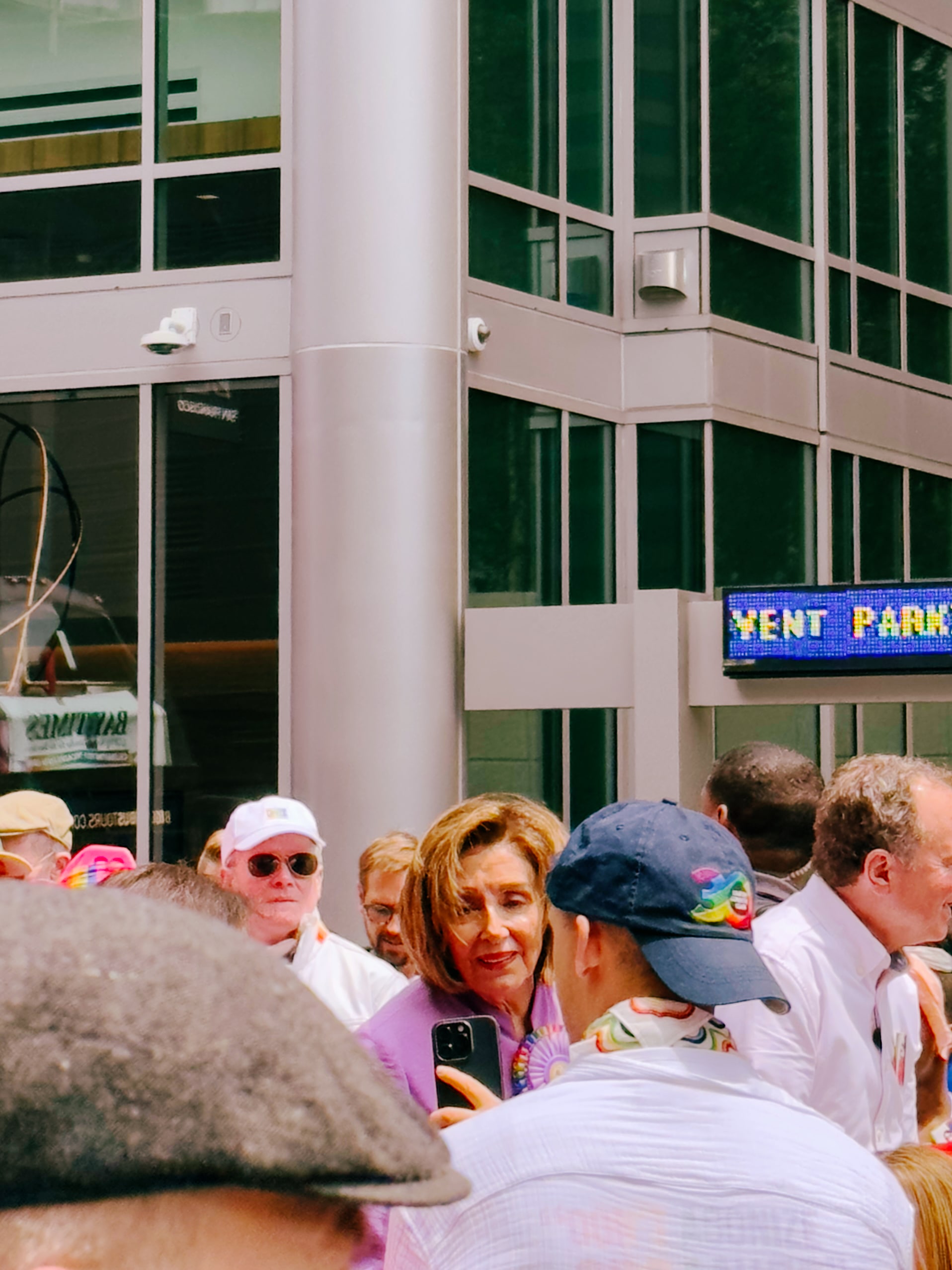
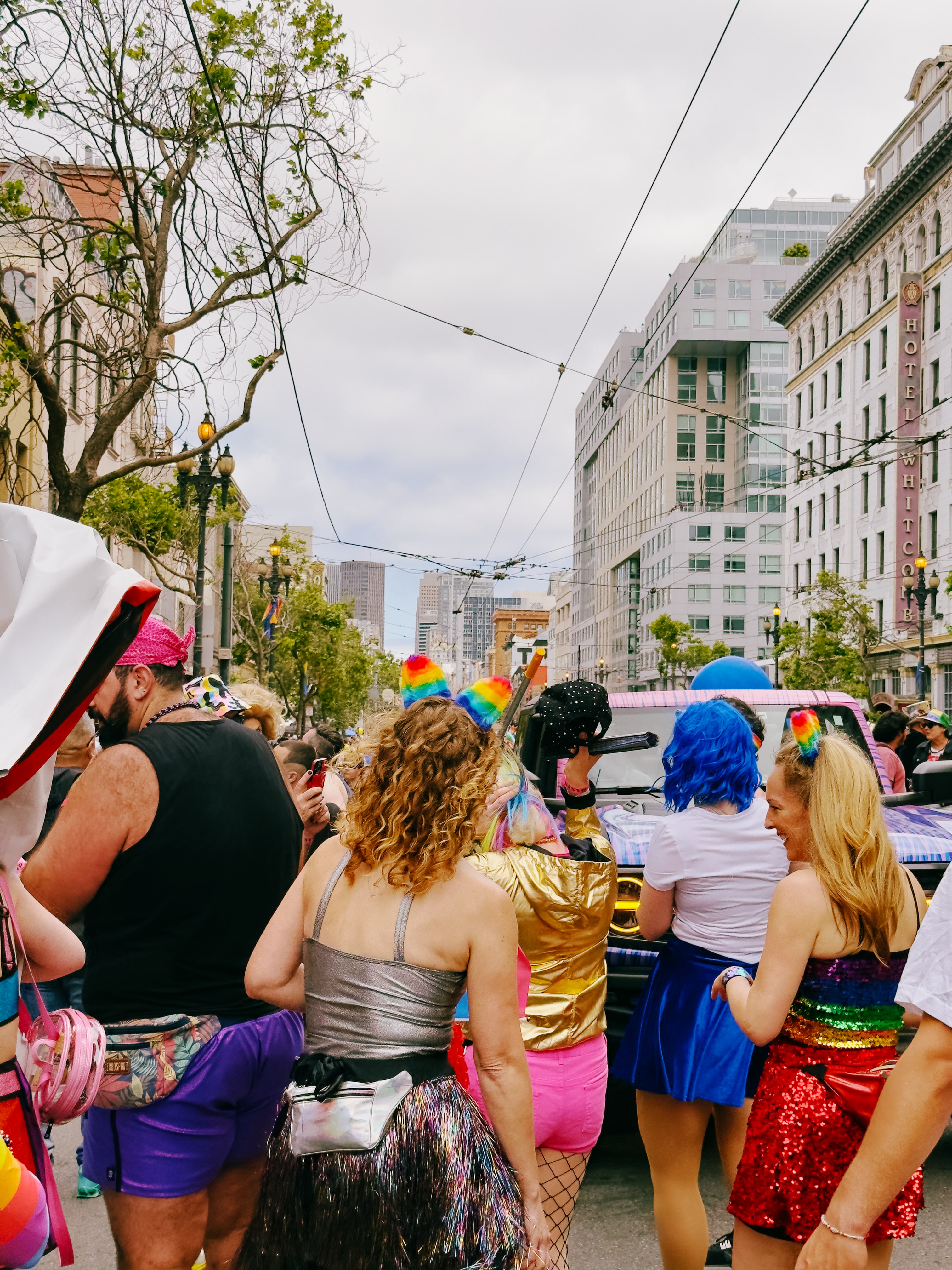
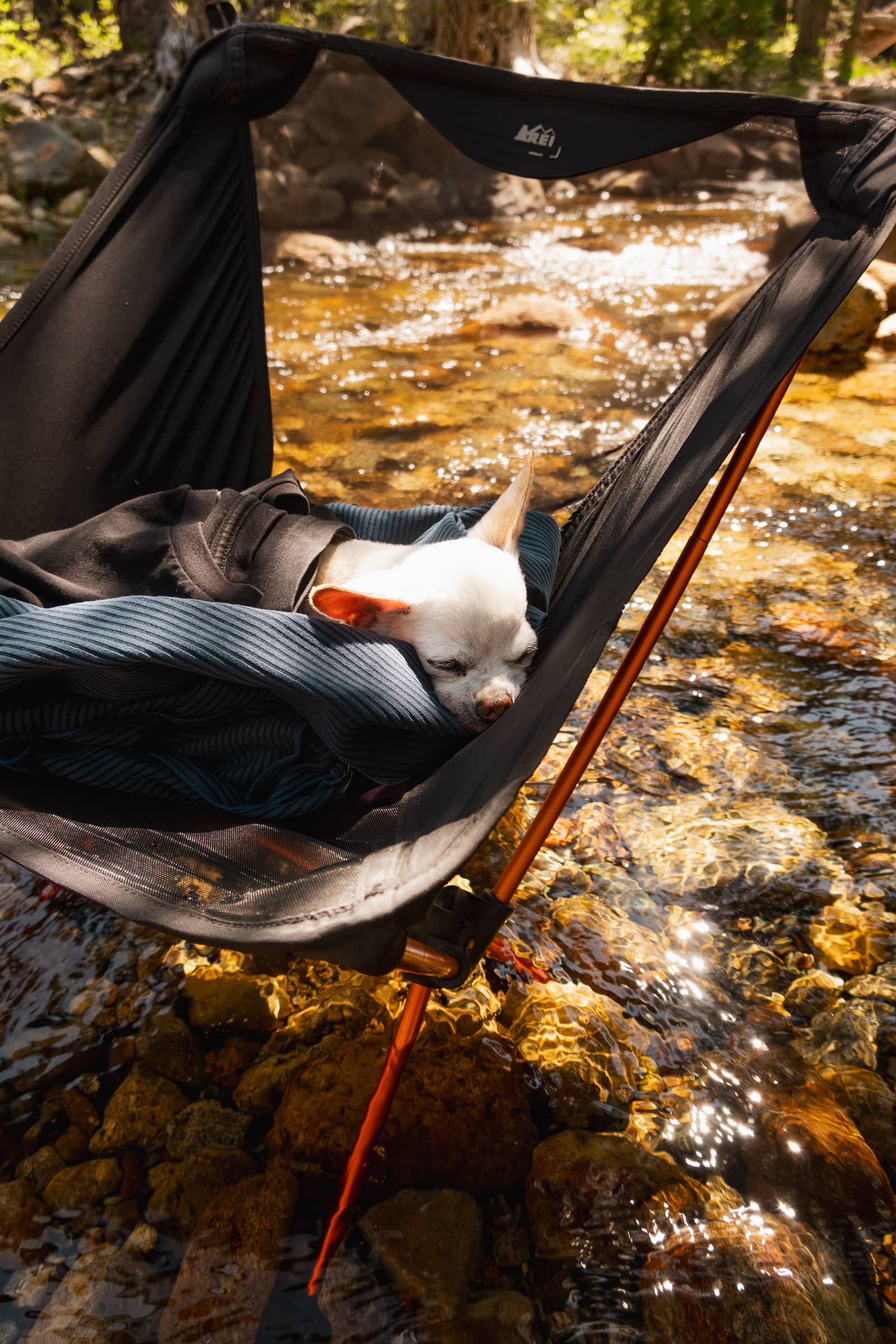
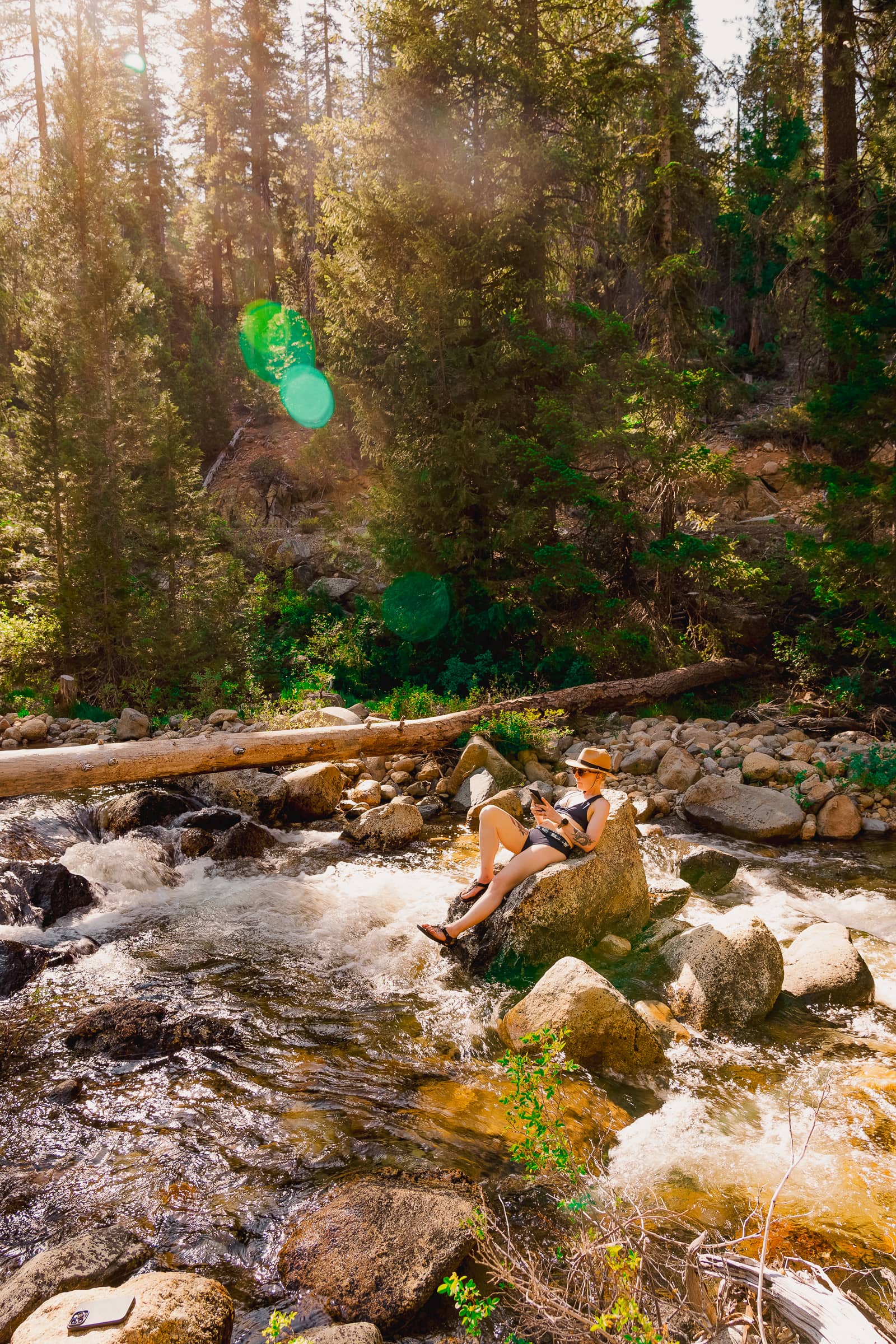
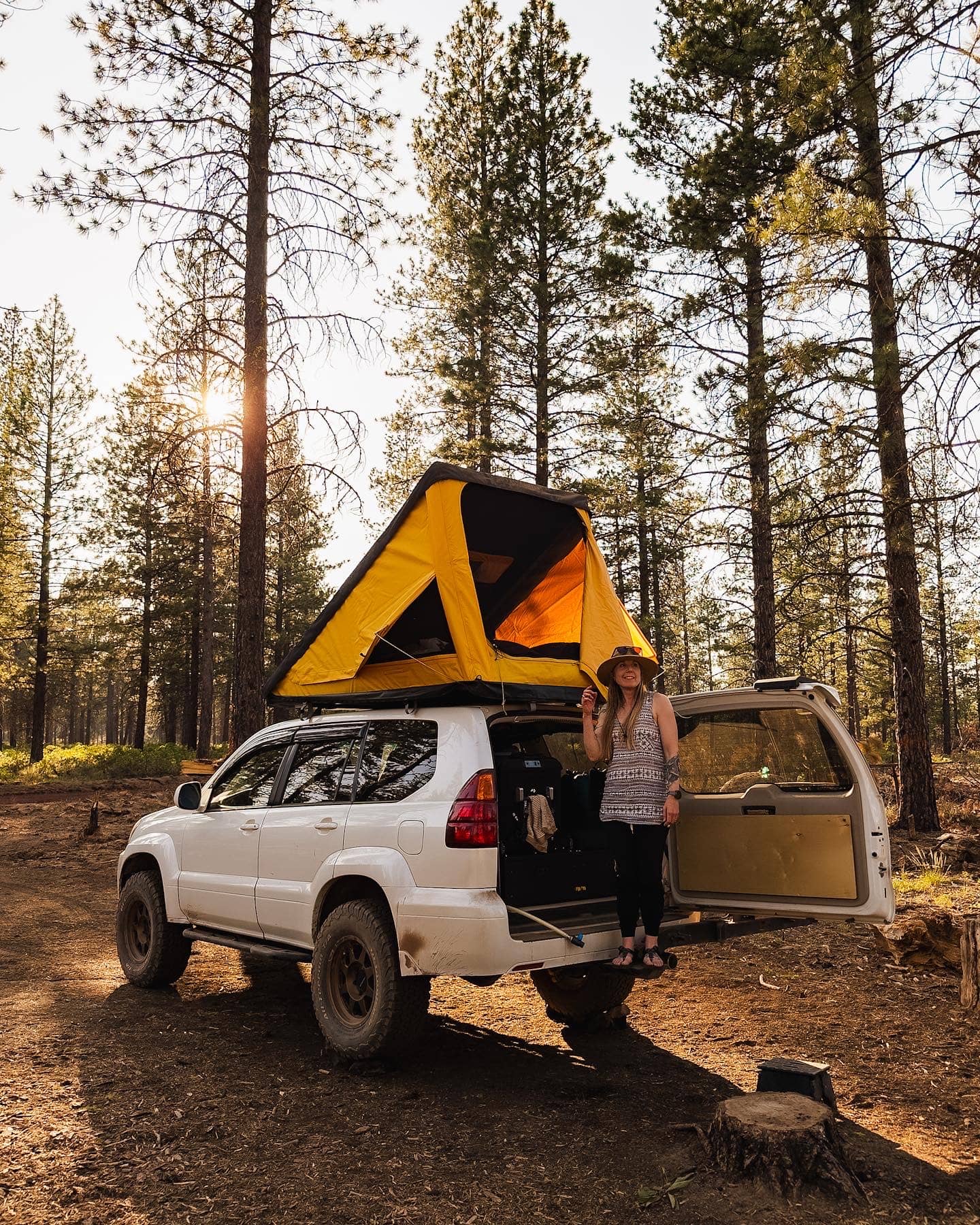
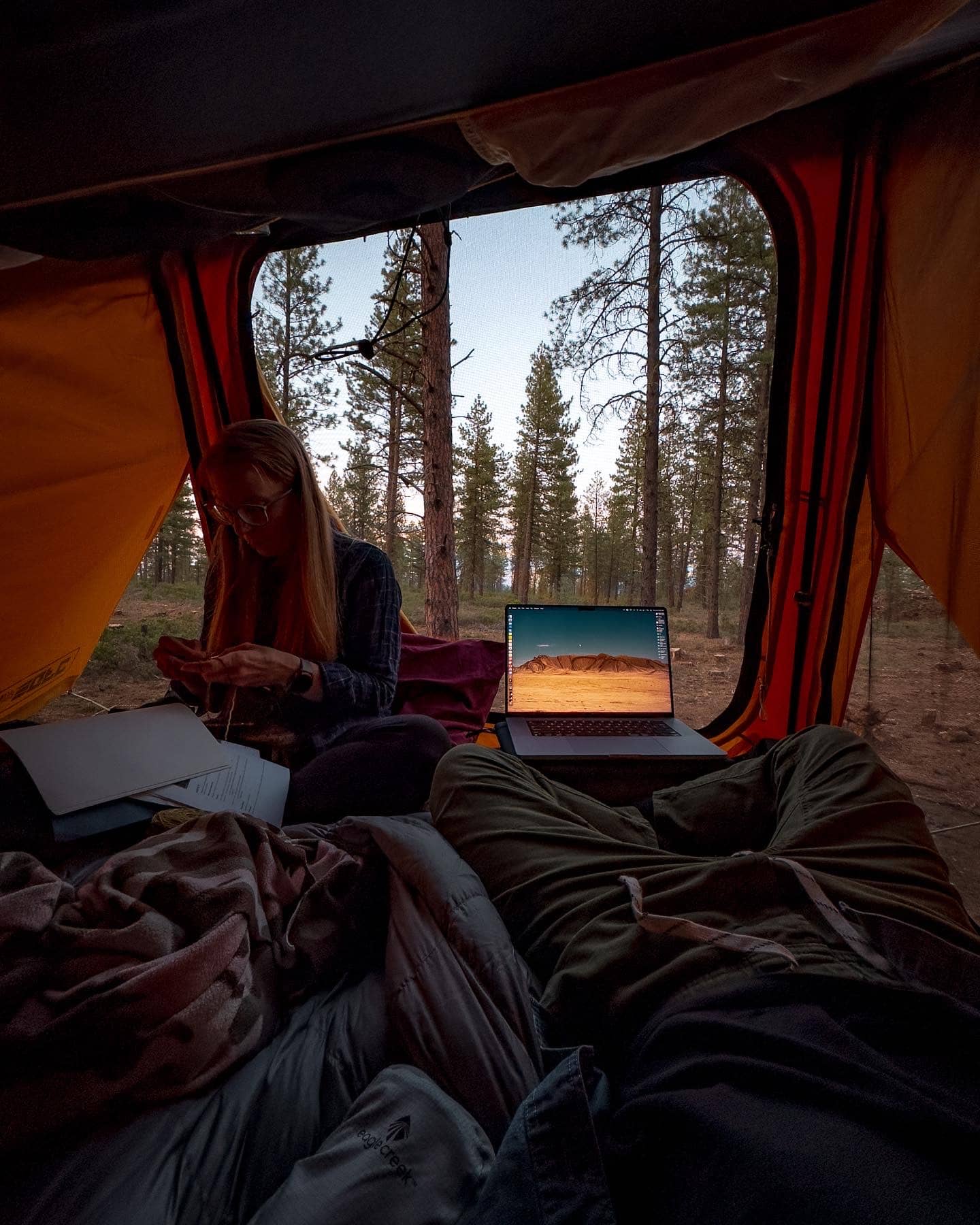
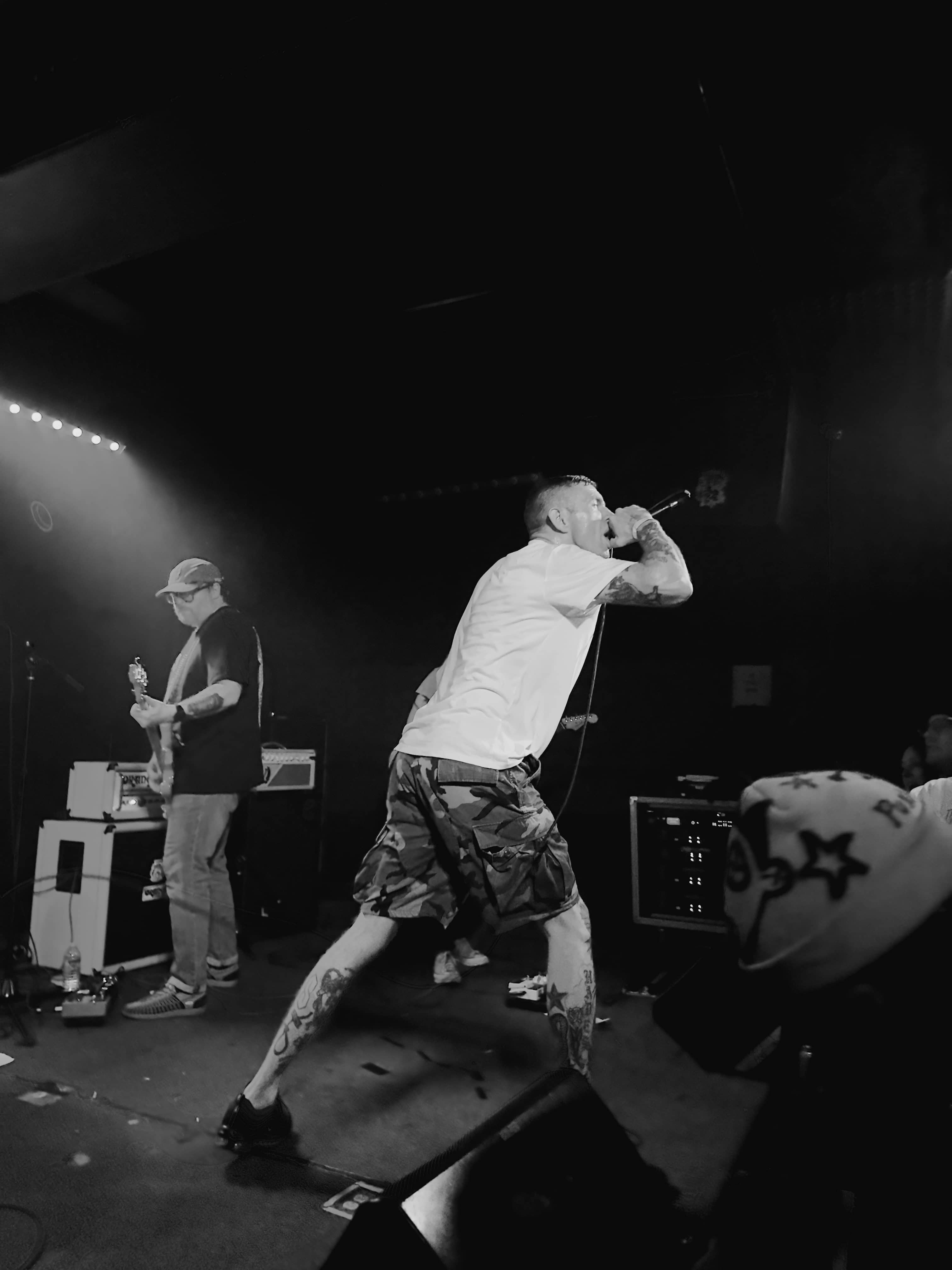
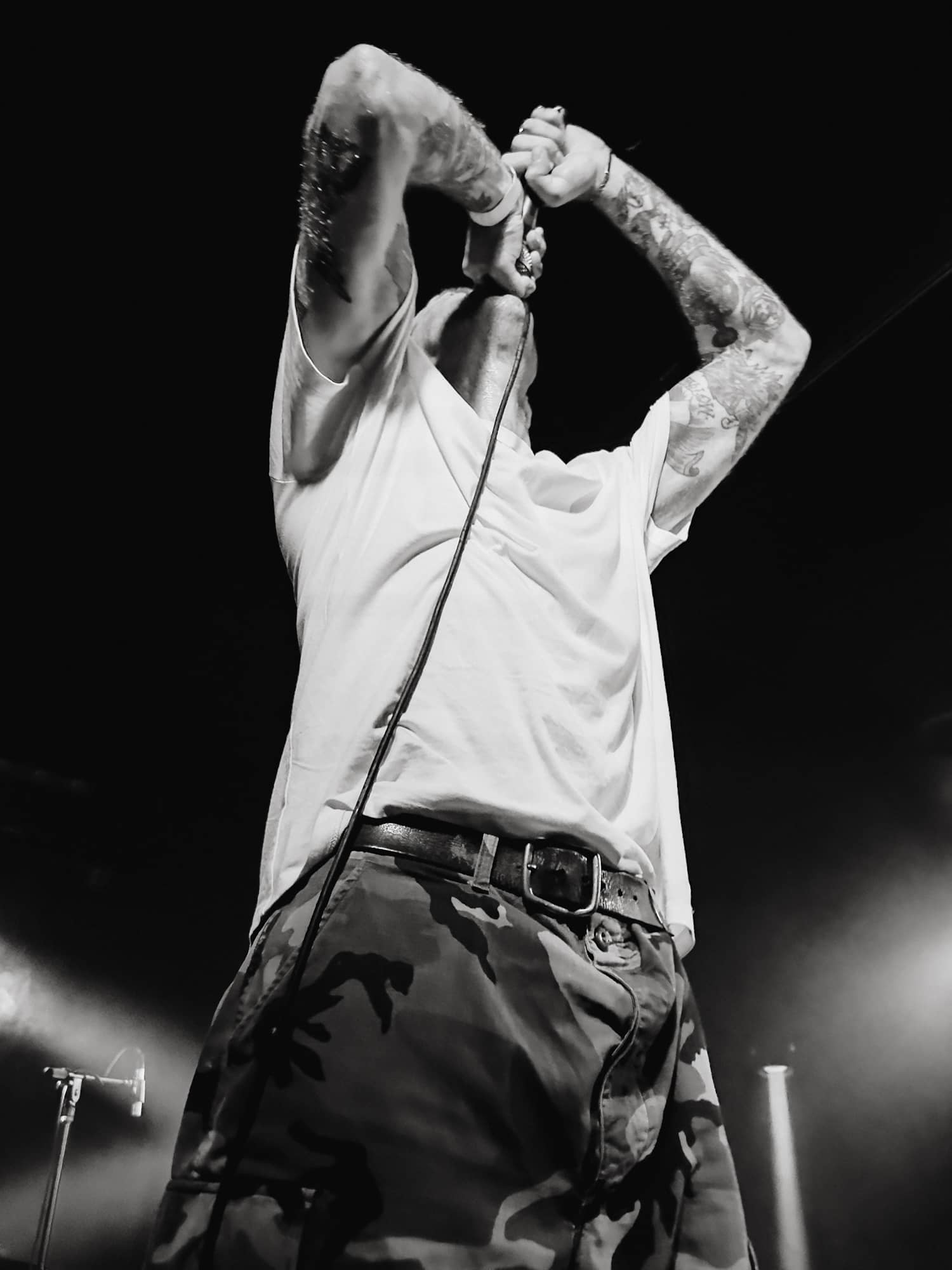
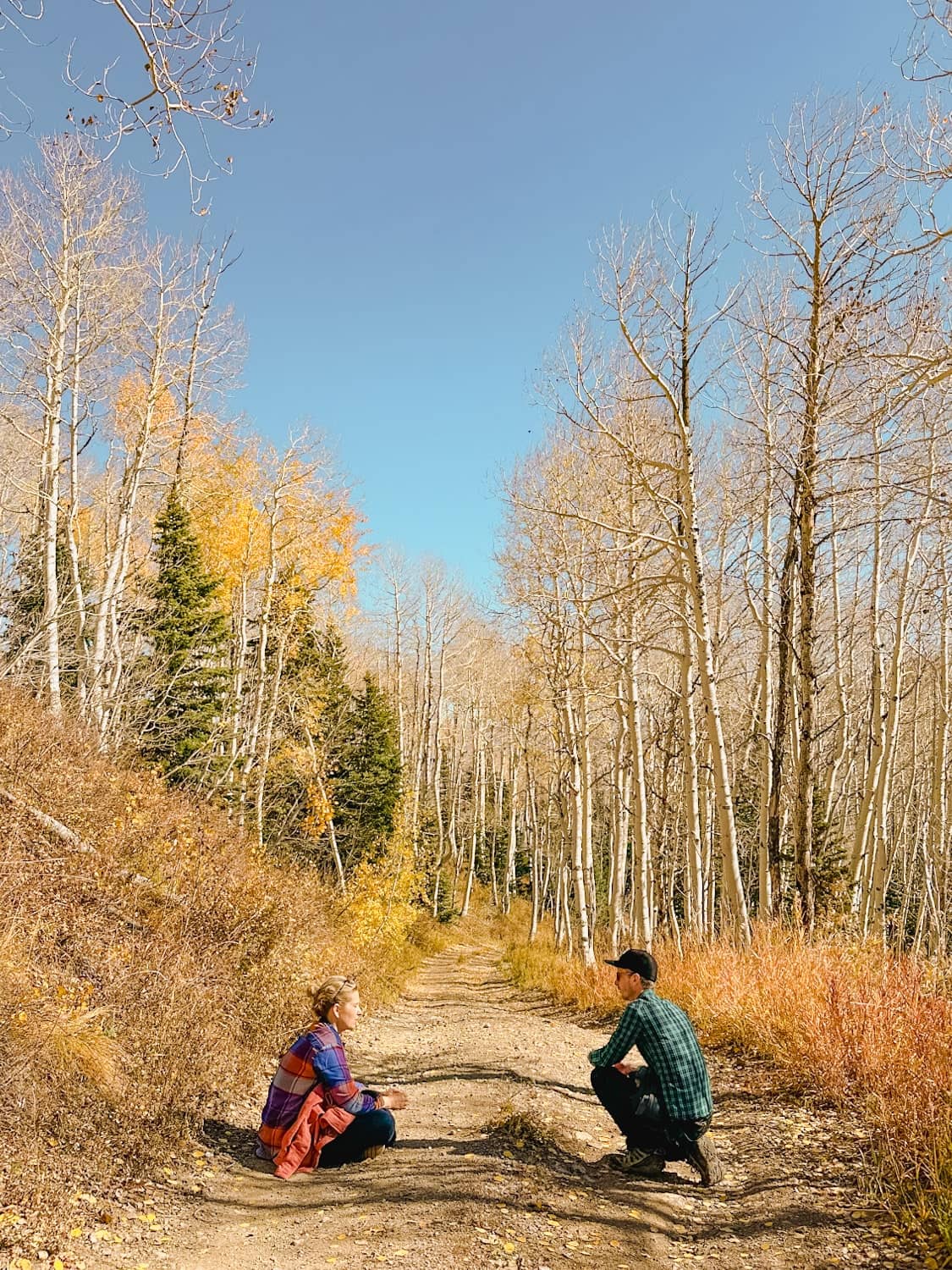
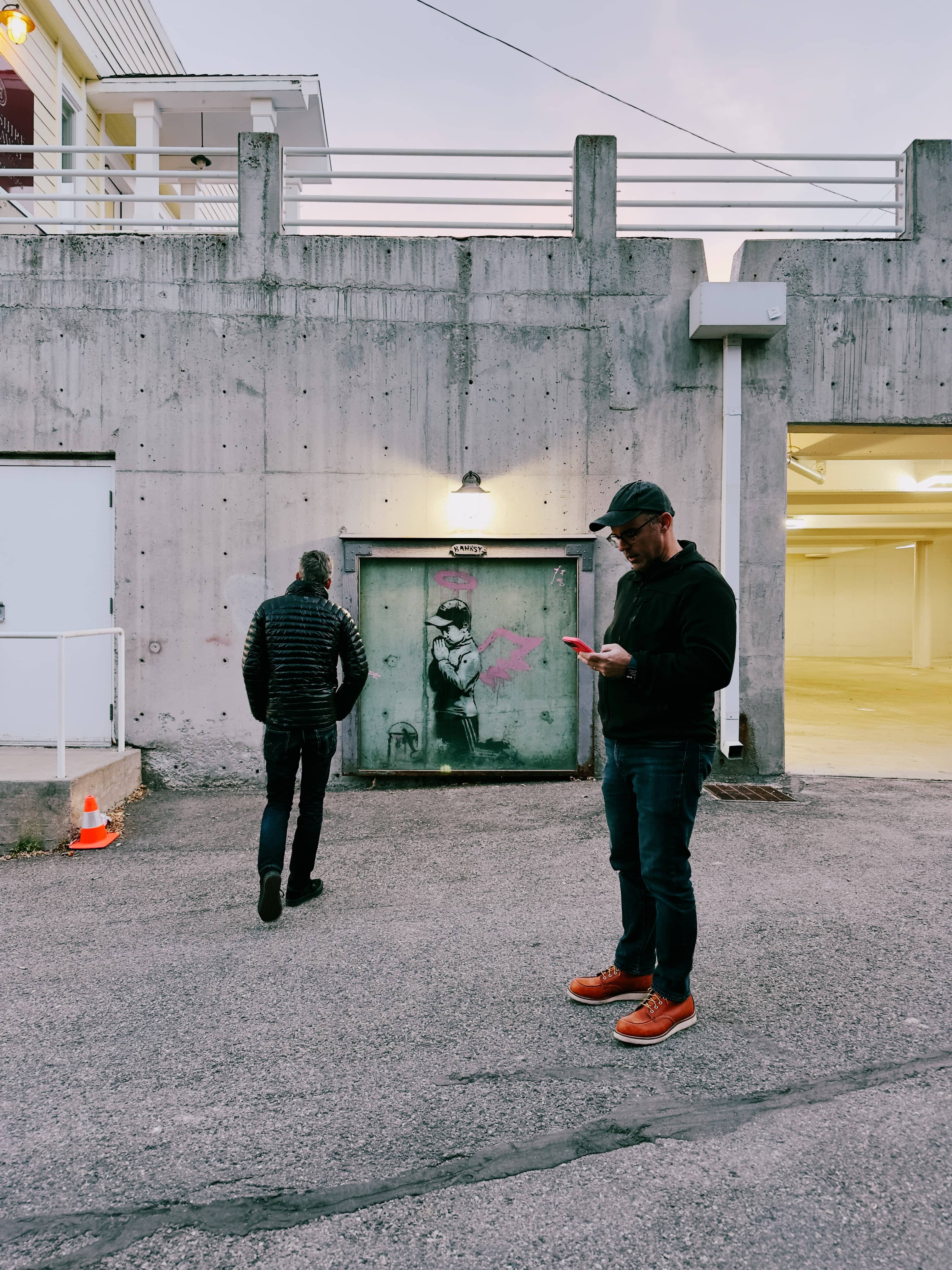
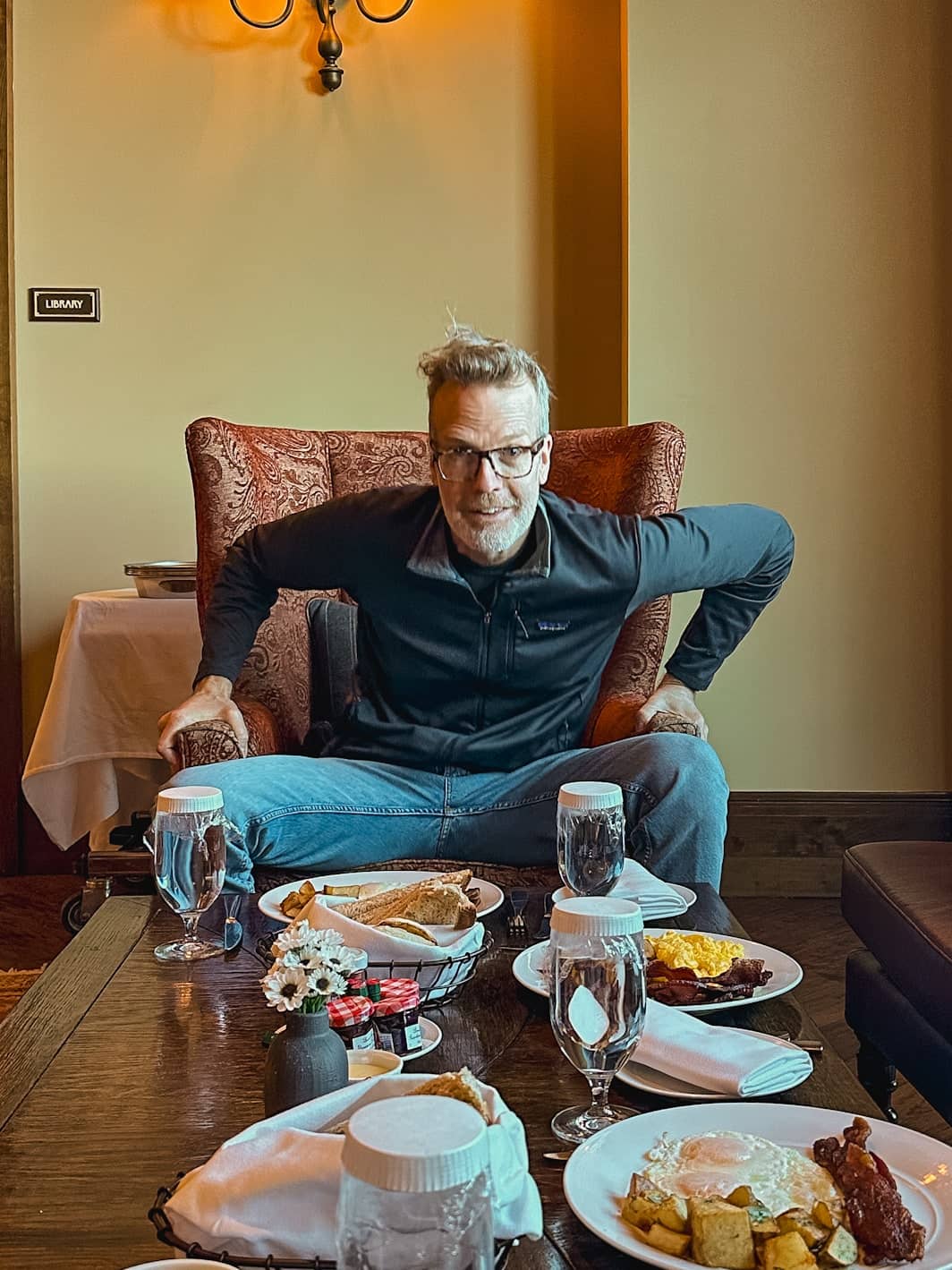
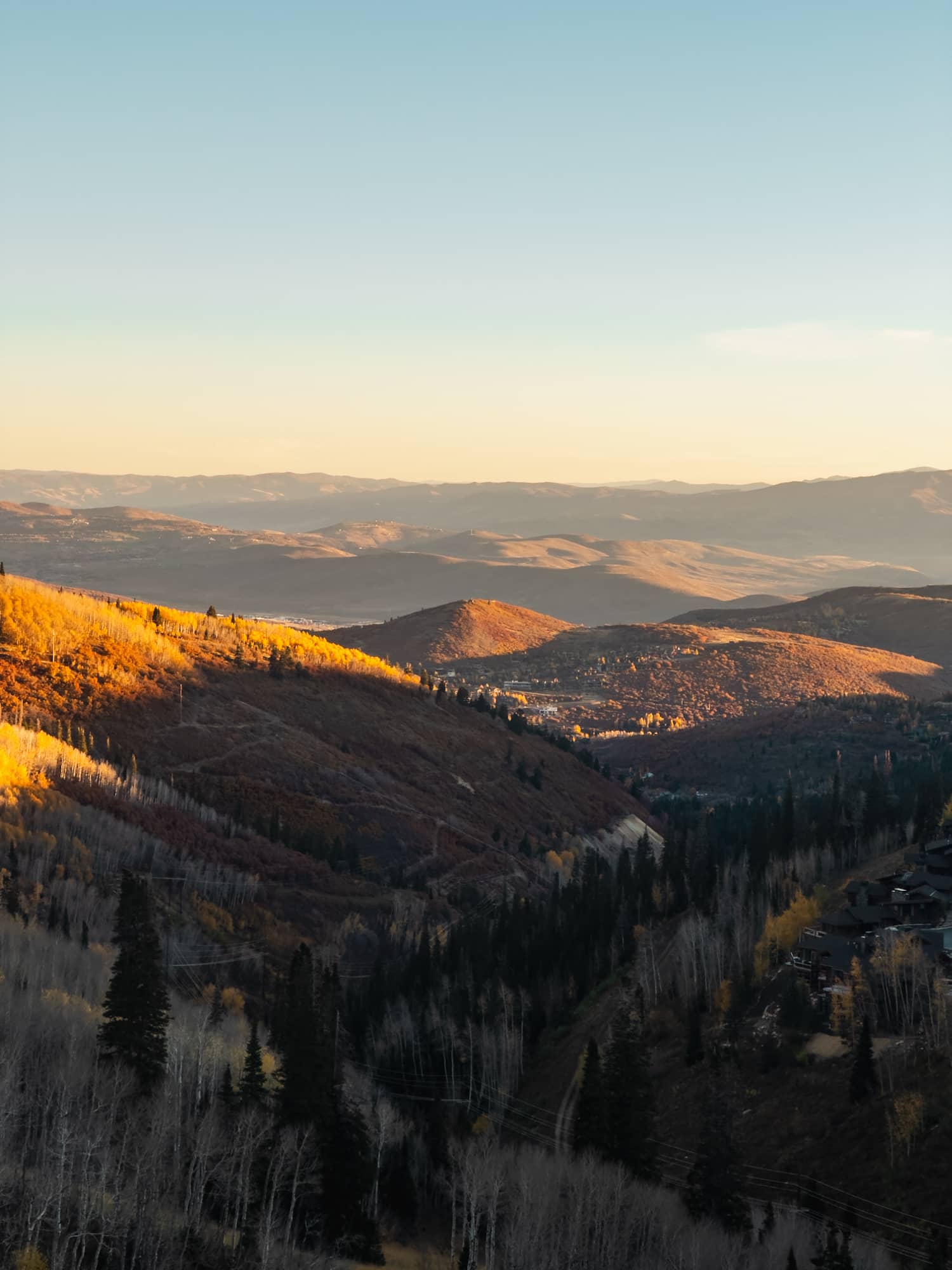
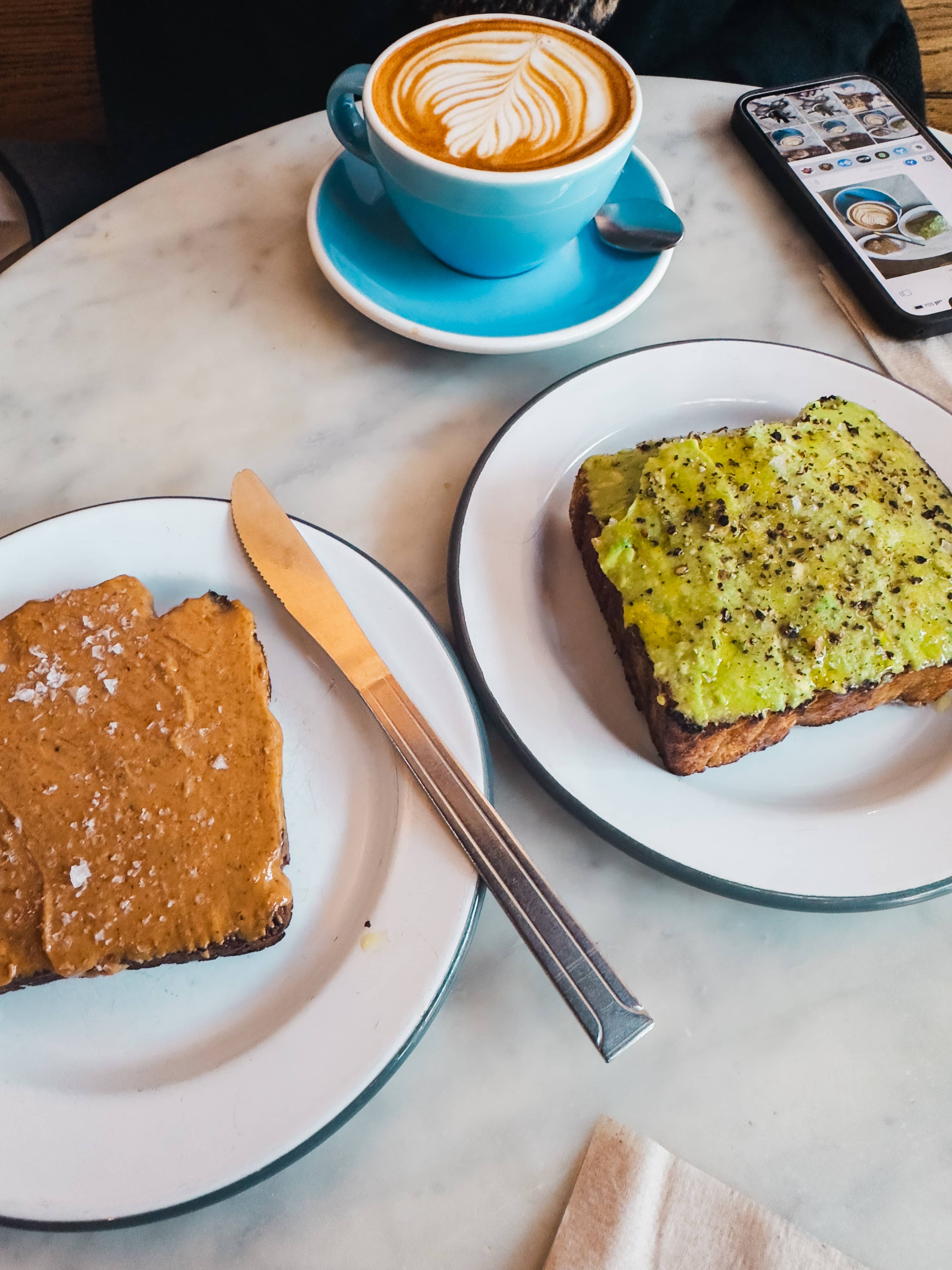
The weather was beautiful today. A sunny 65 degrees or so. Fresh from a shower, I headed out during the lunch hour on foot, camera in hand and took a lot of photos during my walk. It took me straight out to the lake, an 8 minute journey. I was surprised to see that they had made a promenade of sorts there now. It used to be just rocks butting right up against the edge of the lake. I walked south along the lakefront, enjoying the weather. I needed a break from thinking about work and the anxiety that comes from seeing the top of the mountain but knowing there's still a way to go. Add to that a deadline and the anxiety rises.
Embroiled in all the work that's hammering down this month, I've been obsessing about design issues — my own methods and influences at odds and harmony both at once. My approach has always been, "Complexity in simplicity." Creating and building complex and sophisticated designs only to refine them until they become greatly simplified. To cut through the crap and clutter. This doesn't always work as well but I like taking the simple approach, leaving things obvious and in plain sight, not hidden from view or obscured by content or visuals that serve only to detract from what you are trying to accomplish. Take this very site for instance — it's as barebones as I can get it without sacrificing my own visual desires, yet I think it works remarkably well (or so I hope). Of course, you need to know the goal I have in mind for this site, which is to deliver this column, this section of the site you're reading right now — the content, first and foremost. This is what is most important. Provided are certain other aspects, links to other sections, a pretty shell and other useful links to more content. The content is the focus here.
Two online entries particulary struck a chord with me. This one and this one. With the advent of the sophisticated Content Management System, many web writers have tools available to them that may or may not be useful depending on their needs. This requires you to take stock of your writing, or what you are putting out there. Khoi's "8 Simple Rules for Dating My Blog" is spot on.
There was a time when sites were much simpler. One place to read all your content. A navigation area. Maybe a links area. Search functionality became popular. People began to add little lists to their site. Things they were listening to, reading or liking. Comments spread like wildfire. Then came trackbacks. Then came the Links to Cool Shite weblog within a weblog. Here's what I'm listening to now. This is what I am lusting. This is my Amazon wishlist. This is the RSS/RDF/XML/Atom feed. Things started to look a little cluttered and unreadable. There's information overload. What matters now? Which section should I look to? I understand the need to consolidate information and attempts have been made to do so. Some people are highly successful in their redesigns and approaches — Airbag and Subtraction are at the top of the game here. It comes down to what you deem important for people to read. What you want them to see first and should be weighted as such. I'm not panning having all the information you like out there. If it's designed well enough, you can get away with it quite well. Design for me is a simple sophistication — complexity made simple.
The walk made things simple.
→ This looks better on the web
→ Reply via email
Thanks for reading and using RSS!
]]>At the request of my much loyal readership (I’m looking at you Lacey), the story of how I came to be with girl seems to be of interest. I know, I know. I disappear for a bit from writing and then I return smitten, enamoured and very much exploring a journey I’m quite glad to be on.
And you’d appreciate this dear reader. The girl and I both find the story funny and frankly a pretty good one. Let’s break it down shall we?
A little over five weeks ago I was biking down Damen, heading south towards Dave’s house, for his birthday. On the way I noticed a redheaded girl on a bike. We acknowledged each other by way of a mutual glance. Much later, after Dave’s festivities, I was biking home north and passed her yet again and a brief acknowledgement was had. That night, coincidences a sign of some sort, I posed the ever fabled Missed Connection™ on Craigslist Chicago.
The next day I got two responses. The very first one questioned the validity of the redheaded-ness. She seemed intriguing, and after I replied, she replied back with more info and more well-written email. The other girl who replied I didn’t write back once I found out she was not the girl. Now, the first girl wasn’t the girl either but for some reason, the way she wrote and told these stories reeled me in, hook, line and sinker (the best part: she knew she wasn’t the girl when she first wrote!). And so a rapport began. She was a cyclist, a vegetarian, an excellent photographer, a scuba diver and had seen much of the world. And she had lived in London. Now, if you know me at all, your checklist of things that Naz is passionate about, has been checked off with all of the above.
A few emails in, she asks if I’d like to meet. I’d been thinking of the same thing and was both surprised and excited that she had asked first. In a word, ballsy and I liked that. Since I had mentioned Karyn’s, a raw food restaurant and the fact that we both were curious about it, I proposed meeting there for dinner.
On a warm Thursday night we rendezvoused at Karyn’s on Halsted. I was early so I waited outside. I saw her coming down the street on her bike and I was nervous, as meeting new people tends to do to me, let alone a person who I’m interested in. We exchanged hellos and made small talk as she locked up her bike. She formally introduced herself and we shook hands.
Dinner was good. Dinner was tasty. Dinner was flirtatious. Admittedly, I made moves I never would make but things felt comfortable and conversation was good. She smelled good and I distinctly remembered at one point that I wanted to kiss this girl.
Dinner over, we decided to take a walk. The walk was brief once we figured it was pointless and I suggested Danny’s, one of two of my favourite bars in the city. We headed there, locked up our bikes and went inside. Drinks were bought and we sequestered ourselves at the back of the place, in the corner. Conversation continued, excellently and I was caught up in how right it felt, how easy it was and how it felt like what I’ve always wanted meeting the right girl would feel like: Magic™.
After a while, knowing full well how much I wanted to kiss this sweet girl, I posed the silly question, knowing that I had passed a few perfect moments where I could have already done so: "What are you thinking about?"”"
The answer my friends, you already know.
My dear friend Cinnamon put it best: "You didn't meet the right girl, but you met the right girl."
Indeed.
→ This looks better on the web
→ Reply via email
Thanks for reading and using RSS!
]]>Music is a huge part of many people’s lives. It seems odd that music is essentially sounds and noises put together to form something that transcends its individual parts. Music, even in its simplest form is a whole, made of parts — be it notes, chords, instruments and layers — that simply are special. Let me just put music into my Magical™ column.
I recently had the pleasure of joining rdio, an online social music service. I was made aware of the service by Wilson Miner who’s been leading the design and user interface of the product. The braintrust is strong — founders of Skype and Kazaa are at the top — and the design team is a testament to how great a product it is.
My caveat here is that I’ve never really used any of the other social music sites out there — Spotify isn’t available here, Last.fm has always seemed geared towards statistically tracking your music digestion and I only heard about Lala after Apple bought the service. Colour me green here.
It immediately appeals to me as a service because it’s the one area I don’t have much access to from my social circle. Friends are on Flickr (photography), Vimeo (video), Tumblr, their own blog or Twitter (words) but music has been a gap in that area. What are my friends listening to? What are they digging? Aside from the occasional shared tweet or blog entry, there’s never been a good way to get a glance at what people I’m interested in have their ears on. Until rdio.
At the moment, rdio is invite only. This is actually quite important.
Upon entering the service, I looked at it. As in, I studied the logged-in dashboard. A music player to the left, navigation tools at the top and a main window of activity. I saw immediately that because Miner invited me to the service, I was following him. This is quite key as the activity window demonstrates how the service is used but also how my own activity would be shown to the rest of rdio listeners — integrated learning by demonstration.
A feature I found immediately compelling is the playlist feature, but more specifically, the ability to enable levels of collaboration — jamming on playlists with people I follow or everyone who’s using rdio. Back to that social circle: I get to share playlists and friends get to share playlists and we can add and fill them
out and remix or mix these playlists to get a crowdsourced mixture. Brilliant.
The Heavy Rotation display shows a collective snapshot of what people are listening to in my network.
And it’s illuminating not just in the fact that it is a recommendation system (the masses can’t be wrong right?) but surprisingly that I don’t own or have heard of most of the albums currently in this list. My tastes have always been a bit late to the game sometimes but also run non-parallel to the general artists of the moment. Oddly enough, this makes it a feature that isn’t as compelling as I thought it might be. I’d actually like to collapse it or hide it so that the main activity stream is higher up on the page.
Like so:
Scott mentioned to me that he was impressed with how seamless the player is between the website itself and the desktop version (an Adobe AIR app). They are completely in sync — if you open up the site in another tab, there is no overplaying of one player or the other. If you play a song in one window, you can watch the player in another tab or window move its player along at the same count and progression, like magic. Smooth.
The best feature for me is that I don’t actually have to care about the physicality of my collection. It’s in the cloud. No more backing up my collection to various external hard drives and having to manage my collection on my desktop to prune. I get to keep the silly albums or the one-off songs I want without having to worry about data loss locally or having to figure out storage at home.
There are a few things I’d like to see improved:
People I’d like to be able to browse people at large, directory style perhaps or in some other fashion just to get a sense of who’s using the application. Currently, aside from importing contacts, you can’t do a search for people. Some people I’d be interested in musically, I may not follow on other social networks and aside from seeing who my friends follow via the activity stream, there’s no other easy way to really find people.
Reviews I’d imagine a rating system for album or track reviews either via a star rating or a thumbs up/down, useful/non-useful or “like” method would be handy in pushing the quality of reviews.
Playlists As I mentioned above, I love this feature. Aside from seeing that people are updating their playlists, it’d be great to have a playlist be better described in terms of level of collaboration. I don’t think a non-collaborative playlist needs to say anything but perhaps if it is, it says something along the lines of “Paul Armstrong updated his collaborative playlist.” and let the level of collaboration be intelligent — show the descriptor depending on who’s allowed to collaborate.
Collection The bubbly infographic style of your collection is sort of fun at first but in it’s place, I’d prefer a much more powerful management tool to browse my list. In this respect, iTunes is far, far better as a default view. Since music is also quite visual in regards to album art, I’d love to see a way to browse my collection by album art in a grid. Not cover flow, but a grid that can be ordered through a variety of ways. The variety of ordering methods should also be applied to the list view as well. In fact, the collection should come in Views: List or Grid and be ordered by Artist, Album, Length, Year, Genre, Play Count at the very least. To also take advantage of the social and crowd sourced aspect of the site, rdio could add an additional view to your collection: Heavy Rotation and perhaps Popular (all-inclusive rdio audience) with the same sorts of details ordering. This leaves you with the following views: List, Grid, Heavy Rotation, Popular.
Playback Something rdio is missing from a desktop application is the ability to auto play music, random or shuffled. rdio works with the concept of the queue or playlists but is missing a general, “just play” functionality. Being able to just hit the play button in the player and having rdio do what it does now — either continue something in the queue or the playlist (persistence is great in the application by the way) — but also just randomly pick something from your collection if no playlist is selected or nothing’s in the queue would be quite welcome.
The Desktop rdio’s desktop component is slickly implemented. But as my dependence on the service grows (and I haven’t fired up iTunes in a few days), the shortcomings of being able to browse and use the service on the desktop (I’m aware that Fluid is a potential stopgap to that end) feels wanting. I’d like to browse my collection as outlined above — in fact the mobile version works better than the desktop version. I’m unsure if this is intentional, preferring to drive people to use the site proper but it feels so, so close to being completely seamless across the board that this would be a welcome revision.
All suggestions and mini-gripes aside, I absolutely love the service. Friends have already started subscribing. It is an extremely well-executed and polished platform and I look forward to growing into rdio over time.
To their continued success and the happiness of my ears.
→ This looks better on the web
→ Reply via email
Thanks for reading and using RSS!
]]>A few times a week, we get emails from students and young designers looking for an internship or full-time opportunities at the studio. We’re not quite ready in terms of needing outside help, so these are unsolicited inquiries. We don’t make any mention of not accepting them as we like to keep the conduit for dialogue open — and we do file away the more notable prospects for future reference.
Something I’ve noticed, and as an industry we all have, is the disconnect between “The New Design” and what’s currently being taught in schools. Interactive designers, also called UI, UX or visual designers, are in short supply. The young guns are emerging, but product-driven start-ups and companies are searching high and low for those who have experience.
The New Design is a multidisciplinary approach to design. This means the skill set a designer should have coming out of school (and should continue to fine-tune after graduation) is one that gives them a well-rounded understanding of how design is a multipronged route to a goal. A designer should no longer showcase a purely graphic design background, or print design or what schools are labeling “new media” design. Like the studios they’re applying to, designers should possess a similar set of tools in their toolbox.
It would benefit a young designer to learn the basics of all three, thus developing a highly desirable and capable set of skills that allows them to think in many mediums.
The disconnect in schools is strong — many schools and colleges separate the tracks with little to no overlap. Students and young designers are left to learn on their own, postgraduation, what studios really are hammering away on and how the industry is shaping up. Alarmingly, portfolios are lacking web-related or screen-based design. Let’s say for a moment print design is on its way out — traditional mass magazines and publishing houses will shutter and move toward a screen-based medium. The current crop of designers coming out of school are ill-equipped to design for screens — especially screens that change as fast as they’re released.
We live in a time where the world changes overnight.
It’s no surprise the web industry will innovate and fill in the gaps where the schools fell short. If we as industry professionals have learned anything, it’s that the web is one of the few places left where invention is still alive and innovation happens daily. The rise of self-created conferences, workshops and gatherings, held by those who actually practice in the field and are captains of the industry, are perhaps better than what schools can and are able to do now.
Some stellar portfolios have come our way lately. Bodies of work that perk me up and get the brain ticking. Some beautiful print and graphic design pieces leading the pack — setting the tone for hope. That initial reaction fades, though, as I reach the end of the list, only to find one or two interactive projects (self-initiated, for clients or otherwise) essentially buried beneath the good stuff. Those pieces are glossed over, barely worth mentioning, something of an afterthought to the lovely print collection. What’s worse is that in some cases, interactive examples are conspicuously missing.
These portfolios are geared toward the typical path students tend to travel — from graduation to an advertising agency or a print publication or a more traditional graphic design shop.
It’s like they’re set up for failure in a world where The New Design is now ruling.
We do a lot of interactive work here, of course. It’s integral to the studio, so the portfolios young designers send in should reflect as such. Understandably, in some cases these are just form emails. And certainly, some have identified with a selection of the work we do, but perhaps they haven’t fully recognized that a more likely match will come from having a body of work aligning with our own.
It’s not just their fault or ours. Here’s what we both may be able to do.
Build a well-rounded portfolio illustrating a range of capabilities. Aptitudes you should highlight, if possible: user interface design, branding, graphic design and print design as a start. Everything else, from information architecture to user experience, can be icing on the cake. Establish a solid foundation first.
Writing is good, preferred even. If you can write well (and especially if you can’t), it’s good practice to put your thoughts together to help the collaborative process or to explain concepts. It’s essential for storytelling too. All great things have great stories attached. Learn to tell them.
If you’re missing one of those things, create self-initiated assignments on the side or do pro bono work as a “passion project.” If you’re going to design for free, do it for something or with people you can learn from and can get fired up about. Often these projects are more interesting anyway. The other client-driven stuff shows off your skill; passion projects underscore your personality and spirit.
Learn about who you’d like to sweat for before you approach them. Flattery is nice, but why you’d be a suitable match will get you further. Demonstrate that you did some research about the prospective employer.
You need more diverse tracks. You need to blur the line and distinction between the types of design. You need overlap. Many studios describe themselves as multidisciplinary; your school and your students should too. Don’t leave them crippled.
Get new blood up in the schools — our industry is full of people who share their knowledge every day in blogs, print, seminars, lectures and presentations. They’re ready to shoulder the load, are you?
Let’s be willing to take a chance and develop and nurture talent. Do you see potential? Let’s give them the conditions and environment to let these young designers bloom.
More workshops, conferences and the like? I think so, yes. We’re doing a bang-up job already, and the number grows every year. We’re self-starters. We’re do-it-yourselfers. Let’s keep on keepin’ on.
This conversation is far from over. As The New Design has become everyday design — in our pockets, bags, homes, cafés, restaurants and everywhere we go — the very reason why we design will be changed and manipulated as the future becomes the past. This industry is no longer separate and disparate — no matter the form nor the medium, design is one hot, sticky mess, and we’re elbow-deep reveling in making it our own.
Everything old is new again. Rinse. Repeat.
Note: this article was written in 2012, republished on Medium, and posted here for posterity. The studio is no longer the 8 people it was back then, and is just me, myself, and I.
→ This looks better on the web
→ Reply via email
Thanks for reading and using RSS!
]]>I don’t have an account with the big blue F. It’s 2015. The social network is almost 11 years old. It’s remarkable — over a decade in existence and, mostly, still going strong.
I read about it a lot. I have friends who work there. I have been recruited and asked by the same friends who work there if I would work there.
“I don’t have Facebook.”
I know I miss out on things: party and get-together invitations, announcements, limited-edition releases, exclusives. The list goes on. And yet, despite this decade of not having an account, a compelling reason for being on the network of the masses has never reared its ugly head.
There is a beauty in connections and relating to people. Call me old school, or a person of the classics, but I have feared for some time now the demise of real human interaction — of knowing how to talk to people, to understand them, to pick up on all the subtleties of human beings that are only prevalent when you are face to face.
You understand much quicker who they are, what they’re about and whether they’re someone you get along with.
As my time on the Internet reaches its 18th year and the trends of the information superhighway have evolved (I won’t say mature — we have a long way to go yet), the complexities of living a life mostly digital has given rise to the same base human behaviors we have in real life, except we have a better shield (nee platform) to position ourselves on. We can be more than we are. We are allowed to reach more people than ever before. Everything from joy to happiness, grief to despair, silly and inane, and all-encompassing in-between, is up for grabs.
Time has accelerated and isn’t slowing.
When I’m out in the social network I’ve belonged to the longest — the real, living, breathing world of meatspace — I encounter all of humankind’s creations. From the unhoused and poor to the million-dollar-house-owning and IPO’d, and all the people hustling for a living in the spectrum that exists, I enjoy the little moments.
I talk to a shop owner about a product he offers in his store, and because we’re having a nice conversation, and he’s feeling generous after the holidays, he gives me a little discount. I don’t expect it at all — I didn’t hunt around all the stores on this block thinking about who would give me the lowest price or who took the most coupons. I just went in to see if they had what I was looking for and they did. I interacted with someone because I liked them and what they were doing and had a conversation. I may never buy anything there again, and may never converse with the owner in such a manner in the future, but in that moment and time, it was worth the ten minutes we both had to just be genuine.
Before the Internet made things arguably easier, I spent a lot of my time growing up trying to understand where I fit in the world. To know who the people I might really get along with and vice versa and why. It’s a work in progress, but it’s worth my time, so very much.
I know a simple truth: that people who genuinely care about you are the same people that you should care for as well. These are relationships that deserve more than just a thumbs up, or a #blessed, or a +1. These deserve love — that thing that wells up from the deepest springs of your soul and you give away with no thought to yourself.
It’s 2015, and I don’t have Facebook.
→ This looks better on the web
→ Reply via email
Thanks for reading and using RSS!
]]>Every morning I read about a situation that pushes us further away from what we've come to know or expect. With that comes the question of how our evolving reality affects product design, particularly for those who practice it.
While some tech companies are seizing opportunities during these times, with others downscaling their ambition and growth, plenty of soul-searching is circulating. As a product designer, you may be asking yourself: What now?
The industry has shifted dramatically as designers move increasingly in-house—a result of tech normalizing heavy structure and hierarchy. Companies have developed corporate structures with, at times, unknown or archaic HR systems to match (leveling, pay bands, etc.). This leaves designers in states of deep specialization.
To help me understand this move to in-house and specialization, I joined VSCO in late 2016 and stayed for almost two years. Since my departure in 2018, I have thought at length about my experiences, the lessons learned, and the knowledge gained.
The question reframes itself: What is the value you provide as a designer?
Applied to our current state of affairs (a pandemic), this has taken on even more weight as our businesses and world have changed practically overnight. So what can you do? Become resilient.
It's comfortable to hunker down and keep your eyes on the immediate road that lies ahead in your work. Unfortunately, this vantage point can lead to decreased agility and less awareness of the impact on the rest of your team. Broaden your surface area and collaborate tightly with your colleagues. Other designers, researchers, product managers, and engineers are equally invested in the work. Be a unifying force and anticipate changing landscapes.
My inclination is to be deeply curious about how things are interwoven into systems and subsequently ecosystems. Developing adjacent skillsets beyond design helps enhance your value. Learn about product management, collaborate with engineers, and inquire about the organization's growth and business goals as they relate to your contributions. Developing empathy will strengthen you and your team.
Surprisingly, I've encountered some designers or coworkers who don't express much interest in how or why their company makes decisions. This is a two-way street: Leadership can be less transparent at times, while employees lack curiosity. A company is a business, and businesses must deliver value to their customers. By tying your work to the success of your organization (and its customers), you can prioritize and make better design decisions. Get intimate with metrics and analytics, cozy up to user research, and virtually hug revenue and growth. Provide effective value to your company by serving your customers and their needs through arming yourself with as much knowledge as possible.
These strategies have made me a holistic designer. Over the years, I've picked up on aspects outside of my purview: how to collaborate with product managers and leadership, how to make things together with engineers rather than sit in our respective corners, how to incorporate metrics and user research into proposed solutions, and how to interpret the trajectory and cultural impact of a company's organizational structure. I aim to see around corners, build bridges, and see all of the opportunities and the cracks—to leverage all of these things.
When you're armed with knowledge, resilience is the outcome, and your value carries its own confidence.
Aim for resilience.
→ This looks better on the web
→ Reply via email
Thanks for reading and using RSS!
]]>
In the Buenavista neighborhood resides this impressive library that spans 409,000 sq ft, designed by Mexican architects Alberto Kalach and Juan Palomar. Adored by those that appreciate architecture, and those looking for Instagram fodder, the space feels like you’re in the Tesseract in Christopher Nolan’s Interstellar. Whilst some might opt not to, we walked from Condesa to the library (an hour or so) and is a great way to experience other parts of Mexico City and getting even deeper into the local scene.
Smartphones and pocket cameras will easily be allowed into the library. However, if you’re like me and enter with a big camera with a detachable lens, expect to be stopped by security (in a very polite and kind manner). I had heard about this from reviews, and so I was prepared. Since we couldn’t converse much — my basic food-ordering-getting-around-thanks-hello-bye-thanks vocabulary expended, and the security fella’s English in short supply — he just took me to another part of the library into the administrative area.
It’s neat: you get to see how the offices look and match up against the rest of the stunning architecture, and you descend these steps around panes of glass and I came to a woman who clearly knew the drill. What I had gleaned from reviews was that I was to sign a waiver saying that I would not sell any of my images from the Biblioteca for profit. I read the sheet, signed, and was assigned a cool lanyard indicating that I was “Press.” Legit! I felt a little special after that, as I didn’t feel like I needed to be sneaky about taking photos. At the end, I turned in my pass and left.
→ This looks better on the web
→ Reply via email
Thanks for reading and using RSS!
]]>We had come across Teotihuacán in research around the less city-type things to see in Mexico City, and a recommendation from a friend also backed it up. We undertook our first AirBnB Experience with Hugo & Gabriel, a well-reviewed brother duo who grew up not too far from the site.

Hugo and Gabriel picked up our party of nine from in front of Parque Mexico in Condesa, a very convenient and safe spot. Whisked away in their clean and well-cared for Dodge Sprinter van (#vanlife), we arrived just over an hour later which included one coffee pit-stop and bathroom break on the road. Since we started early (7:30am meet time), we managed to have a less crowded experience.
A quick tour through the museum to learn about the history, and then it was a walk down the Avenue of the Dead to the first major pyramid, the Pyramid of the Sun. We climbed to the top, had time for photos and to take in the sights, and then it was down again. We appreciated the brothers informing us about specific points of interest around the area and the pyramids (juicy stuff like sacrifices and such) whilst keeping us moving to be sure we didn’t linger too long in the sun, but also getting us to see the former city in its entirety. We found it well-paced.
The Pyramid of the Moon was last, but not least, and while smaller, we appreciated the view from this end of the whole Avenue of the Dead, and having a sense of scale and smaller crowds. There’s a lot to respect and learn about Teotihuacan, and I recommend taking a tour with Hugo & Gabriel. As a bonus, we had home-cooked food at their family’s home half an hour away, which was tasty, and a great booster for the longer drive home since traffic had now picked up. They get you back by 3pm, which allows you to still have some time in the day and make time for a proper dinner.
→ This looks better on the web
→ Reply via email
Thanks for reading and using RSS!
]]>As time goes on, I've learned something about myself: I'm now that person — that old fogey — that mumbles under their breath about the old days when music was real. That said, there are plenty of good artists (even great artists) making meaningful music today. I just have to search a little harder in an age where everything is delivered on an algorithmic machine learning platter without any real research. Old timey voice: I remember the days when I'd walk to every Tower Records, or HMW, Borders or independent record store and listen to every music station that the staff selected, or asked the record store worker if I could listen to this pile of CDs I had in my hand on their one CD player.
I also learnt that the music I love has been making a return in the form of grunge and emo revivals by musicians in their 20s who've discovered the greatness of loud, guitar-based rock music and have developed a love for 90s music. Before the pandemic, as I ventured out to watch reunion tours from some of the bucket lists bands I never got to see in their and my prime, I looked around and wondered how the young people discovered them? Their parents? Aunts and uncles? On message boards? Or have the algorithms been that good?
Either way, it's become about high quality top-to-bottom complete albums that resonate rather than singles that while designed to be earworms, can only be relegated to an annual songs playlist.
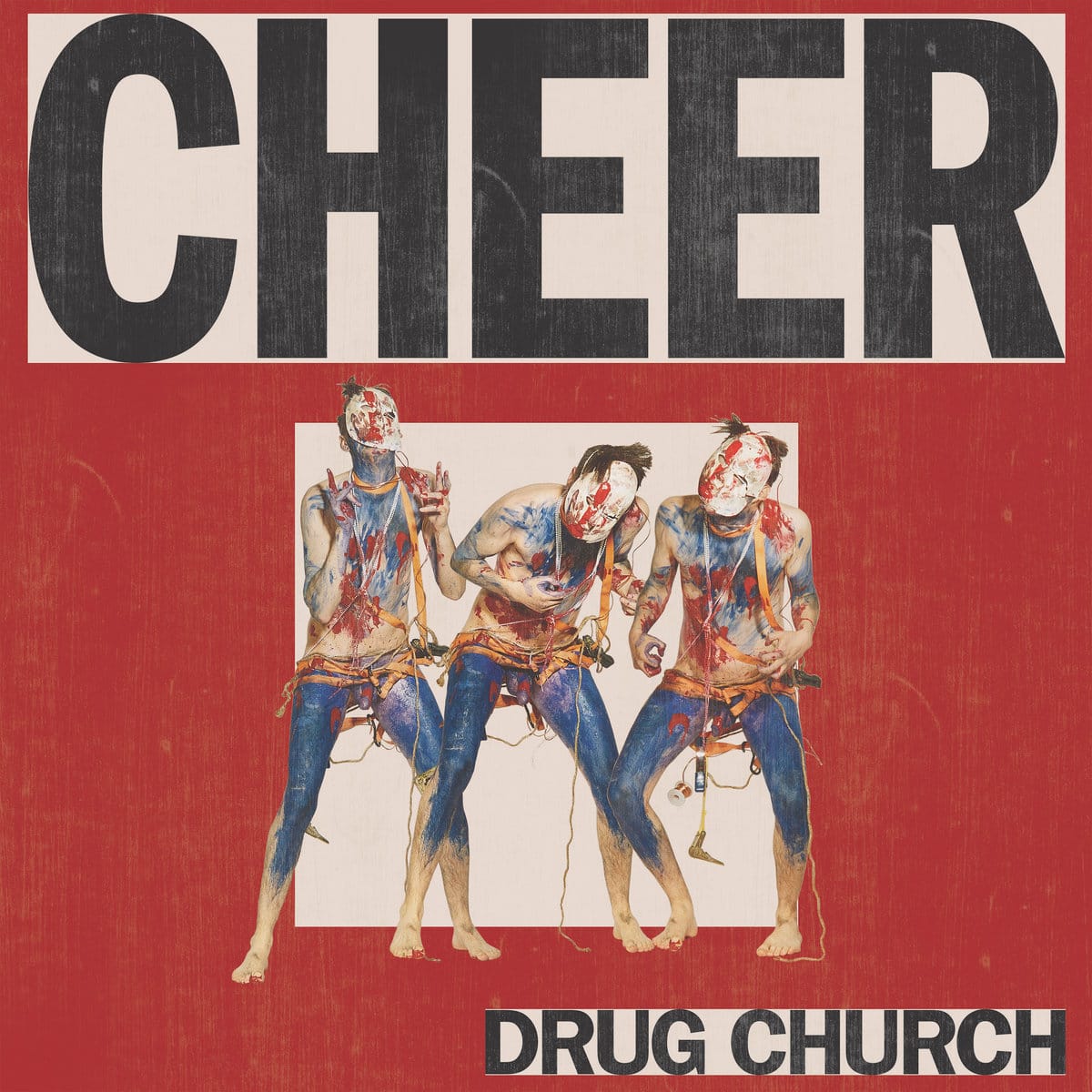
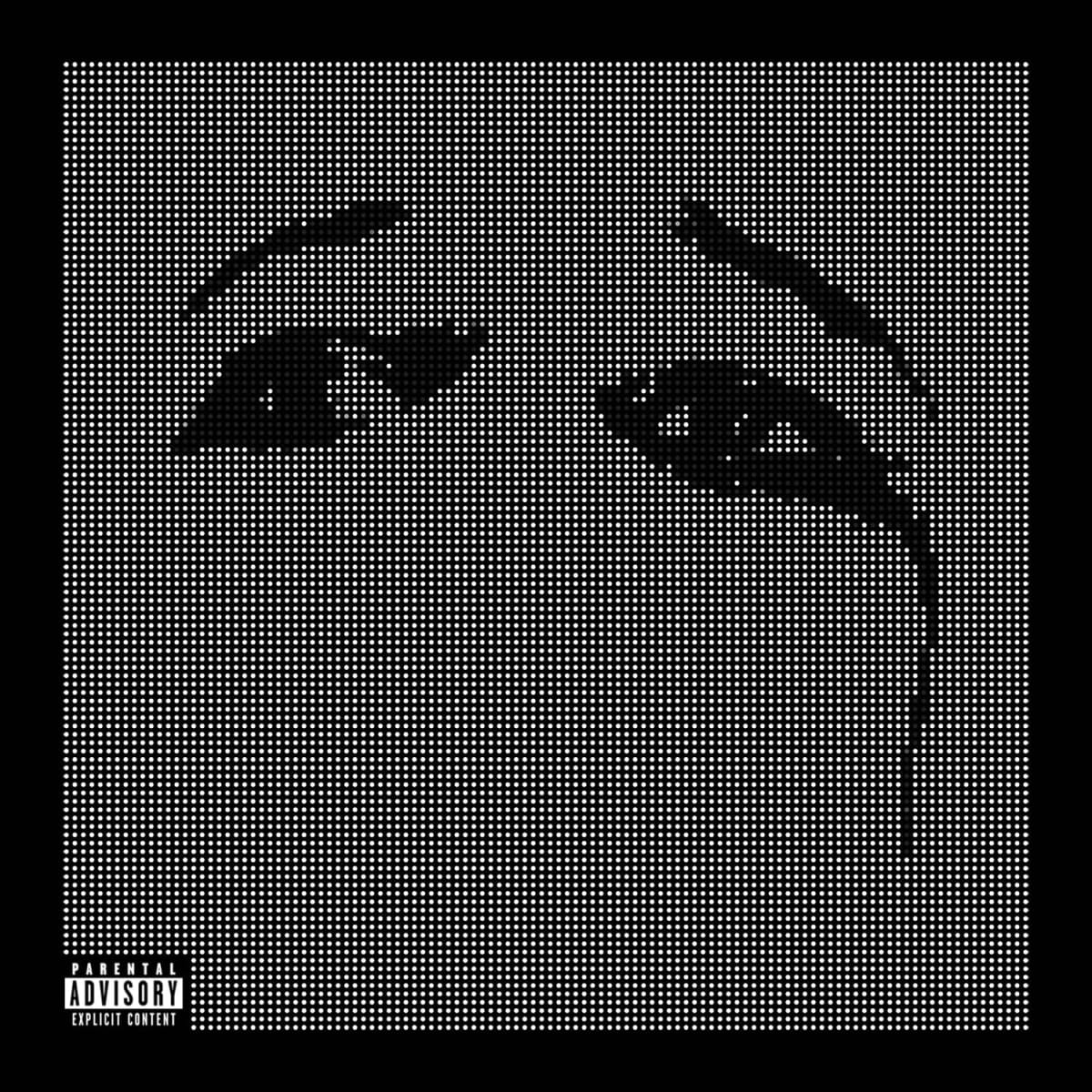
Not all of these came out in 2020. This is the music that I played incessantly or discovered in 2020. My own personally recommended 2020 listening station. So it goes. Enjoy the lovely large album covers.

Here's a moment where the algorithm worked for me: I discovered Self-Defense Family from a suggestion in MUSIC, and I was pleasantly surprised on two levels. First was from what I was hearing, and second, that I hadn't heard of them before. Somehow ringleader Patrick Kindlon and the collective's rotating cast of members (made up of several members of the New York hardcore scene) had eluded me. I realized then that my circle of hardcore and emo had revolved primarily within the Midwest and West Coast nucleuses. It hasn't been a better time to discover the intensity (though not particularly heavy — artsy hardcore?) and dynamic of Self-Defense Family. And whenever an artist gets invited to do a BBC Live Session, it's something to pay attention to.

Shortly after discovering Self-Defense Family, I discovered Patrick Kindlon is also in a more popular post-hardcore band, Drug Church. Described as Black Flag meets Weezer, I'd agree. Their tunes are undeniably catchy, offset by Kindlon's more rough n' Rollins delivery. I played this album incessantly on repeat for weeks. The whole album is impeccable and ends as strongly as it starts. The guest vocalist appearance in the second-to-last track, Conflict Minded from Husbandry's (black female vocalist) Carina Zachary really pulls together the dynamic of the band, and cues up closer Tillary that has a ringing-out hook that lingers long after the album's over, right before you repeat it again with mosh-pit inducing opener Grubby.

I discovered Deftones as a teenager in Kuala Lumpur Malaysia in 1996. I saw their debut album, Adrenaline, at a Salem Music Station (a chain of record stores branded by Salem, the cigarette maker) on one of the listening stations. With it's innocuous artwork, I was expecting a hip-hop group (their name certainly leans that way), and the opener Bored blew me away. In the 24 years since, I've followed every album and have been a lifelong fan. Never afraid of experimentation and sounding like no one else, it's not surprise that they've had such longevity. Ohms follows in that tradition, after an uneven prior album, Gore, with a dense block of an album that rewards patience to no end, revealing layers upon layers on subsequent listens.

My appreciation for Diplo comes from his involvement in Major Lazer, and in the über hit masterclass Where Are Ü Now, the song that tore up the charts with Justin Bieber, and Skrillex. Little did I know that Diplo would put out an ambient album: a title that does this disservice given the more epic instrumental build journeys that the tracks take you on. It's my kind of ambient — cinematic and catchy in it's repetition. Diplo knows what he's doing, and he doesn't do this alone. Guest vocals from Lunice, Mikky Ekko, Good Times Ahead and Rhye (!) only bring even more texture to this brilliant album. Play it at night on headphones in a dark room, or lying in the grass in a park somewhere with your eyes closed, and be transported.

I discovered Foxing (part of the so-called emo revival) near the end of 2018 sometime after this landmark (to me) was released. Whatever their previous two long players led most to believe — a more straightforward emo indie — Nearer My God is so expansive and ambitious in scope, that I often compare this album to when Radiohead released OK Computer. Yes, this album is that good. Each song is surprisingly unique and difficult to categorize. This is when Foxing broke free of their emo revival roots and expanded into a band that's dreaming bigger than the scene they've been a part of. Another album that I've played top-to-bottom and bottom-to-top, there isn't a single dud on this album. In fact, I find the back half to be stronger than the first, but that's saying something negative about the first half. Opener Grand Paradise is an amazing introduction to a band revitalized (the album was produced by Death Cab for Cutie guitarist and producer in his own right, Chris Walla), and closes with one of my all-time favorite songs, Lambert. I haven't encountered a band in a long time where each song and it's lyrics demand investigation and exploration. It's probably been since OK Computer. And this album has held me together in the year since discovery.

Like Deftones (who are in my top 3 bands), Pearl Jam might very well be number one. That isn't to say that I love every single album they've put out. The back half of their catalog took a while to warm up to over the years. Gigaton on the other hand made itself known with a song — Dance of the Clairvoyants — that blew away the perception of what Pearl Jam could sound like if they allowed some of that funky and Talking Heads-ish vibes shine through (see songs like Dirty Frank, Rats, and their contribution to the Judgment Night Soundtrack with Cypress Hill Real Thing). Fingers were heavily crossed that maybe they'd pull of another Yield (the album that brought me back after No Code — though I now love No Code). It's not as far as that, but the band sounds a little fresher and the almost raw/live but warm production finally allows the band to realize their age a bit more. And any tracks co-written by their drummers (see Go written by dearly missed drummer Dave Abbruzzese) like Take the Long Way by Matt Cameron, who brings a hint of his Soundgarden chops to PJ, is always welcome. A Pearl Jam album is always something I'll look forward to, and cohesively, this is one of their better entries in this later phase of their long career.
→ This looks better on the web
→ Reply via email
Thanks for reading and using RSS!
]]>On May 31, 2020, I wrote these words (on Instagram) days after George Floyd was killed:
I am a brown person. I am an immigrant. I am Southeast Asian. I am Malaysian. And I am an American.
I’m a third culture kid. I came to the States at 19, alone. I’ve lived here for 22+ years, and at 42 years old, it’s been the longest place I have ever lived.
In that time, I have had my share of racism. In 2010, a year after we moved to SF, I was walking through the Stockton tunnel towards Chinatown to meet my wife. As I walked through, a young white man, with a shaved head, pointed a finger gun at me while passing me by, touched the tip to my chest, and smiled.
My name is another way racism has been used against me. In full, it is Nazarin Bin Abdul Hamid Hussain. I’m sure that conjures up something, given its Arabic roots. I’ve mostly always gone by Naz Hamid, a concession to ease of pronunciation and tiredness of having to repeat Nazarin many times when introducing myself.
Numerous times in Chicago, I would send an email on Craigslist in search of an apartment, or bike parts, or whatever and never hear anything. As soon as I had a friend do it, they’d hear back immediately. It got so, that by the time Jen and I decided to find a place together, she sent the inquiries. Because my name alone wouldn’t garner any response.
I have had to adapt, become a chameleon, and work hard to be able to achieve what I have. In recent years, I realize that coming out of my teens, I repressed much of it, just to get along and fit in, when I arrived here. Today, I’m most fortunate that I live in a city that has a decent semblance of diversity (but let’s face it, SF could be better). I try not to be judgmental and have empathy. I try to understand that everyone has their own story and context for how they got to where they are. But for a lot of people, that barrier, that hurdle can be sky-high, impenetrable, and even out of reach. Sometimes when I hear that something inconvenienced you, I quietly think to myself that I wish that was the only thing that was an “inconvenience” to me.
This is my experience. I don’t know what it’s like to be black. But I know racism. And that’s why I stand in solidarity.
Yesterday, when 8 women — 6 Asian — were murdered in Atlanta, I was sadly unsurprised. The weariness of the past year and some of the feelings brought up made me seek a breather this year. Just a little. But by lunchtime, and by the evening, I was fully infuriated with a full spectrum of emotion imbuing my core — angry at this preventable and despicable killing, at the way the media has reported this (you're only helping uphold the system that fostered this), the way the authorities have responded, excusing it as “a bad day,” “at the end of his rope,” and of course questioning every encounter I've had with people. I have realized in hindsight, that some encounters I've had — some in the workplace, and some day-to-day — have been tinged with bias and discrimination.
The lens through which people look at me, at us, makes me realize that even if you don't know it, you're suppressing others because it's the environment and culture that supports and places being white at the top spot.
I'm not going to tell you what to do, or what you should do. If you didn't do the work last year, and aren't actively doing it now, well, you better start.
I worry deeply about a world that sees more division amongst its inhabitants than commonality, that looks at difference as a way to alienate and discriminate. I worry that when I enter a discussion, or experience an encounter, I have to look at it through multiple lenses — with suspicion being up there. I worry that when I wake up today, someone is removed from this earth because of something preventable.
I worry that we have lost whatever it was that made us human.
→ This looks better on the web
→ Reply via email
Thanks for reading and using RSS!
]]>
On March 28th 2021, I turned 43. My second pandemic birthday, I turned 42 shortly after San Francisco went into lockdown. It feels like a lifetime has passed between now and then, and with a sense of deja vu, like it was yesterday. Except that I wasn't at home, and I was on the road. Or rather, off-road.
→ This looks better on the web
→ Reply via email
Thanks for reading and using RSS!
]]>This past Friday on April 16th, I awoke early and decided to go wait in line for my first vaccine shot at SF Gen (as it’s locally known — you may know it better as Zuckerberg San Francisco General Hospital). I became eligible when San Francisco opened up vaccines to those 16 and older on April 13th, two days ahead of California’s date of April 15th. Happy Tax Vax Day!
In the days before I had tried to find an appointment through the MyTurn website. As with all technology-based reservation systems, trying to get a vaccine in a region like the Bay Area and San Francisco, in particular, was going to be hard.
Adherence to Covid protocols has been high, and the city has done very well in mitigating hospitalizations and deaths. It undoubtedly says a lot about the populace of this city — educated, liberal, progressive, and given its tech-oriented nature and place in Silicon Valley, science-driven.
If San Francisco loves anything, it’s getting hard-to-find reservations.
If San Francisco loves anything more than that, it’s waiting in lines.
I arrived at SF Gen at about 8:25 am. 35 minutes before the doors open. The hospital was allowing residents of certain zip codes in the neighborhoods surrounding it to do walk-ins for a vaccine. I was originally hesitant — this opened up the week before on Friday, and the news reported that on the day following — Saturday — 6,000 people lined up for the 2,000 a day vaccine allotment they had.
This wasn’t news per se — lines at the Moscone Center (you may know it from many a large conference — e.g. WWDC), a mass vaccination site, were long, and that was for leftovers! Moscone is an appointment-only site. People (and even some friends) were going to their local CVS/Walgreens/Rite-Aid and waiting till the end of the day for any leftover shots from Janssen/Johnson & Johnson.
The eagerness of San Francisco’s inhabitants to get vaccinated gives me some pride to be a resident of this city.
From MissionLocal:
As of April 18, DPH reports 63 percent (487,492) of San Francisco residents over 16 had received one dose, and 41 percent (316,398) are completely vaccinated. On April 18, the seven-day rolling average of shots per day was10,436. The DPH goal is 10,000 shots a day.
That’s simply amazing.
At 9:45, after some 70 minutes of intake, a few checks, registration, and waiting, I received my shot. A lovely Black nurse administered it. She was joyous, full of life, and greeted me warmly with that hospitable enthusiasm that only Black women have.
I asked her if I could take a few selfies to mark this momentous occasion. She replied: “Go ahead, it’s a free world baby!”

So many heart emojis.
She injected the Pfizer-BioNTech, asked me if I got enough photos (yes), applied a band-aid, and told me to hang out in the waiting room for 15 minutes. If I was feeling off, let a nurse or attendant know, and if I felt good, I was free to leave at 10 am.
Just over an hour and a half later from start to finish, I was done. My next appointment is scheduled, and this time there’ll be little waiting, as appointments get priority.
The relief, solace, and ray of light that was given to me, by those Black arms and hands was more than I could convey at the time. It will forever be a moment I remember.
The Friday before shot no. 1, Jen and I drove up north to Mill Valley to celebrate Tyler’s birthday at Hook Fish Co. at Proof Lab. It’s a beautiful outdoor space and along with Tyler and his wife Mandy, our friends Emma and Jon also joined. Barb was also in tow.
At that time, between the six of us, four of us had been vaccinated. Jen had already been fully vaccinated, and only Mandy and myself hadn’t but Mandy had an appointment and I was figuring out how to get one. And now, we’ve all had vaccinations, with Tyler having received his second dose this week.
This morning, Monday, I woke up feeling strange. Like my body wasn’t quite in sync. Something felt strange.
After dinner, I voiced this to Jen. We started to discuss it and I quickly concluded that I was suddenly playing catch-up to life shifting to a new normal. We aren’t out of the woods yet, but this weekend alone, we ate out at a restaurant (outside on their patio amongst other people, unmasked), I helped Tyler out with some truck maintenance (outside, unmasked), and Jen, Tyler and myself then went over to Hayes Valley afterward and grabbed a snack at a restaurant and sat outside at their outdoor dining set-up in the sun, surrounded by a bunch of people.
The city has strangely never felt more alive since this year started. Outdoor dining has been a real boon to the social make-up, aesthetic, and vibe of San Francisco. It’s never been an al fresco dining town — nights are cool or foggy and outdoor spaces have always been a rarity and premium due to archaic and expensive city regulations and permits. On the warmest nights, any place with a patio becomes an instant hotspot and ice cream shops see their largest revenue days as lines form but those days are rare.
But now, like a butterfly, San Francisco has escaped its indoor cocoon. There are slow streets, streets closed off on the weekends for more outdoor dining space and pedestrian traffic, and people are outside making the city look like the city I imagined a Californian city to look like in my youth.
The pandemic isn’t over, and the disparity globally is still astounding. In some countries, fourth, fifth waves. Shortage or lack of access to vaccines. Being the global superpower that we are, we have the purchasing power, and vaccines are rolling out, leapfrogging the countries that staved off the virus early on. In some places, even the privilege (or irresponsibility) of turning it down is unsurprisingly American.
And it’s this awakening that resolves itself in me as a kind of culture shock effect.
That for a year, we stayed indoors, keeping our distance, and hiding away from each other.
In what feels like all of a sudden, here in San Francisco, we’ve bared ourselves, transforming out of that year of hibernation and growth, and are testing our wings, maybe a little unsure of where we are and what has changed. We’re taking cautious steps as we acclimatize again. Personally, I’m recovering from a bit of whiplash, as I become comfortable in my environment again, alongside my fellow citizens.
To quote Dr. Ian Malcolm: “Life finds a way.”
→ This looks better on the web
→ Reply via email
Thanks for reading and using RSS!
]]>It sunk in. Both the needle and the fact that life had indeed changed. I turned to my left and looked at her. She, the same Black woman who had administered the first, and this time I tucked her name away into my memory, having forgotten it in the excitement and overwhelming feeling of gratitude I had then. The same smile. The same calming, warm personality.
I got up and walked to my left as instructed.
I found a seat in one of the rooms and proceeded to settle in for the next fifteen minutes.
“9 am, you are welcome to leave. If your slip says 9 am, you can now leave.”
A batch of us got up out of our seats. I grabbed a sticker on the way out that was being offered. A circular one, striped with a rainbow. Inside of each stripe in various languages: “I got my COVID-19 vaccine!”
A keepsake. A tangible remembrance.
At 9:03 am I was on the street and walking home after just 23 minutes.
Things have changed.
→ This looks better on the web
→ Reply via email
Thanks for reading and using RSS!
]]>California re-opened on Tuesday and literally overnight, it feels like everything changed. And it has. The streets are busy again, clear voices can be heard all over, and people are emerging from their cocoons at their pace.
It feels like whiplash: going from riding with one person to five, walking down the street and seeing people’s faces, climbing at the gym and seeing it packed in the middle of a weekday (I guess flexible WFH situations have stuck around), and so on.
Now, the transition and syncopation or non-, of life before, during, and now, and into the future is coming to a head. SF has done extremely well, and it feels so odd to be on this side of things when my family in Malaysia or other parts of the world are returning into strict lockdowns whilst their vaccine programs ramp up and the inequities of vaccine access and purchasing power of countries stretched.
2020 has undoubtedly changed all of us. The question is how much, and for how long? Many industries and companies outwardly committed to change but very little has been seen thus far (time will tell), and many would like to put it behind them. As would we in some ways.
And in many others, the gains we made should stay and evolve and push beyond what we started. The education and continued education in diversity, equity, and inclusion. The awakening of the issues with society, both racial and economic, and of course, the environment.
Let us recharge for the moment as we all get our bearings over the next few months and the rest of the year. But let’s not forget, let’s not get lax. There’s still work to do: find your line and your pace.
Make it lasting.
→ This looks better on the web
→ Reply via email
Thanks for reading and using RSS!
]]>My father passed away four years ago, on June 18. It was the day that Father's Day fell on that year. My father-in-law, Jen's dad, passed away 11 years ago on June 20th, on that respective year. It's a strange cosmic sign but not uncommon for our relationship where many signs and seeming coincidences are too numerous to be pure chance.
What follows is a recounting of my father's passing, and the day of his funeral. I published shortly after it happened, fresh in my mind, elsewhere on the internet, and realized this should live here, on my own website. It's an intimate look at a Muslim funeral in Malaysia, and while I'd been to a few during my teenage years in Kuala Lumpur, this was a first, and even for my immediate family, it was an eye-opening and revelatory experience.
I had awoken at 2:15am, anxious, knowing. My phone vibrated at 2:30am, missed it. I called my mom, knowing.
My father had passed away. On Father’s Day. June 18, 2017.
We gathered at the house at 7:30am later that morning. The funeral ceremony started at 9:30am, no time wasted, with family and friends piping into the mosque. So many familiar faces I hadn’t seen in years. So thankful that they came to join us.
The ceremony was an interactive affair for the men closest to him. My brother-in-law, his sons, a few cousins and myself were invited to help bathe and clean his body, in the Muslim way.
My nephews were a little apprehensive, deservedly so. This was a body that a few days ago was a living breathing grandfather to them. To me, this was the best way I could send my father along his way. To see him, hold his body, and clean what remained. To see his amputated right leg, bare, his body in its natural state, and returning to his maker in the way he was meant to.
We wrapped and clothed him, then carried him out to the gathering area for people to pay their respects.
The same crew then carried him to the van, and drove to Kampung Kemansah, his final resting place.
We then got into his space and carried him into it. I didn’t expect this part either. My brother-in-law joined me shortly after, and my cousin, Azzie. The three of us then lifted him into the ground.
Then, we literally buried him, shovel after shovel, a group effort, switching out. I didn’t expect how involved we would be but it was a catharsis I didn’t realize I needed right then. To be active, present and not a bystander in this moment in time. To be there for him.
And then it was done. We poured burial water, from head to toe, each immediate family member and sprinkled pandan leaves over as well.
He will have this beautiful view for the end of time. I will always love you, and miss you, papa.
→ This looks better on the web
→ Reply via email
Thanks for reading and using RSS!
]]>
Yesterday felt defeating with the damning report that our climate has indeed moved unfortunately forward into severity and decline. It’s too late for some aspects but not too late to avoid some of the worst aspects.
The fires, the smoke, and the record-high temperatures that we’re experiencing are the new normal. Our desire for more and more goods, fast fashion, disposable everything, and so much waste has led us here. Big corporations continue to push their bottom line and manufacturing at the expense of everything else.
The buck gets passed onto us. As consumers, we can do our best. It is a two-way street: big corporations market and push goods and services that we think we need, but don't, and we eat it up. It's a systemic change that needs to happen overall — this unfortunate dependency.
I do my best to run my gear into the ground. On the bike, I use what some would consider old parts (if it ain’t broke…), upgrading when I need to. I only have so many clothes and in most cases have a few “uniforms.” Jen and I purge regularly and lately have been getting rid of (donating, and if you do need to shop, give a vintage or thrift store a good hard look) more than we usually do, striving for a ruthless balance.
Less is more in so many ways, and if a pandemic has taught us some things, hopefully, one of them is that we only need some of the things we thought we needed before it.
→ This looks better on the web
→ Reply via email
Thanks for reading and using RSS!
]]>
Good morning, light.
I awoke early this morning, perched on a mesa cliff-side, surrounded by low foliage, cow patties galore, and a few skeletons and carcasses of younger cattle that couldn’t survive the path of migration that was next to our camp.
Everyone else was still mildly asleep and I walked the dirt trail we came in on to capture some quiet moments around us.
Later, I would make coffee once everyone roused, and I would take a standing meeting over Zoom to discuss the software we’re building.
When I was a kid, this wasn’t a future I imagined tangibly. Movies like Blade Runner and Star Wars would shape an idea of it, and as we live in the present, it’s fantastical and remarkable to have the future we do.
That’s an optimistic, “gosh how far have we come” view, but I know so much of the world is hurting, and our climate is changing all too rapidly. The more I am able to experience outdoor spaces, the more I feel fortunate and humbled, knowing also that this state of (im)balance is perhaps as good as it might get. I sure hope not. There’s so much more we can do for the climate because it feels like no one else in charge is doing much about it.
→ This looks better on the web
→ Reply via email
Thanks for reading and using RSS!
]]>After almost three years apart due to the pandemic, we were heartwarmingly reunited with my family in August of 2022. It was an intense and dense ten days, spending almost all waking hours together: talking, eating, and watching the time go by as fast as it would arrive. I captured this moment during a quiet moment that Jen and I had to ourselves, shortly after the usual rain storms that Malaysia has.

→ This looks better on the web
→ Reply via email
Thanks for reading and using RSS!
]]>
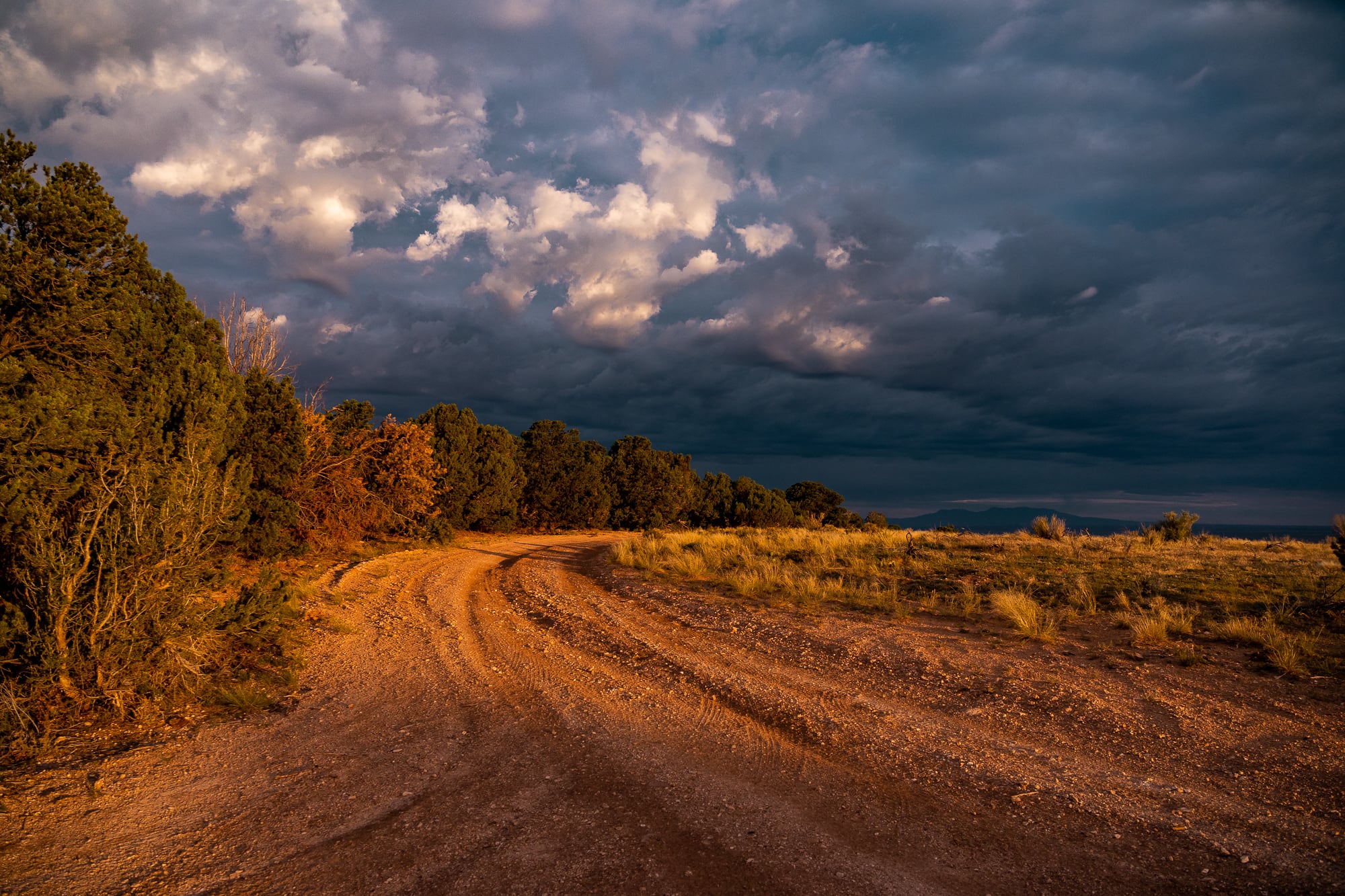
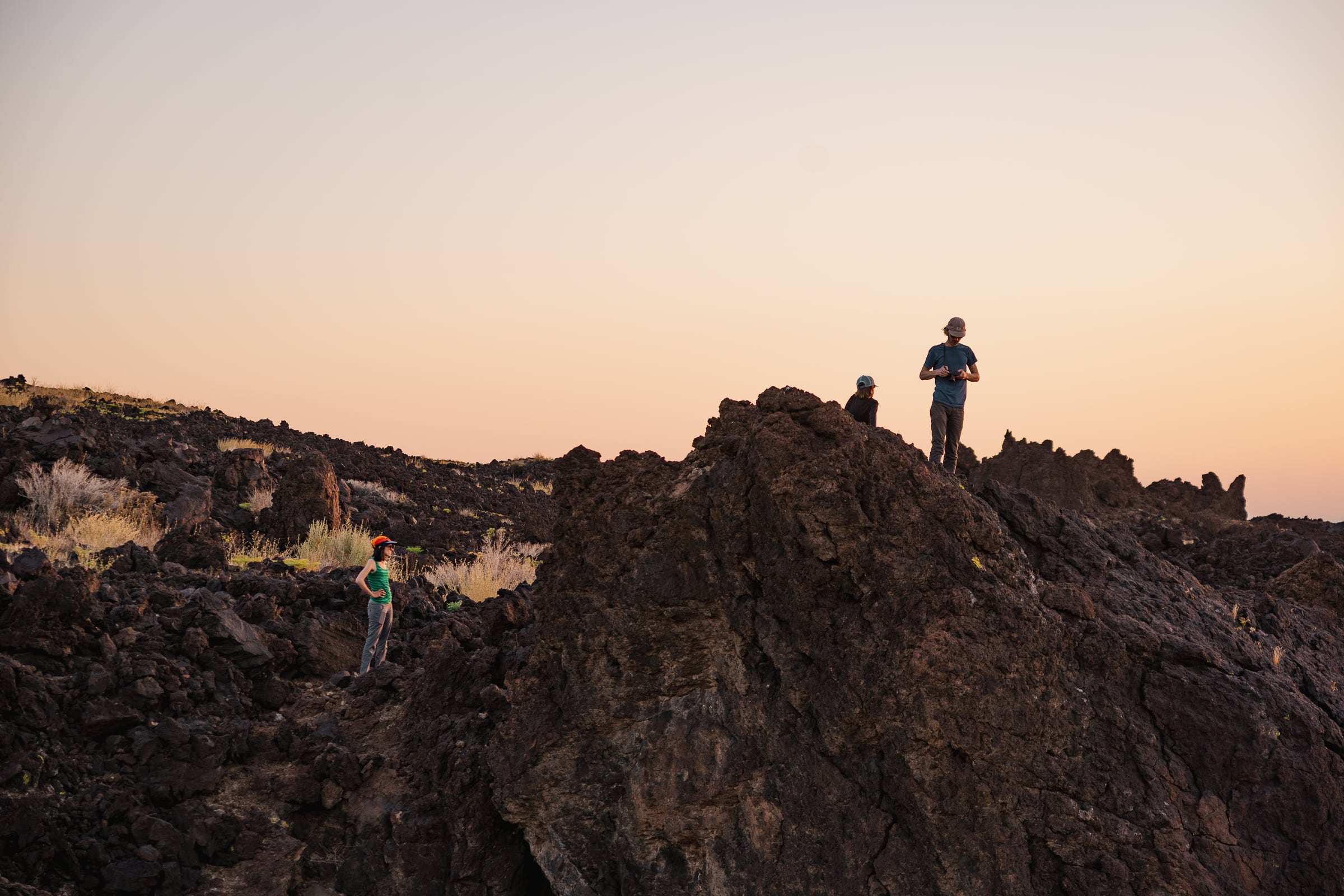
Sometimes I look at past images and marvel at what’s there. In this case, the marvel came from the fact that we (Jen, Grant, and Ryan) drove this trail after we spent the night from where this was taken.
→ This looks better on the web
→ Reply via email
Thanks for reading and using RSS!
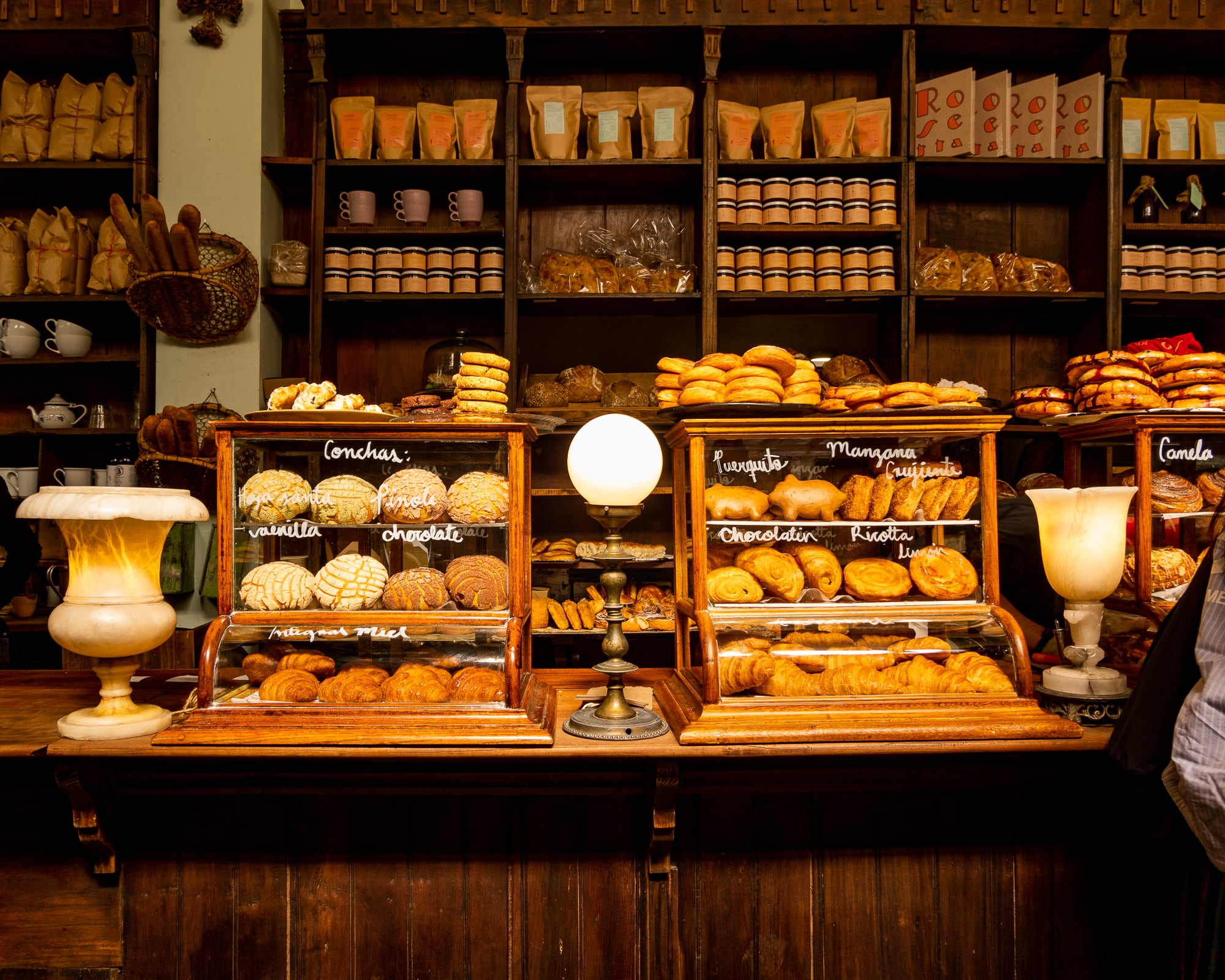
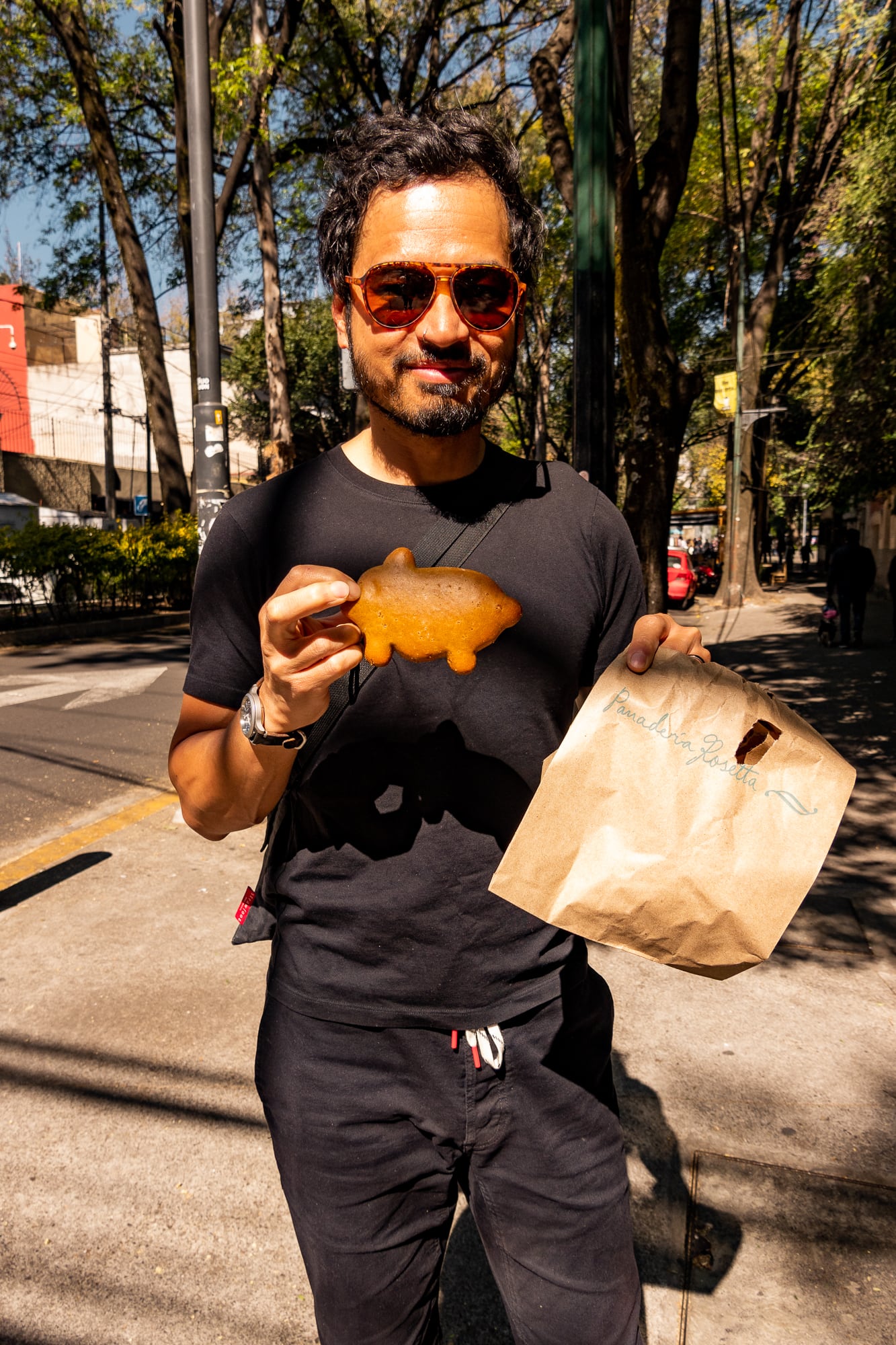
]]>On our first visit to Mexico City, and because we're often weary of lines, we opted out on the well-known Panaderia Rosetta. We even skipped eating the infamous Mexican pastry concha!
But on this trip, after having a delicious chocolate one from Delirio, and seeing the location on Colima didn't have a terrible line for the bakery itself, we decided to check out the hype.


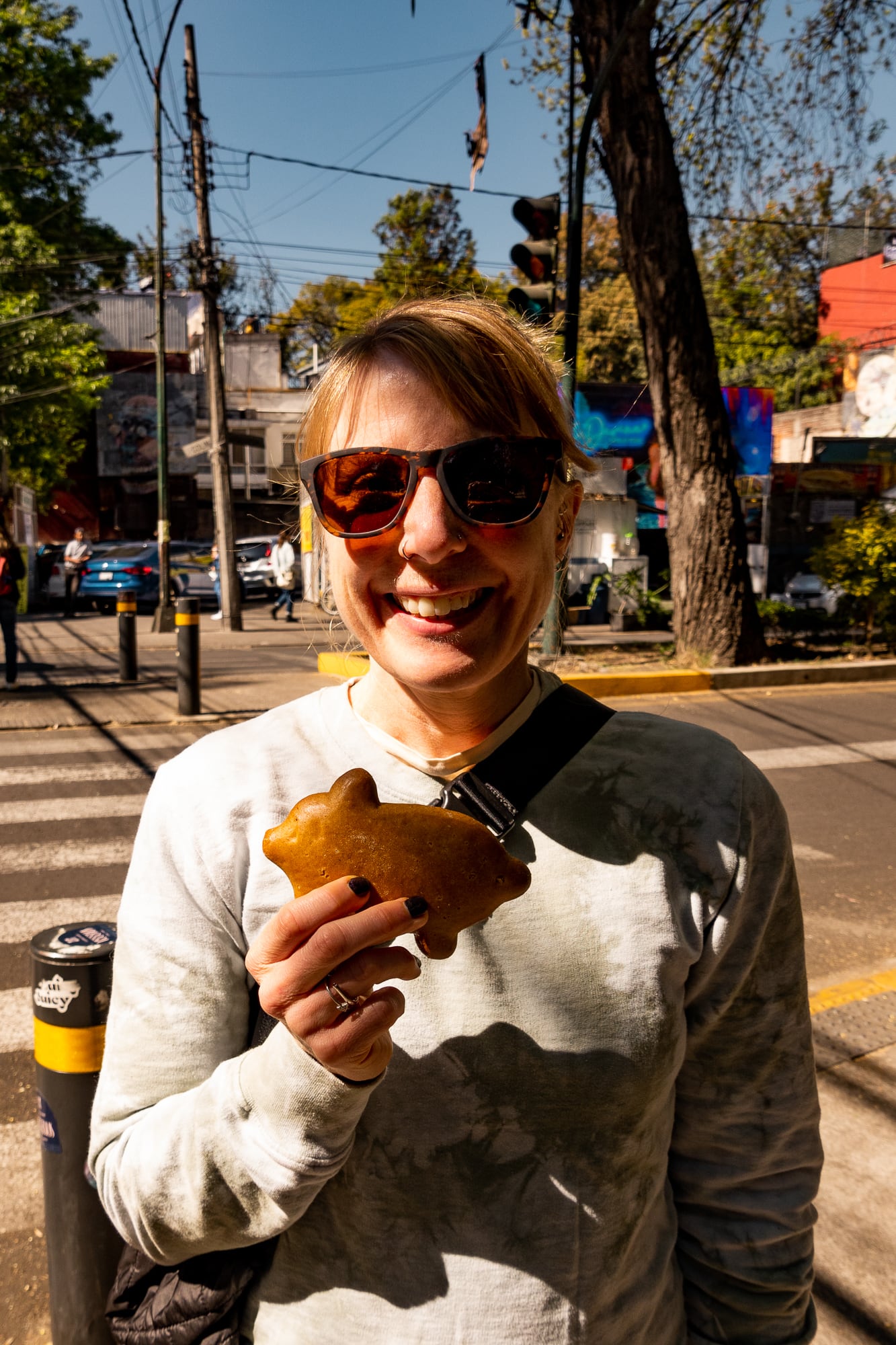
We decided on two pastries that are unique to Mexico, bypassing the usual croissants and such. The aforementioned concha, but also a puerquito.


The concha we chose was the Hoja Santa (sacred leaf), an herbaceous, floral, peppery flavor we encountered a few times on this trip. It was absoloutely delicious, as evidenced by our partaking at sundown, pictured at top.
→ This looks better on the web
→ Reply via email
Thanks for reading and using RSS!
]]>
Celebrating another year around the sun in one of our favorite cities in the world, for this one.
→ This looks better on the web
→ Reply via email
Thanks for reading and using RSS!
]]>
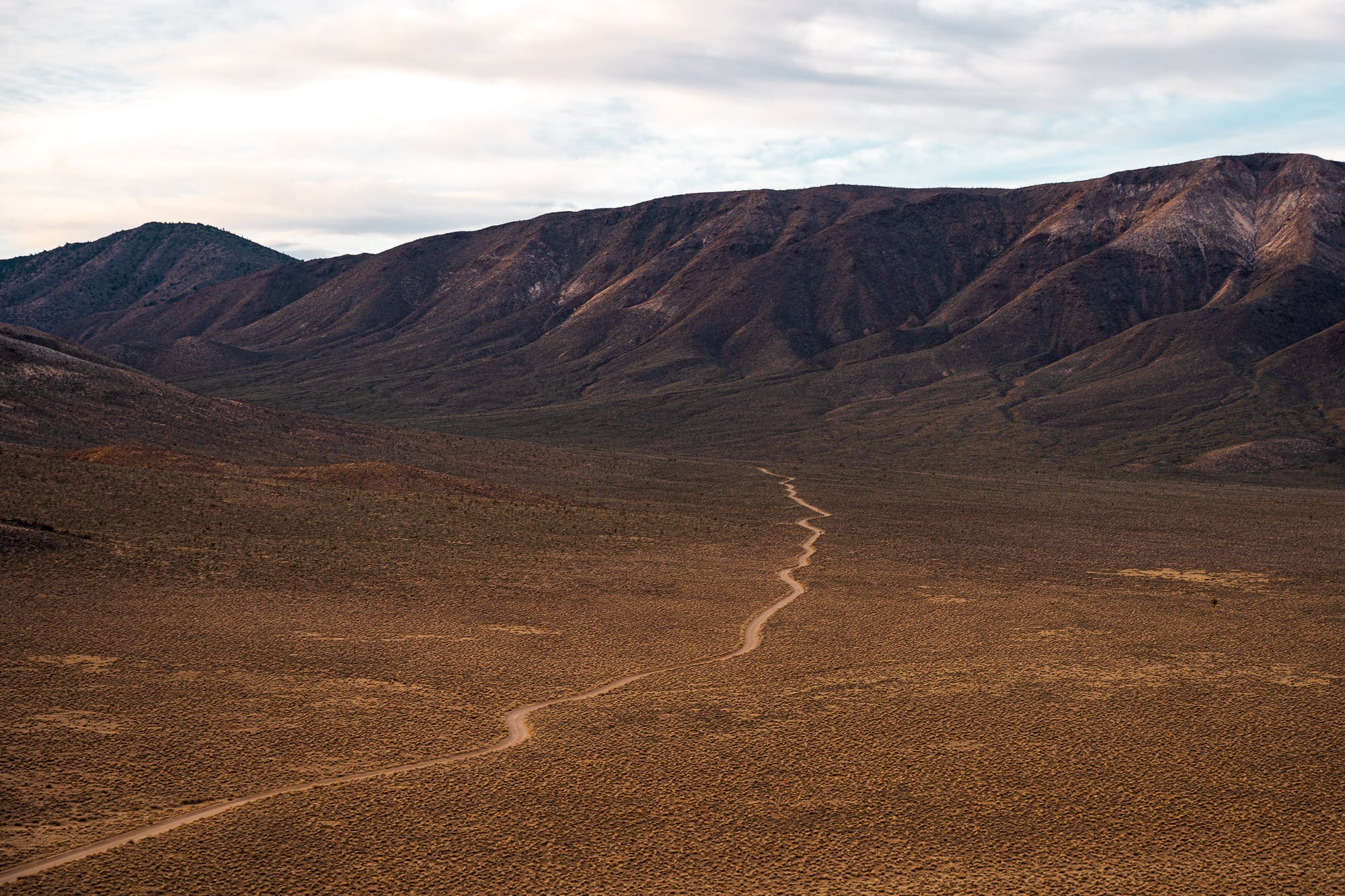
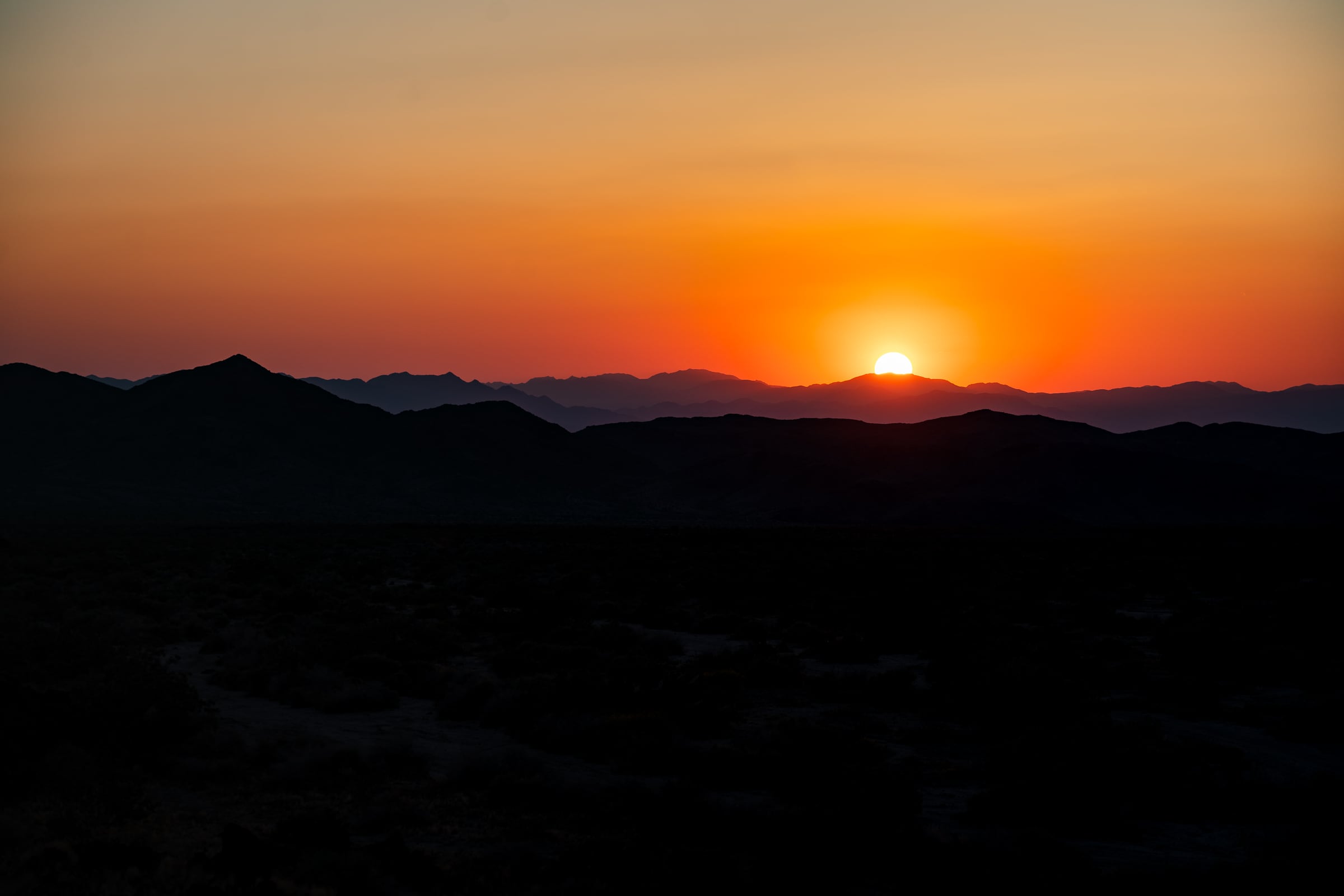
Almost a year ago, Jen and I headed south to Bishop, then a run through Death Valley, an obnoxiously windy night in Alabama Hills, and then reset in San Diego before a good run and a few nights in Anza-Borrego desert.
It's remarkable that a place this wild and surprisingly technical for off-roading in spots, is a State Park open to all. There are so many sections of the traverse (we preferred south-to-north) that beg you to stop and take it in, and of course, photograph.
→ This looks better on the web
→ Reply via email
Thanks for reading and using RSS!
]]>
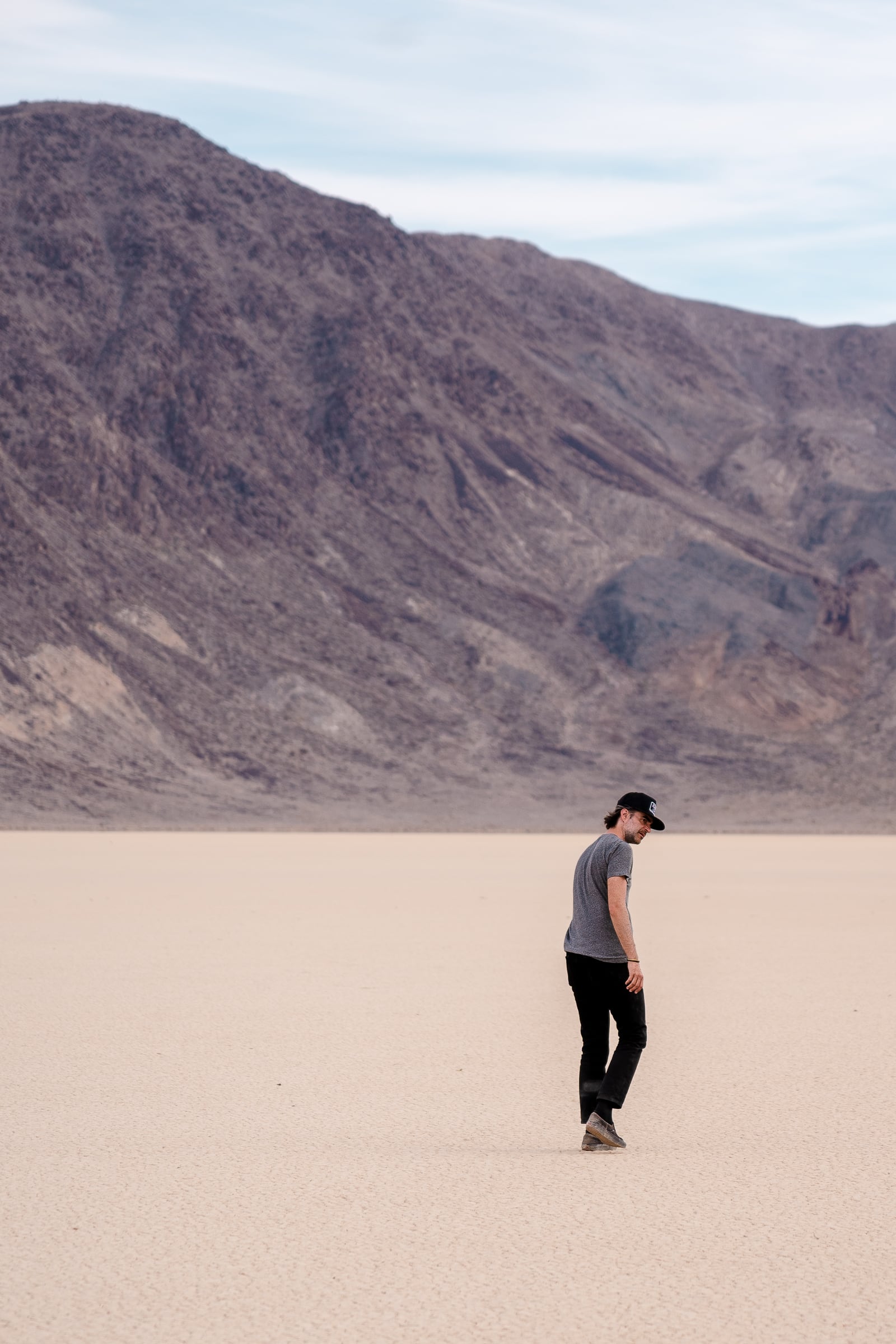
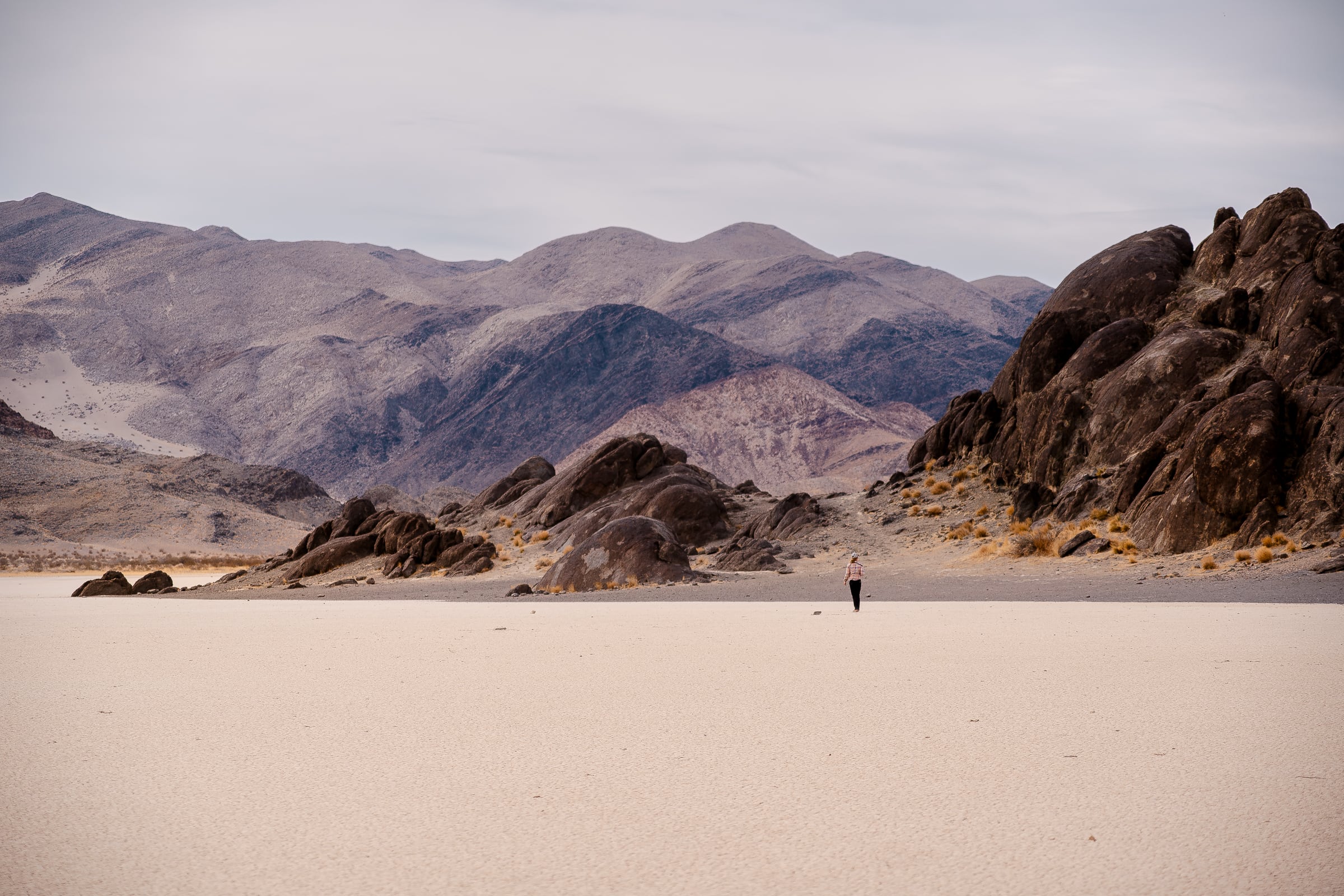
I love this moment of moments. Jen, Grant, and Ryan doing their own thing. The Grandstand in Death Valley is an astonishing playa, and worth every single moment.
→ This looks better on the web
→ Reply via email
Thanks for reading and using RSS!
]]>
As I sit squarely in my mid-40s, I’ve gained valuable perspectives, learnings, and understandings. Here are some of them:
→ This looks better on the web
→ Reply via email
Thanks for reading and using RSS!
]]>
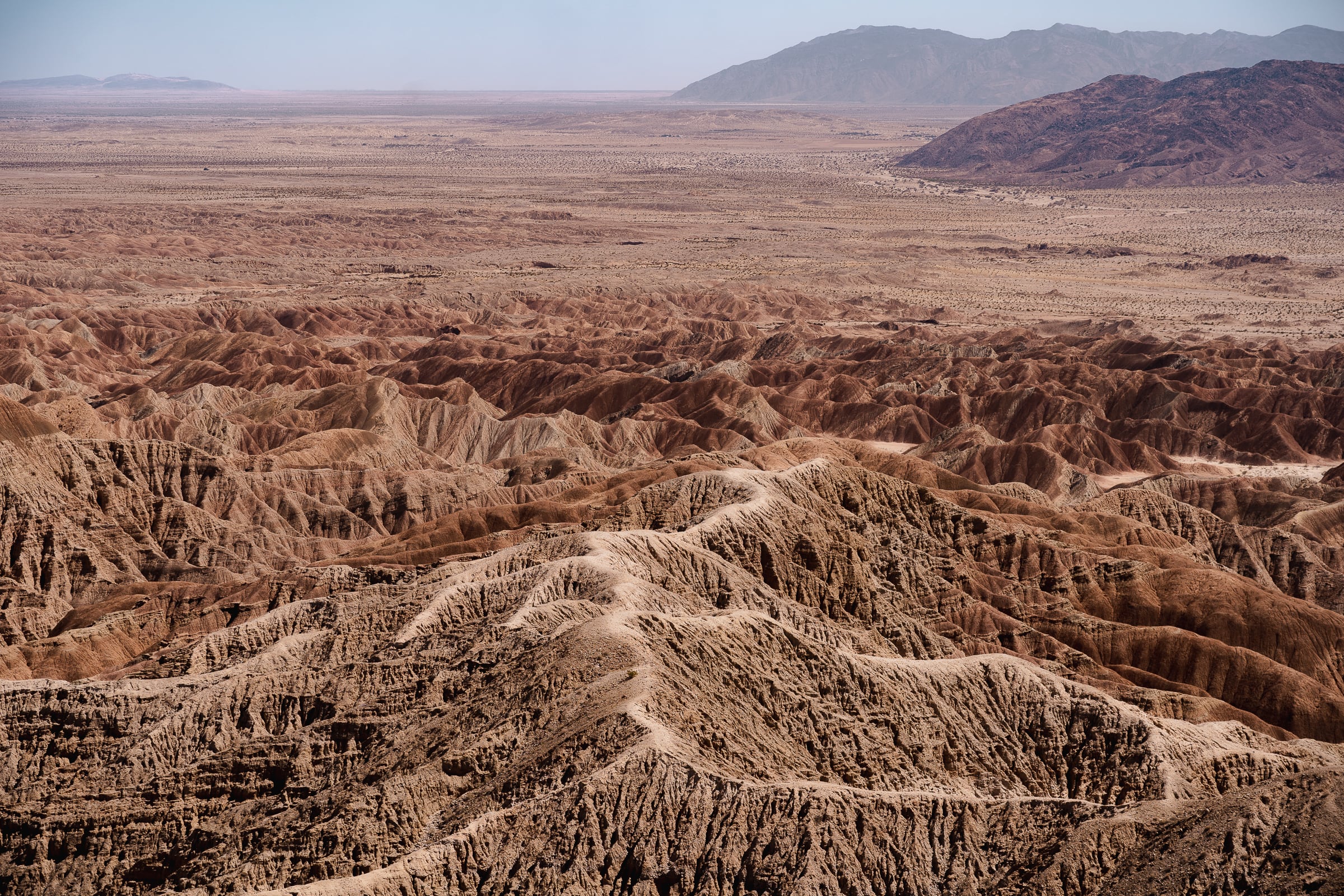
A year ago, Jen and I made an overland run from the south end of Anza-Borrego to the northern end. On the last night in Hawk Canyon, a super windy night made for less than ideal sleep. We ended up closing up the tent and sleeping in the front seats. Thankfully, the seats in a Lexus GX are relatively comfortable — akin to domestic first class with far more recline. It hasn't been the first time we've slept inside (and the second on this trip). The tiredness of the next day meant we got through the last leg of the route, which was exciting, but left little in the tank to go to our last planned stop: the badlands of Fonts Point. We skipped it for the town of Borrego Springs.
This year we decided to settle up unfinished business. The view didn't disappoint, though it was still quite windy!
→ This looks better on the web
→ Reply via email
Thanks for reading and using RSS!
]]>
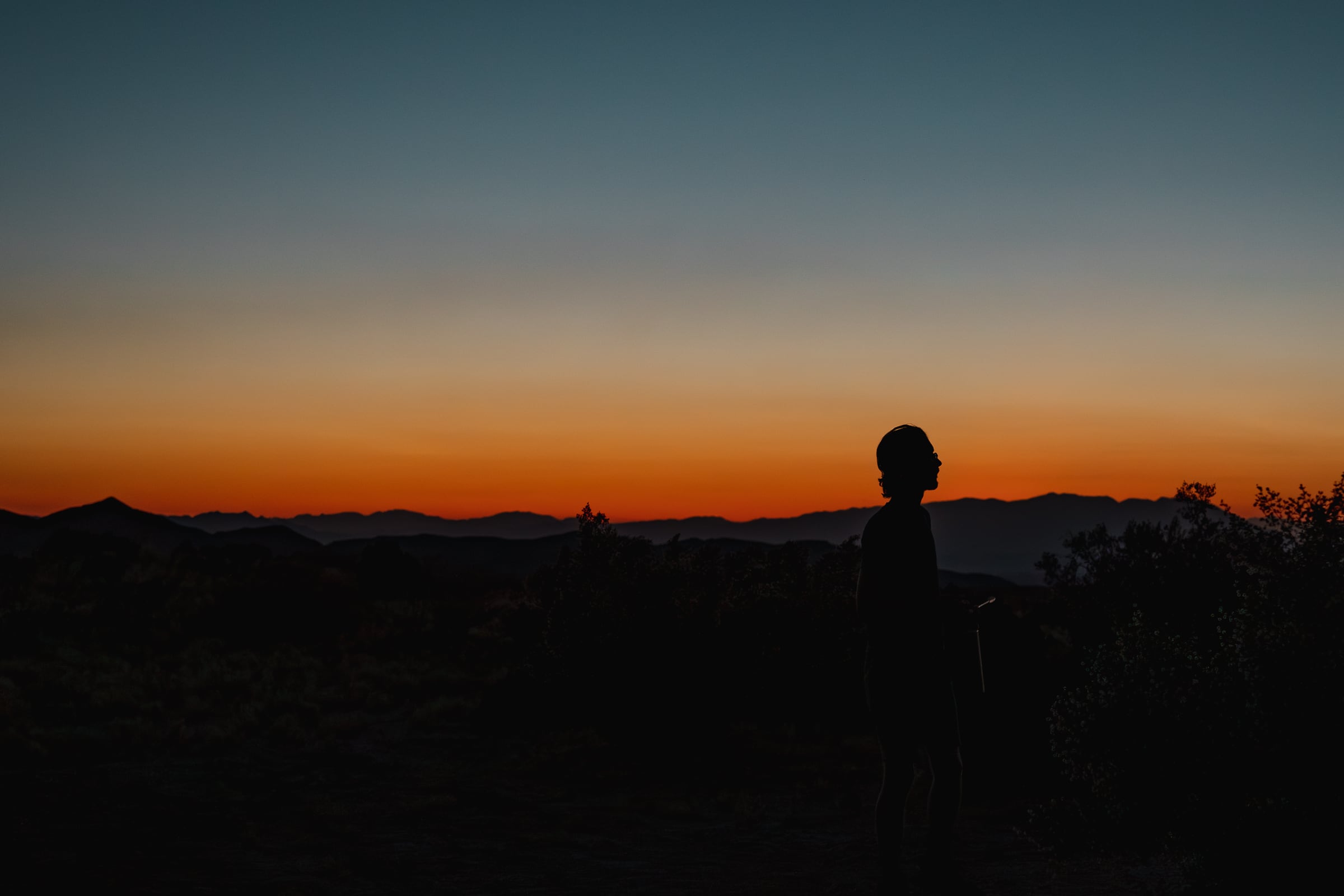
This year: more people in photos. And more people in photos in landscapes. Cherish the times with friends in special places. Here, Grant in Death Valley.
→ This looks better on the web
→ Reply via email
Thanks for reading and using RSS!
]]>The past few days have felt heavy. In a weird headspace, floating in the middle of space between a destination or goal, or rather, a state I aspire to, but seeing a road ahead of which the length is unknown.
It feels like a lot of things have been taken, removed, or no longer apply to me. I'm discovering new things to fill in those missing pieces.
→ This looks better on the web
→ Reply via email
Thanks for reading and using RSS!
]]>It’s been an interesting year so far. Overall, I can’t overtly complain: I find my work gratifying, and have been fortunate to take some great trips this year both internationally (Mexico City and Kuala Lumpur), as well as some off-roading and camping locally.
But there’s a thing. I’m calling it Midlife Malaise. It’s a feeling of loss, of slippage, of time and age progressing that forces you to reckon or confront the facts of your stage of life. Not a midlife crisis, but a deep, unexplainable or intangible set of emotions that leaves one in something akin to a catatonic state.
There’s no apparent goal, or readily available answer. Your journey to the present is marked by a series of events, both significant and mundane, that have shaped you to this very moment.
I have come to know that this feeling is constant, that change is constant, and that the search for understanding one’s self and both those around you and the environment we coexist in is ongoing.
Onwards.
→ This looks better on the web
→ Reply via email
Thanks for reading and using RSS!
]]>


→ This looks better on the web
→ Reply via email
Thanks for reading and using RSS!
]]>
To stand in a landscape that is hard to comprehend is to know that not all that should be celebrated is human-made. To understand that to get here, it took hundreds, thousands, millions of denominations of time to render this environment is a lesson in a slow life that we’ve abandoned in favor of now, now, more.
I visit and spend time in these places to contrast from what I do for a living, and to remind myself that we co-exist with more than just screens and chats.
→ This looks better on the web
→ Reply via email
Thanks for reading and using RSS!
]]>I've been writing in my real handwritten journal in recent weeks that I've felt the weight of social networks. And the manipulation and behavior patterning it's designed to do.
I worked for a softer social network for almost two years and while we weren't as abhorrent as the huge ones, I completely understand and was a part of teams that would (though we were well intentioned [they all say this]), make choices to drive consumer behavior. Sometimes for the "better", but maybe, quite likely, for the worse.
Eventually, maybe sooner than later, I'll be mostly on my website. Connections lost, but I've often believed that real friendships transcend social networks into phone calls, texts, and spending time with each other in person.
It's real connections we need, whether meaningful or micro and fleeting, but looking someone in the eyes and being in the same space can connect and break down barriers that media (news and social) have put up around us all.
All mass-corporation backed media is just another lever to ultimately selling you something.
Complicity is not my goal.
→ This looks better on the web
→ Reply via email
Thanks for reading and using RSS!
]]>I penned a Thot(?!), or rather, a post on Threads, the Twitter clone that Meta released some time ago. I don’t find it particularly useful, as my Twitter usage had declined long ago.
Anyway, the post (and accompanying photo):
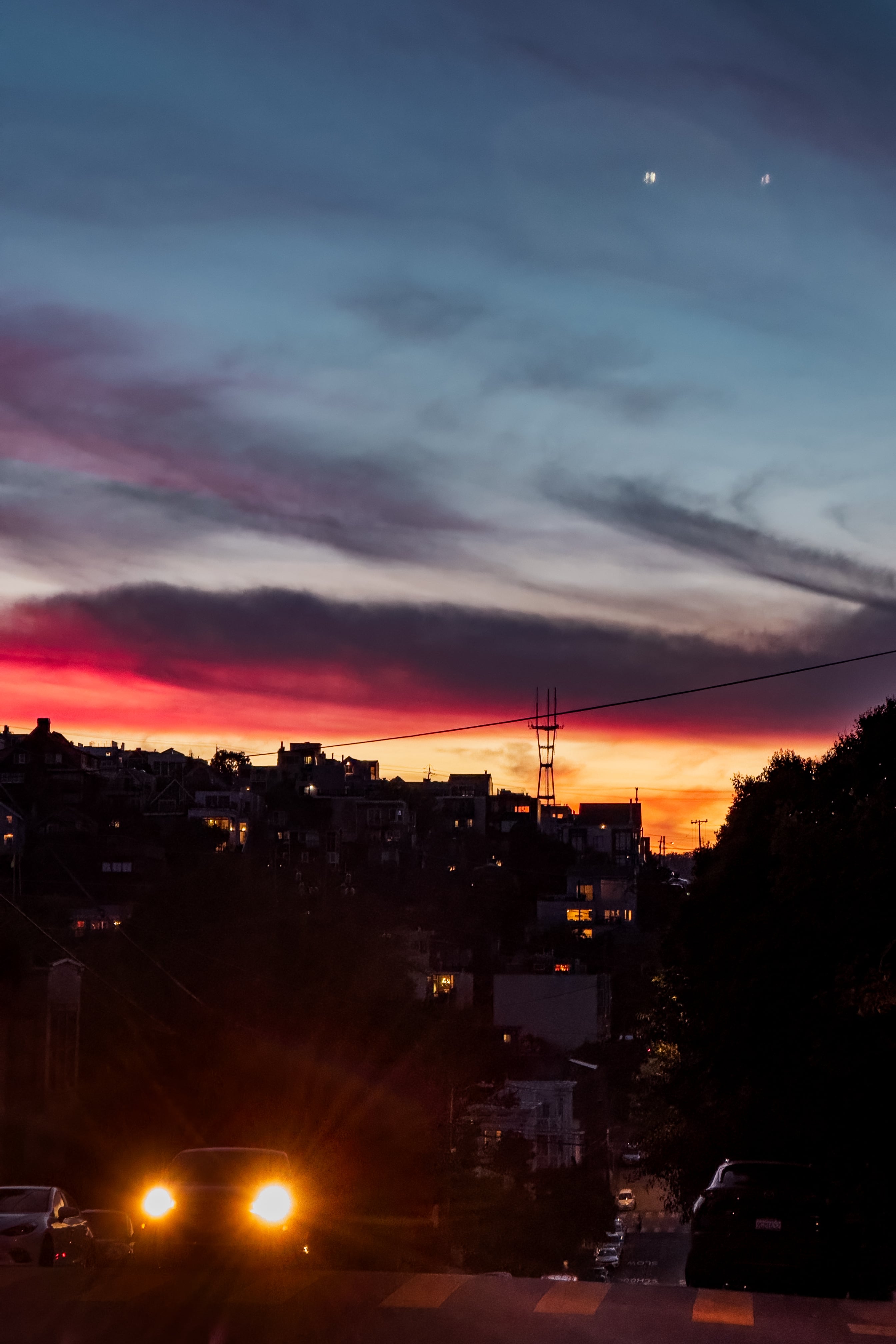
“When I contemplate the idea of relocating, it’s 70° nights dining outside on a slanted sidewalk at the beginning of November with sunsets like these that make me realize I’ll never leave California.”

At this time of writing, there have been 145 replies and 1,868 likes.
I’ve rarely had my social media output reach heights like this, and the impact that Threads can have at this early stage is intriguing. I’ve been learning here and there about how the algorithm supposedly works, and currently, it’s showing me a reasonable amount of interesting content. So, when I posted that on a Friday evening, imagine my surprise when I saw the post skyrocket the next day.
The replies are earnest, almost confessional in tone, more for the authors themselves than for me. It's as if I just threw out a prompt that reminded people of their own reasons and gratefulness to live in California. I guess that’s how Threads works currently: the actual town square that Twitter used to be. A thread has enough room for anyone on it to board the train too.
For a day there (and a few replies are still trickling in), it felt like a warm embrace. For a moment, these people and I could share commonality rather than division.
At the same time, the juxtaposition of the platform has started to reveal the stranger parts of a feed tuned for engagement and strangeness. For all the possible relevant posts that Threads will show me, there’s always a strange taste of bitterness. Usually in the form of a snarky or mean-spirited thread or post that reminds me of why I started to veer off Twitter so many years ago.
By sheer user and population size, Threads has a huge advantage over the Fediverse, given its smart porting of Instagram accounts being reused, and for what it’s worth, it’s likely a more diverse group of people by nature of that breadth.
The danger of algorithms and being unable to find the edge cases (or possibly not even caring about them) is that you trade control of the things you see and that matter to you in favor of some dopamine and serendipity.
The latter, I suppose, is much like the real world.
→ This looks better on the web
→ Reply via email
Thanks for reading and using RSS!
]]>On Thanksgiving this year, Jen and I went on run. Since the morning and lunch were occupied by a non-traditional set of meals, we departed for our excursion mid-afternoon. Maybe it’s age, maybe it was too much fizzy water at lunch coupled with the runner’s jogging motion but about a mile and a half into it, I needed to pee.
There is nothing like discovering how well a city provides basic services such as bathrooms to the public when you now have a very pressing need.
Now, where we were currently situated was near Oracle Park, home to the SF Giants, along the southern piers and waterfront of the city. My mind raced with options: Is there a park nearby? Is there a Starbucks or other coffee establishment open on a holiday? Where’s a green public bathroom unit?
We kept running and diverted north towards the Ferry Building. We know there’s a public bathroom at China Basin Park/South Yacht Club behind the ballpark. It’s closed. I have the sinking feeling that because of the holiday, options were going to be slim. BUT! Lots of visitors and tourists are walking around enjoying the day and they need services right? There has to be something open, and we’re hoping the Ferry Building provides.
I remember there’s one of the JCDecaux Pit Stop units before we reach our current destination, and we make the stop. We’re walking by this point as the running only makes my desire even more pressing. It says “Occupied.” I’m doubtful. We wait for ten minutes or so (there’s apparently a 20-minute time limit before the doors automatically open), but I’m skeptical, and there are better bathrooms at the Ferry Building if it’s open. We continue and much to our dismay but also non-surprise, it is indeed closed. I look across the way to the beginning of Market Street and think of the park there. As we make our way there, one of the new “amenipods”, also by JCDecaux is there. But it is also “temporarily closed.” We walk through the plaza and by the small park and see another green unit. An older couple are posted outside clearly hoping it’s open. But it too is temporarily closed.
It’s been 40 minutes or so now. And now we both need to use the bathroom.
Amidst our proclamations of “This is ridiculous.”, “This is why the streets have poop everywhere.”, etc., we give one last hope and a prayer on the Transbay Transit Center aka Salesforce Park. It’s a beautiful above-street park, that of course is also primarily home to the bus terminal for the SF Bay Area. And lo and behold, after ascending to the park, the bathrooms are indeed open, and there are even maintenance crew working on repairs.
Post-relief and grateful, I thought about the long-ranging effects of this. That I know that it is a reason for why SF’s streets are often grungy, littered, and yes, poop-laden. Trash is one thing (let’s face it, we’re not Japan, where the lack of trash cans means citizens carry trash in their bags to dispose of properly), but it says a lot about whether we trust people in public spaces.
The lack of public restrooms in the U.S. hasn’t gone unnoticed. In 2011, a United Nations-appointed special rapporteur who was sent to the U.S. to assess the “human right of clean drinking water and sanitation” was shocked by the lack of public toilets in one of the richest economies in the world. A full accounting of truly public facilities is elusive, says Soifer, but government-funded options are exceedingly rare in the U.S., compared to Europe and Asia; privately owned restrooms in cafes and fast-food outlets are the most common alternatives. According to a “Public Toilet Index” released in August 2021 by the U.K. bathroom supply company QS Supplies and the online toilet-finding tool PeePlace, the U.S. has only eight toilets per 100,000 people overall — tied with Botswana. (Iceland leads their ranking, with 56 per 100,000 residents.)
— Where Did All the Public Bathrooms Go?, Elizabeth Yuko
Of course, if you trace this all the way through history, it’s rooted in discrimination across racial, social, and economic lines.
And from the same article above:
“If you don’t have public bathrooms, what you’re saying is, ‘We do not care about anyone who doesn’t have money,’ which I think encapsulates where American politics has been going since 1980,” he says. “I hope that there will be a move toward greater acceptance of public spending and government intervention, because that’s what it’s going to take to deal with the problem.”
Even though I’ve cleaned up feces and washed away pee from in front of our building many times over the years with varying degrees of reaction (from surprise to frustration to it’s-just-another-day-in-the-neighborhood), I’ve also come to understand why: We don’t provide the very basics for those who need it the most.
→ This looks better on the web
→ Reply via email
Thanks for reading and using RSS!
]]>In the beginning, you followed someone to see their content in your feed.
Now, you block someone to remove them from your feed.
That’s the price of an endless algorithmic feed designed to keep you in-app or on-platform, entertained, and eventually (if not already) monetized.
A much larger cognitive dissonance is at play here, reflecting on social norms and pushing us into a stage of non-tolerance. Any minor disagreement is swiftly shut out and removed (and frankly, in today's world, much of the negative content out there should be). The world is far messier than this simple binary, and the values of compromise and cooperation must be actively pursued. Nevertheless, it's not surprising that we find ourselves at a level of discourse that is difficult for people to engage with and tolerate. Social media has eroded all decorum and emboldened the worst in us.
Social media incentivizes such behavior because its primary directive is to deliver the most eyeballs to the most advertisers. This transformation has turned creators into salespeople and elevated influencers and platform clout to the ultimate badges of honor. Game mechanics and the allure of some form of fame play a significant role, don't they?
As a result, the algorithm is designed to spotlight voices and opinions that disregard decency and safety in favor of whatever excites the feed, whatever garners the most views, with no checks in place to consider the fallout of blunt instruments wielded with no skill.
Instead of raising the collective consciousness to a higher standard, encouraging understanding and acceptance, we are simply pitted against each other in a fervent race to see who can exert the most influence.
It’s a zero-sum game. Don’t participate. Find a space to call your own, and make real connections.
→ This looks better on the web
→ Reply via email
Thanks for reading and using RSS!
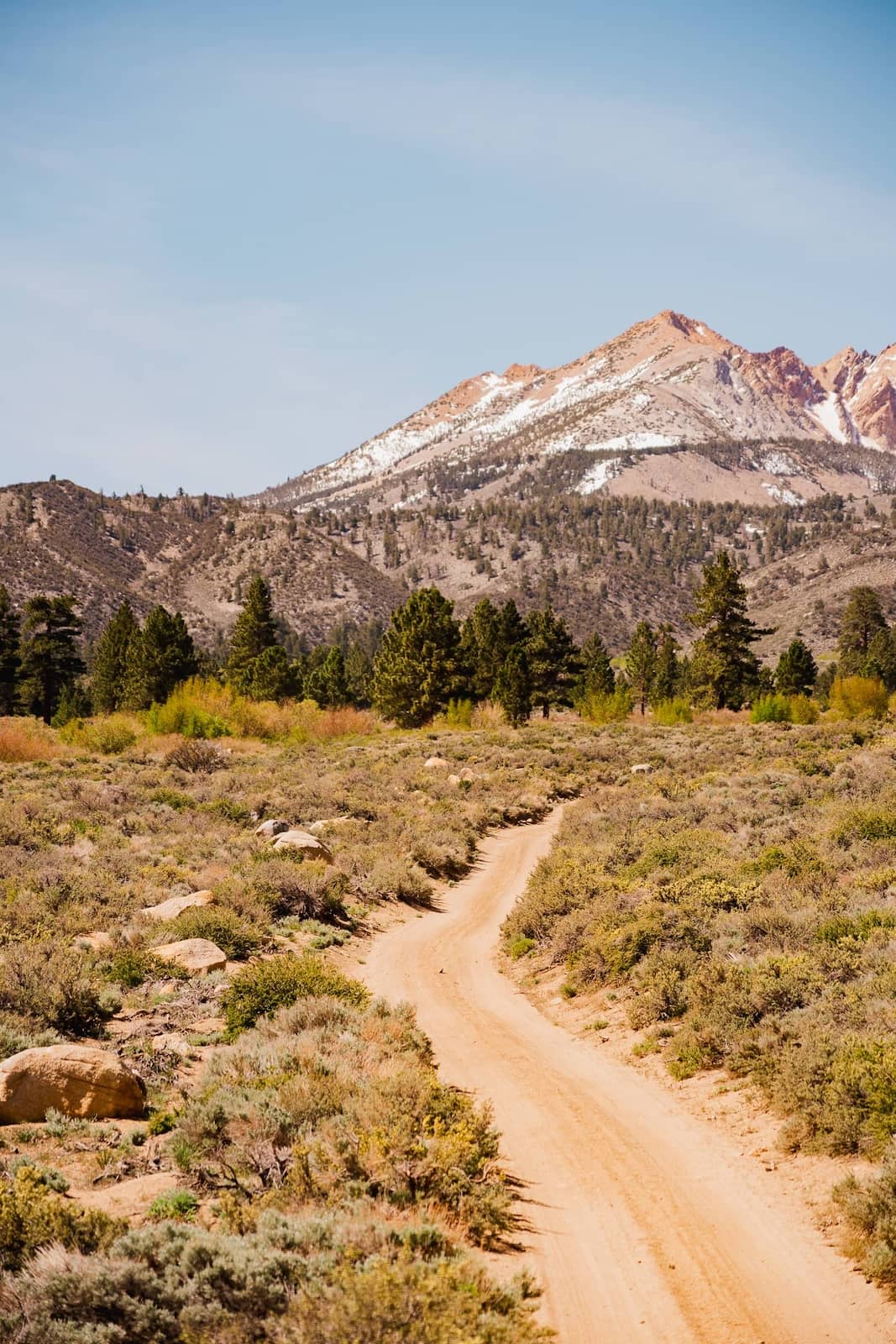
]]>I am awakened by the sound of people shuffling by our camp. When I look out the side past the flap of our rooftop tent, I can see what appears to be runners or hikers. I get out and wave at them. It's mid-May of 2022, and it's a glorious morning. Then it dawns on me; it's a trail running race, and most likely an ultra.

Ultramarathons, as they are formally known, encompass any foot race distance beyond the standard 26.2 miles. Typically, they are trail races, which means they take place off-pavement and on dirt.
Trail running, like running in general, has exploded in recent years. I attribute its growth to it being one of the more welcoming and easier sports to adopt: all you need to do is step outside your door (and not even that in some cases) and start moving at any pace faster than a walk. Yes, you should probably do this in a pair of running shoes, not work boots or heels, but to start, anything goes.
Jen and I have been running since April 2023, with a more significant jump in commitment two months later in June.
I've never really gotten along with running. When I was a young kid, I raced cross country in my late single digits (it was just part of the school curriculum, not a choice), and then as a teen, I participated in some track events, including the 100m, 200m, and 4x100m relay (again, high school requirements). Once I left high school, skateboarding became my primary physical activity and focus. I've been involved in cycling for a long time now, and racing cyclocross over 15 years ago reintroduced me to a bit of running. This discipline required me to shoulder or run with my bike at times during a race, and I would "practice" running then. But running had never stuck, until now.
I broke my elbow two years ago; one-third of my radial head came off and is floating in my arm. While I made a sporadic return to cycling, I realized in 2023 that it would never be the same in terms of body mechanics and comfort. Additionally, the safety of cyclists has deteriorated in this city, and because I have dependents, I became keenly sensitive to the risks involved. This has made me take to running for the first time, not like a fish to water, but like a new dance; at first, you stumble, but with practice, you find your rhythm and flow.
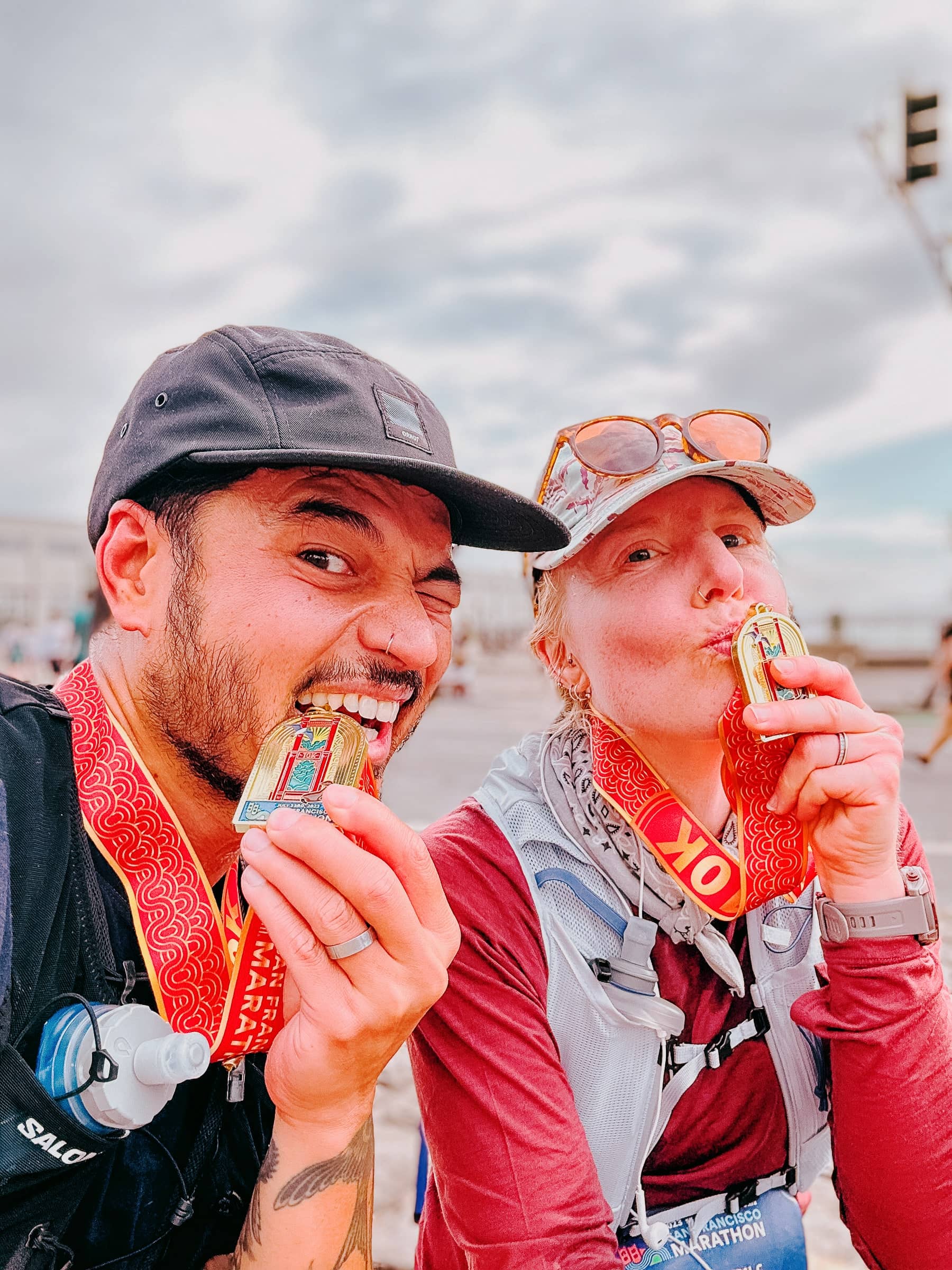
In July of last year, Jen and I decided, just two days before the event, to participate in the San Francisco Marathon. We weren't planning to tackle a full marathon right away, especially considering the city's challenging elevation and hilly course. Instead, we opted for the 10K race, which seemed reasonable and achievable for us. And we succeeded. We had an amazing time. While I had competed in cycling before, it was Jen's first experience at an event like this, and she was incredibly excited about the atmosphere, the overall feel, and the energetic vibe. Since then, we've been exploring longer-distance events.
But in the back of my mind, I recalled that morning waking up in Bishop. I felt inspired as I saw runners of all ages, races, and sizes. I realized that based on our location and the time it would take to see some of them again, we must have been on one of the longer routes. We were familiar with the route, as we had driven it in our off-road vehicle before.

Ultramarathons are typically found in these lengths: 50 kilometers, 50 miles, 100 kilometers, and 100 miles. Among these, 100 miles tends to be the marquee length for well-known events like Western States, Leadville, Hardrock, and then there's the UTMB series in Europe.
However, there are also smaller, local, and regional events all over the world that combine a mix of enjoyment, breathtaking scenery, and personal accomplishment.
There's a parallel for me with gravel cycling, which used to be my primary type of biking and has experienced significant growth as well. While there's no denying that where there's popularity, there's a potential for profit, there are still events that maintain their grassroots essence. That morning ignited a desire in me to be a part of that community.
So, just last week, I started a 50K training program with the goal of finishing the Bishop Ultra this coming May, two years after that illuminating daybreak.
Let’s see how this goes.

→ This looks better on the web
→ Reply via email
Thanks for reading and using RSS!
]]>End-of-year recaps and reviews haven't been something I do. Generally, my mindset is about embracing the present, with a gentle forward momentum towards what comes next. Years ago, I heard an Imam once speak about not having regrets. I took that to heart at the time and have morphed it into the concept that regrets are merely disagreements with what has already happened.
Life happens, and things lay where they lay, with or without our input. As I've gotten older, however, and with 2023 being a year during which I kept a handwritten journal, I wanted this place to be another outlet to look back on for my reference. If I reference "we" a lot, that generally means Jen and me.

Where I've traveled in 2023. Most of it was via our camping rig with only two flights, for Jen's birthday and to see my family in Malaysia.
California and much of the West Coast experience numerous ‘atmospheric rivers’ with temperatures dropping into the teens. This leads to increasing weather variations and side effects as the year progresses closer to Spring.
Jen and I are seeking warm and dry conditions, so we head to Mexico City, a place we love dearly and one of our top three cities. Since Jen's birthday falls right in the middle of the month (she turned 46), it's a good time to head south. Mexico City once again charms and delights us. Many, many tacos were eaten. I've drafted a longer post or guide, and I need to finish that up.


L/T: Jen, R/B: Jen in our accommodations.
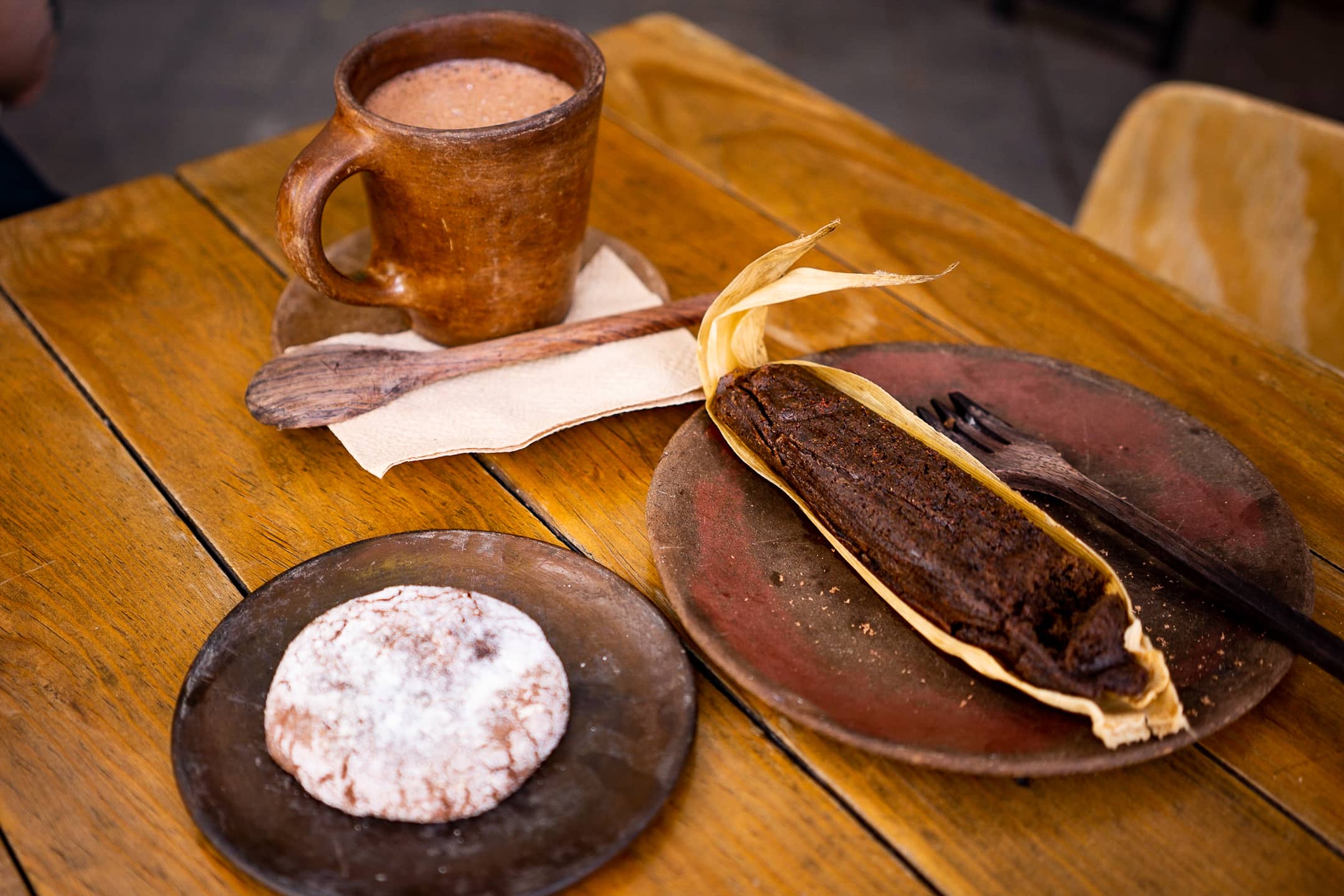
This is a spread from La Rifa Chocolateria, a local chocolate maker. Clockwise from top is a dark, hot chocolate, agua-style, then a chocolate tamale (this blew our minds), and a good ol' chocolate cookie.


Tacos Orinoco is a staple with it's In-N-Out 50s Americana vibe and strong branding. The food lives up to the hype, and while we eat very local tacos too, Orinoco is a must: we ate here four times.
A month of hunkering down. Jen's sister and her boyfriend (now husband), Kyle, visit us in SF. We haven't met him yet. We enjoy a long weekend with them, showing them the sights—our favorite food and coffee spots, the natural wonders of a city by the ocean, and getting to know Kyle a bit more.


L/T: Kim and Kyle try out Malaysian/Indonesian kuih, the local dessert type that I grew up with, from Nusa SF at the Ferry Building. R/B: A sunrise from our back patio.
More atmospheric rivers, and the state as well as the West Coast are experiencing record rainfall and snowfall. Much of our time is spent dodging the weather, and by the end of the month, as my birthday nears, we make a plan to find the driest place we can and camp. We invite friends and find ourselves in the Mojave, and then further south below Joshua Tree and Yucca Valley.
Rigs lined up at Roy's Motel in Amboy, CA, on Route 66.

The aforementioned Roy's Motel.

The Amboy Post Office.
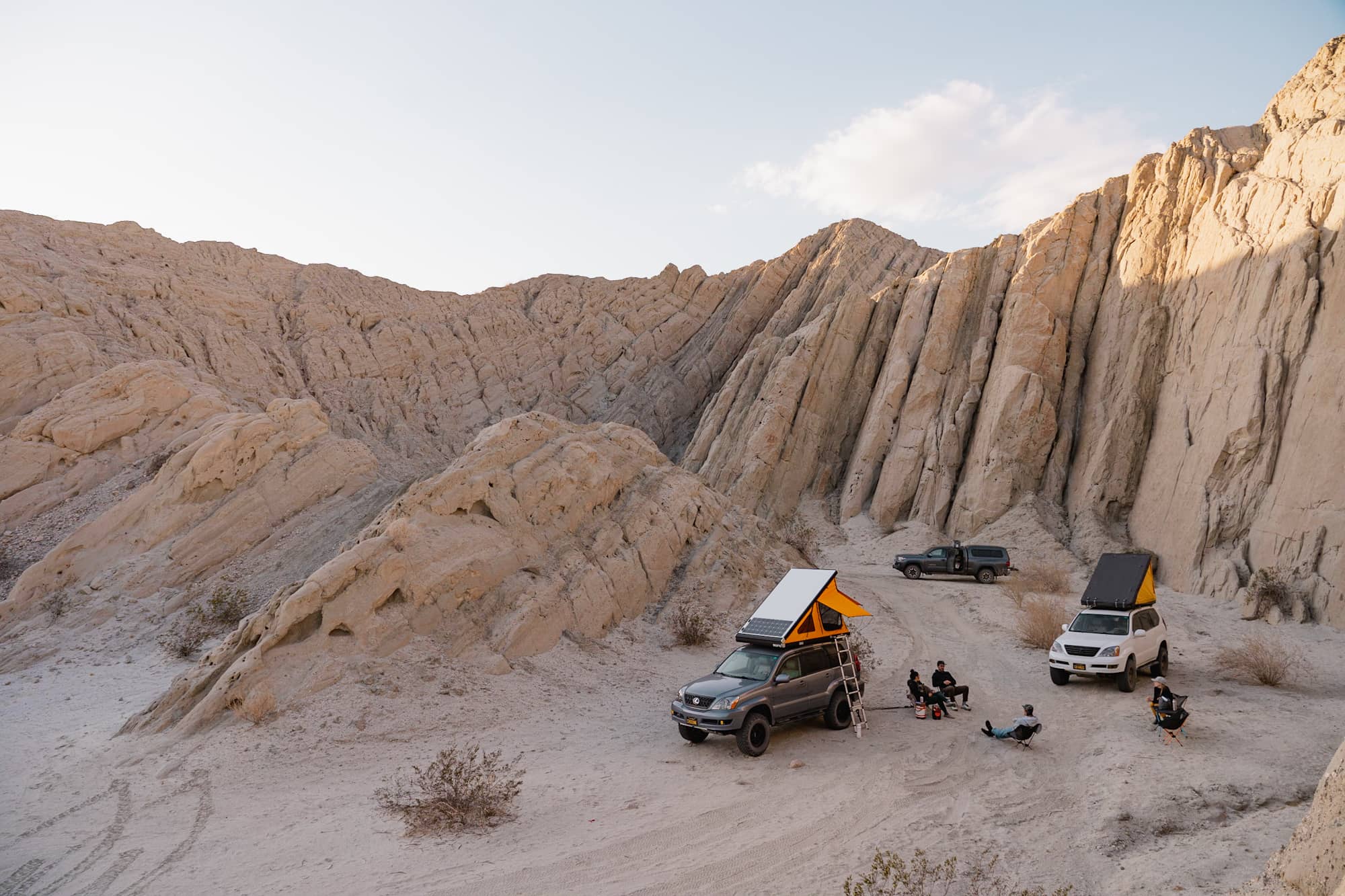
Camp south of Joshua Tree.
We enjoy two days with our friends before we all split up for side excursions, while we extend for another night, then back to the Mojave for two more days to explore and drive some trails and look at lava tubes. I turn 45.


L/T: A Joshua tree atop a volcanic cinder cone. R/B: Jen contemplates the vast wildness of Mojave National Preserve.

While I take a sun nap atop a boulder, Barb keeps watch.
I get an email from a music licensing person at Thrasher Magazine, who wants to license songs from my old band...
Years ago, my mama asked Jen and me to visit Malaysia during Hari Raya, also known as Eid-Al-Fitr, which marks the end of the month-long fast for Muslims worldwide. We remembered this request and managed to snag great tickets during a Black Friday sale with Singapore Airlines, our favorite and a 5-star Skytrax winner for many years. It was a joy to be with my family, although not the best time to visit Malaysia, as the country essentially takes a holiday for several days, and the best places to eat are closed.


A plane view, and Jen and I on Hari Raya.


Niko Neko, our favorite Matcha cafe, and street sights.
From L-R: my oldest nephew Nadir, myself, my brother-in-law Irwan, and my youngest nephew, Raiian.


My mama and Jen, and then L-R: my mama, my sister, Nina, Jen, and my youngest niece, Ana.
We encountered a few hiccups with our Airbnb, but we also stayed at the Four Seasons towards the end of our trip. We used credit card points, and if you're considering staying in a hotel of this caliber, Southeast Asia is the perfect place—you'll pay the same per night as you would for a mid-tier Hilton, Marriott, or Sheraton in the States. Plus, you'll enjoy the full Four Seasons experience, unlike some other locations (like Las Vegas, for example).
A True Ventures onsite happens (which becomes a regular occurrence this year), bringing together team members from out of town. We dive into the thick of it and come away energized. I am humbled and fortunate to work with such a skilled group of individuals.
I discovered that my eyesight is a bit off, making writing in the journal harder when up close. I obtain reading glasses for the first time.
Towards the end of the month, Jen and I hit the road once again, finding ourselves camping in Bishop for a few nights. The snowpack has finally melted in parts of the Sierra, and Highway 395 is somewhat accessible again. In the latter part of the trip, we meet up with Ryan, Rae, and Weston in the Mojave Desert. It's hot there, and our days are spent exploring parts of the Mojave Road, seeking refuge from the heat, and exploring lava tubes and old mining operations. It was a good trip.
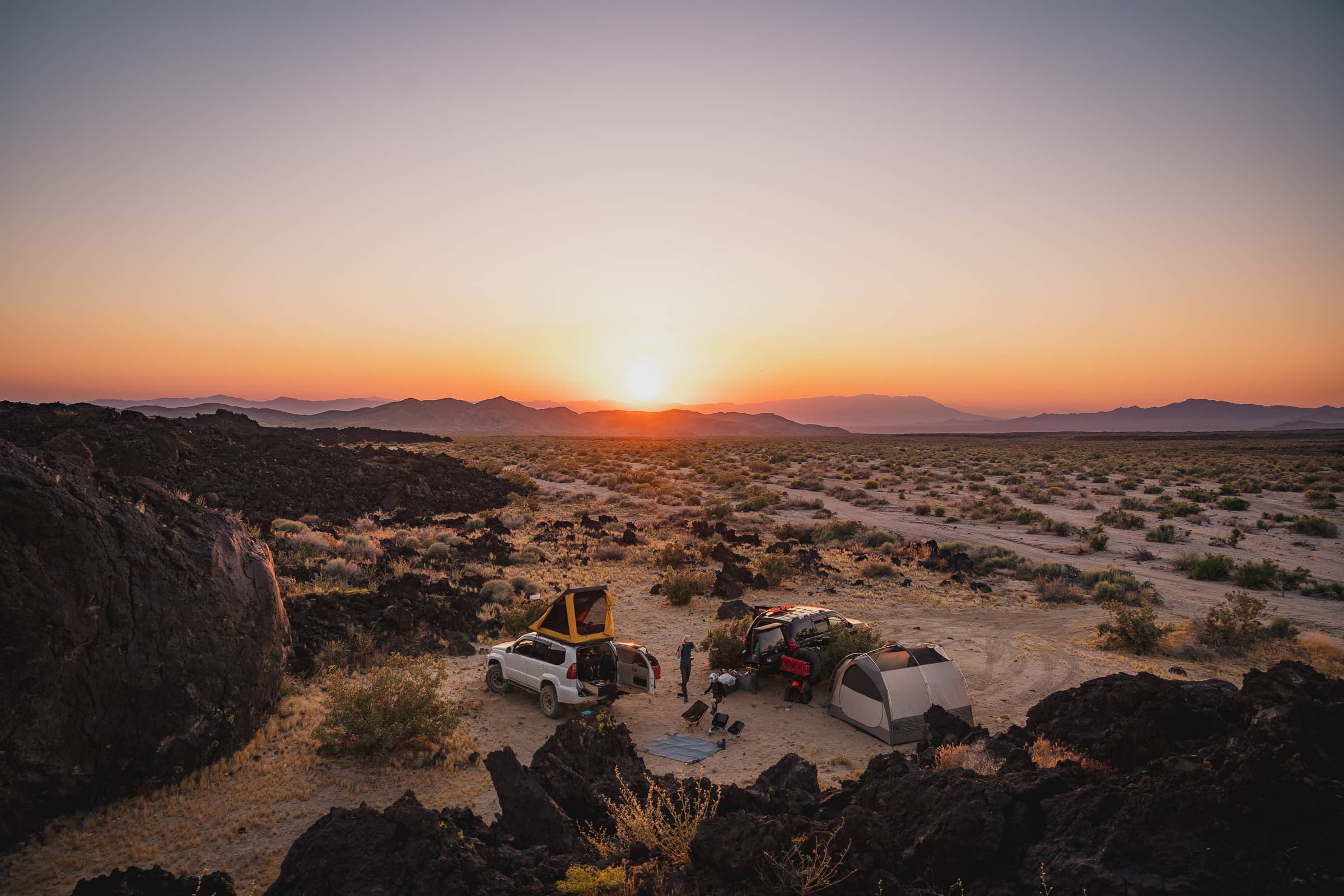
Camp for the first two nights.


Quintessential weird desert art on the Mojave Road.
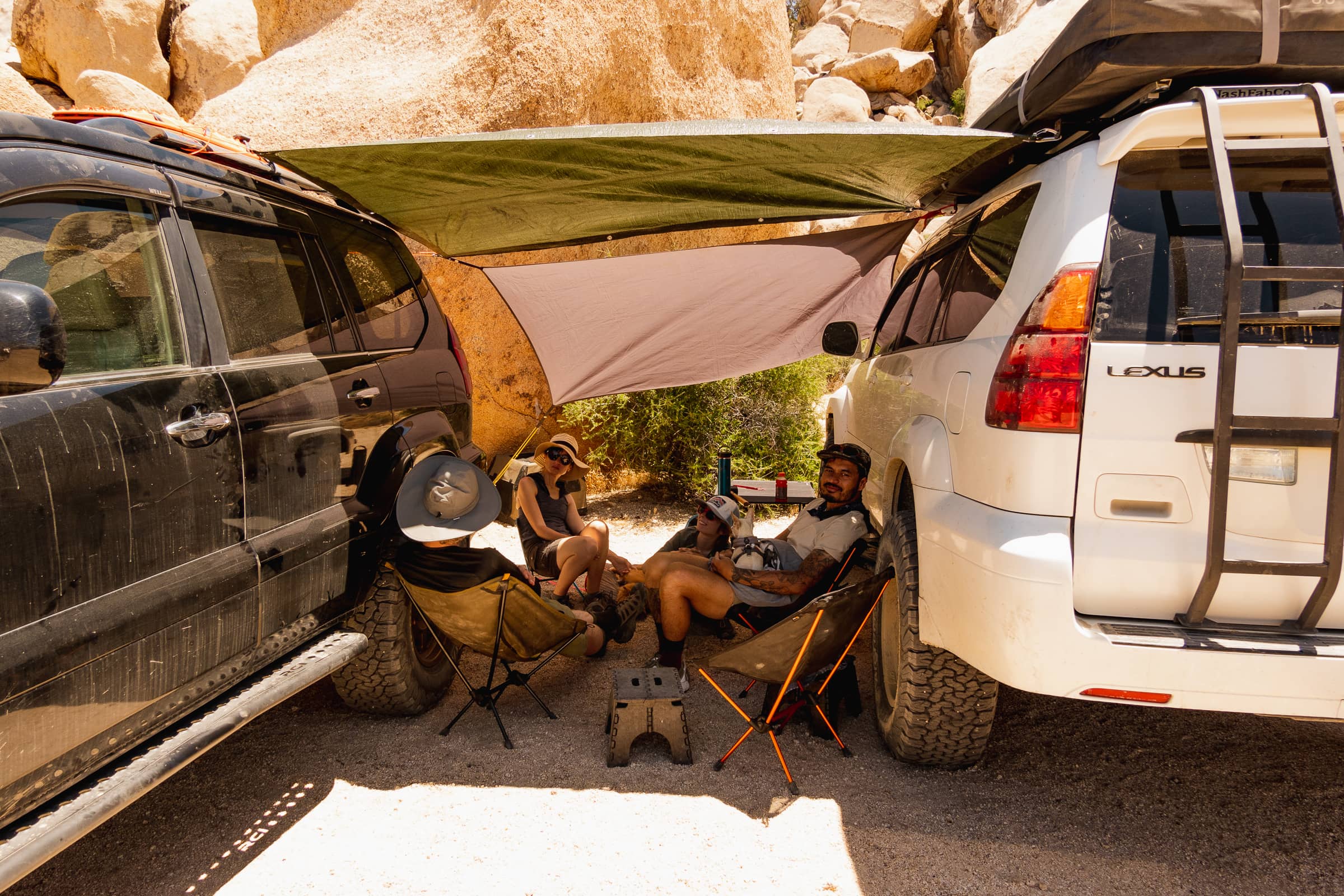
The third day is warm, and the sun is high. We create a makeshift shelter from two tarps rigged between our... rigs.


A return to Roy's Motel, and across the street, more desert art. Amboy CA.
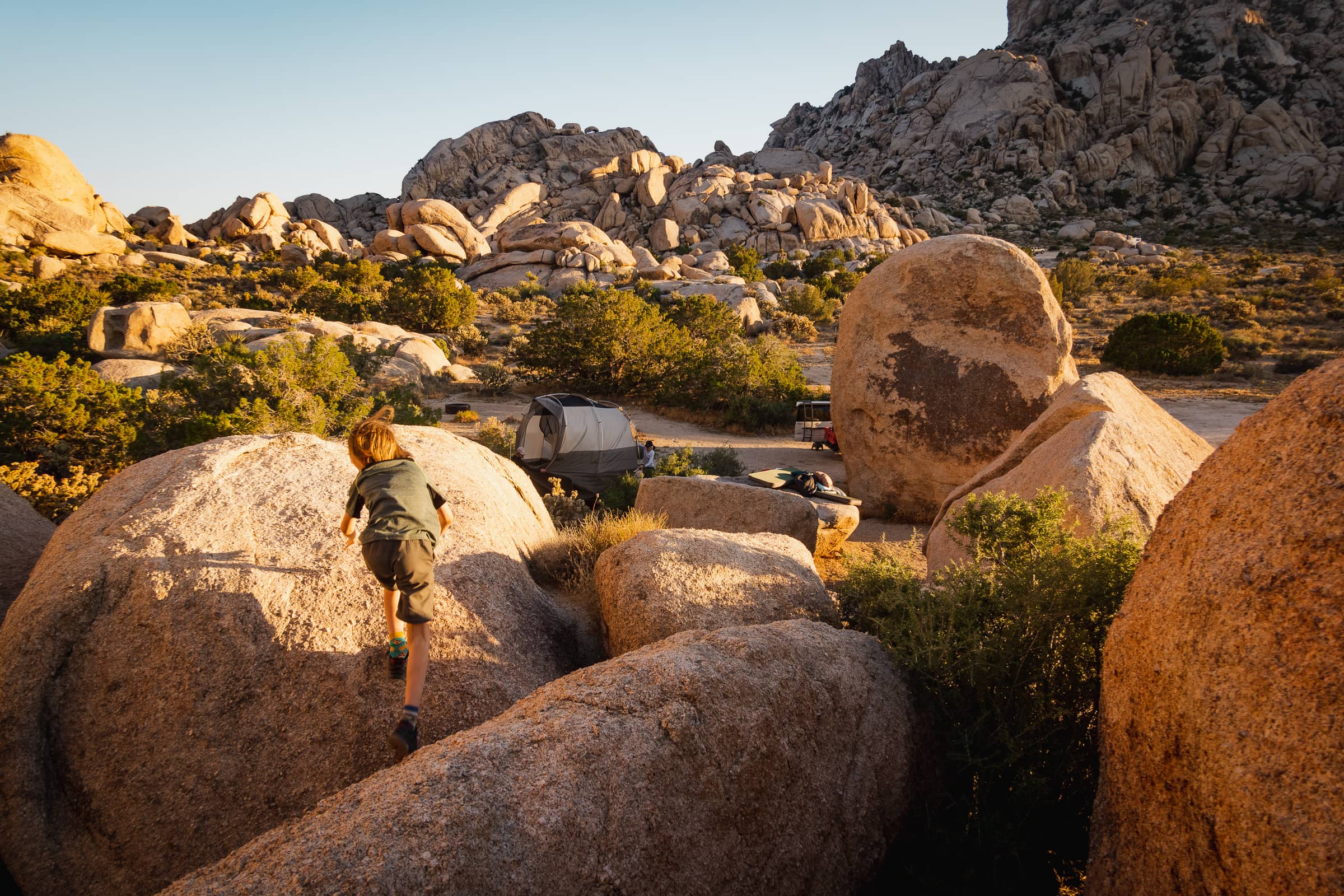
Playing amongst the boulders, as we settle camp.


L/T: Jen soaking in the early evening sun. R/B: I set up the tent, and am content in this very moment, chasing away midlife malaise.
I started running around April, but this is the month where I've quietly decided in my mind to take a break from cycling and commit myself to running as my primary cardio workout. I've been interested in running for years and have made attempts here and there, but it never stuck.
My dear friend Grant Blakeman is in town for Config, so we attend the conference together. Unfortunately, I end up being present only for the first day and couldn't attend any sessions due to the surprisingly high number of attendees (it felt like SXSW). I decline to attend the next day as I have an onsite meeting with the team at True Ventures.


L/T: Grant at Sightglass Coffee. R/B: Config at the Moscone Center.
Later in the week, Jen and I meet up with Grant again and head over to the Pride Parade on Market Street. We wander around, spotting Nancy Pelosi in a car next to us, along with a few other notable San Francisco politicians.


L/T: Who's that? Nancy Pelosi. R/B: Pride-goers.
Waffling and last-minute, Jen and I decide to head north toward Mount Shasta for some camping over Independence Day. We end up staying for four nights.
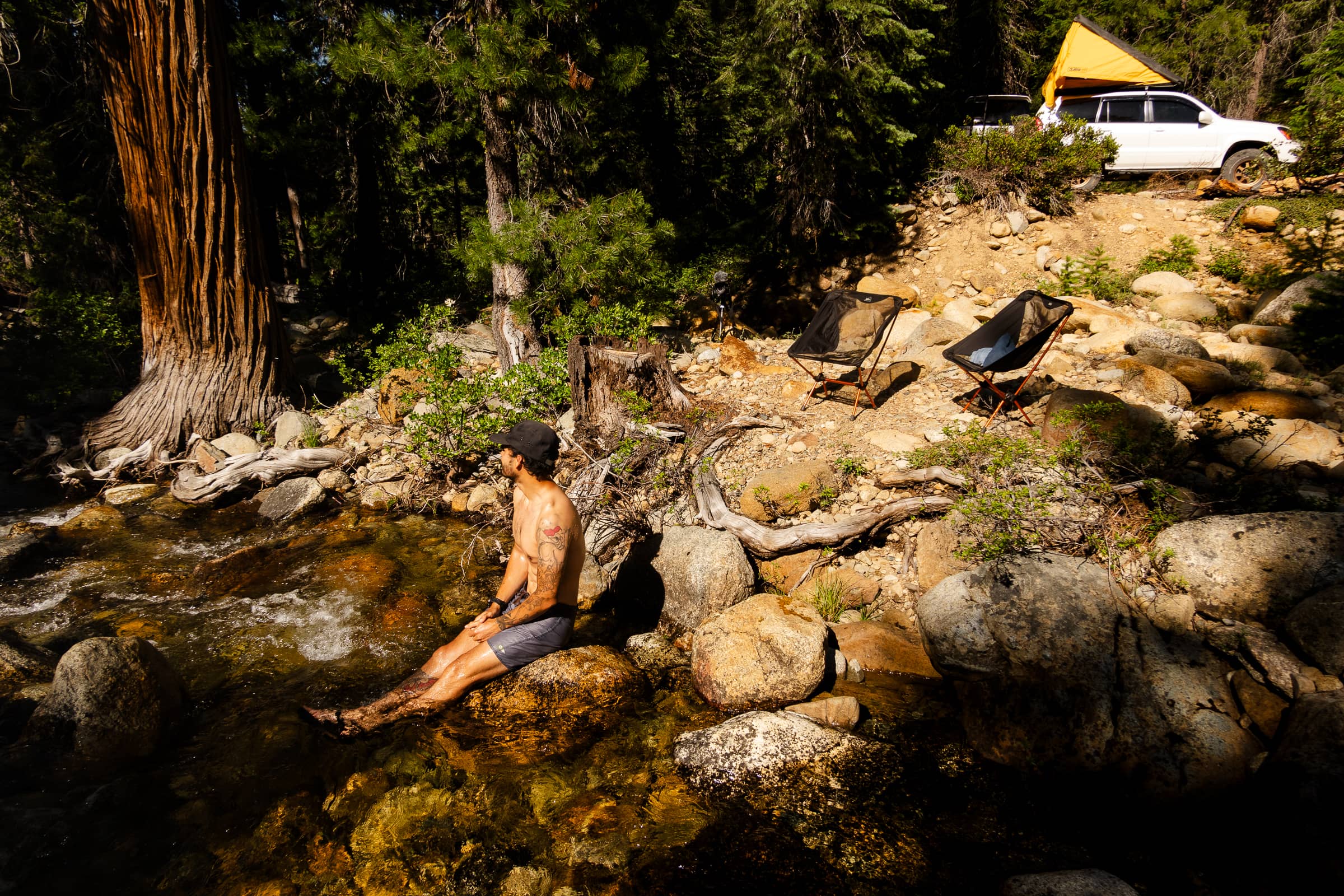


We had planned to camp through to Overland Expo PNW in Redmond, Oregon, just outside of Bend and depart further north. At the expo, we explore the off-road and vehicular travel community (and see gear and rigs) and meet some connections we've made in this community.
This is Jolene, a Toyota Tundra mated with a Four Wheel Camper. Built and owned by two of our favorite creators, MAK and Owen of Bound for Nowhere.


At the Nomad Wheel area, two other interior buildouts I was excited to see. Left is @la.cruiser's Toyota Landcruiser 80 series, and right is @carter_pdf's former rig, a Lexus GX470. Both have Campteq pop-up conversions.
It's a fantastic opportunity to finally meet Brandon, the creator of Aeronaut Outdoor, which produces the best down blanket we've ever used, whether for camping or otherwise.


Wild camping outside of Bend is a bit difficult. What we learned at this camp spot, while quiet at first, is that a logging operation was a mile down the track, and awakened us with massive trucks blasting by starting at 1:30 in the morning. A distant neighbor vacated sometime in the middle of the night.
While we have mixed feelings about camping near Bend, the first half of the trip in Shasta offers such solace that we decide to stop by on our way back in Shasta and spend another night before heading home.
Jen and I attend the SF Art Book Fair with our friend Stef. It's a remarkable event, and the creative community comes out in full force.


L/T: Jen and Stef. R/B: The Art Book Fair from above.
Just two days before, we realized that the SF Marathon was taking place on July 23rd. On a whim, I signed us up for the 10K race. While I've competed in numerous races as a cyclist, Jen has never participated in an event like this. The weather for the event is perfect, and we thoroughly enjoy running together while feeding off the energy of the crowd and the event itself. The race starts by the Ferry Building on the Embarcadero, runs south to Oracle Park, then loops northwest to Fisherman's Wharf before returning to the starting point. Jen was beaming after the event, and her enthusiasm was contagious. It was a great experience, and we both started thinking about longer events.


Done and dusted, all smiles.
Jen and I celebrate our 16th wedding anniversary on July 28th. I consider myself deeply fortunate.
The month wraps up with me attending my first show since before the pandemic, featuring the British post-hardcore band High Vis, performing at a small venue. My friend Tyler and I are right up front. Vocalist Graham Sayle approaches me before they go on and, in true UK style, asks for a consultation: "Should we start at a quarter past or half past?" It's 9 pm, and considering my mid-40s and desire to get to bed reasonably early, I humbly suggest 9:15 pm. They take the advice, they rock, and I find myself in the pit once again, singing, shouting, and screaming alongside the crowd.


"Tears on my Gore-Tex." Graham Sayle is a force of nature, in true hardcore fashion.
We attended The Batman in concert at the Davies Symphony Hall as part of their film series, where the SF Symphony performs the soundtrack to movies live. We've watched Jaws, E.T., and the first JJ Abrams' Star Trek before. The Batman might have been the best one, but they generally all impressed us.
In the middle of the month, we met up with our friends for some camping up in Shasta again but had to divert to Mount Lassen, just east, due to wildfires in southern Oregon and a small one near Shasta. As always with camping, weather and climate increasingly influenced our movements. We discovered a great spot by a creek though, and despite some rain, we enjoyed ourselves.


L/T: The crew as captured by Tyler. R/B: Camera nerdery with Tyler and Ryan.
I kicked off the month by brushing up and expanding my rudimentary sewing skills with the help of Jen and YouTube. I customized a tent ground sheet to serve as an awning for our rig, making the setup lightweight and easily movable around the vehicle. I also sewed up some small pouches to store smaller items in the drawers in our truck, as well as a roll-away compact trash bag. Much of the beginning of this month focused on preparing the vehicle…
…for September 10, which marked the beginning of our 3+ week road trip to the Midwest to visit Jen’s family and attend her cousin’s wedding. We traversed through California, Nevada, Utah, Colorado, Kansas, and Missouri, and then made our way back again. Just two days before, I decided to document and publish the Weightshifting newsletter daily when possible with Jen’s great editing help and photography. You can read the entire second season over here.
We returned from our big trip on the 6th, as wildfires (notice the trend?) began encroaching on the area where we were camped out on Highway 395 in the Sierra. We took it as a sign and made our way back, taking Tioga Pass, which traverses through and over Yosemite National Park. Just two days later, we started to miss it. Life on the road has a way of simplifying some things and enriching them in so many meaningful ways.
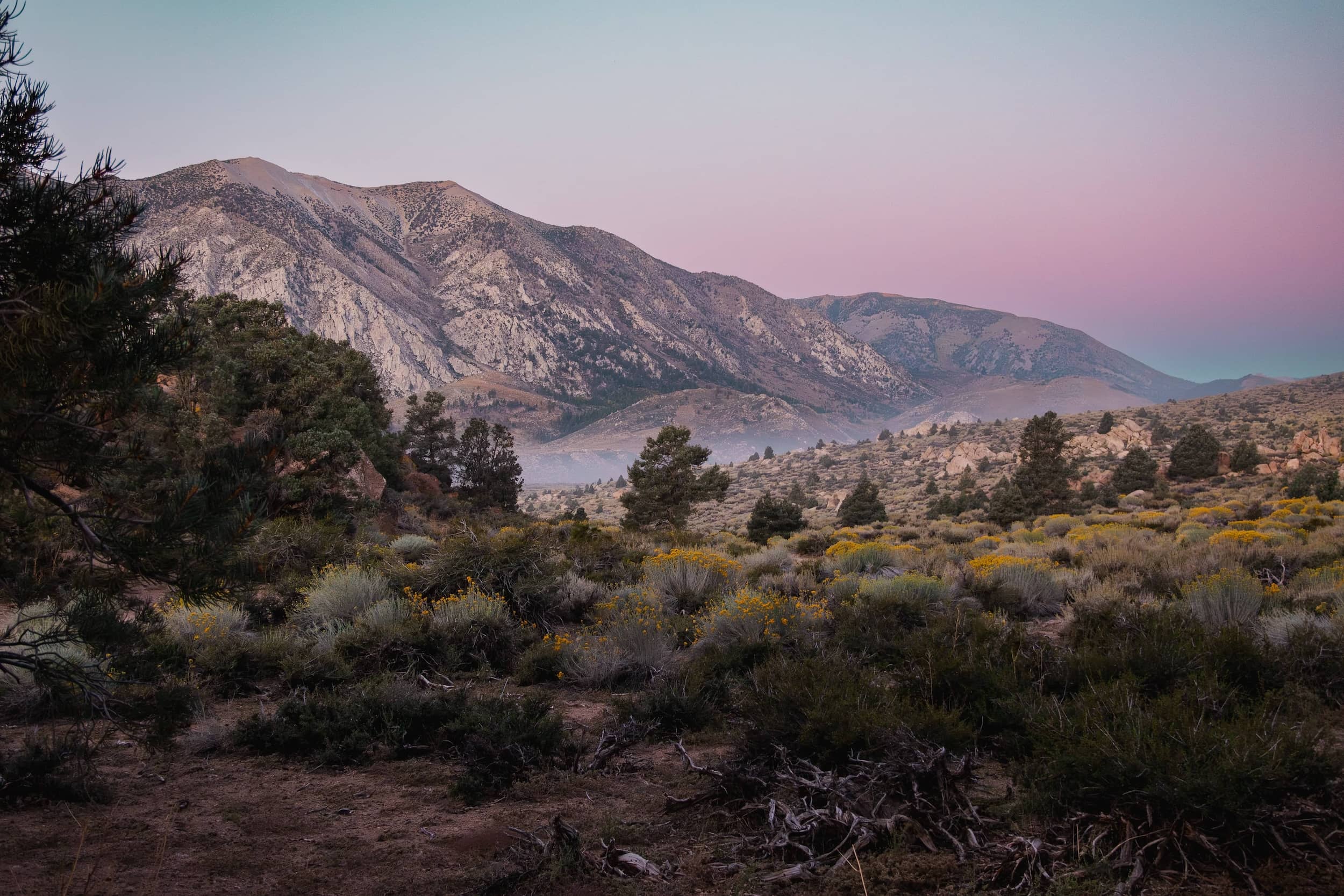
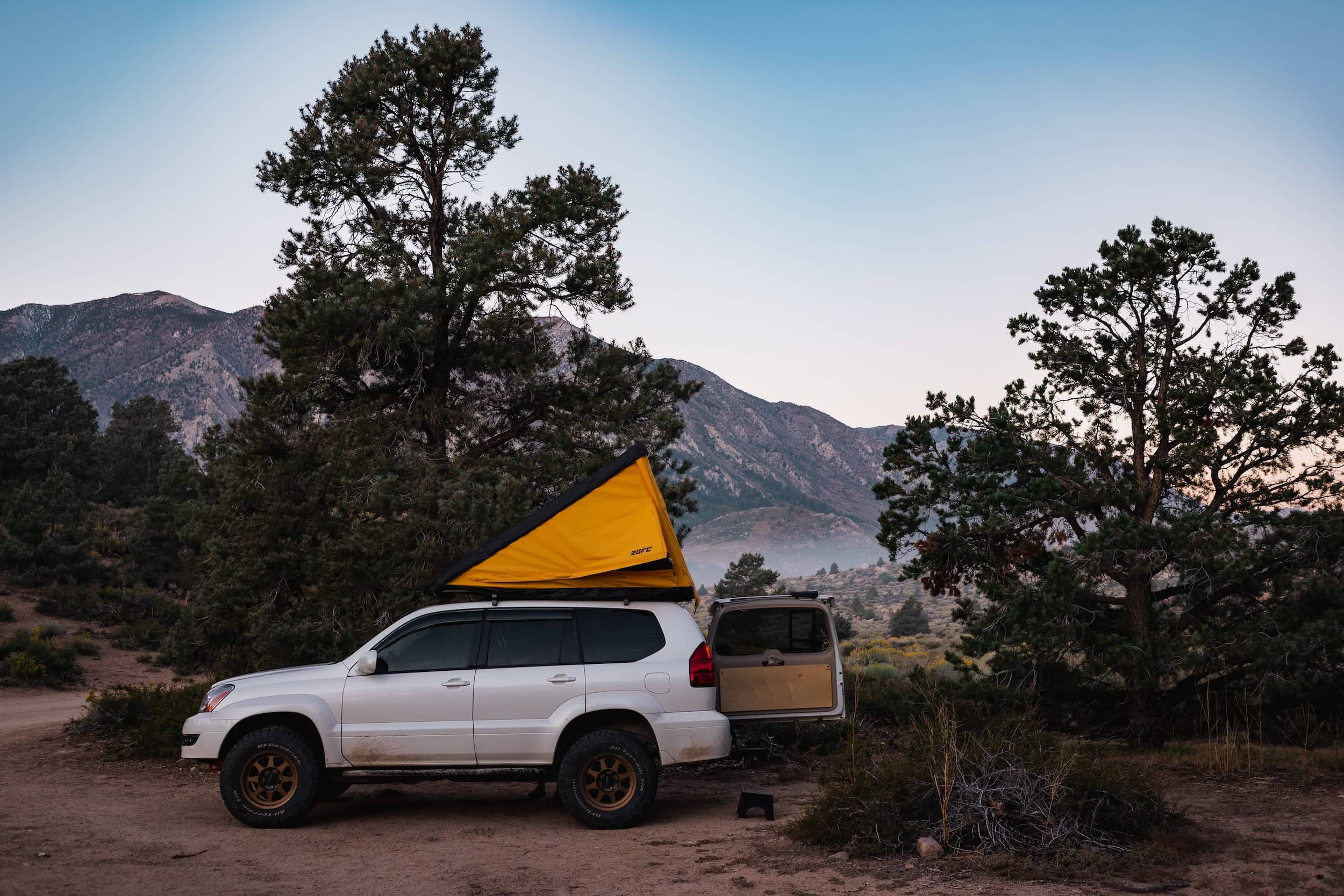
After months of back-and-forth (mostly legal/logistical), a check arrives for each respective bandmate in my former band, Dolorous Canter, and one is here for me, from Thrasher Magazine. Amazing. A story for a different post.
In the middle of the month, I found myself on a plane with Ryan Carver, en route to Salt Lake City, Utah, with our final destination being Park City, just a 45-minute drive away, for a founder conference hosted by True Ventures. Over the next five days, we absorbed a wealth of inspiration for our work, got to know founders, and left feeling invigorated. We had some hikes and engaged in long, deep conversations, and it was a privilege to be present.


L/T: Laura and Ryan chat amidst fall foliage. R/B: Ryan, Scott, and a Banksy.


L/T: Jeff holds court. R/B: The view from Deer Valley looking down into Park City.
A very relaxed month as we're winding down from so much travel. It's good to get back to a routine of coffee, catching up with friends, climbing, and running.


L/T: Barb enjoying the late and low sun. R/B: An easy-going Thanksgiving morning at The Mill.
Towards the end of the month, Trevor Noah is in town on his current tour, which has been tweaked and evolved from the eventual set that will hit Netflix in December. After seeing the Netflix version, I'm glad we saw the personalized (to SF) version he performed for the crowd here. It was a great set.


The city starts to embrace the end-of-year mood as the days get as short as they can.
Just before the middle of the month, I get to witness a grail band, Botch, perform in San Francisco on their reunion tour. I discovered Botch when I first moved to the States, thanks to a dear friend, my best man, and former bandmate, Dave. They had disbanded by the time he introduced me to them, and I never thought I'd see them live. The members went on to play in various bands, most notably Minus the Bear and Russian Circles. But it was a chance song that didn't fit on a solo album that guitarist David Knudson released (fresh off the end of Minus the Bear) that brought Botch back together. One Twenty Two dropped out of nowhere, and then a tour commenced. What an incredible night.
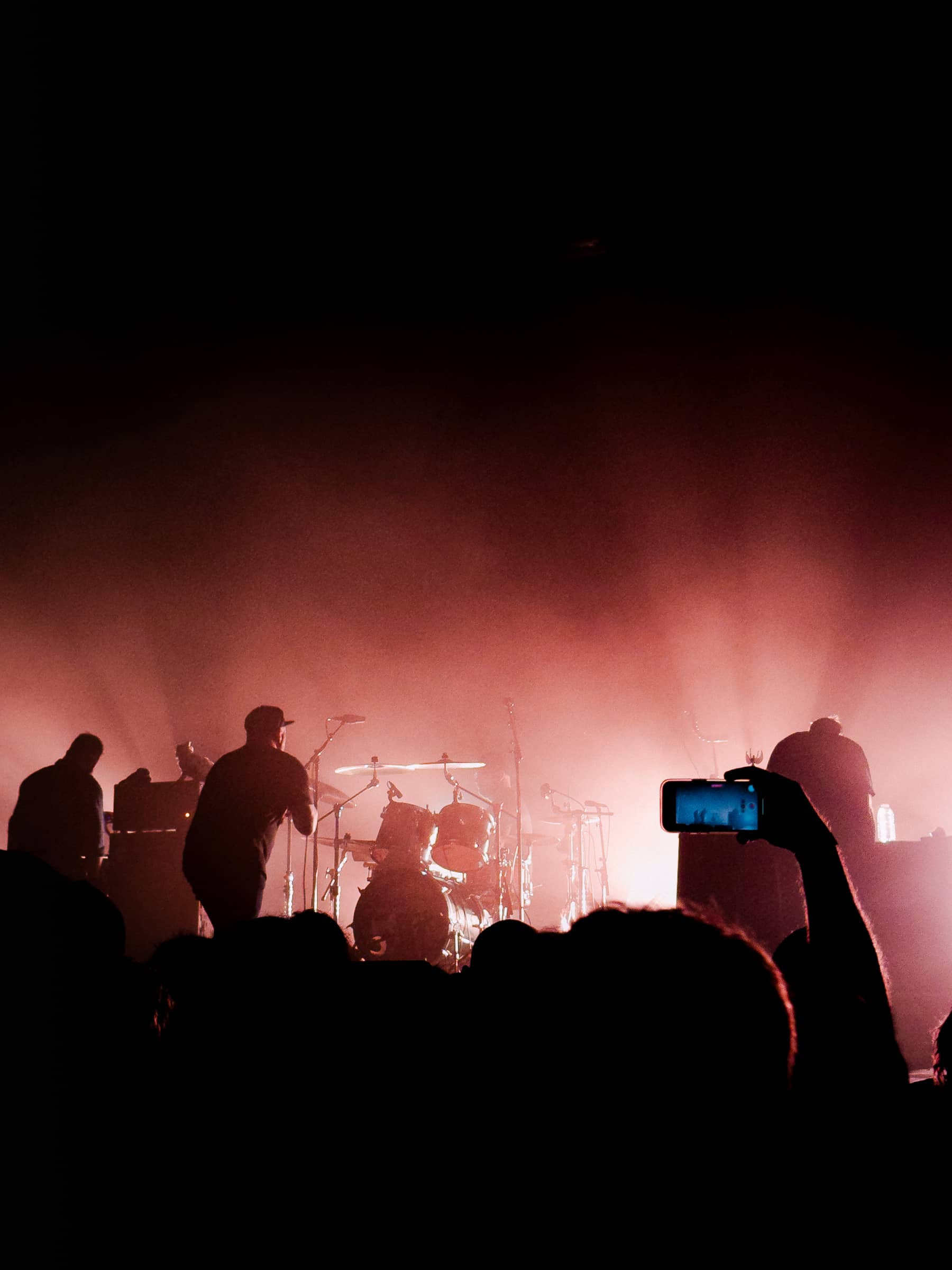
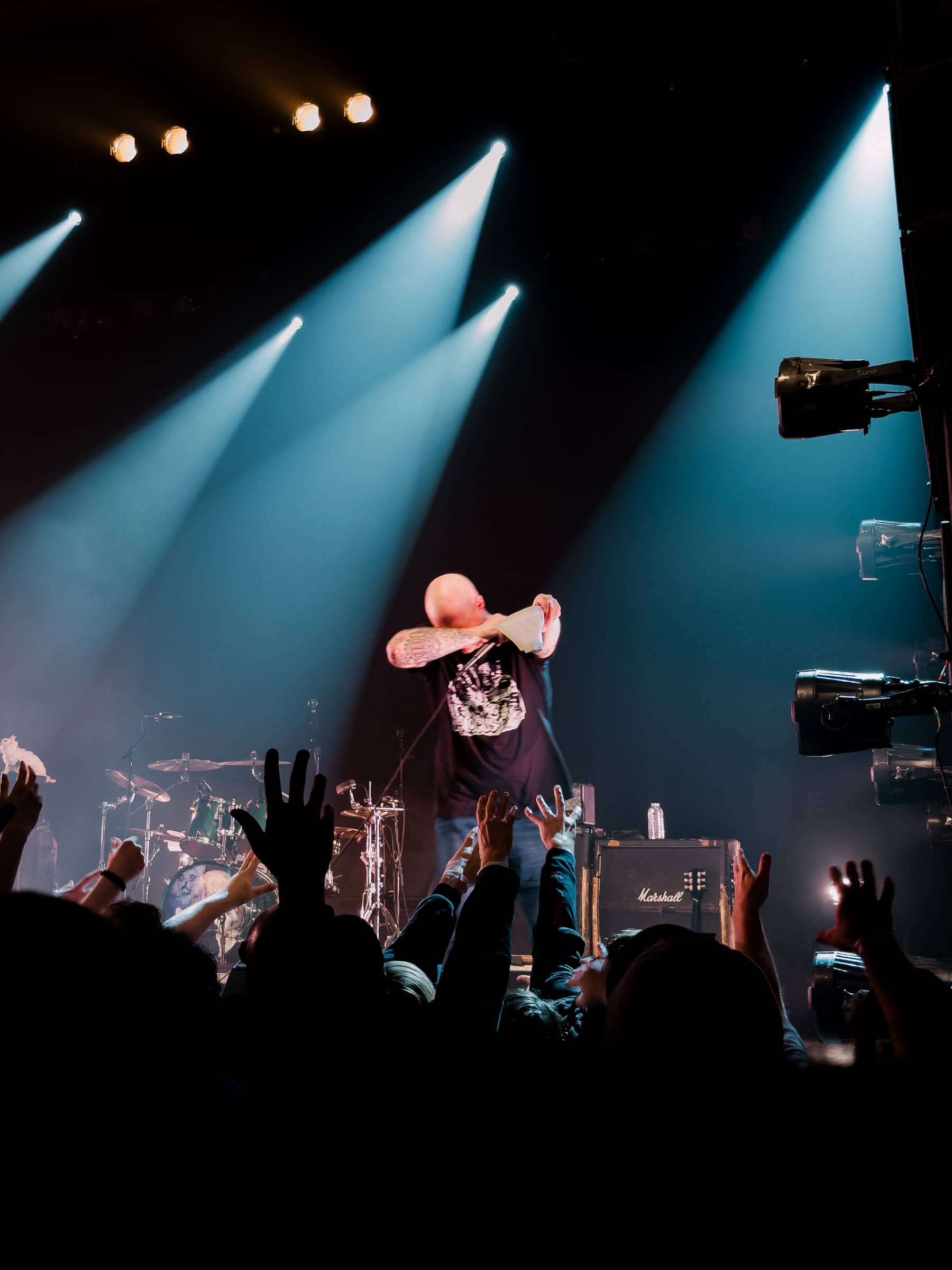
Jen and I make a last-minute decision to head to Phoenix for the holiday break. We're not entirely committed to the idea of Phoenix, but we had a great time there last year during this time, and the idea of sitting in a hot jacuzzi pool in the middle of winter on Christmas Day sounded appealing once again. We pit stop for a night in the Mojave, then proceed to Arizona for four nights. We find it to be a bit too long, but we see a friend and old coworker of mine from VSCO and discover a few new great coffee shops and restaurants. We usually adore the Rise Uptown (where we've stayed three times now), but this year the music by the pool was a bit too loud (I did make a volume request which they graciously obliged), and maybe we're just too old now for this vibe (the Rise is what the Ace Hotel wishes it were).


I have to admit: being in a heated jacuzzi pool on Christmas Day is a real treat.
On our way back home, we retraced our route to the Mojave and then made a spontaneous decision to venture into the southern and more touristy part of Death Valley National Park to witness the once-in-a-lifetime event of Badwater Basin having water in it. It's a phenomenal sight.


We had planned to camp in the park, but Hurricane Hilary's lingering effects have made much of the backcountry in DVNP off-limits or unreliable. So, Alabama Hills outside of the park on Highway 395 is our goal for the night, and we find a great spot. We truly love it here on 395.
On New Year's Eve we fall asleep around 10:30 pm. Goodnight, 2023.
→ This looks better on the web
→ Reply via email
Thanks for reading and using RSS!
]]>I had just turned 40. I was feeling increasingly stagnant at VSCO and recognized the need for a change. I began discussions with leadership about my desire for greater involvement. It was straight-up politicking, with my objective being a title change to formally lead the product design team. Not doing anything meant I’d remain in my influential, but individual contributor role, yet for me, the personal challenges there had ceased.
During my series of talks, I had one notable conversation with a leader who named something I knew I was innately doing but hadn’t yet identified by name.
She put it simply: “Consider your energy here.” That struck me with an immediate jolt and a moment of clarity, as I understood what I was going to do next. She had managed to verbalize what I had intuitively sensed and had even discussed in three different speaking engagements, but without the sharpness or shape of this term: energy. She framed the question for me: whether I wanted to invest more energy into my duties at the company and if I was prepared for that level of commitment. I had some thinking to do.
A week or two later, I communicated to my manager that my tenure at the company was drawing to a close. Promptly, a friend in leadership arranged a walk and talk. We strolled through the sunny streets of Oakland. He knew about my prior discussions and was curious if there was an issue. More importantly, as a friend, he wanted to make sure I was alright.
While I was explaining my circumstances, he posed a simple yet profound question that circled back to the concept of energy: "What do you want your days to look like?"
I've always had a clear vision for my ideal day, and it's remarkably straightforward. It steers clear of any manipulative tactics for career advancement. While I'm aware I could engage in such strategies, they've never attracted me. I've been lucky enough to receive several dream job proposals over the years, but I've consistently turned them down. My days were already fulfilling—balanced. They afforded me the opportunity to look after my mental health, take care of my physical well-being, and cherish moments with my loved ones.
My pursuit of honing my craft at VSCO led to a significant imbalance in my life. I battled a rare form of eczema, a journey fraught with challenges. Jen and I faced the loss of two beloved animals, and our time together diminished. Despite these hardships, I take pride in my accomplishments there, though I always wonder if more was possible. Nonetheless, as a full-time employee, I consciously steered clear of the usual office game. I left promptly at the end of the workday, avoided mingling with those who thrived on ego, and managed to carve out space for work amidst a calendar packed with overlapping meetings.
I took the leap to join VSCO—my sole full-time role—drawn by the intriguing nature of the product, the depth of challenges and projects it offered, and the chance to collaborate with some truly exceptional individuals. Notably, two of those colleagues remain my collaborators to this day.
My priorities are straightforward: mental and physical well-being, quality time with loved ones, immersion in nature and the wider world, collaboration with genuine people, and engaging in purposeful work. At heart, I'm a simple person.
All these aspects give me energy and shape my days. The energy they require is an energy I’m willing to give.
→ This looks better on the web
→ Reply via email
Thanks for reading and using RSS!
]]>Thoughts, observations, and new ways of approaching life that have been percolating since my last birthday:
Owning a personal digital space is more important than ever before. Having come to the internet during a time when all it was were personal fan sites and journals, and the big players provided only portals to other things, the big tech aspects of social media will never ultimately be in the best interest of the common user.
The decision not to own property over the years has allowed for a lot of flexibility and a simpler lifestyle. I'm not sure I can see it, though never say never. There's a lot of this world I want to see and experience, and property ownership feels like an obligation and a heavy interest investment when it all seems inequitable.
I can see Jen and I going nomadic in the future: living abroad and even domestically, perhaps. It'd be nice to live closer, geographically, to my family for longer stints.
I can't expect people to like everything I do, and I have cared less than ever about it. But I do appreciate anyone who has enjoyed something I put out there.
I've been carrying my phone less and less, leaving it behind when I go for runs or run errands. It's liberating, both physically and mentally.
I'm falling out of love with cities. They are becoming a strange failed experiment because the people in power are either stalemated, corrupt, lack any real power, or are simply complacent. People seem to care less; politeness and courtesy have vanished, and the byproduct of an environment where people's forced mode of survival occupies so much headspace.
Adaptability and resilience are qualities I've identified as major strengths in the modern age, not just for humans but for all living creatures and our environment. Change will continue to be our constant, and being able to find a state of flow in a whiplash-inducing world will benefit us.
See also: Notes at 45. They still hold.
→ This looks better on the web
→ Reply via email
Thanks for reading and using RSS!
]]>Two years ago, I broke my elbow. A year ago, I put cycling on hold due to discomfort on the bike and soon after started running as a cardio and endurance-based complement to my longstanding passion for rock climbing.
Trail running and ultras have captured my attention in recent years in a countercultural way. I liken it to how gravel cycling emerged from the road and mountain bike scenes as a melding of the two. I identify with the spirit in the trail and ultra segments, as people want to push their individual limits, be out in nature, and get closer to an epiphany.
As I wrote in The Long Start, I began a training block earlier this year. A 50K is a goal, but I had been contemplating running an event that was shorter, more technical (read: challenging), and ideally inspiring. Part of what draws me to trail versus road is being in beautiful places, seeking soul in the natural world.
Due to a confluence of timing, the Amasa 25K Trail Race in Moab, Utah, hosted by Mad Moose, became a goal for my first-ever trail running race.
I entered this mostly trained, though I knew from reports and reviews that the terrain was going to be much more technical than what we have in the Marin Headlands and trails in the Bay Area. The Amasa goes over a difficult Jeep 4x4 trail called Cliffhanger, drops into a serious rock scramble called Jackson’s Ladder, and then back up onto Cliffhanger before turning into an extremely difficult mountain bike trail called Rockstacker (gotta love these names).
2,400 feet down, and up. 15.5 miles.
I quietly set an internal goal of 3 hours and 30 minutes. From the aforementioned reported conditions, coupled with this being my first time, the warm temps, and being at 4,200 feet, this was admirable. Likely I’d finish at 4+ hours. But ultimately, all I wanted to do was survive and finish.
My phone buzzed and beeped at 5 am. I groggily awoke and let my eyes adjust to the dark hotel room. Jen got up and in the dim pre-dawn light we went about our morning rituals, with mine being more focused. A cup of overnight oats and some dried fruit I had made the night before awaited in the fridge. I started to eat them, as well as take in liquids.
After some bathroom ablutions, I donned my race kit and grabbed my bag that was ready to go. We picked up our dog, Barb, quietly in her blanket and proceeded to the car.
It was just before 7 am and the sun was starting to slowly rise. It was a short 10-minute drive to the start, on a quiet backroad that leads to many of Moab’s infamous 4x4 trails, mountain bike routes, and hikes.
I picked up my race packet at the start, pinned my number, and started to prep. I struck up a conversation with a fellow participant next to me. He was also doing the 25K and remarked that he wished he’d done a training run longer than 11 miles. I chuckled in commiseration, as I too hadn’t done a run longer than that. In fact, today would be my longest run ever.
The start came quickly—people were still in line for the bathroom. There were no worries, though: your time only started once you crossed the line. We all had timing chips on our shoes. We’ve come a long way since manual timing.
The start was fast—3 minutes faster than the pace I needed to keep (~12-13 minutes per mile). This is typical for a mass event start. Everyone was excited and had fresh legs. Everyone wanted to pass. I let people go and tried to find a flow despite the speed.
I knew that some time saved here would even out when descending and ascending Jackson’s Ladder, which isn’t runnable: it's a rock scramble.
I approached 30 minutes elapsed, and downed one of my Spring Energy nutrition packets. Awesome Sauce seemed apt.
The final approach dropping into the aid station was fast and furious over slick rock and tall 4x4 ledges, and I passed a number of runners because I live for that stuff. My watch read 51 minutes elapsed as I docked into the first (and only) aid station at the top of Jackson’s.
A quick water refill of one of my 500ml soft flasks, and it was off to the imposing Jackson’s Ladder. With fellow runners ahead and behind me, we made quick work of it, and found ourselves on the most runnable part of the course. It took us 9 minutes to descend 500 feet in 0.4 miles. Soft, sandy double track greeted us for a 4.5-mile loop in Jackson’s Hole around the Moonlight Spire.
I passed some fellow runners, and some passed me. After a mile, we settled into a groove and held our respective positions.
The fellow who was behind me on the rock scramble down, however, eventually caught up to me. He asked me how I was doing. “Doing the work!” He passed. I didn’t chase. We were only halfway through.
I caught back up to him, and a few runners who bunched up at the start of the ascent back up Jackson’s Ladder. The competitive spirit was alive, and we internally pushed each other up the climb. My compadre on this loop, however, paused for a moment, and I passed. At the top, I found myself pausing as well, the fast climb toasting my legs crispy. He stopped briefly as we looked at the view. I introduced myself, and I learned his name was Spencer.
My watch read 2:06 at 10 miles, a surprise. Reviewing my stats post-race told me that the return leg took a spicy 14 minutes. Suddenly 5+ miles in 1.5 hours seemed absolutely reasonable.
We were at the aid station again. I refilled water in both soft flasks, got them into my running vest, and grabbed a mandarin orange. I had started in on another Spring Energy packet, and a bit of a Muir Energy during the loop, but the heat made the appeal of any desert-like sweetness very unappealing. The citrus, however, was a delight in my mouth. I chatted a bit with the aid station volunteers, thanked them, and started the last third of the race.
Walking was all I could do now. My legs were still trashed from the fast ascent out of Jackson’s, and it was still uphill as we rejoined the 4x4 trail, and tall slick rock ledges killed any desire to run. Spencer departed from the aid station a touch earlier than I, and I saw him growing further away in the distance as he linked up with another runner, either as motivation or as a pacer.
Two women were behind me, but I started to put distance in as I picked up the legs in small bursts of jogging. Eventually, after a mile, I was alone.
My Garmin watch kept me abreast of my time and my goal. 3:30 if I could! This became motivation.
The last four and a half miles were a slog. The day had now warmed up properly, and the elevation, slick rock, and super technical descents and scrambles provided no flow for me given my inexperience with this terrain. The course turned off the 4x4 trail and onto a particularly difficult mountain bike trail, which I couldn’t imagine anyone riding. As a cyclist familiar with mountain bike trails, this trail seemed mad.
A woman passed me, with three miles to go. She had a pep in her step, and her technique was a fast shuffle, rather than long strides. She enlightened me to adopt the same, instead of the long strides mixed with power hiking I had been doing. Things progressed better.
I could see the parking lot in the distance and the race finish. I was still high up, and there were the last two miles to go, mostly a descent. My legs were happy for all of it, though the hard slick rock made all of the impact harsh, and I wished for a bit more cushion in my shoes, this late in the race.
Any bit of elevation turned into a walk as my legs didn’t want to turn over. The walking was faster than trying to run these parts. I still bombed any tiny descent. I neared the end and I heard Jen cheering me from the finish as a creek divided us. I could see her from the corner of my eye but I had to keep track of my feet over the technical single track. I looped around the creek in the last half-mile and across a narrow wooden footbridge.
I ran the final small uphill, as some spectators and fellow finishers peppered the last section cheering me on. Jen taunted me right at the end, and people on the course clapped, and shouted out, “Good job, good job!”
I rolled in at 3:38:56. Almost 9 minutes past my internal goal, which was a dream. All I wanted to do was finish.
I finished in 61st place out of 100 finishers (120 or so registered), and 15th out of 30 in the 40-49 age group.
I will absolutely take a middle-packer finish.
It was hard, and I learned a lot, but things mostly went right. At the finish line, while I ate another mandarin, Jen asked me if I’d do it again, and tentatively I said no.
The next day, I was already wondering what I could do better to finish faster. And I started to think about doing it again.
So, I guess I’m a little hooked.
→ This looks better on the web
→ Reply via email
Thanks for reading and using RSS!
]]>A few weeks ago, a timely project at work rallied almost everyone to be “all hands on deck.” My immediate team uses Slack, having transitioned away from another longstanding project management platform[1]. The larger team has used this platform for years, and it contains a wealth of institutional knowledge. However, like most products that have been around for a long time, it has become bloated with features, search is unreliable, and tracking knowledge feels like a prayer in the wind. Our group, however, is smaller, with low-volume communication and minimal feature needs. So, Slack works…okay.
It’s telling that, given the dynamic nature of the large project at hand, we quickly abandoned all formal channels and switched to… Apple Messages[2]. I had several group chats happening, creating a Venn diagram of various stakeholders and people, depending on the context of the work we were contributing to. Additionally, a large Keynote we were collaborating on was outlined in the largest group chat as changes were being made, which kept a passive pulse on that particular piece.
Here’s the kicker: this worked surprisingly well. We wouldn’t normally use text for regular day-to-day communication since Messages is used personally (though it would be interesting to consider), but it was a pleasant surprise that a basic tool we use daily worked effectively for, well, work.
I recently came across Campsite, which looks promising but also appears to be another variation of existing communication and work management tools with a different perspective, or rather, opinion. I don’t have any hands-on experience with the product, so this is merely an observation based on what I can see and isn’t meant to disparage.
But my thought after a moment was: is this a problem so fundamentally broken that we keep trying to reinvent the solution for this space?
We used Messages, but you could easily use any messaging app for this purpose. Messages has come a long way, with reliable search and the ability to show documents and photos shared in a chat. I contend that as long as search is reliable and well-executed, this is all you need.
Simply put:
Everything else is just feature bloat, tailored to the needs of the enterprise segment, or a feature added because a competitor is gaining your customers, or you’re trying to capture their market share by becoming a one-stop shop.
The technology side is solved.
The real investment is in the culture. Getting your team to adopt guidelines and workflows that benefit everyone is more important than what a tool might be able to do for you. If your communication is broken, ask yourself whether it’s your tools (which might be overly feature-rich) or the culture of how you work together.
→ This looks better on the web
→ Reply via email
Thanks for reading and using RSS!
]]>Trevor Noah is a funny, funny person. He's sharp. And during November-December 2023, he was doing a two-week stint in San Francisco on his most recent tour, Off the Record[1]. Jen and I attended his very first show of the run on November 30. The set is hilarious and the best live set we've experienced. Instead of the typical show-closer joke that loops back to a hook early in the set, Noah ends the set quietly with a Q&A. Someone in the crowd shouts, "What's next?"
A perfectly appropriate question given that most people who've experienced or known him are likely primarily from The Daily Show, which he left late in 2022.
Noah repeats back, "What's next? What's next...? I prefer the question, what's now?"
In his astute way, he flips the question and essentially reframes the thought that as a society, America is concerned with more, up, and big. Whether it's career, money, audience, and influence. He proposes that on his part, what he has now is more than enough, and that his fortunate circumstance and position in life are all well and good. Additionally, as people, we might put emphasis on the non-worthwhile parts of what it means to "make it."
I highly value experiences: travel, experiencing different cultures, and prioritizing health and life outside of work as wealth. What Noah was saying resonated deeply. I feel this so strongly that I've given a few talks about this.
Consumer business is basic: offer a thing, market it, and sell it to as many people as possible. We, the consumer, end up chasing the idea that we need this random thing we come across in an Instagram ad, or being schlepped by an influencer on social media or by our favorite YouTube creators on their channels [2]. Yes, these people make their livings off being salespeople (I don't even know how this became cool), but whenever I'm on the road, doing something physical, or creating, it's rare that the desire for more or the want for what's next raises it's head.
Out of my many interests, vehicular travel and camping have brought a new perspective to me because they return me to focus on the basic needs of life: shelter, food, and clothing. Each day on the road is a series of decisions that answer questions of nourishment, safety, and where I will sleep tonight.
It focuses me on what's now.
About 60% of that show made it to his most recent Netflix special, Where Was I?, but the live set is so much better as the show was customized to San Francisco and he spoke anedcotally about recent experiences and travel. The tour is still ongoing, so I can only imagine the show is still in this personalized state. Worth it. ↩︎
Yeah, I'm looking at you AG1, Squarespace, Farmers Dog, and BetterHelp. ↩︎
→ This looks better on the web
→ Reply via email
Thanks for reading and using RSS!
]]>The heat was rising in Northern California and Oregon with the advent of an appropriately named heat dome raising temperatures into the triple digits. Jen and I found ourselves driving further north to visit Seattle. We’d been camping with our friend Grant in the Mount Shasta area, and had spent two nights in Bend, Oregon before we parted ways. Grant headed back home south, and we continued our journey north to slightly cooler climes.
We last visited Seattle together in 2007, and now, 17 years later, we were returning.
As is often our modus operandi for travel, I made a list of must-visit coffee and tea shops, restaurants we had to try, and for this trip, a quiet and contained AirBnB that would allow us to decamp our gear from the rig.
After a lunch pit-stop in Portland after our departure from Bend, we crossed into Washington and arrived at our digs in West Seattle. Previous trips had located us centrally blocks from Pike Place Market in the touristic area downtown. This time, we were separated by some bridges and tunnels, and West Seattle was completely new to us.
It’s a very residential and quiet area, comprising a few neighborhoods, which I later learned was once home to Pearl Jam’s Eddie Vedder and Jeff Ament, and Soundgarden’s Chris Cornell. As a lifelong Pearl Jam and grunge fan, this of course delights me. It still feels very authentic, with mild grit and less development south where we were staying compared to a few pockets up north where the Whole Foods and newer buildings have popped up.
Over the course of four days, here are some of the highly recommended places we enjoyed after so long.
Highly recommended to us separately by friends Behzod, and Mel, we visited Kamonegi on our last evening in the city. “Soba as good as I’ve had since Japan…” is a high bar, and sans reservation, we arrived at opening and were able to snag seats at a small bar area. We ordered a few dishes, and on the warm early evening, the meal delighted and lived up to the hype. A must-visit.
Sister restaurants, the Korean-centered 100% made from scratch soul food was a random find as we were in the Ballard area. I had noted Made in House out of the corner of my eye while driving past, and saw a line and a space that looked cozy. My gut paid off, and we enjoyed our Mom’s Medley Bibimbops. It was so impactful, that we knew it was one of those places we were going to eat at again. Upon discovering BopBox was their sibling spot close to us in West Seattle, we had one final meal there before we left the city. So good, we had it twice indeed.
We haven’t had a date night in a while, and decided to find something that looked appropriate for us: casual, low-key ambiance but serving something clean and splurge-y. We had seen Taylor’s Shellfish the day prior while in Capitol Hill, and decided to check it out. They specialize in seafood of course, and with Seattle being a home for that, we dined with some gusto. “Taylor Shellfish has been farming high quality, sustainable shellfish in the Pacific Northwest since the 1890’s.” While definitely spendy, it was worth it. It’s been years since we’ve had proper crab.
We knew Seattle had good seafood, and we were craving sushi by this point. We looked up a few spots, with Jen discovering a sort of spin on the grocery hot bar: a takeout sushi bar by the pound that actually looked good and had great reviews. Located downtown, we popped in and loaded our respective trays with our choices, drove back to our temporary abode, and gorged on some excellent sushi. Really affordable, and bang for your buck.
I used to be an ice cream fiend and now partake occasionally when I hear about an excellent vegan option or specific shop[1]. Frankie & Jo’s has a few locations in Seattle (there’s even one in Marin, just north of San Francisco), and after we had Taylor’s Shellfish, we took a nice walk through Capitol Hill over to their location there. Jen and I shared a two-flavor cup, and enjoyed it quite a bit. Their flavors rotate out, but the Chocolate Tahini Supercookie and Blackberry Bake made a great combo.
Sourdough is a regular in the household with Jen making it regularly. We don’t eat bread every day, but in addition to coffee, we often seek out naturally leavened and fermented breads from bakeries that take pride in their craft. Bake Shop looked intriguing with its spelt sourdough foccacia and buckwheat-centric pastries. We visited for lunch and waited in the line, evidence of its popularity. The sun beckoned us to sit outside (we also had Barb, our ‘lil 4-lb. Chihuahua with us), and we were soon served delicious sandwiches and alas, the last miso-buckwheat chocolate chip cookie was snagged before we got to the register. The sandwiches were delicious and Bake Shop didn’t disappoint. Quite the opposite.
We’d run in the morning from our accommodations in West Seattle and after our first one, we stopped in at the Fresh Flours Bakery location a few blocks away. While they’re apparently known for their almond croissants and such, the Green Tea Muffin caught my eye. It was a great call: the flavor isn’t too sweet, and the Japanese influence was evident. The green tea-matcha flavor brought just the right amount of earthiness, and the surprise was a center filled with anko: the sweet red bean paste commonly found in mochi and paired with matcha in Japan. This was so good we bought another one before we left, froze it, and brought it all the way home.
Out of the three coffee spots we were able to visit, Ghost Note won out with its drink selection — our selections were not on the purist end, and we partook in their differentiators. Because sometimes, fun coffee drinks are delicious. Jen ordered a Lush Life (espresso, almond milk, orange blossom honey, grapefruit aromatics, served cold), and I had a seasonal Summer Soda made with clove, anise, and cardamom which tasted like Coke, if it weren’t commercially processed. A Rose Pistachio almond cake rounded out our visit and we knew we’d miss it as soon as our vittles were enjoyed. I look forward to returning.
This was the closest coffee to us, just a 15-minute walk away in south West Seattle, and it’s a lovely little spot serving the community. Solid coffee for Jen, and a tasty matcha latte for me. No frills, and just a good visit in that part of the city.
The draw here was not coffee this time but more alternative drinks. If I haven’t made it clear, I can’t drink coffee anymore sadly due to some eczema-stomach-related issues [2]. Though they do some mean coffee apparently, Jen had a turmeric latte (also known as Golden Milk, though this had the addition of allspice) which was excellent. I’d seen the photos and went for their viral and ‘gram-worthy namesake Sound & Fog tea: whisked butterfly pea flower, with bergamot, lightly sweetened and steamed milk (almond for me). It’s blue of course, but I was mildly skeptical of the bergamot. I was in great hands — the drink was a light delight.
In true nerdery, since I didn’t get to visit 17 years ago, we visited the apartment complex in Capitol Hill where Cameron Crowe filmed his movie, the love letter to the Seattle grunge sound, Singles. I stood where some of my favorite bands and artists once sat and stood. It’s wild to think how many of those singers are no longer here.
Thanks for everything, Seattle. We'll be back again, sooner!
→ This looks better on the web
→ Reply via email
Thanks for reading and using RSS!
]]>Recently, I discovered that the creator of Pinboard posted transphobic views from that account on (RIP) Twitter. This is disappointing, and a little digging revealed that it wasn't his first time espousing such views. I don't have time nor tolerance for this. I swiftly exported and deleted my years-long account there. I posted about it on Mastodon, and the toot sparked some worthwhile discussion around alternatives and options. I decided to go lo-fi and following the file over app ethos, rolled my own low-brow system using Bear. Here’s what I did, and the files you can use too.
After considering all the fussiness of apps, I thought about where I put most of my text: Bear. I also use Notes, but mostly collaboratively. Bear is a natural place to look for text-based information given how long I've used it. I stash items large and small and write in it.
It’s a dead simple system:
I currently use this to fuel the Links section, but also other items of note.
I use two methods for this, one is an Automator file for MacOS and a Shortcut for iOS. The former because I can map it to a keyboard shortcut (⌘+B), and the latter for using the Share Sheet. I would love to use Shortcuts on MacOS, but accessing it from Safari isn’t seamless.
I know very little about crafting AppleScript in Automator and can barely hack my way into a Shortcut, especially when sending to an application like Bear, so I used Claude to help me craft the appropriate workflows. It took some tinkering to get them in the format I wanted, but the code and sequencing were good starting points to help me understand how to put together both AppleScript and a Shortcut. This is the best way I’ve found AI to be of help to me. It gives me a starting point, and demonstrates quickly how these are made, and then I customize as I need.
Let’s go.
Here’s the Automator script (or download it):
on run {input, parameters}
tell application "Safari"
set currentURL to URL of current tab of front window
set pageTitle to name of current tab of front window
end tell
set newline to ASCII character 10
set {year:y, month:m, day:d, hours:h, minutes:min} to (current date)
set ampm to "AM"
if h ≥ 12 then
set ampm to "PM"
if h > 12 then set h to h - 12
end if
set currentDate to short date string of (current date) & ", " & (h as string) & ":" & text -2 thru -1 of ("0" & min) & ampm
set bearURL to "bear://x-callback-url/add-text?text=" & (pageTitle as string) & newline & (currentURL as string) & newline & currentDate & newline & newline & "&id=YOUR-NOTE-ID-HERE&mode=prepend"
open location bearURL
return input
end run
Once downloaded:
To save a bookmark:
Here’s what the Shortcut looks like (or download it):
Once downloaded:
To save a bookmark:
This isn’t perfect, but it works for me currently. Feel free to download, use, or adapt. Let me know if you do on Mastodon or drop me an email (first name at this domain).
On some rare occasions, some links won’t save, or the format will be incomplete. I attribute this to improperly formed code on pages, tricky URLs (long ones), or data that is somehow unavailable to retrieve. ↩︎
→ This looks better on the web
→ Reply via email
Thanks for reading and using RSS!
]]>Stone Temple Pilots’ “Kitchenware & Candybars” comes on, and suddenly I'm 17 again, driving underneath the amber glow of late-night deserted streets in Kuala Lumpur. I can feel the sharp air conditioning in the car against my skin, keeping the tropical heat and humidity outside at bay, while the heady thoughts of my former teenage self wash over me.
This isn’t singular to that song or memory. Music is so engrained in my being, noting the notable. A chord, drumbeat or lyric can transport me through my lifetime and to the person I once was. I then exist in this liminal state, suspended between now and then, today and yesterday.
→ This looks better on the web
→ Reply via email
Thanks for reading and using RSS!
]]>My phone doesn't follow me everywhere. It occupies the last place I left it. This happens when I leave to go for a run, sometimes when I run errands, and often hours go by without it. This is occurring more and more.
It feels light. I feel light. The literal weight of the phone and the symbolic weight of the phone are off my hands, off my body, and off my mind.
I see phone zombies all over the place now, wandering around with their heads and eyes squarely locked onto the screens of their devices, oblivious to traffic or oncoming walkers, I often have to quip, “Heads up!” Phone zombies wander all over the sidewalk, enraptured by their notifications, their social media, the idea of connection as a substitute for real-life engagement, boredom, or actually experiencing their immediate environment and their fellow people.
When I worked at VSCO, the company held a panel with some creators in their 20s (indie magazine publishers, photographers, artists; I don't think anyone was older than 30), and I caught a portion of it where they spoke about their interaction with their devices. One panelist spoke about how even amongst their friends, physically sitting in a room, they'd talk to each other via message. I was flabbergasted, and they explained it by saying that they also needed to be connected to their other “friends” virtually at the same time. Their social network was both physical and geographically close but also virtual and far. And they couldn't imagine a way to be present without their phones, but they wished they could be.
This is generational, of course. I stood there looking at the room of attendees. A mix of people who came for the event, and also fellow co-workers. I realized that being 39 at the time put me in a much different mindset, but also because I'm a third-culture kid and a Gen X-er, and so my life experiences added a perspective that the panelists hadn't necessarily lived.
I know vinyl records, cassettes, VHS, LaserDiscs, MiniDiscs, and Compact Discs, and once the internet came to prominence, the bootlegging of MP3s and software off Napster and LimeWire. In 46 years, I've experienced waves of media and cycles of change. From the tangible to the intangible. There was a process, a now romantic deliberation to acquiring art, books, music, movies.
We're currently in a phase where we've seemingly traded those physical connections and materials in favor of mini screens we walk around with, afraid of making eye contact or conversation, avoiding supposed boredom in favor of always being entertained, always being engaged, always being enveloped by the cold blue light of endless stimulation.
I am the old person on the curb, being pushed off because you can't walk in a straight line, yelling at the youngins' to look up once in a while.
My connection with my devices is a means to an end, but never the end.
→ This looks better on the web
→ Reply via email
Thanks for reading and using RSS!
]]>There’s a visceral reaction when the idea of an autonomous car is brought up. “No way!” “I don’t trust robots.” “How can that even be safe?” These are commonplace in the discourse of driverless vehicles. Some protestors have even placed cones on the vehicles’ sensors and cameras to temporarily disable them. Yesterday, Jen and I took our first robot car, a Waymo. We not only survived but came away feeling something else entirely.
At the end of 2020, I was that very incredulous person when San Francisco, in its usual nucleus of being the beta dogfooding capital of Silicon Valley, started to allow a number of companies to release cars clad with all manner of sensors and cameras along with real humans inside glued to computers as they drove around the city.
Being in this city means we’re ground zero for all manner of tech disruption, for better or worse. Walking, cycling, running, and driving these streets since their introduction has only made us very accustomed to their presence. All of these companies have their parking lots very close to where I reside, and so seeing these vehicles grow from a few here and there to fleets being dispatched into the streets became something the city became accustomed to, and if you lived anywhere close to downtown, normal.
I paused cycling in 2023. During a cycling photoshoot, I had an uneventful slow fall on some slippery leaves and a piece of wood. I broke 1/3 of the radial head in my right elbow. I didn’t even know it at the time, and even finished the shoot despite some pain.[1] I had a long recovery and eventual return but came to slowly realize that my bike handling had deteriorated. I didn’t trust myself anymore. During the pandemic, drivers had become worse: barely obeying traffic signs nor lights, nor general rules of the road.[2] And since then, driving and traffic congestion are at all-time highs.
It eroded my faith and trust in how safe I could be as a cyclist, especially living in a denser and busier part of the city, coupled with the deep realization that I have dependents that have been relying on me for years. I’m also much older now, and my risk tolerance has lowered. Responsibility and age comes at you fast.
Proponents of autonomous vehicles make the case that they are safer, more efficient, provide accessibility, provide productivity gains (ahem), are environmentally-friendly (most if not all are electric), bring down insurance costs, lower transportation costs, help with parking and urban planning, create economic opportunities, eliminate stress and road rage, and bring better logistics for freight and transportation.
And also world peace. ;)
From my perspective, I can see the benefits for dense urban areas that lack adequate infrastructure or are limited in size. I don’t want to conflate infrastructure with the need to create more roads, lanes, or parking lots. More so that urban planning requires research and study and impact. It’s why bike lanes and streetscapes do pilot programs. We are sadly conditioned to accommodate for private vehicles than other forms of transportation.
As a pedestrian, runner, and on-hiatus cyclist, as well as a sometimes driver, the concern is high. Fatalities and injuries continue. The maps and data provided by Vision Zero SF, the city’s road safety policy shows that the trend is not downwards, sadly. The monthly report (at this time of writing, August 2024) is illuminating and sobering. What I experience bears this out: pedestrians and cyclists have also taken to acting erratically, born out of a survival instinct because they just don’t trust drivers. When I first moved to SF 15 years ago, hardly anyone jaywalked, and cyclists didn’t run reds. Now, they do, even if the light turns on for walkers and two-wheelers before it does for cars, because the social contract is broken.
While I’m not sure single autonomous cars are the right approach, it has to start somewhere. I’d love to see buses move towards autonomy too — bus drivers here have also become dangerous and risk-taking, when they didn’t years before. Drivers are a product of the roads and its ecosystem. Once the crowds and traffic returned, the tension and stress ratcheted up, after years of little traffic and lower ridership. Bus drivers are no exception. I guess we all wish we could turn back time to the good old days, but now we’re stressed out.
Jen and I had a date with a Genius at the Apple Store in Union Square. Since it was mid-day, and the Waymo One app showed a reasonable enough rate ($14.98, Uber was about the same excluding the driver tip), we decided to give it a try instead of walking, which we do most of the time. I made the request, and one was on its way to us in two minutes. We had to head out to the main street instead of our side street to meet it, in a more appropriate area. To be fair, our street is also a dead end, and turning around does waste time and effort. I unlocked the car from the app.
The Waymos are all Jaguar I-Pace crossover SUVs. They look like something out of the film Oblivion meets Bjork’s All Is Full Of Love video. White, black, and maybe something Apple would make. Waymo was formerly Google’s self-driving car project.
As we settled into our seats, the autonomous journey began. There is pleasant, unoffensive ambient music on. I later realize the chillwave does add to the zen feel of the total experience, but more on this later.
Here’s the first part of the ride, as the vehicle makes a turn from our main street to another artery on its way to Union Square. Jen’s expression says it all.
In the middle of the ride, a driver stands in the road, next to their car. The Waymo sees this person and slows down to a crawl, while slightly moving to the left to give the person room. Once it makes the pass safely, it resumes back up to safe speed and proceeds.
Drivers aren’t quite sure what to do when a Waymo wants to pass or needs to because of a double parked car, and so, instead of just forging ahead like they would against another driver, they take the safer approach and let it pass or do what it needs to. Because there’s no one to direct their angst against and getting into an accident with a robot car that’s a Jaguar is probably something no one wants to get their insurance involved in.
As we get close to the Apple Store, the Waymo starts to converse again after being silent, with offboarding instructions.
I thought to myself, “Well that was something.” And yet, it felt completely normal. I had no fear, likely because Waymo has been operating for some months now, and a few acquaintances were even in a beta program getting shuttled to and from work. Other friends who had tried the service when it was finally available to the public had noted how pleasant an experience it was.
It has no emotion. A driverless car can only be its programming. It has no emotion, it has no intent aside from completing its task: to get its passengers from point A to B. It has no agenda, concern for time, is not stressed, and is not upset at other drivers. It is not prone to what makes us human and at times, fallible and erratic: road rage. Which at its worse, is deadly, and at its least, stressful for everyone involved.
There is no driver to make small talk with. The social contract we’ve had for decades with taxi drivers is to sometimes be polite and make small talk, and vice versa. With ride-sharing services, the social contract has evolved, for better or worse, to revolve around ratings. Who can maintain a 5-star or 4.5+? Which drivers get preference? Which riders get VIP treatment and preference? I find myself engaging with drivers, not only because I do like to check in and be human on a personal level, but also because I feel like there’s a level of performance at play, so we both present our best selves. That pressure is gone.
Sing as loud as you want, pump up the music as loud as you want. As encouraged by the disembodied feminine voice from within, the vehicle lets you know what you can do, might not want to do, and definitely shouldn’t do. But it tells you that the mics are off by default unless you reach out to customer service for help, and that you can sing as loud as you please or change the music as you wish. We kept it on the chillwave, but cranked it up just a bit for those zen vibes.
It doesn’t enter the crosswalk. One of my earliest concerns when I saw teams of people coaching the autonomous vehicles during their Level 4 testing to get to Level 5,[3] was whether a car would be trained on human behavior. That would not be ideal. A vehicle should be better than a human. It should respect speed limits, and the main rules of the road, as well as know how specific intersections work. Thus far, Waymos do not enter nor creep into crosswalks like a human driver would, and they stop much further before it, giving berth to pedestrians if they detect them.
It waits for pedestrians. Coupled with the former, it detects pedestrians from a distance and doesn’t try to outrun or sneak themselves into a turn like humans constantly do now.
It can see a person in the street. As evident in my video above, it is aware when a person or object is spatially inside of its lane or space, and slow down, move slightly over, and creep past before resuming its regular journey.
It can “see” cyclists. This is remarkable. It can sense a cyclist from a decent amount behind in a bike lane or on its side and will not speed up and will not veer into the bike lane, nor go ahead and make a turn. This is something most human drivers don’t do, and their disregard for checking their mirrors is blatantly apparent in my experience. In turn, this makes cyclists both susceptible to injury or death despite how many soft poles and bikes lanes a city might put up.
It doesn’t run yellows, for the most part. There were about 10 lights that the Waymo had to navigate, and for almost all that turned yellow, the car knew ahead of time to slow down instead of the human default to speed up to try to beat it. In the single instance that it didn’t, it wasn’t a blatant run on yellow as it turned just as the light switched from green, but also no other cars were stopped at the cross lane, which made me wonder whether it’s advanced sensors and cameras made a calculated decision, or risk to proceed. Hmm.
It drives better than most humans. Turns are tight and snappy, sticking to its lane. Accelerations are smooth and immediate (thanks to the electric engine). Its road manners are showcased in both driving style, and adherence to traffic signs and signals. You forget how good a driver can actually be until you get into a professionally driven vehicle. The Waymo felt professional, like a chauffeur might be.
It is zen. From the release of control on your end, to the lack of driver, to the professional driving, to the clean, comfortable and beautiful interior and chill vibes, it’s the spa of cars. I felt no stress, because the car performed with no stress. A driver will only project their mood and actions onto their passengers as we’ve all experienced before, and the autonomous vehicle has an almost optimistic, happy-go-lucky, it-is-what-it-is demeanor. And so do you.
Two bonus things that occur to me about these not directly related to our experience:
I am an advocate for No Turn On Red. I have voiced and written my support for such an endeavor in San Francisco. I live in the dangerous commuter corridors and have come close many a time. Despite No Turn On Red signs all over these intersections in these high-impact areas (hopefully becoming city-wide), drivers do not pay attention, absolutely get pissed if you point it out to them while you’re actively crossing during a walk sign and you have the right of way (as pedestrians have always had), and will have to unlearn this habit or be smart enough to check for the rules. This is why I prefer a blanket change of that policy to ban it. But an autonomous vehicle would get a software update to change this behavior and adapt immediately. No unlearning, no deprogramming, no calculation needed. They would know the law.
Safety for women, minorities, the immuno-compromised, and more. We’re well aware that single women, minorities, nonbinary, and other at-risk passengers (and drivers) have had their safety compromised, sometimes to unfortunate circumstances. Companies are trying various strategies to mitigate this, but a vehicle without a human reduces this to potentially zero. Would you feel safer getting a robot car to take you home late in the evening? A few female friends won't go back having used it, for a variety of legitimate reasons. And some of those friends overlap with my immuno-compromised compadres, who find the stress of another person in the ride and the risk high to their health, now have mobility access.
Impressed was not the feeling I thought I would come away with from this ride. There’s a leap of faith to getting into a car with no driver, and to sit there and watch this vehicle operate itself. But it’s one I’ve come around to. I’m an optimist at heart, and while I know there is capitalism at work here, I’d truly love to see safer streets for everyone who uses them, less congestion, less environmental impact, and less stress for everyone on the road.
Perhaps, I can feel a little faith again.
I have somehow evolved a very high pain tolerance. I attribute this to decades of skateboarding, cycling, rock climbing, and associated injuries over the years that kept raising that tolerance, seemingly. ↩︎
I would wager that if given a driving test today, most people would fail. ↩︎
As per the J3016 Automation Levels. ↩︎
→ This looks better on the web
→ Reply via email
Thanks for reading and using RSS!
]]>
Jen and I recently returned from our annual visit to see my family in Kuala Lumpur, Malaysia. Taking photos with the family has become even more important as the years go by, and this core memory captured by Jen of my mama and me, is a great one for posterity.
→ This looks better on the web
→ Reply via email
Thanks for reading and using RSS!
]]>My iPhone 14 Pro is paid off. I've been on the iPhone Upgrade Program since it debuted but decided to skip last year's 15. This year's 16, while initially tempting in theory, has actively persuaded me to skip it again, likely until I need a new phone.
I design mobile apps. It's not the only thing I do, but a lot of my work revolves around it. Upgrading previously made sense to explore how the latest hardware and software could facilitate updating or innovating the app interface and experience for users.
This was most evident when I was at VSCO, where the camera and form factor of the iPhone were tied closely to how we made improvements in image capture, handling, processing, and viewing. For other companies, it's been an opportunity to take advantage of screen real estate, retina displays, color space, storage, and physical changes from TouchID to FaceID, and from the notch to Dynamic Island.
The apps I currently design are less reliant on technical and hardware advances. They are about good wayfinding, great usability, and important delivery of information. It's a refreshing back-to-basics-like mode of operating that takes all of my experience to coalesce into durable and resilient interaction systems that benefit humans.
The latest iPhone model introduces another new button, Camera Control, that's potentially finicky (which I suspect could become the iPhone equivalent of the MacBook's TouchBar). While the rest of the updates represent significant improvements for users who haven't upgraded in years or those who require advanced and real pro-like features, they don't align with my current needs.
I don't need it. I don't even want it.
My two-year-old iPhone sits there, still a technological marvel. I can do just about anything I need to do with a device of its kind.
I'm content with that. You might be too.
→ This looks better on the web
→ Reply via email
Thanks for reading and using RSS!
]]>It’s the basis of relationships. The particular spectrum of any engagement relies on it, and it’s also the hardest thing at times to discern. Time can allay the fear, or reveal its presence.
The more time passes, the more I think that establishing relationships, or repairing imperfect ones, is mostly about establishing mutual trust. Friends, work colleagues, family members, anyone really. Obviously a heck of a lot of other factors impact whether or not the relationship is enjoyable. But without trust, it’s really hard to maintain most of those other factors (respect, affection, communication, mindfulness, etc).
I often think about trust in working relationships. A lot happens in developing relationships, and you might have more luxury in the journey there with family, friends, and loved ones. In the workplace, you’re thrown into the mix of a variety of histories, personalities, and agendas or goals. Some of which may not coincide with yours nor produce fruitful collaboration without navigating those aforementioned factors.
During the period when Weightshift was a full-fledged studio, we traversed that range of trust. We had beautiful collaboration with some clients, while others were tenuous, and we could count on one hand the ones with whom we never reached that moment. Dear friend Harold Emsheimer, who previously ran the well-regarded iOS studio Overcommitted (with whom we collaborated) told me that “…by the time we’re putting the proposal together, we’re 99% sure we’re doing this project.”
I took that to heart and realized that when I spent more time upfront with a potential client (hours over a few weeks), the more we could develop a foundation of trust. It was undoubtedly more work, but it made kick off and the resulting day-to-day smoother. We developed some trust before and were willing to go on this venture. We found that if we quickly signed on to a project with a client we were excited about, we often lost time later trying to develop or discover whether trust could be established.
I started to say to potential clients that we’d be happy to walk away despite the time spent discussing the project, and that they should also feel unburdened by any kind of perceived obligation. We may not be the right studio for you, and you may not be the right client for us. If we’re going to work together for months or years, let’s make this a relationship of trust.
In my time at VSCO, like most other startups and tech companies, I found myself doing more of the same, but on a day-to-day basis, and finding ways to make collaboration smooth, effective, and ideally, enjoyable. Some co-workers thrived on the sort of startup behavior stereotypes that follow a Jobsian playbook, and preferred high friction to push things along, whereas for me, empathy and building bridges has always been my way.
In a 1:1, my boss at VSCO said of me, “You’re influential.” This was in response to a discussion we were having about direct impact. I took that as a compliment: that my ideas and approach influenced a greater range of people and work than just pure deliverables. I still think about that and aim for it.
How do I learn to relax?
[…]
We relax when we can trust the people around us.
[…]
So maybe my initial premise was wrong. We don’t relax when we can trust the people around us. Maybe we can relax when we prove ourselves worthy of trust. At least in the small things.
We can do the small things. We can live in small moments. We can find hope and love in the people around us. We can stand watch for them, and in turn, they will stand watch for us.
Today, I work as a founding designer for early-stage startups and play a wide range of roles. I manage all aspects of design, shape the product, step into the product manager role, figure out product-market fit, determine how the team works together best, and find true north, both from the outside and, more importantly, from within. There’s more time here to develop trust. There’s more intimacy here because of the size of the team. But if people are open, empathetic, and bring their authentic selves, we get there. It’s not just the big moments of discovering a solution, scoping out a feature, or shipping. It’s the small moments of checking in, unblocking a teammate, asking about how their weekend was, how their partners are, and what interesting thing they learned today was. It’s the smallness of caring.
We can trust, because we gotchu.
→ This looks better on the web
→ Reply via email
Thanks for reading and using RSS!
]]>“Malaysia.” I stood up, and maybe one or two other people did too. It wasn’t like the large groups of newly minted American citizens from other countries announced, such as China, India, or the Philippines. But it was a moment I was proud of, and when my country of origin was called out, I stood, smiling. Later, President Barack Obama welcomed[1] us via a taped video message to our new country. It was 2012, and I was now an American.
Becoming a citizen isn’t an easy task. It’s quite difficult, depending on your pathway to citizenship. The media makes it sound like this is something that happens with a hand wave, but in reality, it takes years, lawyers, high fees, and really, really good behavior. You cannot become a citizen if you’ve broken any laws. I, along with other naturalized citizens, am likely one of the most documented people in the country. A physical exam, multiple biometrics captured at various times, an FBI background check (is what I was told, if not more), and a paper trail and thick document binder that encompasses my history of residing in the States.
There’s the Test. You study this test over and over and over: 100 questions about how civics in this country works. You answer 10. You don’t know which USCIS officer you’ll get for your test, but the immigration lawyers are familiar with them. On the morning of this defining moment, my lawyer found out who would be my interviewer, and it was the head honcho. He was the big kahuna, the strict but fair one. She was a bit wowed by it and mildly nervous for me, but I was ready.
He was straightforward and by the book. Absolute poker face, and the amount of reverence and respect he commanded was impressive. When my lawyer went to interject at one moment, he firmly quieted her but with respectful kindness. We proceeded, and I was almost excited to answer his questions. During my studying and mock tests with Jen, there was one question that I loved the most. What is the "rule of law"? When the officer asked me the same, I almost shouted out the answer like Arnold Schwarzenegger delivering one of his infamous one-liners: "No one is above the law!"[2] The interview concluded, and with no fanfare, he looked at his papers and asked if I’d like to attend the citizenship ceremony in Oakland at the Fox Theater in January.
Since then, I’ve voted in local elections and four presidental elections: in 2012, 2016, 2020, and now, 2024.
I had never voted in any kind of governmental election prior to this, having left Malaysia at a young age. It wasn’t until my naturalization that I earned the right to vote. I don’t take this for granted. There are countries around the world where voting is a farce, sham, purely performative, and essentially non-existent. Let’s revel in the fact that until recently, voting and making an informed, knowledgeable choice for who leads this country was never as contentious as it has been.
This is why I vote. I vote not only for myself but for those who have no options, no pathways, no opportunities to lift themselves out of their situation as their very freedoms have been extinguished in a time when democracy itself is on the table. I think of others and of the future of this country.
I’ve already cast my vote, sent in by mail. It’s been received, opened, and counted.
If you haven’t, do it. It may feel like not much changes, but let us not know how deep and how far a country can descend into a hole it can’t get out of. Nothing worth doing is easy. Nothing worth protecting is easy. Nothing worth loving is easy.
Go vote.
→ This looks better on the web
→ Reply via email
Thanks for reading and using RSS!
]]>I went for a run. I’ve been running consistently for over a year and a half now. It’s a panacea for me. I run outside. I like to feel the cool wind on my skin, my pores open and sweating, the legs rhythmically turning over in pursuit of flow.
In the beginning, I kept my head down, finding it difficult to smile or look at others. I usually like to connect to people somehow, to remind us of our humanity. Eventually, as the pace got me past the first mile, I started to look up and around. I saw and heard people. A laugh. A morning greeting between co-workers. A one-sided phone exchange. The juxtaposition of the feelings of my country divided and decided, against the backdrop of life as usual was jarring.
I wanted to run down the feelings, in search of something: resolution, calm, peace, catharsis, or something else altogether to jettison the overwhelm.
My body needs nurturing. It wants to build. It craves maintenance. If you have ever made anything then you know this truth: creation can take hours, months, years. And yet destruction can happen in an instant.
Yet we still forge. We have to conceive, design, and construct to satisfy this innate desire.
With matters of the physical, the mind, and the heart, upkeep is paramount. Without it, disrepair creeps up quickly. To achieve or progress further, requires even more effort. Sometimes that feels outsized in comparison to how easy it is to slip into decay.
My feet took me to over 3 miles around a corner and a mild uphill. The legs started to give, and the crushing feeling in my chest forced me to a stop. I wasn’t having a heart attack. My ire had manifested itself physically, and halted me. I had to let it consume me briefly. I had to have a small breakdown. This was grief tied up in a turd of disappointment.
My legs started to walk. Slowly at first, and as I crested the small incline, they got back to it.
The feeling of disbelief is a privilege.
I’m not surprised. Disappointed and angry, yes. But not surprised. I’ve experienced racism enough times in this country and gone through a lengthy process with immigration to know what this country truly is. Ironically, the racism I've experienced has occurred in cities. And despite being heightened to it when traveling through smaller parts of this country, I haven't knowingly experienced it. The racism is here, in our backyards.
But this country is unlike any other. There are good people here, aiming to truly make the world a better place.
It can be a place where you can make something out of nothing. That promise has been forgotten in favor of lifting the singular and not the plural.
I’ve been able to make a good life for myself, and the many dependents I am responsible for, but that didn’t come easy. This life was hard-fought and hard-earned. I wanted it, and needed to make it happen. My family and loved ones rely on me, and I have a duty to care.
My breath settled back in and the legs found their beat again and took me home. Five miles down. Five miles to keep the systems in check. Five miles to strengthen this body, sharpen this mind, and create momentum.
As I walked through the door, I realized I found something I’ve had all along: resilience, and the ability to work hard.
The work is never done. Let’s get to it.
→ This looks better on the web
→ Reply via email
Thanks for reading and using RSS!
]]>We get off the bus, our feet landing on Mission Street at the corner of 24th here in San Francisco. Our destination is the famed La Taqueria, and despite its notoriety for the burritos they serve, we're here for tacos — because their tacos are absofuckinglutely delicious.
As we approach, there's a tiny line, and the woman in front of us decides to leave. We come up behind a family. They're white, well-dressed: a mom, dad, and their three young adult children. They spend a decent amount of time ordering; they're likely not local to the neighborhood and have a bit of that suburban Marin County sheen.
While two of the siblings are still ordering, the dad states that he's going to finish up his Wordle. The male sibling quickly corrects him: "Dad, I told you not to play. They're on strike right now." His father objects, but the son presses on. "No, they're on strike. You can't play it." The father yields with a firm face, but he knows his son is being honorable.
I guess the kids are alright.
→ This looks better on the web
→ Reply via email
Thanks for reading and using RSS!
]]>Another Zoom call ended. As is common, a few attendees would unmute themselves to speak temporarily. I noticed when people knew the unmute keyboard shortcut. Despite using the software for years now, it had eluded me (spacebar!). This was partly because I forgot to look it up after calls were over, and partly because it's not an action I do very often. I just click the audio button with my mouse when needed to toggle this.
How barbaric!
Perhaps I dislike this mode because it requires a temporal action: holding down the spacebar to unmute versus switching between modes with a little more... depth? Permanence? Commitment?
It made me realize I only have some semblance of competency with so many available products. Very few require me to master them. For most, I learn just enough to enable me to achieve what I need. Beyond that, certain features remain tucked away unless they're something I do often or repetitively, thereby unlocking a 🤯 mode when I do discover them.
Over the years, I've watched teams craft roadmaps, compile requirements, and establish metrics to further their products — each time prompting me to ask, "How many people need this?"
A good feature or product should serve real needs or solve problems. And sometimes, its highest purpose is simply to delight.
Yet I keep wondering, both in team discussions or in my own design work: Is this particular solution worth the investment?
Users adopt a product for its advertised benefits. In the early stage, this makes up 90%–100% of the product. As the product stabilizes and grows, with pressure from investors and market forces, the percentage drops. The gap widens. Products then face a choice: refine their core offering through technological adaptation and user insight, or expand their feature set to attract a broader audience.
How many users straddle the line between competency and mastery?
And therefore, how much of your product should excel at a few crucial tasks versus performing adequately across many?
Like many designers, I want my work to have meaningful impact. Yet when I examine my own behavior as a user, I find I only care about a few core features that make a product essential for its intended task[1].
To reiterate, many things drive product desicions—scale, ambition, growth, profit, and investor expectations.
At its core, a product must execute so well that it becomes indispensable to its users.
The fundamental question becomes: Do you create a product people love or one they merely tolerate? Do you build something users must choose to master, or one where everyone is the master?
See Zoom. ↩︎
→ This looks better on the web
→ Reply via email
Thanks for reading and using RSS!
]]>She needed attention. Every half hour to an hour just before we'd fall asleep, she'd whine. She'd cry out, and I'd dutifully carry her to the bathroom to do her necessary business, then clean up after. We theorized it was a stomach bug.
This went on for three nights, finding me sleeping on the couch in the living room where Barb, our dog, would find brief respite digging into her multiple blankets between her two beds that now adorned the sun spot. Then it would repeat, and I would carry out my responsibility.
A three-pound, 17-year-old Chihuahua is a small being, and in the pre-light morning of Wednesday, I quietly cried, wondering if this marked the beginning of the end. We'd been through this before with our two cats and dog, and memories flooded back.
The night before, we had gathered with friends, as two of us lived abroad but were in town for work and the holiday party. These were all people, and their partners, whom I have worked with in some form for over 15 years.
Work beckoned this Wednesday, and I found myself at the office, attending an event being hosted there. A text arrived, and Jen relayed what our vet recommended as our course of action.
We then had an onsite for a few hours, after which we parted ways to clean up, only to see each other again a few hours later at the holiday party. Gathered at a larger table, by the end of the evening, I looked around in a circular motion and realized that working with these good people is one of the greatest privileges of my career and life. It matters more than the work itself. It has always been a guiding light in my approach to this calling. There have been numerous times when I have been fortunate to have had dream jobs come my way, but where the environment, people, and work were less compelling. I have always chosen to optimize for quality collaboration and to surround myself with those smarter than I.
On Thursday, Barb's appetite returned, along with her energy. Literally overnight, she was on the mend, and in the days since, has returned to almost normal. As an elderly dog, her rough days are tougher, and recovery, as we know, is longer. We have come to know her as a tough broad, a fighter.
Gratitude came in many forms this week.
For that, I am thankful. For that, I am fortunate.
→ This looks better on the web
→ Reply via email
Thanks for reading and using RSS!
]]>A moment when you discover that legacy media is not in your best interest, being fueled by advertising and bureaucratic bullshit. If you've worked anywhere, you should understand that no organization is immune to this.
A moment when you might consider stepping out of your shoes and into someone else's—when a brown, black, or queer person has to endure difficult questions and situations that have never even occurred to you.
A moment when you realize social media is also just media. They share the same goals and motivations: see this, read this, watch this, BUY THIS. We are being targeted so we will buy laundry pods.
A moment when art matters more than ever. Capitalist media won by shifting the terms “creation,” “art,” “painting,” “photography,” “writing,” “music,” and more into the singular “content.” Artists are now just content creators chasing engagement, views, and memberships to gain sponsorships so you can buy some AG1. It's ads all the way down.
A moment when we lost what membership means. What a club, guild, union, crew, league, or gang provides is solidarity and unity around a tight focus, with size not being the goal. Instead, everyone is now a member of a community that aims only to grow infinitely, not to sustain and nurture.
Let this be the moment that opens you to owning your moments.
→ This looks better on the web
→ Reply via email
Thanks for reading and using RSS!
]]>During our trip this year, looking at my mother, the reality suddenly hit me. She's 75. I visit my family in Malaysia once a year, and if she lives to 90, that means just 15 more visits together. The realization shook me.
When my father passed in 2017, I hadn't considered how many times in the years prior I'd get to visit with him and see him in relative health. 2013 was our last normal visit. When my father suffered a double stroke and was confined to a wheelchair and bed, I returned in late 2014. He wasn't the same, however — his bed-ridden condition dictated our visits, keeping us focused on immediate needs and care. Back in 2013, my dad, Jen, and I had spent hours in a tiny Perodua car driving from Kuala Lumpur to Penang and back to see my cousins, aunt, and uncle. I didn't realize it would be one of our last long conversations together.
With Barb's recent bout of sickness and firmly in her elderly years, we've noticed changes in her habits. Jen mentioned recently that she no longer rolls over for belly rubs - once one of her favorite things. It made both of us sad. Though Barb's eyesight is failing and her joints are likely arthritic, she still has moments of playfulness, hopping from carpet to carpet to avoid the bamboo floor like it's hot lava. We never knew when we gave her that final belly rub, and we couldn't have known it would be the last.
Some lasts are known. We choose to end relationships. We decide to stop certain hobbies or activities. We leave jobs to pursue new ventures.
It's the unknown lasts that we miss the most, only realizing their importance in retrospect.
→ This looks better on the web
→ Reply via email
Thanks for reading and using RSS!
]]>The last few years have been great for discovering even more artists, and the revivals and reunions of some of them have produced music that is fresh, with new takes and, even better, genre-bending and blending. Here are the albums and songs that were a definite hell yes for me this year, which I kept on permanent heavy rotation.

I discovered Balance and Composure just two or so years ago. By then, I didn't realize they hadn't released an album since 2016 and had essentially broken up. But the three records they had made left a mark on me, bringing back the fire and emotion to emotional hardcore that was co-opted by mainstream "emo" bands that made up the When We Were Young megafestival in recent years. Lo and behold, they released a two-song EP in 2023, and in late 2024, the full-length With You In Spirit dropped, much to the joy of many fans, including myself. Produced and co-written with Will Yip, who I argue is producing some of the best artists today, it has a great sense of tone and production and brings everything that the band developed in their previous three albums into their best release to date. Singer and guitarist Jon Simmons' foray into autotuned R&B and hip-hop via his Cowards project has even more influence here, bringing some of the most melodic and catchy vocals with layers and call-and-response styles more evident than ever before, which pays huge dividends in this album. I dare you not to sing along with these bridges and choruses.
Recommended tracks
Any Means, Cross To Bear, Believe The Hype, With You In Spirit
Speaking of great artists and interesting producers, Pearl Jam (arguably my favorite band) released Dark Matter in April 2024. Early stories of Eddie Vedder encouraging the band to work with his Earthlings side project mega-producer Andrew Watt riled up the fanbase, leading to lots of speculation based on Watt's recent rock work with Vedder, Post Malone, Ozzy Osbourne, Iggy Pop, and The Rolling Stones. What would he bring to the table? Well, Watt is a PJ superfan and indeed brought them back to form. I haven't been completely sold on a full album from them since Yield, but Dark Matter is the real deal. Rumors that this would be Ten or VS.-era PJ are a bit unfounded, but Watt smartly brought their early and latter-day work together, pushing them to write fast and write together for the first time in perhaps decades. The result is a top-to-bottom late-stage career highlight album, showcasing the best of what the band can still do in the right environment and conditions. The band sounds alive and energetic, and I've never heard drummer Matt Cameron sound as good with Pearl Jam as he did with Soundgarden until this album, where I'm finally glad someone unleashed him.
Recommended tracks
Scared of Fear, Wreckage, Dark Matter, Upper Hand, Waiting for Stevie, Setting Sun
Foxing should be much, much bigger than they are. They originally began within that indie/emocore sound but broke free with one of the best albums I've ever heard, Nearer My God, which will go down as a desert island album. They followed up that ambition with more during the pandemic with Draw Down the Moon, but this eponymous album ratchets up the stakes and brings the noise. After the dramedy of DDTM, the original singles for this album, "Greyhound" and "Hell 99," gave us a real taste of the spectrum of the album, further expanding their sonics and sound. "Greyhound" sits nicely with anything on Nearer My God, but "Hell 99" is a leap forward in bridging their roots and the future. Every song on this album rewards the listener with varied dynamics that surprise at every turn. They self-produced this album, which further accentuates their desire to bring something always new to their sound. No song is clearly reminiscent of their older work except for "Greyhound," and yet they sound undeniably like Foxing. I wish all artists were able to challenge their existing sound with such great triumph.
Recommended tracks
Gratitude, Barking, Greyhound, Hall of Frozen Heads, Spit
Jen and I are unabashed fans of Fred Again.. Along with everyone else, we discovered him during the pandemic through his trilogy of albums that make up Actual Life 1, 2, and 3. We were such fans that we stood just outside the barriers for his show with Skrillex at Civic Center in San Francisco, just blocks from our home, and basked in the downtown rave that was all around us. Days before, I had snagged tickets to a three-night run at the Stanford Amphitheater for an almost intimate show in comparison. He released ten days just as fall began, and the anticipation was high. I wasn't sure what to expect given how cohesive and amazing the three Actual Life albums are, along with his piano renditions, collaboration album with Brian Eno, and collection of singles and songs called USB that he'd been playing live or dropping on SoundCloud. That sort of output has to deplete an artist, right? As we found out, only just a tiny bit. ten days is varied, and the collaborations and vocalists bring a much more delicate tone to the album. The absolute stunner is "backseat," featuring cut up, reversed, and sped-up vocals from Amber Bain of The Japanese House's track "Sunshine Baby," and a drum and vocal sample from Scott Hardkiss's God Within project from the track "Infinitely Gentle Blows." It's a top five song for me this year.
Recommended tracks
backseat, ten, places to be, just stand there, peace u need
Site Nonsite is Simon Collison. Simon also happens to be a friend and design collaborator, and his musical and tangential design output as Site Nonsite is some of the best I've experienced. Part diary, part travelogue, part intimacy, part design project, all of it is channeled into the music and sounds that Collison weaves together here. While The Japan Series, his collected batch of EPs, tells a full story, it's his Live at Delia's Third Happening that expands and evolves what was originally created. Original in its own way, it's perhaps an even better curated expression of the music he's made prior. Pull on some headphones and go on a journey with Site Nonsite.
Recommended tracks
Angel Stain, Moss Garden, Sauce!, Hotel Sunroute
I hadn't expected a new The Cure album in 2024, but here we are. And wow, was it worth it. I wouldn't call myself a diehard fan, but there are many songs I love, and both the album and song Disintegration remain among my all-time favorites. The Cure in 2024 takes on a tonal and deeply atmospheric vibe that is unmistakably them, but it's longtime bassist Simon Gallup's basslines that always cut through, and here they're on full display with the treble amped up and distorted. Of course, Robert Smith is the center here. His restraint on vocals that still sound as if he were two decades younger, and his songwriting, are sublime. This is an album to truly give yourself into.
Recommended tracks
All I Ever Am, And Nothing Is Forever, Warsong, Endsong.
Drug Church is proving to have longevity and a high rate of output with seemingly no end to their brand of post-hardcore punk. I continue to think of them as some Henry Rollins-era Black Flag (circa Damaged) funneled through a Weezer lens. Such acerbic vocals paired with some of the catchiest hooks deliver big time. Prude is their fifth album, landing in a trilogy of some of the densest and most cathartic albums during and coming out of the pandemic. Perhaps my favorite album cover this year.
Recommended tracks
Demolition Man, Chow, Myopic, Slide 2 Me, Business Ethics.
A special shoutout to two bands that have had longevity and reunited: Hot Water Music has continued on with their brand of post-hardcore, while Walter Schreifels can't stop, and the reunion of Quicksand (hello again, Will Yip) after bassist Sergio Vega was ousted from Deftones is a lovely evolution of a band that's now showing a slightly softer, and perhaps age-appropriate, sound. This EP shows off their respective fires. Each band covers one of the other's songs and contributes new, unheard tracks. Hot Water Music covers the Quicksand classic "Fazer" faithfully while completely in tune with their sound. Quicksand's new contribution, "Supercollider," is a leftover from their post-reunion albums, but like many B-sides that have become classics, it should never have been left on the cutting room floor.
Recommended tracks
Fazer, Supercollider.
Kieran Hebden (aka Four Tet) is always a consistent artist for me, but the last few albums since There Is Love In You haven't pulled me all the way through. "Lush" from 2017's New Energy showed what Hebden could do with commissioning a hang (or handpan) and centering a song around it. Three is the cohesive album I've been waiting for that pulls from all of Hebden's best work and delivers in spades. The album has an almost retro quality to it, with much warmth. It feels like a hug in the best way. "Loved" opened up the album to me, but "Skater" is what pulled me all the way in.
Recommended tracks
Skater, Loved, Three Drums, Mango Feedback
These were albums I enjoyed but in the spirit of albums being a hell yes, I found individual tracks that were real standouts.
Every constructed enemy
Is an outgrowth of white supremacy
We’re being blessed with a covered face
And the rope around our neck
A punk-hardcore band from Germany also found their way into my ears, and Shoreline's third album is solid and refreshing. Two tracks really stand out though, "Needles" and "Seoul," and being fronted by a Korean vocalist, their on-the-nose lyrics about race and identity in the West resonated. Music seems to rarely take chances or be overt like this, and I welcome it.
→ Apple Music
Jamie XX's latest album has some filler for me, but "It's So Good" is as advertised.
→ Bandcamp
A carnival
For carnivores
Those saboteurs
No, you’re still fighting the last war
You’ll die fighting the last war
J. Robbins has been another artist and producer that will forever make me pay attention. Between the Jawbox reunion that I was fortunate to see a few years ago and his latest new solo album, his songwriting and sound couldn't be anyone else's.
→ Bandcamp
Japanese post-hardcore legends Envy have seen their lineup shuffled around in recent years but have solidified under the leadership of vocalist Tetsuya Fukagawa, who returned after a brief two-year departure. "Eunoia" is their latest album but isn't a classic Envy album for me. Still, there are always a few gems, and this is one of them.
→ Bandcamp
We don't get new Radiohead albums, but we get the wonderful output of The Smile. Their two new albums this year built on their debut. "Instant Psalm" is a soothing track that gets away from Radiohead comparisons and truly feels like The Smile.
→ Apple Music
I loved High Vis's second album, 2022's Blending. "Trauma Bonds" was a true anthem, and I got to catch them at an intimate show here in San Francisco at Out of the Woods. Their follow-up album sees them wade further into indie territory. "Mind's A Lie" is a true standout, showcasing a '90s UK dance vibe and female vocal sample, which vocalist Graham Sayle slices through with his barking style.
→ Bandcamp
Everyone's all over "Favourite," but "Here's The Thing" has a vibe recalling the '80s pop songs coming out of the UK.
→ Bandcamp
This classic from The Beat was often played live by Pete Townshend, and Eddie Vedder has long admired The Who and Townshend, with "Baba O'Riley" a frequent setlist item during Pearl Jam sets. In addition, "Save It For Later" gets blended into the live version of "Better Man." So seeing this pop up on the second episode of season three of Chicago-centered "The Bear" was a real treat. The saxophone solo truly brings Vedder's rendition to life.
→ Apple Music
Apple Music played this on my Discover station, and it's a warm lullaby from MUNA singer Katie Gavin, who released a solo album this year on Phoebe Bridgers' label. It feels like a warm summer night filled with melancholy.
→ Bandcamp
There's a thing that can happen with instrumental bands where their middle albums get a little too same-y. I had paused on And So I Watch You From Afar, but this year's Megafauna is a return to form. "Me and Dunbar" is an instant classic, and if you loved "7 Billion People All Alive At Once" from "Gangs," you'll love this one.
→ Bandcamp
Let's see what 2025 brings for new music.
→ This looks better on the web
→ Reply via email
Thanks for reading and using RSS!
]]>I’ll never forget the moment. I still walk past the jiujitsu gym, just a block over from our place and the moment comes rushing back.
I was walking our dearly departed Boxer dog, Shaun. It was 2017. It was early. The Ralph Gracie Academy occupies a long stretch of Howard Street, with all-glass windows allowing you to see into the gym and when the sessions are going on.
As I started to pass the Academy from east to west, I peeked in as I usually do and I did a double take. There, sitting half cross-legged and one knee up, was Anthony Bourdain, warming up on the mat. He looked at me, I looked at him. He knew I knew who he was, but I made no gesture. If I did, it was subtle, maybe a barely perceptible nod, but I respected his time and space, and kept moving. I knew he was in town filming an episode, and knew that he had gotten deeply involved in BJJ, leading to his lithe muscular physique and transformation during the run of Parts Unknown. The moment meant a lot to me, and it was the third time we had been in the same vicinity.
The first was a decade plus earlier, Jen and I had seen him speak at the release of his book, The Nasty Bits, at the Borders on Michigan Avenue in Chicago.
The second was when we saw him here in San Francisco, during his Close to the Bone tour[1] in 2015.
When I first read Kitchen Confidential, very early on, like many, the counter cultural vibe of the world of cooks was eye-opening and fascinating.
I remember thinking that his writing reminded me in spirit of another favorite of mine, Henry Rollins, and in particular, Rollins’ Get In the Van, about his life joining and being in seminal punk band, Black Flag.
Bourdain and Rollins share neither style nor tone in their writing. What they do share is a blunt, at times brutal, look at the worlds they occupied for many years. It was yeoman’s work, but they elevated it to art through sheer force of will and authenticity.
I recently finished reading Tom Vitale’s In The Weeds: Around the World and Behind the Scenes with Anthony Bourdain. Tom was Bourdain’s long time director and producer, and would sometimes pop in front of the camera during the various permutations of his show. It’s a stunning, intimate, and similarly brutal recounting behind the scenes of the show, the crew, and Bourdain himself of course. Vitale’s up-close observations reveal that drive:
Tony had an addictive personality and was without doubt a workaholic, choosing to travel over 250 days a year for as long as I’d known him. Whenever I used to suggest he take some time off, Tony would say, “Television is a cruel mistress. She does not let you cheat on her, even for a while.”
Bourdain’s death struck me a year later. One of the few famous people I felt was a relative straight shooter, uncomfortable with his own fame, and conflicted. Vitale’s book confirms it, and reveals how complex the man could be. But it’s not just all Bourdain: Vitale takes the time to frame his own participation and evolution in the cult of Bourdain, and how it left the deepest of marks:
Tony was complicated, hard to be around, and painful to be away from. Intellectually stimulating beyond compare, he was also frustrating, difficult, and even terrifying at times. But being pulled along in Tony’s supersonic wake meant everything in life was heightened. Even colors were brighter. As fall turned to winter, I’d continued far enough down the rabbit hole it was starting to feel like Tony was in the room with me.
What Rollins and Bourdain affirm for me is that opening your mind, broadening your horizons, and seeing more of this world is essential to attempting to understand it: its people, its environment, and its future.
Again from In The Weeds:
“I used to have a pretty dim view of humanity,” Tony said. “But since I started traveling—particularly to places where I anticipated being treated badly—I am on balance pretty convinced that generally speaking the human race are doing the best they can to be as good as they can, under the circumstances, whatever they may be. I guess my hope is the more people see of the world, in person hopefully, or even on television, they see ordinary people doing ordinary things, so when news happens at least they have a better idea of who we’re talking about. Put a face to some empathy, to some kinship, to some understanding. This surely is a good thing. I hope it’s a useful thing.”
I look back at my third-culture upbringing and consider it formative in how I see and understand the world. In Jen and my travels exploring the West, we continue to see more of that at the domestic level. Empathy is necessary to move forward, and I hope we can pause, take a breath, and find kindness.
Close to the Bone Tour, July 26, 2015 at the Davies Symphony Hall. ↩︎
→ This looks better on the web
→ Reply via email
Thanks for reading and using RSS!
]]>Tagged by Scott and Luke and in thoughtful return, I’m answering the Blog Questions Challenge here. Some of these answers may overlap with the answers I gave Manu for his People & Blogs series, so I’ll do my best to do something a bit different. Please visit Manu’s P&B site though, and read through many of the excellent interviews there. Much credit to Bear Blog for these questions.
I noted how I appreciated the early bloggers, in particular from the Pyra Labs/Blogger crew, but to go back even further, I was fond of journaling early. Much of that was in the form of drawings as a child, then coupled with text. It wasn’t until I read about how musicians like Eddie Vedder of Pearl Jam would keep copious journals, and in particular, Henry Rollins’ Get In The Van, showed me that documenting your life was important as a record of a lived person. Rollins would later read from these journals early in his transition from full-time musician to spoken word artist, and the storytelling inspired me. Since I was online, and web design had captivated me, it all came together.
I’m currently using the lovely static site generator, Eleventy (11ty). It pushes to a GitHub repository, which triggers a deploy to Netlify. After using so many different platforms over the decades, with my posts and data semi-locked in MySQL databases, the idea of a fast, file-first, SSG was the way I absolutely wanted to go when I started blogging at this domain. Steph Ango’s File Over App is a thoughtful read on data portability.
As mentioned just before this, yes. I started with Geocities, Livejournal, tried Greymatter, then Movable Type was the first to make it all click. I got really comfortable and pushed that system far — Gapers Block was the most involved version that I had done with multiple blogs running under one instance with different layouts and sections and includes all over the place. Dean Allen’s (RIP) Textpattern stole my heart away for many years after MT got acquired, and then I stopped blogging when Weightshift became my focus, and social media started to bloom. Weightshift used various kinds of CMS for clients: MT, TXP, ExpressionEngine, Craft, Wordpress, etc. I toyed with Tumblr, and other things, and eventually restarted with Jekyll, but quickly switched to 11ty.
Most everything starts in Bear. I have a master note of ideas, that links out to other notes and I keep adding new ones, revisit others, and check off published ones.
Whenever an idea strikes. This can happen at any time and drafts are started anywhere. I generally publish in the evening though.
I used to be more immediate with my publishing decades ago, adhering to a near daily schedule. These days, some thought and care goes into each post, and if possible, I like to add a touch of flavor to a post, like the rotated album covers for the Music in 2024 post.
How we as humans live in a world ever-changing because of technological influence and society’s adoption and adaptation to it. I love travel so posts about cultures and countries, as well as overlanding and camping domestically. And personal things that are more feeling the feels.
Myself first, but through a lens of, “this information or thought could help someone else, and/or I’d love to share a different perspective that’s unique to me.”
2023 in the Rearview is a big one, and I worked on that for a while. Taken for a Ride is a good one I think about taking a Waymo autonomous vehicle for the first time, but I like the sort of pieces that come from a more emotional and resilient place, like Let This Be a Moment, that allow me to work through things.
I’m very content with 11ty. I’m constantly evolving and refactoring the design and code where I can see improvement. This is a lovely mode to be in: it’s iterative like software development than constantly new like marketing. As for features: a work section (underway), and better ways to showcase my photography, which is a longtime interest and activity for me.
I’m going to tag Bix, Ethan, Gosha, Grant, Matt, Piper, Rachel, Simon, Susan, Thu, and Winnie.
→ This looks better on the web
→ Reply via email
Thanks for reading and using RSS!
]]>Smartphones are a distraction. Numerous studies and research have proven out various scenarios: from students unable to learn as well, to laws prohibiting hands-on device use while driving, and the various apps and platforms that buzz, ping, and are designed to distract.
People are looking at ways to solve this modern problem — from the dumbphone movement to companies creating phones with restraint and limits[1].
The options revolve around the actual device being limited. For some people, this may be a necessary route. Save for Messages and WhatsApp[2], and during work hours, Slack, I’ve never had notifications on for any social media apps or any other apps.
But the problem lies further up the chain: the design of the device itself. When Steve Jobs introduced the iPhone in 2007, it was indeed a much lauded moment in the category. Prior to this, phones came in a variety of form factors. They were as large as satellite phones, then became smaller foldables or slideables: a hybrid approach with a tactile physical mini-keyboard mated to a small screen. Palm introduced the Pilot series of personal digital assistants (PDAs) in 1996 with the Pilot 1000 and 5000, with mostly screen, driven primarily with a stylus. The iPhone truly revolutionized the industrial design and brought us to our current moment: a full-screen device that you could touch, tap, drag, and swipe to interact with. It brought down the wall that a keyboard or stylus blocked. We no longer needed the middleware. We could touch all the things!
Prior to this, screens were large and encumbered. Classic TVs were housed in cabinets and were more furniture than centerpieces. They’ve become slimmer and larger over the decades but for the most part are still primarily active devices. One turns on a TV to watch something. A TV doesn’t necessarily reach out to you. It’s a consumption device. It generally is turned off.
Now, a small screen, or a larger one as a tablet, sits positioned. A phone is usually on, 24/7, 365 days a year. A person may choose to have it in a cradle propped up for display. Screens and battery have made it such that always-on is a feature, and no longer a decision. It acts as a supposed gateway to connection: access to the broader world as you know it.
I place mine face down. When possible, I tuck it away[3]. And I even leave it at home when I know I want peace and solitude: on a run, climbing, spending time with friends and family. My attention is focused. The phone disrupts that.
In the last two years, even that wasn’t quite enough and I started to research what proponents of limited or dumb phones were looking for:
Those were the common ones that stood out to me the most. We have the ability to organize our home screens. And while Android users have been blessed with the ultimate in customization over the years, it’s only been recently that iOS users have been able to hack and then customize their screens.
Prior to iOS 18, I attempted my first real foray into a minimalist phone.
This worked quite well, but what you don't see is the second screen. It was still chock full of apps and folders. I was still going over there more often than not. And then came iOS 18.
The answer for me ultimately was born out of my own Mac desktop and how I've set that up. I hide the Dock, collapse and stack all files and folders, and use Spotlight, and only very recently Raycast, to get to my apps. If I need it, I’ll launch it. Otherwise, I don’t see options for apps I’m not actively using. Porting this approach to my phone, I wondered if Spotlight on iOS would do the trick, coupled with relegating everything to the App Library.
I settled on two home screens. The first is my general core apps. Very basic things: Settings, WhatsApp, NetNewsWire, Ivory, Maps, Music, Photos, Camera. Default dock contains Messages, Mail, Safari, and Bear.
The second is my work/reference screen with two bonus “in test” apps: Claude, Slack, YouTube, Retro, Uppercase (disclaimer: I am the founding designer), Touchstone (climbing gym membership bookmark for entry), Pixelfed, Tapestry (testing), and Art of Fauna (testing/playing).
I’ve been using this for a few weeks now, and it’s been great. Previously, I could never remember where I put some app I don’t access regularly and have to hunt around in folders for them. Swiping down to search for them is far more natural (and faster, especially if it’s a particularly unused one) and if used enough or recently, is listed right at the top. And you can always swipe between recent apps as well.
I really have to remember to trigger an app that I used to just tap because it was there, like so many empty calories.
If you have to, set app limits. I reduced my Instagram visits tenfold last year by setting a 5-minute time limit on it, and the prompts got annoying enough that I’d just stop. You do have to be an active participant in that decision; otherwise, it’s easy to “Allow for today”, but it’s a good reminder of why you implemented it. Today, I’m just about to leave Instagram altogether because of Meta.
Short of getting a limited device, see what you can do with giving your phone a deep cleaning, and rearrange or purge that furniture you’ve been hanging onto for no good reason.
I personally dig surveying this category of devices: Light Phone, Punkt, etc. ↩︎
For my family abroad. WhatsApp is widely used in Asia, and elsewhere. From restaurant reservations, to general inquiries, all the way to recently using Cathay Pacific’s customer service business chat when we flew from San Francisco to Kuala Lumpur via Hong Kong, it’s a compromise I’ve made to stay in touch with them. We used Signal for a bit, but it was difficult to get them to adopt it. ↩︎
I don’t even carry it in my pocket these days, opting to stash in a small bag or such. ↩︎
→ This looks better on the web
→ Reply via email
Thanks for reading and using RSS!
]]>Social networking is about reach. It started small: your friends first, then grew outwards towards acquaintances and your professional life. It grew out to people who might follow you because of some shared interest, and then to complete strangers.
Social media likes to tell you it’s about the content. People are “content creators” and not artists, filmmakers, comedians, or photographers. They may call themselves that, but if social media is their primary platform and the source of their audience, they too call it “creating content.” All in service of the algorithmic machine that needs to be constantly fed by humans until the machine itself feeds itself in an ouroboros of bullshit. Bots and AI all the way down.
Some people believe that social media offers some semblance of permanence. They become attached to their body of work, their content. Their profile — their persona — becomes their identity, and the place where they can make or remake themselves.
When the machine changes the rules, or the policy favors the platform provider’s business goals rather than your own, there is outrage. On the very platform itself, even.
But you are a cog in the machine, under the guise of creating content, only to sell ads and reach in the Venn diagram of like-minded or interest-overlapping people. It’s not about your friends, your followers, or who you follow. It’s about who can see what, and what the people who make the platform deem to be the thing that makes them the most money. They reward and provide special access to those creators and influencers who are exemplary stars that everyone else should aspire to.
The trap and the fallacy that people have fallen into is the idea that these platforms are the ONLY way to get further: to sell, to advertise, to be seen. You trade convenience and a “free” app for the ensnarement and caging of your creativity.
Social networking and media should have always been temporal. These should be thoughts and creations you’re okay with letting go of into the wind. Social platforms are a distribution channel at best, and a mechanism to garner some notice. Some apps have leaned into this: messages that disappear or vanish, time-boxed content, and auto-deletion.
Not everything is worthy of archival. In many instances, you’d even cringe at something you wrote ten, or even a year ago.
If you care about your creativity, and what you make and bring into the world, I’d suggest having your own website. A place you can shape and change as often, or as little as you like.
That is something worth being and feeling precious about.
→ This looks better on the web
→ Reply via email
Thanks for reading and using RSS!
]]>In meatspace, if you’re fortunate, you likely reside somewhere. How that looks varies from person-to-person. For some, they own. For others, they rent. For those who don’t subscribe to a stationary life, it may be a vehicle, van, or camper. Or hostels, hotels, and short-term accommodations.
They come in various forms and shapes.
Digital space follows similar patterns. You procure space on a server somewhere, whether using your own, or paying for a hosting service. You upload some HTML files. And mixed into that, if you’re technically proficient, a CMS that someone else built or you rolled your own. Later, services popped up that took all of that out of your hands and you could focus on creating. This residence is available at a URL, on the open web, that people are able to view. This is your website.
Your site is a home.
Eventually, social networks were created: MySpace, Friendster, Facebook. Later came Twitter and Instagram. Novelty and the promise of interconnectedness by gathering in a common town square to blast out whatever was going on in our lives eventually won out.
But you might have still had your website, your home to return to. Your environment, your quiet, your safe space. The place you could think, eat, sleep, and recharge. The place you built.
Things started to change and instead of going home, you, and everybody else started to live in the town square. Suddenly you had to compete with them for space, time, attention, and engagement. The central meeting place continued to attract many as the place to be. Millions. All of these voices want a little bit of your space, even when there's none left. All of these voices shouting over each other to see how many of us would pay attention. There is no rest at the town square.
It is an everlasting party, or an eternal mosh pit.
There is a shape to your physical home. Arranged and organized in the ways that make sense for you, the reward is a space that works for you. That you can keep adding to or subtracting from, rearranging or re-doing when things no longer work or your energy or lifestyle seeks a new configuration that best suits you where you are.
A platform or network doesn’t allow for much configuration. The town square isn’t owned by you. It’s owned and operated by parties who have business goals, or otherwise, to achieve. The town square they built wasn’t created for the public good, even if that’s what they told us. They built it so they could put up massive billboards and flashing signs and lights everywhere, screens changing with the loudest voices that some of your fellow square members paid for. The town square now exists because you’re there and an opportunity exists. Sometimes they’d promote your voice for “free.” People would briefly pay attention to you. And you’d feel really good about that. For a few moments at least.
People became absolutely reliant on the same gathering place, Nazis and all. They become used to sleeping in the plaza, butting up against friends, frenemies, and enemies. The convenience of seeing friends (sometimes) outweighed your other neighbors spouting garbage and hate. You came to rely on this place for everything. You brought your sleeping pad and bag, and maybe a little tent, and are ready for anything.
You can still have a home. A place to hang up your jacket, or park your shoes. A place where you can breathe out. A place where you can hear yourself think critically. A place you might share with loved ones who you can give to, and receive from.
My previous homes have come in various forms, shapes, sizes, and ambitions. My digital ones have followed similarly — they have matched my life, evolving as I did. I have as much control and independence as I’d like.
I have very little at the town square, because it’s not a public one. It’s a walled-off town square, whose rules and borders change at the whims of those who created it. The secret is that it’s not even that: it’s actually a panopticon. As conceived of by English philosopher and social theorist Jeremy Bentham, a panopticon is an institutional building — a prison — designed with a central tower at its center while the inmates reside in a circle around it, under its watch.
Between 1926 and 1931, the Cuban government built four such panopticons connected with tunnels to a massive central structure that served as a community centre. Each panopticon had five floors with 93 cells. In keeping with Bentham's ideas, none of the cells had doors. Prisoners were free to roam the prison and participate in workshops to learn a trade or become literate, with the hope being that they would become productive citizens. However, by the time Fidel Castro was imprisoned at Presidio Modelo, the four circulars were packed with 6,000 men, every floor was filled with trash, there was no running water, food rations were meagre, and the government supplied only the bare necessities of life.
— Wikipedia
Social networks adopt a playbook that feels similar. Give your users leeway, but only so much so they can survive and feel some modicum of freedom or creativity, but hold back on customer support, moderation, and a code of conduct or guidelines that would ever allow for anyone to truly thrive.
When I was kindly interviewed by Kai Brach for Offscreen Magazine, I said, “As I get older, I’m realizing that I’d rather leave a meaningful impact with a small group of people I know than faceless millions. The connection matters to me.” That was in 2013, when I was 36. 11 years later, I still feel that way. I don’t need to be in a walled garden but I’d love to have you over at my place.
Thanks for visiting my home. I’m glad you dropped by.
I’d love to see yours sometime.
→ This looks better on the web
→ Reply via email
Thanks for reading and using RSS!
]]>I deleted Instagram two days ago. The reasons are as you would expect: doomscrolling, fatigue, vapidness, and of course, all of the horrifying[1] things Meta enables.
Concerning Instagram itself, the list is long.
The app started innocently enough: a place to visually share what you were doing right now. A successor to Flickr for the smartphone age, and combining the on-the-go status-style of Twitter, it launched in October 2010, and quickly became successful. I signed up for the service shortly after, on November 5, 2010, at 7:02pm.[2]
It was a fun place, of course — the early days of social networks before we (as an industry) started calling them social graphs, and other terms that made these networks business-aligned. Sharing square 1:1 ratio photos immediately from your iPhone with Hipstamatic-like filters was a simple premise and took advantage of these new devices. It caught on amongst most I knew. You had Twitter and you had Instagram.
Over the decades, and a big acquisition, the app started to head down the enshittification path. Competitors like Snapchat and VSCO[3] brought a bit of heat in various ways: Snapchat with its close-friends temporal content, VSCO with its more privacy-focused and artful social network, and then came TikTok. Instagram responded to any newcomers by simply ripping off their features wholesale.
My own habits had naturally declined in recent years, and much like my abandonment of Twitter in 2015, Instagram existed on my device purely for direct messaging and keeping tabs on friends and family. My posting had gone down to almost nil, and I rarely interacted or cared about engagement anymore, even with a dedicated group of people who followed me (~3.4K, small by influencer standards, but sizable for someone who’s just doing my best to be myself). Inertia in a platform is borne out of convenience, and the FOMO of connections already made.
As Mastodon and the indieweb has thankfully taken over my internet participation (this very website!), Nick Sherman summarized my own feelings on this, especially as someone who identifies with the DIY-skate-punk-musician-outsider ethos:
It’s been a tough year so far but I really find joy in the community here on Mastodon and the larger Fediverse.
There’s a satisfying DIY punk rock feeling to it all, as if I’m sticking it to dystopian billionaires every time I boost someone’s Mastodon post or fave someone’s Pixelfed image or try out some new Fedi app or follow some interesting stranger on some weird platform I’ve never heard of but can still interact with because it’s federated.
It’s what the internet is supposed to feel like.
I’m chasing a through line here with my last two posts and this one, and its been weighing on my mind amongst all of the modern horrors of our current world.
It’s just one that I can control, and opt-out of.[4]
It’s okay to like, or love something for a while in a mutually beneficial relationship, but when one side is only taking, it’s also freeing to let it go.
Hey Instagram, see ya, wouldn’t wanna be ya.
Content warning: This is just one example (please do your own research if you aren’t aware somehow) but Erin Kissane’s reporting here is astounding, heavy, damning, and dutiful work. ↩︎
I downloaded my archive and it’s surprisingly robust. It's also creepy at how much information is present on my habits and much more. ↩︎
Full disclosure: I worked at VSCO first as a contractor, then full-time from 2016-2018. ↩︎
If you stay, please consider not making them further money and using your data. ↩︎
→ This looks better on the web
→ Reply via email
Thanks for reading and using RSS!
]]>Last week I was in Ojai, California, for True’s Founder Camp.[1] James Freeman, founder of Blue Bottle Coffee was in conversation with Jeff Veen, and one of the attendees asked him: “How do you maintain such high quality?”
Freeman answers, “‘Maintaining’ is a trigger word for me. You’re either getting better or you’re getting worse. There is no maintaining.”
That struck me as he said it. It immediately reminded me of shokunin.
Master woodworker and shokunin himself, Tashio Odate describes:
Shokunin means not only having technical skill, but also implies an attitude and social consciousness... a social obligation to work his best for the general welfare of the people, [an] obligation both material and spiritual.
— The Art of Fine Tools
If you’ve seen Jiro Dreams of Sushi, Jiro Ono himself is a shokunin, and I think of his lifelong pursuit of making sushi better every day. Compare that to the rise of supermarket sushi, which can be passable and satiate an immediate need, but never reaches the levels and highs of what master sushi chefs can achieve during their tenure.
Sachiko Matsuyama in a piece titled, “Shokunin and Devotion,” writes:
When I take guests to visit shokunin at their studios, they often ask how long it takes to make one item. The shokunin, sometimes annoyed by the question, answers: ‘A lifetime’.
Among shokunin that I often work with, there are some who are carrying on their family business, and others who have courageously jumped into the field of craftsmanship to become one simply through their own strong will.
The independent web, where people are making homes on the internet, on their own domains — creating, building, and sharing with the world — stands in contrast to the walled-off prisons of social media networks. The curation and craftsmanship that individuals develop over time — iterating, tending, evolving, and continuously improving — results in a collection of work that embodies their creators’ intentions and aspirations for care.
I’m okay with worse too. We learn from regression or dilution, and that can provide perspective to return to better. You need to know the lows to appreciate the highs.
In this current moment with AI reaching a fever pitch in the industry, there’s a palpable tension between those of us who have been working on the Internet for decades, and the young upstarts embracing vibe coding and building with almost completely generative codebases.
Many of us possess deep knowledge and experience, having journeyed through different outcomes and encountered those moments when things worsen or improve.
We design and code for better, and we design and code because we’re practicing a craft for our lifetimes: Internet shokunin.
Full disclosure: I work for True Ventures as a fractional creative director and product designer. ↩︎
→ This looks better on the web
→ Reply via email
Thanks for reading and using RSS!
]]>For over 25 years, I’ve been using email to collaborate and work with people. Before there were any messaging platforms, project management tools, and hybrid tools like Slack and Discord, phone calls, Skype and email were most of what you had. Along the way, and to this day, I’ve developed some simple rules for getting your point across, and receiving the right feedback in return.
Here’s an example email I’d write:
Hi, Jamie,
Thanks for your time on the call yesterday. The video draft you cut is shaping up great.
Below is some feedback:
Typography
1. Let's use our brand fonts for all titles. The Dropbox folder is here.
2. For each speaker's name, let's reduce the size by about 20%.
Music and vibe
1. The music could use some energy. Are there some other tracks we could try?
2. The footage is a bit dark. Can we brighten it up?
3. The color feels a bit cold. The event was sunny, and we'd love to see some of that warmth come through.
Thank you, and look forward to the next cut,
Naz.
In summary: stick to the facts, write clearly, keep it brief, use headers, sections and lists, and be kind.
→ This looks better on the web
→ Reply via email
Thanks for reading and using RSS!
]]>A collection of small moments and choices that let me be me. One guidepost for each year I've been alive — some I've practiced for decades, and a few new ones.
→ This looks better on the web
→ Reply via email
Thanks for reading and using RSS!
]]>This is a m.o. (mo) page, or modus operandi page. It lists out the way I approach my life and the rules I apply to it to thrive. This is a living document and will be added to as more comes to mind, or as I develop new ones.
→ This looks better on the web
→ Reply via email
Thanks for reading and using RSS!
]]>A snack beckons. I stand up and head a few feet away to the kitchen area. A hojicha latte is on my mind, and also a bite. My brain is at operational capacity, and I am in a flow state. The metabolic need feels high, and I need to keep my energy up. I make the latte, iced with almond milk. I devour an oat bar.
It’s the time of year when projects are in full swing. The seasons also drive business.
Today started with syncing on UK time, getting on a call with Simon and then Jeff joining. We reviewed work and made plans. I know what’s immediately ahead of me today, and I steel myself mentally.
It’s funny how the pressure from a timeline and deadline can focus you. Because I am a shokunin, I have my design mise en place laid out both in the mind, and at the physical desk.
The plan appears, as I percolated on it after the call.
I am now executing it.
Windows are open all over: a browser with a tab count I can't even see, a few design tools, two deck tools, communication tools, and note tools. I stop to consider that I'm working across multiple variants of the same core pieces of software but in different flavors and with different purposes or are inputs from others collaborating. The mise en place is multi-modal. I am traversing them, wielding a strange authority over them all.
After all afternoon and as the evening beckons, I share the file, toggling on collaboration. A message goes out to all parties. Flow state will come for us all.
This is just the beginning.
→ This looks better on the web
→ Reply via email
Thanks for reading and using RSS!
]]>One of the hardest aspects of being a third culture kid and eventually adult is the difficulty in the journey of your identity. When you're young, the movement and culture- and context-switching are par for the course — it comes with the literal territory.
As you get older, things happen: you transform into a chameleon and adaptation is one of your greatest assets. If you're me, you are seen as, sometimes advantageously, ethnically ambiguous. You somehow are part of the local fabric, depending on where you travel. And on the other hand, depending on where you reside over time, an assimilation or assimilations begin. It becomes part of your operating mode.
As you get even older, however, the mish-mash of identities and going with the flow start to untether any semblance of where you belong. Is it your birth country? Is it your citizenship? Is it the place you've lived the longest?
Most are not like you. They may struggle with identity in completely valid and different ways. The third culture one is a big mash-up.
I haven't completely met or known anyone quite like myself. Even a good friend who shared a similar path from college to the US, only overlaps with my experience to a point. My early years began elsewhere, which is a decisive difference.
I have family, loved ones, and friends, but also my chosen or proximate family.
They may not completely understand or ever understand, but I am thankful for their kinship, even if there's a part of me that will never feel completely whole.
→ This looks better on the web
→ Reply via email
Thanks for reading and using RSS!
]]>I have certain core memories that are embedded deep in my mind. The years I attended SXSW from 2007-2012 encompass some of those. In 2011, I shared a house with longtime partner-in-crime Scott Robbin, Jeff Skinner, and Sam Felder.
We were off South Congress up at the top of the hill and tucked away close to Curra's Grill on Oltorf. We were in a neighborhood where all the streets were named after Robin Hood characters: Friar Tuck Lane, Little John Lane, Sherwood Lane, Long Bow Lane, and Nottingham Lane.
Because we had this house, we ended up hosting two separate nights of hangs and invited a bunch of people we knew. I made a video of it using the Panasonic Lumix GF-1, the much-lauded camera that my friend Craig Mod made famous. The video isn't much — but watching it back now, some 14 years later, I'm so very glad I put it together. Many of these people are still friends to this day[1].
Perhaps, one of the most poignant memories I have is shown at the end of the video — when just us housemates went bowling during some downtime, and I put Spoon's “The Way We Get By” in the video because on the drive back from the bowling alley, that song came on the radio. I'd never heard it before, but Jeff, Sam, and Scott all sang along to it, belting out the lyrics, windows down, as we're cruising south on I-35.
We lost Sam years later. Sam was a great guy, and he is missed by many.
I'm very, very glad I made that video, and that I can look back on it. And remember everyone there, but especially recollect, see, and hear Sam in it. RIP Sam.
SXSW brought many things, and in particular memories of some of the best people on the internet I got to know, and became friends with. Thank you, all.
In order of appearance: Jeff Skinner, Scott Robbin, Dave Rupert, Nathan Peretic, Reagan Ray, Jay Fannelli, Luke Dorny, Trent Walton, Scott Boms, Sam Felder, Patrick DiMichele, Christopher Cashdollar, Kevin Hoffman, Jack Auses, Rob Weychert, Jonathan Bowden, Phil Coffman, Noah Stokes, Harold Emsheimer, Paul Armstrong, Wilson Miner, Andrew Huff. ↩︎
→ This looks better on the web
→ Reply via email
Thanks for reading and using RSS!
]]>There’s a frustrating gap in how development projects present themselves. What looks straightforward on GitHub — ‘just run this command!’ — quickly spirals into an odyssey of sudo permissions, package managers, and missing dependencies. As someone comfortable with design tools but less versed in development environments, I find myself mashing through terminal commands, hunting through Stack Overflow threads, and piecing together solutions without understanding the underlying context. What I’m missing isn’t the how, but the why.
I get it: developers and engineers speak their language and rarely cater to non-developers. Robust beginner-friendly documentation isn’t what engineers want to be doing. Could these projects see greater adoption if they provided better context and more accessible instructions for newcomers or non-engineers? This includes guidance for people who’ve never worked with an API, or even know which directory they should be in to make package installs, let alone what packages are.
The asymmetry between designer and developers is an interesting one. In my experience, designers build more of a bridge to developers because of wanting to communicate better with them. Designers start to code (sometimes as a forcing function) because they want to prototype and bring their designs to life quicker — no longer static and in turn opening their design and development possibilities. Developers might not return this in kind as they can build functional products without deep design knowledge or interfaces can be constructed using UI frameworks and libraries. Engineers are less pressured to become designers. They are paid more to specialize. Their bridge is to collaborate closely with design rather than to become a designer.
Let’s talk about the new thing that is aiming to… supplant the above: AI. I can feed Claude or ChatGPT my entire codebase, give it files, have it sit inside my IDE, or even ask for code that does x, y, or z, and it’ll work with me to get these projects running. I’m comfortable with Claude, and it will give me cursory information on how and why. Of course, I don’t even know if the code is valid! And sometimes it’s not, but we work through it, and I come to a result that works.
The knowledge transfer becomes even greater to non-existent. As I mentioned previously, vibecoding and generative codebases will likely increase as these LLMs serve solutions to ideas and concepts from the new generation of startups. Depth and understanding will be lost. When developers don’t understand the underlying principles of their code, debugging becomes a struggle; they can’t optimize for performance; and security flaws may abound. Technical debt will accrue in systems that become increasingly unknown and unpredictable. Broader innovation stutters because you’re stuck with what AI can give you. Homogeny ensues. For providers, the goal regarding LLM dependency, viewed from an investment perspective, is to mitigate or reduce cost and risk.
In the end, entire software businesses are created around abstracting, simplifying, and making technology easier to use. What I lament is the focus on business opportunity, versus taking a more inclusive approach to bridging the gap between design and development or any other discipline with engineering.
How do we get to better knowledge transfer?
This knowledge gap has persisted for years, but AI is rapidly changing this landscape. While AI tools may bridge the divide between design and development by filling in missing context, I'm uncertain if this technological solution addresses the underlying communication problem — especially in an industry already stretched thin by time and resource constraints.
This is an open dialogue for me at the moment, and I wanted to collect these thoughts at this time for later reflection.
→ This looks better on the web
→ Reply via email
Thanks for reading and using RSS!
]]>I never would have guessed that a 4-lb Chihuahua would come into our lives, let alone be the animal to steal my heart before Jen’s. Our previous animals — two cats and a Boxer dog — are a stark contrast to a tiny dog that we would carry around in a sling or a backpack and take practically everywhere.
That was what was in store for us in May 2019 for Memorial Day weekend, when Muttville — where Jen volunteered at the time to help with the rapid succession of loss with our other animals — was encouraging employees and volunteers alike to help take an animal home for the long holiday weekend so all would have a home.
There were two dogs in ISO (isolation) because of potential kennel cough. One was a miniature pinscher named Dolly Parton, and the other was a tiny white-and-tan Chihuahua named Barbara. Jen went in and scooped up a blanket that contained the Chi.
We were to foster her through her initial intake: help with looking at her messed up eye, getting spayed, removing a cancerous mammary tumor, and then to bring her to adoption events.
We fixed her eye with the help of the amazing Dr. Mughannum at Vet Vision, who had helped Shaun, our Boxer, with issues years prior. We got her spayed. We got her tumor removed.
And then she stole our hearts.
I fell in love quickly, while Jen held out a little longer. It’d only been four plus months since the last of our original trio, Loki the cat, had passed. We joined the foster fails club.
Estimated at 12 years old, we had another animal living with us again. She was our first female, and true to her nature, was absolutely fierce, independent, and extremely loving.
Over the next almost six years, she would fill our lives with joy, laughter, and showed us what life looked like when you could take an animal almost everywhere.
People would take photos of her for their socials, swoon over her, give us free coffee, and even bypass hotel pet deposits, all because she was a tiny thing that fit in a sling.
We were told because of her cancer and tougher life — she was a stray on the streets of Oakland — that we’d maybe have two or three years with her.
With Jen making all of her food (Chihuahuas of this size do not have high caloric needs), and us taking her on adventures camping, hiking, and regularly exercising and socializing her with our friends, we believe we were able to extend her years and we hope she got to live out her retirement years with panache.
After all, what 4-lb dog would go camping in a roof top tent at 11,000 feet in Colorado, but also slum it at the Four Seasons in Las Vegas? This Chihuahua.
We realized she was slowing down when we last went camping. A trip to the Sierra with Ryan, showed us that her tolerance for high altitudes and heat were becoming too much for her. August 2024 would be her last time out in the wild. 117 nights in a roof top tent.
Her last phase of homebodiness began to show towards the end of last year, and in December, a rough few nights had us begin the discussion of the end.
As 2025 rolled over, she began to lose her eyesight. It’d been declining due to cataracts for a while, so walks had stopped, and around February, we could no longer take her outside to potty. She couldn’t tolerate the time from our 2nd-floor apartment to the street, and we let her use the tiled floor in our bathroom. Her bowels needed frequent disposal, and pee pads in the apartment were normal in the past few months.
She was still eating, she was still digging in her bed, and she was still enjoying the sun. Dementia had started and her bouts of confusion coupled with her blindness limited her autonomy. Her beds were her safe place, as well as our laps. Especially mine. We started to keep tally of the good and the bad days. For a while, the good days still outweighed the bad, and then they started to draw even.
This past week, the days were all bad. And late on Thursday, May 1st, she started to wheeze and cough.
“She’ll tell you when she’s ready,” was what our friend and neighbor told us a week prior. And he was right. She was telling us.
We made a plan to call her vet this morning but if anything happened in the middle of the night, we’d head to the emergency vet.
As we wound down for bed, she struggled with getting comfortable and ultimately snuggled up to me by my head. This was something she did regularly when she first came into our lives but hadn’t in past two years, and groggily, I took that as a further sign that she wanted to just be with us and know that we were there.
In the morning, Jen made the call and we made an appointment for 1:30pm. We wanted to have some time.
Barb had other plans though and her weak body and labored breathing was a little worse. I canceled meetings and we left the house early.
She seemed content in her blanket and Jen’s arms. We decided to drive to Bernal Heights to let her feel the sun on her skin, and the wind through her fur. We wanted to give her one last look at the city that was home for the past six years. Even if she couldn’t really see anymore.
We arrived at the vet and they quickly arranged and sorted out a room for us. A new vet gently welcomed us. She wasn’t Barb’s regular vet, but was still kind and gracious as she told us the plan: a sedative, then a deeper one.
They were busy, but they also wanted to give us a bit of time so we spent the twenty or so minutes snuggling her and recalling some of her best moments. She came into my arms so I could get some last snuggles in.
She emitted a sleepy tiny bark and her little legs were moving. It reminded us of when she’d be dreaming and running in her sleep. She settled.
Moments later, the vet walked in and asked if we’re ready. We started to adjust position a bit, and the vet asks, “Is she still with us?”
We laid her down on the nearby table, and I knew. The vet confirmed it with a stethoscope, and she was gone.
Barb crossed the rainbow bridge at around 10:45am, in my arms with the two people who loved her the most.
We lingered saying our goodbyes, thankful that she stayed true to herself, and did it on her terms, in her way, in my arms.
She is missed severely. Our little adventure buddy, and the joy of our lives will meet the rest of the gang. I hope they’re romping around together.
RIP Barbara, c. 2007–May 2, 2025. See you at the rainbow bridge.
→ This looks better on the web
→ Reply via email
Thanks for reading and using RSS!
]]>When I was 17, I was asked to sing covers for a friend that had a makeshift band put together for their friend’s birthday pool party at a hotel in downtown Kuala Lumpur. My connection was a person I’d recently befriended in college[1] and was in a local band.
The songs were “Today” by the Smashing Pumpkins, “Creep” by Radiohead, and “Blitzkrieg Bop” by The Ramones. Now, I am not a singer. I’m not in tune, and while I would later play in a band where I was a vocalist, I screamed in that one, and being in tune doesn’t matter. I was asked because my spoken English was great[2].
I was excited about this — this would be my first time going to what would become “band practice” and normal in later years, but I didn’t know it yet. It was rehearsal and it was fun. I entered a practice space for the first time and I sang into a real microphone for the first time. I did my best in a room where I knew one person, and the other three were strangers. I knew the lyrics for “Today” and “Creep”, but not all of “Blitkrieg Bop”, but that was one where my friend, the bassist, and the guitarist were trading vocals while we all chanted the chorus. “Hey ho, let’s go!”
During downtime, I asked the drummer if I could give the kit a go. He obliged, and I asked if we could play “Today”.
I am an unabashed 90s Seattle music fan (Pearl Jam is at this point, my favorite band). I would air drum these songs at home. For whatever reason, I never wanted to play a stringed instrument (though in the band I screamed in, I was also the bassist). The drums were always what called out to me. Those beats!
Grunge drummers, like many of the bands of that period, were as varied as they came, and I came to obsessively admire the work of Dave Abbruzzese (Pearl Jam), Jimmy Chamberlin (Smashing Pumpkins), and a good host of others before I started delving into adjacent subgenres like metal, hardcore and punk, and later emotional hardcore. Drummers like Danny Carey of Tool, and Abe Cunningham of Deftones are also huge inspirations.
After the first four noodling bars that make up the intro of “Today” kicked in, I started to play. I had never played drums ever. This was also another first. But I had witnessed the drummer's chops, and I knew the song from listening to it hundreds of times, having watched ripped and imported MTV videos of 90s bands, and yeah, air drumming it! I played it with the band. Not great on my part, but enough for us to get through the song.
My friend who had asked me to participate in all of this asked, “Wait, you’ve never played the drums before?!” Nope.
I’m not saying I’m a musical savant, but something about drums has always felt natural to me. Like an extension. It felt fucking great.
Not too long after, I would find myself renting practice spaces with former high school friends, and at college, I started to be known by some of my fellow classmates as the guy to ask when they wanted a drummer. It was a formative time as I learned my chops by listening and playing, and well, jamming. Whenever there were enough of us and we had time between classes, coupled with boredom, someone would say “Wanna go jam?”
My cousin who lived in a different state heard I was playing, and he knew two brothers who were looking to form a band and play local gigs. I got looped in and we would write furiously, and we played a few shows. I named the band Monkeywrench. Not because of Foo Fighters (The Color and Shape wouldn’t come out until later), but because it’s the name of Eddie Vedder’s publishing company and the pirate radio station Pearl Jam broadcast for a while[3].
Monkeywrench recorded a demo. During this time, I was in a forced gap year with no immediate prospects and working in a skate shop[4]. We were in the midst of practicing the next set of songs to record when an international scholarship I had applied to asked me to come in for interviews. I did those. I went back to the skate shop. We were about to go on tour opening for Butterfingers, who would become one of the biggest alternative bands in Malaysia, to this day. However, the scholarship call came in and I went to a boot camp and a corporate workshop, and had to cancel the tour and pack my bags to leave to the United States. It was both a chance and time to finish up my education. This moment has defined my life.
I forgot about drums. I would later join Dolorous Canter, due to the generosity of my good friend and skate buddy, and the band would all become dear friends (I could barely afford to pay rent then, let alone chip in for our dedicated practice space). I played bass and screamed. I’ve been trying to pay them back since. The check we got from Thrasher Magazine for licensing our songs for EC Melodi’s video was a small bit of that I hope![5]
In 2012, during a visit to Malaysia to visit my family, I got Monkeywrench back together after 15 years, and we got an hour to mess around at a local studio. Rustily, we remembered how to play our songs. We got one song done, which I’m very thankful to Jen for capturing this, of her own accord.
I’ve missed it though. I really have. I had toyed with the idea of getting an electronic drum kit to play in our apartment, but having played a few — despite how far they’ve come — they’re just not the real thing. And even with e-drums, I didn’t want our neighbors below to hear any weird banging and thwapping around.
It wasn’t until earlier this year, when I was talking to Scott, a great multi-instrumentalist who’s currently learning drums, suggested I look into renting a practice space with kits set up already. I hadn’t considered that. I had always assumed that the US way was to have rooms that were longer-term rentals. It’s what I knew from when I was in Dolorous Canter, but not what I had experienced in Malaysia where spaces were backlined with a drum kit (not a lot of drummers can afford the cost, space, and Malaysia’s not really a covered indoor garage kinda country).
Scott suggested Music City. I’d never heard of it. I could rent a drum studio for 2 hours for $20. It’s about a half hour walk away or a 18 minute bus ride or a 10 minute bike ride. Mind blown. A ravenous hunger ignited, and I had to go play. With work stress, and caring for an aging Barb, I went for my first session over a month ago. And I’ve gone weekly for five weeks now.
I’m rusty. I’m actually digging into proper technique and setups through YouTube University, and learning the names of things I’d been doing intuitively, and totally new things too. I’m learning again. But every session is getting better. I play all of the grunge songs I know, and more. I’m starting to feel looser. I started to record videos of myself playing so I can gauge progress[6].
Damn, it feels good to be creative musically again, moving the body in a different way to find speed and discipline, and to reduce my time spent looking at a damn screen.
It’s glorious.
A long-ish story but I graduated high school at 15. ↩︎
I spent the first decade of my life in London, and English is my first language. ↩︎
It would later become Pearl Jam’s independent record label. ↩︎
Spitfire II, the Kuala Lumpur-based spinoff of the famed and legndary Singapore skate shop, Spitfire. ↩︎
I had put up our music on streaming, and got all of us listed as songwriters with publishing rights on BMI/ASCAP. I also have websites! With an email! So the licensing person at Thrasher Magazine could get clearance — I coordinated it all — and we got paid more than we ever did playing shows (practically zero) and existing as a band. The internet is wild. ↩︎
I might regret this, but YOLO: if you’re interested, here’s an unlisted playlist of some of those videos. Some are better than others, some get better as the song goes on, but I’m getting something back again. ↩︎
→ This looks better on the web
→ Reply via email
Thanks for reading and using RSS!
]]>We recently switched over to Linear to manage our work, after some years getting by with GitHub Issues. The team onboarded and transitioned. Two weeks in, a few questions were discussed about some specific pieces we introduced into our workflow. Later, one of my colleagues asked about this statement in Linear’s Method: “Flexible software lets everyone invent their own workflows, which eventually creates chaos as teams scale.”
My same colleague added with their own query: “How do you all interpret that? Is it saying when ICs are left to invent processes disparately, chaos emerges?”
My answer prompted what felt like a little blog post, and I thought it was worth documenting here, as I clearly have thoughts.
There’s an often-believed idea that software, in the beginning, should be opinionated. And there’s a lot of good in that as it should demonstrate to the user its value (whatever that is: speed, efficiency, better, etc.).
Linear is at the opinionated stage, just like Notion was, just like Basecamp was, etc. Even Instagram was a very simple app.
Using Instagram as an example, or even Basecamp: over time those apps have gotten bloated — Reels, Stories, Hey, Pings, etc. to try to accommodate for various other audiences. Figma is another good example of a product that has grown to capture more of the creative suite that Adobe has had, in effort to gain market share.
All to say, Linear is relatively opinionated in how they believe we should use it, but has some flexibility in allowing it to be adopted to other teams that use say, JIRA, or GitHub Issues, or even Notion, Asana, etc.
Basecamp, to Linear’s argument and point is that — it’s too flexible or has too many features that people find it intolerable to use.
I think ICs can invent processes, but it takes a team to agree to the guidelines for adoption.
Products can and should evolve. It takes strong leadership to maintain the vision and core product that drew your users to it in the first place, and to stay. It may be inevitable though: something better comes along that is born out of a new time and place, and what was once new becomes old again.
→ This looks better on the web
→ Reply via email
Thanks for reading and using RSS!
]]>“I don’t want our first camp to be just us.” Jen was referring to our first camping trip without Barb. We’d been camping before prior to life with Barb, but those were occasional things we did with friends or the couple of times I’d gone on an s24o[1].
It wasn’t until we got the rig that camping and overlanding became a thing we did regularly. It coincided with our time with this little dog that brought a lot of love into our family.
Our friends Rae, Ryan, and their son Weston have been regular camping companions, and we do at least one trip a year with them. Coincidentally, it’s now been three Memorial Day weekends in a row that we’ve gotten out there: the Mojave, Mount Shasta, and this year the Sierra. California provides ample opportunities to explore and Jen and I have done our best trying to uncover it all. We have a ways to go even though we’ve done a lot. It feels like every dirt side road on public land is a possibility to see something new, or find a dead end.
Jen and I have an upcoming trip east to Colorado. We needed a shakedown trip with dear friends to ease into this new configuration for ourselves. Every trip in the rig — 24 total, 117 nights in the roof top tent with Barb, more with a hotel night here and there — was with dog. Now: no more dog bed in the backseat, none of her food, medications, sweaters, leash, sling, were present. The routines of bathroom-going, feeding, playing and cuddling, walking or hiking with her were now gone. What would this feel like?
As mentioned, the Sierra is well familiar to us. And it felt like a good opportunity to ease into something we knew, with people we know, and with one of the mountain passes now open. Three nights to be out and ground ourselves.
Sonora Pass usually opens the weekend before Memorial Day. Tioga Pass, the other mountainous route through Yosemite National Park opens right after the holiday weekend, likely to avoid major holiday traffic from the Bay Area to the Sierra. This can be delayed with heavy snowpack from the winter, but this year, they both opened at their ideal times. Toiyabe National Forest, downhill from Stanislaus National Forest was our destination. There are a few dispersed camping spots that we’ve enjoyed and pinned over the seasons, which would make for an easy enough day for us, and to rendezvous with Ryan and Rae since they were taking off a few hours behind us.
I started sharing location with Ryan during a lunch break in the town of Escalon, a convenient halfway-ish spot. He texts me back asking if I’d heard about the Inn Fire yet. I hadn’t and promptly looked it up. It started at Mono Lake, a popular destination at the northern end of highway 395, the main thoroughfare for the Sierra Nevada. A quick call and we agreed to continue with the plan for camp that night, and we’d assess options later that evening.
We managed to make good time and snag a choice spot at one of our favorites. Our friends were a few hours behind, having gotten caught in Friday-afternoon and pre-holiday traffic. As the sun started to set, the familiar black rig that’s the opposite of ours rolled into camp and we set about to sorting out positioning and camp set-up now that we were all together.
We caught up over warming propane campfires[2], and begun our routines for the night’s retirement. As I climbed up the ladder into our rooftop tent, I saw that Jen was weeping into her pillow. My heart sank but I knew why. At this point, I’d have passed Barb into the tent to Jen, after both had done their pre-bed bathroom rituals. Jen would be feeding her her last meal of the day[3]. Not tonight however. We talked, hugged, and reminisced. Jen brought up a photo of Barb on her phone and placed it where our little 4-lb Chihuahua would have slept, right between us, on top of our blankets in her own blanket pile.
The morning brought warmth, despite the temperature reading at 38º and even at 7,400 feet: the sun was closer and it felt like you could reach out and touch it. Breakfast, then plans. We decided to push to Bishop as we had originally planned. The 1.5 hours drive now turned into a 3.5 hour drive around Mono Lake into Nevada and then back into California to get there. Half of our party of six hadn’t been and it’s another of our favorite dispersed camping areas. It’s popular with rock climbers, and I’ve written about it before. A long drive rewarded us with a prime spot with plenty of room for us to spread out. Unfortunately the late afternoon and evenings conditions weren’t amenable, opting to pelt us with wind gusts up to 30mph. All receded by 8:30pm but it had been a long day and we all retired. Sleep came for us all.
Our third day brought a mixed bag. The wind was gone and the sun was again, warm. The section of 395 that has been closed at Mono Lake had reopened late in the evening before. A pleasant and beautiful morning. However, Weston wasn’t feeling too hot though — cold instead. We’d see if he’d feel better. We visited the boulders, scrambling and playing before we moved on to view petroglyphs in the area. We’d been before, but it was good to revisit them after years and marvel at those who came before.
Lunch beckoned and after driving through a beautiful slot canyon, we found cooler temperatures higher up and amidst trees. A feverish Weston made our companions' plans change — no hot springs and another night sleeping in the wild was not in their future. We split here. Jen and I were back to where we started, us two, which felt strange again, without our furry little beast.
This side of California is blessed with hot springs all over and we’ve visited a number of them. If you go at inopportune times like right after lunch, you might have them to yourselves. And as is our fortune and plan, we had just that.
The water was hot (of course), and with the warmer temps in the Bishop area, we didn’t stay long. It’s something I personally have to tick off the list every time we visit. I always appreciate it.
A stop at the famous The Mobil/Tioga Gas Mart and the Mono Lake Bookstore (excellent place, recommended) ended our afternoon. Toiyabe beckoned again, so we could position ourselves for an easy drive back on Memorial Day. Returning to the same camp area, but at a spot up the hill to another favorite, was like coming home. It’s strange to know these spots we’ve laid our heads to rest well after a number of visits. It’s even better when we can share them with friends. But here we were, again, just the two of us.
I cooked dinner and we retreated to the front of the rig — warm, comfortable seats and YouTube streaming from my phone cemented the homely feeling. This is what we do at home too. We needed the anchor.
The next morning was much cooler. We were up early and managed to catch the sunrise before it disappeared into the cloud cover overhead. We completed morning rituals and fueled up. It was time to drive home.
We timed it well and the drive was uneventful. Thankfully, highway patrols and police were out and kept speeders at bay, making traffic flow calm. We arrived home like we do and were greeted by our neighbors as they were about to leave on a grocery run. Jen caught up with the while I decoupled the tent from the roof, stored it, then parked the rig in the garage.
I joined Jen and our friends. They invited us over to meet the two Chihuahua mixes they were taking care of for friends, and we played with them and with Rumple, their bulldog. This was different. Barb wasn’t upstairs in the apartment running and jumping into her bed, excited to be home after roughing it in the wild.
Instead, time and space replaced it, negatively. A space that will fill and reshape, but for now, we sit with it, keeping it reserved for our memories.
Grant Peterson of Rivendell Bicycle Works coined the term. It stands for “sub-24-hour overnighter.” ↩︎
I don’t enjoy building campfires from firewood anymore — aside from fire bans in many western states, the smell, mess, and hassle of them is arguably improved with the use of propane fire pits. ↩︎
Up until the end, Barb was a late eater. Never in the morning with her first meal at around noon, then half of her second meal in the early evening around 5pm, and then a 10pm cleaning the plate. ↩︎
→ This looks better on the web
→ Reply via email
Thanks for reading and using RSS!
]]>We were walking together in the shopping center. The central escalators made you loop around on the floor on the short side to proceed to the next set. As we neared the ground floor, headed to the food court sub-level, my father posited a thought to me that fundamentally changed the way I think.
I’ve always considered myself a curious person. I am endlessly fascinated by details and minutiae about certain topics that grab me, but not always everything. When I was younger, everything was an opportunity for me to voraciously find and consume any bit of information about a subject. This behavior still exists, much to the chagrin of Jen and those who know me closely.
My papa and I were talking about beliefs. Religion of course, and as a follow-up to something specific that I don’t recall, said “…think about what lies beyond the planets, and the universe…can you imagine what is bigger than god itself?”
I was merely a young teen. Beliefs came late to me as my parents returned to it having moved back to Malaysia after a decade in London. I must have questioned something, though it was not an argument or heated in any manner. In fact, I was surprised at my father’s plainspokenness and admission here. Was he positing that because you couldn’t think beyond what humans believe and perceive that you had to take current known information as fact? Or was he suggesting that there might be more than we might ever know? The latter is what stuck with me most.
My curiosity was only further piqued, and while I consider that he wanted me to believe what was presented to me in terms of a belief system and life as we knew it, the question only furthered and grew the seeds of inquisitiveness that I had already nurtured. I sometimes wonder if he told me on purpose.
My father has been gone a while, but it's memories like these that have perhaps stereotypically shaped me, as a parent is supposed to shape a child.
→ This looks better on the web
→ Reply via email
Thanks for reading and using RSS!
]]>Today’s culture seems to reward and celebrate the hustle. The neverending idea that one should always be productive, working, producing, shipping.
At times, I’ve compared myself to peers, colleagues, and friends. Places like LinkedIn and other social media make me cringe: everyone performing in favor of being seen as someone with their shit together. Impostor syndrome strikes. On the other end, workingworkingworking results in burnout and feeling like nothing was accomplished anyway.
This followed me for decades, but over the last decade I’ve begun to let go in many ways and focused on my immediate people and myself.
This is not as easy to do as we’d like, as stress, obligations, and pressure reveal themselves in the form of externalities: things out of or beyond our control.
In the last year, a mindset shift and approach appeared as a very simple idea: just do one thing, that I want to do today.
The one thing can be small or big, easy or labored, fleeting or long. I carve out time to go play drums for two hours, go for a bouldering session, do a shorter 20 minute run, read a page of a book, eat something I’m really excited about, and more. Even on the most difficult day, I can adjust and find the smallest thing that I am excited about and do it.
I needed some way to change my outlook. Developing a habit that is less about more and embracing the simple and ordinary has brought me a semblance of peace. It’s allowed for adaptability and resilience when the days go sideways and joy and delight on days that go smoothly.
Just. One. Good. Thing.
→ This looks better on the web
→ Reply via email
Thanks for reading and using RSS!
]]>It started with a magazine ad. A musician I admired was pictured: Henry Rollins, looking as he does, in black, shorts, tattoos visible and holding a computer. An Apple Powerbook.
He appears with Terry Ellis from Imago Records, Rollins Band's label. I had some computer experience then, designing local band flyers and my first band’s demo cassette inlay, all with MS Paint.
This was the first time I'd seen an ad for a computer featuring someone from my world — the guy who sang about depression and alienation in Black Flag's Depression.
Once I started studying computer science, I was exposed to the HCI kids. They studied Jef Raskin’s The Humane Interface. I toiled away in COBOL, C++, and database design. Their parents had enough money that they owned Macs. This was when OS9 transitioned into X and Aqua, and the first fun iMac G3s and iBooks came out. One of my good friends, a HCI kid, had an iMac G3 in his dorm room. It was different: beautiful with its color and translucence. His significant other had an iBook. Yes, I wanted to lick it! I discovered then that the design and interface side of things had its own… culture.
After graduating, I went into debt buying my first computer, a Dell. I couldn’t afford a Mac. I shared an apartment with two roommates, one of whom had a tangerine iMac G3. It made my Dell look antique. But that beige tower allowed me to build up the basis of my career. While I worked at a bagel shop to make rent, I trawled the internet and delved into the world of design communities and blogs. It was that culture and mindset again: these were creative people who ran counter-culture to what I perceived to be typical computer people. I would glimpse or read about how the Mac enabled them to make the cool things they did. I wanted to be one of them. My lust for a Mac grew.
Beyond the exterior, what we interact with are user interfaces. The discipline the HCI kids were learning. Today it’s where I design, write posts, edit my photos and video, and manage my digital life.
My Dell was plain on the outside, but I discovered a healthy theming community. Fellow geeks made software that could change Microsoft Windows in ways that made my machine look and feel almost like a Mac. I could move the menubar from the bottom to the top, arrange folders and swap out icons. I took it as far as I could over the years. Eventually my friend and bandmate Carlos keyed me into places like Newegg. He helped me build powerful PCs for a fraction of a Mac’s cost. I continued to theme my PC and make it as Mac-ish as I could. But they required upkeep and maintenance. Modding is fun up until a point.
In co-creating Gapers Block in 2003, the opportunity and justification arose that to do better work and be compatible with my partner Andrew Huff and creative collaborators who were Mac users, the business would purchase me an iMac G5. I finally had a Mac.
I’d always loved the interface. Through the decades, the operating system always spoke to me. It was quirky in ways, but it made sense to me in the underdog manner that Apple was then.
I haven’t looked back since. As Apple has grown, many of us grew with it. As Apple has created entire categories and careers, we went along.
Today, Apple is no longer the underdog. They have a market cap of 3 trillion. 400+ billion in annual revenue means you’re no longer fighting against perception: you have proven the value many times over and are in the dominant position.
This behemoth weight means everything is measured. Everything is optimized. Everything is about extracting the most shareholder value out of every dollar spent.
Age and experience have honed my need for technology to optimize the best value and quality for the money. Adoption of new anything these days is a wrought and drawn out decision. These are tools. The point is not to own tools that direct my life, but that enable me to do my work or pursue creativity and curiosity with ease and support.
I used to get excited about new versions of the Mac operating systems and the introduction of new capabilities, improvements, or stability. I’ve lagged more and more as time goes by because I increasingly care less about bright and shiny, and more about durable software. I do not appreciate software that shifts under my feet and leaves me reeling in the dust. I do not appreciate software that pushes me into behaviors that are about keeping me in it, rather than being the precise tool that I need when I need it.
When Liquid Glass was revealed, I had an immediate repulsion.
It reeks of designers who became attached to a conceptual idea born out of a mandate, and no one had the taste, power or foresight to kill this darling way before a beta stage. It is a direction taken too far, a marketing-driven sci-fi fever dream exploration that is an accessibility nightmare and betrays usability. The juxtaposition of UI that gets out of your way but attracts more attention by being distracting and murky.
Khoi Vinh once gave me feedback decades ago: “The color is murky… I can’t tell where it starts or ends.” I’m paraphrasing, but it stuck. Definition is important. User interface topography and edges matter. Accessibility matters.
There’s been a trend in recent years exploring translucent panes, and interface elements. A mix of opacity and background blur can create a lovely effect in the right specific environment and design, but is actively dangerous in an operating system at the scale of Apple’s. It is impossible to anticipate nor accommodate every situation. This way lies madness.
My general feeling towards OS updates has ranged from excited anticipation (useful new features) to good (quality-of-life improvements) to bored (stable and durable). This is the first time I’ve felt anxious about Apple’s direction. I’ve never seen an interface that feels dated before it’s even released. I have now.
I will hold off if possible, and I would urge Apple to reconsider. Until then, see you in 27.
→ This looks better on the web
→ Reply via email
Thanks for reading and using RSS!
]]>During the pandemic, my longtime friend and collaborator Scott Robbin built something special. He invited me and mutual friend Charles Adler to join, and we started writing.
We wrote weekly about our current projects through Scott's private group newsletter format. Receiving the digest each week was a delight. It was a balm during the pandemic and allowed us to stay connected without the pressure of social media. The words I’d read were far more intimate, genuine, and honest. I loved it.
After the world started to claw its way back to a semblance of normalcy, Scott quietly wound down the endeavor.
In the beginning of this year, Scott shared that he’d like to bring the project back — he missed it. I missed it. The fragmentation and increased time suck of social media networks coupled with the desire to slow things down and react at our own pace prompted us to revive it in the spirit of our previous projects such as SitBy.Us and Interhoods.
Letter Club. Not physical letters, but digital letters that arrive with traditional mail's rhythm. It's a private group newsletter that everyone contributes to and receives. It's intentionally slow, purposeful, and deeply gratifying — a low-stress, high-signal way to stay connected that creates meaningful moments in a social world dominated by drive-by likes and fleeting attention.
After months in private beta, Letter Club is now open to everyone at no cost.
All replies stay within your club — this isn't a public platform.
→ This looks better on the web
→ Reply via email
Thanks for reading and using RSS!
]]>After speaking in Kuala Lumpur last week, people stayed to discuss the topics we’d covered, forming a small group.
Building community was a weighty topic during the event, with myself, host Shaza Hakim, and many attendees speaking to it. In this post-event semi-circle, Nik had probed me about how I got business. Word of mouth has greatly been the bulk of it, through connections, colleagues, and friends.
I’ve had coffee, and tea, and pastries at Sightglass a lot. The original location of the coffee business started close by and remains a fixture since 2009. The reason I was speaking in Kuala Lumpur was because I agreed to meet Shaza and her designer there, days before the world shut down in early March of 2020. And here we were in September of 2025 doing an event she and her team organized.
The hundreds of times I’d met relative strangers, potential clients and clients, friends, colleagues, and bumped into others culminates into weeks of my life spent there. A good chunk of it has unknowingly turned into work or a referral or a collaboration.
“Have the coffee. Make time with others and genuinely chat. You never know where things can go.”
→ This looks better on the web
→ Reply via email
Thanks for reading and using RSS!
]]>We’re walking past Stüssy again on Prince Street. There’s a center funnel between two parts of a roped queue, with hordes of bored-looking, phone-staring, monogamously-dressed androgynous youth. Loafers, white Nike socks, baggy long jorts or wide jeans, cropped boxy tee is the uniform. Previously seen at KITH and Aimé Leon Dore. It’s summer in Lower Manhattan and the streets are awash with roving hordes of able-bodied Aesop-scrubbed youth, vibrant in their pursuit of a line to stand in and ready to spend their trust funds.
Jen and I do two kinds of trips:
2014 was the last time we were in New York for the last Brooklyn Beta. Despite visiting a number of years, neither of us have felt that we’ve done Manhattan properly. We’ve split time between the two boroughs. We’ve never gone to NYC just to go. It’s always been work-related.
This has been the year of travel after a lengthy hiatus after Barb passed away right at the beginning of May. The heartbreak is deep but we knew we’d do our best to process it by doing what we do best: travel. Austin, Texas was first, then a three week overland trip to Colorado and all points in between, and then we turned around and got on a plane to New York. Our 18-year marriage anniversary was a good reason to go.
Age brings about a scarcity: of time, activities, places, and people. Much to do, and less and less time to do them. Friends scattered around the country and the world. Every opportunity Jen and I are on the road or in a place, we do our best to visit with friends if they’re there or close by.
Our dear friend Bill had moved to Manhattan during the pandemic after a lengthy period in San Francisco. We made it a point to visit to see him, and Bill kindly hosted us at his place for half of the trip.
Our goal was simple: hang with Bill, experience Lower Manhattan deeply (Midtown is not for us), walk a ton, eat good food, and celebrate 18 years married.
We did 141,639 steps or 64 miles over the week.
It’s vibrant, ever moving, and the unique mix of urbanism, fast lifestyles, and whiplash fashion and trends beg you to meet it at its pace.
What are prices like for food? For coffee or matcha? For activities, if applicable? Granted, we ate at a good number of nicer places because we have an expectation of quality in our food — we’re looking for California standards if possible — which led us to daytime meals being on average ~$22 for a single dish. In SF, that average is in the $14-18 range. Despite commenters noting it’s expensive (for a salad?), the much hyped Aussie export THISBOWL delivered with robust well-rounded meals meeting the $17 price point for a miso salmon bowl. Towards the end of the trip, we started to consider repeats: places we knew we wanted to visit again. These included: THISBOWL, Kopitiam (excellent Malaysian — I had more Malaysian in NYC than I ever have in SF), Russ & Daughters Cafe, Banter, and Morgenstern’s Bananas.
In our travels, we’ve stayed in a full spectrum of abodes. These range from sleeping in a roof top tent on our rig (125+ nights), standard American road-trip chains, boutique hotels, and luxury hotels (abroad because of favorable exchange rates or work-related). New York City is not short on hotels. There exists a boundless variety of places to lay your head at night. It’s that same value ratio. We’re experienced at calculating the sweet spot that works for us, but you need criteria! This trip was helped greatly by being able to stay with Bill, which gave us literal room to stay at The Ludlow. The Big Apple is not known for having rooms that match its name — a shoebox wasn’t what we wanted, especially for our anniversary. Sean MacPherson, the hotelier who operates the famed paparazzi and celebrity-laden The Bowery, Hotel Chelsea, The Marlton and others, brings a sensibility to his hotels that I was dead curious about. Given his hotels are located in Lower Manhattan, and his hotels’ reputations met the criteria, we booked it. The Ludlow delivered — a high floor, views, good square footage, and an intimate tucked-away feeling. A++, would do business again.
Bars and alcohol are out: the coffee, matcha, and juice/smoothie shops are in. The library is the hype spot to be. On a Sunday lunch-pickup run to THISBOWL, Bill gets a pick-me-up at nearby Cafe Lyria. A mass of beautiful people are lounging at outdoor tables, and as we walk in, the inside is as packed, if not more. The line moves quick. While waiting, Bill points out the elevator doors 100 feet away. We are not in the cafe. Lyria occupies a corner of this office building lobby. Wordpress is upstairs. The woman in line before us walks away to set herself up. She meanders behind a pillar, and situates herself at a desk. Whoops, it’s a station. It’s where the security normally sits in this lobby during the week. Today, the bass is pumping, and Bill remarks, “The day club is in effect.”
Eater, The Infatuation lists, Google Maps reviews, and Yelp can make a person go too far in making mental calculations on whether you’ll enjoy a place. Every negative or mid review becomes a deterrent. At times, you gotta roll with it and send it. NYC has no shortage of wall-to-wall restaurants. On one particular evening, after striking out at two food halls and a Hail Mary Japanese izakaya last-minute drop-in that was unsuccessful, we ended up walking southeast on Greenwich Ave away from the West Village back to Greenwich. While stopped at a corner contemplating options, we noticed right behind us a cute French spot: Mino Brasserie. The menu looked good, all the usuals. We walked in, were seated and had waitstaff with French accents. We ordered and were rewarded with deliciousness. It reminded us of our favorite low-key French restaurant in SF, Chez Maman, which is an institution at this point. Despite hype-y spots, it’s these places that Jen and I find the most comfort in. It’s not on any of the latest lists, but is absolutely worth your time. I still think about the burger there. Not planned at all, but one of our favorite moments.
We are thankful and grateful for our time in NYC. We got to see friends and meet new ones. We ate, we walked, we laughed, we smiled, we loved.
All you could ask for in these times.
Editor's Note: This was originally published to the newsletter in August 2025. It is republished here because the content should live here. It's making me reconsider how I best utilize the newsletter format. A shift is coming.
→ This looks better on the web
→ Reply via email
Thanks for reading and using RSS!
]]>The rattle of a train moving in the quiet late night wouldn’t be the best sleep one could get but youth and excitement forgive. We had bunks to sleep in, which is far better than what most train infrastructure offered at the time. My travel mates, usually my cousin and friend, would get up periodically to walk, pee, or smoke. I don’t smoke, but I would accompany them as an excuse to chat in that small temporal space where the bathrooms and exits are in between cars.
We’d enter the new country in the dark, the train would stop, and we’d exit. A line would form as everyone pulled through immigration. Backpacks on our backs, we’d board another train, this time the excellent local metro, and find ourselves sitting in the lobby of a fancy hotel after dawn, making serious plans. Hotel lobbies have long been a hack of mine. If it's swank and large enough, you never know why someone might be sitting in one.
The overnight train from Kuala Lumpur to Singapore was a travel boon for us. The priority for our meager money was to buy music or books, or if we had enough, bigger-ticket items like shoes or skate goods. By taking the train the night before and using the sleep time as our accommodation, it allowed us a full day in the country to search, then take the same overnight train in reverse that night. We had roughly 12 hours.
We’d leave the hotel on Scotts Road after washing up, with plans drawn, and started to walk down the street. We’d fuel up with local street food for breakfast, now that Singapore was awake and starting to bustle.
See, this was the Hunt that me, my cousins, and friends would embark upon when we could. We were here to find more music, more goods, more culture.
Thinking about how as a disaffected youth, going to the record store to buy pissed-off records meant taking two trains and walking forever and how many human-level interactions were involved and how, ultimately, that probably changed me for the better more than the records.
Tower Records opened an outpost in Pacific Plaza in 1993. This was our main destination. The music took up a whole floor, and later expanded upstairs to add Tower Books. The space was massive compared to any record store in Malaysia at the time. Plenty of listening stations were set up, and the categorization was a boon. We spent hours flipping through CDs, looking for names we either recognized outright or had read about in relation to other bands mentioned in Rolling Stone, Raygun, Alternative Press, or NME. Or was it a label we recognized? A producer?
I flipped to this and stopped:
I was immediately drawn to it by the artwork: a family of Fisher Price–like Little People with a toaster on fire. It’s humorously dark and tickled my brain. On the side, “Sunny Day Real Estate: Diary.” And the SubPop label logo.
The artwork, name, and title already appealed to me. SubPop was known to me because they had put out releases from Soundgarden, Nirvana, Mudhoney, and more from the Seattle scene. It was the last affirmation for me to buy it, and I did. I couldn’t listen to this for another day until I got home to a CD player, but when the circling guitar lines and propulsive drumming kick off in opener "Seven", one of their best tracks, I knew this wasn’t the grunge music I was obsessed with: it was new and exciting!
You committed to a record and discovered whether you liked it or not because you spent your hard-earned money. You grew to like or love it because you invested real time with it: spinning it multiple times and maximizing the purchase.
Not to sound like a curmudgeon, but when I was a teenager, I took the train to go to the record store to find rare stuff. Spotify is way more convenient, but that wasn’t the point. The point was to get out and to feel like you’re hunting, to feel like you’re living your life. I’m going to the movies, I’m going to this show. What streaming has done—it’s very convenient, but it’s taken the feeling of going hunting and turned it into we’re all just being fed. We’re all farm animals that are just being fed, and we’re being fed content. You can just stay home. Just stay home. We’ll just feed it to you. No wonder everyone’s depressed.
The hunt is built upon friction. Friction is good. Friction is healthy. Friction develops adaptation. The hunt is also born of curiosity. The desire to seek and discover something you don’t know, and might never know. In the pursuit of knowledge and experience, you teach yourself about empathy, other perspectives, and mold a person who is resilient and grateful.
We lost something along the way in pursuit of efficiency and this idea of saving time for productivity. We lost something in the helicopter parenting that we ourselves didn’t have but want for our own children. We lost something in the blandness of homogenized sameness and conformity. We lost something when everything became instantly accessible. And now we’re losing the most in favor of automation and agents that are the fever dream of AI hype cycles and an industry propping it up to create an “inevitability” because humans aren’t worth investing in.
But we very much are. At day’s end, I want to sit down with a person, an animal, or be present in nature. I want to converse, communicate, or commune. I want my attention to be captivated, respected, and giving. I want to learn. I want to be better.
I want to hunt.
→ This looks better on the web
→ Reply via email
Thanks for reading and using RSS!
]]>I wrote in October last year that I wouldn’t upgrade my iPhone 14 Pro. That’s also not quite true.
I did upgrade my phone — with a new battery and leather case. This isn’t what people typically think of when they say they upgraded their phone. They think of an entirely new phone.
New model. Newer, bigger, better, faster. This cycle drives sales across cars, furniture, cameras, clothes, and almost everything. A new reason to replace what already works.
Objectively looking at my 14 Pro reveals that it’s a modern marvel, still, after 3 years. Which in technology can feel like an eon, supposedly.
Last week, Jen and I were driving south on N. State Route 89A. This is a picturesque 23-mile route that descends from 7,000 feet in Flagstaff, Arizona to 4,300 feet in Sedona through switchbacks and hairpin turns. As we passed Slide Rock State Park, we felt a throbbing below our feet in the car.
We own an 18-year-old vehicle. We bought it used 4 years ago with 175,000 miles on the clock. It is a Lexus 4×4, or rather, a Toyota under the hood. The venerable 2UZ-FE engine is known as a “million-mile engine” if you take care of it. I bought it knowing that Toyota built a vehicle to last. I bought it knowing that if we took care of this vehicle, it would take care of us.
This vehicle has fueled many of our adventures and explorations in the American West. I know it deeply. When it sounds or feels off, I know something is awry.
The shuddering vibration beneath our feet continued as we descended. We rolled down the windows and heard what sounded like rattling aluminum cans. Ugh, no. Jen eased onto a gravel pullout and I did a visual and hand-feel inspection. I pushed on pieces I’ve bolted on and worked on. Everything seemed tight. But I knew someone could fix this. Toyota makes their cars to be serviceable. They make their cars to be durable.
We found a park and I rolled out a makeshift mechanic tarp, got under the rig, and started torquing bolts. No shuddering beneath our feet but the rattling cans are still there. We found a highly-rated auto shop and we left the vehicle with them. The passenger-side wheel bearing had failed (a nicer term than exploded). They'll replace the bearing along with the other side — standard practice. I approved the work.
The next day the work was finished and we’re back to it. This car has rolled over 200,000 miles, and I hope to take it to 300,000.
My iPhone 14 Pro is still the best smartphone I could need. I got it with 512GB of storage to anticipate this future: where maintenance comes down to battery or screen. I can get those replaced. The battery was $99. A small price to pay for a $1,299 device that has been paid off for over a year. The original Apple leather case had lived a long and worthy life, protecting my phone from drops, dented corners, and a spider-webbed display. When the bottom edge finally broke off, I replaced it with a Mujjo leather case. It’s lovely. I expect to get another 3 years with it.
A deeper appreciation and intimacy grows as you hold onto something longer and longer. There’s a point at which it evolves from the shiny new thing into a tool you love. You’ve cultivated a lopsided fondness for a material possession that’s now a well-worn friend. May all of the things we care for outlive us.
→ This looks better on the web
→ Reply via email
Thanks for reading and using RSS!
]]>At the end of every year I start to feel it. 2024 ended on a tumultuous note. I dive into introspection, combing over the last year in search of pattern and meaning. I gathered what I found at the bottom of the ocean floor, coming up for air with the knowledge that 2025 would be marked by change. Not just for me, but for friends, family, my community, and the world.
I braced for resilience, attempting to shore up everything I could. Things would proceed as they would, and I could only do the best I could, the best I can.
My profession is tied to an industry that has grown exponentially. There was a time when I could name just about all the designers who were seriously practicing. When I attended Config a few years ago, at their inaugural Moscone Center appearance, I marveled at how many thousands of designers were in view. We’d come a long way.
In 2025, designers are continuing to reshape what it means to practice it. I’ve been thinking a lot about it, and I’ll have further thoughts. Today, I’m taking a personal moment here to just note this feeling. In the last few weeks I’ve had some of the deepest conversations as it relates to work and life. I’ve made more work than I have in a while.
Work can rarely be meaningful, but it’s the people that make it so.
→ This looks better on the web
→ Reply via email
Thanks for reading and using RSS!
]]>Ryan Carver, Juan Pablo Zambrano, and I have formed Latent Co., a software company. Driven by the creative tooling we’ve cut our teeth on and drawing on our product and imaging experience, we’re making a product for Mac.
Ryan and I go back a while: Typekit, Adobe, VSCO, and True Ventures. We have a shared interest in creative tools. In the past few years, I’d been advising and helping Ryan out with Series, his iOS photo app, by designing the first logo and helping establish the identity.
Well over a year ago, Ryan was chasing frustrations: how are digital photos made and why do we have the tools that exist today? He found a community of people who are serious about imaging, and they showed him the literal light — how digital sensors capture images, and how megapixels get formed. There, he met Juan, a fellow developer who has been working with imaging systems for video and photography. Their respective frustrations aligned, and a collaboration was born.
I saw early versions of what they were exploring. A product was taking shape, and I started to provide feedback. With each revision, I took a deeper interest.
The Mac has given us a lot. We’ve built careers using tools made for it, and spent years making them for the Apple ecosystem. There are independent companies that make the most creative and delightful apps for the platform, and we’ve always aspired to do the same.
What we’re building challenges the notion of what it means to make images today. And here we are.
Follow along on Mastodon, LinkedIn, and at our Mastodon accounts: @rcarver, @jpzambrano, @nazhamid.
→ This looks better on the web
→ Reply via email
Thanks for reading and using RSS!
]]>I listened to less, but found more that I loved. I spent a lot of time revisiting old albums, listening with intent. Drumming also took a lot of my time, and rekindling my study drove me to those older albums. But, these new releases were on heavy rotation.
Sleep Token are huge. Four albums in, masked, anonymous (well, if you don't look too hard), and never giving interviews, they've nurtured a devoted fanbase that buys into a lore and a sound that's genre-bending and fluid. I've been hooked on them since their second album as I've never heard a "metal" band weave in indie, pop, hip-hop, reggaeton, and more in subversive ways with a singer that can swoon. Did I mention that only said frontperson Vessel is "named", while the rest are numerals? II, III, and IV. While the band had steadily been growing, it was their third album in 2023, Take Me Back To Eden, and the song “The Summoning” that went viral: it genre-flips at the end into a funk R&B jam in its penultimate act. The songwriting is deft and undeniable even if you don’t quite get it. But it’s very easy to find something to like with Sleep Token. With this year’s Even in Arcadia, they’ve fully leaned into the vast landscape of their songs. Whereas previous songs would loop an electronic or piano-driven moment of pop, the songs here reverse the script and weight the dancehall moments with djent breakdowns equally. I have to mention the absolute mastery of II, the drummer. He is highly technical, and like the band itself employs an acoustic drum kit as much as pads. His appearance on Drumeo demonstrating his craft is as much of an interview fans will get. The album breaks from the lore for the first time (the term cosplay rock has been bandied about) with a few tracks, directly referencing the intense fame and pressure on the band, while also remaining thankful for their audience. Even In Arcadia packs a huge punch, and unlike some artists, I’ve found that the back half and last few songs on their albums are some of the best, despite the more popular ones that line the front half. Just look to the trilogy-like ending trifecta of “Damocles”, “Gethesemane”, and “Infinite Baths” for their mastery. I suppose I’m a fanatic.
Recommended tracks: “Emergence” (another track with a little twist at the end), “Caramel”, “Gethesemane”, “Damocles”.
Ohms was an album that got me through 2020. I’m not sure it holds up as well five years on, but it has its moments. private music is the album I actually wanted. Released with little to no lead-up aside from an out-of-nowhere Apple Music interview with Zane Lowe and lead single “my mind is a mountain”, it’s all the better off for it. Guitarist Stephen Carpenter is in fine form despite his health struggles with travel and touring only domestically (as well as a moment of flat-earthism?!). The bassist door has been revolving since the death of founding member Chi Cheng. It has always been frontman Chino Moreno and one of my favorite drummers Abe Cunningham, who have anchored and driven this band. They’ve been able to channel the best of their sound over the decades into this album. Of course, I’d be remiss not to mention keyboardist and turntablist Frank Delgado, who has only heightened the band’s sound deftly layering atmospherics throughout, and perhaps is the most underrated member. On this album, his contributions are the most audible they've ever been. They've transcended nü metal, embraced electronics, and somehow become more popular than ever with a whole new generation.
Recommended tracks: “milk of the madonna”, “infinite source”, “i think about you all the time”, “~metal dream”.
Some might discount Stranger Things actor Joe Keery for his musical endeavors, but Keery was making music with Post-Animal long before the show made him famous. When Keery released “Roddy” in 2019, a stellar retro-influenced debut solo tune that switches gears in its third act, melting into an electronic jam, it proved that Joe/Djo knows how to write a song. Keery continued on with a debut album, then a follow-up that contained the viral “End of The Beginning”, and his latest release this year, The Crux. He wears his psych-rock and warm-tinted inspirations on his sleeve, but the sound is uniquely his own now. The Crux is driven by viral-ready lead singles “Basic Being Basic” and “Delete Ya”, but the rest of the album is so compelling that you can tell Keery gave a lot of thought to the composition of an actual album. “The Egg” is one of my favorite songs of this year, and the last bit takes it to another level. I’m thankful that Djo exists.
Recommended tracks: “The Egg”, “Basic Being Basic”, “Gap Tooth Smile”, “Crux”.
I love a few Paramore songs. My introduction was from playing their songs in Rock Band and Guitar Hero. I enjoy playing a few drum covers to their songs. And their sound has evolved and gotten both exploratory and diverse as time has gone on, eschewing the punk-emo of their early days. Singer and frontwoman Hayley Williams is a force, however, and I find myself always interested in what she’s doing. Whether she’s guesting on mega hits like B.O.B.’s “Airplanes”, banking her indie emo cred on American Football’s “Uncomfortably Numb”, working with David Byrne, or appearing onstage with Deftones, her range is evident. In 2020, she released her first solo album, and in 2025, she released 17 singles in succession, eventually packaged as her third full-length, Ego Death at a Bachelorette Party. The namesake song itself is a tour de force, and the chorus line’s “I’ll be the biggest star, at this racist country singer’s bar” is further pointed with Williams naming said country singer in interviews. “True Believer” tasks organized belief with the same sharpness, “They put up chain-link fences underneath the biggest bridges / They pose in Christmas cards with guns as big as all their children / They say that Jesus is the way, but then they gave him a white face / So they don't have to pray to someone they deem lesser than them”. I don’t know of a current popular artist who is as open, blunt and genuine as Williams is. This album is worth 100x that other well-known Nashville artist. A fascinating example of her songwriting is the contrast in the demo/process version of “Glum”, compared to the final version, which is far more polished, and in the choice of having her vocals be affected. We need more artists standing up for culture, art, and saying something new.
Recommended tracks: “Ego Death at a Bachelorette Party”, “Kill Me”, “Love Me Different”, “True Believer”.
I discovered Boneflower, a post-hardcore band from Madrid, Spain in 2020 when they released their second album, Armour. It’s still one of the best post-hardcore albums I’ve listened to, and after 5 years and an EP in between, they released their excellent third album, Reveries, building on their loud-quiet sound. For a trio, their mastery of dynamics reminds me of Nirvana — a band who knew how to employ their full strengths for maximum loudness, but also knew when to pull back for the most tender moments. Songs like “Nocturnal” sound heavy, but listen closely, and you realize the growl is from a distorted bass and the matching vocal, while the guitar stays relatively clean. Boneflower does that thing: delicate guitar work interlaced with fat bass and driven by muscular drumming. Songs average three minutes, but each plays like a mini-epic. To do this requires all three firing together and they do.
Recommended tracks: “Sal En Mis Pestañas”, “Pomegranate”, “I Gazed At The Starred Night All Alone And Blood Tasted Like Honey In My Mouth, Lethargic”.
Turnstile anchored their first two albums in hardcore tradition. In 2021, they turned that upside down with their third album, Glow On, adopting crossover appeal with a more diverse sound, and employing producer Mike Elizondo whose songwriting and production credits are widely varied but include 50 Cent’s “in da club”, and Eminem’s “The Real Slim Shady.” With Never Enough that streak continues. I’ve read that some people got along with this album more than its predecessor. The evolution in sound with each new album gains them more fans, culminating in their biggest tour yet. I caught them on that tour this past October at the Bill Graham Civic Auditorium, which is the largest venue I’ve seen a hardcore band play at ever (I last saw Nine Inch Nails there, and Kings of Leon and Bon Iver in the past). The photos in the graphic are ones I took at the show. Never Enough, like Glow On, has plenty of songs to sing along to, and the crowd at Bill Graham was not only singing all the songs, but releasing their energy into a number of mosh-pits. Did I get into the pit? Not quite, but the pit came to my friends and me, and we boogied. I haven’t seen a show so well-produced, let alone for a hardcore band, and it really made you feel together. There were a few camerapeople roaming the crowd and the feed played intermittently on large screens flanking the stage. As you can imagine, two generations of music lovers growing up in a selfie-centric world absolutely lapped it up. As for the tracks: I find this batch of songs stronger than Glow On in total, but like Sleep Token, if you’re invested in the culture of the band, then you know that they are a band of their time. Inclusive, artistically driven, and capturing the genre fluidity of music today.
Recommended tracks: “Never Enough”, “Dreaming”, “Seein’ Stars” (featuring Hayley Williams, providing low-key vocals and some textural harmonies), “Birds”.
My admiration for Skunk Anansie began with their 1995 debut, Paranoid & Sunburnt, occupying the period between grunge and nü metal. Frontwoman Skin, however, has never slotted neatly into a male-dominated genre. Listening to “Selling Jesus” alongside “Charity” or “Weak” from that debut album demonstrated the range of the band. For them to continue in 2025, 30 years later, is an achievement. With two members having undergone cancer treatment in recent years, the band is older, wiser, and measured. In interviews for The Painful Truth, they conveyed that they made the music they wanted to. It's certainly their most diverse album—in an age where the lines between acoustic and electronic blur and genre labels mean less, they've embraced it all.
Recommended tracks: “Shame”, “My Greatest Moment”, “This Is Not Your Life.”
→ This looks better on the web
→ Reply via email
Thanks for reading and using RSS!
]]>The weight fell off. Literally and figuratively, the device that now occupies my wrist is simple. It’s much smaller, tells the time, and the date. It requires no battery and is powered by my own kinetic movement, like riding a bicycle.
For the past few years, I’ve been wearing a Garmin Epix — rugged, weeks-long battery-life, GPS for running, climbing, hiking. It’s a great watch. But I no longer wear it most days.
A smartwatch can be very helpful. For someone who has never exercised, or adopted further steps in their health, the fitness features can be a boon. 10,000 steps a day, close the rings. See your health improve. Absolutely.
Monitoring or reviewing yourself both during and post-activity allows you to understand, ideally objectively, how your body is actually working. For the most elite athletes, this is key. For the rest of us, this can be detrimental.
Tech has leaned into gamification to motivate people: streaks, rings, accomplishments, badges. Working with a professional or someone with deep experience teaches you. They help you understand the metrics presented, and dive into the data with you.
In training there's a concept called “perceived effort”: how hard an activity feels to you. You learn to mesh this with data. The correlation can be strikingly obvious, or wildly different. When I started racing bikes, my cycling computer measured just speed, time, and distance. With help from friends and a coach, I developed the confidence to know when the data was hindering or helping.
This is the human aspect, the messy stuff in between data (which can be wrong) and what it means to be alive.
How we function and process stress can be more than objectivity explains. When we see mighty feats of sport, commentators are effusive. They call it superhuman, incredible. On paper, these don’t seem possible. Yet, humans continue to push their boundaries and define new limits every day.
Data predicts limits. Then a person breaks them. The measurement was real, but the limit wasn’t. It’s in how we interpret the information.
So I took the Garmin off.
The Seiko is beautiful, with a Horween Chromexcel strap that I purchased from a maker in Brooklyn, NY on Etsy. No steps, no heart rate, no efforts validated or invalidated.
I move, knowing my body, having learned to trust myself.
→ This looks better on the web
→ Reply via email
Thanks for reading and using RSS!
]]>Digital photography captured my interest as it started to proliferate into the mainstream around 1999 and 2000. Prices of digital cameras started to come down and you could buy a point and shoot camera for $200-300.
I started with a Fuji Finepix 1300 (a single megapixel) in 1999, then quickly onwards to a camera I loved dearly, a Canon Powershot S100 Digital Elph (2.1 megapixels, 0.8 more than the Fuji!) which was a beautiful piece of industrial design. I picked that up in 2000.
I'd await four more years until I had the money saved up to purchase a Nikon D70 (6.1 megapixels), my first DSLR. I shot so much with that camera over the next five years.
Across all three cameras, I published photos to a standalone photo journal called bookchakanan, and then evolved my previously primarily text site absenter into a daily photo blog. Even then, people wanted to compartmentalize the type of content they published, differentiating between text, photography, and their portfolios.
Stewart Butterfield and co. found a photo product along the way in building Glitch, their game, which was Flickr. Still standing today, it brought aspects of blogs such as commenting to primarily photos, and the social network effect. I gained a lot of internet friends from that place, created a popular Flickr group called The Items We Carry, and I’m glad they’re still around.
The process of editing photos then, in retrospect, felt like a good kind of friction. Open up Adobe Photoshop, edit whole batches of photos, and upload to Flickr. The community there was learning together and appreciating entire albums, rather than the singular photo that Instagram would later lionize.
In 2007, the iPhone was introduced. I didn’t get one until the second generation, when the iPhone 3G was released[1]. This was the next sea change in digital photography. More people adopted smartphones, tethering us to them. Digital photography exploded then, and people who never took photos or bought digital cameras were suddenly doing so — the best camera is the one you have with you.
With the iPhone, the App Store shortly came after. Photo-centric apps sprung up, with Hipstamatic being the first to bring transformative control to images via their nostalgic filters. Instagram emerged, combining Hipstamatic’s filters with a social network, and we know where that story goes.
VSCO became the best film emulation company, with their presets (don’t call it a filter) on iPhone, and their Adobe Lightroom packs. A slew of other companies launched after, all wanting to get a slice of the mobile photo editing pie. Fastest way to capture, fastest way to edit, fastest way to Instagram glory.
I found myself working at VSCO in my first full-time job in 2016. In strong part because of Ryan Carver and Bryan Mason[2], who pulled me in to help redesign the app, launch subscriptions, and help build the product design team. I left in 2018, leaving accumulated startup stress and the people politics. Focusing on my health and the rare late onset discoid eczema that consumed me then became a priority.[3]
Making images however has always been in my nature. I kept taking photos and renewed my interest with dedicated cameras: two Sony RX100 M3s that have gone the distance, and doubling down with my first full-frame, a Sony Alpha 7 III. Part documentation, part aesthetic development, and always in search of narrative and evoking feelings. Capturing those core memories.
One thing continued to bother me however: editing.
Apps that use presets or filters are too lightweight and unconsidered. They can lack taste and are overly processed at times. Full-on editing apps like Lightroom have only become denser, with bloated user interfaces and features. Lots of AI features and enshittification have brought about undisciplined product focus: the fact that there are two versions of Adobe Lightroom is telling. They also feel slooooooooow. I would dread firing up the app, waiting for my library to load, and then look at a right panel chockful of ALLTHEOPTIONS, and just melt into a pile of indecision. This was even before I started working with the photos and trying to get them looking how I imagined. This is not joyful work.
Preparing pristine AI-assisted photos for an algorithm to approve isn’t how I look at photography.
I want to be creative, I want to make art. I want to feel.
Some time after we had both departed from VSCO, I had casually mentioned my fondness for DaVinci Resolve’s UI and UX to Ryan, and he went exploring. Deep in a cinema color grading Discord, Ryan found Juan Pablo Zambrano, our other co-founder. They commiserated over the same exasperated experiences in editing images; they decided to team up. Early alphas were shared with friends and trusted people. I was one of them. Eventually I had to get involved, and I joined Latent Co.
At the end of 2025, we announced the product we’re making: Aphera, a photo editor for Mac.
We’ve come together in a shared problem space to return the delight to reviewing, editing, and sharing your cherished moments.
I didn’t think I’d be working on photo tools seven years later after leaving VSCO. However, it’s clearly been a through-line in my work and interests. Tech is drifting toward AI workflows and letting vibes take the wheel. Computational photography, algorithm-driven looks, and engagement bait remove creativity, exploration, and your expression. I'm enjoying sweating the details with the gang, nerding out over our appreciation for images and how they're made. I'm delighted to work at pixel precision and do the craft thing. We're building a speedy, intentional, and Mac-native photo editor that does what we wish existed.
Apple hadn’t yet solidified their naming, though the jump from 8 to X/10 was another weird branding moment. ↩︎
They had founded Typekit, along with brothers Greg and Jeff Veen, which Adobe acquired. Weightshift, the design studio I founded, designed and built the post-acquisition Adobe Typekit website. ↩︎
A story for another time that I’ve been meaning to finish writing up: how I’ve dealt with it, managed it, and essentially removed it from my life. ↩︎
→ This looks better on the web
→ Reply via email
Thanks for reading and using RSS!
]]>Jen and I are ascending. The hike starts immediately with it. This was tougher than the last time. That last time was seven and a half years ago. I was 40 then. We’re in Rocky Mountain National Park in Colorado’s front range, and this would be our second time undertaking it.
A popular hike, the lot was full. We joined the other hikers who had parked their cars a third of a mile down the road. After you check in at the Ranger Station, the ascent begins. 2,545 feet of elevation gain awaits you.
An alpine forest provides cover for roughly the first third. You wind up and up, passing a camp area charmingly called Goblins Forest. There are two water crossings. One of them makes for a good snack break with a cut away, flattened, and smooth makeshift bridge.
Proceeding, you break treeline and you can start to see the mountains clearly. Here, the terrain shifts: from thick, twisted roots to rocks that we call babyheads (you can guess the size of them). The trail requires surefootedness. A twisted ankle would be something to avoid. There’s a fork off the trail if your goal is Battle Mountain at 12,041 feet.
Not today though. East Longs Peak trail tops out at an outdoor bathroom, with a view to take in, and a natural rest stop. We’re two-thirds of the way now.
Lake Chasm trail takes over now, and the trickiest part begins. The trail narrows and descends a little. We’re flanked on the left by the stunning Peacock Pool, fed by Columbine Falls.
It’s late June and there’s still snow this high up. Reports on AllTrails reveals that the steep boulder field is still covered partially, which means a natural obstacle. We’re prepared. Microspikes and hiking poles were rented the evening before, from the REI in Boulder. The snow is still somewhat firm, but with summer’s sun, it gets slushy real quick.
We pause to equip our shoes with the new traction. The poles are removed from our running vests and deployed to our respective lengths for leverage. Forward we go.
The snow is already soft and deep in spots. The stakes are high here: to your right is a rock wall with unseen footing, while the left is a steep slope that will slide you down 400 feet to Peacock Pool. Not a time nor place for carelessness.
I go first. Spear into the snow to pierce ground for purchase. Follow through with a weighted step to find its limit. Repeat on the other side, and find a rhythm. Pause at a natural halfway mark to await Jen. Repeat until we’re past the snow crossing, safe and sound.
A little easy hiking as we cross over the second water crossing: a stream that makes up Columbine Falls passing the other alpine bathroom up here. It’s just a vault toilet enclosed by a low fence but with no roof. If you’re positioned right, you can see the head of the person inside.
The most technical part begins in the last 0.1 mile. 200 feet of class three scrambling up a steep boulder field greets you. There’s no defined path, so it’s a choose your own adventure. Our shoes are shod with Vibram Megagrip[1], so we find purchase quickly. I find a slab-like line that’s just gentle enough to walk up steeply, rather than having to climb some of the larger boulders that occupy other paths.
Jen and I notice that another couple have chosen a difficult path, and we pass them swiftly via our route.
The towering walls of Longs Peak and Ships Prow Tower peek into view as we climb over the last boulder. Chasm Lake reveals its splendor as we turn a corner.
Arrival.
A lunch rock is found. We sit and take some thin breaths. The air is slim at 12,000 feet. We refuel on homemade sandwiches, snacks, and electrolyte water. We watch some climbers working their way up The Notch, a climbing route on Ships Prow Tower, which stands at 13,365 feet to our left. In front of us is the main event however. Longs Peak is up there at 14,259 feet. You can hike to the summit, which raises the difficulty quite a bit. That is an effort for another time, with a much earlier start, when we’re not having to outrun the 2pm storm and weather that’s forecast for the day.
Sitting up here is meditative. Running my hands through the ice cold water is refreshing. Laying down however, feels like a luxury.
Noon rolls around and it’s time to pack it up and reverse it. The journey back is all business. We move swiftly, running a few sections, and letting our legs flow with gravity: down, down, down. Back to the car, rain avoided.
9 miles, 2545 ft of elevation gain, and smiles for miles.
Currently the industry benchmark for tackiest and grippiest rubber that exists in trail running and hiking. ↩︎
→ This looks better on the web
→ Reply via email
Thanks for reading and using RSS!
]]>Looking at the Colophon from its last update, I mentioned that a refresh had happened in February 2025. A year later, another refresh has landed.
I wouldn’t normally write about a site update like this, but the goal of the new homepage design allows me to do just that.
It’s a lovely quirk of us personal site owners: we create a framework for how our websites are structured, and how they should work. No different than how your workspace, or home is. Our visitors couldn’t care less, but it has to represent us, in all of our unique and genuine selves.
A good example to me is how bloggers delineate between “notes” and “essays.” The difference is clear enough: a note is short, loose, and casual while an essay is long, intentional, and formal. To a reader who comes to land on a post (or article or...) by way of an RSS reader or a link posted on a social network, the context is less when seen in isolation. The context does matter, and it ladders up to where that piece of work sits within the wider range of who the writer is.
In my previous homepage, I had a latest post up top, with an excerpt, and then the most recent 10 posts after that. And that was it. The focus was on recency. It felt heavy though. On one hand, it made me want to write things of worthwhile nature, but it stopped me from the more note-like entries I wanted to write. The recent Chasm Lake, Again is an example of content that might sit outside the usual mix of things I write about. However, it was an activity and memory I cherish, and wanted to share. My site should be where I do that.
It was interesting to see what people resonated with last year, and they happened to be the pieces I was proud of. I felt that these would be a good way to showcase what I tend to write about here, and would be good introductory pieces. Thus, the “Start Here” section was added with a hand-curated list.
In this new version, I wanted to introduce myself better. With Latent Co. and Aphera in motion, an intro paragraph felt appropriate. We’re early in building an independent software company, so the context helps.
The recent entries follow. Here, reverse chronological works, and lessens the burden on me to justify the most visible real estate on the former version.
A new footer is here, cleaning up and consolidating the two big sections of the newsletter and classic footer.
Other improvements are scattered about the site. The Journal section has year headers, and I added the noteworthy indicators a few months ago.
In my friend’s rental, there’s a book. It’s called “Everybody Needs a Rock,” by Byrd Baylor, and lovingly illustrated by Peter Parnall:
The size must be perfect. It has to feel easy in your hand when you close your fingers over it. It has to feel jumpy in your pocket when you run. Some people touch a rock a thousand times a day. There aren't many things that feel as good as a rock — if the rock is perfect.
Friend Ethan Marcotte wrote about personal websites being worry stones, a post I return to often:
It was a few years before I realized that worry stones had a name, that they were borrowed from cultures other and older than mine. Heck, it’s been more than a few years since I’ve even held one. But in the last few weeks, before and after launching the redesign, I’ve kept working away at this website, much as I’d distractedly run my fingers over a smooth, flat stone.
Just like this website. It’s my rock. I’ve worn it in, polished it, to be my worry stone.
→ This looks better on the web
→ Reply via email
Thanks for reading and using RSS!
]]>I buzzed my hair down today. I needed to baseline it. I still have a healthy amount of hair, but it’s going. I have a semblance of vanity, but I knew from my father’s own hair loss where mine would eventually head to (hahahaha).
I’m not vain enough to pursue hair transplants in Turkey or chemical treatments. I was on steroids for a year for my nummular eczema, and the side effects, well, sucked. I’ve been making peace with this inevitability for years as I started to notice the hairs shed.
Baselining my head is humbling. I’m confronted with age and mortality — something that Jen and I have been grappling with a lot over the last year, and building to a simmer very recently. “We’re getting old,” she sighs.
San Francisco has started to feel a little alien. We’ve experienced a few cycles here now. People coming and going. Lately, they’ve all been young. They always are, but the gap between them and us gets larger each time, and is at its biggest now. Our neighborhood is inching along to the halfway point of six years of construction crews, jackhammers starting at 7am sharp, and a feeling of claustrophobia.
After Barb passed almost a year ago, we said we’d travel more. We did: Austin, a big camping trip out to Colorado, New York City, Kuala Lumpur, Colorado again, and then the Midwest. Her passing has stuck with us, longer than we anticipated. It’s hit harder.
The question we find ourselves asking: what do we want our days to look like?
As mass layoffs and a destabilized tech industry lets thousands go because the belief is in compute rather than people, I ask too: what does my career look like in this stage?
For most of my life I have expected change. I was born into it, and the ground has always been moving under my feet, whether I choose it or not.
Moving forward — moving — has always been the default. Jen and I are itching for it. We know it has to happen, and likely soon. The answers haven’t revealed themselves yet.
But I needed to baseline. I needed to strip back and look at myself in the mirror. To see what I’m working with.
I’m not sure I know what being still means.
→ This looks better on the web
→ Reply via email
Thanks for reading and using RSS!
]]>