There was a long period in Oakland’s history when the city cared deeply about its streets and took great pains with the rock it used in them.
The tiny village that became Oakland in 1852 was founded in a large grove of live oaks growing on a platform of fine sand, deposited by the wind during the latest ice age. This wasn’t a problem for a tiny village, but once commerce began the sandy ground underfoot turned — well, turned to sand, mucky in winter and dusty in summer. Within a decade the city set out to pave its streets.
At the time, this meant using the macadam method, named for Scottish engineer John McAdam. A shallow roadbed was filled with thin layers of crushed rock, each layer using finer material, topped with a layer of sand and rock dust. Each layer was watered and pressed down with heavy iron rollers. Macadam roads worked well with horses and wagons, and they served the town as it grew for the next fifty years.
The nearest source of crushed rock was in the hills three miles from the waterfront in the direction of Broadway. A man named Horace Whitmore started a quarry there, on Broadway where it meets 51st Street and Pleasant Valley Boulevard. Today the former quarry holds the Ridge shopping center, where a historical exhibit commemorates it as the Bilger Quarry. It had several names during its working life.
In 1864 the city specified rock from the Whitmore quarry in its first road-building contracts. By geological happenstance, it was excellent stone: tough, fine-grained lava rock, known in the trade (and to geologists) as trap rock, dark gray with a slight bluish tinge.
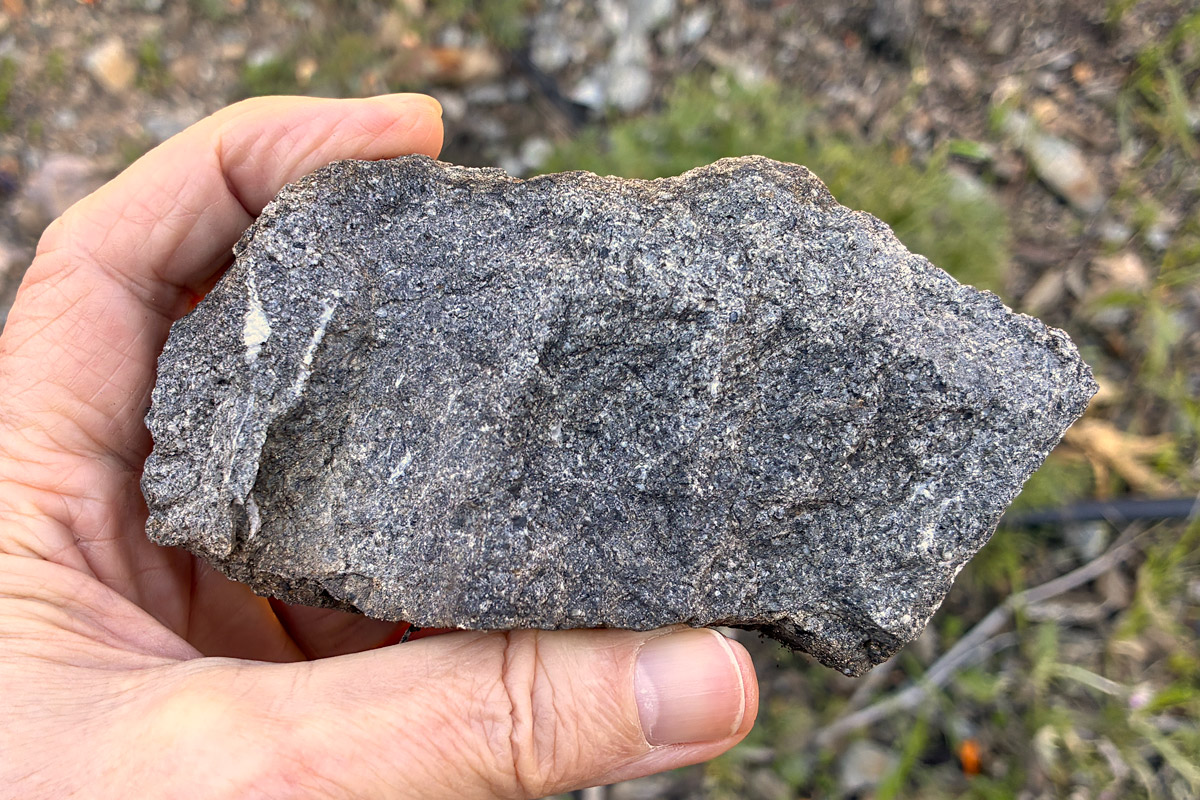
There was lots of decent stone in the hills, where Piedmont sits today, and other quarries began to produce it, but Whitmore’s blue rock was the clear favorite. The geologic map shows that while the other quarries produced good sandstone and argillite, Whitmore’s pit tapped an intrusion of real lava, classified as quartz diorite.
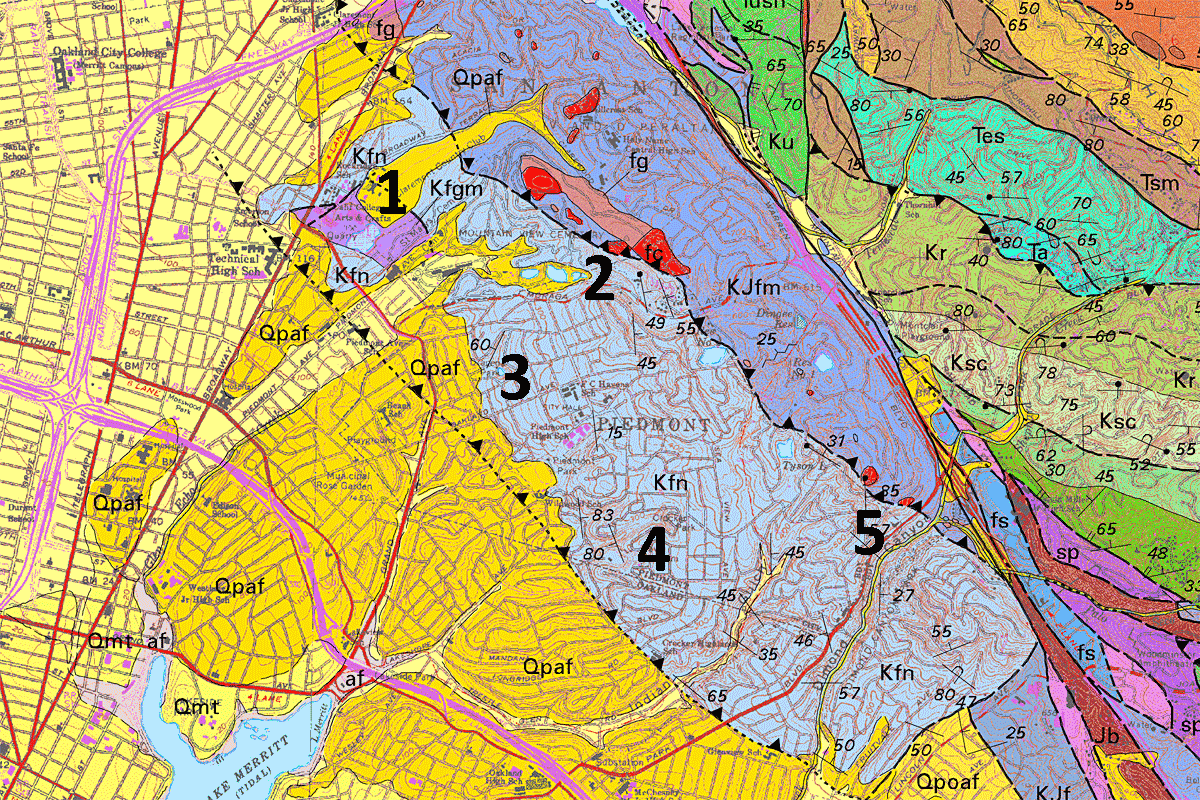
Major quarries in the Piedmont bedrock block: 1, Whitmore/Bilger; 2, Blair Quarries; 3, Blair’s Quarry; 4, Alameda Macadamizing Co. Quarry; 5, Dimond Canyon Quarry.
Whitmore died in 1870, and a new firm, the Oakland Paving Company, bought the quarry.
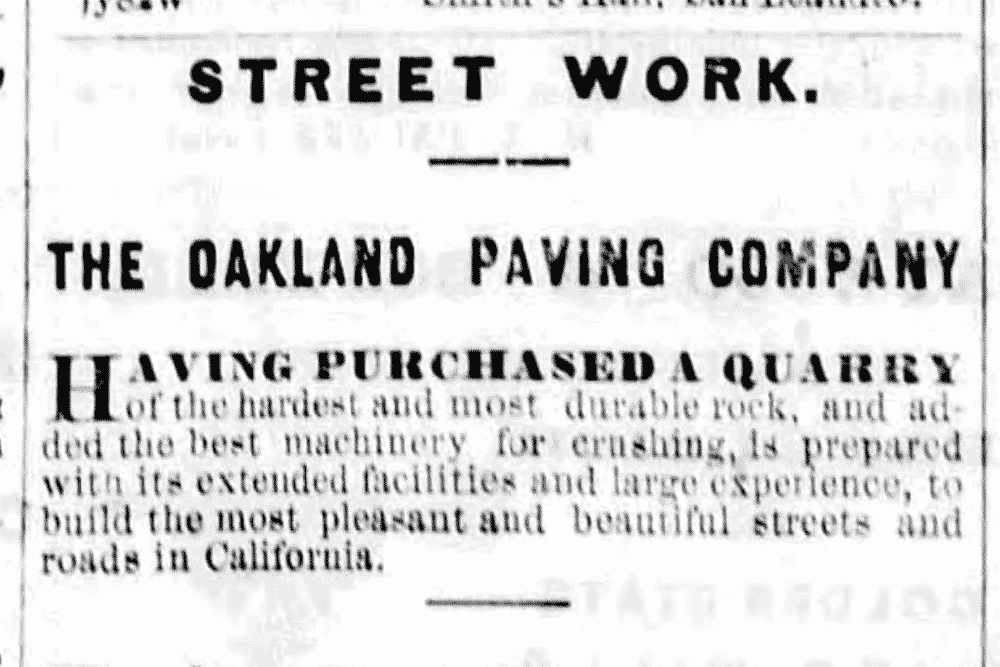
In 1871 mayor Nathan Spaulding singled out their product in an address to the City Council: “The macadam is composed of blue trap rock, which is exceedingly hard, tough and durable, and under a proper and judicious system of repairs, it is believed that our macadamized streets will last for a great number of years.” Naturally Broadway was macadamized first, all the way up to the quarry.
City road-building contracts required “hard gray or blue trap rock,” but they used a practical rather than a geological definition. If the rock was dark, hard, homogeneous and dust-free, it would do for macadamizing city streets. It wouldn’t crumble under prolonged use, and if sprinkled with water regularly it wouldn’t raise a lot of dust.
Although all of the Piedmont quarries prospered during the macadam era, Oakland Paving was zealous about its hard blue trap rock. Even in San Francisco, supervisors in 1873 favored “Oakland blue trap rock.” The Daily Transcript said, “It combines the indispensible requisites for making good and durable roads. It is hard, almost to impregnability. And yet when pulverized it throws off little dust, and when watered daily soon becomes packed down into a surface smooth and of adamantine solidity.” (21 November 1873) The Tribune wrote, “It gives us smooth streets, well packed, and pleasing to the eye. Vehicles pass noiselessly over it; and it proves to be durable, and therefore is an economical material to use.” (14 December 1876)
Oakland Paving produced its rock from the east side of the property, next to the cemetery, where a deep pond remains today. The high wall of true blue rock rises on the far side, looking as strong as ever.
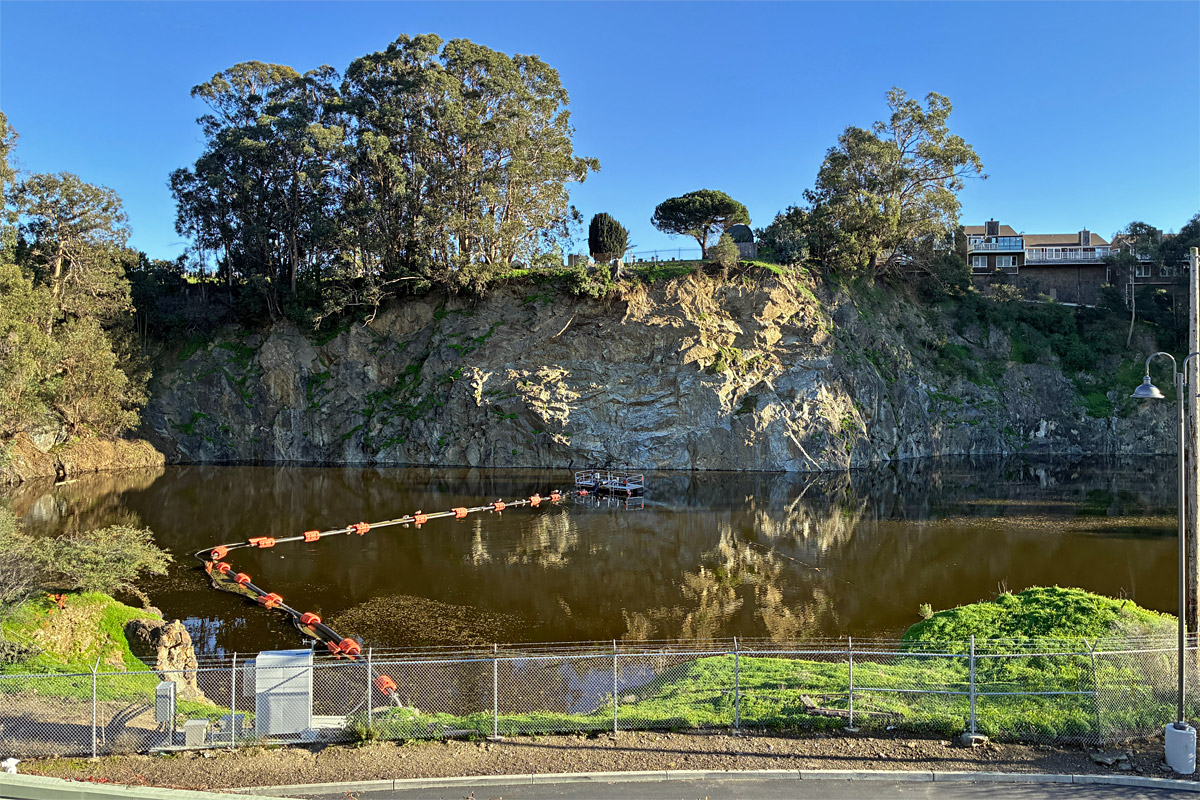
“Blue rock” became a generic term in the central Bay area, which made some sense because stone much like it occurs in several different places. In fact, Oakland Paving acquired a similar quarry across the Bay at McNears Point, which under its current operators provides much of the riprap along the Bay shore. (It’s blue rock, but not the blue rock.)
By the late 1880s, the macadam was getting old and expensive to maintain. Bitumenizing was the newest best thing, using natural asphalt rock mined in the Santa Cruz Mountains, and modern asphalt paving, made possible by abundant petroleum, soon followed. Nevertheless Oakland was proud of its rock, and in 1892 the city specified that “1st class rock shall be rock of igneous character and formation, trap or basalt, of irregular cleavage, and such as shall not lose by erosion and fracture upon testing same in the ‘rattler’ belonging to [the] city of Oakland for purposes of testing rock, revolving at the rate of not less than 28 revolutions per minute for three hours, more than fifteen per cent of its original weight.”
Around 1890, when the three founders of the Oakland Paving Company died, Frank Bilger and Anson Blake (son of founder Charles T. Blake) took over and adopted a high profile. They were energetic, well-connected entrepreneurs at a time when Oakland was still a chummy business town. The days of macadam were passing, although oil-bound macadam replaced water-bound macadam for a few years. (The memory survives in the word “tarmac” sometimes used for airport runways.) The firm devised a version they called rockite, but it evidently found few buyers. Their quarry began to lose its place at the top of the pile. A new quarry in Leona Heights was found to yield “a fine quality of blue rock,” and in a test of five quarries the rattler proved the Leona Heights Quarry to have the best rock in town. This evidently was a blow to Blake and Bilger, because after that they emphasized their original blue rock as much as they could.
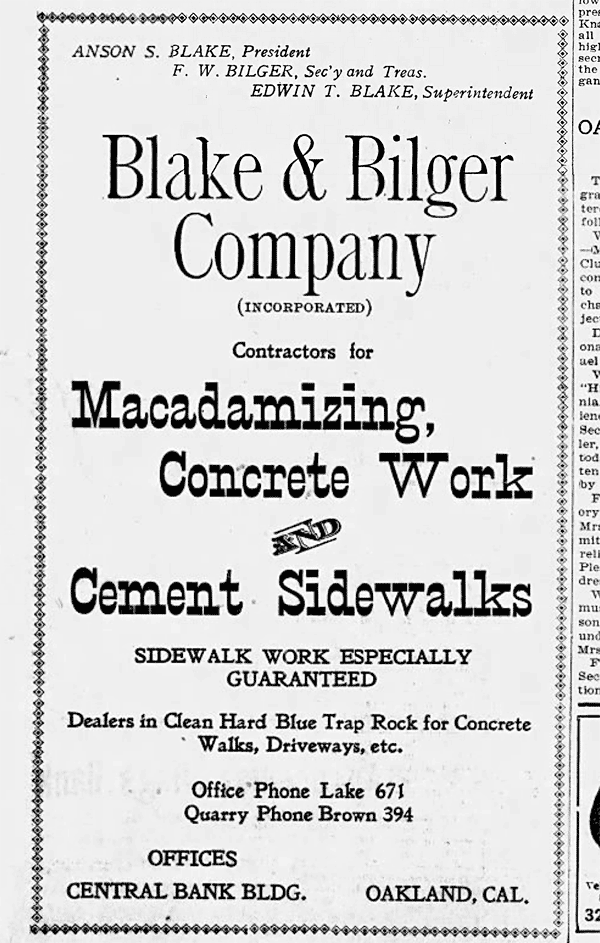
In addition to the bulk crushed-rock business, Blake and Bilger spun off a concrete contracting company, Blake & Bilger, which laid sidewalks in Oakland and neighboring cities, while Oakland Paving handled larger developments involving integrated curbs, asphalt roadbeds and sidewalks. Both firms used fine crushed rock — aggregate — from the Broadway quarry, and their sidewalk stamps survive. Later still they reincarnated the base business as a diversified building material company.
In 1905 the Blake & Bilger Company announced its presence in the papers as “dealers in clean hard blue trap rock for concrete walks, driveways etc.” They clung to the word “blue” that had defined the firm from the beginning.
By 1914 they had refined an ad campaign around “Clean Blue Crushed Rock,” touted as the “very best rock for concrete and street work.” At some point the original pit was abandoned and allowed to fill with groundwater. By that time no one talked about macadam any more. This photo, probably from the 1920s, shows the quarry eating into the hillside nearer to Broadway. Neighbors had moved into the area, and in response to their complaints the quarry switched to electric equipment and announced a new, quieter detonation method.

Photo courtesy Bob Demello
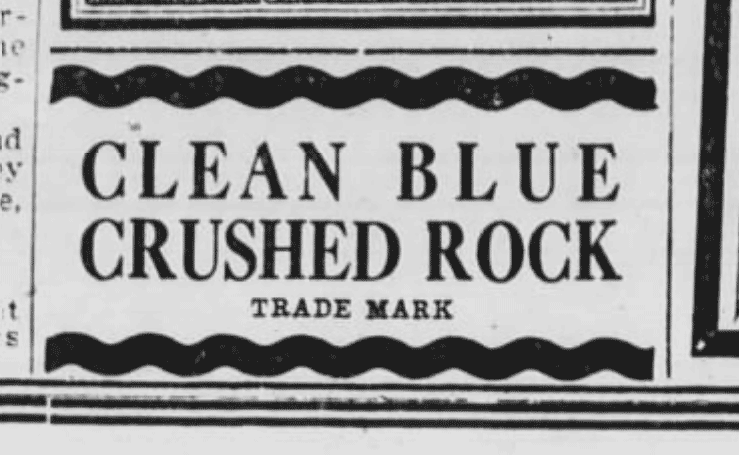
The rock from this sector was no longer the hard quartz diorite, but a lighter-colored altered material more like what the old Piedmont rivals had sold. Nevertheless Blake and Bilger touted their Clean Blue Crushed Rock in ads that said less and less, in 1924 arriving at the absolute minimum.
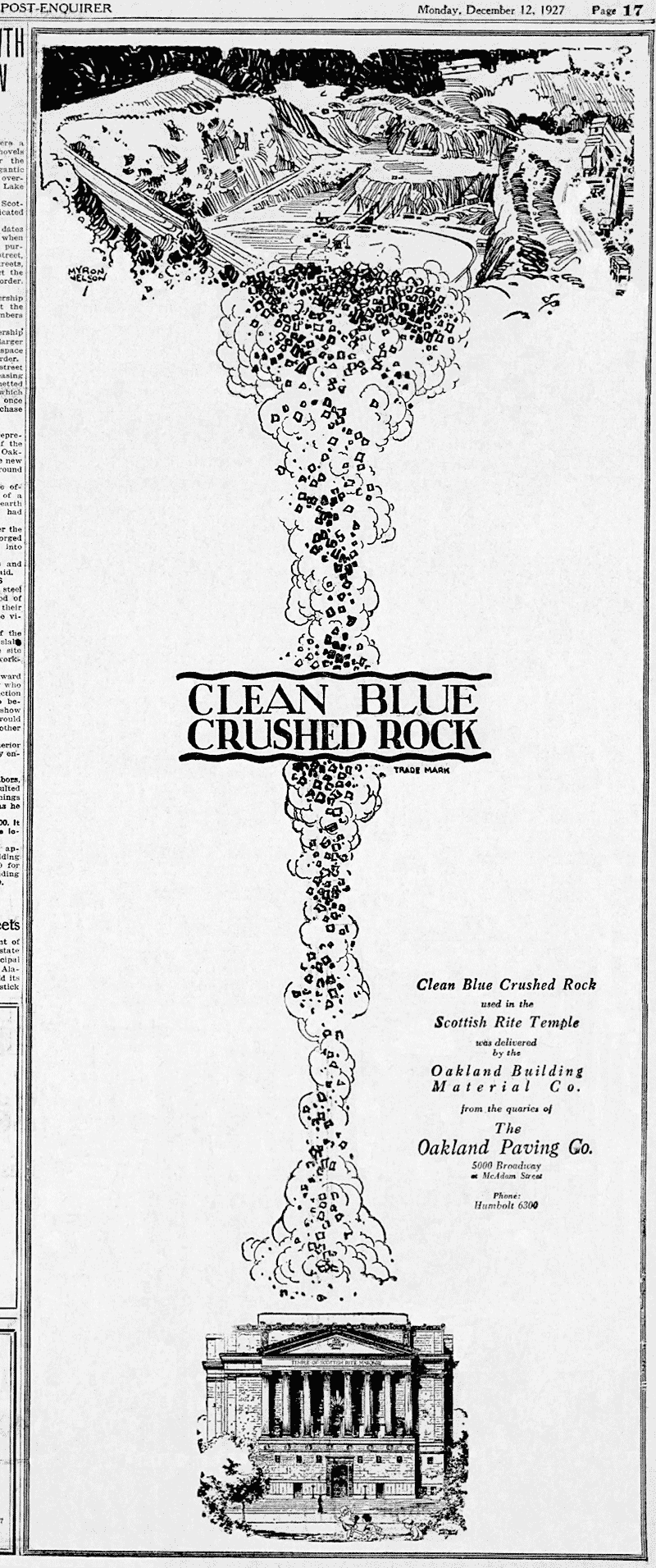
There were also occasional half- and full-page spreads boasting of the major buildings that had used the very best rock for concrete: the Campanile and the Greek Theater. The Medical Arts Building at 19th and Franklin, and the Leamington Hotel across the street. City Hall and the great Civic Auditorium. The climax came with the Scottish Rite Temple, in 1927.
But the last time “Clean Blue Crushed Rock” appeared in the papers was a few months later in coverage of a luxury demonstration home in Piedmont Pines. The term “blue rock” itself was forgotten by the forties, a long time ago.


 Oakland Geology