The post Pharos MarCoLab Ireland Mega Event, Living Lab in Kerry & Cork, 26–28 May 2026 first appeared on PHAROS Project.
]]>Join the Atlantic and Arctic Lighthouse community to promote marine restoration, ocean literacy, and the blue economy in Ireland.
We’ll gather from 26-28 May in Kerry and Cork for the Mega Event Ireland, uniting government, researchers, innovators, educators, businesses, investors, and local communities to launch two Living Labs. Together, we’ll tackle marine restoration challenges through citizen engagement, school programmes, and innovative demonstrations. Highlights include the MINKA Living Lab launch, “Waste to Worth” 3D printing, fisher-led initiatives, a Blue Schools webinar, a STEM building tour, an art exhibition, and a visit to Bantry Marine Research Station’s kelp farm.
MarCoLab Ireland is a blue economy innovation space whose name sums up its mission: Mar as the ocean, Co as collaboration, cooperation, and co-creation, and Lab as a living lab. The word MarCo within its name explicitly refers to a framework, a shared structure where, through the quadruple helix, innovation and awareness around nature-based solutions are fostered to balance the economy and environmental protection.
Agenda
Tuesday, 26 May 2026
The first day kicks off at MTU Kerry’s new STEM Building with registration, the Opening Ceremony, and a PHAROS project overview. Key sessions include “Waste to Worth” showcasing 3D printing from marine waste, and “Fisher Guardians” on transforming fishing gear.
After a tour of the €20 million facility, we transfer to Maharees to launch the MINKA Living Lab with local conservation volunteers. The day concludes with “Pint of Science” and a Local Seafood Demo, where marine science meets culinary delight.
Wednesday, 27 May 2026
Day 2 opens with a marine art exhibition and Living Lab video launch, followed by a panel discussion on enhancing the Living Lab. Local schools share their conservation work and seek expert advice. After lunch, the PHAROS Futures networking event connects partners to maximise project impact.
In the afternoon, join an optional visit to Fenit’s native oyster beds, Europe’s last, by Greenway cycle or bus. The day ends with a social dinner and traditional Irish music session. A perfect blend of culture, community, and collaboration.
Thursday, 28 May 2026
The final day takes us to scenic Bantry Bay, County Cork, hosted at the Bantry Marine Research Station. Led by Dr Julie Maguire, we’ll tour the PHAROS demo site featuring an innovative kelp farm cultivating winged and sugar kelp. Learn how this nature-based solution monitors ecosystem restoration alongside a nearby salmon farm.
It’s a hands-on look at cutting-edge aquaculture research in one of Ireland’s most stunning coastal settings, a fitting close to three days of collaboration and discovery.
Workshops, Seminars & Exhibition
Waste to Worth
Tuesday, 26 May 2026
This innovative session showcases the collaboration between PHAROS and the INSPIRED Blue Hub, demonstrating how marine waste (such as fishing nets and ropes) can be transformed into functional utensils through 3D printing. The initiative brings together adults with additional needs, school students, and MTU’s engineering department, fostering inclusivity while advancing circular economy solutions.
Fisher Guardians
Tuesday, 26 May 2026
The Fisher Guardians programme empowers fishers to actively participate in ocean protection, while the BIM Clean Oceans Initiative focuses on transforming end-of-life fishing gear into valuable secondary materials. Supported by MTU’s Clean Technology Centre, the presentation will showcase Irish companies and initiatives leading the way in circular economy solutions for the fishing industry. Attendees will gain insights into how discarded nets and gear can be recovered, recycled, and reintegrated into supply chains, turning waste into opportunity while safeguarding marine ecosystems for future generations.
Blue Schools Webinar
Tuesday, 26 May 2026
This interactive online session will connect classrooms across Ireland with the PHAROS project, engaging students and educators in marine restoration efforts. The Blue Schools webinar invites young learners to explore ocean literacy, biodiversity preservation, and sustainability through live discussions with PHAROS experts. Participants will have the opportunity to ask questions, share ideas, and contribute fresh perspectives from the next generation of ocean stewards. By fostering dialogue between researchers and schools, this initiative aims to inspire curiosity, build environmental awareness, and ensure that youth voices are heard in shaping the future of our marine ecosystems.
Living Lab Launch – MINKA
Tuesday, 26 May 2026
The centrepiece of our community-driven efforts, the MINKA Living Lab launches in the ecologically fragile Maharees coastal region. This initiative places citizens at the heart of marine restoration, bringing together local volunteers, schools, and researchers to address pressing challenges including sand dune protection, biodiversity preservation, marine plastics, and human-induced degradation. By fostering hands-on participation and intergenerational learning, the Living Lab empowers the community to co-create solutions and monitor environmental change.
Exhibition & Theatre Event
Wednesday, 27 May 2026
This is a captivating marine art installation that blends creativity with ocean advocacy, setting the stage for deep reflection on our relationship with the sea, followed by the official launch of the Living Lab video, documenting community engagement and restoration efforts in Maharees and Tralee Bay. A dynamic panel discussion then brings together artists, scientists, and community leaders to explore how the Living Lab can evolve throughout the PHAROS project. Together, they consider ways to deepen citizen participation, amplify local voices, and integrate artistic perspectives into marine restoration.
Tralee Bay Wetlands Centre School Project
Wednesday, 27 May 2026
At the heart of community engagement, the Tralee Bay Wetlands Centre hosts an inspiring showcase of local school projects focused on marine conservation. Young students present their hands-on work exploring biodiversity, sand dune protection, and the impact of marine plastics, offering fresh perspectives on the challenges facing Tralee Bay. This intergenerational exchange allows attending PHAROS experts and guests to hear directly from the community’s youngest citizens, ask questions, and provide guidance.
Networking and Demonstrations
PHAROS Futures Networking
Wednesday, 27 May 2026
This dedicated networking event brings together the full spectrum of PHAROS partners, researchers, innovators, industry leaders, educators, and community representatives, to shape the future of the project in Ireland. Through facilitated discussions and informal exchanges, participants will explore how collective expertise can drive meaningful impact, from marine restoration to circular economy solutions. The session aims to identify synergies, spark new collaborations, and ensure that each partner’s strengths contribute to PHAROS’s long-term success.
‘Pint of Science’ & Local Seafood Demo
Tuesday, 26 May 2026
The first day concludes on a deliciously engaging note as marine science meets culinary creativity. Set in a relaxed atmosphere, the ‘Pint of Science’ session offers informal conversations with researchers over a refreshing drink, making complex marine topics accessible and fun. Alongside, a Local Seafood Demo showcases the best of Ireland’s coastal harvest, prepared fresh for attendees to sample. This unique pairing of science and seafood creates the perfect setting for networking, storytelling, and lively discussion.
Innovative Nature-Based Solution for Ecosystem Restoration: Bantry Marine Research Station & PHAROS Demo Site – Cork
Thursday, 28 May 2026
The final day takes us to the picturesque Bantry Bay, home to the Bantry Marine Research Station and the PHAROS demo site. Guided by station director Dr Julie Maguire, attendees will explore a state-of-the-art seaweed and fish hatchery featuring innovative kelp cultivation of winged (Alaria esculenta) and sugar (Saccharina latissima) kelp.
This nature-based solution monitors ecosystem restoration by comparing kelp growth near a salmon farm to a control site. The tour offers first-hand insight into sustainable aquaculture, marine research, and the potential of seaweed farming to restore marine habitats, all within one of Ireland’s most breathtaking coastal settings.
More information coming soon.
The post Pharos MarCoLab Ireland Mega Event, Living Lab in Kerry & Cork, 26–28 May 2026 first appeared on PHAROS Project.
]]>The post What are Smart Enhanced Reefs? first appeared on PHAROS Project.
]]>Smart Enhanced Reefs (SER) are a fundamentally different proposition. They are precision-engineered ecosystems, designed using AI-driven software, built from biologically compatible materials, and monitored in real time. The shift from dumping concrete to deploying data-informed living structures represents one of the most significant leaps in marine restoration technology in recent years. And PHAROS is deploying them in Gran Canaria right now.
What Exactly Is a Smart Enhanced Reef?
A Smart Enhanced Reef is an artificial reef structure designed using parametric intelligence. Rather than following a generic blueprint, each SER is custom-built to match the specific ecological, geological, chemical, and biological conditions of its deployment site.
The technology was developed by Underwater Gardens International (UGI), a Spanish marine restoration company and PHAROS consortium partner. At the core of their approach is Reefhopper®, a proprietary software platform that combines environmental analysis, digital modelling, and generative design to produce reef structures optimised for a specific location and set of restoration goals.
Marc García-Durán, CEO and founder of UGI, describes SER as “not just artificial constructions: they are living refuges shaped by science and technology so that nature can reclaim its space.” That framing matters. The ambition is not to replace a natural reef with a synthetic one. It is to create the conditions in which a natural ecosystem can re-establish itself, faster and more reliably than it would without intervention.
How Reefhopper® Designs Each Reef
The design process starts with data. Reefhopper® maps the biotic assemblages of the target site, accounting for soil composition, water chemistry, current patterns, light availability, the presence of suspension feeders like corals and sponges, and the life cycles of the native species you are trying to attract. All of this feeds into a generative design algorithm that produces a reef structure tailored to that precise environment.
The result is a structure with complex, multi-layered surfaces, cavities, and crevices that replicate the functional architecture of natural hard substrates. Different species need different conditions. Benthic species that live on the seabed need one thing. Pelagic species that move through the water column need another. Juvenile fish need nursery spaces. Encrusting organisms need surfaces to colonise. A well-designed SER accommodates all of these requirements simultaneously, within a single structure or a coordinated set of them.
The materials are equally deliberate. SER structures are built from a mix of calcium carbonate, biomaterials, and cement, chosen for their ecological compatibility and their ability to attract and support marine life. Some structures incorporate bioreactive surfaces that actively encourage colonisation. Importantly, the algorithms embedded in the design process are iterative and self-learning, meaning the system analyses how the ecosystem responds and feeds that information back into future design decisions.
Smart Monitoring Makes the Difference
The word “smart” in Smart Enhanced Reefs is not marketing language. It refers to the monitoring infrastructure integrated into each deployment.
Underwater cameras equipped with artificial intelligence automatically identify and count fish species visiting the reef. Hydrophones record underwater soundscapes, detecting marine mammals and measuring the impact of human noise pollution. Environmental sensors monitor water temperature, salinity, nutrient levels, and dissolved oxygen continuously. All of this data streams in real time to researchers and, in the context of PHAROS, directly into the local Digital Twin Ocean model.
This matters because it closes the loop between deployment and understanding. With a traditional artificial reef, you drop the structure and come back periodically to count what has turned up. With a monitored SER, you have a continuous picture of how the ecosystem is developing, what is working, what is not, and what adjustments might help. Adaptive management, rather than deploy-and-hope.
What PHAROS Is Deploying in Gran Canaria
The waters off Gran Canaria present a stark starting point. The PHAROS demo site in the PLOCAN research area is approaching what researchers describe as “oligotrophic desert status,” meaning near-total depletion of the nutrients that support marine life. It is precisely the kind of degraded environment where conventional restoration approaches struggle and where precision matters most.
PHAROS has developed three distinct reef types for deployment at this site, each targeting a different ecological niche. Ten Type A reefs are designed for benthic species on the seabed. Twenty-four Type B reefs are semi-submerged floating structures to attract pelagic species moving through the water column. Sixteen Type C cavity reefs are integrated directly into mooring blocks to provide habitat for small demersal and encrusting life.
The path to deployment has not been straightforward. Spanish regulatory requirements meant that the original permitting plan had to be redesigned. Authorities recommended integrating the artificial reefs into the IMTA (Integrated Multi-Trophic Aquaculture) permit, which led to the reef deployment site being relocated from 15 metres to approximately 49 metres depth, and the entire layout being rethought. As any practitioner in marine restoration will tell you, regulatory navigation is often as technically demanding as the science itself.
Fabrication is underway. Delivery to Gran Canaria is expected by the end of 2026, with deployment alongside the IMTA system planned for March 2027.
Smart Enhanced Reef Proof: Barcelona’s Port Olímpic
The Gran Canaria deployment is not UGI’s first. The results from Barcelona’s Port Olímpic provide a compelling preview of what SER technology can achieve in practice.
In just twelve months, a once-degraded seabed in Port Olímpic was transformed into a living laboratory supporting more than one hundred marine species. The intervention used Reefhopper®-designed SER structures alongside gabions filled with mollusc shells to encourage larvae and invertebrate growth. The reefs acted as ecological connectors, allowing species to disperse safely and helping the broader ecosystem stabilise.
The results were measurable, not anecdotal. This is a critical distinction for marine restoration. Too much of the field has relied on qualitative assessments and optimistic projections. The Port Olímpic project demonstrated that SER technology, deployed with scientific rigour, produces quantifiable biodiversity outcomes in a relatively short timeframe.
UGI has now deployed SER structures across multiple European environments, including sites in Tenerife, Tarragona, Køge Bay in Denmark, and Porsangerfjorden in Norway, each designed specifically for the local ecosystem. The diversity of deployment contexts is itself a validation of the parametric approach. One design cannot fit all marine environments. Reefhopper® produces a different answer for every site, because every site asks a different question.
Why This Matters for EU Ocean Policy
The EU Nature Restoration Law, which entered into force in August 2024, sets a target to restore at least 20% of EU land and sea areas by 2030 and all ecosystems in need of restoration by 2050. That is an enormous ambition, and it will not be met with conventional approaches operating at conventional speeds.
Smart Enhanced Reefs offer something the policy framework urgently needs: scalable, measurable, site-specific restoration technology that can be deployed across diverse marine environments and monitored continuously. The combination of AI-driven design, ecological monitoring, and Digital Twin integration means that every SER deployment generates data that improves the next one.
For PHAROS, the SER work in Gran Canaria feeds directly into the EU Biodiversity Strategy 2030, the EU Mission to Restore Our Ocean and Waters, and the broader push to develop Nature-Based Solutions that are not just conceptually sound but operationally proven. The PHAROS consortium brings together the scientific rigour of PLOCAN and ULPGC, the design innovation of UGI, the digital twin capabilities of blueOASIS, and the MPA governance tools of CMCC to ensure that what is learned in Gran Canaria can be replicated across the Atlantic and Arctic basin.
Beyond Restoration: The Carbon and Coastal Resilience Case
Marine ecosystems restored by SER do more than support biodiversity. They deliver measurable climate services.
Macroalgae cultivated alongside SER structures captures CO2 from the atmosphere and contributes to local ocean acidification buffering. Reef structures stabilise sediments, reduce coastal erosion, and break wave energy, contributing to the resilience of coastlines that are increasingly exposed to extreme weather events under climate change. The reefs serve as carbon sinks in their own right, and their role as ecological connectors helps maintain the genetic diversity that makes populations more resilient to environmental stress.
This is why the conversation about SER cannot stay confined to marine biology. It belongs equally in climate adaptation, coastal infrastructure planning, and blue economy investment. A restored reef is not a cost. It is infrastructure that delivers multiple services simultaneously, with a value that compounds over time as the ecosystem matures.
The ocean does not need us to invent solutions from scratch. It needs us to create the conditions in which it can recover. Smart Enhanced Reefs are, at their core, exactly that. precision tools for giving nature back its starting point.
What is a Smart Enhanced Reef (SER)?
A Smart Enhanced Reef is an AI-designed artificial reef structure built to restore marine biodiversity at a specific site. Unlike traditional concrete reef blocks, SER structures are custom-engineered using parametric software to match the ecological, geological, and biological conditions of their exact deployment location.
How is a Smart Enhanced Reef different from a traditional artificial reef?
Traditional artificial reefs use generic structures placed in the water with the hope that marine life will colonise them. Smart Enhanced Reefs are designed using Reefhopper®, a generative AI software that analyses site-specific data and produces a structure tailored to attract the right species for that environment. Every SER is different.
What is Reefhopper®?
Reefhopper® is a proprietary software platform developed by Underwater Gardens International (UGI). It combines environmental data, digital modelling, and generative design to produce reef structures optimised for specific marine ecosystems. The algorithms are iterative and self-learning, improving with each deployment.
What materials are Smart Enhanced Reefs made from?
SER structures are built from a mix of calcium carbonate, biomaterials, and cement, chosen for their ecological compatibility and ability to support marine life colonisation. Some structures include bioreactive surfaces that actively encourage the growth of corals, sponges, and other encrusting organisms.
How are Smart Enhanced Reefs monitored?
Each SER deployment is integrated with underwater cameras using AI to identify fish species, hydrophones to record soundscapes, and environmental sensors measuring water quality in real time. In the PHAROS project, this data feeds directly into a local Digital Twin Ocean model for continuous ecosystem analysis.
Where is PHAROS deploying Smart Enhanced Reefs?
PHAROS is deploying three types of SER at its Gran Canaria demo site in collaboration with UGI. Ten Type A reefs target benthic species, twenty-four Type B floating reefs attract pelagic species, and sixteen Type C cavity reefs support small demersal and encrusting life. Deployment is planned for March 2027.
Do Smart Enhanced Reefs help with climate change?
Yes. SER structures support marine forest and macroalgae growth, which captures CO2 and buffers ocean acidification. The reefs also stabilise sediments, reduce coastal erosion, and break wave energy, contributing to coastal climate resilience. They function as carbon sinks and ecological connectors simultaneously.
Has Smart Enhanced Reef technology been proven to work?
Yes. At Barcelona’s Port Olímpic, UGI deployed SER structures that transformed a degraded seabed into a habitat supporting over 100 marine species within twelve months. SER has also been deployed across multiple European sites including Tenerife, Tarragona, Denmark, and Norway.
The post What are Smart Enhanced Reefs? first appeared on PHAROS Project.
]]>The post What is a Digital Twin Ocean? first appeared on PHAROS Project.
]]>The Basic Idea
A Digital Twin Ocean (DTO) is a virtual, data-driven replica of a real ocean environment. It mirrors the physical world in near-real time, drawing on streams of data from sensors, satellites, ships, and underwater instruments. Feed it enough information, and it can simulate how that environment behaves, evolves, and responds to change.

Engineers have used them for decades to model aircraft engines, power grids, and factories. The logic is simple: build a virtual version of something complex, test your ideas on the virtual version, and avoid costly mistakes in the real one. The ocean, arguably the most complex system on the planet, is now the subject of the same approach.
What makes a DTO different from a standard computer model is the live connection. Traditional ocean models run on historical data and fixed parameters. A digital twin is dynamic. It updates continuously as new data flows in, adjusts its simulations accordingly, and improves over time through machine learning. It is less a snapshot, more a living system.
What Powers a Digital Twin Ocean?
Three technologies make a Digital Twin Ocean work in practice.
The first is observation infrastructure. In-situ sensors on buoys, underwater vehicles, and fixed platforms collect data on temperature, salinity, currents, oxygen levels, and biodiversity in real time. Satellites monitor sea surface conditions from above. The Internet of Things (IoT) connects these instruments into a continuous data stream that feeds the twin.
The second is modelling. Advanced numerical models simulate ocean physics, from large-scale circulation patterns down to local hydrodynamics. These equation-based models have been refined over decades and form the scientific backbone of any credible digital twin.
The third is artificial intelligence. AI processes the enormous volumes of data that no human team could handle manually. It identifies patterns, fills gaps where sensors are sparse, and enables the twin to answer “what if” questions. What if sea temperature rises by 1.5°C? And if a new marine protected area is designated here? What happens if we reduce plastic input from this river by half? The DTO runs the scenario and shows you the projected outcome.
High-performance computing ties everything together, providing the processing muscle to run these simulations at speed and at scale.
The European Digital Twin Ocean
The European Commission formally announced the European Digital Twin Ocean (EU DTO) in February 2022, at the One Ocean Summit in Brest. It is a flagship initiative under the EU Mission to Restore Our Ocean and Waters by 2030 and is conceived as a public good. Not a commercial product, but shared infrastructure available to scientists, policymakers, businesses, and citizens alike.
The backbone of the EU DTO is EDITO, a platform built and operated by Mercator Ocean International and the Flanders Marine Institute, the organisations behind the Copernicus Marine Service and EMODnet respectively. EDITO consolidates decades of European ocean observation into a single, interoperable digital environment. A €14 million investment runs the current phase through 2028.

By 2024, the first pre-operational version of the EU DTO demonstrated real capabilities. Researchers were already using it to model Sargassum seaweed drift, simulate sea turtle movements, and track plastic pollution pathways. EU Commission President Ursula von der Leyen called it “an incredible tool” when its capabilities were showcased at the United Nations Ocean Conference in Nice in 2025.
The platform does not replace existing services like the Copernicus Marine Service or EMODnet. It builds on them. EDITO integrates their data and models into a unified environment and adds the AI tools and scenario-testing capabilities that turn raw data into actionable insight.
Where PHAROS Fits In
The PHAROS project, an EU Horizon Europe initiative led by the Canary Islands Ocean Platform (PLOCAN), is one of the projects actively building on the EU DTO infrastructure and contributing to it.
PHAROS is implementing what are known as local digital twins. These are high-resolution, site-specific representations of two demonstration locations, Gran Canaria in Spain and Iceland. Rather than modelling the entire Atlantic, a local twin focuses on a defined area with much greater detail. This is where the technology becomes genuinely useful for conservation practitioners on the ground.
PHAROS partner blueOasis is leading this work. Their approach integrates in-situ sensors, real-time IoT data streams, equation-based ocean models, and AI-driven surrogate models into a single platform called HiSea. Underwater acoustic hydrophones, cameras, and surface monitoring instruments feed live data into the system. The AI layer enables the twin to self-learn, refining its simulations as more data becomes available.
The practical application is direct. MPA managers and conservation teams at the PHAROS demo sites can use the local twin to monitor ecosystem restoration efforts, track biodiversity changes, and model the likely impact of different management decisions before implementing them. It turns adaptive management from a concept into a daily practice.
All data collected through the PHAROS DTO follows FAIR principles, meaning it is Findable, Accessible, Interoperable, and Reusable, and feeds back into the EU DTO via EDITO and EMODnet. PHAROS is not just a consumer of the EU DTO infrastructure. It is an active contributor to it.
Real Decisions, Not Just Research
One of the most important things to understand about digital twins is that they are not purely academic tools. They are decision-support systems.
The CMCC Foundation, another PHAROS partner, is integrating DTO tools into the Blueprint Platform, a governance and management platform for marine protected areas. This means that MPA managers across the Atlantic basin will be able to access dynamic, data-driven simulations directly in the platform they use to make management decisions. Ecological corridor planning, connectivity analysis, and adaptive responses to climate change will all be informed by live digital twin outputs.
For the fishing and aquaculture sectors, local twins can forecast water conditions, flag environmental stress events, and help operators time their activities to reduce impact. At the PHAROS Ireland demo site in Bantry Bay, where Integrated Multi-Trophic Aquaculture (IMTA) is being trialled alongside salmon farming, real-time ecosystem data is essential to understanding how species interact and respond. A local DTO makes that monitoring systematic rather than sporadic.
The EU DTO has already demonstrated its ability to improve ocean current prediction accuracy by more than 20% compared to older methods, using a fraction of the computing energy required by traditional supercomputers. That is not a marginal gain. It is the kind of improvement that changes what is possible in practice.
The Challenges Are Real
None of this is without difficulty.
Data coverage is uneven. The Atlantic and Arctic are vast, and sensors are expensive to deploy and maintain. Areas with poor coverage produce less reliable simulations. Bridging these gaps requires sustained investment in observation infrastructure and innovative approaches, including citizen science data collection and partnerships with the fishing industry.
User adoption is another challenge. A sophisticated platform is only useful if the people who need it can actually use it. Both EDITO and PHAROS have invested heavily in co-design, ensuring that researchers, MPA managers, and policymakers are involved in shaping the tools from the beginning rather than handed a finished product they do not fully understand or trust.
There is also a more fundamental point worth making. A digital twin can model the likely consequences of a decision. It cannot make the decision for you. Human judgment, political will, and community engagement remain essential. The technology provides better information. People still decide what to do with it.
A New Standard for Ocean Management
By 2030, EDITO aims to be a fully operational global benchmark for digital ocean solutions. The EU Mission to Restore Our Ocean and Waters explicitly identifies the DTO as core enabling infrastructure for achieving its targets. That includes protecting 30% of EU seas, restoring degraded ecosystems, and eliminating plastic pollution.
PHAROS, running through August 2029, is building the local twin capabilities and feeding the evidence base that will make the EU DTO genuinely useful at the scale where conservation decisions actually happen. The connection between continental-scale modelling and site-level action is not automatic. Projects like PHAROS are building that bridge in practice.
The ocean is too dynamic, too interconnected, and too consequential to manage on instinct and historical data alone. A Digital Twin Ocean does not simplify that complexity. It makes it legible, testable, and actionable. That is a meaningful shift.
FAQ: Digital Twin Ocean
What is a Digital Twin Ocean?
A Digital Twin Ocean is a virtual, real-time replica of an ocean environment. It combines satellite data, in-situ sensors, numerical models, and artificial intelligence to simulate how the ocean behaves and responds to change.
How is a Digital Twin Ocean different from a regular ocean model?
Traditional models run on historical, static data. A digital twin updates continuously with live data and uses AI to improve its simulations over time. It is dynamic, not fixed.
What is the EU Digital Twin Ocean?
The European Digital Twin Ocean (EU DTO) is a public digital infrastructure announced by the European Commission in 2022. It is built on the EDITO platform, operated by Mercator Ocean International, and is a flagship tool of the EU Mission to Restore Our Ocean and Waters by 2030.
Who uses Digital Twin Ocean technology?
Scientists, marine protected area managers, policymakers, aquaculture operators, and conservation practitioners. Anyone who needs real-time ocean data to make better decisions.
What is a local digital twin?
A local digital twin is a high-resolution version of a DTO focused on a specific site. PHAROS is building local twins for demo sites in Gran Canaria and Iceland to support MPA management and ecosystem monitoring at the ground level.
How does PHAROS use Digital Twin Ocean technology?
PHAROS integrates IoT sensors, AI models, and real-time data streams into local digital twins via the HiSea platform. This enables MPA managers to monitor restoration, test management decisions before implementing them, and feed data back into the wider EU DTO infrastructure.
Can a Digital Twin Ocean predict the future?
It can run scenario simulations, showing the likely outcomes of different decisions or environmental changes. It does not predict with certainty, but it significantly improves the quality of evidence available to decision-makers.
Is Digital Twin Ocean data publicly available?
Yes. EU DTO data follows FAIR principles, meaning it is Findable, Accessible, Interoperable, and Reusable. The goal is to make it a shared public good, not a proprietary tool.
Sources
- https://www.edito.eu/about-edito/what-is-the-european-digital-twin-of-the-ocean/
- https://www.mercator-ocean.eu/ocean-intelligence/the-digital-twin-of-the-ocean/the-european-digital-twin-of-the-ocean/
- https://research-and-innovation.ec.europa.eu/funding/funding-opportunities/funding-programmes-and-open-calls/horizon-europe/eu-missions-horizon-europe/restore-our-ocean-and-waters/european-digital-twin-ocean-european-dto_en
- https://blueoasis.pt/portfolio-item/pharos-lighthouse-for-the-atlantic-and-artic-basin
- https://blue-cloud.org/european-digital-twin-ocean-eu-dto
The post What is a Digital Twin Ocean? first appeared on PHAROS Project.
]]>The post PHAROS at ECSA 2026: Building Connections for Blue Schools and Citizen Science first appeared on PHAROS Project.
]]>The conference, themed “Citizen Science between Centre and Periphery,” brought together more than 600 participants and featured over 325 contributions spanning workshops, panels, roundtables, and poster sessions.

Sharing the MINKA Challenge
The CSIC PHAROS team took part in a workshop session dedicated to teaching citizen science and building capacity through education and training. During the session, the team presented the PHAROS MINKA challenge, highlighting how the platform supports students and teachers in engaging directly with environmental monitoring and marine biodiversity. The discussions underlined the role citizen science can play in making ocean literacy practical and accessible in educational settings.

Expanding the Blue Schools Network
Beyond the formal programme, the conference provided space for a series of informal exchanges with European initiatives working at the intersection of citizen science, marine biodiversity, and ocean education. The CSIC team connected with projects including ICEBERG, MEDiverSEAty, ProBleu, Citizens4Waters, and CSMATCH.

These conversations focused on identifying shared approaches to participatory environmental monitoring and exploring opportunities to expand the network of European Blue Schools. Of particular interest were contacts with practitioners and organisations based in Ireland and Iceland, regions where PHAROS is actively looking to develop new Living Lab connections in the coming phase of the project.
A Growing Network
ECSA 2026 reinforced what the PHAROS project continues to demonstrate across its activities: that citizen science is most effective when it is embedded in communities, schools, and local networks rather than applied from the outside. The connections made in Oulu will feed directly into efforts to grow the Blue Schools network and strengthen the reach of the MINKA citizen science observatory across Europe.
The PHAROS project is funded by the European Union under Horizon Europe and works to restore marine ecosystems across the Atlantic and Arctic basins through nature-based solutions, citizen science, and community engagement.
The post PHAROS at ECSA 2026: Building Connections for Blue Schools and Citizen Science first appeared on PHAROS Project.
]]>The post What are Marine Protected Areas? first appeared on PHAROS Project.
]]>Our oceans cover more than 70% of the Earth’s surface. They regulate our climate, produce half the oxygen we breathe, support billions of people through food and livelihoods, and host an extraordinary range of life found nowhere else on the planet. Yet decades of overfishing, pollution, coastal development, and climate change have left marine ecosystems in measurable decline across much of the world.
Marine Protected Areas are one of the most direct tools we have to address that decline. They are not a perfect solution, and they are not a substitute for reducing the pressures that cause damage in the first place. But used well, they work. Understanding what they are, how they function, and why they matter is the starting point for anyone interested in ocean conservation.

What Is a Marine Protected Area?
A Marine Protected Area, or MPA, is a defined section of ocean, sea, estuary, or large lake where human activities are managed under legal or regulatory authority to protect natural or cultural resources. The boundaries are set deliberately, and within them, specific rules apply that do not apply in the surrounding waters.
That definition covers a very wide range of sites. An MPA might be a remote stretch of deep ocean where all commercial activity is banned. It might be a reef where fishing is restricted but diving is permitted. It might be a coastal wetland where shipping routes are regulated to protect breeding habitat. The common factor is managed protection with a conservation purpose.
The term was formalised internationally through the Convention on Biological Diversity and, in the United States, through Executive Order 13158 in 2000. In Europe, MPAs form a core part of the EU Biodiversity Strategy and the Natura 2000 network, which together set a target of protecting at least 30% of the EU’s seas by 2030, with 10% under strict protection.
Types of Marine Protected Areas
Not all MPAs offer the same level of protection. The type of MPA determines what activities are permitted inside its boundaries and, in turn, how effectively it restores or maintains the ecosystem within it.
No-take reserves are the strictest category. All extractive activity, including fishing, mining, and dredging, is prohibited. These zones provide the strongest ecological outcomes and are considered the gold standard for conservation science.
Marine sanctuaries protect specific natural or cultural features while permitting compatible recreational activities such as diving or snorkelling. Commercial extraction is usually banned or heavily restricted.
Marine parks balance conservation with regulated human use. Sustainable fishing, tourism, and research are typically allowed under specific conditions and permits.
Multiple-use MPAs are the most common type. They divide their area into zones, each with different rules, allowing fishing in some areas, stricter protection in others, and controlled access throughout. Many national and European MPAs follow this model because it allows conservation goals to coexist with the needs of local communities and industries.

The science is clear on which types perform best. A major study published in Nature found that fish biomass increased in 71% of MPA sites with ecological data, but that increases were nearly three times greater in MPAs with adequate staffing and enforcement than in those without. Size, age, and whether the zone is no-take are also strong predictors of effectiveness.

Why Marine Protected Areas Matter
Protecting Biodiversity
The primary purpose of most MPAs is to give ecosystems space to function without destructive intervention. When pressure from fishing, trawling, and pollution is removed or reduced, habitats recover. Species that were previously rare or absent return. Food webs stabilise.
This is not theoretical. Research consistently documents higher species richness, greater fish biomass, and healthier habitat structure inside well-managed MPAs compared to unprotected areas of similar type.
Supporting Fisheries
One of the most important but least understood benefits of MPAs is what scientists call the spillover effect. Fish populations that recover inside a no-take zone eventually grow large enough that individuals move into surrounding waters, where they become available to fishers.
This means an MPA is not simply an area taken out of fishing production. Managed correctly, it functions as a replenishment zone that supports the productivity of adjacent fisheries. Communities that initially resist MPAs on economic grounds often record improved catches over time in the areas surrounding them.
Climate Resilience
Healthy marine ecosystems are more resilient to the effects of climate change than degraded ones. Intact seagrass meadows, mangroves, and kelp forests absorb and store carbon. Coral reefs that are not already stressed by overfishing and pollution have greater capacity to recover from warming events.
Protecting these habitats through MPAs is increasingly understood as a climate strategy, not only a conservation one. The EU Mission to Restore Our Ocean and Waters by 2030 explicitly links MPA expansion with climate adaptation and carbon sequestration goals.
Economic and Social Value
MPAs generate economic value beyond fisheries. Healthy reefs and marine habitats attract divers, snorkellers, and nature-based tourists, creating income for coastal communities. Research published in 2025 introduced the concept of Marine Prosperity Areas, which goes further, arguing that conservation investments should be explicitly designed to align ecological recovery with measurable improvements in local human wellbeing.
The economic case for MPAs is strongest where management is active, where communities are involved in governance, and where the rules are genuinely enforced.

How Much of the Ocean Is Protected
Global MPA coverage has grown significantly over the past two decades, but it remains far below what most scientists consider adequate for biodiversity protection. According to Protected Planet, approximately 8% of the global ocean is now within an MPA boundary, though the level of actual protection varies widely across that coverage.
In Europe, progress has been more substantial. EU Marine Protected Area coverage reached 13.7% of European seas in 2023, up from 4.15% in 2012. Several Member States, including Germany, France, Belgium, and the Netherlands, have already exceeded the 30% coverage target. Countries such as Denmark, Lithuania, Poland, and Romania have expanded their networks beyond 20%.
The EU Biodiversity Strategy for 2030 sets a binding target of 30% protection, with 10% of that under strict or fully protected status. Meeting that target requires both expanding coverage and, critically, improving the quality of protection in areas already designated.

The Challenges MPAs Face
Designation alone does not protect an ocean. Many MPAs exist primarily on paper, with boundaries set but no meaningful enforcement, monitoring, or management in place. These are sometimes called “paper parks,” and they deliver little ecological benefit.
The most persistent challenges facing MPA managers include:
Funding and staffing shortfalls. Research consistently shows that management quality is the strongest predictor of ecological outcomes. Well-staffed, adequately funded MPAs with active monitoring programmes deliver substantially better results. Most MPAs globally do not meet this standard.
Governance fragmentation. Many marine areas fall under overlapping jurisdictions, national, regional, and international, making coordinated management difficult. Fisheries management, shipping regulation, and conservation designations are often handled by different agencies with different mandates and timelines.
Climate change. Protected areas designed around historic species distributions may become less relevant as warming waters drive species into new ranges. Adaptive management, which adjusts strategies based on real-time ecological data, is increasingly essential but requires resources and institutional capacity that many MPA authorities lack.
Community acceptance. MPAs imposed without genuine consultation rarely succeed. Where local communities, including fishers, tourism operators, and indigenous groups, are excluded from design and governance, compliance is low and outcomes suffer. The evidence consistently shows that co-management models, where communities hold real decision-making authority, produce better ecological and social outcomes.
MPAs in the Atlantic and Arctic
The Atlantic and Arctic basins present particular challenges and opportunities for MPA development. These are vast, ecologically diverse, and economically important regions where conservation needs intersect with significant commercial interests in fisheries, energy, and shipping.
In the Arctic, 492 marine protected areas have been recorded, spanning national jurisdictions and international waters. However, the network is considered fragmented and insufficiently representative of the full range of Arctic ecosystems. Climate change is altering Arctic marine habitats faster than anywhere else on Earth, making timely MPA expansion and adaptive management an urgent priority.
The PHAROS project, operating across the Atlantic and Arctic basins under Horizon Europe funding, is working to address these gaps directly. Its approach involves extending the Blue4All Blueprint Platform, a digital tool that supports MPA managers with governance frameworks, adaptive management practices, and ecological corridor planning across the network.
A key innovation in the PHAROS approach is the focus on ecological corridors, connecting individual MPAs so that species can move between protected areas, maintain genetic diversity, and adapt to shifting conditions. Isolated protected areas are inherently more fragile than connected networks.
What Needs to Happen Next
Scientists, policymakers, and conservation practitioners broadly agree on what is needed to make MPA networks genuinely effective:
Expand coverage strategically. Reaching the 30% global target by 2030 requires prioritising ecologically significant, under-protected areas and ensuring that newly designated MPAs fill genuine gaps in the network rather than overlapping with areas already under protection. The EU-funded MPA Europe project is using systematic conservation planning software to identify the optimal locations for new designations across European seas.
Improve management quality. Coverage statistics mean little without enforcement, monitoring, and adaptive management. Investment in the human and technical capacity of MPA authorities is as important as expanding boundaries.
Connect protected areas. Ecological corridors between MPAs allow species to move, populations to mix, and ecosystems to respond flexibly to climate change. Planning MPA networks as connected systems rather than isolated zones significantly increases their long-term effectiveness.
Involve communities. The most durable MPAs are those where local communities are partners in governance, not subjects of regulation. Co-management frameworks that give communities real authority and equitable benefit from conservation outcomes are more effective and more just.
Integrate digital tools. Real-time monitoring, digital ocean twins, and data-sharing platforms are transforming what MPA managers can know about their areas and how quickly they can respond to emerging threats. Making these tools accessible to all MPA authorities, including those in less-resourced regions, is a growing priority.
Marine Protected Areas are not a silver bullet for ocean health. They cannot compensate for unregulated fishing beyond their boundaries, for the carbon emissions driving ocean warming, or for the land-based pollution that reaches marine habitats from rivers and coastlines. But they remain one of the most evidence-backed tools we have for giving marine ecosystems the space they need to recover.
The science is sufficiently clear and the urgency sufficiently great that expanding and improving MPA networks is one area where action should not wait for perfect conditions. The ocean’s capacity to regenerate, given adequate protection and time, has been demonstrated repeatedly and across a wide range of ecosystems. The task now is to scale that protection to match the scale of the problem.
Sources
- Marine Protected Areas – Protected Planet https://www.protectedplanet.net/en/thematic-areas/marine-protected-areas
- Marine Protected Areas – Woods Hole Oceanographic Institution https://www.whoi.edu/ocean-learning-hub/ocean-topics/sustainable-ocean/marine-protected-areas/
- Marine protected area – Wikipedia https://en.wikipedia.org/wiki/Marine_protected_area
- Types and Design of Marine Protected Areas – Ocean Tracksoceantracks.org › library › conservation › types-and-design-of-marine-prot… https://oceantracks.org/library/conservation/types-and-design-of-marine-protected-areas
- Types and Design of Marine Protected Areas https://www.oceantracks.org/library/conservation/types-and-design-of-marine-protected-areas
- New study finds MPA effectiveness is greatest where there is adequate staff and funding https://octogroup.org/news/new-study-finds-mpa-effectiveness-greatest-where-there-adequate-staff-and-funding/
- Marine Protected Areas and How They Protect Marine Life https://pharosproject.eu/marine-news/what-are-marine-protected-areas/
- Nature-Based Solutions in Marine Ecosystem Restoration https://pharosproject.eu/blog/the-role-of-nature-based-solutions-in-marine-ecosystem-restoration/
- Marine Protected Communities Industry Insight – PHAROS Project https://pharosproject.eu/blog/marine-protected-communities-industry-insight-and-emerging-trends-in-2025/
- Marine protected areas in Europe’s seas | Indicators https://www.eea.europa.eu/en/analysis/indicators/marine-protected-areas-in-europes-seas
The post What are Marine Protected Areas? first appeared on PHAROS Project.
]]>The post Islands Forge Path to Healthier Seas: Canary Islands Living Lab Launch and the PHAROS Mega Event first appeared on PHAROS Project.
]]>The MarCoLab press conference on January 30, 2026 marked the official start of a collaborative experiment that will transform the coast of Gran Canaria into a living laboratory, where citizens armed with smartphones become the eyes and ears of marine science.
Government representatives sat beside researchers, innovators networked with local fishermen, and educators shared ideas with investors, all united by the launch of two new Living Lab communities: MarCoLab Gran Canaria and MarCoLab Lanzarote. The goal was to move from talk to action, addressing marine ecosystem restoration challenges through direct collaboration. Over the three days, a packed programme unfolded, turning theory into practice across a series of focused sessions.

Turning Trash into Treasure: The Litter Entrepreneurs Seminar/Webinar

The event opened on Thursday morning at the Clúster Marítimo de Canarias with a distinctly practical focus on the economic potential of waste. PHAROS organised the third instalment of its Litter Entrepreneurs Seminar, this time held in person and titled From Waste to Worth. Conducted in Spanish to ensure full engagement from the local community, the seminar brought together a panel of experts in the blue economy and waste recycling. They guided participants through the process of valuing ocean waste, not as an end-of-pipe problem but as a resource. The session was designed to introduce best practices for aspiring ocean entrepreneurs, demonstrating how plastic litter and other marine debris could be transformed into the foundation for sustainable businesses. Through discussions of innovative solutions, practical training, and an introduction to the tools available for circular economy ventures, attendees left with a clearer understanding of how environmental challenges can also present economic opportunities.
Enlisting the Fleet: The Fisher Guardians Initiative

Later that same Thursday, the focus shifted from the seminar room to the dockside at San Cristóbal port. In a tangible demonstration of the circular economy in action, organisers officially launched new recycling bins specifically designed for fishermen’s plastic waste. This initiative, known as Fisher Guardians, is built on a simple but powerful premise: to engage the fishing community directly as protectors of the ocean. Fishermen are often the first to encounter marine litter, particularly old or unused fishing nets, which can continue to trap wildlife long after they have been discarded. By providing dedicated recycling containers at the port, the programme ensures that this waste is collected and valued properly rather than being dumped at sea or left to rot on quaysides. The launch was a practical step towards reducing marine litter and pollution, and it served as a clear demonstration of how the fishing industry, often blamed for environmental damage, can instead become a key part of the solution in protecting the sea.
Learning to Collaborate: The Best Practices in Living Labs Workshop
Friday morning began with an official launch of MarCoLab Living Lab (Canary Islands) followed by an interactive session designed to strengthen the very foundations of the Living Lab approach. The formal launch of MarCoLab Gran Canaria and MarCoLab Lanzarote took place on Friday, January 30 with important Canary Islands stakeholders. These new living labs, driven by the PHAROS project, are designed as a formula for connecting the ocean, collaboration, laboratory work, and infrastructure. More than a physical space, they represent a way of working that transforms ideas into solutions that can be applied directly in the field. The model is built on what is known as the quadruple helix approach, bringing together public administration, researchers, businesses, and society to collaborate toward a common goal. Their focus is on innovation aimed at restoring marine ecosystems while also promoting sustainable economic development linked to the sea.

The Best Practices in Living Labs Workshop was a training ground for stakeholders, aimed at empowering them to co-develop solutions for marine biodiversity. Rather than simply presenting theories, the workshop shared effective methods for engagement, outlining strategies to bring citizens into the process and governance approaches that have proven successful in other Living Lab implementations. Participants worked through practical scenarios, learning how to foster genuine participation and ensure that the development of marine solutions is not something done to communities but done with them. The session underscored that a Living Lab is not just a physical space but a methodology, one that relies on constant feedback and collaboration between all parties involved.
Navigating the Red Tape: Permitting Challenges Roundtable
Later on Friday morning, a different kind of challenge took centre stage. The roundtable on Permitting Challenges and Opportunities for Academia and Collaborative Projects brought together the people who write the rules and the people who are frustrated by them. Local authorities, marine spatial planners, and regulators sat down with academic institutions and project teams to discuss the barriers that too often slow down research and innovation. Obtaining permits for marine research, for sampling, or for testing new technologies can be a labyrinthine process, one that eats up time and resources. The discussion was frank, exploring the bottlenecks and looking for collaborative solutions that could streamline processes without compromising environmental protections. It was an attempt to build bridges between the necessary oversight of regulators and the need for agility in research projects.
Supporting the Guardians: The MPA Managers Workshop
Also on Friday, a session was held specifically for those on the front lines of marine conservation: the managers of Marine Protected Areas. The MPA Managers – Overcoming Challenges Workshop focused on practical tools for a difficult job. Central to the discussion was the Blueprint Platform, a collection of digital tools and resources being developed under the Blue4All Project. These tools are designed to support MPA managers in their daily work, helping with monitoring, planning, and engagement. The workshop was a co-creation session, meaning that the managers themselves were asked to contribute their insights and experiences to further develop the platform, which will eventually be enhanced and expanded by the PHAROS project. It was an acknowledgement that those who manage protected areas need better support, and that the best tools are designed with their direct input.
Educating the Next Wave: The Blue Schools Seminar

Friday afternoon brought a change of pace with the Blue Schools Seminar, organised for teachers and educators. The room was filled with people who are already part of the Blue School network in the Canary Islands, and the atmosphere was one of celebration and forward planning. Teachers shared their experiences of bringing ocean literacy into the classroom, swapping stories of projects that had engaged their students and sparked curiosity about the marine world. The seminar was not just about sharing successes, however. It also looked to the future, with discussions on how to expand the Blue School Network across the Atlantic and Arctic basins. The goal is to create a connected community of schools that promote ocean literacy from an early age, encouraging young people to understand the sea and to consider careers in the sustainable blue economy. By empowering the younger generation, the network aims to build a lasting legacy of ocean stewardship.
Data for the People: The MINKA Information Session for Academia

Later on Friday, the focus turned to the power of citizen science. The MINKA Citizen Platform hosted an information session aimed specifically at the academic community. The session demonstrated how data collected by ordinary citizens could be far more than just a curiosity, that it could in fact strengthen academic research and provide the evidence base for ecosystem management by public administrations and policy makers. Researchers were shown the data collection tools and methods available through MINKA, and they heard real success stories of how citizen observations had already contributed to academic studies and management projects. The session also explored various collaboration opportunities, encouraging universities and research groups to network with the platform and find ways to integrate citizen science into their own work. The message was clear: in an era of tight research budgets and vast ocean areas to monitor, the public can be a powerful partner.
A Weekend of Discovery: The Citizen Science Marine BioBlitz
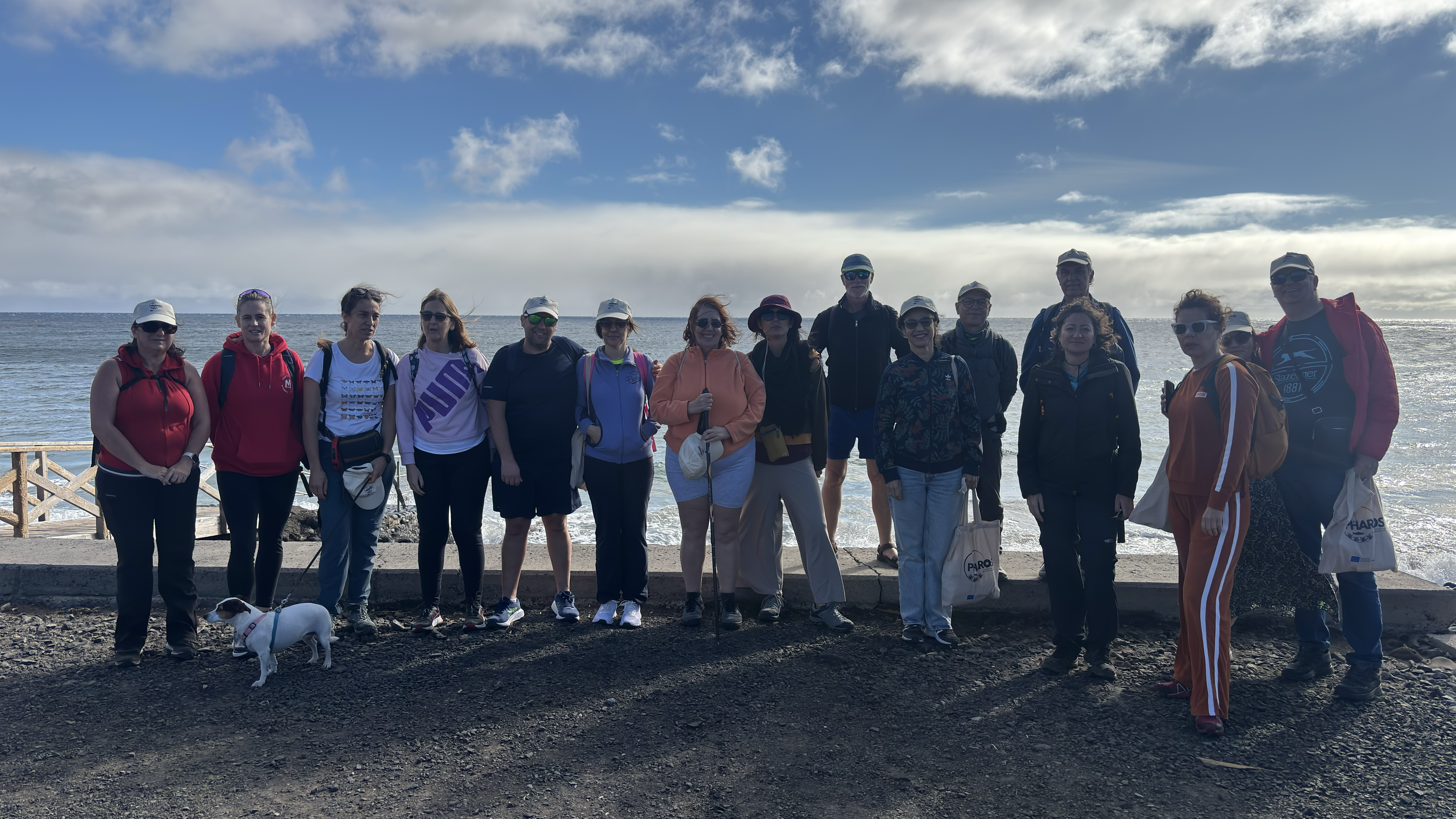
Across the weekend of January 30 to 31, the waters and coastlines of Gran Canaria and Lanzarote were transformed. They became less a tourist playground and more a living laboratory, as the PHAROS project threw open its doors for a Citizen Science Marine BioBlitz. The mission was twofold. First, to engage the public directly in marine data collection, fostering environmental awareness and showing people that they could contribute to real science. Second, to test a radical proposition, that by involving citizens, we could build a detailed picture of ecosystems and track their restoration from the ground up.
On January 30, the BioBlitz events took place at various locations across both islands. These citizen science workshops invited participants to identify and record marine and coastal biodiversity, turning everyone who joined into a data collector on 4 different sites: EL CABRON, Gran Canaria, Biotopo de Arguineguín, Parque de la Atlántida (Mogán) and Museo Atlántico, Lanzarote . Armed with the MINKA platform, an application that allows users to upload and identify photos of fauna and flora with the help of a community of experts, volunteers fanned out across the shoreline. They photographed everything they could find, from common crabs to rare algae, from seabirds to the small creatures hiding in rock pools.
The results were striking. In just one weekend, the citizens of the Canary Islands collected 800 biodiversity observations. It was a snapshot of the islands’ marine life, captured not by a small team of scientists but by a large community of engaged residents and visitors. The data, now stored on the MINKA platform, provides a valuable baseline for understanding local biodiversity and for tracking changes over time.
Recognition in Media: A Local Newspapers Takes Note
Article 1: “Crónica del Atlántico Hoy” (29/01/2026)
This outlet reported on the launch of the pilot project as a new circular economy opportunity. It focused on the collaboration between PLOCAN, Gravity Wave, and the Pescatobal fishing cooperative in San Cristóbal, Gran Canaria. Key details included the initial collection of 220kg of fishing nets, the plan to recycle them into furniture and decor, and the use of Trinamix technology for plastic identification. It framed the story within the larger European PHAROS project, mentioning future plans for multi-trophic aquaculture and artificial reefs from 2027. See the Spanish version in PDF version here.
Article 2: “Tellkes” (02/02/2026)
Tellkes covered the “Fisher Guardians” workshop as the first open event of the Gran Canaria Living Lab under the PHAROS project. The report emphasised the workshop’s role in raising awareness and building trust within the fishing community about the recycling process. It highlighted the involvement of fishermen as key allies, the demonstration of the Trinamix device, and the project’s aims to reduce marine pollution and foster the blue and circular economy. See the Spanish version in PDF version here.
Article 3: “Telde Habla” (31/01/2026)
This local news site provided a detailed community-focused report on the same workshop. It included extensive direct quotes from project managers: Pablo Reche (PLOCAN), Amaya Rodríguez (Gravity Wave), and Dolores Guedes (Pescatobal). It elaborated on the practicalities, such as the dedicated “punto limpio” (clean point) in the port for storing nets, the fishermen’s positive reception, and their motivation to protect marine life like turtles. It also confirmed the 220kg collection and discussed the logistical considerations for local recycling versus processing on the Spanish mainland. See the Spanish version in PDF version here.
Article 4: Canarias7
The impact of the weekend’s efforts did not go unnoticed. The Living Lab MarCoLab initiative, which had created the collaborative space for generating applied knowledge to protect the Canary Islands’ marine and coastal environment, had clearly borne fruit. This was reflected in the pages of Canarias7, a local newspaper with a strong readership across the islands. On the Sunday following the BioBlitz, the paper published a detailed report analyzing and summarizing the data obtained during the event. The article highlighted the collaborative work between citizens, experts, and the participating organizations. It emphasized how the initiative had not only collected relevant information but had also demonstrated the immense potential of citizen science as a tool for improving the understanding and management of the Canary Islands’ unique ecosystems.
Radio interviews:
Other Media:
- atlanticohoy.com: PDF version here
- Telde Habla: PDF version here
- tellkes.com: PDF version here
For the organisers, it was a validation of their approach, proof that when you open up science to the public, the public responds, and the results are worth recording.
The post Islands Forge Path to Healthier Seas: Canary Islands Living Lab Launch and the PHAROS Mega Event first appeared on PHAROS Project.
]]>The post Ocean and Waters Projects Events – Feb 2026 first appeared on PHAROS Project.
]]>4th Mission Ocean and Waters Forum – Registration Reminder – Deadline: 13 February 2026
Registrations for the 4th Annual Mission Ocean and Waters Forum are now open, with the deadline fast approaching. The Forum takes place within European Ocean Days in Brussels and serves as the central gathering for everyone working towards the EU Mission “Restore our Ocean and Waters by 2030.”
- What: A full-day forum featuring keynote presentations, thematic panels, an exhibition showcasing innovative projects, and dedicated networking sessions covering marine biodiversity, sustainable blue economies, pollution prevention, and blue science across Europe.
- Who: EU officials, national governments, research institutions, NGOs, social enterprises, industry leaders, and ocean conservation advocates working across the Mission landscape.
- Where: Brussels, Belgium, as part of European Ocean Days (2–6 March 2026).
- When: 5 March 2026. Registration deadline: 13 February 2026.
- Why: The Forum is the primary platform for the European ocean community to demonstrate progress toward 2030 restoration targets, align messaging across projects, and build the cross-sectoral collaboration needed to meet Mission goals.
Registration: https://register.event-works.europa.eu/dgscic/Mission_Ocean_Waters_Forum_March_2026/e/lk/g/88520/
UPSTREAM Project – 1st Open Call (FSTP): Collection & Valorisation – Open Now
The UPSTREAM project has launched its first Financial Support to Third Parties (FSTP) call, inviting regional and local authorities to apply for funding to test upstream solutions that prevent plastic litter from reaching rivers and seas.
- What: The call funds concrete, replicable actions focused on the collection and valorisation of plastic waste at source, using a lump-sum model with a maximum grant of €70,000 per project. Selected applicants will receive both funding and technical support from the UPSTREAM consortium.
- Who: Regional and local public authorities, or bodies directly representing them, from EU Member States and Horizon Europe associated countries. Priority is given to basins with high plastic leakage rates, including selected Balkans, Mediterranean, and North African river basins.
- Where: Eligible regions across EU Member States and associated countries. Applications submitted via the EU Funding & Tenders Portal.
- When: Call open now. Deadline available via the EU Funding & Tenders Portal and UPSTREAM project website.
- Why: Addressing plastic pollution at source is significantly more effective and cost-efficient than downstream cleanup. This call enables local authorities to implement proven upstream measures and contribute directly to Mission Ocean objectives on pollution reduction.
Funding & Tenders Portal: https://ec.europa.eu/info/funding-tenders/opportunities/portal/screen/opportunities/competitive-calls-cs/12942
UPSTREAM Open Call page: https://upstream-project.eu/open-call-1-collection-valorisation/
SoS2LearnDBS – Community-Led Call Brokerage Event – 10 February 2026
The SoS2LearnDBS project is hosting an online brokerage event to support applicants preparing submissions for its open call, providing a direct opportunity to clarify eligibility, meet potential partners, and develop competitive applications.
- What: An online matchmaking and information session where project teams can present their expertise, explore collaboration opportunities, and get detailed guidance on the SoS2LearnDBS FSTP call requirements and evaluation criteria.
- Who: Researchers, organisations, NGOs, public authorities, and SMEs interested in applying to the SoS2LearnDBS open call or seeking partners for a joint submission.
- Where: Online via Microsoft Virtual Events (Teams).
- When: 10 February 2026. Registration required via the event link shared on LinkedIn, Facebook, and Instagram channels.
- Why: Brokerage events significantly increase application quality and consortium strength. Attending ahead of submission improves understanding of scope, reduces avoidable errors, and creates partner connections that strengthen proposals.
EU Funding & Tenders call page: https://ec.europa.eu/info/funding-tenders/opportunities/portal/screen/opportunities/competitive-calls-cs/12467
AlgaeProBANOS – Podcast Feature, New Publication, and Digital Tools – Ongoing
The AlgaeProBANOS project (APB), operating under the Baltic and North Sea lighthouse, has released new communication and knowledge outputs and is preparing to launch its first suite of digital tools for the algae sector.
- What: APB partner Josien Hendricksen discusses the EU algae sector and the project in a new episode of the Before the Tipping Point podcast. A new peer-reviewed paper related to APB has also been published. Shortly, the project will release its Algae Farming & Product Dashboard and Algae Knowledge Base, designed to map value chains, support data-driven decisions for algae farmers, and lower barriers for new sector entrants.
- Who: Algae farmers, SMEs, researchers, processors, policymakers, and investors active in or entering the blue bioeconomy.
- Where: Podcast and publication accessible online. Digital tools will be available via the APB project website and SUBMARINER Network channels upon launch.
- When: Podcast and publication available now. Digital tool launch: forthcoming.
- Why: Reliable, accessible data and knowledge infrastructure is critical for scaling the EU algae sector. These tools and publications support evidence-based decision-making and strengthen the commercial case for low-trophic aquaculture across the BANOS region.
Follow: SUBMARINER Network and AlgaeProBANOS channels for updates and links.
COSEA App – Co-Use Programme for Citizen Science (EFFECTIVE / SPOTTERON) – Open Now
The COSEA App (Collaboration for Effective Sea Action), built on the SPOTTERON citizen science infrastructure, is inviting organisations and projects to join its co-use programme and contribute to shared ocean observation data.
- What: COSEA is an open, community-driven platform where users record marine wildlife sightings, document pollution, and submit observations via a shared map. Its co-use model allows initiatives, NGOs, research projects, and citizen groups to join the existing app toolkit, create campaign-specific filters, and contribute to a common ocean data commons, without building a separate application from scratch.
- Who: Initiatives, organisations, science projects, local authorities, NGOs, youth groups, and citizen activists working on ocean observation, marine litter monitoring, or biodiversity tracking.
- Where: Online platform. Co-use programme open via the COSEA and SPOTTERON websites.
- When: Open now. Early access and co-use collaboration available via registration.
- Why: Fragmented citizen science tools reduce data quality and limit collective impact. A shared infrastructure lowers costs, increases interoperability, and builds a more comprehensive picture of European marine conditions for research, policy, and conservation.
COSEA co-use & early access: https://www.cosea.app/collaboration-early-access
Submit an observation: https://www.spotteron.com/cosea/spots/latest
VeriFish – FishEUTrust Final Event – 10–12 March 2026
The VeriFish project invites stakeholders from across the aquaculture, fisheries, and seafood retail sectors to attend its final event in Brussels, marking the conclusion of the FishEUTrust project and the launch of its sustainability indicator framework.
- What: The three-day event showcases VeriFish’s completed CEN Workshop Agreement (CWA) on verifiable sustainability indicators for aquafood production, alongside media products, consumer tools, and policy recommendations for sustainable seafood communication. The programme includes expert presentations, stakeholder dialogue, and a CWA consensus meeting on 9 March.
- Who: Aquaculture industry representatives, policymakers, retailers, scientists, environmental advocates, and consumers interested in sustainable seafood systems.
- Where: Brussels, Belgium.
- When: 10–12 March 2026 (CWA consensus meeting: 9 March 2026).
- Why: Transparent, science-based sustainability indicators are fundamental to market-driven change in the seafood sector. VeriFish’s final event consolidates the project’s contribution to closing the information gap between producers, retailers, and consumers in support of ocean restoration goals.
Registration: https://verifish.info/verifish-final-event/
DIGI4ECO – FSTP Call to Address Digital Twin Ocean Data Gaps – Deadline: 1 March 2026
DIGI4ECO has launched a cascading grants call to fund external contributors who can supply critical data, models, or applications to strengthen the performance of its Digital Twin of the Ocean (DTO) platform.
- What: The call offers a total budget of €260,000 in lump-sum grants for projects that address identified biological, environmental, or socio-ecological data gaps across DIGI4ECO’s four demonstration sites: OBSEA (Spain), SmartBay (Ireland), Kristineberg (Sweden), and Ancona (Italy). All data contributed must follow FAIR principles and align with Mission Ocean objectives.
- Who: Research groups, institutes, NGOs, SMEs, observatories, and citizen science initiatives holding relevant datasets or capable of generating compatible models and applications. Applicants must be based in EU Member States or Horizon Europe associated countries.
- Where: Applications submitted via the DIGI4ECO project portal. Projects implemented in relation to the four designated DTO demo sites.
- When: Deadline: 1 March 2026.
- Why: High-quality, comprehensive data is the foundation of an effective Digital Twin Ocean. Filling identified gaps directly improves the DTO’s predictive capability and its value for marine research, management, and policy across the Mission Ocean ecosystem.
More information: https://digi4eco.eu/cascading-grants/
BlueActionBANOS – Community-Led Actions Open Call – Deadline: 16 March 2026
BlueActionBANOS is inviting consortia from the Baltic and North Sea basin to apply for its Community-Led Actions Open Call, funding locally-rooted solutions for marine and freshwater ecosystem restoration.
- What: The call funds 5–15 community-led actions addressing Mission Ocean objectives in the BANOS region, with grants available for initiatives covering marine restoration, local blue-green solutions, and lighthouse implementation. Project Idea Forms, the first stage of the application process, must be submitted by 16 March 2026 at 17:00 CET.
- Who: Consortia of 2–12 entities from EU Member States or Horizon Europe associated countries within the Baltic and North Sea basin, including NGOs, local authorities, research organisations, SMEs, and community groups.
- Where: Projects targeting the Baltic and North Sea basin. Applications submitted via the BlueActionBANOS portal.
- When: Project Idea Form deadline: 16 March 2026, 17:00 CET.
- Why: Community-led action accelerates the local uptake of restoration solutions and ensures that Mission Ocean objectives are embedded in the places and communities most directly affected by marine degradation.
Open call details and guidelines: https://www.blueactionbanos.eu/funding/open-call-community-led-actions/
3rd Mission Lakes Webinar: Turning Pollution into Resources – 12 February 2026
The third in the Mission Lakes webinar series focuses on circular approaches to lake restoration, exploring how pollutants can be transformed into valuable resources within freshwater ecosystems.
- What: The webinar features contributions from the FERRO, EUROLakes, ProCleanLakes, and FutureLakes projects, sharing methods, results, and frameworks for treating lake pollution as a resource rather than a disposal problem. Topics include nutrient recovery, biomass valorisation, and scalable circular economy models for inland water management.
- Who: Researchers, water authorities, policymakers, local government representatives, and practitioners working on freshwater restoration and circular water management.
- Where: Online. Registration via links shared by FERRO, EUROLakes, ProCleanLakes, and FutureLakes project channels.
- When: 12 February 2026.
- Why: Lakes and inland waters are among the most degraded water bodies in Europe. Circular approaches that turn pollution into productive resources offer a more sustainable and economically viable path to restoration than conventional treatment methods alone.
Baltic Blueprints Expo: How Baltic Sea Farming Can Support Life and Livelihoods – 10 March 2026
Three Mission-aligned projects conclude their work with a joint public expo in Kiel, Germany, demonstrating how regenerative low-trophic aquaculture can support both marine ecosystems and coastal communities across the Baltic Sea region.
- What: The Baltic Blueprints Expo brings together the results, products, and stories from Baltic MUPPETS, COOL BLUe, and AlgaeFood across a showcase day featuring live demonstrations, tastings, product displays, and stakeholder dialogue. Highlights include mussel-based pet food, seaweed cultivation and restoration methods, new processing technologies, and school and community engagement programmes developed over the course of the three projects.
- Who: Aquaculture practitioners, marine conservation organisations, local businesses, policymakers, educators, and citizens across the Baltic Sea region. Local stakeholders in Kiel, Germany’s first designated ocean city, are particularly encouraged to attend in person.
- Where: Kiel, Germany.
- When: 10 March 2026.
- Why: 2026 marks the completion of three projects that have spent years building viable routes to market for low-trophic Baltic products and generating genuine consumer and community awareness. This event brings their results into the public domain and provides a platform for the next phase of Baltic Sea restoration.
Registration: https://bluebiomatch.hivebrite.com/networks/events/194398
About the Mission
The EU Mission “Restore our Ocean and Waters by 2030” is an action-driven programme deploying research, innovation, and targeted investment to reverse decades of degradation across Europe’s marine and freshwater ecosystems before the end of this decade.
The Mission Ocean and Waters Communication Collaborative is a coordination group comprised of communications representatives from EU Mission “Restore our Ocean and Waters” partner projects, CSAs (Coordination and Support Actions), the Mission Implementation Platform, European Commission communications leaders, and other EC-funded stakeholders.
Its primary purpose is to facilitate information sharing and ensure all parties have the necessary tools, information, and assets for enhanced communication of Mission Ocean and Waters activities. The group operates through monthly meetings where CSA partners take turns leading sessions, working from an open agenda that any communications partner can contribute to.
The Communications Collaborative serves as a strategic coordination mechanism to align messaging, share resources, and strengthen the collective communication capacity across the diverse ecosystem of projects and organizations working toward the Mission’s 2030 objectives. If you work on communications for a Mission Ocean and Waters project, you can request to join by contacting [email protected].
The post Ocean and Waters Projects Events – Feb 2026 first appeared on PHAROS Project.
]]>The post Bantry Bay IMTA: Surprising Results from Ireland’s First Season first appeared on PHAROS Project.
]]>A Season of Growth and Unexpected Turns
The demonstration’s design is elegantly comparative. In Bantry Bay, kelp lines are deployed alongside a Mowi salmon farm, constituting the Integrated Multi-Trophic Aquaculture (IMTA) site. A control site, in nearby Toormore Bay, hosts seaweed without the influence of fish farming. The goal is to measure differences in growth, nutrient uptake, and ecological development.
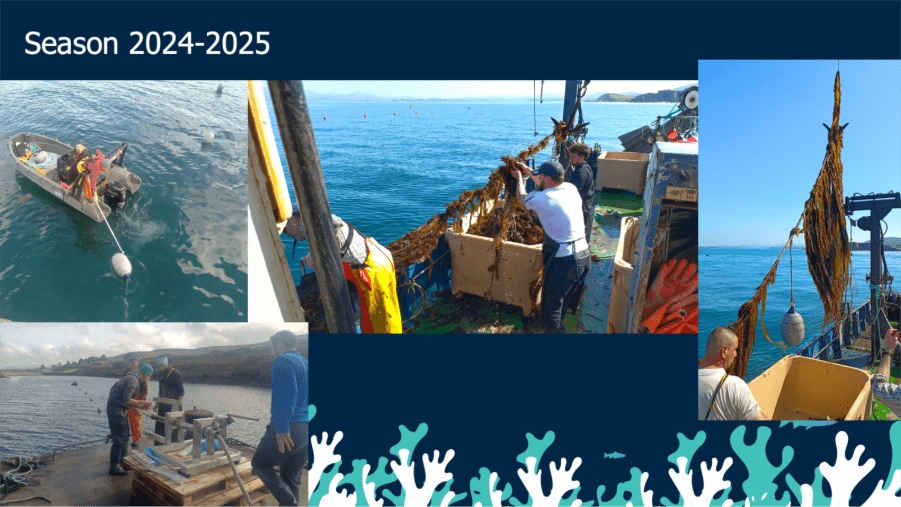
Throughout the 2024-2025 season, monthly monitoring tracked seaweed growth and seawater composition. The initial data held a surprise. While the IMTA site showed stronger growth earlier in the season, the final harvest in April revealed a striking reversal. The control site in Toormore Bay “outperformed the IMTA site,” yielding a remarkable 17 kilograms per metre compared to nearly 12 kilograms at the IMTA site. This was unexpected; the prevailing assumption was that proximity to the salmon farm’s nutrient plume would fuel superior growth.
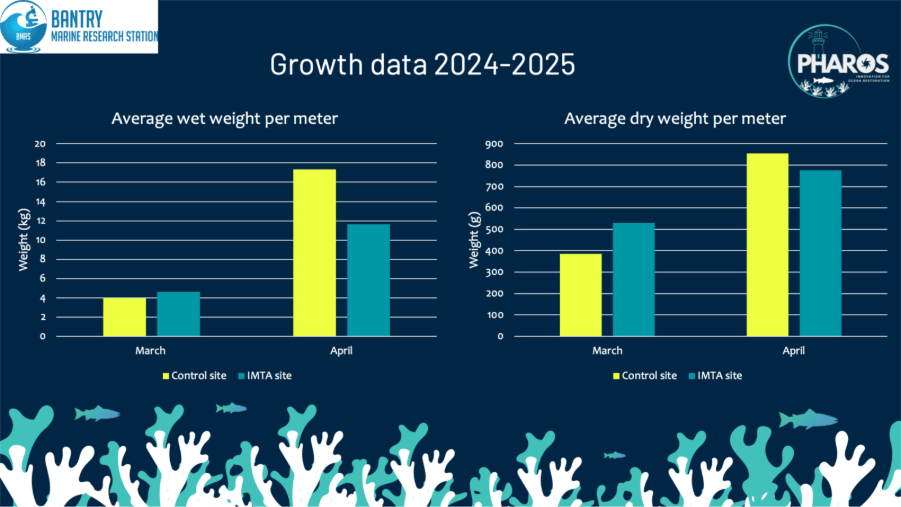
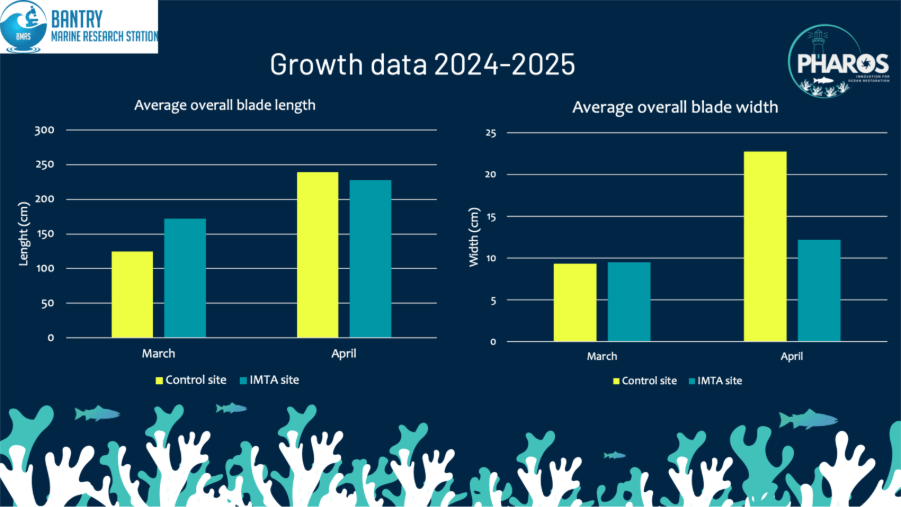
The explanation appears to lie in the water chemistry. Analysis of seawater nutrients showed that, contrary to expectations, the control site generally exhibited higher concentrations of ammonia and nitrite throughout much of the sampling period. “This can be explained by the fact that there were more nutrients at the control site compared to the IMTA site,” Maguire notes. The source of these elevated nutrients in Toormore Bay remains an open question, underscoring the complex, localised nature of coastal nutrient dynamics.
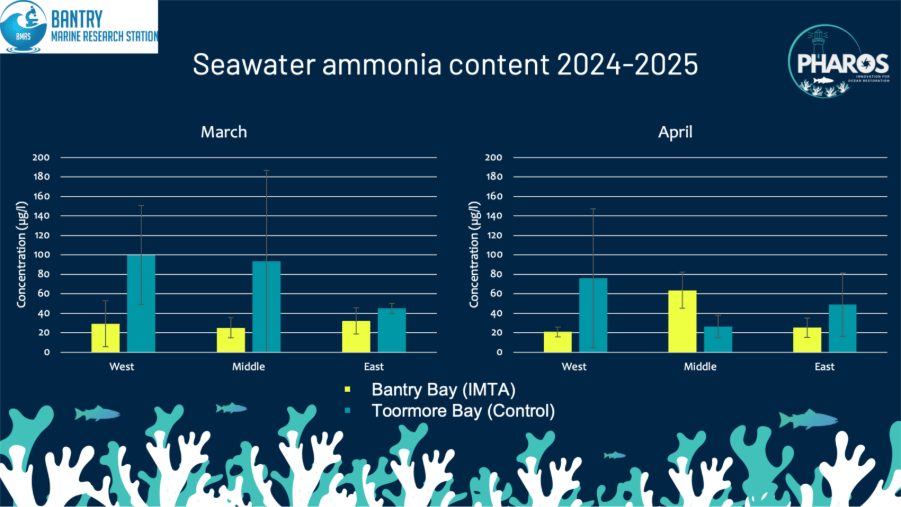
A significant caveat to the seasonal story is the lack of control site data for January and February, due to severe weather conditions that prevented safe sampling. This gap highlights the logistical challenges of consistent marine fieldwork and means the full growth trajectory at the control site is partially obscured.
A Deeper Dive into a Hidden Community
Beyond mere biomass, the study meticulously analysed the epifauna—the community of tiny invertebrates living on the seaweed blades. Here, the influence of the salmon farm became profoundly clear, not in the seaweed’s weight, but in the life it supported.
The abundance of individuals was drastically higher at the IMTA site. In April alone, researchers counted 4,570 individuals on samples from Bantry Bay, compared to 1,422 at the control site. This disparity, Maguire suggests, is “probably caused by the presence of salmon which excrete readily available nutrients,” and may also be influenced by differences in current speed and other hydrological factors altered by the farm structures.
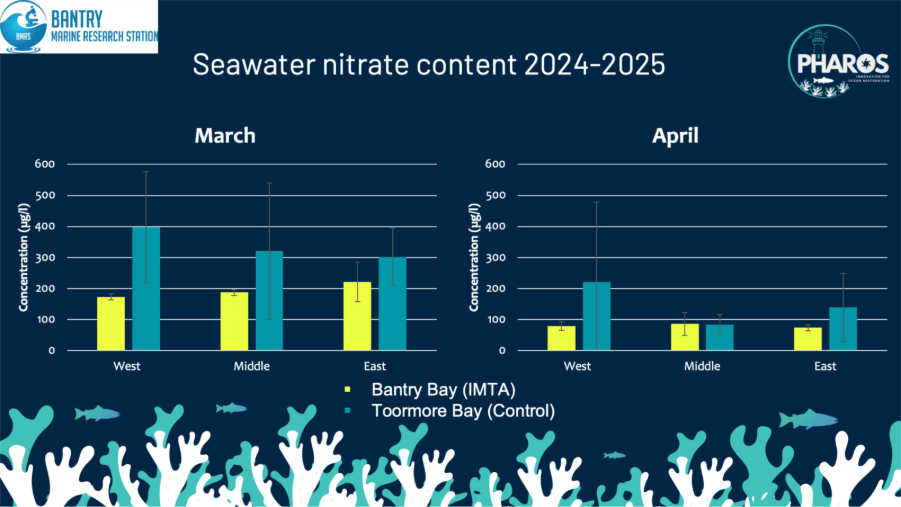
However, this abundance tells only half the story. Biodiversity, measured as the variety of species present, followed an inverse pattern. The control site, with fewer overall organisms, hosted a greater diversity of epifauna. Taxonomic breakdowns reveal a fascinating hierarchical picture. At the class level, the community was dominated by Malacostraca (crustaceans like amphipods and isopods), with smaller representations of Polychaeta (bristle worms) and Copepoda. The order and family-level data show a progression from a simple community in winter (where all epifauna in January and February belonged to a single order) to a significantly more complex one by April, encompassing multiple families such as Ischyroceridae, Caprellidae, and Gammarellidae.
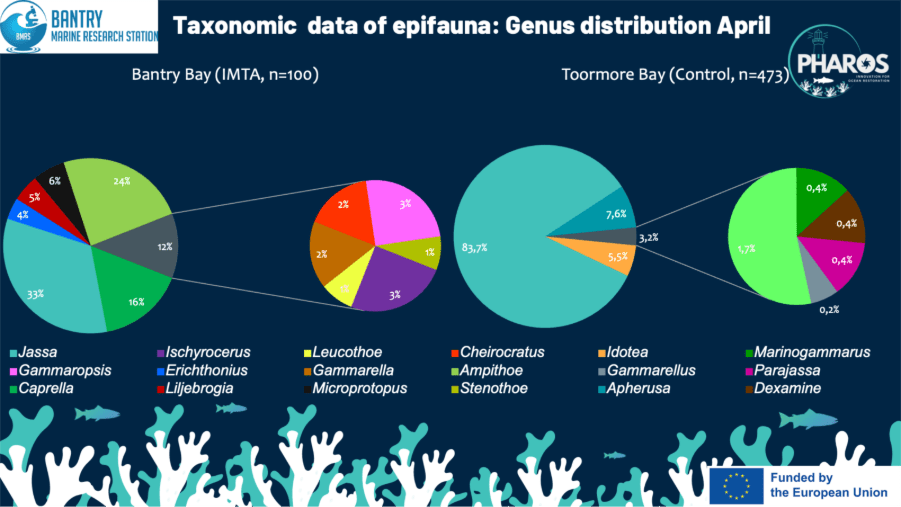
The most startling finding lies at the genus level. A total of 18 distinct genera were identified across both sites. Yet, the overlap between the two bays was minimal. The IMTA site hosted 12 genera, dominated by Jassa (33%), Ampithoe (24%), and Caprella (16%). The control site featured 8 genera, with Jassa overwhelmingly dominant at 83.7%, revealing that the two adjacent bays are fostering almost entirely distinct ecological communities on the seaweed itself.
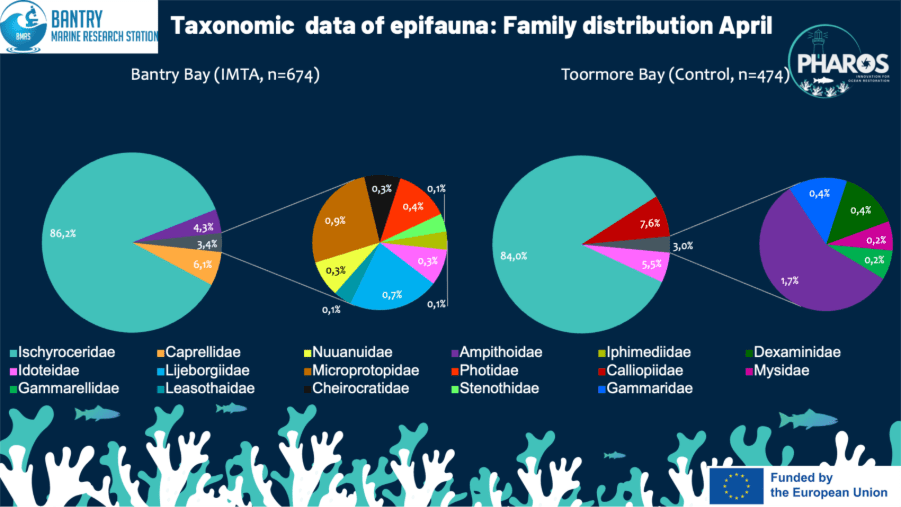
Synthesis and Forward Trajectory
These results present a nuanced initial report card for the IMTA concept. The seaweed growth benefit was not straightforward, being outperformed by the control under the specific nutrient conditions of the season. However, the salmon farm’s role as an ecosystem engineer is undeniable, fundamentally reshaping the associated epifaunal community towards higher abundance but lower diversity, and favouring a different suite of species.
For the upcoming second reporting period, the BMRS team plans to continue the rigorous seasonal sampling for 2025-2026, complete the remaining analysis from the first season, and determine the optimal statistical frameworks for this complex dataset. A core principle of the project is open science; all raw data will be deposited in a repository, and a publication plan is being developed to share these detailed findings widely.
The Critical Context of a Fallow Year
This ongoing work will soon be overlaid with a vital natural experiment. As confirmed in earlier discussions, the Mowi salmon farm will enter a fallow period in 2026. This pause in operations is a rare opportunity. It will provide a pristine baseline of “control conditions” within Bantry Bay itself, allowing scientists to disentangle the farm’s specific influence from the bay’s natural background state. Historical stable isotope analysis from a previous fallow period showed that 93% of the nitrogen in the seaweed was derived from the salmon, a powerful testament to the integration within the IMTA system. The upcoming fallow year will enable a before-and-after comparison of unparalleled clarity when the farm resumes.
The Ireland Demo continues to evolve as a living laboratory. It is demonstrating that the path to sustainable marine multi-use is not a simple equation of adding seaweed to absorb waste. Instead, it is a delicate navigation of interconnected variables: unpredictable nutrient flows, starkly different ecological succession patterns, and the ever-present challenge of logging data in a forbidding marine environment. Each finding, whether expected or surprising, adds a critical thread to the understanding of how we might better integrate food production and ecosystem restoration in our coastal seas.
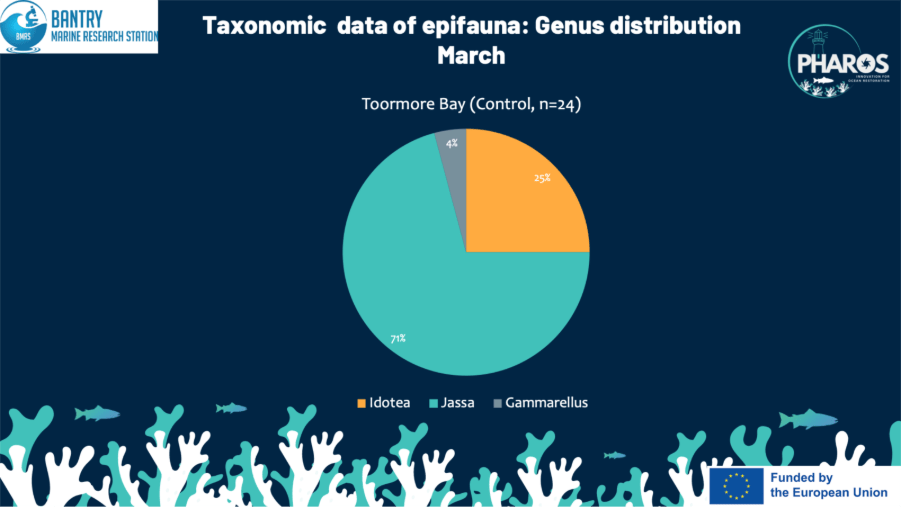
The post Bantry Bay IMTA: Surprising Results from Ireland’s First Season first appeared on PHAROS Project.
]]>The post Gran Canaria’s Blueprint for Atlantic Marine Restoration first appeared on PHAROS Project.
]]>The IMTA Loop: Turning Waste Into a Resource
At its heart lies a sophisticated Integrated Multitrophic Aquaculture (IMTA) system, a productive, ecosystemic and circular economy model for the ocean. The primary nutrient source will be a single fish cage stocked with gilthead seabream. The cage’s nutrient rich effluent is not viewed as waste but as a resource.

Directly downstream, a “marine forest” of the fast growing green macroalgae Ulva lactuca will be deployed on longlines to capture these dissolved compounds in the form of dissolved nutrients. Furthermore, sea cucumber cages will be positioned beneath the fish cage to consume the particulated organic matter, and abalone farmed in cages too, will be fed by the macroalgae production, completing a multi trophic recycling loop while bringing this new species to the national and local aquaculture offshore.
Farming Invertebrates: The Science Behind the Species
The production of these invertebrates is a science in itself. The University of Las Palmas de Gran Canaria (ULPGC) detailed the land based process for abalone, which involves conditioning broodstock, inducing spawning, and culturing larvae in settlement tanks for four to five months until they graduate from feeding on diatoms to macroalgae.

For sea cucumbers, a significant challenge was identified; traditional growth monitoring via pit tags is impossible as the animals eject them. The team is exploring innovative solutions, with advisory board input confirming tagging does not work and suggesting AI powered camera systems to measure growth from imagery, an approach deemed promising.
Artificial Reefs: When Regulation Drives Innovation
Beyond the IMTA loop, the project’s second transformative pillar is the deployment of artificial reefs for active biodiversity restoration. The journey here has been shaped by regulatory reality. As Oscar Aller from Underwater Gardens explained, Spanish regulations on artificial reefs led authorities to recommend a pivotal integration: “the authorities recommended integrating all the artificial reefs into the IMTA permit to avoid multi year permitting delays.” This necessitated merging the original Demo 1 and Demo 2, relocating the reefs from 15 metres to a deeper site at approximately 49 metres, and redesigning the entire layout.

This constraint, however, bred innovation, leading to the development of three distinct reef types targeting different ecological niches: ten Type A for benthic species; twenty four Type B “clamping”, semi submerged floating reefs to attract pelagic species; and sixteen Type C “cavity reefs” integrated into mooring blocks for small demersal and encrusting life. Fabrication is underway, with delivery to Gran Canaria expected by the end of 2026 for its deployment alongside the IMTA by March 2027.
Monitoring the Atlantic Marine Restoration in Real Time
The entire demonstration will be a hub of continuous, real time data collection, led primarily by Blue Oasis. Their smart buoy system will host a hydrophone with embedded AI to detect marine mammal vocalisations and shipping noise, alongside current meters assessing wave spectra and flow dynamics. A key monitoring strategy involves deploying two nutrient sensors; one directly at the fish cage, the expected nutrient hotspot, and a second downstream of the macroalgae forest to measure the decrease in concentration after algal uptake. This sensor array will measure nitrites, nitrates, total nitrogen, phosphate, and ammonia. Complementing this, there will be monthly surveys to take samples of water at different stations and depths around the IMTA. To assess the impact of the IMTA and the macroalgae forest to increase the native biodiversity a network of underwater cameras, some employing AI for species identification, will be positioned around the macroalgae lines; year deep diving surveys helped with ROVs will inspect the deeper artificial reefs colonization. Related to the telemetry and power for these cameras, a decision leaning towards battery powered units with a pull up retrieval system to avoid complex, failure prone cabling across the dynamic mooring system. All this data will be transmitted via 4G mobile networks to onshore dashboards, feeding the broader PHAROS Digital Twin.
Five Partners, One Coordinated System
The operational complexity is staggering, coordinated by PLOCAN but reliant on a consortium of five partners. Responsibilities are clearly demarcated but interdependent. PLOCAN is procuring and installing the core IMTA infrastructure, managing permitting, and will contract an aquaculture company for daily operations including fish transport, net cleaning, and mortality removal. They will also contract the scientific deep diving team for at least two surveys during the trial to monitor reef colonisation. ULPGC and the Spanish Bank of Algae (BA) are responsible for supplying and maintaining the macroalgae and invertebrates, conducting monthly water sampling for nutrients and dissolved organic matter. Underwater Gardeners is finalising reef design and overseeing fabrication and shipment. Blue Oasis is providing the acoustic and current monitoring hardware and telemetry.
Measuring What Matters
The project also includes an extensive environmental surveillance programme, with three surveys throughout the trial: before deployment, one mid trial, and a final survey after eighteen months. A novel scientific analysis using stable isotopes will be conducted to precisely quantify the nutrient transfer from the fish to the macroalgae, offering irrefutable evidence of the system’s efficiency. The Gran Canaria Demo is more than an experiment; it is a full scale prototype for a restorative blue economy, proving that with intelligent design, human industry can become a fundamental part of the ocean’s healing process.
The post Gran Canaria’s Blueprint for Atlantic Marine Restoration first appeared on PHAROS Project.
]]>The post Upcoming Webinar: Cleaner Seas Begin on Land first appeared on PHAROS Project.
]]>The PHAROS Citizen Litter Entrepreneur Programme, in partnership with Impact Hub Athens, announces the fourth instalment of the “Meet the Oceanpreneur” webinar series. This session shifts focus from ocean cleanup to land-based prevention, exploring how upstream solutions can stop marine litter before it reaches our seas.
Event Details
Title: Cleaner Seas Begin on Land: Prevention, Zero Waste & Community Action
Date: Thursday, 26 March 2026
Time: 12:00 – 12:50 CET (50 minutes)
Format: Online via Zoom
Host: Impact Hub Athens
Why Prevention Matters
Marine plastic pollution doesn’t start in the ocean. It begins on land, in our communities, businesses, and consumption patterns. This webinar tackles the problem at its source by showcasing innovative approaches that prevent waste from entering marine ecosystems in the first place.
Participants will discover how zero-waste business models, circular product design, community-led collection schemes, and policy-driven prevention strategies are creating real impact across coastal regions. The session highlights practical solutions that combine environmental protection with inclusive economic opportunities for local communities.
What to Expect
The 50-minute session follows an interactive format designed to maximise learning and exchange:
- Two speaker spotlights (≈10 minutes each) featuring practitioners and innovators sharing real-world prevention initiatives
- Moderated dialogue (≈20 minutes) exploring challenges, successes, and scalable approaches
- Audience Q&A (≈10 minutes) for direct engagement with speakers and participants
The discussion will examine how sustainable consumption, responsible production, and local engagement can significantly reduce waste flows before they reach rivers and seas, whilst creating resilient circular economies at the local level.
Session Objectives
This webinar aims to:
Shift the focus from cleanup at sea to prevention on land through sustainable consumption and responsible production.
Explore practical strategies including zero-waste approaches, circular product design, and local collection schemes that reduce, redesign, and eliminate plastic waste flows.
Highlight the role of communities, municipalities, and entrepreneurs in driving prevention-first approaches to marine litter.
Encourage cross-sector collaboration between citizens, businesses, public authorities, and researchers to build strong zero-waste ecosystems.
Inspire replication of scalable, upstream solutions aligned with Mission Ocean goals for cleaner, plastic-free coasts.
Host

Dimitris Kokkinakis / CEO & Co-Founder, Impact Hub Athens
Dimitris Kokkinakis is a social entrepreneur and community-builder, he co-founded Impact Hub Athens in 2013, an ever-growing ecosystem of social innovators and entrepreneurs driving change through responsible, inclusive, and sustainability-driven initiatives. Impact Hub Athens is part of the global Impact Hub network, present in over 110 cities worldwide, connecting people, places, and programs to inspire, support, and catalyze impact. Since a young age he has been actively involved in national and international organizations and networks, working with diverse communities across sectors including entrepreneurship, the arts, and environment. Under his co-leadership, Impact Hub Athens has implemented large-scale initiatives at local, national, and EU levels, focusing on sustainability, inclusion, and climate resilience.
Moderator

Ignasi Mateo / Project Manager, MedWaves
Ignasi is currently working at the Waste Agency of Catalonia, where he supports companies in developing waste prevention measures (mainly plastic and SUP), advancing circular economy strategies, and promoting extended producer responsibility schemes.
For the past decade, he served as a Project Manager at MedWaves, a UNEP/MAP Regional Activity Centre, where he managed and coordinated European and Mediterranean projects under the framework of the United Nations Environment Programme (UNEP) and the Barcelona Convention. Notable projects include ACT4LITTER and Plastic Busters MPAs (Interreg), BlueMissionMed and LooP Zone (Horizon 2020), and CapiMed+ (funded by Beyond Plastic Med). He is also engaged in the Intergovernmental Negotiating Committee (INC) process to develop a legally binding international instrument to end plastic pollution.
Speakers

Amaia Rodríguez / CEO & Co-Founder, Gravity Wave
Amaia Rodríguez is the CEO of Gravity Wave, a Spanish impact-driven company tackling marine plastic pollution. She leads initiatives that collect abandoned fishing nets and other ocean plastics and transform them into recycled materials and products for brands and industry. Her work sits at the intersection of circular economy, sustainability, and real-world supply-chain execution—building partnerships with fishermen, ports, and companies to scale measurable environmental impact.

Dr. Katrin Schuhen / CEO, Wasser 3.0
After completing her doctorate in chemistry in 2007 (Ruprecht-Karls University, Heidelberg), Dr. Katrin Schuhen worked in medical technology and in polymer production industry before setting up her own research group as part of her Junior Professorship for Organic and Ecological Chemistry at the University of Koblenz-Landau, Germany (2012- 2018).
Since then, she has been working on new material classes for the removal of microplastics and micropollutants from all kinds of water as well as on their detection, reuse, and digitized process control. In May 2020, she founded Wasser 3.0 gGmbH as a non-profit Greentech company working for water without microplastics and micropollutants in innovation transfer, scaling, and growth as well as in research, education and awareness raising.
Together with her team, she developed the world´s first fast and efficient monitoring toolbox and analytical method for microplastics and innovated the Clump & Skim Technology for microplastic removal and reuse. Beside many awards for the technology innovation, Dr. Katrin Schuhen was awarded as one of the TOP 100 women in social enterprises (Euclid Network, 2023). In addition to many scientific articles, she published her first non-fiction book in October 2024 with the title: “Rebellin des Wassers”, Scorpio Verlag, Germany.
Who Should Attend
This session is designed for:
- Mission Ocean projects and partners
- Researchers working on marine pollution and circular economy
- Startups and social enterprises in the blue economy
- Local authorities and policymakers
- Civil society organisations and NGOs
- Community leaders and environmental advocates
- Anyone committed to building plastic-free coastal futures
Join Us
The webinar represents a critical conversation about changing our approach to marine litter. Rather than focusing solely on cleaning what has already entered our oceans, this session empowers participants to become agents of prevention in their own communities and sectors.
By bringing together diverse perspectives from across Europe and the Mediterranean, the event fosters the cross-sector collaboration essential for systemic change.
About the PHAROS Citizen Litter Entrepreneur Programme
The Citizen Litter Entrepreneur Programme is part of the EU-funded PHAROS project, which develops innovative nature-based solutions to restore marine ecosystems, enhance biodiversity, and address climate change across the Atlantic and Arctic regions. The programme empowers citizens and entrepreneurs to transform ocean plastic waste into sustainable business opportunities through training, tools, and circular economy ventures.
The post Upcoming Webinar: Cleaner Seas Begin on Land first appeared on PHAROS Project.
]]>