These exchanges mark an important step in ensuring early-on dialogue with operational stakeholders as work progresses on the future European Frameworks and the various activities required to implement the upcoming Capacity Regulation.
JO experts from the different business areas presented these topics and answered questions from the audience.
A guest presentation was delivered by FTE’s Managing Director Edgar Schenk on the preparations to set-up the European Railway Platform (ERP), reflecting the need for an intensive dialogue between ERP and RNE as future Network Coordinator (read more about the relation here).
Focus on the European Framework for Capacity Management
One of the key topics was the scope definition of the European Framework for Capacity Management (EFCM). To support this work, RNE also launched an early stakeholder exchange. The topic was explored in more detail during a dedicated webinar on 16 March, where more than 30 participants received a presentation of the scope definition and had the opportunity to ask questions. During this first webinar, RNE JO experts outlined the main components of the EFCM (covering strategic planning, allocation processes, and TCRs) and the integration of stakeholder consultation. They also highlighted new processes such as contingency planning, late announcements of capacity needs and harmonised IT tools.
Access to upcoming meetings and materials
RNE is pleased to have initiated the first stakeholder engagement activities as part of the preparatory work for implementing the Capacity Regulation. For ease of access, all upcoming meetings related to this work are listed in the RNE website calendar.
More details on the individual meetings – including related documents and recordings of the mentioned sessions – are available on the dedicated webpages for the Advisory Board for the Capacity Regulation (ABCR) and Stakeholder Engagement Activities.

The meeting marked the beginning of a new stage in the group’s work, shifting its focus from TTR to the forthcoming Capacity Regulation.
Today, the Task Force unites more than 15 European Infrastructure Managers (IMs) who are jointly updating the guidelines to ensure alignment with the requirements of the Capacity Regulation, expected to be adopted in June 2026.
Over the past years, the Task Force has built substantial experience, with key milestones including the publication of the Commercial Conditions Guidelines in 2023 and the extensive stakeholder exchanges conducted in 2025.
Developing the Content for the European Framework for Capacity Management
A key objective of the task force is to define the content of the European Framework for Capacity Management, which will guide the implementation of penalties under Article 42 of the new Regulation. This framework is intended to support infrastructure managers across Europe in applying a consistent, fair, and transparent approach.
As part of this work, the Task Force is developing a modulation mechanism that reflects the criteria outlined in the Regulation when assessing the impact of changes to capacity rights.
Key factors considered include:
- Timing of the notification
- Quality of the alternative capacity provided by the IM, when available
- Marketability of the affected capacity, particularly where the released capacity can be requested and reused by other applicants
Next Steps and Continued Stakeholder Engagement
In the coming months, experts from European IMs will continue discussions to define the modulation mechanism and further refine the guidelines, contributing to the development of the European Framework for Capacity Management.
RNE will maintain its active role in facilitating collaboration and dialogue—both among IMs and with sector stakeholders—to support a smooth, transparent, and harmonised implementation of commercial conditions across Europe.
The upcoming Capacity Regulation requires the European Network of Infrastructure Managers (ENIM) to develop European Frameworks to harmonise processes on capacity management, cross-border traffic coordination, disruption and crisis management, and performance review at European level.
RNE has been working closely with the Infrastructure Managers to define the scope of the European Framework for Capacity Management (EFCM). This work anticipates RNE’s future role of Network Coordinator, which supports the European Network of Infrastructure Managers (ENIM) at a practical level.
To gather feedback from operational stakeholders, RNE is now launching an early phase of exchange on an abstract of this EFCM scope definition. This abstract contains all descriptions of the scoping document, except for a few temporary placeholders and IM-internal remarks.
Join the conversation
All operational stakeholders are actively invited to explore the scope definition and share their feedback by 17 April 2026.
To provide in-depth information and answer open questions, RNE will hold a webinar on 16 March 2026, 14:00 – 15:30 CET.
All details on how to contribute and/or register for the webinar are available on our dedicated stakeholder engagement activities webpage.
Showcasing Cross-Border Digital Solutions
The meeting aimed to provide a technical overview of how RNE’s IT tools support cross-border rail operations, with particular focus on interoperability, data exchange standards, and alignment with EU regulatory frameworks (e.g. Telematics TSI, Digital Capacity Management initiatives, and CEF-funded programmes).
Through presentations and live demonstrations held by RNE’s IT experts, participants gained insight into how existing RNE’s products and services designed to enhance European rail Capacity & traffic management and coordination are used in practice.
The programme was structured around three thematic blocks and RNE’s respective main IT tools:
- Digital Infrastructure Information (Railway Infrastructure System)
- Digital Capacity Management (Capacity Planning Tool, Path Coordination System)
- Digital Train Information & Traffic Management (Train Information System).
The use cases demonstrated how the tools reduce manual coordination efforts, improve transparency & efficiency in cross-border path allocation, and enable real-time traffic monitoring across multiple Infrastructure Managers. This supports Railway Undertakings and other stakeholders in serving their clients. Throughout the demonstrations, participants had the opportunity to ask questions and exchange views on the developments presented.
Towards Greater Harmonisation and System Integration
The meeting confirmed the strategic importance of coordinated digital development in the European rail sector. The technical exchange supported alignment between RNE and EU institutions regarding interoperability requirements, future Digital Capacity Management architecture, and the continued evolution of CEF-supported IT systems. The discussions also helped identify potential next steps in enhancing data harmonisation, system integration and performance monitoring at European level.
Click here for more information on RNE’s IT tools and products.


Following the successful first edition of this event in 2025, the Summit once again provided an opportunity to discuss developments arising from the draft Capacity Regulation and their impact on the European sector’s current initiatives.
Inspired by the positive political agreement on the Capacity Regulation reached during the trilogue in November 2025, participants shared expectations, discussed challenges, and explored forward-looking initiatives to overcome implementation hurdles jointly.

The sector’s transition is underway
In his welcome speech, RNE President Paul Mazataud highlighted that the rail sector is not just talking about reform — it is already in the middle of a quiet revolution. Across Europe, stakeholders are mobilising, while concrete investments in digital systems show that change is becoming operational.
The transition is actively underway. Crucially, the purpose goes beyond legal compliance: the real objective is to transform rail into a more attractive and reliable option for both passengers and freight shippers.
Strong need for commitment
In his keynote, Kristian Schmidt, Director for Land Transport at the European Commission (DG MOVE), recalled that the Capacity Regulation (CR) is built on competition balanced with cooperation. It aims to improve capacity planning, better respond to the needs of different market segments, ensure fairer access to the network, and create more effective incentives to minimise disruptions and improve efficiency.
From a broader perspective, the transition to new governance and coordination structures will require a strong culture of cooperation to ensure that rail infrastructure is managed as a Single European Railway Area.
He thanked the sector for its past work and commitment, which was indispensable in improving railway performance and bringing this Regulation to fruition, and encouraged all stakeholders to maintain that commitment and European spirit to make the Capacity Regulation a success.
Designated ENIM Co-Chairs strive for open dialogue and inclusiveness
During the second round of keynotes, John Voppen, CEO of ProRail, encouraged Infrastructure Managers (IMs) to step up to the task entrusted by the European Commission: now is the time to start implementing. He stressed that challenges can only be overcome by joining forces and working together.
Johann Pluy, Member of the Management Board at ÖBB Infra AG, highlighted that the railway sector is facing a new chapter, with the common goal of turning the shared sense of urgency into success. Following a pragmatic approach, where room is given to test, learn, and improve, will be crucial to make this a reality.
The designated ENIM Co-Chairs are committed to reflecting diverse perspectives and representing the entire sector’s interests within ENIM through an inclusive approach.
As time is of the essence, it will be crucial to work towards efficient and transparent procedures starting now.
“Only through collaboration can we establish the desired Single European Railway Area.” – John Voppen, ProRail
Setting the Scene: Capacity Regulation
Elisabeth Hochhold, Deputy Secretary General at RNE, and Alfred Pitnik, Co-Chair of the PRIME Task Force and RNE Vice President (ÖBB Infra AG), opened the next segment with a concise scene-setting overview of the Capacity Regulation: its core elements, the actors involved and needed consultations, as well as the indicative timeline with key deliverables. This gave participants a common frame of reference for the discussions that followed.
Panel 1: Success Factors and Sector Expectations
Moderated by Linda Thulin (PRIME, Trafikverket), the panelists shared their views on the key factors needed for the implementation of the Capacity Regulation, as well as the expectations from other players to make this a reality.
Thomas Spiegel (Austrian Transport Ministry), Oana Gherghinescu (ERA), Edgar Schenk (FTE), Reinhard Haller (RNE), Sven Gjeruldsen (Bane NOR), Udo Sauerbrey (International Rail Freight Business Association – IBS), Roberto Piazza (Italian Transport Regulatory Authority) and Josef Schneider (European Passengers’ Federation) discussed the opportunities and challenges that the whole sector will oversee, as greater cooperation both between and within the different actors is needed to achieve the Regulation’s goals.
Edgar Schenk (FTE) highlighted the need for Applicants’ early engagement to build better solutions for the railway sector, while Udo Sauerbrey (IBS) noted that challenges still remain, such as the predictability of available capacity and stable funding.
From the institutional and regulatory side, Oana Gherghinescu (ERA) called for giving a stronger European dimension to the rail market, supported by proper funding and a clear framework of rules on telematics and digitalisation. Roberto Piazza (IT RB) called for greater cooperation between the IMs within ENIM, as well as among the different public bodies (Member States, Regulatory Bodies, Safety Agencies) to simplify the rules governing the railway sector. Thomas Spiegel (AT Ministry) underlined the importance of long-term planning for funding and of strengthening the European dimension of capacity management and allocation.
Panel 2: Harmonised and Market-Oriented Capacity Management
Panel 2, moderated by Oliver Sellnick (DB InfraGO/RNE), explored how the sector is preparing for the new Capacity Management framework, which will apply for the first time for Timetable 2031. The discussion underlined that a qualitative, stable and reliable planning environment will require stronger harmonisation, better coordination, and solid digital foundations aligned with the new Capacity Regulation.
Panellists Weronika Karbowiak (PKP PLK S.A./RNE), Jan Ilik (FTE), Elmer van Buuren (European Sleeper / ALLRAIL), Bettina WunschSemmler (DB Cargo AG), and Philipp Koiser (RNE) highlighted regulatory expectations, national approaches, stakeholder needs, and the central role of digitalisation. Poland’s integrated TCR planning was cited as a good example of how long-term planning enhances stability. At the same time, Elmer van Buuren stressed the need for harmonised cross-border capacity offers to support international services.
Bettina Wunsch-Semmler emphasised that freight requires flexibility and that Rolling Planning will be one of the most transformative – and challenging – elements of the new framework. Ensuring its quality and availability is essential so freight is not disadvantaged.
Digitalisation was a central theme, with Philipp Koiser outlining current progress on central digital tools and links to national systems, while stressing the need for stronger change management to support a fully modernised process.
As the sector moves toward Digital Capacity Management, the panel agreed that clear rules, standardisation, and coordinated implementation will be crucial for successful deployment of the new Capacity Regulation.
Preparing for the Telematics TSI
Mickael Varga (ERA) briefly took the stage to invite stakeholders to participate in the Agency’s free webinar on the upcoming Telematics TSI. The hour-long session will take place on 10th March, 12:00 CET. For details and access please visit the ERA website – registration is not required.
Panel 3: Developments in Traffic Management Network Concept
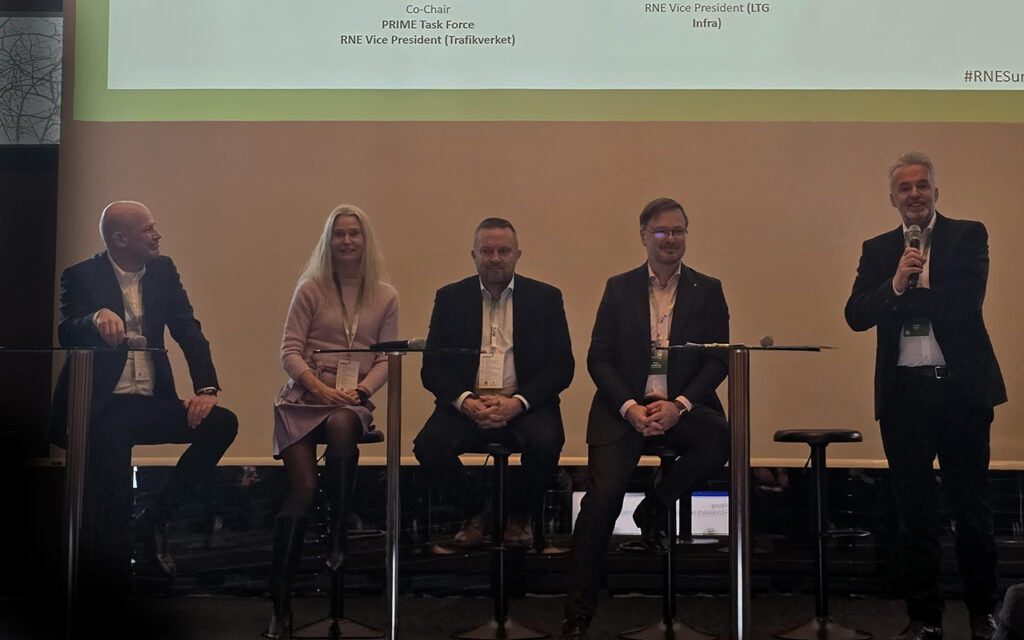
Chaired by Tomas Jonikaitis, RNE Vice President (LTG Infra), this panel explored the ongoing evolution of the Traffic Management Network concept, to support more efficient train operations across the European railway network.
Peter Šišolák (RNE) addressed the ongoing activities behind the drafting of the European Framework for Traffic Management. He highlighted the Infrastructure Managers common development of Traffic Management Rules and Procedures (RoP), designed to guide IMs under a unified set of principles. Martijn Meegdes (ProRail) presented the approach to establish these RoPs, which cover the full spectrum of operational scenarios and set a baseline for consistency across Europe’s network.
The panel also featured expert insights from Christian Schneider (DB InfraGO), who discussed disruption management and the crucial role that well‑structured contingency plans played during disruptions. Silva Kristan (SŽ-I) elaborated on the challenge of language barriers across Europe’s railway network and outlined the current initiatives to test alternative communication methods, including prototypes of translation tools. Speaking from a CEO’s perspective, Szilárd Kövesdi (GYSEV) emphasised the expected operational impacts and the ongoing efforts to harmonise traffic management procedures, particularly in cross‑border operations, where aligned and consistent practices are essential. The panelists underscored that only through close coordination among stakeholders, a truly efficient and integrated traffic management can be performed.
Panel 4: Roadmap to Make European Railway Digital
Moderated by Michel Geubelle (RNE/ Infrabel), the panel examined how the Capacity Regulation and Telematics TSI are driving the sector’s digital transformation.
Panellists Yann Seimandi (European Commission), Polymnia Vasilopoulou (ERA), Andras Till (RNE), Hanna Muenninghoff (RailData) and Ben Beirnaert (Combinant/ UIRR) shared perspectives from policy, infrastructure, operations and combined transport.
The Commission highlighted digitalisation as essential to a future European framework, by better alignment of TSIs and a move toward one‑stop shop tools for operational processes, supported by EU funding. ERA emphasised reference data quality, harmonisation and the development of a shared ERA Ontology to support consistent data exchange.
RNE underlined that the Capacity Regulation requires not only new common systems but transformational change within national organisations. RailData stressed its role as an enabler, noting that RUs need digitalisation projects with clear benefits. From the terminal and operator side, UIRR called for easy to use, low‑cost data exchange across the full supply chain.
Across the panel, the message was clear: the sector is aligned on the vision; now the challenge is implementation and cross‑organisational transformation. As one panellist summarised: “Let’s do it.”
Audience participation and RNE IT tool insights
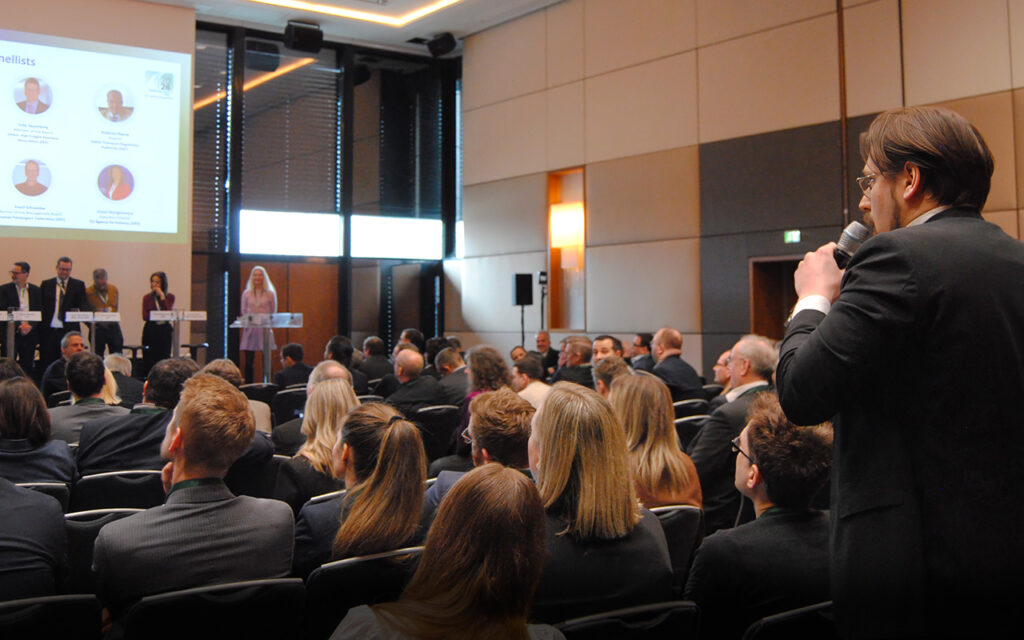
Not only panellists, but also participants had the opportunity to share their reflections through real-time polling, which enriched the on-site discussions (see polling questions and results in the Summit presentation).
During the breaks, participants on site could also learn more about ongoing digitalisation efforts reflected in RNE’s IT tools. Dedicated stands for the Train Information System (TIS), Digital Capacity Management (DCM), and the Rail Facilities Portal (RFP) offered insights and the opportunity to ask tailored questions.
Tackling Implementation
The second edition of the RNE Summit on Capacity Regulation proved to be a valuable opportunity to bring the sector together following the trilogue agreement in November 2025 and to pave the way for joint and effective implementation.
All recordings and presentations will shortly be made available on the dedicated Summit webpage.

Capacity Strategies are a key element of advance planning, and the first step towards ensuring optimised use of rail capacity.
What are Capacity Strategies?
Capacity Strategies provide an early and transparent view of how rail capacity will be developed and managed leading up to the respective timetable year.
They serve as a common basis for communication, consultation and coordination with operational stakeholders throughout the Advance Capacity Planning process, detailing:
- Expected future demand for rail capacity
- Planned developments of the rail infrastructure
- Principles applied in traffic and temporary capacity restriction planning
This early information helps railway undertakings, authorities and decision-makers plan more accurately and identify future bottlenecks, supporting improved international coordination across the European rail network.
Stakeholder input essential to reflect operational priorities
Before publication, draft Capacity Strategies are shared with stakeholders for consultation.
This allows railway undertakings, other applicants, authorities, terminals, and service facilities to review the drafts and provide feedback.
Their input is essential to ensure that the strategies reflect real operational needs and priorities, both nationally and across borders. Published final versions incorporate this feedback.
Five-year milestone
2029 marks the fifth consecutive timetable year for which Capacity Strategies have been published.
Since first publication, the process has evolved, with increasing participation from infrastructure managers (17 networks covered to date) and expanded national scopes, strengthening both national and cross-border capacity planning.
Next Stop: Capacity Model
With the Capacity Strategies for Timetable 2029 established, the next phase in Advance Capacity Planning is the development of the Capacity Models.
These models translate the strategies into practical terms, detailing total capacity by network section and hour – including cross-border flows – and accounting for major infrastructure works that may affect operations.
Each stage of Advance Capacity Planning further aligns long-term infrastructure planning with operational realities across Europe, supporting sustainable mobility in accordance with EU objectives.

The recently established NTCC Cooperation Platform fosters exactly this, facilitating practical collaboration between NTCCs across Europe.
Practical cross-border coordination and real-case learning in Utrecht
On 27–28 January 2026, RailNetEurope (RNE) and ProRail organised and hosted the second NTCC Cooperation Platform meeting in Utrecht, NL.
The meeting brought together 20+ participants representing Europe’s infrastructure managers and their national traffic control centres, with a shared goal: strengthening practical cross-border coordination – from daily operations to major disruptions and crisis situations.
Hands-on agenda and tangible outcomes
The two-day programme combined on-site observation, peer exchange and structured group work.
Day 1 included a visit to ProRail’s traffic control environment, followed by discussions on operational roles and escalation, shared situational awareness, communication interfaces, and incident handling from detection to recovery.
Day 2 focused on group exercises aimed at producing practical outcomes, including
- lessons learned from ADIF’s Iberian blackout case on crisis coordination and information flows
- aligning on common elements for cross-border contingency planning
- identifying future needs to strengthen cross-border operational cooperation and network-wide operational awareness.
Moving forward
The meeting concluded with anticipation for the continued work of the NTCC Cooperation Platform, fostering stronger collaboration and shared learning across borders.
RNE thanks ProRail for hosting the Utrecht meeting and traffic control visit, and ADIF for their practical case presentation, which enabled a reality-based crisis coordination exercise.
RNE also thanks all participants for their open exchange, constructive input, and commitment to sharing operational practices across borders.
The NTCC Cooperation Platform is organised under the umbrella of the European Traffic Management Network (ETMN) concept, supporting practical cooperation between national traffic control centres across Europe.
Smart advance capacity planning is crucial for ensuring efficient use of railway capacity.
RNE’s upcoming Capacity Planning Tool (CPT) provides essential functions for smooth capacity planning processes in a single platform.
It supports three key processes:
- Capacity Models
- Capacity Supply Plans
- Temporary Capacity Restriction (TCR) coordination
By integrating these processes into one platform, the CPT will help infrastructure managers and railway undertakings plan capacity in a structured and coordinated way.
It simplifies complex tasks, ensures better use of the network, and improves reliability for customers and partners.
What is the Capacity Planning Tool (CPT)?
Previously known as the “Fusion Project”, the CPT is a next-generation solution that merges the functionalities of the former TCR Tool and ECMT into a single, harmonised platform.
It provides workflows for
- planning and coordination of TCRs
- consultation and harmonisation of Capacity Models
- pre-planned coordinated paths through the Capacity Supply function.
These features facilitate better utilisation of existing infrastructure and improve cross-border coordination.
Why is the CPT important for you?
The CPT represents a major step forward in rail capacity planning.
It will improve coordination across Europe, increase transparency in how capacity is allocated, and enhance reliability through structured workflows and clear timelines.
Together with the recently released PCS Capacity Broker for capacity allocation, the CPT will enable the railway sector to meet growing demand while maintaining high service quality.
When will the CPT be available?
The Capacity Planning Tool will be introduced in stages.

Ready for the Capacity Regulation
With the Capacity Planning Tool getting ready to launch, RNE is well-prepared to provide the central workflows needed to meet the requirements of the upcoming Capacity Regulation.
Want to learn more? Stay tuned for further updates as we move closer to launch.

For additional information you are welcome to contact Andras Till, Team Leader Capacity Management IT at [email protected].

The ABCR will serve as RNE’s central platform to consult operational stakeholders on the preparatory work to implement the upcoming EU regulation on the use of railway infrastructure.
Joining the ABCR now allows operational stakeholders (railway undertakings, applicants, intermodal and terminal operators, etc.) to provide input and feedback on RailNetEurope’s work as future Network Coordinator.
The purpose of establishing ABCR now is to create a forum for stakeholder consultation at an early stage, even before the entry into force of the Rail Capacity Regulation.
The ABCR is not meant to be a replacement or duplication of the European Railway Platform (ERP).
RailNetEurope and its members are looking forward to a close cooperation with the ERP once it is established and are committed to co-develop effective and efficient consultation mechanisms with the members and organisers of ERP.
Applications for membership (or observer status) in the ABCR submitted until 31 January 2026 at 12:00 (noon) will be considered in the first evaluation round, which selects the founding members of the ABCR.
The call for applications will remain open on a continuous basis; additional members and observers will be selected in periodic evaluation rounds.
The RNE General Assembly approved the new project T4R LT+ to further develop the Translate4Rail Language Tool. This initiative builds on the existing prototype and marks the next step in enhancing digital language support for the European rail sector.
From Prototype to further Development
The initial prototype of the Translate4Rail Language Tool was developed within the Shift2Rail Translate4Rail project by the RNE-UIC consortium. Based on the experience gained and feedback collected during testing, RNE will now continue the development of the tool through a new project titled T4R LT+, running from 2026 to 2027.
The project follows the Language Tool concepts approved by the RNE General Assembly in May 2022, which aim to strengthen language support for railway operations. The overall objective is to improve the effectiveness of cross-border procedures, support verbal communication between operational staff, and help reduce unnecessary dwell times at borders caused by language-related challenges.
Focus Areas of the T4R LT+ Project
The functional and technical specifications for the further development have been elaborated and agreed within the RNE Language Programme.
The focus areas include:
- enhanced recognition of variables within predefined messages
- improved accuracy of speech recognition and translation
- integration of state-of-the-art language technologies into the Translate4Rail Language Tool
- extension of the predefined message catalogue, with a particular focus on infrastructure manager to infrastructure manager (IM-IM) communication
- further development of unscripted language speech input, alongside additional functionalities based on strategic objectives, test recommendations, and requirements defined within the Language Programme
Contributing to Digital and Efficient Rail Operations
To support the implementation of the new functionalities, the project will deliver dedicated guidelines and a training video, enabling users to familiarise themselves efficiently with the enhanced tool.
Authorities and relevant sector stakeholders will also be involved during the project to ensure alignment with operational needs and regulatory expectations.
By addressing persistent language barriers in the European railway sector, the T4R LT+ project contributes to the wider implementation of digital communication procedures and supports more efficient cross-border rail operations.
For further information about the T4R LT+ project or the Language Tool in general, please contact us:
The project receives financial support through the CEF Transport Call 2023.