The post Mariner’s SHIFT Energy Welcomes Dieter Megert as VP, Business Development – Western Canada & Western United States first appeared on SHIFT Energy.
]]>Saint John, NB – SHIFT Energy, a world leader in predictive control technology for chilled water plants and HVAC systems, is pleased to announce the appointment of Dieter Megert, as Vice President, Business Development – Western Canada & Western United States.
With more than 30 years of experience in building automation and HVAC systems, and nearly two decades leading high-performing sales teams, Dieter brings deep technical expertise and strategic leadership to SHIFT Energy as it continues to expand across Western Canada and the United States.
“I’m excited to join SHIFT Energy where my experience and expertise will help new and existing customers achieve their business objectives. Our next generation predictive controls improve performance, reliability, and efficiency in new ways that the market has not seen!” says Dieter.
Dieter’s mandate is to grow SHIFT’s client base in process and comfort cooling applications across manufacturing, data centers, healthcare, education and commercial real estate sectors, while strengthening relationships with existing clients.
Throughout his career, Dieter has consistently delivered strong customer outcomes and long-term value, leading regional teams and managing multimillion-dollar accounts across complex, client-focused environments. His arrival supports SHIFT Energy’s commitment to help our clients achieve ‘best-in-class’ HVAC performance, reduce energy use, carbon emissions and costs.
“Dieter’s success in business development, coupled with his deep industry expertise, make him a valuable addition to SHIFT Energy”, saysTerry Cook, SVP, Business Development. “He has an incredible ability to utilize that industry knowledge to create value which will further strengthen our presence across Western Canada and the US.”
With SHIFT Energy’s EOScool™ predictive control technology, our customers improve plant performance, increase energy efficiency by 20-35%, reduce evaporative water loss by 15-20% and increase plant output without capital upgrades. The solution offers plant managers and operators a compelling opportunity to improve operations, generate an attractive financial return and achieve best-in-class sustainability results.
About SHIFT Energy
SHIFT Energy is the leader in predictive control technology for large chiller plants and HVAC systems, helping our clients achieve best-in-class central plant performance, reduce energy, water and carbon and save costs. We optimize the operation, control, and maintenance of central plants and HVAC systems across sectors including manufacturing, healthcare, education, commercial real estate and more. To learn more, visit: www.shiftenergy.com
Media Contact:
Hayleigh MacAdam
Manager, Digital Marketing – Mariner
E/ [email protected]
The post Mariner’s SHIFT Energy Welcomes Dieter Megert as VP, Business Development – Western Canada & Western United States first appeared on SHIFT Energy.
]]>The post Doing Good and Doing Well with Your Water-Cooled Chiller Plant first appeared on SHIFT Energy.
]]>However, operating a chiller plant inefficiently will always lead to higher expenses and negative environmental consequences. By boosting the performance of your chiller plant, you can do well (reduce energy and maintenance costs) and do good (lower carbon emissions).
These outcomes are no longer mutually exclusive – with the right solution, they are now combined.
Do Well
Of course, dollars and cents benefit is never a bad place to start. It is clear that one of the most immediate benefits of optimizing a chiller plant is the potential for substantial cost savings. By fine-tuning the operation of your equipment, you can reduce energy consumption and energy costs.
But the benefits don’t stop there – running a plant more efficiently reduces “wear and tear” on plant components, meaning fewer breakdowns and maintenance issues which can boost productivity and reduce repair costs. By avoiding unnecessary strain and minimizing the frequency of costly breakdowns, you can maximize the longevity of your chiller plant infrastructure. This translates to lower replacement costs and a higher return on your initial investment in equipment.
That kind of benefit is something everyone in the organization can get behind.
Optimizing your chiller plant allows you to maximize energy efficiency without compromising performance. By carefully adjusting settings and scheduling operations based on demand, you can minimize wasted energy and ensure that your system operates at peak efficiency levels.
An optimized chiller plant ensures consistent and reliable cooling performance, creating a comfortable environment for occupants and supporting critical industrial processes. By maintaining precise temperature control and responding dynamically to changing conditions, you can avoid fluctuations that may disrupt operations or compromise occupant comfort. This reliability enhances overall productivity and contributes to a positive work or living environment.
When you optimize a chiller plant, you also get greater operational flexibility, allowing you to adapt to changing conditions and demands seamlessly. Whether you need to ramp up cooling capacity during peak periods or scale back operations to conserve energy, optimized systems can respond quickly and efficiently to meet your requirements. This flexibility enables you to maintain optimal performance while effectively managing costs and resources.
Do Good
Building owners and operators are under increasing scrutiny over the carbon emissions coming from their buildings. Some places, like New York City, have introduced financial penalties for buildings that exceed their emission limits, with other U.S. cities soon to follow. In some buildings, operating a chiller plant can consume more than 40 percent of a building’s total energy usage – if you want to move the needle on building emissions, this is where you start.
Optimizing the performance of your chiller plant cuts energy consumption which directly cuts carbon emissions, particularly in areas that still rely heavily on fossil fuel for electricity generation. By reducing emissions, you reduce the risk of being penalized under new regulations. It’s also good corporate citizenship, something that attracts tenants and investors alike.
One clear reality from our warming planet is the cooling season is being extended in many places, meaning chiller plants must operate longer. That puts increasing pressure on the plant and leads to higher energy consumption and higher emissions, even as facility managers focus more on decarbonizing their operations. That makes an optimization solution even more important.
At SHIFT, we know a chiller plant is mission critical – whether you are using it for manufacturing related cooling or comfort cooling. Uptime is vital, and many facility managers have been leery about introducing optimizations solutions out of fear it will impact performance. SHIFT will be introducing a new solution that drives new levels of energy efficiency while improving plant stability – allowing you to do good and do well.
If you would like a sneak peek, contact us today.
The post Doing Good and Doing Well with Your Water-Cooled Chiller Plant first appeared on SHIFT Energy.
]]>The post The Heat Is On For Chiller Plants first appeared on SHIFT Energy.
]]>However, in recent years, a noticeable trend has emerged: chiller plants in large facilities are running longer than ever before. Let’s look at what’s driving this change and what implications it has for facility owners and operators.
Rise of Chiller Plants
Chiller plants are central to the cooling infrastructure of large facilities such as hospitals, data centers, manufacturing plants, and commercial buildings. They use refrigeration cycles to remove heat from the air or water, maintaining optimal temperatures within the facility.
According to a report by Grand View Research, the global chiller market size was valued at US $9.4 billion in 2020 and is expected to expand at a compound annual growth rate (CAGR) of 4.3% from 2021 to 2028. This substantial growth indicates the increasing reliance on chiller plants across various sectors worldwide.
But what is driving the surge in chiller plant operations?
Increased Demand for Indoor Comfort: With a growing emphasis on occupant comfort and productivity, facility managers are striving to maintain consistent temperatures throughout their buildings. This heightened demand for indoor comfort leads to chiller plants operating for more extended periods to meet cooling requirements, especially in regions experiencing rising temperatures due to climate change.
Expansion of Critical Infrastructure: The proliferation of data centers, healthcare facilities, and industrial complexes has led to an expansion in critical infrastructure. These facilities often house heat-generating equipment and require precise environmental conditions to ensure optimal operation. Consequently, chiller plants must work overtime to regulate temperatures and prevent overheating, contributing to longer running times.
Aging Infrastructure: Many chiller plants in large facilities are part of aging infrastructure that may not be as energy efficient as newer systems. New chiller plants can often require millions of dollars to build, so it’s no surprise that many facility operators are not able to make that investment. Aging equipment often requires more frequent maintenance and experiences performance degradation over time, leading to longer operating hours to compensate for inefficiencies.
Energy Efficiency Measures: Paradoxically, efforts to improve energy efficiency can also result in longer chiller plant operation. While energy-efficient buildings and equipment reduce overall energy consumption, they may rely on centralized cooling systems like chiller plants to maintain efficiency. As a result, these plants run longer but at lower capacities.
Implications
The prolonged operation of chiller plants carries significant implications for facility managers, energy managers and sustainability managers.
Extended operation puts additional strain on chiller plant components, increasing the risk of wear and tear. That means facility managers must prioritize proactive maintenance to prevent unexpected breakdowns and ensure uninterrupted cooling operations.
Longer chiller plant operation also translates to higher energy consumption and increased utility costs for facility owners. Implementing energy management strategies, such as optimizing chiller plant efficiency, integrating renewable energy sources, and implementing demand response programs, can help mitigate these impacts and reduce operational expenses.
And of course, higher energy consumption by chiller plants contributes to increased greenhouse gas emissions and environmental degradation. That is proving increasingly problematic in the face of new regulations like New York City’s Local Law 97 that financially penalize building owners for exceeding their emission limits.
Addressing the Challenge
Higher energy costs, emissions penalties, and sustainability commitments are leading many building owners and operators to find new ways to boost the performance of chiller plants.
But it’s not easy.
Most control systems do a good job at maintaining a consistent temperature but that comes with higher energy costs and consumption. They are simply not built to optimize plant performance. Some people have tried to address the problem with software, but it failed to address the inevitable “drift” of chiller plant equipment – the way performance changes as equipment ages and degrades.
At SHIFT Energy, we’ve spent a lot of energy working on this problem. We’ll be rolling out our chiller plant solution later this year that will cut energy consumption while boosting plant performance. If you want to get a head start on cutting energy consumption and carbon emissions while enhancing plant stability, drop us a note and get a sneak peek of this innovative new solution.
The post The Heat Is On For Chiller Plants first appeared on SHIFT Energy.
]]>The post Chiller Plants Are Energy Hogs first appeared on SHIFT Energy.
]]>Chiller plants, which are commonly used for air conditioning and cooling in large buildings and facilities, consume significant amounts of energy. According to the United States Department of Energy, these energy hogs typically account for about 20 percent to 40 percent of total electricity use in commercial buildings.
That’s a big number, and one that is sure to grow larger with impacts of climate change leading to more cases of extreme heat and longer cooling seasons. So, we have poorly performing chiller plants running longer, meaning higher energy consumption, greater cost, and more Greenhouse Gas emissions.
That’s not sustainable, either from an operating cost or environmental impact basis.
Why are chiller plants such poor performers when it comes to energy efficiency? Here are a few of the main reasons:
Inefficiencies in Equipment: Older chiller plants may use outdated equipment that is less energy efficient. Even newer systems may not be optimized for energy savings if they are not properly designed, maintained, or operated.
Overcooling: Sometimes, buildings are cooled to lower temperatures than necessary for comfort or operational requirements. Overcooling can lead to excessive energy consumption. In fact, it’s not entirely uncommon to see buildings running heating and cooling at the same time.
Poor System Design: In some cases, the design of the chiller plant and its components may not be optimized for energy efficiency. This can include oversized equipment, inefficient piping layouts, or inadequate insulation.
Inefficient Control Systems: Control systems that do not properly regulate chiller operation based on demand or external conditions can lead to energy waste. For example, if chillers continue to run at full capacity even when cooling load is low, energy is unnecessarily expended.
Mismatched Equipment: Sometimes, components within the chiller plant, such as chillers, pumps, and cooling towers, may not be properly matched to each other or to the building’s cooling requirements, leading to inefficiencies.
Leaks and Faults: Refrigerant leaks or faulty equipment can cause chiller plants to operate less efficiently, leading to higher energy consumption.
Some of these issues are easier to resolve than others. For many buildings, upgrading to new, more efficient equipment is a non-starter – that can cost millions of dollars. In most cases, the easiest – and most cost-effective – way to cut energy consumption comes with boosting the performance of equipment through the control systems, often called the Building Automation System (BAS) or Building Management System (BMS).
While some control systems perform quite well, many are engineered with a singular focus on ensuring a consistent temperature is maintained. While that philosophy delivers occupant comfort and steady process control conditions, it can come at a cost in terms of both excessive energy expenses and emissions.
With operating budgets tightening and a cost on carbon emissions becoming a reality in some jurisdictions, this is untenable. Building owners, operators, energy managers and sustainability managers are all seeking a solution to the chiller plant problem.
Yet despite the growing importance of cutting energy consumption and resulting carbon emissions from buildings, no company has been able to solve the chiller plant problem. The reality of “drift” – changing performance as equipment ages – has created a technical obstacle that no one has successfully overcome. Some solutions can cut energy consumption in the short term, but the benefits don’t persist over time, destroying the business case.
SHIFT has focused its efforts on developing technology that sits on top of existing control systems to improve overall building performance – without requiring expensive new equipment or controls. Our EOSair delivers substantial energy and emission savings from HVAC systems. It’s about getting the most out of a building owner’s investment in heating and cooling equipment. That’s why it pays for itself in less than two years, with the benefits persisting year after year.
We’ve spent the last few years working hard on a new way to cut chiller plant energy consumption without impacting occupant comfort or process control conditions. We will be introducing something very cool to North America later this year.
If you want a sneak peek, contact us today.
The post Chiller Plants Are Energy Hogs first appeared on SHIFT Energy.
]]>The post What SHIFT’s New Partnership with IOTech Means first appeared on SHIFT Energy.
]]>IOTech’s Edge Central™ is a flexible, open edge data platform that makes industrial data easily accessible, actionable, and manageable. SHIFT Energy’s EOSair™ (and our upcoming products) will use Edge Central to securely acquire data from Building Automation Systems (BAS) or Building Management Systems (BMS). From there, it is sent to the cloud where it is analyzed by SHIFT using Machine Learning and predictive modelling, with the resulting optimizations provided directly to the building control system to boost operational efficiency.
SHIFT delivers its customers significant energy consumption and cost savings while also curbing Greenhouse Gas emissions – all without any impact on occupant comfort or process control conditions.
Here are a few of the major advantages from this new partnership:
Open Platform and Architecture – this ensures the efficient collection and distribution of building data to SHIFT’s EOS products using modern and non-proprietary protocols. Toolsets offered by IOTech make backend data integration and data distribution much more efficient.
Data Acquisition and Database Storage – Edge Central offers better administrative dashboards that allow for easier discovery of devices and networks. It is also much easier to troubleshoot using Edge Central, which allows problems to be identified and resolved before they become issues for tenants.
BYOD – with SHIFT and Edge Central, you can “bring your own device” – there is no need to use clumsy or expensive proprietary equipment. Edge Central is a software-only solution that can run on any Linux-based hardware. This gives SHIFT greater flexibility to choose the best hardware for our gateways.
Predefined Schema and Tagging – IOTech’s software defines event schema across portfolios of buildings, with tags easily assigned through a specific device profile. This feature allows SHIFT to organize points and associate every point with a specific building, zone, space, or device to use them in optimizations.
Flexible Rules Engine – the flow-based automation utility included in Edge Central enables SHIFT to implement EOS-specific read, discovery and control flows which will also allow us to implement local optimizations.
Better Support – open-source software offers a wealth of readily accessible knowledge. Edge Central is a well-supported version of EdgeX Foundry which offers a number of popular and widely adopted utilities.
Add it all up and our new strategic partnership means better energy optimization from your building’s existing controls and HVAC equipment. That in turn means more savings and an even faster payback for deploying the SHIFT solution.
Looks like the beginning of a beautiful friendship.

The post What SHIFT’s New Partnership with IOTech Means first appeared on SHIFT Energy.
]]>The post SHIFT Energy Partners with IOTech to Drive Building Energy Efficiency and Decarbonization first appeared on SHIFT Energy.
]]>IOTech’s Edge Central integrates with SHIFT’s EOS Product Suite to enable innovative new solutions for managing buildings
SHIFT Energy, an operating division of Mariner Partners that uses Machine Learning to improve the energy efficiency of building heating and cooling systems, and IOTech, the leader in open edge computing, today announced a strategic partnership that will see SHIFT Energy’s EOSair™ and upcoming products use IOTech’s Edge Central™ solution to securely acquire data from SHIFT customer sites. IOTech Edge Central™ is a flexible, open edge data platform that makes industrial data easily accessible, actionable, and manageable.
“IOTech shares SHIFT Energy’s vision to leverage better data from operations to drive increased efficiency, lower energy costs, and lower Greenhouse Gas emissions from heating and cooling systems,” said Alan Zurakowski, Senior Vice President of Strategic Alliances with SHIFT Energy. “SHIFT Energy’s EOSair and our upcoming products, including our chilled water plant solution, will benefit greatly from the edge platform capabilities provided by Edge Central.”
Based on the Linux Foundation’s EdgeX Foundry, the world’s leading open-source data platform, IOTech’s Edge Central offers high performance data acquisition that supports SHIFT’s cloud-based energy optimization solution, delivering meaningful savings in energy costs and emissions to building operators. Using Edge Central, SHIFT acquires data from Building Automation Systems (BAS) or Building Management Systems (BMS) and securely provides it on the cloud to SHIFT where it is analyzed using Machine Learning and predictive modelling, with the resulting optimizations provided directly to the control system to boost operational efficiency.
“SHIFT Energy’s innovative energy optimization technology is a great match for IOTech’s edge computing technology, allowing building owners and operators to efficiently and securely acquire the data used by SHIFT to deliver more efficient heating and cooling at a lower cost and with lower environmental impacts,” said Andrew Foster, Product Director of IOTech. “Edge Central is an open edge data platform that supports new technologies like SHIFT’s EOS product suite and is used to accelerate the digital transformation of industrial environments.”
Representatives from SHIFT Energy will be highlighting the benefits of the company’s new strategic partnership with IOTech at the upcoming AHR Conference being held January 22 to 24 in Chicago. Visit them at booth S6325 to learn more about how the EOS product suite can cut costs and improve performance in your building.
About SHIFT Energy
An operating division of Saint John, New Brunswick, Canada-based Mariner Partners, SHIFT Energy’s EOS product suite works with existing building control systems and Heating, Ventilation and Air Conditioning (HVAC) equipment to boost performance, cutting energy consumption and costs while also reducing Greenhouse Gas emissions. SHIFT Energy’s solutions are deployed at facilities across North America. Find out more at shiftenergy.com and follow SHIFT Energy on LinkedIn.
About IOTech
IOTech solves the industrial data problem at the edge. Used by the world’s leading providers and consumers of industrial edge solutions, IOTech Edge Central makes industrial data easily accessible, actionable, and manageable. Edge Central is the most comprehensive foundational software solution for the edge and includes connectivity, processing, and edge management. Our modular and flexible plug-and-play, open edge distributed computing data platform and edge management software toolset greatly reduce the time-to-value equation and protects software investment beyond the hardware lifecycle. Edge Central is based on EdgeX, the world’s #1 open-source data integration platform, and a true, vendor-neutral collaborative ecosystem.
The post SHIFT Energy Partners with IOTech to Drive Building Energy Efficiency and Decarbonization first appeared on SHIFT Energy.
]]>The post The Most Sustainable Form of Energy first appeared on SHIFT Energy.
]]>What is the most sustainable form of energy?
Wind? Solar? Nuclear? Something more exotic?
The answer might surprise you. The most sustainable form of energy is the energy you do not use.
Think about it. Even solar energy, which accounted for 1,300 TWh of energy generated globally in 2022 according to IEA, eclipsing wind power for the first time, is not perfect. Solar panels require lots of energy to produce, they need hazardous chemicals, and recycling older solar panels poses risks and costs. That’s not to say we shouldn’t move forward with solar – it’s much better than many of the alternatives. But we must do so with our eyes wide open.
Compare the environmental costs associated with solar energy to the costs associated with energy efficiency – that kilowatt hour of energy that was saved can be considered pure environmental gain. No rare metals required, no hazardous waste produced, just less demand on our already overburdened grid and fewer GHGs entering our atmosphere. That is why so many businesses and utilities, like our friends at Ameren Missouri, are focused on driving new levels of energy efficiency in all aspects of their operations.
Buildings account for 30 percent of global final energy consumption and 26 percent of global energy-related emissions, according to IEA. The hard truth is we won’t reach our collective net zero goals without cutting energy consumption from buildings that exist today, particularly in areas with electricity generated primarily from fossil fuels like natural gas. That means our focus on energy efficiency must be as strong as our focus on renewable energy generation.
There is no “silver bullet” solution to the climate crisis. Rather, the answer lies in a mix of tactics – including energy conservation – that will deliver the reduction in GHG emissions we all want, and our planet desperately needs. Many large facilities – places like hospitals, college campuses or office towers – have struggled to cut energy used for heating and cooling without impacting occupant comfort.
No one wants a call from an angry, sweaty tenant.
Most Building Automation Systems (BAS) – with some notable exceptions – are designed to achieve two goals: operate HVAC equipment and ensure occupant comfort. It can be challenging to find new levels of efficiency with these control systems, meaning higher operating expenses and greater carbon emissions. When energy efficiency and sustainability wasn’t a corporate priority, that was a trade-off many were willing to make.
But not now.
Fortunately, building owners and operators don’t have to choose between comfort and energy efficiency.
A new generation of tools, led by SHIFT’s EOS product suite, can deliver significant energy savings while curbing carbon emissions, all without sacrificing occupant comfort. The SHIFT solution works with existing building control systems and HVAC equipment to make them operate much more efficiently. By boosting the performance of equipment that a building owner has already paid for, the SHIFT solution pays for itself well within two years, with the benefits persisting year over year.
With SHIFT, building owners can “do good and do well” – cutting operating costs while also reducing their environmental footprint. Working together, we can deliver that most sustainable form of energy – the avoided kWh.
Want to learn more? Drop us a note and let’s explore how SHIFT can help your building.
The post The Most Sustainable Form of Energy first appeared on SHIFT Energy.
]]>The post New Tools for Energy Efficient Buildings first appeared on SHIFT Energy.
]]>There’s good news on this front – globally, buildings have made some solid progress at lowering their energy intensity.
The bad news is that despite this, CO2 emissions from buildings increased in 2021 to above pre-pandemic levels, with building energy demand growing by 4 percent compared to 2020. That represents the largest increase in the last decade, according to an analysis by the United Nations Environmental Programme. Even worse? CO2 emissions from building operations have reached an all-time high of around 10GtCO2, about a 5 percent increase over 2020 and 2 percent higher than the previous 2018 record.
That ain’t good.
Building operations account for 30 percent of global final energy consumption and 26 percent of global energy-related emissions, according to IEA. That’s no surprise to anyone who owns or operates a large building, or to energy and sustainability managers. They understand the significant energy requirements of places like office towers, hospitals, college campuses and manufacturing facilities, largely driven by heating and cooling for occupant comfort or process control.
The United Nations has concluded that the building and construction sectors will not achieve the goal of decarbonization by 2050. What’s more, the UN concludes that “the gap between the actual climate performance of the sector and the decarbonization pathway is widening.”
That also ain’t good.
As the climate warms, we are seeing increased demand for building cooling, which in turn drives greater energy consumption and emissions, which leads to ever more emissions. It’s a vicious circle.
New Solutions
It’s clear that buildings need new and better solutions to energy efficiency.
The fact is energy consumption and the resulting emissions from the building sector is drawing considerable scrutiny from regulators. New York City will begin imposing financial penalties on buildings that exceed their emission limits, one of about 30 US cities phasing in stricter emissions and efficiency requirements. That will create even more urgency for building owners to improve energy efficiency in their buildings.
That is often easier said than done. What can an owner do to improve energy efficiency in their buildings that isn’t cost-prohibitive? What smart business decision can they make that boosts their bottom line while cutting energy consumption and carbon emissions, particularly when it comes to heating and cooling?
Most building control systems don’t offer real opportunities to assess and improve energy use for heating and cooling. They often lack the programming and processing power needed to proactively manage energy consumption.
Technology offers one important path forward. SHIFT Energy has been developing innovative energy management solutions built through Machine Learning, a subset of Artificial Intelligence. These solutions work with existing building control systems and HVAC equipment to boost performance, cutting energy consumption and the resulting carbon emissions.
This new generation of energy management works without capital expenditures and, with its quick deployment time, can deliver a payback of well under two years. It means both lower energy costs and lower carbon emissions (and avoiding the penalties that will be associated with that).
This type of pragmatic solution delivers economic and sustainability benefits that will help building owners contribute to the fight against climate change while cutting their operating costs – doing good and doing well.
Want to learn more? Drop us a line and we’ll chat.
The post New Tools for Energy Efficient Buildings first appeared on SHIFT Energy.
]]>The post ESG = ROI first appeared on SHIFT Energy.
]]>There are critics of ESG who argue that companies should only respond to the legal requirements imposed on them by government and regulators. If inclusiveness or sustainability is required, then it must be mandated, they claim. Otherwise, the business’ only responsibility is to its bottom line and shareholders.
This argument misses the reality that ESG initiatives can deliver meaningful ROI – Return On Investment. They are not a cost center – in fact, they drive new profitability and innovation.
At SHIFT Energy, we focus on applying new technology to help large facilities cut their energy consumption and carbon emissions. Yes, we have a sustainability component to what we do – buildings account for nearly 30 percent of global GHG emissions and society will not reach its Net Zero goals without addressing emissions from existing buildings. But SHIFT also saves money for building owners and operators by reducing energy consumption, saving up to 20 percent or more of a building’s energy costs.
A decade or so ago, the “Green Premium” often meant that more sustainable products or services cost more – now they can cost less, sometimes substantially less. The Green premium now means cost savings.
We see this in the growing competitiveness of renewable sources of energy like wind and solar with traditional thermal sources. A recent report by Clean Energy Canada found that wind and solar power are already cheaper than, or competitive with, natural gas on a kilowatt-per-hour basis, even without a price on carbon. With a growing price on carbon emerging, that differential is expected to grow substantially. So, we see that sustainability and cost-cutting in energy generation are not in opposition – they are now aligned.
Technology continues to advance, wringing more energy and efficiency from renewable energy sources. The same holds true with heating and cooling systems in large buildings. SHIFT is leveraging computing power to boost the performance of existing HVAC infrastructure and Building Automation Systems. Our algorithms use Machine Learning and other techniques to assess and understand patterns of data and make predictions about the future, leading to specific actions that delivers enhanced efficiency. We can do this in “real time” to cut energy consumption, lower costs, and curb carbon emissions.
Like renewables, we can do more with less. You can save money by cutting carbon emissions. What’s not to love about that?
Many ESG initiatives have been voluntary to this point, and let’s be honest, some of them have been plainly “greenwashing”. But regulators will soon start imposing penalties for carbon emissions beyond set limits for buildings in places like New York and Boston. The SEC is expected to begin requiring publicly traded companies to report on their emissions.
The cost of pollution will become an increasing part of the emissions reduction business case as more and more cities follow these early leaders. Today, 30 U.S. municipalities are phasing in higher standards for commercial real estate emission reductions and energy consumption, according to a report by Moody’s Investors Service. More are certain to follow.
But new technologies, like that from SHIFT, can make the challenge of retrofitting these office towers, college campuses, hospitals, data centers and more much faster and cheaper – we don’t require any new capital expenditures but instead maximize the performance of existing equipment. Think of it as a quick start on the journey to Net Zero.
That will be important – these new regulations will have a material impact on operating costs and a lot of building owners and operators will be scrambling to respond. The good news is that the green premium can now work to a building’s advantage – we can cut operating costs and cut carbon emissions.
Interested in learning more? Drop us a line.
The post ESG = ROI first appeared on SHIFT Energy.
]]>The post SHIFT Named New Brunswick’s “Sustainable Exporter of the Year” first appeared on SHIFT Energy.
]]>This is a new award that recognizes businesses that have leveraged sustainable practices to enable growth from an export perspective. SHIFT came out on top based on the impact our decarbonization technology is having, cutting energy consumption and carbon emissions from large buildings in major markets outside New Brunswick.
Curtis Howe, CEO of our parent company Mariner, was on hand to accept the award and offer remarks to the large crowd of guests.
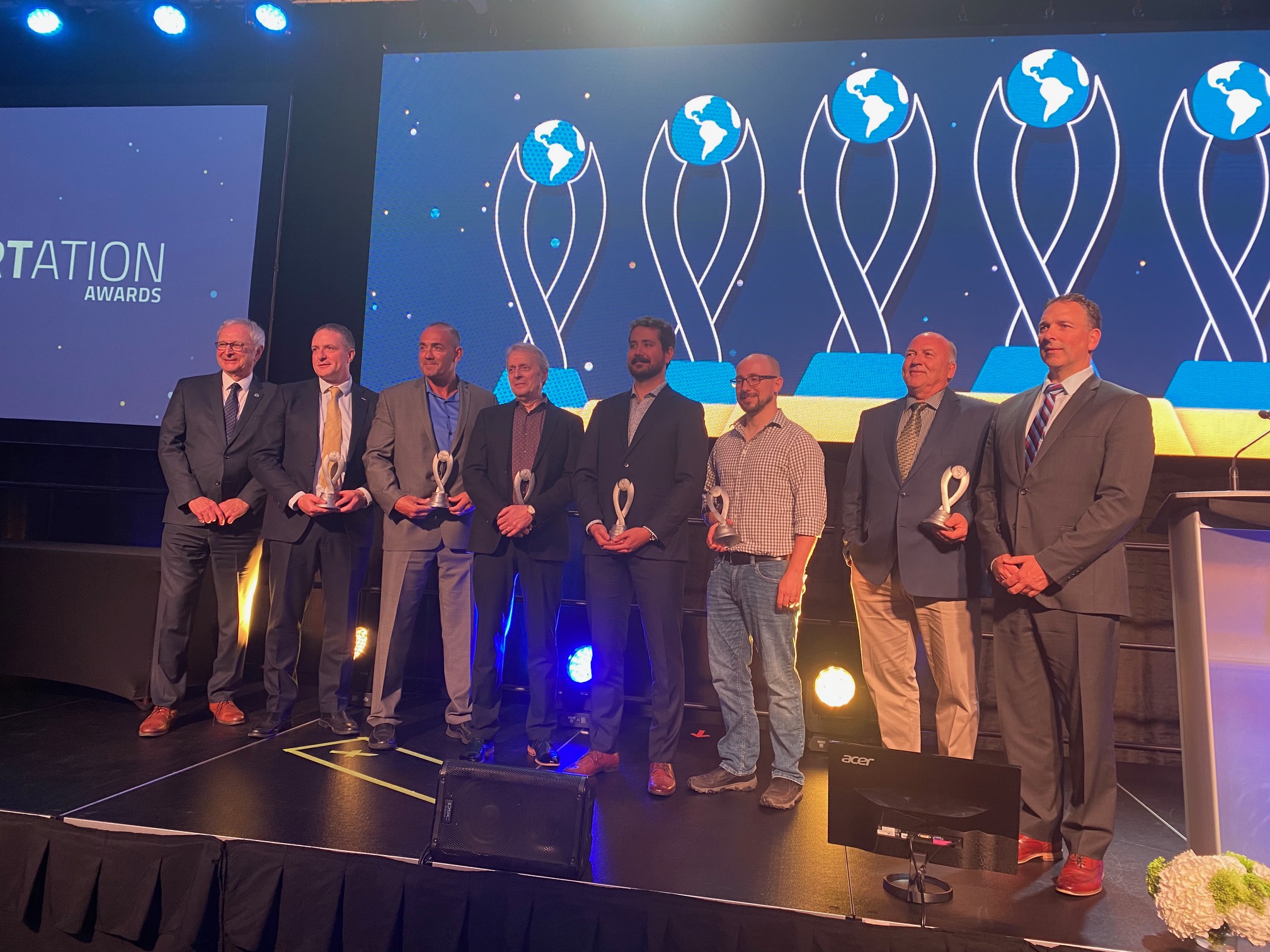
Thanks to Opportunities New Brunswick for organizing the event again this year, and congratulations to all the other New Brunswick-based exporters who are bringing new levels of investment and opportunity to the province.
The post SHIFT Named New Brunswick’s “Sustainable Exporter of the Year” first appeared on SHIFT Energy.
]]>