
- What We Do
- Solutions
- Learn
- Pricing
- Company
- Support
- Contact Us
Silk decouples performance from capacity so you can meet SLAs without oversizing cloud infrastructure
Download the Solution BriefAs cloud environments scale and applications compete for shared infrastructure, performance becomes inconsistent. To protect applications under peak and concurrent demand, teams are forced into permanent overprovisioning – oversizing storage, adding excess compute, isolating applications, and constantly tuning infrastructure.
Silk eliminates the root cause: performance tied to infrastructure sizing. As a software-defined SAN and cloud acceleration layer, Silk delivers latency and throughput dynamically based on real demand – not volume size, tiering, or static allocation – making predictable performance the default.
When performance is no longer tied to capacity:


Traditional cloud architectures tie application performance to storage capacity or compute size, forcing teams to oversize infrastructure just to guarantee I/O. Silk breaks that dependency by separating performance from capacity at the data layer. Organizations can size compute and storage for actual workload needs while still meeting strict performance SLAs.
Without Silk

With Silk

As environments grow and workloads multiply, latency often becomes inconsistent and unpredictable. Silk maintains consistent response times by dynamically managing performance at the data layer rather than relying on fixed infrastructure limits. Applications remain responsive even as usage grows and demand fluctuates.
Without Silk

With Silk

Enterprise environments rarely run a single application at a time. When multiple applications, users, and services access the same data simultaneously, throughput often collapses due to contention. Silk sustains high throughput under concurrent access so systems can support peak demand without isolating or building redundant infrastructure.

Traditional architectures isolate applications to protect performance, which leads to fragmented systems and unnecessary complexity. Silk enables multiple applications and services to run on shared infrastructure while still maintaining predictable performance. Governance is built into the architecture, eliminating the need for constant tuning and firefighting.
Without Silk

With Silk

Analytics, testing, and AI initiatives often rely on outdated copies of production data to avoid impacting live systems. Silk enables safe access to live production data without risking performance degradation or operational instability. Teams can innovate faster while maintaining confidence in the stability of core applications.
Without Silk
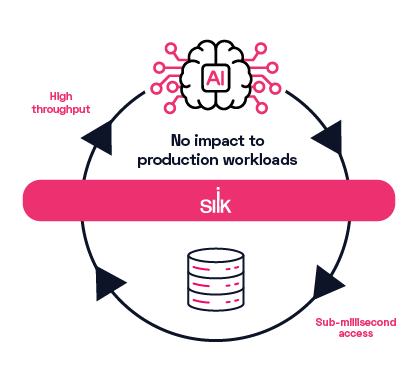
Meeting SLAs typically requires constant monitoring, tuning, and overprovisioning to prepare for worst-case demand. Silk changes this model by embedding performance governance directly into the architecture. Instead of reacting to performance issues, organizations deliver SLA-level performance as a built-in property of the system.
Without Silk

With Silk
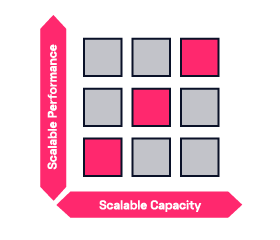


Predictable application performance does not come from buying more infrastructure. It comes from fixing how performance is delivered. Silk makes predictable performance an architectural outcome — not a workaround.
Read the Solution Brief

