The post Lawn Mowing Simulator 2 Diner: From Idea to In-Game Asset appeared first on Skyhook Games.
]]>LMS2 Diner: From Idea to In-Game Asset
When players experience a scene or location in a video game, you’ll likely see many elements that help make the world feel alive and add personality to a game environment. Within Lawn Mowing Simulator 2 we really wanted to incorporate a diner within our game. However, building this diner involves planning, modelling, optimisation and implementation into the game engine.
Here’s a behind the scenes look at how our diner within LMS2 was created.
Gathering References and Planning the Diner
The starting point before we create many assets within a game, is to collect reference images from real-world locations and create a mood board style folder. This doesn’t just mean picking images we like – we choose ones that match the game’s established style (such as level of realism, colour palette, shapes and proportions etc). This style guide helps ensure that every asset that is created fits within the game world.
After gathering references that match the style guide, the next step is to use those references and start sketching variations of the asset – in this case our diner. The helps decide what works best within the game and once a few options have been explored, we then refine the strongest idea into a clearer concept art piece. As you can see from our concept art image below for the diner, this includes more detail and colour so that it can be used as a guide for building the 3D model.
Blockout: Building basic shape
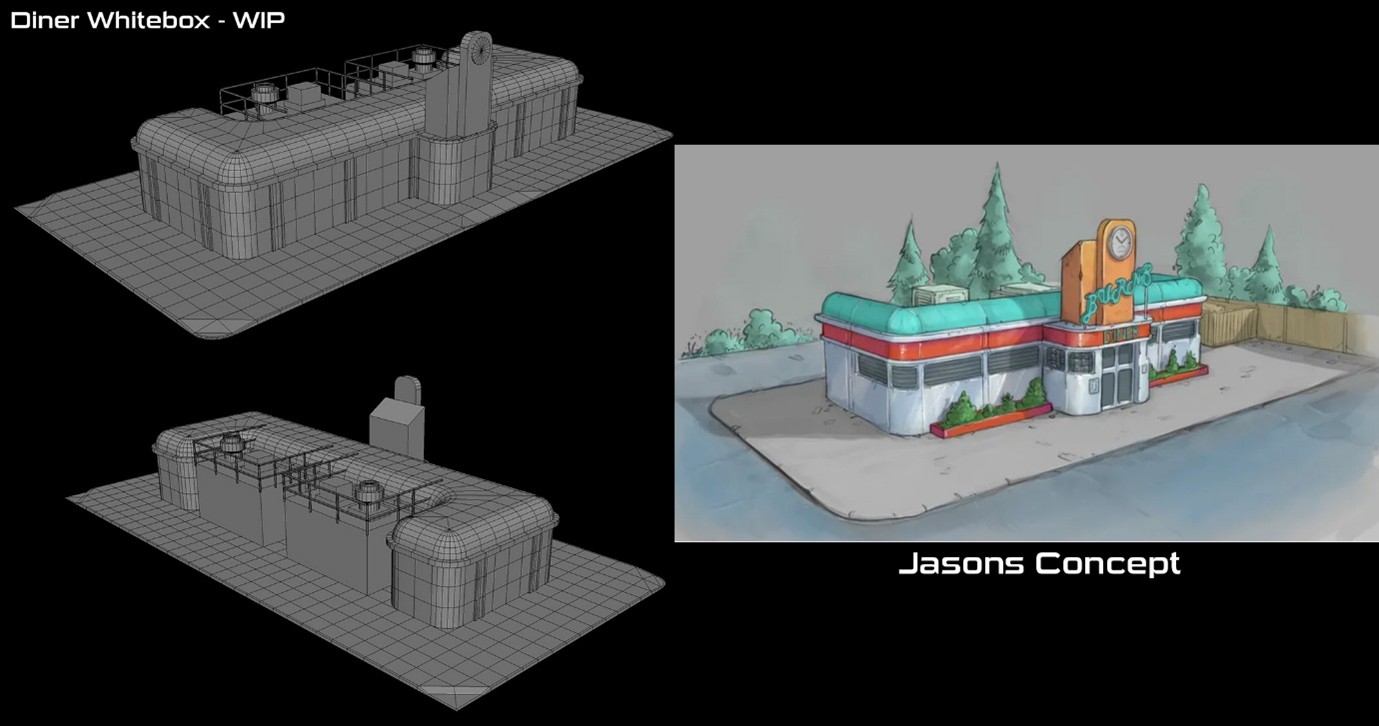
Once the concept art has been approved, the next step is to create the blockout image. At this stage everything is simple and the artist creates a non-detailed 3D version of the diner using basic geometric shapes. At this stage, the diner will have no textures or any small details added. The goal for this is to test that the scale and proportions are right inside the engine.
See image below on how this is moved on from the initial concept art level:
Modelling diner details
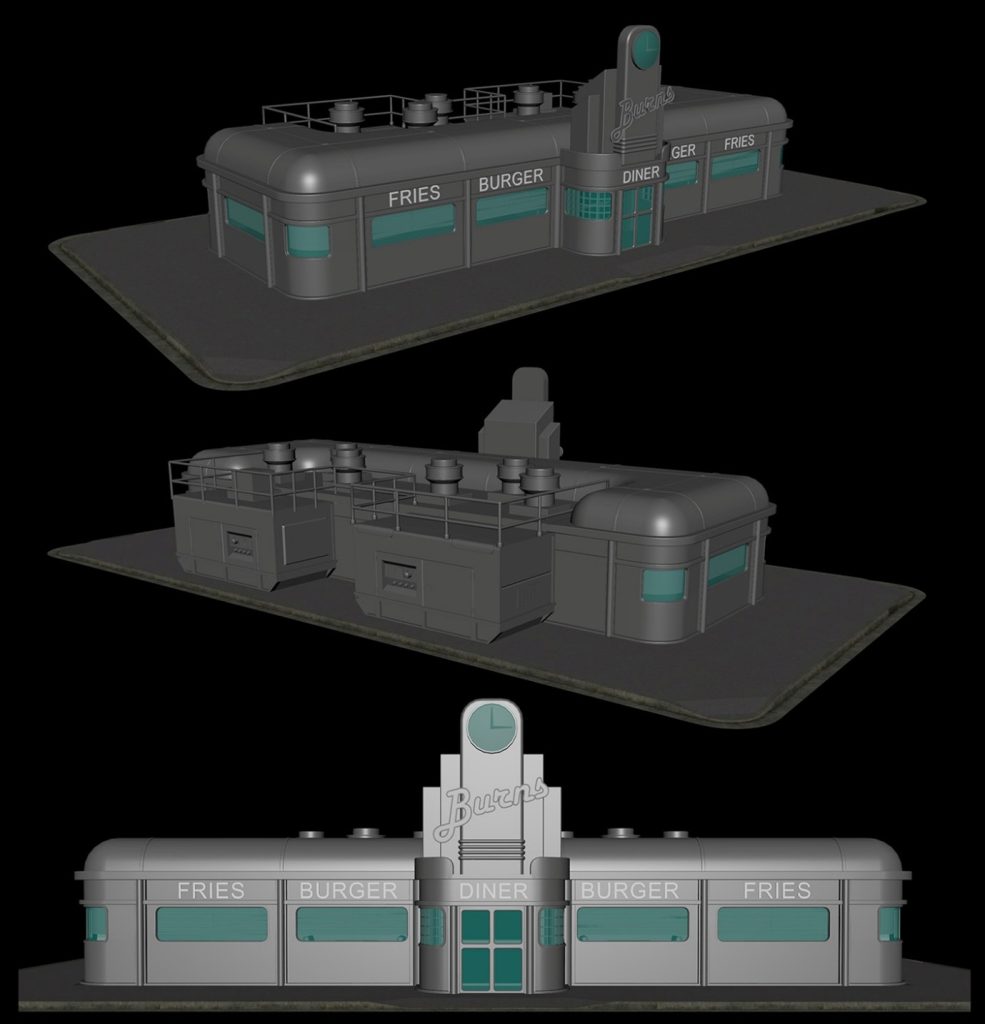
The next step, once the team are happy with the diner’s basic shape is to move onto modelling the details. This includes adding details such as windows, doors, roof, signage and other exterior design.
You can see from the image below how this starts to take shape:
UV Mapping
The next step in the diner creation process is UV mapping. This process allows textures to be applied correctly and makes sure they don’t get distorted or stretched. These are carried out on difference sections such as the walls, roof, glass etc. Then each module is unwrapped separately, and seams are placed along the natural edges and maintain a consistent texture.
Adding Textures & Materials
At this stage, other details of the diner are created. Consideration is given to the base colours and how surfaces will look. This includes things like shadow details, how shiny or matte something will appear. Other details such as wear and tear, dirt and the signs are added. For example, if you look carefully, our diner has less shine to the corners of the chrome surfaces.
Optimising
Once the modelling and texturing are completed, the next phase is optimisation. This refers to the process of reducing the diner’s 3D model file size, polygon count and texture compression to improve performance in the game engine. The complexity of this is balancing the process of lowering the polygon counts where possible without significantly sacrificing the visual quality.
Importing into engine
The final stage is to import the diner into the game engine. Once this is done and the team are happy that it has been optimised effectively, then attention falls to embedding this into the scene.
Artists will then add further details within the engine such as:
- Collision adding – an invisible collider placed over the diner’s model which defines its boundaries to ensure objects can’t go through it etc.
- Lighting adjustments – Care is taken to ensure the lighting on the diner is adjusted to fit the environment and helps add depth to the scene.
- Shadow settings – Consideration is paid to making shadows look natural and allowing for contrast between dark and bright areas etc.
Once at this point does the diner truly become part of the playable environment.
Final thoughts
A diner in a video game may seem like a simple object, but creating one requires a combination of artistic design, technical knowledge and performance optimisation.
From a rough blockout to a fully textured and optimised asset; this process involves many steps and careful decisions along the way.
Now that you’ve seen the full journey – from initial reference to modelling, texture and final polish – I hope it gives you a bit of insight into what goes into creating our diner. Now, here’s where it gets exciting: the diner is being offered as a Kickstarter reward! This gives you the unique chance to name it and see your chosen name within Lawn Mowing Simulator 2. What would you call it? Would you name the diner after yourself – cementing your name in the project – or dedicate it to someone meaningful? The choice is yours, and it’s a rare opportunity to give the diner a name that carries real meaning. Click the link to check out this reward – https://tinyurl.com/2n9sxxs9
The post Lawn Mowing Simulator 2 Diner: From Idea to In-Game Asset appeared first on Skyhook Games.
]]>The post Lawn Mowing Simulator 2 – New Grass Tech! appeared first on Skyhook Games.
]]>LMS2 – New Grass Tech!
Following last month’s update that rounded up all of the equipment coming to the game at launch we wanted to follow-up with another topic that is extremely important in a game about cutting grass… and that’s the grass!
We’ve mentioned previously that while we were proud of the grass technology we implemented in the original Lawn Mowing Simulator, it was fairly resource-hungry and didn’t leave any real headroom for us to add much more to the game (the prime example of this was leaf-blowing).
So a core part of the reason for creating a new game was to rebuild everything from scratch using the experience we gained last time around – but better! And top of the list of priorities was a more realistic and visually understandable grass technology that would make the act of mowing and trimming much more satisfying – and intuitive – than before.
While we’ve released clips showing early versions of that grass tech in action, we’re now at the point where we’re close to an implementation which is representative of what we’re expecting to achieve at launch (although, please note, this is still very much work-in-progress!)
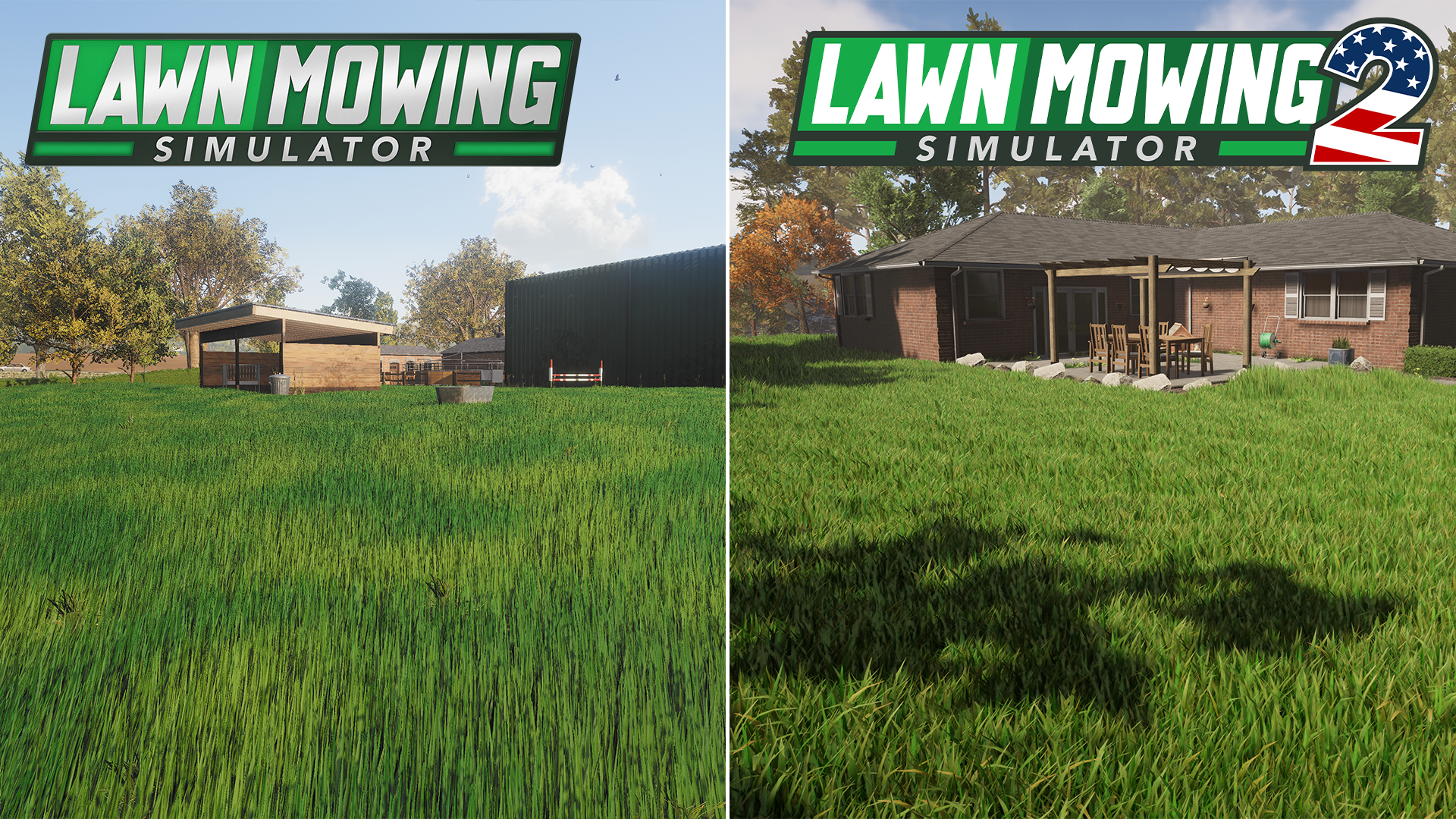
And what we really wanted to do was create something that would demonstrate just how much difference there will be between the two games – as well as trying to future-proof for potential expansions or additional ideas going forwards.
To give you an idea of the effect we’re aiming for, the new tech allows us to have millions of blades of grass in an environment, while also looking much more natural and realistic. What’s more the variation in height and tuftiness will give you a much clearer indication of how thick the grass is – which is a crucial element in deciding how to approach a section of lawn in terms of speed or cut height.
And this means – yes! You’ll be able to anticipate better those areas which might push your mower into the red at a glance, so no more overworking the engine by accident!
The grass also looks a lot more natural when cut – all the way to the borders, so there’s no more ‘thinning hair’ effect that you’d sometimes see before.
But, as mentioned, what you’re seeing here isn’t finished – we will continue to work on it and improve in the coming months, up to launch and beyond, building on variety and visual fidelity as much as we can.

Hopefully that whets your appetite further for Lawn Mowing Simulator 2, and helps to demonstrate just how much of a difference this part of the game can make. We’re homing in fast on our Kickstarter campaign now so if you haven’t already, please consider giving us a Follow… especially if you’re interested in snagging an Early Bird discount or even getting your name into the game itself!
The post Lawn Mowing Simulator 2 – New Grass Tech! appeared first on Skyhook Games.
]]>The post LMS2 – STIGA Lawn Trimmer – Giveaway! appeared first on Skyhook Games.
]]>STIGA Lawn Trimmer Giveaway!
To celebrate Lawn Mowing Simulator 2 and the impending launch of our Kickstarter campaign, we’re thrilled to announce a very special giveaway for our community! If you haven’t already followed us on Kickstarter, click notify on launch, and be the first in the queue to receive updates and exclusive access to the rewards on offer.
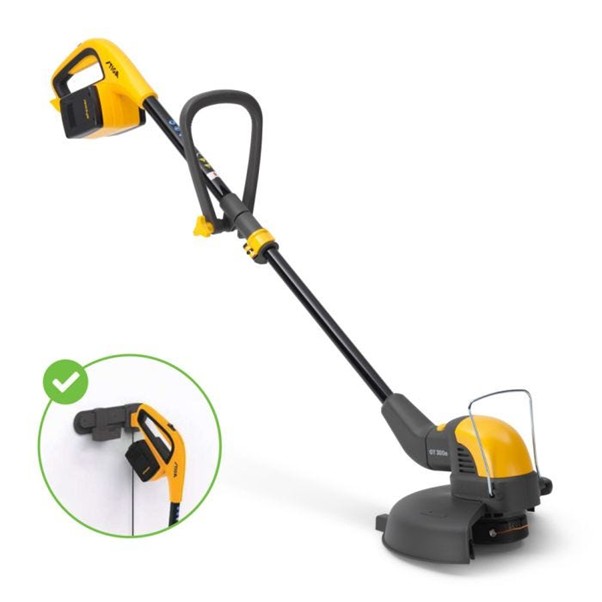
As many of you know, LMS2 features real-world brands and the manufacturers professional-grade equipment helps power the immersive gameplay. To mark this milestone, we’re giving one lucky supporter the chance to win a STIGA Lawn Trimmer Kit GT300e – a powerful, versatile tool designed to deliver precision and a STIGA branded t-shirt.
Please note: this particular giveaway is open to UK entrants only, as we’re unable to ship this item internationally due to customs regulations. However, stay tuned – we’ll have more inclusive giveaways as we head towards the live Kickstarter campaign, and we can’t wait to share what’s coming next.
Our Kickstarter campaign represents the next step in growing LMS2 into something even bigger and better, and we couldn’t do it without your passion and support. This giveaway is our way of saying thank you for being part of our journey – and for helping us bring this game to life.
You can enter via any of our social media platforms, and all entries are subject to our Terms & Conditions – by participating, you confirm that you have read and agree to these T&C’s.
By entering the Prize Draw, you are agreeing to the Terms and Conditions below:
Our Terms and Conditions
These terms and conditions govern the Lawn Mowing Simulator 2 giveaway (the “Promotion”) operated by Skyhook Games (“we”, “us”, “our”). By entering the Promotion, you agree to be bound by these terms and conditions.
- The Promoter is Skyhook Games, a company registered in the United Kingdom.
- The Promotion is open to residents of the United Kingdom aged 18 years or over, except employees of Skyhook Games, their families, agents, or anyone professionally connected with the Promotion.
- Promotion Period. The Promotion will run from Friday 6th March 2026 at 14:30 to 16th March 2026 at 10:00 (the “Promotion Period”). All entries must be received during the Promotion Period. All times are UK time (GMT/BST).
- How to Enter. To enter the Promotion, you must follow the Lawn Mowing Simulator 2 Kickstarter Coming Soon page on the specified social media platforms (Instagram and/or X – formerly Twitter) during the Promotion Period. No purchase is necessary to enter.
- The prize is one (1) STIGA Lawn Trimmer Kit GT300e and (1) STIGA branded t-shirt (the “Prize”). The Prize is non-transferable, non-exchangeable, and cannot be redeemed for cash or any other alternative. We reserve the right to substitute the Prize with an alternative of equal or greater value if necessary.
- Winner Selection and Notification. One (1) winner will be selected at random from all eligible entries received during the Promotion Period. The winner will be selected within 7 days following the end of the Promotion Period. The winner will be notified via direct message on the social media platform through which they entered within 7 days of the winner selection. The winner must respond within 14 days of notification to claim their Prize. If the winner does not respond within this time, or is unable to accept the Prize for any reason, we reserve the right to select an alternative winner.
- Prize Delivery. The winner will be required to provide a valid UK postal address for Prize delivery. The Prize will be dispatched within 7 days of receiving the winner’s delivery details. We are not responsible for any delays in delivery caused by third-party courier services or circumstances beyond our reasonable control. Delivery is to UK mainland addresses only.
- Data Protection and Privacy. By entering the Promotion, you consent to the collection and processing of your personal data for the purpose of administering the Promotion and delivering the Prize. Your personal data will be processed in accordance with the UK General Data Protection Regulation (UK GDPR) and our Privacy Policy. We will only use your data for this Promotion and will not share it with third parties except as necessary to deliver the Prize.
- Winner Publicity. By accepting the Prize, the winner agrees to participate in reasonable publicity related to the Promotion, including the use of their social media username and/or first name in announcements, unless they notify us otherwise in writing.
- Social Media Platform Rules. This Promotion is in no way sponsored, endorsed, administered by, or associated with Instagram, X (formerly Twitter), Meta Platforms Inc., or any other social media platform. All entrants release these platforms from any liability arising from the Promotion. Any questions, comments, or complaints regarding the Promotion should be directed to Skyhook Games, not to the social media platforms.
- General Conditions. We reserve the right to verify the eligibility of all entrants and to disqualify any entrant who breaches these terms and conditions, provides false information, or engages in fraudulent or inappropriate conduct. We reserve the right to cancel, modify, or suspend the Promotion if circumstances arise beyond our reasonable control. Only one entry per platform is permitted. Bulk entries or entries made through automated means will be disqualified. The decision of Skyhook Games regarding all aspects of the Promotion is final and binding, and no correspondence will be entered into.
- Limitation of Liability. To the fullest extent permitted by law, we exclude all liability for any loss, damage, or injury arising from participation in the Promotion or acceptance of the Prize, except for liability that cannot be excluded by law (including for death or personal injury caused by our negligence). We are not responsible for any technical failures, including network connectivity issues, that may prevent entry into or participation in the Promotion.
- Governing Law and Jurisdiction. These terms and conditions are governed by the laws of England and Wales. Any disputes arising from the Promotion shall be subject to the exclusive jurisdiction of the courts of England and Wales.
- Contact Information. For any queries regarding the Promotion, please contact us at [email protected] or via direct message on our social media channels.
By entering this Promotion, you confirm that you have read, understood, and agree to be bound by these terms and conditions.
The post LMS2 – STIGA Lawn Trimmer – Giveaway! appeared first on Skyhook Games.
]]>The post Lawn Mowing Simulator – Retrospective #7 – Maintenance! appeared first on Skyhook Games.
]]>LMS – Retrospective #7 – Maintenance
Time to look back at Lawn Mowing Simulator and one of its key features – Maintenance!
Regardless of whether you mow with precision and care or take a… different approach… maintaining your equipment is something that everybody will have to face (to varying degrees!)
So what were the main influences in the LMS implementation of maintenance, and what can we expect from LMS2? As usual, Game Director, Rick Payne is on hand!
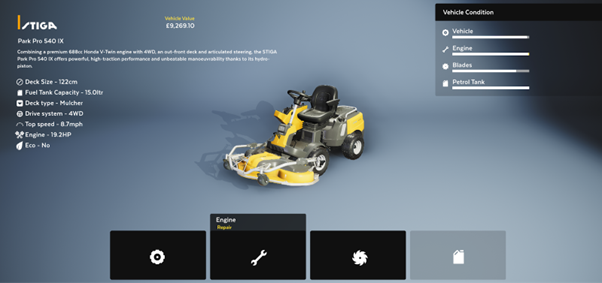
Q: We’ve talked about quite a few LMS features in the past few months, but maintenance is a topic that impacts everybody, regardless of their playstyle. I’m guessing that the intention is to encourage players to be a bit more careful in their work, or they’ll end up with higher maintenance fees (and we’ve already talked about collision damage) – but in terms of wear and tear, how did you approach this in the first game?
Rick: Maintenance of equipment is a core part of the real-world routine of a lawncare professional, so we knew early on that it had to become a part of LMS1. But the game isn’t about being a mechanic and servicing equipment – LMS1 is about cutting the grass with other aspects of the game there to support that.
We looked at maintenance as being needed, but also needing to be boiled down to quick interactions that didn’t take the player away from the cutting for too long.
Mowers, like any piece of complex machinery, start to deteriorate through repeated use, fuel gets used up, blades get blunted or damaged. These were the core maintenance aspects we decided on, along with mower damage through collisions.
Some wear and tear is unavoidable, some like collisions… well depending on the player this can be avoided.
Q: So what is the purpose of the feature?
Rick: It’s a couple of things. It’s a part of the economy in the game, and while maintenance costs are generally pretty low for the early-game equipment, it starts to scale up as you buy more expensive equipment.
Importantly, though, it’s not just a passive ‘money sink’ – the player has some agency in the maintenance costs. As you mentioned, we do want to encourage and reward players for taking more care over their work and, I guess, roleplaying as a professional. So if you are careful and you avoid things like collisions or engine overload, your maintenance costs will be lower as a result.
That said, it’s not us telling players how they “should” be playing the game – if you want to speed around and that’s where the fun is for you, no problem. But we’re just trying to mirror what real-life consequences might be in that case!
Q: What about LMS2, then? Any plans to change the fundamental concept or are you pretty happy with how it worked the first time around?
Rick: Game developers are never 100% happy with things. So in LMS2 the systems will remain largely the same, but with subtle tweaks to make them more user friendly.
Aspects like mower damage are being considered in a system we are working on that allows the player to set their own challenge level. So if a player absolutely hates vehicle damage, they could turn it off. But you’ll have to wait until closer to release to find out exactly what we’ve decided to go with!
Just a reminder that we’re still very early in development, so everything is subject to change before we get to release! And don’t forget, if there’s something from the original game you’d like us to talk about, let us know!
For more Lawn Mowing Simulator content, be sure to check out our Discord server!
The post Lawn Mowing Simulator – Retrospective #7 – Maintenance! appeared first on Skyhook Games.
]]>The post Lawn Mowing Simulator – Retrospective #6 – Employees! appeared first on Skyhook Games.
]]>LMS – Retrospective #6 – Employees
Here we are once again for another Lawn Mowing Simulator retrospective and today we’re looking at Employees.
Obviously, lots of businesses have employees, and growing a mowing business should be no different. The reasons for having them in-game are obvious… but they actually pose quite a challenge to balancing the game. Not effective enough and they’re pointless, but too effective and they’re like a cheat code.
Luckily, Game Director Rick Payne is here to explain more.
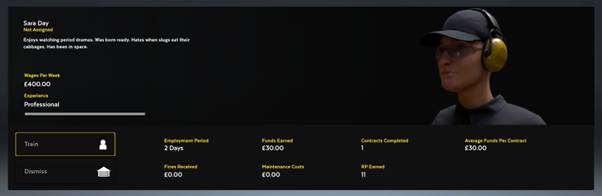
Q: Rick – employees in-game definitely increase the options you have in terms of how you progress. What was the background to their inclusion in the game?
Rick: I think it’s fair to say that while taking care of gardens is the primary activity in the game, LMS is also a game about building a business – and while your bank account or equipment roster is one way to judge progress, you also want to feel like you’re growing a team.
So adding your first employee feels significant – but it also gives you more options. Of course, it means your business can complete more contracts at a time, which means more income. But you can also start to pick and choose a bit more, so if there are locations or tasks you’d prefer to avoid, you can send an employee instead!
Q: How did you work out the right balance for employees? It’s easy for them to be either underpowered or overpowered…
Rick: It was honestly a feature that on paper seemed like an easy one, but balancing the impact of employees on the career proved much more difficult in practice.
What had never occurred to me was that some players out there didn’t want to cut grass… in a game about cutting grass! So some players would hire their employees and send them out to complete cutting contracts while the player completed a quicker litter contract instead.
This meant the mid-game balance was thrown a little bit since players were earning money way faster than we anticipated.
Q: Will employees once again be a feature for LMS2, and if so are there any changes we might look ahead to, or do you think it will be a similar experience to LMS1?
Rick: Well, we certainly learned a lot from LMS1, and I can confirm employees are planned in LMS2 currently. I can’t say too much more right now beyond that, but we’re investigating ways to better balance them and their effect on the game’s economy.
That’s all for now – but If there’s something from the original game you’d like us to talk about, let us know!
Be sure to join the Skyhook Games Discord join for all the LMS1 Retrospectives as well as all the latest on Lawn Mowing Simulator 2. Click here!
The post Lawn Mowing Simulator – Retrospective #6 – Employees! appeared first on Skyhook Games.
]]>The post Making A Game – Part 2: The Game Design Document appeared first on Skyhook Games.
]]>Part 2: The Game Design Document
Following last month’s first edition of Making a Game, which covered the starting point of a project with the High Level Vision, we’re moving onto the next main point of call – the Game Design Document, usually abbreviated to GDD.
To help explain what a GDD is, and why it’s important, we’ve chatted with two people from the Lawn Mowing Simulator 2 team – Game Director Rick Payne, and Lead Designer Dan Scollie, who have over 30 years of game design experience between them… so who better to ask!
Setting it Up
As we learned in the last article, the High Level Vision (HLV) contains a lot of top-line ideas that will ultimately define the intentions for the game’s creation – but it’s not enough to really understand whether or not it will all hold together once it’s in development.
In order to get to that point, once the team has completed and agreed the HLV it’s over to the Design department for the next chunk of work.
“While the HLV is great at explaining the vision of the game, it doesn’t have enough detail to actually know how to make the game,” says Rick. “The HLV gives you all the bits, but it’s then to the GDD to figure out how they all go together and what is linked to what.”
“It’s meant to be written by the design department and intended for the wider team to use in order to check how features and mechanics are intended to work,” adds Dan. “It’s also the place where ideas are noted.”
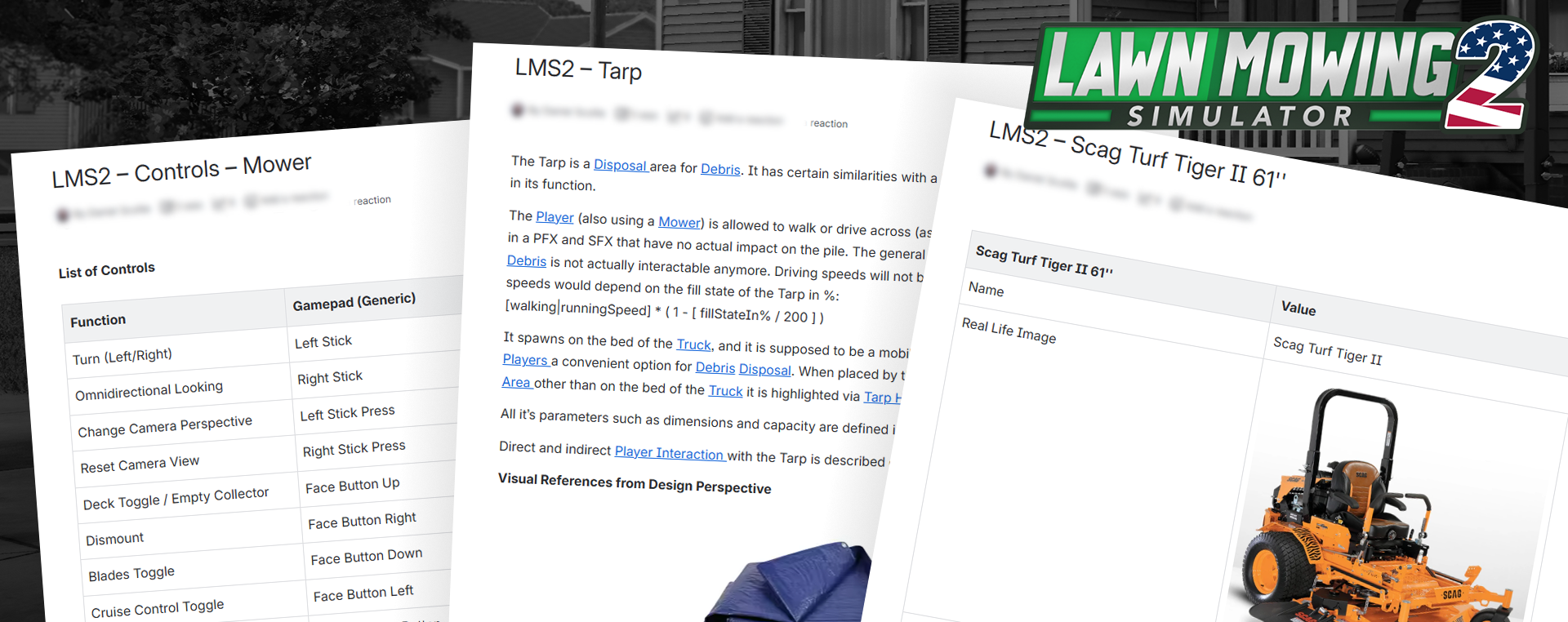
All the Questions
As the name of the document suggests, there’s a lot of upfront thinking that needs to be laid out and interrogated – and this isn’t just to provide reference material for the time. It’s also crucial in creating a sensible and efficient development process, and Rick explains:
“As a designer I’ve often looked at the GDD as a way of the designers solving 90% of the game’s potential problems before the rest of the team ever get to see them.
“This is the skill and craft of a game designer – they create a design for a feature or mechanic and then need to ask hard questions about it,” he adds.
These questions will vary depending on the element of design under scrutiny, but some good examples are:
- “How does this system affect these other systems?”
- “How can the player break this or exploit it?”
- “What tools or abilities do design need in-engine to balance and tweak this feature?”
“Game designers love to find edge cases that break a feature, even if those are features they designed themselves,” continues Rick. “It’s only by writing a detailed GDD for that feature that a good designer will find these edge cases and then be able to update the design in order to avoid them.”
Breaking it Down
So what are the key sections of a GDD? This might vary from game to game, but essentially every single aspect of a game needs its own section, so that the chances of overlooking something is minimised.
For LMS2 the list would fill multiple screen pages, explains Dan. “Since our design documentation is feature based, it’s essentially a list of all of the features of the entire game – even those that didn’t make the cut for project scope reasons.”
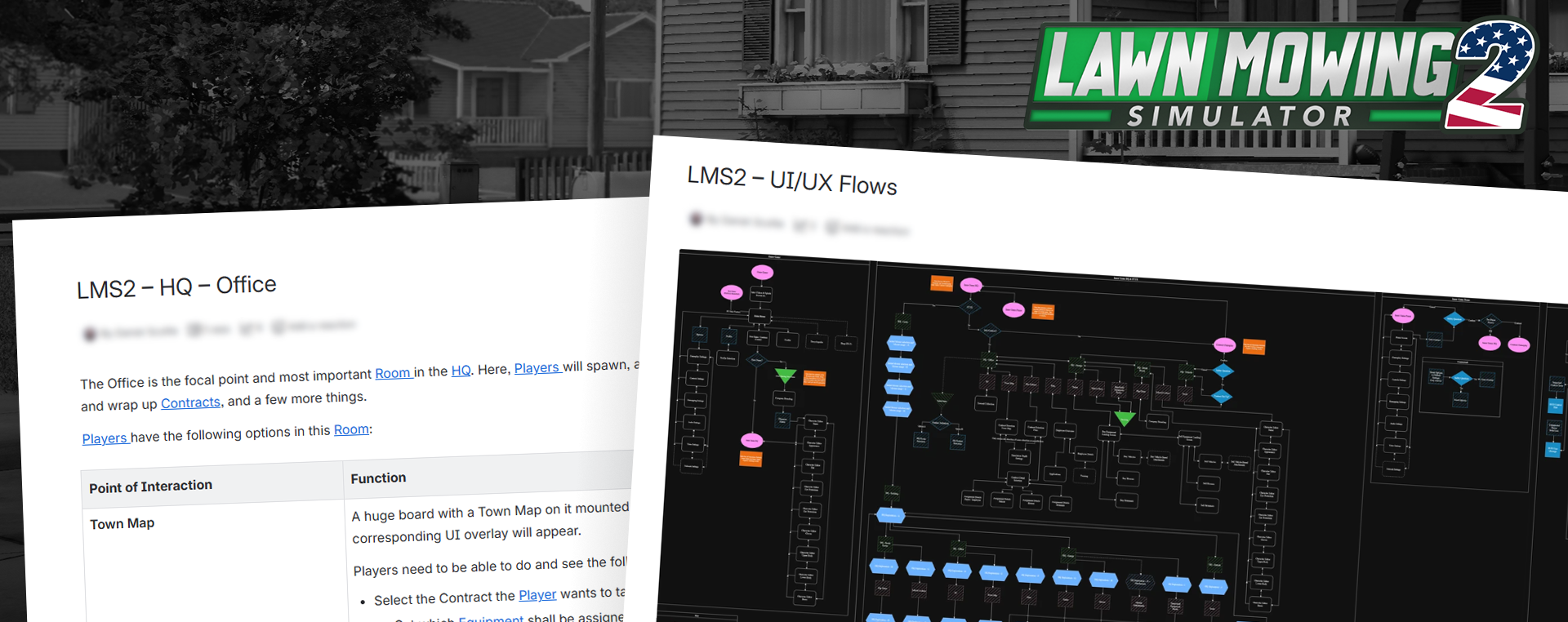
“It’s not all text either,” expands Rick. “Designers will use whatever is the best option to get the information across, whether that’s words, diagrams, flow charts, tables, and so on. Different mechanics and parts of a game’s design are best explained using different information.”
But one of the most important elements is making sure that sections and features are linked together – because within a game’s design, the way that one thing works will inevitably impact multiple other things too.
“Every aspect of the game gets a section,” says Rick. “I always started them with broad headings and then as it was filled in this would break down to more subheadings.
“A big part of writing and managing the GDD is making sure that the elements are linked to anything else they overlap with, to ensure that the reader can easily see what needs to be considered.”
Taking the Time
Since the GDD is a crucial step in the process of ensuring coherency for the project, it’s not something you should rush – and in many ways the GDD is never really ‘finished’. And in terms of the time it takes, this will be dependent on the size and scope of the game it’s being created for.
“For the original Lawn Mowing Simulator game I wrote it all in a month,” says Rick, “but that was a lot of work – pretty much all my available time during that month. And then there are edits and updates to it afterwards as development starts or scope changes.”
Once development is underway, referring back to the GDD is generally a daily process, and it’s the design team’s responsibility to ensure that anybody else contributing to the document does so in a way that’s consistent – otherwise things can very quickly get messy.
It’s also important not to only rely on what’s in the GDD when communicating key ideas, though.
“It’s often not good enough just to provide the documentation,” notes Dan. “It’s generally a good idea to also talk people through the design intentions to make sure that what is implemented will follow that intended direction.”
For really small teams – even one-person studios – it’s tempting to feel that spending a lot of time on a GDD isn’t really necessary. But there are some cases, such as working with a publisher, where it’s a requirement – because in the end, the GDD is just an excellent way to convey a lot of key information!
***
That wraps up our look at the Game Design Document – hopefully you found it useful or interesting! Next on our list of topics to tackle is the Pre-Production Phase, so don’t forget to check back in the coming weeks!
Meanwhile, a quick reminder that we’re building up to a Kickstarter campaign for Lawn Mowing Simulator 2. It’d really help us if you’d consider becoming a Follower or even sharing the campaign to your own network!
The post Making A Game – Part 2: The Game Design Document appeared first on Skyhook Games.
]]>The post Lawn Mowing Simulator 2 – Launch Equipment Round-Up! appeared first on Skyhook Games.
]]>Let’s talk launch equipment!
Over the past few months we’ve been revealing the equipment line-up we have planned for inclusion when the game releases. In that time we’ve announced partnerships with Kubota, SCAG® and STIGA to bring selected mowers and gardening machines from their real-life line-ups to Lawn Mowing Simulator 2!
To help you see how things are shaping up for release, here’s a comparison of the basic numbers:
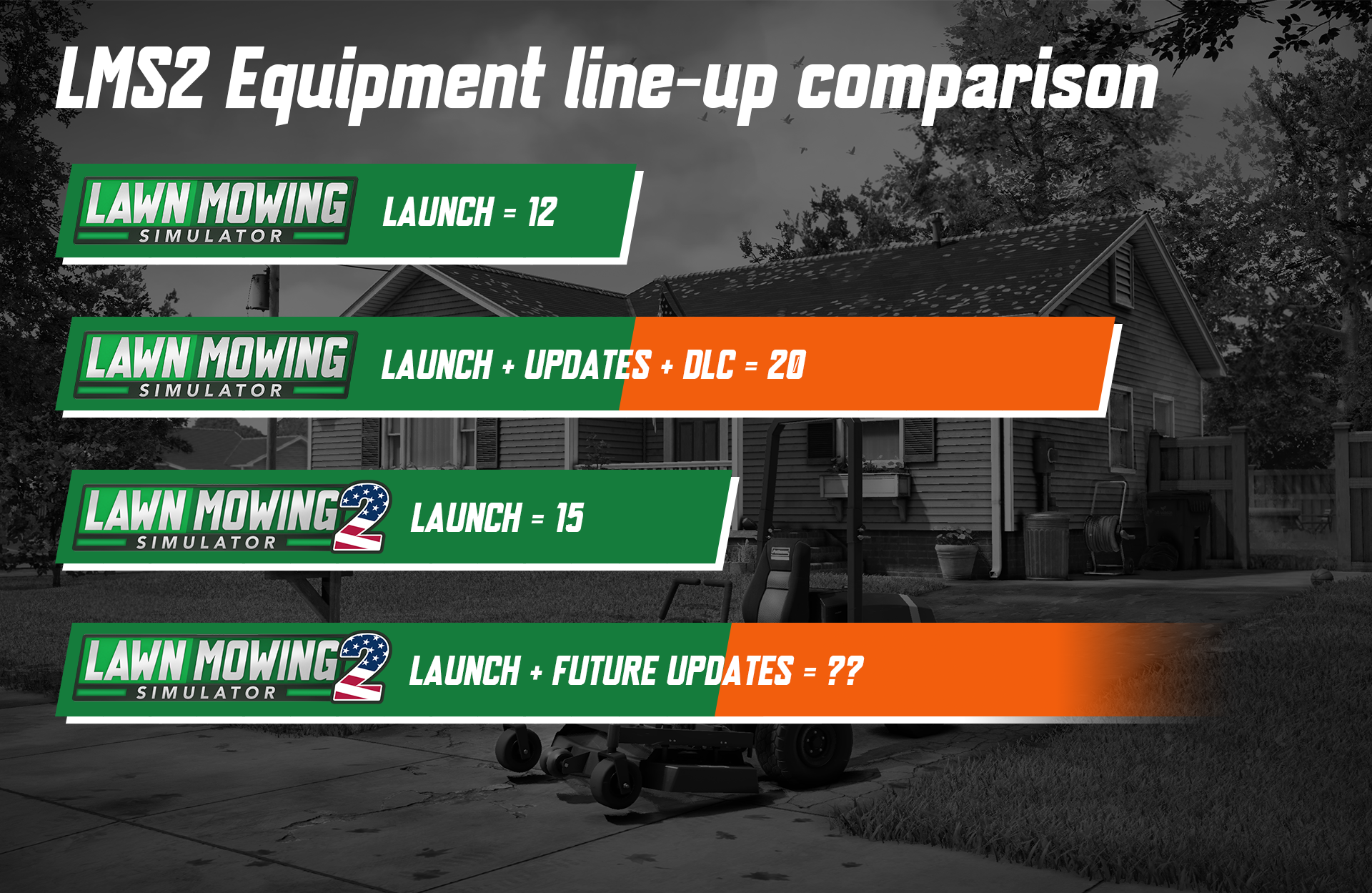
As you can see, we’re delighted to be bringing more equipment options to Lawn Mowing Simulator 2 at launch than we were able to for the original game – and while we’re not able to talk about what we might have planned for post-release additions, we do indeed have plans…
If you missed any of the equipment reveals we’ve also created a handy round-up chart showing each of the mower and gardening machine models announced so far, alongside those in the original game:
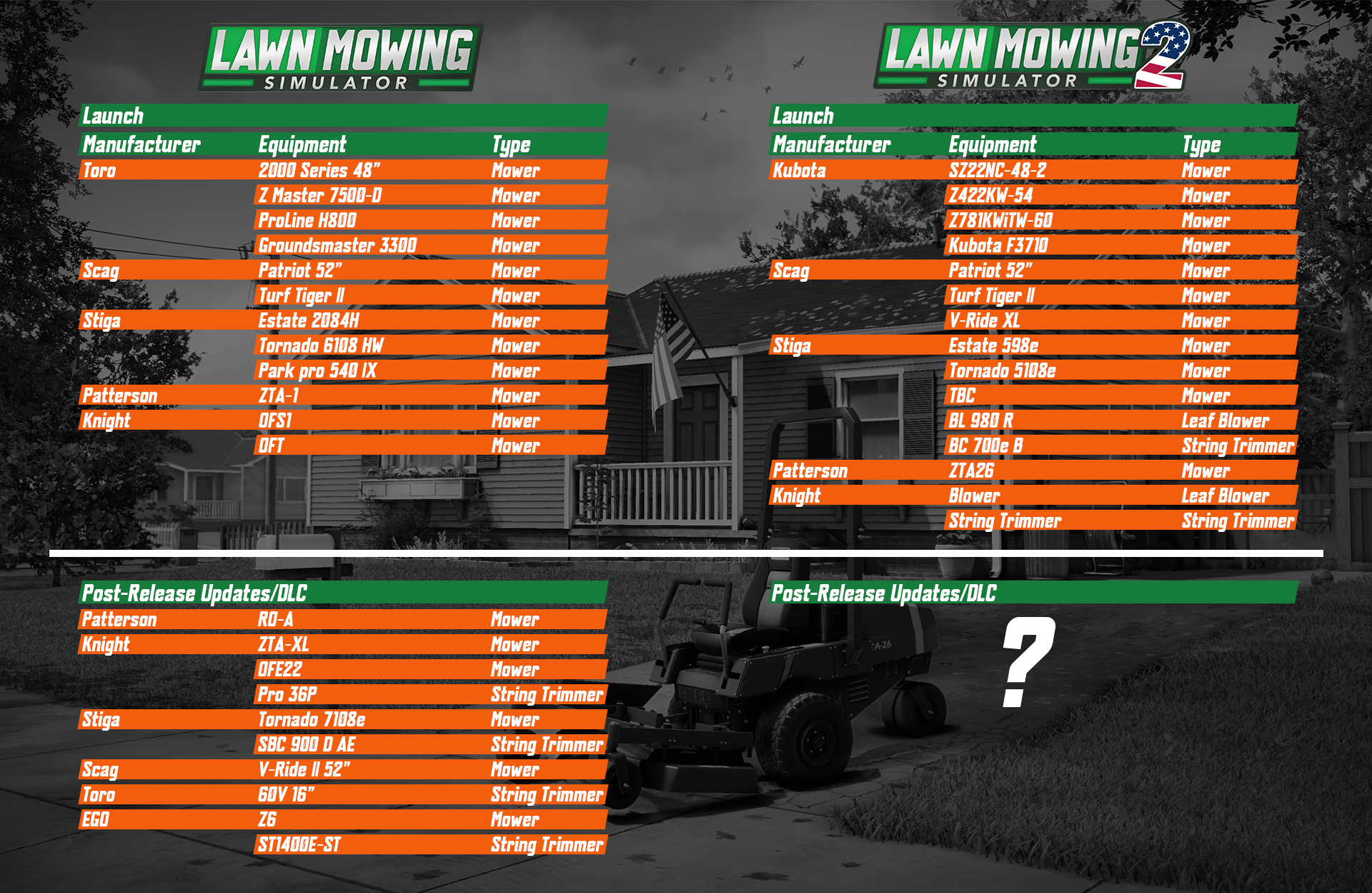
As a reminder, we’re not always able to work with every manufacturer that we’d like, and we’re not able to include a manufacturer or their equipment in the game without permission.
The eagle-eyed among you will notice there’s one entry under LMS2 that’s still TBC… wonder what that might be? Keep across our socials as we’ll be revealing that one before too long – and for all the latest information (usually before anywhere else) head over to our Discord!
The post Lawn Mowing Simulator 2 – Launch Equipment Round-Up! appeared first on Skyhook Games.
]]>The post Lawn Mowing Simulator – Retrospective #5 – Percentage Cut Targets! appeared first on Skyhook Games.
]]>LMS – Retrospective #5 – Percentage Cut Targets
It’s time for the next instalment in our series of retrospectives looking at the design of features in Lawn Mowing Simulator. This time we’re looking at something that most of us will only have noticed in passing… but was actually built on an important design decision – Percentage Cut targets!
On every mowing contract you took in-game you were given a percentage of the grass in the level that you needed to have cut in order to complete that contract. Usually this was either 99.9% or 99.5%.
But why not 100%? Well, there were reasons – but what were they? Game Director, Rick Payne is here to tell us!
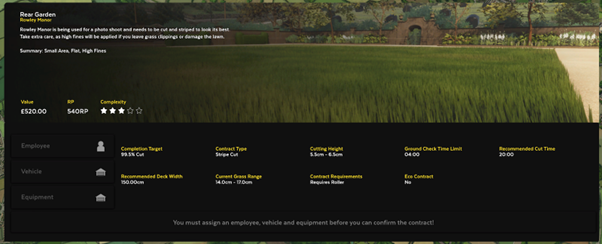
Q: If I hired somebody in real life to cut my grass, I’d probably be a bit annoyed to find the odd tuft here and there that was uncut. But the contracts in-game were slightly more lenient – how come?
Rick: It’s actually a simple answer. Having to find every blade of grass to cut in what could be over 1 million blades of grass on the bigger levels – even with ProView – was very time-consuming and having to run around for a while trying to find that last blade was killing player satisfaction.
So we changed the target percentage down slightly – and we also made it vary a little bit depending on the contract.
Q: How did you arrive at those slightly lower numbers? Was it a lot of playtesting to understand where the balance was between ‘thorough’ and ‘tedious’?
Rick: Hours and hours of playtesting the maps mainly. We settled on two numbers 99.9% and 99.5%, which were to be used on different sized locations.
For smaller locations 99.5% was the go-to, with 99.9% for our largest contracts. We went for those numbers to balance the larger and smaller spaces of what we felt would be “acceptable” to be left over – but still feel finished.
Contracts in LMS1 could range from 1000sqm to 5000sqm, so the amount of uncut grass that 1 per cent could represent was pretty huge.
In post-release updates we also change the values again – to be more lenient – based on community feedback.
Q: With the brand new grass technology for LMS2 the visual representation will be different – but I guess the ‘problem’ of 100% completion could still exist. It’s too early in development to say for sure, but do you expect a similar approach to find the right balance in the new game?
Rick: It will always be a ‘problem’ to be considered, yes. Some players feel the need to get every last blade (and I’m one of those types!) Meanwhile other players aren’t playing the game with that as their priority.
We’re working on an idea for a system that allows players to set their own requirements for much they need to cut in order to achieve completion on a contract. If you target a higher percentage of grass that needs to be cut, you can earn a little more money – but it will give players a degree of choice.
We’ll be revealing more details about gameplay once we get nearer to release and designs are playtested and finalised – but If there’s something from the original game you’d like us to talk about, let us know!
This is a taste of the kind of content you’ll find in the Skyhook Games Discord… Be sure to join for all the LMS1 Retrospectives as well as all the latest on Lawn Mowing Simulator 2. Click here to join!
The post Lawn Mowing Simulator – Retrospective #5 – Percentage Cut Targets! appeared first on Skyhook Games.
]]>The post Making A Game – Part 1: The High Level Vision appeared first on Skyhook Games.
]]>Part 1: The High Level Vision
Welcome to the first in a new series of articles we’ll be posting throughout 2026 as we build up to the launch of Lawn Mowing Simulator 2! As the name implies, we wanted to throw a bit of a light on how we here at Skyhook Games go about the process of making a videogame.
Our hope is that it’s at least interesting to read – for those in the industry it could be useful to compare notes, and for readers just interested in how games are made, hopefully it will be a nice insight!
While we will use our own history, work and practices as a basis for this series, we will try to cover off things that are common in indie game development even if we don’t necessarily use them – and who knows, maybe we’ll even persuade some friends in other cool teams to answer a few questions along the way!
Kicking it Off!
First in the series is the HLV – the High Level Vision. This is really where the idea of a game starts for us, a chance to pull together the ‘big picture’ and think about what we want the game to be at the top level.
Game Director Rick Payne, who has been with Skyhook Games for X years and was lead designer of the original Lawn Mowing Simulator game, explains: “It’s a precursor document to a Game Design Document (GDD) that is created at the start of a game’s concept phase. It can be considered something like an extended concept deck/document.”
Generally the HLV sets up the game pillars, then – in other words it sets out what the key concepts of the game are used to inform the games’ design and themes. But it’s not just that – it’s also about thinking through the experience the player will have.
“It also features a player story to help people visualise playing the game, and then proceeds to chronicle each area of the game and the key features within, and what the aim is for those areas.”
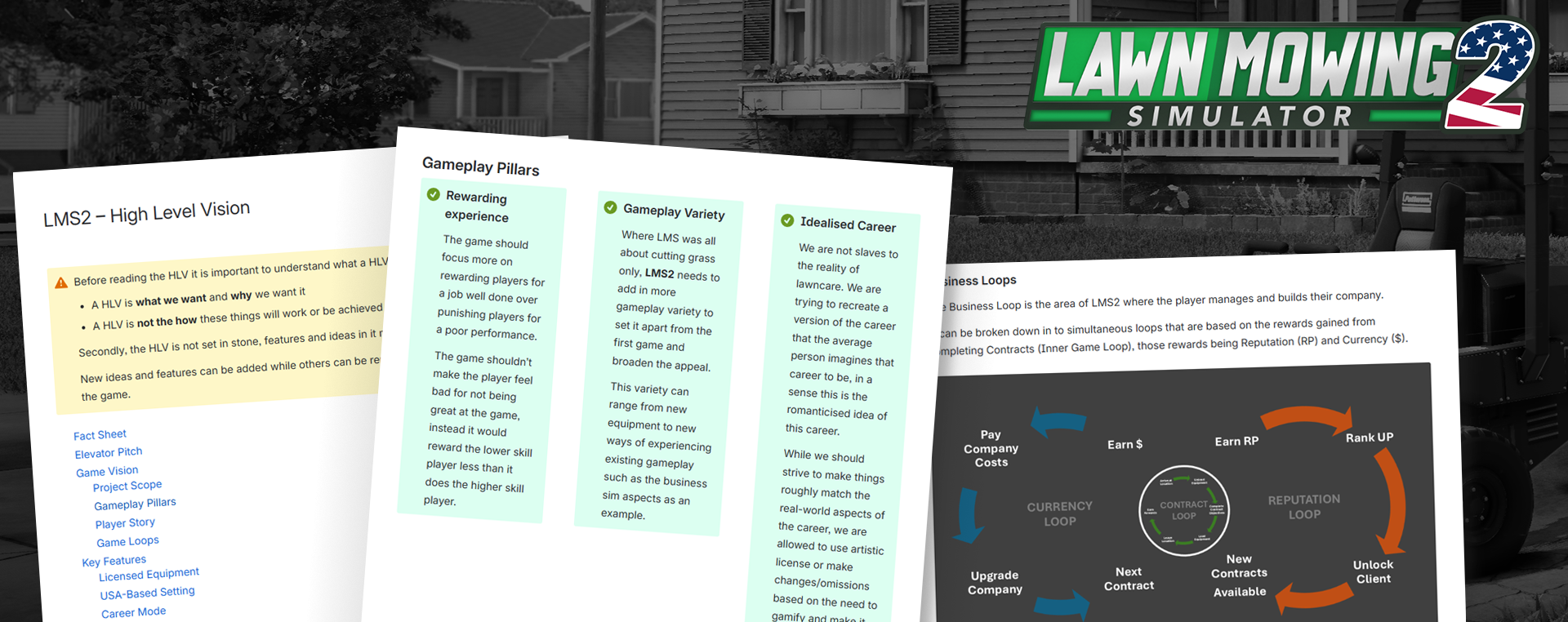
Image: The HLV is home to a lot of information, including the gameplay pillars as well as progression loops that help to visualise the player’s journey through the game.
HLV vs GDD?
But if the HLV and GDD are both big documents that aim to lay out the vision and experience for the game’s development and features, how do the two differ?
“The HLV keeps the detail of how everything works to a minimum,” explains Rick, “focusing on the key high level aspects of each feature and not the minute detail. The HLV shows what is wanted in the game and why it is wanted, whereas the GDD breaks down each mechanic and feature into its smallest parts and charts how these all interact.”
Or, in summary: “If the HLV is a preview of the game, the GDD is the manual that describes how to make it.”
Taking the Time
While it might be tempting to jump right into the action and start writing code, creating 3D models, and so on, it’s important to spend the time at the beginning to get the direction right – but how much time does this phase take?
As with most things, this will depend on a number of factors, such as how big or complex the game is overall, as well as how much of the general vision for the game is known and understood by the team as a whole.
Since Lawn Mowing Simulator 2 is a sequel, even though pretty much everything is being redesigned and rebuilt from scratch, a lot of the original game’s concepts still stand. When creating a completely new project, making sure that key team members all have the same understanding about the game’s vision can take a little longer.
“The LMS2 HLV took a few weeks to create, which covered multiple passes of the documentation and many meetings with the team’s department heads to discuss features and wants,” explains Rick.
And, he adds, it’s important that the HLV isn’t consigned to history once work begins on the next stage. “The HLV is a living document, which means that as development and planning both progress, the HLV may need to change with what the team finds out and learns.”
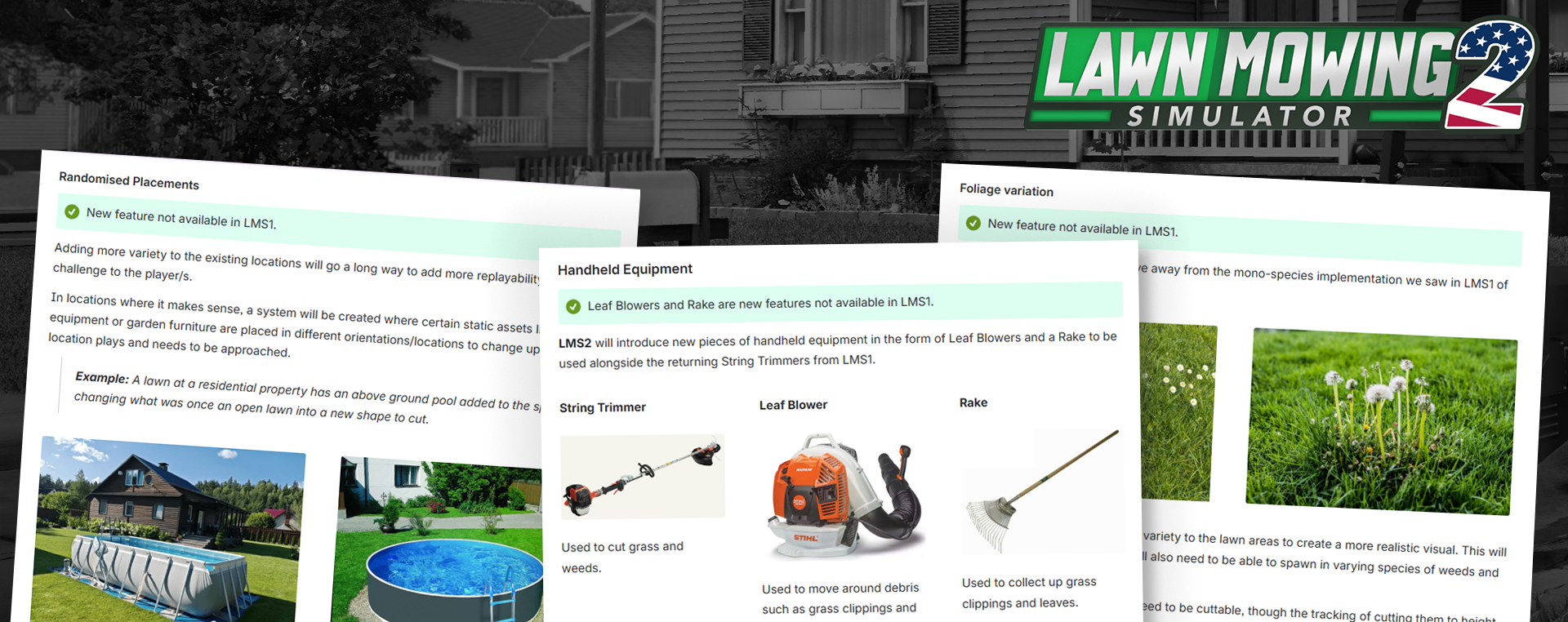
Image: Listing out new features and equipment help to establish a consistent understanding of what the game is trying to achieve
Doing the Work!
Normally, responsibility for creating the actual HLV document can be shared between a few people, but overall the whole team needs to understand the content. For Skyhook Games Rick, as Game Director, is the final sign off – but it needs careful input from domain experts.
“It is key that the experts in the team in their specific areas are called upon to contribute answers and information to the respected areas,” Rick explains. “So the art department are called on to inform the Art Target section, for example, while technical aspects such as platform builds are discussed with the Tech Director and code team.
“Writing the HLV this way means that each department is sense-checking the aspects of the game’s vision that directly relate to them. And this in turn helps with understanding the risks and scope of the project early.”
Could it be Better?
One question we always try to ask, whenever we look at an element of the game creation process, is “How could we have done this better?” And of course, that’s not to point the finger of blame, but to try to learn and improve.
So what about the HLV for LMS2 then? Rick’s already been thinking of areas that might work even better next time around.
“While the content of the HLV is good in terms of what it tracks, the importance of each feature or piece of content could have been rated,” he muses. “Post HLV and a number of months into development we ran a ‘MoSCoW’ (Must, Should, Could and Won’t) exercise across the project to highlight the most important aspects of the game.
“I think something along the lines of this could have been done as part of the HLV to help early on crystalise in planning what was the most important parts of the game to be focussed on.”
So that just about covers the High Level Vision – what it’s for, who creates it and how long it takes. Next time we’ll be looking at the Game Design Document (GDD) in more detail, so don’t forget to check back in the coming weeks!
You may know that we’re building up to the launch of our Kickstarter campaign for Lawn Mowing Simulator 2! Click here to check out our pre-launch page!
The post Making A Game – Part 1: The High Level Vision appeared first on Skyhook Games.
]]>The post Video Game Design: Whitebox/Blockouts Explained! appeared first on Skyhook Games.
]]>Video Game Design: Whitebox/Blockouts Explained!
Our ‘This week in Dev’ posts in the Skyhook Games Discord server often talk about design creating “whitebox” or “blockout” versions of levels. So we thought it was overdue for us to give this part of development some time in the spotlight.
“What is a whitebox or blockout?” I hear one of you in the back row ask. Great question!
Without going too much into how they are made (that will come in another series of articles we have planned) locations start as a 2D map before being run though our tools which then make a 3D version in our Unity game engine. While they don’t look flashy, they are a very important part of the development of a location – a bit like the foundation you build a house upon.
Blockouts are simplified versions of the game’s locations built by our design department. Houses, walls and trees are all placed with primitive proxy models to build up the space. Slap in some grass and you have a quick way to test out a location in-engine that can be pulled around before hour after hour of art time goes into dressing the location with final assets. Take a look at these shots taken by Isabella!
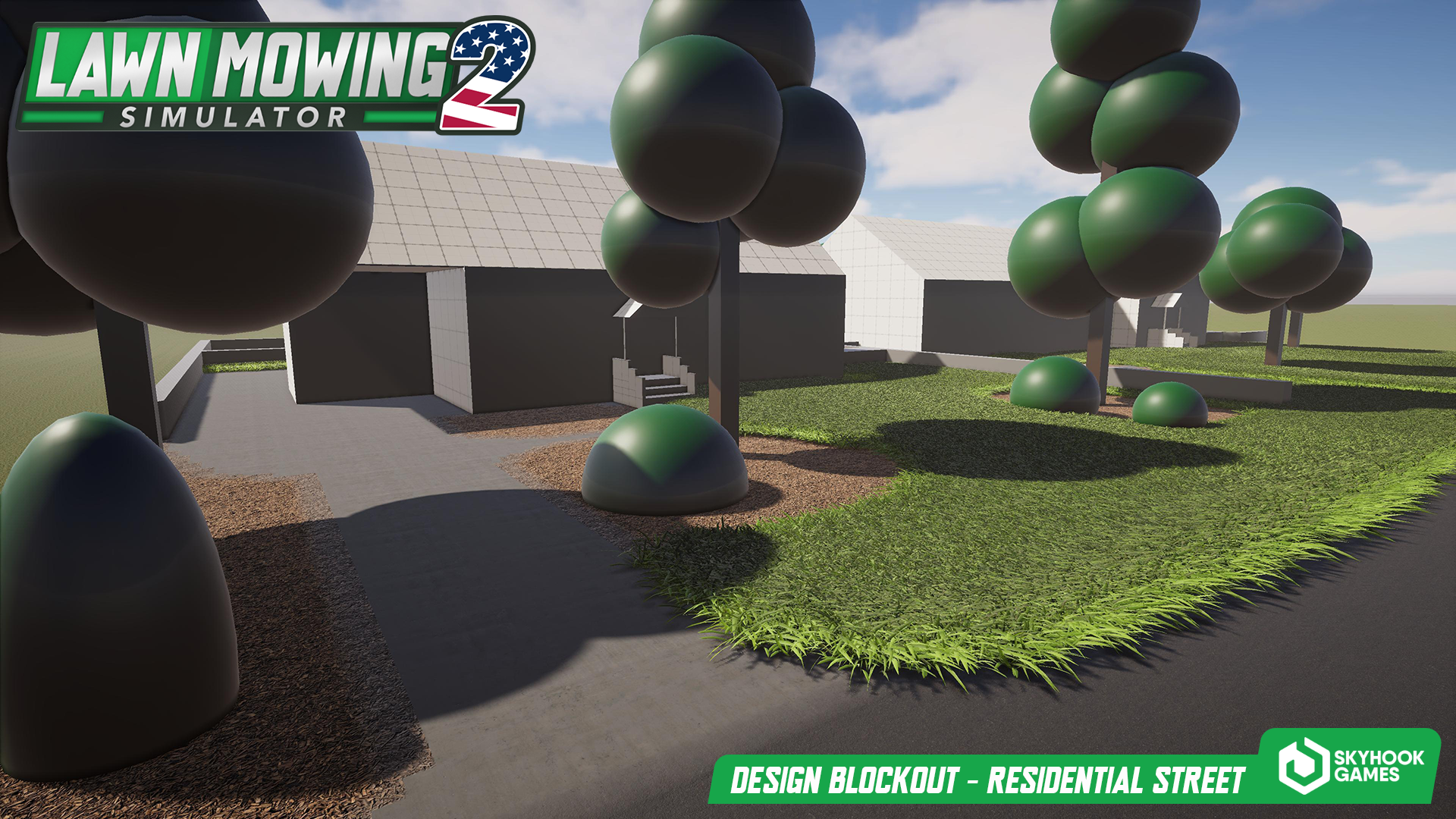
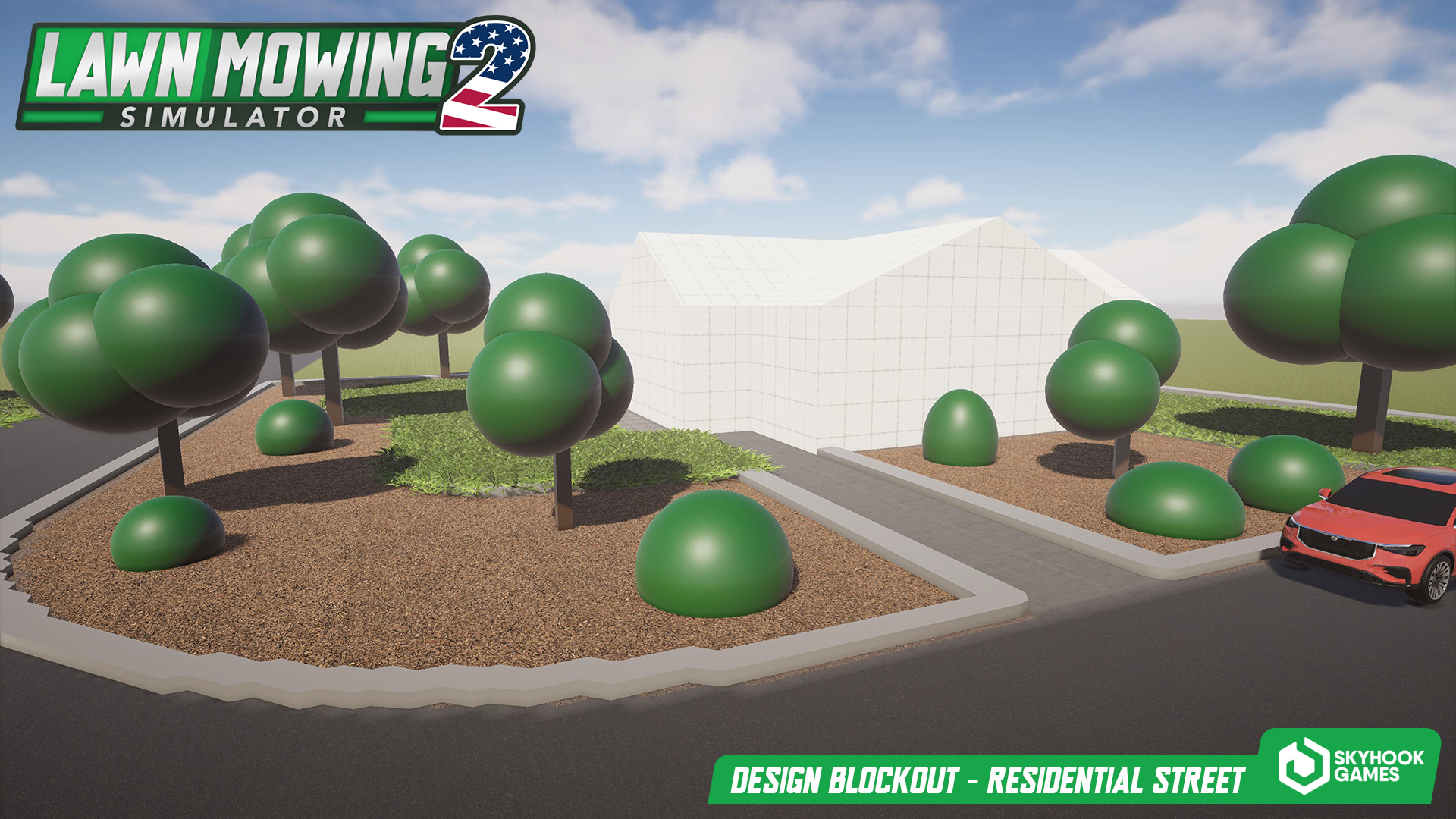
We alluded to the Skyhook Games Discord earlier, we regularly post progress updates & exclusive news on the development of LMS2. Come and say hello if you haven’t already! Click here to join.
The post Video Game Design: Whitebox/Blockouts Explained! appeared first on Skyhook Games.
]]>