The post Accessibility by Design appeared first on Beyond the Arch.
]]>
Accessibility by Design
From interpreting musical theater to redesigning campus technology, Ava Gilbert
is shaping campus experiences so no one is left out.
When Ava Gilbert first began learning American Sign Language, it wasn’t for a class or a credit—it was for connection. Her journey started in high school, inspired by a friend who lost her hearing and another who was Deaf. Determined to communicate authentically without an interpreter, Gilbert began learning ASL on her own, one sentence at a time.
“I would Google things, and I would come back to church on Sundays with one new sentence,” she says. “And I would sign, ‘How was school?’ And she would respond, but I would have no clue what she said.”
That simple act of friendship sparked a passion that has grown into a powerful mission.
Gilbert AB ’25 graduated from the University of Georgia in December with a bachelor’s degree in political science and a minor in ASL. She is pursuing a Master of Public Administration in the School of Public and International Affairs.
Gilbert has become an advocate for accessibility, especially for the Deaf and Hard of Hearing community. Her work is rooted in a belief that everyone deserves to be understood.
“I just encourage people to listen to others’ stories,” she says. “When someone says they’re Deaf or Hard of Hearing, take the time to hear their experience, because I guarantee you, it’s not the same as what you think it is.”


From Diagnosis to Determination
Thirteen days into her freshman year, Gilbert received her own diagnosis: ADHD and autism. It was a moment of confusion and fear. How could she succeed at a rigorous university when she was just beginning to understand her own learning needs?
A conversation with Erin Benson at UGA’s Office of Accessibility and Testing reframed everything. “Having a disability doesn’t make you incapable,” Benson says. “It just makes learning different.”
That moment transformed Gilbert’s perspective. She realized that using accommodations was simply what she needed to have an equal opportunity to learn and succeed. Once she understood that, her passion for accessibility advocacy took root. Gilbert shares her story, knowing many students feel vulnerable, and she’s determined to be a voice for them.

Advocacy in Action
Gilbert’s resume reflects an intentional journey to pursue her passion for accessibility advocacy. She has worked with the Office of Accessibility and Testing and served as an accessibility ambassador on the Dean of Students Advisory Board since her freshman year, ensuring that disability voices are heard in campus-wide conversations.
As for her coursework, she takes every opportunity to explore disability policy. “I’ve written about disability in every SPIA class I’ve taken,” she says. “It’s always relevant.”
Gilbert’s ASL skills brought accessibility to the arts when she joined a small team of interpreters for UGA Theatre productions like Little Shop of Horrors and 9 to 5: The Musical, interpreting multiple characters from her spot in front of the stage.
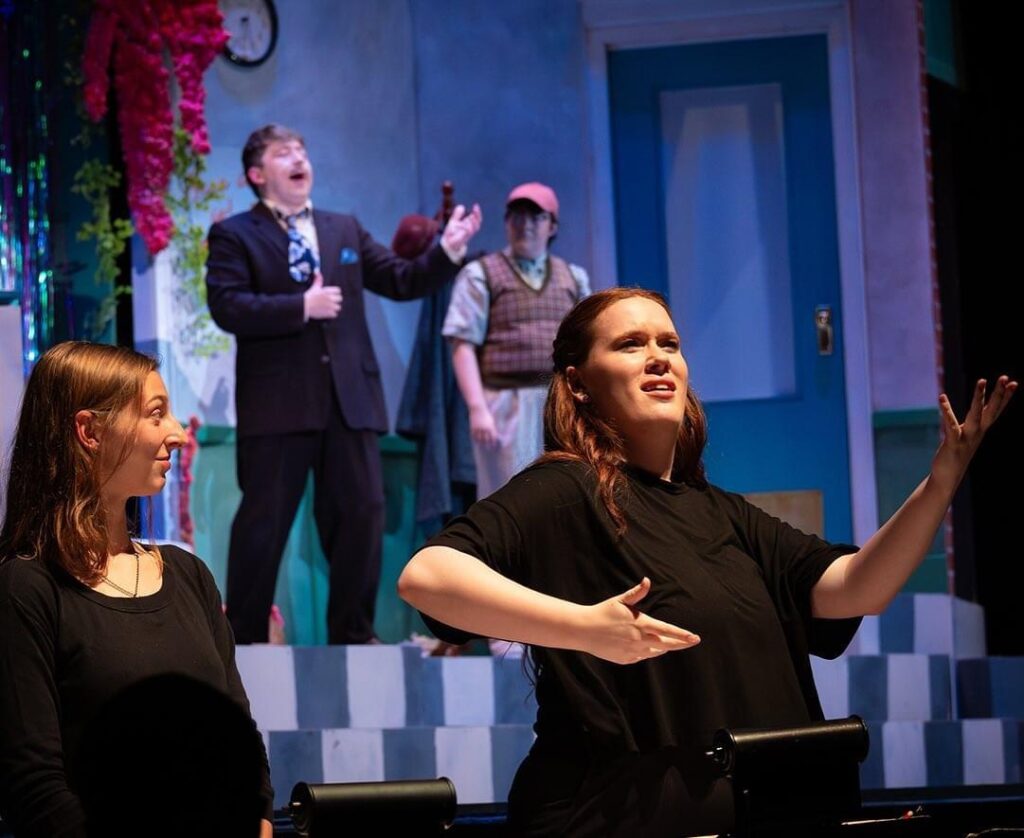
Musical theater interpretation is a unique challenge, requiring weeks of preparation, script translation, and character study.
“Traditional interpreting is live. It’s in the moment. You are hearing it in your ear and producing it with your hands,” she explains. “In musical theater, because you have time in advance, you actually translate the script into American Sign Language beforehand.”
Designing for Everyone
Gilbert knows accessibility isn’t automatic—so she helps build it.
One of Gilbert’s proudest accomplishments stemmed from a simple observation: The UGA Safe App’s emergency contact feature wasn’t accessible for all users. It defaulted to voice calls in emergencies, and the feature to send a text message to police seemed hard to find.
So Gilbert spoke up. She met with the UGA Police Department and advocated for a redesign. Within two weeks, the app was updated.
“This impacts more people than you think. And they listened,” Gilbert says. “They were willing to learn and change.”
“Accessibility isn’t just about ramps and captions. It’s about designing experiences that include everyone from the start.”
Ava Gilbert
As part of a collaboration with UGA’s Active Learning team, Gilbert reviewed and analyzed more than 40 teaching techniques published on their website. Would this work for a student with a disability? What barriers might a student with ADHD face in a group brainstorming session? How could a blind student participate in a visual mapping activity?
Gilbert documented potential challenges across a spectrum of disabilities and collaborated with faculty and Ph.D. student Madison Livingston to develop alternatives integrated into the UGA Active Learning website.
As Gilbert works on her MPA, considering careers in interpreting, policy, and public service, she continues her mission to advocate for and educate others about accessibility as the first-ever Digital Accessibility graduate assistant for Enterprise Information Technology Services.
“Accessibility isn’t just about ramps and captions,” she says. “It’s about designing experiences that include everyone from the start.”
Written by: Caroline Paris Paczkowski
Photography by: Billy Schuerman and Clay Chastain
Design by: Kaiya Plagenhoef
The post Accessibility by Design appeared first on Beyond the Arch.
]]>The post Where Do Broken Hearts Go? appeared first on Beyond the Arch.
]]>
Where Do Broken Hearts Go?
Alejandro de Feria is an expert in the human heart.
How often does someone become aware of their heartbeat? Maybe they feel it thumping in their chest during a run or listen to it stutter during a scary movie. For Dr. Alejandro “Alex” de Feria Alsina BS ’10, listening to heartbeats is the cornerstone of his profession.
De Feria is a cardiologist at the center for inherited heart disease at the University of Pennsylvania. As an assistant professor of clinical medicine, he works closely with patients and their families to navigate the complex challenges of genetic heart disorders. While the science is cutting edge, his approach is deeply human.


How Do You Treat Genetic Heart Conditions?
According to the U.S. Centers for Disease Control and Prevention, almost 700,000 people die from heart disease every year. Having blood relatives with heart disease can greatly increase that risk.
De Feria studies and treats people with hereditary conditions like dilated cardiomyopathy where the heart chambers dilate and weaken, as well as hypertrophic cardiomyopathy, which causes the heart muscle to thicken and potentially obstruct blood flow. Both genetic conditions put patients at a higher risk of heart failure. While the genetic risk may be present at birth, symptoms can lay dormant until adolescence or adulthood.
“Hypertrophic cardiomyopathy affects about one in 500 people,” says de Feria. “It’s common enough that everyone knows someone who has it, whether they realize it or not.”
Until recently, many of the treatments used to treat genetic heart conditions were borrowed or adapted from other areas of cardiology and were only moderately effective. Today, de Feria’s work spans clinic visits, hospital care, and clinical trials for targeted therapies and gene-based treatments. He is involved in ongoing trials with fellow University of Pennsylvania researchers focused on targeted therapies for genetic heart disease.
“Hypertrophic cardiomyopathy affects about one in 500 people. It’s common enough that everyone knows someone who has it, whether they realize it or not.”
Dr. Alejandro de Feria
“I used to have to offer patients open heart surgery to fix a problem, but now we have targeted medicines and catheter-based procedures,” says de Feria. “As gene therapy becomes a reality, I am hopeful that during my career the field will shift from treating disease complications to offering cures.”
A Treatment Versus a Cure
De Feria has patients from their teens to their nineties, often in the same family.
“Many young people struggle with accepting a diagnosis, especially when it’s genetic,” says de Feria. “They’ve seen other people in their family deal with serious issues, and they think, ‘That’s not me. I’m not going to have that.’ I want people to know that even though it’s scary, plenty of people live with these conditions and can have good lives.”
For those with genetic risk who do go on to develop disease, de Feria does his best to treat the symptoms and reduce the chance of heart failure. He encourages all his patients to focus on quality of life.
De Feria vividly remembers the limitations put on patients with hypertrophic cardiomyopathy, but a lot has changed since he started studying medicine.
“In the early 2000s, exercise for kids with HCM was restricted to bowling or golfing with a cart, and that was about it. Now there are professional athletes who have these conditions and continue to play,” he says. “My hope is that we’ll continue to improve disease detection and treatment to help families change the trajectory of their health outcomes across generations.”

The post Where Do Broken Hearts Go? appeared first on Beyond the Arch.
]]>The post Leading the Flock appeared first on Beyond the Arch.
]]>
Leading the Flock
Ambition and agriculture drive a UGA poultry science student.
When Addie Bennett moved to Athens, she wasn’t intimidated by class sizes, game days, or the plethora of student club options. What caught her off guard was the existence of crosswalks …and how to use them.
Bennett came from the small Georgia town of Millen with a high school graduating class of 55. She is one of only a few people from her hometown to be admitted to the University of Georgia as a first-year student in the last several decades. So she knew there’d be a bit of a culture shock.
“I had never lived in a place where there were more than five or six cars on the road at one time,” says Bennett. “Most people where I grew up become a nurse, a teacher or a prison guard, and there’s not really anything in between. But I’ve always been ambitious and wanted to see what was out there and what I could do.”
Redefining Rural Perceptions
Bennett grew up around cattle and had planned to be a large animal veterinarian. However, the poultry science department, housed in the UGA College of Agricultural and Environmental Sciences, lured her into a different field. Now she can’t imagine any other path.
She credits this to community recruiting events, as well as the efforts of a college outreach coordinator. That same community outreach that allowed Bennett to see the department’s integrated academic rigor, hands-on teaching, and research and professional development is now under her purview as an avian ambassador. Bennett regularly engages with prospective students and shares the same magic that motivated her to become a self-proclaimed chicken scientist.
Part of that involves speaking with potential Bulldogs who come from similar backgrounds. Rural communities sometimes lack the capacity to offer dual enrollment, Advanced Placement courses, or college prep. But that doesn’t mean rural students are any less worthy of admission, Bennett says.
“Rural students aren’t disadvantaged. We’re not sad little kids who can’t compete. We just don’t have the same access to those resources, to those materials, to the information that everyone else does,” she says. Instead, she says, rural students come with different skills and a different way of life. What matters is knowing how to use that background to their advantage.

Poultry on the Potomac
As an avian ambassador, Bennett prioritizes building community within UGA’s agricultural world. Her favorite place to do that personally? In the lobby of the newly constructed poultry science building.
If you sit there long enough, good things happen, she says. It’s not only the place she credits with finding her core friend group, but it’s also the best spot for students to help each other and themselves.
“Sitting 3 feet from someone, you’ll eventually form that community,” Bennett says. “When you’re first here, you’re trying to establish who you are as a student, so this program has given me a nice home away from home.”
Bennett believes she can keep advocating for underdog communities, especially rural ones, by becoming an agricultural policy advisor in Washington, D.C.

“It’s like speaking an entirely different language. I was bilingual with cattle and poultry, and I had to become trilingual with policy.”
Addie Bennett
To help her on that path, she has so far secured two distinct, selective opportunities. As a Georgia legislative intern, Bennett spent an entire semester in Atlanta, working full-time with a Senate committee, researching and writing agricultural policy.
“At first, I had no idea what I was looking at,” she admits, “but I did a lot of reading, connecting with people in the fertilizer and pesticide industries. It became my favorite part of that entire internship—just asking people what they thought and why they thought that way.”
Three weeks later, Bennett hopped on a plane to Washington to spend her summer as a Congressional Agricultural Fellow. There, she worked with the Georgia delegation in the House Appropriations Committee.
When she completes her bachelor’s degree in 2027, Bennett will also finish her master’s in agribusiness through the Double Dawgs program, UGA’s offering to earn both bachelor’s and master’s degrees in five years or less.
“Afterwards, I think I’ll be right back on the Potomac,” she says.
Not only will she be ready to tackle problems for rural communities, but she’ll be able to tackle any crosswalks she encounters.
Written by: Savannah Peat
Photography by: Chamberlain Smith
Design by: Kaiya Plagenhoef
The post Leading the Flock appeared first on Beyond the Arch.
]]>The post From UGA to the Bay appeared first on Beyond the Arch.
]]>
From UGA to the Bay
The Ganeshan sisters share a similar path to becoming leaders in their fields.
Like many siblings, Smitha and Shreya Ganeshan have plenty in common.
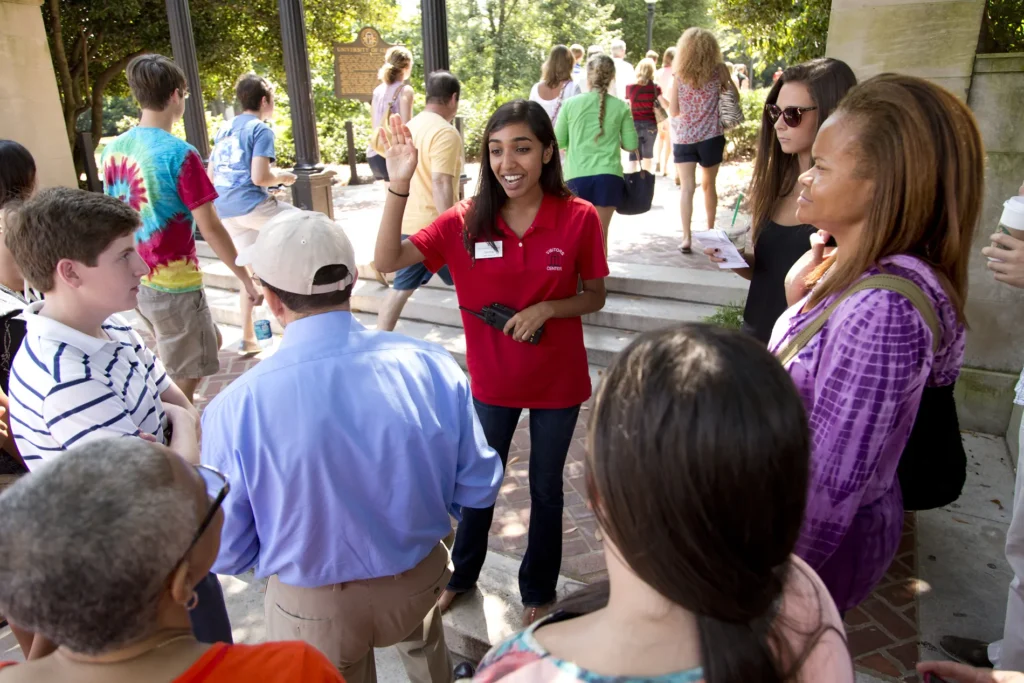
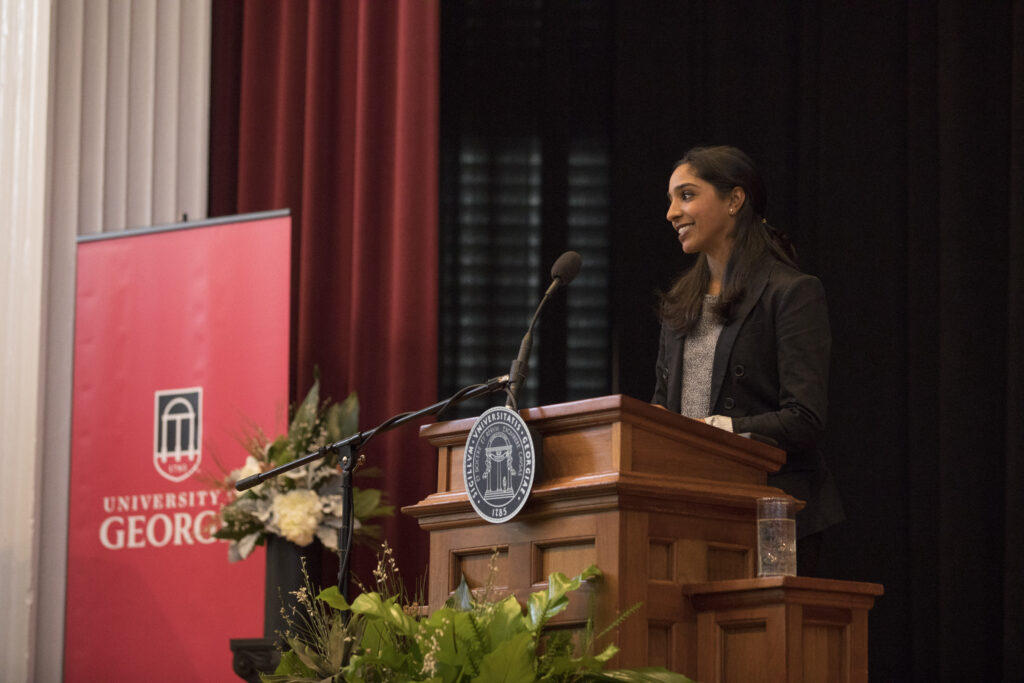
Each sister studied at the University of Georgia as a Foundation Fellow, led tours through UGA’s Visitors Center, and took a keen interest in technology.
Still, the Ganeshans, who grew up in Johns Creek, took different paths when it came to their careers. One chose medicine; the other dove into the tech industry.
Dr. Smitha Ganeshan BS ’14 is an assistant clinical professor of medicine at the University of California, San Francisco, and the medical director for clinical AI programs at the UCSF Medical Center.
Her younger sister, Shreya BS ’18, AB ’18, served as a data scientist working on Google Photos and Google One teams, where she used data analysis to improve user experience.
Today, they both work in the greater Bay Area and live about 10 minutes apart in the Haight-Ashbury District of San Francisco.

Clinical Innovation
Smitha always knew she wanted to care for patients. But after watching her aging grandparents’ experience in health care, she also resolved to help improve the broader health system.
While at UGA, she worked at the Athens Nurses Clinic (now the Athens Wellness Clinic) while studying biology through the Franklin College of Arts and Sciences. As a Foundation Fellow, she had the opportunity to travel and conduct research with faculty. She took full advantage.
“Mentorship at Georgia is unparalleled. I was fortunate to learn from so many incredible mentors.”
Dr. Smitha Ganeshan

“Mentorship at Georgia is unparalleled,” she says. “I was fortunate to learn from so many incredible mentors.”
After earning a Truman Scholarship, Smitha went to Harvard to earn an M.B.A. and an M.D.
“I went to business school to learn how to build effective teams,” she says. It also taught her to evaluate and implement new technology in clinical settings.
At UCSF, Smitha cares for patients and evaluates which artificial intelligence tools the hospital should adopt to improve workflows and allow clinicians to spend time with their patients.
“When a patient comes into the hospital, often they have a complicated medical history,” she says, “especially at a place like UCSF.”
Smitha helps implement tools that can summarize pages and pages of notes and medical histories, so clinicians have the information they need before meeting with patients.
When it comes to improving patients’ experience, Smitha says, “I think the health care industry has a lot to learn from other industries.”
If Smitha needs advice about the tech industry, she can always check with her little sister.
A Picture’s Worth
One and a half billion. That’s how many people use Google Photos worldwide. Shreya’s job was to use data to improve the product for all those users.
That involved building models and digging into how users interact with the product.
She also experimented with these models to define new metrics and create tools from her findings. But the job is much more than numbers to her.
“I think developing relationships with professors early catapulted my curiosity about statistics, about using data to solve really thorny problems.”
Shreya Geneshan
“I think images are sort of an untapped source of richness about our lives,” she said.
Making those images—full of memories and connections—shareable and accessible enriches people’s lives, she says.
Before landing at Google, Shreya followed her sister to UGA, drawn by Smitha’s experience and the range of activities. Rather than work through an established path like pre-med, Shreya says she used her Foundation Fellowship as an “incubator” to explore ideas. She majored in statistics in Franklin College and economics in the Terry College of Business.
“Developing relationships with professors early catapulted my curiosity about statistics, about using data to solve really thorny problems,” she says.

Siblinghood
The sisters feel fortunate to be so close to each other, even if so far from Johns Creek. They see each other almost every week, but they’re trying to get one more Ganeshan to San Francisco.
The youngest of the three siblings, Shashank BS ’23, AB ’23, is another Georgia grad and former Foundation Fellow. He’s working at Microsoft in Seattle, but his sisters are intent on luring him down to the Bay. And something about that bond continues to bring them together through shared experiences—like UGA—while also forging their own paths.
The post From UGA to the Bay appeared first on Beyond the Arch.
]]>The post Skyfall Space appeared first on Beyond the Arch.
]]>
Skyfall Space
UGA engineering students are tackling the growing threat of space debris.
Benjamin Pumphrey presented NASA staff with a bold pitch in the summer of 2023: use a shoebox-sized satellite with a deployable net to capture space debris.
The idea won a $10,000 NASA seed grant from the Marshall Space Flight Center. Now, Pumphrey and fellow fourth-year University of Georgia mechanical engineering student Grant Baumann have teamed up with students from universities nationwide to develop technology to clean up space. Their project: Skyfall Space.
Pumphrey is the team’s lead engineer for technical development, focusing on systems engineering and other technical aspects. Baumann serves as the team’s principal investigator.
When Debris Collides
The threat of space debris or “space junk” is real and accelerating. The debris are remains from old satellites, scientific experiments, and military tests. And the risk of that junk colliding with an operational spacecraft grows as more satellites launch into orbit every day.
Space debris about the size of a credit card can cause damage that looks like it was made by a car. “Even tiny pieces of shrapnel will rip through multimillion-dollar equipment like it’s a piece of paper,” Baumann says.
When two pieces of debris collide at high speeds, they fragment further and potentially create a cascade that can render entire orbital zones unusable for GPS, military and weather satellites.
Skyfall Space targets a critical gap: medium-sized debris, roughly 10 centimeters to a meter in diameter. Previous efforts have primarily focused on eliminating smaller debris through lasers or takedowns of large objects such as decommissioned satellites.
The Net Solution
The Skyfall Space solution is a net deployment system housed in a small satellite. The satellite travels to space attached to a larger rocket launched from earth. Once in orbit, the satellite detaches from the larger rocket and uses its onboard propulsion system to navigate to debris-dense regions.
That’s the easier part. The real test begins when the satellite’s deployable net must withstand the harsh conditions of space and the impact of the hurtling debris to catch a heap of space junk. Then the satellite reels in the full net like a fishing trawler, securing the space debris to the satellite for the journey back to Earth.
To find their debris targets, the Skyfall Space team will use NASA reports that locate the most problematic debris fields. Those reports estimate the chances of collision and how much the resulting damage could cost — helpful details that the team can use to explain their project’s financial value.
Baumann and Pumphrey work with 14 other students from universities, including:
- the Georgia Institute of Technology
- University of Michigan
- Cornell University
- and the University of California, San Diego
UC San Diego is home to mechanical engineering student Brandon Vinh, who developed the design for the deployment mechanism.
In early 2025, Skyfall Space secured a second NASA seed grant to further develop the net capture mechanism.

(L-R) Fourth-year undergraduate Grant Baumann holds a small satellite next to fourth-year undergraduate Ben Pumphrey holding the net deployment mechanism for the satellite they are creating with their company, Skyfall Space. Their satellite will be about twice the size of the one Grant is holding and is designed to capture and bring down medium-sized space debris. The mechanical engineering students originally met in UGA’s Small Satellite Research Lab where they are pictured.
A Foundation for Innovation
Baumann’s and Pumphrey’s training ground at UGA has been the Franklin College of Arts and Sciences’ and College of Engineering’s Small Satellite Research Lab, a student-faculty collaboration that develops and builds miniature research satellites. They joined the team as first-year students, working on a computational imaging satellite for the U.S. Air Force Research Lab. The experience prepared them for Skyfall Space’s technical challenges.
“What I’ve been amazed by at UGA is the scope of the programs offered,” Baumann says. “I’ve also had the opportunity to work on hard things with very passionate and smart people.”
Baumann, a Foundation Fellow in the Morehead Honors College and Student Industry Fellow in the Office of Experiential Learning, has competed in pitch competitions through UGA’s Innovation District and traveled abroad for multiple internships. After graduation, he’s considering a master’s degree in quantum computing.
Pumphrey pursued similar opportunities through his co-presidency of the Engineering Ambassadorship Program and internships with Blue Origin and MIT’s Lincoln Lab. He’s planning to work in aerospace and research.
His strategy for opening doors in these competitive fields boils down to one principle. “Relentlessly pursue what you think is the most interesting,” he says. “Put in the hours, put in the interest, ask the questions and try to meet people.”
Baumann and Pumphrey graduate from the College of Engineering in spring 2026, but they aren’t finished with Skyfall Space yet. The project needs more funding to build the satellite and test the net deployment system in space. It’s the kind of ambitious, boundary-pushing work that has defined their college experience.
“What’s most exciting is the chance to develop the project, break barriers and show that we can actually do this,” Pumphrey says.
Written by: Hannah Gallant
Photography by: Andrew Davis Tucker & Getty Images
Design by: Kaiya Plagenhoef
The post Skyfall Space appeared first on Beyond the Arch.
]]>The post Pre-Med, For the People appeared first on Beyond the Arch.
]]>
Pre-Med, For the People
For Swetha Pendela, people are at the heart of her journey to become a pediatric neurologist.
Swetha Pendela has spent the last four years exploring just about every corner of the University of Georgia. From research labs to orientation panels to the streets of Italy, she is a familiar face across the UGA campus.
Pendela’s college journey has zigged and zagged through different clubs, majors, and international trips, but these unexpected turns have helped her find her direction. Now, a double major in biochemistry & molecular biology and international affairs, she’s finishing her applications to medical school.
“I didn’t come into college knowing exactly what I wanted. It’s why I double majored. I wanted to cover all of my bases,” says Pendela. “I actually thought about a law degree first, but then I found medicine.”
A Pre-Med Journey
Pendela’s interest in neuroscience began in UGA’s physiology & pharmacology department. She joined a research lab focused on alcohol use disorder. Over the past two years, she’s studied how stress and substance abuse affect brain activity.
“As much as I love my lab, I realized that’s not how I wanted to leave my mark,” says Pendela. “But working there was the turning point. It taught me about people and that I really like working with the brain, which is why I tuned into neuroscience.”
As she continued to narrow down her future career, Pendela went to work as a medical scribe at Piedmont Athens Regional Hospital, did clinical work at the Athens Heart Center, and volunteered at St. Mary’s Hospital.
She shadowed physicians and learned about patient care in real time. Pendela looked beyond the test tubes and the science. She learned the importance of empathy and community in a clinical setting. More importantly, she learned how she could use those skills to help people.
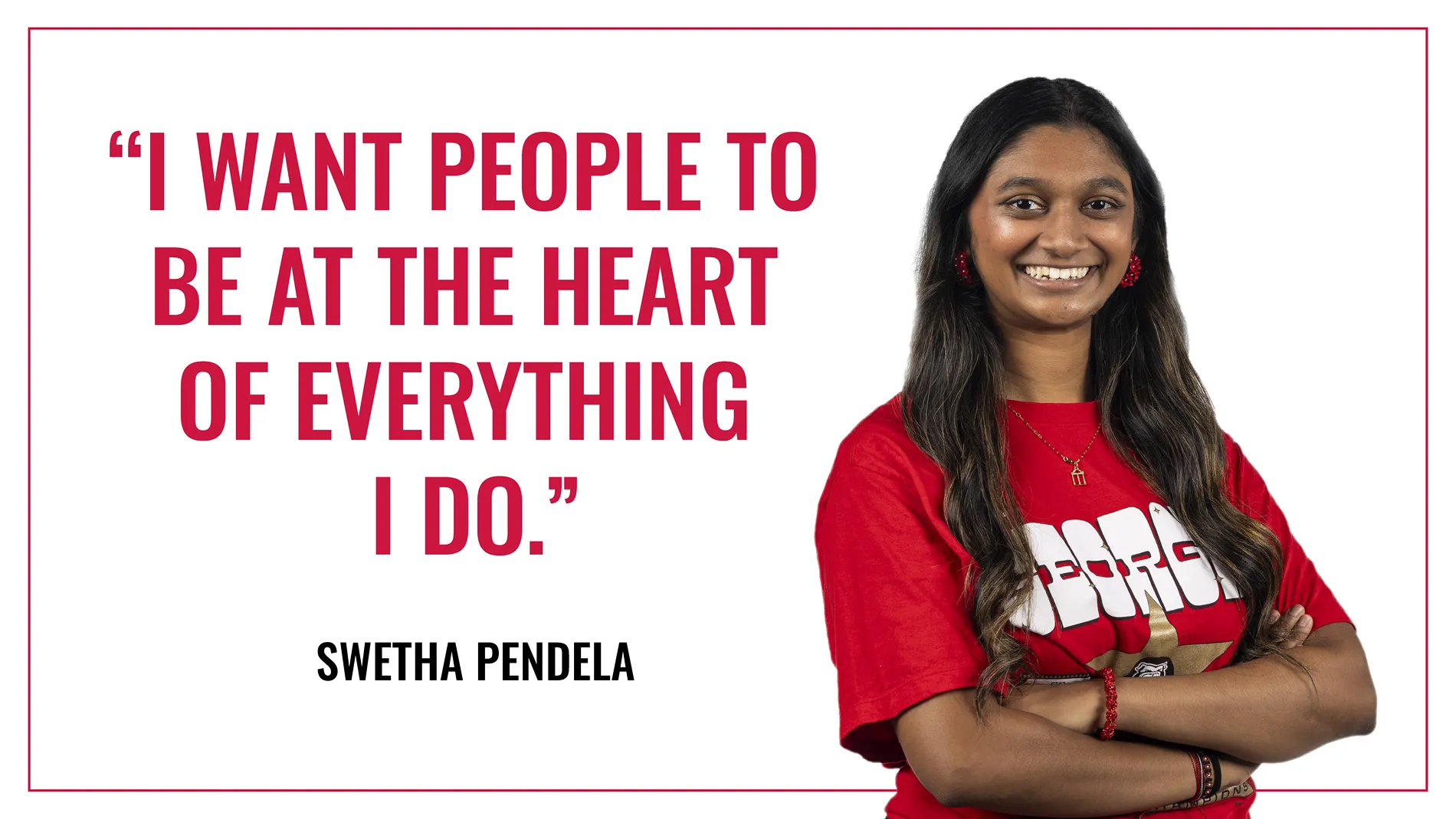
“Those roles answered the bigger question I’d been asking about my future,” says Pendela. “I didn’t just want to study medicine. I wanted to practice it. I want people to be at the heart of everything I do.”
The Proof is in the People
After that, it didn’t take long for Pendela to nail down her future career as a pediatric neurologist. She has always invested deeply in community involvement focused on children, including Shop with a Bulldog and Books for Keeps.
“I genuinely get so much joy working with kids,” Pendela says. “They’re so full of hope. And sometimes they don’t even know exactly what they’re going through, which means you get to be a calm, steady support system for them and their families.”
Pendela’s path through college hasn’t been linear. But that’s exactly what makes it meaningful. Research opened the door to neuroscience. Clinical work deepened her interest in medicine. Mentorship with children confirmed her passion for pediatrics.
Pendela’s work is driven by human connections, whether it’s children in a hospital or students navigating their first day on campus.
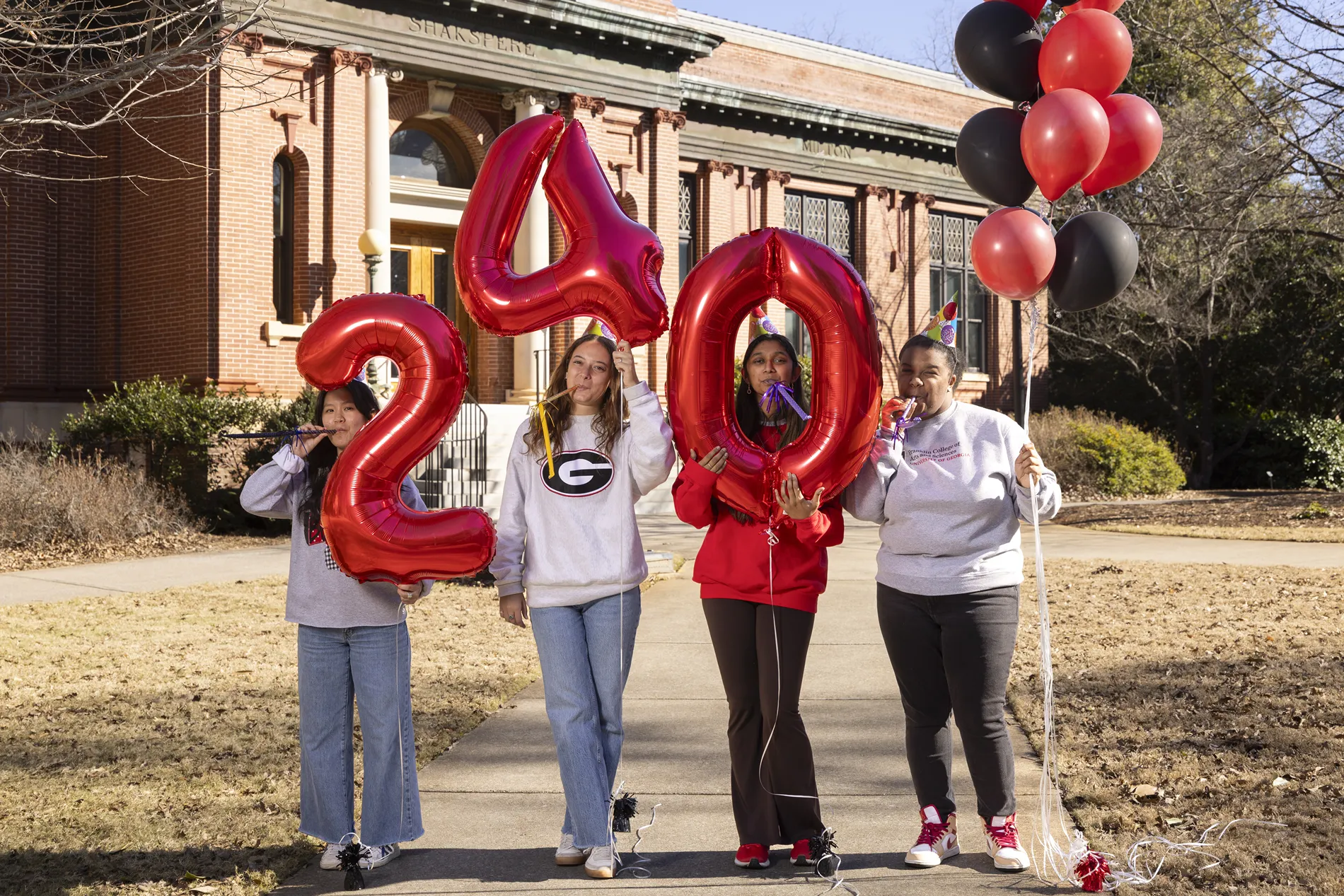
As an Orientation Leader in 2024, Pendela welcomed thousands of students and families to campus. Supporting others through uncertain transitions comes naturally to her. She says that doing so as an Orientation Leader shaped her into the person she is today.
Growing Through Study Abroad
Pendela’s leadership on campus is as wide-ranging as it is impactful. She’s president of the Genetics Club, an Honors Ambassador, and Vice President of Blue Key Honor Society.
“I don’t think that I would be as confident or as good of a public speaker or as comfortable with talking to strangers without these opportunities,” she says. “It really helped me break out of my comfort zone and seek out more.”
But some of her most transformative moments happened far from Athens. In 2025, Pendela studied abroad during a Maymester in Cortona, Italy. She took courses in biology and art history and learned as much about herself as she did the Renaissance.
“People always say studying abroad changes you, and now I believe it,” says Pendela. The ‘me’ before that trip was a completely different person than I am now. It changed how I look at myself. It will certainly change the way I look at my patients and how I care for them.”
Whether she is mentoring children or guiding nervous new students, Pendela consistently seeks experiences that push her beyond her comfort zone and into moments of personal connection. For her, it has always been people that have left the biggest impact. “I make sure to tell anyone that comes to UGA to be open to new friends and new connections,” says Pendela. “You’re going to meet people who are different from you, who will open doors to incredible experiences. Make sure to walk through every one.”
Written by: Jayne Roberts
Photography by: Chamberlain Smith
Design by: Kaiya Plagenhoef
The post Pre-Med, For the People appeared first on Beyond the Arch.
]]>The post Mic Man to M.D. appeared first on Beyond the Arch.
]]>
Mic Man to M.D.
Chip Chambers traded the suspenders for a stethoscope to serve patients.
When Dr. Chip Chambers walks into an exam room at Self Regional Healthcare in rural Greenwood, South Carolina, he always begins with the same question: “How can I help?”
And then, he lets them talk.
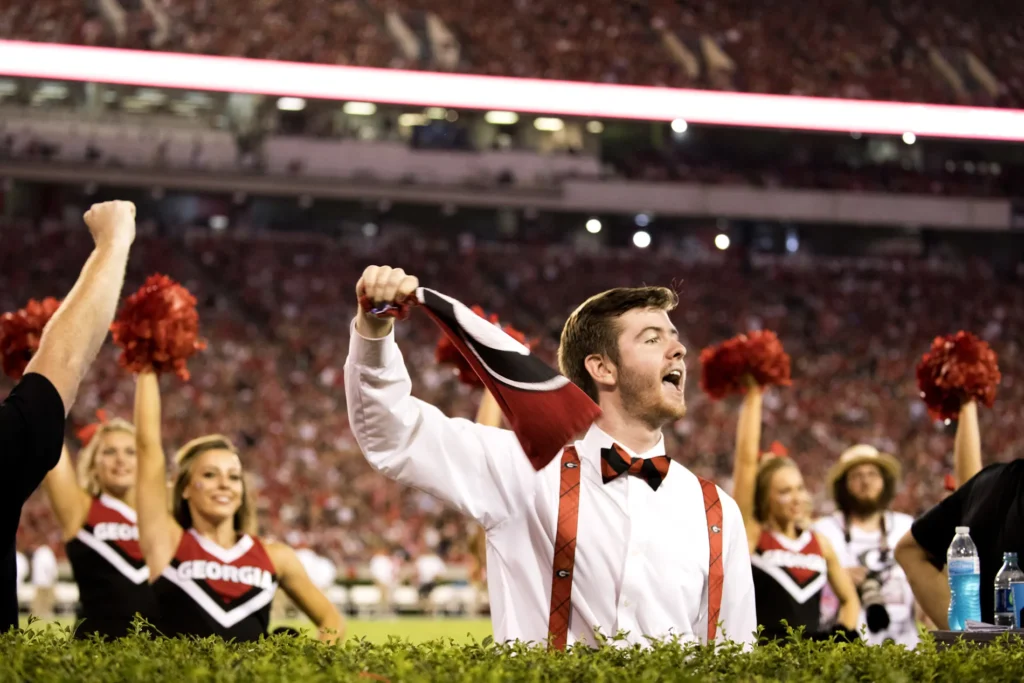
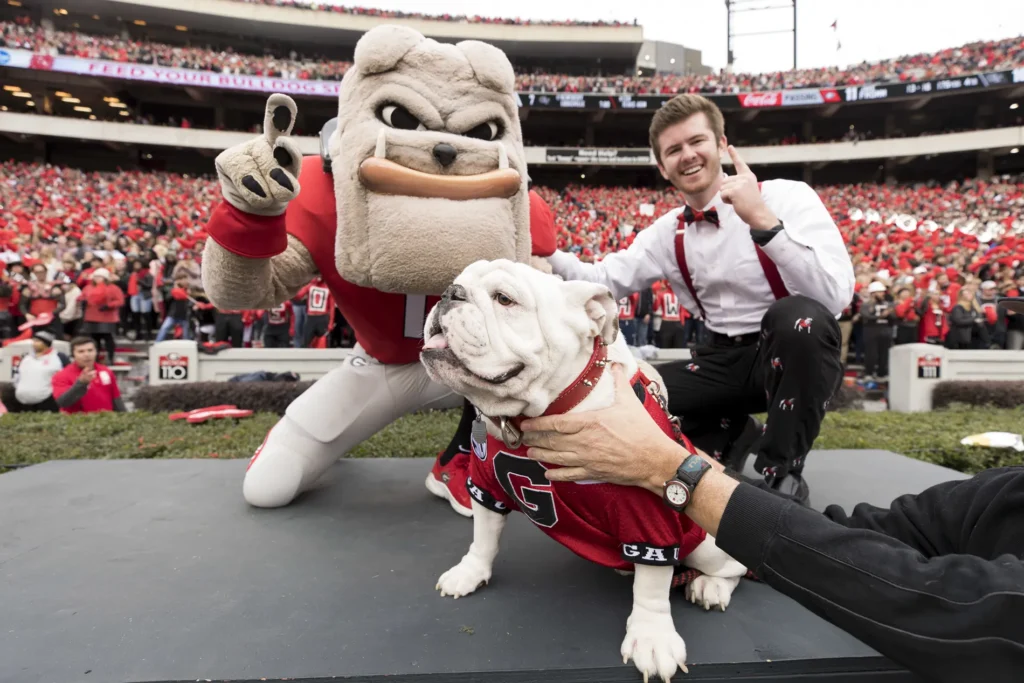
As the patients describe their ailments or injuries or updates to the fresh-faced doctor with the red beard and kind eyes, it’s unlikely they’re picturing Chambers in his previous life leading student section cheers at Georgia Bulldogs football games. As Mic Man, Chambers donned suspenders, bow tie, dancing shoes, and, of course, a microphone as he exuberantly yelled, jumped, chanted, and taught the crowd how to Dougie.
It’s probably best that his patients don’t know this side of their doc—after all, this is Clemson Tiger country.


Finding a Purpose
Growing up in Watkinsville, Georgia, just outside of Athens, Chambers knew two things: He wanted to attend the University of Georgia, where he’d become a third-generation Bulldog, and he wanted to be a doctor.
“I have always had a strong conviction that the blessings and privileges that we have in life are not ultimately ours, but we’re to steward them for other people,” he says.
Chambers came to UGA on a scholarship through the Center for Undergraduate Research Opportunities and enrolled in the pre-med track. He majored in biology at the Franklin College of Arts and Sciences and economics at the Terry College of Business. He also earned a midterm Foundation Fellowship.
As a student, Chambers worked at the Mercy Health Center, a Christian-based clinic, where he solidified his resolve to be a doctor and developed a curiosity about health care policy that he still holds.

Mic Man
That same big heart that directs his compassion for others also powers his lifelong love for the Georgia Bulldogs and his enthusiasm for expressing it.
As a freshman, Chambers earned a reputation at Georgia basketball games for his nonstop dancing in the student section. Someone from Georgia Athletics took notice and suggested he try out for the Mic Man position.
He got the job beginning his sophomore year.
The Mic Man role, vacant since Chambers’ last season in 2019 until this year, serves as the hype person for the student section, helping amp the crowd and provoking cheers alongside the cheerleaders.
“I really just tried to make Sanford Stadium one of the best places for our team to play and one of the worst places for other teams to play,” he says. “That’s the goal,”
“I think most people who work with me in the clinic or the hospital are probably a little bit surprised when they see videos of me on the sideline…but to me, both feel pretty natural.”
Chip Chambers


Becoming a Doctor
After graduating in 2020, Chambers enrolled at the University of Pennsylvania to earn an M.D. and an M.B.A.
The business degree was all about trying to understand how to manage systems. His experience as an undergraduate at the Mercy Health Clinic inspired him to grapple with not just how to help individual patients but also to try to heal a system.
“Unfortunately, the American healthcare system is quite expensive without necessarily delivering improvements in care,” Chambers says. “I think many of the failures of our healthcare delivery system aren’t questions of biology; they’re questions of how we’re going to structure the system and deliver care.
“Medical school is going to provide you with the medical know-how that you need to be a doctor but might not provide as much training about the healthcare delivery system. And I think many physicians’ frustrations are with the delivery system.”
In Philadelphia, Chambers found another faith-based clinic to get hands-on training and receive mentorship from like-minded physicians. The Esperanza Health Center operates in an area that has struggled with the opioid epidemic.
“I would see some patients with them,” he says, “but then we would also read books together and just discuss what it looks like to love people in a way that is humble and compassionate and really ask them how we can be useful rather than coming in and telling them what we’d like to do.”
“I think every decision that we make either moves us closer to or further from the type of person that we want to become.”
Chip Chambers
Back to the South
Chambers wrapped up at Penn in the spring. When it was time to find a residency program, he was looking to leave the big city and practice in a rural community.
“I was looking for a program that would place me in a setting that needs adequate access to healthcare and where primary care can really make a difference and also provides really strong clinical training.”
He found a new home in Greenwood, where Self Regional Healthcare’s Family Medicine residency takes 10 new clinical residents each year.
“They’re doing a lot of great stuff in the community, and I wanted to be a part of that,” he says. “Plus, it was coming back closer to home.”
These days, Chambers is trying to help his community with each patient he sees, but he is working to be part of something much bigger.
“I think that many people have lost trust in medicine, particularly in urban and rural areas,” he says. “One day I hope I can play a small role in earning back trust with high-quality, compassionate, evidence-based, joyful care, one patient at a time.”

Written by: Aaron Hale
Photography by: Andrew Davis Tucker
Design by: Kaiya Plagenhoef
The post Mic Man to M.D. appeared first on Beyond the Arch.
]]>The post A Major in the College Experience appeared first on Beyond the Arch.
]]>
A Major in the College Experience
UGA student Trey Wilson believes in the power of people. He’s involved in everything from SGA to podcasting. This is what he’s learned.
“What’s still loading for you?”
That’s the go-to ask for anyone Trey Wilson is chatting with. Whether it’s a longstanding project or a dream put on the back burner, he genuinely wants to know.
It’s what also inspired his podcast The Subtext where he kicks every episode off asking creative professionals that question. What goal keeps getting pushed aside?
For Wilson, his subtext is a mindset shift: Be more present in the moment—purpose isn’t found just in success. It’s not always easy for the rising junior already involved in more than a dozen organizations at the University of Georgia.
“That’s what’s still loading for me, not just the work I do, but the way I exist in it,” Wilson says.
Still, every single one of them, from the Student Government Association to The Corsair Society, has made an impression on him. As a tour guide for the UGA Visitors Center, he tells future Bulldogs that there’s a chance for everyone to find their niche and their community.
“When I got to UGA, I felt really lost and confused about my dream and what I was going to do. Now, it’s a full circle moment where I’m in the the position to help others,” Wilson says, reflecting on foundational guidance from fellow students such as Stephen Amolegbe, Andre Akinyemi, and Jhaycee Barnes. “It feels surreal, but I know that I’m going to pour everything I possibly can to help as many people as possible because I’ve been fortunate enough.”


A Redefined College Experience
As the president of the Black Business Student Association and co-founder and president of the Keystone Fellowship, Wilson helped secure a $50,000 Deloitte grant to support a networking summit, a student-powered venture fund, and a range of other capstone projects.
Through that funding, he is also launching a global education initiative that distributes solar-powered tablets to low-income students in Sub-Saharan Africa and rural India. Each tablet comes with a USB drive loaded with offline learning resources. The project fills a technological learning gap for these students, who might not have reliable power or internet service.
“I believe education is such a privilege, one that I often take for granted. It’s college. Soak it all in, smile, and keep growing every day.”
Trey Wilson
As a Terry student majoring in finance and management information systems, Wilson is getting the background he needs to start an educational technology venture. But his curiosity about people led him to study psychology, too.
“I’ve always liked learning about the behaviors of people and how people think. People are just so amazing,” he says. “Everyone is talented, ambitious, and driven, but I think the biggest thing you can offer all of them is genuine kindness. That’s something you can’t teach. So, I want to find a way to tailor education to people better so they’re being seen and heard.”
Never Underestimate the Power of People
Wilson is a born people person and a self-described extrovert.
Over the summer, he landed a coveted internship with Monomoy Capital Partners in New York. And within just two days in the Big Apple, he had already made plans with nearly a dozen people. That affable nature is a family trait, he says.
“Family is, in my opinion, one of the most important things in life,” Wilson says. “On a family beach trip, I asked my grandfather once for advice on finances, and he goes: ‘Do you want to know what my best investment was? It’s this family time that I’ve been able to establish. You can’t put a value on cultivating really good memories.’”
That’s partly where he got the idea for The Subtext. He realized everybody could use similar support to reach personal successes. He helps narrow down long-term goals for busy young adults whose dreams may hit the back burner, to reveal their deeper subtext.
“I want to get deeper with people and help them be comfortable planting their feet in the moment, laughing hard, and learning deeply,” he says. “College isn’t just a stepping stone. It’s your life.”

The post A Major in the College Experience appeared first on Beyond the Arch.
]]>The post The Spacecraftsman appeared first on Beyond the Arch.
]]>
The Spacecraftsman
Caleb Adams develops autonomous spacecraft for NASA. Before that, he helped UGA launch its first satellite into space.
Caleb Adams was one of those curious kids who was mesmerized by outer space—the mystery, the possibilities for new discoveries, and the futuristic gadgets that make space exploration possible. He once did an elementary school reading report on American astronomer Clyde Tombaugh and the discovery of Pluto.
“I always had space books and watched Carl Sagan’s (TV series) Cosmos,” he says.
Today, Adams is helping shape the future of humankind’s ventures into the cosmos. And that future is, well, small.
Adams BS ’18, MS ’20 works in Silicon Valley at NASA’s Ames Research Center, where he helps lead efforts to develop automated spacecraft to manage traffic in Earth’s low orbit and perhaps one day explore deep space. The satellites he helps develop are “self-driving,” so to speak, and work in concert with each other; each is small enough to pack into a carry-on suitcase.
But the first satellite he helped build and see launched into space was developed when he was a student at the University of Georgia.
The students built the satellites themselves with oversight from UGA faculty. The experience no doubt readied Adams for his career today.
“It is to this day, one of the most motivated teams I’ve ever worked with. One of the most enthusiastic teams I’ve ever worked with. Incredibly collaborative.”
Caleb Adams
“It’s like a systems engineering course for spacecraft. It takes you through the whole life cycle of building and operating these things.”
After earning his bachelor’s in computer science, Adams stayed on to work in the lab and earn a master’s in computer science, both degrees from the Franklin College of Arts and Sciences. After years of work from dozens of students and faculty, UGA’s first small satellite launched in 2020 just after Adams started his first job at NASA. He met with other UGA small satellite lab alumni at NASA’s Wallops Flight Facility in Virginia to see the launch.


Space Traffic Control
Today, Adams is the project manager for distributed spacecraft autonomy and the deputy project manager for the Starling Mission.
The Starling Mission is testing the capabilities of a quartet of small autonomous satellites. The Starling satellites, each about the size of an old-school boombox with two flat, foldable solar panel wings attached to power their systems, work together as a team called a “swarm.” And the swarm maneuvers through low orbit and collects data.
One of the goals is to develop an autonomous air traffic control system in space to manage the thousands of satellites and spacecraft in Earth’s low orbit.
“You can imagine a situation like when you’re walking down the street, and you try to walk to the left and another person coming the other way goes to their right, and you keep trying to walk past them but can’t.”
That same technology could be used in the future as spacecraft swarms explore deep space.
This year, Adams and his team won a grant from NASA’s Early Career Initiative Program for their work on a low-light 3D mapping system that could illuminate hidden regions of our solar system.


The post The Spacecraftsman appeared first on Beyond the Arch.
]]>The post Georgia Days at UGA appeared first on Beyond the Arch.
]]>
Georgia Days at UGA
Rayna Carter is turning research into results as a Foundation Fellow at UGA.
Foundation Fellow. Ronald E. McNair Scholar. Franklin College SGA Senator. Blue Key Honor Society President. Rayna Carter’s resume reads like a future president, but her goals are both more humble and loftier than even the highest office.
A triple-major in psychology, sociology, and women and gender studies, Carter plans to further her research with a doctoral degree and use it to improve support for treating substance abuse disorder.
Since stepping foot on campus, Carter hasn’t wasted a moment of time. She found her home in the Jere W. Morehead Honors College and immersed herself in research as a CURO Honor Scholar. Within the first few weeks, she joined the College Learning Study as a research assistant.
Her work has spanned four labs—from neuroimaging to bioinformatics—and she has presented it at national conferences and published peer-reviewed work as an undergraduate student.
From substance abuse to metacognition, Carter deliberately chooses to solve problems that affect people in their everyday lives. She wants to serve her community as much as possible, starting with UGA.
Home is Where the Dawg is
Carter grew up less than an hour from the University of Georgia and spent a lot of time on campus because both her parents worked there. Dawg Nation was so familiar for most of her life that she almost overlooked it. She had no plans to stay close to home after high school, and believed she needed to travel to find the community and academic rigor she was seeking.
UGA’s Georgia Daze recruitment weekend changed all that. Organized and led by students, the program showed Carter a glimpse of UGA that she had never seen before.
“I saw a vibrant Black community that was leading and excelling in meaningful ways,” says Carter. “I got to see first-hand how Black students on campus build community.”
The next turning point came after she attended the CURO Symposium and saw the depth of undergraduate research happening at UGA. Seeing students involved in interdisciplinary, high-level work made her realize that she didn’t have to leave the state to access the resources that would put her at the forefront of undergraduate research.

It wasn’t long before Carter was inspired to help other students discover UGA as a Georgia Daze ambassador, Road Dawg, and Orientation leader.
“I know how powerful it is to feel both seen and intellectually inspired before stepping foot on campus. And I want other students—especially those with doubts like mine—to see what’s possible here too,” says Carter.
Service Abroad
Carter is taking every opportunity at UGA that she can and generating useful medical research in the process.
In the summer of 2025, Carter studied abroad in Ireland and worked with the Chrysalis Community Drug Project, where she developed a research plan to support communities with programming for substance use care.
“Being embedded in a local recovery center while engaging with public health has helped me bridge theory and practice in ways I hadn’t before,” says Carter. “I’ve seen what it looks like when research is done with—not just about—communities, and that has been transformative for how I think about my future.”

For Carter, the most meaningful parts of her UGA experience haven’t been the numerous titles and accolades, but rather the relationships and moments of growth she has found along the way.
“UGA taught me to advocate for myself and to seek out opportunities,” says Carter. “This is a truly special place. If you open yourself up to it, UGA will meet you where you are and push you further than you ever imagined.”
Written by: Jayne Roberts
Photography by: Chamberlain Smith and Andy Tucker
Design by: Andrea Piazza
The post Georgia Days at UGA appeared first on Beyond the Arch.
]]>The post Brightest Bulldogs appeared first on Beyond the Arch.
]]>
Brightest Bulldogs
UGA students earn some of the highest honors.
It’s been a banner year for some of UGA’s most inspiring students. From solving real-world challenges in science labs to shaping public policy, these Bulldogs are earning top national honors and proving that the future is in very good hands.
Behind every prestigious honor is a story of hard work, late nights, and the kind of mentorship that makes a difference. At UGA, students don’t chase these dreams alone—they’re backed by faculty, staff, and programs that help lead them every step of the way.
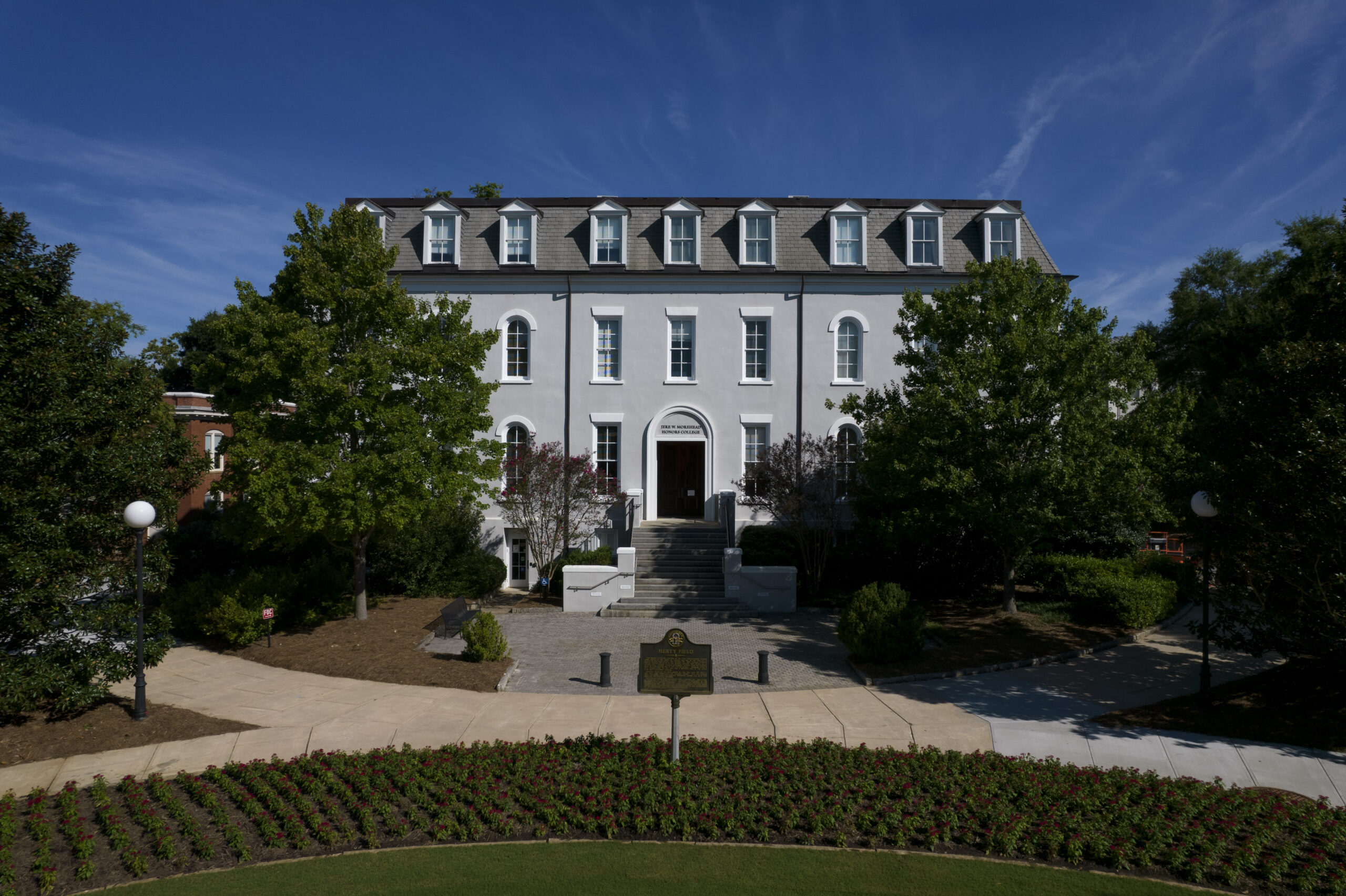
Through the Jere W. Morehead Honors College, which houses UGA’s Major Scholarships Office, students receive guidance and encouragement as they navigate the rigorous application processes for national scholarships. Faculty and staff work closely with students to help them refine their goals, polish their applications, and prepare for interviews, opening doors to some of the world’s most competitive academic and leadership opportunities.
“Across our institution, we are committed to helping our students thrive, whether they are debating international challenges in the classroom, working with DNA in the lab, or checking on turtle populations in the field,” said Meg Amstutz, dean of the Morehead Honors College. “From faculty to staff to community mentors, our students are succeeding because of the strong support they receive.”


“Across our institution, we are committed to helping our students thrive, whether they are debating international challenges in the classroom, working with DNA in the lab, or checking on turtle populations in the field.”
Meg Amstutz, Dean of the Morehead Honors College

A Future Leader
Mercedes Bengs is charting a path that honors her family’s legacy of service. The University of Georgia senior is preparing to become a fourth-generation military service member, following in the footsteps of her father, a retired Air Force lieutenant colonel.
Until then, she’s preparing herself to become an expert in areas of foreign policy and national security. Bengs was one of 54 undergraduates selected as a 2025 Truman Scholar, awarded each year to students who demonstrate academic excellence, leadership potential, and commitment to a career in government or the nonprofit sector.
Bengs studies international affairs in the School of Public and International Affairs and Russian in the Franklin College of Arts and Sciences. She is a cadet in UGA’s Air Force ROTC, is in the Russian Flagship Program, and is a Russell Security Leadership Program Fellow.
A Global Focus
UGA set a record with three Schwarzman Scholars in a single year for 2025 when the Schwarzman Scholars program announced its 10th class of recipients.
The UGA honorees are Foundation Fellows Aryan Thakur, who graduated with bachelor’s degrees in genetics and mathematics from the Franklin College; and Amanda Whylie, who earned a bachelor’s degree in entertainment and media studies from the Grady College of Journalism and Mass Communication and a minor in Spanish in the Franklin College; and Garrett Williams, a Ramsey Honors Scholar who graduated from UGA in 2022 with bachelor’s degrees in economics and finance with a certificate in personal and organizational leadership from the Terry College of Business and a minor in communication studies from the Franklin College. The Schwarzman enables them to pursue a one-year master’s degree in global affairs at Tsinghua University in Beijing, China, starting this August.
Schwarzman Scholars are taught by leading international faculty, and they study a core curriculum focused on leadership, global affairs, and China, helping them learn to navigate the complexities of an evolving global landscape.
Eleven UGA students or alumni have been named Schwarzman Scholars since the program launched in 2015.


Making a Difference Locally and Abroad
Seventeen students—each with their own story, passion, and sense of purpose—were selected for Fulbright awards for the 2024-2025 academic year, placing UGA among the nation’s top producers of Fulbright U.S. students.
Of the 17 UGA students and recent alumni who were offered Fulbright awards for 2024-2025, 13 were able to accept. Eight are teaching English in countries including Indonesia, Kazakhstan, Romania, Spain, and Taiwan. Five are studying or conducting research; their countries are Brazil, Colombia, Madagascar, Taiwan, and Tunisia.
For Leah Whitmoyer, the Fulbright is more than an academic achievement—it’s a chance to get her hands dirty and make a difference in communities halfway across the world.
Science and Innovation
UGA’s Oscar de la Torre, Anderson Smith and Sloka Sudhin are among the 441 undergraduates from across the nation to be recognized as Barry Goldwater Scholars this spring. Whether it’s protecting endangered species or solving real-world equations, they are turning curiosity into impact.
Since 1995, 70 students at the University of Georgia have received the Goldwater Scholarship, which recognizes exceptional sophomores and juniors across the United States.


(Photo by Stephanie Schupska)
Building Tomorrow’s Problem-Solvers
A scientist and storyteller in training, the University of Georgia’s Yeongseo Son was selected for the 2025 Knight-Hennessy Scholarship, a global graduate-level program at Stanford University.
A Foundation Fellow, Son graduated in May with bachelor’s degrees in anthropology and biochemistry and molecular biology as well as a certificate in immunology, all from the Franklin College of Arts and Sciences.
UGA’s fourth Knight-Hennessy Scholar, Son will pursue a Ph.D. in immunology from the Stanford University School of Medicine and research how the immune system interacts with the environment, particularly within the lungs, to improve global respiratory health.

Environmental Excellence
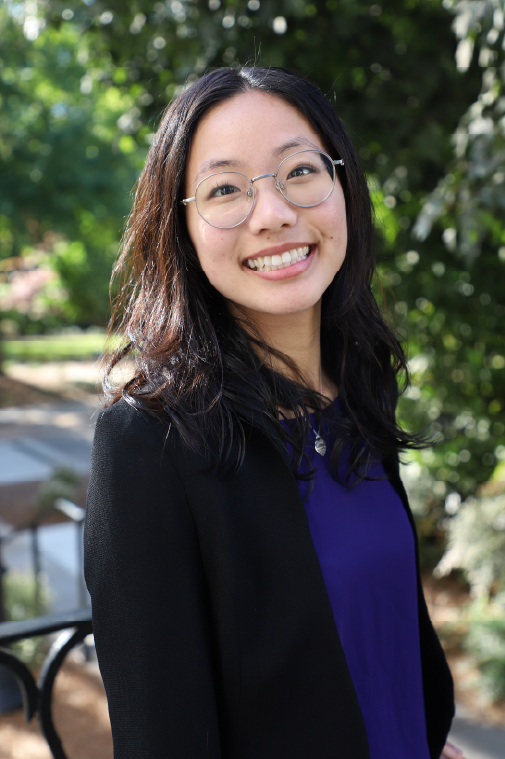
Michael Skibsted’s interest in turtles and wildlife conservation has earned him a 2025 Udall Scholarship, which recognizes students for leadership, public service, and commitment to issues related to the environment.
Skibsted is majoring in ecology in the Odum School of Ecology and biology in the Franklin College. He also has received funding for his research from the UGA Center for Undergraduate Research Opportunities. Skibsted wants to develop creative solutions to problems in the realm of conservation biology and ecology with an emphasis on turtle populations.
International Experience
Seven UGA undergraduates were selected as Boren Scholars this spring—the second highest number in the country for the second year in a row. These students will receive funding to study critical languages in Kazakhstan, Senegal, and Brazil in exchange for a year of federal service.
Five recipients were awarded a Boren Scholarship to support their participation in a capstone-year program to study Russian and complete an internship in Kazakhstan as part of the Russian Flagship program. Two others were awarded Boren Scholarships to support their participation to study French in Senegal and Portuguese in Brazil.
Each of these students brings their own drive, heart, and vision for the future. Together, they reflect the spirit of UGA, a place where big dreams are encouraged, nurtured and launched into the world. As they prepare to take their talents around the globe, they carry with them the spirit of a university that continues to inspire and empower the leaders of tomorrow.

Written by: Cole Sosebee
Photography by: Dorothy Kozlowski & Submitted
Design by: Kaiya Plagenhoef
The post Brightest Bulldogs appeared first on Beyond the Arch.
]]>The post Nature as the Classroom appeared first on Beyond the Arch.
]]>
Nature as the Classroom
Coastal Georgia’s salt marshes and beaches become both subject and classroom for UGA students learning to illustrate the landscape.
As the immersive week on Jekyll Island nears its end, 11 students gather in the pre-dawn June light on Driftwood Beach. The striking landscape, renowned for its gnarled, sun-bleached driftwood stretching from sand to sea, fills with the quiet bustle of the students setting up their easels and watercolor palettes in the early morning light.
The sky begins to lighten, and they race to capture the dark outlines of the driftwood against the oranges and yellows of the sunrise. Many pause to take photos for personal keepsakes or for reference to complete their paintings long after the sun has risen.

(L-R) Abigail Ramos and JH Leigh share a laugh with Laura Binford as they look over each other’s drawings and paintings of Jekyll Island’s historic district.
Nearly two weeks earlier, most of these University of Georgia landscape architecture students had never touched watercolor. Many had limited experience drawing. Now they’re tackling sunrise and the challenge of its rapidly changing light.
JH Leigh, a fifth-year student who graduated after the summer session, strategically chose his sunrise location next to second-year undergraduate Abigail Ramos. She has a knack for representing the nuanced hues of light in her paintings. Today, Leigh is working on that, too.
“I didn’t think before this class that I would ever be able to watercolor in any sort of proficient capacity,” he says. “In two weeks, I’ve gone from having no idea how to approach this, to having at least a semi-competent idea of how to do it.”

Undergraduate Andrew Dickson sketches the Elder Mill Covered Bridge in Watkinsville, Georgia, during the field drawing and watercolor course.

A view of undergraduate Abigail Ramos’ watercolor painting as she finishes up a class exercise on painting palm trees in Jekyll Island’s historic district.

Undergraduate Loren O’Steen captures the sunrise on Jekyll Island’s Driftwood Beach with acrylic paints on a large canvas.
“Students end up producing better digital graphics with some hand instruction first because they know the rules, and they know how to capture the mechanics of what they’re seeing,” Davis says.
The class kicked off in Athens, with students setting up their easels, pencils, pens, and paints in UGA’s Founders Garden, downtown Athens, and the historic Elder Mill Covered Bridge in Watkinsville.
The second week brought them to Georgia’s coast: Jekyll Island’s historic district, Clam Creek Marsh, Driftwood Beach, and Cumberland Island.
This transformative experience reflects Davis’ longstanding passion for experiential learning and is one of UGA’s many domestic field study courses providing site-specific learning opportunities throughout the U.S.
Davis took his first group to Jekyll in 2011 after noticing a gap in the landscape architecture curriculum—students were missing hands-on drawing and painting experience. He set out to change that, and the 2025 group marks the 10th field drawing and watercolor class he’s taught on Georgia’s coast.

Students in the field drawing and watercolor course gather in front of the Dungeness Ruins for a group critique and show of their day’s work on Cumberland Island.

Graduate student Laura Binford looks at shore birds with binoculars on the Jekyll Island beach at dusk under a full moon.
Learning by Doing
Davis teaches the course by methodically building techniques and, with them, confidence.
Near the beginning of the Jekyll Island trip, students trekked out to the edge of Clam Creek Marsh. After an hour of sketching the marsh landscape, the students crowded around Davis’ easel for a watercolor demonstration.
Today’s lesson is in layering.
From the reflections of the marsh cordgrass on the water to a live oak casting a silhouette on the landscape, there’s a rich variety of light and color to capture on canvas. Stroke by stroke, Davis shows them how to layer the subtle washes of paint.
Third-year graduate student Matthew Gauldin primarily worked on detailed pen drawings throughout the class. But today, he tried his hand at watercolor at Davis’ easel.
“You’re experiencing a lot more senses. You’re getting the smells and sounds, and the way the light changes,” Gauldin says of the marsh landscape. “It helps you get more of the detail you’d miss if you were drawing from a picture. Out here, it’s dynamic.”

Undergraduate Miles Miccichi works on a sketch as he sits on a wall in the garden of the Crane Cottage in Jekyll Island’s historic district.

Professor Brad Davis, middle, points out features of the local flora near the Elder Mill Covered Bridge in Watkinsville, Georgia, while teaching students in his field drawing and watercolor course.

An overhead detail of smaller watercolor paintings of the Faith Chapel by graduate student Caitlyn Hentenaar in Jekyll Island’s historic district.

(L-R) Loren O’Steen talks with Professor Brad Davis along with JH Leigh, Matthew Gauldin and Abigail Ramos as they have a class lunch in Davis’ home in Oconee County, Georgia.

(L-R) Undergraduates Miles Miccichi and Benjamin Miller along with Professor Brad Davis paint with light from their phones in the moonlight before sunrise on Jekyll Island’s Driftwood Beach.

(L-R) Graduate students Robert Boham and Samantha Harper use a viewfinder to guide the perspective, scale and proportion of their sketches in downtown Athens.
The post Nature as the Classroom appeared first on Beyond the Arch.
]]>The post A Dire Response appeared first on Beyond the Arch.
]]>
A Dire Response
Beth Shapiro, the Chief Science Officer at Colossal and a MacArthur Fellow, helped clone the extinct dire wolf. Before that, she was a UGA Honors student trying to find her way.
Extinct species are brought back all the time through museum exhibits, the magic of moviemaking, and even the pages of an illustrated book.
But imagine petting the massive furry trunk of a woolly mammoth or staring into the peculiar eyes of a dodo.
Beth Shapiro has touched the fur of a living, breathing dire wolf, a species that died off in North America 10,000 years ago. Shapiro BS ’99, MS ’99, the chief science officer of the “de-extinction” startup Colossal Biosciences, helped bring three dire wolf pups into the world in late 2024 and early 2025 by editing the genes of the gray wolf.
The mammoth, the dodo, and the Tasmanian tiger may be next.
The resurrection, or de-extinction, of long-lost species raises questions.
Is it ethical? Is it safe?
For her part, Shapiro addressed these questions in her 2015 book How to Clone a Mammoth, a sort of how-to manual that also considers the opportunities and pitfalls of such an endeavor.
But there is another pressing question: How did Shapiro find herself as one of the leading voices for the once fantastical idea of resurrecting extinct species?
Radio to Rhodes
Shapiro’s journey began as a freshman at the University of Georgia, bent on studying broadcast journalism, of all things. The Honors student, who came to UGA on a Foundation Fellowship, lived in the nine-story Oglethorpe House and even got a job as the news director of the local Magic 102 radio station.
It wasn’t nearly as glamorous as she had hoped.
“Let me tell you: Having to get up at 4 o’clock in the morning and go and write the news and be on the morning news show is not compatible with living in a dorm,” she says.
Her perspective on her major shifted when she got into the geology and anthropology field program, now the Interdisciplinary Field Program, an eight-week course that sends students to learn science onsite at national parks and natural wonders across the continental U.S.
“It was genuinely a transformative experience,” she says.

At first, she thought she’d become a science journalist, but she continued to switch majors as her interests evolved. She ultimately earned a bachelor’s and master’s degree in ecology from the Franklin College of Arts and Sciences.
After an internship at the Smithsonian Tropical Research Institute in Panama, she planned to get a graduate degree studying under a researcher starting a lab at the University of Edinburgh in Scotland. Through the Honors Program (now the Jere W. Morehead Honors College), she applied for international scholarships, with the singular hope of getting the Marshall Scholarship, which enables students to study at any British university.
She didn’t get it.
Instead, she was awarded the prestigious Rhodes Scholarship and the opportunity to study at the University of Oxford.
Finding a mission
There, she began studying ancient DNA, taking trips to Siberia to extract genetic material from the partially preserved bones of woolly mammoths. And she began to help piece together more about how mammoths lived and their role in their ecosystems.
Her work combined her many interests as an undergraduate: geology, paleontology, evolutionary biology, and storytelling.
In 2009, she received the MacArthur Fellowship, the so-called “genius grant,” and she wrote two books, which considered how what we know about ancient extinctions could be used to curb the ongoing mass extinction, primarily caused by human activity.
“Habitats around the world are changing at a pace that is faster than evolution can keep up… What we need are new tools.”
Beth Shapiro

In her second book, Life As We Made It (2021), Shapiro argues that humans have drastically shaped our planet and ecosystems.
She wrote, “Within the last 50,000 years, our ancestors hunted, polluted, and outcompeted hundreds of species to extinction. They turned wolves into Boston terriers, teosinte into popcorn, and wild cabbage into kale, broccoli, cauliflower, Brussels sprouts, and collard greens (to name a few).”
Humans don’t just shoulder a responsibility, she says; they have an urgent incentive to protect ecosystems.
“Habitats around the world are changing at a pace that is faster than evolution can keep up,” Shapiro says. “Conservation works, but it’s not enough. Our footprint is too big. What we need are new tools.”
In 2022, Shapiro joined Colossal to develop such tools in the company’s quest to clone the dire wolf, woolly mammoth, dodo, and the Tasmanian tiger (which was a striped carnivorous marsupial, not a big cat).
The Choice
Two surrogate hound mothers birthed Romulus and Remus in October 2024, the first dire wolves in millennia. (Technically, these pups are not 100% replicas of dire wolves, but gray wolves given their extinct relative’s features.)

“When I think about de-extinction, I imagine that we are resurrecting a key component of an extinct community,” Shapiro says. The goal is to restore a critical function to the ecosystems of today: a hunter to cull species that might otherwise overpopulate or a mammoth bulldozer to tromp down brush and create rich grasslands.
“It’s never going to be possible to bring something back that is 100% identical in every way to a species that used to be alive.”
But we can “create versions of extinct species that can help to make present-day ecosystems more robust, more resilient in the face of whatever it is that we’re going to throw at them in the next 5,000 years.”
In April, Time magazine and The New Yorker broke the news of the achievement to the world. Shapiro put her old broadcast journalism practice to good use, fielding dozens of interviews from news outlets and podcasters from around the world.
Reactions ranged from celebratory to cautionary.
Shapiro welcomes the dialogue—as long as we don’t forget what’s at stake: the health of our planet. What gets lost in the discussion, she argues, is that refusing to explore the promise of de-extinction technologies is a choice.
“It is a choice that carries consequences,” she says. “We know what those consequences are: We will continue to lose species, and we will continue to lose this fight.”

Written by: Aaron Hale
Photography by: Andrew Davis Tucker, Rick O’Quinn & Submitted
Design by: Kaiya Plagenhoef
Videography by: Cade Massey
Footage supplied by: Colossal
The post A Dire Response appeared first on Beyond the Arch.
]]>The post From Sailing to Skidaway appeared first on Beyond the Arch.
]]>
From Sailing to Skidaway
Childhood ocean adventures drive UGA student’s marine science research.
Grace Mann sat in her principal’s office at Salem High School in Virginia and told her principal something he surely had never heard before. Despite being new to the school, she informed him she’d have to take a few weeks off. She would be representing her home country, the Turks and Caicos Islands, in the Youth Sailing World Championships in China.
Mann, now a master’s student at the University of Georgia Skidaway Institute of Oceanography, was not only new to Salem High. She was also new to life in the United States. She spent her first 16 years exploring the reefs, sailing the waves, and walking the shores of the Turks and Caicos Islands. These experiences instilled in Mann a love for the ocean and, eventually, a calling to protect it.
Her English-born dad and Texas-bred mom met in the early ’90s while working as dive instructors before becoming underwater photographers and starting a family.
Mann traces her academic career in oceanography to her parents.
“I can go back and look at the photos they took in the ’90s and see the structure and incredible size of the reefs that used to be there, compared to what I’m seeing now whenever I’m diving back home,” Mann says.


Getting Back to the Ocean
The family’s move to Virginia in 2016 only fueled Mann’s interest in oceanography and environmental preservation. Being landlocked in Salem, over 1,000 miles away from her home islands, Mann mostly kept up with the ocean through documentaries like The Blue Planet and Sharkwater.
She was unsettled seeing the beautiful waters and marine ecosystems of the Turks and Caicos Islands change drastically while she wasn’t there. It solidified her desire to pursue marine science.
“It was this feeling of inability to do anything from where I was,” Mann says. “It was a need to do something.”
In 2020, Mann enrolled at Jacksonville University in Florida, where she studied marine biology and competed on the sailing team. She took an internship back home at the Turks and Caicos Reef Foundation and learned about marine preservation and the power of research. She spent a semester on a research cruise to the protected island of East Caicos, diving daily to survey the reef and check for stony coral tissue loss disease.
The work was one thing, but she also spent time working and socializing with researchers from various international institutes participating in the project.
“I got to interact with all of these amazing people and be inspired and see all of these different paths that I could take,” Mann says. “It reinforced that research was something that I wanted to do.”

Off to Skidaway
Mann enrolled at UGA in the Franklin College of Arts and Sciences’ Department of Marine Sciences and moved to Savannah to pursue her graduate education in marine sciences at the Skidaway Institute and work in the lab of biologist Adam Greer.
In Greer’s Zooplankton Ecological Responses to Ocean Conditions (ZERO-C) Lab, Mann is researching ecology on the mid-shelf of the South Atlantic Bight. Specifically, she’s looking at how upwelling, the process of ocean currents bringing nutrient-rich water to the surface, sustains a single-cell organism called radiolaria and other zooplankton.
Mann regularly travels on research cruises aboard the 104-foot Research Vessel Savannah, runs the ZERO-C Lab Instagram account, and works with local high school students to teach them about oceanographic research.
To conduct their research, the lab group uses a fleet of shadowgraph imaging devices, including a benchtop imaging system, a handheld device, and another that can snap photos of plankton while being towed behind a vessel. Considering her parents’ careers, Mann was drawn to the visual component of the research.
“I had been exposed to photography for a long time,” Mann says. “This whole idea of imaging and getting to share that was really interesting and full circle for me.”
Mann, who plans to graduate in December, is seeking fellowships in marine policy or working with government and conservation organizations. After her experiences at the Skidaway Institute, Mann feels confident in communicating the need for action to protect the oceans to nonscientists.
“Science needs to be more accessible for people,” Mann says. “That’s the only way we can bridge the gap and have people believe in science.”
Written by: Jackson Schroeder
Photography by: Andy Tucker & Submitted
Design by: Andrea Piazza
The post From Sailing to Skidaway appeared first on Beyond the Arch.
]]>The post With Open Arms appeared first on Beyond the Arch.
]]>
With Open Arms
UGA student rolls out the welcome mat for all.
What makes a home a home? It doesn’t always have to have four walls and a roof, Corey Straughter Jr. says. Although he one day hopes to help people secure that comfort with their dream house, for now, he is creating that feeling of warmth and familiarity on campus.
Straughter, a third-year University of Georgia student with three majors between the Terry College of Business and the Franklin College of Arts & Sciences, focuses on the idea of belonging in his everyday life. That begins with always saying “yes” when asked for help. By studying economics, real estate, and philosophy, he hopes to have a wide array of skills to help people in any way that may come up.
In his philosophy studies, he took to intellectual empathy, the act of seeing everyone as an individual with unique experiences and emotions.
“It’s a very simple concept of being able to see everything from different views and really understanding those different perspectives as if they were your own — even if you don’t agree with them,” he says.
And as a resident belonging assistant in University Housing, he puts that philosophy into practice daily. For the past year, Straughter has helped residents in Morris Hall, Building 1516, and Vandiver Hall navigate the challenges of the undergraduate experience.
“It’s been a great opportunity to really listen, educate people, and spread information about what’s best when people cohabitate. I just love being able to do that,” he says.


Second chances
Three majors may seem like a lot. But a few years ago, Straughter didn’t know if one bachelor’s degree was attainable, much less three.
“It seemed not possible to me, but college was always the goal,” he says.
He earned an associate’s degree from Savannah State University in high school because he didn’t think traditional college would be affordable. That all changed when he got a life-changing phone call.
“I never really considered it a real possibility until one day my mom calls me almost in tears, jumping up and down, and she’s like, ‘You got a lot of money from UGA.’”
With scholarships including Georgia Access, Georgia Incentive, HOPE, and James and Nina Jackson Georgia Commitment Scholarship, a four-year college degree became a reality.

“That’s when it became real,” he recalls. “I could really do this.”
So why not learn as much as possible?
Straughter believes you should make the most out of the chances you’re given. That’s why when people make mistakes at UGA, he wants to help them get a second chance. As the director of internal programs for the University Judiciary and an advocate in the group, Straughter can help students get back on track academically and personally.
“At that point, you’ve already gotten in trouble, but we want to put it behind you as soon as possible,” he says.
One goal
Straughter says that community is key in helping people flourish.
That’s why he’s involved with five student orgs, working to ensure that students from all backgrounds feel as welcomed at UGA as he did.
That authentic hospitality he provides for every person is what he wants to bring to a career in real estate law and to create a feeling of “home” wherever that may take him.
“There’s a very important difference between everyone being treated the same and everyone being treated like they need to be treated,” he says. “I feel like it’s very important that everyone feels like they’re wanted.”
Written by: Savannah Peat
Photography by: Chamberlain Smith
Design by: Andrea Piazza
The post With Open Arms appeared first on Beyond the Arch.
]]>The post Learning from Virtuosos appeared first on Beyond the Arch.
]]>
Learning from Virtuosos
Grammy winners and jazz legends inspire the next generation of UGA performers.
Each year, Athens music lovers can delight in dozens of performances by world-class musicians and University of Georgia student ensembles through the Performing Arts Center. Occasionally, UGA students also get to glean a few tricks of the trade from these virtuosos.
This February, students in the Hugh Hodgson School of Music learned from and performed with two such acts: Grammy-winning ensemble Eighth Blackbird and MacArthur Fellowship-winning jazz pianist Jason Moran and his wife, mezzo soprano Alicia Hall Moran.
“These opportunities for students to perform alongside musicians who are the leaders in their fields are highly impactful for everyone involved,” said Jeffrey Martin, director of the Performing Arts Center. “The students achieve great insights and reinforce key principles taught in classrooms and studios by UGA professors as they work side by side with our visiting professionals.”


Sounds of Artistic Mastery
Eighth Blackbird, a contemporary music sextet and winner of four Grammys, performed with the UGA Wind Ensemble at the Hodgson Concert Hall on Feb. 20. While on campus, Eighth Blackbird members rehearsed with students and led several master classes.
For Addison Aycock, a spring 2025 bachelor’s of music graduate, the experience offered a taste of artistic perfection.
That perfection, he said, was like the right amount of salt in a gourmet dish.
“Its effect brings more life and color to the dish and highlights flavors that get lost in the background,” he said. “Now I want to perform my classical and notated music more perfectly to bring out more flavors of the music.”
In one master class, pianist and doctoral candidate Jacob Skiles played a challenging new piece of music for Lisa Kaplan, Eighth Blackbird’s pianist and co-artistic director. The piece mimics bird calls from the American South. After listening to Skiles perform, Kaplan provided thoughtful feedback, encouraging Skiles to “take more liberties.”
“Birds are wild animals,” she told him. “There should be the element of unpredictability.”
For Skiles, it was a different kind of experience for a master class.
“It was also really good to hear from somebody with great musical intuition for new music,” he said. “Her knowledge of what the audience needs to hear on first listen was really valuable. I performed the piece at a conference the next day.”

Eighth Blackbird and the UGA Wind Ensemble play Viet Cuong’s “Vital Sines” with conductor Scott Mullen. (Photo by Easel Images)
Finding the Heart of Jazz
The following week, contemporary music shifted to century-old jazz tunes when Jason and Alicia Hall Moran brought the program, Duke Ellington: My Heart Sings, to Hodgson Concert Hall with the UGA Jazz Ensemble I on Feb. 27.
The Morans have performed together at Carnegie Hall, the Kennedy Center, and concert halls worldwide. However, the excitement for students to perform with such accomplished musicians came with the challenge of playing the music of legendary jazz musician Duke Ellington. The opportunity made jazz music more approachable for Aycock, who got to perform a solo in an ensemble piece with Jason Moran.
“I never really felt the conversational aspect of jazz until performing with Moran,” Aycock said. “He asked me to leave more space in the music to listen. When I did this during the performance, I could hear the band responding to what I was playing.”
Moran was pleased with the results.
“It takes a lot of courage for these students to play this music,” he told the concert audience. “It’s from another era. To have them summon up these songs is quite a treat, and I think they’ve done an incredible job.”
With a job well done, the students get to take these experiences with them throughout their studies at UGA and beyond.
“Opportunities to regularly engage with these amazing performers in master classes, question and answer sessions, and even in performances are an incredible opportunity for our students,” said Daniel Bara, interim director of the School of Music. “It’s part of what makes studying music at UGA so transformative.”
Written by: Mark Mobley
Photography by: Submitted
Design by: Andrea Piazza
The post Learning from Virtuosos appeared first on Beyond the Arch.
]]>The post Pursuing World Peace appeared first on Beyond the Arch.
]]>
Pursuing World Peace
This UGA student seeks answers for international conflicts.
For Alma Bajramović, world peace isn’t just an ideal, it’s a global challenge she’s determined to help solve and one that’s deeply personal to her.
Her interest in global politics was instilled in her early. Bajramović’s parents fled Bosnia during the Yugoslav Wars, arriving in the U.S. after surviving one of the most devastating conflicts in modern Europe. That history shaped her academic path and her commitment to understanding the dynamics that lead to war.
“I grew up with that being a huge part of my story. The only reason we live in the U.S. is because of the war, and my parents got lucky enough to get out of it,” she says. “That doesn’t mean that’s the same case for everyone else who had to stay, so I’m lucky. That’s why I want to give back.”
Bajramović holds degrees in economics, international affairs, and international policy, plus an upcoming doctorate in political science and international affairs and a certificate in international law.

The cognitive and behavioral science behind war is ripe for understanding, she says. Her dissertation focuses on the modern human motivations behind war, particularly how conflict-created diasporas perceive and engage with homeland politics.
Another aspect of her dissertation is how social media, misinformation, and AI-generated content can immensely fuel recent conflict. The role of state-owned media, for example, may say everything is fine (when it isn’t), which could alter the truth for the average news consumer.
“You can’t necessarily believe everything you see and shouldn’t believe the first thing you see,” she says.
Bajramović has worked with both the Smithsonian and Bureau of African Affairs in the Department of State to study a few of these possible issues, such as cultural heritage sites.
Cultivating understanding during conflict
Bajramović believes after you understand motivations behind the conflict, educating yourself on the involved parts of the world is also key. She does that learning in her own time, through the absorption of culture.
In addition to playing singing, acting, playing piano, guitar, and being a Bosnian Folkloric and ballroom dancer, she studies six languages: Bosnian, German, Spanish, French, Arabic, and English.
She thinks the arts are a gateway to any country and can be a defining element in peacetime and wartime.


Politics can propel us to peace
Once you have this background and understanding, Bajramović says it’s feasible to map out potential solutions.
She wants to be the bridge connecting solutions, which is what she learned with the Carter Center’s Conflict Resolution Program on peace mediation. Through her work on Syrian conflict mapping, Bajramović now better understands the progression of conflict and resolution, as well as the role aid from a third party can play.
There’s also something to be gained in conflict studies just for everyday life. Although it’s likely a disagreement on a smaller scale, applying things like negotiation tactics and thoughtful communication can make a big difference for individuals.
“So much of this can be utilized in interpersonal situations that I don’t think people necessarily connect at first. It’s nice to have these pieces of information and know I can use this on my own,” Bajramović says.
Keeping an eye on the conclusion of conflict
Throughout her studies at the School of Public and International Affairs, Bajramović maintained special attention to her home country of Bosnia and Herzegovina. Although widespread violence has stopped, the Bosnian war left years of political and economic disarray she wanted to help work through.
Her internship with the Post-Conflict Research Center in Sarajevo offered a firsthand look at that ongoing recovery. There she received training in policy creation and learned best practices for reporting on news post-wartime.

“Just because a war is over doesn’t mean it’s really over,” Bajramović says. “It doesn’t mean that policies are fixed and it doesn’t mean that the country is thriving. The door of war may look shut, but the door could still be cracked.”
Bajramović is also studying the role public justice plays in how citizens reconcile a past conflict. She took that idea to the United Nations this past summer, working with the UN’s International Residual Mechanism for Criminal Tribunals.
Her experiences have taught her that peace requires dedicated, ongoing efforts, including from scholars.
Written by: Savannah Peat
Photography by: Dorothy Kozlowski & Submitted
Design by: Andrea Piazza
The post Pursuing World Peace appeared first on Beyond the Arch.
]]>The post Shining a Spotlight on Student Films appeared first on Beyond the Arch.
]]>Shining a Spotlight on Student Films
Cannes, Sundance, Tribeca.
All are top of mind when thinking of premier film festivals, but for film students in Georgia, Backlight is the place to screen and be seen.
The Backlight Student Film Festival celebrated its fourth year at the University of Georgia’s Tate Student Center on March 29 and 30 with screenings, panel discussions, awards, networking, and—what would a film festival be without one?—a red carpet.
While the festival has its roots at UGA, it invites undergraduate and graduate student filmmakers from across Georgia to submit films and welcomes the community to join in the festivities.
The Origins
In 2021, Rayna Sklar and twin sisters Aleesa and Cate de Castro were brainstorming ways to spotlight the films they and their classmates were creating in the Department of Entertainment and Media Studies at UGA’s Grady College.
They decided to start a film festival through their work with student organizations. But it was only a matter of time before the fledgling effort evolved into a nonprofit organization complete with a board of directors, sponsors, and participation from around the state.
“Backlight started as a platform to give students the ability to showcase their work, and I think it’s something we’ve seen continue to inspire and encourage future filmmakers,” says Cate de Castro, a 2023 UGA graduate who now works as a West Coast Page with NBCUniversal.
Sklar and the de Castros researched other film festivals, and the de Castros attended Grady’s Cannes Film Study Abroad program in the summer of 2022.
“It definitely opened our eyes to that space,” Cate says. “We really saw the impact of networking at this event and how we could elevate our screenings to make them feel top-notch.”


Student-alumni connections
What sets Backlight apart is how alumni and students work together to host the annual event.
Sklar and the de Castros learned so much in the first two years directing Backlight that they wanted to flatten the learning curve for student organizers coming behind them. So they stayed involved after graduating to provide insight and establish new industry connections. In 2024, they registered Backlight as a nonprofit LLC, and today, the alumni board has grown to include nearly 12 recent graduates.
While the student board works on logistics locally as the boots on the ground, the alumni board is charged with long-term growth objectives, recruiting sponsors, and collaborating with the student board.
Each student on the executive committee is paired with an alumni mentor from the non-profit. Between an active Slack channel, a running-board master document, and a monthly Zoom meeting, the students and alumni are in constant contact.
“The de Castros are awesome because, yes, they are professionals, but there’s a human element first,” said Timi Meade, the 2024-2025 president of the student board. “They are really good at making sure that there’s not a power dynamic and that no one’s shy.”
The de Castros also host virtual office hours to help students’ career paths.
“You can come to them with Backlight questions, but you can also ask them about how to apply to a job or what you need to do when you go to L.A.,” Meade says. “They’ve passed on a lot of job opportunities and internships on our Slack channel, too, which have helped a lot of students on the board with referrals.”

Backlight 2025
But the real excitement happens at the end of March when the festival starts. Saturday showcases the screenings and awards in front of appreciative audiences. And Sunday is all about celebration as the participants dress in their finest and strut along the red carpet with their cast and crew in front of a flank of cameras. Between the two days, there is networking occurs among student filmmakers, recent graduates, and the industry professionals who support the event.
In just four years, Backlight has more than doubled in size. In 2021, Backlight considered 60 film submissions from UGA students, selected 11 films to screen, and hosted 200 attendees. In 2025, the festival drew 120 submissions from student filmmakers across the state competing for a coveted spot among the 11 selected films to screen, before an estimated attendance of nearly 500.
For the filmmakers who do have their films screened, it can mean the world.
“It feels so fulfilling to see so many students so proud and excited and smiling and give them this space to have their film screened in a full theater,” says Aleesa de Castro, now an assistant to the department head at William Morris Endeavor in Los Angeles. “They are living their dream, and that’s the coolest thing ever. Backlight will always be worth it just for that feeling.”


Covering Backlight Film Festival
Backlight Student Film Festival isn’t only an opportunity for young filmmakers. Students studying journalism, public relations, and other disciplines can also find valuable learning opportunities through the festival.
Dodie Cantrell-Bickley, senior lecturer at Grady College, and Andrea Hudson, lecturer, assign projects covering the film festival, resulting in episodes of the talk show Grady Night Shift.
Hudson teaches an entertainment reporting course, and Cantrell-Bickley advises a group of volunteer visual content producers. She teaches them skills for broadcast and social media.
For Grady Night Shift, students pitch stories, interview filmmakers, write features, photograph the event, and produce two episodes highlighting the festival.
“I have been grasping opportunities to improve my skills and become familiar with the news media. The opportunity to cover Backlight is, while challenging, also exciting. ” – Shad McMillan, first-year journalism student
Cantrell-Bickley says the project simulates real-world working experiences.
“The festival provides a good focus on something that’s timely, driven by the calendar, and focused on deadlines and particular content areas.”
Shad McMillan, a first-year journalism student who volunteers for the Grady Night Shift, set up a red carpet interview station during the festival.
“I have been grasping opportunities to improve my skills and become familiar with the news media,” says McMillan. “The opportunity to cover Backlight is, while challenging, also exciting.”
In addition to the talk show, students can sharpen their photography skills through a Red Carpet Photo Workshop and practice their elevator speeches with industry professionals through Pitch Perfect: Networking for Film Festivals.
Episodes of Grady Night Shift can be streamed on the Grady Newsource Facebook page or YouTube channel.

Written by: Sarah Freeman
Photography by: Chamberlain Smith
Video by: Krista McKinney, Corey O’Quinn, & Riley McClure
Design by: Andrea Piazza
The post Shining a Spotlight on Student Films appeared first on Beyond the Arch.
]]>The post The World of Computing appeared first on Beyond the Arch.
]]>
The World of Computing
9 days. 17 students. 8,000+ miles logged. One subject. A new world opened.
In a single Spring Break, 17 University of Georgia students, most in their first year, crossed the Atlantic to explore the field of computing—past, present, and future. The experience offered them a glimpse into the ever-expanding opportunities their future careers could hold.
The program “World of Computing,” part of UGA’s Connect Abroad, took students to London, one of the world’s great technology hubs, to consider the discipline through the eyes of academics, industry leaders, and historical figures. Although the trip mostly drew students interested in technological pursuits, it was open to all majors for a simple reason:
“Computers are everywhere, right?” says Bradley Barnes PhD ’11, a senior lecturer and undergraduate coordinator for UGA’s School of Computing who led the program. “In every discipline, students could benefit from a deeper understanding of computers, regardless of their field of study.”


For Mary Dzhibladze, a first-year computer science major, the trip helped her picture her future.
“Before the program, I wondered if my career would be limited to local opportunities,” she says.
The international trip allowed students to ponder the bigger world of technology while also considering how to focus their studies amid so many possible career paths in technology, from front-end coding to analyst roles.


A Busy Week
There was a lot to think about with a packed itinerary.
They visited East London’s Silicon Roundabout, Britain’s answer to Silicon Valley, where they met with heads of startup companies. They toured Google’s Pancras Square office, where a panel of seven Google software engineers offered insights into career journeys. One piece of advice: An internship isn’t just about skill building; it can also be a long-term interview.
On a day trip to Oxford, they met with Imran Mahmood, an AI and machine learning researcher at the University of Oxford. Mahmood shared his research about developing computer models to reduce the rate of pregnancies that end in stillbirth in Pakistan. First-year computer science major Vania Perez Melgar says the meeting solidified her intent to incorporate social responsibility into her future career.
Sometimes, the concepts covered were high-level, especially for freshmen encountering these topics for the first time. Fortunately, Barnes was around to make it accessible. He led students to reflect on each experience and connect what they learned that day to the academic programs available at UGA.
The program offered more than opportunities to think about their futures; it also provided a glimpse into computing’s past.
A train ride to the English countryside carried them to Bletchley Park, the once-secret home to WWII codebreakers who deciphered the enigmatic German code. At the estate, students explored the codebreakers’ work huts where recruits from English colleges once shaped world history. The experience struck a chord with John Calame, a first-year mathematics and cognitive science major and computer science minor.
“These historical figures that completed groundbreaking work were my age,” he says, making him feel more connected to his studies and inspired to make a difference.
“It’s still possible for my work to have an incredible impact,” he says.
“UGA’s strong international connections make it easier to access opportunities abroad. With such a supportive alumni network, I know I’ll always feel at home no matter where I go.”
Mary Dzhibladze, First-year Computer Science Major


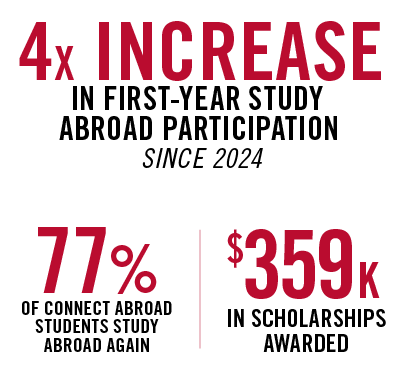
The Impact
The program left students inspired and exhausted—with plenty to think about.
“The level of contrast in this program gave me a better understanding of my field,” says Jun Chambers, a second-year electrical and electronics engineering major. “After spending the week with intelligent peers and mentors, I feel motivated. I want to bring this motivation back with me to Athens.”
Mary Dzhibladze, who had considered only possibilities for local impact, sees a much bigger picture.
Created within an interdisciplinary framework, the School of Computing is jointly administered by the FranklinCollege of Arts and Sciences and the College of Engineering.
“Computer science offers endless possibilities worldwide,” she says. “UGA’s strong international connections make it easier to access opportunities abroad. With such a supportive alumni network, I know I’ll always feel at home no matter where I go.”


What is UGA’s Connect Abroad program?
Connect Abroad is a program created for first-year students to connect with peers and faculty over UGA’s spring break through unique experiences in six international locations (Costa Rica, England, Greece, Italy, Morocco, and Peru). It offers a chance to explore another country’s culture, society, politics, and art while creating relationships with peers and instructors.
More than half the participants in the first Connect Abroad, held in 2024, say they plan to study abroad again. In 2025, Connect Abroad sent 199 students across the world.
Written by: Angel Bhardwaj
Photography by: Dorothy Kozlowski
Video by: Krista McKinney
Design by: Andrea Piazza
The post The World of Computing appeared first on Beyond the Arch.
]]>The post Amolegbe’s Crowning Glory appeared first on Beyond the Arch.
]]>
Amolegbe’s Crowning Glory
SGA Vice President Stephen Amolegbe is transforming the future of fintech while leaving a lasting legacy at UGA.
It’s midafternoon during UGA’s 2024 Homecoming Game and the sun beats down on Sanford Stadium. As Stephen Amolegbe Jr. is crowned Homecoming King, he feels the sweat drip down his suit, hears the crowd roar from the bleachers, and he thinks, “This is the best day of my life.”
As vice president of the UGA Student Government Association, Amolegbe actually spent most of Homecoming Week organizing events, guiding his peers, and promoting Homecoming activities. His focus has always been on the next challenge and how he can best make an impact.
When he wasn’t helping to plan one of the biggest events of the year, Amolegbe worked with the student government to create affordable transportation for out-of-state and international students. The student government cabinet collaborated with UGA’s Auxiliary Services to launch airport transportation services for out-of-state and international students. Amolegbe says that serving as vice president has instilled a sense of responsibility to represent the student body in a way that builds up the entire community.
“I really love being a ‘megaphone’ for other students. Even when I don’t have the ideas, I can help advocate for my classmates and help them achieve their goals,” he says.


Double the Dawg, Double the Impact
It’s impossible to summarize Amolegbe in one word, but “drive” is pretty close. The University of Georgia’s Double Dawgs program empowers students to earn both a bachelor’s degree and a master’s degree in five years or less. It’s designed for future leaders who are ready to take their education and career to the next level—leaders like Amolegbe.
As a fourth-year Double Dawg, Amolegbe is pursuing a bachelor’s in management information systems and a master’s in business analytics. From his first year at UGA, he saw the program as the fastest way to reach his goals and take full advantage of the resources the university has to offer.
“Being at UGA means being surrounded by driven, ambitious people—whether they’re students in my class or industry leaders who visit campus,” he says. “The more people you interact with, the better you want to do.”

A Future in Fintech
Amolegbe’s choice in degrees steered him to a promising career in financial technology or “fintech.” His first fintech course at UGA was a real turning point, one that he describes as “one of the most impactful classes I’ve ever been in.”
Half the class was dedicated to lecture, but the real magic happened in the other half—an immersive, semester-long consulting project. Amolegbe and his peers worked with actual clients and executives to solve pain points for different companies and worked with a biopharmaceutical company to explore how mobile payment apps could better engage Gen-Z consumers.

“The course wasn’t just about theory—it was about problem-solving in real time,” he says. “It was incredibly rewarding to see our ideas come to life and get a head start in the business world.”
This experience gave Amolegbe a necessary understanding of the practical applications of business analytics and technology. It also laid the groundwork for his interest in digital partnerships and prepared him for a role at the cutting edge of technology in his future position with Visa.
After working as an innovation and digital partnership intern at Visa, Amolegbe secured a full-time job with the company. Starting in the fall, he will rotate through four key sectors of the business—financial data, strategic thinking, product development, and client services—before choosing his final position.
“Every transition, whether it’s from high school to college or college to a full-time job, comes with learning curves,” Amolegbe says. “No one has all the answers, but if you surround yourself with the right people, you’ll always have the support you need to succeed.”
Written by: Jayne Roberts
Photography by: Chamberlain Smith and submitted photos
Design by: Andrea Piazza
The post Amolegbe’s Crowning Glory appeared first on Beyond the Arch.
]]>The post Engineering a Solution appeared first on Beyond the Arch.
]]>
Engineering a Solution
Ashley Galanti is on a mission to create a groundbreaking seizure-detection device.
Ashley Galanti’s journey into research and entrepreneurship wasn’t sparked by academic ambition alone but rather by living with her mom and brother affected by epilepsy.
What began as a high school physics class project has grown into research she’s doing as a Ph.D. candidate in biomedical engineering at the University of Georgia’s College of Engineering. She’s working to create a device that can detect early signs of seizures and alert users in advance.
“At the end of the day, epilepsy hits home for me because it’s in my own family. And I’ve met so many other people who have epilepsy or know someone with epilepsy,” she says. “It’s a very close-knit group of people who have it or know someone who does, just because of how detrimental the impacts can be from that disease.”

Turning education into innovation
A challenging part of epilepsy is the unpredictability of seizures. Knowing when one is coming can give you time to find a safe place or alert someone. Trained dogs can detect the onset of a seizure and offer a warning, but there’s no solution for the many who don’t have access to these highly trained canines. Galanti is determined to change that.
She’s tackling her goals by focusing her academic work in technical and business fields. She double majored in journalism and electrical engineering in the Grady College of Journalism and Mass Communication and the College of Engineering and minored in Spanish through the Franklin College of Arts and Sciences. After graduating in 2022, she completed a graduate certificate in entrepreneurship from the Terry College of Business and is now in the third year of her doctorate.
“I want to have that credibility behind me and know that I made this device — that if something is wrong, I know how to fix it,” she says. Ultimately, she wants to feel confident bringing her device to the marketplace.
“I want anyone who has epilepsy to just erase that fear of the unknown since a seizure can occur at any time.”
Ashley Galanti

From research to reality
With the technical expertise, communication skills, and entrepreneurial know-how, Galanti is making progress in her research. She’s working on a sensor chip that could detect pre-seizure compounds released as gases from someone’s skin, similar to what trained dogs can sniff out.
“I want anyone who has epilepsy to just erase that fear of the unknown since a seizure can occur at any time,” she says. “It could give peace of mind.”
She intends to outfit this chip in a smart wristband that would measure other biometrics such as heart rate and body temperature. She hopes the data could give someone a time frame for when they may have a seizure, giving them time to get to a safe place and take preventative measures.
Galanti founded the company AMG Detection with the help of the UGA School of Law in 2022. She also received help from Innovation Gateway, tapping into guidance from its mentor network and building her entrepreneurial skills through programs such as NSF I-Corps, pitch coaching and the Investor Showcase, which helped her launch the company.
Stories that fuel progress
As she works on upcoming clinical trials for the device and completes her doctorate, Galanti finds inspiration from her family and the broader community of those affected by epilepsy.
“Hearing personal stories — whether through the Epilepsy Foundation, through an Uber driver, or just on the street — about how epilepsy impacts their lives and knowing that I am doing something to help them really does motivate me,” she says. “It drives me to want to help them and to give them something that is so needed but is not out there for now.”
Written by: Hannah Gallant
Photography by: Andrew Davis Tucker
Design by: Andrea Piazza
The post Engineering a Solution appeared first on Beyond the Arch.
]]>The post Shaping a Legacy appeared first on Beyond the Arch.
]]>
Shaping a Legacy
From lab research to community connections, this UGA senior is grateful for every opportunity to make a difference.
One week in a pediatric unit solidified Laura Kate Holden’s dream to be a doctor. During clinical rotations in a hospital in Columbus, Georgia, Holden spent days with an 11-year-old girl who was extremely underweight. The doctors were struggling to figure out what had caused her condition.
As Holden and the patient talked, painted pictures, and made friendship bracelets, they built a connection. That connection gave Holden insight into what the patient was going through, and that information helped the medical team shape the patient’s care.
“Being a person that was able to give important information about someone, especially in context of their care, really changed things for me and really made it to where I wanted to do this,” Holden said.
She lost touch with the patient after the clinical rotation, but she hasn’t let go of that feeling of connection and ability to meaningfully help a patient.
As Holden approaches graduation in May 2025, the UGA senior is eager for medical school. She’s applied to the Uniformed Services University of the Health Sciences in Bethesda, Maryland, and hopes to be a doctor in the U.S. Air Force.


Creating knowledge
Holden started college as an Honors scholar with UGA’s Center for Undergraduate Research Opportunities and as a recipient of the Bradley-Turner Leadership Scholarship.
She was drawn to UGA by the opportunities to practice research with faculty throughout her biochemistry and molecular biology degree from the Franklin College of Arts and Sciences. Since her freshman year, she’s worked with Lance Wells, an associate director of the Center for Molecular Medicine and a Georgia Research Alliance Distinguished Investigator.
“I think I’m really lucky, and I’m a huge advocate for if people want to get involved in research,” Holden said. “You can really see a project through in four years.”
Her research focuses on a gene (OGT) mutation that is associated with the development of X-Linked Intellectual Disability. Holden is trying to fill in knowledge gaps about how the mutation disrupts the function of a certain enzyme.
Through her research experience, she has drawn inspiration from Wells and Johnathan Mayfield, a graduate student she works closely with in the lab. “Their enthusiasm for generating and creating knowledge and hope for these patients is unmatched,” she said. “Everything they teach me in the lab has translated elsewhere.”

Showing up
Holden’s commitment to helping others extends far beyond the lab.
As a senior in high school, her mom was diagnosed with blood cancer. That was part of Holden’s inspiration for founding a chapter of NMDP, an organization formerly known as Be The Match that recruits stem cell donors to a national registry. Since its founding in 2022, the UGA chapter has registered more than 2,000 students and targets donors to help patients from underrepresented groups. Holden has led by example by donating blood stem cells to her mom.
Holden has also been an active participant in the UGA chapter of Kesem, which means “magic” in Hebrew. It is a national nonprofit that provides support to children impacted by a parent’s cancer. She has served as an outreach coordinator and co-director, helping children and families with logistics, emotional support, and care packages. She’s also attended funerals to support children who have lost parents to cancer.
It’s been an emotional, eye-opening experience.
“When you talk to those families about what they’re going through, it really just puts it in perspective the amount that they lean on you and how much you’re able to provide,” she said. “I would show up every day for any one of those kids and their families.”
Building connections
Although Holden’s research and outreach are weighty enterprises, she embraces joy and connection in all she does.
She’s been a Digital Dawg, a UGA social media ambassador, since her sophomore year and launched the Dawg Talk series on Instagram to interview her fellow students. Inspired by Humans of New York, Holden wanted these interviews to capture the slice-of-life experiences and a glimpse into the personal stories of those she talks with.
From interviewing students to helping future patients, Holden hopes to continue fostering connections with and learning from the people around her.
“In Dawg Talk, the focus should be the person being interviewed. In Kesem, the focus should be on the children. In research, it should be the patients. In medicine, it should be the people I’m trying to help,” she said. “I am constantly, and hopefully succeeding, at putting the spotlight on those around me. And when you do that, it helps you.”
Written by: Hannah Gallant
Photography by: Chamberlain Smith
Design by: Andrea Piazza
The post Shaping a Legacy appeared first on Beyond the Arch.
]]>make his college career count.
The post Courage and Community appeared first on Beyond the Arch.
]]>
Courage and Community
UGA first-gen student wants to
make his college career count.
Standing behind a podium to speak before an audience can be intimidating. The stakes get even higher if that podium is situated in a room at the White House. UGA junior JJ Lazo shook off the nerves and remembered that all he had to do was tell his story as a first-generation college student.
“I know that many children don’t get that same opportunity. But if we start inspiring students to start trying in high school from the start and providing them with the right resources they need, it would be one of the biggest accomplishments for our Hispanic community. These kids are the future of our nation,” he told an audience during a Peruvian Independence Day event in July 2024.
Lazo has made it his mission to banish doubt and illuminate the path to success for other first-generation students and anyone else wrestling with uncertainty.


From cradle to confidence
Lazo wasn’t always equipped to confidently share his past with a crowd, much less one in the nation’s capital. But one question set him on a path toward confidence and a mission to help others.
“Who wants to be a lawyer?” asked Xavier Brown, an assistant dean at UGA’s School of Law, who happened to encounter a crowd of high schoolers on a campus tour.
Lazo, a self-described introvert at the time, gathered the courage to raise his hand; Brown then handed Lazo his card, and Lazo realized his aspirations were in good hands.
Now a political science and international studies major, Lazo wants to expand access to education. His shining inspiration begins with his father, a Peruvian immigrant who was never able to attend college. Instead, Juan Carlos Lazo worked tirelessly to provide opportunities for Lazo and his brother, Juan Francisco, to go to college.
“My dad moved to the U.S. when he was 31 to give me and my brother the opportunity for a better life,” Lazo says. “I want to make my life worth it for him, not only for me.”
He also wants to make it worthwhile and pave the way for other students.

Breaking down barriers
That work begins at the University of Georgia, where Lazo serves as director of first-year programs for the Student Government Association. He’s also UGA’s Chapter president for TRIO, which helps low-income students find a path to college.
“I think I’ve learned my purpose—just giving myself as a resource to those who need it,” he says.
Speaking from his experience as a first-generation college student, Lazo says, “There are so many things that can overwhelm our minds and give us anxiety, but at the end of the day, it’ll work out. It may not seem that way at that moment, but I think no matter what, if you just give it your all, you can achieve anything.”
That story and passion is something Lazo knows is important to share. That’s why when Kilder Fuentes, the president of the Peruvian American National Council, invited him to speak at the White House event, he was thrilled.
“I want college to be possible, even though it is something that I thought was impossible,” says Lazo. “If you put in the work, if you truly believe it, if you can envision it, you can get it.”
Future defender
Lazo hopes the next time he chats with Brown, it will be about law school admissions as he continues on the path to becoming an immigration lawyer. And don’t be surprised if the name JJ Lazo one day appears on a future ballot.
“No matter where we are in our current world, if I know that I’m doing something that helps a community that needs it, that’s going to motivate me no matter what,” Lazo says. “Whether I run for office or not, just having the opportunity to help someone is going to drive me.”
Written by: Savannah Peat
Photography by: Dorothy Kozlowski
Design by: Andrea Piazza
The post Courage and Community appeared first on Beyond the Arch.
]]>The post Playing in Perfect Harmony appeared first on Beyond the Arch.
]]>
Playing in Perfect Harmony
Dr. Asia Simone Passmore.
That title was clear in one student’s mind almost from the moment she began studying piano. Fifteen years ago, Passmore fell in love with the piano, and it wasn’t long before she set her sights on a doctorate in music.
Passmore developed a profound interest in the piano as a teenager. But as a university student, she turned her attention to piano pedagogy to learn more about the history and educational practices of piano music.
“When I started, I didn’t know anything about the process, the amount of work it took to get to that level, or even what a Doctor of Musical Arts was. But I knew that I wanted to be Dr. Asia in the future,” says Passmore.
Passmore’s lifelong commitment to music and academia has paid off. She graduated from the University of Georgia’s Hugh Hodgson School of Music with a Doctor of Music Arts in piano performance and a doctoral minor in piano pedagogy. As she moves on to the next phase of her professional journey, Passmore is determined that her future will be anything but conventional.


Striking a New Chord
Performer or professor. These are the two paths that most musicians start on in college. But the further Passmore got into her degree the more she realized how many things she could do in music.
One of her most eye-opening experiences was an internship for the Frances Clark Center for Keyboard Pedagogy, a non-profit organization offering piano education resources for professionals and their students. Passmore helped to build a compendium of teaching videos created by different pianists. She later worked for their children’s magazine Piano Inspires Kids.
“I think that if more people knew about the different avenues in the field of music besides just performing or teaching, then more of them would pursue a music degree,” she says. “There’s arts administration and arts advocacy, event production and film scoring. You never know what doors can open up.”
Passmore has also presented and performed at national conferences and performed in masterclasses for world-class artists. Taking advantage of every experience that comes her way helped Passmore develop into a well-rounded musician, student, and scholar.
The Sound of Success
In 2023, Passmore earned the SEC Emerging Scholars Award, awarded to outstanding doctoral students who show promise as researchers and educators. Her research centered around solo piano music written by composers from across the African diaspora, as well as the transatlantic connections between the music and their composers.
Passmore’s research focus was sparked by the piano music of Afro-British composer Samuel Coleridge-Taylor. She became fascinated with his work and his connections to his Black music contemporaries, uncovering several works by some of these composers that were unknown and not widely accessible to the public. Passmore presented her findings in her dissertation, “Samuel Coleridge-Taylor and Transatlantic Connections in the Piano Music of Black Composers,” in a doctoral lecture recital that showcased both her performance and original academic contributions.
As a student, Passmore also conducted a research project on hymn-lining for an ethnomusicology course. Hymn-lining, a “call-and-response” form of worship which originated in Black churches, became a way for Passmore to connect her own family history and cultural roots. Several family members even got together to record themselves lining a hymn for Passmore to use for her research.
“I learned that you can never do too much research,” she says. “No topic is ever truly finished. Even when you think you’ve reached the end, there’s always more to unearth.”
Tuning into Opportunity
Since she first started her musical journey, Passmore has built a steady foundation for her career. She plans to continue sharing her research at conferences and turn her dissertation on piano music of the Black diaspora into a book. She wants to expand her research to offer a more comprehensive reference for future generations of musicians and educators.
“I am so thankful to have access to research on a topic that would otherwise have been left in obscurity,” she says.
“Now, when I approach music, especially for research, I get to do so with the confidence that I am an expert in my own right.”

What’s next for the pianist, researcher, and educator?
Passmore has considered continuing to teach private lessons, leading academic workshops, performing and sharing her research.
For now, she’s satisfied to keep her options open.
“My academic background will guide my career, whatever direction it takes,” she says. “Life is too short and too full of possibilities to not explore every path that you can.
“No matter the future that’s in store for me, I’m ready.”
Written by: Jayne Roberts
Photography by: Dorothy Kozlowski
Design by: Andrea Piazza
The post Playing in Perfect Harmony appeared first on Beyond the Arch.
]]>The post A Doctor’s Journey appeared first on Beyond the Arch.
]]>
A Doctor’s Journey
Many bright rural students go off for an education and never return home. Before leaving his Valdosta home for college, Colby Ruiz was challenged not to forget where he came from.
Dr. Colby Ruiz was a teenager when he watched his first surgery.
He volunteered in the operating room at Valdosta’s SGMC Health, where his parents worked as nurses.
Ruiz BSA ’15 could have ended up in any of the hospital units except, at 14, he really didn’t want to wear the pink “candy striper” uniform of most hospital volunteers. When Ruiz learned that OR volunteers wore green, he was all in.
Even then, most volunteers didn’t actually cross the red line into the operating room. But Ruiz was offered an intriguing opportunity.
“Some of the doctors started to recognize me,” he recalls. “And then one day, one of the surgeons was like, ‘Hey, do you want to come and watch a case?’”
It became a regular occurrence as the young volunteer bonded with the surgeons.
He also met with patients during difficult times in their lives and developed empathy for their situations. These experiences ultimately set Ruiz on the path to becoming a vascular surgeon.
But before he graduated high school and left Valdosta behind, some of the doctors offered advice and a challenge.
First, they suggested he study in-state for college, telling him he “couldn’t get a better education anywhere” than at the University of Georgia.
The challenge?
“Don’t forget about us when you’re done.”
They meant: Don’t become another bright rural student who goes off for an education and never returns home.
Setting Off
Ruiz came to Athens as a pre-med student on a scholarship from UGA’s Center for Undergraduate Research Opportunities (CURO). He conducted research as a freshman in the lab of Walter Schmidt, professor of biochemistry and molecular biology and a Georgia Cancer Coalition Scholar. There, Ruiz experimented with a protein associated with pancreatic cancer. He continued in the lab through his UGA tenure, eventually speaking at conferences with Schmidt and was even published in a research journal.
After earning his degree in biological science from the College of Agricultural and Environmental Sciences, Ruiz attended medical school at the University of North Carolina at Chapel Hill. He completed his M.D. and stayed five more years for his residency at UNC, training in vascular medicine.
As a vascular surgeon, Ruiz helps people manage conditions ranging from blood clots to strokes and aneurysms. His patients are at risk of losing limbs or even death.
When operating, he might perform open surgery to repair an aorta, insert a stent to open an artery, or remove plaque from a vessel.
His skills as a surgeon can literally be a matter of life and death. But his ability to show empathy when helping patients manage their care is just as essential.
“You’re managing people’s emotions, feelings, and thoughts and helping them make decisions because it’s all about what the patient wants to do.”


The Decision
Ruiz’s residency ended last summer, and it was time to figure out what he wanted to do. A fully trained surgeon with a wife and children, Ruiz hadn’t forgotten about Valdosta or the challenge from the surgeons who inspired him.
“I came home, after all, to that same hospital that I started volunteering in back in the day,” Ruiz says.
In July, he returned to SGMC to join the vascular surgery team.
His work in Valdosta is just getting underway, but he’s already looking to establish opportunities to bring high school students in to follow him and learn about becoming a doctor.
And who knows? Maybe Ruiz will inspire future doctors to come back and practice medicine in their hometown.


Written by: Aaron Hale
Photography by: Andrew Tucker
Design by: Andrea Piazza
Videography by: Cade Massey
The post A Doctor’s Journey appeared first on Beyond the Arch.
]]>The post From Broad Street to Broadway appeared first on Beyond the Arch.
]]>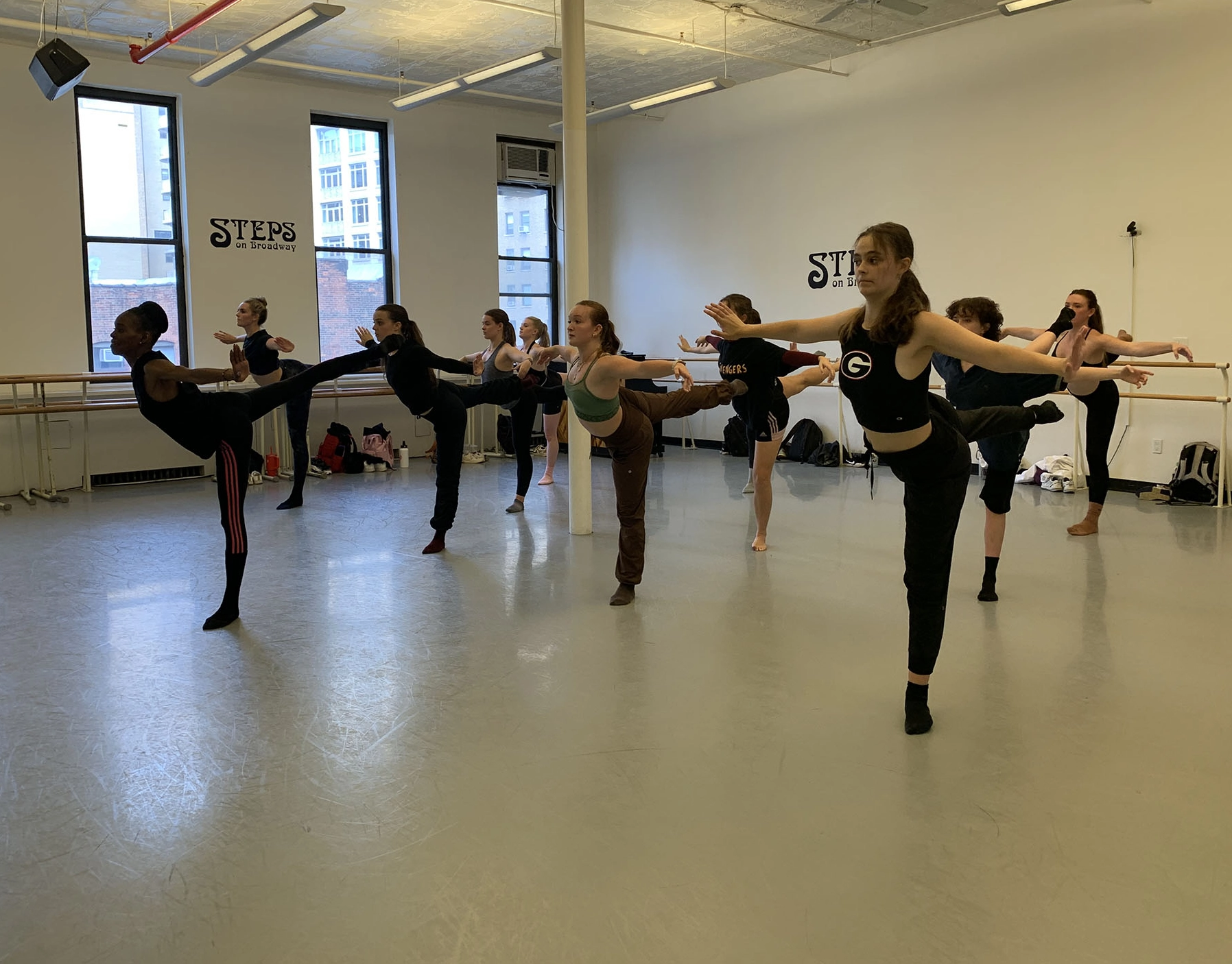
From Broad Street to Broadway
New Domestic Field Study program sends dance students to New York.
This past summer, a troupe of 11 University of Georgia dance students traveled from Broad Street to Broadway to immerse themselves in the mecca of professional dance, New York City. Participants met with professionals and gained audition experience while touring the Big Apple.

The trip was the first Domestic Field Study program led by UGA’s Department of Dance. UGA’s Domestic Field Study programs allow students to “Study Away in the USA” with site-specific, experiential learning opportunities across the United States.
Lisa Fusillo, UGA Foundation Professor of the Arts in the Department of Dance, was one of 11 faculty members who participated in the inaugural Domestic Field Study Fellows program, an opportunity for selected faculty to develop and launch a new course-based study away program within the United States. Fusillo created the course with the goal of having her students explore the rich history of dance in New York City, from lower to upper Manhattan.

“New York is well known around the world as one of the greatest cities for dance and is almost like a magnet attracting dancers from all over to come to NYC to train and start a career. With the tremendous number of dance companies, both large and small, there a lot of opportunities”
Lisa Fusillo
Over three weeks, students explored world-renowned dance centers, such as STEPS on Broadway, Broadway Dance Center, and Gibney Dance Center, and joined in more than 15 dance classes taught by professional instructors. Each student could choose the level of difficulty and dance technique for each class.
“This was really an experience of a lifetime,” said Amelia Cassidy, a second-year student majoring in marketing and sports management and minoring in dance. “There’s nothing like this out there right now. We got to take classes with working professional dancers in New York, several of which we all grew up watching.”

These classes connected students with some of the country’s most famous dancers, including Debbie Roche, who has been in Broadway productions and the film adaptation of “A Chorus Line,” and Heather Hawk, a STEPS on Broadway dance teacher who performed with the Pennsylvania Ballet and appeared in Balanchine’s “Nutcracker.”
“I think that the students got a very good idea of what it takes to pursue a professional career in dance and how to network,” said Fusillo.
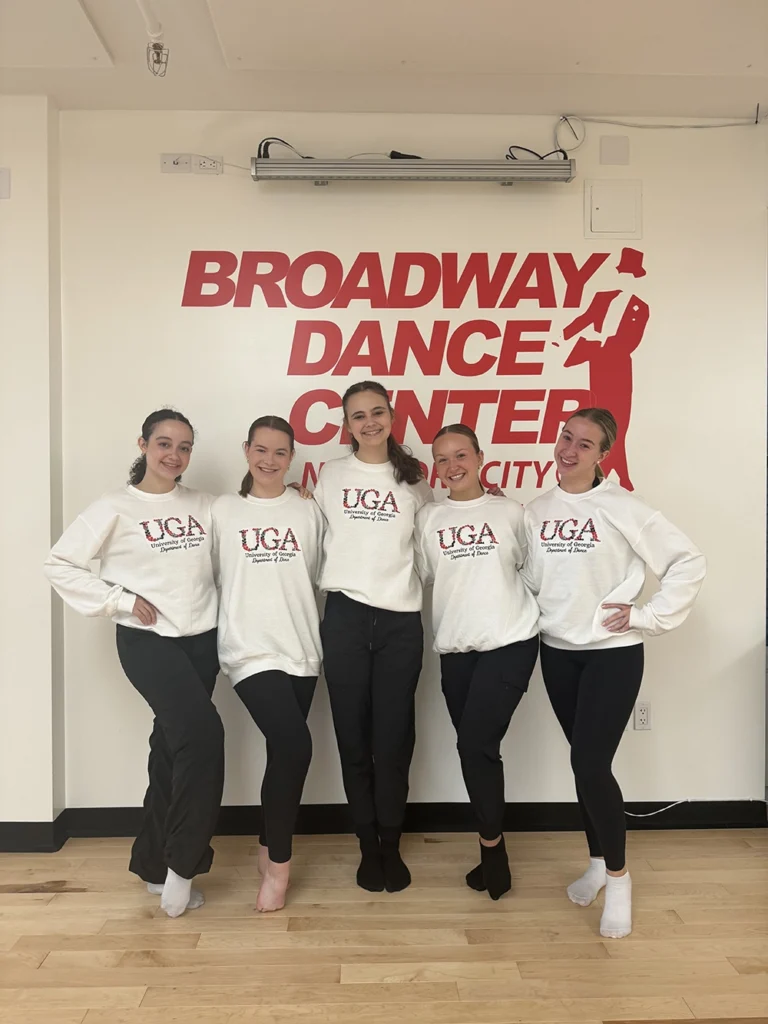
On top of learning from the best, participants gained more insight into the dance industry and talked to other dancers living and working in New York. Students learned what it’s like to be a professional dancer and even gained audition experience through a mock audition.
Outside of the dance classes, the troupe of students explored historic sites including the Apollo Theater in Harlem and Radio City Music Hall, and attended a New York City Ballet performance at Lincoln Center where they got the opportunity to explore and stand on the stage.
The trip wasn’t all about dance all the time. Students also enjoyed three Broadway shows, a historical tour of Broadway theaters, a trip to the Metropolitan Museum of Art, a walk on the High Line, and a New York Harbor Cruise around Ellis Island. They learned that many dance styles originated from European immigrants who came to America through Ellis Island as well as from the Great Migration to Harlem, where jazz music and dance became popular. Students appreciated learning about the evolution of dance forms such as tap, jazz, hip-hop and musical theater.


“It was just incredible to get a taste of life in the city,” Lily Morris, a second-year theatre and dance major, said. “And now, I’m just so excited for my future. The end goal for me is to be on Broadway, and going to New York was the best possible thing I could have ever done with my life.”
Written by: Isabelle Wilkins, 3rd year Public Relations major
Photography by: submitted
Design by: Lisa Robbins
The post From Broad Street to Broadway appeared first on Beyond the Arch.
]]>The post Dawgs in the Saddle appeared first on Beyond the Arch.
]]>
Dawgs in the Saddle
Caitlin Lyons’ lifelong love of horseback riding has shaped her as an athlete, an academic, and a wildlife conservationist.
Getting to the Mane Event
At 2 years old, Caitlin Lyons found love at first sight—not with a dashing hero or a celebrity, but with horseback riding.
“Once I got on my first horse, I just knew,” says Lyons. “And it didn’t take long for everyone around me to see how serious I was.”
Like many little girls, Lyons enjoyed horse-themed parties and visits to her favorite farm animals, but she also had a riding instructor before finishing elementary school. Two decades before she became an award-winning equestrian, Lyons was in the saddle more often than on a playground. When she turned eight, her mom gave her a short break from riding to see if it was just a passing phase.
“I asked my mom every single day for three months when I was going to ride again,” says Lyons. “So that answered that question.”


An Equestrian Finds Her Calling
As a high school student, Lyons visited the University of Georgia after hearing about the school’s competitive equestrian team. When she stepped on campus, she once again felt an instant connection.
“I came to UGA because of athletics,” says Lyons. “But once I got here, it was home. There’s no other way to describe it. I just knew this was where I was meant to be.”
Lyons loved everything about Georgia so much that her family relocated from Spokane, Washington, to Greensboro, Georgia, shortly after she was accepted at UGA.
Attending UGA allowed Lyons to find her stride as an accomplished athlete. In 2024, she was named a finalist for the NCAA Woman of the Year Award. She also won the 2022 SEC Reining Rider of the Year and 2024 SEC Equestrian Scholar-Athlete of the Year.
A Horse by Any Other Name
Lyons rides different horses depending on the event and location, but her personal horse, 6-year-old Ava Grace—or Pumpkin Spice on her “spicy” days—holds a special place in her heart.
“Horseback riding isn’t about jumping on an animal’s back and telling them what to do,” she says. “It’s about connecting. You can’t be in your head or anxious. You have to work together with a thousand pounds of living, breathing animal underneath you and know if they’re nervous or confident or confused.”
She describes horses as “big, snuggly dogs” and is quick to sneak a cookie or two to Bandido and Slash, who live in UGA’s stables.
“Bandido is my favorite horse at UGA,” she says. “He has a really long, beautiful mane, and I couldn’t wait to wash, brush, and braid it every time I saw him. And Slash is so reliable. I’ve had my best rides on him because you can trust him to get the job done. I adore that horse so much.”


Riding into Animal Conservation
“One of the first things they teach you about horseback riding is that you always take care of your horse before you take care of yourself. Learning how to care for another living being that I love and adore has been a major influence on my character. It’s why I am who I am,” says Lyons.
While she has a lot of experience working with horses, her passion for animals extends well beyond the riding stable. She has always wanted to help with the conservation of endangered species. In 2025, she will graduate with a Master of Natural Resources degree from the Warnell School of Forestry and Natural Resources, a necessary step in her journey to working as a wildlife technician and eventually transforming wildlife conservation on a national level.
“Learning wildlife management at Warnell has taught me about the complexities of working with endangered species,” says Lyons. “It’s amazing how intertwined everything is and how much of a species’ survival depends on whether you can engage stakeholders in what you believe in.”
Just as she’s learned to build trust and care for horses, Lyons will use that dedication to protecting endangered species and their natural environments.

Written by: Jayne Roberts
Photography by: Chamberlain Smith unless otherwise noted in captions
Design by: Andrea Piazza
The post Dawgs in the Saddle appeared first on Beyond the Arch.
]]>The post The “Care” in Health Care appeared first on Beyond the Arch.
]]>
The “Care” in Health Care
Autumn Hampton, a rising star in medical research and health care advocacy, honors her mother’s memory by supporting marginalized communities.
Frigid offices. Metal stethoscopes. Flu shots. It’s easy to think of medicine as cold and clinical.
But there’s another side to health care beyond your sick visits and annual appointments. Doctors are working behind the scenes to change this narrative and humanize the health care experience.
For Autumn Hampton, a fourth-year pre-med student at the University of Georgia, health care advocacy—particularly for marginalized communities—holds as much weight as her medical research. A dual major in biomedical physiology and sociology, Hampton aims to become an obstetrician-gynecologist, with a focus on oncology.
This desire is deeply personal; she has experienced the challenges of cancer care, having lost her mother, Sondra Hampton, in 2023 after a decade-long battle with breast cancer.
“It’s really important to me to be an advocate for my community in the health care field,” Hampton says. “A lot of that stems from my mother being diagnosed when I was 10 years old and watching her go through that process until I was 20 years old.”
Autumn often reflects on her mother as “a true inspiration for the woman I am today” and describes her as a pillar of love and dedication who became a leader in her community. She set a powerful example for her daughter, and in return Autumn carries on her mother’s legacy in both her personal life and her work with patients.
“Many hospital patients are experiencing what may be one of the most painful experiences they’ll ever go through. Having someone who looks like you, understands your background, and is solidly on your team can make all the difference in someone’s health care journey.”

Bridging Gaps in Health Care Advocacy
Hampton grew up in a small, rural community and rarely encountered Black medical professionals. She wants to be part of a support system for someone’s journey, whether with cancer or birth, because she knows the impact that representation has, especially for Black women who face health care disparities.
“Being a Black doctor is especially important in communities where you don’t see a lot of representation for people of color,” she says. “Without having an advocate in the field, Black women often have their pain minimized. That’s my main reason for wanting to be an OB/GYN.”
Hampton takes every opportunity to build a more compassionate health care system for vulnerable and marginalized communities. She works as a caregiver and engagement coordinator at Arbor Terrace of Athens, an assisted living facility, where she navigates a delicate balance between providing care and autonomy.
“You’re working on two levels,” she says. “There are basic needs for grooming, feeding, showering, apartment maintenance. But a lot of these residents can’t do everything or go everywhere they used to for health and security reasons. My job is also about how to keep them engaged in a way where they have their dignity and their independence.”
Hampton has worked with the facility’s assisted living and memory care departments and isn’t content with the status quo. She runs exercises to engage the residents and stimulate their creativity so they can take a more active role in their health decisions. For her, effective care means caring for the whole person, not just the medical condition.
Hampton’s passion for advocacy also extends to her work with Kesem, a nonprofit organization that supports children impacted by a parent’s cancer. She started as a counselor before joining the executive board and becoming an operations coordinator. During her role, she planned free camp activities and year-round support for the children, including a mini carnival, a two-week summer camp, and Friends and Family Days, where families affected by cancer come to support each other.
This work, combined with being president of the University Union Student Programming Board and being a co-founder of the Biomedical Physiology Society, earned her UGA’s 2023-2024 Student Leader of the Year.
Fueling Cancer Research and Recovery
Hampton dedicates significant time to helping patients and families affected by cancer, but she also leverages her undergraduate research in the fight against the disease. As part of UGA’s Center for Undergraduate Research Opportunities, she works to identify the origins of pediatric glioblastomas and develop cancer treatments. Her research on stem cells and brain tumors with UGA’s Center for Molecular Medicine was recently published by Oxford Academic in the Neuro-Oncology Advances Journal and is advancing knowledge in this critical field.
Whether she’s interacting with families or looking at slides under a microscope, Hampton works to create a more holistic understanding of cancer care—one that addresses both the medical and emotional needs of patients and their families.
“The thing about my time at UGA is that I don’t do things to inflate my resume or be a better candidate for med school,” says Hampton. “I’m just doing everything that I want to do. My mom always told me to go wherever I want to go but leave a legacy behind me and that’s what I’m working towards.
“Even if all the things I’ve done here don’t directly affect my career, they’re building me into the person that I want to become, and that’s more important.”
Written by: Jayne Roberts
Photography by: Andrew Tucker
Design by: Andrea Piazza
The post The “Care” in Health Care appeared first on Beyond the Arch.
]]>The post The Zoo in Your Backyard appeared first on Beyond the Arch.
]]>The Zoo in Your Backyard
Bear Hollow Zoo and the University have teamed up to create an experience that benefits the students, animals, and community.
On any given day, D.J. can usually be found relaxing on a raised platform under shady trees. On her afternoon stroll, Kelly Garrison may notice him and call down with a greeting.
He doesn’t respond — not with words at least.
D.J. is an American black bear and one of the many animals at the Bear Hollow Zoo, a hidden gem in the Athens-Clarke County community. This county-funded zoo houses various animals that you would naturally find in Georgia.


The animals of Bear Hollow are non-releasable due to disability or other circumstances that would make it difficult for them to live in the wild. Now, they serve as ambassadors for their species, motivating visitors to protect wildlife.
“It’s not every day that you get to go to a free local zoo,” said Garrison, the zoo coordinator of Bear Hollow. “It gives a lot of opportunities to all of the residents of Athens-Clarke County and even the surrounding areas to have a fun attraction that they can go to and learn a bit about.”
Garrison manages zoo animals, maintains their habitats and collaborates with staff, volunteers, and University of Georgia students on essential zoo tasks.


Helping (and Healing) Hands
Summit St. John, a fourth-year wildlife sciences major in the Warnell School of Forestry and Natural Resources, said she gained invaluable experience by volunteering at Bear Hollow under the Animal Care Internship program.
“I like learning how to contribute to animal care and how to make sure animals have the resources that they need to thrive,” St. John said. “I’ve interned at Zoo Atlanta, but Bear Hollow has given me the chance to work with so many animals that I didn’t have the opportunity to work with.”
In the program, St. John assists the full-time zoologists with animals such as the American alligator. She and other interns handle smaller animals like the opossum siblings on their own.


UGA’s College of Veterinary Medicine has supported the zoo’s animal health since its founding, providing care for animals like Ginger the deer and Cypress the beaver. The Veterinary Teaching Hospital handles everything from checkups to treating issues like toothaches. “We have a great partnership with the UGA Veterinary Teaching Hospital,” Garrison said. “It’s a really cool opportunity for not only the animals of the zoo, but also the vet students.”
Students in the College of Veterinary Medicine participate in various rotations in the exotic animals division’s veterinary services. Under the guidance of professor Joerg Mayer, fourth-year students spend three weeks on the clinic floor.
“Now is the time to potentially transition their book smarts to something tangible in the field,” Mayer said. “They know the physiology, and they know the anatomy. If they want to become a veterinarian, this gives the students hands-on experience for what they’re going to be spending the next 35 years of their lives doing.”


Reaching Visitors
Public relations students in the Grady College of Journalism and Mass Communication have also recently taken part in the zoo fun. For the fall 2024 semester, David Clementson, an associate professor in the college’s advertising and public relations department, has structured his capstone course around the Bear Hollow Zoo. In the semester-long program, students work together to integrate new advertising techniques for the zoo.
“The students are coming up with all kinds of great strategies and deliverables that they’ll be presenting to the client,” Clementson said.


Students conduct surveys with members of the community to better understand how the zoo can reach visitors, and they examine previous ads used to promote the zoo. In completing the finalized advertising recommendations, the students have substantial work to add to their professional portfolios and indispensable knowledge of the public relations industry.
“I’ve never had a public relations internship. It’s always been marketing based,” said Reese Mitchell, a fourth-year student in Clementson’s capstone course. “This is really important to me because it lets me see if this is something I might want to continue to do when I graduate.”
Working with the zoo and interacting with the community has allowed the students to have a better understanding of the zoo’s impact.


“Almost everyone we’ve heard from has children,” said Cheylan Baker, another student in the course. “They always talk about how much their kids love it here and how it makes them super excited. It seems like a place for community.”
This is evident with events like Bear Holloween, a time for children to put on their Halloween costumes and visit the animals. During one night in October, the zoo takes part in the holiday festivities with a variety of Halloween decorations, photo opportunities and candy.
Events like Bear Holloween serve as a reminder of the importance of the zoo for members of the community. The ability to connect with nature is increasingly valuable to many families across Georgia.
“It is so important to be able to have the exposure to animals for our kids and for us as well,” said Michelle Jones, a mother in attendance at Bear Holloween with her daughter and husband. “We’re glad that she can learn about nature and be able to observe the animals and habitats.”
The Bear Hollow Zoo remains a vital fixture for the Athens and UGA community, providing education and opportunities for indispensable experiences to students in colleges around the university.


Written by: Averi Caldwell
Photography by: Dorothy Kozlowski, Chamberlain Smith, Andrew Tucker
Design by: Andrea Piazza
Videography by: Krista McKinney
The post The Zoo in Your Backyard appeared first on Beyond the Arch.
]]>and anthropology into an epic road trip across America.
The post For Spacious Skies appeared first on Beyond the Arch.
]]>For Spacious Skies
UGA’s Interdisciplinary Field Program mixes geology, ecology, and anthropology into an epic road trip across America.
Compared to some of the long, more strenuous hikes at Yosemite National Park in California, the venture up the granite outcrop at Olmsted Point is short if a little steep. But an epic view awaits the 18 University of Georgia students who make the climb.
High above Yosemite Valley, they gaze westward to make out Half Dome in the distance. Other peaks of various shapes and features stretch on endlessly.
After snapping a few photos with their phones, the students find a seat on the stone slab and take out their orange novella-sized notebooks and pencils.
Class is now in session.
A SINGULAR OPPORTUNITY
Today’s lesson covers the sweeping history of the Ansel Adams-worthy landscape before them. And not just human history. The first lesson explains the geological features and the prehistoric phenomena that forged them.
“You’re sitting on granite that once fed a volcano,” says Deb Dooley PhD ’95, an instructor in UGA’s Interdisciplinary Field Program.
Dooley pauses for effect, then exclaims, “Whoa!”
Students learn the chemical and biological processes that determine the flora and fauna that live here. And finally, Jenn Thompson, associate research scientist in UGA’s Department of Crop and Soil Sciences and adjunct professor in anthropology, weaves the human story of Yosemite, dating back to the indigenous Ahwahnechee, who once called this majestic place home.


Olmsted Point is just one stop on the Interdisciplinary Field Program, a 60-day experience that takes students from Sapelo Island, Georgia, all the way to the Pacific Ocean.
They travel through 20 states and to 23 national parks and monuments—including the Grand Canyon, Muir Woods, Mount Saint Helens, and Yellowstone National Park—and log nearly 12,000 miles on the road, and then tack on another 100 miles or so hiking on foot.

For adventurous students, it’s a singular opportunity.
“I’d never be able to do all this on my own no matter how hard I tried,” says Ava Macie, a second-year ecology major. “I couldn’t hit all these parks in an entire lifetime. This trip offered everything in one go.”
The journey, however, is much more than a sightseeing road trip. A rotating cadre of UGA faculty and teaching assistants leads the program. And at every stop, the travelers get a lesson about the landscape, the environment, and the human aspects of their location. Piece by piece, they develop a more holistic sense of America’s natural world, its history, its society, and perhaps its future.
EXPEDITIONARY LEARNING
The program begins with a weeklong “boot camp” at UGA’s Marine Institute on Sapelo Island, where instructors drill the basics of geology, ecology, and anthropology into the students. Lab work and excursions on the mostly undeveloped barrier island break up the class sessions. Boot camp ends with an exam to ensure students have a baseline understanding of these disciplines before the traveling begins.
And then, the crew heads West.

The caravan includes three white 12-passenger vans and a 15-foot box truck to lug duffels, camping gear, and cooking supplies. On top of students and instructors, the travelers include a handful of student staffers and two program cooks.
They cross through the South and Southwest toward California before heading to the Pacific Northwest and then around the Great Plains.


The group will stop at one location for a few days to camp (no hotel rooms on this trip) and to explore surrounding features before moving on to the next. Even on the long travel days, faculty build in stops for mini lessons at, say, a mineral outcrop on the highway, a fruit stand, or a museum.
Students have an assignment to complete at most locations, from creating a geological map of an area to sketching ecological patterns across a landscape. Assignments are etched into their orange field books; students will cycle through two or three of them on their journey. And then every couple weeks, students take exams at their campsites.
“There is a lot of fun involved in the trip, and the students definitely have an adventure, but the academic and learning component is so baked into the day-to-day that it never gets lost along the way,” says Kait Farrell PhD ’17, a lecturer in the Odum School of Ecology and UGA’s director of domestic field study.
Ava Macie puts it another way.
“I’ve never learned this much this fast in my entire life,” she says.

Students Hailey Bos (left) and Guy Kemelmakher (center right) discuss a geological feature with instructors Debra Dooley (center left) and Carolyn Cummings (right) while hiking the Grand Canyon’s Bright Angel Trail.


35 YEARS AND COUNTING
The Interdisciplinary Field Program started in 1988 as an Honors geology field course. At the time, UGA didn’t offer many off-campus programs.
Jim Whitney, then the head of the geology department, conceived of the program as a unique way for non-geology majors to learn his field of study. His guiding principle: “It’s much more interesting to study in the national parks where you’re seeing all of these different settings.”
The inaugural trip included 10 students who rode in the geology department’s 15-seat passenger van, their bags strapped to the roof. Two cooks followed along in a pickup truck. The program brought two out-of-commission U-Haul trailers for towing cooking and camping supplies. Whitney joined part of the trip with his wife, Sandy BS ’73, PhD ’92, now a retired UGA faculty member, who served as an unpaid teaching assistant and de facto “program mom.” The Whitneys followed behind in their family van along with their dog and two sons.
That first go-getter effort was successful enough to keep the program going.

With UGA’s emphasis on experiential learning, President Jere W. Morehead JD ’80 has encouraged more place-based learning opportunities. The president funded a Domestic Field Study Fellows program in 2023 to train faculty on launching new programs, including Dance in New York City and Writing and Community on the Georgia Coast.
‘WOW’ MOMENTS
Students on this 2024 trip attest to the power of learning beyond the classroom.
The day after the lecture on Olmsted Point, students embarked on a 10-mile thru-hike on Panorama Trail around the Yosemite Valley. Traveling together, Emme McCumiskey, Caty Watts, and Chloe Dierkes chatted away until a break in the trees revealed a jaw-dropping view of Nevada Fall, still miles ahead.
McCumiskey interrupted her own sentence to gawk. The environmental resources and ecology major says witnessing such spectacles makes a difference in how she retains information and concepts.
“Being able to see it in the flesh and not just in a textbook makes me feel like I’m learning more,” she says. “It’s sticking a lot better.”
It helps that faculty members are always around to answer questions or point out details that would otherwise go unnoticed.
“It’s constant office hours,” McCumiskey says. “Whenever you have a question about anything, you just go up and ask them.”


Paul Schroeder, a geology professor and program co-director since 1992, says, “In a way, they actually see more cultural diversity— and especially ecological diversity—on this program than they would in a two-week trip to a foreign country.”
Students also come away changed on a personal level.
The students work as a team to accomplish daily chores and group assignments. They gain confidence in learning, exploring, and sleeping outdoors. By trip’s end, many students forgo tents and sleep open-air in a hammock and sleeping bag where they can look up at the stars at night and wake up with the sun.
Before this summer, Ava Macie had never been camping. A few weeks in, she never wanted to sleep inside again.
“I’m a completely different person,” she says. “The thought of my dark bedroom at home sounds dreadful.”


The post For Spacious Skies appeared first on Beyond the Arch.
]]>The post Spearheading Service appeared first on Beyond the Arch.
]]>
Spearheading Service
For graduate student Julianne O’Connell, study abroad is about more than travel.
When you’ve traveled the world, finding a place to finally call home can be a labor of love. Investing in a community and its people and always striving for improvement is a special kind of labor.
It happens to be the specialty of Julianne O’Connell, a University of Georgia Ph.D. candidate. After years of teaching in Germany, Indonesia, and Austria, she has returned to the Classic City to make a difference.
O’Connell is an adventurer with a passport running out of room for stamps. But it’s not a love for hopping around the world that drives her travels. It’s a strong passion for and serving those in them, especially through food security. O’Connell strives to improve student support services and the basic needs of her community through personal, long-term connections with those who need that assistance. Her empathy and work ethic make that possible not just in her home base but anywhere in the world.


There and back again
O’Connell traveled to Germany in high school. And by the time she enrolled as an undergraduate, she knew she wanted to travel abroad and make an impact.
As a student, she worked as a resident advisor in Creswell Hall and was a dedicated member of UGArden, an experiential learning organization dedicated to organic food production.
“I had a few years to identify my values and how I like spending my time,” she says. “Service really came to the forefront of the jobs that I had.”
She majored in German studies and linguistics and became fluent in German (eventually learning some Indonesian and Spanish as well).
But speaking German in Athens, Ga, could only go so far. Enter the Fulbright Program. That program sent O’Connell to Indonesia to teach English for a year. She also lived in Austria, where she taught English to Austrians and taught German to the nation’s visitors. In the years spent away from Georgia, she made her own home.
“Making a home through community is possible through really getting to know the people in these host communities and understanding their needs and figuring out if there’s a role I can fill in through partnership and understanding,” O’Connell says.
A robust return
After a stint in over 30 countries, she decided to help others back at UGA and earn her Ph.D. in Higher Education at the McBee Institute of Higher Education. She is focusing on student support services to enable the next generation to have a secure foundation in life and has led the Higher Education Student Society and the Public Service and Outreach Committee.
O’Connell also came back to Creswell Hall as a graduate resident advisor. Now with worldly experience, she was equipped to help undergraduate residents during the COVID-19 pandemic. With limited access to dining halls, financial concerns, and overall mental health depletion, students who had invested in meal plans no longer always knew when their next meal would be. That’s what solidified her dissertation research into food insecurity among college students.
“I was always aware of the issue of food insecurity, but mostly as a K-12 issue. But here they are, having to make decisions between car payments and working and going to class and their basic needs,” O’Connell says.

In farming with AmeriCorps Tennessee and agricultural colleges in Austria, O’Connell understood the demand for fresh food that’s often missing from food banks. Now, you can find O’Connell spending her free time at UGArden or the Campus Kitchen at UGA, a student-based organization committed to hunger relief in the Athens community. Even if it’s based on helping others, O’Connell emphasizes that everyone—including the person doing the service—benefits from community care. It’s all reciprocated.
“I volunteer and help at UGArden, but I also gain access to knowledge, plants, and produce,” she says.
She now believes anyone can contribute to this collaborative cycle, even on her college campus. As a graduate assistant in UGA’s Office of Service Learning, she connects students to community resources and opportunities to give back.
After traveling the world, O’Connell has learned what it means to serve a community. She wants to pass it on to the next generation of students.
“You can have the mindset of a study abroad student in your own community,” she says. “I truly believe that you can still have a very adventurous, fun, meaningful, service-filled life, even if you are just in your hometown.”

Written by: Savannah Peat
Photography by: Chamberlain Smith, submitted photos
Design by: Andrea Piazza
The post Spearheading Service appeared first on Beyond the Arch.
]]>The post Sweet Success appeared first on Beyond the Arch.
]]>
Sweet Success
UGA alumna finds “sweet success” in social media.
Southern Living’s lifestyle brand has been a familiar household name for generations. From the treasured family recipe your grandmother taught you to the holiday decorations you pass on to your children, the magazine touches lives in far-reaching ways.
The same is true for Ivy Odom BSFCS ’15, AB’ 15, senior lifestyle editor at Southern Living. She has become a familiar face on The Today Show, The Kelly Clarkson Show, and Good Morning America. Her social media videos for recipes, etiquette, home decor, and style and gardening tips have changed the face of Southern Living.


“Videos are a really great way to expand on the magazine, and they’re more accessible for a wider audience,” says Odom. “It’s a modern way to bring the magazine to life and encourage newer audiences to fall in love with the brand.”
Odom’s first video for Southern Living thrust her into social media stardom.
As an intern in 2017, she was developing recipes in the test kitchens. One day, with no recipe on the schedule, Odom whipped up a Southern favorite called the Little Layer Chocolate Cake. The 18-layer dessert had mouths watering from Georgia to California. Southern Living editors knew they had found something special and demand for Odom’s videos skyrocketed after that day.
“At the time, there were no other videos in the company like the ones we started making, which was almost a mini cooking show where you could take two or three minutes to explain an in-depth recipe,” says Odom. “We created that style of video for the brand, and it was the most successful one in the company for the entire year because no one had ever done that before.”
What started as a simple baking video grew into a career that is custom-made for Odom. If there’s one thing she knows how to do, it’s how to take advantage of an opportunity, a skill she developed as a student at the University of Georgia. Odom double-majored in consumer journalism and Spanish language and literature. When she wasn’t in class, she was actively involved with programs like Shop with a Bulldawg, a student-led non-profit that provides funding and mentorship to children during the holidays. She was also a member of the Blue Key Honor Society and Palladia Women’s Society, studied abroad in Spain, and worked almost every event hosted by the College of Family and Consumer Sciences.
After the original chocolate cake sensation, Odom continued her baking videos. This launched a video series, television show, and TikTok channel. In her most famous video, Odom suggested a pinch of baking soda in sweet tea would cut the bitterness.
Southerners had a lot to say about that.
“It was very controversial. For the longest time, people called me the Southern Living Sweet Tea Girl,” she says about the video, which premiered in 2020. “Strangers would ask me, ‘Are you the baking soda girl?’ Even today, people will walk up to me on the street and call me the Sweet Tea Girl.”
Odom still has a lot she wants to do at Southern Living and is working on new ventures, including an upcoming cookbook.
“I would have never in a million years, when I was a student at UGA, thought this is what I would be doing now, but I feel like I am living my dream job,” she says. “I just want to keep working toward these unpredictable moments. And whatever is going to keep me on my toes, whatever life throws at me, I want it to be an exciting adventure.”
Written by: Jayne Roberts
Photography by: Peter Frey
Design by: Andrea Piazza
Videography by: submitted
The post Sweet Success appeared first on Beyond the Arch.
]]>As VP of Creative at Liquid Death, he’s trying to do just that.
The post Ad Man appeared first on Beyond the Arch.
]]>
Ad Man
UGA alumnus believes advertising can be fun and make positive change. As VP of Creative at Liquid Death, he’s trying to do just that.
Think of your favorite Super Bowl commercial.
Is it a mud-splattered Betty White eating a Snickers bar? A trio of croaking frogs hawking Budweiser? Maybe “Mean” Joe Greene giving away his game jersey for a bottle of Coke?
Andy Pearson, who has worked as a creative director and copywriter for several big brands over the years, has noticed a pattern.
“All the most fun brands on the planet are the ones that are not healthy for us,” he says. Today, Pearson ABJ ’06, AB ’06 is the vice president of creative at Liquid Death, the subversive canned water company.
For those unfamiliar with Liquid Death, here’s the quick rundown: Founder and CEO Mike Cessario wanted to sell water in cans instead of bottles to reduce plastic pollution, and he devised a brand with a punk rock/heavy metal aesthetic and farcical sense of humor.
The company packages its water (sparkling or still, flavored or au naturel) and iced tea in tall boy-sized cans emblazoned with a melting skull logo. Whereas most water companies put their beverage in a clear plastic bottle to invoke purity, Liquid Death’s cans look like, well, beer or a sugary, over-caffeinated energy drink.
The basic premise of Liquid Death, according to Pearson, is this: “What if we took the healthiest thing on the planet—water—and made it look like beer, and then we acted like it was really unhealthy?”
The Power of Advertising
In his role leading the creative team, Pearson helps produce a slew of short comedy videos that could pass for Saturday Night Live sketches or content for the website Funny or Die. Liquid Death once ran a TV ad featuring a raging house party where children are chugging the company’s tall boy cans as if they were drinking Natty Light. The ad ends with a pregnant lady guzzling Liquid Death, followed by the line, “Don’t be scared. It’s just water.”

Pearson joined Liquid Death in 2021 after a career spent hopping to different ad agencies and freelancing.
For Pearson, effective advertising is about wielding creativity to share ideas. He first found that spark at the University of Georgia.
Pearson came to Athens as an Honors student with the intention to pursue journalism as a creative outlet. But he found the high-minded journalism of the 2000s didn’t quite fit his sensibilities. He once wrote a sweeping three-part series for The Red & Black student newspaper about the 30th anniversary of a national streaking record set on UGA’s campus, which his editors condensed to one concise 500-word story. So Pearson went looking for a “more creative” field.
“And that’s kind of how I found my way to advertising,” he says.
He was inspired by advertising professors in the Grady College of Journalism and Mass Communication, like Jay Hamilton, who helped him discover the power of ads.
“There can be just a really simple idea that we put out in the world that has a real effect,” he says.
Pearson also flourished with the leadership and learning opportunities from the Honors Program, where he served as a student advisor and member of the Honors Council.
Pearson’s Career
After honing his craft at the Atlanta ad school Creative Circus, Pearson went on to work at several ad agencies and picked up freelance work.
He’s written for Pizza Hut, Old Navy, Volkswagen, and Microsoft, to name a few. Then he took a few years to travel to Asia and Europe with his wife, freelancing all the while. During that time, he met Cessario, the Liquid Death founder. When Pearson settled stateside in Los Angeles, a job offer followed.
Pearson feels like he’s found his true calling at Liquid Death, where his job isn’t so much about selling a product as it is giving his audience a chuckle.


“We kind of think of ourselves more as an entertainment brand that happens to sell water than a water brand that makes ads,” Pearson says.
Pearson uses that same approach to help the brand talk about plastic pollution—particularly the difficulty in recycling plastics. (Most of the plastic that consumers “recycle” actually ends up in a landfill or, worse, the environment.) In one video, Pearson helped create a fake ad for a “recycled plastic surgery center,” which offers implants made of used plastic bottles.
“We approach sustainability using dark humor to talk about it and bring more people in,” Pearson explains.
“A lot of brands are still trying to force themselves down people’s throats, which as a person who gets marketed to all the time, that’s not what I want to be,” he says. “Our goal is to just be the best thing that someone sees that day.”
Written by: Aaron Hale
Photography by: submitted
Design by: Andrea Piazza
The post Ad Man appeared first on Beyond the Arch.
]]>The post Under the Surface appeared first on Beyond the Arch.
]]>
Under the Surface
A nasty disease is attacking Georgia shrimp and raising concerns for the fishing industry that relies on them. A recent Ph.D. graduate investigates what contributes to the spread of black gill disease and how to protect coastal fisheries.
Georgia shrimping is the most valuable segment of the state’s seafood industry, but it’s contending with a nasty-sounding problem: black gill disease. The parasitic infection attacks a shrimp’s gills, visibly discoloring them and making it harder for shrimp to breathe or escape predators.
While infected shrimp are still safe for consumption, scientists aren’t sure how the disease affects shrimp populations. Megan Marie Tomamichel has been working to find out.

Tomamichel, a recent Ph.D. graduate of the University of Georgia’s Odum School of Ecology, has been studying what factors affect the spread of the disease, which is caused by a kind of ciliate (a single-cell animal) called Hyalophysa lynni, and how it impacts the shrimping industry. To do that, she spent several years studying shrimp black gill disease off the Georgia coast.
When the disease first emerged, Tomamichel said, “Shrimpers had noticed that the prevalence of shrimp with this disease will spike, and then suddenly the number of shrimp caught in nets went down.”
Tomamichel wants to know what 1) environmental factors caused the prevalence of the disease to spike and 2) what contributes to making the disease deadly.
Answering those questions could help scientists and those in the fishing industry better understand how to protect their fisheries and how to prepare when disease strikes.
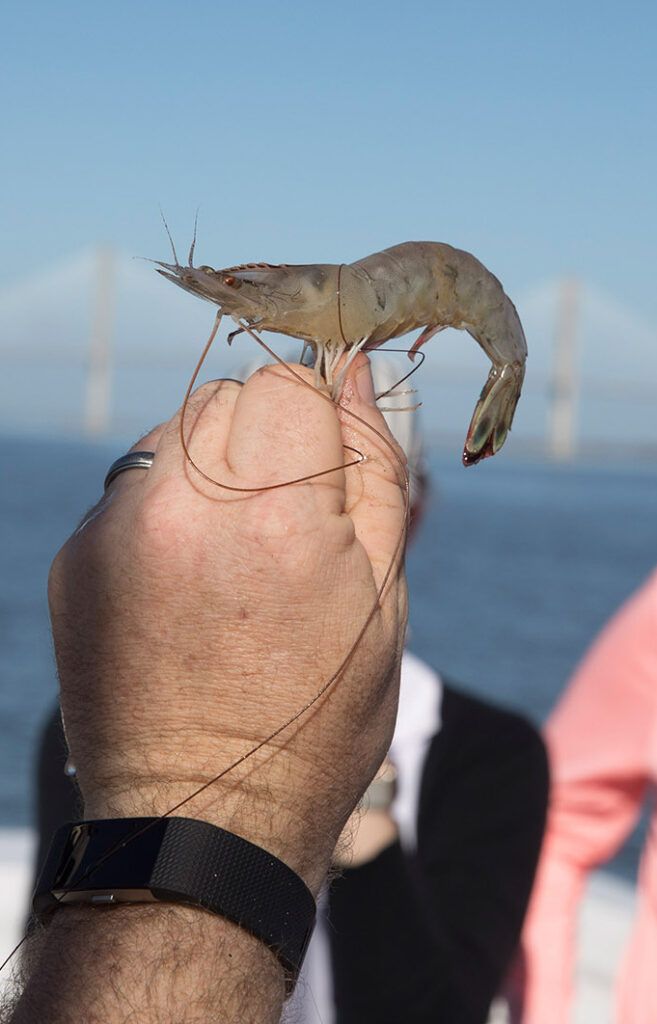
“We’re seeing if the rate of mortality increases with temperature,” she said. “In a warmer world, which parasitic diseases cause more mortality in fisheries, and what factors influence that relationship?”
Establishing a baseline for black gill and developing a process to analyze environmental impact can help researchers understand other disease trends.
“Our findings about what is driving patterns in disease prevalence is applicable in lots of different fishery systems as well as terrestrial systems,” she said.
Tomamichel successfully defended her dissertation on black gill disease in July. She credits her growth to strong mentorship and advisors at Odum, including Associate Dean for Research and Operations Jeb Byers and Associate Professor Richard Hall. Tomamichel, in turn, passes that mentorship along to undergraduate students.


She’s continuing research at the Virginia Institute of Marine Science as a postdoctoral researcher. Next up? She’ll apply what she learned at UGA as she studies another parasite infecting Virginia’s blue crab populations.
“This is what is so inspiring about ecology in general as well as fisheries ecology,” she said. “There’s so many human environments and animal community and population dynamics that all interplay, which I think is really cool.”
“Our findings about what is driving patterns in disease prevalence is applicable in lots of different fishery systems as well as terrestrial systems.”
Written by: Erica Techo
Photography by: Chamberlain Smith
Design by: Andrea Piazza
Illustrations by: Kaiya Plagenhoff
The post Under the Surface appeared first on Beyond the Arch.
]]>The post High-Impact Learning Experiences appeared first on Beyond the Arch.
]]>
High-Impact Learning Experiences
Creating extraordinary learning opportunities that inspire students to learn at a deeper level.
The University of Georgia prides itself on high-impact practices in the classroom and beyond. The opportunities range from first-year seminar experiences to undergraduate research, service learning projects to study away internships. Our Experiential Learning program provides customizable opportunities to every student.
The Center for Undergraduate Research (CURO), Washington Semester Program, Mobile Clinic, and entrepreneurship community Launch Pad are a few examples of the opportunities UGA students can choose.

Undergraduate Research Opportunities
Each year at the University of Georgia, around 600 students participate in undergraduate research through CURO. The Center for Undergraduate Research Opportunities helps students pursue their passions with research and experiential learning.
CURO, housed in the Jere W. Morehead Honors College, is open to all students, no matter their major, year, or research experience. Students continue their research for at least one semester, but many continue for over a year.
Each student has a faculty mentor who guides their research journey, and CURO students can apply for course credit and additional funding as needed. Funding can support development through conferences, and it helps students purchase needed tools and materials to further their research.
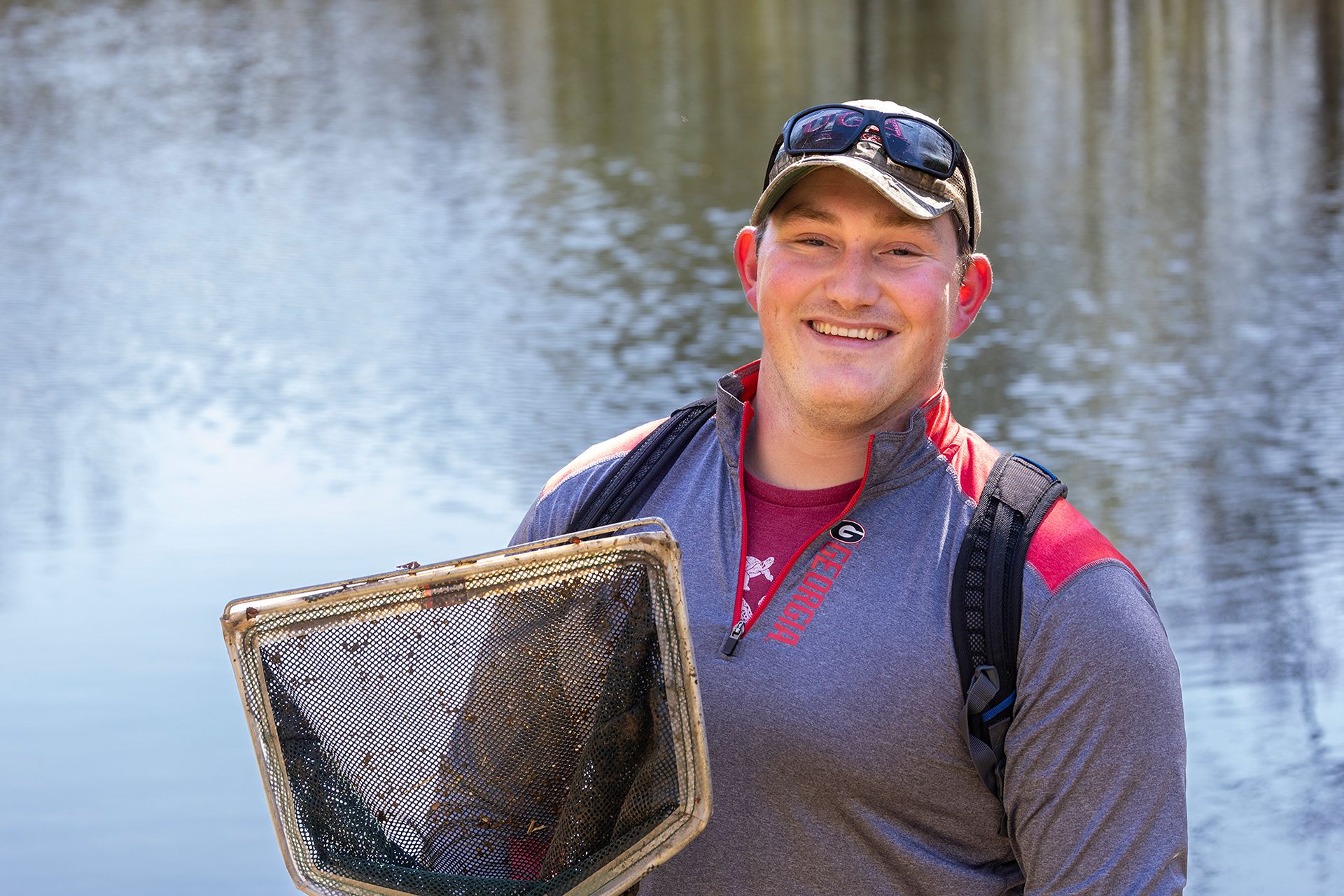
For Séamus O’Brien, a 2023 fisheries and wildlife graduate, CURO guided him to the next step in his education. O’Brien studied the common musk turtle, cataloging their population in and around Athens, analyzing physical differences between environments, and learning about the impact of their diet.
As a result of his experience, O’Brien was accepted into a graduate program at Jacksonville State University in Alabama. There, he will study the flattened musk turtle, a federally threatened species under the endangered species act.
“This wouldn’t be possible without CURO,” O’Brien said. “Doing this allowed me to meet the professor who will allow me to essentially pursue my dreams.”

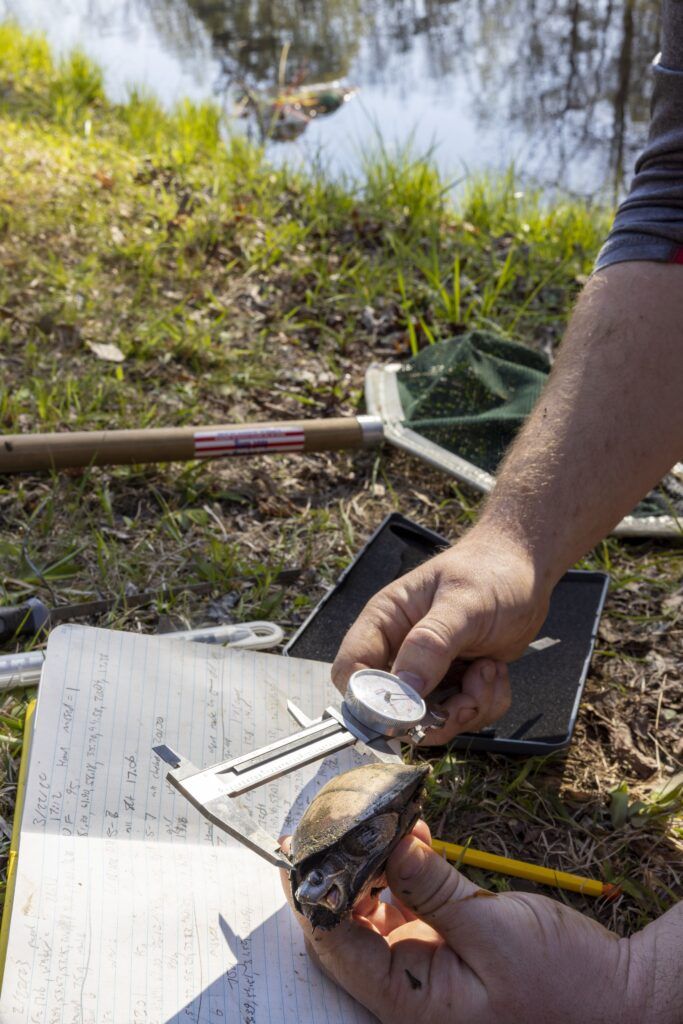


Living, Learning, and Working in Washington, D.C.
Students in the University of Georgia’s Washington Semester Program experience a high-impact internship opportunity in the comfort of a UGA residential facility. In the program, students choose a full-time internship at an organization and earn an entire semester’s worth of credit hours. UGA students have accrued professional work experience at federal agencies, congressional offices, think tanks, and law firms, to name a few.


While in Washington, D.C., students take classes that inspire them to reflect on how their internships connect to their coursework and future careers. The program also provides numerous opportunities to deepen their understanding of the city and to network. Tapping into UGA’s deep alumni base in Washington, the program connects students to working professionals in our nation’s capital.
One thing that makes UGA’s Washington experience exceptional is its home base at Delta Hall, located within walking distance of the U.S. Capitol. The three-story living-learning community houses 30 students, provides classroom space and hosts special guests and alumni.

Service Learning in Action
The Athens Free Mobile Clinic is an outreach program of the Augusta University/UGA Medical Partnership, housed on UGA’s Health Sciences Campus. The clinic provides low-cost medical services to communities that don’t have access to adequate health care. Medical Partnership students gain firsthand experience treating patients and learn directly from faculty mentors and medical professionals. From their first year, these future physicians and researchers are entrenched within their community and developing solutions for diverse challenges. They also volunteer on several external sites, from high schools to churches to outreach centers.
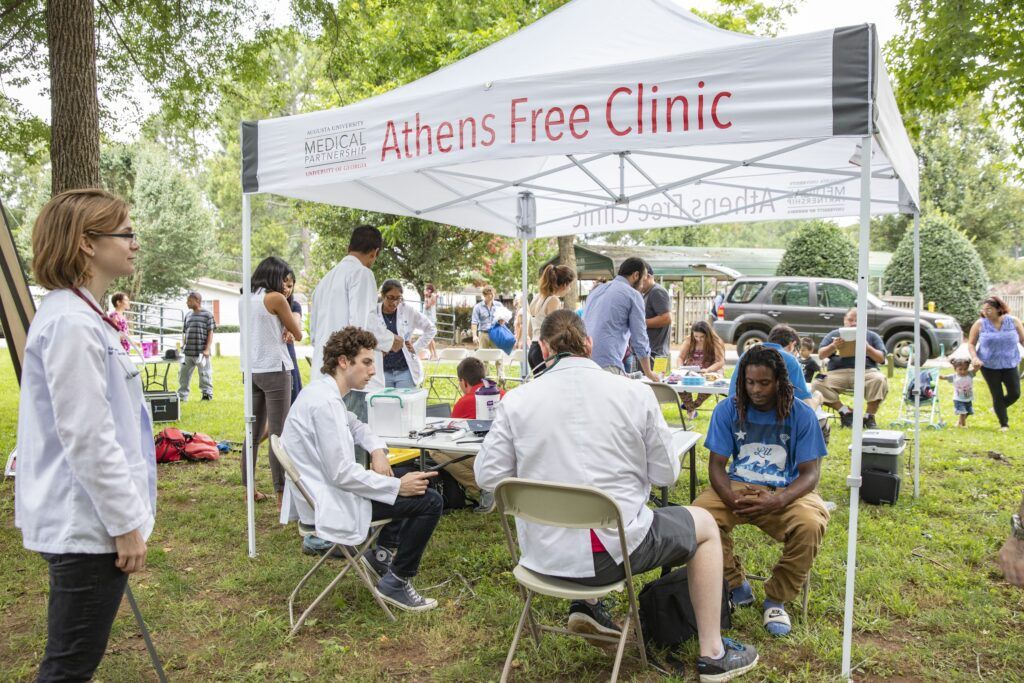

Shant Ohanian, a third-year medical student at UGA, views the opportunity to work with the Athens Free Clinic as a large part of his decision to pursue family medicine as a specialty.
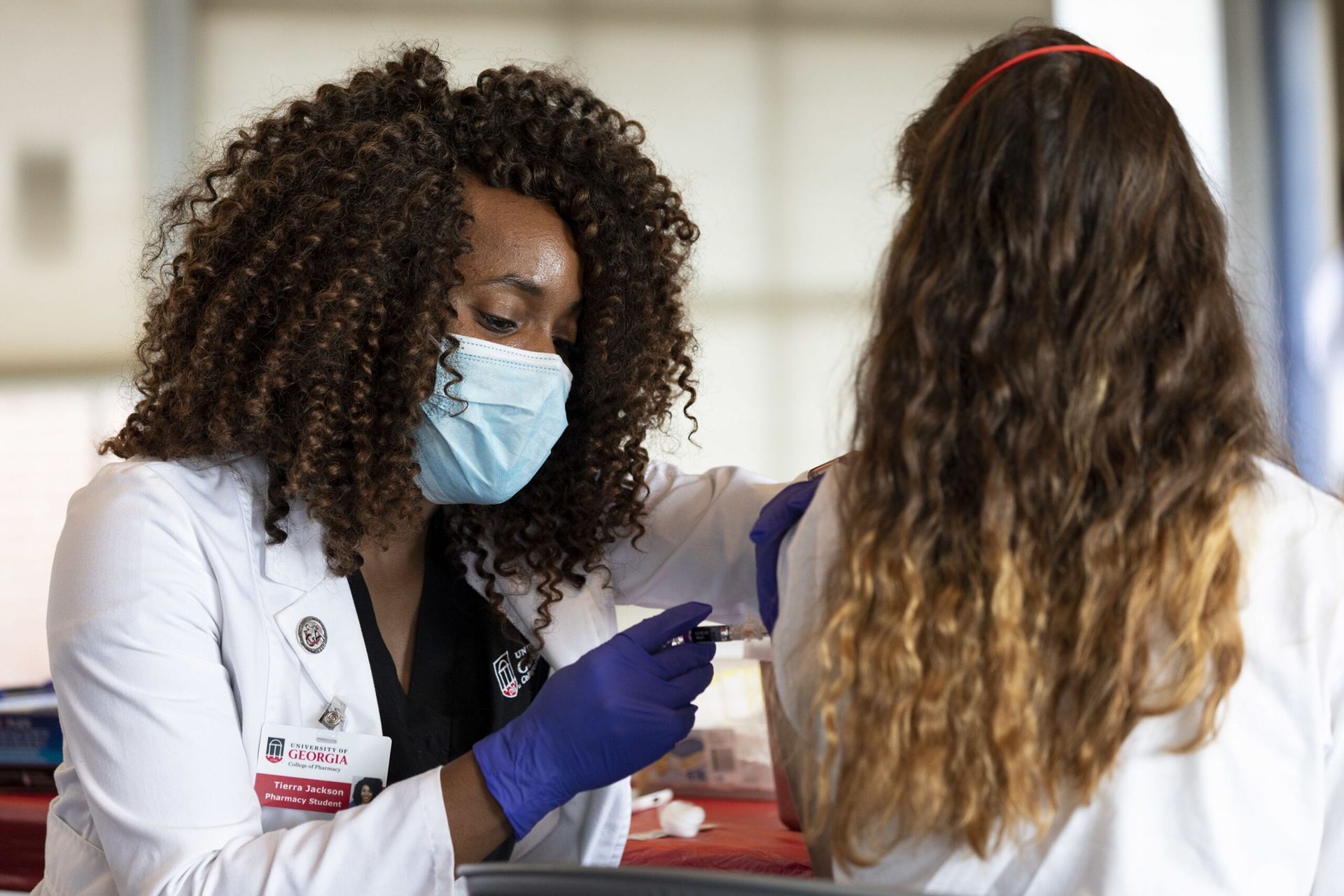
“For medical students like me, it’s a chance to be present in the community but also to learn and hone clinical skills,” he says. “There’s a huge need for community-oriented care in Athens, and I’m proud to have been a part of a service that tries to close those gaps.”
Between 2020 and 2022, the Athens Free Clinic administered over 4,000 COVID-19 vaccines and more than 3,500 medical and preventative tests. Since 2018, the clinic has been a valued part of the community, with over 2,100 patient visits.
Global Learning
The University of Georgia offers more than 190 study abroad programs, including two international centers in Oxford and Cortona, Italy.
The University of Georgia Cortona Program is UGA’s oldest study abroad program. Since 1970, students have taken advantage of the unique history, various exhibitions, and an active community of artists.
UGA is one of only a handful of American universities with a permanent presence in Oxford and the only public that runs year-round programming through it. The UGA at Oxford program offers students the opportunity to live in a UGA facility and learn at one of the most prestigious universities in the world. Students can learn from Oxford faculty through the tutorial method of undergraduate education, which has made Oxford famous.
Startup Starter
At the University of Georgia, students can embrace the entrepreneurial spirit from day one. And for some students, the opportunity can start in their freshman dorm.
Launch Pad is an entrepreneurial living/learning community for first-year students of any major. Housed in one of UGA’s residential halls, Launch Pad can accommodate up to 40 students per year. Residents gain early access to campus resources that support innovation, including:
- A designated maker space in the lobby of their residence hall
- Enrollment in the entrepreneurship-centered First-Year Odyssey Seminar
- Acceptance into UGA’s Entrepreneurship Certificate Program
- Internship opportunities
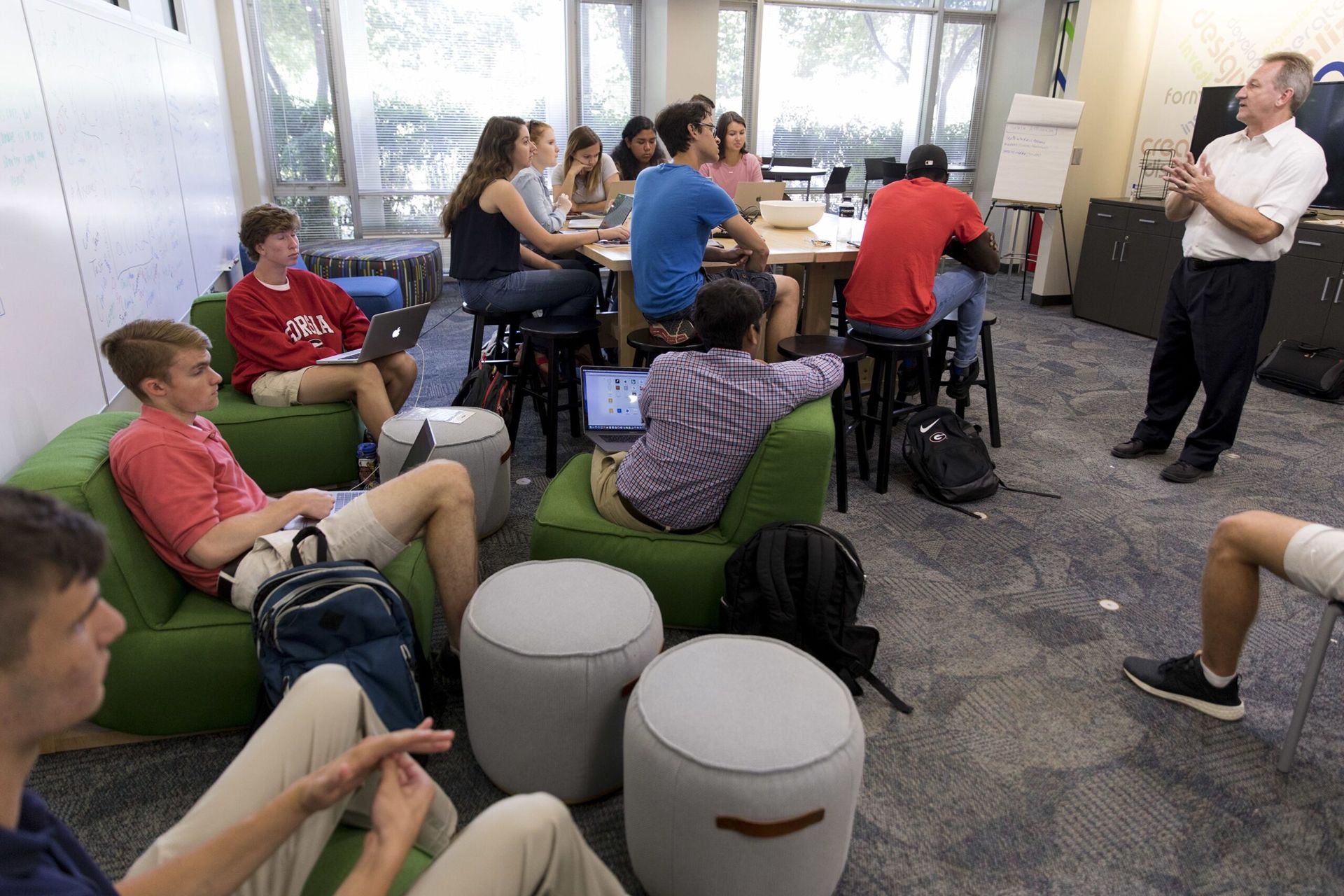
Throughout the academic year, Launch Pad students become mentees of the Terry College of Business faculty, network with experienced entrepreneurs, and develop valuable skills.
“Coming into college, I didn’t know what major I wanted to be or what I wanted to do after college,” said senior Hannah Chaffee, who participated in Launch Pad her freshman year and established her business, Blue Catalyst Designs, in 2020. “But Launch Pad taught me to follow my passions, and I trust myself to find a way no matter the circumstances. The entrepreneurship program really gave me what I felt like was a home at UGA.”
Written by: Erica Techo
Photography by: Peter Frey, Dorothy Kozlowski, Chamberlain Smith
Design by: Andrea Piazza
Videography by: Krista McKinney
The post High-Impact Learning Experiences appeared first on Beyond the Arch.
]]>The post The Collaborative Magic of Making a Musical appeared first on Beyond the Arch.
]]>
As a dramaturg, one of Sloan Elle Garner’s roles is to advocate for the playwright, even if that playwright has been dead for 400 years. “I believe every play was written to present the truth of the world as the playwright sees it,” she explained.
Garner, who is a Ph.D. student in the University of Georgia’s Theatre and Performance Studies, calls this the big “T” truth. She considers all of the artistic additions or changes made by directors, designers and actors to be little “t” truths that get layered on when a play is produced for a second, third or hundredth time.
“It’s key that we never lose the big ‘T’ because otherwise it’s a different play.” UGA established a home in a building called The Congressional, but it lacked the common area and modern classroom space to ensure students connected with each other and the learning experience.
Garner did the dramaturgy for the UGA Theatre Department’s production of “Little Shop of Horrors,” which opened on April 12. The original production of “Little Shop” premiered Off Off Broadway in 1982. Based on a 1960 black comedy movie of the same name, the musical theater version was written by Howard Ashman and Alan Menken. Despite many skeptics, the show was an almost instant success, selling out nightly before being moved to a bigger theater where the first run lasted five years. Since then, the musical has been produced numerous times and seen many iterations, including the 1986 film starring Steve Martin and Rick Moranis.
To keep Menken’s and Ashman’s original meaning intact, Garner worked with the director – Daniel B. Ellis – whenever he had questions about artistic choices. She performed extensive research then provided historical and cultural context for everyone involved in the production, including the students who create every UGA production from design concepts to the final curtain call.
Lighting, scenic and costume design
In a high-ceilinged workshop behind UGA’s Fine Arts Building, much of the initial creative work for any UGA production begins. Wood is being cut on long tables to create sets. Lighting design is being discussed. And on a small table in the technical director’s office sits a diorama for “Little Shop.” The intricately crafted miniature stage set was created by Cody Russell, who is earning his Master of Fine Arts in scenic design. Acting as head of scenic design for this production will serve as his senior thesis.
“I begin with initial draftings, and those become the blueprints to design the set,” he explained. “I also work on renderings (like the diorama) and paint elevations so I can show the director exactly what the set is supposed to look like and what colors we’re using.”
Russell was acting and set dressing at the Aurora Theater in Atlanta where he worked with Julie Ray, who is currently the head of UGA’s theatre department. She encouraged him to apply to UGA, and now he’s close to finishing his degree and reentering the theater industry with more experience.

Working as head lighting designer for the upcoming show will serve as Jeremy Weng’s senior thesis.
An Army veteran from Virginia, Weng has worked off and on as a theater tech since he was 13 years old. He explained that before he even approaches the design aspect of his job, he first reads the play at least three times. “The first time is to familiarize yourself with it. On the second read you’re looking for themes and key emotions. And the third time I’m looking for specific moments I want to highlight.”
As with every aspect of preproduction, Weng doesn’t work alone. He and Russell both have teams of other MFA students, at least one faculty member, and undergraduates who come to help out in the scene shop as part of their coursework. “It’s key that we never lose the big ‘T’ because otherwise it’s a different play.” UGA established a home in a building called The Congressional, but it lacked the common area and modern classroom space to ensure students connected with each other and the learning experience.

The show’s costume designer, Michael Romero, is wearing a handmade bolo tie decorated with a carved wooden head of Groucho Marx, a corduroy vest over his button-down shirt and a beret during a photo shoot for the play’s three lead actors.
“Can you tell I’m a costume designer,” he joked, adjusting his tie. He explained that his outfits show people he has not just eclectic style but attention to detail, adding that he often gets pulled over at theater conventions because of how he dresses.
Romero is in his final year as an MFA student in theater design and technology with an emphasis on costume design, and this project will count as his senior thesis. At this point in the production process, he’s completed all of the designs, research and drawings and now he and his team are deciding what they’ll still need to buy, pull (from UGA’s costume shop) or construct. The project will count as his senior thesis.
While he has a lot of theater experience – including designing a whole team’s worth of soccer uniforms for “The Wolves” last year, and stitching for Opera Theatre St. Louis – this is the first musical he’s designed costumes for. “There are bigger, flashier moments in musicals,” he explained. “And you need to think about what people can see from the back of the theater.”
His favorite part of any production is working with the actors and creating characters together. “I was getting Brie (the actor playing Audrey) into costume today, and when she put on her bangles, something clicked. The actor disappeared and the character appeared. It’s like a magic trick.”
Acting and directing
While much of the design is led by MFA students, the cast is led by undergraduates.
Brie Hayes, a fourth-year transfer student from Augusta, is playing Audrey. Alex Bass, a second-year student, plays Seymour. Costumed and waiting to have their photos taken, they fully inhabit their characters. “The theater program has exceeded my expectations,” Hayes said.
Fourth-year student Garrett McCord is playing the dentist, Orin. He started at UGA in pre-med, but after performing as Jack in an Athens’ Town and Gown production of “Into the Woods,” he decided to make a change and is now earning an A.B. in theatre with a musical theatre certificate. The thing he likes best about UGA’s program is the openness to new techniques. “Each professor is really good at meeting you where you are and giving you tools that you can use as an artist, rather than proscribing to a certain doctrine. They’re helping us build our own fortress, our own house.”


As assistant director, first-year student Abby McWethy is getting a lot of opportunities to hone her artistic skills during this production. When she heard the theater department was putting on “Little Shop,” she reached out to director Daniel Ellis asking to shadow him. Ellis is an Academic Professional in Opera and Theatre in the Franklin College of Arts and Sciences Hugh Hodgson School of Music. She sent him her resume, which included her stage management and assistant directing experience from high school plays and community theater. To her surprise, he asked her to be assistant director.
McWethy has known she wanted to direct since fifth grade when she played Young Belle in a community production of “A Christmas Carol.”
“I was like a little chihuahua. I followed the director around asking him questions like, ‘Why did that happen?’ and ‘How are you doing this?’ I didn’t know how to verbalize that I wanted to direct, but the most interesting part of theater to me was always putting all of the puzzle pieces together.”


By the time she arrived at UGA, McWethy had already been involved in about 30 plays in several different roles. For “Little Shop” she gets to work a bit with stage management, keeps a blocking book, takes notes during production meetings and does anything else that’s needed.
“It’s so cool getting to see theater on this high of a level,” she said. “I acted in ‘Silent Sky’ last semester and now I’m getting to see the other side of things.”
She’d like to double major in entertainment media studies so she can learn more about film. After that, she plans to attend graduate school for directing. “I’d love to possibly have my own theater one day. There is so much to explore here at UGA, and I want to make sure I take advantage of every opportunity.”
Written by: Heather Skyler
Photography by: Chamberlain Smith
Design by: Andrea Piazza
The post The Collaborative Magic of Making a Musical appeared first on Beyond the Arch.
]]>The post Catch and Release appeared first on Beyond the Arch.
]]>Catch and Release
Students get hands-on wildlife research experience at the Savannah River Site.
Deep in a South Carolina forest, just off the edge of a murky swamp, a 190-pound wild pig has found itself in a bind.
While eyeing what seemed like easy pickings, a pile of dried corn left unattended, the lone boar had rooted himself into a sophisticated net pig trap. He’s sealed in.
Escape proves futile. Over and over, the boar charges, tusk-first, into the flexible but resilient black netting that surrounds him. Each time, he harmlessly bounces off as if it were a sideways trampoline.Eventually, the boar sees a man quietly approaching. He wears a red Georgia Bulldogs baseball cap and carries what appears to be a high-powered rifle. The man, wildlife researcher James Beasley, is followed by more than a dozen others.
In case you’re worried, the boar will be fine.
The rifle isn’t armed with live ammo. Instead, it’s loaded with a syringe-dart carrying a dose of Telazol and Xylazine, a mixture of chemicals to anesthetize the pig.
That includes investigating wild pigs’ impact, movements, and reproductive ecology. While these animals have been in the U.S. for centuries, scientists still have a lot to learn about their ecology, and Beasley’s work is helping to fill in some of the blanks.
In some ways, this is the boar’s lucky day.
Invasive wild pigs are destroying natural environments and farmland across the Southeast, tearing up landscapes with their incessant rooting and eating just about anything that can’t run away. And in recent decades, they’ve spread rapidly.
These clever feral cousins of domestic pigs can be dangerous and tricky to capture. So, typically, when swine wander into a trap like this one—for example, on a farm where they’ve been destroying crops—they are routinely exterminated.
This trapped pig, on the other hand, will only be out a few vials of blood for scientific study.
The Best Ten Days of the Year
The mix of 14 undergraduate and graduate students traveled to Aiken, South Carolina, (about half an hour east of Augusta) in mid-May for Field and Molecular Techniques in Wildlife Research and Management, a course Beasley calls his “favorite 10 days of the year.”
“This is all about getting their hands dirty,” Beasley says. “We take many of the things they learned in the classroom and apply it in a field setting.”
Every day, the students tromp into the woods at the Savannah River Site to field test the skills and lessons they’ve learned in school.
UGA’s Savannah River Ecology Laboratory lies within the U.S. Department of Energy’s Savannah River Site, which is made up of a former nuclear production facility surrounded by about 310 square miles of forests, waterways, and wetlands. The place is teeming with diverse wildlife species.
While in the wilderness, students practice baiting and placing traps to capture various critters (raccoons, opossums, mice). After they catch an animal, Beasley sedates it and then coaches the students as they collect data from the chemically immobilized animal. This is called “processing.”
Students are as gentle handling these vulnerable creatures as they would be with their own pets. Often, they even nickname the animal as they take its temperature, weigh it, draw blood, get a tissue sample, remove any ticks for analysis, check its teeth for evidence of its age, and tag it (usually with a small piece of plastic on its ear).
For Natalie Heyward, a fisheries and wildlife major from Stone Mountain, handling the animals is the best part of the course. Coming in, Heyward was planning to get a veterinary medicine degree and work in a zoo. This trip was a chance to test out that goal and get up close with the animals.
“It’s not every day you get to hold a raccoon,” says Heyward, who has already worked with cats and dogs in a vet clinic. “Every animal is different. Raccoons are just interesting to work with. They’ve got cat anatomy and dog behavior.”
They’re also adorable when sleeping.
Heyward and several other students audibly fawn when Beasley tells them that one of the raccoons they’ve trapped is an expectant mother.
They nickname her Martha.
Humans and Wildlife
As the group approaches the trapped boar, it snorts and stares down Beasley, who quietly settles just outside the trap. The pig seems to consider charging but instead attempts another escape and bounces off the netting once again. Finally, the boar turns to face Beasley, defiantly glaring at him, practically daring his tormentor to enter the trap.
Instead, Beasley slowly raises his rifle and waits for an opportunity to get a shot at the thick muscle of the pig’s hind leg. The dart hits the target, the syringe injects its anesthesia, and eventually the pig settles in for a chemically induced nap.
Since joining UGA in 2012, Beasley has caught his share of these and other creatures, ranging from scavenging beetles and rat snakes to ring-necked ducks and Eurasian gray wolves. With every wild animal Beasley studies, he’s exploring the impact of human activities on wildlife populations.
“We live on the landscape and so do wildlife, and we have a profound impact on many of these species,” Beasley says. And wildlife can affect us too. Many new infectious diseases, for example, often originate in wildlife species before jumping into humans.
As we learn more about these impacts, Beasley says, we can mitigate the worst of them with management and conservation strategies.
While most of Beasley’s work focuses on the Savannah River Site, his work takes him all over the world. He’s been to the Chernobyl Exclusion Zone in Ukraine to explore how wolves and other carnivores appear to thrive—even in the presence of high radiation levels—now that they have no direct human interaction. In Japan, he’s helped monitor radiation near the site of the Fukushima nuclear disaster by putting GPS trackers on snakes and wild boar. And this fall, he’s headed with a multinational team to Namibia, where large predators are escaping through fences at national parks and then feasting on the local cattle.


Find the Right Path
Throughout the class, Beasley introduces the students to the work of other scientists at the Savannah River Site (a USDA Forest Service wildlife biologist who is fostering red-cockaded woodpecker nests and a UGA herpetologist surveying amphibians and reptiles in a wetland, to name a few). And he makes it a point to check in with each student one-on-one throughout the course so that he can talk with them about their individual career goals and interests.
As the students take in the 10 days of wildlife field research, they get a feel for their passion and their tolerance for a career that’s at times thrilling, uncomfortable, gross, and heartbreaking—but also deeply beautiful.
For Heyward, it was a lot to consider. Ultimately, she says, “This course kind of helped me to solidify that I am on the right path.”
Some pig!
Back at the swamp, the anesthetized boar has begun to snore.
It takes two students to drag the limp, nearly 200-pound pig out of the trap. Still, they are careful not to pull him over any of the nubby cypress knees protruding from the dark soil. As the students get to work on the boar, someone suggests the name Wilbur.
Careful to finish processing long before the boar wakes in a couple of hours, they work quickly. To keep his body temperature from rising too high, they place gallon-sized ice bags across Wilbur’s malodorous skin. And then, as if in a scene from a medical drama, the students crowd over the boar, passing out supplies and samples and announcing each data point for recording. After more than a week working on other animals, the students now seem like professionals.
When it’s time for Beasley to open Wilbur’s mouth to check his teeth, several students momentarily cringe in olfactory disgust.
“If you haven’t smelled pigs’ breath, you’ve got to try it,” quips Beasley. “It’s Yankee Candle’s next scent.”
But no one is squeamish for long. Ignoring the halitosis, the students come closer as Beasley estimates Wilbur’s age by his teeth, at least 3 years old.
After the processing is complete, Wilbur is dragged back into the trap to sleep off the anesthesia undisturbed. When he wakes up, he will be released, and he’ll venture back into the black swamp relatively unchanged except for an additional ear tag and a couple dozen fewer ticks.
The Savannah River Ecology Laboratory
Seventy years ago, UGA zoology professor Eugene Odum stood in midst of miles and miles of farmland near Aiken, South Carolina. The U.S. government had allocated the area to build a nuclear weapons production facility.
The Atomic Energy Commission charged Odum, now known as the “father of modern ecology,” with the task of conducting ecological surveys of plants and animals before the plant’s operations began. That research served as a baseline for comparative study to assess if the operations at the plant were altering the natural environment surrounding the facility.
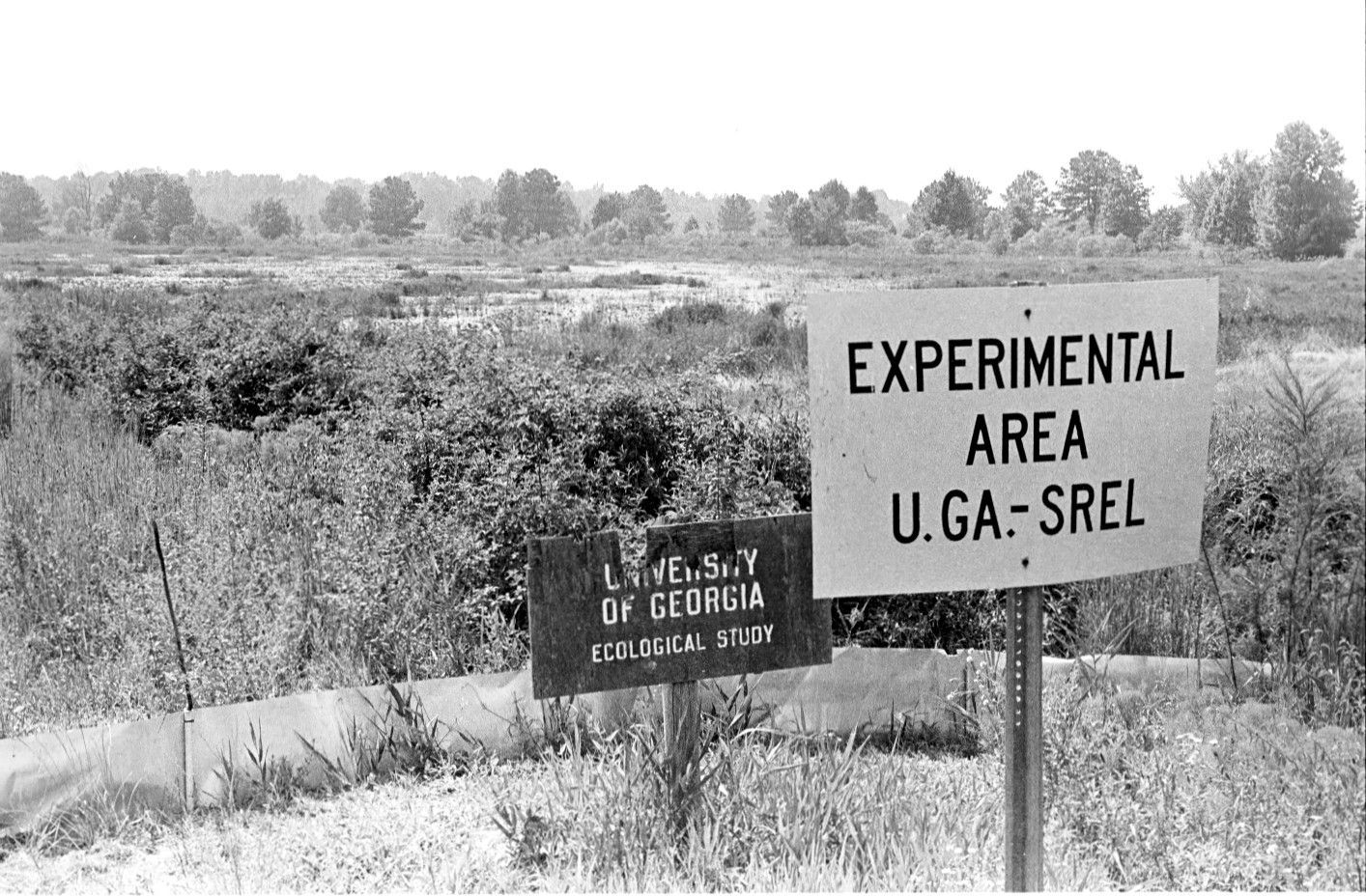

The project would eventually grow into the Savannah River Ecology Laboratory, which continues to conduct research at the Savannah River Site. The lab’s research now includes wildlife ecology, disease ecology, biogeochemistry, and forestry and conservation.
Over generations, the lab has also informed the public through public outreach and education. Nearby students can expect visits from UGA scientists, who talk about their work and even bring a few critters along for students to see and touch.
In 2020, UGA took on an expanded role with the Savannah River Site when it joined the Battelle Savannah River Alliance, a consortium of universities and private firms selected by the Department of Energy to manage one of the country’s premier environmental, energy, and national security research facilities—the Savannah River National Laboratory (SRNL).
Written by: Aaron Hale
Photography by: Dorothy Kozlowski, UGA Special Collections
Design by: Andrea Piazza
Videography by: Corey O’Quinn, Brett Szczepanski
The post Catch and Release appeared first on Beyond the Arch.
]]>The post Seal Ultrasounds, Fish MRIs and Exotic Animal Endoscopies appeared first on Beyond the Arch.
]]>Seal Ultrasounds, Fish MRIs and Exotic Animal Endoscopies
UGA’s zoological medicine program provides practical experience for residents.
Diego is a very well-behaved patient.
Waddles into the “office” on his own. Sits patiently as Dr. Jessica Comolli prepares the ultrasound machine.
When it’s time, he rolls into position, staying super still as Comolli slowly maneuvers the machine across his side and belly. Once the procedure ends, he hops right up and gets ready to head out.
He’s basically a perfect patient … except for the fishy smell.
Diego is a California sea lion. And he’s pumped for his ration of fish, a reward for being on his best behavior.
Comolli isn’t looking for anything specific this time. But practice runs in the behind-the-scenes holding area like this get the marine animals desensitized to the process. That way, if a medical crisis comes up in the future, it will be easier to get them the care they need.
“It lets them associate diagnostics with a positive experience,” said Comolli, the first graduate of the University of Georgia’s four-year zoological medicine residency program. Residents also earn a master’s degree in comparative biomedical sciences during the first two years of the program. “They’re getting their fish, and we’re getting our images of their gastrointestinal tract, liver, kidneys, or really any internal organs.” When she’s done, the sea lion hops back up at a cue from his trainer and bounces off to his enclosure.
Then it’s on to the next animal.
A veterinarian’s work is never done—particularly at the Georgia Aquarium, the largest aquarium in the world, housing thousands of aquatic animals.


Filling the zoological medicine veterinarian gap
Comolli always wanted to be a veterinarian.
“You can see in my first writings in kindergarten about what I wanted to be when I grew up that I was trying to spell veterinarian,” she said. “And I knew I wanted to work with everything—not just cats and dogs—from the very beginning.”
She took a bit of a “longer route” to vet school, becoming a licensed vet technician, the veterinary equivalence to a registered nurse, before earning her Doctor of Veterinary Medicine degree in 2016.
For her residency, there wasn’t much of a question where she wanted to go: UGA’s zoological medicine program.
There are fewer than 20 such programs in the U.S. that are certified by the American College of Zoological Medicine. Many of them focus on specific groups within the field, such as exotic pets or aquatic animals, and not all programs produce a specialist each year.
And the lack of qualified exotics experts in the veterinary world is a problem—a problem the University of Georgia wants to help solve.
“You would not be taken seriously if you said, ‘I’m going to be a dermatologist’ unless you did a residency in dermatology and were properly trained,” said Dr. Stephen Divers, director of UGA’s zoological residency program and a professor in the College of Veterinary Medicine. “And yet we still have a significant number of zoos and aquariums, which are specialty practices, that currently don’t have recognized specialists working for them. There are less than a dozen specialists being produced every year. That’s one reason why I think our program is critically important.”

Fish advanced imaging
The fish was huge.
That wasn’t the issue, though. The real problem was that the 29-pound koi had a spinal injury.
But in order to know how to help the aquatic animal, the veterinarians had to clearly see what they were dealing with.
“Imagine trying to do an MRI with water,” Comolli said. “We had to come up with a way to not destroy the machine. By doing that, we could actually look inside the fish without having to do anything invasive.”
Comolli was in her first year of the program, and this fish’s situation was a pickle.
Consulting with a variety of experts at the Veterinary Teaching Hospital, she and the rest of the team developed a technique that allowed veterinary staff to perform MRIs and other cross-sectional imaging on the fish, something that wasn’t previously commonly done.


A mutually beneficial partnership with Zoo Atlanta and Georgia Aquarium
Fish imaging was just one of many unusual animal procedures Comolli participated in during her first two years as a zoological medicine resident.
Residents spend those years practicing at the Veterinary Teaching Hospital under the supervision of Drs. Stephen Divers and Jörg Mayer. There, they treat a variety of reptiles, birds, mammals and even fish, and collaborate with experts in anesthesia, surgery, ophthalmology, cardiology and more.
In addition to seeing patients at the hospital, the residents head into the field to care for animals at Bear Hollow Zoo and Sandy Creek Nature Reserve. During their time at the teaching hospital, they also participate in research and earn their master’s degree.
But what really sets UGA’s zoological medicine residency apart comes during residents’ third and fourth years.
The residents spend their final two years in Atlanta, first at Zoo Atlanta and then the Georgia Aquarium. Most zoological medicine programs focus on one of the main areas of zoological medicine: exotic pets, zoo facilities or aquariums.
UGA gives residents a taste of each, something few programs offer worldwide.

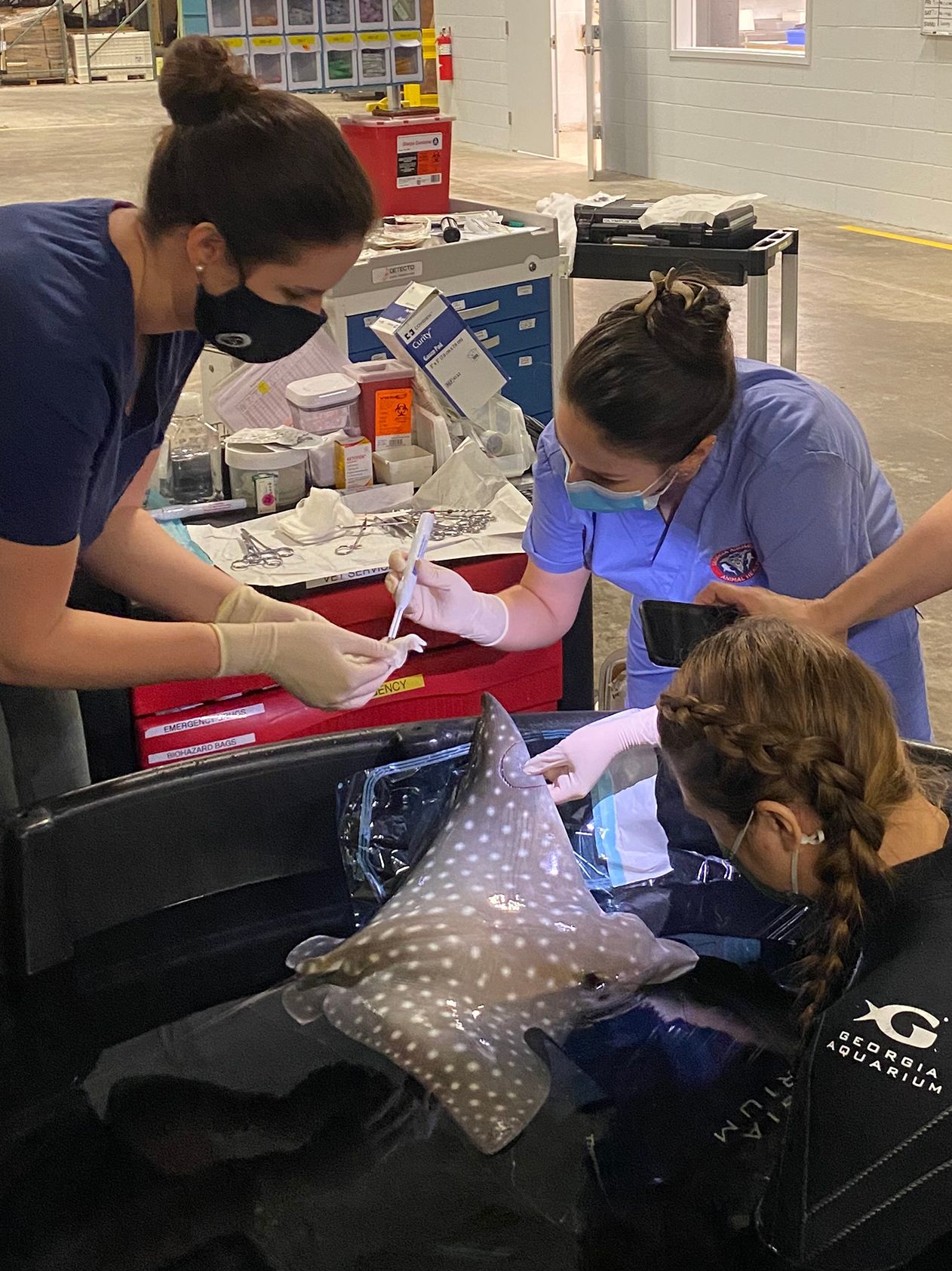
“This residency allows us to choose after the fact,” Comolli said. “We get to experience those different disciplines and then decide what our calling is.”
The partnership among Zoo Atlanta, the Georgia Aquarium and UGA is mutually beneficial.
“Zoo Atlanta is fortunate to be able to participate in the four-year residency training program in zoological animal medicine in partnership with the University of Georgia and Georgia Aquarium,” said Dr. Sam Rivera, senior director of animal health at the zoo. Rivera is also adjunct faculty at the College of Veterinary Medicine. “This high-caliber program provides exceptional, well-rounded training to veterinarians seeking a career in this field and is second to none.”
And the residents bring information about the latest new drugs, techniques and procedures to the facilities.
“Georgia Aquarium’s clinical veterinary residency program, in partnership with the University of Georgia and Zoo Atlanta, provides a unique hands-on learning experience with a wide range of taxa that enhances career opportunities for these talented young veterinarians,” said Dr. Tonya Clauss, vice president of animal and environmental health at Georgia Aquarium. “As leaders in aquatic animal care, we are proud to be a part of educating the next generation of animal health specialists.”
It also provides the facilities with a bank of zoological medicine specialists to call upon when they’re short-staffed or hiring.
Since completing the multidisciplinary program in 2021, Comolli has done relief work in a specialty referral practice and an aquarium, and will be starting at a zoo soon. “That’s not something every veterinarian that finishes one of these residencies can say they are comfortable doing,” she said.
Life after veterinary residency
When the harbor seals come galumphing down the runway to the exam area, Comolli lets out a small squeal of excitement.
“They’re just the sweetest, just perfect animals. They move like little grub worms,” she said affectionately. “I call them angels.”
They do look angelic with their big, round, expressive eyes and their beautiful long whiskers.
They let Comolli examine their flippers, feeling for any abnormalities. Then they bounce right back up the runway, full of fish treats the trainer and Comolli tossed them, and off to new adventures.


Comolli is off to new adventures as well.
She has been working in a specialty referral practice in south Florida, returned as a relief veterinarian for the Georgia Aquarium, and recently accepted a relief position at a renowned zoo.
She’s also working on a project with the Georgia Department of Natural Resources that she joined in her first year during residency, performing surgery on an endangered species of fish to enable scientists to track the fishes’ movements.
She utilizes a specialized operating table that keeps a water-anesthetic solution continuously flowing over the fish’s gills so that the fish can be maintained out of the water while she performs the surgeries.
In the meantime, Comolli’s spending what little free time she has studying for what’s arguably the most difficult specialty exam in the vet world: the American College of Zoological Medicine board certification. (Divers, Mayer and Rivera are diplomates of the college.)
The two-day test covers just about everything—aquatic animals, zoo animals, exotic pets, wildlife and more. The test is considered one of the most difficult to pass, but Comolli is striving to be as prepared as possible.
“We learn a lot of advanced techniques and internal medicine during our residency here,” Comolli said. “This is probably one of the top facilities to learn exotic endoscopy, which allows us to use a tiny camera to examine the entire body cavity of an animal. Coming here allowed me to get extra experience in that technique with inarguably one of the best endoscopists for exotic animals in the world.”
Written by: Leigh Hataway
Photography and videography courtesy of Georgia Aquarium, Zoo Atlanta, Christopher B. Herron, Stephen Divers
Design by: Andrea Piazza
The post Seal Ultrasounds, Fish MRIs and Exotic Animal Endoscopies appeared first on Beyond the Arch.
]]>The post Study Away at UGA appeared first on Beyond the Arch.
]]>These are a few of the amusing observations that students often report after a semester or year abroad. And while these cultural details have an impact, the entire experience of living in another country can deeply change a student’s perspective on the world.
Studying abroad during college is a unique and exciting experience, allowing students to immerse themselves in a new culture while continuing their education. You might imagine that spending a semester or a year living and taking classes in another country would delay graduation. It turns out the opposite is true.
A recent study from the University System of Georgia found education abroad had positive effects on graduation within four and six years and on cumulative GPA. It also revealed that students who study abroad earn slightly more credits, but it takes them less time to complete a degree.
The study compiled semester-by-semester records from 221,981 students across 35 U.S. institutions. Of those students, more than 30,000 had studied abroad.
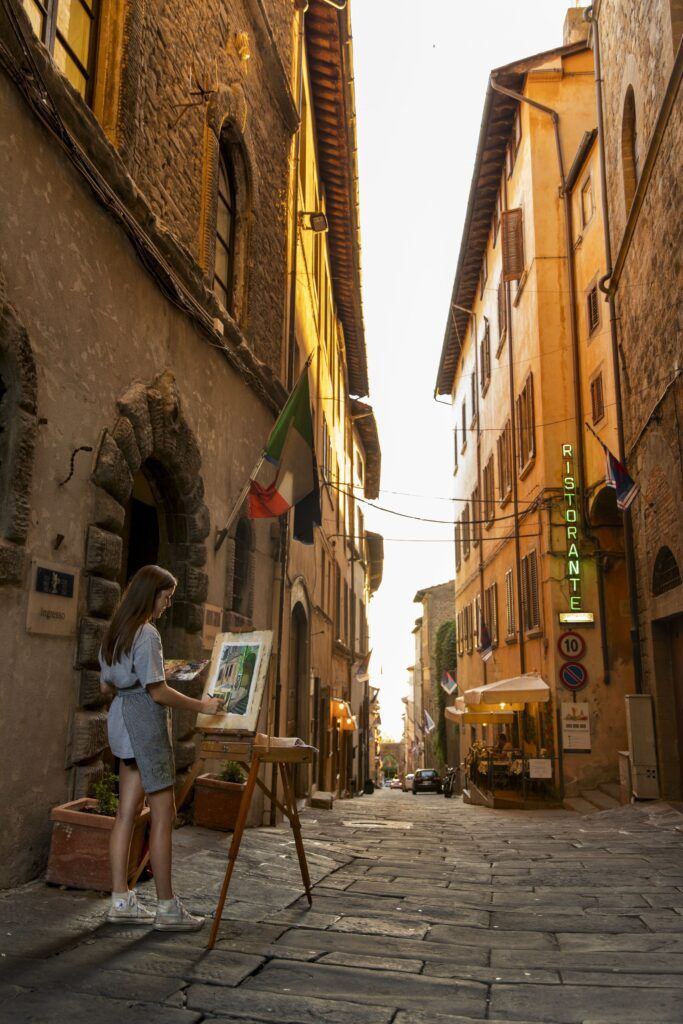
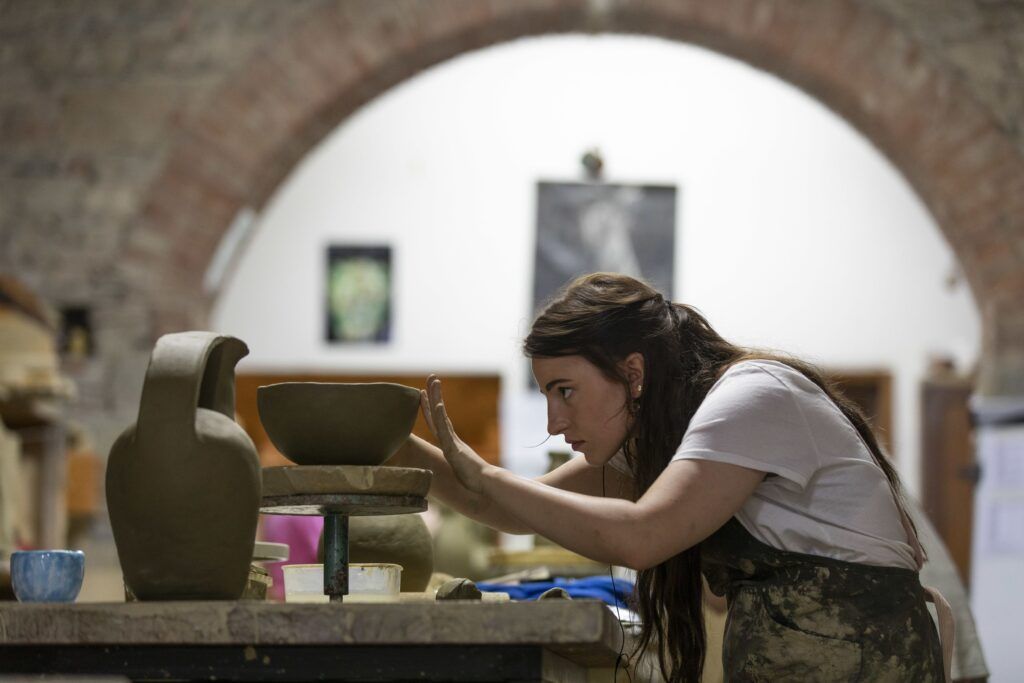
Study abroad opportunities
The University of Georgia offers a wide variety of global learning experiences, including faculty-led programs, student exchange programs, and independent experiences. The top 10 most-visited countries are the United Kingdom, Italy, Spain, France, Austria, Costa Rica, Australia, Germany, Greece and Portugal, but there are programs in 72 countries this year alone.
In 2019, a total of 3,706 students, participated in one of these programs. And the Office of Global Engagement expects these numbers to rise as we recover from the pandemic.
Additionally, UGA maintains two international centers, UGA at Oxford and UGA Cortona.
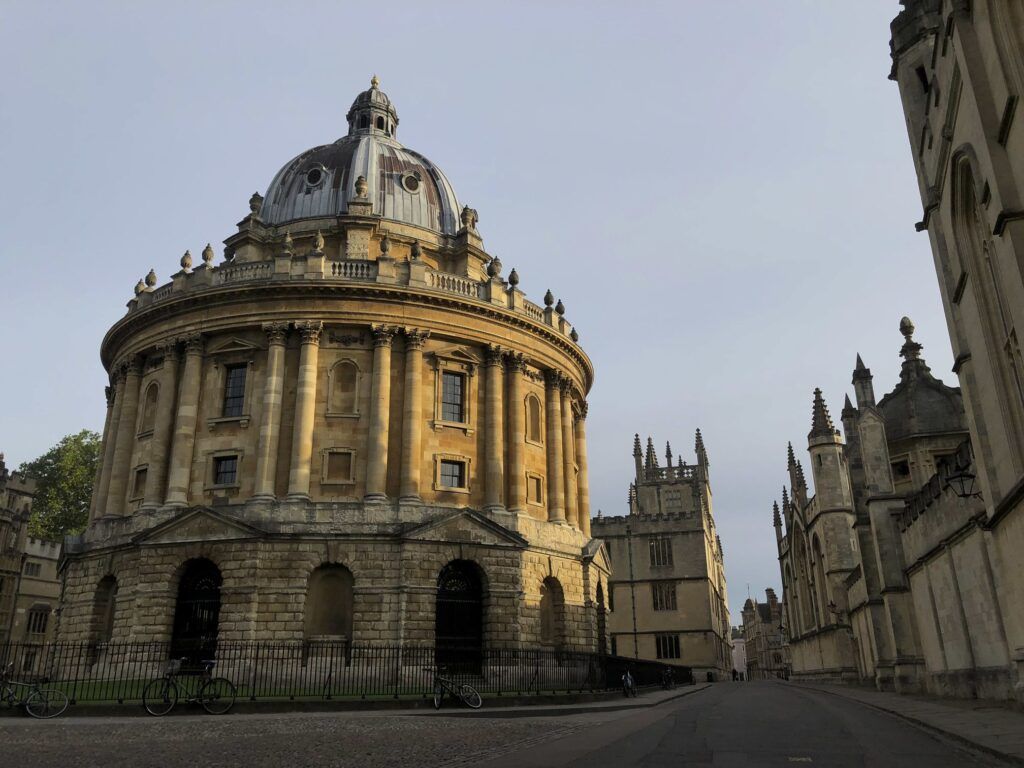
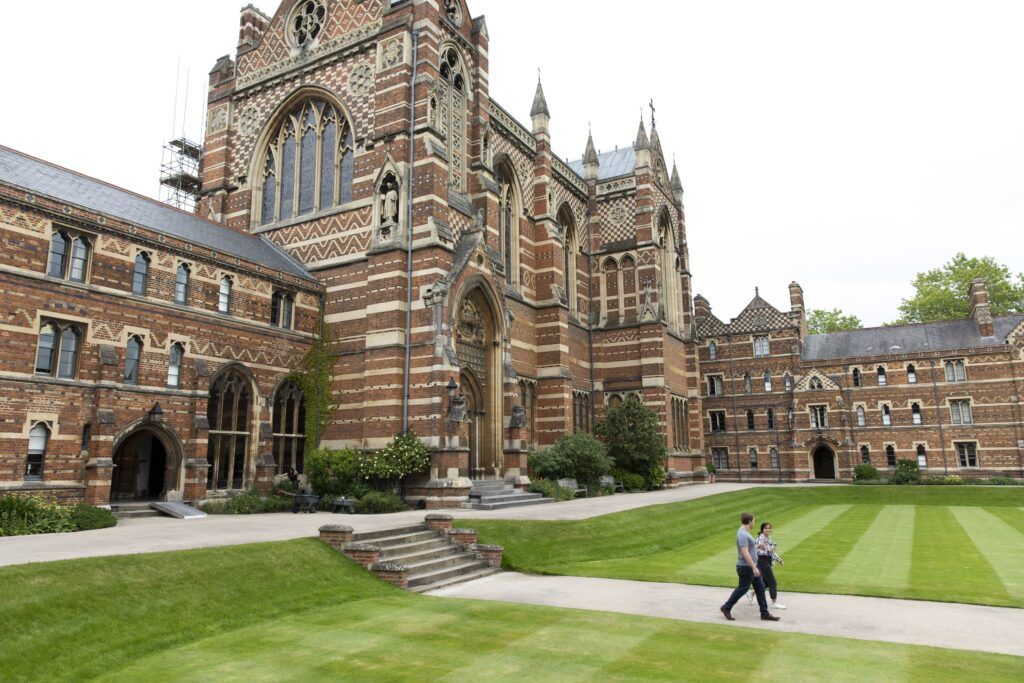
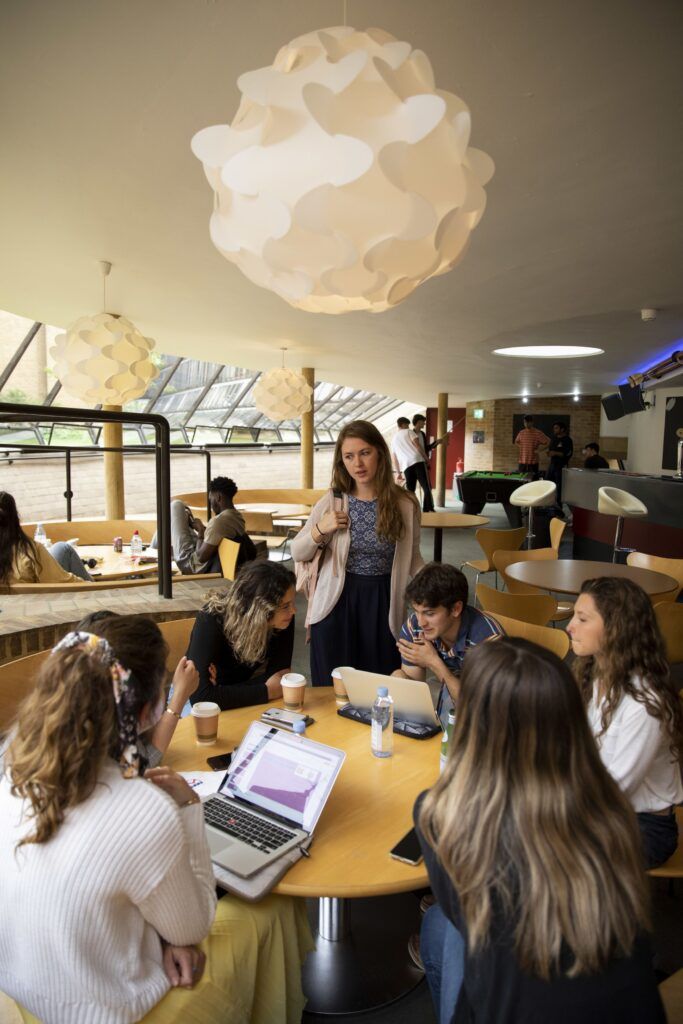
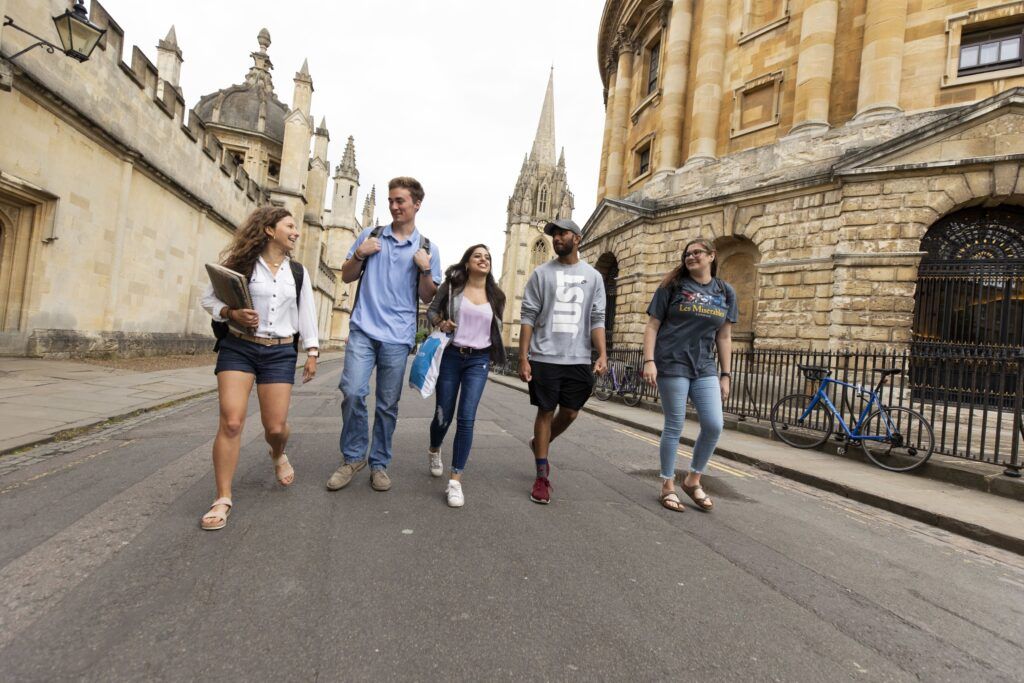
UGA at Oxford
UGA at Oxford has been in existence for over twenty-five years and offers courses in a wide range of disciplines. All courses in the program have the benefit of direct UGA credit, in-state tuition and use of financial aid. Students live in the UGA at Oxford Centre, which is housed in a 19th century Victorian mansion in north Oxford that has been renovated with modern amenities.
Oxford University uses tutorials, small group or individual meetings with an academic member of staff, rather than U.S.-style lectures. These weekly, one-on-one sessions encourage critical thinking on the student’s part as they directly engage with the professor on course-related issues, learning how to both construct and defend their arguments.
UGA Cortona
UGA Cortona is one of UGA’s oldest study abroad programs, having been in existence for over 50 years. Both the Cortona program and UGA Classics in Rome were founded in 1970. The campus, which consists of living quarters, classrooms and studios, sits on 4.5 acres of land above the small town of Cortona, Italy.
UGA Cortona offers courses in art and art history during the spring, summer and fall academic terms. Its Maymester programs are more specialized and include classes in Italian, business and culture, viticulture and enology, and theater.
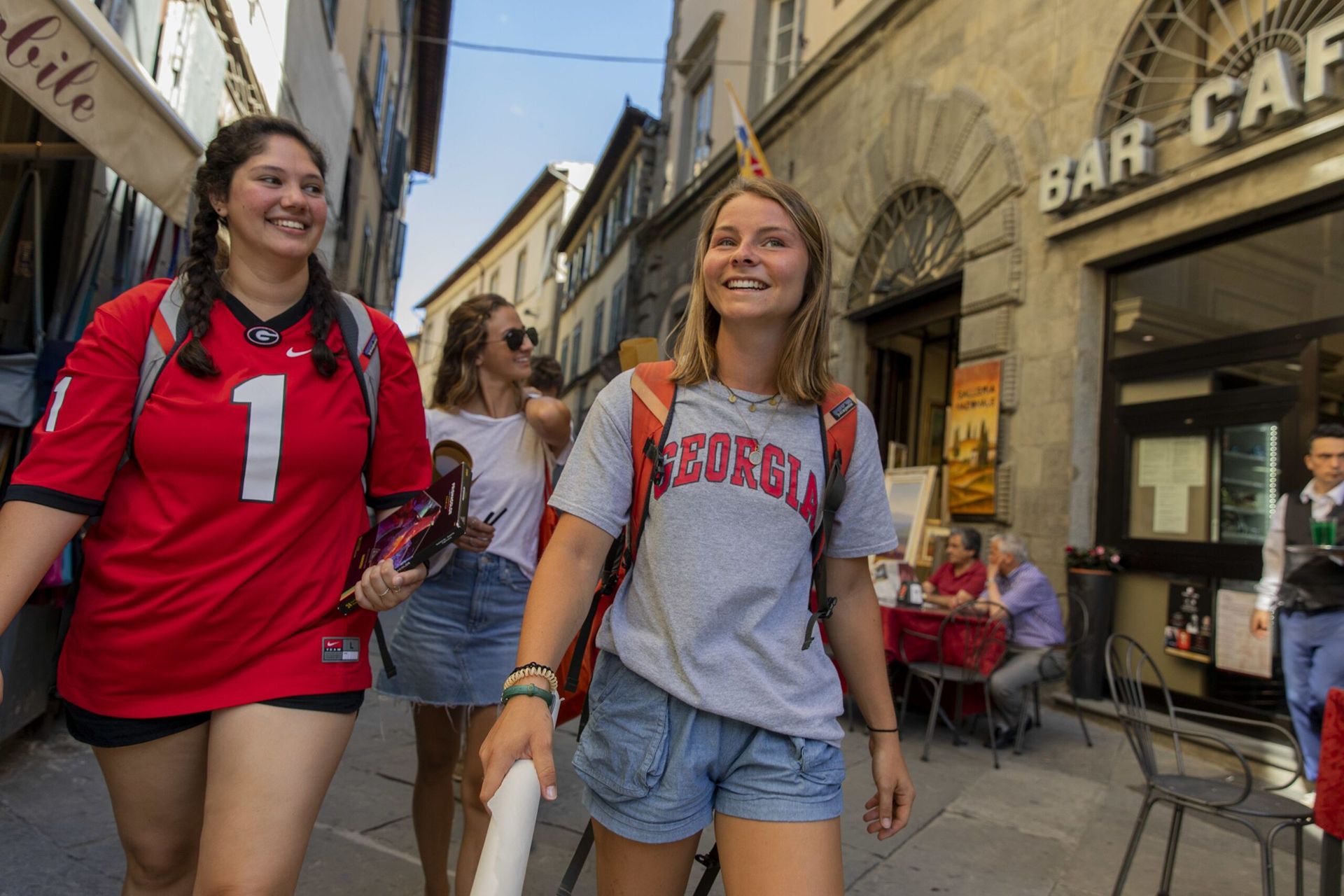
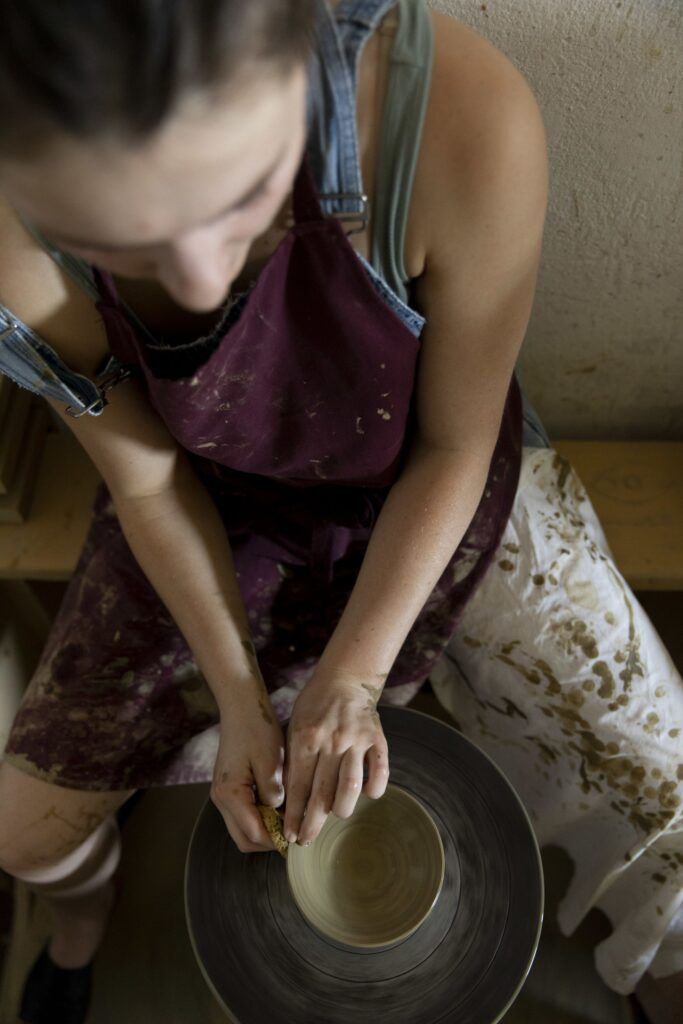
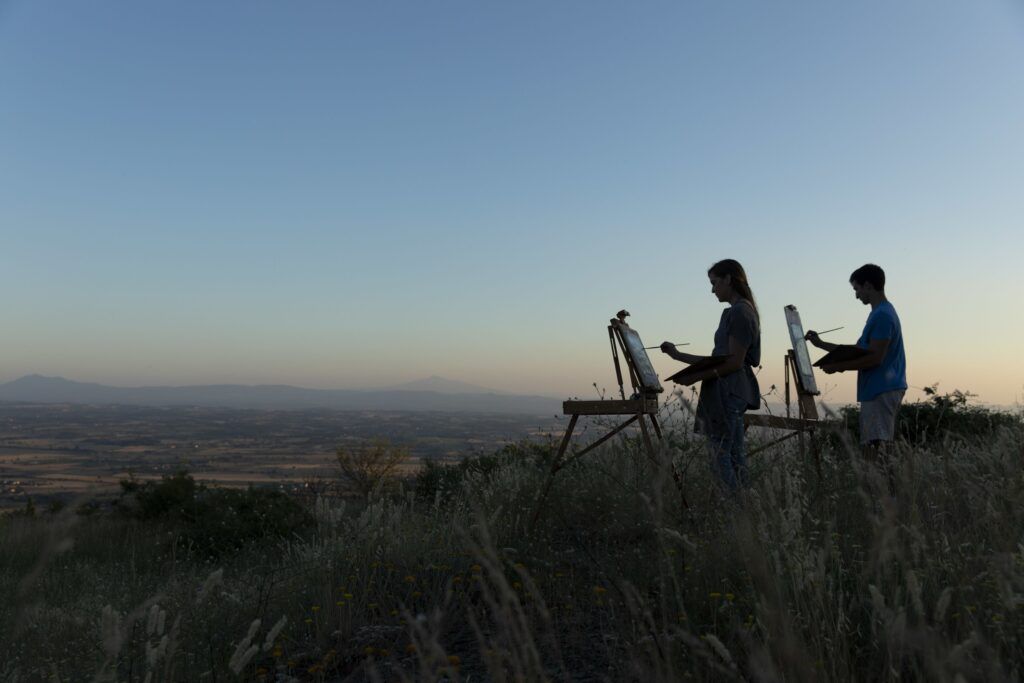


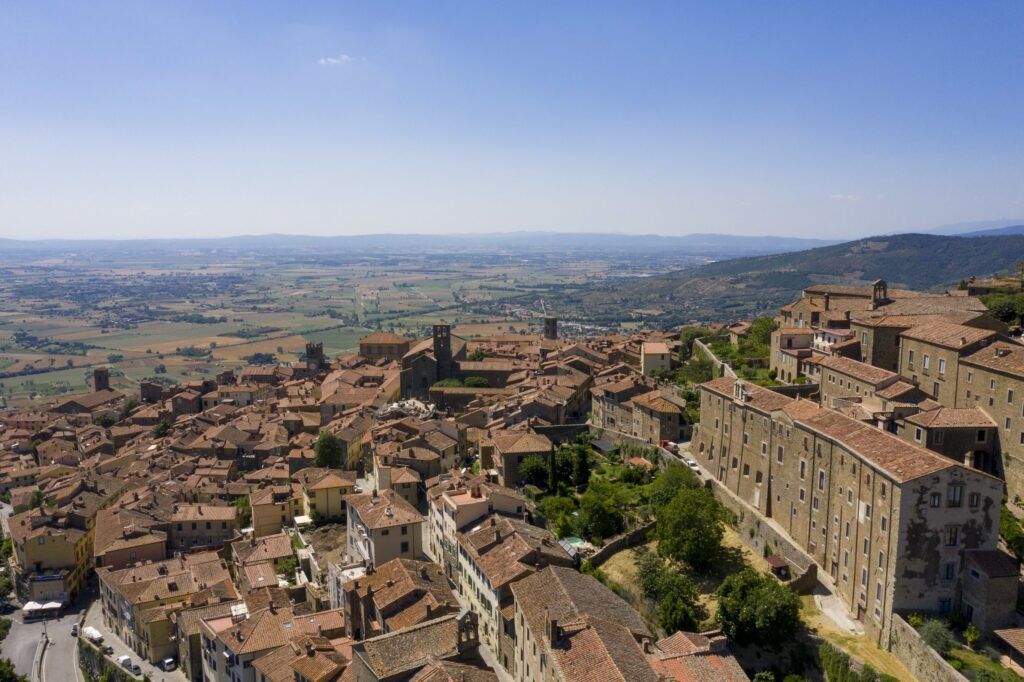
Learn more about studying abroad
With over 130 study abroad opportunities, the University of Georgia is one of the top public universities for international engagement and enrichment.
Questions regarding Study Abroad can be directed to [email protected]
Questions regarding UGA @Oxford can be directed to [email protected]
Questions regarding UGA Cortona can be directed to [email protected]
Written by: Aaron Hale
Photography by: Dorothy Kozlowski, Andrew Tucker
Design by: Andrea Piazza
Videography by: Nick Bragg
The post Study Away at UGA appeared first on Beyond the Arch.
]]>The post The Business of Music appeared first on Beyond the Arch.
]]>Jon Michael
Jon Michael McKinnon’s summer internship at Chase Park Transduction involves a lot of basic tasks such as doing dishes and sweeping the floor. “But I’m sweeping the floor around crazy, awesome equipment that I can nerd out about,” he said. “I’ve always loved music, and any time I’m doing anything related to it, I enjoy it, even sweeping the floors in this studio.”
In addition to basic tasks, McKinnon also sets up and takes down microphones and helps the engineers with anything they may need, but he learns the most by observing recording sessions. During breaks, he can ask questions about technique, and he said the things he learns range from how to wrap a cable so it doesn’t get torn up over time to why a particular mic is used for the drums during a session.
“I get to watch all of these people who know what they’re doing, in their workshop – in their sandbox – build and create incredible things. You get to see how their process works, and that really teaches you a lot.”
The music production studio is tucked away off Chase Street in Athens, Georgia, and can be difficult to find. But the artists who have recorded there include such well-known names as R.E.M, Vic Chesnutt, the Drive-By Truckers and hundreds more.
The studio is owned and operated by David Barbe, a prolific producer and musician and director of the University of Georgia’s Music Business Certificate Program. Housed in UGA’s Terry College of Business, the certificate program helps launch students quickly into both the local and national music scene with a variety of internships that give them an advantage by connecting them with experienced industry professionals.
“Sometimes when I ask why a producer made a specific choice, the answer is simply ‘I just had a feeling it would sound really cool,’” said McKinnon.




Hannah
“It’s cool how quickly I’ve gotten experience and how many people I’ve gotten to watch work, considering I’ve only been part of the program for less than a year. It’s such a quick launching pad—I’ve never been part of a program like that,” said Hannah Huling, who interned at Chase Park the previous semester. She grew up in a musical family, but she never thought music was a feasible career path until she discovered UGA’s Music Business Program.
Huling, who will graduate next year, first interned at the Georgia Theatre where she prepared the green room for artists, helped tour managers, fulfilled hospitality riders and any other requests from the artists performing that night. “Working face to face with artists I’ve admired in the past has really humanized them,” she said.
While she learned a lot during that internship, she found her true passion at Chase Park and now plans to go into production. “Production scratches the same itch that being an artist does but from an outsider position. You get to mess with tones and sound quality or the general vibe of a piece in such an intricate way that you can’t do in any other aspect of music,” said Huling, who plays bass and flute and also sings. “You really get in-depth control of how a song sounds.”
During her time at the studio, Huling admired the way the sound engineers really anticipated the needs of an artist. “Artists have visions that they might not know how to carry out, and producers can fill that space, especially if they’re good at listening,” said Huling. “It’s almost a bridge role.”

BROWN CAT, INC.
Albert
Albert Chen’s favorite assignment during his internship for Widespread Panic’s management company Brown Cat was conducting a strategic analysis of TikTok. “Right now, they don’t have a TikTok account, and their fan base tends to be older, so I was trying to figure out if it was worth creating one.”
He looked at bands with similar demographics such as Smashing Pumpkins, R.E.M. and Pearl Jam. Then he analyzed their success on the platform and translated that into a strategy that he presented to Widespread Panic’s management.
Chen, who is double majoring in finance and international affairs and earning minors in Chinese and viola, decided to add the Music Business certificate to his plate because music has always been a big part of his life and he wanted to incorporate it into his future degree.
“I’m classically trained in piano and viola but didn’t want to perform. I ended up taking a music production course during my sophomore year and met some interesting people.” One was the band Hotel Fiction’s guitarist, who suggested Chen do this program since he didn’t want to play in a band.
During his Brown Cat internship, Chen said he realized his finance degree was invaluable. “I can apply everything I learned in business to the music industry.”
In addition to creating his TikTok strategy, Chen’s done data analysis, organized and catalogued Widespread Panic’s videos and learned a lot about the day-to-day responsibilities of a business job in the music industry.
RCA RECORDS & FANMADE
Randi
When Randi Cass was 12, she created and ran a fan account on Twitter for her favorite musician at the time: Taylor Swift. At one point, the account had 5,000 followers. When Cass was in high school, she did a fundraiser after the Manchester bombing where Ariana Grande was performing. She and her friend created T-shirts with the One Love Manchester logo, sold over 500 of them and raised $7,000. “That was my first campaign for music,” said Cass, who said she had no idea at the time there was potential to actually work in the music industry in that capacity.
But now her internship at the startup Fanmade involves creating campaigns and experiences for super fans. And her second internship at RCA Records has her working on teams doing digital marketing for stars such as A$AP Rocky, Jack Antonoff of Bleachers (who also produces Taylor Swift’s music) and Rex Orange County, to name a few. “I was thrilled to work on those projects because I grew up loving these artists,” said Cass. When Cass arrived at UGA and took her first music business class, she was hooked. “I went to so many concerts when I was young, and I saw people working and wondered how you do that? That first college class brought back those memories.”

Cass played flute in middle school band but said she has “absolutely no music talent whatsoever and knew it was not a path (she) should be The Music Business Program turned out to be the perfect fit for her.
When Cass arrived at UGA and took her first music business class, she was hooked. “I went to so many concerts when I was young, and I saw people working and wondered how you do that? That first college class brought back those memories.”
Cass played flute in middle school band but said she has “absolutely no music talent whatsoever and knew it was not a path (she) should be taking.”
The Music Business Program turned out to be the perfect fit for her.
Written by: Heather Skyler
Photography by: Andrew Tucker, submitted
Design by: Andrea Piazza
Videography by: Brian Powers
The post The Business of Music appeared first on Beyond the Arch.
]]>The post An Oxford Education appeared first on Beyond the Arch.
]]>
Even for the jetlagged, the first look at city centre in Oxford, England, is an eye-opening and mouth-gaping experience.
Architecture spanning Saxon, Gothic, Neoclassical, and Victorian periods rises overhead. You’ll find chapels, towers, libraries, and halls built for the oldest of the University of Oxford’s 39 colleges. Each appears to compete for grandeur, a contest that inspired the Victorian poet Matthew Arnold to call Oxford the city of “dreaming spires.”
With a mixture of awe and exhaustion, a group of 17 University of Georgia students tour these streets on a warm June afternoon. It’s their first day in England after an 8-hour overnight flight from Atlanta. But their lively tour guide, Oxford townie Debbie Gerrans, is determined to hold their attention. She manages admirably, taking them on an hour’s jaunt to get familiar with their home for the coming weeks. The sites and stories certainly help. She shows them where J.R.R. Tolkien boarded as a student, C.S. Lewis went for a pint, and filmmakers shot parts of the Harry Potter series.
As the tour draws to a close, Gerrans offers a piece of advice. Noting all the skyward craftsmanship and artwork on building exteriors and vaulted dome ceilings that constantly surprise and delight, she tells them, “Don’t forget to look up.”
It’s good advice for any visitor to Oxford but perhaps especially for UGA students, who will spend much of their time with their heads down. With courses taught by a mixture of UGA and Oxford faculty, the academic workload here pushes and challenges even the most capable students. Those who embrace the challenge return stateside sharper and more confident.
Tutorials
With an empty armored helmet looking on, Katie Beard, a history and international studies major, finds a cushioned armchair in a charmingly cluttered office where books and medieval artifacts abound. Beside her, a sheathed knightly sword leans near an electric kettle. A window overlooks the vast Tom Quad at Christ Church College, founded by Henry VIII just before his death nearly 500 years ago. Beard, however, is focused on another time and another place.
A silver-haired medieval historian, Rowena E. Archer, takes a seat next to Beard for their tutorial to begin. It’s time for Beard to show what she knows.


Though UGA at Oxford offers several shorter summer programs, its signature offerings are 12-week semester-long programs in which students take one-on-one tutorial courses with Oxford faculty.
Tutorials are a style of instruction unique to Oxford and its sister university, Cambridge. They consist of weekly meetings with an esteemed faculty member and usually only one or two students. Students, not tutors, do all of the preparation. They show up ready to read aloud a 2,000-word essay or deliver an in-depth presentation based on assigned readings.
In this tutorial, Beard reads her essay about the medieval poet Christine de Pizan, known as the only professional woman writer of her time. And for the rest of the class, her tutor probes Beard’s ideas and arguments.
At this point late in the semester, Beard is ready to defend her positions and articulate what she’s learned. And when she doesn’t know an answer to a question, Beard doesn’t try to fake a response or offer an excuse; she asks for the answer or where she can find it for herself.
Tutorials are universally intimidating for students, at least until they get the hang of it. Students prepare every class to be put on the spot and must be ready for any mistakes to be pointed out. No excuses. No weeks off, or the tutors will know.
“They tend to be kind of brutally honest as a style of teaching to make sure you’re able to defend anything you say, and you don’t make any baseless claims,” says Nicholas Kreitz, a student in the 2022 spring semester program.
That’s enough motivation for students to work arduously and efficiently to make the most of the opportunity.
The Story of UGA at Oxford
Over the years, Oxford has hosted thousands of Georgia students. It all started with one UGA English professor in the 1980s.
Judy Shaw was a mid-career academic when she began to rethink how students could connect with literature. She reached out to the University of Oxford, which agreed to let Shaw bring 13 students over in the summer of 1989.
That summer program turned into a semester-long program as students began attending courses at the same time as Oxford students. Over the years, Shaw built an invaluable partnership with David Bradshaw, a fellow at Oxford’s Worcester College. Bradshaw recruited other Oxford faculty to participate in the program, helping to expand the range of disciplines available for study.
Eventually, the program opened to students of all UGA’s schools and colleges. University of Georgia students garnered a reputation among Oxford faculty for their enthusiasm and hard work.
Shaw went on to become UGA’s associate provost for international education before retiring in 2009. Her legacy remains in Oxford.
To this day, the University of Georgia provides a rare opportunity for students to engage with this prestigious university. While many other institutions bring their students to Oxford, UGA is one of only three American institutions—and the only public—to provide Oxford faculty-led tutorials. Stanford University and Williams College are the other two.
These days, Jamie McClung MA ’01, PhD ’09 runs the program. With dark eyebrows and a clean-shaven head, McClung has become a recognizable face around Oxford over the years. Whether he’s walking into a dining hall or down a street in the city centre, it’s likely that someone will recognize the mellow, gregarious Yank and strike up a conversation.
McClung first visited Oxford as an English literature grad student at UGA and fell in love. After completing his doctorate, McClung embarked on the traditional academic career path to become a professor when the program started looking for an associate director.


“I thought, ‘Heck, the job market is tough in English literature, and maybe I can have a bigger effect on an institution beyond teaching classes by helping develop programs,’” McClung says.
McClung does that and more. He’s a student recruiter, travel agent, relationship builder, tour guide, and fixer when issues inevitably arise.
When the pandemic hit in 2020, McClung ensured students made it home safely.
And then, things went silent.
The UGA at Oxford Centre sat nearly empty for almost a year and a half. Each semester, McClung and the program staff in Athens would prepare as if students would be able to come, but a spike in cases or the introduction of a new variant kept the program closed.
Finally in fall 2021, the program welcomed students again.
“It was really nice to have them back,” says McClung, who was so busy making contingency plans that he never stopped to consider how quiet the UGA Centre in Oxford had become. “It really hit all of us when we finally had a group of students back over again.”
Live, Work, Play
As Covid protocols slowly receded, students began to gain greater access to all Oxford offers, including its stunning study spaces.
When it’s time to research, read, and write, students can take their pick of favored spots to work.
Historic or modern, ornate or sterile, dead silent or chatty with the occasional screech of a café milk steamer, the University of Oxford offers more than 100 libraries to find materials and get work done. There’s even a website that points scholars to their ideal atmosphere and amenities.
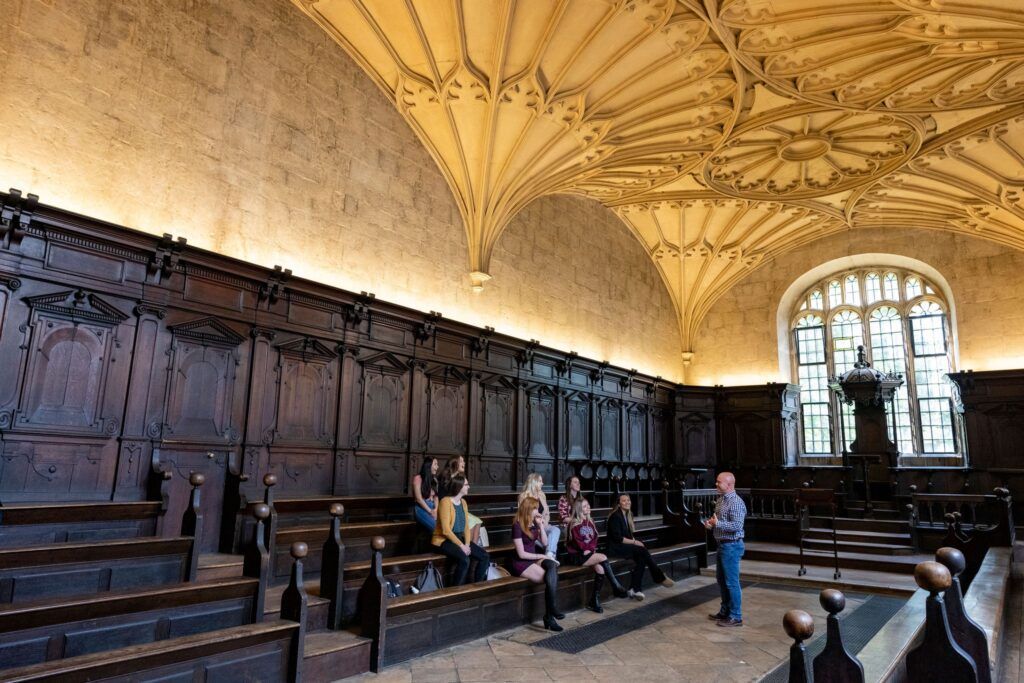


For spectacular ambiance, there’s the Bodleian Old Library, one of Europe’s oldest, or the Radcliffe Camera, a stunning circular-domed building with plenty of windows to let in natural light. Both libraries enforce a strict policy of silence.
Katie Beard usually skips the beauty and heads down to the Gladstone Link, a tunnel connecting the Bodleian and Radcliff Camera and houses history texts. Nicknamed “the Glink,” it’s basically a bunker for history buffs.
For a more relaxed setting, students have the UGA at Oxford Centre, where most also live during their stay. The 19th-century Victorian mansion has its own library, seminar room, computer facilities, living areas, and a lush garden, perfect for reading or writing on temperate days. The mansion houses up to 40 students and sits about a mile from city centre. The house makes UGA one of only a handful of American universities with a permanent presence in Oxford, and the only public that runs year-round programming through it.


When students are hungry, the house has two kitchens, but students also have access to the dining halls at Keble College or Trinity College. The food is good, though it doesn’t hold a candle to UGA’s dining halls. However, Keble Hall’s atmosphere is impressive in its own right, with long lamp-lit tables, raised ceilings, stained glass windows, and paintings of distinguished alumni.
Dining out is always an option too. Contrary to the stereotype, England has plenty to offer foodies beyond fish and chips and savory pies (although those are pretty good here too). Whether it’s traditional pub food at the White Horse Tavern, red curry at Chiang Mai Kitchen Thai restaurant, or some other variety of international cuisine, it’s easy to find a good meal around town.
And even with a hefty workload, students still make time to take in their surroundings and explore. The program offers a variety of excursions, from seeing a play in London’s West End to exploring Roman ruins and Jane Austen attractions in Bath or taking in incredible views at the Jurassic Coast. Some students even use a weekend here and there to catch a train to Paris or a flight to Barcelona, Prague, or Rome.
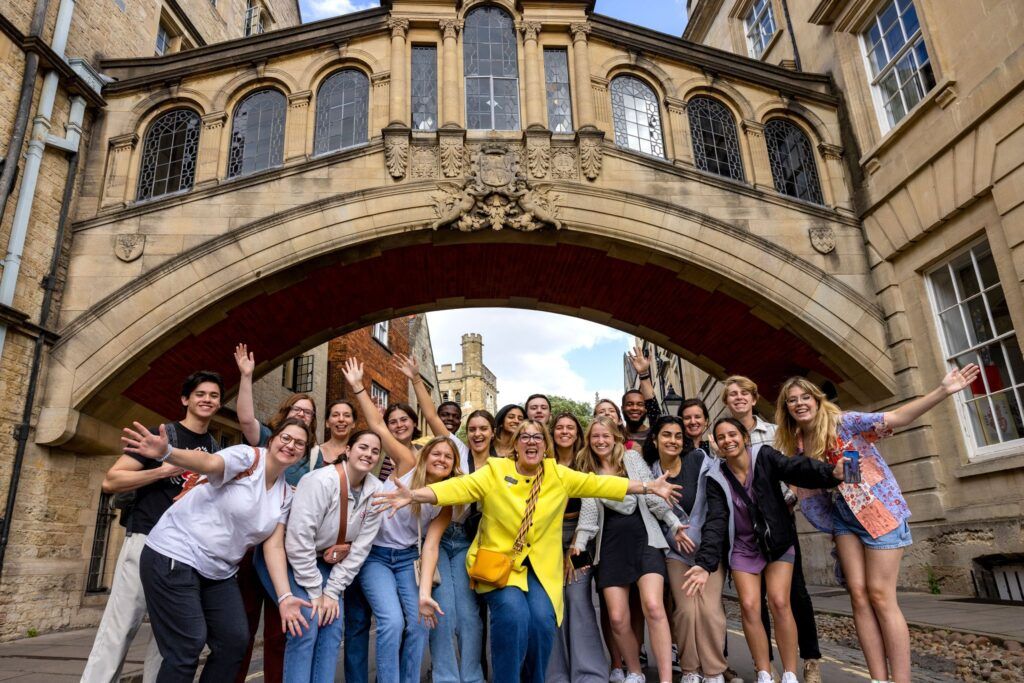
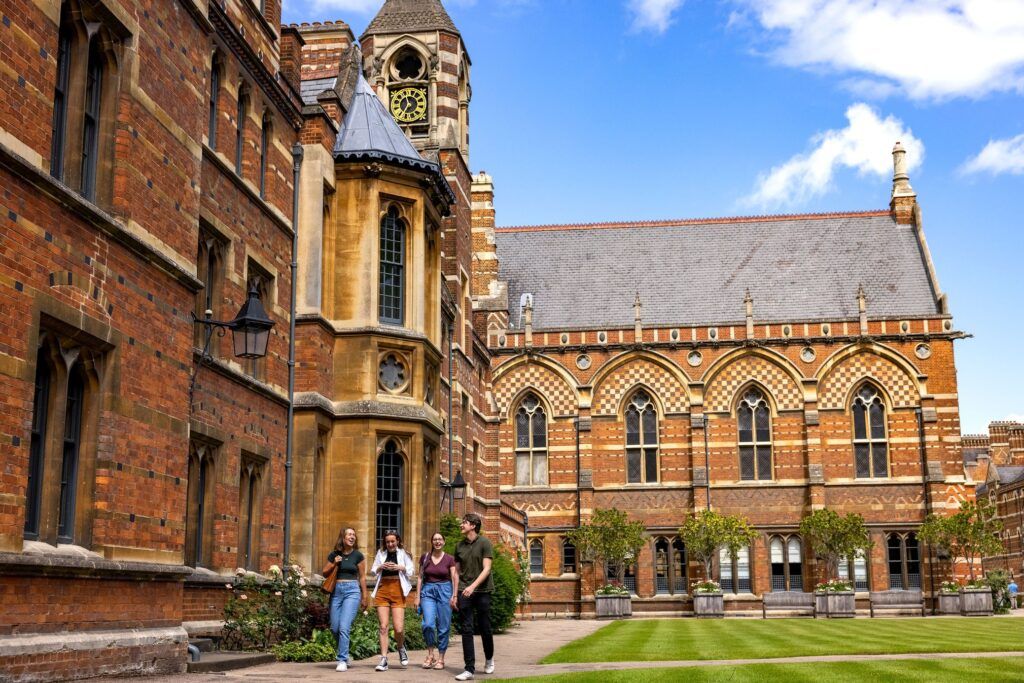
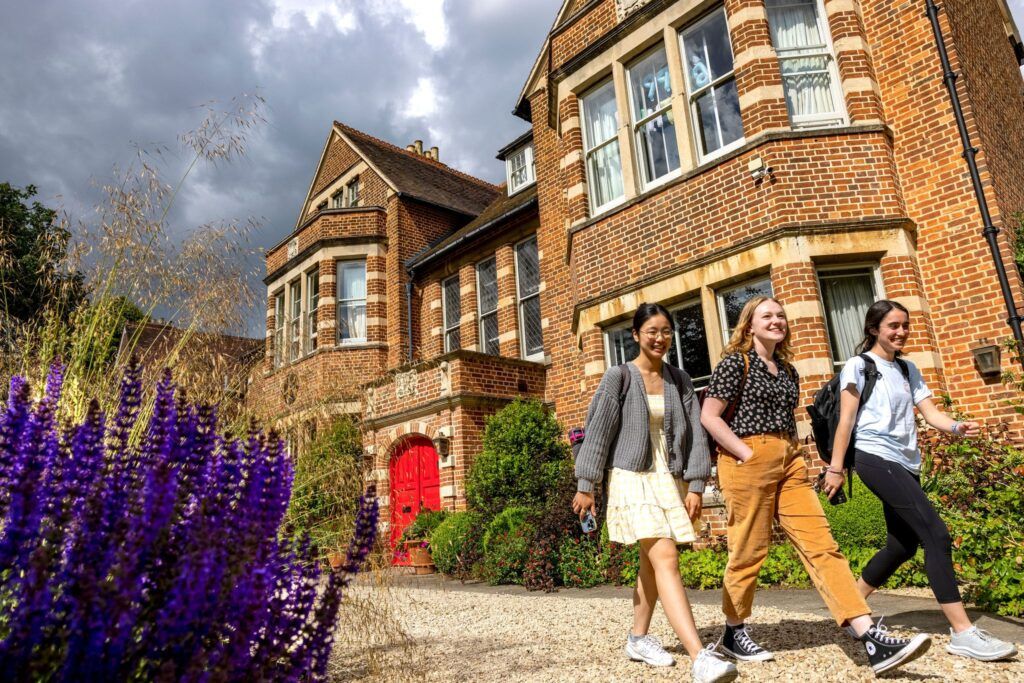
An Oxford Primer
Teaching in Oxford dates back as early as the 11th century, making it the oldest English-speaking university in the world. Some of its graduates and faculty (Sir Walter Raleigh, Thomas More, William Penn, and Adam Smith) left their mark on Western civilization. Some of the greatest English-language writers (John Donne, Jonathan Swift, Lewis Carroll, and J.R.R. Tolkien, to name a few) have studied and found inspiration here. And the university claims 55 Nobel Prize winners.
The University of Oxford has 39 colleges. Unlike the typical American university, these colleges don’t necessarily center around disciplines or subject matter (think Terry College of Business or the College of Pharmacy). Instead, they’re some combination of dormitory, Greek organization, and Hogwart’s house. Each college has a campus with a quad, a dining hall, a chapel, classroom space, and a library.
Oxford students apply for colleges based on academic honors, city location, dining hall quality, or social reputation. Magdalene (pronounced ‘Maudlen’) College is known for being “posh.” Merton College has a reputation for serious students; typically ranked as one of the best academically, it’s often called the college “where fun goes to die.” Keble College has a reputation for inclusiveness and friendliness, and it has an outstanding rugby team.
UGA has close ties with Trinity College and Keble College.

Breadth of program
The UGA at Oxford program is popular with English, history, and religion majors, who can study in a place where so much of their subject matter originated. But the program also welcomes students studying psychology, business, Spanish, biology, computer science, and more.
Semester program students learn in the tutorial format after a few weeks of getting to know Oxford and preparing for what’s coming. Every course, from medieval history and Romantic literature to math and cognitive science, requires students to go beyond surface familiarity with the material. They must put it in their own words, express their own opinions about it, and defend their stances. That’s tough if you’re learning for the first time about, let’s say, complex neurodegenerative brain diseases.
For some students, it’s an opportunity to think about their subject matter in a new light.

Nicholas Kreitz, a fourth-year data science major, has been acquiring the necessary skills at UGA to be successful in his field. In addition to his coursework, he’s interned with startups and companies through UGA’s Innovation District. He’s thinking about starting his own company someday.
In Oxford, Kreitz got a chance to step back and think about the bigger picture of his chosen field when he took a tutorial on computing ethics. The course explored technology’s impacts on society and developers’ responsibilities to avoid the worst of them.
“I would basically have an hour-long philosophical discussion,” Kreitz says. “And it was very difficult at first because, in data science, I’m very math based.”
Tutorials challenged him to exercise a different part of his brain, which complemented his UGA coursework. “I think studying abroad impacted my relationship with my studies, how I approach classes in general, like taking a lot more ownership.”
That mindset makes him more confident in becoming an entrepreneur.
“I think what’s special about the Oxford program is that it truly is a difficult program. And in the term ‘study abroad,’ they really put the emphasis on ‘studying’ abroad. But it’s really rewarding too; I feel this sense of honor to be able to study at the University of Oxford.”
– Nicholas Kreitz, fourth-year data science major
Finding Inspiration
For Eliza White, tutorials, and the whole Oxford experience, were just the kind of learning experience she needed.
Before her study abroad experience, White, a cognitive science and psychology major, was in a rut.
The pandemic hit near the end of her first year of college, while she was finishing some of her early requirements in large seminar classes. As she dealt with online courses and increased social isolation, White found it more and more challenging to connect with the material, her classmates, and even faculty. She knew she needed something to jumpstart her passion for science.

White is bright and charming, but she can be hard on herself and sometimes struggles to communicate what she knows.
“I knew I was a horrible writer,” she says. “And the content you produce (in tutorials) has to be clear.”
At Oxford, White put herself on the spot. She had to produce. She had to work through issues she perceived as weaknesses.
“There’s no place to hide when your tutorial is one-on-one,” she says. “That’s what I wanted. I needed individual attention.”
The experience was never easy. At times, she says, she struggled to keep up with the rigorous demands of her Oxford coursework. But her tutors adjusted just enough for her to catch up.
White dove into other opportunities too.
To meet Oxford students, she signed up for a couple of clubs: one caving club that sent her spelunking in caves around England. White was putting herself in tight spots, daring herself to move forward.
She pushed herself well beyond her comfort zone, and she doesn’t regret a thing.
“It’s probably going to help me for the rest of my life,” she says. “And I think I probably will venture out to other places because this was very eye opening about what the world has to offer and how much I was missing out.”
The UGA at Oxford Centre runs year-round and is open to every major.
- The 12-week semester programs offered in the fall and spring give students the complete Oxford experience. In the first four weeks, students take two seminars with UGA and Oxford faculty and then two eight-week tutorials with Oxford faculty.
- The Oxford and Cortona partnership allows students to get a taste of England and UGA’s campus in Italy.
- UGA’s first-year Foundation Fellows get to enjoy Maymester in Oxford.
- The shortest program is a two-and-a-half week Junemester program, where students take courses and explore England with UGA and Oxford faculty.
- A six-week summer program for students is offered through the Franklin College of Arts and Sciences, the Grady College of Journalism and Mass Communication, and the Terry College of Business.
All programs feature UGA course credit and UGA tuition, meaning Zell Miller, HOPE, and other scholarships still apply to help offset costs.

Commit to providing world-class study abroad opportunities for students in England through scholarship support. Learn about support options at oxford.uga.edu/funding.
Written by: Aaron Hale
Photography by: Dorothy Kozlowski, Andrew Tucker
Design by: Andrea Piazza
Videography by: Nick Bragg
The post An Oxford Education appeared first on Beyond the Arch.
]]>The post Hot Wheels appeared first on Beyond the Arch.
]]>They sit in small clusters around computers and schematics, joking and talking quietly—most likely about cars—as they wait for the meeting to begin.
Soon, fifth-year engineering student Alex Reyes steps to the podium and calls the meeting to order. He is director of the Formula Society of Automotive Engineers team at UGA Motorsports. And he is leading the team that’s building a formula car to race in the spring.
The Society of Automotive Engineers, or SAE, is a U. S.-based, globally active association for engineering professionals in various industries. The organization hosts Collegiate Design Series competitions for university students to conceive, design, fabricate, develop, and race a variety of vehicles. These UGA students are just beginning the design portion of a Formula SAE car. In May 2023, they will compete with the finished vehicle at the Michigan International Speedway, about an hour from Detroit.
Reyes is back in the U.S. after spending a year abroad in Germany studying at the Karlsruhe Institute of Technology as part of UGA’s dual degree in engineering and German, a five-year program resulting in two bachelor’s degrees. Students spend four weeks in intensive language instruction at the Goethe Institut in Bonn and then complete a semester at Karlsruhe, one of Germany’s top-ranked technical universities.
The Society of Automotive Engineers, or SAE, is a U. S.-based, globally active association for engineering professionals in various industries. The organization hosts Collegiate Design Series competitions for university students to conceive, design, fabricate, develop, and race a variety of vehicles. These UGA students are just beginning the design portion of a Formula SAE car. In May 2023, they will compete with the finished vehicle at the Michigan International Speedway, about an hour from Detroit.
Reyes is back in the U.S. after spending a year abroad in Germany studying at the Karlsruhe Institute of Technology as part of UGA’s dual degree in engineering and German, a five-year program resulting in two bachelor’s degrees. Students spend four weeks in intensive language instruction at the Goethe Institut in Bonn and then complete a semester at Karlsruhe, one of Germany’s top-ranked technical universities.
But he’s excited to be back in Athens, finishing up his degree and working on building this year’s SAE formula car for competition. One of the reasons he decided to attend UGA was the opportunity to be an integral part of the Motorsports Team, even as a new student.
“There’s a more personal approach here, and I’m able to develop a more personal relationship with the professors,” says Reyes.
Student organization picks up speed
UGA Motorsports was founded in 2014 by a group of students who loved cars. Sam Hepburn BSME ’17, who now works for the electric vehicle manufacturer Rivian, reached out to associate professor John Mativo, and they officially formed the Society of Automotive Engineers at UGA. They spent the next four years building the student-driven club.
UGA Motorsports has two official divisions: Formula SAE and Endurance Racing. The Formula team builds a small-scale Formula One race car to compete internationally. The endurance team takes preexisting cars and turns them into vehicles that have the durability to race in the ChampCar Endurance series. In an endurance race, teams of multiple drivers cover a large distance in a single event.
The Formula SAE team got a breakthrough in 2018 when students received the necessary support from Don Leo, dean of the College of Engineering, to design and build their first Formula SAE vehicle. In one year, they built a car and competed in a race in Lincoln, Nebraska.
Two new divisions have been added to the club in recent years: a Baja SAE team and an SAE Electric Vehicle team.
Designs for a Baja SAE vehicle began in Fall 2020. Baja cars, which look similar to dune buggies, are off-road vehicles that can withstand rough terrain. During the 2021-2022 school year, Matthew Colquitt BSME ’22, who now works for Cessna, led the team to finish the initial designs and assemble parts for the Baja SAE car. The team was able to build the frame of the Baja car before Colquitt’s graduation in May.
Other students are now completing the project and they plan to race the car sometime in 2023.
Colquitt says communication was among the most difficult parts of being a team lead. “It was a challenge leading engineers because they aren’t as communicative as a group of journalism students,” he laughs. “But I think one of the best things about UGA engineers is that they have that skill of talking to people. I know a lot of people in this industry who sometimes prefer a Georgia engineer over another school because they have those communication skills.”
A Formula SAE Electric Vehicle team, which was started in 2021-2022, built a successful powertrain. If all goes well, the Formula EV should be ready to ride in 2025.
You don’t have to be an engineering student to be a part of UGA Motorsports, though many of its members are. All are welcome, even students who have never touched an engine before.
“Prior experience and your major don’t really matter,” says Maisi Corbin, this year’s UGA Motorsports club president. “We want to see what your personality is like and how committed you are to being part of a team.”
Corbin says the club has about 70 members this year, and the commitment is significant at five to six hours a week—more when they are getting close to a competition. “This is really like having another class,” she says. In fact, in 2019, the UGA Motorsports club was recognized as an approved experiential learning program, enabling students to fulfill their experiential learning graduation requirement at UGA.
Gaining valuable career experience
That time commitment frequently pays off with career opportunities. Corbin says she has applied for a few internships that require you to be on an SAE team. “Companies really want you to have SAE experience.”
Reyes echoes that sentiment, saying he only got an interview for the internship at Schaeffler Group because of his experience. “Ninety percent of what I did in that internship, I learned from this club,” he says.
Right now, the SAE Formula team is designing the frame and suspension of the 2023 Formula SAE car. “That takes a long time to manufacture, so it has to be done first. If we all finished at the same time, it wouldn’t work. We have to stagger our deadlines,” Reyes explains.
Phase two involves manufacturing all the controls, such as the steering wheel, seat, and shifting. During phase three, students work on the headers, intake, and final drive. “We use motorcycle engines for this,” says Reyes. “But we make our own transmission, which is the biggest part of this phase.”
They hope to begin testing the finished vehicle in late January. They will race in May at Michigan.
Once it’s all finished, Reyes will have a pretty good start on a resume for his dream job: a trackside engineer for a Formula One team.
Written by Heather Skyler
The Racing Life
Hayden Swank uses business skills to push boundaries on the racetrack

Easley, SC – Friday, 4:23 p.m.
While other students are getting ready to go out or studying for finals, Hayden Swank only has one thing on his mind as he watches his competitors circle the track at Greenville-Pickens Speedway. His best lap time is 0.3 seconds behind the leader. No matter what his team does, they can’t manage to close that last gap.
Between brainstorming sessions in the trailer and running out to make last-minute changes, Swank is intensely focused on his car.
The skill to navigate a racetrack at top speed is one that Swank has been working on since he was a small child. Members of his race crew say that he has been a sound driver since the age of 7, when he first started racing in quarter-midget cars on local tracks.
As the tires wear down and the light fades, the team calls it quits for the day. After all, they spent all day Wednesday following the exact same motions to dial in every point of contact between the car, the track, and Swank.

Saturday, 7:16 p.m.
Swank dons his fireproof suit in the trailer as the previous race runs its last laps. His race should start at 7:30, but an old transformer blows on the back half of the track, killing the lights. This means a later start for Swank and more time for strategy.
Swank has spent his entire life preparing for the wave of the start flag. His opponents now are big names with big money backing them—racers like Josh Berry and Chad McCumbee.
“It’s like, man, I asked him for an auto-graph when I was 12 and came to watch these races,” Swank says. “And we haven’t looked out of place against them. But for me, this isn’t the end goal.”
Swank’s ultimate target is to race in the NASCAR Cup Series, a goal that his team says Swank is always working toward.
While it is tough for Swank to compete against teams with seemingly endless financial backing, this isn’t the only hurdle that Swank has had to overcome in his racing career.
“Nine times out of 10, I’m going to be the only Black driver—not only in my division but in the whole competition,” Swank says. “It’s not uncommon for me to walk into a track and not only be the only mixed driver or the only Black driver, but the only person of color on the premises.”
Swank says that this division puts extra pressure on him as a driver.“I feel like I have an extra responsibility and extra obligation to represent, you know what I mean? I want to put on a good show and prove that I have a place in the sport, and I want to prove to everybody else that anybody can make it.”
Despite the differences and setbacks, Swank remains unfazed as he pulls off a 13th place finish at his third race of the season and on this tour. While not on the podium, this is no small feat considering his starting position amongst 26 other drivers, including several with more years behind the wheel than Swank has been alive.

Athens, GA – Monday, 8:47 a.m.
Swank is back in Athens, and his focus shifts to college life.
Double-majoring in advertising through the Grady College of Journalism and Mass Communication and marketing through the Terry College of Business, Swank is in his third year at the University of Georgia.
Going to school while managing a racing career is a challenge, but it’s one he’s up to.
“I think being one of the very few drivers pursuing a degree that’s very relevant to what we do on a day-to-day basis does give me an edge,” Swank says. “I take a lot of what I learn in my advertising and marketing classes and apply that to the racing industry, like the pitches I make when I have to approach a company for the funds to keep the team alive and actually go racing.”
So far, he has used his business savvy to acquire sponsorships for this racing season from the General Motors Bring Us Your Talent Initiative, Chevrolet Performance, AC Delco, Overtime, and Epic Insurance.
But he also likes to keep those two worlds separate.
“I try not to talk about racing too much or let people know that I race because once I do, I guarantee you that’s all I will talk about with them,” Swank says. “I want to have a life outside of racing, and school’s the best way to do that.
“But I do get a certain sense of fulfillment when I can get somebody interested in racing that would have had no exposure to racing otherwise. I’ve gotten my roommates to the point where they can carry on a conversation about racing. And I’m like, ‘OK, I did my job here.’”
Written by Cole Sosebee BSA ’19
Pit Boss
Mallorie Muller takes the fast track from Athens to the Indy 500.

In IndyCar racing, successful pit stops can mean the difference between the winner’s circle and the back of the pack.
Multiple times in every race, pit crews change all four of a car’s tires, fill its tank, and make crucial mechanical adjustments in less than seven seconds before sending it back out onto the track.
But Mallorie Muller BSFCS ’08 and the rest of her team at Paretta Autosport have trained for this. Every move is succinct and choreographed, each person completing her job as quickly as possible.
The adrenaline rush you get jumping that wall is addictive, and Muller is hooked.
Muller is a lifelong athlete, but her sport of choice was not always racing. She grew up in Gainesville, Florida, but when it came time to apply to college, she did not want to be too close to home.
“I had always thought of Georgia as a rival that I respected,” Muller says. “When I started applying, Georgia was at the top of my list, and I was excited to be able to get in.”
Muller joined the Bulldogs’ competitive cheerleading squad, and some of her fondest memories from her time at the university are of cheering with the team.
After graduating, she transitioned to competitive CrossFit but eventually wanted to try something new. When she and her then-boyfriend—now husband—moved to North Carolina, a NASCAR hotspot, she decided to give racing a shot.
Muller found a pit school in Mooresville and trained on a stock car team, where she developed a love for racing. She worked on NASCAR teams for about a year but stepped away to open an acupuncture practice with her husband—a discipline she was trained in as well.


But she never closed the door on auto racing. In 2020, she got a call from a former coach about a new IndyCar team putting together a majority-female crew. Muller made the cut and joined the Paretta Autosport crew. With Swiss driver Simona De Silvestro behind the wheel of their car, the team made history in 2021 as the first crew made up primarily of women to compete in the Indianapolis 500.
During the race, Muller set up and broke down the pit box (where the crew works on the car during the race) and lugged heavy supplies, ensuring all ran smoothly so that the mechanics and data analysts could work efficiently.
Muller is a pivotal part of the team’s success. Her athleticism makes it easier for her to get physical tasks done quickly, a valuable asset in a sport that is often decided in seconds
IndyCar racing is a historically male-dominated sport, but Paretta Autosport is climbing the leaderboard. After their 2021 Indy debut, in 2022 De Silvestro and the team competed in four races, finishing in the top 20 in one of them, and bettering their starting position in all.
The team chemistry at Paretta Autosport reminds Muller of her time at UGA.
“Of course, every team wants to win, but there is this kind of camaraderie, family dynamic, where everyone is pretty supportive,” she says. “I feel like that was the case in cheerleading too.”
As a mother, balancing family and racing is still a challenge. But she wants to show other moms that it is possible. And she wants to inspire her daughter and other young women to dream big.
“I feel really proud and empowered being a mom in this sport,” Muller says. “Who can say as a mom that they get to jump in front of a 60 mile-an-hour car on the weekends?”
Written by Ireland Hayes

Written by: Aaron Hale
Photography by: Peter Frey, Chamberlain Smith
Design by: Andrea Piazza
Videography by: Nick Bragg
The post Hot Wheels appeared first on Beyond the Arch.
]]>The post Designing a Future in Fashion appeared first on Beyond the Arch.
]]>



Several women seated at a long table make flowers by hand using wires, glue and bright materials, hanging them to dry on small lines strung between them. And further back, a man is working a metal machine to press fabric into flower shapes. He’s using one of the company’s hundreds of molds, some dating back to the store’s founding in 1916.
Adam Brand, the grandnephew of the company’s founders, leads the student tour. His grandfather, Harold Brand, was a Holocaust survivor from Poland who emigrated to the U.S. and joined his two uncles’ business, then passed it down to his son, Warren, who now runs the company with his own son, Adam. The student group learned about the M&S Schmalberg’s history, the history of the Garment District, and the ways they have innovated to keep production in the U.S. by doing online orders and establishing a couture reputation.

This is one of the many private tours and company visits students will experience on their week-long Maymester trip. The group of 37 are all earning degrees in fashion merchandising and furnishings and interiors from the University of Georgia’s College of Family and Consumer Sciences. They are led by three professors – Katalin Medvedev, Kim Rich Meister and Suraj Sharma – and also accompanied by Dean Anisa Zvonkovic. She thinks M&S Schmalberg is a perfect example of the personal touch and small-scale sustainability that exists in parts of the fashion industry. “And that’s such an integral part of what these students are learning at UGA,” she said. “Even in the city, personal connections matter and UGA has so many connections.”
Industry visits
The companies that opened their doors to the students during the week were wide-ranging, from the fabric flower factory, to a 500-year-old German button and trim company, to wallpaper and textile design firms and huge showrooms that occupied entire buildings.
At the software company Lectra’s Innovation Center, students got to see a dress made with an innovative and highly technical in-house fabric-cutting and printing machine, one of the company’s real-life solutions for optimizing production and reducing waste. Lectra provides integrated technology solutions for the fashion industry, such as design software, digital cutting systems and 3D prototyping tools. UGA’s College of Family and Consumer Sciences has a partnership with the company, which has donated software and trained faculty on its use, enabling students to see the connection between the pattern-making software they use and production in a more sustainable way than has been typical of the industry.





During a visit to Hue, students got to look at inspiration boards created by in-house designers, see the new line not yet in stores, and ask questions of Vice President of Design Tina Wilson, and other company leaders. Wilson, who worked for Donna Karan for 11 years, told students they must be pushy to be designers and believe in their ideas, but also to accept criticism and learn from it. “We’ve all been yelled at by some pretty amazing people over the years,” she said with a laugh.
Senior Aura Bautista is attentive and ready with questions for everyone, including Wilson. She has printed several resumes, and hands them out after each company visit.
Before the week is over, she’s already been offered an internship at M&S Schmalberg, the fabric flower company. The visit changed Bautista’s perspective about where she might want to eventually work. “After visiting all of these companies, I realize there is such a variety of jobs in this industry. I didn’t think I was really into the small businesses – I’d always wanted to work for a bigger company – but I really like what they are doing at M&S Schmalberg for example.”

Bautista grew up in a small Georgia town close to Dalton, known as the carpet capital of the U.S. Her father, who emigrated from Guatemala at age 16 and is now a U.S. citizen, works at a carpet factory. He’s always been encouraging about branching out and seeing places outside of Georgia, said Bautista, who already knows she wants to live and work in New York after graduation. “Maybe I won’t settle down here,” she said, “but I’d like to spend several years here at least – getting work experience and making a name for my family and myself.”
In addition to company and showroom visits, students took advantage of just being in the city. Professor Kim Rich Meister led her students, who are studying furnishings and interiors, on a walk to the New York Public Library to talk about the building’s architecture. The group also went on a guided cultural tour of Greenwich Village, where they learned about its history. One of the highlights was stepping inside an art deco speakeasy where Billie Holiday once sang. Students also attended Broadway shows, visited the Metropolitan Museum of Art and Cooper Hewitt Design Museums, and went to the top of the Empire State Building.
And they also did what Hue’s VP of design suggested: Observe all the people walking on the street and pay attention to what they’re wearing.
Being fashion students, they also paid attention to their own ensembles. On a New York Harbor cruise the second evening in the city, everyone showed up in something creative.
Mickie Barthelemy arrived to the Harbor Cruise in a long, pink satin dress that she bought that afternoon at H&M. She had a yellow ribbon tied around her wrist from a visit to Mood earlier in the day, the fabric store made famous by the TV show “Project Runway.”
“You are so boat,” student Madeline Jankowski told her. “It so looks like you’re going on a boat.”
Jankowski described her own look as Matrix: A black baby doll dress paired with high black boots and tiny sunglasses reminiscent of the ones worn by Trinity, the female protagonist in the movie “The Matrix.”
Senior Ciera Thompson wore something she made herself, a silky white wrap over a red dress. She grew up in Florence, Alabama, watching her grandmother sew. When she was 8, her grandmother taught her, and she’s been hooked ever since.


Finding the right fit
Clayton Partridge, the only male student who made the Maymester trip, said he was inspired to enroll in the program after noticing what people were wearing in Europe. Partridge was raised in Athens, then went into the Air Force right after high school where he did supply chain work. While living on a base in Germany, he saw that people dressed differently than where he’d grown up. “I just loved the streetwear there,” he said. “I saw so much creativity. People embrace what they truly like and aren’t just wearing what society says they should.”

He began his first year as a management major in UGA’s Terry College of Business, then realized that he could study business in the fashion industry, which interested him more. He switched colleges and changed his major to fashion merchandising. He plans to go into sales or supply chain management like he did in the Air Force.
Fashion merchandising student Mickie Barthelemy also took a circuitous path to the UGA program. She earned an associate’s degree in business from a technical college in Gwinnett, discovered she was interested in design while making a class PowerPoint, and transferred to UGA last August. “I’ve just loved every minute of it,” she said of her first year in the program. “I love my classmates, my professors, my homework. I know that’s an odd thing to say but when you’re truly passionate about something, it doesn’t feel like work. So, I’m in my dream spot and see a bright future for myself in this field.”

Wallpaper, textiles and furniture
Sanders Hines is in the furnishing and interiors group, which visited a different set of companies during the week in New York.
Hines grew up in Columbus, Georgia, and started school at Presbyterian College in South Carolina where she received a golf scholarship. After majoring in biology, then psychology, she realized nothing was really sparking her interest, so she did some soul searching. “I’ve always gravitated toward the interior of a home,” she said. “Helping my mom decorate, picking colors, things like that and I heard UGA has a great interior design program. I went in completely blind, and I love it.”


Two design companies offered the students a window into what’s possible to do with their degrees. UGA furnishing and interiors alumnus David Estes began as an intern at Studio Four and is now vice president. He gave them a tour of the hand-painted wallpapers and textiles made by various artists and sold by Studio Four.
Beth Holman, president and CEO of Sanderson Design Group, is also a UGA alumna. She graduated with a degree in fashion merchandising and began her career on the fashion side of the industry, working primarily in sales for houses such as Roberto Cavalli and Celine. She was persuaded to move to textiles and interiors when she got the offer to head up Sanderson. Her advice to the students was, “Intern, work and learn. It’s a very technical business, and it’s easy to make a $20,000 mistake.”



More career options
One of the last tours of the week provided insight into other potential industry careers. Both groups of students were led down 5th Avenue by Jon Harari, co-founder of WindowsWear, a company that catalogs window displays for big brands, creating a digital history of the fleeting exhibits. They stopped outside of Saks Fifth Avenue where Visual Director Connor Matz explained the ever-changing process of executing marketing and sales campaigns with creative displays and merchandising strategies.
“I’m even more inspired now,” said Barthelemy. “After having the opportunity to meet different directors and store owners, I’m interested in doing something in the design realm as well as the business side. I started with an interest in brand management, but this trip gave me new ideas to pursue in product development and design.”
Clayton Partridge, the only male student who made the Maymester trip, said he was inspired to enroll in the program after noticing what people were wearing in Europe. Partridge was raised in Athens, then went into the Air Force right after high school where he did supply chain work. While living on a base in Germany, he saw that people dressed differently than where he’d grown up. “I just loved the streetwear there,” he said. “I saw so much creativity. People embrace what they truly like and aren’t just wearing what society says they should.”

Lamar Dodd’s NYC program
UGA’s School of Art also provides the opportunity for students to visit New York City for a Maymester course. The three-week-long program is open to both undergraduate and graduate students, and significant class time is devoted to visiting museums and galleries. In addition, students benefit from more intimate experiences, visiting artists and designers in their studios and networking with alumni who work in arts-related fields in New York.
Grady’s advertising-focused Maymester
UGA’s Grady College of Journalism and Mass Communication also sends students to New York City each May. The program provides an opportunity to learn what working life is like in the advertising, public relations and creative communications industries. During a weeklong trip to the city, students visit traditional and nontraditional ad agencies; PR firms; and media branding, interactive, consumer culture, and viral content companies. The Maymester trip helps students to gain a real-time feel for the agency landscape and its daily work environment.
Written by: Heather Skyler
Photography by: Chamberlain Smith
Design by: Andrea Piazza
Videography by: Krista McKinney
The post Designing a Future in Fashion appeared first on Beyond the Arch.
]]>The post Dawgs in DC appeared first on Beyond the Arch.
]]>Dawgs in DC
UGA’s Washington Semester Program places students in full-time internships in the nation’s capital, leading to life-changing experiences.
William Cano had a simple and practical plan.
The University of Georgia international affairs major would graduate in Fall 2022 at age 23. Then he would work at The Home Depot for a few months before getting a foreign policy-related master’s degree.
Cano, a Mexican immigrant and son of a single mom, is all about practicality. That’s why he joined the Army at 17, knowing it would help pay for his education.

But as practical as Cano is, he’s also very curious.
So when his girlfriend suggested he delay graduation and consider applying for UGA’s Washington Semester Program, he was intrigued. The program connects students to full-time internships in Washington, D.C., while living and learning in UGA’s Capitol Hill residential facility, Delta Hall.
Cano just made the application deadline for the spring 2023 semester.


“I didn’t think I was going to get in,” he admits. And even if he did, he wasn’t sure he could afford to live in Washington.
Instead, he found that not only had he been accepted into the program, but he was named a Chambliss Fellow, the program’s most prestigious scholarship. The path to D.C. was getting a whole lot easier.
He landed an internship opportunity at the think tank American Foreign Policy Council and then had to decide. Would he stick with his original plan or take a chance in Washington?
“For me, it was just taking that leap so that I didn’t stay stagnant,” Cano AB ’23 says.
A Home Base
At any given time, there are thousands of undergraduate students from across the U.S. interning in our nation’s capital. They work for federal agencies, congressional offices, think tanks, museums, and law firms, to name a few opportunities.
Many internships don’t pay, and unless students attend D.C.-area universities, they’re generally on their own to find a place to live in the high-rent area.


UGA’s Washington Semester Program creates a simpler path for students to intern in the District. UGA is one of the few non-D.C.-based universities offering housing for students. Delta Hall, a three-story residential and learning center, is a 10-minute walk from the Capitol Building. The Colonial-style brick building serves as a home base for students to live, study, and share their experiences with fellow UGA students.
And UGA’s dedicated Washington Semester Program helps students make the most of this opportunity by providing internship coaching, networking opportunities, and classes that challenge them to learn and grow from their experiences.
Interning in Washington
For students like Ashni Patel, who interned at the U.S. State Department in the spring, living in Washington was a dream come true. But the reality of working 40 hours a week plus completing her coursework took some adjustment.
“It’s very different than just being a student,” says Patel, a senior international affairs and economics major from Douglas. “In Athens, I stay really busy with extracurriculars in school and friends and everything, but it’s totally different when your life and schedule are dictated by going to work at 9, coming home at 5, and then also going to school right after that.”


Because of the challenge, the Washington Semester Program staff aims to select students who’ve shown a strong work ethic.
“We want to be sure that every time someone interacts with a University of Georgia student, they’re impressed by them, that they feel like we are representing the best of all students across the country,” says Don DeMaria, director of the Washington Semester Program.
A few weeks into the spring semester, Patel settled in and started enjoying the fascinating experience. Sitting through hours-long hearings and taking notes might not sound like a highlight of anyone’s week—much less semester. But Patel geeked out when she attended a five-hour congressional hearing of Secretary of State Antony Blinken.
“Just being in the room with some very important people and hearing them talk about what’s going on in the world,” she says, “you learn so much.”
But it’s not just being in the room with world leaders that pushes these students forward. Like many students in the program, Patel was charged with taking meeting notes or researching topics for her supervisors. So she had to learn the new skill of condensing an hours-long hearing into readable, bite-sized snippets for officials in their office to digest on the go.
“You can’t write anything more than one page or no one’s going to read it,” Patel says. “So learning how to do short-form policy writing for senior officials has been really valuable.”
That form of communication is common in the government and policy world and gives students an advantage when seeking a job.
But Patel’s most valuable takeaway was a confirmation of her career goals.
“I always thought I’d be a civil servant and work here in D.C. But being here has truly opened my eyes that doing something in the foreign service is really exciting,” she says.
Even after a 40-hour work week, students aren’t done.
Twice a week, students meet for required courses taught in Delta Hall. One is a weekly seminar that brings guests to talk about their careers and answer students’ questions. Many speakers are UGA alumni, like Leigh Hildebrand JD ’00, the U.S. Senate’s senior assistant parliamentarian.
“There’s a reason why we have a seminar, and one of the biggest is to get the students all together once a week to talk about their experiences, share their success, meet someone who has had a career on Capitol Hill, and learn from that person and their experiences,” says DeMaria.


DeMaria points to the body of education research that has examined high-impact learning practices.
“It’s clear that student reflection means students don’t just get valuable experiences but that they learn from them,” he says. “Each week is an opportunity to gain a deeper connection between coursework and their internship, so they continue to grow.”

Of course, with full-time jobs and a full course load, there’s not always a lot of downtime. But students still find time to visit museums and historic landmarks, maybe catch a Washington Nationals baseball game, or dine out together at a restaurant.
“Basically managing being a full-time student and working full time is not for the faint of heart,” says Caroline Schneider, a senior who interned at the Justice Department in the spring. “Sometimes fun is just a movie night or a game night here because we’re all in the same boat.”
History on the Hill
Students spend a lot of time at Delta Hall, which has been the home base for UGA activity in Washington since 2015. But the university has had a presence in the capital for more than 25 years.
It’s only gotten stronger over time.
In 1997, UGA launched the Congressional Agricultural Fellowship program, which brings UGA students to Capitol Hill to serve as agricultural liaisons. In 2002, Jere W. Morehead JD ’80, then the director of the Honors Program, expanded UGA’s footprint with the Honors in Washington summer internship program, which DeMaria was hired to lead.
Over time, other UGA schools and colleges initiated their own programs, and in 2008, then-Vice President of Instruction Morehead made these opportunities available to all undergraduate students through the Washington Semester Program and put DeMaria in charge.
UGA established a home in a building called The Congressional, but it lacked the common area and modern classroom space to ensure students connected with each other and the learning experience.

With the limitations at The Congressional and rising housing costs in D.C., Morehead and Bill Young, the UGA Foundation chair at the time, agreed the university needed a new space.
A building a few blocks away was identified as a possible new home. The three-story, 20,000-square-foot building was once a church society and club. When Morehead and Young toured the facility, they saw a lot of promise.
The purchase and renovation of Delta Hall were funded by private gifts to the UGA Foundation; not a single state dollar was used on the facility.
Allison Ausband ABJ ’83, a senior vice president at Delta Air Lines and the current UGA Foundation chair, helped secure a $5 million grant from the Delta Air Lines Foundation to support UGA in Washington. Delta Hall was named in honor of that gift.


Building a Network
Over the years, the program has helped expand the university’s reach in the capital.
Today, a vast network of UGA alumni work in Washington. DeMaria estimates that at least 80 Bulldogs, many program alumni, are involved in activities each year at Delta Hall and beyond. Some come to share their career paths and experiences; others introduce students to people of interest.
At the center of all that activity is DeMaria, who has been a constant in UGA’s activities in Washington. Though not a UGA alumnus (he got his bachelor’s from George Washington University in D.C. and a master’s at Clemson), DeMaria is a walking Rolodex of Georgia connections, and he’s not shy about introducing them to students with shared interests.

For some students, networking opportunities are nearly as important as their internship experiences. Caroline Schneider, who plans to attend law school after she graduates in the spring, found herself ritualistically asking D.C.-area alumni out for coffee.
“I don’t drink coffee,” she admits. “So I’m always asking people to coffee and then not ordering coffee.”
Michael Shinholster AB ’23, who interned for Rep. Buddy Carter, likens networking in Washington to “drinking from a firehose.” He was constantly surprised by the extensive UGA connections in Washington.
“I had someone stop me when I was on my way to work because I was wearing a Georgia sweatshirt,” he says. “He gave me his business card and told me he was from the class of ’97.”
Shinholster has plenty of time to make other connections in Washington. He accepted a position in Carter’s office running the representative’s internship program.
Cano, who took a leap to get to Washington, is also staying in the District post-graduation. His gamble is paying off.
During the spring semester, Cano wrote policy briefs for the American Foreign Policy Council and took advantage of networking opportunities.
Thanks to connections he made with a Delta Hall speaker, Cano earned a fellowship with a program called HillVets. So this fall, he’ll be working on veterans affairs policy in Congress while attending graduate school at American University.
Considering Cano almost didn’t apply for the program, he’s certainly made the most of his experiences.
“I feel like I just can keep building off of this and hopefully achieve something bigger,” he says. “It’s like a whole new deck of cards.”


Providing Opportunities
Several scholarship funds help students lower the costs of living in Washington for a semester.
They include:
- Chambliss Fellowship
- Coyle Scholarship
- Morehead Scholarship
- Pennell Scholarship
- Russell Scholarship
In addition, the UGA Foundation provides each student in the program with a $500 scholarship.
Donate to supporting student scholarships to the Washington Semester Program at: give.uga.edu/wsp
Written by: Aaron Hale
Photography by: Dorothy Kozlowski
Design by: Andrea Piazza
Videography by: Cade Massey
The post Dawgs in DC appeared first on Beyond the Arch.
]]>