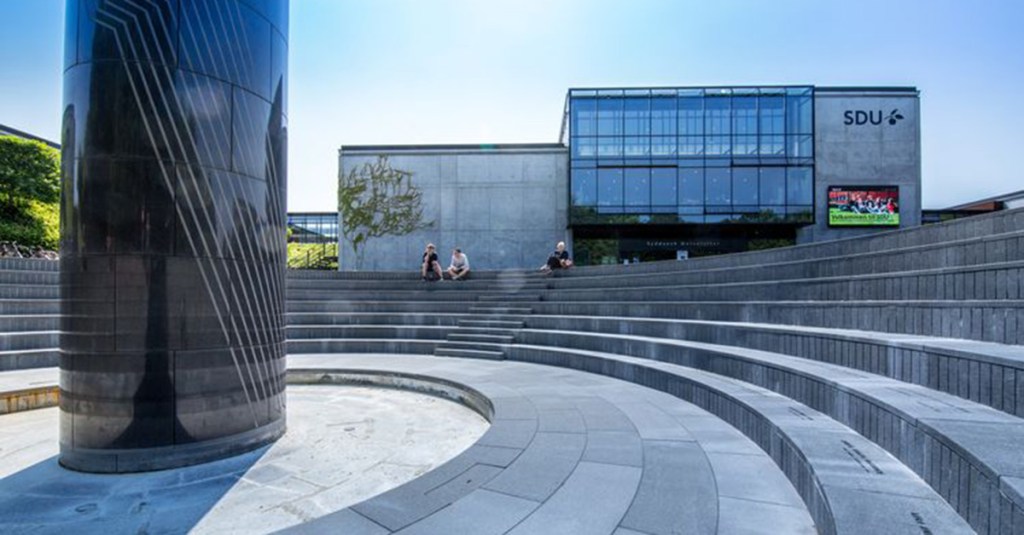
The University of Southern Denmark first opened its doors in September 1966, it now has five faculties with more than 27,000 students, and more than 3,800 employees distributed across the main campus in Odense and regional campuses in Slagelse, Kolding, Esbjerg and Sønderborg. Several international studies document that the University conducts world-class research and is one of the top fifty young universities in the world. The University of Southern Denmark offers around 115 different study programmes in the fields of the humanities, social sciences, natural sciences, health sciences and engineering.
| Elements | Evidence for this |
| 1.1 Are there research projects using CS methodology? (Yes/ No) If yes, provide description of any tracked past and present projects employing CS, Crowdsourcing, Participatory-Action-Research or a Co-productive approach. For definition of citizen science, see ECSA characteristics of citizen science | Well known examples are – A Healthier Southern Denmark 2016 and ongoing. Bring your own device 2018. Find a Lake 2020. ReThinking Food 2020. Write your future 2021. And many others. |
| 1.2 Do researchers and students belong to a CS network? (Yes/No) If yes, provide details of the different links with CS networks. A citizen science network can be formal (e.g. an association or organisation) or informal (a shared mailing list) | Yes. SDU has hundreds of partnerships and collaborations with universities and CS related institutions around the world such as ECSA, LIBER, SciStarter, YERUN, IFLA. |
| 1.3 Do researchers and students have established working collaborations with CS groups? (Yes/ No) If yes, state name of projects and type of collaboration with external CS groups or projects. External CS groups can be an existing organisations or ad-hoc nature observation club, or a group of people that are self-quantifying. It can also be a collaboration with an organisation that runs CS programmes such as Earthwatch. | Yes, SDU has run long-term national and international projects in collaboration with a broad range of universities and external es groups – Media partners such as: Jysk Fynske Medier, TV2/Fyn, TV2/Syd, Danmarks Radio (DR) and Videnskab.DK. High Schools and public schools: 25 in all in our region. Also, several municipalities (Bring your own device, rethinking Food), NGOs (Bring your own device, Find a lake, Life with dementia) |
| 1.4 Do researchers and students participation in national or international CS projects? (Yes, national; Yes, international; Yes, both national and international; No CS collaborations yet) If yes, provide a brief description of past and present cases. In some countries there are no official networks, such as the UK, but informal networks can run and be active | Yes, researchers and students at SDU are engaged in CS projects with local, national and international impact. * A Healthier Southern Denmark *Bring your own device * Find a lake * Our History * Life with Dementia * SDU Moves * Active Living Lab *Write your future * ReThinking Food. Researchers participate on a national level in these projects. Write your future, SDU Moves, Active Living Lab, Our History: Students participate in these on a national level. |
| 2.1 Does the institution have training programmes on CS? (Yes, for students;Yes, for researchers; Yes, for citizen scientist; Yes, for different actors [state]; No, training programmes) If yes, provide a brief description of past and present training programmes | Yes, SDU has a 20 + 10 ECTS Talenprogramme for Master students. Students are teamed up with a science advisor (an SDU researcher) in order to prototype and execute a CS project. Students also undergo formal training. |
| 2.2 Does the institution provide CS activities in both formal and informal education? (Yes, formal; Yes, informal; Yes, as part of a research project without a link to education; Yes, a mix of formal and informal[state]; No, no CS activities are organised). If yes, provide a brief description of past and present training programmes | Several of SDU’s CS projects include both formal and informal education for citizens. High School and public-school students undergo a MOOC in the projects: Our History, A Healthier Southern Denmark, Find a Lake. Other projects such as Bring your own device, and SDU Moves include more informal training. |
| 2.3 Does the institution offer assistance for scientists and partners (recipients, stakeholders and groups of interest) regarding cooperative CS activities? (Yes, advice on participatory activities; Yes, courses and training; Yes, both participatory activities and courses and trainings; No, there is no assistante from the institution for CS activities) If yes, provide a brief description of activities. | The SDU Citizen Science Knowledge Center offers dialogue and advice on Citizen Science. The center is also part of several projects and partnerships which may be of benefit to SDU researchers. The Knowledge Center arranges talks and workshops where groups of researchers can develop ideas for Citizen Science projects in cooperation with the Center. It offers services within: 1) Dialogue on project development 2) Dialogue on writing project descriptions 3) Workshops or talks on Citizen Science in your field of research. If projects has been given seed money from the Knowledge Center, we can help you with: 1) Recruiting and keeping participants 2) Communication and how to involve citizens 3) Research data management 4) Building of MOOC’s and other infrastructure 5) Evaluation |
| 2.4 Does the institution have “CS champions” at the research level? (Yes, there is a point of contact in the institution; Yes, there is an unofficial champion (person that people get in touch with); Yes, there is a person who pushes citizen science in the institution and promote it; No, there is not such a thing as a CS Champion). If yes, please provide more details about the CS Champion. | Yes, the institution have CS Champions at the Research level: 1) The steering committee of the SDU CS Knowledge Center consist of the Deans of faculty, the Pro-Vice-Chancellor and the Library Director 2) The steering committee of the Talentprogramme consists of 5 professors from each faculty 3) The SDU Talentp rogramme currently have recruited 18 science advisors from all 5 faculties |
| 2.5 Does the institution have more than one CS Champion? (Yes, there are different points of contact in different labs/research groups; Yes, there are different points of contact in different departments; Yes, other [list]; No, there are no more CS champions in the institution). If yes, please provide more details. | Yes, besides the above mentioned in 2.4: The SDU CS Knowledge Center is currently in dialog with app. 40 other researchers interested in citizen science. Also, the center has a working relationship with management at the SDU SDG Hub |
| 2.6 Does the institution have “CS champions” at the student level? (Yes/No). If yes, please provide more details about department/projects with CS student champions. | Yes. 1) The alumni of the 2020 Talentprogramme as well as the new cohort for 2022. 2) Students involved in the SDU Moves project 3) Students involved in formal training at the Active Living Institute |
| 2.7 Does the institution offer information sessions on CS? (Yes, for researchers; Yes, for students; Yes, for management; No, no information sessions are provided). If yes, please provide more details. | Yes, for researchers we offer continuous workshops for all 5 faculties. |
| 2.8 Does the institution offer informal occasions for interactions with CS researchers? (Yes/ No). If yes, please provide more details. | No |
| 2.9 Does the institution nurture “CS champions”? (Yes, at the management level; Yes, at the student level; Yes, at the researchers level; No, CS Champions don’t have any institutional recognition). If yes, please provide more details. | Yes, The SDU CS Knowledge Center provide a governance structure that allows for the recruitment, retainment, and training of CS champions. Please see 2.4.. |
| 2.10 Does the institution include CS into scientific research in university teaching programmes? (Yes, Undergrad 1 programme; Yes, Postgrad 1 programme; Yes, Undergrad multiple programmes; Yes, Postgrad multiple programmes; No, CS is not included in the teaching curricula). If yes, please provide more details. | Yes, Master’s level: Talentprogramme. Undergrad: Various courses at Active Living institute. |
| 3.1 Does the institution have an official strategic plan for advancing CS? (Yes, short [a year or less]; Yes, medium [between 1-3 years]; Yes, long term goals [4+ years]) . If yes, please provide more details. | SDU provide an overall strategic narrative based on the UN SDGs. In alignment the SDU CS Knowledge Center has the following strategic mission: SDU CS strategy: https://www.sdu.dk/en/citizenscience |
| 3.2 Does the institution promote and fund CS coordinators? (Yes/ No). If yes, please provide more details. | Yes, The SDU CS Knowledge Center is a partnership that provide 4-6 CS coordinators (parttime) |
| 3.3 Does the institution promote and fund CS communicators? (Yes/ No). If yes, please provide more details. | Yes, the SDU CS Knowledge Center is in a partnership that provide 3-4 CS communicators (parttime) |
| 3.4 Do the CS projects at the institution receive any Short Term Funding (6-12 months) ? (Yes, full; Yes, partial; Yes, other; No, there are no short term funding options). If yes, please provide more details. | Yes, the SDU CS Knowledge Center and various projects are funded on a yearly basis including seed money |
| 3.5 Do the CS projects at the institution receive any Medium Term Funding (12-36 months)? (Yes, full; Yes, partial; Yes, other; No, there are no medium term funding options). If yes, please provide more details. | Yes, currently 2 strategic projects are funded for 24 months (full funding) |
| 3.6 Do the CS projects at the institution receive any Long Term Funding (Over 36 months)? (Yes, full; Yes, partial; Yes, other; No, there are no long term funding options). If yes, please provide more details. | One project is funded till 2025 (full funding) |
| 3.7 Does the institution have internal funds that can be used for CS initiatives? (Yes, public engagement; Yes, science communication; Other, list; No, there are no internal funds available). If yes, please provide more details. | Yes, the institution provide seed money for pilot projects within CS |
| 3.8 Has any of the CS initiatives in your institution received external funding (research national)? (Yes/ No) . If yes, please provide more details. | Yes, Find a Lake (Villum Foundation). CeOS_SE: Citizen-enhanced Open Science in Southeastern Europe Higher Education knowledge hubs (ERASMUS+) |
| 3.9 Has any of the CS initiatives in your institution received external funding (research international)? (Yes/ No). If yes, please provide more details. | No |
| 3.10 Has any of the CS initiatives in your institution received external funding (Prestige funding [ERC, UKRI future research leaders and other high profile])? (Yes/ No). If yes, please provide more details. | See 3.8. |
| 3.11 Has any of the CS initiatives in your institution received external funding (Charity Funding)? (Yes/ No). If yes, please provide more details. | No |
| 3.12 How many projects were funded in the institution over the past 5 years in the area of citizen science? (provide number) | Estimated number approx. 20 projects |
| 3.13 Does the institution offer the researchers adequate communication channels to reach relevant partners? (Yes, support for public communication; Yes, media relations department; Yes, community engagement expertise; No, there is no support to reach relevant partners). If yes, please provide more details. | Yes, the SDU CS Knowledge Center support researchers in communication Citizen Science including partnerships with media companies. |
| 3.14 Does the institution develop/ make available open and free tools or technical know how solutions that can be used in CS projects? (Yes/No). If yes, please provide more details. | Yes, the SDU CS Knowledge Center has provided a service-guide for researchers. Visit: https://sdunet.dk/en/research/citizenscience/services |
| 4.1 Has the institution adopted explicit mission statements and strategies regarding CS? (Yes/No). If yes, please provide more details. | No |
| 4.2 Has the institution developed institutional norms, regulations, policies or agreements in support of CS? (Yes/No/Other). If yes or other, please provide more details. | Yes, SDU has committed to an Open Science Policy |
| 4.3 Has the institution developed or consider public engagement and CS contributions in the evaluation of researcher? (Yes/No). If yes, please provide more details. | No |
| 4.4 Does the institution have a set of guidelines for collaboration agreements between institutionally-affiliated and independent CS partners? (Yes/No). If yes, please provide more details. | No |
 TIME4CS-Case studies repository