Where Real-Time Visibility Actually Reduces Daily Operational Friction
“Real-time visibility” has become one of those phrases that everyone nods at and almost nobody interrogates. It appears in board decks, vendor brochures, and strategy documents, usually framed as an obvious good: if we can see what’s happening right now, operations will improve.

In practice, that promise often falls short. Many organisations invest heavily in visibility tools only to find that daily work still feels reactive, manual, and full of friction. The problem isn’t that real-time data lacks value. It’s that visibility, on its own, doesn’t reduce friction unless it is tightly connected to how work actually happens.
To understand where real-time visibility genuinely helps, it’s useful to start with where friction really lives.
Friction isn’t in the data — it’s in the gaps between decisions
Operational friction rarely comes from a lack of information in absolute terms. Most environments already generate vast amounts of data: ERP records, maintenance logs, quality reports, spreadsheets, emails, and informal handovers. The issue is that this information is fragmented, delayed, or disconnected from the moment when decisions need to be made.
A tool might be “lost,” for example, not because nobody knows where it was last scanned, but because the information is buried in a system that isn’t consulted during task planning. A process deviation might occur not because rules are unclear, but because compliance checks happen after the fact, when the opportunity to intervene has passed. Find Your Tools
Real-time visibility reduces friction when it closes these gaps — when it collapses the distance between what is happening and what people do next.
The myth of the all-seeing dashboard
One common misconception is that visibility equals dashboards. Organisations roll out screens filled with charts, maps, and alerts, assuming that seeing more will naturally lead to better outcomes. In reality, dashboards often become passive artefacts: impressive to look at, rarely acted upon.
This happens because dashboards are usually designed around reporting rather than work. They answer questions like “What happened?” or “How are we performing overall?” rather than “What should I do right now?”
When real-time visibility is useful, it tends to be embedded into workflows rather than presented as a separate layer. It informs task assignment, sequencing, approvals, and interventions in ways that are hard to ignore because they are part of the job itself.
Where real-time visibility makes a measurable difference
Across different industries and environments, there are a few recurring areas where real-time visibility consistently reduces friction.
1. Task coordination in complex environments
In operations where many activities overlap — multiple teams, shared resources, shifting priorities — friction often comes from coordination overhead. People spend time checking availability, chasing updates, or re-planning work when assumptions turn out to be wrong.
Real-time visibility helps when it provides a shared, trusted view of what is actually happening. Not a forecast, not yesterday’s report, but the current state of tools, assets, locations, and tasks. This reduces the need for manual checks and informal workarounds, which are often where errors creep in.
2. Preventing small issues from becoming delays
Many operational problems are not dramatic failures but small deviations that compound. A tool left in the wrong place, a component moving off sequence, a step performed out of order. On their own, these issues are easy to overlook. Together, they cause delays, rework, or compliance risk.
Real-time visibility is valuable when it allows these deviations to be detected early enough to act. That usually means visibility tied to rules or expectations, not just observation. Knowing that something is happening is less useful than knowing that it shouldn’t be happening — and being able to respond immediately.
3. Reducing cognitive load on frontline teams
Frontline work is often mentally demanding, especially in environments where safety, quality, or compliance matter. When people have to remember where things are, what stage a task is at, or whether a prerequisite has been met, cognitive load increases — and mistakes follow.
When real-time visibility removes the need to remember or manually check these details, it reduces friction in a very human way. The work becomes simpler, not because it is less complex, but because fewer decisions rely on memory or assumption.
Visibility without context can increase friction
It’s worth noting that real-time data can also make things worse if it is poorly applied. Alerts without clear ownership, maps without relevance to tasks, or streams of updates without prioritisation can overwhelm teams rather than help them.
The difference lies in context. Visibility needs to be framed by purpose: what decision does this information support, and who is responsible for acting on it? Without that framing, real-time systems risk becoming another source of noise.
This is why some of the most effective implementations of real-time visibility are almost invisible. They don’t announce themselves as “real-time systems.” They simply make certain problems stop occurring because the conditions that allowed them to happen no longer exist.
From observation to intervention
The real shift happens when organisations move from using real-time data to observe operations, to using it to intervene. Observation answers questions. Intervention changes outcomes.
Intervention doesn’t have to mean automation in the dramatic sense. It can be as simple as preventing a task from progressing until a condition is met, redirecting work based on current constraints, or highlighting an exception at the moment it matters.
In this sense, real-time visibility is less about seeing everything and more about enabling timely action. The value comes not from awareness alone, but from the ability to do something useful with that awareness.
Why this matters more as operations scale
As operations grow in size or complexity, informal coordination breaks down. What worked when teams were small and co-located no longer holds when work is distributed, volumes increase, or variability rises.
In these conditions, friction multiplies quickly. Delays propagate, assumptions become risky, and local optimisations conflict with global goals. Real-time visibility becomes more important not because the organisation wants more data, but because it needs a more reliable way to align action with reality.
This is often the point at which visibility stops being a “nice to have” and becomes a structural requirement for operating effectively.
Reframing the question
Instead of asking, “Do we have real-time visibility?”, a more useful question is: “Where does lack of timely, trusted information create friction in daily work?”
The answer to that question will look different depending on the environment, but it will almost always point to moments where decisions are made with incomplete or outdated context. Those moments are where real-time visibility has the greatest impact.
When applied thoughtfully, it doesn’t just make operations more transparent. It makes them calmer, more predictable, and easier to manage — which is often the real goal.
Why process deviations on high-mix automotive assembly lines are detected too late
High-mix automotive assembly lines are designed for flexibility, not predictability. Variant-heavy builds, frequent changeovers, manual interventions, and rework loops are normal. Yet most quality and production systems are still structured around an assumption of repeatability.
This mismatch is why process deviations are so often discovered after the fact — during end-of-line checks, quality audits, or customer issues — rather than when they first occur.
The reality of high-mix assembly
In high-mix environments, deviations rarely come from a single failure. They emerge from small, compounding events:
-
A tool is used out of sequence to keep a line moving
-
An operator performs a workaround during a temporary constraint
-
A sub-assembly waits longer than expected before the next step
-
A component is installed correctly, but not at the intended point in the process
Individually, none of these trigger alarms. Collectively, they create downstream quality risk.
Traditional manufacturing systems are not built to observe these conditions in real time.
Why existing systems miss deviations
Most automotive plants already run a mature stack of systems: MES, PLCs, quality systems, and work instruction platforms. These systems are effective at recording what should happen and what was declared to have happened.
What they struggle to capture is what actually happened on the line.
Common blind spots include:
-
Sequence: whether steps were performed in the correct order under real conditions
-
Context: which tools, people, and parts were co-located at the moment of execution
-
Duration: how long steps or waits actually lasted, not just when they were logged
-
Movement: how work-in-progress flowed between stations, buffers, and rework areas
As a result, deviations are often reconstructed retrospectively, relying on logs, interviews, and assumptions. By the time the issue is visible, rework costs and investigation time have already escalated.
Why detection happens late, not early
High-mix lines tend to prioritise throughput and adaptability. Operators are trusted to make judgement calls, and supervisors focus on keeping production moving. This is necessary — but it also means that deviations are treated as operational noise until a quality signal appears elsewhere.
Without real-time visibility into process execution as it unfolds, plants are left with two poor options:
-
Over-constrain the line, reducing flexibility
-
Accept delayed detection and higher downstream risk
Neither scales well as product complexity increases.
Closing the gap between intent and execution
The missing layer in many high-mix environments is continuous, real-time visibility of execution, not more rules or additional reporting.
Platforms like SmartSpace from Ubisense focus on observing the physical reality of assembly operations: where tools, parts, and people are, how processes are actually executed, and when deviations emerge — without slowing the line down.
By correlating location, time, and process context, deviations can be identified at the point they occur, not days later during investigation.
For automotive manufacturers dealing with rising variant complexity and tighter quality margins, this shift from retrospective analysis to real-time awareness is becoming increasingly important.
You can see how this approach is applied in automotive environments on the Ubisense SmartSpace Assembly page:
https://ubisense.com/smartspace-assembly/
Further reading
For background high-mix, low-volume manufacturing, this overview is a useful reference:
https://www.fictiv.com/articles/high-mix-low-volume-manufacturing
Compliance Is Created on the Pharma Floor, Not in Reports
In pharmaceutical manufacturing, compliance is created by daily physical operations, not by documentation assembled for inspections.
Every shift, people, materials, and equipment move through cleanrooms, graded zones, production areas, labs, and storage. Materials are transferred across classifications. Equipment is staged, cleaned, reused, and relocated. Operators move between processes and rooms. These movements are regulated, spatial, and continuous. They are also where compliance is actually maintained or compromised.

The Limits of Audit-Driven Compliance
Audit-driven compliance relies on retrospective evidence.
Audits confirm that SOPs exist and that records can be produced. What they do not reliably show is how work actually unfolded during normal production, especially when conditions changed, exceptions occurred, or informal workarounds were used to keep operations running.
Audits capture a snapshot. Pharmaceutical operations are continuous.
This creates a structural gap between how compliance is assessed and how regulated work actually happens.
Where Compliance Risk Really Emerges
Most compliance risk in pharmaceutical manufacturing does not come from deliberate non-conformance.
It comes from small, routine deviations that are difficult to detect after the fact. A material takes an unexpected route through the facility. Equipment is used outside its intended area. A handover relies on assumption rather than confirmation. Individually, these events may appear low risk. Over time, they erode control and traceability.
Traditional records struggle to surface these patterns because they describe intent and completion, not real behaviour in physical space.
Why Retrospective Records Are Not Enough
Logs, batch records, and reports are designed to document outcomes.
They are not designed to provide continuous awareness of movement, interaction, and state across a live facility. When questions are raised weeks later, teams are forced to reconstruct events from partial information, often without clear spatial or temporal context.
This makes root-cause analysis harder, increases audit pressure, and drives manual effort rather than operational improvement.
Continuous Visibility Changes How Compliance Is Managed
Continuous compliance visibility focuses on understanding operations as they happen.
It means having an accurate, real-time view of how people, materials, and equipment move through regulated spaces. Instead of relying on periodic checks, teams can see whether defined processes are being followed during day-to-day production.
Material movements can be verified across controlled areas rather than inferred from paperwork. Equipment usage can be understood in spatial and process context. Handovers become observable events rather than assumptions embedded in forms. Deviations are visible immediately, not discovered during audit preparation.
The Role of Real-Time Digital Twins in Pharma Operations
Real-time digital twins support this approach by connecting live operational data to a spatial model of the facility.
Rather than static diagrams or delayed dashboards, teams gain a continuously updated view of how regulated activities are executed across cleanrooms, production lines, and logistics areas. This provides a practical foundation for operational control, risk reduction, and credible compliance evidence.
Ubisense SmartSpace enables this by creating real-time digital twins grounded in trusted location and operational data, giving pharmaceutical teams visibility into what is actually happening inside their facilities. Learn more here
From Audit Preparation to Operational Control
Continuous visibility does not eliminate audits. It changes what they represent.
When pharmaceutical teams have real-time insight into how operations actually run, audits stop being moments of discovery. They become validations of an environment that is already understood and controlled. Evidence is drawn from lived operational reality rather than reconstructed under pressure.
More importantly, teams no longer manage compliance as a parallel activity. It becomes a natural by-product of knowing what is happening across the facility, where it is happening, and how processes are being executed in context.
This is the shift from audit preparation to operational control.
In pharmaceutical manufacturing, the most significant risks do not appear on inspection days. They emerge during normal work, between audits, when visibility is weakest. Making those moments visible is what allows organisations to reduce risk, maintain control, and operate with confidence in regulated environments.
That is the role of continuous, real-time operational visibility.
A Differentiated Approach to Deployment – How Ubisense Accelerates Rollout With LiDAR Enabled Planning, Calibration, and Validation
Deploying a Real Time Location System (RTLS) across a complex production environment is often the slowest and most uncertain stage of any transformation project. Traditional methods rely heavily on manual measurement, time and effort, and assumptions about how radio signals will behave once the system goes live. It is an approach that consumes valuable time and resources while still leaving uncertainty about how well the system will perform under real operating conditions.
Ubisense has taken a fundamentally different approach. By combining LiDAR based survey technology, 3D simulation tools, and patent pending calibration methods, the company helps customers plan, deploy, and validate their RTLS with unprecedented speed and confidence. Every stage of the rollout, from the first site scan to final performance verification, is built on empirical data rather than estimates.
Capture with speed and certainty
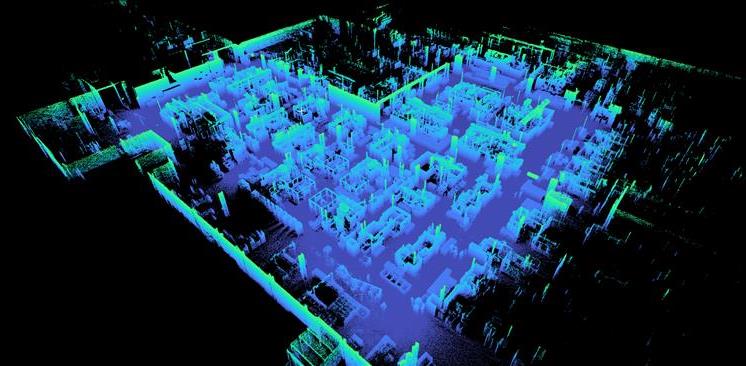
At the start of every new prospective project, Ubisense engineers conduct a LiDAR based site capture. Using handheld SLAM (Simultaneous Localization and Mapping) scanners, they record a precise 3D model of the environment, including the physical structures, surfaces, and potential sources of signal reflection or obstruction. What once took several days of manual surveying, and was largely based on experience and intuition, is completed in a matter of hours, producing a point cloud that accurately represents the site's geometry and forms the empirical basis for automated planning and simulation.
Figure 1: Point cloud image of a manufacturing facility taken from SLAM LiDAR
This process does more than just accelerate deployment; it removes ambiguity. Because the LiDAR data captures real world structure at high fidelity, the engineering team can model sensor performance and line of sight behaviour across the entire space before a single sensor is installed.
Planning with precision
From the 3D model, Ubisense's system planning tools automatically generate a digital twin of the customer's environment. The software runs simulation models that replicate how Ultra-Wideband (UWB) signals will behave within that space, identifying the strongest positions for sensor placement and forecasting the level of accuracy that can be achieved in each zone. Crucially, the system can simulate multiple scenarios to stress test: what if the object is fast moving? Placed at a low height? Tagged at a high update rate versus low?
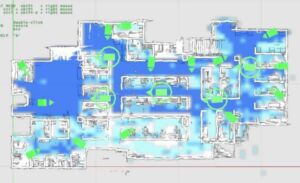
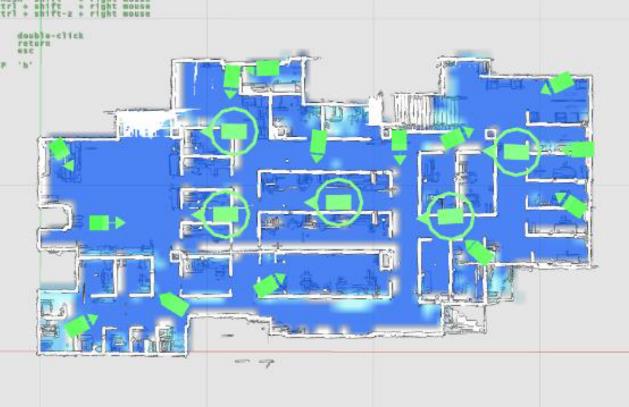
Figure 2: Simulation of expected coverage (blue) with a tag worn at height of 0.5m (left) and 1.4m (right) for a personnel safety use case
This step transforms the deployment process from reactive to predictive. Instead of placing sensors, testing coverage, and adjusting later, Ubisense customers start with a data driven layout that has already been performance tested virtually. It ensures every installation delivers the expected fidelity from day one.
Calibration through innovation
Once the infrastructure is installed, Ubisense applies its patent pending auto calibration technology, which fuses real UWB tracking data with ground truth LiDAR trajectories. The LiDAR scan provides absolute spatial reference points, allowing the system to automatically align its coordinate frame and fine tune sensor synchronization without manual intervention.
This capability represents a step change in how large RTLS networks are brought online. In traditional deployments, engineers must manually calibrate each anchor, introducing small inconsistencies that compound as the system scales. Ubisense's approach reduces that process to a repeatable, automated workflow, significantly shortening setup time while improving spatial accuracy.
Validation grounded in evidence
LiDAR data continues to add value once the system is operational. After installation, Ubisense uses a secondary, independent LiDAR reference to validate system performance, comparing every tracked position generated by the RTLS against the known ground truth trajectory. This provides empirical evidence that the deployed system meets its accuracy and coverage targets across the full facility.
This capability is unique in the market. While most vendors can only offer theoretical or sample-based validation, Ubisense delivers proof verified by measurable ground truth. It allows all customers to deploy with confidence and document performance to the same standard required for safety critical manufacturing and aerospace operations.
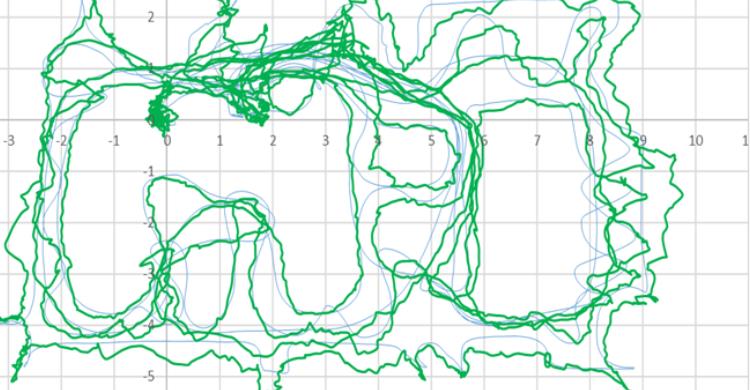
Figure 3: Ground truth path (blue) and the superimposed Ubisense 4-sensor UWB system path (green) in a challenging manufacturing environment
Transforming deployment from a challenge into a strength
By combining LiDAR capture, automated simulation, and data driven calibration, Ubisense has redefined what deployment speed and assurance look like in industrial RTLS projects. Customers benefit from faster rollout times, higher system accuracy, and repeatable, validated outcomes across multiple sites.
Ubisense does not just make RTLS deployment quicker; it makes it provable. Through LiDAR enabled precision, the company delivers systems that perform exactly as planned, with full visibility of how and why.
That is what it means to transform physical space into SmartSpace®.
To see how this approach can accelerate your next RTLS project, and find out how SmartSpace can improve your operations, contact Ubisense here, or enquire directly below:
Oscar Harwood
Junior Account Executive
[email protected]
+44 1223 785812
Digital Twin for Flexible Manufacturing: Real-Time Intelligence for High-Mix Production Lines
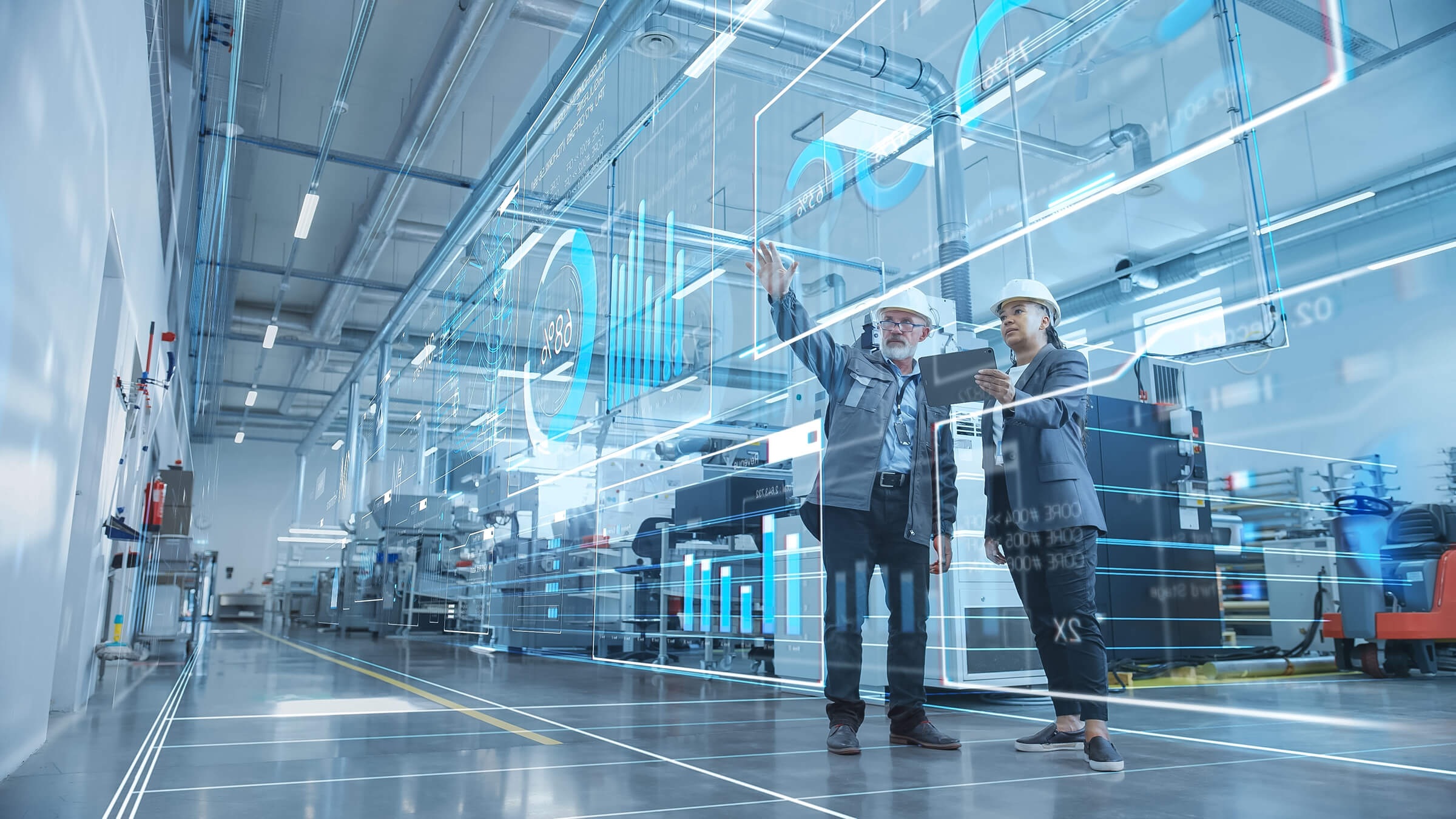
Manufacturers today face a new kind of complexity. Customers expect more variants, faster delivery, and higher quality — all while production teams deal with fluctuating schedules, shared resources, and constant reconfiguration. Traditional linear manufacturing models can’t keep up. The next generation of intelligent factories depends on digital twins that mirror the physical world in real time — providing the visibility, adaptability, and control needed to run truly flexible, high-mix production lines.
SmartSpace® from Ubisense makes this possible by combining real-time location data with digital process models to create a living, spatially aware representation of your operations. The result is a connected, data-driven environment where people, tools, and assets all work together seamlessly, even as production demands change.
The Shift Toward High-Mix, Flexible Production
A high-mix assembly line is one that produces a wide range of product variants — often in small or changing batch sizes — on the same equipment. It’s increasingly common in automotive, aerospace, defence, and complex industrial manufacturing, where teams might switch between vehicle models, aircraft components, or customised assemblies several times per day.
This flexibility enables responsiveness to market demand, but it also introduces complexity at every level. Teams must continually adjust work instructions, reallocate equipment, and ensure that parts and tools are in the right place at the right time. Manual coordination can’t keep up with this pace of change. When process steps depend on human checks or static schedules, errors multiply — parts are misplaced, tools go missing, and rework becomes routine. The cost of even minor inefficiencies compounds quickly.
As manufacturers move toward mass customisation and shorter product cycles, real-time visibility becomes essential. Digital twins provide the foundation for that visibility — but only if they’re built on accurate, continuously updated data.
From Concept to Reality: The Evolution of the Digital Twin
The concept of a “digital twin” first appeared in aerospace engineering in the early 2000s, describing a digital counterpart to a physical asset. Initially used for simulation and lifecycle management, the idea has since evolved far beyond design and maintenance. Today, advances in real-time data capture, networking, and spatial computing have made it possible to maintain live digital twins of entire production systems — from single lines to enterprise-scale operations.
This transformation mirrors the shift from Industry 3.0 automation to Industry 4.0 intelligence. Where traditional automation executes pre-programmed logic, the digital twin enables awareness and adaptation: systems that sense, interpret, and respond to the changing physical world in real time.
What Is a Digital Twin in Manufacturing?
A digital twin is a dynamic, digital replica of a physical system. It continuously mirrors the real world by ingesting live data from sensors, tracking systems, and software platforms. In manufacturing, a digital twin can represent an entire plant, a production line, or even individual machines and tools.
Unlike static 3D models or simulation tools, a true digital twin evolves alongside the environment it represents. It shows not just how things are designed to operate, but how they actually operate in real time. When enriched with real-time location data, it can answer questions that traditional systems can’t:
-
Which workstation is currently occupied?
-
Has the correct operator entered the safety zone?
-
Are the right components staged for the next build?
-
Has a process step been completed in the required sequence?
The value lies in connecting spatial context to digital intelligence — turning data into insight, and insight into immediate action.
Why Real-Time Location Data Is the Missing Link
Many digital-twin initiatives fail because they rely solely on transactional data from MES or ERP systems. Those platforms record what should happen — the planned process steps, bill of materials, and timestamps — but they don’t capture the unplanned reality of the shop floor. Without continuous feedback, the twin quickly drifts out of sync with real operations. Schedules look perfect on paper while bottlenecks build unnoticed in production.
This is where SmartSpace® adds unique value. It provides continuous, spatially accurate visibility of every asset, person, and process. By integrating data from RTLS sensors, tags, and zones, it ensures that the digital twin reflects the true state of operations at any given moment. For example:
-
Detects when a component or sub-assembly moves to the wrong station.
-
Confirms when an operator begins a process in the correct area.
-
Tracks whether a calibrated tool is being used for the assigned task.
-
Records dwell times to identify flow imbalances or inefficiencies.
This connection between physical movement and digital intent allows the twin to verify reality — not just document it.
Building a Digital Twin for a High-Mix Production Line
A real-time digital twin relies on an integrated architecture that connects multiple data layers:
1. Sensing Layer – Sensors, RTLS anchors, and tags capture live movement and position data for assets, tools, and people.
2. SmartSpace Platform Layer – SmartSpace maps these data streams onto a digital model of the facility, representing every zone, workstation, and logical rule.
3. Business Logic Layer – The system applies rules and relationships. For instance, a torque operation can’t be completed until the correct tool enters the defined zone, or a part can’t progress if its prerequisite steps aren’t verified.
4. Analytics Layer – Smart dashboards display WIP levels, cycle times, and performance KPIs in real time. Supervisors can immediately see when flow deviates from plan.
5. Integration Layer – The twin connects with MES, ERP, PLM, and quality systems. This allows process data, traceability records, and status updates to flow automatically between the physical and digital worlds.
Each layer depends on data integrity and latency. High-quality RTLS data ensures the twin stays accurate to within seconds. When integrated properly, this creates a digital environment that reflects physical reality almost instantaneously.
Turning Data into Action
Collecting data is easy; making it actionable is what defines a successful digital twin. SmartSpace provides rule-based automation that translates live data into operational control.
If a sub-assembly hasn’t entered its inspection zone within the allotted time, an alert can be triggered automatically. If a technician attempts to perform a task with an unverified tool, the system can prevent completion or flag the error.
By embedding intelligence directly into spatial events, SmartSpace turns awareness into control — a crucial step toward truly adaptive manufacturing.
Human Factors and Collaboration
Digital twins aren’t just for engineers and planners; they transform how everyone on the shop floor interacts with information. Instead of relying on static work instructions or manual updates, teams can view live dashboards that reflect the actual state of production.
Supervisors can see at a glance which stations are running behind schedule. Maintenance teams receive alerts when tools or equipment stray from authorised areas. Operators can scan local displays to understand what’s next in sequence. This shared visibility promotes collaboration, accountability, and safer working conditions.
In high-mix environments, where no two days look the same, this collective situational awareness is what keeps complexity under control.
Key Benefits of a Real-Time Digital Twin
Faster Changeovers
SmartSpace detects configuration states automatically, enabling faster transitions between product variants. It reduces downtime caused by manual reconfiguration and ensures the correct fixtures and tools are always in place.
Improved Quality and Traceability
Each product is digitally linked to its full process history: where it was built, which tools were used, and who performed each operation. This traceability simplifies compliance and eliminates time-consuming paper records.
Reduced Downtime and Rework
By identifying bottlenecks and deviations as they happen, SmartSpace helps prevent small issues from cascading into full line stoppages. Teams can focus maintenance and supervision where it matters most.
Optimised Layout Planning
Engineers can simulate new line layouts or workstation sequences inside the twin before making physical changes. This lowers risk and enables data-driven continuous improvement.
Enhanced Decision Support
Combining live and historical data provides insight into utilisation, lead time, and performance trends — supporting smarter planning, scheduling, and resource allocation.
Sustainability and Efficiency Gains
By eliminating wasted movement and reducing idle time, real-time visibility supports leaner, more energy-efficient operations. Over time, this contributes to measurable reductions in resource consumption and carbon footprint.
Real-World Use Cases
Automotive
As vehicle platforms diversify into electric, hybrid, and internal combustion models, assembly lines must handle dozens of build sequences simultaneously. The SmartSpace WIP Tracker ensures each unit follows the correct process path, tools are available where needed, and deviations are flagged instantly. The result is smoother flow, faster changeovers, and lower rework rates.
Aerospace
In aircraft manufacturing and maintenance, sub-assemblies often share workspace, tooling, and personnel. SmartSpace provides real-time awareness of bay utilisation, tool readiness, and operator activity, ensuring safety compliance and on-time task completion. It also simplifies certification by maintaining complete traceability records for each component.
Defence
Secure environments require verified process compliance. SmartSpace enables granular traceability of every step, from equipment maintenance to classified asset handling. Real-time data supports both operational readiness and audit transparency without relying on manual documentation.
Industrial and Contract Manufacturing
For high-mix, low-volume producers, flexibility is everything. The digital twin enables rapid reconfiguration of stations and resource planning. Live dashboards give managers a clear view of where each job stands and what’s needed to keep throughput balanced.
Pharmaceutical and Life Sciences
Although less obvious, maintenance and calibration in regulated pharma environments benefit significantly from location-driven digital twins. By tracking personnel, tools, and equipment status, manufacturers can verify that every step complies with GMP procedures — protecting both product integrity and regulatory confidence.
Extending the Value: Data, Analytics, and Collaboration
Once a digital twin is established, it becomes a foundation for broader digital transformation. Live data streams can feed analytics tools for predictive maintenance, utilisation studies, or continuous improvement initiatives. Operators and engineers can collaborate around a single shared view of the production environment — one that’s always up to date.
In multi-site organisations, a fleet of digital twins can share best-practice data and performance benchmarks. SmartSpace’s modular architecture supports this scalability, allowing local plants to adapt while maintaining consistent standards globally.
The Path Toward Predictive and Autonomous Operations
As artificial intelligence becomes more embedded in industrial systems, digital twins are evolving from descriptive to predictive models. By analysing historical location and process data, AI can forecast potential delays, equipment conflicts, or safety issues before they occur.
In the near future, this integration will enable self-optimising factories — environments that automatically adjust workflows, reassign resources, and maintain throughput with minimal human input. Instead of reacting to problems, teams will focus on strategic optimisation and innovation. Digital twins will also play a vital role in sustainability reporting, using location and process data to measure resource efficiency and track carbon output across facilities.
Why Ubisense’s SmartSpace Is Central to the Real-Time Digital Twin
SmartSpace acts as the spatial intelligence layer that connects physical activity with digital process logic. It integrates data across assets, tools, people, and workflows — giving manufacturers a unified, real-time view of production. Its open APIs and scalable design make it compatible with a wide range of sensors and enterprise systems, whether the deployment is a single pilot line or a global network of facilities.
By providing visibility, verification, and control in one platform, SmartSpace enables manufacturers to transform flexibility into a competitive advantage. In a world where production variability is the new normal, real-time spatial intelligence is what keeps complexity manageable.
Process Compliance in Maintenance Operations: How Real-Time Location Systems Improve Safety and Accountability
In maintenance-driven industries, even minor deviations from standard procedures can lead to rework, costly downtime, or serious safety incidents. Ensuring that every step is followed, documented, and auditable has long been a challenge—especially in complex environments such as aerospace maintenance, defence, or regulated industrial operations.
As production lines and maintenance facilities digitise, new technologies are making process compliance far more reliable and efficient. Real-Time Location Systems (RTLS) like SmartSpace® are now being used to track and verify human and equipment activity automatically, ensuring that the right steps happen in the right order—every time.

The Challenge of Manual Process Adherence
Traditional maintenance compliance relies heavily on manual sign-offs and paper-based checklists. While these methods meet basic audit requirements, they depend entirely on human accuracy and discipline. In high-pressure environments, where teams are balancing productivity with safety, it’s easy for steps to be skipped or recorded incorrectly. Over time, this leads to inconsistent quality, increased inspection effort, and potential non-conformities during audits.
Regulators such as EASA, DoD, or ISO 9001 auditors expect full procedural traceability. For many organisations, meeting those standards consistently means moving beyond reactive checks to proactive digital verification.
What Digital Process Compliance Looks Like
Digital process compliance ensures that maintenance operations are both traceable and enforceable in real time. Every tool, component, and technician can be associated with a digital “fingerprint” of their actions—where they were, what task was performed, and when.
Using platforms like SmartSpace, these activities can be mapped directly to the digital work instructions for each process. This creates a digital twin of the maintenance environment, connecting location data with operational systems such as MES, ERP, or CMMS platforms. The result is a live view of process status, allowing teams to detect deviation or missing steps immediately.
How SmartSpace Enables Real-Time Compliance
SmartSpace uses real-time data from sensors and tags to automatically monitor movement, actions, and sequences within maintenance operations. Location-aware triggers can alert supervisors if a technician begins a procedure without completing a prerequisite step. Tool tracking ensures the correct calibrated tool is used for each task—and that it returns to its authorised location. Process zone logic prevents critical operations from being marked complete until all associated tasks, parts, or personnel have been verified.
This automation removes ambiguity and dramatically reduces reliance on manual oversight, enabling a consistent and auditable maintenance process.
Benefits for Maintenance and Safety Teams
Organisations adopting RTLS-based process compliance typically see immediate gains in safety, efficiency, and quality. Error reduction: steps cannot be skipped or performed out of order. Automated audit trails: complete digital records eliminate paper forms and human transcription errors. Increased accountability: each action is traceable to specific personnel, tools, and times. Reduced rework: deviations are identified before they lead to defects or safety issues.
Supervisors also gain time—spending less effort chasing sign-offs and more on proactive process improvement.
Applications Across Industries
Aerospace MRO: ensuring complex inspection and repair sequences follow approved procedures, with traceable records for regulators. Defence: verifying that safety checks and maintenance operations on vehicles, weapons, and systems are completed before readiness certification. Automotive Manufacturing: digitally validating repair, calibration, or quality inspection processes during rework. Pharmaceutical Production: enforcing GMP-compliant procedural steps in maintenance of cleanroom or production equipment.
In each case, the same goal applies: ensuring people, tools, and processes remain synchronised—without slowing operations down.
The Future of Maintenance Compliance
As AI and analytics evolve, digital process compliance will move beyond monitoring to prediction. Smart systems will be able to identify early signs of procedural drift or training needs before they cause downtime or safety events. Integration with enterprise platforms will also continue to expand, linking compliance data with scheduling, training, and quality systems for a unified operational view.
Learn More
SmartSpace® provides real-time visibility and control across maintenance environments, enabling full process compliance and audit readiness.
Learn more about SmartSpace for MRO
Revolutionizing Pharma Supply Chains: How RTLS Ensures Compliance and Traceability in 2025
In the dynamic pharmaceutical industry, where patient safety hinges on unwavering precision, supply chain management is under intense scrutiny. As of September 2025, regulatory pressures are intensifying globally, with frameworks like the U.S. FDA’s Drug Supply Chain Security Act (DSCSA) now in full enforcement mode since May 27, 2025. This shift demands robust traceability to combat counterfeiting, safeguard product integrity, and enable rapid recalls. Real-Time Location Systems (RTLS) are stepping up as a vital solution, providing real-time visibility from production to delivery. Far beyond basic tracking, RTLS fosters resilient operations that align with standards such as the EU’s Falsified Medicines Directive. This article explores how RTLS is transforming pharma supply chains for better compliance and efficiency.
The Imperative for End-to-End Traceability
Pharmaceutical supply chains are intricate webs involving manufacturers, distributors, wholesalers, and pharmacies, all managing high-stakes products under stringent rules. Traceability ensures every product unit can be followed from origin to end-user, a necessity amplified by global disruptions like pandemics or geopolitical tensions.
A key driver is the fight against substandard and falsified medicines. According to the World Health Organization’s latest fact sheet, at least 1 in 10 medicines in low- and middle-income countries (LMICs) are substandard or falsified, leading to an estimated annual global cost of US$30.5 billion. These issues not only endanger lives but also erode trust in healthcare systems. RTLS addresses this by creating a seamless digital thread, automating serialization—assigning unique identifiers to each unit—and integrating with ERP or warehouse systems for effortless audits.
In practice, this means verifiable chain-of-custody records at every handover. For instance, under DSCSA, verification at transfer points is mandatory, and RTLS supports this through automated logging, reducing manual errors and compliance risks.
Key Challenges in Pharma Supply Chain Compliance
Navigating compliance in 2025 presents multifaceted hurdles. Regulatory bodies demand detailed documentation, yet traditional methods like barcodes or RFID offer only intermittent data, prone to human oversight.
- Counterfeiting and Diversion: Falsified drugs infiltrate chains undetected, with WHO estimating widespread prevalence in LMICs. High-value items like oncology treatments are prime targets.
- Global Complexity: Multi-stakeholder networks span continents, complicating oversight amid supply volatility.
- Sustainability Mandates: Emerging rules, such as the EU Green Deal, require emissions tracking, adding layers to traceability needs.
- Cost Pressures: Industry reports highlight that inefficiencies, particularly in temperature-controlled logistics, can lead to losses exceeding $35 billion annually worldwide.
These challenges underscore the limitations of legacy systems, where delays in detecting issues can result in recalls costing millions and damaging reputations.
How RTLS Enhances Traceability and Compliance
RTLS leverages sensors, tags, and analytics to deliver continuous, precise location data—often down to centimeters—outpacing GPS in indoor settings. In pharma, this translates to monitoring raw materials, work-in-progress, and finished goods across facilities.
Key benefits include:
- Automated Alerts and Geofencing: Virtual boundaries notify if assets stray into unauthorized areas, preventing diversion or tampering.
- Integration with Emerging Tech: Pairing RTLS with blockchain creates tamper-proof records, ideal for DSCSA compliance.
- Audit-Ready Documentation: Real-time logs provide regulators with instant access to movement histories, streamlining inspections.
By embedding RTLS into workflows, companies can achieve proactive compliance, turning potential vulnerabilities into strengths.
Optimizing Cold Chain Logistics with RTLS
Biologics, vaccines, and other temperature-sensitive drugs demand unbroken cold chains, where even brief deviations can render products unusable. Traditional loggers capture data sporadically, missing critical excursions.
RTLS revolutionizes this by combining location tracking with environmental sensors. Attached to pallets or containers, these devices transmit live data on position and conditions, triggering alerts for anomalies. In 2025, amid climate uncertainties, RTLS enables dynamic rerouting—e.g., avoiding heatwaves—to ensure items like insulin arrive viable.
For personalized medicine’s rise, RTLS supports small-batch tracking with sub-meter accuracy, facilitating just-in-time delivery while upholding cold chain integrity. This not only minimizes waste but also supports regulatory reporting on chain stability.
Driving Operational Efficiency Through Location Intelligence
Beyond compliance, RTLS unlocks efficiencies that cut costs and boost productivity. In manufacturing, it tracks tools, equipment, and staff to eliminate downtime—vital in cleanrooms where contamination risks loom.
In distribution, real-time inventory visibility prevents stockouts or excess, optimizing space for high-value drugs. Predictive analytics from location data forecast bottlenecks, enabling data-driven decisions that reclaim billions lost to inefficiencies.
Distribution centers benefit from streamlined workflows, such as automated picking routes, reducing errors by up to 30% in optimized setups.
The Power of Ultra-Wideband (UWB) in RTLS
Among RTLS technologies, Ultra-Wideband (UWB) excels in precision for indoor pharma environments. Offering centimeter-level accuracy, UWB penetrates obstacles better than Wi-Fi or Bluetooth, suiting dense warehouses.
In 2025, UWB integrates with 5G for low-latency global ops and AI for pattern detection—like flagging unusual asset dwells indicative of issues. This tech backbone ensures reliable, scalable traceability without infrastructure overhauls.
Ubisense SmartSpace: A Proven Solution in Pharma
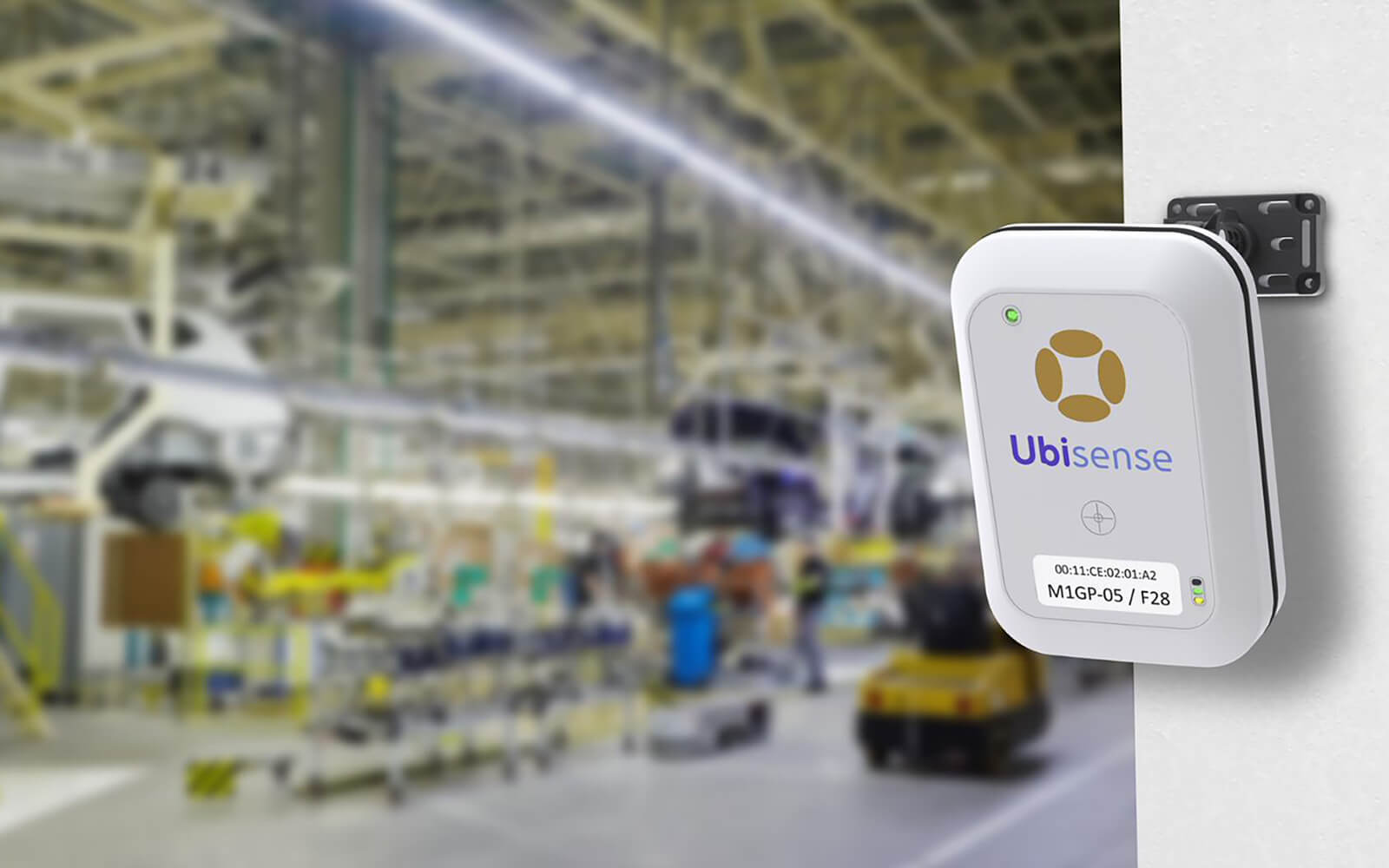
Ubisense’s SmartSpace system exemplifies how UWB-powered RTLS can be practically applied. This platform delivers comprehensive location intelligence, enabling seamless asset and workflow management in regulated settings.
In a real-world deployment at a leading pharmaceutical manufacturer, SmartSpace monitored assembly lines and storage zones, achieving a 25% drop in asset misplacements and accelerating compliance reports. By generating a digital twin of the facility, it allowed real-time visualization, ensuring protocol adherence for sensitive materials without halting production. Such implementations highlight SmartSpace’s role in bridging technology and operational needs.
Conclusion
As pharmaceutical supply chains evolve in 2025, RTLS stands as an essential tool for traceability, compliance, and resilience. By tackling counterfeiting, enhancing cold chains, and driving efficiencies, it positions the industry to meet regulatory demands while advancing patient care. Embracing RTLS isn’t just about compliance—it’s about future-proofing operations in an interconnected world.
For more on RTLS applications, check our Pharma page. For insights into global health risks, see the WHO fact sheet on substandard and falsified medical products.
Ready to strengthen your pharma supply chain? Contact our experts today to discuss tailored RTLS implementations.
Which Tracking Technologies Are Best for Hybrid (Indoor + Outdoor) Environments?
Tracking assets in real time is no longer optional — it’s essential. But most businesses operate across both indoor and outdoor environments, and no single technology performs perfectly everywhere. To help clarify the options, here’s a Q&A covering the pros, cons, and combinations of key tracking technologies, with insights from Ubisense’s Comprehensive Guide to Asset Tracking Technologies.

Q1. Why is hybrid (indoor + outdoor) tracking such a challenge?
Indoor spaces like factories, hangars, and warehouses present obstacles such as walls, machinery, and interference that degrade many wireless signals. Outdoors, conditions are different: open spaces allow GPS to work well, but signal can fail under cover (e.g. inside vehicles, near buildings, under roofs).
The challenge is creating seamless visibility — so an asset tracked indoors remains visible outdoors without gaps or accuracy losses.
Q2. Which tracking technologies are most relevant?
From Ubisense’s guide, the leading options include:
-
Ultra-Wideband (UWB): Extremely accurate indoors, with centimetre-level precision. Handles reflections and multipath well.
-
Bluetooth Low Energy (BLE): Cost-effective, easy to deploy, less accurate but fine for coarse location indoors.
-
Wi-Fi / RFID: Leverage existing infrastructure, lower accuracy, useful for broad coverage.
-
GPS: Standard outdoor location, accurate to a few metres but unreliable indoors.
-
RTK-GPS (Real-Time Kinematic GPS): Enhances GPS with correction signals for sub-metre or even centimetre accuracy outdoors.
-
Dual-mode / hybrid devices: Combine UWB with GPS or RTK-GPS to ensure smooth handovers between environments.
Q3. What are the main trade-offs when combining indoor and outdoor technologies?
-
Accuracy: Indoors, UWB excels. Outdoors, RTK-GPS provides high precision where available; standard GPS is less accurate.
-
Coverage & Infrastructure: Indoor systems need anchors and infrastructure; outdoor systems require RTK base stations or correction services.
-
Power Consumption: Dual-mode tags (UWB + RTK-GPS) consume more energy; battery life planning is essential.
-
Cost: UWB offers precision but needs more anchors; GPS is cheaper to deploy outdoors. Combining them increases upfront costs but reduces hidden costs from lost assets or inefficiency.
-
Reliability: Seamless handover between techs is critical. Without an integrated platform, gaps in coverage occur.
Q4. How does RTK-GPS improve outdoor tracking?
Standard GPS typically provides accuracy within a few metres, which may be sufficient to locate a truck somewhere in a yard, but not precise enough to know which bay it is parked in or exactly where a tool was left.
RTK-GPS (Real-Time Kinematic GPS) dramatically improves on this by using correction signals from a local RTK base station or a network service. With these corrections, outdoor positioning can achieve single-digit centimetre accuracy — Ubisense tags can reach as tight as 3–5 cm in two dimensions.
This level of precision makes a real difference in industries where every location detail matters:
-
Transit yards and depots: Pinpointing exact vehicle bays for dispatch or maintenance.
-
Construction and industrial sites: Tracking heavy equipment with accuracy down to individual storage spots.
-
Aerospace and defence facilities: Ensuring high-value assets are located and accounted for with near-perfect precision.
When paired with UWB indoors, RTK-GPS enables organisations to maintain continuous, high-accuracy visibility across both environments, eliminating gaps at the boundary between factory floor and open yard.
Q5. What hybrid approaches work best in practice?
-
UWB + RTK-GPS dual-mode tags: Provide centimetre-level precision both indoors and outdoors. Ubisense offers dual-mode tags specifically for this.
-
BLE or Wi-Fi + GPS: Lower-cost option where coarse outdoor accuracy is acceptable, and precision indoors isn’t critical.
-
Platform-integrated solutions: Using a platform like SmartSpace ensures data from different technologies is harmonised, so users see one seamless picture.
Q6. Which industries benefit most from hybrid solutions?
-
Automotive manufacturing: Tools and vehicles move between indoor assembly lines and outdoor storage yards.
-
Aerospace MRO: Parts and tools shift from hangars to open aprons, requiring continuous traceability.
-
Transit operations: Buses, trains, and service vehicles cross between depots, yards, and workshops.
-
Pharma & healthcare: Equipment and supplies often move between buildings, or from indoor storage to outdoor loading areas.
In all cases, hybrid tracking reduces search times, prevents losses, and ensures compliance with process or safety requirements.
Q7. What should businesses ask before choosing a system?
-
How much accuracy is required indoors vs outdoors?
-
Do assets move frequently between environments?
-
How many tags and how much infrastructure will be needed?
-
What’s the expected battery life and maintenance burden?
-
How will data from multiple technologies be unified into one platform?
-
What ROI will justify the investment?
Q8. What’s the bottom line?
There’s no one-size-fits-all. But certain patterns stand out:
-
For high-value, precision-critical assets: UWB indoors + RTK-GPS outdoors is the gold standard.
-
For lower-value, coarse tracking needs: BLE/Wi-Fi indoors + GPS outdoors may be sufficient.
-
For organisations demanding continuity: A platform like SmartSpace ensures a seamless experience, regardless of which technologies are combined.
Compliance and Traceability in Defence Manufacturing
Subscribers to the Financial Times may have seen the recent article on Renk, best known as the supplier of armoured vehicle gearboxes, and the steps it is considering following Chancellor Friedrich Merz’s announcement earlier this month of a partial arms embargo on Israel.
Berlin introduced the partial embargo in response to the civilian casualties caused by the war against Hamas in Gaza, which began in late 2023. In the United Kingdom, similar measures have been taken: Defence Secretary John Healey has confirmed that the UK has suspended new and existing export licences for military goods that might be used by the Israeli Defence Forces in ongoing operations in Gaza. In making this decision, he underlined the government’s commitment to upholding humanitarian law and protecting civilians.
While embargoes make headlines, they are only one part of a broader reality. Defence manufacturers must demonstrate compliance and traceability every day. Whether under embargo or not, the ability to prove how a system was built, which tools were used, and where each component originated is now a permanent requirement for certification, quality assurance, and customer trust.
Why traceability cannot be optional
In modern defence programmes, batch-level paperwork is no longer sufficient. Directors and programme leads are routinely asked to provide evidence at the level of the individual component and the individual process step. The questions are precise: which bolt was tightened on which gearbox; by which operator using which calibrated tool; at what torque value; and at what exact time and location? Was the tool within calibration at that moment, and who authorised its use?
These questions arise during certification audits, customer acceptance, safety investigations, and routine quality reviews. They arise in stable times and during periods of heightened scrutiny. Traceability, therefore, is not a contingency for exceptional circumstances. It is the operational baseline for building complex, safety-critical equipment at scale.
What unit-level traceability looks like
Unit-level traceability means that every component can be followed from receipt to installation, and every action applied to it can be evidenced. In practice, this involves four layers of information working together:
- Identity: a unique identifier for the unit or sub-assembly (serialised part, kit, or tool).
- Context: where the unit is in space and which process step it is undergoing.
- Control: the rules that determine whether the unit can proceed (e.g., “only torque tool X may complete step Y on unit Z”).
- Evidence: the data captured automatically when the step is performed (who, what, where, when, with which calibrated asset, and the measured parameters).
When these layers are connected, you can reconstruct the digital thread of a product instantly, without manual searches across paper travellers and siloed IT systems.
Location-based rules in action: the bolt-tightening example
Consider a gearbox assembly where critical bolts must be tightened to a specific torque using an approved, in-calibration tool.
- Authorisation by zone: the torque tool is digitally permitted to complete “Bolt-Tighten Step 3” only within the authorised workstation zone. If the tool enters another zone, the system records an exception and prevents step completion.
- Calibration guardrail: the tool’s calibration status is checked automatically before the step can be confirmed. If the certificate is expired or approaching expiry, the system blocks completion and triggers a prompt to exchange the tool.
- Step validation: when the operator completes the tightening, SmartSpace® records the event with unit ID, tool ID, torque value (where available via integration), operator ID, workstation location, and timestamp.
- Chain of custody: if the sub-assembly leaves the area before all required bolts are complete, a location rule raises an alert and stops the next process step from starting.
None of this relies on operators remembering to tick a box after the fact. Compliance is created by the movement of authorised assets and people through well-defined spaces, enforced by rules that run in the background.
Extending the model across the supply chain
The same pattern applies upstream and downstream:
- Inbound components: on receipt, serialised parts are linked to supplier certificates and inspection results. Location events confirm that quarantined items cannot enter production zones until released.
- Kitting and issue: kits are assembled and verified at point of issue. If a kit is incomplete, mis-picked, or contains an out-of-policy substitute, the system prevents it from crossing into the assembly area.
- Test and inspection: only approved test rigs in the correct zone can record results against a unit. If a unit misses a required inspection station, the next station will not accept it.
- Shipping and export: final custody is captured when the crate is sealed and enters the dispatch zone. If any component with export restrictions is detected in an unauthorised consignment, the load is flagged before it reaches the gate.
This creates a continuous, tamper-resistant trail from supplier to shipment, proving not just what was built, but that it was built under the right conditions.
How SmartSpace® and integrations make this practical
Ubisense SmartSpace sits as the location-driven layer that understands who and what is where, and which process step is allowed to occur in that space. It connects to:
- ERP/MES for work orders, routings, and step completion.
- QMS for calibration certificates, non-conformance handling, and controlled documentation.
- Tooling systems and PLCs for torque values, usage counts, and interlocks where available.
- Any RTLS and identification sources (UWB, BLE, passive RFID, barcodes) for real-time presence and movement.
Conclusion
In defence manufacturing, compliance and traceability are not optional—they are the foundation of delivery and credibility. By embedding location-aware rules and automated evidence capture with SmartSpace, manufacturers move from reactive paperwork to proactive assurance.
The result is smoother audits, faster access to proof, stronger customer trust, and operations that remain resilient under scrutiny.
If you are exploring ways to strengthen compliance and traceability in your operations, start with a focused SmartSpace pilot. Prove the value quickly, then scale with confidence.
Get in touch with our team to see how SmartSpace can transform compliance into a competitive advantage.
Oscar Harwood
Junior Account Manager – Aerospace, Defence, Industrial – +44 1223 785812
The Hidden Cost of Lost Tools in Defense Operations and Manufacturing
Every day across military depots, mobile support units, and high-spec manufacturing lines, someone is searching for a missing tool. It might be a wrench left inside an aircraft fuselage. A torque gun that’s been borrowed and not returned. A critical calibration device misplaced in the final stages of assembly.
In the defense world, these aren’t minor inconveniences. They can cause missed deadlines, inspection failures, safety incidents, and mission delays. Whether in a hangar, a weapons plant, or a forward repair unit, tool loss and misplacement still pose a persistent, underestimated risk — even in the most advanced operations.

Why It Still Happens
Defense organizations often rely on manual tool check-in/check-out processes, barcode scans, or passive RFID systems. But these methods fall short when:
-
Tools are used across flexible workstations or mobile teams
-
Items are handed off informally between technicians
-
There’s no clear record of when or where a tool was last seen
-
Time pressure makes manual logging unrealistic
In high-mix assembly environments — like those building fighter jets, submarines, or armored vehicles — the complexity increases. A single shift might involve dozens of technicians using hundreds of tools across multiple work areas. Without real-time visibility, it’s almost impossible to maintain continuous, accountable tool tracking.
The Real-World Consequences
The U.S. Department of Defense identifies Foreign Object Damage (FOD) as a leading cause of preventable loss in aerospace maintenance and manufacturing. Left unchecked, missing tools can:
-
Delay readiness of vehicles or aircraft
-
Trigger failed inspections or quality assurance incidents
-
Force rework or teardown of complex assemblies
-
Create safety risks in live environments
A 2023 GAO report on DOD military readiness flags that delayed maintenance and poor logistics transparency directly reduce operational availability of weapon systems. The report emphasizes that maintenance delays—even minor ones like missing tools—can significantly reduce fleet readiness and deployment capacity. Real-time tool and equipment visibility is highlighted as essential to minimizing unscheduled downtime and sustaining mission readiness.
Why Traditional Solutions Fall Short
Passive RFID and barcode systems are helpful, but they rely on human action — scanning tools at the right times, logging entries accurately, and manually monitoring returns. In dynamic defense environments, that’s often unrealistic.
What’s needed is real-time location intelligence — a system that:
-
Automatically tracks tools, people, and workflows in motion
-
Alerts staff when tools are left behind or out of place
-
Integrates with operational systems without adding manual overhead
-
Works in rugged, high-security, and interference-prone environments
The Ubisense Approach
Ubisense works with defense organizations and OEMs to eliminate tool loss across critical environments using a combination of:
-
Dimension4™ ultra-wideband (UWB) location sensors — providing sub-meter precision even in metallic or complex layouts
-
SmartSpace® software platform — monitoring movement, process flow, and asset locations in real time
-
Integration with tooling systems, maintenance workflows, and safety protocols
Whether supporting fighter jet maintenance bays or high-mix land systems production lines, Ubisense gives teams the visibility they need to work faster, safer, and with full confidence that nothing has been left behind.
What This Means for Defense Teams
By eliminating guesswork and providing hard data on where tools are and how they move through the workspace, Ubisense customers have:
-
Reduced tool search times by up to 80%
-
Minimized production delays from misplaced assets
-
Passed inspections more easily with complete tool usage logs
-
Prevented unplanned teardown due to missing equipment
In defense operations, time lost is capability lost. Ubisense ensures that doesn’t happen.
Learn how Ubisense supports defense operations with real-time visibility and control: