Virginia Clean Cities congratulates local aviation company Electra.Aero, along with state partners, for winning a Department of Transportation Advanced Air Mobility award.
This inaugural Electric ...]]>

Virginia Clean Cities congratulates local aviation company Electra.Aero, along with state partners, for winning a Department of Transportation Advanced Air Mobility award.
This inaugural Electric Vertical Takeoff and Landing and Advanced Air Mobility Integration Pilot Program (eIPP) was a competitive program and we are glad a local company was selected to participate.
Read more here: https://www.electra.aero/news/electra-named-as-inaugural-participant-in-eipp
Watch a video about this innovative technology: https://youtu.be/2JgJoU6YU1M?si=GnGcGy5EkBbMmYSP
]]>
The EPA is seeking your input on alternative fuel technologies for school buses. The federal agency will use this information to design the Clean School Bus funding program. https://www.epa.gov/cleanschoolbus
The U.S. Environmental Protection Agency asks for information on the viability, cost, and performance of alternative school bus fuels and technologies. Public comment will be accepted through April 6th through the RFI on the Federal Register at: https://www.regulations.gov/doc…/EPA-HQ-OAR-2025-1806-0001
Comments can be added by pressing the blue comment box in the upper right of that link. The RFI is only looking for comments on CNG, LNG, H2, propane or biofuels. “The EPA is not soliciting similar information on technology or fueling infrastructure for zero-emission buses as the Agency already has sufficient information on the availability and performance of zero-emission school buses.”
A webinar will be held March 3rd at 2:00 p.m. to go over the details of the Request For Information. Registration is open on this site: https://usepa.zoomgov.com/…/WN_ivjUKJnZSISVqY4dAt1dWw…
]]>Two Washington Counties, two school leaders and two fleet managers came together ...]]>
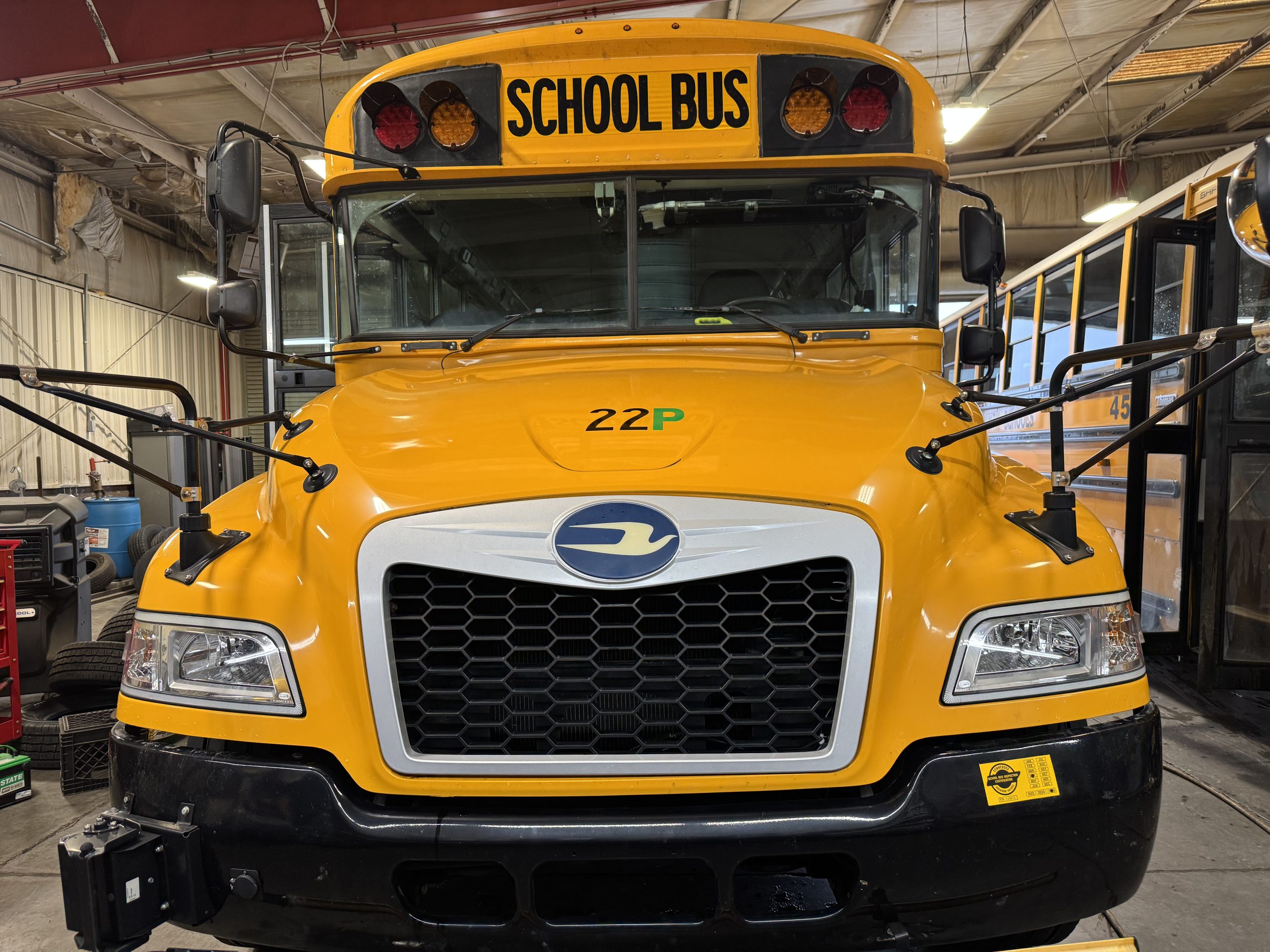
Two Washington Counties, two school leaders and two fleet managers came together in February with a shared focus: exploring the transition from diesel to propane-powered school buses.
Virginia Clean Cities, a nonprofit organization dedicated to advancing alternative fuels and cleaner transportation options, facilitated a conversation with Washington County, Virginia Public Schools about what a shift to propane could mean for its fleet. While presentations and data are helpful, school leaders agreed that seeing the technology firsthand offers valuable perspective.
To make that possible, Virginia Clean Cities partnered with Alliance AutoGas, a member organization that supplies propane autogas across Southwest Virginia and Northeast Tennessee. Alliance AutoGas connected Washington County, Virginia, school officials with Washington County, Tennessee Schools—an existing propane bus customer located less than an hour away—for a hands-on visit in Jonesborough, Tennessee.

Nearly Six Years of Experience with Propane
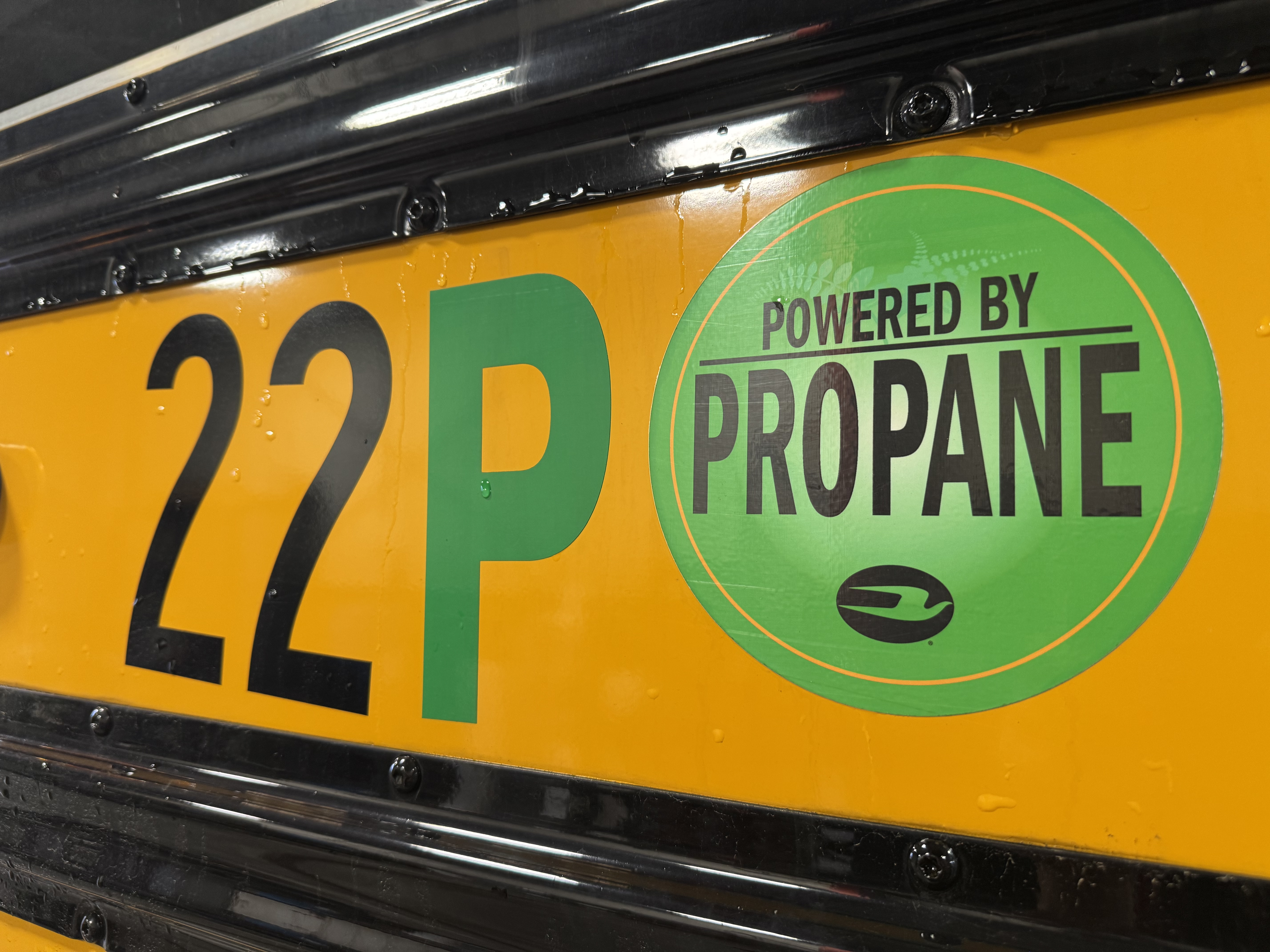
Washington County, Tennessee Schools began integrating propane buses into its fleet in 2020. Today, 21 propane buses transport students across the county, supported by three on-site fueling infrastructure at multiple school facilities- which were provided and are maintained by Alliance AutoGas.
During the visit, Virginia school officials toured the transportation garage, examined fueling stations and inspected the propane-powered buses in operation. School leaders and fleet staff shared their experience transitioning from diesel to propane.
According to transportation officials, the propane-powered Blue Bird buses operate more quietly and provide a smoother ride. Parents have also offered positive feedback, noting reduced diesel odor and potential health benefits for students—particularly those with respiratory conditions such as asthma.
Fleet Manager Tony Roberts said the transition in the maintenance garage was straightforward. Mechanics required minimal additional training, and propane buses have spent less time out of service compared to their diesel counterparts.


Planning for the Road Ahead
School leaders acknowledged one challenge: planning longer trips requires additional coordination since propane fueling stations are not as widespread as diesel. Alliance AutoGas supports fleet customers with access to fueling locations at partner sites, nationwide, through an Alliance AutoGas card. In addition, the U.S. Department of Energy’s Alternative Fuels Data Center maintains an online station locator to help fleets identify public propane fueling stations when traveling outside their primary service areas.

Evaluating Costs and Environmental Benefits
Fuel cost remains a key factor for school systems operating large bus fleets. According to Alliance AutoGas, propane prices in the Southwest Virginia and Northeast Tennessee region currently range from $1.85 to $1.91 per gallon, compared to approximately $3.70 per gallon for diesel in the same region, as reported by the U.S. Energy Information Administration.
While propane buses average about four miles per gallon compared to diesel’s roughly six miles per gallon, long-term financial analysis suggest overall savings. A 2025 report examining propane bus deployment in Minnesota found that school systems saved an average of $43,500 over the lifetime of a propane bus—a measure known as Total Cost of Ownership. Savings stem not only from lower fuel costs but also from reduced maintenance expenses, as propane burns cleaner and produces fewer engine deposits.
The report also highlighted environmental benefits, including significant reductions in particulate matter, nitrogen oxides and greenhouse gas emissions compared to diesel.
Looking Forward
Following the visit, Washington County, Tennessee Schools announced plans to purchase additional propane buses this year, with the long-term goal of replacing its remaining diesel buses over time. The district is also diversifying its fleet by adding an electric school bus, further expanding its commitment to cleaner transportation options.
The field trip to the Jonesborough bus garage provided valuable insight into how propane buses operate in real-world conditions. As districts across the region evaluate fleet modernization strategies, collaboration and shared experience continue to play a critical role in informed decision-making.
]]>On February 3rd — The Department of the Treasury and the Internal Revenue Service issued proposed regulations for domestic producers of clean transportation fuel to determine their eligibility for and calculate the clean fuel production credit under the “One, Big, Beautiful Bill.” The new law made important changes to what is often referred to as the 45Z credit.
The clean fuel production credit provides businesses an income tax credit for clean transportation fuel produced domestically after Dec. 31, 2024, and sold by Dec. 31, 2029. To claim the credit, taxpayers must be registered with the IRS using Form 637, Application for Registration (For Certain Excise Tax Activities) PDF at the time of production.
The proposed regulations provide guidance on the determination of clean fuel production credits, emissions rates, and certification and registration requirements. They provide further certainty and clarity for taxpayers and address key issues raised by stakeholders.
What’s new under the OBBB:
IRS/Treasury guidance also proposes rules to implement certain OBBB changes to the clean fuel production credit. OBBB changed the clean fuel production credit to:
- Extend the credit to Dec. 31, 2029;
- Limit feedstocks to those grown or produced in the US, Mexico, or Canada;
- Add prohibited foreign entity restrictions;
- Broaden sale attribution for fuel sold through related intermediaries;
- Eliminate the special rate for sustainable aviation fuel;
- Add an anti-abuse provision to prevent double crediting;
- Prohibit negative emissions rates except for fuels derived from animal manure;
- Require feedstock-specific emissions rates for fuels derived from animal manure; and
- Exclude indirect land use changes from emissions rates.
Treasury and IRS invite public comments
Treasury and IRS welcome comments and requests to speak at the public hearing on these proposed regulations. Commenters are encouraged to use the Federal e-Rulemaking portal to submit comments (indicate “IRS” and “REG-121244-23”). A public hearing has been scheduled as described in the “Comments and Public Hearing” section. Paper submissions should be sent to: CC:PA:01:PR (REG-121244-23), Room 5503, Internal Revenue Service, P.O. Box 7604, Ben Franklin Station, Washington, DC 20044.
Content and links provided by IRS public webpage posting, retrieved February 2026
]]>Word count: 673 | Est. Time to read: 4 minutes
Each year, the Virginia Clean Cities team gives a comprehensive update highlighting current initiatives, funding opportunities, and ...]]>

Word count: 673 | Est. Time to read: 4 minutes
Each year, the Virginia Clean Cities team gives a comprehensive update highlighting current initiatives, funding opportunities, and workforce development efforts across the Commonwealth, as well as how your organization can benefit from these programs. In case you missed it or would like a recap, here’s our 2026 update.
Watch the recording here: https://www.youtube.com/watch?v=j1Xha9boGqI
View the presentation slides: vacleancities.org/wp-content/uploads/2026/01/THH-Program-Update-2026.pdf
Overview
Presented by Alleyn Harned
Executive Director Alleyn Harned opened the session with a re-introduction to Virginia Clean Cities and the nationwide Clean Cities and Communities network. He introduced a brief look into VCC’s suite of projects that aim to positively impact communities across the Commonwealth.
GUMBO [6:58]
Our Sustainable Transportation & Infrastructure Manager, Greg Brennan, introduced the audience to our key workforce education program, GUMBO.
In partnership with Louisiana Clean Fuels, this initiative develops and supports the deployment of electric vehicle infrastructure installation, maintenance, and repair curriculum in community colleges and other workforce focused educational institutions across the country.
Nationally, there is a growing demand for EVSE technicians. Here locally, we are partnering with regional organizations to study the implementation in local community colleges.
Learn more: https://chargertraining.com/
Southwest Virginia Expansion [11:43]
Presented by Tarah Kesterson, our Clean Communities and Economic Development Director, Southwest Virginia.
Joining us in February 2025 as our newest member, Tarah gives an introduction to herself and her impactful work in Southwest Virginia. Brought on as part of the Mid-Atlantic Clean Cities and Communities Expansion (MACCCE) program, she coordinates clean transportation engagement and outreach south of Roanoke. In this session, she gives an update on her adventures doing workshops, outreach, relationship-building, and more.
If your group operates in Southwest Virginia, this is your person!
LODESTAR [19:43]
Our Deputy Director, Matt Wade, spoke on progress in the LODESTAR program.
The Logistics Decarbonization in Strategic Areas (LODESTAR). Entering the final phase (started in 2023). This project aims to identify gaps in knowledge and infrastructure for on last mile delivery electrification, and to develop data, tools, and resources for replication. We’re partnering with FedEx contractor Advanced Logistics Systems and Dominion Energy to deploy electric delivery trucks and charging infrastructure.
The second part of this program is the Last Mile Leadership scholarship, a scholarship to support Virginia students interested in clean transportation as a career. In the program, they gain financial assistance and a valuable learning experience about the industry.
CMAQ [34:31]
Presented by Russ Presnell, our Clean Fleet Engagement Coordinator, we summarized our continued success with implementing the CMAQ program.
The Congestion Mitigation Air Quality (CMAQ) Program provides funding for fleet vehicles to transition to alternative fuels such as electric, natural gas or propane autogas. Reimbursements are up to an average of $10,000 for the incremental cost of new vehicles or reasonable aftermarket conversions.
Eligible for non-containment areas
This program has successfully funded 80 vehicles in 2025! These include school buses, police cruisers, parks and recreation vehicles, and more.
Learn more about CMAQ: https://vacleancities.org/reports-2/cmaq-incentive-program/
Events Update [40:29]
Presented by our Clean Communities & Economic Development Director Graham Sheridan, we briefly reviewed our three big events coming up this year:
- Electric School Bus Workshop: in partnership w/ WRI: https://vacleancities.org/event/2026-esb-workshop/
- Rally in Richmond: https://vacleancities.org/event/2026rally/
- 2026 Mid-Atlantic Advanced Transportation Summit & Expo (MAATSE): https://maccce.org/mid-atlantic-advanced-transportation-summit-expo-2026/
Q&A [43:33]
The session ended with a brief Q&A Session, where staff answered questions about workforce, electric vehicle infrastructure, and where we see our organization a year from now.
Get Involved
Become a Coalition Member: Gain specialized insights, discounts on events, technical assistance, and more when you become a coalition member of Virginia Clean Cities. vacleancities.org/become-a-member
Get Involved With a Grant or Program: Contact a member of our team if you are interested in one or more of the programs we mentioned or are on our website: vacleancities.org/about/about-us
Join us at an Event: VCC and our partners hold many clean transportation and energy events throughout the year; find one you like and join us in the field! vacleancities.org/events
Stay Connected: Want to make sure you don’t miss more events like this? Sign up to our email list and check the “Events and Webinars” box: vacleancities.org/about/stakeholders-update/
]]>The Tobacco Commission is now accepting applications for its Energy Ingenuity Fund. These dollars are specifically for Southern and Southwest Virginia and ...]]>

Revitalization Commission
The Tobacco Commission is now accepting applications for its Energy Ingenuity Fund. These dollars are specifically for Southern and Southwest Virginia and are designed for projects that create collaboration between the energy and economic development sectors.
Applications will be due February 9th via the Regional Tobacco Commission’s website. Proposed projects should either deploy resources to accelerate investments in energy projects, expand the local energy supply chain, or develop energy resiliency in this specific region of Virginia.
Learn more about the fund and how to apply here: https://revitalizeva.org/program/energy-ingenuity-fund/

The U.S. Department of Energy (DOE) and the U.S. Environmental Protection Agency (EPA) have just released the 2026 Fuel Economy Guide. The Guide provides detailed fuel economy estimates for model ...]]>

The U.S. Department of Energy (DOE) and the U.S. Environmental Protection Agency (EPA) have just released the 2026 Fuel Economy Guide. The Guide provides detailed fuel economy estimates for model year 2026 light-duty vehicles, along with estimated annual fuel costs and other information for prospective car buyers.
2026 Fuel Economy Guide
- Enhanced Electronic Access: The 2026 Fuel Economy Guide will be available in electronic format only. You can download the latest Fuel Economy Guide from the FuelEconomy.gov website at https://www.fueleconomy.gov/feg/printGuides.shtml and print copies from the electronic file as needed. The online Guide will be updated periodically to include newly released vehicle models and current fuel cost estimates.
- Display Signage: If you would like to help promote the Fuel Economy Guide or FuelEconomy.gov, you can print a sign/poster for display.
FuelEconomy.gov
DOE and EPA’s FuelEconomy.gov website helps consumers choose the most fuel-efficient vehicle that meets their needs. In addition to providing the Fuel Economy Guide, FuelEconomy.gov includes lists of the Top Ten 2026 Fuel Sippers and the 2026 Most Efficient Vehicles by EPA Size Class. The website features updated fuel economy data for new and used passenger vehicles dating back to 1984, allows side-by-side vehicle comparisons, and offers tips to help consumers save money and fuel. The website also includes National Highway Traffic Safety Administration (NHTSA) safety ratings, information on incentives, and a variety of tools to help consumers understand fuel economy and make informed vehicle purchase decisions.
]]>Camrett Logistic’s Director of Volvo Operations, Wes Mabe, talks with the company’s fleet manager about their heavy duty electric tractors.
Do ...]]>

Camrett Logistic’s Director of Volvo Operations, Wes Mabe, talks with the company’s fleet manager about their heavy duty electric tractors.
Do you know what it takes to build a tractor trailer? Some of the Virginia Clean Cities team had the opportunity to learn more about the logistics behind the scenes of this manufacturing sector at Camrett Logistics. The Camrett team showcased what takes to store, organize, assemble, and transport the hundreds of pieces that go into that truck.
The Camrett Logistics team leads the Southwest Virginia Maritime Association and at a meeting Virginia Clean Cities learned that 20% of their truck fleet is fully electric. Heavy Duty electric is not a common site in Southwest Virginia so we made the connection to learn from their expertise in this field. President and COO Cameron Peel and Director of Volvo Operations Wes Mabe agreed to a call to talk about the successes and challenges surrounding these giant electric trucks and extended the invitation to get a first-hand look at their fleet and operations. It was one VCC happily accepted.
Camrett Logistics has been serving customers for over 30 years and is strategically located along the Interstate 81 corridor in Southwest Virginia. They have facilities in Dublin, Radford, Buena Vista, Wytheville, and Bluefield. They employee over 180 people and manage 1.5 million square feet of warehouse space. Their largest customer business partner is a major OEM manufacturer in the New River Valley. The two warehouses VCC visited were both full of parts that go into building the tractor trailers produced in Pulaski County. In one warehouse, Camrett staff were assembling kits that included multiple parts they warehoused going into specific carts for final assembly. The second held larger truck parts that leave the warehouse on a planned schedule to meet production requirements.
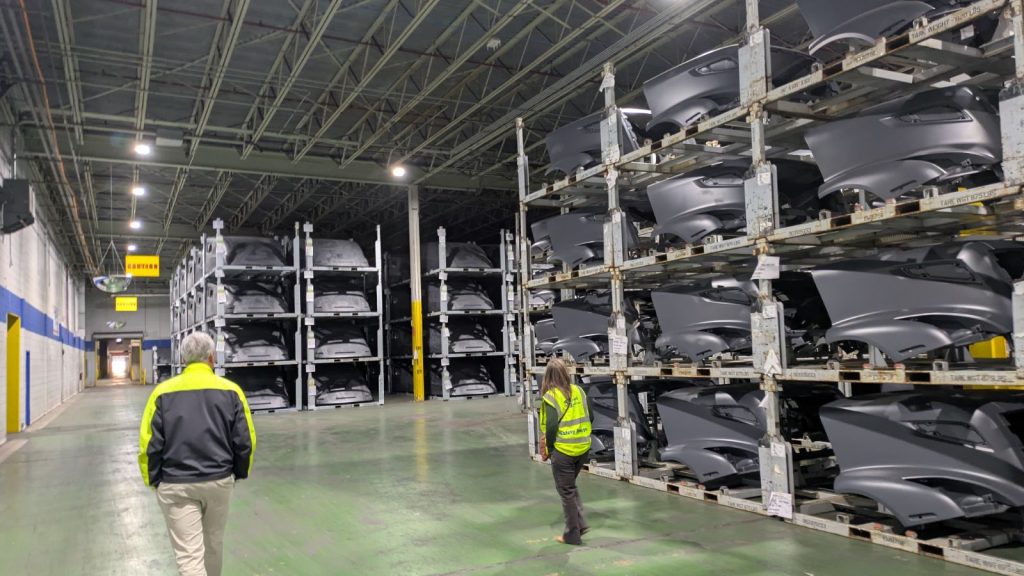

A look inside the warehouses at Camrett Logistics reveals the multiple parts and pieces they receive and store for their customers.
The electric Class 8 trucks Camrett uses for transport were constructed just down the road in the Volvo facility they support. The trucks help Camrett align with internal sustainability goals and also support business with customers that have carbon reduction goals. The trucks average about 200 miles in range and take 90 minutes to charge at the fast charging stations they installed upon purchase. The fleet manager says most charge at the end of the day and again around 2:00 p.m. for a second run.
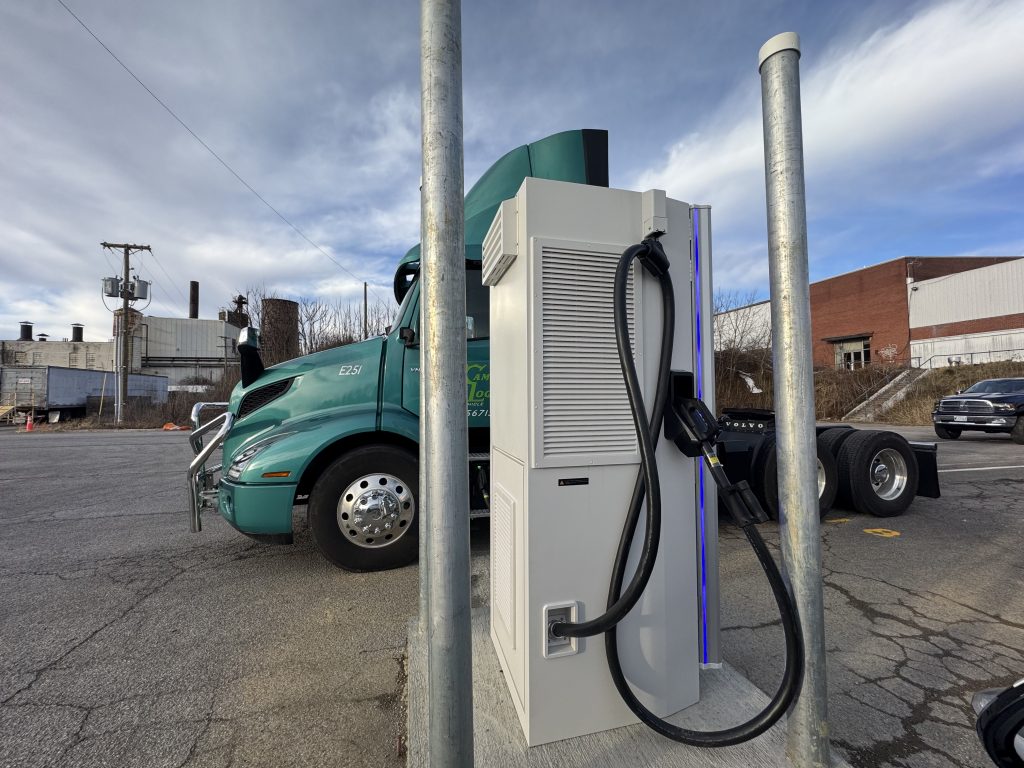
Camrett Logistics installed these charging stations for their electric heavy duty trucks.
While the routes are specifically designed for the electric truck capabilities, it makes it hard to get them much further than the Wythe County line due to a lack of heavy-duty electric vehicle charging infrastructure. These trucks also come with a much higher up-front cost. But, the Camrett team says they have seen technology improvements in their newer trucks and, once they started driving them, their truckdrivers prefer them (they’re actually hiring truck drivers if you’re interested!).
A safe and closed course gave VCC staff the opportunity to drive the truck—which was very easy to operate and, despite the size difference, wasn’t much different than operating your personal vehicle. It was a quiet and smooth ride. Because of their commitment to having positive environmental impacts in the region they serve, Camrett is part of the U.S. EPA Smartway Transport (registered trademark) Partnership contributing to the 397 million barrels of oil and 170 million metric tons of CO2 the partnership has avoided successfully avoided annually.
Their commitment to this community goes beyond the environmental impact. It is also evident in a banner with their logo displayed at the arena where the local hockey team plays in Wytheville, on little league jerseys, and at community events that enhance the areas they call home.
So the next time you’re driving on Interstate 81 or pass a Volvo truck, think about the people and processes it took to just prepare it for assembly.
]]>The JMU University Career Center is recruiting organizations to participate in our University Career Fairs in February. If you know people who hire entry level talent (think family, friends, alumni, community members, or former colleagues), encourage them to recruit their next hires at JMU. Share this email with them and/or respond to this email with contact information for people at hiring organizations. The UCC Employer Services team will connect with them about the University Career Fair and other ways that employers can connect with students about jobs and internships.
Here are details about the fair:
Spring 2026 University Career Fairs
James Madison University, Harrisonburg, Virginia
Tuesday, February 17 and Wednesday, February 28. 2026
1pm to 5 pm, Register for one or both days
Registration fees:
$600: Corporate/For-Profit Organizations
$300: Government Agencies
$200: Non-Profit Organizations and 501(c)(3) Charitable Non-Profit Organizations
We expect 900+ students each day
Find out more and register for Tuesday, Feb. 17
Find out more and register for Wednesday, Feb. 18
Other spring recruiting events include:
CISE Fair: Tuesday, February 10th, 2026 in Festival Ballroom; for Biotechnology, Computer Science, Engineering, Geography, Information Technology, Integrated Science & Technology, and Intelligence Analysis
Hart Fair: Wednesday, February 11th, 2026 in Festival Ballroom; for Hospitality and Sport & Recreation Management majors
Teacher Recruitment Day: Friday, February 20th, 2026 in Festival Ballroom; for Education majors
Hiring Now Event: Wednesday, April 1st, 2026 in Madison Union Ballroom; limited to 30 companies actively hiring for the summer

Open job postings below:
]]>