
(This article is re-published and re-edited from a previous version written on December 2004)
People are often amazed by musicians who play by ear, such as pianists who can just pick up melodies and play them on the spot, adding chords, accompanying singers who pause or change keys in mid-tune, inventing harmonies, etc.
I have found that sometimes the people who are the most amazed by improvisation are actually professional musicians who are classically trained – very accomplished musicians in fact – but they rarely engage in the art of improvisation. Many classically-trained concert pianists who can sight-read Bach and Bartok with astonishing skill do not improvise. To them, the magic of inventing musical expression on the spot is curious, impressive – even alien.

Vasily Kandinsky (1866–1944): Komposition 8 (Guggenheim)
As a person who was figuring out Beatles tunes on the guitar with my brother at age nine, improvisation has always been natural – synonymous with the very idea of music. I never had the patience as a young man to interpret a bunch of tiny black dots on a page. Only later in life did I actually learn to read – and even to this day, I have to mumble under my breath: “every…good…boy…does…fine” before I can produce a single note.
Music is About Ears, Not Eyes
I believe that improvising music is no different than speaking – it is in fact the most natural form of music creation. This is because we are a language species, and therefore, we are improvisers by nature. It just so happens that we practice improvisational speaking a lot more than we practice improvisational music.
Reading A Script To Your Husband or Wife
Imagine coming home from work and walking up to your spouse, opening up a booklet and beginning to recite from page 134, third paragraph: “Good evening dear, and how was your day?” That would be ludicrous. Obviously one does not need a script to talk. We are able to construct sentences on the fly, to fit the situation, to express the mood of the moment, and to respond to what the other person had just said. We are improvisational creatures – and our brains have evolved to allow us to do this very well. Every day of a person’s life, a unique sentence – a combination of words – is generated which that person has never said, and will never say again. And of course, that is just the words – those symbolic units that dance around in abstract space. There is much more to natural language than mere words, operating on deeper levels of brain and society. There is intonation, timing, punctuation, body language – essentially, the musical dynamics of speech.
While I am referring to the musicality of speech as the basis for advocating improvised music, I am not making a negative statement about classically-trained musicians who sight-read and do not improvise. I’m just suggesting to those who are amazed by improvisation that… this is where it all started. It’s not amazing at all! It is the origin of music itself.
Playing Back an Improvisation Preserved for Eternity
It would be totally wrong for me to say that musicians who sight read are not creative, or are not engaged in the spiritual level of music. Classically-trained musicians, as well as conductors, are the ones who have allowed us to enter into the minds and souls of Vivaldi, Beethoven, Stravinsky, Satie. And they are certainly more than just technicians who scan manuscripts as if they were records in a juke box. They are interpreters of the original emotion and meaning that was present when the musical piece was composed. Many a tear shed from the eye of a violinist is the same tear that Tchaikovsky shed when he created the original melody. And the fact is, neither you nor I could ever actually hear Tchaikovsky composing. Because he has been dead for a long time. His music is brought to life by living souls. And each interpreter brings his or her mood, individuality, culture, and the technology of the times – into the experience.
Chopin and Monk Interpreters
I recall hearing a radio program about Chopin’s music in which a musical critic referred to “Chopin interpreters”, classical pianists who specialize in expressing the essence of Chopin (at least as far as critics and historians could tell). I’ve even come across the term, “Chopinist”. This is also used in reference to contemporary jazz pianists who play Thelonius Monk – “Monk interpreters”, as well as musical scribes who preserve Monk’s recordings into notation. Any interpreter of a late jazz composer deals with an extra level of interpretation due to the fact that a large part of the composers art was improvisation – performances of the same musical piece were played differently for each recording. In the case of Monk, with his unique manner of weaving syncopated rhythm and harmony and using silent pauses of “thought”, there is an individual cosmology to be understood – one must enter into his mind to see this musical machinery at work.
The Universality of Communicating with Sound
The history of music is probably as old as the history of human speech itself. Like the earliest examples of “art” we know of, created on the walls of caves, music may have had a functional aspect. It may have been a way for humans to communicate to each other in a more ritualistic and transcendent way than the average grunting of daily life.
The world has many materials which the human species has appropriated, all of which produce overtones when struck, plucked, or stroked. Some materials produce more coherent overtone spectra – in which the fundamental frequencies are easily heard: other materials produce complex overtone spectra, and serve a percussive purpose. These overtones are a part of the physical nature of our world, and they are echoed within the language-generating machinery of our brains. Why did dodecaphonic music not free music from the tyranny of harmony? Because the language of music is inherently hierarchical – and this is because of the way physical objects vibrate. And we are physical objects.
I believe that the logic of harmony emerged from two things:
1. physics
2. the need for humans to communicate.
Connect to Your Soul with Music
I would conclude that the joy of creating music is not for the privileged few who have gone through the rigor of seven years at the Conservatory. Music is the underlying sound of our speech. It happens all the time – every day of our lives. To improvise with sound is natural, whether it takes the form of beating rhythms on your knee or cooing to a newborn baby. It is also a way for us to connect to the harmonic logic that resides in the molecular structure of the world. And it’s a way for us to connect to each other with the sounds that lie beneath mere words.


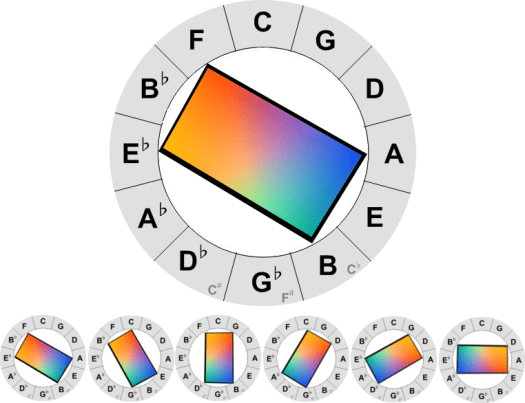


 If you try to untangle the source of something to determine whether it is from genes or environment (nature vs. nurture), you usually fail. And that’s because the interactions of genes with the environment is really like the boundary of the Mandelbrot Set. You can keep zooming in, but you’ll never find the boundary.


 I think we should be working to fix our own emotional mess, instead of trying to make vague, naive predictions about machines having feelings. Machines will – eventually – have something analogous to animal motivation and human states of mind, but by then the human world will look so different that the current conversation will be laughable.
  This article


 The pile of papers, files, receipts, and other stuff and shit accumulating on my desk at home has grown to huge proportions. So today I decided to put it all into several boxes and bring it to the co-working space – where I could spend the afternoon going through it and pulling the items apart. I’m in the middle of doing that now. Here’s a picture of my progress. I’m feeling fairly productive, actually.
 Some items go into the trash bin; some go to recycling; most of them get separated into piles where they will be stashed away into a file cabinet after I get home. At the moment, I have a substantial number of mini-piles. These accumulate as I sift through the boxes and decide where to put the items.
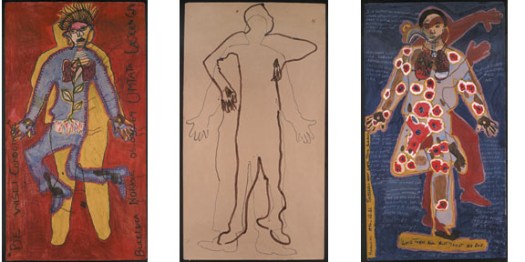
 Last night I was walking with my friend Eddie (a fellow graduate of the MIT Media Lab, where the late Marvin Minsky taught). Eddie told me that he once heard Marvin telling people how he liked to remember the topics of an upcoming lecture: he would place the various topics onto his body parts.
 My body. My home town. My bed. My shoes. My wife. My community. The piles in my home office. These things in my life all occupy a place in the world. And these places are mapped in my brain to events that have happened in the past – or that happen on a regular basis. My brain is the product of countless generations of Darwinian iteration over billions of years.

 I recently bought a set of headphones. These were good headphones in most respects…until they broke at the complicated juncture where the ear pieces rotate. Once these headphones broke, there was really nothing I could do to fix them. But I decided to try – using a special putty that dries and holds things into place.
 It took a long time to figure out how to do this. When I finally repaired the broken part, I realized that the wires had been severed inside. There was no sound coming through. I had no choice but to put them into the garbage bin where they will contribute to the growing trash heap of humanity. Bad design is not just bad for consumers: it’s bad for the planet.
 Sometimes the breakdown is cognitive in nature. There’s a Keurig coffee machine at work. It uses visual symbols to tell the user what to do.
 Now consider what happens when you ride a bicycle. When riding a bike, you may occasionally lose balance. But that balance can easily be recovered my shifting your weight, turning the wheel, or several other actions – many of which are unconscious to you.
 Earth...Brains...Technology...Design