
From the book, Wide Awake at 3:00am, I learned that researchers had come up with an answer to a common question, “Why do we sleep”?
It’s a valid question. What’s the actual purpose of sleep? Why would nature favor having the majority of animal species waste several hours each day in a state of unconsciousness, getting nothing done, and becoming vulnerable to predators?
The answer the researchers came up with required turning the question on its head: “Why should any living thing bother waking up at all?” Perhaps sleep is the normal state of all life, and wakefulness is just some aberration – a phenomenon that evolved later – as a part-time activity to more efficiently pursue food and sex.
As a lover of naps and hater of alarm clocks, I kind of like this idea.
 I recall reading somewhere that sponges are “always asleep”. But I also read recently that sponges “never sleep”. Rather than go back and do more research to clear up this issue, I shall instead declare that the problem lies the definition of “sleep”.
If you’re a sponge, you have no neurons. Having no neurons is a good indication that you have no brain. And no brain means no dreaming. Sponges are not like us in that they are sessile: they have no motility (except in the larval stage, when genetic dispersal occurs). If you don’t have to get up and go to work, why bother having a brain? Brains provide inner-representations of the outside world – used to navigate unpredictable terrains. Sponges just sit there at the bottom of the ocean and collect ambient nutrition. A task so easy that anyone can do it in their sleep.
 Brains for Movement
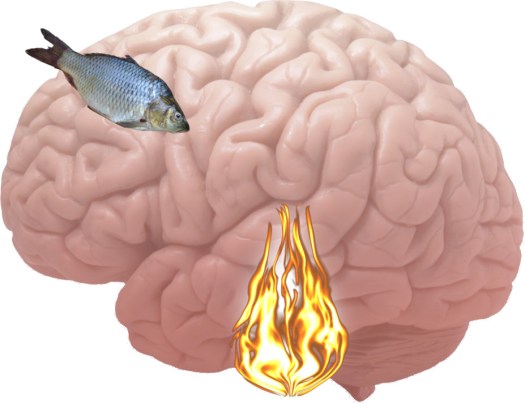
The evolution of mobility required not only the direct control of muscles but also representations of reality that determined when and how those muscles get activated. Brains evolved in order for animals to evolve.
Long ago, there was no such thing as “waking up”. Until brains came along and gave organisms a reason to get off their asses and get a job. Perhaps asses and jobs had to evolve as well. But let’s not get too technical here.
It is possible that the binary states of wakefulness and sleep were not invented by brains themselves, but earlier in evolutionary history, by simple neuronal networks that generate sleep-like dynamics. Given that every location on Earth other than the poles has been cycling between day and night since before life emerged, it makes sense that organic periods would emerge to harmonize with this cycle.
Perhaps the very process of storing representations of reality – no matter how small or simple – requires a periodic cycle – as indicated by research finding that sleep is required for brains to prune useless memories and absorb useful ones.
My takeaway from all of this is that I have an organ that likes to make me do complicated things for many hours each day: sixteen to be exact. That’s a long time each day being on the move and getting worked up about other brains that are wreaking havoc on the world, such as the shriveled-up shitball inside of Donald Trump’s skull.
Before I die, I will thank my brain for collecting a massive library of memories that fueled a lifetime of dreams. And then I will say goodnight to my brain, and get back to sleep.




 The pile of papers, files, receipts, and other stuff and shit accumulating on my desk at home has grown to huge proportions. So today I decided to put it all into several boxes and bring it to the co-working space – where I could spend the afternoon going through it and pulling the items apart. I’m in the middle of doing that now. Here’s a picture of my progress. I’m feeling fairly productive, actually.
 Some items go into the trash bin; some go to recycling; most of them get separated into piles where they will be stashed away into a file cabinet after I get home. At the moment, I have a substantial number of mini-piles. These accumulate as I sift through the boxes and decide where to put the items.
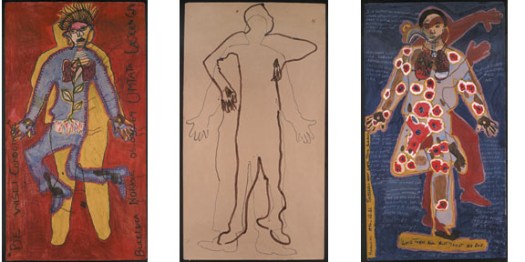
 Last night I was walking with my friend Eddie (a fellow graduate of the MIT Media Lab, where the late Marvin Minsky taught). Eddie told me that he once heard Marvin telling people how he liked to remember the topics of an upcoming lecture: he would place the various topics onto his body parts.
 My body. My home town. My bed. My shoes. My wife. My community. The piles in my home office. These things in my life all occupy a place in the world. And these places are mapped in my brain to events that have happened in the past – or that happen on a regular basis. My brain is the product of countless generations of Darwinian iteration over billions of years.

 http://www.topchair.cn/en/Question-mark-chair.htm






 When we have adequately removed those biases regarding intelligence and emotion, we may more easily see the rich signaling that goes on between all animals on this planet. We will begin to see more clearly a kind of super-intelligence that permeates the biosphere. Our paltry words will step aside to reveal a bigger vista.

 The term “Virtual Reality” is usually accompanied by high-tech images of people with clunky things stuck on their heads.
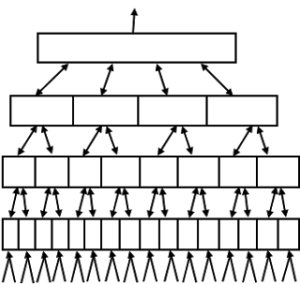

 When I see images of people with big-ass chunks of technology stuck on their faces, I wonder whats going on in the scope of the big picture – in terms of the evolution of brains. Is our internal virtual reality not sufficient enough? Is technological virtual reality just a continuation of the human instinct to tell stories, paint pictures, make movies, and games?
 We can only hold so many variables in our minds at once. I have heard figures like “about 7”. But of course, this begs the question of what a “thing” is. Let’s just say that there are only so many threads of a conversation, only so many computer variables, only so many aspects to a system that can be held in the mind at once. It’s like juggling.


 I won’t get into the story of how I solved the problem. I just wanted to make a comparison. IT SUCKS.
![Biometrics_traits_classification[1]](proxy.php?url=https://ventrellathing.wordpress.com/wp-content/uploads/2014/03/biometrics_traits_classification1.png?w=525&h=376)
 One reason is that my cousin Guido doesn’t take too kindly to people running off with my body parts…if you catch my meaning.
 Earth...Brains...Technology...Design