The post <strong>Gayle Galbraith’s Federal Brewing Accepted Into Union Kitchen Accelerator Program</strong> appeared first on .
]]>EASTON, Md; February 21, 2023…The Chesapeake Agriculture Innovation Center (CAIC) is pleased to announce that Gayle Galbraith – owner of the Federal Brewing Company of Federalsburg, Maryland – has been accepted into the prestigious Food Business Accelerator program at Union Kitchen in Washington, D.C. The Federal Brewing Company is an award-winning artisanal kombucha brewery based in Federalsburg’s Enterprise Zone.
Ms. Galbraith is one of eight participant in CAIC’s “Business Growth for Value-Added Producers” that prepares value-added producers in Maryland and Delaware to scale their businesses. The program’s objective is to give participants an understanding of their business scaling strategy and to create a roadmap for growth. As part of the program, participants toured Union Kitchen, Baltimore’s Tulkoff co-packing facility, and Redner’s Supermarket to better understand the ramifications of growth and scaling and to become acquainted with some of the resources available to them.
The program included presentations from industry experts on topics including the basics of scaling, legal and financial considerations, accessing institutional and wholesale buyers, and creating an all-encompassing business growth plan.
“We have built a solid foundation and now it is time to assemble our team and take the next step in our growth,” said Ms. Galbraith. “Union Kitchen will provide the infrastructure and the resources for undertaking our scaling efforts.
“The CAIC program gave me the introduction to Union Kitchen and the confidence to follow through with applying to the Union Kitchen program. What I learned through the CAIC program put scaling into perspective and prepared me for taking on the challenge and the opportunity that Union Kitchen offers.
“The CAIC program taught me that planning for growth and scaling requires intensive work and attention to every aspect of your company – you can’t just rely on having a great product. We were accepted into the Union Kitchen program because — in addition to having a great product — we demonstrated the entrepreneurial mindset and the ability to learn and to put in the work to accomplish our goals.”
For more information on CAIC’s programs and events, please visit www.caic.org.
About CAIC: The Chesapeake Agricultural Innovation Center (CAIC) was established in late 2020 as a new program of ESEC’s F3 Tech initiative to expand F3 Tech’s focus on food technology. CAIC is funded by a grant from the U.S. Department of Agriculture.
About ESEC: The Eastern Shore Entrepreneurship Center (ESEC) is a 501(c)(3) nonprofit organization, based in Easton on Maryland’s Eastern Shore, with a mission to educate and support entrepreneurs. Its initiatives include F3 Tech, a program that focuses bringing technology solutions to the Farm, Fish, and Food industries.
The post <strong>Gayle Galbraith’s Federal Brewing Accepted Into Union Kitchen Accelerator Program</strong> appeared first on .
]]>The post REGISTRATION FOR NREL’S CLEANTECH NETWORKING CONFERENCE IS NOW OPEN appeared first on .
]]>The post REGISTRATION FOR NREL’S CLEANTECH NETWORKING CONFERENCE IS NOW OPEN appeared first on .
]]>The post <strong>Mycologics Acquires Lab Space At FITCI</strong> appeared first on .
]]>FITCI is a business incubator and accelerator located in Frederick, Maryland, designed to cultivate entrepreneurship and reduce the risk of small business failures by providing entrepreneurs with the tools necessary to create a solid business foundation. The incubator is governed by a group of CEO advisors who provide supportive and critical advice, connections, and resources.
Mycologics is focused on developing solutions to safeguard food, feed, and health from harmful fungal pathogens and their toxins. The company’s goal is to provide farmers with affordable broad-spectrum bio-fungicides that can increase their profit margins and decrease the spoilage of crops caused by fungal infestations and contamination. The company’s founder, Dr. Anindya Chanda, is a microbiologist and mycologist with 20 years of experience in fungal and mycotoxin research.
F3 Tech, a leading commercialization program for early and late-stage companies, is supporting Mycologics through its F3 Tech Accelerator Program. The program provides funding and support for early-stage companies to prepare them for investment from industry partners, and investors. The program is designed to expedite commercialization, accelerate manufacturing, customer acquisition, and revenue development, and attract top innovators who match the industry partner’s commercial needs.
One of this year’s topics of interest for the F3 Tech Accelerator Program is focused on solutions to mitigate the growing resistance to insecticides, pesticides, herbicides, and fungicides commonly used in commercial crops. Companies selected for the program will receive non-dilutive capital investment for use in manufacturing and other CAPEX scaling initiatives that will expedite their commercialization strategy, while also promoting Maryland as an optimal location for advanced manufacturing facilities.
Dr. Chanda expressed his gratitude for the opportunity to participate in the F3 Tech program, saying that it fits perfectly with Mycologics’ strategic goals and provides access to the resources necessary for the completion of several of the company’s technical and business milestones.
The support from F3 Tech and FITCI is invaluable for Mycologics as it works to develop its innovative antimicrobial solution. The company is now poised to bring its product to market, helping farmers around the world produce more quality crops and reduce the damage caused by fungal infestations and contamination.
The partnership between Mycologics, F3 Tech, and FITCI represents a significant step forward in the fight against harmful fungal pathogens and toxins. The support provided by these organizations will help Mycologics bring its innovative solution to market and improve the lives of farmers everywhere.
Source: f3tech.org
The post <strong>Mycologics Acquires Lab Space At FITCI</strong> appeared first on .
]]>The post BLOOMFIELD IS LOOKING FOR A DIRECTOR OF GROWTH appeared first on .
]]>The post BLOOMFIELD IS LOOKING FOR A DIRECTOR OF GROWTH appeared first on .
]]>The post Future Food Security Depends on Modern Security Controls appeared first on .
]]>Digital Transformation on the Horizon
The US Food and Agriculture sector is painstakingly undergoing the digital transformation necessary to meet the modern demands of domestic and international consumers. The recent shift is driven by customer expectations of quality and availability, sustainability, supply chain transparency and traceability, logistics optimization, and other key factors that maximize yield and revenue. Though there is some disparity in the application of the terminology, we are currently experiencing Agriculture 3.0, characterized by the adoption of remote sensors, a reliance on cloud connectivity, a rapid transition towards automation, and the incorporation of real-time variable rate technologies. Data is collected, analyzed, and monitored at each stage of the growth, processing, and transportation cycle. Mission-critical operations are governed by machine learning optimization algorithms that incrementally maximize revenue with each micro-decision.
According to the World Government Summit report, ‘Agriculture 4.0 – The Future of Farming Technology‘, the onset of Agriculture 4.0 is expected around 2030. Success can be gauged according to Demographics, Scarcity of natural resources, Climate change, and Food waste. They assert that “Agriculture 4.0 will no longer depend on applying water, fertilizers, and pesticides uniformly across entire fields. Instead, farmers will use the minimum quantities required and target very specific areas.” The report further states that “farms and agricultural operations will have to be run very differently, primarily due to advancements in technology such as sensors, devices, machines, and information technology. Future agriculture will use sophisticated technologies such as robots, temperature and moisture sensors, aerial images, and GPS technology. These advanced devices and precision agriculture and robotic systems will allow farms to be more profitable, efficient, safe, and environmentally friendly.”
Achieving the technological goals of Agriculture 4.0 is essential because, according to the World Government Summit’s estimation, by 2050, we will need to produce around 70 percent more food at roughly the same or less expected cost and revenue [3]. The metrics above indicate that future needs can only be met through a greater focus on automation and precision agriculture.
As we continue towards Agriculture 4.0, the sector is likely to adopt autonomous systems and artificial intelligence further, incorporate blockchain solutions, and improve system redundancy and resilience; however, progress is currently limited by technological developments and rural access to highspeed broadband, 5G, and LEO satellite internet.
Disruption Jeopardizes the Food-to-Table Spectrum
Attacks against agriculture stakeholders of all sizes have annually increased since 2018 in proportion to the digital transformation and modernization of the sector. In Information Security, risk can often be quantified according to scenarios and impacts against mission-critical assets’ confidentiality, availability, and integrity. In 2018 the US Department of Homeland Security released a 25-page report to raise awareness of ‘Threats to Precision Agriculture,’ which designated the top threats to confidentiality, integrity, and availability in the US Food and Agriculture sector respectively as theft of intellectual property and data, targeted disruption and data-driven attacks, and signal loss and data bandwidth limits common in rural communications networks [4]. Similarly, in 2020, the UK National Cyber Security Centre (NCSC) created a 14-page guide, ‘Cyber Security for Farmers‘, to help educate sole traders, small to medium-sized operators, and large-scale commercial farms on cybersecurity and cyber-hygiene fundamentals [5]. Disruptionware attacks against farms and other agriculture infrastructure became more frequent in 2022 and will continue to increase as food and agriculture infrastructure modernizes. However, the vast majority of targeted or opportunistic attacks can be mitigated through fundamental cybersecurity and cyber-hygiene best practices.
Concluding Recommendations
Farming infrastructure is expensive and daily life depends on its continuous operation. Farm owners and operators can help foster Agriculture 3.0 and 4.0 by improving their fundamental cybersecurity and cyber-hygiene according to the following five recommendations:
- Just like how other farm equipment requires maintenance and eventual replacement, computers and internet enabled systems must be regularly updated and eventually replaced.
- Make regular backups of your important data, such as emails, invoices, contacts, orders, quotes., and keep these backups in a separate location.
- Keep your devices safe, as you would any other valuable asset. Phones, laptops, autonomous farming equipment, and other assets should be protected with antimalware, complex passwords, encryption, and multi-factor authentication where possible – most of which can be downloaded from reputable vendors on an app store and feature single button installation. Solutions that enable you to remotely track, lock, erase, or backup and recover data are also useful for virtually and physically securing equipment.
- Be skeptical on phone calls, in email, and online. Rely on judgement, common sense, and critical thinking. Don’t click on emailed links and instead type into a browser search bar instead.
- Practice “stranger danger.” When receiving an email or call do not share information unless you were expecting the contact and take steps to externally verify that the email or call came from the source it claims to be representing. Never share banking or other sensitive information over phone, text, or email. Scams will typically try to hook victims with false authority, urgency, emotion, fear, scarcity, and current events.
References
1. “Food and Agriculture Sector”, 2018. [Online]. Available: https://www.cisa.gov/food-and-agriculture-sector. [Accessed: 23-Jan-2023].
2. “Agriculture and Food.” [Online]. Available: https://www.worldbank.org/en/topic/agriculture/overview. [Accessed: 23-Jan-2023].
3. “Agriculture 4.0 – the future of Farming Technology,” Agriculture 4.0 – The Future Of Farming Technology, 13-Feb-2018. [Online]. Available: https://www.oliverwyman.com/our-expertise/insights/2018/feb/agriculture-4-0–the-future-of-farming-technology.html. [Accessed: 23-Jan-2023].
4. “Cybersecurity threats to Precision Agriculture,” CISA, 2018. [Online]. Available: https://us-cert.cisa.gov/ncas/current-activity/2018/10/03/Cybersecurity-Threats-Precision-Agriculture. [Accessed: 23-Jan-2023].
5. “Cyber Security for Farmers,” NCSC, 2020. [Online]. Available: https://www.ncsc.gov.uk/guidance/cyber-security-for-farmers. [Accessed: 23-Jan-2023].
6. “Ransomware Attacks on Agricultural Cooperatives Potentially Timed to Critical Seasons,” DHS, 2022. [Online]. Available: https://www.ic3.gov/Media/News/2022/220420-2.pdf. [Accessed: 23-Jan-2023].
The post Future Food Security Depends on Modern Security Controls appeared first on .
]]>The post UNIVERSITY OF MARYLAND<br>COLLEGE OF AGRICULTURE AND NATURAL RESOURCES<br>AGRICULTURAL EXPERIMENT STATION appeared first on .
]]>Title: Faculty Assistant
Position Number: 127616
Category Status: 15-Faculty, Non-Tenured, Continuing Contract
(10 months; October, 2022 to August, 2023, 40 hours per week)
Unit: AGNR-AES-Harry R. Hughes Center for Agro-Ecology (Queenstown, MD)
Position Summary/Purpose of Position:
The candidate will be part of a project team that has experience in anaerobic digestion of manure or manure+food waste co-digestion, life cycle assessment, greenhouse gas emissions from digestion implementation, agriculture economics, and equity issues.
Essential Duties and Responsibilities:
- Essential Duties and Responsibilities:
- Analyze drivers and trends in animal waste, with the results analyzed using sensitivity analyses and creations ofscenarios to understand the effect of policy trends and other drivers on overall animal waste and food wastevolumes.
- Work with Maryland industry groups, state officials, and researchers to understand animal trends, fundingopportunities, and future initiatives that could impact manure, other animal waste, and food waste quantity andutilization in on-farm applications.
- Lead an evaluation of state and national climate change goals and consideration for animal waste technologies tomitigate greenhouse gas emissions.
- Conduct interviews of industry leaders and policymakers to identify current state, regional and federal programs.Conduct focus groups to evaluate trends in policy and projected future legislation.
- Evaluate strengths and weaknesses of animal waste technologies to address climate change goals. Evaluate thecontribution to climate change from animal waste and the effects of animal waste technology to mitigate climatechange.
Minimum Qualifications:
Required-
- Master’s Degree in Environmental Policy, Public Policy or related field
- Ph.D. preferred in Environmental Policy, Public Policy or related field
Preferred Knowledge: The successful candidate should have a background in policies relating to the following: dairy, poultry, beef, or swine manure management, effect of anaerobic digestion on manure transformation and greenhouse gas emissions, and/or the effect of nutrient management and US state policies on the economics of anaerobic digestion implementation.
Salary & Benefits: $45,000 – $50,000 for 10 months, depending on experience. University of Maryland benefits, optional. All interested persons must apply through: https://ejobs.umd.edu/ Position #127616. For specific questions regarding this position, please email Nancy Nunn, Assistant Director, Harry R. Hughes Center for Agro-Ecology, [email protected]
Closing Date: For best consideration, apply by 5pm on September 15, 2022.
The University of Maryland, College Park, actively subscribes to a policy of equal employment opportunity, and will not discriminate against any employee or applicant because of race, age, sex, color, sexual orientation, physical or mental disability, religion, ancestry or national origin, marital status, genetic information, or political affiliation. Minorities and women are encouraged to apply
The post UNIVERSITY OF MARYLAND<br>COLLEGE OF AGRICULTURE AND NATURAL RESOURCES<br>AGRICULTURAL EXPERIMENT STATION appeared first on .
]]>The post Mycologics Selected to Participate in the F3 Tech Accelerator Program appeared first on .
]]>Mycologics is an early-stage biologics company focused on developing solutions to safeguard food, feed, and health from harmful fungal pathogens and their toxins. The company is currently developing a line of affordable broad-spectrum bio-fungicides and anticipates finalizing an initial prototype of the product this year with support from F3 Tech and Johns Hopkins University. Mycologics was founded by Dr. Anindya Chanda, a microbiologist and mycologist with 20 years of experience in fungal and mycotoxin research.
“Our vision is to enable farmers to produce more quality crops that can increase their profit margins,”
said Dr. Chanda. “Approximately 25-30 percent of food crops are damaged every year due to fungal infestations and fungal toxin contamination. The spoilage of crops is hurting farmers all over the world.”
One of this year’s topics of interest for F3 Tech Accelerator Program is focused on solutions to mitigate the growing resistance to insecticides, pesticides, herbicides and fungicides most commonly used in commercial crops. Applications for the F3 Tech Accelerator are being accepted on a rolling basis to meet the urgent needs of F3 Tech industry partners. Companies selected for the program will have the chance to receive non-dilutive capital investment for use in manufacturing and other CAPEX scaling initiatives that will expedite their commercialization strategy, while also promoting Maryland as an optimal location for advanced manufacturing facilities.
“I am immensely grateful for this opportunity,” said Dr. Chanda. “The scope of the F3 Tech program fits perfectly with Mycologics’ strategic goals and will give us access to resources necessary for the completion of several of our technical and business milestones.”
To apply for the F3 Tech Program, please visit: https://f3tech.org/program/accelerator/
About F3 Tech
The F3 Tech Accelerator Program is an initiative of the Eastern Shore Entrepreneurship Center (ESEC) which was developed in 2018. F3 Tech provides advanced business advisory support for early and late-stage companies to prepare them for potential investment, commercialization and collaboration with its industry partners, and investors. For more information, please visit: https://f3tech.org/.
The post Mycologics Selected to Participate in the F3 Tech Accelerator Program appeared first on .
]]>The post Windtree Bee appeared first on .
]]>Windtree Bee is a family-owned apiary in north Baltimore County. Run by Jill McCullough and her husband Craig, who serves as the primary beekeeper, it is truly a family affair. Their two daughters, Haley and Ellie, pitch in to help with photography and social media, while Jill manages everything from sales, to packaging and marketing. Windtree Bee sells delicious jams, home-harvested honey, rustic pantry foods, cottage bouquets, and unique, one-of-a-kind nature-themed art and heritage crafts.
We sat down with Jill, who recently participated in the Chesapeake Agriculture Innovation Center’s program to help value-added agriculture producers scale their business and ensure profitability, to discuss her family business.
What drives you to do what you do?
I’m passionate about heritage skills and artisan products, especially when they’re made with locally sourced materials or ingredients. Modern technology and a global economy may be well and good, but for ordinary folks living in a community, sometimes the best connections are the in-person ones made by learning, doing, and buying things that have been taught and bought for centuries: beekeeping & honey, canning & jam, gardening & flowers. I also love nurturing a nature-based business. Everything we do is tied to the land in some way, even the outdoor markets where we sell our products give us the opportunity to be outside.
What did you gain most from the CAIC program?
Inspiration to push our little business to the next level. Participating in the CAIC workshops and break-out sessions helped motivate me to write our first business plan; register our trade name; design a logo; order new business cards, t-shirts, and table banner; tackle Instagram; find new markets; review our liability insurance; and buy my own bee suit!
What’s next?
Our dual metric for success is incremental growth combined with exponential improvement. Windtree Bee offers high quality, handmade or home-harvested goods, so each product is unique or part of a very small batch. This year, we added a second regular market to our selling season. We have more hives and planted a strawberry patch on our one-acre apiary. I’m also exploring ways to expand in smart, sustainable ways. In the future, we may offer beekeeping services, heritage craft workshops, and/or other artisan acidified foods.
Advice for budding entrepreneurs?
Answer your “why” early on. If you know why you’re doing what you’re doing, it makes every decision easier. Also, I understand that some entrepreneurs are driven by numbers (gross sales, total units sold, social media followers, etc.), but I would encourage small businesses to revel in their size. (Check out Paul Jarvis’ Company of One: Why Staying Small is the Next Big Thing in Business.)
Favorite quote?
The difference between a flower and a weed is judgment.
You can meet Jill and taste her products at the Maryland Ag Center Farm Market on Friday afternoons or at the Hereford Farm Market on Saturday mornings. To learn more about Windtree Bee, check out their website, windtreebee.com.
SOCIAL MEDIA POST;
Windtree Bee is a family-owned apiary in north Baltimore County. Run by Jill McCullough and her husband Craig, who serves as the primary beekeeper, it is truly a family affair. Their two daughters, Haley and Ellie, pitch in to help with photography and social media, while Jill manages everything from sales, to packaging and marketing. Windtree Bee sells delicious jams, home-harvested honey, rustic pantry foods, cottage bouquets, and unique, one-of-a-kind nature-themed art and heritage crafts.
We sat down with Jill, who recently participated in the Chesapeake Agriculture Innovation Center’s program to help value-added agriculture producers scale their business and ensure profitability, to discuss her family business.


The post Windtree Bee appeared first on .
]]>The post Tobacco Barn Distillery appeared first on .
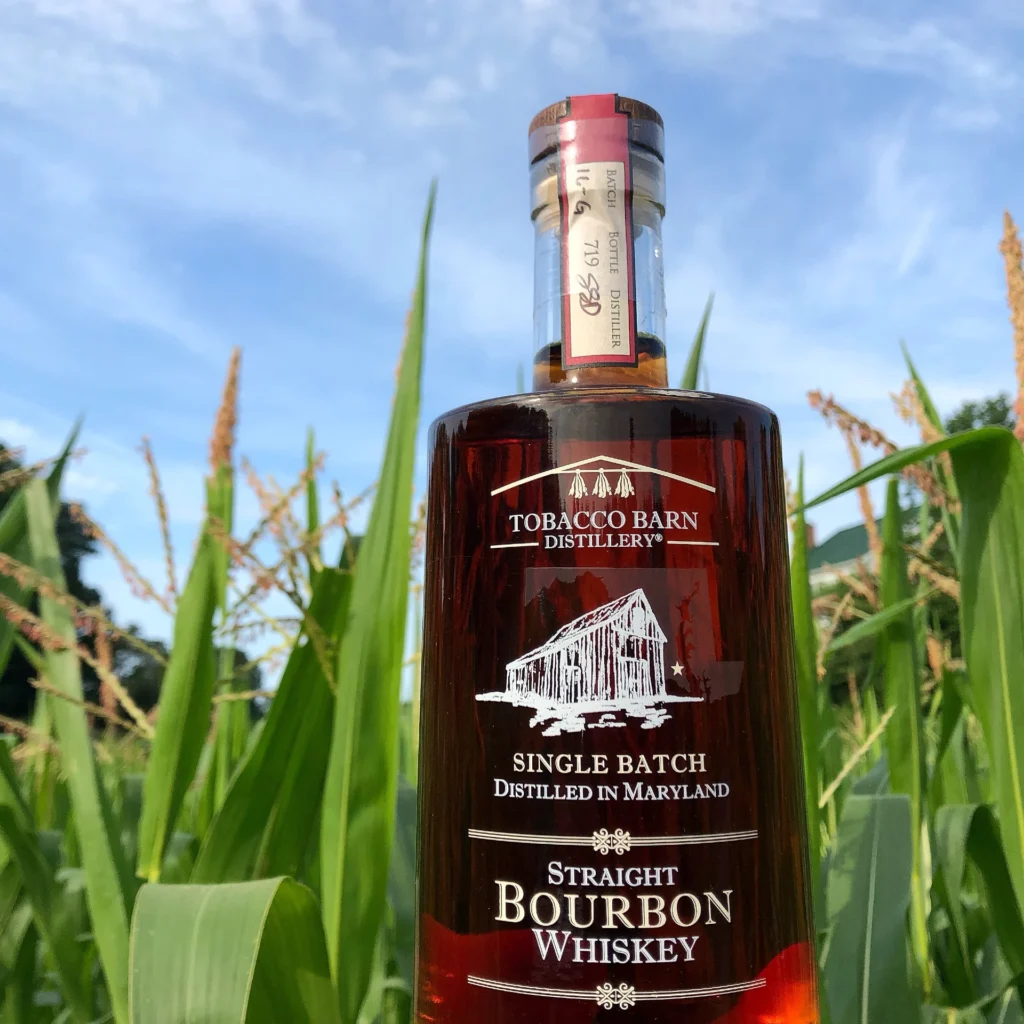
]]>Tobacco Barn Distillery, created by three longtime friends in 2014, is one of the rare “farm to bottle” distilleries that grows the corn it uses to produce authentic “singe batch” bourbon right on premise at their farm about an hour south of Annapolis. The partners are passionate about their product, and re-establishing one of the oldest whiskey making areas in the U.S. That’s right, before Tennessee and Kentucky, distillers in South Maryland were busy perfecting their craft in the colonial period.
We spoke with Retired Navy Rear Adm. Scott Sanders, one of the partners, who recently participated in a comprehensive program with the Chesapeake Agriculture Innovation Center designed to help value-added agriculture producers scale their business and ensure profitability and viability.
What drives you to do what you do?
This is really a labor of love for all of us. We are Bourbon and Scotch guys who have been friends for over 30 years and are now proudly crafting handmade, locally sourced, and environmentally conscious bourbon where Basil Hayden started distilling, St. Mary’s County, Maryland in the 1700’s.
What makes your products environmentally friendly?
We are a true ground-to-glass distillery. We grow all the corn used in our Bourbon and whiskies right here on the farm. Grains we don’t grow ourselves are sourced from other local farmers and suppliers. Our farm distillery uses a combination of solar, geothermal and heat recovery systems as part of our commitment to protect our environment. We make extraordinary efforts to be environmentally responsible and sustainable. We recently won the 2022 Maryland Green Registry Sustainability leadership award.
What can you tell us about you got started?
I have two partners, Dan Dawson and Sean Coogan. Dan had the #3 license to distill corn into ethanol in the late 70’s during the fuel crisis and Sean had seen that the laws were changing across the U.S. for craft distilling about 15 years ago. I was in the Navy and commanded the International Counter-Piracy Force off Somalia in 2009-2010. I met with Admirals and diplomats from many nations. I used to hand out a signed bottle of Bourbon as a gift. That made me a very “popular” guy in the Gulf of Adan! When I came home and told my partners how popular Bourbon was worldwide, well we decided to start our distillery since Dan knew how to distill and Sean knew the regulations. It was not accidental, we spent over two years on industry research and a year writing the business plan.
What was your favorite part about the Chesapeake Ag Innovation Center Program?
We do a lot of collaborations with other farmers and vets to create products, and this was a great opportunity for us to connect with other farm-based Maryland businesses. While we are proud of the fact that we sell every bottle we make, we look to long-term profitability in the future. We are looking to gain a better understanding of how to press forward with marketing small farm products.
Do you have a favorite quote you live by?
Sean always reminds us that we want to make the finest Bourbon to share with family, friends, and neighbors. But we do like the quote: “You had me at Bourbon!”
Technically, this is question #6, but how can someone learn more about Tobacco Barn Distillery?
Come and visit us in St. Mary’s County. We have a tasting room open on weekends or by appointment. Check out our website, www.tobaccobarndistillery.com to learn more.
Social Media post
Tobacco Barn Distillery, created by three longtime friends in 2014, is one of the rare “farm to bottle” distilleries that grows the corn it uses to produce authentic “singe batch” bourbon right on premise at their farm about an hour south of Annapolis. The partners are passionate about their product, and re-establishing one of the oldest whiskey making areas in the U.S. We spoke with Retired Navy Rear Adm. Scott Sanders, one of the partners, who recently participated in a comprehensive program with the Chesapeake Agriculture Innovation Center designed to help value-added agriculture producers scale their business and ensure profitability and viability.

The post Tobacco Barn Distillery appeared first on .
]]>