The programme is part of the Sea Power Laboratory, a UK-based initiative led by the Council on Geostrategy that aims to generate new thinking on maritime strategy and sea power. Through research, publications, events and leadership programmes, the initiative brings together experts from defence, government, academia and industry to test new ideas and strengthen understanding of the strategic importance of the maritime domain.
For Wallenius Lines, supporting the programme is a natural extension of the company’s long-standing engagement in strategic maritime discussions.
Shipping carries around 90 percent of global trade, and the resilience of maritime supply chains is increasingly recognised as a matter of national and international security. Strengthening dialogue between commercial shipping and defence stakeholders is therefore becoming more important — particularly in Northern Europe, where the Baltic Sea and surrounding regions play a growing strategic role.
Charlotte Kleberg, Board& Advisory Soya Group, says:
– We are very pleased to continue our partnership with the Council on Geostrategy and the Maritime Leaders’ Shipping Forum. The first year demonstrated the value of bringing together expertise from across defence, academia and industry. In the coming year, we look forward to strengthening the shipping perspective by focusing on ensuring resilient maritime supply chains, securing rapid access to capacity, and protecting reinforcement routes and vessels, with the overall aim of reducing vulnerabilities and tackling some of the most significant challenges to the safety of seagoing trade’.
By supporting the Forum, Wallenius Lines contributes to advancing dialogue and knowledge sharing across sectors — helping to ensure that maritime trade and supply chains remain secure, resilient and sustainable, in a rapidly changing world.
]]>The latest newbuilding contract is for a pair of 3000 CEU-capacity PCTCs to be constructed at China Merchants Jinling Shipyard Nanjing where the leading European sustainable RoRo carrier already has on order two larger 4500 CEU units with similar specifications that are due for delivery in 2028.
These newbuildings represent a significant step forward in safety, efficiency and environmental performance, while redefining cargo-carrying capability in the PCTC segment. This is an
important milestone both in strengthening the sustainability and capability of our fleet, as well as our partnership with China Merchants Jinling, a premium shipyard with strong credentials in delivering high-quality, innovative vessels, said UECC’s CEO Glenn Edvardsen after signing the newbuilding contract on 2 March.
The latest newbuildings, developed in close cooperation with Shanghai Ship Research & Design Institute (SDARI), will incorporate multi-fuel LNG-driven engines with state-of-the-art propulsion technologies to optimize energy efficiency and an aerodynamic hull design to minimize fuel consumption and they will have shore power capability.
Read the full pressrelease here
For more information contact:
Bjorn O. Gran Svenningsen, Director Sales & Marketing, UECC
Email: [email protected]
About UECC
UECC (United European Car Carriers) is a leading provider of sustainable shortsea RoRo transportation in Europe. UECC operates a fleet of Pure Car and Truck Carriers (PCTCs), delivering logistics solutions with a focus on sustainability. The company is committed to reducing its environmental impact through the Sail for Change programme and other initiatives.
This is a proud moment for everyone involved. It proves that wind propulsion is not just a concept—it’s a viable, scalable solution for sustainable shipping, says Amrit Kaur Bhullar, CEO, Oceanbird.
This first order represents more than a technological achievement, it’s a tangible step toward cleaner, smarter ocean transport. By combining Alfa Laval’s engineering expertise with Wallenius’ pioneering spirit, Oceanbird is turning innovation into action and helping the maritime industry move closer to a net-zero future.
About Oceanbird
Oceanbird is a joint venture created in December 2021 by Wallenius Lines and Alfa Laval with the purpose of developing wind propulsion to the shipping industry. Using air pressure to push the vessel forward, one wing sail on an existing vessel, can save up 10% of fuel and emissions on optimal routes.
For more information, please contact: Jana Heiss, Interim Head of Communications, Marketing & Brand Oceanbird, [email protected]
Under the new agreement, WALLENIUS SOL will handle sea transport to key European markets using its modern, energy-efficient fleet. The cargo will be discharged in Kiel, Germany – a new destination in WALLENIUS SOL’s network – enhancing connectivity and efficiency for Holmen’s exports to Central Europe.
The partnership strengthens both companies’ commitment to sustainable logistics, combining Holmen’s renewable products with WALLENIUS SOL’s low-emission transport solutions
This collaboration ensures reliable, cost efficient and sustainable logistics for our exports,” says Ronny Björklund, Head of Logistics Procurement, Holmen Board and Paper.
We’re proud and excited to welcome Holmen as a long-term partner and to add Kiel as a new port in our service,” adds Jonas Wåhlin, Chief Commercial Officer, WALLENIUS SOL. “The addition of these volumes further strengthens our network in the Bay of Bothnia.
For more information visit Wallenius SOL webpage
]]>In early November 2025, M/S Mistral, sister vessel to M/S Lakeway Express, will join the Lakeway Link fleet. This addition allows the company to offer daily departures Monday to Friday in both directions, strengthening the connection between central Sweden and Poland and providing customers with greater flexibility and reliability.
M/S Mistral is identical in design and cargo capacity to M/S Lakeway Express. The vessel is 153 meters long and can carry approximately 110 trailers. It sails under the Finnish flag, has its home port in Mariehamn, and is owned by Godby Shipping in Åland. Lakeway Link is taking the vessel on a time charter basis, meaning that crew, operation, and maintenance will continue to be provided by Godby Shipping.
“We are very pleased to meet our customers’ requests for daily departures between Gdynia and Södertälje. The addition of M/S Mistral strengthens our service offering and allows us to provide reliable and efficient RoRo transport for both existing and new customers across the Baltic Sea,” says Göran Söderdahl, CEO of Lakeway Link.
Lakeway Link’s RoRo service can handle high and heavy cargo as well as anything that can be loaded onto a trailer or mafi (a platform for heavy cargo). With a crossing time of approximately 22 hours, the service offers a fast, reliable, and sustainable connection between central Sweden and Poland.
“This expansion is an important step in our long-term strategy to develop sustainable short-sea shipping. By increasing frequency and capacity, we can offer our customers greater flexibility while moving more cargo from road to sea, reducing CO₂ emissions, and helping to alleviate congestion on Europe’s roads,”
continues Göran Söderdahl.
The RoRo connection between Gdynia and Södertälje started in May 2024. The company’s goal is to provide a sustainable and competitive alternative to road transport between Sweden and Poland. Read the pressrelease and learn more about Lakeway Link.
]]>In May, Wallenius Lines acquired m/v Don Juan. Now, the acquisition of m/v Turandot has also been finalized. Both vessels will sail under the Swedish flag.
Registering the vessels under the Swedish flag contributes to Sweden’s national preparedness and strengthens the resilience of Swedish shipping. Together with the company’s six other vessels, Don Juan and Turandot will be important pieces in Wallenius Lines’ growing commitment to total defense.
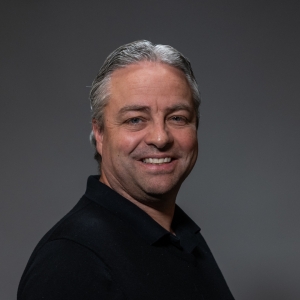
“These vessels still have the cargo capacity to meet today’s needs. For us, sustainability also means utilizing existing assets throughout their entire lifespan, and with the right fuel mix these vessels can continue to operate for many years to come”, says Erik Nøklebye, CEO of Wallenius Lines.
“It is significant that these vessels now also sail under the Swedish flag, given the current global situation. Swedish registration means that a vessel can be requisitioned for state service if needed, for example for critical transports in times of crisis. Having more vessels under the Swedish flag is essential for Sweden’s resilience”, Erik Nøklebye adds.
The vessels will remain under Ship Management by Wallenius Marine.
With Don Juan and Turandot in the fleet, Wallenius Lines now owns a total of eight commercial vessels.
As part of the Wallenius Lines legacy, this event marks a tangible step forward in realizing emission-free shipping. The Oceanbird Wing 560, designed for both new builds and retrofits, represents a breakthrough in aerodynamic performance and environmental impact. It measures 40 meters in height, 14 meters in width, and has a sail area of 560 square meters. According to Oceanbird’s calculations, a single sail can save up to 600 tons of marine diesel per year, equivalent to approximately 2,000 tons of carbon dioxide.
The inauguration in Landskrona brought together representatives from the owners, Alfa Laval and Wallenius Lines, along with sector representatives, politics and employees from Oceanbird and Oresund Dry Docks. Together, we celebrated not only a technological milestone but also the beginning of a new era where Swedish innovation once again leads the way for the future of shipping.
A shining example of Swedish innovation
Sweden’s Minister for Infrastructure, Andreas Carlson, gave a speech during the inauguration in which he highlighted the wing sail as a shining example of Swedish innovation:
“Today I had the honor of inaugurating Oceanbird’s new wing sail – a technological breakthrough developed by Wallenius Marine AB together with Alfa Laval. With its innovative design, the sail reduces both fuel consumption and emissions. It’s a solution that not only has the potential to reshape the entire industry – but also strengthens jobs, growth, and Sweden’s competitiveness.”
The first wing sail will be permanently placed at the Oresund DryDocks shipyard in Landskrona, serving both as a training platform for crews on vessels equipped with the technology, and as a marketing platform for potential future customers. A second, identical wing sail will also be assembled during the autumn and installed on Wallenius Wilhelmsen’s vessel Tirranna at the beginning of 2026.
“For Wallenius, this is a first step towards what we believe will be about wind power as a main energy source. Modern cargo vessels powered by wind sails are no longer just a cool vision. The increasing digital world already now allows for smarter planning and operation of supply chains, which in turn can deploy sailing cargo vessels without negative impact to end-consumers. Rather the opposite, consumer goods could be transported on the seas with up to 90% less emission.” – Erik Nøklebye, CEO Wallenius Lines
Note: Oceanbird is a joint venture equally owned by Wallenius Lines and Alfa Laval, combining the expertise of two leading Swedish industrial pioneers to accelerate the green transition in maritime transport.
]]>
In the picture, from left: Viktorija Starych-Samuolienė, Co-founder at the Council on Geostrategy, Charlotte Kleberg, Associate Fellow at the Council on Geostrategy, Royal Navy Strategic Studies Centre, and representative of Wallenius Lines, Lt Cdr David Carter, Merchant Navy Liaison Officer, Royal Navy, Emma Salisbury, Sea Power Research Fellow, Council on Geostrategy, Eric Ebeling, President and CEO, American Roll-On Roll-Off Carrier (ARC), Chris Chant, Deputy Director, Ministry of Defence
The seminar was held on June 13 at the Army and Navy Club in London and is part of the Maritime Leaders Programme, which brings together the maritime leaders of tomorrow. Wallenius Lines is the main sponsor of the programme. The seminar focused on how civilian merchant vessels are becoming increasingly important as strategic national assets, and why collaboration between merchant and military fleets needs to improve – a highly relevant topic given today’s geopolitical security situation.
- Eric Ebeling, President and CEO, American Roll-On Roll-Off Carrier (ARC)
- Chris Heibel, COO, American Roll-On Roll-Off Carrier (ARC)
- Lt Cdr David Carter, Merchant Navy Liaison Officer, Royal Navy
- Chris Chant, Deputy Director, Ministry of Defence
Opening speaker was Charlotte Kleberg, educated in maritime strategy and defence policy, Associate Fellow at the Council on Geostrategy, Royal Navy Strategic Studies Centre, and representative of Wallenius Lines.
Key topics of the seminar
In an uncertain world, collaboration between civilian and military maritime actors is becoming increasingly vital to secure supply chains in times of crisis. The seminar addressed several major challenges:
- Lack of vessel capacity: National merchant fleets have shrunk, making it difficult to scale up quickly when needed.
- Weak cooperation: There are insufficient routines, exchanges, exercises, and mutual understanding between shipping companies and defence forces.
- Lack of incentives: Few countries offer support or legal frameworks that encourage shipping companies to contribute to national defence efforts.
Key insights
- Collaboration is crucial: Improved cooperation and joint exercises between defence forces and civilian actors build trust.
- National incentives are needed: Support and regulations are essential to make it easier for shipping companies to contribute.
- Shared global challenges: Many countries face the same issues, making international cooperation important. The United States has made significant progress in civil-military cooperation and offers financial incentives for shipping companies to make vessels available when needed.
- The merchant fleet is a vital national resource: It must be ready when it truly matters.
What does this mean in a swedish context?
Several of the seminar’s key questions are directly relevant to Sweden:
- How can the role of the merchant fleet in total defence be strengthened?
- How can civilian and military actors train together in practice?
- Does Sweden need to introduce incentive structures to ensure maritime transport capacity in times of crisis
Many of the issues discussed in London will now be brought to Almedalen Week in Sweden, where Wallenius Lines and Nordic Way Services, a wholly owned subsidiary of Wallenius Lines, is organizing a seminar on civil-military cooperation in shipping and how Sweden can strengthen its preparedness in its new NATO role. Read more about our Almedalen seminar here.
At the heart of the conference was the adoption of a political declaration – the Nice Action Plan – aimed at strengthening global cooperation and driving more ambitious ocean policies. Sweden’s delegation was led by the Minister for Climate and Environment, Romina Pourmokhtari, and included representatives from government agencies, academia, business – and Crown Princess Victoria.
Representing Soya Group and Wallenius were Helene Samuelsson, VP Group Communications, and Elisabet Liljeblad, Sustainability Specialist. Their focus: pushing for a global ban on open-loop scrubbers – a practice that allows ships to continue burning heavy fuel oil by discharging polluted washwater directly into the sea.
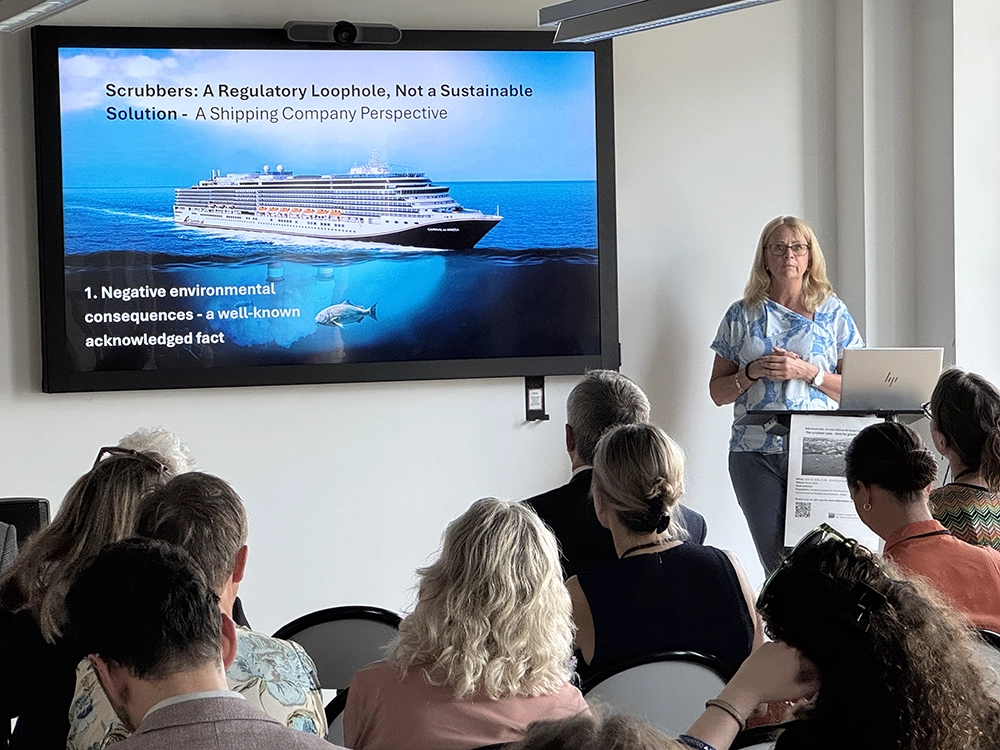
“More than 25 percent of marine fuel today is heavy fuel oil – only allowed if used with a scrubber. This results in acidic, contaminated water being released straight into the ocean,” said Helene Samuelsson during a high-level seminar organized by the Swedish Institute for the Marine Environment.
Wallenius was specifically invited to the seminar “The scrubber case – time for a glocal solution” to present the shipping industry’s perspective on this urgent issue. The panel also included government representatives from Denmark, France, and Sweden, the IMO, the Oslo-Paris Commission (OSPAR), and researchers from Chalmers and the University of Gothenburg.
“Science is clear. Scrubbers harm the marine environment – and in the absence of global regulations, an increasing number of countries and ports are already restricting their use. We believe it’s time for a unified global ban,” Helene added.
Wallenius Lines has long been a vocal advocate for sustainable shipping. Rather than relying on transitional technologies like scrubbers, the company supports long-term solutions that promote real emission reductions and innovation in both shipping and fuel production.
“The shipping industry needs policies that steer us toward sustainable technologies – not those that maintain outdated systems,” said Elisabet Liljeblad. “The conference in Nice gave us a unique platform to highlight that perspective, and the seminar sparked important discussions that we hope will influence future decisions.”
Recommended further reading:
]]>
The seminar is arranged together with Nordic Way Services, a wholly owned subsidiary of Wallenius Lines, created to coordinate civil and military logistics across the Nordic region – with a special focus on Host Nation Support and Sweden’s NATO integration. Together, Wallenius Lines and Nordic Way Services bring this critical topic to the Almedalen stage, highlighting the urgent need for joint planning, clear responsibilities, and practiced cooperation.
Why this matters:
Sweden’s long, strategically important coastline makes maritime logistics essential for our supply resilience. Shipping links all modes of transport and keeps supply chains moving in both peace and crisis. But military resources alone won’t be enough – civil-military cooperation is not just important, it’s essential.
The seminar will address key questions such as:
-
What does the host nation role mean for maritime operations?
-
How can we deploy resources quickly during crises?
-
How do we coordinate sea and land logistics?
-
What does functioning civil-military cooperation look like in practice?
-
What obstacles stand in the way – and how do we overcome them?
Panelists include:
-
Michael Kellerman, Vice President, Head of Group Security, Military & Security Advisor Soya Group / Nordic Way Services
-
Geir Michaelsen, Chief Commercial Officer, Wilhelmsen / WilNor
-
Alexandra Anstrell, MP, Defence Committee (Moderate Party)
-
Hanna Westerén, MP, Defence Committee (Social Democratic Party)
-
Jens Mattsson, Director General, Swedish Defence Research Agency (FOI)
Event details:
Type: Debate / Panel Discussion
Event ID: 1119
Language: Swedish
More details about the seminar here
]]>