
About the Book
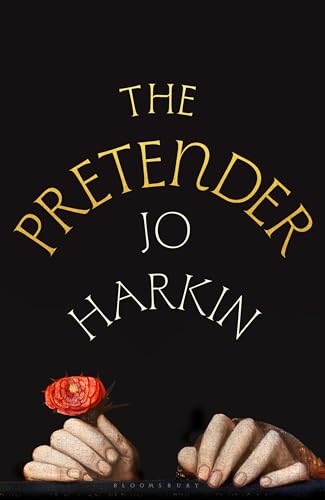
The year is 1483 and England is in peril. The much-despised Richard III is not long for the throne, and the man who will become Henry VII stands poised to snatch the crown for himself. But for twelve-year-old John Collan, living in a remote village with his widowed father, these matters seem far away.
But history has other plans for John.
Stolen from his family, exiled – first to Oxford, then to Burgundy, and then Ireland – and apprenticed to a series of unscrupulous political operators, he finds himself groomed for power; not as John Collan, but as Edward Plantagenet, 17th Earl of Warwick – and rightful heir to the throne.
Far from home at the Irish court, preparing for a war that will see him become king or die trying, John has just his wits – and the slippery counsel of his host’s daughter, the unconventional Joan – to navigate the choppy waters ahead.
Format: Hardcover (464 pages) Publisher: Bloomsbury
Publication date: 24th April 2025 Genre: Historical Fiction
Find The Pretender on Goodreads
Purchase The Pretender from Bookshop.org [Disclosure: If you buy books linked to our site, we may earn a commission from Bookshop.org, whose fees support independent bookshops]
My Review
The Pretender was one of the five books shortlisted for the Winston Graham Historical Prize 2026 and is also longlisted for the Walter Scott Prize for Historical Fiction.
The book is set during the latter years of the Wars of the Roses, the conflict between two rival branches of the House of Plantagenet – York and Lanaster – over succession to the English throne. The Pretender is a book for those who like their historical fiction full of authentic detail about events, people and places, but not so much so that it feels like a history lesson.
What the author does exceptionally well is to marry historical authenticity with storytelling that is full of wit and humanity. This is chiefly because we view events through the eyes of a young man, John Collan, who finds himself unexpectedly at the centre of things in this chaotic period. Suddenly he’s told he’s not the person he thought he was, the son of a farmer, but the son of the Duke of Clarence exchanged at birth for his own safety, with a claim to the throne. Having said that some things now make sense to him, such as the fact he looks completely different from his two brothers, or rather the boys he thought were his brothers. Understandable then he should wonder, ‘Wouldn’t I know who I was, if I was. . . wouldn’t I feel it? Like an Earl?’
John – sorry Lambert, sorry Edward, Duke of Warwick – is someone the reader will find it easy to empathise with as he comes to terms with how his life has been completely upended. His new persona means facing challenges much more perilous than his previous battles with the farmyard goat. And it means a new life, a new family, new surroundings and, for a lot of the time, perpetual bewilderment.
After a brief period in Oxford, which ends in the most dramatic way, John finds himself crossing the Channel to the sumptuous palace of his aunt Margaret, Duchess of Burgundy. Suddenly he’s expected to act like an Earl but he hasn’t the first idea how to do that, and there aren’t even any books in the library to help him. If you’ve ever gone to a formal dinner and felt intimidated by all the cutlery and glasses, you’ll completely sympathise with John’s confusion about dining etiquette. Or that he’s now expected to do nothing for himself, is never alone but constantly waited on by attendants. It’s perhaps not surprising then that the garderobe becomes his sanctuary. Because his existence must be kept secret, he is confined to the interior of the palace, the layout of which he never really masters.
Then he’s off once again, this time to Ireland to the home of Gerald FitzGerald, 8th Earl of Kildare. Kildare is a brilliantly imagined character – loud, lusty, hot-tempered, able to go from the rough and tumble of play with his children one minute to ordering the death of a man the next. Then there’s his daughter Joan. John is dazzled by her beauty but constantly awed by her ruthlessness and ability to manipulate people to achieve her own ends. Often it results in their ends.
If the book does have a fault it’s that it gets bogged down, especially in the middle third of the book. Perhaps that’s understandable given the frequency with which allegiances change, revolts arise and are quashed, all of which must be explained. And sometimes information is relayed by characters to other characters, rather than witnessed directly although this does provide the opportunity to introduce humour, with official announcements often greeted with suspicion or ridicule by those listening.
‘Oyez, oyez, oyez! Regard, townsfolk, this letter from the king! Be warned, you divers seditious and evil persons in London and elsewhere within our realm, who enforce themselves daily to sow seeds of noise and dislander against our person, to abuse the multitude of our subjects and avert their minds from us, some by setting up bills, some by spreading false rumours, some by messages and sending forth of lies, some by bold and presumptuous open speech and communication. The king did not kill his wife!
Townsfolk: Well, he would say that, wouldn’t he?
Apart from a few reservations, I really enjoyed The Pretender. I loved the humour, the colourful characters, the idiosyncratic mix of archaic and modern day language. And, of course, I loved John. I’d be ‘astonied’ if you don’t too.
‘What is he: a peasant, an earl, a bastard?’ Inspired by the true story of Lambert Simnel, The Pretender immerses the reader in the life of a young man who finds himself a pawn in a game that he never wanted to play a part in.
In three words: Witty, authentic, engaging
Try something similar: Wolf Hall by Hilary Mantel
About the Author

Jo Harkin studied literature at university. She daydreamed her way through various jobs in her twenties before becoming a full-time writer. Her debut novel Tell Me an Ending was a New York Times book of the year.
She lives in Berkshire, England. (Photo: Gooreads author page)


 What Cathy Read Next...