The post WWP February 19, 2026 | e-News appeared first on Willamette Workforce.
]]>WWP February 19, 2026 | e-News
Building Oregon’s Child Care Workforce:
What to Expect from The New Registered Apprenticeship Program
Access to affordable, reliable childcare is one of the biggest barriers facing Oregon’s workforce, and one of the most critical issues employers continue to raise. To help address this challenge, Willamette Workforce Partnership (WWP), is supporting the Mid-Willamette Valley Community Action Agency’s (MWVCAA) Child Care Resource & Referral (CCR&R) new early learning apprenticeship initiative, the Willamette Valley Early Learning Joint Apprenticeship and Training Committee (JATC).
This apprenticeship is designed to strengthen the childcare workforce in our region while creating new, accessible career pathways for workers who have been laid off, are long-term unemployed, latent workers, or individuals transitioning to different careers in an uncertain economy. Currently, there are only three other registered apprenticeship programs in the state of Oregon.
What to expect:
Through this initiative, the CRRS recruits, screens, and enrolls participants into a registered apprenticeship program that combines paid, on-the-job training with education and skill development. Participants also receive comprehensive workforce support through WWP’s contractor, the Community Services Consortium (CSC), and WorkSource Oregon, to ensure they are fully supported from day one through job placement and follow-up. The program prioritizes measurable outcomes like credentials earned, skills gained, and long-term gainful employment.
Why this matters:
Oregon’s childcare sector is facing a well-documented workforce shortage, limiting some parents’ ability to return to work and employers’ ability to recruit and retain talent. Recent reporting has highlighted that even small increases in the number of trained childcare professionals can have great economic impact, opening more early learning classrooms, expanding provider capacity, and enabling more parents to participate in the workforce. Apprenticeships are especially powerful in this field because they reduce financial barriers, create career stability, and professionalize early learning roles that are essential to our regional economy.
Through WWP’s Future Ready Oregon Prosperity funding, the apprenticeship program has enrolled 17 individuals. Nine are on track to complete by June 2026. While there have been a few hard lessons learned throughout the first year of the program, overall, the apprenticeship model continues to demonstrate strong outcomes, with a 93% retention rate for educators and apprentices participating in the program, substantially higher than the ~30% national early childhood retention rate.
In addition, CCRRS is seeing meaningful impact on the ongoing pipeline: four apprentices from the current cohort entered directly after high school, and several participants have shared that the structured support and clear career pathway have strengthened their commitment to continuing their education and building a long-term career in early learning, which is strengthening the workforce to meet the needs of families.
How this advances WWP’s mission:
This program directly supports WWP’s commitment to building a skilled workforce, supporting employers, and addressing barriers to employment. By investing in early learning professionals, we are strengthening local infrastructure, supporting working families, and creating accessible pathways into high-demand careers. This apprenticeship program represents a practical, people-centered solution that moves our region closer to a thriving economy with prosperous communities. We want to commend CCRRS for their work in this critical area of workforce development.

The Child Care Works for Oregon Employer Toolkit Supports Local Businesses
The Child Care Works for Oregon Employer Toolkit provides Mid- Valley employers with practical, scalable strategies to support working families without requiring a one-size-fits-all approach. Employers can explore options such as flexible scheduling, predictable shifts, childcare stipends, shared services with other businesses, or partnerships with local providers. The toolkit breaks down costs, highlights real employer examples, and connects businesses to state and community resources, making it easier to act in ways that align with local workforce needs. For small and mid-sized employers, these tools offer realistic entry points to improve retention and recruitment in a competitive labor market.
For every 10 children who may need care, only 3–4 licensed childcare slots are available in much of the Mid-Valley.
This shortage is most acute for:
- Infants and toddlers
- Non-standard hours (health care, manufacturing, hospitality)
- Lower-wage, working families
When employers invest in childcare solutions, their business and employee families benefit. Reliable childcare helps parents stay in the workforce, reduces absenteeism, and improves employee retention. That stability strengthens the Mid-Valley’s economy, supports essential industries, and helps ensure companies have the skilled talent they need to grow. By exploring the Child Care Works for Oregon Employer Toolkit, local employers can take practical steps to remove employment barriers, build a more dependable workforce, and invest in a stronger regional economy.
Please find a link to the Child Care Works for Oregon Employer Toolkit below.
WorkSource is providing assistance with taxes…click the images below for more information and to access the QR codes!


The post WWP February 19, 2026 | e-News appeared first on Willamette Workforce.
]]>The post Prosperity 10,000 Senate Bill 1512 appeared first on Willamette Workforce.
]]>
The post Prosperity 10,000 Senate Bill 1512 appeared first on Willamette Workforce.
]]>The post Salem Area Work Centers See More Job Seekers appeared first on Willamette Workforce.
]]>Salem Area Work Centers See More Job Seekers
Written by Pam Ferrara for the Salem Reporter.
Pam Ferrara of the Willamette Workforce Partnership continues a regular column examining local economic issues. She may be contacted at [email protected].

January-February 2026
At the beginning of a new year, uncertainty and caution seem to be the prevailing sentiments about the economy – with some qualifications.
What is certain is that job growth has slowed, and unemployment is ticking up. But, according to the economists of the Oregon Office of Economic Analysis, the economy is “…showing hints of pick-up…” – more on this later.
So, we’ll analyze trends, and begin the new year with an interview with Kim Parker-Llerenas, the executive director/CEO of the Willamette Workforce Partnership (WWP), the local workforce development board and this column’s sponsor.
WWP’s director, staff and governing board follow the monthly economic information. In fact, the board is required by federal legislation to regularly publish a report on the economic trends in the area. They also hear regularly from area employers and job seekers, and as a result have a more individualized perspective on local labor market issues.
But first, a look at the numbers – is job growth slowing down?
In the Salem area, total employment growth has slowed since recovery from pandemic job losses but still increased 2% over the last year. (see table below)

And from 2019 (pre-pandemic) through December 2025, Salem’s job growth was 8%, compared to 1% in the state, and 5% in the U.S.
It should be noted that declining employment in the Portland and Eugene areas are driving the overall performance of the state as a whole. Both areas’ total employment declined by just a bit under 1% from 2019 through 2025.
What about specific industries? (see graph below)

The Salem area (somewhat) bucks the trend here too. Over the last year, growth in health care employment was larger than statewide, and retail trade was flat – statewide, retail trade lost jobs. It should be noted that, in spite of job growth, the health care industry has been in crisis since the pandemic, with industry workers experiencing record levels of stress and burnout.
An extra bit of information about the leisure and hospitality industry, from the Quarterly Census of Wages and Employment – that’s the actual count of jobs that’s always a few months behind. From third quarter of 2019 (pre-pandemic) to third quarter of 2025, the Salem MSA was the only area to have job gains in this industry, 2% to be exact. The Portland area’s leisure and hospitality employment was behind its pre-pandemic level by 7%, Eugene by 2%, and the state as a whole by 3%. So, job growth in leisure and hospitality in the Salem area outperformed Portland and the state simply by being small but positive.
Salem’s unemployment rate was 5.1% in November and December, up slightly from 5% in September (there was no published rate for October due to the government shutdown). This still translated to nearly 12,000 individuals unemployed and looking for work in the Salem MSA (Metropolitan Statistical area, Marion and Polk counties combined) in December of 2025. (see graph below)

The Oregon Office of Economic Analysis, in the last revenue forecast , acknowledged the economic slowdown, but sees a “reacceleration” of the economy in 2026, due to federal tax cuts, interest rate reductions, and tariff rates not being as scarily huge as they threatened to be at the beginning of the year. The Office’s economists do say, however, that it could take another entire year before tariff effects fully work through the economy.
What does the Willamette Workforce Partnership have to say? Kim Parker-Llerenas, a workforce professional of some 17 years, leads the Partnership in participating in a system that’s existed in various configurations since the 1960s. Its main goal is to support employers in finding talent that enables them to succeed, and investing in job seekers to meet that demand, throughout Linn, Marion, Polk and Yamhill counties.
We begin the interview with a question about the once-in-a-lifetime event of the pandemic, when the area lost 26,000 jobs in one month:
Q. How did WWP respond to the challenges of the early pandemic?
A. The WorkSource Centers closed their doors (they stayed physically closed for over a year), and everyone had to adjust. We all learned how to navigate Zoom and other online platforms, and WorkSource started offering services virtually. We also realized how important internet access is to survival, which is still true today.
Another major activity was participating in the distribution of pandemic relief funds. We helped governmental entities hand out nearly 8 million dollars’ worth of checks to area businesses – lots of small businesses, including child care centers – to help them stay open.
Q. What are employers telling you about the state of the economy?
A. It depends on the industry. There’s a lot of uncertainty among manufacturers about tariffs affecting product demand. And the major layoff at Intel although outside our area, has had indirect effects here. The hospitality industry has recovered, which is excellent. Wages have increased – although wine sales are down. Overall, the major theme among employers is caution about the future.
Q. What trends are you seeing regarding job seekers?
A. We’re seeing increased numbers of job seekers coming into the WorkSource Centers and using the Centers for job search, as there are some 18,000 people unemployed and looking for work in our four-county area. Our partnership with the Oregon Employment Department and our investment in the WorkSource Centers provide a wide array of job search services, and targeted funding for job training.
Q. What are health care employers telling you?
A. We’ve been responding to their concerns for some time. Three years ago, we organized a Behavioral Health Consortium, Willamette Care Connects, (where employers meet and share information and problem-solve) and recently we’ve expanded the membership of the consortium to include all health care employers. That effort began in October. And, we’ve been exploring the use of more apprenticeships in the industry – We just received funds (from the Higher Education Coordinating Commission) to develop one in alcohol and drug counseling.
Q. How does the administration in D.C. view workforce issues?
A. There’s a big emphasis on apprenticeships, that is positive. And we are excited about the new workforce Pell Grant. These grants for low-income students have always been only for those aiming for long term credentials. This change should support shorter term trainings.
The workforce boards operate under federal legislation titled Workforce Innovation and Opportunity Act (WIOA) and it hasn’t been reauthorized as yet. We are receiving funds annually from congressional appropriations, but re-authorization likely won’t happen until after mid-term elections.
Q. What is WWP’s biggest challenge?
A. As always, adequate funding – federal funding has been declining for years, and other state wide investments are about to expire. We’re working with state legislators to continue this investment. But regardless, the workforce system is more resilient than ever, and will continue to offer programs that deliver results.
For more information about the Willamette Workforce Partnership, visit their website at: https://willwp.org/
To sum up, there’s been a slowdown in the economy over the last year, and the Salem area has followed the trend with some notable exceptions.
The year 2025 began with threats of huge tariff increases which mostly didn’t materialize, and ended with the longest federal government shut-down in history. So, it isn’t surprising that, in spite of the positive economic indications being cited by the Office of Economic Analysis, caution and uncertainty are still the order of the day.
It remains to be seen, in the next couple of months, whether or not growth improves, and the rising unemployment rate increases, steadies or starts to fall. So, as usual, stay tuned!
Pam Ferrara of the Willamette Workforce Partnership continues a regular column examining local economic issues. She may be contacted at [email protected]
The post Salem Area Work Centers See More Job Seekers appeared first on Willamette Workforce.
]]>The post WWP January 28, 2026 | e-News appeared first on Willamette Workforce.
]]>WWP January 28, 2026 | e-News
A New Year and New Beginnings – This month, join us for a series of stories focused on reentry in the region…
New State Prosperity Bill –
Showing Support for Critical Investments
As part of the workforce system serving the Mid-Valley region, Willamette Workforce Partnership (WWP) recognizes that Oregon’s prosperity depends on its people. The Prosperity 10,000 Program has proven that when the state invests in jobs, it strengthens families, communities, and Oregon’s economy for the long term.
This initiative has already demonstrated measurable statewide impact and fiscal returns to include:
- $35 million invested → $219 million in economic benefits, including $23 million in new tax revenue and $195 million in reduced social service costs — a 6x return on investment.
- 9,285 Oregonians served through local workforce boards, including training, employment, and barrier-removal services.
- 96% of participants represent women, people of color, veterans, rural residents, or individuals with disabilities — populations often underserved by traditional systems.
- Participants are earning $22.68 per hour on average, exceeding Oregon’s self-sufficiency standard.
As the state funding for the Prosperity 10,000 Program expires June 30, 2026, without continued investment, Oregon risks losing a proven infrastructure that connects thousands of residents to quality jobs and strengthens our tax base.
A new bill, SB 1512, is being introduced during the Oregon Legislature’s short session to keep these critical programs alive. SB 1512 is asking for a
$15 million reinvestment in the Prosperity 10,000 Program during the 2026 legislative session, expanding the goals of P10k, strengthening the state’s workforce system, and continuing greater access to career coaching, skills training, wraparound supports, and paid work experiences.
Continued support will ensure Oregon remains competitive, equitable, and economically resilient. What can you do to help?
We invite you to upload your organization or business’s logo as a measure of support HERE, or visit Oregon Workforce Partnership’s website to find out more information. In addition, you may follow the links below to submit a formal letter of support.
Second Chances and Stronger Communities
Record expungement is the legal process of removing arrests, charges, or convictions from a person’s criminal record. Once a record is expunged in Oregon, it is sealed from public view, meaning that most employers, landlords, and licensing offices will no longer see it.

Who’s Eligible in Oregon?
Under Oregon law, many individuals with past criminal records are eligible to have their records expunged, depending on the type of offense and how long it’s been since their conviction. Typically, a person with non-violent offenses must have completed all parts of their sentence and have no new convictions, excluding motor vehicle violations, during the waiting period.
Many types of non-violent offenses are eligible for expungement, including:
- Misdemeanors
- Certain felony convictions
- Dismissed charges or acquittals
- Arrests where charges were never filed
What Does It Cost?
Passed in 2021, Senate Bill 397 reduced the cost of record expungement in Oregon by eliminating the court filing fee, which was a significant barrier to individuals who were seeking to set aside their records. Currently, applicants only pay a Background Check fee to the Oregon State Police. The cost is capped at the actual cost of the background check, which is around $33. Some individuals may choose to hire an attorney, though free or low-cost legal aid is often available.

Why It Matters for Job Seekers
Getting a record expunged can be life changing. It allows individuals who’ve been involved with the justice system to:
- Apply for jobs without disclosing past convictions
- Secure stable housing
- Qualify for occupational licenses
- Regain dignity and peace of mind
At WWP, we believe second chances make communities stronger. Expungement supports individuals in returning to work, providing for their families, and helping the economy thrive, key components of WWP’s mission.
If you or someone you know may be eligible for expungement, help is available. WWP is proud to fund Willamette Valley Clear Path, our region’s first expungement clinic, through a $100,000 grant from Oregon’s Prosperity 10,000 Program and Future Ready Oregon.
This groundbreaking clinic is hosted by our partners at Mid-Willamette Valley Community Action Agency Reentry Services, with support from:
- Public Defender of Marion County, Inc.
- Willamette Law Public Defense Clinic
- Oregon Department of Human Services
- WorkSource Oregon
- Cherriots
The post WWP January 28, 2026 | e-News appeared first on Willamette Workforce.
]]>The post WWP January 21, 2026 | e-News appeared first on Willamette Workforce.
]]>WWP January 21, 2026 | e-News
A New Year and New Beginnings – This month, join us for a series of stories focused on reentry in the region…
The Emerging Welding Program – Reducing Recidivism Through Partnerships
Each year, between 4,000 and 5,000 individuals are released from Oregon’s prison system and return to their communities. These returning citizens are eager to rebuild their lives, but often face systemic barriers, especially when it comes to finding meaningful employment. Returning citizens are defined as a priority population for workforce development in Oregon, and provide a significant opportunity to serve more people in our workforce, by connecting employers with a willing and capable talent pool eager to work and contribute.
With this opportunity in mind, a powerful new partnership has emerged to reshape the future for individuals reentering society. Willamette Workforce Partnership (WWP), in collaboration with Mid-Willamette Valley Community Action Agency (MWVCAA) Reentry Services and Chemeketa Community College, is proud to support the Emerging Welders Program, which offers manufacturing education and workforce training to incarcerated and formerly incarcerated individuals who live in Marion, Polk, Yamhill or Linn counties.

MWVCAA Reentry Services combines hands-on training and trauma-informed support, with employment navigation to support individuals as they guide them on a second-chance path toward meaningful, well-paying jobs. Once these individuals are “classroom ready” Chemeketa takes the reigns and provides the 22-week credential-based training tailored for adult learners. Chemeketa already operated a structured, successful welding program with reporting, compliance, and tracking to support this new program. Participants are also connected to additional resources through WorkSource Oregon, ensuring continued access to career services and upskilling.
MWVCAA has launched several training cohorts so far in 2025 and will track their progress through June 2026, when the Future Ready Oregon funds expire. With an emphasis on job placement, wage outcomes, and long-term retention, it’s a second chance strategy that advances workforce development in our region and contributes to the region’s economic prosperity.
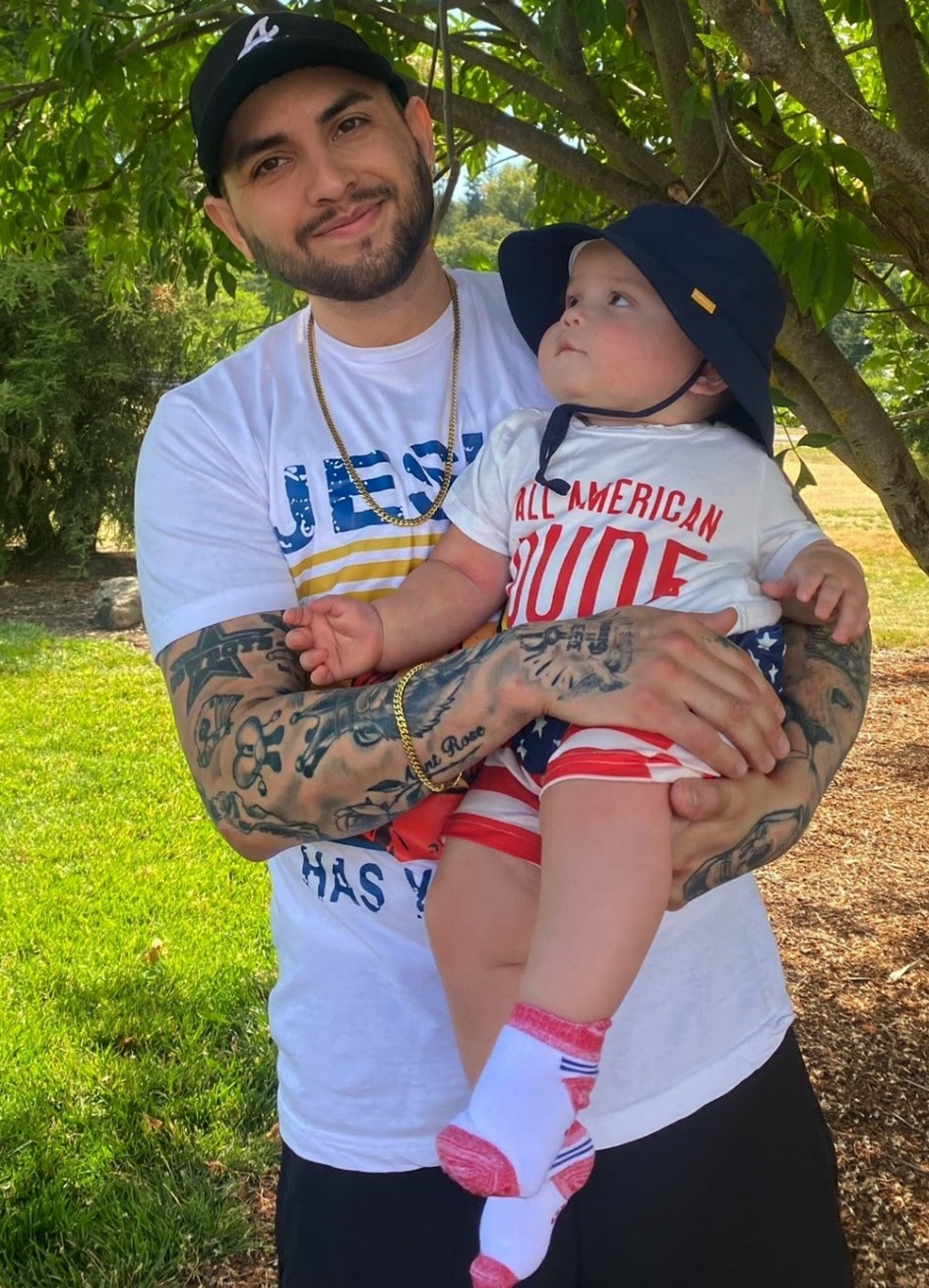
This summer, Jonathan completed the Emerging Welding Program at Chemeketa. Jonathan states,
“My accomplishments so far would be completing the welding classes at Chemeketa Community College. I took the welding certification test and the week after was able to interview for a welding job. I passed their welding certification test and receive [sic] a job offer.”
According to Jonathan,
“I wanted to join the program because I have a record and it’s been hard to find a decent job with a record. Also, because I became a father and my son’s birth pushed me to want to better myself and to be better for him. I want to be able to provide [sic] for him and give him a good life.”
Since successfully completing the program, Jonathan secured full-time employment with a manufacturing company in Woodburn, specializing in horizontal welding. Seven out of the eight folks in Jonathan’s cohort passed their certification tests. Manufacturing trades, and specifically welding, offer a clear pathway to economic mobility and long-term stability. MWCAA is currently serving 15 emerging welders and WWP looks forward to hearing more success stories like Jonathan’s.
Level All – An online resource for
partners who work with jobseekers
We have exciting news to share! WWP is partnering with Level All for free access to career exploration tools and skill-building resources. You can learn more about Level All below and watch this video for an introduction to Level All’s services.
We will have a training on January 28th at 11 AM to introduce partner staff to Level All. We will also record the training for partner staff who are unable to attend to review later. Please sign up by January 27th to receive the meeting invitation link to join the training. After the training, you will be granted access to Level All as “educators,” where you can set up your job seekers for success and assign them relevant content. Use this link to sign up:
https://forms.monday.com/
Please let us know if you have any questions. Thank you, and we look forward to seeing you at the training.

The post WWP January 21, 2026 | e-News appeared first on Willamette Workforce.
]]>The post WWP January 8, 2026 | e-News appeared first on Willamette Workforce.
]]>WWP January 8, 2026 | e-News
A New Year and New Beginnings – This month, join us for a series of stories focused on reentry in the region…

A Statewide Approach to Reentry Services
In 2022, East Cascades Works, one of Oregon’s nine regional workforce boards, launched an innovative pilot program using a modest $100,000 state grant to support individuals reentering the workforce from two of Oregon’s 12 correctional facilities.
Oregon Workforce Partnership (OWP), the association of Oregon’s nine local workforce development boards, applied for and scaled this project statewide through two grants: a Pathway Home Department of Labor (DOL) grant totaling $3.9 Million and a $1 Million Future Ready Oregon grant from the Oregon Higher Education Coordinating Commission. The funding is distributed to the nine workforce boards to support Adults in Custody (AIC) as they prepare to transition and arrive back in to their communities.
How has Willamette Workforce Partnership contributed to this program’s success?
In our region, Pathway Home, is a collaboration between Willamette Workforce Partnership, Chemeketa’s Prison Education and Community Reentry Program, and Community Services Consortium (CSC). Last year, we served 338 Adults in Custody at our four prisons, and marketable job skills are at the top of the list of necessary tools for reintegration to society.
About James…
James had a clear vision for his future and required strategic support to achieve his goals. He was a certified barber prior to his incarceration, James expressed strong motivation to reenter this field upon release. Within 48 hours of his release, Opportunity Oregon met with James to initiate his employment search. James updated his resume and cover letter and within a week he received two pending job offers.
As of September 15, 2025, James is employed full time and has advanced in his aftercare program. He has developed a five-year plan that includes owning his own barbershop.
This program takes a comprehensive, hands-on approach, embedding trained workforce professionals from Chemeketa Community College inside the Mid-Valley’s four prisons to help individuals build job skills, prepare resumes, and create a personalized employment plan before they leave. Once released, participants connect with local community-based case managers at CSC within 72 hours, continuing their journey toward employment with wraparound support that includes training, housing help, and access to critical services.
At its core, this is about reducing recidivism, improving employment opportunities which lead to a strong economy, strengthening families, and building a more inclusive workforce for our region. It’s a win for individuals, employers, and our communities.
In the next few weeks, we’ll continue our series on Reentry Services in the Mid-Valley, exploring ways our partners are training returning citizens for in-demand careers.

Do you know a youth in Marion County that needs a little extra guidance or mentorship, while learning essential employability skills, exploring career options, and gaining valuable work experiences?
Check in with Mid-Willamette Valley Community Action Agency’s (MWVCAA) Youth Services Resource Center.
Click on the image below for more information!

Exit Bliss, in partnership with Willamette Workforce Partnership, is offering a no cost Project Management & Leadership Training. Check out the upcoming dates in the flyer below and commit to your professional growth this year!
Click on the image below for more information and to learn how to apply!

The post WWP January 8, 2026 | e-News appeared first on Willamette Workforce.
]]>The post WWP December 18, 2025 | e-News appeared first on Willamette Workforce.
]]>WWP December 18, 2025 | e-News

CADC Registered Apprenticeship Grant Awarded to WWP!
We’re excited to share that Willamette Workforce Partnership (WWP) has been awarded the Higher Education Coordinating Commissioner (HECC) Statewide Apprenticeship Creation Grant (#25-105) to launch the Willamette Valley CADC Registered Apprenticeship Initiative.
This grant supports the creation of an earn-and-learn pathway into the Certified Alcohol & Drug Counselor (CADC-I) profession, helping expand Oregon’s behavioral health workforce while increasing access to training for working adults and individuals with lived experience.
Program highlights include:
- A BOLI-registered apprenticeship with 2,000 hours of paid on-the-job learning and 150 hours/year of MHACBO-approved instruction
- Education partners Chemeketa Community College, Linn-Benton Community College, Jobel Gushi at Healing Helpers Academy, and Janis Crawford, PhD, LPC, ACS delivering accessible coursework
- Employer partners Bridgeway Community Health and Church at the Park serving as training agents across Marion, Polk, Yamhill, and Linn Counties
- A strong supportive services model coordinated by WWP to promote equitable access and retention
The initiative is grounded in the collaborative framework of Willamette Care Connects and reflects the shared commitment of our education, employer, and community partners to strengthening the behavioral health workforce across the Mid-Willamette Valley.
Over the grant period, we anticipate enrolling 10 apprentices, engaging 2–4 employers, and achieving strong completion and CADC-I certification outcomes. Most importantly, this work helps address critical regional workforce shortages while creating meaningful career pathways for local residents.

To anyone that has been a part of this work, thank you for your partnership and collaboration! This award reflects the collective effort and shared vision of this group. We look forward to working together as we move into implementation and will be in touch soon with next steps.
A special thank you to Julie Guenette, WWP’s Healthcare Workforce Strategist, who wrote the grant and will shepherd this amazing apprenticeship program throughout. Congratulations, Julie!
The post WWP December 18, 2025 | e-News appeared first on Willamette Workforce.
]]>The post WWP December 3, 2025 | e-News appeared first on Willamette Workforce.
]]>WWP December 3, 2025 | e-News

HOWTO Grant Closes – Three Years and Moving Forward
In June of 2025, Willamette Workforce Partnership (WWP) successfully concluded its HOWTO grant agreement with the Oregon Health Authority (OHA) and Oregon Health & Science University (OHSU). Even before the COVID-19 pandemic, Oregon’s behavioral health workforce faced growing patient demand and critical staffing shortages. With this three-year grant, WWP set out to tackle one of Oregon’s most urgent and complex healthcare challenges.
WWP identified three main core goals to support Oregon’s behavioral healthcare workforce:
- Build a Regional Consortium – Form a strong partnership of employers, educators, and healthcare organizations across the Mid-Willamette Valley.
- Launch Collaborative Solutions – Develop shared action plans and implement short-term strategies to address hiring and training needs.
- Grow and Diversify the Workforce – Increase the number of behavioral health professionals, with a focus on equity and access.
Over the course of the grant, the Mid-Valley Behavioral Health Consortium, Willamette Care Connects (put logo somewhere in here), made measurable progress in aligning education and employment pathways, with 87% of participants reporting stronger coordination across schools, training providers, and employers. Awareness among students and job seekers rose significantly, and 75% of partners saw meaningful growth in collaboration between education and workforce organizations. While challenges remain, the Consortium created lasting infrastructure, opened new career pathways, and sparked critical conversations that many participants said were happening for the first time.
WWP is especially grateful to OHA and OHSU for trusting our team to lead this important work and for their support in advancing a stronger, more accessible behavioral health workforce in Oregon.
Career Supports for
Behavioral Health Professionals
Willamette Workforce Partnership (WWP) is proud to collaborate with Yamhill Community Care (YCCO) on grant funding designed to strengthen the region’s behavioral health workforce. Through the Workforce Supports for Yamhill County Future Clinician Behavioral Health Practitioners training grant program, WWP is helping to expand access to training, financial support, and professional development for current and future practitioners. In just over one year, WWP has provided over $30,000 to local grant recipients pursuing tuition assistance, post licensure certifications, and a wide variety of practice materials.

“We believe that this program will not only increase the number of qualified BH practitioners, but also ensure that they represent the diverse community we serve,” added Kim Parker-Llerenas, Executive Director at WWP.
While the grant application closes on December 31st, there is still funding to distribute! Applicants must live in Yamhill County and be working toward certifications and/or degrees for a career in behavioral health, including substance use recovery, and/or mental health. Please share this opportunity with individuals interested in participating.
The application is linked below.
YCCO Support Grant Brings Community Resource Advocate to Local WorkSource Center
WorkSource Oregon centers across the Mid-Willamette Valley are seeing more customers who are navigating complicated challenges like housing instability, addiction, and behavioral or mental health needs. To better support these individuals, a new initiative is underway, creating clear referral pathways that link WorkSource teams with behavioral health providers in Marion, Polk, Yamhill, and Linn Counties.
When a customer walks through the WorkSource center doors in crisis, staff should know exactly who to call, how to connect them, and what resources are available. These pathways will be documented for all center staff and shared through LUCAS, a resource-based virtual platform used by frontline staff. The initiative has identified a Community Resource Advocate and includes a review of current de-escalation and safety training to see where improvements or updates may be useful.
“…Julia has been hard at work building referral pathways to partner providers in Behavioral and Mental Health in the Mid-Willamette Valley. Julia’s persistence has resulted in multiple meetings with providers in the region as well as identified next steps for customer referrals. Julia also has identified potential de-escalation training for center teams that is being reviewed by center leadership.”
Ricque Smith, WorkSource Oregon and Oregon Employment Department’s Area Manager, provides some detail about the Community Resource Advocate in place, Julia Aleman.
Many thanks to the behavioral workforce support grant from Yamhill Community Care (YCCO) for funding the Community Resource Advocate!
Healthcare Sector Launch Recap
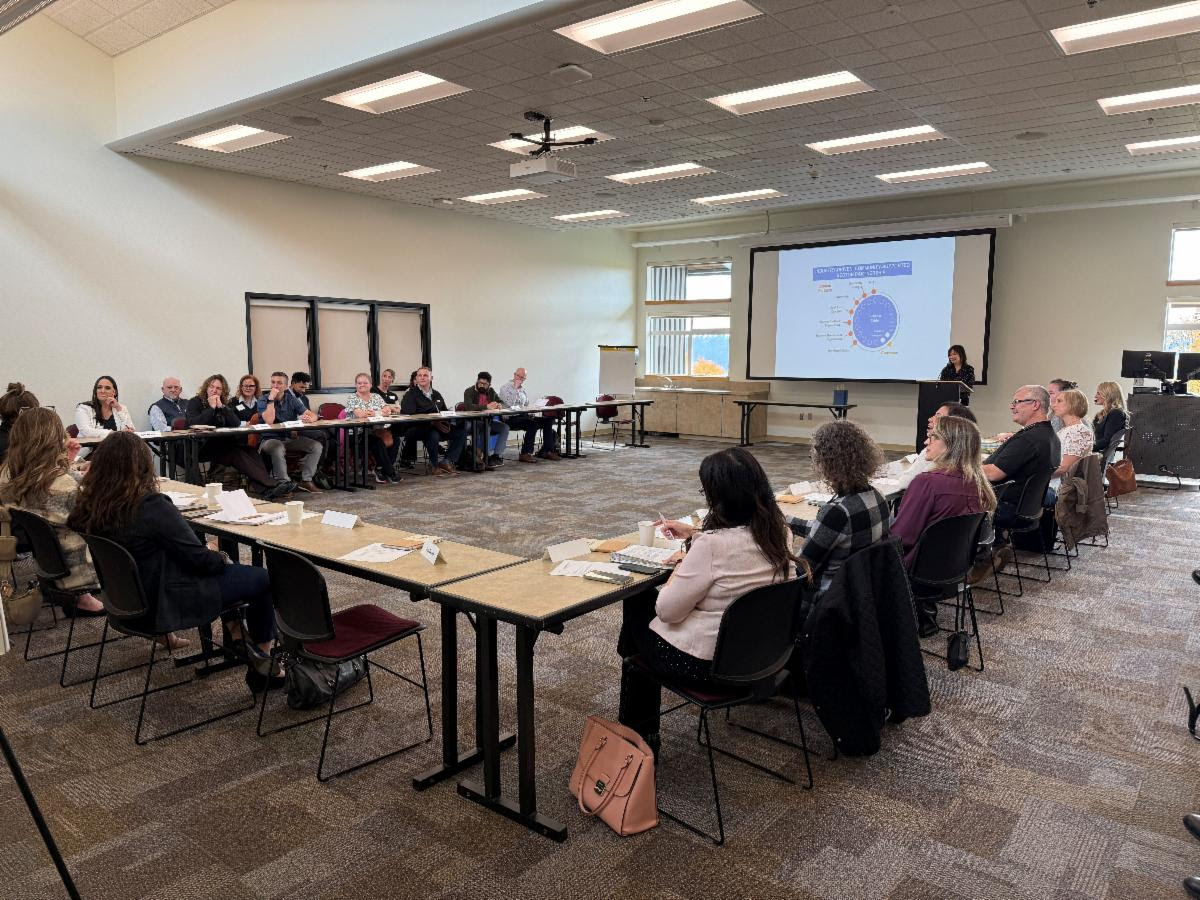
Late last month, Willamette Workforce Partnership brought together healthcare employers, educators, practitioners, and partners for a Healthcare Sector Launch. The event built on the progress of the Mid-Valley Behavioral Health Consortium. Julie Guenette, WWP’s Healthcare Workforce Strategist, and Dean Craig, WWP’s Business Services Director, coordinated the launch with strategic direction from Heidi East McGowan.
The purpose of the gathering was to create a shared vision for addressing inefficiencies and persistent challenges within the regional healthcare system. Leaders from across the industry and public sector to came together to formally initiate the partnership and outline its early priorities.
The following committees emerged from the launch to guide collaborative work going forward:
- Access
- Advocacy
- Collaboration
- Workforce, Recruitment & Retention
Connection to MVBHC
Many of the same issues identified through the Mid-Valley Behavioral Health Consortium are also showing up across the broader healthcare system. Because the challenges are similar, the collective group can use what it has already learned to work together and plan the next steps more effectively.
WWP’s Role Moving Forward
WWP looks forward to supporting these partners and strengthening the relationships needed to address the complex challenges facing the healthcare sector.

The launch marks the beginning of a coordinated effort to improve outcomes for providers, organizations, and the communities they serve.
The post WWP December 3, 2025 | e-News appeared first on Willamette Workforce.
]]>The post WWP November 4, 2025 | e-News appeared first on Willamette Workforce.
]]>WWP November 4, 2025 | e-News

At Oregon Workforce Partnership’s recent WORKing Together conference, four mass timber innovators participated in “From Forest to Future,” an engineered wood products panel, facilitated by Dean Craig of Willamette Workforce Partnership (WWP). The panel consisted of Kyle Freres of Freres Engineered Wood, Jared Revay of Timberlab, Ben Deumling of Zena Wood Products, and Marcus Kauffman of the Oregon Department of Forestry and the Oregon Mass Timber Coalition. It was one of the most interesting highlights of the October conference.
Are you curious how other partnerships like the Mass Timber Coalition are tackling Oregon’s workforce challenges and opportunities?
Mark your calendar for WORKing Together 2026! Next year’s conference will be held October 20-21 at the Salem Convention Center in Salem, Oregon.
What Is Mass Timber and Why It’s Changing the Future of Construction
When people hear “mass timber,” they often picture a dense forest of trees, or a giant stack of harvested wood. But the term actually refers to one of the most exciting innovations in modern construction. Mass timber is engineered wood panels and beams made by layering pieces of wood or veneer and bonding them under pressure. These components are strong enough to build mid- and high-rise buildings, in many cases, offering a renewable alternative to concrete and steel.
If you’ve been to the Portland International Airport (PDX), mass timber takes center stage, where massive Douglas fir beams and panels showcase Oregon-grown wood in one of the largest airport timber projects in the world. Seventy percent of the timber used in the PDX project was recovered from the Santiam Canyon area, where forests are now regrowing after the fires. As you enter the airport, you’re walking across millions of slender pieces of wood, harvested from forests just miles away, joined together into a surface that’s both durable and beautiful.

Oregon’s forests have been the backbone of this transformation. By combining sustainable forest management with advanced manufacturing, Oregon became one of the first regions in the U.S. to produce large-scale, code-approved mass timber buildings. What’s unfolding here is not only a shift in construction methods, but also a new way to think about how forests, industry, and communities can work together for a low-carbon and climate friendly future.
Willamette Workforce Partnership can play a key role in helping prepare this burgeoning workforce by connecting job seekers with short training programs, apprenticeships, and technical education pathways that align directly with what companies like Freres, Timberlab, Zena, and coalition members need. Together, we can build the next generation of workers who will carry Oregon’s legacy of responsible forestry into the next century.
Building a Work Ready Future:
Oregon Employability Skills
Another fantastic session from the recent WORKing Together conference was focused on Oregon’s youth and successfully preparing young people for the world of work. The panel was led by Kim-Parker-Llerenas, WWP’s Executive Director and CEO, with Jaxson Crawford, Charlie Hopewell of the Workforce Talent and Development Board, Christian Paige and Kasey Sanchez of the Oregon Business Academy joining the panel.
Attendees learned about the Oregon Employability Skills (OES) framework, and how these practical skills are transforming our education and workforce systems. OES are curriculum based, developed by the Oregon Department of Education (ODE), and comprised of 11 employability skills to include traits such as adaptability, digital literacy, empathy, self-awareness, and an entrepreneurial mindset. Designed with input from employers, educators, and youth-serving organizations, OES provides a unified language for career readiness from classroom to workplace.

OES are basic “soft skills” that employers across every industry value most, like communication, collaboration, problem-solving, and resilience. Beyond job specific or technical expertise, successful employees consistently demonstrate these core skills. K S “Venkat” Venkatraman, an executive member of the Workforce and Talent Development Board advising the Governor of Oregon, refers to the OES as “human skills,” because they form a foundation to every person’s individual success, not just in the workplace, but in society as a whole.
Why This Matters…
In today’s tight labor market, technical training is only part of the equation. OES offer a structured approach to help youth and adult learners become work-ready, regardless of background. The OES’s thoughtful framework defines, teaches, and certifies essential employability skills through real-world application and storytelling. Community-based organizations, after-school programs, and alternative education settings can integrate these tools to prepare their participants for work and life.
How to Get Started
Whether you’re a business looking to influence the next generation of workers, or a community partner seeking to build workforce readiness, the Oregon Employability Skills toolkit is available now. It includes videos, posters, self-paced modules, surveys, and classroom-ready curriculum for all age groups, from elementary awareness to adult work-readiness.
Visit OregonEmployabilitySkills.org or email [email protected] to get connected and explore how these tools can strengthen your programs, partnerships, or workforce.
Together, let’s keep building Oregon’s workforce!
WorkSource Oregon and WWP are excited to share a new resource available through our partnership with GotResumeBuilder.com. This online resume builder makes it easy for jobseekers to create, format, and download professional resumes. All users need to do is create an account, fill in their information, and the system keeps everything formatted and standardized.
As part of GotResumeBuilder’s community giveback program, this service is completely free for nonprofit organizations. There are no hidden fees and no fine print. Anyone who creates an account through the partner link below will be automatically upgraded to the free nonprofit version.
Customers can access the tool here: WorkSource Oregon Resume Builder
We’d also like to recognize Matt Gilbert and Jay Teller from the Oregon Employment Department (OED) for making this partnership possible. Thank you for continuing to connect people with tools that support their career goals.

The post WWP November 4, 2025 | e-News appeared first on Willamette Workforce.
]]>The post Job Growth Slows but Salem fares better than Portland, Eugene appeared first on Willamette Workforce.
]]>Job Growth Slows but Salem fares better than Portland, Eugene
Written by Pam Ferrara for the Salem Reporter.
Pam Ferrara of the Willamette Workforce Partnership continues a regular column examining local economic issues. She may be contacted at [email protected].
October 2025
The economy of the Salem area is a stand-out.
Even though job growth has been slowing, the area’s economy looks good compared to other areas of western Oregon, specifically, Portland and Eugene.
So, we’ll analyze and compare trends for overall employment and for several industries, as well as unemployment trends in the Salem, Portland and Eugene areas. Finally, we’ll briefly discuss what might be ahead – is there a recession on the horizon?
To begin: job growth is slowing down.
In general, after large job losses early in the pandemic, jobs were regained quickly, up until about a year or so ago – at least in the Salem MSA (Metropolitan Statistical area).
Employment levels in the Portland MSA (comprised of nearly 1.5 million jobs) and in the Eugene-Springfield MSA (which has similar numbers of jobs as the Salem MSA – 161,000 and 181,000 respectively) show a more varied pattern of job losses and gains.
The differences began with the pandemic.
Looking back to February of 2020, one month before the pandemic hit with full force, three comparisons stand out.
The first is the size of total job loss. Salem lost 13% of jobs in the first two months of the pandemic, Eugene lost 16% and Portland 14%. These were job losses due to government-mandated business shutdowns to slow the spread of Covid. As the shutdowns eased, all three areas began to gain back jobs.
But the Salem MSA took 26 months to regain employment back to the level of February 2020 (pre-pandemic), and the Portland and Eugene areas each took 35 months.
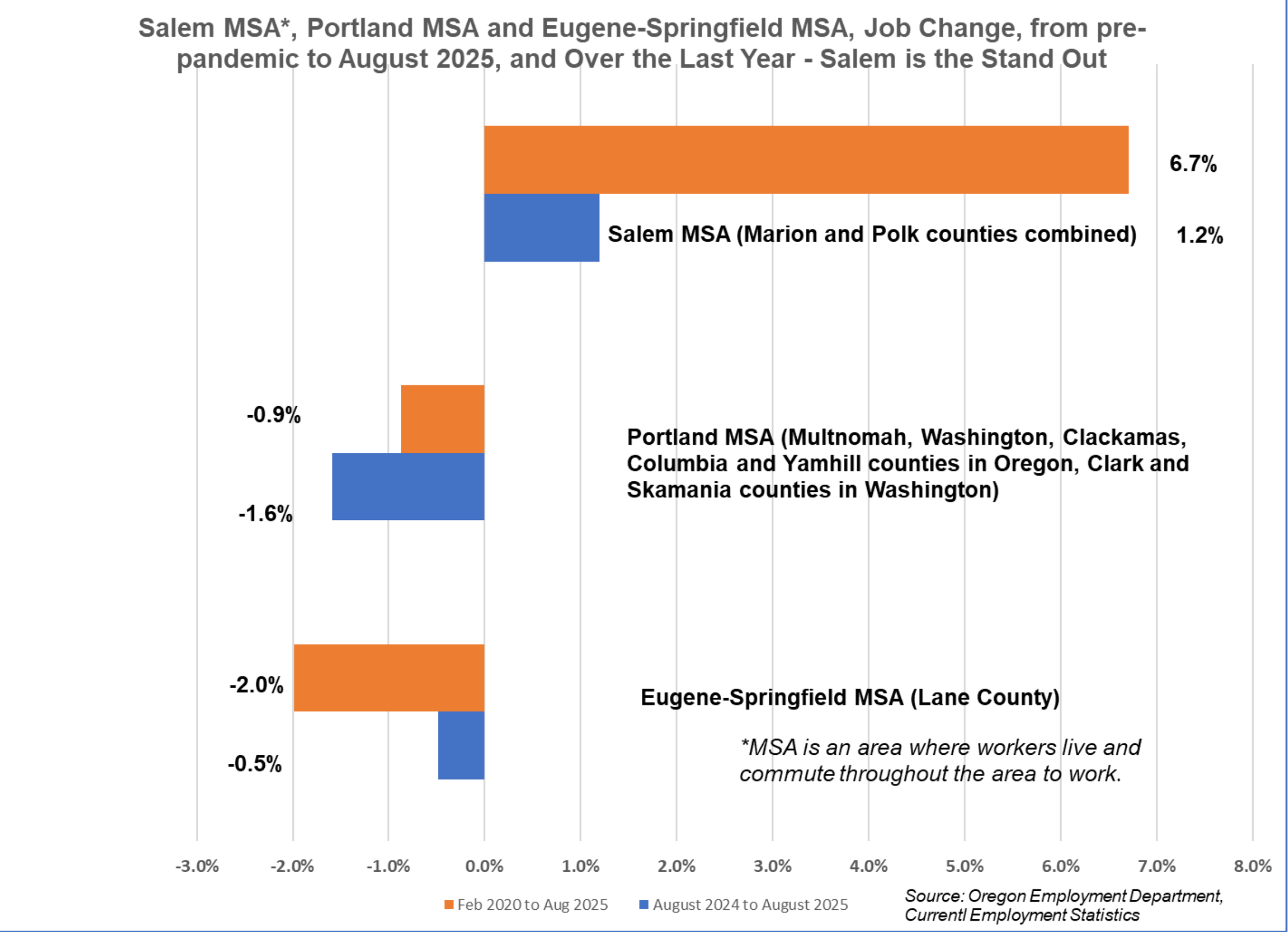
Another difference is employment change from February of 2020 (pre-pandemic) to August of 2025.
In August of 2025 Salem MSA employment was nearly 7% ahead of its pre-pandemic level. Both the Portland and Eugene-Springfield MSAs’ employment levels were slightly behind where they were pre-pandemic. (see graph next page)
What about recent trends?
From August ‘24 to August ‘25, Salem gained several thousand jobs, the Portland MSA lost 2 percent of its jobs, and Eugene-Springfield area lost a handful of jobs.
The differences are at least partly due to the impact of specific industry employment on the total picture.
Analysis of three private sector industries is in order: leisure and hospitality; retail sales; and health care. These industries experienced the largest pandemic job losses, and the health care industry experienced the added stress of being in the front lines of the pandemic. In addition, workers in these industries are a large portion of private sector employment – nearly one of every two private sector workers works in one these three industries.
The leisure and hospitality industry:
- Is 9% of Salem’s private sector employment; lost four of ten jobs from March to April of 2020; and added 6% to its employment from 2019 to 2025;
- Is 11% of Eugene area employment, lost one of two jobs in the first months of the pandemic, and gained a small handful of jobs from 2019 to 2025;
- Is 11% of the Portland area employment; lost one of two jobs in the first pandemic months; and has declined by 2% from pre-pandemic employment levels.
To sum up, the leisure and hospitality industry is a somewhat smaller portion of private sector jobs in the Salem area, didn’t lose as large a portion of its jobs early in the pandemic, and has not only recovered to its pre-pandemic employment level, but has substantially added to it.
What happened with retail trade jobs? Retail trade is between 10% and 14% of employment in the three MSAs. All three areas lost considerable numbers of retail jobs (between 13% and 16% of total employment) in the first months of the pandemic. But in August 2025, retail employment was still behind pre-pandemic levels in all the areas, doubtless in part due to increased on-line shopping habits persisting beyond the pandemic.
The health care industry is a different story. Industry employment levels in August 2025 in Salem, Eugene and Portland were all well above where they were pre-pandemic. And this, in spite of the fact that in the early pandemic, all three areas lost 10% of health care jobs.
But, as a 2023 Harvard study stated, “…the pandemic brought unprecedented instability to the (health care) labor market…” especially in nursing, direct care and behavioral health. The instability seems to be ongoing.
As examples, in California, Kaiser Permanente, a large health care organization, is currently laying off workers. Oregon’s Kaiser Permanente was affected by a five-day strike (from October 14th through the 19th) called by several Kaiser unions. And, in spite of employment levels well recovered from the pandemic, there are reports of shortages of primary care doctors, nurses, other health care personnel now and into the future, especially in rural areas.
The Willamette Workforce Partnership, the local workforce development board and the sponsor of this column, recognized the industry’s challenges and formed a behavioral health consortium several years ago to organize sharing and problem-solving among participating organizations. The consortium has recently been expanded to include all types of health care organizations, and staff was hired to implement the expansion.
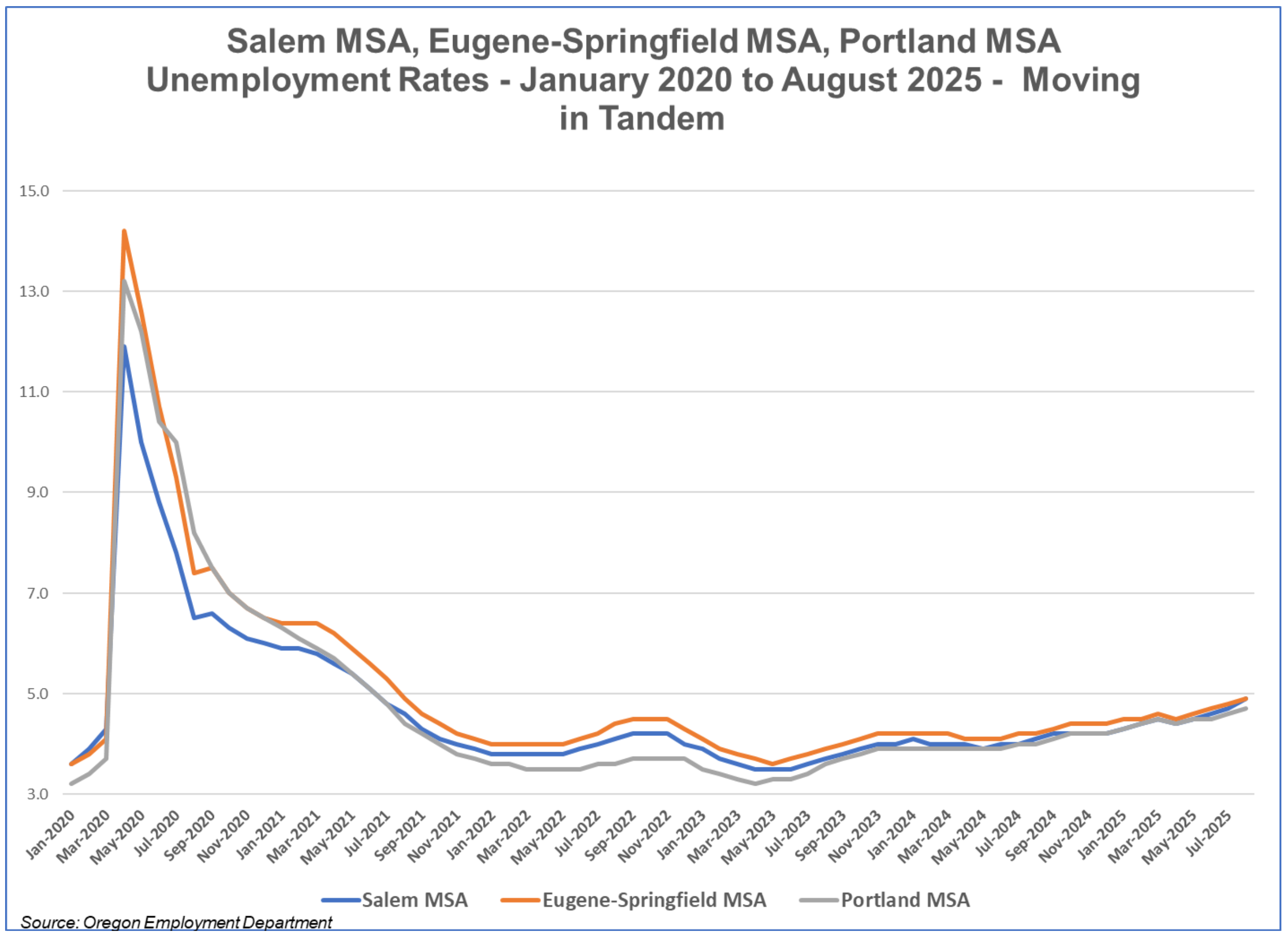
As the health care industry struggles with workforce issues, leisure and hospitality employment hopefully continues to recover, and retail employment likely continues its decline due to online shopping, unemployment rates have been increasing slowly. Salem’s rate in August was 4.9% – that is 11,000 people unemployed. This is up from lows of below 4% in 2023. Portland and Eugene unemployment rates have increased as well. (see graph next page)
With weak job growth and increasing unemployment, is a recession in the offing? One has been predicted for several years now, but so far hasn’t appeared. The economists of the Oregon Office of Economic Analysis, in the latest revenue forecast published on August 27, say we are “approaching the danger zone” and that the consensus probability of a recession is now 35%.
As of this writing, the government shut-down is still in effect. The Bureau of Labor Statistics (BLS), a federal agency, produces and publishes much of the economic information used regularly by economists in Oregon, the U.S. and the world.
However, because of the shut-down, the BLS isn’t publishing its monthly schedule of informational releases with an exception – the consumer price index (CPI) press release. This will occur on October 24. The CPI is considered vital because it is used to calculate numerous COLAS (cost of living adjustments) including that for Social Security. What the October 24th press release tells us about the CPI is interesting for another reason. The CPI measures inflation, which has been ticking up lately – will it show another increase on October 24th?
As usual, stay tuned. We’ll write again at the first of the year, and there’ll be plenty to report by then!
Pam Ferrara of the Willamette Workforce Partnership continues a regular column examining local economic issues. She may be contacted at [email protected]
The post Job Growth Slows but Salem fares better than Portland, Eugene appeared first on Willamette Workforce.
]]>