The post AACSB and AOM to Host Inaugural Research Impact Conference appeared first on Academy of Management .
]]>Tampa, Fla., USA (23 March 2026)—AACSB International (AACSB) and the Academy of Management (AOM) will bring together global leaders in business education and management research for the inaugural Research Impact Conference, taking place 26 to 27 May 2026 at University College Dublin School of Business in Dublin, Ireland.
This inaugural event brings together two leading organizations in business education and management scholarship to explore how research creates meaningful impact across academia, industry, policy, and society. The conference will gather more than 200 business school leaders, faculty, and accreditation professionals for two days of learning, dialogue, and collaboration.
A central focus of the conference will be AACSB’s Research Impact Framework, including its practical applications, broader implications, and strategies for socializing and embedding the framework within institutions. Participants will also explore how the framework connects to the Academy of Management’s mission.
In addition, attendees will engage in discussions related to the new Global Standards for Business Education, Accounting Accreditation Standards, and Global Research Impact Framework, providing timely insight for institutions preparing for future accreditation expectations.
“The Research Impact Conference represents an important step forward in strengthening the connection between rigorous scholarship and real-world impact,” said Lily Bi, president and CEO of AACSB International. “By partnering with the Academy of Management and convening global leaders in Dublin, we are creating a platform to advance shared understanding, elevate academic quality, and ensure that business research continues to address the complex challenges facing business.”
“If we want management scholarship to matter, we must align how we evaluate it with the difference it makes. That requires coordinated leadership across the global business education ecosystem, and that is the work that AACSB and the Academy of Management are advancing together. Impact is not a citation count, it is the degree to which our scholarship changes how the world thinks and acts,” said Tammy Madsen, president of the Academy of Management. “The Research Impact Conference represents a pivotal moment. We are creating space to rethink not only how impact is measured, but how it is enabled. The goal is not simply to refine metrics, but to amplify the relevance of scholarship for organizations and society.”
Registration details and additional program information can be found on AACSB’s website.
Download the Research Impact Conference press release.
About AACSB
Established in 1916, AACSB International (AACSB) connects educators, learners, and businesses to create the next generation of great leaders. With more than 2,000 member organizations and over 1,000 accredited business schools worldwide, AACSB is the world’s largest business education network. Through its global standards, accreditation, and thought leadership, AACSB fosters engagement, accelerates innovation, and amplifies impact in business education.
About the Academy of Management
The Academy of Management (AOM) is the preeminent professional association for scholars of management and organizations. Its worldwide members include faculty, doctoral students, and practitioners dedicated to advancing management research, education, and practice. Founded in 1936, AOM is the oldest and largest scholarly management association in the world, with a global community of nearly 22,000 members spanning more than 110 countries. Learn more at www.aom.org.
The post AACSB and AOM to Host Inaugural Research Impact Conference appeared first on Academy of Management .
]]>The post Advancing Connection, Collaboration, and Community Across Our Global Network appeared first on Academy of Management .
]]>The Academy of Management is a global scholarly community. Our members bring diverse perspectives shaped by different regions, institutions, disciplinary backgrounds, and career stages. This diversity strengthens our ability to build a vibrant and supportive community of scholars and to expand opportunities for connection, learning, and the exchange of ideas.
Guided by Vision 2030, AOM continues to strengthen access and engagement across its worldwide membership through a broad range of programs, events, and communities.
As part of AOM’s year-round engagement, the Annual Meeting remains an important venue for the exchange of research and ideas. Following our gathering in Copenhagen in 2025, we are now preparing for the upcoming meeting in Philadelphia. We are grateful to the many members who submitted their work, those currently serving as reviewers, and the volunteers who contribute their time and expertise throughout the program development process.
We also recognize that the current global environment presents real challenges for many scholars. Travel constraints, institutional policies, funding shifts, and broader geopolitical pressures may affect how and where members are able to engage, and some areas of scholarship are navigating increased uncertainty. These realities shape participation in different ways, and they are very much on our minds as we plan and support AOM activities.
In response, AOM is focused on providing pathways for engagement and practical support for members. This includes resources for those planning to attend the Annual Meeting in person, as well as an On-Demand presentation option that allows presenters unable to attend to share their work as part of the program. Beyond the Annual Meeting, AOM supports year-round engagement through webinars, workshops, conferences, and activities organized by Divisions, Interest Groups, journals, and other AOM communities. Through efforts such as the Community Accelerator Program, AOM is also expanding access through institutional engagement in regions that have had more limited connections to global scholarly networks.
As part of this ongoing work, AOM continues to broaden the geographic footprint of the Annual Meeting through a purposeful rotation, with meetings planned in Toronto, London, Seattle, and Amsterdam, and with additional global locations under consideration. Alongside this evolution, AOM will be investing in more in-person programming around the world, as well as a range of online activities, to support engagement across regions and modes of participation.
Additional information related to meetings, participation, and year-round engagement is available through the Member Resources and Support links below.
AOM’s commitment to its members around the world is reflected not in any single event or location, but in sustained engagement and continued efforts to support our scholarly community.
Thank you for being part of the Academy and for the many ways you contribute.

AOM President
Santa Clara University

Past President
Tel Aviv University

President-Elect
Imperial College

Vice President and Program Chair
University of Amsterdam

Vice President and Program Chair-Elect
INSEAD
Member and Support Resources
The post Advancing Connection, Collaboration, and Community Across Our Global Network appeared first on Academy of Management .
]]>The post Community Accelerator Program: Building Bridges appeared first on Academy of Management .
]]>Past President Peter Bamberger, who played a key role in launching the program during his term as president, sees the effort as a natural extension of AOM’s mission:
“Science is blind to national boundaries. So, when we developed AOM’s Vision 2030, one of our core ambitions was to make AOM truly global, not just in membership and where we hold our Annual Meetings, but in voice, access, and opportunity. CAP emerged from that vision to connect scholars, institutions, and ideas that had long been underrepresented in our community.”
-Peter Bamberger
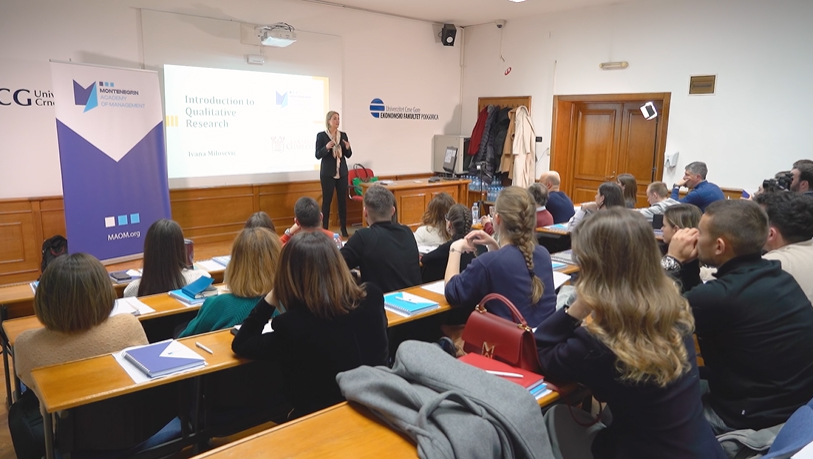
This pilot program, supported by AOM volunteers and staff, is already underway with its inaugural cohort of ten partner institutions and associations across Southeast Europe.
Founding Participants
The Community Accelerator Program was developed in response to growing momentum among scholars in Southeast Europe who are eager to engage globally but often lack the same access or pathways available to institutions in more connected regions.
The initiative meets institutions where they are by responding to local needs and creating a framework for them to thrive on their own terms, supported by AOM’s global network.
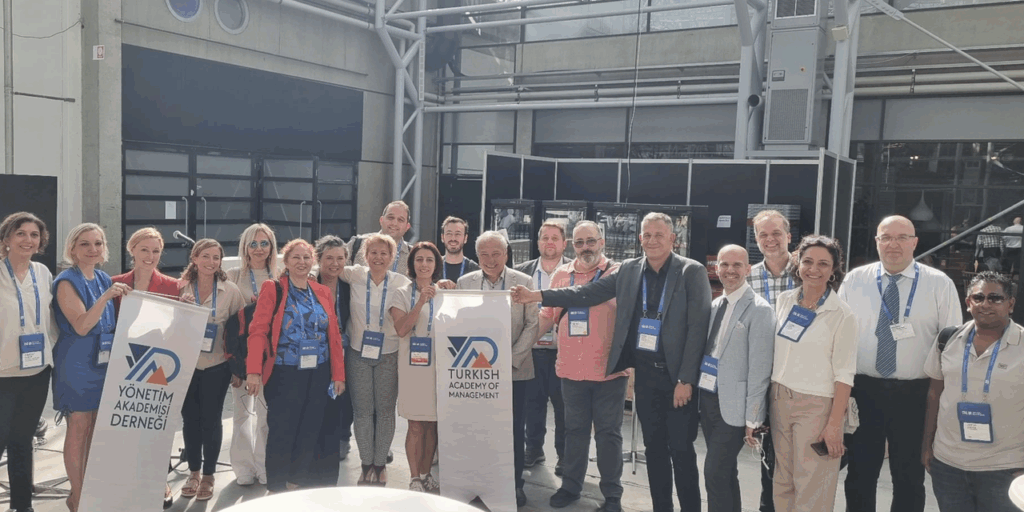
The following founding institutions represent diverse contexts but share a common goal of advancing management scholarship in their region and connecting their faculty and students with global networks.
Founding participants include:
• International University of Sarajevo
• Montenegrin Academy of Management
• Slovenian Academy of Management
• Ss. Cyril and Methodius University
• The Croatian Academy of Management
• Turkish Academy of Management
• University of Belgrade – Faculty of Organizational Sciences
• University of Belgrade, Faculty of Economics and Business
• University of Montenegro, Faculty of Economics
• University of Sarajevo
• University of Split, Faculty of Economics, Business and Tourism

Co-Creating Opportunities
The program offers tailored access to AOM resources, including faculty development opportunities, journal visibility, academic networking, and strategic support aligned with institutional and association goals. Each program is custom developed alongside regional leaders and scholars who understand what is needed to foster sustainable, long-term academic growth.
AOM President Tammy Madsen highlighted the deeper goal:
“The Community Accelerator Program is all about shared ownership. We want our partners to feel like co-creators of the program, not recipients of a template. The spirit of co-creation is possible because of our volunteers—AOM members who have stepped forward to mentor, plan sessions, provide workshops, and ensure the program reflects regional priorities and perspectives.”
Early Impact and Growing Momentum
Early responses from institutions and associations have been encouraging, with support from deans, scholars, and students who see the program as an opportunity to connect with AOM and shape how AOM engages with institutions globally.
The initiative is already fostering new peer learning networks across countries, with collaborations beginning to emerge among the first participating schools. At AOM’s Annual Meeting, in-person gatherings brought CAP partners together to share experiences and spotlight regional leadership.
Looking Ahead
The Community Accelerator Program is preparing for its next phase, building on early learnings and expanding AOM’s reach to additional global regions.
“What has been most inspiring is watching CAP take root and grow, building bridges across continents, strengthening local and regional schools, research centers and scholarly associations, and expanding the reach of management scholarship worldwide. It’s a vivid reminder that when we open our doors wider, we don’t just bring new members in; we expand our body of knowledge, enhance our impact and elevate the entire field.”
-Peter Bamberger
Institutions and associations in regions that have not historically had a strong connection to AOM are encouraged to get involved. The Community Accelerator Program is designed to be inclusive, collaborative, and future-focused—creating meaningful opportunities for scholars and institutions around the world.
To learn more or to explore partnership opportunities, visit the Community Accelerator Program page or contact [email protected].
The post Community Accelerator Program: Building Bridges appeared first on Academy of Management .
]]>The post Leading AOM into the Future: A Conversation with President Tammy L. Madsen appeared first on Academy of Management .
]]>Tammy’s presidency arrives at a pivotal moment, as AOM advances its Vision 2030 strategy, a plan designed to strengthen its global community, expand access to management scholarship, and ensure AOM’s continued impact for decades to come.
Below, Tammy shares her reflections on leadership, her priorities for the year ahead, and her vision for AOM’s future.
Q&A with Tammy L. Madsen
Q: As you begin your presidency, what opportunities do you see for AOM in the year ahead?
Tammy: Strategic leaders look for inflection points. This year, ours is to continue turning Vision 2030 strategic initiatives into visible impact —by building stronger global connections, especially in regions of the world that are underrepresented, expanding our content portfolio for research with new open access journals in partnership with Elsevier, and for practice with initiatives such as AOM Today; developing teaching and methods content and services; amplifying member voices and scholarly impact; advancing our use of AI for products, processes, and policies; and rethinking our processes for enabling DIGs and the organization as a whole. All of the activities are aimed at making AOM an even more vibrant global platform for ideas that make a difference.
None of this would be possible without our ecosystem of volunteers, DIG leaders, Editors, partners, affiliates, Board of Governors and Executive Committee, and our team at HQ. Continuing to communicate with, and enable, our expanding stakeholders is vital to our progress.
Q: How does your role build upon the progress of Vision 2030 so far?
Tammy: My role is to clarify our priorities, to address barriers head-on, and to keep the momentum going—moving from vision to execution. Think of it as shifting gears: from mapping where we want to go, to accelerating how we get there. Some strategic initiatives are in their early stages of development whereas in others, we have completed pilot testing and are beginning a broader rollout of activities. Stay tuned.
Q: Vision 2030 emphasizes inclusivity, innovation, and global reach. How do you see these priorities shaping AOM’s programs and member experiences this year?
Tammy: You’ll see inclusivity in how we connect across regions and communities that historically had less access (Community Accelerator Program); innovation in how we co-create and deliver value and content in both teaching and research; global reach in how we amplify insights that shape management and leadership far beyond our own community, and at the core, AOM’s unwavering commitment to academic freedom — which underpins scientific progress and ensures that evidence and ideas can flourish.
Q: What message would you like to share directly with members as you begin your presidency? How can members across divisions, interest groups, and regions get more involved in shaping AOM’s future?
Tammy: Your voice matters. AOM’s future will be built on the ideas, collaboration, and involvement of its members—so dive in where your passion lies and help shape where we go next. Members can lead from where they are, whether that’s sparking dialogue and debate, collaborating on research projects or teaching initiatives, joining a committee or task force, co-creating webinars, workshops or mini-conferences, mentoring, or building bridges across boundaries.
Q: Reflecting on your own AOM journey, what has kept you engaged and inspired over the years?
Tammy: Community, People, and Purpose. For me, AOM is where intellectual energy meets shared purpose— where I interact with colleagues who push my thinking, challenge assumptions, and remind me why advancing scholarship is at the heart of what we do. That mix of intellectual energy and community engagement is what keeps me coming back.
Q: What’s something members might be surprised to learn about you outside of academia?
Tammy: When I’m not writing about ecosystems, I’m often surfing in them—preferably in warm Hawaiian water with rainbows overhead.

About Tammy
Tammy L. Madsen is the W.M. Keck Foundation Chair in Strategic Management and Innovation at Santa Clara University’s Leavey School of Business. Her research and teaching is at the intersection of strategy, innovation and evolutionary dynamics – specific themes include competitive heterogeneity and temporary advantage, shocks and growth under uncertainty, ecosystem strategy, and co-innovation platforms.
Tammy has been actively engaged with AOM for the last 30 years, serving in multiple volunteer roles and as the recipient of numerous awards.

The post Leading AOM into the Future: A Conversation with President Tammy L. Madsen appeared first on Academy of Management .
]]>The post Forbes: 3 Things The ‘Murdoch Succession’ Proves About Billion-Dollar Family Dynamics appeared first on Academy of Management .
]]>Academy of Management Journal cited in Forbes.
… Psychological research confirms, to a certain extent, quite a few parts of this folk wisdom. What few people realize, however, is that these birth order effects can also play out in the business world.
A 2019 study published in the Academy of Management Journal examined this question head-on by focusing largely on CEOs. The researchers theorized that, based on evolutionary arguments, firstborns would likely be more conservative. It was also hypothesized that these firstborns would be less inclined to take risks than their later-born siblings — since, historically, these children would have already lived a life of competing for resources and carving out alternative niches.
Their findings supported the theory: firstborn CEOs generally avoided strategic risk, while later-borns were more prone to push boundaries and experiment. And, unsurprisingly, the Murdochs have seemingly repeated this pattern, too. Rupert’s eldest son and chosen successor has long been positioned as the safe pair of hands. Lachlan was likely seen as the little boy — and now is the man — who would preserve both the family empire and the patriarch’s conservative worldview. …
Continue reading the original article at Forbes.
Read the original research in Academy of Management Journal.
Read the Insights summary.
Learn more about the AOM Scholars and explore their work:
- Seung-Hwan Jeong, Georgia State University
- Scott D. Graffin, University of Georgia
The post Forbes: 3 Things The ‘Murdoch Succession’ Proves About Billion-Dollar Family Dynamics appeared first on Academy of Management .
]]>of Management Discoveries uses interviews and survey data to
explore the social challenges experienced by workers with ASD and their
strategies for navigating these challenges.
The post Charter Works: What workers with autism need from workplaces appeared first on Academy of Management .
]]>Academy of Management Discoveries cited in Charter Works.
Some 5.4 million American adults have autism spectrum disorders (ASD)
and face limited career opportunities because our ideas about being a
good worker often require an understanding of social rules unrelated to
a worker’s actual responsibilities, says Aparna Joshi, a professor at
University of Michigan’s Ross School of Business.
“The ideal worker norm includes ideas about being a team player,
networking, being able to make small talk,” says Joshi. “If somebody does
that well, we know that those folks do better in the world of work.”
Joshi and colleagues recently published a research study in the Academy
of Management Discoveries that uses interviews and survey data to
explore the social challenges experienced by workers with ASD and their
strategies for navigating these challenges. We spoke with two of the
study’s coauthors, Joshi and Tiffany Johnson James, a professor at
Georgia Tech’s Scheller College of Business.
Here are takeaways from our conversation, including tactics employers
and managers can use to better support colleagues with ASD…
Continue reading the original article at Charter Works.
Read the original research in Academy of Management Discoveries.
Learn more about the AOM Scholars and explore their work:
- Tiffany D Johnson James, Georgia Institute of Technology
- Aparna Joshi, University of Michigan
- Mary Eve Speach, University of Georgia
- Glen E. Kreiner, University of Utah
The post Charter Works: What workers with autism need from workplaces appeared first on Academy of Management .
]]>The post Seven Inducted Into AOM Fellows for 2025 appeared first on Academy of Management .
]]>
In addition to celebrating achievement in management, the Fellows Group provides opportunities for community and a forum for discussion among the people who have been recognized. For 2025, seven members were selected to be honored with induction.
View the biographies of the 2025 inductees below.

Paul Beamish
Paul Beamish is Professor of International Business at the Ivey Business School, Western University. He is a past Editor-in-Chief of the Journal of International Business Studies, a Fellow of the Royal Society of Canada, and a past Dean of the Fellows of the Academy of International Business.
In 1994, Paul established a major stream of research at Ivey about Japanese Foreign Direct Investment using Toyo Keizai data. This has resulted in nearly 200 publications and served as the primary source for over 30 PhD dissertations. Relatedly, Ivey has long been the leading centre for research on international joint ventures. Its PhD program graduates have authored over 200 publications. Paul has been the largest contributor.
In 2010, Paul established the 39 Country Initiative. It allows the 2000+ universities in the world’s 46 poorest countries to use Ivey cases at no cost and provides 30 face-to-face teaching workshops annually in eligible countries.
The genesis of some of Paul’s scholarly contributions has been the writing of teaching cases. He has authored 170 published cases in the international strategy area. Many have won awards and have been translated into other languages. 4.5 million copies have been studied.

Deanne N. Den Hartog
Deanne N. Den Hartog is Full professor of Organizational Behavior at the University of Amsterdam Business School (ABS). She also is the director of the Research Institute and heads the Leadership and Management section at ABS. Deanne is a member of the Royal Netherlands Academy of Arts and Sciences and of the Royal Holland Society of Sciences and Humanities.
Her research and publications focus on Leadership, Organizational Behavior, HRM, and culture. Results of her research have been published in high quality academic journals including the Journal of Applied Psychology, Journal of Management, Journal of Organizational Behavior, and The Leadership Quarterly. Deanne served on the editorial committee for Annual Review of Organizational Psychology and Organizational Behavior and was Associate ditor of among others Applied Psychology: An International Review and member of many editorial boards.
She previously served as elected Representative-at-Large of the Board of Governors for the Academy of Management and of the Academy of Management’s OB Division and is now on the Executive Committee for AOM. Among other roles, she also served on the Board of Directors of the International Association of Applied Psychology (IAAP), was member of the Board of Governors or the GLOBE foundation, served on the Societal Impact taskforce for European Association of Work and Organizational Psychology, and she served on program and advisory committees for large international conferences.

Adam Grant
Adam Grant is an Organizational Psychologist at Wharton, where he studies work motivation, prosocial and proactive behaviors, leadership, and job design and interpersonal relationships. He has published extensively in top management and applied psychology journals and received scientific contribution awards from AOM, APA, NSF, and SIOP.
As a passionate science communicator, Adam is the #1 New York Times bestselling author of six books that have sold millions of copies, including Think Again, Hidden Potential, and Give and Take. His TED talks have over 35 million views, and his podcasts WorkLife and Re:Thinking have more than 90 million downloads. Adam has been recognized as Wharton’s top-rated professor for seven straight years and one of Fortune’s 40 under 40; he served on the US Department of Defense Innovation Board and wrote the most-read New York Times article of 2021. He received his BA from Harvard and his PhD from the University of Michigan, and he is a former Junior Olympic springboard diver.

Martin Kilduff
Martin Kilduff is Professor of Organizational Behavior, Director of Research, and Head of the Organizations and Innovation group at the UCL School of Management in London, UK. His research focuses on interpersonal social networks in organizations. He also has research and teaching interests in organization theory and the philosophy of science.
Martin has written three co-authored books on social networks. He publishes widely in leading management and social psychology journals including Academy of Management Journal, Organization Science, Administrative Science Quarterly, and Journal of Applied Psychology. He helped pioneer the micro-foundations movement in social network research in terms of the personality and cognitive underpinnings of social network interactions.
Martin was Editor in Chief of the Academy of Management Review and Associate Editor of Administrative Science Quarterly. He served as chair of the Organization and Management Theory Division of the Academy of Management. Martin has served on the faculties of INSEAD, Penn State, University of Texas at Austin, and Cambridge University. He earned a PhD in organizational behavior from Cornell University.

Maria L. Kraimer
Maria L. Kraimer is the Donald S. Carmichael Professor in Organizational Behavior and is the Chair of the Department of Organization and Human Resources at the University at Buffalo, School of Management. She is a leading scholar for research on global work experiences, including expatriation and repatriation, and predictors of career success. Her research has been recognized with nearly a dozen “best paper” awards and she received the 2010 Cummings Scholarly Achievement Award for early-to mid-career accomplishments from the Organizational Behavior Division.
Maria has been actively involved in the Academy of Management, serving in the officer track of the Human Resources Division from 2013-2018. She was a past Associate Editor and past Editor-in-Chief (2017-2019) for Personnel Psychology and is currently the Founding Editor for Journal of Management Scientific Reports. She received her PhD in Human Resource Management from the University of Illinois at Chicago.

Ronald Mitchell
Ron Mitchell is Professor of Entrepreneurship in the Rawls College of Business at Texas Tech University. Ron has made substantial contributions to the fields of management and entrepreneurship, particularly through his groundbreaking work in stakeholder theory and entrepreneurial cognition research. This research has significantly shaped these disciplines, influencing scholars and practitioners alike. He has approached his academic career from a perspective which suggests that through the study of entrepreneurship and stakeholder relationships, value that is inherent but untapped in human relationships can be identified, problems and possibilities in opportunity emergence can be better understood, and captive value can be liberated to create economic and social well-being. His publications appear in many of the top management and entrepreneurship journals.
Beyond his research, Ron has contributed to the Academy as Entrepreneurship Division Chair, as a member of the AOM Strategic Planning Committee (2008-2010), and also as an architect of key initiatives that foster engagement and recognize research excellence. Notably, with Rich Dino (U. Conn.), he played a vital role in initiatives such as the Entrepreneurship Research Excellence Initiative Exemplars Conferences, and the IDEA Awards, which have highlighted outstanding research and innovation in scholarship.

Richard Whittington
Richard Whittington is Professor of Strategic Management at the Saïd Business School and Millman Fellow at New College, University of Oxford. Richard is a leader in the field of Strategy-as-Practice research, having published the first paper in the field (1996). Richard is author or co-author of twelve books, including two influential textbooks on strategy: Exploring Strategy, ranked by the Financial Times Teaching Power index as the top strategy textbook worldwide, and What is Strategy – and Does it Matter?, past winner of the Management Consulting Association prize for the best management book of the year.
He has published in leading journals such as the Administrative Science Quarterly, the Journal of Management Studies, Organization Science, Organization Studies and the Strategic Management Journal. He has over 56,000 Google Scholar citations. Richard has served as an Associate Editor of the Strategic Management Journal, a Senior Editor of Organization Studies and a Deputy Editor of the British Journal of Management.
Richard is currently standing Guest Associate Editor at the Strategic Management Journal. In 2024, Richard became President-Elect of the Strategic Management Society. He has previously served as Chair of the Strategy as Practice interest group and on the Executive Committee of the Strategy Division at the Academy of Management. He has a PhD from the University of Manchester, an MBA from the University of Aston and an MA in Modern History from Magdalen College, University of Oxford. He also has an honorary doctorate from the University of St. Gallen, Switzerland.
The post Seven Inducted Into AOM Fellows for 2025 appeared first on Academy of Management .
]]>The post Inc: 50 Years Later, ‘Jaws’ (and Science) Proves How Embracing 1 Word Can Lead to Remarkable Success appeared first on Academy of Management .
]]>Originally found at Inc.
…
In a 2017 study published in Academy of Management Journal, researchers asked employees to rate their willingness to embrace contradictions. They were then asked to rate how often they experienced resource constraints: limited time, limited funds, limited resources, limited supplies, etc.
Meanwhile, their bosses rated each employee in terms of overall performance, creativity, and innovation.
What happened? Employees who ranked on the low end of what researchers called “the paradox mindset” scale (meaning they disliked contradictions, much less embracing them) struggled with constraints: Their performance dropped whenever they felt resources were insufficient.
On the flip side, employees who found it challenging and even fun to overcome constraints were the better performers, especially when creativity and problem-solving were required.
And here’s the kicker: The presence of constraints often caused the performance of those employees to improve.
Continue reading the original article at Inc.
Read the original research in Academy of Management Journal.
Read the Academy of Management Insights summary.
Learn more about the AOM Scholars and explore their work:
- Ella Miron-Spektor, INSEAD
- Joshua Keller, University of New South Wales
- Wendy K. Smith, University of Delaware
- Marianne W. Lewis, Lindner College of Business
The post Inc: 50 Years Later, ‘Jaws’ (and Science) Proves How Embracing 1 Word Can Lead to Remarkable Success appeared first on Academy of Management .
]]>The post Forbes: Research says star talent alone won’t save your team. But why? appeared first on Academy of Management .
]]>Originally found at Forbes.
Leaders love to talk about talent. Hiring top performers is often seen as the surest path to innovation, agility and competitive advantage. Whether in Fortune 500 boardrooms or high-growth startups, leaders prize elite résumés and high-potential hires—believing that the more stars you have, the better your team will perform.
But what if that logic is flawed? What if adding more top talent doesn’t automatically lead to better outcomes, and might actually undermine them?
That’s the question at the heart of research published in Academy of Management Discoveries, titled “When More Is Less: The Role of Social Capital in Managing Talent in Teams.” The underlying study—conducted by Andy Loignon and Sirish Shrestha of the Center for Creative Leadership (CCL), along with Fabio Fonti and Mehdi Bagherzadeh of NEOMA Business School and Andrei Gurca of Queen’s University Belfast—shows that the relationship between talent and performance is more complicated than many leaders assume.
Continue reading the original article at Forbes.
Read the original research in Academy of Management Discoveries.
Read the Academy of Management Insights summary.
Learn more about the AOM Scholars and explore their work:
- Fabio Fonti, NEOMA Business School
- Mehdi Bagherzadeh, NEOMA Business School
- Andrei Gurca, Queen’s University Belfast
The post Forbes: Research says star talent alone won’t save your team. But why? appeared first on Academy of Management .
]]>The post Stylist: 4 ways to overcome your fear of small talk at work, according to experts appeared first on Academy of Management .
]]>Originally found at Stylist.
Thanks to lockdowns, remote working and ever-increasing screen time, we’re out of practice when it comes to everyday face-to-face communication. In many ways, our avoidance of office small talk makes sense; according to the survey commissioned by Tilda, 40% of young adults likened small talk to “learning a new language”. However, Stylist offers 4 ways to overcome your fear of small talk at work.
However, as much as we might try to avoid it, small talk can benefit everyone involved. A scientific study published in PLOS One found that even just four minutes of small talk can help you to co-operate more closely with somebody. Another study published in the Academy Of Management journal found that small talk – which it defined as “trivial communication not core to task completion” – enhanced employees’ daily positive social emotions at work and enhanced wellbeing at the end of the workday. So why do people find it difficult to initiate such conversations? For those struggling, consider the Stylist: 4 ways to overcome your fear of small talk at work for practical advice.
Continue reading the original article at Stylist to explore these 4 ways. Stylist always provides unique insights on overcoming challenges like small talk anxiety at work.
Read the original research in Academy of Management Journal.
Read the Academy of Management Insights summary.
Learn more about the AOM Scholars and explore their work:
- Jessica R. Methot, Rutgers University and University of Exeter
- Emily H. Rosado-Solomon, California State University Long Beach
- Patrick E. Downes, University of Kansas
- Allison S. Gabriel, University of Arizona
The post Stylist: 4 ways to overcome your fear of small talk at work, according to experts appeared first on Academy of Management .
]]>