The post Approaches for Navigating Bipolar appeared first on Aware.
]]>For people living with bipolar, changes in mood can strongly affect thinking, emotions and behaviour in everyday life. These changes usually involve periods of feeling very low (depressed), elated (elation), or sometimes a mix of both, with times of more stable mood in between.
These shifts don’t just affect emotions, they can also influence energy levels, behaviour, and the way a person understands and responds to what’s happening around them. Although these experiences can be challenging, it is possible to live a full and meaningful life with effective intervention which may include medication, psychological therapy.
Correct diagnosis of both bipolar and the specific type of bipolar a person is experiencing is essential for successful intervention. Getting a clear diagnosis can challenging, taking on average up to 10 years, with the first signs often seen in late teens or early adulthood , where sometimes family and friends can be the first to notice a pattern in their loved one’s behaviour.
Bipolar is best understood as the result of a combination of different factors interacting over time. These include biological (e.g. genetic vulnerability and differences in how the brain regulates mood and energy), psychological including patterns of thinking (for example, how people interpret events, respond to stress, or view themselves), as well as difficulties with regulating emotions or sleep. Social and environmental factor such as stressful life events, relationship difficulties, trauma, or major changes in routine can also play a role in developing bipolar. It is understood that bipolar disorder can develop through the interaction of these influences, rather than having one singular cause.
Bipolar is a condition that requires lifelong management and knowledge is the first step. Research shows that a combination of psychological therapy, medication, a healthy lifestyle and strong social support is the most effective way to live well with bipolar. Understanding a person’s individual experiences, triggers, and context is important, as this can help guide more personalised and effective support.
~
Empowering people to look after their mental health is an important part of our work hear at Aware including our Living Well with Bipolar Programme. A free service delivered by a mental health professional, designed to empower participants by deepening their understanding of bipolar and helping to identify personal triggers for mood changes – this programme provides a strong foundation for thriving with bipolar. Registrations for the next course and more details available here.
For those friends and family supporting a loved one experiencing bipolar or depression, Aware also offers a Family and Friends Support Programme, a psycho-educational programme providing information, understanding and practical support. The free programme aims to equip participants with the tools to better understand and support a loved one, whilst maintaining their own wellbeing. Registration and more information available here.
~
Read more on the Aware World Bipolar Day page here.

The post Approaches for Navigating Bipolar appeared first on Aware.
]]>The post Liam’s Journey to Diagnose appeared first on Aware.
]]>Liam’s Story
I grew up in the west of Ireland and spent much of my adult life working in the corporate world, including roles in multinational companies. From the outside things often looked stable and successful, but internally there were long periods where something simply didn’t feel right. Like many people who later receive a bipolar diagnosis, it took years before the pattern of mood shifts began to make sense.
For years I thought the highs were interpreted as productivity, energy or ambition. The lows were seen as burnout, stress, or simply part of life. What I did not understand at the time was that these fluctuations were part of Bipolar II disorder.
It can often go undetected for many years because hypomania does not always appear obviously disruptive. In fact, it can sometimes look like high functioning.
My eventual diagnosis came in 2013 after many years of trying to understand why my mood, energy and thinking could change so dramatically over time. Receiving that diagnosis was both scary and relieving. It forced me to re-evaluate many periods of my life through a new lens. Relieving because it finally provided an explanation and, more importantly, a path toward managing the condition.
One insight that became very important for me was the idea that when you become comfortable acknowledging the condition, much of the stigma begins to lose its power. Once I fully accepted that Bipolar II was part of my life, I stopped trying to avoid it and instead focused on understanding and managing it. In many ways I describe that shift as
“running towards the condition rather than away from it.”
That mindset allowed me to make real progress.
My connection with Aware grew from that same motivation. I wanted to contribute to mental health awareness in a constructive way and help reduce the stigma that still surrounds mood disorders. Through Aware I have had the opportunity to speak publicly about my experience, including webinars and awareness initiatives, and to contribute to conversations about bipolar disorder in Ireland.
Alongside advocacy, I have also written a book titled High Life Low Life: Living with Bipolar Disorder, which reflects on 25 years of lived experience with Bipolar II. In recent years I have also become increasingly interested in the neuroscience behind mental health. Understanding the brain: sleep, dopamine, mood regulation and attentio this has been a powerful tool in managing my own wellbeing and communicating these ideas to others.
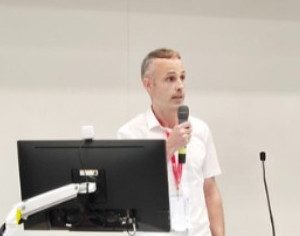
In 2025 I had the privilege of speaking at a neuroscience conference in Belfast as the only lived-experience speaker among researchers and clinicians. It reinforced something important: the combination of lived experience and scientific understanding can be a powerful way to communicate mental health topics.
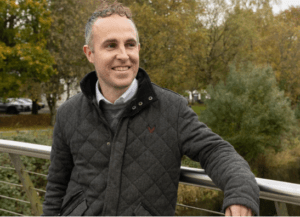
Today, in 2026, my approach to living with Bipolar II is built around awareness, structure and education. I focus on sleep, stress management, understanding mood patterns and continuing to learn about the brain and behaviour. I also share educational content online about bipolar disorder and neuroscience on Ticktock to help people better understand how the mind works.
While bipolar disorder presents challenges, it has also led me toward meaningful work in advocacy, education and public conversation about mental health. My hope is that by speaking openly about the journey to diagnosis, others may recognise their own experiences sooner and know that support and understanding are available.
Learn more from Liam’s perspective
- Liam’s Book; ‘High Life Low Life: Living with Bipolar Disorder’ a candid account of 25 years living with Bipolar II is available here
- Liam’s website liamgildea.com
- Aware Webinar Recording ‘Bipolar Disorder: Journey to Diagnosis’ with Liam Gildea on his lived experience, Dr Susan Brannick Clinical Director at Aware and Dr Noel Kennedy Consultant Psychiatrist at Highfield Healthcare, March 2025 linked here
- Article ‘Bipolar disorder: ‘If you can come out the right side of the illness nothing in life will faze you’, by Arlene Harris, 8 October 2020 linked here
~
Read more on the Aware World Bipolar Day page here.
Empowering people to look after their mental health is an important part of Aware’s supports including our Living Well with Bipolar Programme. A free service delivered by a mental health professional, designed to empower participants by deepening their understanding of bipolar and helping to identify personal triggers for mood changes – this programme provides a strong foundation for thriving with bipolar. Registrations for the next course and more details available here.
For those friends and family supporting a loved one experiencing bipolar or depression, Aware also offers a Family and Friends Support Programme, a psycho-educational programme providing information, understanding and practical support. The free programme aims to equip participants with the tools to better understand and support a loved one, whilst maintaining their own wellbeing. Registration and more information available here.
The post Liam’s Journey to Diagnose appeared first on Aware.
]]>The post Arlene’s Journey to Diagnose appeared first on Aware.
]]>Arlene’s Story
Irish country-rock singer Arlene Bailey is from Co.Kildare originally, she grew up listening to and singing American Country music inspired by her mother and father both from musical families. Having difficulty with her mental health from teenage years onwards including a suicide attempt, Arlene asked for help from a range of sources; doctors, therapists, psychotherapists and counsellors at various stages of her journey.
In her 40s Arlene began to keep a ‘mood diary’ after visiting her GP and subsequent referral to a psychiatrist – which revealed not just lows but also highs which had previously gone unnoticed.

After months of observation working with a team of specialists – Arlene’s life changed for the better at 42 years old, when she was diagnosed with bipolar II and received appropriate support for her mental health condition.
“Receiving a diagnosis of bipolar was a turning point – it meant I could finally seek the right support and learn how to manage my condition.”
In her spare time Arlene now practices yoga twice a week, which helps her to switch off, and enjoys exploring the Irish countryside with her husband in their camper – she has found over the years that an alcohol-free lifestyle helps her mental health, especially allowing her to notice when she has changes in mood. Arlene advocates for increased awareness of mental health in Ireland, noticing that stigma still exists in how people perceive a bipolar diagnosis.
Arlene took part in Aware’s free eight-week Living Well with Bipolar programme, which is delivered by a mental health professional. She now shares her lived experience perspective to help improve the wider public understanding of mental health, and encourage those who need it to seek help.

Read more on Arlene’s Mental Health Journey
- Article; ‘Singer on living with bipolar disorder: ‘I struggled for years, don’t be afraid to get help’, by Aine Kenny, RSVP Live, 18 February 2026 linked here
- Interview; ‘Kildare singer opens up about ‘life-changing’ diagnosis on 40th anniversary of mental health charity’, by Edana Flynn, The Irish Independent, 07 October 2025 linked here
~
Read more on the Aware World Bipolar Day page here.
Empowering people to look after their mental health is an important part of Aware’s supports including our Living Well with Bipolar Programme. A free service delivered by a mental health professional, designed to empower participants by deepening their understanding of bipolar and helping to identify personal triggers for mood changes – this programme provides a strong foundation for thriving with bipolar. Registrations for the next course and more details available here.
For those friends and family supporting a loved one experiencing bipolar or depression, Aware also offers a Family and Friends Support Programme, a psycho-educational programme providing information, understanding and practical support. The free programme aims to equip participants with the tools to better understand and support a loved one, whilst maintaining their own wellbeing. Registration and more information available here.
The post Arlene’s Journey to Diagnose appeared first on Aware.
]]>The post The Past in the Present: 40 Years of Aware and Mental Health in Ireland appeared first on Aware.
]]>As Aware marks 40 years of supporting people with depression, bipolar, and anxiety, I believe this idea of the past in the present also applies collectively in 2025. It shapes how society understands mental health, how we respond to distress, and what supports we make available.
In 1985, the year Aware was founded, social challenges like unemployment and emigration likely affected people’s wellbeing in different ways. Today, we face new but familiar pressures: a housing crisis, cost-of-living struggles, and under-resourced mental health services. Gendered patterns persist too. Women are more likely to be diagnosed with depression or anxiety, while men often struggle with different barriers to help-seeking. Our 40th anniversary national survey reflected these trends. Women reported higher rates of diagnosis, while men were less likely to have sought professional support. This raises important questions: Are women’s experiences pathologised more readily? Do societal norms around masculinity keep men from seeking help? These are not abstract debates, but issues with real consequences for how services evolve to meet diverse needs.
The concept of recovery, too, has shifted over time. In the 1980s, Ireland was moving away from a traditionally heavy reliance on institutionalised care toward community-based, multi-disciplinary models. Today, the pendulum has swung the other way. Ireland now sits below the EU average for mental health bed availability, without a corresponding investment in community or crisis services.
Public attitudes have also shifted. Our survey found most people believe services have improved since 1985, yet 81% felt much more progress is needed. Financial barriers remain a significant obstacle. We may have left the asylum era behind, but many still find help is out of reach.
A collective hunt for meaning can also echo across the decades. In 1985, the phenomenon of “moving statues” captured the national imagination, drawing busloads of people in search of a miracle. Forty years later, what are we seeking? Today, instead of statues, we are immersed in a vast wellness industry, worth billions, promising cures, diagnoses, even salvation. Into this space, AI has arrived. Based on use so far, it seems that we are entrusting large language models with our deepest secrets, longings and uniquely human experiences. After we have proved we are not the robot, we then turn to robot intelligence to decode human experience and behaviour.
Where does this leave us? For me, the answer remains what it was in 1985; connection. Human connection is one of the strongest lifelines when life feels unbearable. Yet in a society becoming ever more digital, fragmented, and remote, opportunities to meaningfully connect are under threat.
When it comes to mental health services, we also need to continue advocating for sufficient funding that aligns with recommended guidance for mental health spending. An AI chatbot is no substitute for being heard and being therapeutically held by other humans when it feels like everything has fallen apart. We need a range of statutory mental health services to meet the diversity of mental health needs we now see in 2025 alongside the work of NGOs and charities like Aware, who continue to bridge critical gaps in support.
The dedicated volunteers and staff at Aware have spent the last 40 years offering a supporting light to those living through depression or anxiety. We remain committed to this work for decades to come.
You can find more information on our services at aware.ie and watch our Aware Mental Health Week webinar for a deeper discussion on what recovery means today.
This blog is by Dr Susan Brannick, Clinical Director at Aware as part of a monthly blog series.
The post The Past in the Present: 40 Years of Aware and Mental Health in Ireland appeared first on Aware.
]]>The post National survey on attitudes to mental health, as Aware marks 40 years appeared first on Aware.
]]>“For me, the most powerful thing has been finding hope — knowing that with the right help, life with a mental health condition can be managed, and it can be fulfilling.” Professional singer Arlene Bailey, whose life changed when she was diagnosed with bipolor.
A new national survey has revealed how attitudes in Ireland towards mental health have shifted over the past four decades, as Aware, the national mental health charity, marks 40 years of supporting people impacted by depression, bipolar, and anxiety.
The survey, conducted by Amárach Research with a representative sample of 1,000 adults, was released to coincide with Aware Mental Health Week (6–12 October) and World Mental Health Day this Friday, 10 October.
While findings point to significant progress, they also highlight ongoing challenges in access and affordability.
Key findings include:
- 1 in 4 Irish adults report having been diagnosed with depression or anxiety
- 1 in 4 adults have directly engaged with Aware’s services or know a friend or family member who has
- 8 in 10 say there is a better understanding of mental health today compared with 40 years ago
- 81% believe there need to be better services for people with mental health challenges.
- 3 in 4 say the cost of services such as counselling and psychotherapy is a major barrier.
- Those over 65 were found to be the most hopeful
When it comes to services, 72% feel support has improved over 40 years, yet 81% say more needs to be done. Cost and waiting lists remain significant barriers. Three in four people said the cost of services including counselling and psychotherapy for people with mental health challenges is a big barrier for many and 8 in 10 said delays in accessing services are a problem.
The survey also explored hope, a concept increasingly recognised as central to recovery. Using a recognised, standardised measure known as the Adult Hope Scale, over 65s reported the highest levels of hope (56% had High Hope scores), while 1 in 5 (19%) of 25–34 year olds fell into the Low Hope category. When asked what sustained them during times they experienced a mental health challenge or difficulty, respondents pointed to family and close relationships (61%), personal resilience (44%), acts of kindness (39%), nature (33%), and Art, music, and creativity (26%), which shows how pivotal relationships and societal aspects are in people’s lives.
1 in 4 (28%) of respondents have personally used or know a friend or family member who has engaged with Aware’s services. Reflecting on the milestone and survey findings, Aware’s Clinical Director Dr. Susan Brannick said:“This week, we mark 40 years since we began supporting people and families impacted by depression and bipolar. This survey shows that Ireland has made real progress — people are talking more openly, and understanding has deepened — but it also reminds us that many still face stigma, cost, and access barriers when they reach out for help.
“There are more mental health services than 40 years ago but investment continues to lag behind WHO recommendations. Stigma is still a particular concern for those experiencing severe depression and longstanding mental health challenges. Whilst it appears social or public stigma regarding mental health has reduced, we know that self-stigma, when we internalise society’s negative attitudes, is still an issue and that this can impact on whether someone will access help or not.”
Aware was founded in 1985 by a team of volunteers, many of whom had their own experience of depression or bipolar disorder, and who wanted to support others. It has since grown from a single support group in Dublin to a nationwide organisation, offering free support, therapy, education, and information to people impacted by depression, bipolar and anxiety. Aware now supports approximately 40,000 people annually.
Aware’s free services include the Support Line and Support Mail services, Support & Self-Care Groups, and a range of evidence-based education programmes including a Resilience Programme, Family Support Programme, Living Well With Bipolar Programme and a Mindfulness-Based Stress Reduction Programme. Some 350 trained, dedicated Aware volunteers help to deliver the Support Line, Support Mail and Support & Self-Care Groups.
In the last 10 years alone, Aware has had more than 87,200 visits to its Support Groups. Since 2010, the Aware Support Line has received more than 197,000 calls. In 2025, Aware introduced a free Counselling service for people 18+ experiencing depression or anxiety.
Professional singer Arlene Bailey from Kildare, who took part in Aware’s Living Well with Bipolar programme, shared her own lived experience perspective: “For many years I was struggling with my mental health without fully understanding what was happening, and it had a huge impact on my wellbeing and my life. Receiving a diagnosis of bipolar five years ago was a turning point — it meant I could finally seek the right support and learn how to manage my condition. Taking part in Aware’s Living Well with Bipolar programme gave me practical tools and a safe space to share experiences, which has been invaluable. Looking at Aware’s 40-year journey, and even the findings of this new survey, I can see how far we’ve come in Ireland — people are talking more openly, and there is more support available than ever. But I also know how important it is to keep challenging stigma and to make sure support is there for everyone when they need it. For me, the most powerful thing has been finding hope — knowing that with the right help, life with a mental health condition can be managed, and it can be fulfilling.”
Globally, the World Health Organisation (WHO) has warned that depression is set to become the leading cause of disease burden by 2030. It recommends countries allocate 12% of their health budget to mental health — Ireland spends less than half of that*.
As Aware marks its 40th anniversary during Aware Mental Health Week 2025, the charity is inviting the public to reflect on the progress made, acknowledge the challenges that remain, and work together towards a more compassionate Ireland.
For more information on Aware Mental Health Week or to access free support, therapy and education services, visit the Aware Mental Health Week web page here.
Survey
- The survey was conducted online by Amárach Research with a nationally representative sample of 1,000 adults between August and September 2025. Margin of error: +/- 3%.
*HSE National Service Plan 2024
The post National survey on attitudes to mental health, as Aware marks 40 years appeared first on Aware.
]]>The post Past Research appeared first on Aware.
]]>The post Past Research appeared first on Aware.
]]>The post Patient and Public Involvement appeared first on Aware.
]]>PPI refers to ‘’research carried out ‘with’ or ‘by’ patients, service users, carers, families using health and social care services, people with lived experience of health conditions (who may or may not be current patients), patient advocacy organisations, and members of the public’’(HSE, 2021).
PPI Involvement in research at Aware can include any of the following:
- Being co-applicants for funding for a research project
- Being members of a research or advisory group for Aware projects or supported collaborations
- Advising and developing patient information leaflets
- Advising on service evaluation and audit
- Co-researchers e.g. carrying out interviews with research participants
- Carrying out user led research
If you are interested in getting involved in any of the above or have ideas about how you would like to be involved, or would simply like further information, please get in touch at [email protected].
The post Patient and Public Involvement appeared first on Aware.
]]>The post Research Collaborations with Aware appeared first on Aware.
]]>The post Research Collaborations with Aware appeared first on Aware.
]]>The post Aware Surveys appeared first on Aware.
]]>The post Aware Surveys appeared first on Aware.
]]>The post Connecting for Life Policy Consultation appeared first on Aware.
]]>We see this in the uptake of our own services as well as in statutory mental health services [2]. Equally, Ireland has the highest difficulty in accessing mental health services in Europe, according to the European Union Eurobarometer Report from October 2023. Across the EU, 25% of respondents report that either they themselves, or a family member have encountered one or more issues accessing mental health services. In Ireland, 44% experienced difficulty.[3] . Delays in accessing treatment are linked to poorer outcomes, particularly for individuals living with conditions such as bipolar disorder—who face an increased risk of suicide—and those with moderate to severe depression
Therefore in the first instance of developing a new suicide reduction policy, we see the integration of this policy across existing mental health services and policy as a key priority. Of central importance, as per Connecting for Life 2015-2020 (extended to 2025) is the provision of high quality services for people vulnerable to suicide. A new policy needs to be integrated into existing work on Sharing the Vision, SlainteCare and the Crisis Resolution Services MOC with regard to the timely access to mental health services , and especially to those in crisis or at higher risk of suicide.
It is critical that the policy explicitly identifies and responds to groups at heightened risk of suicide. For example, those experiencing economic disadvantage face both a greater burden of mental health difficulties and greater barriers in accessing care. Other priority populations include individuals living with severe mental illness (such as bipolar disorder), people with a history of self-harm, members of the LGBTQ+ community, ethnic minorities, individuals with disabilities, and those impacted by homelessness or substance use. Addressing the unique needs of these groups will ensure the policy is both equitable and effective, and will support the delivery of targeted, outcomes-driven interventions where they are most needed.
This is likely to involve further work on best practice development of responses to suicidal thoughts and behaviours in mental health services, as well as access to a range of multidisciplinary support, beyond the paradigm of a psychiatric biomedical model.
It is necessary and important to roll out training on suicide awareness and prevention outside of mental heath services and we hope the next policy contributes this work. We are cognisant however that it is equally important that should a person present as suicidal at their GP surgery for example, that following a Safetalk informed conversation, there is somewhere safe and accessible they can seek support from. Where there are a range of therapeutic options available to them.
GPs are often the primary source of access to wider mental health supports, however they are also subject to considerable demand and may not always have the time they require, to have a good or meaningful mental health conversation. This highlights the need for effective, alternative community-based supports to help address crisis issues at the earliest possible stage.
The collation of more information and research needs to be a priority for the incumbent policy, with funding allocated to this. Suicide is complex and multifaceted and as such, requires more in depth exploration of the unique experiences of people across the country who may have experienced thoughts of wanting to end their life, an experience of acting on these thoughts, experience of mental health services in response, or indeed those who have a lost a loved one to suicide. We need to hear as many voices as possible in this discussion, to move our understanding forward.
A core aspect of Aware’s mission in mental health has been tackling the stigma surrounding mental health issues. Unfortunately, stigma continues to be a major barrier to accessing mental health services across Ireland. This is especially true when it comes to seeking crisis services, which are limited in availability throughout the country. For many individuals, the options available in such situations are often restricted to psychiatric medication or psychiatric admission, leaving little room for alternative forms of care.
Stigma also can lead challenges in knowing the true number of deaths by suicide. We see a focus on reducing stigma in this area as a key priority for the incoming policy.
We are proud to offer a Solace Café/ crisis support service in Dublin and would expect this policy to support in the expansion and model development, i.e. recovery based peer support, of these crucial services. We also hope to continue to support in the delivery of non clinical crisis support services, with our recent application to deliver the Waterford Solace Café.
In summary we are hopeful about the continuing work on suicide reduction this policy update reflects. It is crucial that both the previous policy goals and any new objectives are effectively implemented. We encourage the authors to develop a comprehensive strategy for the implementation, review, and assessment of this policy. A key component of this is a commitment to adequately funding mental health services, which are currently allocated only 6% of the overall health budget. Aligning funding with the commitment to act, implement, and review these policy goals will be essential to achieving our shared objective of reducing deaths by suicide.
[1] Conducted by Amárach Research with a nationally representative sample of 1,200 adults, April 2024.
[2] Douglas L, Feeney L. Thirty years of referrals to a community mental health service. Irish Journal of Psychological Medicine. 2016;33(2):105-109. doi:10.1017/ipm.2015.28)
[3] Flash Eurobarometer 530 Mental Health June 2023 Report
The post Connecting for Life Policy Consultation appeared first on Aware.
]]>